Thursday, May 28, 2026

U.S. Scores Major Rare Earth Win With Greenland Deposit Deal
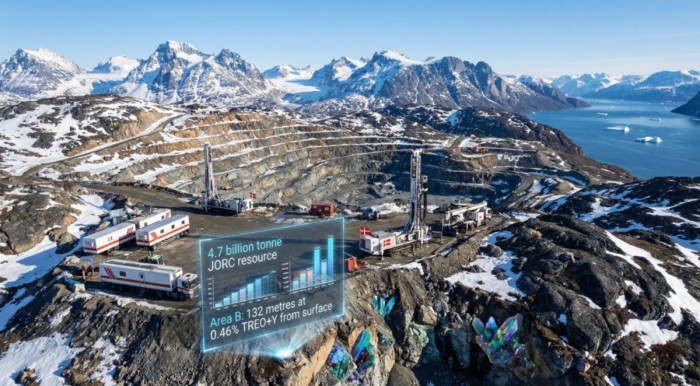
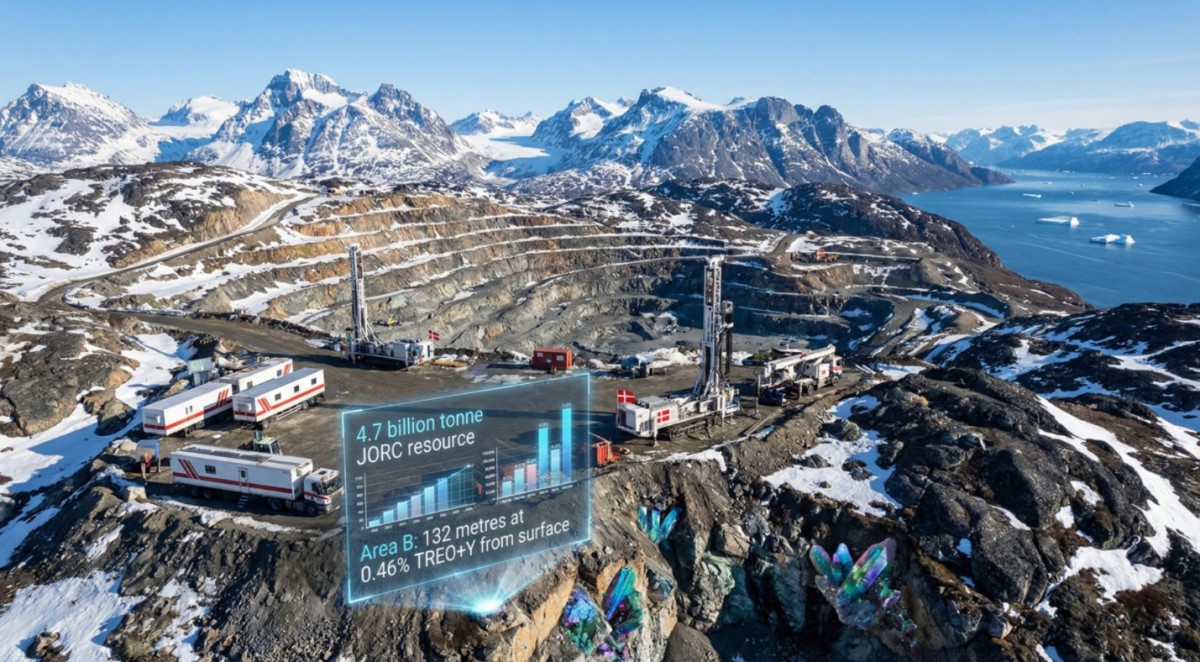
As Washington races to build a rare earth supply chain that can survive the Pentagon’s 2027 ban on Chinese-origin materials, REalloys (NASDAQ: ALOY) has locked in long-term supply from one of the largest known heavy rare earth deposits in the world.

The company announced last Thursday that it has signed a definitive 15-year offtake agreement with Critical Metals Corp. (NASDAQ: CRML) covering 15% of Phase 1 production from the Tanbreez project in southern Greenland, a massive heavy rare earth deposit containing Dysprosium and Terbium, the two most strategically sensitive magnet materials used in fighter aircraft, missile systems, radar platforms, drones, and advanced defense hardware.

REalloys is building one of the only integrated heavy rare earth metallization and magnet production platforms in North America as Washington pushes to break its dependence on Chinese processing capacity before the Pentagon ban takes effect in only seven months.

The company’s Euclid, Ohio, operation focuses on the hardest part of the rare earth supply chain outside China: converting rare earth oxides into defense-grade metals, alloys, and eventually the world’s strongest and most advanced magnet: the NdFeB permanent magnet type used in missile systems, fighter aircraft, radar platforms, robotics, EV drivetrains, and advanced industrial systems. 

REalloys says it is scaling that Ohio platform into the largest heavy rare earth metallization facility outside China, supported by a growing network of allied-nation feedstock agreements.

The Tanbreez agreement significantly expands that network.

Under the deal, REalloys will secure 15% of monthly Phase 1 production from the Greenland project for an initial 15-year term. 

This is another major announcement for REalloys as the company rushes to stay ahead of major defense deadlines. 

The Tanbreez offtake deal follows REalloys strategic partnership with Saskatchewan Research Council, tied to 80% of the output from the Saskatchewan Research Council’s commercial rare earth processing facility. It also adds to the company’s previously secured rights to up to 10% of production from the high-grade Sheep Creek rare earth deposit in Montana, and its control of the Hoidas Lake rare earth asset in Saskatchewan. 

GREENLAND IS EMERGING AS A WESTERN RARE EARTH STRONGHOLD

Trump didn’t manage to buy Greenland, but REalloys got its critical minerals. 

The strategic importance of the Tanbreez project goes far beyond scale. 

The Greenland deposit is one of the largest known heavy rare earth resources globally and one of the few major Western-aligned projects capable of supplying meaningful quantities of Dysprosium and Terbium outside China.

Tanbreez isn’t just another rare earths venue. It’s a heavy rare earth behemoth, while most global deposits focus on less valuable light rare earth production. Critical Metals estimates heavy rare earths account for roughly 27% of the project’s total profile. Most global deposits focused primarily on light rare earth production.

The Greenland project is already fully permitted and advancing under a Western-aligned ownership structure following Greenland's approval of Critical Metals’ acquisition of a controlling 92.5% interest earlier this year. 

For REalloys, the deal secures another long-term heavy rare earth materials now central to Pentagon supply chain planning amid a Middle East conflict that is rapidly depleting the arsenal. 

Johns Hopkins economists Steve Hanke and Jeffrey Weng told Fortune magazine that the U.S. has already burned through massive portions of its precision weapons inventory across Iran and Ukraine, while remaining dependent on Chinese-controlled rare earth materials to replace them. The economists suggest that Washington has blown through 45% of its Precision Strike Missile inventory just in Iran, and nearly 50% of its THAAD interceptors and 30% of its Tomahawk cruise missiles, among others. 

Those systems rely on samarium-cobalt magnets or dysprosium- and terbium-enhanced NdFeB magnets that still flow overwhelmingly through China’s refining and metallization system. The authors estimate that replenishing just four major weapons systems could require between five and ten metric tons of finished defense-grade rare earth magnets, with more than 95% of current supply chains still tied to China.

And that’s the gap REalloys is helping to close, with a North American solution helmed by a leadership lineup that represents the who’s who of American defense. 

Joe Kasper, former Chief of Staff to the U.S. Secretary of Defense, leads REalloys’      advisory board, working closely with REalloys’ Board Chair, Stephen duMont, president of GM Defense, and seated Board member, General Jack Keane, former Vice Chief of Staff of the U.S. Army.               

These are the people who’ve run defense procurement from the inside, the ones who decide who gets qualified, who gets funded, and who actually ends up supplying material into weapons systems.

“This is about building a completely sovereign supply chain from input to finished product, without relying on foreign processing,” Joe Kasper, former Chief of Staff to the U.S. Secretary of Defense and now Chairman of REalloys’ advisory board, told Oilprice.com. “If the U.S. can’t access domestically-processed and manufactured materials, then it does not have a rare earths supply chain at all.”

All Systems Go

REalloys’ Phase One operations are already turning rare earths into alloys in Ohio, amid an ongoing build-out that will launch next year alongside the Pentagon ban on Chinese-origin rare earths. Its plans for Phase Two are a major scale-up.  

In Phase One, REalloys intends to move into North American production of high-purity rare earth oxides that can be turned into metals and alloys, using a mix of recycled magnets and mined feedstock. This is the point at which material is produced in the United States and can move through a traceable supply chain. The capital required is about $75 million, and the buildout has $50 million in cash already allocated. 

By Phase Two, it will all run through the Ohio facility, where REalloys already converts rare earth oxides into metal and alloy form. The buildout increases throughput and expands the range of material it can process, including heavy rare earths like Dysprosium and Terbium. Feedstock is expected to come from both recycled magnets and upstream feedstock supply agreements, like the one from the Tanbreez project, with the material moving through reduction and alloying in-house before leaving as finished product.

Phase Two will also vertically integrate by adding rare earths magnet production to the pipeline. By 2029, the plan is to add magnet manufacturing in Ohio, closing the full circle from processed material into finished components.

Instead of selling metal and alloys into someone else’s system, REalloys would produce NdFeB magnets itself from its own integrated solution and keep that margin. 

This is where the economics takes a major leap forward, and it’s what prompted Clears Street in April to launch coverage of REalloys

Clear Street initiated coverage of REalloys with a Buy rating and a $35 price target, even though the stock was trading just under $8 at the time of the report, because the current valuation does not reflect what the system could look like once it’s running at scale.

The Rare Earths End Game

Rare earths are now facing tightening restrictions on both sides of the Pacific. 

And Washington is scrambling to the point of internal divisions over how fast this entire supply chain can be built. 

Bloomberg reports that internal disagreements are emerging inside the Trump administration after China’s export restrictions exposed major U.S. vulnerabilities. The argument is over whether the U.S. should rely on market forces to rebuild the rare earth industry or use aggressive state-backed financing and industrial policy similar to the model China used to dominate the sector.

The pressure is now extending well beyond junior mining and processing companies. Large U.S. industrial and defense players like GE Aerospace (NYSE:GE) and LMT (NYSE:LMT) are increasingly exposed to the rare earth supply chain bottleneck as advanced jet engines, missile systems, radar platforms, and aerospace electronics remain heavily dependent on Dysprosium-, Terbium-, and NdFeB-based magnet systems. As Pentagon restrictions tighten ahead of 2027, securing non-Chinese processing and metallization capacity is rapidly becoming a strategic issue across the broader U.S. defense-industrial base.

This is why companies capable of securing even a single strategic link in the non-Chinese rare earth supply chain could become some of the most valuable industrial and defense assets of the next decade.

By. Charles Kennedy
 

China Keeps Rare Earth Pressure on Washington After Trump Summit

  • Trump’s Beijing summit produced business deals and temporary diplomatic easing, but failed to secure a long-term rollback of China’s rare earth export restrictions.

  • China continues to dominate heavy rare earth supply, with exports of key materials like dysprosium, terbium, and yttrium still heavily restricted.

  • The U.S. and Europe are accelerating efforts to build independent rare earth supply chains through major investments in domestic mining, processing, recycling, and magnet production.

Two weeks ago, U.S. President Donald Trump paid a visit to Beijing for a high-level summit with Chinese leader Xi Jinping, with a view to stabilizing bilateral trade, securing new business deals, and seeking China's diplomatic leverage to help manage the conflict in Iran. Trump traveled with a delegation of high-level American CEOs to encourage China to open its markets to U.S. tech companies, and managed to secure several multibillion-dollar deals. The summit yielded a modest tactical detente and improved diplomatic normalcy between the two rival powers, with the White House reporting that Xi remains opposed to the militarization of the Strait of Hormuz. However, Trump’s visit had a glaring failure: the discussions in Beijing did not result in a formal agreement or long-term trade truce concerning China’s easing of rare earths export restrictions.

Still, China “can ground America’s drone fleet with a single phone call”, according to an opinion piece this week in American military publication Stars and Stripes. Back in November, Beijing reaffirmed that broad export restrictions introduced earlier, such as the outright bans on rare earth extraction/separation technology and the specific volume controls on select critical minerals like tungsten, bismuth, antimony, as well as various medium- to heavy-rare-earth elements, remain fully in effect. China did pause the sweeping, second-wave controls that had mandated export licenses for foreign entities and products containing trace amounts of Chinese-origin rare earth materials, it had announced in October 2025–but only for one year.

Related: Aluminum Market Facing ‘Serious and Prolonged Supply Outage’

And now, an analysis by Fitch Group's BMI Research notes that Xi’s team only promised to address U.S. supply shortage concerns without providing concrete structural extensions or policy adjustments during the latest meeting.

Chinese shipments of highly critical "heavy" rare earths remain drastically suppressed despite the one-year respite, with dysprosium, terbium, and yttrium exports currently running at just 41%, 49%, and 42% of pre-restriction levels, respectively. Worryingly, the price of yttrium has skyrocketed 15-fold due to acute shortages stemming from China's export rules, triggering severe disruptions across the U.S. aerospace and semiconductor industries where the mineral acts as a vital protective and thermal coating. China accounts for ~70% of U.S.’ yttrium supply, as well as 100% of its terbium, holmium, and lutetium.

China’s rare earths hegemony has sent the United States and its Western peers scrambling for alternative supplies.

Back in July, the U.S. Department of Defense (DoD) agreed to purchase $400 million in preferred stock in MP Materials (NYSE:MP), making the Pentagon the company's largest shareholder with an equity stake of roughly 15%. The agreement includes a 10-year offtake contract with a price floor, ensuring that MP Materials' output goes directly to defense and commercial customers to secure domestic supply chain independence. MP Materials is utilizing this capital and an additional $1 billion in commercial debt from JPMorgan Chase and Goldman Sachs to build the "10X Facility," a massive rare earth magnet manufacturing campus located in Northlake, Texas.

Around the same time, USA Rare Earth (NYSE:USAR) signed a non-binding Letter of Intent (LOI) with the U.S. Department of Commerce to access $1.6 billion in government funding, which will be drawn from a finance facility created under the CHIPS and Science Act. The funding package consists of a proposed $1.3 billion senior secured loan and $277 million in federal funding. The company will also issue a 10% equity stake (and warrants for additional shares) to the U.S. government. The investment will fast-track the mining, processing, and refining of heavy rare earth elements at their Round Top deposit in Sierra Blanca, Texas, with commercial production anticipated to begin in 2028.

REalloys (NASDAQ:ALOY) is also positioning itself within the emerging Western rare earth supply chain through a series of agreements tied to heavy rare earth processing and metallization capacity in North America. The company has secured long-term supply agreements with the Saskatchewan Research Council (SRC) for neodymium-praseodymium (NdPr), dysprosium, and terbium output, while funding upgrades to SRC’s processing facility in Saskatoon and developing a heavy rare earth metallization platform in Ohio focused on producing defense-grade metals and alloys. REalloys has also signed feedstock agreements tied to the Tanbreez project in Greenland and the Sheep Creek rare earth deposit in Montana as part of a broader mine-to-magnet strategy targeting U.S. defense and industrial markets.

Meanwhile, Europe is bypassing China's near-monopoly on rare earths through the Critical Raw Materials Act (CRMA), which caps single-country dependency. The bloc is investing heavily in domestic extraction, processing, and recycling, shortlisting strategic projects and signing resource partnerships with Western-allied nations. Recognizing the vulnerability of supply chains, the European Commission is implementing coordinated defense strategies through initiatives such as RESourceEU Action Plan, an initiative backed by up to €3 billion in funding that coordinates demand aggregation, supply stress tests, and the joint purchasing of critical minerals among member states. The CRMA also mandates that at least 25% of the EU's strategic raw materials come from recycled waste by 2030.

European automakers and tech manufacturers are also increasingly designing products that bypass rare earths altogether. For instance, manufacturers are pivoting to magnet-free motors, including synchronous reluctance motors and induction motors, which eliminate the need for neodymium-based permanent magnets in electric vehicles. 

By Alex Kimani for Oilprice.com


China’s grip on lithium to hit 39% by 2030: WoodMac


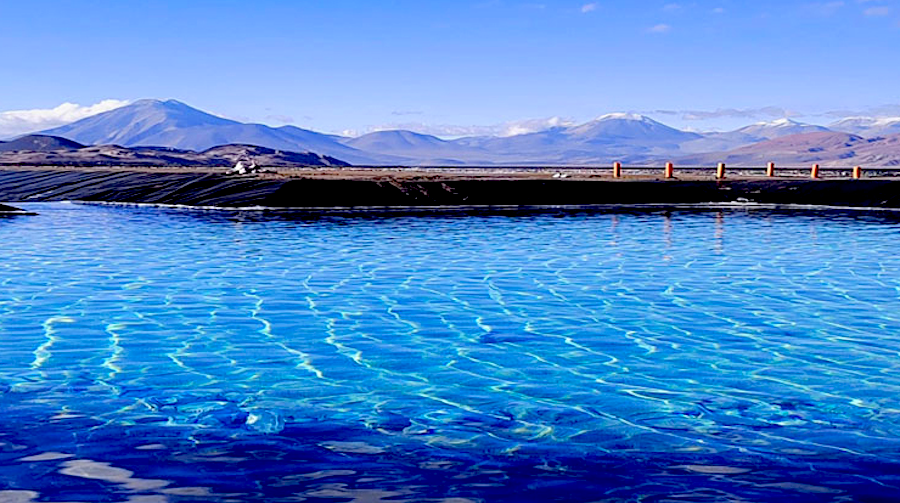
Tres Quebradas lithium project in Argentina. (Image courtesy of Zijin.)

Chinese companies are on track to control 39% of global lithium production by 2030 as they deepen investments across Africa, Australia and South America, tightening Beijing’s influence over battery supply chains despite broader geographic diversification of mining output.

Chinese ownership of lithium extraction assets has risen steadily from about one-third in 2020, according to Wood Mackenzie’s Lens Metals & Mining platform, while production itself is spreading into new regions. 

Australia, the world’s largest lithium producer, is forecast to see its share of global extraction fall from the 43% it had in 2020 to 25% by 2030 as African supply ramps up. Africa’s share is expected to rise from almost nothing to 13% over the same period.

“Lithium production and lithium ownership are increasingly diverging, and it is reshaping the global critical mineral supply chains,” Allan Pedersen, Wood Mackenzie’s research director for energy transition and battery materials, said. “While production growth is becoming more geographically diverse, ownership remains concentrated among a relatively small group of companies, mostly led by China.”

Chinese groups have expanded far beyond domestic production, building stakes in Australian and Argentinean assets while financing much of Africa’s emerging lithium industry. 

Recent deals include Huayou Cobalt’s proposed acquisition of Atlantic Lithium (ASX: A11) and co-investment in Ghana’s Ewoyaa project, alongside Hainan Mining’s investment in Kodal Minerals’s (LON: KOD) Bougouni project in Mali.

“With few exceptions, Africa’s lithium growth has been financed by Chinese capital,” Pedersen said. “That raises important questions around ownership, value capture and long-term supply chain influence as production continues to scale.”

South America’s share of global lithium supply is forecast to slip below 25% by 2030 despite continued investment, Wood Mackenzie said. 

Europe catching up

Europe’s ownership position is strengthening after Rio Tinto’s (ASX, LON: RIO) acquisition of Arcadium Lithium and Equinor’s (NYSE: EQNR) expansion into battery materials.

WoodMac said Europe’s gains stem less from mine ownership and more from increasing control over the broader battery supply chain through refining, manufacturing and recycling investments. Companies including Rio Tinto, Stellantis and Renault are securing stakes and supply agreements tied to lithium projects in Argentina, Germany and other jurisdictions, while Europe expands refining capacity through projects such as Vulcan Energy in Germany and Sibanye-Stillwater’s (JSE: SSW, NYSE: SBSW) Keliber in Finland.


The region is also building electric vehicle battery plants through companies including Northvolt and ACC, backed by the European Union’s Critical Raw Materials Act aimed at reducing dependence on China and creating a more self-sufficient battery ecosystem.

North America’s share has weakened as lithium projects face delays, cost pressures and slower ramp-ups. Several major North American assets are owned, financed or partnered with foreign groups, particularly Australian and Chinese companies, Wood Mackenzie said.

The ownership shift comes as governments race to secure critical mineral supply chains needed for electric vehicles and energy storage. China’s growing control over lithium assets across multiple producing regions could intensify geopolitical competition over battery materials and complicate Western efforts to reduce dependence on Chinese supply chains.

Australian lithium mine cleared to double output as prices soar


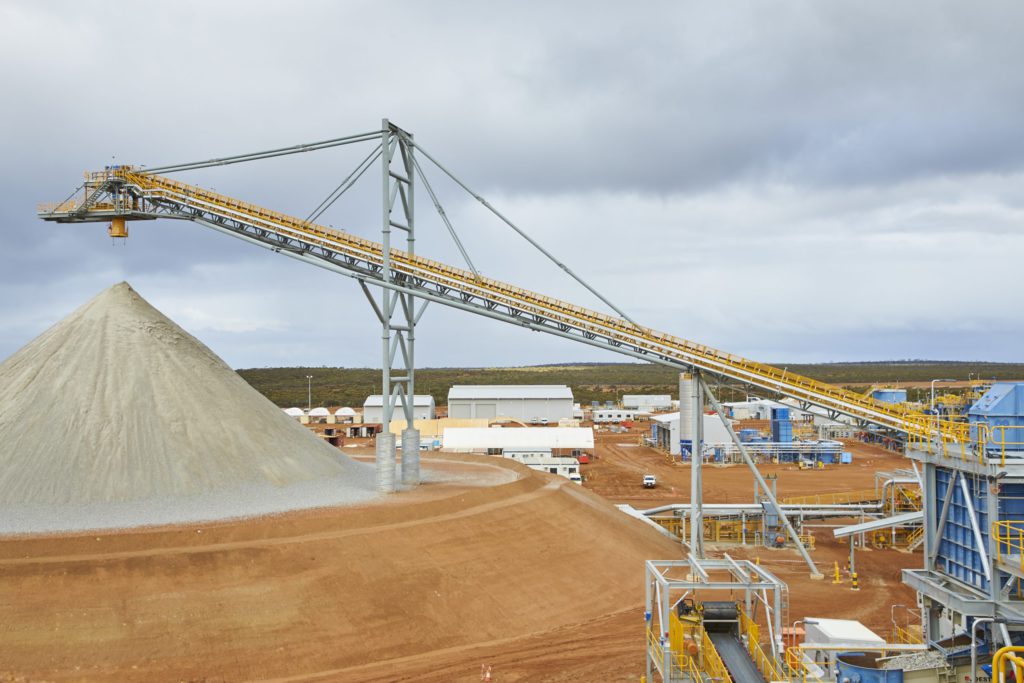
Mount Holland mine in Australia. Credit: Wesfarmers Ltd.

The massive Mount Holland lithium mine in Western Australia has received approval for a significant expansion that will see production double, according to a regulatory filing.

The expanded mine will include new deposits and a duplication of the current processing operations, pushing capacity to 4.4 million tons of spodumene per annum, according to application documents.

Mt Holland is owned by Sociedad Química y Minera de Chile, known as SQM, and Wesfarmers Ltd. in a 50:50 joint venture and produces spodumene concentrate for export, as well as around 50,000 tons per annum of battery-grade lithium hydroxide.

A spokesperson for the venture was not immediately available for comment.

Lithium supply from Australia has seen several major boosts in recent months as prices of spodumene and lithium chemicals soar after a years-long lull.

Spodumene concentrate prices have rallied since mid-December and hit a more than 2-year high at $2,890 a ton on May 12, although they still remain significantly lower than the record $6,110 reached on Nov. 8, 2022.

The volume of new and returning supply may put pressure on recovering prices, according to Cameron Perks, lithium product director at Benchmark Mineral Intelligence ltd., which forecasts a surplus next year.

“The restarts factor in; it’s also new greenfield projects in places like Africa, Mongolia and Russia,” Perks said in an interview by telephone Friday. “We’ve seen projects pop up that we didn’t have in the pipeline 12 months ago. There’s probably more out there that we don’t know about as well.”

Benchmark is closely watching a potential restart of Contemporary Amperex Technology Co. Ltd.’s Jiangxi operation in China, a massive mine that could immediately place downward pressure on lithium prices.

Earlier this month, Core Lithium Ltd. restarted its Finniss project in Australia’s Northern Territory, while Mineral Resources Ltd. announced it would resume mining at its Bald Hill project east of Mt Holland in Western Australia after an 18-month hiatus. It is also considering an expansion of its Mt Marion mine.

In addition, PLS Group Ltd. is ramping up its mining and processing operations in Australia in response to higher prices, while Australia’s richest person Gina Rinehart and SQM are seeking to build a new mine in Australia’s north called Andover.

(By Paul-Alain Hunt)


China could become a net refined zinc exporter in 2026, analysts say


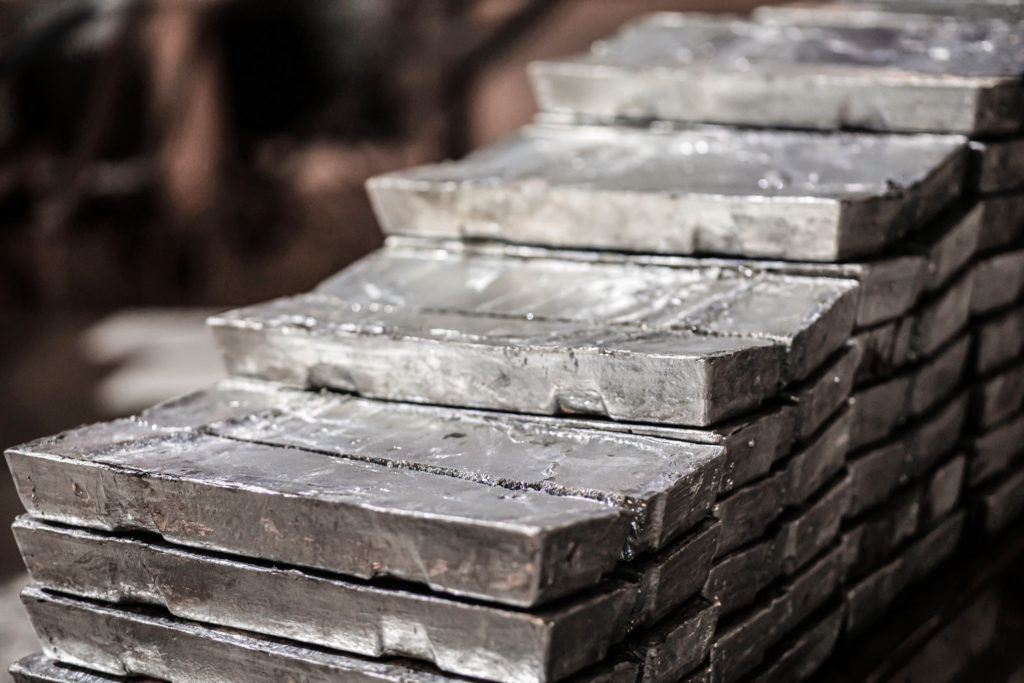
Stock image.

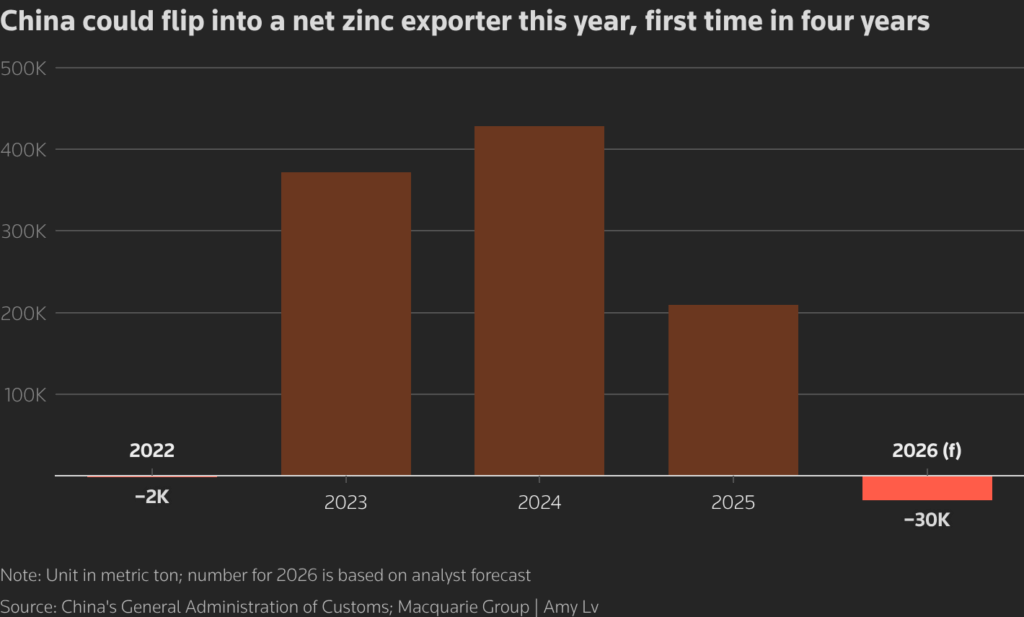
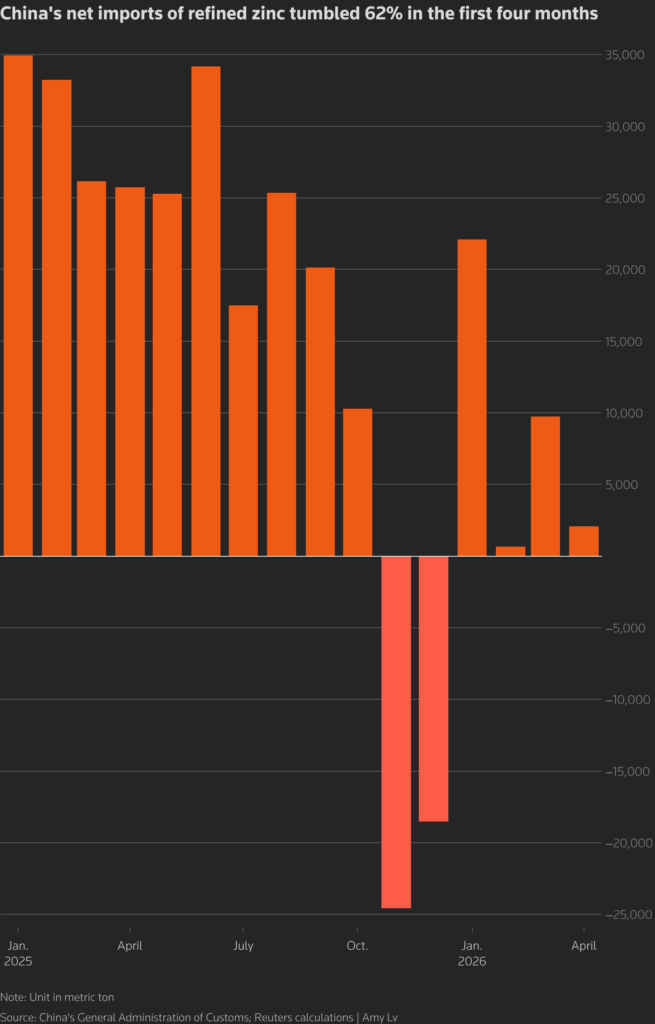
China could export more refined zinc than it imports for the first time in four years in 2026, analysts said, as growing supply and weak demand at home push companies to supply the metal to the world’s markets.

China, which produced roughly half the world’s zinc last year, has long also been a major importer of the metal mainly used to galvanize steel.

However, net refined zinc exports are expected to be 30,000 tons this year, according to Alice Fox, commodities strategist at Macquarie Group, versus 209,767 tons of net imports last year and 428,890 tons in 2024.

At home, the refined zinc supply growth is forecast to outpace demand this year at 4.2% to 1%, according to Fox, as new capacity comes online while demand is still saddled by the struggling property sector.

Meanwhile, the reverse is true in the rest of the world, due to the production suspension or scale-down of smelters in Peru and Kazakhstan because of accidents, tightening supply of zinc concentrate. In addition, production costs have risen due to higher energy costs caused by the US-Israeli war on Iran.

“China got very close to self-sufficiency in refined metal by end-2025,” said Olga Hepting, principal zinc analyst at the CRU Group, a consultancy. “It will likely remain in surplus while the rest of the world is in deficit in 2026, leading to exports, possibly in the third to the fourth quarter.”

Prices outside China are also rising more rapidly than the domestic benchmark. The most-traded zinc contract on the Shanghai Futures Exchange was up 3% this year as of Friday, while the London Metal Exchange’s global benchmark has gained 11%.

While China was still a net importer in the four months to April, net imports fell 62% from a year earlier, according to Reuters calculations of Chinese import data. Analysts expect the flip to exports to occur in the second half of this year.

To be sure, Hepting noted that should the Iran war drag on, the global hit to demand from higher energy prices could eat into China’s export markets.

(By Amy Lv and Lewis Jackson; Editing by Thomas Derpinghaus)


Chinese firms speed up plans to build new coal power plants: GEM


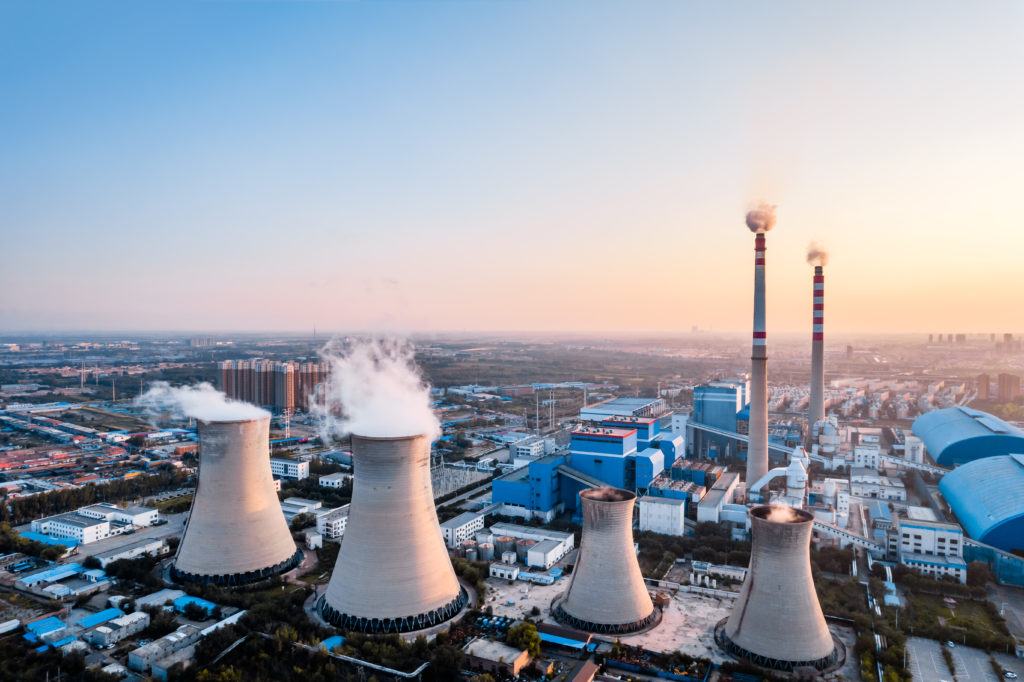
Thermal coal plant in Inner Mongolia, China. Stock image.

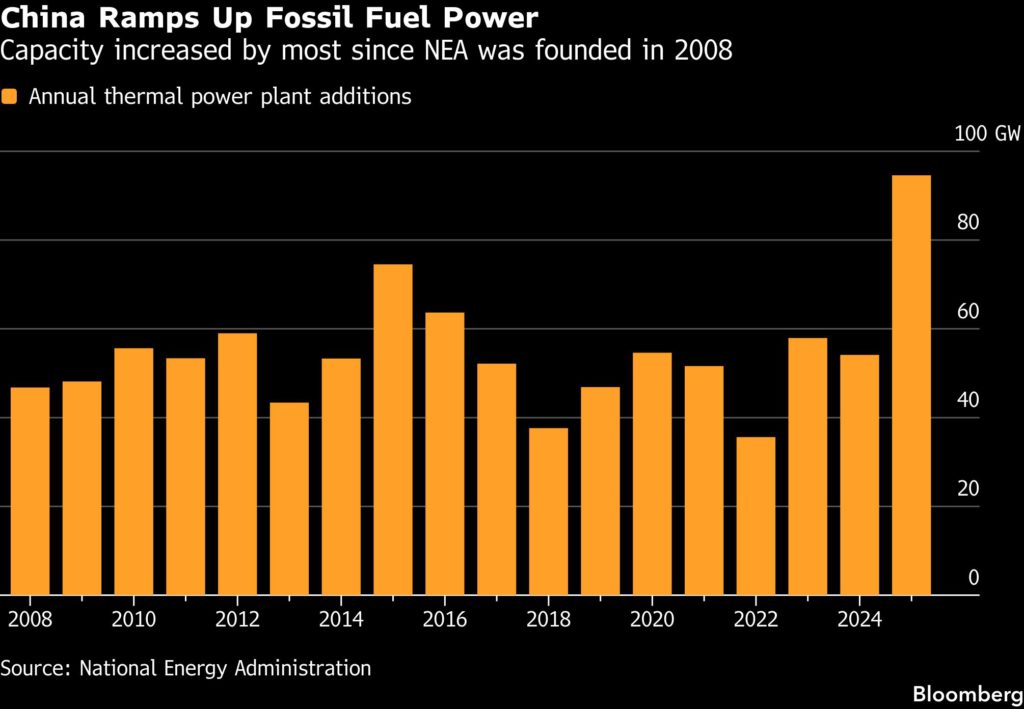
Chinese firms are accelerating the pace at which they propose new coal-fired power plants, even as the government moves to rein in growth after the rapid expansion in recent years.

Companies requested approval for 51 gigawatts of new plants in the first quarter of the year, according to Global Energy Monitor, ahead of the record pace set in 2025 that saw 162 gigawatts of new proposals over the full year. Construction has boomed since a spate of power shortages in 2021 and 2022 as the government touts coal’s role as a reliable back-up to intermittent renewables.

Still, it’s unclear how long the government will let the spree continue. Beijing has said coal use will peak before 2030, and in April the environment ministry said it plans to “rationally control” coal-powered capacity. Of the new proposals in the first quarter, only 3 gigawatts have been approved, according to GEM.

Coal’s domestic abundance also relies on a hazardous mining industry that’s once again in the spotlight after the deadliest accident in years on Friday left at least 82 dead.

The onslaught of new coal plants in China comes even as a surge in clean energy reduces the need for fossil fuels. Thermal generation fell last year for the first time in a decade, although it’s since rebounded. Coal plant utilization fell from 56% to 52% in 2025, and the current batch of proposals risks intensifying that trend, tying up capital that might be better deployed elsewhere in the power system, said Christine Shearer, a researcher at GEM.

“The debate in China today is often less about whether renewables can grow quickly enough, and more about whether policymakers are willing to let coal’s role diminish as clean energy scales up,” Shearer said.

The new requests were spread evenly across the quarter, according to GEM. That indicates there wasn’t a sharp reaction to the global energy shock stemming from US and Israeli strikes on Iran at the end of February.

“The latest crisis may strengthen the justification for continuing coal development, but the underlying expansion likely would have been happening anyway,” Shearer said.


Egypt eyes first aerial survey in 40 years to map mineral riches


Stock image.

Egypt will carry out its first comprehensive aerial mining survey in more than four decades, part of efforts to unlock mineral discoveries and attract foreign investment.

Xcalibur Smart Mapping will work with Egypt’s Nuclear Materials Authority and local company Drone Tech, using advanced aircraft and geophysical technologies to map the North African country’s mineral wealth, authorities said Sunday in a statement.

The survey, covering areas including Egypt’s Eastern and Western deserts and the Sinai Peninsula, marks the country’s first such activity in 42 years, Energy Minister Karim Badawi said at a signing ceremony.

It will create a “modern, highly accurate mining database” to help investors identify commercially viable mineral deposits faster and with lower exploration risk, Badawi said.

Though Egypt has a history of gold-mining that stretches back thousands of years to the time of the ancient pharaohs, its mineral wealth remains largely undeveloped.

Seeking to boost investor interest, Cairo about six years ago introduced new regulations that limited levies and dropped a requirement that miners form joint ventures with the government.

(By Salma El Wardany)


Indonesia plans to beat global trading giants at their own game

Malino, South Sulawesi, Indonesia. Stock image.

For years, Indonesia’s raw materials have been ferried from remote mines and plantations to global markets by armies of traders who handle negotiations, loans and even cranes and river barges.

Now the government is taking over, hoping to save billions of dollars it says are otherwise lost in transit.

Under the surprise plan, the country will take control of exports of the country’s major commodities. It’s a sweeping move reminiscent of the country’s authoritarian past — radical even for President Prabowo Subianto, a former general who has sought to harness the country’s raw materials and centralize economic management since he took power in 2024.

The policy, Prabowo said May 20, is intended to eventually increase transparency and curb tax evasion. In the short term, it has rattled already nervous investors, and left traders, producers and even some government officials scrambling to understand how it can even begin to be implemented.

Only the broad strokes of the plan have so far been made public, including a decision to begin with coal and palm oil, two commodities in which Indonesia has unparalleled clout as a top exporter. Details are yet to be decided. What is already evident, according to many of those involved, is that the mission is daunting.

Commodity producers spread across the Indonesian archipelago connect with foreign buyers through a network of hundreds of agents, traders and trading houses, from multinational giants like Trafigura Group to small, local firms. The links — financial, personal and logistical — have been forged over decades, and will have to be replicated in just months.

“It’s going to be a real uphill battle,” said Kevin O’Rourke, political analyst and principal at Jakarta-based consultancy Reformasi Information Services. “There is a whole ecosystem of human relations. It’s not something that can be subjected to this type of disruptive action on such a short time scale.”

The new entity, Danantara Sumberdaya Indonesia, will sit under sovereign wealth fund Danantara — an outfit that was itself set up just over a year ago and reports to Prabowo.

Pandu Sjahrir, Danantara’s chief investment officer, has sought to reassure investors that it will be market-friendly. It will be an operator not a regulator, he said on Friday, staffed with the best talent recruited from the industry, and meeting high governance standards. Its new CEO will be a former director of PT Vale Indonesia.

Prabowo has been more blunt. Indonesia, as leading producer, should have more control over the price at which it sells its raw materials, he said in his address to lawmakers on Wednesday, and cannot afford to leak an annual sum he estimates at $150 billion.

Indonesia’s natural resources industry is perilous even for the most experienced and deep-pocketed firms. Asset and company ownership is frequently opaque, the government has battled corruption for years and — as the past week has demonstrated — policy changes can be abrupt and unexpected. Over the years, multinational miners have largely abandoned the country, leaving local firms to take over prized assets.

That’s left room for commodity traders, whose more nimble business model has allowed them to buy and sell raw materials while, in many cases, avoiding the entanglement of owning assets.

In coal, their most crucial contribution is credit. Traders draw from international banks and finance small miners, who in turn promise discounted coal to be delivered at a later date. Those are crucial funds for companies that may struggle to find affordable credit lines — and it is unclear how the new Danantara system can replace that.

Not all coal producers need traders to supply funds. The top six miners in Indonesia, including PT Bayan Resources and PT Adaro Andalan Indonesia, have ample access to credit and account for about half of the 600 million tons of annual supply. But the remainder is split between scores of smaller firms, many of whom produce less than a million tons a year and are in need of cash.

Those small mines make Indonesia the world’s top thermal coal exporter. And most of that coal goes to China, where Prabowo’s attempts to exert control have already irked buyers.

Several major Chinese trading firms — whose prominence in Indonesia has grown in recent years, along with Chinese investors like nickel heavyweight Xiang Guangda of Tsingshan Holding Group Co. — fear that their long-term contracts could face disruption and heftier costs once Danantara’s new trading entity begins operations, according to three traders familiar with the matter. They asked not to be named as the matter is sensitive.

Some coal and palm oil contracts extend through 2027. Renewing these contracts will almost certainly mean dealing with different interlocutors and meeting new requirements, though they could also gain access to additional mining assets, they added.

Then there are the practical challenges of building an Indonesian version of Glencore Plc in a matter of months, and the question of state meddling in its dealings.

The new entity will handle exports that total some $65 billion a year, requiring vast working capital, connections and manpower. Executives for Danantara have already sought advice from other commodity traders on how to manage the project, according to people familiar with the matter. They asked not to be named as the requests were not public.

In the palm sector, long-fragmented supply chains connect smallholder farmers to agents to merchants to global food giants — a business dominated by large conglomerates like Wilmar International Ltd and Musim Mas Holdings Pte Ltd.

The prospect of disruption is already impacting the market. Bidders have pulled back from Indonesian tenders on fears the restrictions may slow shipments and swell stockpiles.

“It’s definitely going to be a bumpy road for everyone,” said Putra Adhiguna, managing director at the Australia-based Energy Shift Institute. “The government included.”

(By Eddie Spence)


Russia fails again to sell stake in gold miner UGC


The Kremlin and the waterfront. Moscow, Russia. Stock image.

Russia has failed for a second time to auction the stake in gold producer Uzhuralzoloto (UGC) that it seized last year, the federal property management agency said on Tuesday, dealing a blow to the government as it seeks to ease budget pressures.

A Russian court ruled last July that a majority stake in UGC, previously owned by businessman Konstantin Strukov, should be seized and transferred to the state, part of a broader pattern of nationalization of Russian corporate assets.

The latest auction follows an attempted sale earlier in May, when no bids were received for Strukov’s assets. The lot, with a starting price of 162.02 billion roubles ($2.2 billion), included a 67.2% stake in UGC.

Budget pressures

This time, the auction was declared invalid because only one bidder submitted a complete application and paid the deposit. A second contender, engineering company Russkie Ugli, failed to pay the deposit and provide the required documents, the agency, Rosimushchestvo, said in a statement.

The agency did not share further details on the bidders, but auction documents seen by Reuters show that the sole bidder was gold miner Pokrovskiy Rudnik. Gold producer Atlas Mining, which owns Pokrovskiy Rudnik, declined to comment.

Rosimushchestvo has not said whether it will hold another auction.

As budget strains deepen, the failed sale is a setback for the finance ministry, which had planned to sell the stake by the end of 2025. It did not reply to a request for comment.

The lack of qualified bidders was despite the sale being structured as a Dutch auction, in which the price is gradually lowered until a bid is placed. This could have seen the stake sell for as little as 50% of the initial asking price.

Another court-confiscated asset, Moscow’s Domodedovo Airport, was sold via Dutch auction for the minimum price of $869 million in January, with only one bidder participating.

(By Anastasia Lyrchikova, Darya Korsunskaya and Alessandra Prentice; Editing by Guy Faulconbridge and Mark Potter)

Ghana to start buying 30% of large gold mines’ output from June

Kwame Nkrumah Memorial Park, Accra, Ghana. Stock image.

Ghana’s central bank said it plans to increase gold purchases from the West African nation’s large-scale producers to 30% of their output from 20%, starting June 1.

The Bank of Ghana, which has been buying 20% of refined gold from mining firms with cedis for its reserves, has finalized negotiations to lift that to 30% of their doré or unrefined gold, Paul Bleboo, who heads gold management at the regulator, said by phone.

The decision to switch to doré gold will help boost local processing capacity and job creation, he said, adding that the parties have agreed to a 0.6% price discount.

Accra-based Gold Coast Refinery will process the doré gold to refined gold before shipping to the South Africa-based Rand Refinery for London Bullion Market Association certification, Bleboo said.

Africa’s top gold producer in 2022 ordered mining firms, including South Africa’s Gold Fields Ltd., UK-based AngloGold Ashanti Plc and American miner Newmont Corp. to start selling part of their output to the central bank to help boost reserves and support the local currency.

(By Moses Mozart Dzawu)


Ghana commits to renewing Gold Fields’ Tarkwa lease but rules out automatic extension

Tarkwa mine. Credit: Gold Fields

Ghana’s government is committed to renewing the mining lease for Gold Fields’ Tarkwa mine, it said on Monday, adding that it will subject the South African miner to fresh scrutiny of its plans before any renewal is granted.

Isaac Andrews Tandoh, CEO of Ghana’s Minerals Commission, the sector regulator, denied the government was delaying the lease renewal process, saying officials had held meetings with Gold Fields as recently as last Friday.

Tandoh said the company must present its development plans to a technical committee at the Minerals Commission, followed by a ministerial-level presentation, after which a decision on renewal will be made.

“It won’t be business as usual where we just automatically renew the lease,” Tandoh told Reuters.

Lands and Natural Resources Minister Emmanuel Armah Kofi Buah said the government had not adopted a blanket nationalization policy to take advantage of the sector but was seeking partners that would leave behind expertise and empower Ghanaians in the industry.

Some civil society and community groups have called on the government not to renew the Tarkwa lease, arguing that its benefits have not been shared sufficiently with host communities.

In April 2025, the government rejected Gold Fields’ application to renew its lease for the Damang mine and assumed operational control of the asset.

The Ghana Chamber of Mines warned this month that lease revocations and renewal uncertainty risk creating the impression that “security of tenure in Ghana is not guaranteed”, potentially hurting investment.

The lease for Tarkwa — a cornerstone asset for the South African miner that produced about 427,000 ounces of gold in 2025 — expires in 2027.

(By Emmanuel Bruce; Editing by Anait Miridzhanian and David Goodman)


Blue Lagoon achieves commercial production at Dome Mountain gold-silver project in BC


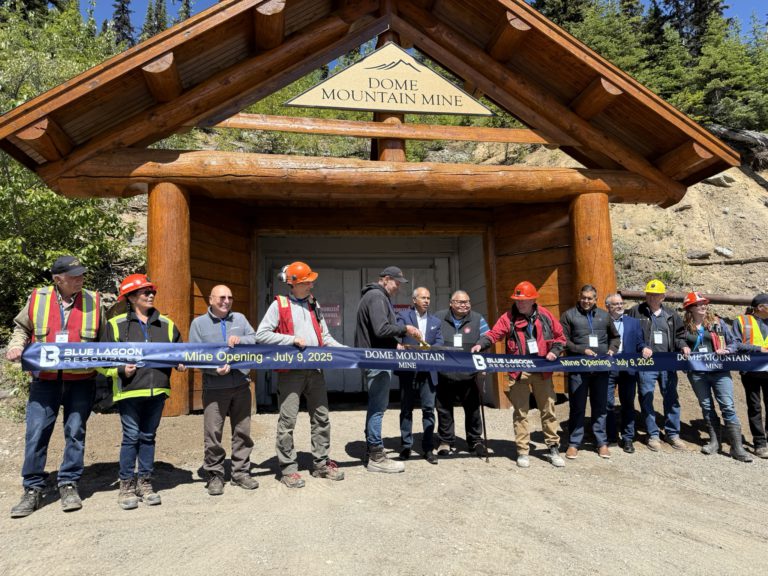
Blue Lagoon CEO Rana Vig (center) with staff members at the opening ceremony in July 2025. (Image: Bruno Venditti)

Blue Lagoon Resources (CSE: BLLG) has officially attained commercial production at its Dome Mountain gold and silver project in British Columbia.

In a statement on Monday, the company said it has maintained underground mining rates in excess of an average of 100 tonnes per day for more than 30 consecutive days.

Last year, Blue Lagoon reopened the Dome Mountain mine, located near Smithers in the province’s northwest, more than 30 years after the last major exploration activity. At the time, the company said it plans to pursue additional permits to mine deeper zones and expand into the nearby Argillite Vein.

Blue Lagoon acquired the project in 2020 and has since focused on drilling and developing the Boulder Vein system.

Under the company’s current mining permit, Dome Mountain is permitted to mine up to 55,000 tonnes annually. Blue Lagoon is targeting consistent production of 150 tonnes per day.

Dome Mountain is now among a small number of newly permitted mining projects in British Columbia to successfully transition into active production in recent years.

Also on Monday, Blue Lagoon announced that its offtake partner, Ocean Partners Holdings, is making an equity investment of C$3 million ($2.1 million), purchasing shares of the company at C$0.90 apiece — equal to the closing market price of the stock on May 15 and representing no discount to market.

“Achieving commercial production at Dome Mountain is the culmination of years of persistence, technical work, permitting success, and strong collaboration with our industry partners and the Lake Babine Nation,” Blue Lagoon CEO Rana Vig said in a news release.