It’s possible that I shall make an ass of myself. But in that case one can always get out of it with a little dialectic. I have, of course, so worded my proposition as to be right either way (K.Marx, Letter to F.Engels on the Indian Mutiny)
Monday, June 15, 2026
Antibiotic residues may pose a hidden risk to male fertility
Male infertility is a growing reproductive health concern worldwide. While genetic, hormonal, and reproductive tract disorders are well-recognized causes, environmental exposure and lifestyle-related factors are attracting increasing attention. Some pharmaceutical residues and environmental pollutants may enter the human body through water, soil, or the food chain, but their potential effects on male reproductive health remain incompletely understood.
A new study published in Science China Life Sciences investigated how ornidazole, an antimicrobial drug used in humans, livestock, and aquaculture, may affect male fertility.
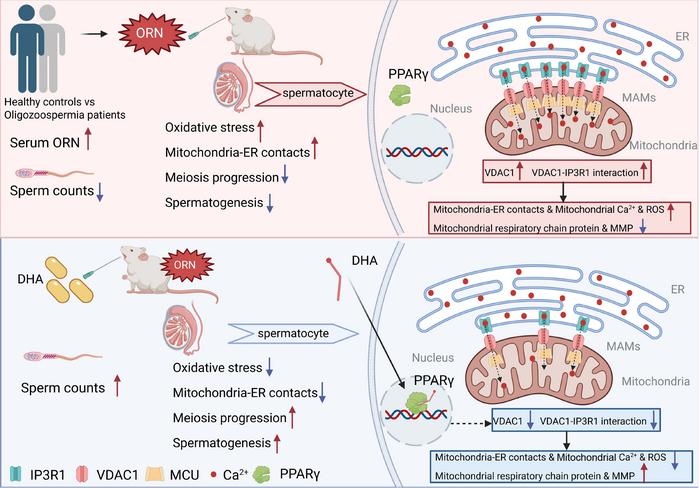
The researchers first analyzed serum samples and found that serum ornidazole levels were higher in patients with oligozoospermia than in healthy controls. Higher serum ornidazole levels were also negatively associated with sperm concentration and total normal-progressively motile sperm count, suggesting a possible link between ornidazole-related exposure and reduced sperm quality.
To further explore this association, the team used mouse and cell models and found that ornidazole exposure reduced sperm count and motility, disrupted seminiferous tubule structure, and interfered with meiotic progression. Mechanistically, ornidazole increased the expression of voltage-dependent anion channel 1 (VDAC1), a key protein located at mitochondria-associated endoplasmic reticulum membranes (MAMs). This disrupted MAM balance, promoted mitochondrial calcium overload, impaired mitochondrial function, and triggered oxidative stress.
The researchers also investigated the potential protective effect of DHA, an omega-3 fatty acid found in dietary sources such as fish oil and algal oil. In the mouse model, DHA supplementation significantly improved ornidazole-induced spermatogenic defects. Notably, DHA is readily available to the general public and has a favorable biosafety profile. These features make it a promising therapeutic metabolite for oligoasthenozoospermia induced by environmental pollution.
Bing Yao, Jun Jing, and Xie Ge from the Department of Reproductive Medicine, Jinling Hospital Affiliated to Nanjing University, and Yong Wang from Medical School of Nanjing University are the co-corresponding authors. Chuwei Li, Shanmeizi Zhao, Chongli Shi, and Shanshan Sun contributed equally as co-first authors.
A new study found that plants may reveal recent PFAS contamination linked to airborne deposition that can go undetected in soil analyses. Conducted in agricultural fields near the conflict zone in southern Israel, the research showed that potato leaves contained substantially higher concentrations of certain PFAS than the surrounding soils, suggesting direct exposure from the atmosphere rather than uptake through roots alone. While the study did not identify specific sources and found no clear relationship between soil PFAS concentrations and distance from the conflict zone, the findings raise the possibility that military-related activities, including the use of aqueous film-forming foams (AFFF) and potentially explosives-related sources, may contribute to atmospheric PFAS deposition. The results suggest that vegetation can serve as a sensitive indicator of recent airborne contamination and complement traditional soil-based environmental monitoring.
A new study led by Nitzan Shy, Dr. Shira Rosencwaig, Dr. Tali Ilani, Dr. Evyatar Ben Mordechay, and Prof. Benny Chefetz from the Hebrew University of Jerusalem, the Agricultural Research Organization (ARO) – Volcani Institute, Israel's National Public Health Laboratory (Ministry of Health), and the Southern R&D Center (MOP Darom), has found that vegetation can capture recent airborne contamination from per- and polyfluoroalkyl substances (PFAS), commonly known as "forever chemicals," even when surrounding soils show little evidence of recent pollution.
Published in the Journal of Hazardous Materials, the research suggests that plants may serve as sensitive environmental sentinels, revealing contamination pathways that conventional soil monitoring can overlook and offering a valuable new tool for tracking emerging environmental contaminants.
PFAS are widely used in numerous consumer and industrial products, including water-repellent coatings, non-stick cookware, food packaging materials, firefighting foams, textiles, and many other applications. Due to their exceptional persistence, PFAS can remain in the environment for decades to centuries, with some compounds exhibiting extremely slow degradation rates. As a result, PFAS contamination is now widespread across diverse environmental compartments, including the air we breathe, the food we eat, the water we drink, and the soils on which we grow our crops.
Today, the question is no longer whether people are exposed to PFAS, but rather to what extent. PFAS have been detected in the blood of the vast majority of people worldwide, raising growing concerns about their long-term effects on human health and the environment.
To better understand how PFAS move through agricultural systems, the researchers analyzed soils, potato leaves, and potato tubers collected from agricultural fields in southern Israel. The region provided a unique opportunity to investigate how airborne contaminants move through the environment under complex real-world conditions.
The researchers detected PFAS in soils, leaves, and tubers, but the distribution patterns differed substantially among these environmental compartments. Agricultural soils were dominated by PFAS associated with long-term inputs such as treated wastewater irrigation and biosolid applications. In contrast, potato leaves contained elevated concentrations of short-chain PFAS compounds known to travel efficiently through the atmosphere. In some cases, concentrations in leaves were hundreds of times higher than those measured in the surrounding soil, suggesting that these compounds may have reached plants through direct atmospheric deposition rather than exclusively through root uptake.
While no direct relationship was observed between PFAS concentrations in either cultivated or uncultivated soils and distance from nearby conflict-affected areas, the substantially higher concentrations measured in leaves compared with soils point to the possibility of airborne inputs. The researchers note that PFAS associated with military activities—including compounds originating from aqueous film-forming foams (AFFF) and potentially from explosives-related sources—could represent one possible contributor to such atmospheric deposition. However, the study did not directly identify specific emission sources.
The findings indicate that vegetation may capture a more immediate snapshot of environmental exposure, while soils primarily reflect years or decades of accumulated contamination. In other words, plants can reveal recent contamination events that may become masked within the longer-term environmental record preserved in soils.
Importantly, PFAS concentrations in the edible potato tubers were substantially lower than those measured in the leaves. Although this pattern has been reported previously, the findings further support evidence that leaves and roots are typically the dominant accumulation compartments for PFAS, while transfer to edible fruits and storage organs remains relatively limited.
The study also places the measured concentrations into a broader international context. The number of PFAS compounds detected and their concentrations in soils, leaves, and potato tubers were generally comparable to, or lower than, levels reported in agricultural systems in Europe, Asia, and the United States.
The research highlights a broader challenge for environmental monitoring. In landscapes already affected by historical contamination, emerging pollution sources can be difficult to detect through soil testing alone. Plants, by contrast, may reveal recent atmospheric inputs that remain hidden in soil records.
"Our findings suggest that vegetation can provide unique information about ongoing environmental processes and may serve as an effective indicator of recent airborne contamination," the researchers said. "Understanding these pathways is essential for improving how we monitor and manage environmental pollutants in agricultural landscapes."
The findings also suggest that military activities may represent an additional environmental source of PFAS and potentially other contaminants associated with explosives and combustion processes, warranting consideration in future monitoring efforts. The researchers propose that environmental surveillance programs could benefit from incorporating vegetation and air sampling alongside traditional soil analyses, as these matrices may provide early indications of airborne contaminant deposition that are not readily captured through soil monitoring alone.
HEI is the industry standard benchmarking tool for LGBTQ+ inclusion and equity practices in the healthcare field, judging hospitals on five criteria:
Non-Discrimination and Staff Training
Patient Services and Support
Employee Benefits and Policies
Patient and Community Engagement
Responsible Citizenship
To receive LGBTQ+ Healthcare Equality Leader designation, healthcare facilities must receive the maximum score in each criteria and earn an overall score of 100.
“Every patient deserves safe and respectful care, and Keck Medicine is proud to serve the diverse needs of the LGBTQ+ community,” said Rod Hanners, CEO of Keck Medicine. “This recognition reflects our commitment to delivering personalized, compassionate medicine and fostering a welcoming, inclusive environment for all.”
USC Student Health, which provides comprehensive healthcare to USC students, participated in the survey for the third time and joins a select group of college healthcare providers in receiving the leader designation.
Commitment to Inclusivity and Equity
Keck Medicine leads multiple initiatives and programs in support of the LGBTQ+ community, demonstrating a commitment to inclusivity and equity.
The USC Gender Affirming Care Program offers evidence-based comprehensive healthcare tailored to transgender, non-binary and gender-diverse patients. The program’s dedicated patient navigator assists patients with their personalized needs throughout their healthcare journey.
The health system is a sponsor of the Latino Equality Alliance LGBTQ+ Youth College Scholarship Program, which includes a Keck Medicine scholarship to support LGBTQ+ students pursuing healthcare careers.
Keck Medicine also sponsors the annual Los Angeles Pride Parade, in partnership with the Keck School of Medicine of USC.
The health system collaborates with several local LGBTQ+ nonprofit organizations, including The TransLatin@ Coalition, a trans-led nonprofit organization that advocates for the needs of transgender, gender non-conforming and intersex immigrants; and Bienestar, a community-based social services organization addressing emerging health issues faced by Latinx and LGBTQ+ populations.
Since 2015, the Keck Pride employee resource group, has been a pillar in creating a welcoming environment for LGBTQ+ patients, families and staff, and is a driving force in many of the health system’s initiatives.
The Human Rights Campaign Foundation is the educational arm of the Human Rights Campaign, a civil rights organization working to achieve equity for LGBTQ+ people.
###
For more information about Keck Medicine of USC, please visit news.KeckMedicine.org.
This jacket pulls drinking water from thin air
The advance in fabric technology comes alongside a new benchmark for atmospheric water harvesting.
Photos, videos and additional assets are available for download.
Engineers at The University of Texas at Austin have developed a jacket that harvests drinking water directly from the air. The technology could benefit anyone who spends much time in areas without easy access to drinking water, from hobbyist hikers, campers and runners to agricultural workers, emergency responders and soldiers.
“Water harvesting from air is usually imagined as a stationary device such as a box, a panel or a large sorbent bed,” said Guihua Yu, chair professor of the Cockrell School of Engineering’s Walker Department of Mechanical Engineering and Texas Materials Institute and one of the leaders of the new research in Science Advances. “Here, we wanted to rethink the form of the technology. If the fabric itself can collect water from air, it opens a new direction for personal and portable water access.”
The textile incorporated into the jacket collects moisture and funnels it to detachable harvesting units. Those units are placed in a foldable collector piece and heated to produce the water.
The jacket produced between 400 and 900 milliliters of drinkable water per day, about 14 to 30 ounces, depending on humidity levels.
Compared with conventional water-harvesting materials, the textile showed a three- to 10-fold improvement at scale. By focusing on the fibers rather than building another bulky device, the researchers overcame a common problem in the field.
“The important advance here is that the team did not simply make another material that absorbs water,” said Keith Johnston, co-author and chair professor of the Cockrell School of Engineering’s McKetta Department of Chemical Engineering. “They designed a pathway for water to move quickly, from vapor in the air, to liquid on the fiber surface, and then into the textile. That transport design is what allows the material to work not just in a small lab test, but in a wearable system.”
The researchers are eyeing applications beyond clothing, including backpacks, tents, emergency shelters and other outdoor gear, allowing items people carry every day to help collect water from the air. Soon, they will look at applying the technology to outdoor activities, remote field operations, disaster response, and water access in arid or infrastructure-limited regions.
The textile work comes as a separate device from the same research team pulled a record amount of drinking water from the air in the hot, arid climate of the Chihuahuan Desert of New Mexico and the more humid environment of Austin, demonstrating the real-world potential to use atmospheric moisture to address drinking water shortages.
In tests, the researchers captured 1.3 liters of clean water per day in both arid and semi-humid areas. That equates to 4.3 liters of water per kilogram of moisture-capturing materials per day, more than any other research group has achieved.
“This is a big stride toward practical atmospheric water harvesting,” said Weixin Guan, one of the lead authors of a new paper published in Nature Water. “This goal has been incubated over years of work, from molecular design to real-world operation, and it is especially meaningful to see those pieces finally come together in a field-ready system.”
At the center of the device is a specially engineered hydrogel fabric made from biomass-derived materials. The fabric absorbs moisture from the air, then releases it when heated by sunlight, so the water can be condensed and collected.
The regions where the device should perform best overlap with many of the world’s most water-stressed areas, including parts of North Africa, the Middle East, South Asia and sub-Saharan Africa. That makes this technology especially promising as a decentralized water solution for remote communities, emergency response and other settings where conventional water systems are difficult to build or maintain.
The device is part of the team’s broader AirGel invention, which won the top prize in the graduate category of the 2025 National Collegiate Inventors Competition.
The detachable harvesting units in the jacket are placed in a foldable collector piece and heated to produce the water.
Animal pairs engage in mutual signals by simultaneously performing a diverse repertoire of behaviors. A famous example is the sophisticated dance (mutual displays) performed by bird pairs. In general, previous studies have analyzed individuals separately, thus studies elucidating the complex interactions between two individuals, such as pair dances, have been extremely limited. The emerging property of pair dances cannot be revealed without analyzing the behaviors of both individuals together.
This study focused on the pair dance of wild red-crowned cranes. The pair dance is performed by breeding pairs and lasts up to three minutes. Until now, very little was known about the details of the bidirectional communication during their pair dance.
We observed 21 pairs of wild red-crowned cranes in Kushiro, Hokkaido. The sequence and duration of behavioral elements for both males and females were recorded, and the interplay of dance behavioral elements were analyzed using multiple statistical methods.
Analyses of 99 pair dances revealed that three specific behavioral elements—bill-stab, bow, and arch —characterized the sequence and combinations. This indicated that the pair dance has some rules. Furthermore, the analysis quantifying temporal associations between actions revealed that the behavioral element was sometimes determined by the partner's preceding action, highlighting that timing between pairs is key to the pair dance. These findings clearly demonstrate that the order and timing of behavioral elements play a crucial role in pair communication. In addition, despite the lack of apparent sexual dimorphism in the cranes, several sexual differences were found in the pair dance. Males danced longer than females, and females tended to take the lead in determining the content of the pair dance.
This study quantitatively revealed the complexity of bidirectional communication in pair dances, demonstrating that pairs dance in response to their partners. This finding not only deepens our understanding of crane pair dances but also highlights the importance of considering mutual interactions between two individuals as a unit. Future work will improve this research framework and apply it broadly to other bidirectional communication beyond pair dances. This is expected to enable a detailed understanding of how each animal engages in complex, mutual signals.
The three specific behavioral elements—bill-stab, bow, and arch—characterized the sequence and combinations.