Monday, June 29, 2026

Mutual Aid and the Governance We Are Already Practicing

Mutual aid as a component of community organizing shows us that governance begins with people: those who know their needs best, build trust with one another, and create systems capable of meeting immediate and long-term challenges.



Staff install a new sign at Project South’s Mutual Aid Liberation Center.
(Photo via Project South/ Facebook)
Nwamaka Agbo
Jun 29, 2026
Common Dreams

Governance is how we hold power responsibly and equitably. Government is just one way we organize it—and what is abundantly clear is that good governance is not always done by a government.

Since congressional Republicans passed the “Big Beautiful Bill,” 3.5 million people have lost benefits through the Supplemental Nutrition Assistance Program (SNAP). That includes more than 800,000 children who are now at risk of going hungry.

It is just one of many ways in which the current administration has either actively harmed or abdicated responsibility for families and communities. This is a precarious moment, but it is not a moment for despair. In communities long abandoned by the public sector, mutual aid networks have emerged as models of resilience that show how people can govern effectively when love and care, rather than hate and scarcity, are placed at the center of how community members care for each other.

A Long Southern Lineage of Necessity and Ingenuity


Mutual aid is a term to describe people helping each other when they cannot depend on the government. More fundamentally, it’s about reciprocal care and collective responsibility, whether or not the government shows up. It can begin as informal acts of kindness and gratitude, and grow to become enduring, formalized systems that support entire communities. The practice has long existed in the United States, especially in the South, where Black communities created their own institutions and parallel infrastructure to serve the people when dominant systems turned them away or caused them harm. From immigrants, to trans folks, to members of Indigenous communities, many marginalized groups have similar histories of using mutual aid as an organizing tool to create systems of self-governance that actually serve them.


The power of mutual aid exists in recognizing that people cannot reach liberated futures while their present needs remain unmet.


Mutual aid is not only a crisis response. It can be a vehicle to facilitate civic engagement in ways big and small, and it is a way for communities to organize to sustain one another and show up as daily stewards of each other’s well-being. Just as governance is not limited to a government, civic engagement isn’t limited to voting or holding elections. Mutual aid is intertwined with social justice movements. It brings people together to meet immediate needs through shared resources, trust, and collective responsibility—work that sustains daily life while building the relationships and political consciousness needed for long-term power.

Governance Is Already in Motion

The power of mutual aid exists in recognizing that people cannot reach liberated futures while their present needs remain unmet, and that those present needs have become politicized by a government that has made it acceptable to deny certain people care, dignity, and respect. Mutual aid is not charity, which maintains a top-down hierarchy of giver and receiver. Mutual aid when done responsibly is horizontal, and undergirded by an implicit politic that we must care for and provide for one another. Mutual aid is about shared struggle, interdependence, and collective well-being

Engaging in care as a political act is how we build collective power.

For example, Project South's Mutual Aid Liberation Center in Atlanta, Georgia stands as a living testament to the potential of mutual aid networks. The center meets community members’ basic needs while cultivating political consciousness, leadership, and collective power in the local community and for movement work across the US South. Mutual aid doesn’t separate services from organizing. In one instance, when community members came to the Liberation Center for clothes and food, they learned about a plan to install surveillance cameras in places that would disproportionately harm Black and brown folks. The same neighbors who met at the Liberation Center organized, banded together, and spoke out against the proposal at a community meeting, preventing it from becoming law.

Southerners on New Ground (SONG), an LGBTQ-led community organizing group and mutual aid network that functions across the South, is another powerful example of how mutual aid can bring folks from across the political spectrum together. The organization aims to foster real relationships between people by connecting those who need food with those who can offer it. When extreme weather events occur, those same people serve as solidarity squads who keep each other prepared and safe. The work demonstrates how relationships between people are fundamentally more important than political divisions, which become meaningless when the immediate need is a hot meal, a generator, or a safe place to sleep.

Supporting Future Governance


Mutual aid as a component of community organizing shows us that governance begins with people: those who know their needs best, build trust with one another, and create systems capable of meeting immediate and long-term challenges. Yet mutual aid is the work of community organizing that often goes unseen and unfunded.

Mutual aid networks have the ability to become the pathways of just transition toward a more just world. When we put mutual care and concern at that center of how we structure our society, then we can reimagine how we govern our resources, how we provide safety for one another, how we support each other in meeting our material needs, and how we must govern ourselves with the goal of mutual aid at the center. And, as we begin to practice this way of living on a day-to-day basis, then we can begin to establish the practices, principles and values, agreements, and social contracts that are essential for justice and liberation for all.

In this way, mutual aid is the foundation for future governance that is built on relationships between people, not politics.


Our work is licensed under Creative Commons (CC BY-NC-ND 3.0). Feel free to republish and share widely.


Supriya Lopez Pillai
Supriya Lopez Pillai is the president of the Libra Foundation.
Full Bio >

Nwamaka Agbo
Nwamaka Agbo is the CEO of the Kataly Foundation.
Full Bio >


Take Note and Beware: JD Vance Is More Dangerous Then Trump


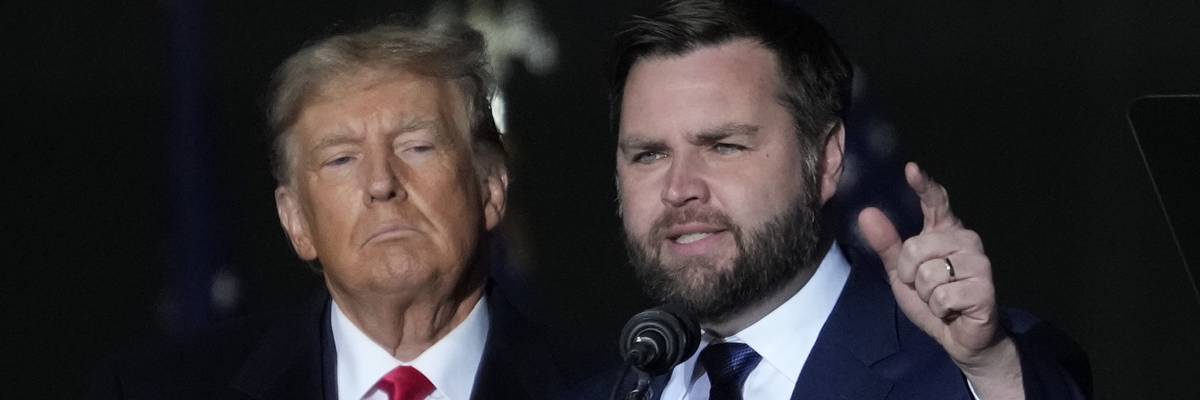
Former US President Donald Trump and Republican candidate for U.S. Senate JD Vance greet supporters during the rally at the Dayton International Airport on November 7, 2022 in Vandalia, Ohio.
(Photo by Drew Angerer/Getty Images)

Robert Reich
Jun 29, 2026
Inequality Media


JD Vance said on Friday that the U.S. wins “either way” in negotiations with Iran. “If we make the final deal, then great,” Vance told HBO’s Bill Maher. “If we don’t make the final deal, their nuclear program is still destroyed. They’re still much weaker as a country.”

Just hours after Vance’s appearance on HBO, Iran launched attack drones on Bahrain — which hosts the U.S. Navy’s Fifth Fleet headquarters, a major logistical base for U.S. military operations. Iran also struck an oil tanker in the Strait of Hormuz, its second attack on a ship since Thursday.
RECOMMENDED...


So much for Iran being much weaker.

Pressed by Maher on whether Iran’s nuclear program has been destroyed, Vance shot back: “What part of it is not destroyed? The thing that you have to destroy is their ability to enrich uranium, which has been destroyed.”

In fact, Iran still has a stockpile of 60 percent-enriched uranium, which experts concede could be turned into a nuclear weapon.

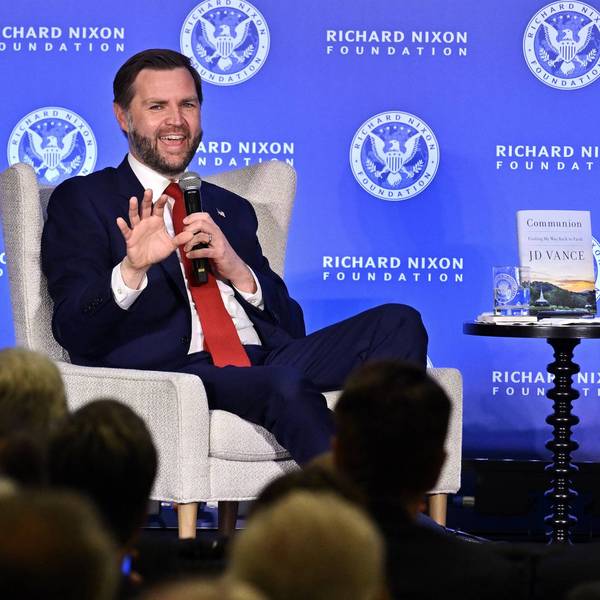
Vance’s media appearance came two days after he visited the Richard Nixon presidential library and museum in California to talk about his new book on his journey from atheism to allegedly devout Catholicism.

During his visit he defended Nixon for the Watergate break-in scandal that ended his presidency. “I think that his historical legacy is enjoying a bit of a renaissance — but I think deservedly so,” Vance said of Nixon. “If Watergate happened tomorrow, it would be like a 12-hour news story. Like, the idea that it would have taken down a presidency is crazy.” It was the “deep state that took down Richard Nixon” — not Nixon’s serious crimes.

Hello? The only conceivable reason Watergate might not bring down a presidency tomorrow or be a 12-hour story is the gargantuan criminality and corruption of the Trump-Vance regime, which puts Watergate in the minor league by comparison.

I raise Vance’s recent bizarro comments because in a few months he’ll be actively campaigning to be the Republican candidate for president in 2028.

He’s a more dangerous demagogue than Trump because he wraps his demagoguery in the apparent thoughtfulness of a graduate of Yale Law School and a serious best-selling author.

I’ve spent the last two days reading his latest book, Communion: Finding My Way Back to Faith, a memoir focusing on his 2019 conversion to Catholicism, and can assure you of three things: First, it’s a serious book. Second, Vance’s mind is as vacuous and unprincipled as he is in person. Third, the book isn’t worth reading.

In one of the few mea culpas in the book, Vance writes that it was “boneheaded” of him — “one of the dumbest things I ever said” — to call Kamala Harris and several other prominent Democrats “childless cat ladies who want to make the rest of the country miserable too.” In the book Vance calls the insult, “intentionally (and successfully) provocative rather than illuminating.”

What Vance doesn’t admit to is that, when his remark resurfaced during his early days as Trump’s running mate, he refused to apologize or express any regret for it. “Obviously, it was a sarcastic comment. I’ve got nothing against cats,” he said then — sarcastically — adding that “if you look at Kamala Harris, Pete Buttigieg, AOC, the entire future of the Democrats is controlled by people without children,” which in his view had made the entire Democratic Party “anti-family and anti-child.”

Vance’s intentionally provocative rather than illuminating demagoguery was in evidence again when he insisted during the 2024 campaign that the pets of upright Americans residing in Springfield, Ohio, were being “abducted and eaten” by Haitian immigrants “who shouldn’t be in this country.”

When confronted with irrefutable evidence that Haitian immigrants were not eating pets in Springfield, Vance admitted publicly that he was speaking, shall we say, metaphorically: “If I have to create stories so that the American media actually pays attention to the suffering of the American people, then that’s what I’m going to do,” he told CNN.

It’s much the same with Vance’s recent response to the fatal stabbing of Henry Nowak by Vickrum Digwa in the British city of Southampton. After Digwa was sentenced to life imprisonment, Vance declared that Nowak would still be alive had Europeans “stood their ground against the politics of self-hatred and the mass invasion of migrants, many of whom despise the West and the people who love it.”

Inconveniently for Vance, Digwa didn’t migrate to Britain. He was born and raised there.

Vance would never have become a senator from Ohio in 2022 were it not for the billionaire tech financier Peter Thiel, who staked $15 million on Vance’s election — a major portion of all the funds that went into Vance’s Senate race.

Before running for the Senate, Vance had worked for Thiel’s California venture capital firm and was part of Thiel’s libertarian community of rich crypto bros, tech executives, back-to-the-landers, and disaffected far-right intellectuals.

Because Thiel had been a major funder of Trump’s 2016 presidential run, he had significant influence with Trump when urging him to pick Vance for his vice president.

Why was Thiel such a devoted sponsor of Vance? Because Thiel saw in his protege a future leader of a political movement to turn the U.S. away from democracy. “For Peter,” said one of the people familiar with his thinking, “Vance is a generational bet.”

Thiel is a self-styled libertarian who once wrote: “I no longer believe that freedom and democracy are compatible.”

Bullshit. Freedom is incompatible with democracy only if you view democracy as a potential constraint on your wealth and power.

Thiel and Vance believe that the only way true libertarians can win in the U.S. is for a Caesar-like figure to wrest power from the U.S. establishment and install a monarchical regime, run like a startup.

The first step, as Vance offered in a 2021 podcast, is to replace “every single midlevel bureaucrat, every civil servant in the administrative state … with our people. And when the courts stop you, stand before the country, and say” — as did Andrew Jackson — that “the chief justice has made his ruling. Now let him enforce it.”

The next step is to foment so much division and bigotry inside the U.S. and within other major Western nations that people come to view those on the other side of the political divide as the source of everything that’s wrong with their lives — which Vance has been eagerly trying to do.

That way, they won’t look upward to see that the billionaire robber barons, plutocrats, and oligarchs of this second Gilded Age have grabbed most of the wealth and power for themselves. Hence, average people will trade in democracy for strongman autocracy.

Behind Vance’s demagoguery about the U.S. winning either way in Iran, Nixon being taken down by the deep state, childless cat ladies, the Democratic Party being anti-family and anti-child, Haitian-Americans eating pets, and immigrants threatening Western civilization is a deadly serious plan to unite the far-right of America and Europe and rid much of the world of democracy. If Vance becomes president, he’s intent on furthering the job.

Vance resembles Trump in every way — he lies effortlessly, he’s utterly without principle, and he’s intent on gaining power — except that he’s smarter and more ruthless than Trump.

Take note and beware.


© 2025 Robert Reich

Robert Reich
Robert Reich is professor emeritus of public policy at Berkeley and former US secretary of labor. His latest book is the No. 1 New York Times best-seller, "Coming Up Short."
Full Bio >
Trump bashed by conservative Wall Street Journal board for one huge Iran failure

Travis Gettys
June 29, 2026
RAW STORY


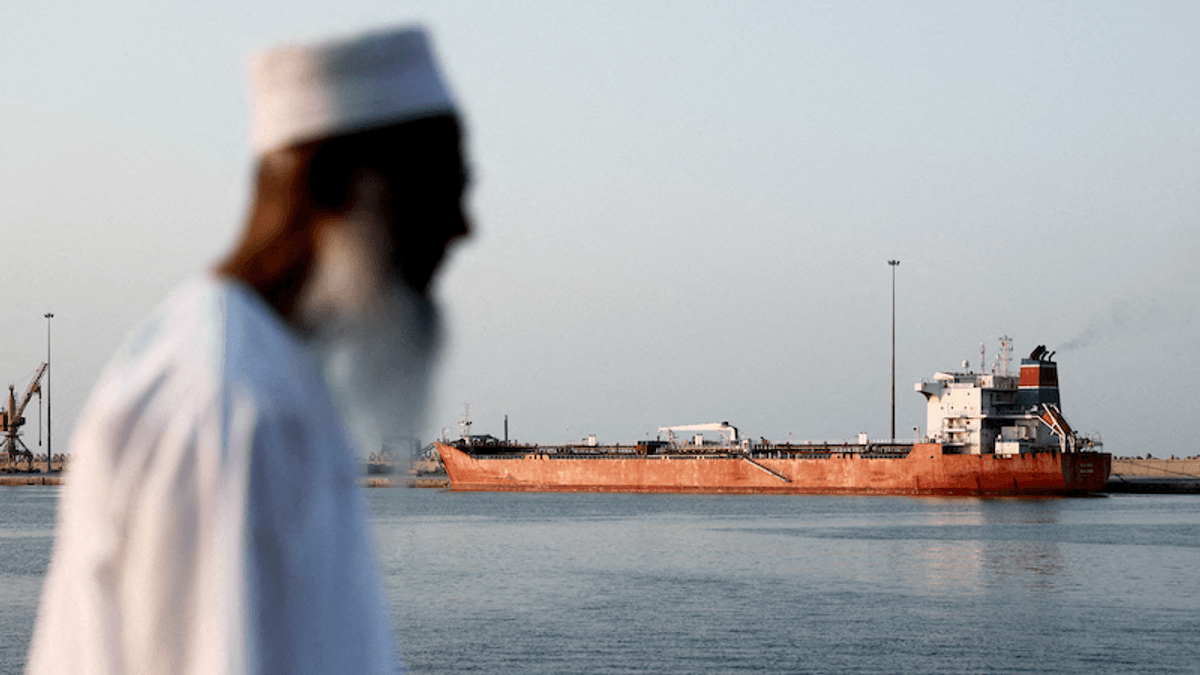
The Callisto tanker sits anchored in Port Sultan Qaboos as the traffic is down in the Strait of Hormuz, amid the U.S.-Israeli conflict with Iran, in Muscat, Oman, March 12, 2026. REUTERS/Benoit Tessier/File Photo

The Wall Street Journal editorial board lambasted President Donald Trump over his efforts to secure a durable peace deal with Iran.

U.S. and Iranian officials have agreed to halt their attacks on one another and meet Tuesday to talk out their dispute over the Strait of Hormuz, and the conservative newspaper's editors bashed the 80-year-old president for failing to keep the crucial waterway open – as it had been before he launched the war on Feb. 28.

"The best selling point for President Trump’s memorandum of understanding with Iran was that at least it opened the Strait of Hormuz," the board wrote. "Well, now the regime is trying to nullify those terms by using force against commercial vessels, Gulf states and U.S. bases. All of this violates the deal and calls into question why Mr. Trump signed it."

The U.S. and Iran have traded strikes, and Trump has hyped what he called “gentlemen’s agreements” with Islamic Revolutionary Guard Corps leaders to "turn over a new leaf," but the Journal's editors said the president was wrong to trust them.

"Well, these are no gentlemen," they wrote. "It’s the same terrorist regime, and this is the Battle of Hormuz that Mr. Trump thought he had ducked. In case there was any doubt, foreign minister Abbas Araghchi said Sunday that Iran is solely responsible for managing the Strait under the memorandum. He said 'no other country has any responsibility in that regard.'"

"Force is the regime’s means to make the world bend," they added. "Without it, shippers refused to heed Iran’s dictates for Hormuz during the deal’s early days."

The editorial board wondered why Trump was willing to give Iran anything without an assurance that the strait would remain free and open.

"The U.S. needs the leverage for nuclear negotiations, and it was never wise to give Iran a blank check," the board wrote. "All the more so now that the regime isn’t respecting the deal, which mandates a cease-fire as well as Iran’s 'best efforts for the safe passage of commercial vessels.' That means don’t shoot at them, for starters."

"More U.S. 'love taps' against Iranian targets won’t impress the hard men in Tehran," the editors added. "They behave as if they have escalation dominance because they think Mr. Trump won’t return to war before the midterm elections. They don’t believe Mr. Trump’s social-media bluster because they see his reluctance to enforce the cease-fire terms."
Trump's war backfires as Iran now declares it must 'obtain the atomic bomb': MAGA expert

David McAfee
June 28, 2026 
RAW STORY


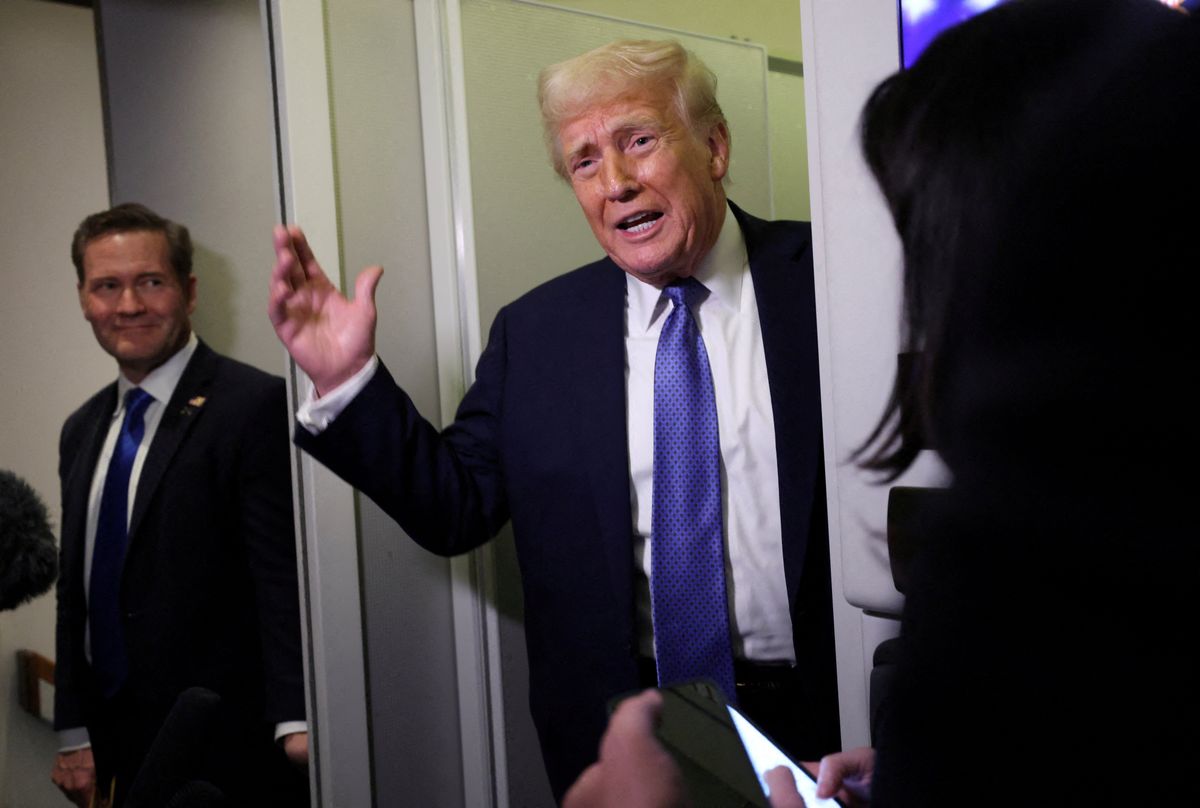
FILE PHOTO: U.S. President Donald Trump speaks to reporters, watched by National Security Advisor Mike Waltz, aboard Air Force One on his return to Washington, D.C., U.S., March 16, 2025. REUTERS/Kevin Lamarque/File Photo

Iranian state media has reportedly declared that the country now has "no choice but to obtain the atomic bomb," according to a post circulating online — a statement that, if accurate, would mark a dramatic escalation amid the ongoing exchange of strikes between the U.S. and Iran.

The claim was relayed by the account The Hormuz Letter, which posted what it described as a breaking statement from Iranian state media. According to that post, Iranian state media argued the country must "absolutely reach nuclear deterrence" before current negotiations can be conducted, framing the pursuit of a weapon as necessary to remove what it called "the military option for the occupation and partitioning of Iran" from the table.

The reported statement seized the attention of David Pyne, an America First conservative who posts under @AmericaFirstCon and who has been sharply critical of the administration's handling of Iran. Pyne argued the development vindicated his earlier warnings about the consequences of President Donald Trump's approach.

"Iran is responding to Trump's continued nuclear threats against it by building more nuclear missiles just as I predicted they would do," Pyne wrote. He contended that "Trump's war on Iran hasn't reduced Iran's nuclear threat in any way" but had instead "served to greatly magnify and expand Iran's nuclear threat against the US and Israel."

Pyne went further, delivering a stinging assessment of the president's broader record.


"Trump's disastrous foreign policy and endless unwinnable wars make Jimmy Carter look like a veritable foreign policy genius by comparison," he wrote.


The reported statement also caught the attention of Michael McFaul, the former U.S. ambassador to Russia, who reacted with unease. "Ugh. Hope it's just bluster; fear it is not," McFaul wrote, sharing the same post.

The reported declaration comes against the backdrop of a rapidly deteriorating ceasefire, with the U.S. carrying out repeated strikes on Iranian targets in recent days and Trump himself warning that "the Islamic Republic of Iran will no longer exist" if forced to "militarily complete the job." Trump has also continued to insist that "Iran will never have a Nuclear Weapon."

The Iranian framing — that only a nuclear deterrent can forestall foreign intervention — runs directly counter to the administration's stated goal of ending Tehran's weapons ambitions, and underscores the risk that the military campaign could harden rather than halt Iran's nuclear drive


Spoiler Alert in the Iran-US Peace Process

Spoilers often undermine fragile peace processes to disastrous effect, and several are currently attempting to derail the Islamabad memorandum of understanding; managing them is an important challenge.


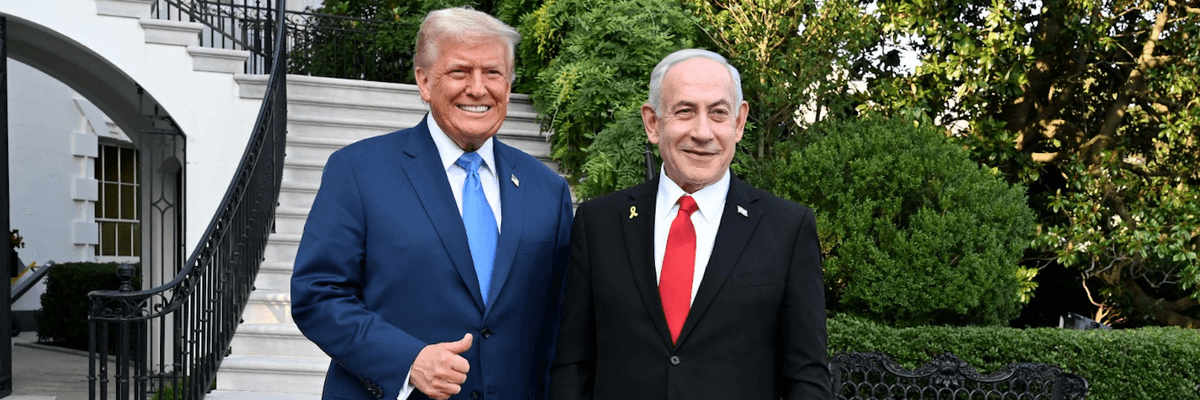
US President Donald Trump and Israeli Prime Minister Benjamin Netanyahu pose for a photo outside the White House in Washington, DC on July 7, 2025.
(Photo by Benjamin Netanyahu/Facebook)
Connie Peck
Jun 29, 2026
Common Dreams

In a seminal article, entitled “Spoiler Problems in Peace Processes,” Stephen Stedman writes that “peacemaking is a risky business.” The greatest source of risk “comes from spoilers—leaders and parties who believe that peace emerging from negotiations threatens their power, worldview, and interests, and use violence to undermine attempts to achieve it.”

Spoilers can be inside or outside a peace process. Those inside have signed an agreement but fail to fulfill key obligations; those outside are either excluded from it or have excluded themselves. In terms of managing spoilers, it is important to determine why a particular party is refusing to honor a peace agreement.

Spoilers are already causing problems for the memorandum of understanding (MOU) between Iran and the US announced on June 14, after weeks of Pakistani mediators trading proposals back and forth between the parties. The 14-point MOU was officially signed by President Donald Trump on June 17 in Versailles and by President Masoud Pezeshkian in Tehran the next day.
The Process of the Negotiations Following the Signing of the MOU

To develop the MOU into a permanent peace agreement, face-to-face negotiations were scheduled for June 19 in Bürgenstock, Switzerland under the auspices of Pakistani and Qatari mediators. But because heavy fighting in Lebanon between Israel and Hezbollah was violating the first clause of the MOU, which called for the termination of military operations “including in Lebanon,” the Iranians declared that they would not attend and threatened to reclose the Strait of Hormuz. Vice President JD Vance, who was to lead the US delegation, also canceled his flight to Switzerland.

Although the negotiations were successful, several parties—Israel, Hezbollah, Trump, and hardliners in Iran—almost derailed the process and are still attempting to do so.

Nonetheless, on June 20, after Iranian state TV announced that Iran’s delegation, led by the Speaker of Parliament Mohammad Bagher Ghalibaf and Foreign Minister Abbas Araghchi, had arrived in Switzerland, Vance departed the US to join Special Envoy Steve Witkoff and Trump’s son-in-law Jared Kushner, who had traveled there earlier.

The talks, dubbed the Lake Lucerne Summit, began on the morning of June 21 with separate meetings between the leaders of each delegation with the mediators, followed by quadrilateral talks in the afternoon between the two parties and two mediators.

Vance presented a promising opening statement, saying: “Never before has the Iranian and American leadership met at such a high level... What the President has asked us to do is turn over a new leaf to transform our relationship with the people of Iran, and to extend an outstretched hand that says to the people of Iran that if your leadership is willing to give up being a driver of regional instability, if they are willing to give up nuclear weapons ambitions for the long term, then the United States is willing to fundamentally transform our relationship.”

But 80 minutes later, the Iranians got word that Trump (apparently annoyed by the threatened closure of the Strait of Hormuz) told Fox News in a phone call that unless the strait remained open, the negotiators talking to Vance will “never make it back to their country—in fact, they will have no f**king country to return to at all.”

In response, the Iranian delegation protested to the mediators, saying this was an unacceptable threat to their personal safety and then staged a walkout. Their absence was apparently temporary, because Vance, describing the talks as “messy,” later said: “Yes, they did threaten to walk out... but we were negotiating well past one in the morning... so they didn’t [permanently] walk out.” In all, there were about 18 hours of intensive talks and consultations.


The Outcome and Substance of the Negotiations


The talks produced a road map for a final deal within 60 days and created a High-Level Committee for Political Oversight to manage the process and coordinate the three working groups who will report to the committee weekly: a Nuclear Working Group, a Sanctions Tracking Group, and a Monitoring and Dispute-Resolution Group.

Two crisis management mechanisms were also agreed: a Strait of Hormuz Secure Communication Channel (i.e., a hotline) to provide communication links between maritime security forces to “avoid incidents and miscommunication” and guarantee safe passage for shipping through the Strait of Hormuz; and a Lebanon De-Confliction Cell to prevent further military escalation and ensure compliance with the cessation of hostilities.

In the end, the talks were more successful than the first round in April in Islamabad. Vance called them “a good foundation;” Araghchi said the mediators delivered “major progress.” A joint statement by the mediators described “encouraging progress” and cited a “positive and constructive atmosphere.” The Swiss Foreign Ministry also welcomed “constructive progress.” Technical talks between the working groups began the next day.


Spoiler Issues

Although the negotiations were successful, several parties—Israel, Hezbollah, Trump, and hardliners in Iran—almost derailed the process and are still attempting to do so.

The success of the process appears to be due to the mediators employing “the departing train strategy, which implies that the peace process is a train leaving the station at a preordained time: Once set in motion, anyone not on board will be left behind.” It is a determination that the peace process will go irrevocably forward regardless of spoiling efforts. Other strategies that Stedman proposes for managing spoilers include: inducement, socialization, deterrence-coercion, and withdrawal.

Although a comprehensive accounting of each spoiler’s motivation and strategies for dealing with them exceed the scope of this article, some general points can be made.


Israel and Hezbollah


Long-term enemies, Israel and Hezbollah, reengaged in fighting on March 2, when Hezbollah launched missiles against Israel to protest Ayatollah Ali Khamenei’s assassination, followed by intense hostilities between them. Since the first clause of the MOU calls for the termination of military operations, including in Lebanon, this presents a dilemma, since both Israel and Hezbollah were outside the US-Iranian peace process and didn’t agree. Indeed, Israeli Prime Minister Benjamin Netanyahu explicitly stated that since it isn’t a party to the MOU, Israel will not withdraw from Lebanon.

In response, the US established a separate mediation process between Israel and Lebanon (with Hezbollah again outside the process) which agreed to ceasefires of varying lengths, subsequently violated by both Israel and Hezbollah. More recently, Lebanon and Israel have agreed to a lasting peace and security deal, whereby the Lebanese Armed Forces would gradually assume control over all Lebanese territory as Hezbollah is disarmed; in parallel, Israeli forces would engage in a staged withdrawal. Hezbollah, however, rejects this and says that it will not disarm until Israel withdraws totally.

When peace processes are scuttled by spoilers and war resumes, the results are often catastrophic, with the casualties being infinitely higher than those of the original conflict.

Netanyahu, his government, and much of the Israeli public are disappointed with the MOU since it doesn’t address many of their war aims, e.g., regime change, Iran’s ballistic missile program, and its support for proxies. They also oppose sanctions relief and other economic benefits.

Both Israel and Hezbollah fit the description of “total spoilers,” who are often “led by individuals who see the world in all-or-nothing terms” and are opposed to compromise. “Any commitment to peace by a total spoiler tends to be tactical—a move to gain advantage in a struggle to the death.”

The “departing train strategy,” used by the mediators at the Lake Lucerne Summit, is a good way to manage total spoilers. Another effective approach is for the spoiler’s patron to warn the spoiler of dire implications if it escalates attacks, which apparently Trump has done, much to Netanyahu’s annoyance.

It has also been argued that Hezbollah might moderate its actions for now by inducement, e.g., the promise of renewed assistance from Iran if economic benefits accrue from the peace process, but if this allows it to rearm later, that would merely postpone the problem.


Trump


Trump is, of course, inside the peace process and probably fits the description of a “greedy spoiler,” i.e., one who “holds goals that expand or contract based on calculations of cost and risk. A greedy spoiler may have limited goals that expand when faced with low costs and risks; alternatively, it may have total goals that contract when faced with high costs and risks.”

Although Trump reportedly wants out of the war, his firm belief that any provocation must be met with a response of greater intensity inevitably causes conflict escalation. When four days after the Lake Lucerne Summit, Iranian hardliners attacked a vessel trying to exit the strait, Trump ordered bombing of Iranian missile and drone sites.
Hardliners in Iran

Iran’s new Supreme Leader, Mojtaba Khamenei, has given his conditional approval to the MOU, with the qualification that he will not accept excessive demands by the US. He also praised the efforts of the Iranian negotiating team, which is seen as an attempt to silence opposition from hardliners. As well, the Islamic Revolutionary Guard Corps (IRGC) leadership, the Supreme National Security Council, and some members of parliament support it.

The hardline Paydari Front, however, which rejects engagement with the West and considers itself the guardian of revolutionary values, opposes it. There are also hardline members within the IRGC. As well, segments of the population oppose the MOU and demonstrations broke out when it was signed, with calls for death to the negotiating team.

The recent incidents in the Strait of Hormuz are an example of how this opposition can manifest itself. Like Trump, IRGC hardliners believe that every provocation must be met with a greater response, which accounts for their recent attacks on US bases in Kuwait and Bahrain, following Trump’s bombing. These hardliners were also outside the peace process and fit the typology of total spoilers.


Conclusion

The four spoilers mentioned above are currently presenting significant challenges to the MOU and must be managed if the peace process is to go forward.

One problem is that the lack of specificity in the MOU allows for different interpretations that spoilers can exploit to disrupt the process. This relates to how the MOU was negotiated, i.e., through the long-distance exchange of each party’s preferred positions, as opposed to the mediators sitting with the parties to explore their underlying interests before developing options. The current dispute is apparently related to Iranian interests to have control of how clearing of the strait takes place, i.e., with vessels exiting on the Iranian side, rather than the Omani side, which the US is encouraging. If parties’ interests with regard to this issue had been thoroughly explored during negotiations, a more specific formulation could have been included which might have avoided this problem.

In order to keep the peace process on track, the international community needs to be aware of the role of spoilers and do everything in its power to manage any disruptions.

Another issue is the inclusion of conditions in the agreement (e.g., the termination of military operations in Lebanon) that must be fulfilled by parties who are outside the process and don’t agree (notably, Israel and Hezbollah). Attempts to overcome this through US mediation between Israel and Lebanon, but with Hezbollah still outside the process, are not addressing the interests of one of the major parties and are thus stalemated.

It also appears that the procedural mechanisms established at the Lake Lucerne Summit to deal with such problems are not being utilized. A Strait of Hormuz Secure Communication Channel is apparently non-operational. Presumably, the new Monitoring and Dispute-Resolution Group could also be engaged. Hopefully, the mediators will quickly assist the parties in resolving the current dispute and ensure that these mechanisms become operational.

Of particular concern, is Stedman’s warning that history has shown that when peace processes are scuttled by spoilers and war resumes, the results are often catastrophic, with the casualties being infinitely higher than those of the original conflict. Rwanda offers a horrifying example.

Such an ominous possibility is foreshadowed by Trump’s recent post on Truth Social: “There may come a point when we are no longer able to be reasonable, and will be forced to militarily complete the job that we very successfully started. If that happens, the Islamic Republic of Iran will no longer exist.”

In order to keep the peace process on track, the international community needs to be aware of the role of spoilers and do everything in its power to manage any disruptions before the conflict escalates again, perhaps tragically.

Israel Killing West Bank Children at Highest Rate in Decades ‘With Virtually No Accountability’

“The system does not merely back those who pull the trigger—it effectively grants them a license to kill,” said the Israeli human rights group B’Tselem.


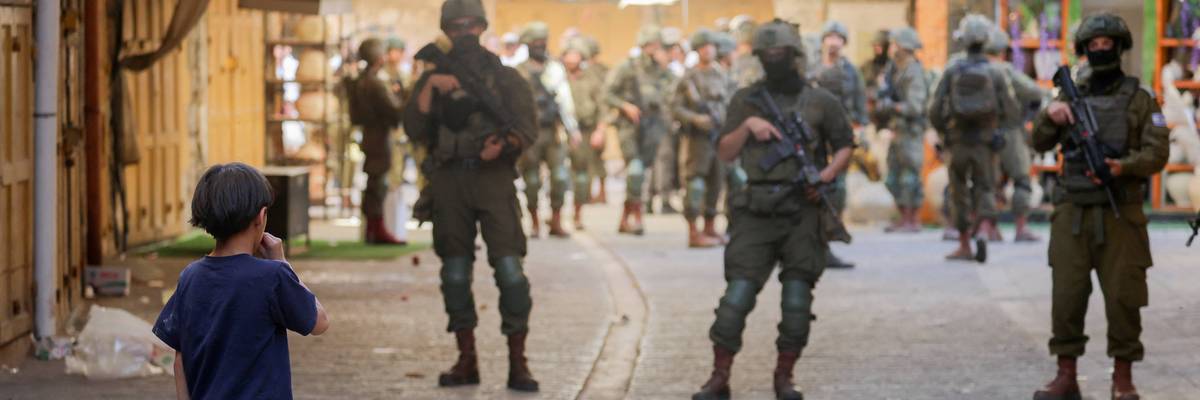
A Palestinian boy stands in an alleyway as armed Israeli soldiers stand guard in the occupied West Bank on June 13, 2026.
(Photo by Mosab Shawer / Middle East Images / AFP via Getty Images)


Jake Johnson
Jun 29, 2026
COMMON DREAMS

Between October 2023 and June 2026, Israel’s military killed Palestinian children in the occupied West Bank at the highest rate since 1967, according to a report published Monday by the Israeli human rights organization B’Tselem.

The report, titled Unshielded Childhood, argues that “the unprecedented scale of killing of Palestinian children and teenagers by Israeli forces is the result of a reckless open-fire policy, expanded to be even more permissive than in the past, that is currently being implemented in the West Bank.” Between October 7, 2023 and June 28, 2026, Israeli forces killed more than 240 children and teenagers, with 54 killed in 2025 alone.

The report, which tells the story of each child killed by Israeli forces last year, quotes Israel’s top West Bank commander, Avi Bluth, who recently boasted that Israeli forces are “killing like we haven’t killed since 1967”—a reference to the Six-Day War in which Israel seized the West Bank. Among those killed between the start of 2025 and June 7, 2026 were two brothers—one 5 years old, the other 6—and a seven-month-old baby.

Yuli Novak, executive director of B’Tselem, said in a statement that “the widespread, unprecedented killing of Palestinian children and teenagers in the West Bank is the result of a broader Israeli policy that enables the killing of Palestinians with virtually no accountability.”

“When the military commander of the area boasts that Israel is killing Palestinians ‘like we haven’t killed since 1967,’ he is confirming exactly that: The system does not merely back those who pull the trigger—it effectively grants them a license to kill,” Novak added.

Citing fellow Israeli human rights organization Yesh Din, B’Tselem noted that “no indictments are known to have been filed in cases involving killings in the West Bank” since October 2023.

“Yet the immunity guaranteed in advance and the absence of any real demand for accountability after these crimes are committed are not confined to the legal sphere,” the report states. “They are also reflected in ‘public impunity’ that stems from the Israeli public’s indifference to the killing of Palestinian children.”


B’Tselem linked the spike in Israeli forces’ killing of Palestinian children in the West Bank to “the military’s declared easing of open-fire regulations at the end of 2021, reportedly permitting soldiers to use lethal fire against stone throwers in a departure from previous rules.”

“The new regulations permitted use of lethal fire even at individuals fleeing after suspectedly throwing stones, who no longer posed a danger—in violation of international law,” the group noted. “After 7 October 2023, the rules of engagement were further expanded, leading to another sharp rise in fatalities.”

B’Tselem’s investigation found that just two of the 54 Palestinian children and teenagers killed in the West Bank last year were armed with guns at the time they were killed by Israeli forces.

The group continued:
Thirteen were shot while throwing stones at roads or at armored Israeli forces, with no injuries reported from the stone-throwing. By contrast, at least 21 were not involved in any clashes, even when clashes were taking place nearby that included stone-throwing, hurling explosives or live fire. Regarding 12 minors, the military claimed they had tried to injure forces by throwing Molotov cocktails, IEDs ,or stones; B’Tselem’s investigation could neither verify nor refute this claim. Another teen was the object of a targeted killing. Forty-seven of the children and teenagers were killed by gunfire, and the remaining seven in airstrikes.

B’Tselem emphasized that the West Bank killings “cannot be separated from Israel’s killing of more than 21,000 Palestinian children in the Gaza Strip.”

“By allowing Israel to kill on such a scale in Gaza without consequences, the international community has effectively given it a green light to pursue the same lethal policy in the West Bank,” the group said in a statement. “As long as Israel continues to enjoy near-total impunity in the world, the lives of Palestinians—including children—will remain unprotected and exposed.”

Obliterating Gaza’s Children: The Damning UN Report


From Gaza and beyond, Israeli authorities and security forces have deliberately targeted Palestinian children. It is in line with the new Obliteration Doctrine and the topic of a new UN report.

by | Jun 29, 2026


When I was working on The Fall of Israel (2024) and particularly The Obliteration Doctrine (2025), what I found most repulsive was the targeting of children in the Gaza Strip.

By late 2024, the testimonies of health professionals on location indicated that the deaths of many children in Gaza were not just collateral damage, but outcomes of deliberate, targeted actions.

The testimony of Dr. Feroze Sidhwa, a young American trauma and general surgeon who had volunteered in Palestine including the European Hospital in Khan Younis, was particularly compelling.

“I’ve seen violence and worked in conflict zones,” Sidhwa said. “But of the many things that stood out about working in a hospital in Gaza, one got to me: Nearly every day I was there, I saw a new young child who had been shot in the head or the chest, virtually all of whom went on to die.”

The statement of Dr. Sidhwa, who subsequently became one of the endorsers of The Obliteration Doctrine, was supported by dozens of other remarkable and courageous medical volunteers in Gaza. And these testimonies, in turn, have been supported by many reports of multiple international NGOs and multilateral organizations.

So, the latest report of the UN Independent International Commission is hardly new. Nonetheless, it is among the most consequential documents to emerge from the Gaza war. Its conclusion is stark: Israeli authorities and security forces have deliberately targeted Palestinian children, actions that the Commission argues constitute genocide, crimes against humanity, and war crimes. 

The Commission’s findings

The Commission’s report concludes that the deliberate targeting of Palestinian children is not incidental collateral damage but part of a recurring pattern of conduct. In line with the Genocide Convention, it argues that such actions are a key indicator of genocidal intent because they strike at the future existence of the Palestinian people.

According to the inquiry, more than 20,000 Palestinian children were killed between October 2023 and October 2025, representing roughly 30 percent of all fatalities, while over 44,000 were injured. Even after the October 2025 ceasefire, children reportedly continue to be killed and maimed.

The Commission cites cases involving sniper fire, quadcopter drones, precision-guided munitions, and high-yield bombs used in densely populated civilian areas. It argues that the nature of these weapons systems often allowed operators to identify their targets, including whether they were children.

Israel has rejected the findings as biased and defamatory.

Regardless of political positions, the significance of the report lies in its accumulation of evidence, legal analysis, forensic testimony, and witness accounts. It represents one of the most comprehensive international investigations yet conducted on the impact of the war on children.

It is a condemnation that casts a long dark shadow over the entire Israeli war government and its international collaborators, arms suppliers and financiers. 

Children and the logic of genocide

In The Obliteration Doctrine, I showed that modern warfare in Gaza evolved beyond traditional military objectives toward the destruction of the social foundations of Palestinian existence. The Commission’s findings reinforce this interpretation.

Historically, genocide scholars have emphasized that attacks on children occupy a unique place in genocidal campaigns. The 1948 Genocide Convention identifies not only direct killing but also the infliction of conditions calculated to destroy a protected group. In Gaza, famine served the same genocidal function as starvation in the Warsaw ghetto.

Children embody demographic continuity, cultural reproduction, and collective future. Consequently, systematic violence against children has appeared repeatedly in cases later recognized as genocide, from the Armenian genocide to Rwanda.

The Commission explicitly states that targeting children attacks “the very capacity of the Palestinian people to exist and determine their future.” Its findings connect killings to broader patterns: destruction of schools, hospitals, pediatric facilities, neonatal care units, food systems, and water infrastructure.

That’s the ultimate objective: the genocide and ecocide of Palestine, its culture and children. Israel’s devastation of Lebanon follows in the footprints.

From an empirical perspective, the cumulative effect is measurable. Public-health research consistently demonstrates that childhood exposure to mass violence produces lifelong deficits in physical health, educational attainment, psychological resilience, and economic productivity.

Israel did not triumph in Gaza. Moral darkness did. 

Human cost beyond death statistics

Death tolls alone understate the catastrophe. The Commission reports more than 44,000 wounded children.

Gaza now reportedly has one of the world’s highest concentrations of child amputees. Thousands face permanent disability from burns, blast injuries, spinal trauma, vision loss, and neurological damage. Worse, Israel has often denied treatment to thousands of Gazans who lost limbs in Israeli attacks.

Research from conflicts in Syria, Iraq, Afghanistan, and Bosnia demonstrates that severely injured children often experience decades of adverse outcomes.

Rates of post-traumatic stress disorder, depression, anxiety disorders, and developmental impairments can remain elevated throughout adulthood. Educational interruptions reduce lifetime earnings. Family structures collapse under caregiving burdens.

The Commission also documents starvation, disease outbreaks, displacement, and collapse of medical services. Such conditions affect not only present survival but the health of future generations through malnutrition, impaired fetal development, and maternal health crises.

The result is not merely a humanitarian emergency. It is the systematic destruction of human development on a societal scale. 

Hind Rajab, the voice that refuses to disappear

This tragedy is symbolized by the short life and unwarranted execution of six-year-old Hind Rajab.

Trapped in a vehicle with relatives during military operations in Gaza, Hind’s desperate phone calls became known worldwide. Audio recordings captured a terrified child trapped in a car in Gaza, pleading for rescue while surrounded by the bodies of family members.

The story is depicted by a Venice-awarded 2025 docudrama by Kaouther Ben Hania about the young girl, whose desperate calls for help to the Red Crescent were recorded and went viral.

Rescue efforts reportedly failed, and Hind was later found dead. The Commission specifically references the case as emblematic of broader patterns under investigation.

Historically, certain victims become moral symbols because they crystallize a larger reality. During the Vietnam War, the photograph of Kim Phúc became such a symbol.

Hind Rajab has become one of the defining voices of Gaza because her case transforms abstraction into human reality.

Statistical discussions of thousands of deaths become impossible to separate from the image of a frightened child waiting for help that never arrived. 

High technology and moral decay

One of the most troubling aspects of the Commission’s report is the relationship between technological sophistication and ethical collapse.

Israel possesses some of the world’s most advanced military technologies, including AI-assisted targeting systems, drones, surveillance platforms, precision-guided munitions, biometric monitoring, and integrated battlefield intelligence.

In theory, such capabilities should reduce civilian casualties by improving discrimination between combatants and noncombatants.

Already in The Fall of Israel, two long years ago, I showed that precisely the reverse has taken place. Despite all the official rhetoric of “targeting,” the Palestinians in Gaza were hammered for months by indiscriminate bombing, as even the U.S. intelligence community acknowledged already in late 2023.

In line with the Obliteration Doctrine, modern technology – AI-amplified bombing, or alcocide – was not deployed to optimize precision-targeting. Rather, it was used to maximize deaths. The execution of innocent civilians, particularly children, was no longer just collateral damage, but the tacit objective.

Even as these realities became known, that did not halt bombing, which prevailed over months despite official indignation. The maximized mass atrocities slowed only when the arms transfer supply chains could no longer satisfy the demand.

The Commission concurs. It points to incidents in which advanced systems allegedly enabled more precise killing rather than greater protection. Precision technology does not inherently produce ethical outcomes; it amplifies the intentions guiding its use.

In The Fall of Israel, this was one of the central themes. Technological superiority cannot compensate for moral deterioration. States may achieve unprecedented operational efficiency while simultaneously eroding the ethical restraints necessary for legitimate military conduct.

That’s the rotting moral swamp where the international community stands today. 

The cost to Israeli society and soldiers

The consequences do not end with Palestinian victims. When perpetrators are done with their victims, they act out their moral ambivalence on themselves and their loved ones, one way or another.

A growing body of clinical evidence from military psychology demonstrates that participation in, witnessing of, or exposure to violence against civilians, especially children, can generate profound psychological injury among soldiers themselves.

This is what trauma centers in Israel know only too well (and what the government struggles to suppress from the media). The men who return from the indiscriminate killing fields of Gaza – and increasingly Lebanon – are no longer men. They are walking time bombs.

When you are expected to kill without any moral consideration, you continue killing: if not others, then yourself. Research on U.S. veterans from Iraq and Afghanistan has identified high rates of PTSD, depression, substance abuse, suicide risk, and what clinicians increasingly term “moral injury” – psychological damage resulting from participation in, failure to prevent, or witnessing acts that violate deeply held moral beliefs.

Studies consistently show that moral injury can be more persistent than fear-based trauma because it attacks personal identity and ethical self-understanding.

Prolonged occupation and repeated campaigns of collective punishment have contributed to a process of extraordinary social brutalization within Israeli society. The concern is not merely political polarization but normalization of violence. When civilian suffering becomes routine, moral thresholds shift.

History offers sobering parallels. Colonial wars in Algeria, Indochina, and elsewhere often left lasting psychological scars not only on the colonized but on the societies conducting the campaigns.

That’s what happens when the living dead return home. 

If Gaza becomes the new norm

The broader international implications may be even more alarming. If the deliberate targeting of children becomes normalized, the consequences extend far, far beyond the Middle East.

International humanitarian law depends fundamentally on protecting civilians, especially children. If powerful states can openly disregard these norms without meaningful accountability, the deterrent effect of international law weakens everywhere.

Empirical evidence suggests that impunity encourages repetition. The failures to prevent atrocities in Rwanda, Bosnia, and Darfur contributed to future violations by signaling weak enforcement. Conversely, successful accountability mechanisms have historically reduced recurrence.

The risks include greater regional radicalization, transnational terrorism, refugee flows, intensified great-power rivalry, erosion of international institutions, and the spread of increasingly unrestricted warfare.

In The Obliteration Doctrine, I warned repeatedly that what happened in Gaza won’t stay in Gaza. The Strip became a laboratory for new forms of warfare later exported elsewhere.

The Commission’s findings raise precisely that concern. If the systematic destruction of children, schools, hospitals, and civilian infrastructure becomes accepted in one conflict, future belligerents may invoke the precedent.

The ultimate question raised by the report is therefore not only what happened to Gaza’s children. It is whether the international community is willing to preserve the principle that children remain beyond the reach of war itself.

For if that principle fails in Gaza, it will not survive elsewhere.

The original version was released by Informed Comment (US) on June 26, 2026.

Dr. Dan Steinbock is an internationally recognized visionary of the multipolar world and the founder of Difference Group. He has served at the India, China and America Institute (US), Shanghai Institutes for International Studies (China) and the EU Center (Singapore). For more, see https://www.differencegroup.net