Tuesday, June 30, 2026

 Washington or 'Trumptown': The architectural expression of a cult of personality


The redevelopment of a public golf course, extensions to the White House and dreams of a triumphal arch: Donald Trump seems to have a growing spate of building projects on the boil in Washington. So what’s driving the president to remake the US capital in his image?

Issued on: 30/06/2026
FRANCE24
By: Sébastian SEIBT

US President Donald Trump playing golf against a black-and-white backdrop of Washington, with a fake sign announcing the opening of a Trump ‘resort’ in Washington. 
© France Médias Monde graphics studio

For US President Donald Trump, golf is both a guilty pleasure and an area of expertise. The US president has built golf courses all over the world, spends many hours perfecting his swing, and now wishes to add a golf course to his grand project to “revamp” Washington DC.

“It will be one of the finest golf courses in the world,” said Trump on June 28 during his visit to the East Potomac Golf Links course, a historic public course managed by a nonprofit. The property magnate, who became the 47th president of the United States, has promised to start renovation works this year from September 1.

Remaking Washington in his image

Located in the heart of the historic district of Washington DC, not far from the Jefferson Memorial, the Washington Monument and Arlington National Cemetery, the golf course, which dates back to 1923, has been described by Trump as “virtually unusable”, “outdated” and even “dangerous” for golfers.


However, not all golfers agree. Many fear Trump’s project would make the course less accessible to the average golfer, as reported in the Washington Post.

Regardless of the naysayers, Trump is ploughing ahead with the refurbishment of the course, which is part of a broader redevelopment programme unprecedented in Washington.

“Donald Trump is planning a significant number of changes in the capital at a very rapid pace,” said Peter Finn, a political scientist and specialist in US presidential powers at the University of Greenwich.

“It will be one of the finest golf courses in the world,” said Donald Trump on Sunday 28 June during his visit to the East Potomac Golf Links municipal course. © France Médias Monde graphics studio

Aside from his golf project, the US president has indicated he wants to erect a triumphal arch in Washington modelled on the Arc de Triomphe in Paris; he has already embarked on a controversial renovation of the reflecting pool at the foot of the Lincoln Memorial; he renamed the Kennedy Centre the Trump Kennedy Centre (a project blocked by the courts); and he wants to add a ballroom to the East Wing of the White House.

Another project on the president’s wishlist involves Lafayette Park, at the entrance to the White House, which is set to welcome 47 new trees in reference to Trump as the 47th president of the United States.

Some government buildings now carry huge banners bearing the president’s image. On the facade that houses the Department of Agriculture, Trump’s portrait stands alongside that of Abraham Lincoln. Over at the Department of Labour, the president shares the limelight with Theodore Roosevelt whose portrait hangs outside the building next to Trump’s.

According to Politico, Trump has also reportedly expressed interest in renaming Washington DC’s Dulles International Airport and New York’s Penn Station in his honour.

Making legacy great again

“This fits perfectly with Trump’s personality – he always wants everything, right now. Washington is full of monuments and streets named in honour of past presidents, but Trump doesn’t want to wait for a possible tribute after he leaves office,” said Finn.

There’s also his age to consider: Trump is now over 80.

“It’s an age when one thinks above all of securing one’s legacy. For a president, this often means emphasizing one’s achievements, but Trump’s political triumphs are rather negligible, and not very substantial,” said Patrick Andelic, a specialist in the history of the American political system at Northumbria University.

This would account for the rush to rename both existing monuments and expedite the revamping or building of new ones, which are worthy of securing the president’s place in history.

“We mustn’t forget that the Trump Organisation – the parent company of Donald Trump’s property ventures – specialises not only in construction but also in developing the Trump brand. All the projects the president has launched in Washington fall into these two categories,” said Andelic.

Trump may be pushing the limits of – even surpassing – his predecessors but he is certainly not the first to want to remake Washington in his own image.

“He was probably inspired by the Ronald Reagan Legacy Project, which aims to have a building or site named in the president’s honour in every county in the United States,” Andelic added.

This initiative to honour the legacy of the 40th US president “did not, however, seek to impose on local authorities to use the president’s name, but rather to persuade them. Trump, on the other hand, is taking a fait accompli approach and challenging anyone to oppose it. This, once again, is very much in line with the expression often attributed to some property developers, which is that ‘it is better to ask for forgiveness than for permission’", said Andelic.

Natasha Lindstaedt, a specialist in authoritarian regimes at the University of Essex said his approach “resembles that of an authoritarian regime rather than that of the leader of a democratic country”.

‘Authoritarian drift’

Property developments designed to aggrandise the US leader “are a sign of a country’s authoritarian drift”, said Lindstaedt.

Indeed, she added that Trump’s ambitions in Washington are not so far removed from those of leaders with authoritarian tendencies, such as “Heydar Aliyev, who had streets named after him throughout Azerbaijan, or the former president of Turkmenistan, Saparmyrat Niyazov, who established a sort of architectural cult of personality”.

Lindstaedt warns that Trump’s tendency to want to have his name emblazoned on every wall in the capital should not be taken lightly. “It is an attempt to establish a cult of personality by circumventing or ignoring normal institutional rules and processes.”

The way in which Trump is transforming Washington is leading American democracy “down a slippery slope”, adds Lindstaedt, who like most experts believes the president’s decisions should be challenged in a court of law.

The fact that the courts ruled against the president, to have his name removed from the Kennedy Centre, “shows that constitutional procedures cannot be ignored with impunity”, noted Andelic.

As these events unfold in Washington, it “demonstrates that one of Trump’s greatest frustrations is not being able to act like an authoritarian leader, because the American system is too complex and robust to allow him to act entirely as he pleases”, said Finn.

The president’s plan to transform the East Potomac Golf Links course is the latest case in point. Works are set to go ahead from September, despite a federal judge having warned the White House not to proceed without first obtaining the necessary approvals. Trump has not indicated he intends to apply for them. And even with the prospect of another court battle, it seems Trump remains undeterred in his mission to rebrand Washington.

This article has been translated from the original in French by Nicole Trian.


In the rough: Critics outraged at Donald Trump’s latest golf project

Donald Trump and Interior Secretary Doug Burgum tour the East Potomac Park golf course - Sunday 28 June 2026
Copyright AP Photo

By David Mouriquand
Published on

Donald Trump has announced his new plan: the renovation of Washington D.C.'s East Potomac Golf Links. Critics aren't happy about the "vanity project".

After turning the water algae green instead of “American flag blue”, Donald Trump’s reported $16 million renovation of the Lincoln Memorial Reflecting Pool is allegedly complete.

It is now apparently in "full use" and will be treated again to be in “perfect shape” after 4 July celebrations.

Now that's out of the way, Trump has revealed his new project in a lengthy Truth Social post: Building “one of the Greatest Golf Courses anywhere in the World”.

Trump said he has visited the “dilapidated, worn out, and very dangerous and outdated Golf Course known as East Potomac Golf Links” in Washington, D.C., and he wants a major overhaul of the “virtually unplayable” golf course.

Trump wrote: “We will build one of the Greatest Golf Courses anywhere in the World which, importantly, will also be made available to the Public. When completed, this Course will have the ability to host Major Golf Tournaments, including The U.S. Open, The Ryder Cup, The PGA Championship, and other top PGA Tour events.”

Trump went on to announce that the renovations would begin on 1 September, despite a federal judge’s warning of "serious consequences" if the administration begins work without getting approval and notifying the court in advance.

"I'm going to say this one more time, and I do not want a situation where something has happened and then I'm being told by the government or by a foundation or by a bulldozing company that it's too late to do anything about it," U.S. District Judge Ana Reyes said. "If anything like that happens... there are going to be serious consequences."

Should the renovations go ahead, there’s also the matter of which “Major Golf Tournaments” could be hosted there, as locations are planned years in advance. For instance, locations for the U.S. Open are scheduled through 2051 and the PGA Championship is set through 2035.

Critics are not impressed with this latest “vanity” project.

Following the demolition of the White House’s East Wing, plans to build "the GREATEST and MOST BEAUTIFUL Triumphal Arch anywhere in the World", the destroyed White House lawn following Trump’s birthday UFC event and the algae-infested Reflecting Pool, many are highlighting the extent of his “destruction” of Washington D.C.

Others are calling out Trump’s “self-serving” initiatives, which do not reflect or address the American public’s primary concerns.

As one user online put it: “As millions of Americans lose healthcare and food assistance, costs continue to soar, and war rages in the Middle East, Trump unveils his latest vanity project: building what he claims will be one of the world's greatest golf courses in Washington, D.C.”

Check out some of the reactions below:

The US' 250th Independence Day takes place on Saturday 4 July.


Switzerland returns 18 looted Benin Bronzes to Nigeria

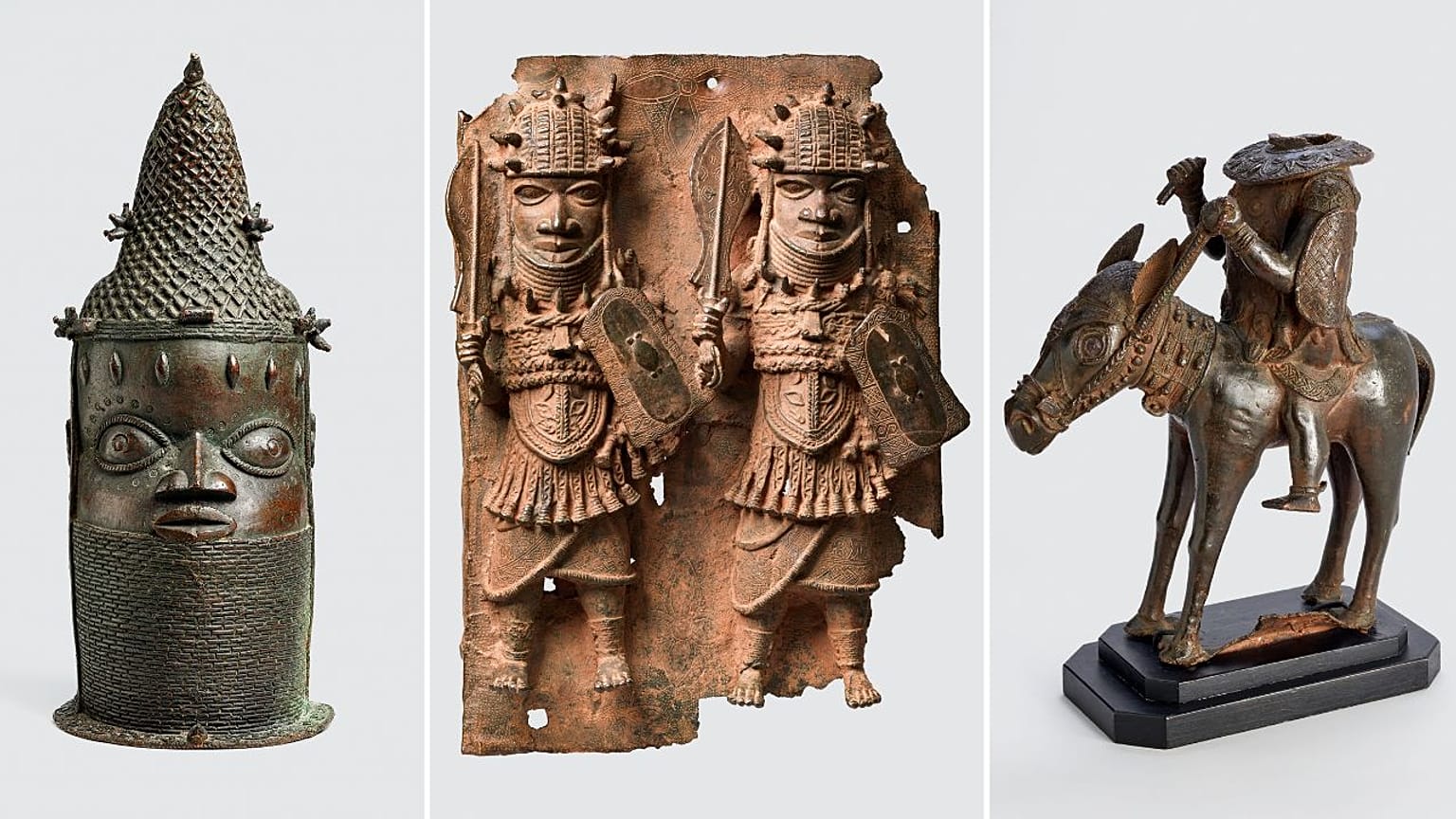
Commemorate queen head, relief plate and horse rider returned from the Ethnographic Museum at the University of Zurich to Nigeria
Copyright Kathrin Leuenberger/Ethnographic Museum at the University of Zurich

By Sarah Miansoni
Published on

Three Swiss museums have returned 18 Benin Bronzes to Nigeria, a new step in the African's country decades-long struggle to repatriate its looted cultural heritage.

Nigeria’s stolen cultural heritage is slowly coming back home.

On Monday, Swiss authorities returned 18 artefacts looted during the colonial era to Nigeria in a ceremony at the National Museum in Lagos.

The restitution is the result of a collaborative process between Swiss museums and their Nigerian partners under the Benin Initiative Switzerland. The programme was launched in 2021 to investigate the provenance of Benin objects in Swiss collections.

Monday’s ceremony marked the first step in the implementation of an agreement signed in March 2026, in which Switzerland agreed to eventually transfer ownership of 28 pieces to Nigeria.

“The return of our cultural heritage marks more than the recovery of artefacts. It reflects the power of dialogue, trust, and international cooperation,” Nigeria’s culture minister Hannatu Musa Musawa said on X.

Fourteen of the pieces came from the Ethnographic Museum at the University of Zurich, two from the Museum Rietberg Zurich, and two from the Musée d’Ethnographie de Genève.

The 18 artefacts are part of the country’s famous Benin Bronzes, a group of hundreds of sculptures and plaques mostly made of metal and ivory that decorated the royal palace of the Kingdom of Benin, now the Southern Nigerian Edo state. They performed political and religious functions and were essential to the kingdom's power.

British colonial forces stole most of these objects during a brutal punitive expedition that killed thousands of people in 1897.

After the violent raid, the Kingdom of Benin was absorbed into colonial Nigeria. The stolen pieces were eventually sold to over 130 museums in 20 countries, mostly in the United Kingdom and Germany.

The handover ceremony in Lagos also included the restitution of a bronze bracelet and four archaeological monoliths from Nigeria’s Niger Delta region which were “seized in Switzerland as part of criminal proceedings and subsequently transferred to the state,” the Swiss Federal Department of Home Affairs said in a statement.

Switzerland and Nigeria also signed a cooperation agreement aiming to further the protection of cultural heritage, as part of “a broader effort to address historical injustice.”

A decades-long restitution battle

Art historians have shown that African states’ and communities’ calls for the return of artefacts looted during the colonial period are as old as the thefts themselves. But effective returns have only started to materialise in recent years, with Nigeria among the countries at the forefront of this struggle.

Last year, the Netherlands returned 119 Benin Bronzes to Nigeria, the largest physical restitution of such artefacts to the country to date.

In February 2026, the University of Cambridge transferred legal ownership of 116 Benin Bronzes to Nigeria’s National Commission for Museums and Monuments (NCMM), with the physical transfer still to be arranged.

Other African countries have had wins in that field. Benin received 26 royal treasures from France in 2021, a process depicted in Mati Diop’s award-winning documentary Dahomey. French colonial troops had stolen the pieces during the 1892 colonisation of the Dahomey kingdom.

Earlier this year, French authorities also returned the Djidji Ayôkwé, a sacred talking drum, to Ivory Coast, 110 years after it was seized by colonial authorities.

But the restitution battle remains plagued by reservations and conflicts. Nigeria sent a formal repatriation request to the British Museum in October 2021. The institution retains over 900 objects from the Kingdom of Benin, including 203 Benin Bronzes, but has so far refused to return them under the argument that its collections are legally unalienable.

Ownership disputes can go on even after the repatriation is completed. In November 2025, protesters disrupted the opening of the Museum of West African Art in Nigeria’s Benin City over claims that its handling of repatriated artefacts violated the authority of the city’s traditional rulers. The museum’s launch was postponed sine die.

Some of the artefacts returned by Switzerland on Monday will be on display at the National Museum in Lagos, while most of them will return to their original home in Edo State, where they will be temporarily stored at the National Museum in Benin City.

“The NCMM plans to establish a world-class gallery to display all the recently returned Benin Artefacts, which will include not only the Swiss returns but also the artefacts returned last year from the Netherlands and the expected Cambridge returns,” said the Swiss Federal Department of Home Affairs.


AI helps scientists decipher papyrus scroll burnt in Vesuvius eruption

Scientists were able to decipher the fragile scroll without unrolling it.
Copyright Vesuvius Challenge

By Sarah Miansoni
Published on

The scroll was first discovered in the 1750s but was too fragile to open. Using AI, scholars deciphered the full text and discovered a philosophical treaties on ethics and human progress.

An ancient scroll that survived the eruption of Mount Vesuvius in 79 AD has finally revealed its secrets.

Scientists were able to decipher the fragile scroll without unrolling it. Instead, they used artificial intelligence to uncover what ended up being, rather ironically, a philosophical treatise on ethics, human nature and moral progress.

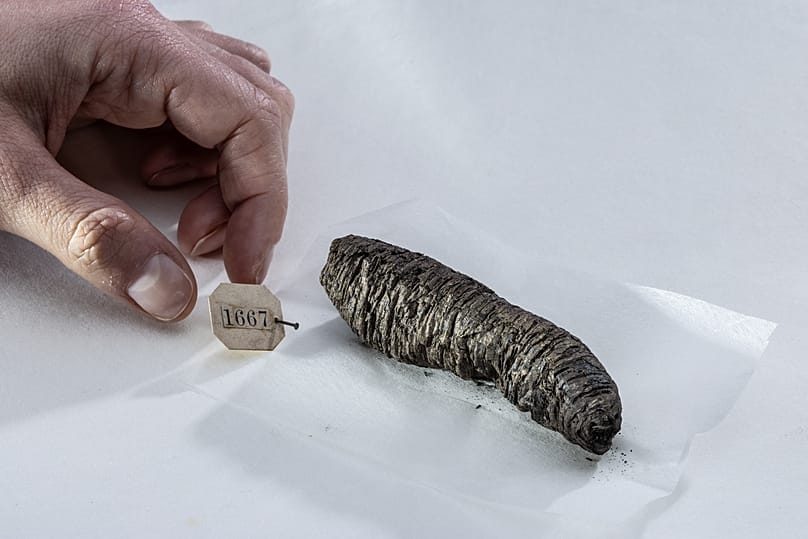
PHerc. 1667, as the scroll was dubbed, belonged to a library of carbonised manuscripts first unearthed in the 1750s in the ancient Roman town of Herculaneum.

In total, some 1800s papyrus pieces were miraculously preserved under the ruins of one of the city’s most lavish villas, which was destroyed in the eruption. The fragments form the only complete surviving library from the Greco-Roman world.

But once this treasure came to light, a new challenge arose.

The scrolls had survived a devastating eruption and had spent hundreds of years buried under volcanic ash; they were now too fragile to open. To unroll them meant risking them dissolving into dust. So they remained meticulously sealed.

PHerc. 1667 belonged to a library of carbonised manuscripts.
PHerc. 1667 belonged to a library of carbonised manuscripts. Paolo Verzone/National Geographic

In 2023, the Vesuvius Challenge provided researchers and papyrus enthusiasts with a new incentive to decipher the scrolls by turning the puzzle into a global contest with cash prizes.

Contestants used computer vision and machine learning — a subset of AI — to conclusive results.

That very year, a 21-year-old computer science student received $40,000 after becoming “the first person in two millennia” to discover a word — “purple” — from an unopened scroll.

A team of scientists from various European and US universities eventually managed to decipher all surviving text from an entire scroll this month.

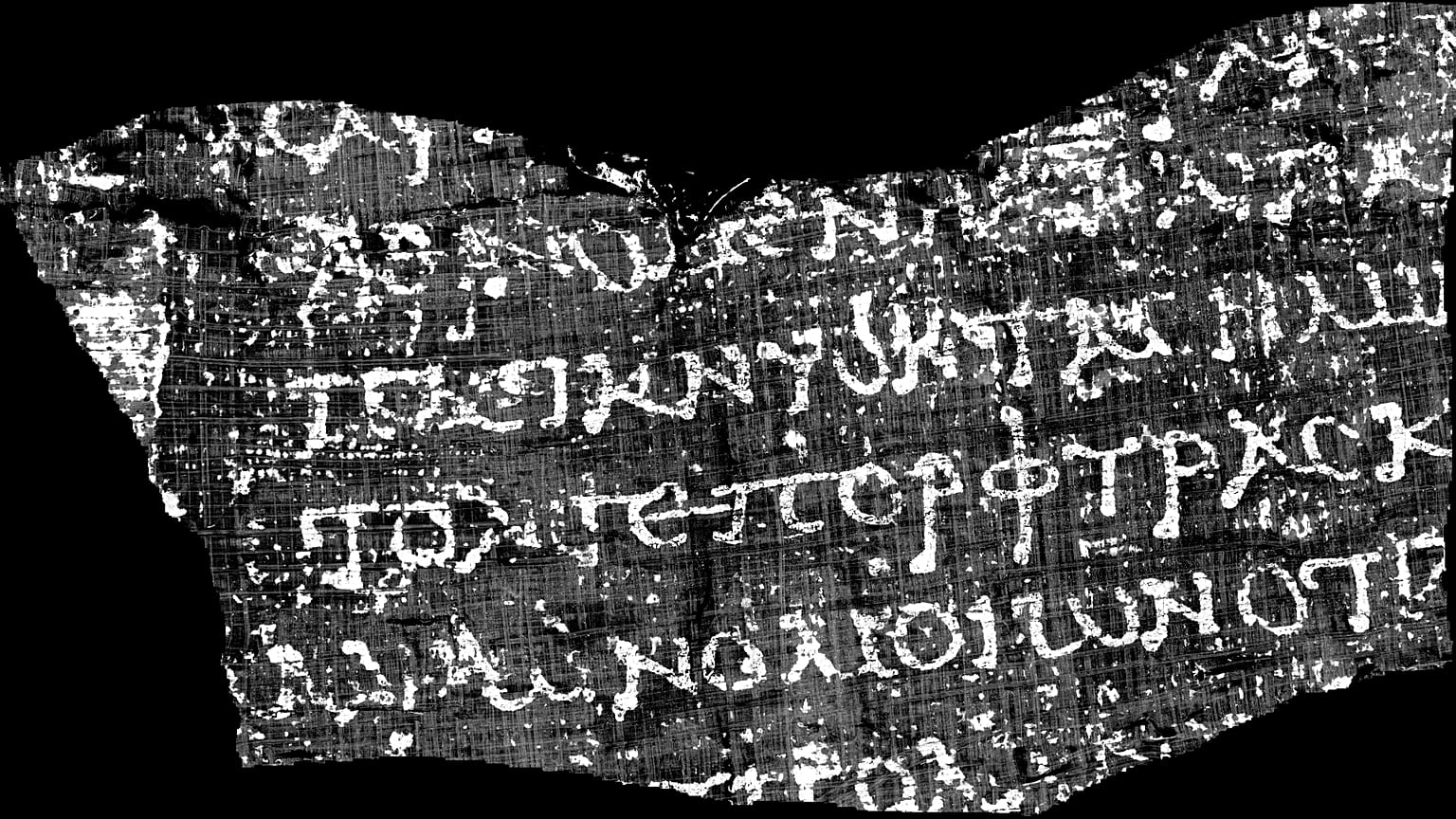
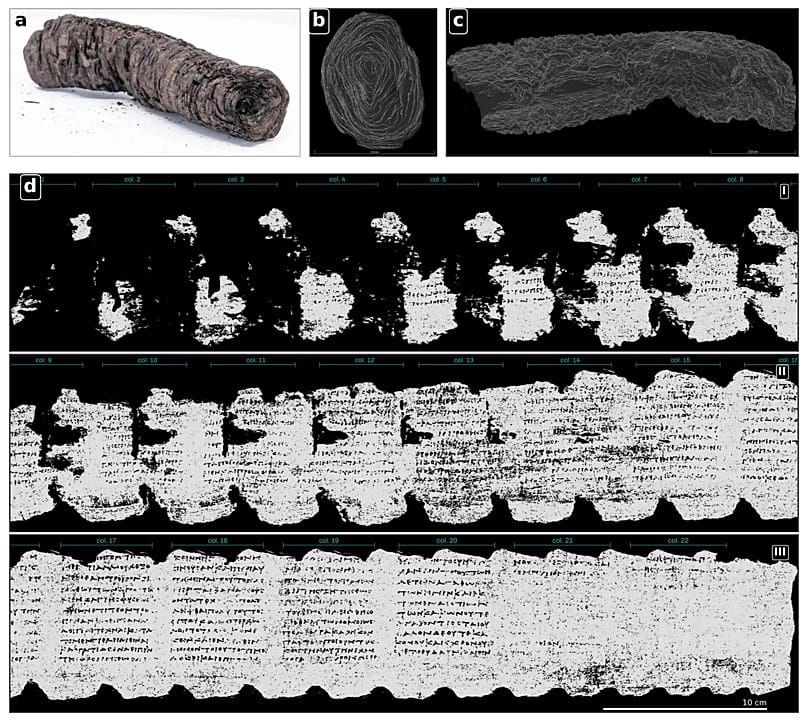
“PHerc. 1667 began as a blackened, rolled mass of carbonized papyrus,” the Vesuvius Challenged said last week. “To read it, we never unrolled it physically. Instead, we scanned it with high-resolution X-rays, reconstructed the wound sheet inside the volume, flattened it into a readable surface, and used machine learning to bring out the faint traces of ancient ink.”

Scientists used high-resolution X-rays and machine learning to reconstruct the inside of the scroll and read it.
Scientists used high-resolution X-rays and machine learning to reconstruct the inside of the scroll and read it. Vesuvius Challenge

Earlier attempts to open PHerc. 1667 damaged the papyrus and left only 8cm of an original height of 19–24cm. Researchers recovered the full text from that surviving portion to find “a philosophical treatise on ethics concerned with ethics, arts and human behavior.”

The scroll also names Aristocreon, a nephew and disciple of Stoic philosopher Chrysippus. Scholars said the text’s references, language and subject date it to the 2nd century BC and likely reflect Stoic doctrine.

“For nearly two millennia, many of these texts have been physically preserved but intellectually inaccessible,” said Vesuvius Challenge co-founder Brent Seales.

“Today - after years of interdisciplinary work combining advanced imaging, artificial intelligence (AI), academic research and an innovation contest - we are finally able to read them.”

This latest effort also led to the identification of a new book by Epicurean philosopher Philodemus from another scroll.

With just one manuscript deciphered, the Vesuvius Challenge is far from over. Hundreds more remain sealed, their secrets waiting to be discovered.

“Today, we are hearing voices that have been silent for 2,000 years,” Seales said. “For the first time, we are uncovering and reading them - but most importantly - we are beginning to understand them.


Breastfeeding linked to lower ADHD symptoms in young children, study finds

Exclusively breastfed babies show lower ADHD symptoms
Copyright Cleared/Canva

By Marta Iraola Iribarren
Published on

Scientists in Norway have found that exclusively breastfed babies are less likely to develop ADHD symptoms, with girls showing the strongest benefits.

Children who are exclusively breastfed during their first six months of life show lower risks of ADHD symptoms, a new study has found.

Researchers at the University of Bergen in Norway found an association between how long mothers breastfeed and the likelihood of their child developing ADHD symptoms.

“It is well established that psychiatric symptoms and disorders can be influenced by both genetic and environmental factors,” said Berit Skretting Solberg, a psychiatrist and researcher at the Department of Biomedicine, University of Bergen, and senior consultant at Betanien Hospital.

“We found that the longer a child was exclusively breastfed (up to six months), the lower the level of ADHD symptoms at ages three, five, and eight years,” added Solberg.

The researchers analysed data from more than 37,000 children born in Norway between 1999 and 2009, tracking breastfeeding patterns and following up at ages three, five and eight.

They found that any breastfeeding was associated with reduced ADHD symptoms, but the effect increased with both the duration and intensity, peaking with exclusive breastfeeding up to six months.

The study also found significant differences between the sexes, with girls showing the strongest associations at all ages.

Solberg noted that while heredity is probably the strongest risk factor for ADHD, neurodevelopmental disorders are shaped by multiple factors.

Attention deficit hyperactivity disorder (ADHD) is a behavioural and neurodevelopmental condition characterised by inattention, hyperactivity and impulsivity. It is usually diagnosed during childhood.

There is no cure for ADHD, but treatments include behavioural therapy and medication.

The importance of breastfeeding

Breast milk is the primary food source for several months for most children. The World Health Organization and UNICEF recommend breastfeeding within the first hour of birth and for children to be exclusively breastfed for the first six months of life, meaning no other foods or liquids — including water — are provided.

The researchers suggest several biological mechanisms may explain the link. Breastmilk contains macronutrients, vitamins, pre- and probiotics, immune components and other biologically active components that can shape brain development in early life.

Despite these benefits, many women do not breastfeed for the recommended duration, or at all. The study found that participants breastfed fully for fewer than four months on average.

There are many reasons why women do not breastfeed. Some cannot do it due to existing health conditions; others stop earlier than planned because of work schedules and inadequate support.

In such cases, infant formula, usually based on cows' milk, is the only recommended alternative to breast milk in the first 12 months of life.

As with any observational study, the authors caution that further research is needed to understand the mechanisms behind the association.


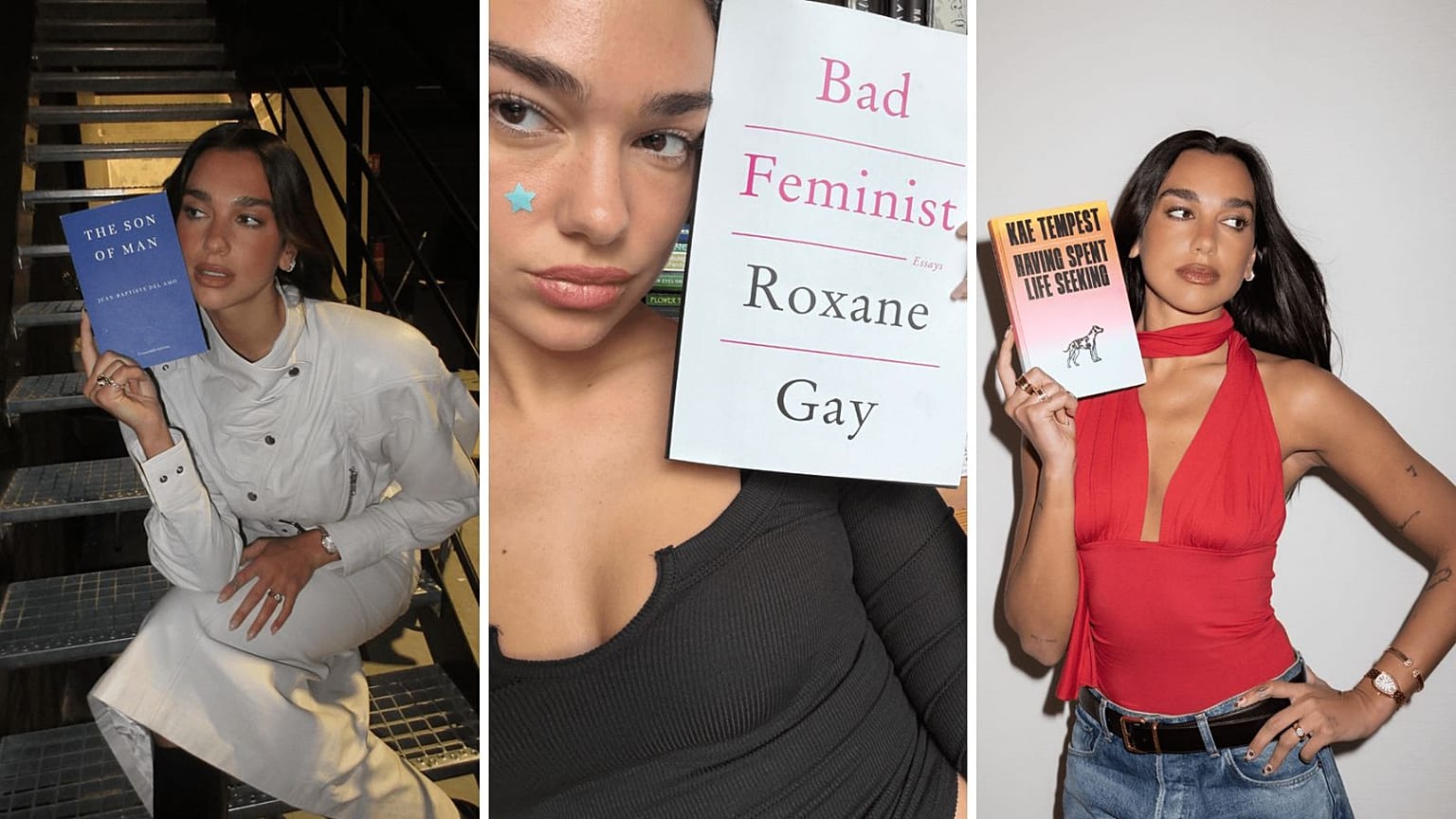
Dua Lipa opens library for banned and censored books in Portugal

Dua Lipa opens library for banned and censored books in Portugal
Copyright Screenshots Service95 - service95.com/book-club


By David Mouriquand
Published on


The Manifesto Library is located inside Livraria Lello in Porto, and is dedicated to books “that challenge power, censorship, exclusion, and dominant narratives.”

What a year Dua Lipa is having...

The ‘Levitating’ singer has released a new live album, 'Dua Lipa – Live From Mexico'; her 2017 self-titled debut has reached the impressive milestone of 450 weeks on the UK’s Official Albums chart; she’s still a fan favourite for the next James Bond theme song; she’s spoken out about the discourse surrounding the Epstein Files; and she just tied the knot with her now-husband Callum Turner, who also happens to be a 007 favourite.

Now, she’s opened her very own library.

Not just any library, mind you. The Manifesto Library is a library of banned and censored books. As part of the new international book festival BABELL – City of Books, it will permanently reside inside the famed Livraria Lello bookshop in Porto, Portugal.

In a press release, Lipa called the new library “a dream partnership” and a result of years of pushing her mission forward.

“When I founded the Service95 Book Club, my ambition was for it to become a home for writers and readers, wherever they are and whatever their circumstances,” she said, referring to her Service95 Book Club, which recommends a book each month and sees / hears Lipa interviewing its author for an accompanying podcast.

“Reading the world brings us closer - but sadly, not everyone is in favour of that,” Lipa said, adding: “Here you will find one hundred books that ask questions, or have been questioned. Some have been banned by school districts for themes of race or sexuality. Others, written for LGBTQIA+ readers, have been restricted from display. In some cases, the author has paid for their words with their life.”

She continued: “This library is a shrine to books that have disappeared, to authors whose courage unmasks structures of power and control, and to readers who refuse to be told what book they are allowed to read. You are invited to visit and decide for yourself what belongs on these shelves. Because sometimes the most subversive thing you can do is read a book and then talk about it.”

Nearly 100 books are included in Livraria Lello’s new cultural auditorium, with each relating to four key themes: power, control, voice, and memory.

Margaret Atwood’s "The Handmaid’s Tale" and Reginald Dwayne Betts’ "Felon", alongside selected works from Salman Rushdie and Olga Tokarczuk, will also be available in the Manifesto Library.

“For 120 years, Livraria Lello has been built on a simple conviction: the book is a technology of freedom. The Manifesto Library grows from that belief,” Head of Brand at Livraria Lello Francisca Pedro Pinto said in a statement. “Because what is at stake is not only the future of reading, but a society’s ability to imagine, interpret and build its own future.”

Dua Lipa has long been a passionate advocate for reading, and she is set to curate the Southbank Centre’s 2026 London Literature Festival, which takes place from 21 October to 1 November.