Tuesday, June 30, 2026

UK trade secretary hosts Chinese delegation in bid to boost services

30.06.2026, dpa

British Business Minister Peter Kyle - FILE PHOTO - Peter Kyle, British Minister for Trade and Industry, speaks at the British Embassy during an interview with dpa. (is associated with: «UK trade secretary hosts Chinese delegation in bid to boost services»)

Photo: Soeren Stache/dpa

UK Trade Secretary Peter Kyle is seeking to boost UK services exports to China as he hosts a delegation from the country on Tuesday.

Peter Kyle and Chinese Minister of Commerce Wang Wentao will jointly host the 15th UK–China joint economic and trade commission at Mansion House in London.

They will launch a “trade booster” initiative designed to support UK businesses expanding their exports into China during the visit.

Brompton Bikes and HSBC are among the British businesses attending, while firms JD.com and ICBC bank will represent China.

Kyle said: “The UK is a services superpower, and I want us to turbocharge our services exports and get more British engineers, architects, and accountants exporting their skills to China.

“We need to be even more ambitious to promote secure and resilient growth for the next generation amidst a backdrop of global uncertainty.”

They will also celebrate recent partnership efforts, including Barclays entering China’s domestic bond market with its Panda Bond issuances and the Chartered Institute of Management Accountants working towards mutual recognition of qualifications with China.

Stricter EU rules for steel imports enter into force

01.07.2026, dpa

Stricter EU import rules for steel enter into force - FILE PHOTO: An employee walks along coiled steel at Salzgitter AG. EU negotiators have agreed to tighten steel import rules, sharply reducing the volume that can enter the bloc duty-free in a bid to protect domestic producers. (is associated with: «Stricter EU rules for steel imports enter into force»)

Photo: Julian Stratenschulte/dpa

Reduced quotas for duty-free imports of steel imports to the European Union enter into force on July 1.

The aim of the new rules is to protect the European market from global overproduction and cheap competition, particularly from China, India, and Turkey.

Under the new rules, the duty-free import quota will be limited to 18.3 million tons per year. That is about 47% less than before. Quantities exceeding this limit will be subject to a tariff of 50%, twice as much as before.

Half of the available duty-free quota is reserved for steel from countries with a free-trade agreement (FTA). The remaining half is available to all trading partners with or without a trade deal with the EU.

"We are providing market participants with predictability through clear and transparent quota distribution rules, while applying a fair and objective methodology," said EU Trade Commissioner Maroš Šefčovič.

The approach strikes a balance between the EU's commitment to its free trade deals, the rules of the World Trade Organization (WTO) and the bloc's push to diversify critical supply chains, said Šefčovič.

The EU is the world’s third-largest steel producer, according to EU figures. Around 300,000 people are directly employed in the sector.

Due to import restrictions imposed by other countries and global overcapacity, the EU market has, however, become the main destination for the global steel surplus. 

Global steel overcapacity is expected to rise to 721 million tons by 2027, more than five times the EU’s annual consumption.

EU ends duty-free treatment for imports under €150

01.07.2026, dpa

Parcels at a Deutsche Post DHL delivery depot - FILE PHOTO - Parcel delivery drivers sort and load parcels into delivery vehicles at a Deutsche Post DHL delivery depot.  (is associated with: «EU ends duty-free treatment for imports under €150»)

Photo: Rolf Vennenbernd/dpa

The European Union on Wednesday ended a customs duty exemption for imports worth less than €150 ($171), meaning consumers buying low-cost goods from outside the bloc will face higher costs.

Under the new rules, a flat customs charge of €3 will apply to each category of goods in a shipment. For example, a package containing several T-shirts would incur a single €3 charge, while adding a toy would trigger an additional €3 fee.

Although sellers or importers are legally responsible for declaring and paying the customs charges, they can pass the cost on to consumers, the European Commission said. The European Consumer Centre Germany warned that the new fees could significantly increase the price of very low-cost products, and experts say prices on some online marketplaces have already risen.

The move follows a surge in low-value imports into the EU. According to the commission, 5.9 billion parcels valued at less than €150 entered the bloc last year without being subject to customs duties, equivalent to around 16 million shipments a day. More than 90% of those parcels originated in China, according to a senior EU official.

The flat-rate charge is expected to remain in place until July 1, 2028, serving as a temporary measure while the EU develops a new digital customs platform. Once the system is operational, standard customs duties based on a product's value, origin and classification will apply.

Netanyahu orders the complete destruction of Hezbollah infrastructure

30.06.2026, dpa

 Israeli Prime Minister Benjamin Netanyahu - FILE PHOTO: Israeli Prime Minister Benjamin Netanyahu gives a speech during the annual Local Government Conference in Tel Aviv. (is associated with: «Netanyahu orders the complete destruction of Hezbollah infrastructure»)

Photo: Tomer Neuberg/Jna Press/Nexpher via ZUMA Press Wire/dpa

Israeli Prime Minister Benjamin Netanyahu has instructed the army to destroy the infrastructure of the Iran-backed Shiite Hezbollah militia in southern Lebanon, according to the government press office on Tuesday.

During a troop visit, Netanyahu referred to all above-ground and underground facilities that the militia had used for attacks on Israel, such as tunnels.

"This is the directive: leave nothing behind, and you are doing that," Netanyahu said.

In addition, soldiers should act immediately if they identified a threat to their lives, Netanyahu said. He also ruled out a withdrawal of the army from the border area until Hezbollah was fully disarmed and no longer posed a threat to Israel.

Netanyahu described Hezbollah as the most important link in an axis of Iran's allies. According to him, about 8% remain of what was once 150,000 rockets and projectiles. He also said Israel had killed around 9,000 "terrorists" in Lebanon. The most important measure had been to create buffer and security zones between Hezbollah and northern Israel.

The Lebanese government and Hezbollah describe the "security zone" unilaterally ordered by Israel as an occupation in breach of international law. According to geographical calculations by Lebanese media, the area controlled by Israel in southern Lebanon covers around 620 square kilometres. This corresponds to about 6% of the country's area.


Israel formally recognises Armenian genocide in rebuke to Turkey

The Israeli government on Sunday unanimously recognised the massacres of Armenians during World War I as genocide, a move widely seen as a rebuke to Turkey and a stark signal of the deepening rift between the two countries.


Issued on: 29/06/2026 - RFI

Armenia genocide monument in Yerevan © RFI/Jan van der Made

"A historic decision: the Israeli government has unanimously approved Foreign Minister Gideon Saar's proposal to recognise the Armenian genocide," the foreign ministry said in a statement.

The cabinet's decision must still be ratified by parliament.

"The Armenian genocide remains to this day the subject of an institutionalised campaign of denial and minimisation, including a manipulative rewriting of history, mainly by the Turkish government," Saar said at a cabinet meeting, according to a statement issued by his office.

"I think the time has come for Israel, as a Jewish state, to formally accept this position... It is never too late to do the right thing... this is both a moral and historical duty."

Successive Israeli governments had avoided formally recognising the Armenian genocide, in part to preserve relations with Turkey, once one of Israel's closest strategic partners in the region.

But since the war in Gaza erupted, Turkey has regularly accused Israel of committing genocide in the Palestinian territory, an accusation Israel strongly denies.
Critics

Turkish President Recep Tayyip Erdogan has emerged as one of the fiercest critics of the war, repeatedly comparing Israeli leaders to Nazi officials.


Armenia genocide monument in Yerevan © RFI/Jan van der Made

Israeli Prime Minister Benjamin Netanyahu has also hit back at Erdogan, calling him an "anti-semitic dictator who commits genocide against the Kurds".

Turkey has suspended most trade with Israel and become one of Hamas's strongest diplomatic supporters.

"This is not an act of retaliation for the open hostility, along with the terrible rhetoric and the hostile action of Turkey, under Erdogan's leadership, against Israel," Saar said, referring to the recognition.

"The fact that Turkey promotes false narratives against Israel, does not grant it immunity from historical truths."

Azerbaijan on Monday denounced a decision by its ally Israel to recognise the World War I massacres of Armenians as a genocide.

Azerbaijan and Israel are allies but Baku's closest foreign partner is Turkey and the Caucasus country hinted the move by Israel could hit their bilateral relations.

The recognition by Israel was of "serious concern", Azerbaijan's foreign ministry said in a statement.
International recognition

The Armenians seek international recognition that the mass killings of their people under the Ottoman Empire from 1915 to 1917 amounted to genocide.

Members of the Armenian diaspora rally in front of the Turkish Embassy after U.S. President Joe Biden recognized that the 1915 massacres of Armenians in the Ottoman Empire constituted genocide in Washington, U.S., April 24, 2021. REUTERS - JOSHUA ROBERTS

So far, 32 countries have recognized the genocide, including: the United States (in several resolutions of the House of Representatives and the Senate from 1920 to 2019 and also in President Biden's declaration in 2021), Italy, Argentina, Brazil, Germany, France, Poland, the Czech Republic, Canada, Russia, Greece, Cyprus, the Vatican, and also: Lebanon and Syria.


They say 1.5 million died, but Turkey strongly denies the accusation of genocide and says that both Armenians and Turks died as a result of the First World War.

In 1915, hundreds of thousands of Armenians were forced to walk into the Syrian desert as part of a systematic program of ethnic cleansing by the Ottoman authorities. An estimated 1.5 million people died of exhaustion or starvation. © Holocaust museum

It puts the death toll in the hundreds of thousands.

Armenia and Turkey have no diplomatic ties, but the two have signalled interest in warming relations in recent years.

(With newswires)
Turkey opposition worries that Europe is sacrificing democracy for security


Issued on: 27/06/2026 - RFI


Turkey's main opposition says its Western allies are failing to respond as a widening crackdown by President Recep Tayyip Erdogan's government targets its leaders and elected mayors.

Supporters of ousted Republican People's Party (CHP) chairman Ozgur Ozel protest in Istanbul, 24 May 2026, after a court ruling removed the party's leadership from its headquarters in Ankara. © Dilara Senkaya / Reuters

The latest arrests this week followed a court decision to remove Republican People's Party (CHP) leader Ozgur Ozel and reinstate former leader Kemal Kilicdaroglu in an unprecedented move that was widely condemned by Turkish and international human rights groups.

The European Union's response has been far more restrained.

"There are some visits, there are some letters sent to us," said Ilhan Uzgel, the CHP's former deputy chair. "There are some public statements regarding the situation in Turkey, but the wording and language used is quite mild. [There's] no action."

The CHP has faced more than a year of arrests targeting its mayors on corruption charges. This week, two more were detained, adding to a list that already includes jailed Istanbul mayor and presidential candidate Ekrem Imamoglu.


Strategic partner


Uzgel said the European Union can no longer stand by and should take a firmer stance.

"Mr Erdogan has to be told, 'you're destroying democracy and what you're doing is against the rule of law,'" said Uzgel.

"There could be some kind of a diplomatic isolation," he added. "So whenever Mr Erdogan meets a foreign leader, he's selling it to his own audience, the Turkish public, that he's a world leader. At least this opportunity could be taken from his hand."

Yet Erdogan is expected to reinforce his international standing at next month's Nato summit in Ankara.

"The two big allies of Turkey have decided not to make human rights an issue in the bilateral relationship," said Asli Aydintasbas, a senior fellow at the Brookings Institution in Washington. She notes that the EU and Washington have found rare common ground over Turkey.

"For President Trump, this comes naturally; he doesn't care about human rights advancement globally," she said. "But now Europeans are also looking for some type of functional relationship with Turkey and wanting to disregard human rights as an impediment to bilateral relations."

Federico Donelli, an international relations expert at the University of Trieste, said the European Union's restrained response reflected Turkey's growing strategic importance.

"The restraint of EU reaction is closely linked to an increase in recognition of Turkey's structural importance for European security."

With Nato's second-largest army and a rapidly expanding defence industry, Turkey is increasingly seen as an important security partner as Europe faces the threat from Russia and uncertainty over the United States' long-term commitment.

"The US is definitely less stable than in the past, so in this context Turkey is increasingly seen less as a [EU] candidate country and more as a strategic partner," said Donelli.
Pressure on Greece and Cyprus

Donelli said this shift could increase pressure on Greece and Cyprus, which have long used their vetoes to slow closer EU defence ties with Turkey because of disputes in the Aegean and eastern Mediterranean.

"We know how much the two countries have conditioned EU-Turkey relations for many years," said Donelli.

"These two countries cannot constrain broader EU strategic choices in the next few years, in the next decade."

Amid the Russian threat and uncertainty over America's resolve, Turkey's opposition worries it is being sacrificed in the name of Europe's security.

"Historically, Turkish EU relations were working for the democratisation of Turkey, but the equation has been reversed. The EU-Turkey ties have been working against Turkey's democratisation," said Uzgel. "The closer Mr Erdogan gets to the EU, [the more] we are losing democracy in Turkey."

He nonetheless warned that Europe's approach is short-sighted and could have wider consequences.

"Turkey is a country of 86 million, so if democracy fails here, it has to have some implications for other countries as well."

By: Dorian Jones

PODCAST
Marine biobanks: the science of 'stopping time' for an ecosystem under pressure

In labs around the world, the ocean is being kept in jars. Some of it is alive, bubbling in flasks, while some lies frozen in liquid nitrogen. They're marine biobanks – collections of coral cells, algae, bacteria and other living materials that scientists are working to preserve before warming seas and disappearing habitats consume them.


Issued on: 27/06/2026 - 

A scientist at an EMBRC marine laboratory in Spain, where researchers collect, study and preserve marine organisms for research and conservation. © EMBRC Spain/ECIMAT


By: Amanda Morrow


These aren't just collections for the future, but records of the present. Part archive and part insurance policy, biobanks are emerging as a front line of marine science, as climate change reshapes the life of the ocean faster than researchers can study it.

They also raise questions that go far beyond biology. What does it mean to preserve life in artificial environments? Who controls it once it is frozen and stored, then potentially turned into medicines or commercial products?

And can an entire ecosystem ever really be kept alive in a freezer?

“We are probably losing without knowing what we’re losing,” said Nicolas Pade, who runs the European Marine Biological Resource Centre – a network of marine laboratories and research stations stretching from Greece to Norway.

Scientists have been collecting from the natural world for centuries – from the cabinets of curiosities of early collectors to today's cryogenic freezers. But what was once about discovery is now increasingly about survival.

Pade describes laboratories filled with flasks of bubbling cultures, where tubes pump oxygen through the seawater and metal tanks of liquid nitrogen hold frozen material at temperatures cold enough to almost halt biological activity.

"It looks very much like a laboratory you would expect, except you get all these different coloured liquids that kind of almost looks like a smoothie bar," he told RFI.

Frozen libraries

The organisms growing inside laboratory bottles are alive, reproducing and, as Pade says, "constantly evolving". Over time they gradually become different from the organisms first collected in the wild.

Cryopreservation, on the other hand, Pade explained, is a way to "stop time" – preserving a specimen as it was when it left the ocean. If the life in a bottle keeps changing, researchers can no longer be certain they are studying the same organism they collected years earlier.

These collections may also hold clues to future medicines, cosmetics, manufacturing technologies and even alternatives to chemical fertilisers.

Some are strange enough to seem almost alien. Diatoms – microscopic algae that build intricate shells resembling glass – are extraordinarily light yet remarkably strong, inspiring research into new engineering materials.

Cryogenic storage containers preserve marine biological samples at ultra-low temperatures, allowing scientists to maintain living material for the future. © EMBRC


Private interests

Commercial interest is already shaping the field. In one French laboratory, a large pharmaceutical company helped set up and run a marine culture collection for decades, hunting for compounds with potential cosmetic and pharmaceutical uses.

"The problem with that sort of approach is very often it becomes proprietary," Pade said. "They don't necessarily want to share it."

The scientific challenge, however, runs deeper.

"The reality is that most organisms don't actually exist in isolation," Pade explained. "The vast majority of the microbiome exists in symbiosis. That means that they live together, they work together. They depend on each other."

Freezing a single organism captures a fragment, but not the web of relationships that keeps an ecosystem working.

"What we really should be trying to preserve are whole communities – multiple organisms existing together. And that's very, very tricky."


A scientist examines a phytoplankton culture at the EMBRC lab in Portugal. © EMBRC Portugal/ACOI Collection

'Coral IVF'

On the other side of the world, scientists are using marine biobanks not just to preserve ocean life, but to help rebuild it. Carly Randall works to restore damaged coral reefs at the Australian Institute of Marine Science in Townsville, North Queensland.

Each year she waits for the reef's annual coral spawning, when billions of eggs and sperm are released into the sea. Divers describe the spectacle as "underwater snow".

Randall's team works on what researchers informally call "coral IVF". During the spawning they collect eggs and sperm, fertilise them in the laboratory and return the young corals to damaged reefs.

"We collect the eggs and sperm, we fertilise the eggs, and then we grow those embryos out," Randall told RFI. "We then seed back on to the reef. But during that process, we also cryopreserve some of that material for later use and for preserving the biodiversity of what spawned in a particular time, in a particular place."


Acropora tenuis coral releases eggs and sperm during its annual spawning, which scientists collect to perform 'coral IVF'. AFP - AIMS

Australia opened its first frozen coral biorepository in 2012. Today it also stores material from kelp forests, oyster reefs and seagrass meadows, as marine heatwaves strip away those ecosystems.

Much of the work centres on the Great Barrier Reef, which has suffered six mass bleaching events since 2016. When ocean temperatures stay too high for too long, corals expel the algae living inside their tissues. Without them, many eventually die.

The frozen material can last "many, many years, if not decades and beyond" in a secure facility, Randall said. Some is held at minus 80C.

From archive to action


In the Caribbean, frozen coral is already helping to restore damaged reefs.

In some areas, coral populations have fallen so dramatically that the survivors are now too scattered to reproduce naturally. Scientists are stepping in, using cryopreserved sperm from one reef to fertilise eggs on another.

Researchers are also freezing the microscopic algae that live inside coral tissue and provide much of its food. Some tolerate heat better than others, making them another way of banking resilience against a warming ocean.

Australia has not reached that point. The Great Barrier Reef still retains considerable resilience, but researchers fear there is a tipping point beyond which recovery becomes far more difficult.

"The modellers are telling us that the sooner we can start deploying resilient corals on to the Great Barrier Reef, the better chance we'll have to maintain the health of the system in the face of climate change," Randall said.

"What we aim to do is increase its resilience and accelerate adaptation to warming."

The urgency is sharpened by how much remains unknown. Randall recently attended a workshop on a single coral symbiont genus thought to contain more than 100 species that have yet to be identified.

Rising ocean temperatures cause corals to expel the algae they depend on for food, leaving them vulnerable to death if the heat persists. Getty Images - Brett Monroe Garner

Who owns a coral?

As marine biobanks grow, questions about ownership and control are becoming harder to ignore. In Australia, they have prompted researchers to rethink how they work with indigenous communities.

In 2022, Randall's team worked with the Woppaburra people, the traditional custodians of the Keppel Islands in central Queensland, to develop a cultural biobanking protocol.

The principle is simple: a coral sample may be removed from the reef and stored hundreds of kilometres away, but for the Woppaburra it remains connected to sea country – the traditional waters and marine environments they have cared for over generations.

"We don't do any work on the Great Barrier Reef without free, prior and informed consent from the traditional owner groups of that sea country," Randall said.

The protocol allows the Woppaburra to retain ownership of samples held in storage, even when they are kept elsewhere. The samples remain under Woppaburra stewardship and can be returned in the future.

For Randall, the partnership reflects a broader shift in how reef science is carried out.

"They were the first scientists," she said. "They had ways of managing country for many, many years. And so there's a lot we can learn from that relationship."
THE LAST COLONY 

New Caledonia election tests territory's future after unrest and deadlock


Polling stations have just closed in New Caledonia following provincial elections in a vote that will test the French Pacific territory's future after years of political deadlock and unrest.


Issued on: 28/06/2026 -  RFI

People vote at the Veyret-Kafoa polling station during New Caledonia's provincial elections in the Riviere Salee neighbourhood of Noumea, New Caledonia, on 28 June, 2026. AFP - DELPHINE MAYEUR


By: 
Alison Hird

The provincial elections are often described as the most important vote in New Caledonian politics because they determine not only who governs the territory, but also who represents each camp in negotiations over its future relationship with France.

Voters across the archipelago will elect members of three provincial assemblies and the local parliament, known as Congress.

The 54-member Congress will then choose a new government and play a central role in future negotiations with Paris over New Caledonia's political status.

Political balance

Currently, pro-France loyalists hold 13 seats, the leading pro-independence groups hold 25 and the remaining seats are divided between smaller parties.

The vote was originally due to take place in June 2024 but was postponed three times after riots in May that year left 14 people dead and caused more than €2 billion in damage.

Voting rules have changed since the last provincial elections in 2019. Around 10,500 additional people born in New Caledonia have been added to the electoral roll, taking the number of eligible voters to 192,584. About 27,000 residents remain excluded.

The elections are also the first territory-wide vote since three independence referendums in 2018, 2020 and 2021, all of which returned votes in favour of remaining part of France, although the 2021 poll was boycotted by the pro-independence FLNKS (Kanak and Socialist National Liberation Front).

Long-standing divide


The result of Sunday's vote will help determine who leads the next round of talks on the territory's future.

The election is largely being fought between two rival camps: parties that want New Caledonia to remain part of France and those that ultimately seek independence.

Pro-France parties have united behind a single Loyalist list. While the main pro-independence coalition, FLNKS, remains a leading force, divisions within the movement mean several independence-supporting groups are contesting separately.

A growing number of smaller parties are also trying to offer an alternative to the traditional divide. Many focus on social issues, inequality and economic recovery rather than constitutional questions.

Their challenge is turning that message into seats, since any list must secure at least 5 percent of registered voters to enter the assemblies.


Future status

The roots of the current power struggle go back a long way.

France annexed New Caledonia in 1853 and the archipelago's modern semi-autonomous status was shaped by the Matignon Agreements in 1988 and the Nouméa Accord in 1998, which transferred greater powers to local institutions and set out a path towards self-determination.

Voting rights remain at the heart of ongoing divisions.

The Nouméa Accord created a restricted electoral roll for provincial elections, designed to protect the political influence of the Indigenous Kanak population, which now makes up around 40 percent of New Caledonia's 297,000 people.

In 2024, the French government sought to "unfreeze" the electoral roll, prompting widespread protests mainly from supporters of independence, who argued the move would weaken protections established under the Nouméa Accord.

The proposed change was suspended in June 2024 after President Emmanuel Macron dissolved parliament, but a partial unfreezing was approved in May this year.

An attempt to break the political deadlock between Paris and the archipelago's political groups came with the Bougival Agreement in 2025. The proposal offered greater autonomy while keeping New Caledonia within the French Republic and included measures aimed at supporting economic recovery.

Most importantly, it brought rival political camps back into the same discussion about the territory's future. But the compromise failed to secure lasting support and was rejected first by the FLNKS and later by French MPs.

Sunday's election will therefore serve as a new test of political strength before fresh negotiations between local leaders and Paris.

Struggling economy

Political uncertainty has been compounded by economic difficulties.

Two years after the unrest, the archipelago still bears the scars. Despite €130 million in state aid in state aid, many businesses have not recovered. Around 11,000 jobs have been lost after companies were damaged or destroyed.

Transport services remain disrupted in parts of the territory while health services are also under pressure, with some areas struggling to maintain staffing levels as health professionals return to mainland France.

The legacy of the 2024 unrest also hangs over the election.

France has maintained a strong security presence during the campaign. Investigations are continuing into several recent incidents, including vandalism and theft of telecommunications infrastructure.

Prime Minister Sébastien Lecornu has also warned of possible foreign digital interference during the campaign, citing concerns raised by France's cyber-monitoring authorities.

Europe’s current heatwave is just a ‘dress rehearsal,’ WHO warns

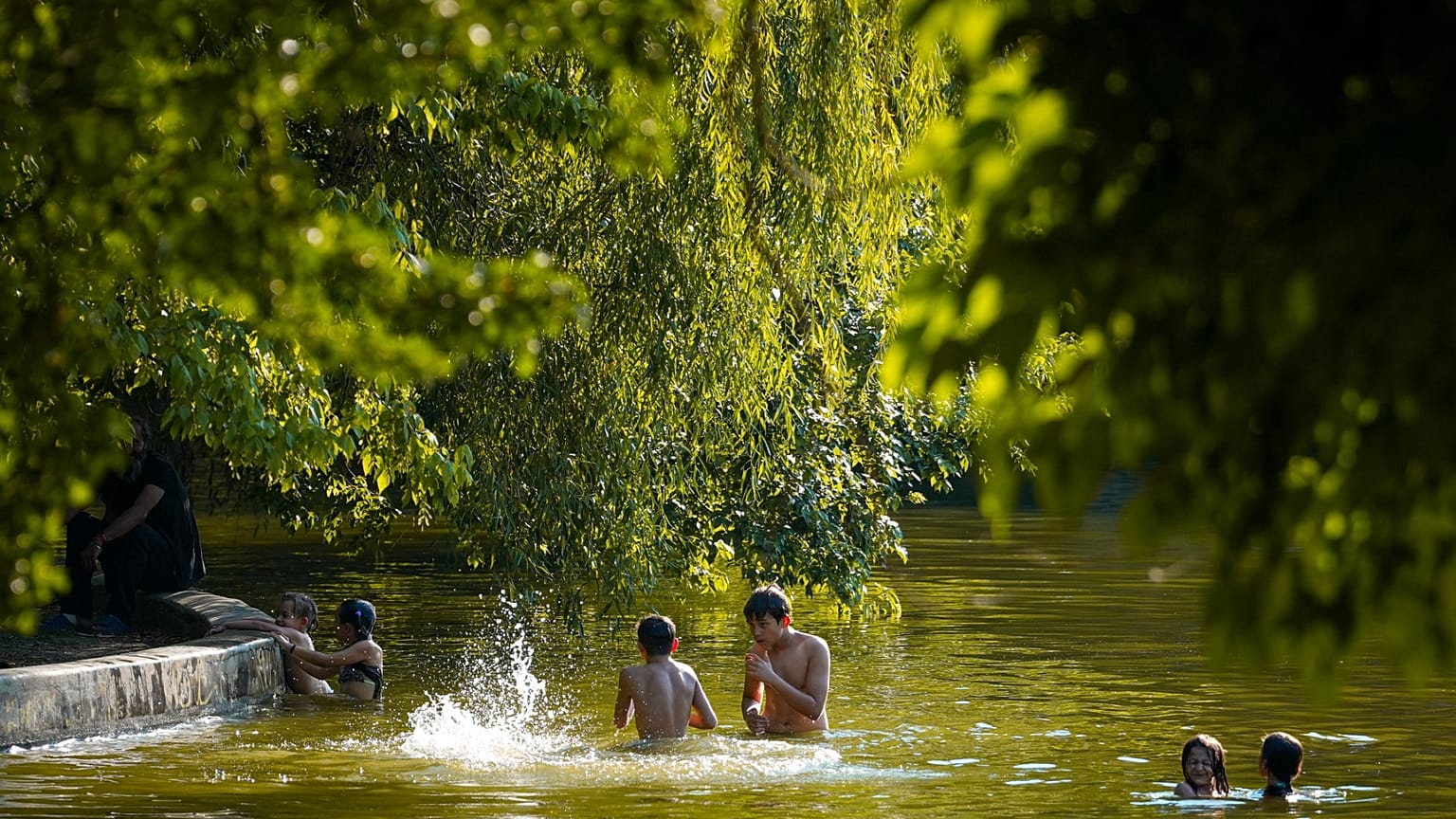
Youngsters play in a lake on a torrid day, as the National Weather forecaster issued an extreme heat code red warning for most parts of the country, in Bucharest, Romania.
Copyright AP Photo/Vadim Ghirda

By Marta Iraola Iribarren
Published on

As Europe continues to face a record-breaking heatwave, the World Health Organization warns future summers will only be hotter.

June has been one of the hottest months on record in Europe, with temperatures reaching unmatched highs in multiple countries and causing an increased in heat-related deaths.

And it is only the beginning. The World Health Organization (WHO) has warned that the summers ahead will be harder.

“This heatwave is a dress rehearsal,” said Dr Hans Henri Kluge, WHO Regional Director for Europe.

Europe is warming at more than twice the global average and heatwaves are no longer one-off freak events. They are recurring crises, and they are becoming more frequent, stronger and longer-lasting, Kluge added.

In the past month, France has reported over 1,000 deaths since 24 June alone, with the majority among people aged 65 and over, and emergency calls have risen by up to 50% in some cities.

Spain's mortality monitoring system has already estimated 892 heat-associated excess deaths in June.

Kluge warned that every summer we fail to prepare for is a summer we pay for in lives.

However, for the WHO, it is not all bad news as the agency stresses that prevention works.

According to WHO’s Europe chief, estimates show that heat-related deaths in Europe in 2023 would have been around 80% higher without the adaptation measures already in place. For people aged 80 or above, deaths could have been twice as high.

“Heat-health action plans, early warnings, cooling spaces, outreach to vulnerable people — these are not bureaucratic exercises. They are saving lives right now — we need more of them, across all of the European Region,” Kluge added.

The heatwave is now expected to spread over large parts of Western, Central and Southern Europe and the Balkans by 30 June, according the World Meteorological Organization.


Europe braces for Super El Niño as scientists warn extreme weather could intensify

Europe braces for Super El Niño as scientists warn extreme weather could intensify
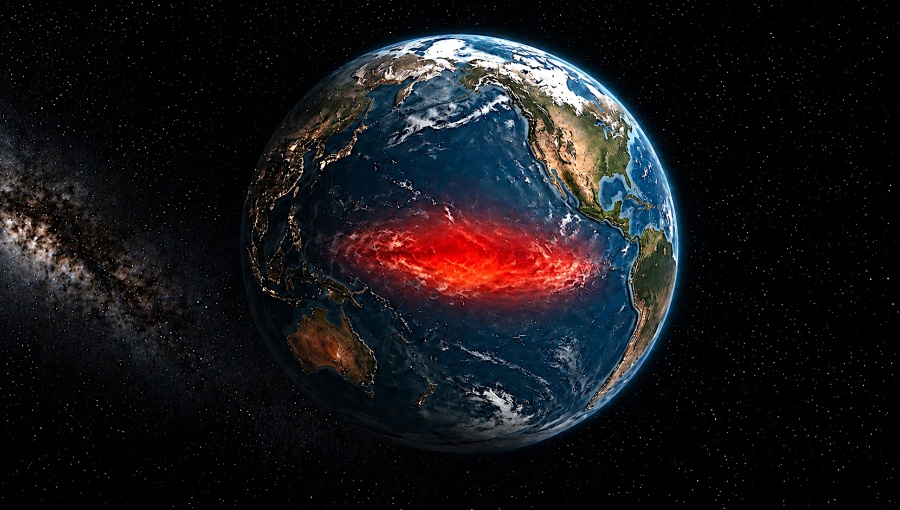
Temperature records were smashed in June, but now a super El Nino is building that will disrupt weather patterns and raise temperatures in the autumn too. / bne IntelliNewsFacebook
By bne IntelliNews June 30, 2026

Europe is enduring its most intense early summer heatwave on record, with temperatures exceeding 40°C in several countries and breaking local June records across southern and western Europe. But climate scientists warn that the continent's current ordeal could merely be a precursor to an even more volatile period as one of the strongest El Niño events ever recorded gathers strength in the Pacific Ocean.

Meteorologists stress that the current European heatwave was not caused by El Niño which is still building, but that the first measurable signs are there and their extremity is alarming scientists.

El Niño reflects a combination of persistent high-pressure systems, unusually warm seas surrounding Europe and the continuing influence of long-term global warming.
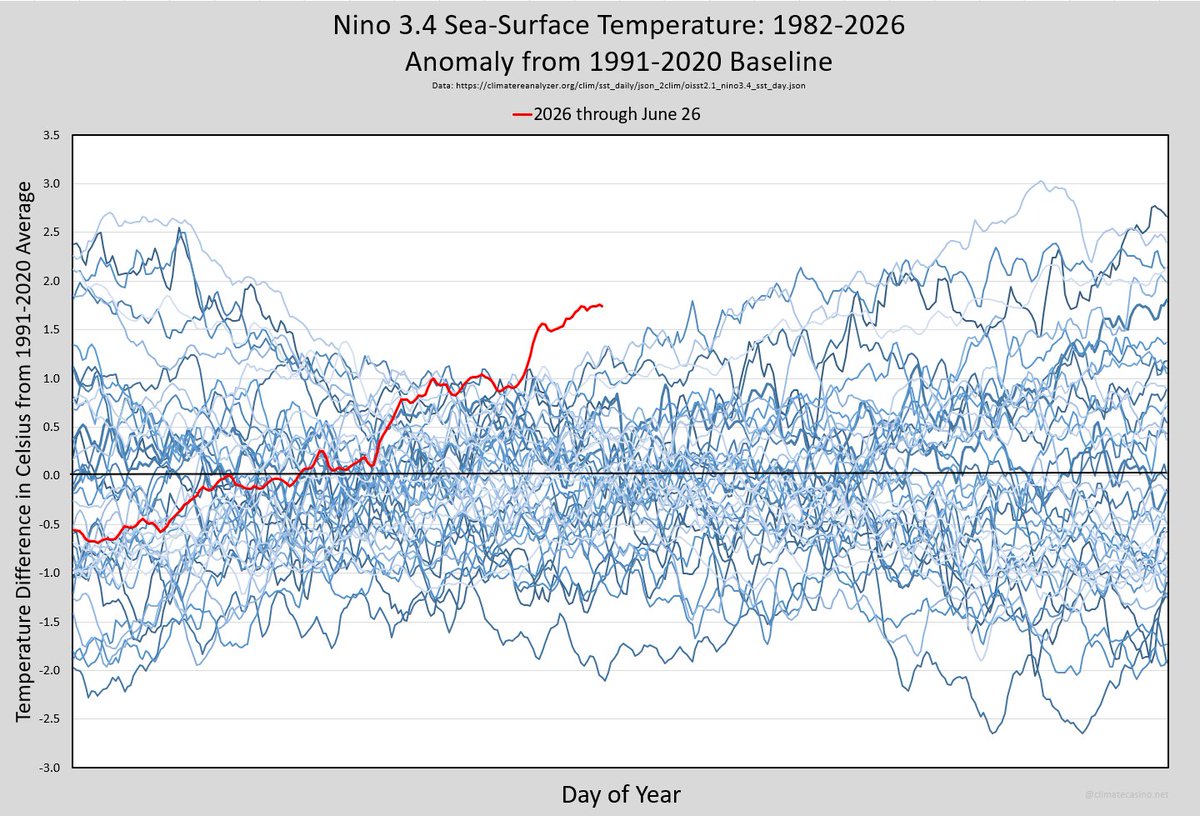
 

This year’s Little Boy is expected to become the dominant driver of global weather over the coming year, dramatically raising the likelihood of more severe floods, droughts, storms and temperature extremes across much of the world during what has been dubbed an annual disaster season of extreme weather events.

"All official predictions and analysis shows that an El Niño event will be the main global weather driver in 2026/2027," according to the latest assessments of ocean and atmospheric conditions by Severe Weather Europe, an online resource of weather forecasts, outlooks and long-range trends.

El Niño is the warm phase of the El Niño-Southern Oscillation (ENSO), a naturally occurring climate cycle in which sea surface temperatures in the equatorial Pacific Ocean fluctuate between warm (El Niño), cool (La Niña) and neutral phases every two to seven years. Although the phenomenon originates thousands of kilometres from Europe, it alters atmospheric circulation across the globe, influencing rainfall patterns, storm tracks and temperatures on every continent.

Scientists are increasingly concerned because current forecasts suggest this year's event could reach "Super El Niño" status — a rare category reserved for only the strongest warming episodes, including those of 1982-83, 1997-98 and 2015-16, all of which were associated with widespread weather disasters and record-breaking global temperatures.

"The latest ocean analysis below shows a significant warm anomaly already emerging in the main ENSO regions," the report says. "This analysis is with the global average anomaly removed, so it shows the clean warm signal of the rising El Niño, creating a growing warm anomaly signature, expected to reach into the +4-5° anomalies at peak strength."

Those ocean temperatures are already beginning to reshape atmospheric circulation.

"A powerful Super El Niño is rapidly developing in the tropical Pacific, and the first clear atmospheric response is already showing up in the weather patterns," the report says. "Latest ocean and forecast data show the event strengthening toward rare intensity, with the atmospheric signal already visible in the analysis and forecast data."

June has already displayed weather patterns resembling previous Super El Niño years, particularly across North America.

Meteorologists note that North America typically experiences the first atmospheric impacts because of its proximity to the tropical Pacific, while Europe usually responds several months later in the autumn.

"This is reflected in the latest ENSO forecast from the NCEP CFSv2 model. It shows a very strong El Niño developing, exceeding the super El Niño threshold (+2°C above average), having an immediate impact on the summer, fall, and winter patterns. The current 2026 development shows a similar signature to the previous strongest events, forecast to rise even higher, as one of the strongest events on record."

One of the principal drivers behind the rapid intensification has been the development of a massive underwater pulse of warm water known as a Kelvin Wave.

"Strong westerly wind events have helped develop a massive underwater warm anomaly, called a Kelvin Wave. This wave rises from below, now visible as a warm anomaly on the ocean surface."

The warming ocean is already producing measurable changes in the atmosphere. According to the latest forecast from the European Centre for Medium-Range Weather Forecasts (ECMWF), rising air over the eastern Pacific and sinking air over the Indian Ocean are establishing what meteorologists describe as the “atmospheric bridge” linking tropical ocean temperatures with global weather systems that is typical in an El Niño year.
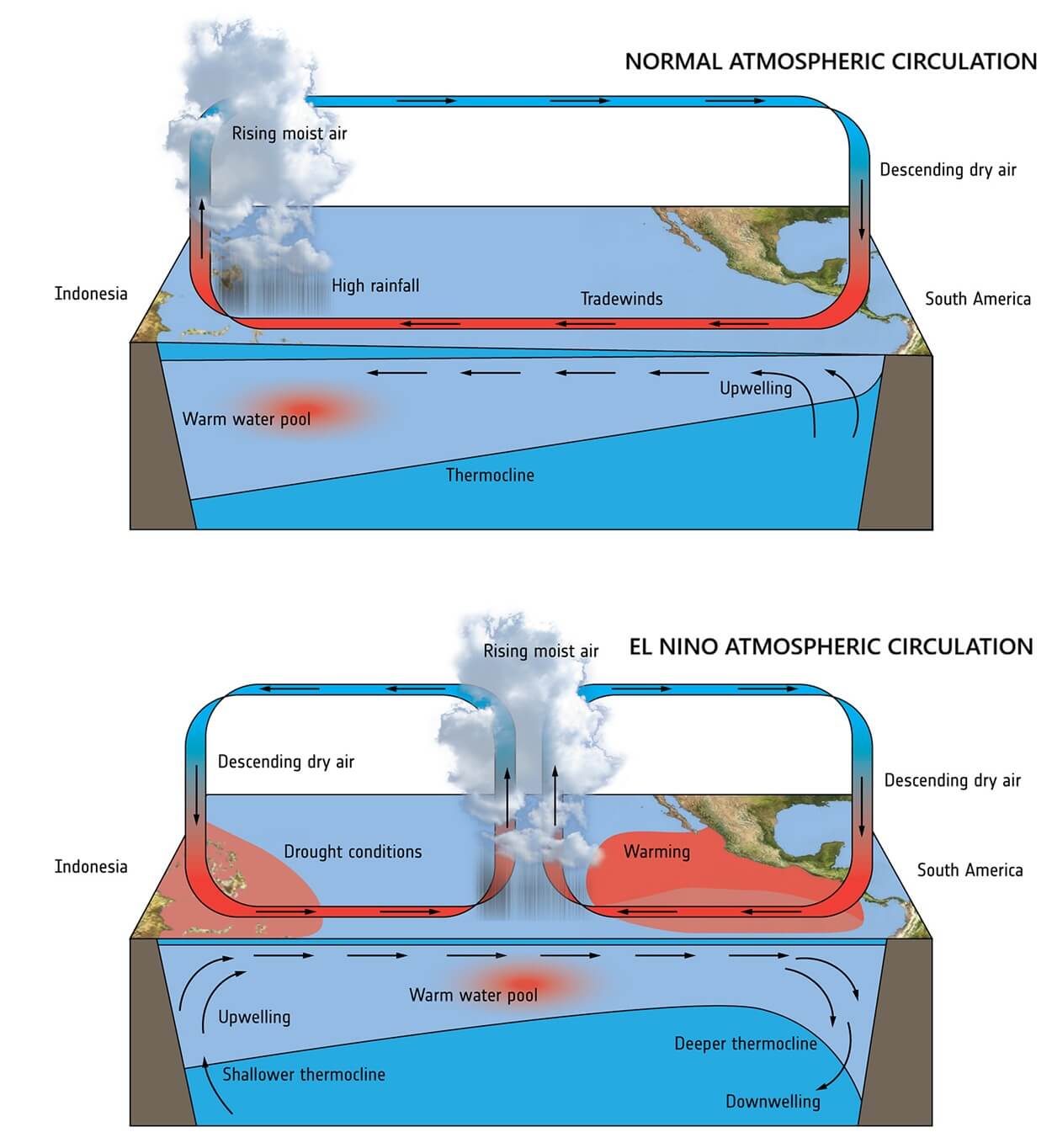
Historically, Super El Niños have contributed to flooding across parts of South America, droughts in Australia and Southeast Asia, disruptions to the Asian monsoon, increased wildfire risk and unusually warm winters across parts of North America.

Europe has yet to display the classic atmospheric signature associated with previous Super El Niño episodes, but forecasters say early indications are beginning to emerge.

Forecast models suggest northern and central Europe could increasingly come under the influence of persistent high-pressure systems later this summer, while lower-pressure systems develop farther south.

"Over Europe, we see a reversed pattern, with a strong blocking high-pressure anomaly over the northern and north-central parts, and a low-pressure anomaly undercut over the southern half. This is a Rex-block type pattern, while over North America, we see an Omega blocking trend," Severe Weather Europe reports.

Europe has just been through an “omega block” that trapped a “heatcap” over France and the rest of northern Europe leading to sweltering temperatures. And meteorologists are warning of a second omega block developing in the first half of July that may be even hotter and more persistent.


‘We Were Warned,’ Says WHO Chief as More Than 1,300+ Dead Across Europe From Climate-Driven Heat Wave

“It’s time to turn the heat on the fossil fuel giants that caused this heatwave but are doing nothing to cover the costs.”


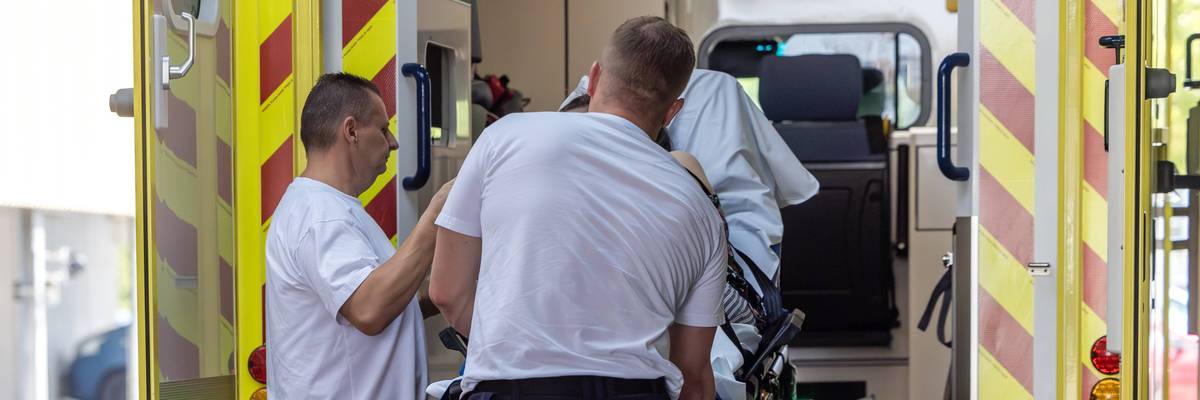
Paramedics at the emergency room of the Medical University of Lausitz Carl Thiem are lifting a stretcher carrying a patient out of their ambulance in Southern Brandenburg, Germany on Sunday, June 28, 2026. There has been an increase in emergency calls due to heat-related illnesses.
(Photo by Frank Hammerschmidt/picture alliance via Getty Images)


Jon Queally
Jun 28, 2026
COMMON DREAMS


The head of the World Health Organization on Sunday said the deadly heat wave now boiling across Europe—which French authorities say caused more than 1,000 deaths last week alone—is the predicted and horrifying result that climate scientists and human rights advocates have been warning about for decades.

In a social post Sunday, WHO secretary-general Dr. Tedros Adhanom Ghebreyesus said, “Driven by climate change and global warming, the phenomenon of the ‘once-in-a-generation’ heatwave is now occurring nearly annual. We were warned.”


Scientists: Fossil Fuel-Driven Climate Crisis ‘Directly Responsible’ for Deadly European Heatwave


Citing over 1,300 excess deaths across Europe in the last week—as temperatures broke records in nation after nation—Tedros added that “heat stress is often called the ‘silent killer’—and European homes, workplaces and schools were not built for these temperatures.”

“Europe is the fastest-warming continent on Earth, heating at twice the global average,” he said. “Right now 150 million people are living under extreme heat, hundreds have died, schools are shut, grids are buckling.”

According to the Associated Press:

Germany marked a new record for the third day in a row with 41.7 degrees Celsius (107 degrees Fahrenheit) in Neißemünde, near the border with Poland. The Czech Republic also experienced its hottest day ever with 41.1 C (106.4 F).

A new study from the World Weather Attribution, a Europe-based collaboration of scientists, reported Friday that the record-breaking heat and humidity in Europe this past week would not have been possible without climate change.

The rapid study found that the heat would have been virtually impossible just five decades ago, and is 200 times more likely today than it would have been 20 years ago.

On Sunday, authorities in France said over 1,000 excess deaths attributable to the heat were recorded last week, with at least 100 or more over the previous 24 hours.

The threat of extreme heat related to the climate crisis is not only in Europe.

In 2024, a peer-reviewed study in the Journal of the American Medical Association showed that heat-related deaths in the United States rose 117% between 1999 and 2023.

Last year, a joint analysis by The Guardian and Pro Publica estimated that the industry-friendly policies of US President Donald Trump could result in the otherwise preventable deaths of 1.3 million people worldwide over the next 80 years, most of them among poor people in nations that did very little to cause the planetary crisis driven by the consumption of fossil fuels.

In a comment last week, as the deadly heatwave made international headlines, Sen. Bernie Sanders (I-Vt.) was among those who pointed his finger directly at Trump for his vicious policies related to energy and climate.

“There is a record-breaking heat wave in Europe and hundreds are dying,” said Sanders. “There is drought all across America and farmers are going out of business. Yet, Trump thinks climate change is a ‘hoax’ and cuts funding for sustainable energy. Insane. He is threatening the very future of our planet.”

On Friday, the climate group 350.org said the polluting companies, namely those in the coal, oil, and gas industry, should be made to pay for the deaths and damage they have caused and continue to cause.

“It’s time to turn the heat on the fossil fuel giants that caused this heatwave but are doing nothing to cover the costs,” said Lisa Rose, a campaigner with the group. “Both science and the law are clear: polluters must answer for climate damage. Now it’s up to our leaders to make them pay.”

“Forcing fossil fuel companies to cut emissions and pay their fair share is the only effective lasting response,” she added. “Half-measures won’t cool this crisis, only a faster shift to renewables can.”