Monday, July 06, 2026

Ecology, Trump’s new colonialism and a non-dogmatic theory of imperialism: An interview with Ana Cristina Carvalhaes
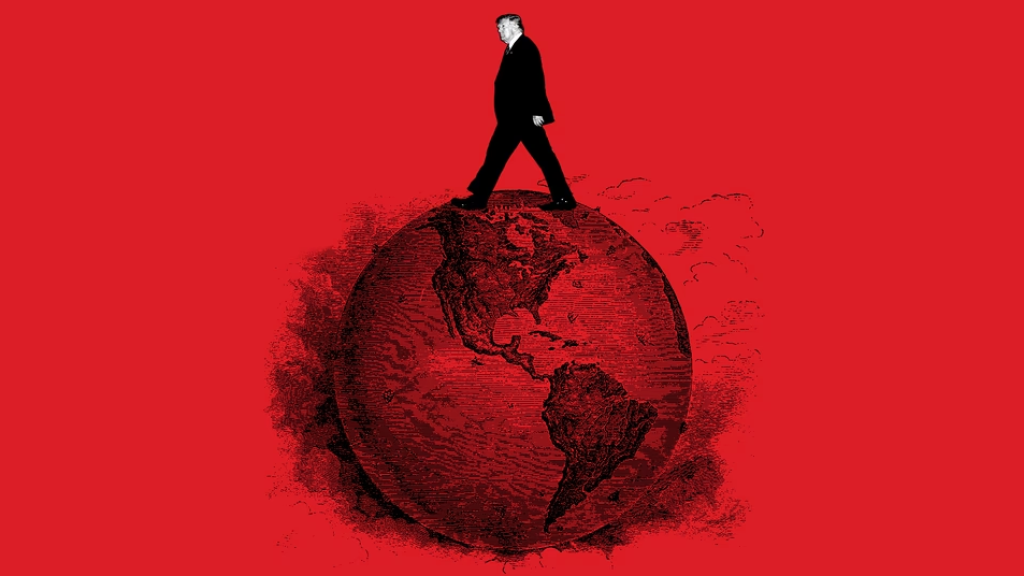
Trump walking on Earth

Ana Cristina Carvalhaes is a founding activist of Brazil’s Socialism and Liberty Party (PSOL) and a Fourth International executive bureau member. In this interview with Federico Fuentes for LINKS International Journal of Socialist Renewal, Carvalhaes argues for a non-dogmatic theory of imperialism, which incorporates the issue of ecology, understands Trump’s aggressive neo-colonialist shift and recognises the imperialist and sub-imperialist role played by certain “middle-sized economies”.

Over the past century, the term imperialism has been used to define different situations and, at times, been replaced by concepts such as globalisation. Is imperialism still valid? If so, how do you define it?

Imperialism is a Marxist concept, though the word is commonly used in the media and by non-Marxist scholars. The answer to your questions depends on the Marxist perspective you analyse it from, as there are various forms of Marxism. I subscribe to one that rejects immutable dogmas, untouchable classics and sanctified gurus. Such ahistorical views contradict the essence of Marxist historical materialism. And without Marxist theory, it is impossible, for example, to understand the material and ideological roots of US President Donald Trump’s domestic and foreign policies — his wars, tariffs and blackmail against former allies.

The idea of imperialism remains extremely valid and useful today, even if it has been enriched by reality and new phenomena in the 110 years since Lenin’s seminal pamphlet on the topic. I am among those who defend and draw upon the concept of imperialism, formulated and debated by a great generation of Marxists at the turn of the 20th century. But I also think we must draw on the history of these past 100-plus years, and on important contributions regarding new phenomena in the global economy and geopolitics, especially by activists and theorists from the so-called Global South — that is, from colonised countries and regions.

For Marxists, neither “hegemonic transition,” drawn from Immanuel Wallerstein and Giovanni Arrighi’s world-system school, nor globalisation, a term with neoliberal roots, can replace the idea of economic and political domination by a group of “core” countries — characterised by their early industrialisation and financialisation — over the majority of nations, which are exploited and oppressed to a greater or lesser extent. Inequality, exploitation (value extraction) and political oppression have been part of capitalism’s essence for nearly 150 years. The Marxist concept of imperialism is a systemic definition with far greater value — more theoretically sharp for understanding reality and useful for the struggle of exploited and oppressed peoples — than the theories you mentioned.

This does not mean Marxist theories should not incorporate contributions from other schools of thought. The idea of hegemonic transition, in which the main (hegemonic) capitalist core countries replace one another (first Genoa and Venice, then the Netherlands, England, the United States and now China) is interesting. It transposes Antonio Gramsci’s idea of hegemony to the international sphere and contributes to understanding capitalist history. Moreover, Arrighi was a pioneer in pointing to something that is evident today; namely, that China was emerging as a potential new hegemonic power in the 1980s and ’90s. He laid this out in his 2007 book, Adam Smith in Beijing. In Marxist terms, China was then already creating the conditions to become a new imperialism — a process still underway.

Globalisation is a term that neoliberals coined to extol the supposed virtues of a world economy under their leadership. However, something new occurred in that period. This encouraged many Marxists, including French economist François Chesnais and Latin American structuralist economists such as Maria da Conceição Tavares, to study what was happening to capitalism in the 1990s from a materialist perspective. Grappling with this new reality, Chesnais described the mechanisms of neoliberal financial globalisation as a new period of even greater dominance by finance. For their part, Tavares and her group in Brazil highlighted the oppressive geopolitical impacts of the US dollar’s power, which combined with its military superiority to reaffirm US power in the wake of the 1970s crises.

Discussions on imperialism often refer back to Lenin’s pamphlet on imperialism. Does it remain relevant today? What elements have been superseded by subsequent developments?

As well as being highly accurate and politically useful for his time, the merit of Lenin’s synthesis lies, above all, in that it revealed an extraordinary long-term strategic vision. As a revolutionary, Lenin was concerned about the war, which had already claimed 100,000s of lives in Europe when the pamphlet was written in 1916, and how socialists on both sides of the trenches should respond.

Most of what he described as imperialism remains relevant today:

  • the systemic predominance of an alliance between banking capital and industrial capital — finance capital;
  • the growing tendency towards capital's concentration through the formation of monopolies or oligopolies — the end of free competition;
  • the ever-widening development gap between core and non-core countries;
  • the tendency of industrialised nations, driven by capital’s needs, to expand their political, military and economic power over others; and
  • rivalry among imperialist powers and the tendency toward war.

Each characteristic aptly describes today’s crises — with the notable exception of the ecological and climate crisis.

The Leninist concept of imperialism has not always been easy to defend over the past 110 years. New developments forced Marxists to debate imperialism and its transformations. The 30-year period after World War II was marked by the US’ complete economic superiority (in alliance with Western Europe and Japan). This led to debates over whether inter-imperialist rivalries had ended, with the greatest rivalry now being with the “Communist” bloc. The great industrial development of the 1950s and ’60s led some “First World” Marxists to question whether finance capital still dominated — which financial globalisation would conclusively refute.

Broadly speaking, the Marxist theory of imperialism has proven correct in the long run, though, of course, not without shortcomings. The Marxist theory of imperialism, further developed by Latin American dependency theorists and anti-colonial thinkers from Africa and Asia, rightly emphasises the core-periphery contradiction. But it took a long time to recognise — some still do not — the emergence of intermediate state-economies.

These state-economies are dependent on core imperialist powers, but oppress neighbours and partners at the regional level. They do not quite qualify as part of the core, but are no longer simply periphery. Brazil is one case; Australia, it seems to me, is another. This group is highly heterogeneous due to historic, social and demographic differences, among others.

Second, but no less important, is that no attention was paid to industrial capitalism’s predatory impacts on nature. In fact, nature did not appear in the writings of these thinkers. They failed, for example, to elaborate on the link between imperialism and inequalities in terms of the far greater environmental destruction inflicted on the colonised.

More recently, Marxists have sought to incorporate ecology and the environmental crisis into their concept of imperialism, for example, by proposing concepts such as “unequal ecological exchange.” How important is it to integrate the environmental crisis into our understanding of imperialism? How can we best do so?

This belated incorporation is, in my view, the most important contribution to Marxist theory since the 1970s. There is an expanding body of work on the subject, one that has grown in line with the rising number of ecological disasters, increasing awareness among broad sections of society, and mounting evidence of the climate and biodiversity crises we face. The main Marxist and Marxist-influenced theorists contributing to this ongoing discussion include Michael Löwy, Ian Angus, James O’Connor, Danil Bensaïd, John Bellamy Foster, Jason Moore, Ariel Salleh, Andreas Malm, Maristella Svampa and Kohei Saito. Anti-capitalists, such as Naomi Klein, have been crucial to popularising the issue.

The incorporation of ecology by Marxist theorists and social movements was — and remains — essential, as combating capitalism is a matter of human survival. This system destroys nature. If the capitalist system — which gave rise to colonialism and imperialism — is the heart of the problem, then its mechanisms of domination serve to worsen the current crises and threaten planetary collapse.

Unequal ecological exchange” is a capitalist-imperialist mechanism. It explains why biomes and biodiversity destruction, as well as water and air pollution, is far greater in countries exploited by core powers. These countries are viewed as exporters of agriculture, livestock, minerals and oil, or sites to dump polluting industries that imperialists do not want at home.

Capitalism also creates what environmentalists call “sacrifice zones” in non-core semi-colonial countries: territories where imperialist corporations and governments impose mining, oil and gas projects, eucalyptus plantations for the pulp industry (and pulp mills), and dump their waste. We are now experiencing this with the building of data centres for US Big Tech firms throughout Latin America.

Inequality in imperialism is also expressed through “environmental racism,” a concept used by anti-racist movements in the Global South to explain (and fight against) the primary targets for pollution, toxic spills, noise and destruction being territories where Indigenous peoples, Afrodescendent peoples, and oppressed ethnic groups tend to live. Fortunately, movements and the left are taking up this issue, though not at the pace needed to halt imperialist capitalism amid the climate emergency.

The original imperialist powers built their wealth and military might through colonial conquest and plundering pre-capitalist societies. Do they remain the only imperialist powers? Or have some nation-states gone from non-imperialist to imperialist? If so, what specific characteristics and economic foundations enabled them to join the imperialist powers’ club?

This is another shortcoming of the Leninist approach. In defence of Lenin and his contemporaries, they did not set out to predict the future. The possibility that some imperialist powers might lose influence while new imperialisms might assert themselves at the regional level was not foreseen. But that is exactly what we are seeing.

Today, European countries have lost their leading role, though they remain imperialist. The US remains hegemonic within the “core” group, but is in economic decline and losing political influence. Russia, under President Vladimir Putin, exhibits the geopolitical characteristics of a regional imperialist power. And China seeks to join the “club” of the most powerful. China not only wants its share within the redivision of spheres of influence, but directly competes with the hegemon for economic, technological, and geopolitical supremacy.

The global capitalist-imperialist system is not static, but dynamic; it is in a state of constant transformation. China’s rise and Putin’s assertion of Great Russian imperialism — together with the existence of sub-imperialist countries — are the result of global and national conditions.

Interestingly, both Russia and China — which can be considered new forms of imperialism — were heirs to workers’ and popular revolutions. This enabled significant economic development in the former Soviet Union during the 20th century, and, in China’s case, substantial “pre-capitalist” accumulation after Mao’s revolution. This paved the way for its subsequent capitalist leap that began in the late 1970s and early ’80s and was tied to Western imperialism.

In light of changes over the last century, what relative weight do mechanisms of imperialist exploitation carry today compared to the past?

If by the “past” you mean the period prior to World War II, China’s revolution (1949), India’s independence and partition (1947) and the decolonisation movements across Africa and Southeast Asia in the 1950s and ’60s, then clearly the mechanisms of exploitation and political oppression have either changed or been refined considerably. But, as with Lampedusa’s The Leopard, they changed to ensure “everything remains the same.” The core countries still appropriate a significant portion of value generated by non-core countries.

There are few direct colonies left: Puerto Rico is a US colony; France, England and the Netherlands maintain some overseas colonies, including in Oceania. But direct colonisation is no longer the main mechanism for appropriating value. Instead, the main mechanisms are:

  1. the international division of labour, which condemns dependent countries to the “perpetual” role of exporter of raw materials (primarily agriculture and minerals) for industrialised core countries;
  2. the super-exploitation of labour in dependent or semi-colonial countries, which only benefits the buyers;
  3. the flow of profits to industrial, service and technological oligopolies or monopolies headquartered in imperialist countries, even though they operate in periphery countries, where they destroy small businesses and hinder the development of domestic enterprises;
  4. periphery countries’ debt to imperialist governments and international lending institutions such as the World Bank and the IMF, as well as development banks run by the European Union, Japan, etc.

The main difference, however, between imperialism in the neoliberal era — alongside undermining social gains and states’ economic and financial sovereignty — and that of the preceding period lies in the balance of power. In the neoliberal era, imperialist exploitation expanded and became more sophisticated as imperialism resumed the offensive it lost in the previous period of great revolutions and colonial liberation.

Today, Trump’s extremist imperialism, which supports a 21st century genocide against the Palestinians in Gaza, seeks to reestablish the old colonialist mechanism of appropriating wealth through plunder, invasions, looting and direct control over countries (as with Venezuela since January 3). Blatant political interference by Trump and his henchmen in elections in Honduras, Argentina and Colombia, and now in Brazil, embodies the stance “theorised” in the White House’ National Security Strategy, which sets the US as the master of the “Western Hemisphere” (the Americas plus Greenland).

After the Cold War, world politics seemed dominated by US imperialism. However, today it is in clear decline. What factors explain this?

As the hegemonic imperialist power, the US was the main driving force (along with Britain and the other European imperialist powers) behind the neoliberal changes that occurred in both global governance and in most states between 1990–2007. The global capitalist elite — the majority of the imperialist bourgeois factions — devised the neoliberal regime of capitalist accumulation as a solution to restore rates of profit and accumulation, which had been declining since the 1970s.

Neoliberalism was facilitated by the defeat of the Soviet Union and the Eastern European regimes, which triggered a tremendous political-ideological crisis among workers. It was also aided by China agreeing to participate in this neoliberal economic redesign. China’s capitalist restoration, which began in the 1980s but built on the “pre-capitalist” accumulation made possible by the 1949 revolution, was essential to neoliberal globalisation.

China’s rise and Russia’s “re-imperialisation” resulted from contradictions inherent to the neoliberal project. Despite neoliberalism’s successes — its spread across the West and parts of the East, its imposition on governments of all stripes, including social democrats and progressives — it also opened the door to the rapid industrialisation of China and East Asia (the “tiger” economies) by exporting production lines to the East. US and European leaders claimed victory after the fall of the bureaucratic regimes in Russia and Eastern Europe, drawing up business plans and strategies for “friendly governments” in Central Asia. But they underestimated history and the desire for revenge of the new Kremlin oligarchy, which emerged not out of Bolshevism but Great Russian imperialism.

In contrast, the US has largely deindustrialised and lost economic strength and influence — a trend that has worsened since the 2007–08 crisis despite maintaining control over the global currency (the US dollar) and worldwide financial transactions. One US business sector to escape this decline is information technology (IT, Silicon Valley), particularly AI companies. The new oligarchs of Big Tech, fintech firms and cryptocurrency investors are seeking to counter China’s advance.

How do you assess Trump’s foreign policy in this context? Does it represent a fundamental shift in the role US imperialism seeks to play globally?

Francisco Louçã and Diogo Machado point out that, even before Trump’s return to the White House in 2025, major transformations were underway in the capitalist mode of accumulation since the great crisis of 2007–8 and subsequent recession. These transformations, which affect everyday life through smartphones, social media, platform-based work and mass digitisation, helped create the breeding ground for neo-fascist far-right movements to flourish around the world.

The neo-fascist coalition in the White House does not represent a minor “shift in course”. The Trump administration governs in the interests of Big Tech, AI companies, fintech firms, asset managers and cryptocurrency investors. From a political-economic standpoint, the power bloc in the White House — the US bourgeois factions in government — has changed, even from Trump’s first term. In this regard, it is worth reading John Bellamy Foster’s “The U.S. Ruling Class and the Trump Regime.” The new oligarchies — or new billionaires — back the most brazen, violent and racketeering supremacist wing of Trump’s Project 2025 and his extremist coalition.

The Trump administration expresses, domestically and on the world stage, a certain desperation by sectors of hegemonic imperialist capital to halt the US’ relative decline. Faced with China’s rise, Russia’s unchecked influence and autonomy, and the equally unprecedented situation in Latin America and Africa (where Chinese investments have surged), these capitalists support Trump’s aggressive neo-colonialist shift. With accumulation rates too low and a rising competitor, this shift is also closely linked to efforts to make the US political regime even more authoritarian.

The changes are significant and qualitative, but I would not say “fundamental” — at least for now. This avoids the misconception that Trump represents “another” or “new” form of imperialism. Rather, it is capitalist imperialism in a “new” guise. It is actually quite vintage, resembling a kind of 19th-century imperialism in the age of platforms, social media and AI.

From time to time, a Marxist intellectual declares a new capitalism or new imperialism, as David Harvey did in 2005 in the wake of the US war on Iraq. The British geographer made an important contribution by warning about “accumulation by dispossession” — a concept first articulated by Rosa Luxemburg. Yet hasty definitions, such as “new imperialism,” may help sell books and gain prominence in academia, but they are of little use to the struggle.

How should we understand the growing US-China rivalry given both economies are more integrated than ever and the US maintains a significant military advantage?

This is the main contradiction in Trump’s agenda and actions: preventing China from challenging the US’s monopolistic control over the club of imperialist countries — that is, preventing China from taking the US’s place — without completely severing economic ties with the Asian dragon. Trump fuels fierce economic and geopolitical competition with tariffs, targeted measures against Chinese chips and TikTok, as well as speculation and meddling in disputes over the South China Sea and the Taiwan Strait. Yet parts of Trump’s rhetoric and practice indicate he wants a dialogue with China (and Russia) over consensually redrawing spheres of influence.

US imperialism has an underlying interest in “containing” China and preventing its rival’s growing influence and military strength. But it is not in the same position nor faces the same conditions as in the 20th century to prevent this. As for military dominance, the US undeniably remains the strongest power in history; however, the war in Iran has shown it is not invincible.

What is your view on the concept of multipolarity, advocated by some on the left? Is it possible today to maintain a position of neutrality or non-alignment with respect to imperialist blocs or poles (or great powers), without renouncing solidarity with the struggles being waged elsewhere?

Non-Marxist schools of thought have a strong hold in the fields of international relations and political economy. Terms such as “powers,” “poles,” “hegemon,” “unipolarity” and “multipolarity” stem from two dominant non-Marxist theories of the global interstate system: realists (who advocate realpolitik and the inevitable supremacy of some over others) and institutionalists (proponents of “international cooperation” and pursuing peaceful coexistence between exploiters and exploited).

Multipolarity is a concept specific to institutionalists. It identifies a situation where the international system has multiple poles of power. This is viewed positively, in comparison with its opposite, unipolarity, where there is only one pole (a single imperialism).

These schools fail to take into account the peoples and workers of these countries, national exploitation and oppression by great powers or emancipatory struggles. Their raison d’être is perpetuating the system, not transforming it. (To be fair, I should say that most international analysts — realists and institutionalists alike, including many former White House, Pentagon and CIA advisors — are outraged by Trump’s foreign policy).

Most of the broad left in the Global South, having been cut off from the Soviet bloc and oppressed by US imperialism, seeks deceptive refuge in the rise of competitors to the US and Europe — namely, Russia and China. As both are quite independent of Washington and, in that sense, adversaries of the hegemonic power, these left sectors applaud “multipolarity.”

In practice, however, they simply side with the adversaries of their “main enemy”, without taking into account the nature of Russia and China’s economies and political regimes. They also do not take into account the interests of Russian and Chinese workers and people. This stance is a negation of internationalism with the downtrodden. Internationalists are not neutral — we stand with the peoples and workers.

At the regional level, we have seen Russia invade Ukraine, and nations such as Turkey and Saudi Arabia project military power beyond their borders. How should we understand these regional dynamics within global capitalism? The term “sub-imperialism” is sometimes used to describe such countries. Is this a useful term?

Sub-imperialism is real, and it is not just a useful but an indispensable concept. Furthermore, it is not something new. The debate on “middle” economies and countries began in the 1960s. Ernest Mandel referred to those countries as late-industrialising countries. Wallerstein called them semi-peripheral.

The concept of subimperialism was elaborated by Latin American Marxist dependency theorists, specifically the left-wing structuralists at the Economic Commission for Latin America and the Caribbean (ECLAC) and, more concretely, Ruy Mauro Marini. Amid changes in the international division of labour after World War II, Marini examined the phenomenon of dependent “middle” countries that combined the following features:

  1. a degree of labour super-exploitation and inequality, which limited the realisation of value within national borders;
  2. diversion of a large portion of its industrial production toward exports due to the aforementioned limitation;
  3. extracting profits from and exercising geopolitical influence over more vulnerable countries in its regions; and
  4. ongoing wealth transfer and politically subordination to a hegemonic imperialist power.

Marini considered Brazil, Mexico and Argentina to be sub-imperialist at that time.

With the emergence of other sub-imperialist powers over the past 40 years, such as South Africa, the term is now used in a broad and imprecise manner. For a country to be sub-imperialist, it must be subordinate to an imperialist power. This does not apply to Russia, for example, and even less to China, which today can not even be characterised as a middle-sized economy. Describing BRICS as a bloc of sub-imperialists, as some do, is wrong. Brazil, India and South Africa are sub-imperialist — as is Turkey, which is outside the bloc — but the BRICS as a whole are not.

Do you see possibilities for building bridges between anti-imperialist struggles on an international scale, given some struggles seek support from rival powers? What should anti-imperialist and anti-capitalist internationalism look like in the 21st century?

The ideal, strategic approach is building anti-imperialist, anti-fascist and anti-capitalist movements against all forms of imperialism. Movements that raise their voices against wars, tariffs, interference and invasions by the US, should do the same against Russia’s invasion of Ukraine. We need an internationalism that allies with Chinese peoples and workers on the mainland and in Taiwan. Those of us who conceive of the struggle this way must be part of all these movements.

But we must recognise that uniting them all is a difficult task, given the strength of “campist” ideas on the left that view Russia and China as allied states. What should we do in the face of these difficulties? On one hand, we must forge any possible tactical alliances (united fronts) and be involved in any broad, specific initiatives against the US. On the other, we must do the same against Russia for its war on Ukraine.

We must do both while maintaining our political independence and waging a strong propaganda campaign to expose the imperialist and authoritarian nature of Putin’s regime. In urgent times, it is not a wise or useful strategy to remain isolated by demanding others adhere to our position before participating in the anti-fascist and anti-imperialist unity we need today.

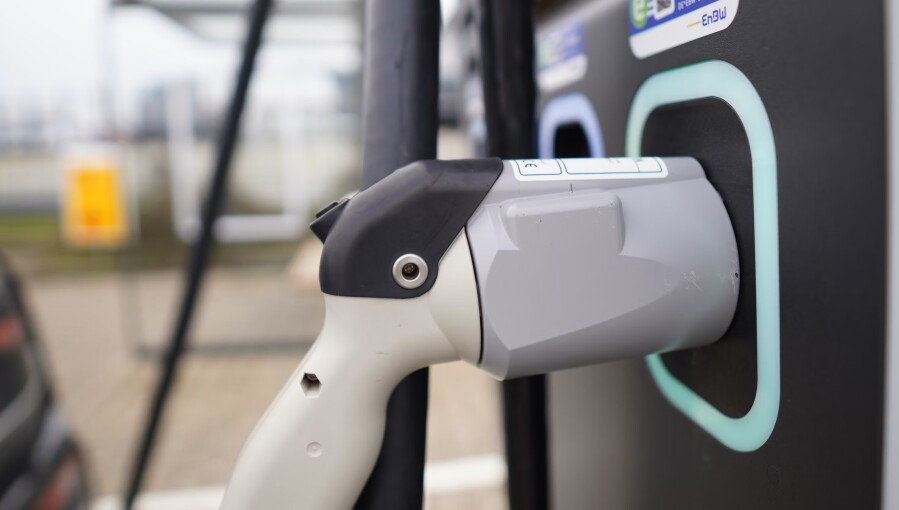
 

Thailand attracts $4.1bn in EV investments

Thailand attracts $4.1bn in EV investments
/ Sophie Jonas - UnsplashFacebook
By IntelliNews July 5, 2026

Thailand has secured more than $4.1bn (around THB137bn) in investment commitments for its electric vehicle industry, reinforcing its position as Southeast Asia's leading automotive manufacturing centre.

Figures released by the Thailand Board of Investment (BOI) show the funding covers 198 projects spanning the entire EV supply chain, including battery electric vehicles (BEVs), hybrid and plug-in hybrid models, battery production, key components and charging infrastructure, according to Thailand Business News. 

The investment momentum comes as international carmakers continue to diversify manufacturing bases and strengthen supply chains across Southeast Asia amid shifting global economic and geopolitical conditions.

Rather than concentrating solely on fully electric vehicles, Thailand has adopted a broader strategy supporting Hybrid Electric Vehicles (HEVs), Plug-in Hybrid Electric Vehicles (PHEVs) and BEVs, allowing manufacturers to expand production across multiple technologies.

The approach has already translated into stronger domestic demand. In 2025, electrified vehicles accounted for more than 40% of all new vehicle registrations in the country. Hybrid models made up the largest share at 21.8%, while battery electric vehicles represented 19.6%.

BOI data also highlights significant investment across different segments of the industry. Battery electric vehicle manufacturing attracted approximately THB39.5bn through 18 projects, creating annual production capacity exceeding 370,000 vehicles.

Meanwhile, hybrid and plug-in hybrid vehicle projects secured a combined THB39.3bn across 14 investments. The expansion builds on Thailand's long-standing automotive industry and the established presence of Japanese manufacturers, which have played a leading role in hybrid vehicle development.

The latest investment commitments reinforce Thailand's ambition to strengthen its role as a regional hub for next-generation vehicle production while supporting the global transition towards cleaner transport technologies.


Italy could be the next country to build a solar railway after Switzerland’s successful trial


By Liam Gilliver
Published on

Solar railways could soon become commonplace in Europe, following a successful trial in Switzerland.

Europe’s infrastructure is embracing the renewables boom, with one company determined to transform the continent’s railway lines into mini solar farms.

Last year, Swiss start-up Sun-Ways unveiled the world’s first-ever solar railway after rolling out 100 metres of photovoltaic (PV) panels in between active tracks in Buttes, a village in the Val-de-Travers district.

Originally planned as just a three-year trial, the railway was fitted with 48 specially-designed solar panels with a combined power of 18 kWp.

However, the positive results yielded just one year into the trial mean the installation of a permanent system along the railroad track is now likely, Euronews Earth has been told.

Are solar railways efficient?

Solar panels are often installed at a specific angle to ensure they absorb the maximum amount of sunlight throughout the year.

In Spain, for example, the optimal angle for efficiency is between 30° and 35°. According to a 2022 study published in Science Direct, a 34° tilt on solar panels in the Iberian Peninsula resulted in annual production losses lower than one per cent.

It’s why sloped rooftops are naturally convenient locations to install panels – while garden fences, balconies and flat roofs will generate less energy in comparison.

Sun-Ways estimates that the loss of production due to the lack of inclination of the railway panels is only around 10 per cent. Still, in one year, the project has produced around 16,000 kWh.

To put this into perspective, this is roughly the same amount of energy an average UK home uses, where everything is powered by electricity (such as heating, hot water, lighting and appliances).

In theory, solar panels could be rolled out across the entirety of Switzerland’s 5,317 kilometre-long railway network – covering a size equivalent to 760 football fields or more than 50,000 times the trial coverage.

Sun-Ways estimates that this has the potential to produce around one Terawatt hour (TWh) of electricity every year, around two per cent of the country’s total energy consumption.

Are solar railways safe?

Transforming railway tracks into renewable energy hubs is no easy feat, and comes with its own set of unique challenges.

One of the biggest concerns, previously expressed by the International Union of Railways, is that the panels could suffer micro-cracks, lead to a higher risk of fires and distract train drivers due to reflections.

Sun-Ways has tackled these issues by building more resistant panels than what would be installed on rooftops, fitted with an anti-reflection filter.

Built-in sensors also ensure they work properly while brushes attached to the end of trains can remove dirt from the panels’ surface.

When asked if there were any issues within the first year of operation, Sun-Ways told Euronews Earth that “the plant worked perfectly” and that it didn't have to carry out any “special maintenance”.

“For this first pilot project, the electricity is sent directly to the grid,” the company adds. “But we are already working to reinject the electricity produced with Sun-Ways power plants directly into the railway substations or into the train traction line.”

Will solar railways become the norm across Europe?

Following its successful trial in Switzerland, Sun-Ways has just signed a collaboration contract with an Italian business partner who is in contact with the country’s national railway infrastructure, Rete Ferroviaria Italiana.

Plans to launch a pilot project in the coming months will be unveiled soon.

Sun-Ways has also received government approval to install another solar railway in South Korea, while discussions are underway with Dutch, Chinese, Indian and Singaporean companies.

Thousands flee raging wildfires in southern Europe

Ille-sur-Têt (France) (AFP) – Wildfires raged across southern Europe on Monday, forcing thousands of people to evacuate their homes and prompting officials to ban spectators from a stage of the storied Tour de France cycling race.


Issued on: 06/07/2026 

The blaze in southwestern France near the town of Perpignan broke out over the weekend © Jc Milhet / AFP

Hundreds of firefighters are battling blazes that have devastated more than 19,000 hectares (42,000 acres) of land -- an area more than twice the size of Manhattan -- across Portugal, Spain, France and Greece.

And temperatures are on the rise again, predicted to reach 40C in parts of a region still suffering the aftermath of a recent record-breaking heatwave.

In southwestern France near the city of Perpignan, 700 hundred firefighters backed by special aircraft battled to control a "gigantic" blaze spreading in a hard-to-reach remote area, with more than 10,000 local residents evacuated.

Fanned by wind, intense heat and exceptionally dry air, the fire has nearly tripled in size since early Sunday, devouring 4,600 hectares and leaving a firefighter and a resident injured, local authorities said.


"The fire came within 300 metres of the houses. We were taken aback by how fast it spread, it was staggering -- bordering on panic," said Patrice, a 53-year-old resident of the village of Trevillach, who did not wish to give his surname.

"We started seeing smoke around 10:30 pm, then it kept coming closer and closer. Someone from the town hall knocked on our door around 1:00 am to tell us to leave," said Charlotte Pignol, 30, who was among the first to be evacuated from her home early on Sunday.

The blazes come shortly after a heatwave in June, one of Europe's worst, during which thousands of excess deaths were registered and which would have been "virtually impossible" without climate change, the World Weather Attribution group of scientists said.

With the mercury set to rise again in the coming days, authorities expressed alarm that the annual summer wildfire season had started a month early.

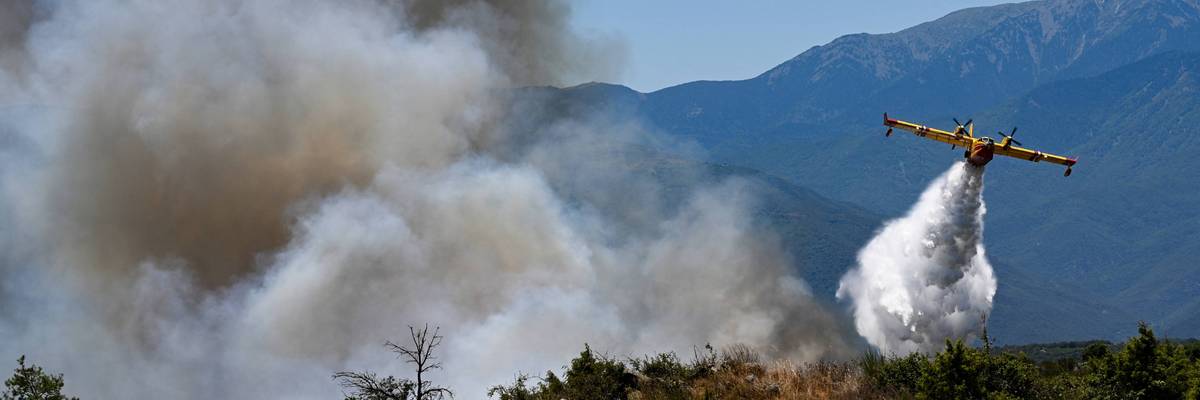
A French civil protection service plane drops water on a huge forest fire in the Pyrenees © Matthieu RONDEL / AFP

"Climate change is here, we are living the consequences and it is only the start of July," said French fire service Colonel Eric Belgioino as he appealed to people near the Pyrenees inferno to take precautions to avoid starting fires.

"The season is going to be long for the soldiers fighting fires. You have to help us," he pleaded.

- Tour de France -

In France, officials announced that Monday's third stage of the Tour de France cycling race through the Pyrenees would take place without spectators who normally line the routes of the storied competition.


The fires forced evacuations in southwestern France © Idriss Bigou-Gilles / AFP

The stage, which on Monday will see cyclists ride from Spain into France, "will be limited to the passage of the riders only and the vehicles essential to organizing the race" on French territory, the regional prefect Pierre Regnault de la Mothe told reporters.

"The public is asked not to go near the route or to the finish area," he said.

"In other words, and I regret having to say this, it will be, in France at least, a stage of the Tour de France without spectators."
Poisonous cloud

In Greece, flames set off by a forest fire tore through two factories in Thessaloniki in the north of the country over the weekend, forcing authorities to evacuate the surrounding area and to warn households to keep their windows closed.

In Spain, a fire near the northeastern Costa Brava coast burned more than 2,200 hectares in two days and firefighters said their efforts would be "complicated" by rising temperatures and the many "smoking hotspots" within the fire's perimeter.

Elsewhere, major fires also destroyed hundreds of hectares of forest, vineyards and scrub land on the Croatian island of Hvar and at Tale in Albania, authorities said.

Regions across Portugal, Spain and southern France have stepped up heat alerts for the coming days.

On Monday the latest heatwave was expected to move north, with forecasters saying it could last until next weekend.

burs/yad/abs
‘Climate Change Is Here’: Wildfires Ignite Across Europe Following Deadly Heatwave

Blazes mobilized hundreds of firefighters over the weekend and scorched a total of 42,000 acres in Spain, France, and Portugal alone—an area two times the size of Manhattan.


A Canadair CL-415 plane of France’s Civil Security services drops water on a wildfire at the Col des Auzines, near Trevillach, Southern France, on July 5, 2026.
(Photo by Matthieu Rondel / AFP via Getty Images)

Olivia Rosane
Jul 05, 2026
COMMON DREAMS

On the heels of a deadly European heatwave, fierce fires erupted in Greece, Spain, Portugal, and France over the weekend, raising fears for a summer of extremes as the effects of the climate emergency become ever more apparent.

The blazes mobilized hundreds of firefighters and scorched a total of 42,000 acres as of Sunday in Spain, France, and Portugal alone—an area two times the size of Manhattan.

Climate change is here, we are living the consequences and it is only the start of July,” French fire service Colonel Eric Belgioino told the public, as Agence France-Presse reported.

France


One of the fires raging in the South of France forced organizers of the Tour de France to close the third stage of the race to the public on Monday, as Reuters reported.

The fire has consumed 6.18 square miles in Southern France and put two people in critical condition.

“An exceptional fire calls for exceptional measures for the tour,” race director Christian Prudhomme said, according to Reuters.

As of Sunday, seven departments in France faced “very high risk” for fires, as temperatures were expected to reach highs of 100-104°F across the south, as Anadolu Agency reported.


Spain


Across the border in Spain, a fire in Costa Brava burned through over 5,400 acres in a 48-hour period, according to AFP. The flames led to shelter-in-place or evacuation orders for nearly 50,000 people.

The Catalunya fire service said on Sunday that firefighters “worked tirelessly throughout the night to consolidate the perimeter of the La Bisbal d’Empordà forest fire, which is now stabilized.”


Portugal


Another blaze ignited in Portugal’s central Vouzela area on Thursday.

It burned through 30,000 acres and required the work of 1,200 firefighters before it was partially contained as of Sunday.


Greece


In Greece, two fires erupted on Saturday and Sunday.

The first, in the Oraiokastro suburb of the country’s second-largest city of Thessaloniki, compelled evacuations and shelter-in-place orders when it overtook a recycling plant and released dangerous smoke into the air, The Associated Press reported.

“The smoke contains volatile organic compounds that irritate the eyes and throat, as well as carcinogenic substances such as benzene, dioxins, and furans,” Dimosthenis Sarigiannis, professor of environmental engineering at the Aristotle University of Thessaloniki, told ekathimerini.com.

The inferno also damaged multiple homes and businesses, Oraiokastro Mayor Pandelis Tsakiris told the country’s state broadcaster.

The second blaze ignited on Sunday west of Athens, according to AP, and 210 firefighters worked hard to control it before the sun set and firefighting planes would be grounded.

The European fires follow a heatwave that scientists said would have been “virtually impossible” without climate change caused by the burning of fossil fuels, and spark concerns that the continent could see a devastating summer for fires.

French Interior Minister Laurent Nunez noted that the fire season had started one month early, according to AFP.

As fire Colonel Belgioino said: “The season is going to be long for the soldiers fighting fires. You have to help us.”


What can France learn from Spain's heatwave protection for workers?

As French workers face record-breaking temperatures, attention is turning to Spain, where measures introduced to deal with extreme weather are inspiring a proposal for climate leave in France.


Issued on: 03/07/2026 - RFI

A man fans himself as he rests on a hot day in Retiro Park in Madrid, Spain, 28 June, 2025. AP - Paul White

After last week's heatwave put 72 mainland French departments on red alert, Green party leader Marine Tondelier announced her party would table a bill introducing up to five days of "climate leave" a year to protect workers from extreme temperatures.

The bill will be sponsored by MP Damien Girard and tabled "in the coming days and weeks", he said.

Spain introduced a similar measure in November 2024 after floods in Valencia killed more than 230 people. Many of the victims were trapped in their cars after travelling to work despite extreme weather warnings.

Spanish model

The Spanish law provides for "up to four days of paid leave in the event that it is impossible to reach the workplace" and "in the event of a serious and imminent risk, particularly in the event of disasters or severe weather".

Someone in Spain could potentially claim this weather-related leave during a heatwave, although there are currently no figures showing that this has happened.

This is not the country's first measure designed to protect workers in the event of extreme heat.

"Firstly, companies must try to put measures in place such as shifting work to cooler times of day by adjusting working hours, for example, or by reducing the working day," Monica Perez Cardoso, head of occupational health at Spain's largest trade union confederation, Workers' Commissions, said.

"Time off is not automatically granted. It is only possible if these other measures do not work, or if the authorities issue a warning stating that work must not be carried out during those hours."

Last summer, four people died at work in Spain because of the heat.
US-Iran Deal Could Put Freedom Of Navigation At Risk Worldwide – Analysis

July 5, 2026 
 SIPRI
By Dr. Pierre Thévenin

Key Takeaways

US-Iran Deal May Undermine Freedom of Navigation — The Islamabad Memorandum’s wording (especially Paragraph 5) could allow Iran to impose tolls or restrictions on shipping through the Strait of Hormuz after the 60-day period, violating the non-suspendable innocent passage regime under international law.

Broader Global Implications — A US concession on Hormuz could weaken America’s long-standing commitment to freedom of navigation worldwide and embolden other states (e.g., China in the South China Sea or Russia in the Arctic) to impose similar restrictions, threatening global trade and supply chains.

Europe’s Potential Role — With possible US retrenchment, the EU should step up as a stronger defender of freedom of navigation through diplomatic protests, legal documentation, and expanded naval operations (building on models like ASPIDES and ATALANTA).


Analysis

On 17 June Iran and the United States signed a memorandum of understanding that is intended to pave the way for ending the war between them that started on 28 February this year with a wave of US and Israeli strikes on targets across Iran. Although the agreement now looks very fragile, the wording of one critical paragraph of the so-called Islamabad Memorandum suggests the USA might allow Iran to restrict freedom of navigation in the Strait of Hormuz permanently as part of a final peace treaty. If it does, this could have economic, political and legal repercussions far beyond the Gulf region.
The Strait of Hormuz under international law

The Strait of Hormuz connects the Gulf (often referred to as the Persian Gulf or Arabian Gulf) to the Gulf of Oman. As a consequence, all marine traffic between the Gulf—which includes the entire coastlines of Bahrain, Iraq, Kuwait and Qatar, as well as many ports of Iran, Saudi Arabia and the United Arab Emirates—and the rest of the world must pass through it.

The strait is around 21 nautical miles wide at its narrowest point and lies between Iran to the north and the Omani exclave of Musandam to the south. Because the strait is used for international navigation, the legal regime of ‘non-suspendable innocent passage’ applies within it. This means that neither Iran nor Oman can hamper the passage of any ship passing through the strait on its way to or from any other Gulf state’s port, as long as this passage is peaceful, continuous and expeditious. In contrast to the similar right of innocent passage that applies in the territorial seas of any coastal state, it cannot be suspended for any reason, according to international law.

The non-suspendable innocent passage regime in the Strait of Hormuz derives from international customary law, as first recognized by the International Court of Justice in the 1949 Corfu Channel Case. This is because Iran is not a party to the 1982 United Nations Convention on the Law of the Sea (UNCLOS).

As coastal states, Iran and Oman have the right to, among other things, establish laws regarding the safety of navigation and the regulation of maritime traffic, as well as the protection of the marine environment in the Strait of Hormuz. However, these laws should not have the practical effect of preventing or interrupting innocent passage through the strait.

Potential changes under the Islamabad Memorandum

The Islamabad Memorandum contains specific provisions regarding navigation through the Strait of Hormuz. Paragraph 5 states:

Upon the signing of this MOU, the Islamic Republic of Iran will make arrangements using its best efforts for the safe passage of commercial vessels with no charge, for 60 days only, from the Persian Gulf to the Sea of Oman and vice versa …

This somewhat ambigous language arguably allows Iran to impose a toll on ships passing through the strait after 60 days (by which time a final deal should have been negotiated, according to paragraph 3). The imposition of such a toll would have the practical effect of rendering innocent passage conditional, and would thus contravene the non-suspendable innocent passage regime in the strait.

Paragraph 5 goes on to state that Iran and Oman will conduct dialogue

to define the future administration and maritime services in the Strait of Hormuz in discussion with other Persian Gulf littoral states in line with the applicable international law and the sovereign rights of coastal states …

Despite the affirmation that the administration of the strait will be conducted ‘in line with the applicable international law’, there is reason to be cautious. For example, according to both Oman’s declaration on its 1989 ratification of UNCLOS and Iran’s domestic law, prior authorization is required for warships to sail through their territorial seas. If Iran and Oman decide to administer the strait in the light of their understanding of international law, they could substantially curtail the right of innocent passage for warships. As the USA has pointed out several times, there is no basis for limiting the right of innocent passage in this way under current international law.

A shift in US foreign legal policy?


The US signature of the memorandum is as significant as the content of the document itself because it potentially signals a shift in US foreign policy. The USA has long been one of the most ardent champions of the freedom of navigation, despite not being a party to UNCLOS. In the Strait of Hormuz alone, the USA made diplomatic protests and operational assertions against Iranian attempts to restrict freedom of navigation 12 times between 1983 and 2011.

The USA entered World War I partly to safeguard the rights of US shipping on the high seas. Since the end of World War II, it has consistently carried out missions designed to assert freedom of navigation and the right of innocent passage for its ships against the claims of various states, from the Arctic in 1960s to the South China Sea in more recent times.

During the negotiations for UNCLOS, the USA collaborated closely with France, Japan, the Soviet Union and the United Kingdom to ensure that the final text safeguarded freedom of navigation, whether on the high seas or through territorial seas or straits used for international navigation.

Since 1979 the USA has implemented a Freedom of Navigation programme, dedicated to safeguarding freedom of navigation throughout the world. This programme challenges ‘excessive maritime claims’ asserted by other states (including US allies), both through consultations and diplomatic representations and ‘operational assertions by US military forces’. The US Department of State includes all challenges relating to freedom of navigation in its Digest of the United States Practice of International Law.

The language of paragraph 5 of the Islamabad Memorandum already suggests a significant weakening of this US commitment to freedom of navigation. If the USA ratifies a final peace treaty that allows Iran and possibly Oman to restrict freedom of navigation through the Strait of Hormuz—for example by imposing a toll—it would effectively be conceding that the right of innocent passage through straits used for international shipping, and by extension other international legal norms guaranteeing freedom of navigation, can be modified by coastal states resorting to violence.
Broader implications for freedom of navigation and maritime trade

Such a concession would not bode well for freedom of navigation. The USA has been the most powerful supporter of freedom of navigation in recent decades, with both the means and the political will to stand up for it when it has appeared to be under threat. The wording of the Islamabad Memorandum already dents its credibility in this regard.

If the final deal allows Iran to limit the right of innocent passage in the Strait of Hormuz, it could embolden others states that wish to limit freedom of navigation through maritime expanses they consider theirs, such as China regarding the South China Sea or Russia regarding the Arctic Straits along the Northern Sea Route. It would send a message that international legal norms can potentially be modified through military means and that the current US administration will allow it to happen in order to save face.


All this has major practical and political implications as freedom of navigation is the bedrock of the global economic system. More than 80 per cent of internationally traded goods are transported by sea. The impact on global oil prices of Iran’s effective closure of the Strait of Hormuz in recent months has starkly illustrated the potential consequences of limiting freedom of navigation.

Similar challenges to freedom of navigation, especially in another strait used for international navigation such as the Strait of Malacca (the main shipping channel between the Indian and Pacific oceans), could further strain supply chains, drive up the price of imported commodities, including critical materials, and thus contribute to instability and economic volatility.

A new role for Europe?

If US support for freedom of navigation is weakening, that leaves the European Union (EU) and its member states as its strongest guardians. Even in their sometimes dramatic actions to curb the Russian ‘shadow fleet’ and ensure safety of navigation in European waters, the EU and individual member states have always acted in accordance with international law. They should now be ready to expand their role in protecting freedom of navigation.

As part of this, the EU and individual member states could, for example, be more vocal and more systematic in denouncing excessive maritime claims that erode freedom of navigation. This will be crucial to avoid the formation of an alternative customary legal regime through tacit acceptance of state practice.

The EU should consider creating a European Digest of International Law Practice, modelled after the US one—perhaps through the European External Action Service’s maritime security division. This could collate and publish contributions and positions from member states in one volume. The EU could use this as a tool to promote respect for international law and increase Europe’s influence, which would make it better able to defend the liberal international legal order at sea.

In addition, EU member states could consider developing new and expanding the scope of existing EU naval operations to further strengthen the protection of freedom of navigation in maritime regions of critical importance for the EU in the Middle East, and perhaps elsewhere. The EU could follow the model of its European Naval Force (EUNAVFOR) operation ASPIDES—which is designed to safeguard freedom of navigation in the Red Sea, the Gulf of Aden and maritime regions adjacent to the Strait of Hormuz—to expand the mandate of operation ATALANTA, which is designed to fight illegal activities and promote deconfliction in the western Indian Ocean and the Gulf of Aden, and develop similar operations as required.

By taking these steps, the EU would demonstrate that it is committed to freedom of navigation and has the political will to safeguard it in practice, at least in some parts of the world.


About the author: Dr Pierre Thévenin is a Researcher with SIPRI’s European Security Programme and an international technical expert for Expertise France.

Source: This article was published by SIPRI


About SIPRI
SIPRI is an independent international institute dedicated to research into conflict, armaments, arms control and disarmament. Established in 1966, SIPRI provides data, analysis and recommendations, based on open sources, to policymakers, researchers, media and the interested public. Based in Stockholm, SIPRI also has a presence in Beijing, and is regularly ranked among the most respected think tanks worldwide.
View all posts by SIPRI →

20,000 protest against AfD party conference in Germany

Copyright (c) Copyright 2026, dpa (www.dpa.de). Alle Rechte vorbehalten

By Nathan Rennolds
Published on

Thüringen police described the protest as "legitimate" but said an AfD constituency office and police officers had been attacked with paint bombs and fireworks.

Around 20,000 people are marching in Erfurt, Germany on Saturday to protest against the far-right Alternative for Germany party's annual conference.

Antifascist protesters are blocking roads and tram lines around the city as riot police keep a watchful eye on proceedings.

"We want a society based on solidarity: equal rights, equal security, the right to residence and social security for all," Noa Sander, a spokesperson for the anti-AfD group Widersetzen, said. "That is what we stand for together here in Erfurt today".

Thüringen police described the protest as "legitimate" but said an AfD constituency office and police officers had been attacked with paint bombs and fireworks.

The conference nevertheless began as scheduled, the force later added in a post on social media.

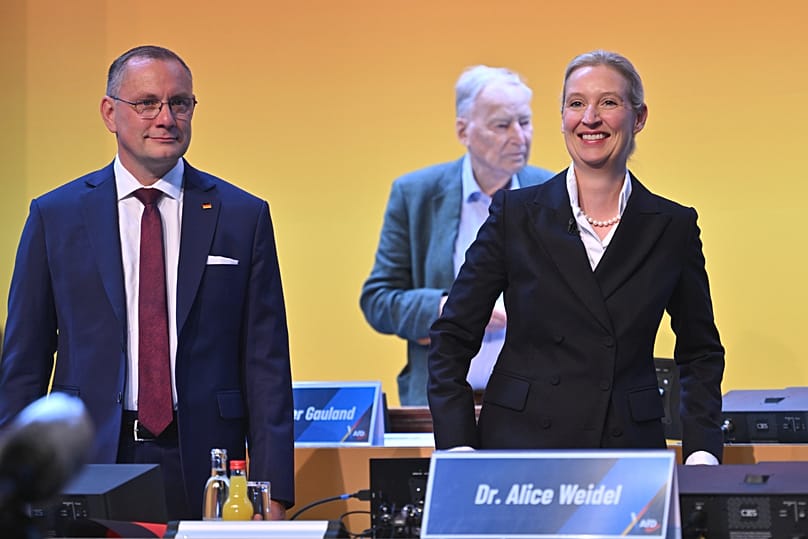
Alice Weidel, federal chairwoman and parliamentary group leader of the AfD, and Tino Chrupalla, chairman of the AfD's Bundestag parliamentary group. (c) Copyright 2026, dpa (www.dpa.de). Alle Rechte vorbehalten

The party re-elected Alice Weidel and Tino Chrupalla as co-chairs, ahead of local elections in Saxony-Anhalt and Mecklenburg-Vorpommern, which the party hopes will help lay the groundwork for achieving broader success at the national level.

Chrupalla, aged 51, was re-elected with 70.05 per cent of the vote, whilst Weidel, aged 47, received 81.3 per cent. Neither faced any challengers.

The AfD is a Eurosceptic party that advocates strict immigration control and that has been critical of Berlin's support for Ukraine in its fight against Russia.

The party has seen growing support in national opinion polls in recent months. Recent polls have put support for the party at as much as 29%, versus 22% for German Chancellor Friedrich Merz's CDU/CSU group.


Germany's anti-immigration AfD elects new leaders amid mass protests

Tens of thousands of demonstrators gathered in the eastern German city of Erfurt on Saturday, blocking major roads and disrupting public transport, but failed to stop the far-right Alternative for Germany (AfD) from opening its annual party congress.


Issued on: 04/07/2026 - RFI

Anti-AfD protestors also set up road blocks. REUTERS - Christian Mang

Many delegates arrived at the conference venue before protesters set up blockades, allowing this weekend's two-day meeting to begin on time.

Police said around 31,000 people took part in largely peaceful demonstrations, while organisers put the figure at more than 50,000.

Protesters blocked roads into the city, with some abseiling from a motorway bridge, while others staged sit-in protests that disrupted bus and tram services.

"It's important to send a signal against the shift to the right," said 19-year-old demonstrator Lene Krug. "The AfD is an anti-democratic party that spreads hate."


State elections

The AfD, which has topped recent national opinion polls, is hoping to make further gains in state elections in eastern Germany later this year. Polls suggest it could win an outright majority in September's election in Saxony-Anhalt.

The party came second in last year's national election with 20 percent of the vote, behind Chancellor Friedrich Merz's conservative CDU/CSU alliance.

AfD co-leader Alice Weidel rejected accusations that the party was anti-democratic.

"We are the new people's party in Germany," she told delegates.

AfD co-leaders Alice Weidel and Tino Chrupalla were both re-elected at the party's congress. REUTERS - Karina Hessland

Leadership confirmed

Weidel and co-leader Tino Chrupalla were re-elected for another two-year term during the congress.

"Perhaps we'll soon be able to govern on our own," Chrupalla said. "That would be the right signal to the democracy-despisers out there who wanted to stop our party conference."

Critics accuse the AfD of downplaying Nazi crimes and maintaining links with right-wing extremists – allegations the party rejects.

In 2018, Alexander Gauland, then co-leader of the AfD party, described the Nazi era as "a speck of bird poop" in Germany's otherwise grand 1,000-year history.

A proposal to relax rules governing members' links to extremist groups was withdrawn after pressure from the party leadership, although Weidel said the policy would be reviewed within a year.

(with newswires)