Ecology, Trump’s new colonialism and a non-dogmatic theory of imperialism: An interview with Ana Cristina Carvalhaes
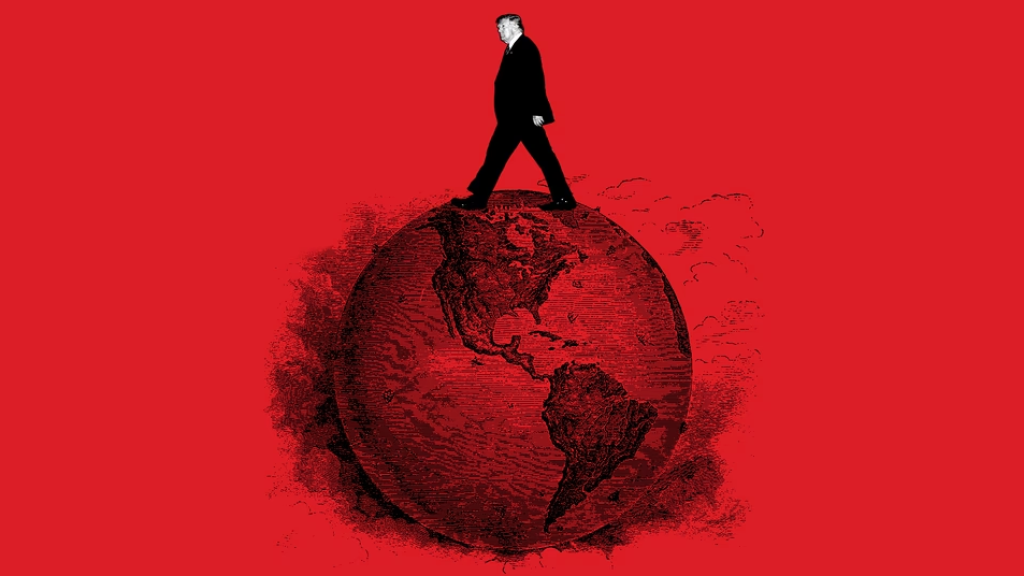
Ana Cristina Carvalhaes is a founding activist of Brazil’s Socialism and Liberty Party (PSOL) and a Fourth International executive bureau member. In this interview with Federico Fuentes for LINKS International Journal of Socialist Renewal, Carvalhaes argues for a non-dogmatic theory of imperialism, which incorporates the issue of ecology, understands Trump’s aggressive neo-colonialist shift and recognises the imperialist and sub-imperialist role played by certain “middle-sized economies”.
Over the past century, the term imperialism has been used to define different situations and, at times, been replaced by concepts such as globalisation. Is imperialism still valid? If so, how do you define it?
Imperialism is a Marxist concept, though the word is commonly used in the media and by non-Marxist scholars. The answer to your questions depends on the Marxist perspective you analyse it from, as there are various forms of Marxism. I subscribe to one that rejects immutable dogmas, untouchable classics and sanctified gurus. Such ahistorical views contradict the essence of Marxist historical materialism. And without Marxist theory, it is impossible, for example, to understand the material and ideological roots of US President Donald Trump’s domestic and foreign policies — his wars, tariffs and blackmail against former allies.
The idea of imperialism remains extremely valid and useful today, even if it has been enriched by reality and new phenomena in the 110 years since Lenin’s seminal pamphlet on the topic. I am among those who defend and draw upon the concept of imperialism, formulated and debated by a great generation of Marxists at the turn of the 20th century. But I also think we must draw on the history of these past 100-plus years, and on important contributions regarding new phenomena in the global economy and geopolitics, especially by activists and theorists from the so-called Global South — that is, from colonised countries and regions.
For Marxists, neither “hegemonic transition,” drawn from Immanuel Wallerstein and Giovanni Arrighi’s world-system school, nor globalisation, a term with neoliberal roots, can replace the idea of economic and political domination by a group of “core” countries — characterised by their early industrialisation and financialisation — over the majority of nations, which are exploited and oppressed to a greater or lesser extent. Inequality, exploitation (value extraction) and political oppression have been part of capitalism’s essence for nearly 150 years. The Marxist concept of imperialism is a systemic definition with far greater value — more theoretically sharp for understanding reality and useful for the struggle of exploited and oppressed peoples — than the theories you mentioned.
This does not mean Marxist theories should not incorporate contributions from other schools of thought. The idea of hegemonic transition, in which the main (hegemonic) capitalist core countries replace one another (first Genoa and Venice, then the Netherlands, England, the United States and now China) is interesting. It transposes Antonio Gramsci’s idea of hegemony to the international sphere and contributes to understanding capitalist history. Moreover, Arrighi was a pioneer in pointing to something that is evident today; namely, that China was emerging as a potential new hegemonic power in the 1980s and ’90s. He laid this out in his 2007 book, Adam Smith in Beijing. In Marxist terms, China was then already creating the conditions to become a new imperialism — a process still underway.
Globalisation is a term that neoliberals coined to extol the supposed virtues of a world economy under their leadership. However, something new occurred in that period. This encouraged many Marxists, including French economist François Chesnais and Latin American structuralist economists such as Maria da Conceição Tavares, to study what was happening to capitalism in the 1990s from a materialist perspective. Grappling with this new reality, Chesnais described the mechanisms of neoliberal financial globalisation as a new period of even greater dominance by finance. For their part, Tavares and her group in Brazil highlighted the oppressive geopolitical impacts of the US dollar’s power, which combined with its military superiority to reaffirm US power in the wake of the 1970s crises.
Discussions on imperialism often refer back to Lenin’s pamphlet on imperialism. Does it remain relevant today? What elements have been superseded by subsequent developments?
As well as being highly accurate and politically useful for his time, the merit of Lenin’s synthesis lies, above all, in that it revealed an extraordinary long-term strategic vision. As a revolutionary, Lenin was concerned about the war, which had already claimed 100,000s of lives in Europe when the pamphlet was written in 1916, and how socialists on both sides of the trenches should respond.
Most of what he described as imperialism remains relevant today:
- the systemic predominance of an alliance between banking capital and industrial capital — finance capital;
- the growing tendency towards capital's concentration through the formation of monopolies or oligopolies — the end of free competition;
- the ever-widening development gap between core and non-core countries;
- the tendency of industrialised nations, driven by capital’s needs, to expand their political, military and economic power over others; and
- rivalry among imperialist powers and the tendency toward war.
Each characteristic aptly describes today’s crises — with the notable exception of the ecological and climate crisis.
The Leninist concept of imperialism has not always been easy to defend over the past 110 years. New developments forced Marxists to debate imperialism and its transformations. The 30-year period after World War II was marked by the US’ complete economic superiority (in alliance with Western Europe and Japan). This led to debates over whether inter-imperialist rivalries had ended, with the greatest rivalry now being with the “Communist” bloc. The great industrial development of the 1950s and ’60s led some “First World” Marxists to question whether finance capital still dominated — which financial globalisation would conclusively refute.
Broadly speaking, the Marxist theory of imperialism has proven correct in the long run, though, of course, not without shortcomings. The Marxist theory of imperialism, further developed by Latin American dependency theorists and anti-colonial thinkers from Africa and Asia, rightly emphasises the core-periphery contradiction. But it took a long time to recognise — some still do not — the emergence of intermediate state-economies.
These state-economies are dependent on core imperialist powers, but oppress neighbours and partners at the regional level. They do not quite qualify as part of the core, but are no longer simply periphery. Brazil is one case; Australia, it seems to me, is another. This group is highly heterogeneous due to historic, social and demographic differences, among others.
Second, but no less important, is that no attention was paid to industrial capitalism’s predatory impacts on nature. In fact, nature did not appear in the writings of these thinkers. They failed, for example, to elaborate on the link between imperialism and inequalities in terms of the far greater environmental destruction inflicted on the colonised.
More recently, Marxists have sought to incorporate ecology and the environmental crisis into their concept of imperialism, for example, by proposing concepts such as “unequal ecological exchange.” How important is it to integrate the environmental crisis into our understanding of imperialism? How can we best do so?
This belated incorporation is, in my view, the most important contribution to Marxist theory since the 1970s. There is an expanding body of work on the subject, one that has grown in line with the rising number of ecological disasters, increasing awareness among broad sections of society, and mounting evidence of the climate and biodiversity crises we face. The main Marxist and Marxist-influenced theorists contributing to this ongoing discussion include Michael Löwy, Ian Angus, James O’Connor, Danil Bensaïd, John Bellamy Foster, Jason Moore, Ariel Salleh, Andreas Malm, Maristella Svampa and Kohei Saito. Anti-capitalists, such as Naomi Klein, have been crucial to popularising the issue.
The incorporation of ecology by Marxist theorists and social movements was — and remains — essential, as combating capitalism is a matter of human survival. This system destroys nature. If the capitalist system — which gave rise to colonialism and imperialism — is the heart of the problem, then its mechanisms of domination serve to worsen the current crises and threaten planetary collapse.
“Unequal ecological exchange” is a capitalist-imperialist mechanism. It explains why biomes and biodiversity destruction, as well as water and air pollution, is far greater in countries exploited by core powers. These countries are viewed as exporters of agriculture, livestock, minerals and oil, or sites to dump polluting industries that imperialists do not want at home.
Capitalism also creates what environmentalists call “sacrifice zones” in non-core semi-colonial countries: territories where imperialist corporations and governments impose mining, oil and gas projects, eucalyptus plantations for the pulp industry (and pulp mills), and dump their waste. We are now experiencing this with the building of data centres for US Big Tech firms throughout Latin America.
Inequality in imperialism is also expressed through “environmental racism,” a concept used by anti-racist movements in the Global South to explain (and fight against) the primary targets for pollution, toxic spills, noise and destruction being territories where Indigenous peoples, Afrodescendent peoples, and oppressed ethnic groups tend to live. Fortunately, movements and the left are taking up this issue, though not at the pace needed to halt imperialist capitalism amid the climate emergency.
The original imperialist powers built their wealth and military might through colonial conquest and plundering pre-capitalist societies. Do they remain the only imperialist powers? Or have some nation-states gone from non-imperialist to imperialist? If so, what specific characteristics and economic foundations enabled them to join the imperialist powers’ club?
This is another shortcoming of the Leninist approach. In defence of Lenin and his contemporaries, they did not set out to predict the future. The possibility that some imperialist powers might lose influence while new imperialisms might assert themselves at the regional level was not foreseen. But that is exactly what we are seeing.
Today, European countries have lost their leading role, though they remain imperialist. The US remains hegemonic within the “core” group, but is in economic decline and losing political influence. Russia, under President Vladimir Putin, exhibits the geopolitical characteristics of a regional imperialist power. And China seeks to join the “club” of the most powerful. China not only wants its share within the redivision of spheres of influence, but directly competes with the hegemon for economic, technological, and geopolitical supremacy.
The global capitalist-imperialist system is not static, but dynamic; it is in a state of constant transformation. China’s rise and Putin’s assertion of Great Russian imperialism — together with the existence of sub-imperialist countries — are the result of global and national conditions.
Interestingly, both Russia and China — which can be considered new forms of imperialism — were heirs to workers’ and popular revolutions. This enabled significant economic development in the former Soviet Union during the 20th century, and, in China’s case, substantial “pre-capitalist” accumulation after Mao’s revolution. This paved the way for its subsequent capitalist leap that began in the late 1970s and early ’80s and was tied to Western imperialism.
In light of changes over the last century, what relative weight do mechanisms of imperialist exploitation carry today compared to the past?
If by the “past” you mean the period prior to World War II, China’s revolution (1949), India’s independence and partition (1947) and the decolonisation movements across Africa and Southeast Asia in the 1950s and ’60s, then clearly the mechanisms of exploitation and political oppression have either changed or been refined considerably. But, as with Lampedusa’s The Leopard, they changed to ensure “everything remains the same.” The core countries still appropriate a significant portion of value generated by non-core countries.
There are few direct colonies left: Puerto Rico is a US colony; France, England and the Netherlands maintain some overseas colonies, including in Oceania. But direct colonisation is no longer the main mechanism for appropriating value. Instead, the main mechanisms are:
- the international division of labour, which condemns dependent countries to the “perpetual” role of exporter of raw materials (primarily agriculture and minerals) for industrialised core countries;
- the super-exploitation of labour in dependent or semi-colonial countries, which only benefits the buyers;
- the flow of profits to industrial, service and technological oligopolies or monopolies headquartered in imperialist countries, even though they operate in periphery countries, where they destroy small businesses and hinder the development of domestic enterprises;
- periphery countries’ debt to imperialist governments and international lending institutions such as the World Bank and the IMF, as well as development banks run by the European Union, Japan, etc.
The main difference, however, between imperialism in the neoliberal era — alongside undermining social gains and states’ economic and financial sovereignty — and that of the preceding period lies in the balance of power. In the neoliberal era, imperialist exploitation expanded and became more sophisticated as imperialism resumed the offensive it lost in the previous period of great revolutions and colonial liberation.
Today, Trump’s extremist imperialism, which supports a 21st century genocide against the Palestinians in Gaza, seeks to reestablish the old colonialist mechanism of appropriating wealth through plunder, invasions, looting and direct control over countries (as with Venezuela since January 3). Blatant political interference by Trump and his henchmen in elections in Honduras, Argentina and Colombia, and now in Brazil, embodies the stance “theorised” in the White House’ National Security Strategy, which sets the US as the master of the “Western Hemisphere” (the Americas plus Greenland).
After the Cold War, world politics seemed dominated by US imperialism. However, today it is in clear decline. What factors explain this?
As the hegemonic imperialist power, the US was the main driving force (along with Britain and the other European imperialist powers) behind the neoliberal changes that occurred in both global governance and in most states between 1990–2007. The global capitalist elite — the majority of the imperialist bourgeois factions — devised the neoliberal regime of capitalist accumulation as a solution to restore rates of profit and accumulation, which had been declining since the 1970s.
Neoliberalism was facilitated by the defeat of the Soviet Union and the Eastern European regimes, which triggered a tremendous political-ideological crisis among workers. It was also aided by China agreeing to participate in this neoliberal economic redesign. China’s capitalist restoration, which began in the 1980s but built on the “pre-capitalist” accumulation made possible by the 1949 revolution, was essential to neoliberal globalisation.
China’s rise and Russia’s “re-imperialisation” resulted from contradictions inherent to the neoliberal project. Despite neoliberalism’s successes — its spread across the West and parts of the East, its imposition on governments of all stripes, including social democrats and progressives — it also opened the door to the rapid industrialisation of China and East Asia (the “tiger” economies) by exporting production lines to the East. US and European leaders claimed victory after the fall of the bureaucratic regimes in Russia and Eastern Europe, drawing up business plans and strategies for “friendly governments” in Central Asia. But they underestimated history and the desire for revenge of the new Kremlin oligarchy, which emerged not out of Bolshevism but Great Russian imperialism.
In contrast, the US has largely deindustrialised and lost economic strength and influence — a trend that has worsened since the 2007–08 crisis despite maintaining control over the global currency (the US dollar) and worldwide financial transactions. One US business sector to escape this decline is information technology (IT, Silicon Valley), particularly AI companies. The new oligarchs of Big Tech, fintech firms and cryptocurrency investors are seeking to counter China’s advance.
How do you assess Trump’s foreign policy in this context? Does it represent a fundamental shift in the role US imperialism seeks to play globally?
Francisco Louçã and Diogo Machado point out that, even before Trump’s return to the White House in 2025, major transformations were underway in the capitalist mode of accumulation since the great crisis of 2007–8 and subsequent recession. These transformations, which affect everyday life through smartphones, social media, platform-based work and mass digitisation, helped create the breeding ground for neo-fascist far-right movements to flourish around the world.
The neo-fascist coalition in the White House does not represent a minor “shift in course”. The Trump administration governs in the interests of Big Tech, AI companies, fintech firms, asset managers and cryptocurrency investors. From a political-economic standpoint, the power bloc in the White House — the US bourgeois factions in government — has changed, even from Trump’s first term. In this regard, it is worth reading John Bellamy Foster’s “The U.S. Ruling Class and the Trump Regime.” The new oligarchies — or new billionaires — back the most brazen, violent and racketeering supremacist wing of Trump’s Project 2025 and his extremist coalition.
The Trump administration expresses, domestically and on the world stage, a certain desperation by sectors of hegemonic imperialist capital to halt the US’ relative decline. Faced with China’s rise, Russia’s unchecked influence and autonomy, and the equally unprecedented situation in Latin America and Africa (where Chinese investments have surged), these capitalists support Trump’s aggressive neo-colonialist shift. With accumulation rates too low and a rising competitor, this shift is also closely linked to efforts to make the US political regime even more authoritarian.
The changes are significant and qualitative, but I would not say “fundamental” — at least for now. This avoids the misconception that Trump represents “another” or “new” form of imperialism. Rather, it is capitalist imperialism in a “new” guise. It is actually quite vintage, resembling a kind of 19th-century imperialism in the age of platforms, social media and AI.
From time to time, a Marxist intellectual declares a new capitalism or new imperialism, as David Harvey did in 2005 in the wake of the US war on Iraq. The British geographer made an important contribution by warning about “accumulation by dispossession” — a concept first articulated by Rosa Luxemburg. Yet hasty definitions, such as “new imperialism,” may help sell books and gain prominence in academia, but they are of little use to the struggle.
How should we understand the growing US-China rivalry given both economies are more integrated than ever and the US maintains a significant military advantage?
This is the main contradiction in Trump’s agenda and actions: preventing China from challenging the US’s monopolistic control over the club of imperialist countries — that is, preventing China from taking the US’s place — without completely severing economic ties with the Asian dragon. Trump fuels fierce economic and geopolitical competition with tariffs, targeted measures against Chinese chips and TikTok, as well as speculation and meddling in disputes over the South China Sea and the Taiwan Strait. Yet parts of Trump’s rhetoric and practice indicate he wants a dialogue with China (and Russia) over consensually redrawing spheres of influence.
US imperialism has an underlying interest in “containing” China and preventing its rival’s growing influence and military strength. But it is not in the same position nor faces the same conditions as in the 20th century to prevent this. As for military dominance, the US undeniably remains the strongest power in history; however, the war in Iran has shown it is not invincible.
What is your view on the concept of multipolarity, advocated by some on the left? Is it possible today to maintain a position of neutrality or non-alignment with respect to imperialist blocs or poles (or great powers), without renouncing solidarity with the struggles being waged elsewhere?
Non-Marxist schools of thought have a strong hold in the fields of international relations and political economy. Terms such as “powers,” “poles,” “hegemon,” “unipolarity” and “multipolarity” stem from two dominant non-Marxist theories of the global interstate system: realists (who advocate realpolitik and the inevitable supremacy of some over others) and institutionalists (proponents of “international cooperation” and pursuing peaceful coexistence between exploiters and exploited).
Multipolarity is a concept specific to institutionalists. It identifies a situation where the international system has multiple poles of power. This is viewed positively, in comparison with its opposite, unipolarity, where there is only one pole (a single imperialism).
These schools fail to take into account the peoples and workers of these countries, national exploitation and oppression by great powers or emancipatory struggles. Their raison d’être is perpetuating the system, not transforming it. (To be fair, I should say that most international analysts — realists and institutionalists alike, including many former White House, Pentagon and CIA advisors — are outraged by Trump’s foreign policy).
Most of the broad left in the Global South, having been cut off from the Soviet bloc and oppressed by US imperialism, seeks deceptive refuge in the rise of competitors to the US and Europe — namely, Russia and China. As both are quite independent of Washington and, in that sense, adversaries of the hegemonic power, these left sectors applaud “multipolarity.”
In practice, however, they simply side with the adversaries of their “main enemy”, without taking into account the nature of Russia and China’s economies and political regimes. They also do not take into account the interests of Russian and Chinese workers and people. This stance is a negation of internationalism with the downtrodden. Internationalists are not neutral — we stand with the peoples and workers.
At the regional level, we have seen Russia invade Ukraine, and nations such as Turkey and Saudi Arabia project military power beyond their borders. How should we understand these regional dynamics within global capitalism? The term “sub-imperialism” is sometimes used to describe such countries. Is this a useful term?
Sub-imperialism is real, and it is not just a useful but an indispensable concept. Furthermore, it is not something new. The debate on “middle” economies and countries began in the 1960s. Ernest Mandel referred to those countries as late-industrialising countries. Wallerstein called them semi-peripheral.
The concept of subimperialism was elaborated by Latin American Marxist dependency theorists, specifically the left-wing structuralists at the Economic Commission for Latin America and the Caribbean (ECLAC) and, more concretely, Ruy Mauro Marini. Amid changes in the international division of labour after World War II, Marini examined the phenomenon of dependent “middle” countries that combined the following features:
- a degree of labour super-exploitation and inequality, which limited the realisation of value within national borders;
- diversion of a large portion of its industrial production toward exports due to the aforementioned limitation;
- extracting profits from and exercising geopolitical influence over more vulnerable countries in its regions; and
- ongoing wealth transfer and politically subordination to a hegemonic imperialist power.
Marini considered Brazil, Mexico and Argentina to be sub-imperialist at that time.
With the emergence of other sub-imperialist powers over the past 40 years, such as South Africa, the term is now used in a broad and imprecise manner. For a country to be sub-imperialist, it must be subordinate to an imperialist power. This does not apply to Russia, for example, and even less to China, which today can not even be characterised as a middle-sized economy. Describing BRICS as a bloc of sub-imperialists, as some do, is wrong. Brazil, India and South Africa are sub-imperialist — as is Turkey, which is outside the bloc — but the BRICS as a whole are not.
Do you see possibilities for building bridges between anti-imperialist struggles on an international scale, given some struggles seek support from rival powers? What should anti-imperialist and anti-capitalist internationalism look like in the 21st century?
The ideal, strategic approach is building anti-imperialist, anti-fascist and anti-capitalist movements against all forms of imperialism. Movements that raise their voices against wars, tariffs, interference and invasions by the US, should do the same against Russia’s invasion of Ukraine. We need an internationalism that allies with Chinese peoples and workers on the mainland and in Taiwan. Those of us who conceive of the struggle this way must be part of all these movements.
But we must recognise that uniting them all is a difficult task, given the strength of “campist” ideas on the left that view Russia and China as allied states. What should we do in the face of these difficulties? On one hand, we must forge any possible tactical alliances (united fronts) and be involved in any broad, specific initiatives against the US. On the other, we must do the same against Russia for its war on Ukraine.
We must do both while maintaining our political independence and waging a strong propaganda campaign to expose the imperialist and authoritarian nature of Putin’s regime. In urgent times, it is not a wise or useful strategy to remain isolated by demanding others adhere to our position before participating in the anti-fascist and anti-imperialist unity we need today.

No comments:
Post a Comment