Tuesday, July 14, 2026


Poland records third-warmest June since 1951 as scientists urge climate action

Poland records third-warmest June since 1951 as scientists urge climate action
/ Image by Alexa from PixabayFacebook
By bne IntelliNews July 14, 2026

Poland recorded its third-warmest June since measurements began in 1951, with the nationwide average temperature reaching 18.8°C, the Institute of Meteorology and Water Management (IMGW) said on July 13.

The figure was 2°C above the 1991-2020 average and 1.2°C higher than in June 2025, leading IMGW to classify the month as extremely warm. Average temperatures across most of the country ranged from 17°C to 20°C.

The warmest region was Podkarpacie in south-eastern Poland, where the monthly average reached 19.8°C, or 2.1°C above normal. The coolest were the Baltic coastal areas, but their average of 17.7°C was still 1.8°C above the long-term norm.

Słubice in western Poland recorded 40.5°C on June 28, the highest temperature measured by a Polish synoptic weather station since records began.

IMGW said the strong warming trend observed in Poland had continued, with the average June temperature rising by an estimated 1.95°C since 1951.

The data were published two weeks after more than 80 Polish scientists urged lawmakers to hold an urgent parliamentary debate on the climate crisis and accelerate both emissions reductions and adaptation measures.

The scientists said Poland lacked a coherent, science-based strategy to protect residents from overheating, improve water retention, strengthen infrastructure and support communities most exposed to extreme weather. They offered to help prepare a roadmap for decarbonisation and climate adaptation.

Poland eyes offshore wind to power AI and data centres, Tusk says

Poland eyes offshore wind to power AI and data centres, Tusk says
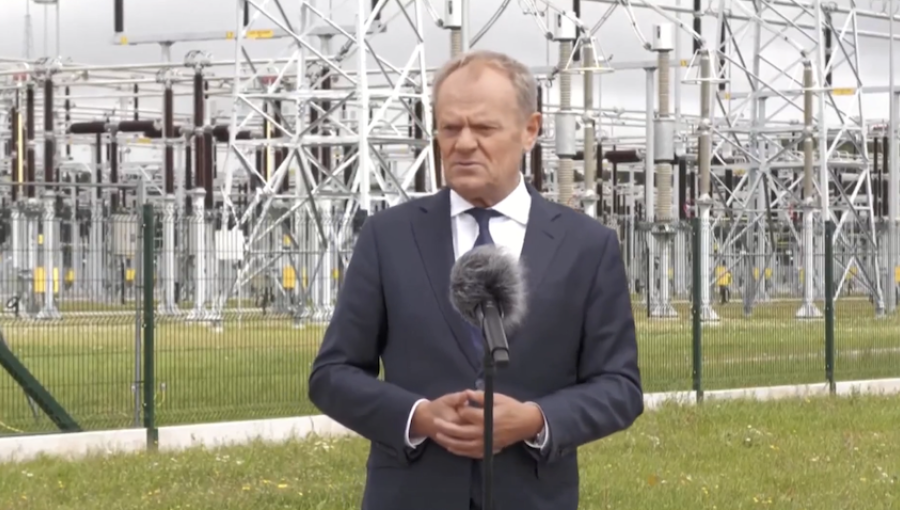
PM Donald Tusk addresses a briefing in Choczewo, northern Poland. / Donald Tusk via FacebookFacebook
By IntelliNews July 13, 2026

Poland’s expanding offshore wind sector could supply the electricity needed for energy-intensive artificial intelligence infrastructure and data centres, Prime Minister Donald Tusk said on July 10, while warning investors that power generated at sea must remain competitively priced.

“The scale allows us to think ambitiously about projects essential for the development of artificial intelligence, the entire cyberspace and data centres,” Tusk said during a briefing in Choczewo, northern Poland, state news agency PAP reported.

Tusk's comments followed the first delivery of electricity from the Baltic Power offshore wind farm to Poland’s national grid via the Choczewo substation.

Poland’s growing economy will require increasing amounts of electricity, Tusk said, adding that the government was pursuing a diverse energy mix with a strong emphasis on renewable sources.

Price would be the decisive criterion in future auctions supporting the second phase of Poland’s offshore wind development, he said.

“I am very pleased with these achievements at sea. Offshore wind is a source of satisfaction and pride, but investors must remember that this electricity has to be competitive,” Tusk said.

Baltic Power, developed by Polish energy group Orlen and Canada’s Northland Power, will have a capacity of about 1.2 GW once all 76 turbines are operating. Fifty-four turbines have been installed so far.

The wind farm is expected to produce around 4 TWh of electricity annually, equivalent to about 3% of Poland’s current demand or the consumption of more than 1.5mn households. It could reduce Poland's CO2 emissions from power generation by as much as 2.8mn tonnes a year compared with conventional sources.

Baltic Power is the first of several offshore projects due to connect through Choczewo. The infrastructure is ultimately expected to receive electricity from six wind farms with combined capacity exceeding 6 GW, more than the capacity of the Bełchatów lignite-fired power station.

Poland aims to have about 5.9 GW of offshore wind capacity installed by 2030, with potential capacity rising to around 18 GW by 2040.

Choczewo is also where Poland is building its first nuclear power plant, expected to start operation in the late 2030s.

Force Multipliers: Autonomous Weapons Systems And The Ukraine And Gaza Conflicts – Analysis


A Ukrainian soldier prepares to launch a combat drone. (Photo: gov.ua)

July 14, 2026
Manohar Parrikar Institute for Defence Studies and Analyses (MP-IDSA)
By Vinayak Rajpurohit


Key Takeaways:

Autonomous Weapon Systems (AWS) reshaping modern warfare: AI-enabled platforms like loitering munitions, drones, and swarm systems are transforming combat through speed, persistence, precision, and expendability, as seen in Ukraine and Gaza conflicts.

Ukraine conflict highlights attritional warfare: Both sides use low-cost FPV drones, loitering munitions, and AI targeting systems (e.g., Delta) to counter traditional military assets, demonstrating adaptability and force multiplication in conventional war.

Gaza conflict showcases urban AI targeting: Israel’s use of systems like Lavender for rapid target identification raises concerns about proportionality, collateral damage, and accountability, highlighting ethical and legal challenges in dense urban environments.

The use of Autonomous Weapon Systems has changed the dynamics of warfare in recent times. The rise of Artificial Intelligence has reshaped military power, strategies and decision-making in war. AI is transforming modern combat through greater speed, precision and low-cost deployment.


Introduction


Autonomous weapons systems (AWS) are changing the nature of modern warfare through AI-enabled decision-making. As per the United States Department of Defense Directive 3000.09, autonomous weapons systems are platforms capable of ‘selecting and engaging targets without further intervention by a human operator’, a definition that anchors the concept of autonomy specifically to the targeting functions.[1] AWS combines artificial intelligence with lethal platforms like loitering munitions, drones, AI-powered surveillance systems, and swarm drones that have capabilities to identify and strike targets with limited human control. The conflicts in Ukraine and Gaza have become testing grounds for AWS, showing how these technologies operate in both high-intensity and asymmetric conflicts.

Autonomous weapons systems are mainly considered in two key respects: how much control humans have over decisions to use lethal force, and how much autonomy the system itself has. AWS are commonly grouped into three categories: ‘human-in-the-loop’, ‘human-on-the-loop’ and ‘human-out-of-the-loop, ‘ depending on the degree of human involvement. Many autonomous systems currently in use fall into the ‘human-on-the-loop’ category; even though they can carry out pre-planned actions involving lethal force, human control can intervene if needed.[2] This classification raises significant International Humanitarian Law concerns regarding accountability, proportionality and compliance.


AWS as Force Multipliers


A Force multiplier is a term used in military doctrine that refers to the capacity of a technology, technique, or organisational arrangement to expand and amplify the combat effectiveness of a given force well beyond its numerical strength alone.[3] The force-multiplication effect of AWS operates across four distinct and interconnected dimensions: speed, persistence, precision and expendability. Speed refers to the capacity of autonomous weapons to execute targeting cycles at machine speed, overcoming the physiological and cognitive delays in human decision-making on the battlefield. Loitering munitions with AI guidance can detect and engage a target in a much shorter time than those controlled by humans. AWS acts faster because it doesn’t get tired or confused as humans do.[4]


Persistence is the second dimension. As humans need rest, resupply, and rotation, autonomous platforms can conduct continuous surveillance of targets for longer durations, in hours or days. A persistent autonomous intelligence, surveillance and reconnaissance (ISR) system can reduce intelligence collection gaps. As observed in Ukraine, persistent drone surveillance has made it really hard for either side to move a group of people on the ground without being seen. Similarly in Gaza, persistent aerial surveillance enabled Israel Defense Forces to keep an eye on designated targets across urban areas, creating a challenge for the Gaza military. This has changed the way wars are traditionally fought.[5]

Precision and expendability are the third and fourth dimensions, respectively. Compared to traditional guided munitions, AI-guided loitering munitions deliver superior precision at a significantly lower cost.[6] Expendability changes the cost equation for high-risk missions. An expendable autonomous platform can target highly defended areas without the fear of losing a pilot.[7] Collectively, these four aspects illustrate the importance of AWS as a force multiplier.

Ukraine: Attrition Warfare and Autonomous Scale

The Russia–Ukraine conflict has emerged as one of the prime examples for testing autonomous and semi-autonomous systems in a conventional war against a peer adversary since World War II. Ukraine’s early deployment of the Turkish-made Bayraktar TB2 Unmanned Aerial Vehicle (UAV) demonstrated that AI-enabled unmanned systems, when combined with real-time ISR and precise targeting data, could effectively weaken the enemy’s conventional armoured units. In the first week of the full-scale invasion, TB2 operations struck Russian Buk surface-to-air missile systems, armoured vehicles, and other military targets, highlighting the operational value of integrating AWSs with real-time battlefield intelligence.[8]

As the war escalated between Russia and Ukraine, both sides started making adaptive changes to the situation. Russia swiftly acquired and deployed the Iranian-made Shahed-136 loitering munitions to target Ukraine’s critical infrastructure because of their low cost and high destructive potential. Each of these drones costs them approximately US$ 20,000 to US$ 50,000 per unit.[9] Russia has been deploying these drones to overwhelm Ukrainian air defences, and later this number rose approximately from 80–100 to 100–200.[10] To overcome this challenge, Ukraine developed a domestic manufacturing unit of substantial scale during wartime. Ukraine planned to produce around 1 million first-person view (FPV) drones in 2024. These FPV drones became an important weapon against Russian tanks and soldiers on the front itself.[11]

Ukraine has also developed and deployed AI-enabled command-and-targeting software to reduce sensor-to-shooter time. This includes the Delta battlefield management system, developed by Ukraine and designed to operate in accordance with NATO interoperability standards. It uses multiple sources of information, such as satellite images, signals intelligence, and drone reconnaissance, to find targets quickly and precisely. This helps soldiers make decisions faster without depending on higher headquarters’ processing cycle.[12] This system has cut the kill chain interval from target identification to engagement.

Before the implementation of Delta, the Ukrainian military took up to 72 hours for the entire process of identifying and engaging the target. However, with Delta, that cycle has been shortened to two minutes.[13] Russia has responded with electronic warfare countermeasures, which include GPS jamming, radio-frequency jamming and physical destruction of drones.[14] This has created a dynamic contest between measures and countermeasures that shapes the conflict’s technological nature.

The Russia–Ukraine conflict exemplifies how autonomous and semi-autonomous technologies are transforming modern warfare. The two states deployed low-cost drones, AI-enabled targeting systems, and loitering munitions. These help them counter traditional military disadvantages and boost their efficiency.

Gaza: Urban Warfare and AI-Enabled Targets


The Israeli military campaigns in Gaza started in October 2023 and introduced a new aspect of using AI-enabled targeting in urban warfare. The Israeli Defense Forces (IDF) developed an AI-based programme known as ‘Lavender’, which was unveiled for the first time. According to +972, this system identifies individuals suspected of being affiliated with Hamas and Palestinian Islamic Jihad (PIJ), including those of lower rank, as potential targets for bombing. Lavender is said to have clocked tens of thousands of individuals affiliated with Hamas and PIJ and reduced target suggestion time to seconds, thereby streamlining the decision-making process.[15]

Apart from an AI-based targeting system, the IDF also deployed quad-copter drones and other UAVs across Gaza’s urban battlespace. The disclosure of ground forces would have heavy casualties due to the high density of buildings and tunnel networks. In this case, small tactical drones capable of operating in dense urban airspace played an important role. They provided reconnaissance, target identification, and real-time battlefield awareness, enabling more precise operations while reducing the exposure of ground forces. The tactical utility of this system in urban combat was significant. These systems can enter buildings, avoid obstacles, and search spaces where traditional ground options lead to casualties.[16]


The situation in Gaza revealed some operational and reputational issues with the AI-enabled targeting cycle. Reports also indicated that the use of the Lavender system to identify lower-ranking operatives, together with associated targeting decisions, raised concerns about increased collateral damage.[17] According to the Palestinian Ministry of Health in Gaza, the reported death toll reached 37,877 by mid-2024, though independent analysis estimated it at approx. 64,260.[18] This became a major international debate regarding the legal and ethical limits of AI-assisted warfare. These results show that the advantage of AWS involves legal and ethical challenges. These challenges must be incorporated into states’ operational planning, rules of engagement, and military decision-making.[19]

Comparative Analysis: Ukraine and Gaza

Comparative Element Ukraine Theatre Gaza Theatre

Conflict Typology Industrial-scale warfare across frontlines High-density urban warfare

Primary Function of AWS Attrition-destruction of armour, logistics, command nodes, and infrastructure Intelligence-kinetic targeting and compressed targeting cycles in urban areas

Operational Emphasis Mass, persistence, scalability, and cost-effectiveness Precision, surveillance integration, and rapid response

Battlefield Environment Open and semi-open battlefronts Populated urban area

Type of AWS Used FPV drones, loitering munitions, autonomous reconnaissance systems AI-enabled commercial quad-copters and surveillance-strike drones

Cost-Exchange Ratio Low-cost drones destroying expensive tanks Commercial quad-copters replacing special operations forces

Relevance for India Supports indigenous low-cost autonomous warfare capability Highlights utility in urban and counterinsurgency operations

Electronic Warfare Challenges Jamming, spoofing, signal disruption, and counter-drone adaptation Optical, acoustic, and sensor limitations in urban environment

Technological Sustainability Continuous innovation is necessary Constant sensor and targeting adaptation are necessary

Strategic Limitation of AWS No single platform remains dominant for long Sophisticated systems face operational and sensor limitations

Strategic Conclusion AWS act as force multipliers within integrated warfare systems AWS enhance operational efficiency but require doctrinal alignment

Source: Compiled by the author from RUSI, ICRC, Business Insider, LSHTM, +972 Magazine, and CEPA reports.


The conflicts in Ukraine and Gaza collectively illustrate that AWS have transformed modern warfare, accelerating the shift from single-platform to system-of-systems warfare. Ukraine showcases the effectiveness of low-cost autonomous systems in large-scale attritional warfare. In contrast, Gaza highlights the growing importance of AI-enabled precision targeting, ISR and urban operations. Together, these conflicts indicate that future warfare will depend primarily on the combined use of AI-enabled ISR, autonomous targeting assistance, and networked battlefield systems rather than on fully independent lethal autonomy.[20]

Strategic Implications


As seen above, the deployment of AWS in the Ukraine and Gaza conflicts holds major strategic implications for controlling escalation, maintaining deterrence stability, and ensuring global security. One of the major strategic concerns relates to escalation dynamics. In this regard, AI-driven drones, loitering munitions systems, and automated target technologies have shortened the sensor-to-shooter cycle, enabling faster military responses.[21] As operational decision-making time decreases, human deliberation and political control also decrease. This increases the risk of escalation. Paul Scharr’s book Army of None warns that a high degree of automation may lead to miscalculation, accidental engagements and escalation during conflict.[22]


Furthermore, AWS is a challenge to traditional deterrence and conventional warfare. Low-cost drones and AI-assisted systems allow weaker states to impose serious military and economic repercussions on stronger opponents through continuous surveillance and targeted strikes.[23] For example, in Ukraine, FPVs played an important role, showcasing how low-cost technologies can neutralise expensive armour and logistics networks.

A further consequence is the risk of proliferation associated with accessible drone technologies and open-source AI tools. The diffusion of autonomous weapons into the hands of non-state actors, proxy groups and militant organisations increases regional unrest and asymmetric assaults.[24] The above case study of the Gaza conflict explains how autonomous and semi-autonomous weapon systems can be deployed in irregular warfare environments, thereby increasing the complexity of achieving escalation control and ensuring civilian protection.[25]

Ethical and Legal Dimension

The ethical and legal aspects of AWS have emerged as major issues in contemporary international law and applied ethics. Distinction, proportionality and precaution are the three core principles of the International Humanitarian Law (IHL). They are at risk because of the shift in lethal decision-making of autonomous systems. The principle of Distinction requires that the hostile should always differentiate between combatants and civilians. The principle of Proportionality states that civilian casualties must not exceed the military advantage. The principle of Precaution means that all possible measures should be taken to minimise civilian casualties before and during an attack.[26]

Current AWS, including those examined in the Ukraine and Gaza case studies, generally rely on sensors and automated target-recognition functions to identify and classify targets. However, their reliability in the electromagnetic, visual and cognitive complexity of real combat is still debated. There is no recognised international standard for testing or certifying the target discrimination capability of AWSs.[27] The ICRC has consistently maintained that there must be meaningful human control in all lethal decision-making processes, arguing that increasing autonomy in targeting systems raises significant legal and ethical concerns.[28] The use of AI-generated target lists in Gaza raises questions about the efficacy of algorithm-based recommendations to make split-second decisions where IHL requires human intervention to authorise lethal engagement.[29]

The question of legal accountability further poses a structural challenge. According to existing IHL, criminal responsibility for violations is attributed to individuals, such as commanders, soldiers and policymakers. When an autonomous system commits an act that would constitute a war crime if committed by a human operator, the chain of legal responsibility becomes diffuse, contested, and potentially unenforceable. According to legal experts, this problem is termed the “responsibility gap”, which poses challenges for existing IHL accountability frameworks.[30] For military powers aiming to operate AWS responsibly, it is important to build a strong internal accountability system, well-defined rules of engagement for autonomous lethal actions, and operational guidelines that ensure human intervention. It is not only a legal necessity but also an important positive strategic reputation in an age when state conduct on the battlefield is intensified.[31]


Lessons for India


The ongoing conflicts in Ukraine and Gaza demonstrate that future military engagements will heavily depend on autonomous technologies, AI-enabled intelligence networks, and low-cost strike capabilities. A major takeaway for India is the growing use of drones, loitering munitions, AI-enabled targeting systems, autonomous surveillance networks, and drone-centric operations in dense urban warfare environments.[32] This is especially pertinent for India in counterterrorism and urban combat environments, where swift intelligence integration and timely situational awareness are essential. These developments suggest that India should focus on developing integrated drone warfare capabilities, counter-unmanned aerial systems (UAS) strategies, and electronic warfare capabilities, especially in the context of high-intensity potential risk along the Line of Actual Control (LAC) and Line of Control (LOC).[33]

Furthermore, the conflict highlighted how traditional military resources can be compromised by autonomous and semi-autonomous technologies. Relatively low-cost drones and AI-enabled targeting systems have demonstrated the ability to destroy tanks, artillery, command posts and infrastructure sites.[34] This suggests that India’s military doctrine should focus on mobility, concealment, low-cost drones, AI-driven weapon systems and counter-electronic warfare. India should also keep a check on the proliferation of commercial drones and open-source AI tools, which raises the risk of their acquisition by terrorist groups.

These conflicts underscore the growing importance of indigenous innovation, AI-driven targeting capabilities and autonomous systems. The Defence Research and Development Organisation (DRDO) will play a crucial role in future military preparedness by developing indigenous drones, loitering munitions, counter-UAS systems, AI-assisted surveillance platforms, and autonomous battlefield technologies. Future warfare will depend on rapid technological adaptation, network-centric operations, and cost-effective precision strike capabilities.

DRDO’s ongoing projects in swarm drone technologies, autonomous surveillance systems, electronic warfare platforms, and anti-drone systems are therefore of significant strategic importance for India’s future defence modernisation.[35] The strategic collaboration between DRDO and India’s leading academic institutions, such as IISc and other premier academic institutes, will help deepen foundational research in AI algorithm development, robotic systems, advanced aerospace systems and materials, and other emerging defence technologies.[36]Strengthening domestic research and development will also reduce dependence on foreign military technologies and enhance operational self-reliance during prolonged conflicts.

“Directive 3000.09: Autonomy in Weapon Systems”, Department of Defense, United States of America, 25 January 2023, p. 14.
Autonomy, Artificial Intelligence and Robotics: Technical Aspects of Human Control”, International Committee of the Red Cross (ICRC), August 2019.
“Joint Publication 3-05.1: Joint Terminal Attack Controller (JTAC) Training and Certification”, Joint Chiefs of Staff, NDU Press, 26 April 2007.
Michael C. Horowitz, “When Speed Kills: Lethal Autonomous Weapon Systems, Deterrence and Stability”, Journal of Strategic Studies, Vol. 42, No. 6, 2019, pp. 764–88.
Aosheng Pusztaszeri and Emily Harding, “Technological Evolution on the Battlefield”, Center for Strategic and International Studies (CSIS), 16 September 2025.
Paul O’Neill, Sam Cranny-Evans and Sarah Ashbridge, “Assessing Autonomous Weapons as a Proliferation Risk: The Future Has Not Been Written”, Occasional Paper, Royal United Services Institute (RUSI), 8 February 2024.
Seth G. Jones and Seamus P. Daniels, “War and the Modern Battlefield: Insights from Ukraine and the Middle East”, Center for Strategic and International Studies (CSIS), 16 September 2025.
Lauren Kahn, “How Ukraine is Using Drones Against Russia”, Council on Foreign Relations, 2 March 2022.
Benjamin Jensen and Yasir Atalan, “Drone Saturation: Russia’s Shahed Campaign”, Center for Strategic and International Studies (CSIS), 13 May 2025.
“Russian Offensive Campaign Assessment, March 3, 2025”, Critical Threats Project, Institute for the Study of War (ISW), 3 March 2025.
“Fedorov: Ukraine to Produce 1 Million Drones per Year”, The Kyiv Independent, 25 February 2024.
Jake Epstein, “Ukraine’s Digital War Tool Cut the Time Between Finding and Striking Russian Targets From Days to Minutes”, Business Insider, 24 November 2025.
Ibid.
Brig Jaideep Agarkar, “Russia-Ukraine War: Lessons from an Electronic Warfare (EW) Perspective”, Centre for Land Warfare Studies (CLAWS), 31 May 2025.
Yuval Abraham, “‘Lavender’: The AI Machine Directing Israel’s Bombing Spree in Gaza”, +972 Magazine, 3 April 2024.
Dov Lieber, “Small Drones Are Helping Israel Navigate the Urban Battlefield in Gaza”, The Wall Street Journal, 29 December 2023.
Yuval Abraham, “‘Lavender’: The AI Machine Directing Israel’s Bombing Spree in Gaza”, no. 15.
“Gaza: 64,000 Deaths Due to Violence Between October 2023 and June 2024, Analysis Shows”, London School of Hygiene & Tropical Medicine (LSHTM), 2025.
Expert Consultation Report on AI and Related Technologies in Military Decision-Making on the Use of Force in Armed Conflicts”, ICRC and Geneva Academy, March 2024.
Lt Gen Karanbir Singh Brar (Retd), “Technology and the Future of Warfare”, Issue Brief, Manohar Parrikar Institute for Defence Studies and Analyses (MP-IDSA), 2025.
Vladislav Chernavskikh and Jules Palayer, “Impact of Military Artificial Intelligence on Nuclear Escalation Risk”, SIPRI Insights on Peace and Security No. 2025/06, Stockholm International Peace Research Institute (SIPRI), June 2025.
Paul Scharre, Army of None: Autonomous Weapons and the Future of War, W. W. Norton & Company, New York, 2018.
Matthew N. Slusher, “Lessons from the Ukraine Conflict: Modern Warfare in the Age of Autonomy, Information, and Resilience”, Center for Strategic and International Studies (CSIS), 2 May 2025.
Paul O’Neill CBE, Sam Cranny-Evans and Sarah Ashbridge, “Assessing Autonomous Weapons as a Proliferation Risk”, no. 6.
“Artificial Intelligence and Machine Learning in Armed Conflict: A Human-Centred Approach”, International Committee of the Red Cross (ICRC), 6 June 2019.
Lieutenant Colonel Andre Haider, “Autonomous Weapon Systems in International Humanitarian Law”, Joint Air Power Competence Centre (JAPCC) Journal, Edition 27, December 2018.
Vincent Boulanin, “Limits on Autonomy in Weapon Systems: Identifying Practical Elements of Human Control”, SIPRI and the International Committee of the Red Cross (ICRC), June 2020.
“Autonomous Weapons: Decisions to Kill and Destroy Are a Human Responsibility”, Statement of the ICRC to the Convention on Certain Conventional Weapons (CCW) Meeting of Experts on Lethal Autonomous Weapon Systems, Geneva, 11 April 2016.
Jessica Dorsey, “Israel’s AI-Enabled Targeting of Hamas Members Jeopardizes Moral and Legal Standards of Warfare”, Utrecht University, 18 July 2024.
Robert Sparrow, “Killer Robots”, Journal of Applied Philosophy, Vol. 24, No. 1, March 2007, pp. 62–77.
Autonomous Weapon Systems: Implications of Increasing Autonomy in the Critical Functions of Weapons”, Expert meeting, ICRC, 15–16 March 2016.
Noah Sylvia, “Israel’s Targeting AI: How Capable Is It?”, Royal United Services Institute (RUSI), 8 February 2024.
Pintu Kumar Mahla, “Military Drones in India: New Frontier of Warfare”, Journal of Defence Studies, Vol. 16, No. 4, October–December 2022, pp. 253–261,.
David Kirichenko, “Artificial Intelligence’s Growing Role in Modern Warfare”, War Room: The Online Journal of the U.S. Army War College, 21 August 2025.
“Operation Sindoor: Indigenous Defence Technologies Demonstrate India’s Strategic Capability”, Press Information Bureau, Ministry of Defence, Government of India, 14 May 2025.
“MoU between DRDO and IISc for Joint Advanced Technology Program”, Press Information Bureau, Ministry of Defence, Government of India, 8 February 2021.


About the author: Mr Vinayak Rajpurohit; former Intern, Centre for Military Affairs, MP-IDSA
Source: This article was published by Manohar Parrikar IDSA

Views expressed are of the author and do not necessarily reflect the views of the Manohar Parrikar IDSA or of the Government of India.


About Manohar Parrikar Institute for Defence Studies and Analyses (MP-IDSA)
The Manohar Parrikar Institute for Defence Studies and Analyses (MP-IDSA), is a non-partisan, autonomous body dedicated to objective research and policy relevant studies on all aspects of defence and security. Its mission is to promote national and international security through the generation and dissemination of knowledge on defence and security-related issues. The Manohar Parrikar Institute for Defence Studies and Analyses (MP-IDSA) was formerly named The Institute for Defence Studies and Analyses (IDSA).
View all posts by Manohar Parrikar Institute for Defence Studies and Analyses (MP-IDSA) →


Ukraine launched a first-of-its-kind robotic amphibious assault, deploying a gun-toting robot from a drone boat

Chris Panella
Mon, July 13, 2026 


Ukrainian forces sailed a naval drone carrying a ground robot into Russian-held territory.

Ukraine said it was the first known fully robotic amphibious assault mission.

Video footage shows the ground robot firing its machine gun at a target.


Ukraine's military launched a fully robotic amphibious assault, using a naval drone to transport a ground robot into Russian-occupied territory.

Ukraine said the robotic deployment was the first known combat mission of its type. It's the latest example of how uncrewed systems can be employed in highly dangerous situations and environments instead of troops, keeping humans out of harm's way.

On Monday, Ukraine's 123rd Separate Territorial Defense Brigade announced it had executed the mission, revealing that it had remotely guided a naval drone across the Black Sea to a position behind Russian lines on the Kinburn Spit at the end of Ukraine's Kinburn Peninsula. The peninsula is directly west of Kherson. Ukrainian officials have called this area a key strategic foothold for Russian forces to restrict maritime access to the Black Sea.

When the Ukrainian naval drone reached the coast, it deployed a ground robot, an uncrewed ground vehicle. Per footage shared by the 123rd on Telegram, the ground drone was wielding a mounted machine gun. Once it reached the shore, the drone began firing shots at an unidentified target. Ukraine didn't identify which robotic platforms were involved in the amphibious assault, their capabilities, or the mission objective.


The brigade said in its statement that this was "the first known combat mission of this format in the world," adding that "the ground robotic complex was delivered to the enemy shore using an unmanned maritime platform, landed on occupied Ukrainian territory, and employed to accomplish a combat task."

The use of drones for this amphibious assault is a significant development in the use of uncrewed systems in the war. Ukraine has used naval drones to target Russian Black Sea Fleet ships and uncrewed ground vehicles for front-line missions that are too deadly for human soldiers. Now, it's merging the two, as it has with naval drones and first-person-view drones, among other uncrewed systems.

Ground robots, or uncrewed ground vehicles, are fast becoming the face of Ukrainian battlefield logistics and missions. As mines, artillery, and drone-saturated skies threaten troops, Ukraine has focused on building more drone vehicles that can be remotely operated to transport ammunition and supplies, evacuate wounded troops, lay mines, launch other drones, or attack.

Ukraine said in April it cleared Russian-held territory using only ground robots and drones for the first time.

The rising reliance on these systems is changing how Ukrainian drone manufacturers are building new vehicles. They're focusing on low-cost systems that can be deployed in large numbers should they be targeted and destroyed.


Russian Ministry of Defense Records Sharp Increase in Ukrainian Drone Strikes

Will Neal
Mon, July 13, 2026 
The Daily Beast


Photo Illustration by Elizabeth Brockway/The Daily Beast/Getty/Reuters

Vladimir Putin's own military has let slip just how much damage Ukraine's devastating drone strikes are doing to Russia.

Russian Defense Ministry briefings, compiled by state news agency RIA Novosti, reveal that Putin's regime has been forced to shoot down a staggering 64,000 Ukrainian drones over its own territory during the first six months of this year.

Total downings have surged across the spring, rising from around 5,400 in January to an astonishing high of 18,000 in June.

Kyiv's fast-growing drone fleet has hammered oil refineries and energy sites hundreds of miles beyond the frontline and deep into Russia.

The barrage has knocked more than 25 percent of refining capacity offline, The Wall Street Journal reported Monday, triggering a spiraling fuel crisis that has forced the Kremlin to ration supplies and left citizens often waiting in lines outside gas stations for up to two days.

By late June, rationing was in place across 56 regions, according to independent outlet Mediazona. Putin, 73, has said his government is racing to stabilize supplies as Moscow moves to halt diesel exports.

The mounting damage has shifted Washington's posture. President Donald Trump, 80, who has otherwise proven hostile toward Ukrainian President Volodymyr Zelensky, 48, threw his weight behind the deep strikes during last week's NATO summit in Turkey. Trump called the attacks "an escalation that could help lead to an end" to the war.

Trump vowed to end the now four-year conflict within 24 hours of retaking office. Eighteen months in, no settlement exists.

He and Putin are understood to have spoken by phone in early July, but diplomacy has largely stalled as the White House remains preoccupied with ending Trump's own war with Iran.

The White House has its own fuel headache. U.S. gas prices have climbed back to $3.88 a gallon, marking their sharpest weekly jump since mid-May, after Trump reignited tensions with Iran last week.

Ukraine's Coalition of the Willing launch a new Anti-Ballistic Missile Coalition at Paris summit

Ukraine's Coalition of the Willing launch a new Anti-Ballistic Missile Coalition at Paris summit
President Zelenskiy was in Paris on July 13 for a meeting of the Coalition of the Willing where they agreed to set up a new Integrated Anti-Ballistic Missile Coalition to counter the escalating missile war in the Ukraine-Russia conflict. / bne IntelliNewsFacebook
By Ben Aris in Berlin July 14, 2026

President Zelenskiy was in Paris on July 13 for a meeting of the Coalition of the Willing, joining some 25 heads of state and government at the Hôtel des Invalides to sign up to deals supplying desperately needed air defence systems, ammunition and fighter jets. Hosted by Emmanuel Macron, the gathering has now grown to 37 nations, with Moldova and North Macedonia the latest to join.

Zelenskiy told delegates during his speech in Paris: "I thank France for its readiness to support Ukraine with additional air defence systems and missiles as early as this year. I also thank France for its readiness to provide licenses for ASTER and SCALP – this will be of great help. I thank the United Kingdom and Germany for their consistently tangible steps to help protect lives. There will be new defence packages for Ukraine."

The urgency of that plea was underscored within hours. Overnight into July 14, Russia launched a fresh ballistic missile attack on Kyiv, with mayor Vitali Klitschko reporting that air-defence units were engaging incoming missiles and that fires had broken out in the city's Holosiivskyi district — a grim rejoinder to a summit convened expressly to stop such strikes. A day earlier, a Russian strike on the port of Odesa had hit a Togolese-flagged cargo vessel unloading fertiliser, killing five people and injuring ten, part of a weekend of attacks that left several more dead.

As the missile war escalates, Ukraine is scraping the barrel, leaving the skies over major cities dangerously exposed. Russia has been pounding Kyiv and other urban centres with missiles on a near-nightly basis, amid a worldwide shortage of Patriot interceptor missiles.

During the Ankara Nato summit on July 8, President Donald Trump promised to grant Ukraine a licence to make Patriots — but experts say it will take years before the first interceptor rolls off a Ukrainian production line. In the meantime, Zelenskiy needs air defence systems from wherever he can find them. Efforts to restart ceasefire talks remain stalled, and Bankova is clearly preparing for at least another two years of war, bracing in the short term for an expected repeat of President Vladimir Putin's attempt to freeze Ukraine into submission this winter.

Zelenskiy admitted that in the drones vs missiles race, “ballistic missiles is Russia’s last advantage,” but added that the more Russian ballistic missiles Ukraine can shoot down, the greater the chance Putin comes to the table, "as his last argument in this war will no longer work."

France has come to Ukraine's rescue with a major expansion of military aid. During the summit, Macron said France would follow Washington's technology-sharing lead and grant Ukraine licences to manufacture its SCALP cruise missiles, AASM precision-guided air-to-ground bombs and the Aster interceptor missiles used by the Franco-Italian SAMP/T air defence system — the first time Paris has licensed such capabilities to Kyiv. Ukraine has also ordered a batch of next-generation SAMP/T batteries, built by Eurosam, to follow earlier deliveries of the older version.

Increasingly, the emphasis is shifting from supplying Ukraine with materiel from US and EU stockpiles, to enabling Kyiv to make its own munitions. Earlier this year Zelenskiy said Ukraine now produces 60% of the arms and ammunition it needs. At the same time, a growing raft of joint-venture factories on European territory is springing up under the so-called Danish model — producing weapons outside Ukraine, with a particular focus on drones as part of Europe's effort to build a "Drone Wall."

Integrated Anti-Ballistic Missile Coalition

The centrepiece of the day was the launch of a new Integrated Anti-Ballistic Missile Coalition (IABMC), bringing together Ukraine and nine European countries — Denmark, France, Germany, Italy, the Netherlands, Norway, Spain, Sweden and the United Kingdom — to develop an integrated air and missile defence architecture. In a joint statement, the ten said protecting Europe required "a global solution of integrated missile defence architecture to deter and defeat future missile threats." Around a dozen defence firms took part, including SAMP/T maker Eurosam, Leonardo, Thales, Saab and Ukraine's Fire Point — a sign this is a concrete industrial programme rather than a communiqué.

At its heart is FREYJA, Ukraine's bid to build a European-backed, lower-cost alternative to the American Patriot. Zelenskiy was careful to cast it as a complement rather than a competitor.

"Europe needs more anti-ballistic defence. Together, we can build such a system. Ukraine is ready to deliver its part: the anti-ballistic missile. We are now finalizing it. It is important to confirm politically that FREYJA is our common project, in the interests of all of Europe," he said in a social media post, adding that the system was "a way to supplement our defence, create a strong shield over the entirety of Europe and do all of this faster and at a lower cost."

Macron also said Ukraine intends to acquire 16 French Rafale fighter jets, with deliveries expected to allow the aircraft to enter service in 2028–29.

There was a political changing of the guard, too. It was the last coalition meeting for Britain's Keir Starmer, who noted he had resigned as prime minister on June 22; he used the occasion to thank partners and confirm the UK would join the EU's roughly €90bn loan to keep ammunition, air defence and long-range missiles flowing to Ukraine. And in a personal note, Zelenskiy awarded Macron the Order of Freedom, calling the French president "a true friend of Ukraine."


Ukraine Getting License To Build Aster 30 Anti-Missile Interceptors

Joseph Trevithick
Mon, July 13, 2026


French President Emmanuel Macron says Ukraine is in line to get a license to produce Aster 30 missiles domestically.

French President Macron announces Ukraine will receive a license to produce Aster 30 missiles domestically for SAMP/T air defense systems.


French President Emmanuel Macron says Ukraine is in line to get a license to produce Aster 30 missiles domestically. Aster 30 is the anti-air interceptor used in the SAMP/T surface-to-air missile system, examples of which are already in Ukrainian service. The Franco-Italian SAMP/T is often described as an analog to the U.S.-made Patriot, and both systems offer Ukraine vital anti-ballistic missile capability.

Ukraine is still in desperate need of additional capacity to shoot down incoming Russian ballistic missiles, especially amid shortages of missiles for its Patriots. Just last week, U.S. President Donald Trump also said he would approve a license for Ukraine to domestically produce Patriot interceptors. Significant questions remain about the exact timeline for when Ukraine might begin domestic production of munitions for either system, along with a host of other factors that will need to be addressed, as TWZ just explored in detail after Trump's announcement regarding Patriot.


The French President spoke alongside Ukrainian President Volodymyr Zelensky, British Prime Minister Keir Starmer, and German Chancellor Friedrich Merz at a press conference at the Coalition of the Willing summit today in Paris. A total of 25 world leaders were in attendance. At this event, the governments of Ukraine, Denmark, France, Germany, Italy, the Netherlands, Norway, Spain, Sweden, and the United Kingdom also announced the creation of an Integrated Anti-Ballistic Missile Coalition. The coalition will pool resources to develop new anti-ballistic missile defense capabilities.


"Earlier this afternoon [Ukrainian] President Zelenskiy and I agreed ​on a roadmap between our two countries, implementing what ​had been agreed in principle last November regarding ⁠our bilateral defense cooperation," Macron said at a press conference today, per a translation of his remarks from Reuters.


This is set to include the license production of Aster 30, as well as AASM Hammer-series precision-guided bombs and SCALP cruise missiles. France has already supplied tranches of all three of these munitions to Ukraine. It's also worth noting that Ukrainian forces have also received Storm Shadow cruise missiles from the United Kingdom, which are nearly identical to SCALP.

Macron also highlighted planned deliveries of SAMP/T and SAMP/T NG surface-to-air missile systems to Ukrainian forces, which are set to start at least later this year. The SAMP/T NG is an upgraded version of the baseline SAMP/T type, and is designed to offer an expanded engagement envelope, both in terms of altitude and maximum range, primarily through the inclusion of new radars. The French and Italian versions of SAMP/T NG differ in the exact radar used (the French Thales GF 300 or the Kronos Grand Mobile HP from Italy's Leonardo). Improved Aster 30 variants are also in development. Ukraine currently has two baseline SAMP/T systems, one from France and the other from Italy.

In addition, the French President talked about progress in Ukraine's planned acquisition of French-made Rafale fighters, with the goal now being to deliver the first 16 of those aircraft in the 2028-2029 timeframe. You can read more about those plans, which were first announced last year, here.

The move by French authorities to allow Ukraine to produce Aster 30s domestically is particularly significant. Russian ballistic missiles, including ground-launched types and the air-launched Kinzhal, have and continue to present a threat that is especially difficult for Ukraine to manage. Ballistic missiles hurtle back to Earth at very high speeds in the terminal phase of flight, making them very challenging to intercept compared to other kinds of missiles, in general.


In recent years, Russia has also begun using ballistic missiles with enhanced maneuvering capabilities to make them even more difficult to knock down, even by more advanced air defense systems like Patriot. French Air Force Gen. Fabien Mandon, the chief of the French defense staff, claimed last year that SAMP/T was actually proving to be more effective than Patriot against Russian ballistic threats.


"We helped Ukraine by deploying missile and drone interception systems called the SAMP/T system," Mandon said. "The Russians adapted the flight profiles of their most advanced missiles because they realized they were being intercepted by Ukrainian defenses. Today, the Patriot system is struggling to intercept them, but the SAMP/T is intercepting them."

That being said, Ukraine still has more Patriot systems than SAMP/Ts, but both are in extremely high demand and short supply. The same goes for interceptors.

Patriot systems have become a cornerstone of Ukraine's air defense since 2023.

Using PAC-3 missiles, they intercept ballistic and hypersonic threats like Iskander and Kinzhal, protecting cities and saving lives.@KpsZSU @DefenceU pic.twitter.com/TTi8PCAEsM

— UNITED24 Media (@United24media) April 4, 2026

"Our warriors performed well today in intercepting drones and cruise missiles, but unfortunately not Russian ballistic missiles. And the reason is precisely the insufficient supplies of interceptor missiles," Ukrainian President Zelensky wrote in a Ukrainian language post on X on July 6 after an especially heavy barrage on the capital Kyiv, according to a machine translation. "It is extremely important for the world, first and foremost America and our European partners, to emerge from the NATO summit in Ankara with strong decisions to support our air defense, and thus the protection of ordinary people's lives. As long as missiles for 'Patriots' remain in the warehouses of allies, it only encourages Russia to continue 'defeating' residential buildings. The United States and Europe have enough power to stop this terror."

Цієї ночі Київ був під масованим російським ударом. Росія випустила 68 ракет і ще 351 ударний дрон. Зараз триває ліквідація наслідків. Пошкодження зафіксовані більш ніж на 10 локаціях міста, зокрема в житлових будинках. На місцях працюють усі необхідні служби, які роблять… pic.twitter.com/cf2vZzOZy2

— Volodymyr Zelenskyy / Володимир Зеленський (@ZelenskyyUa) July 6, 2026

Patriot and SAMP/T may offer important capabilities against other aerial threats, including Russia's Zircon missile. Zircon is widely described as an air-breathing hypersonic cruise missile. However, the question has been raised recently about whether it might actually be a more traditional quasi-ballistic weapon.


At the same time, demand for higher-end surface-to-missile systems and anti-ballistic missile capability, and suitable interceptors, is growing across Europe and elsewhere globally. This is underscored by the announcement today of the new Integrated Anti-Ballistic Missile Coalition. This, in turn, reflects a similar surge in the development and fielding of ballistic missiles around the world, including by smaller countries and even some non-state actors. The conflict with Iran this year, as well as fighting with Iranian-backed Houthi militants in Yemen in recent years and the ongoing conflict in Ukraine, have only further driven home the growing capabilities and proliferation of ballistic threats.

This reality applies even to the U.S. military, where the Marine Corps is now looking to acquire an organic ballistic missile defense capability to reduce reliance on the Army to provide this support. For years now, TWZ has been calling attention to how the Army's Patriot force is heavily strained due to constant demands and is simply not adequately resourced to meet the current operational needs. That service is working to address those shortfalls, but it will take years for those efforts to come fully to fruition.

So, for Ukraine, having its own domestic pipeline for an interceptor like Aster 30 would offer an immensely valuable hedge against shortages and delays elsewhere. For this particular missile, demand extends beyond SAMP/T operators, which also currently include Singapore. Warships in service with the navies of France, Italy, the United Kingdom (where it is part of the Sea Viper air defense system), and several other countries are also equipped to fire these interceptors.

High demand for Patriot interceptors and full Patriot systems in Ukraine has already had negative downstream impacts on orders for other customers. Concerns have been raised about the sufficiency of U.S. military stockpiles as a result, something that has been further compounded by heavy U.S. and allied expenditures in recent fighting in the Middle East.


At the same time, there are still questions about how and when domestic production of Aster 30 or Patriot interceptors in Ukraine might begin, or when the first missiles might start being delivered. Higher-end anti-air missiles typically have production lead times measured in months, if not years. It will take some time for Ukraine just to finalize deals with the relevant defense contractors and establish a domestic production line. Where initial funding might come from is not entirely clear, either, though new financial aid from France and other countries could be a definite possibility. Ukraine might potentially be able to export some of the interceptors it produces, offering a badly needed economic boost for the country.

There is also an operational security question. Russia or other adversaries could gain valuable insights into the capabilities of SAMP/T or Patriot if they were to get their hands on full-up interceptors or even just critical subcomponents. There is already a certain danger taken in delivering more advanced missiles to a country at war. Even wreckage can be an intelligence gold mine for the enemy, depending on what is recoverable. Establishing a full domestic production line will require stockpiling of brand-new subsystems, as well as the sharing of at least some degree of intellectual property and manufacturing know-how. All of which increases the total number of potential risk vectors in a country that is, again, at war with its neighbor, which also happens to be a near-peer threat for the United States and others in the West.

Macron's announcement about licensing Aster 30 production today does not address Ukraine's critical immediate needs for more high-end interceptors to respond to incoming Russian ballistic missiles. At the same time, it does open up an important new path to keeping a steady supply of missiles for the Ukrainian military's growing number of SAMP/T systems down the road. These are also capabilities Ukraine will need in the long-term, well beyond the current conflict, to help deter future aggression.

Contact the author: joe@twz.com