Tuesday, June 30, 2026

COMMENT: Ukraine may take the war to Russian LNG

COMMENT: Ukraine may take the war to Russian LNG
Novatek's Yamal LNG plant in the Russian Arctic. / NovatekFacebookTwitterLinkedInTelegramlipboardedly

By Newsbase analysts June 30, 2026

Ukraine’s widening drone campaign against Russian energy infrastructure raises the prospect that Kyiv could shift some of its focus from refineries and oil logistics to LNG assets, which have largely remained untouched.

Kyiv has been intensifying attacks on Russian oil refineries in recent months, causing fuel shortages across the country. The frequency of strikes is likely to be maintained, with Ukrainian President Volodymyr Zelenskiy declaring on June 26 a 40-day operation against Russian energy targets “to influence the aggressor ‌state in order to press for ​an end to the war.” 

Among the most notable attacks was one on the Moscow oil refinery on June 18, which has reportedly rendered the plant responsible for 40% of the capital’s fuel inoperable for the rest of this year.

Oil infrastructure will remain Ukraine’s priority target. Russian refineries, oil depots and terminals have a more immediate link to the war effort and military logistics, while also bringing the war home to everyday Russian motorists. But Kyiv might also widen its campaign to LNG to increase the economic and budgetary cost to Moscow.

Ukraine has so far avoided LNG targets, likely because of pressure from its Western allies, who fear what impact this would have on the global market. For this reason, the US and its European allies avoided sanctions on most of Russia’s operational LNG capacity, including the 17mn tonne-per-year Yamal LNG plant in the Arctic, primarily serving Europe, and the 11mn-tpy Sakhalin LNG plant in the Far East, which sends most of its gas to Japan. Instead, sanctions have only been applied to smaller Russian liquefaction facilities and the recently launched 20mn-tpy Arctic LNG-2 terminal.

Europe would be particularly exposed to any disruption in Russian LNG supplies. Even though the EU has committed to phasing out all remaining Russian gas by the end of 2027, its imports of Russian LNG remain stubbornly high – they rose a further 4% in May, despite a ban on short-term supply contracts coming into force on April 25. This was largely driven by Spain doubling its imports from Russia during the month. 

LNG prices have subsided since the height of the US-Iran war, but still remain elevated compared with pre-conflict levels. In Europe, the main TTF gas benchmark is still trading a third higher.  Yet if the EU is effective at weaning itself off Russian LNG over the coming months, Ukraine may have greater room to target Russian LNG facilities and tankers without risking a severe backlash from European buyers.

Meanwhile, Ukraine may strike these assets anyway, if it can. Kyiv has ignored pressure from its Western allies before – including by targeting Russian oil export terminals in April and previously tankers in the Black Sea, even as global oil prices were soaring as a result of Iran’s closure of the Strait of Hormuz. 

As far as attacks on Russian LNG tankers go, there is already a precedent. On March 4, Ukrainian sea drones struck the Arctic Metagaz carrier in the Mediterranean, causing extensive damage. The Metagaz was part of the shadow fleet of LNG tankers that Russia is using to export cargoes from the sanctioned Arctic LNG-2 project. Other vessels could also be at risk, particularly when sailing to Asia via longer southern routes rather than heading east through the Northern Sea Route. But that risk may ease over the summer as the Arctic route opens up, allowing Russia to send more cargoes directly eastward through its own northern waters.

Kyiv’s attention could therefore turn to Russia’s liquefaction facilities. The most exposed projects are Gazprom’s 1.5mn-tpy Portovaya LNG plant and Novatek’s 1mn-tpy Cryogas-Vysotsk terminal in the Leningrad region of northwest Russia. Both projects are already under Western sanctions, eliminating the risk of disruptions to European supply and reducing the likelihood of Western anger at Ukraine for targeting them. 

Improvements in Ukrainian drone capability also raise the prospect of potential attacks on Russia’s distant Arctic LNG-2 and Yamal LNG facilities as well. Following a drone strike against an oil refinery in Russia’s Western Siberian region of Tyumen, over 2,000 km from Ukraine, Zelenskiy claimed on June 21 that they could now hit targets up to 3,000 km away. If true, that would put both Arctic LNG-2 and Yamal LNG just within range. 

That does not mean Ukraine could necessarily cause any significant damage to either facility. A drone’s headline range is not the same as guaranteed operational reach. Payload, weather and air defences all matter. The further the target, the harder it becomes to deliver meaningful damage repeatedly. But the strategic implication is significant: Russia can no longer assume distance alone protects its LNG assets. 

In short, strikes on either the Portovaya or Vysotsk facilities would have a limited global impact, and a strike on Arctic LNG-2 would only affect some shipments to China — only two of the terminal’s three trains are online, exporting under 4mn tpy of LNG, exclusively to a single Chinese port. But an attack on Yamal LNG would be a market-shaking scenario, particularly for Europe. Almost all of the Russian LNG that the EU still imports comes from this one plant, meaning that even an outage lasting weeks would have a significant impact on European prices and the continent’s supply security, at least until the EU can make meaningful progress in phasing out remaining supply.

Putin admits to failure that blows up Trump's big Alaska win


Travis Gettys
June 30, 2026

RAW STORY


U.S. President Donald Trump shakes hand with Russian President Vladimir Putin, as they meet to negotiate for an end to the war in Ukraine, at Joint Base Elmendorf-Richardson in Anchorage, Alaska, U.S., August 15, 2025. REUTERS/Kevin Lamarque/File Photo

Russian President Vladimir Putin has publicly disavowed the existence of any formal agreement reached during his August summit with President Donald Trump in Alaska, undercutting months of Kremlin messaging that had treated the meeting as a diplomatic turning point in the war in Ukraine.

Senior Russian officials had insisted for months that a path to ending the war — largely on Moscow's terms — had effectively been settled in Anchorage, with only Ukrainian resistance standing in the way, but that narrative has unraveled in recent days, and Putin himself finally undercut Trump's diplomatic claims, reported the Washington Post.

“There were indeed no agreements reached in Anchorage," Putin told reporters Sunday.

“The spirit of Anchorage — although it wasn’t expressed in any formal documents, and no one put any signatures down — in Anchorage we discussed certain possibilities for ending the crisis in Ukraine,” Putin added, "and the compromises discussed were precisely the proposals the American side made to us.”

Three top Russian officials recently accused the White House of failing to honor the supposed Alaska agreement, with Foreign Minister Sergei Lavrov going so far as to suggest the summit may have been a U.S. "ploy to buy time to rearm the Kyiv regime," but Secretary of State Marco Rubio pushed back on the premise that any deal had been reached at all.

"If there had been an agreement, we would have had an end of the war," Rubio told reporters, noting that Russia's actual demands — including the entirety of Ukraine's Donetsk region — had never been agreed to.

Analysts close to the Kremlin suggest the reversal reflects a shifting battlefield reality rather than a change of heart. Fyodor Lukyanov, a foreign policy analyst who advises the Kremlin, wrote that Trump likely arrived in Anchorage believing Ukraine's defeat was inevitable, but that Kyiv and European allies have since spent 10 months convincing him otherwise.

That shift comes as Russian forces have stalled on the battlefield for the first time in four years, while Ukraine has scaled up drone production enough to sustain strikes deep inside Russian territory, including on occupied Crimea. Military analysts say Russia is increasingly playing catch-up technologically, even as it retains advantages in manpower and conventional weaponry.

Meanwhile, Trump's attention has been pulled toward the conflict with Iran, and no major diplomatic breakthrough favoring Russia has emerged since the Anchorage summit.

Putin said Sunday that Russia expects renewed U.S.-led peace talks, including a visit from envoys Steve Witkoff and Jared Kushner, once the situation with Iran is resolved — suggesting Moscow still hopes to revive negotiations on more favorable terms, even as it now concedes the much-touted Alaska "deal" never actually existed.
UK's likely next prime minister snubs Trump's America 250 party citing 'scheduling clash'

Nicole Charky-Chami
June 29, 2026 
RAW STORY


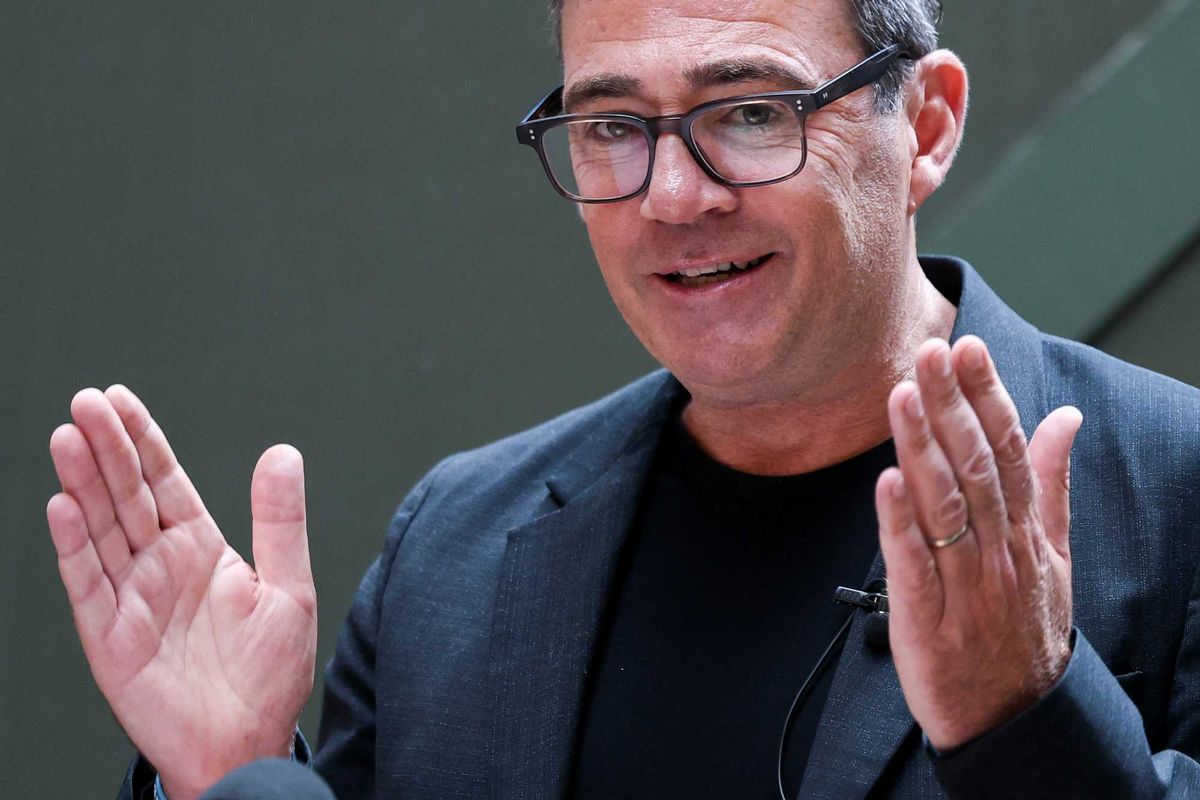
Andy Burnham, British member of parliament (MP) for Makerfield, delivers a speech at the People's History Museum in Manchester, Britain, June 29, 2026. REUTERS/Temilade Adelaja

Andy Burnham, the United Kingdom's likely prime minister-in-waiting, turned down an invite from President Donald Trump for the upcoming 250th anniversary of American independence, Politico reported on Monday.

A spokesperson for Burnham told Politico that he won't attend the U.S. embassy's "Great American Jubilee" at U.S. Ambassador Warren Stephens’ official residence in Regent’s Park on Tuesday due to a "scheduling clash." The swanky celebration is expected to draw dignitaries, military brass and business leaders, and will feature a performance from country music superstar Tim McGraw.

"Invitations have been sent to every major party leader," according to Politico. "Previous attendees include former Prime Minister Liz Truss, Reform UK leader Nigel Farage and outgoing U.K. PM Keir Starmer, who attended in 2023 before he entered office."

Last week, Trump sneered at Burnham, calling him a former "mayor of a town" and "extremely liberal."

Burnham was expected to be approved as the U.K.'s next prime minister on July 20, Politico reported.

Burnham wasn't the only person to turn down Trump. Pop star Katy Perry declined to perform at America250 celebrations in Brussels over the weekend.

Trump failures spark global 'shift' — and his irrelevancy in 'only a few months': expert

Alexander Willis
June 28, 2026 
RAW STORY

U.S. President Donald Trump gestures as enters the White House, in Washington, D.C., U.S., June 28, 2026. REUTERS/Ken Cedeno

President Donald Trump’s decision to launch his unpopular war against Iran earlier this year has already sparked a global “shift,” renowned economic professor Richard Wolff argued recently, one that also set the president on an imminent path toward total irrelevancy in “only a few months.”

A professor at the University of Massachusetts Amherst and former professor at Yale, Wolff pointed to the recent progressive sweep last week in New York as evidence of his theory, and compared it directly with the civil unrest sparked during the Vietnam War that ultimately helped – at least, in part – bring about the U.S. withdrawal.

“We're beginning to see a significant self-defined socialist presence in our political life, and because it is coming at the time of the Iran war – and at the time of heightened focus on Israel and Palestine – it's very important to understand that there's a shift going on,” Wolff said in a recent appearance on the podcast “Dialogue Works,” adding that the “shift” had extended to “international affairs.”

“Not everywhere in the same way, but, in a number of districts where that was the issue, the vote of the people has clearly been in the direction of criticism of Trump, the war in Iran [and] Israel.”

Wolff, whose Jewish parents fled Nazi Germany for the United States, has been a fierce critic of Trump, the U.S. war against Iran and Israel. However, it’s been only after the Trump administration’s continued failures in achieving its stated war objectives in Iran that his views have gained enough traction to drive a major “shift,” he argued, one that would also result in Trump becoming largely irrelevant – and soon.

“People should also be aware that there's really only a few months left for Mr. Trump,” Wolff predicted.

“Once those elections happen in November – if, indeed they happen – he will then be a lame-duck president. And, given how badly his situation has developed over the first part of this year, we are looking at a man who is facing political pressures that include losing support and moving ever-closer to a day after which his relevance will be sharply reduced.”


THE EMPIRE STRIKES BACK!
Rachel Maddow reveals stunning moment netted a big legal loss for Trump's enforcers

Matthew Chapman
June 29, 2026  
RAW STORY


Members of the National Guard patrol near a poster of U.S. President Trump hanging from the U.S. Department of Labor, Washington, D.C., U.S., June 10, 2026. REUTERS/Nathan Howard

Rachel Maddow kicked off her Monday night MS NOW program with a discussion of Star Wars — and specifically, how one track from the original trilogy just cost the Trump administration a big settlement payout for unlawful police conduct.

"The Empire Strikes Back is just as exciting as the first Star Wars movie, but it is darker, it is definitely darker, right?" said Maddow. "Our heroes aren't, you know, just plucky underdogs like they were in the first movie. It really, really feels like they are losing ... it's dark. The whole vibe of The Empire Strikes Back is this, you know, the dark dread of this tyrannical force having the upper hand, seeming like it's winning."

Even if you aren't a Star Wars fan, Maddow continued, or have even seen the movies, you're likely to know one iconic piece of media from them, she continued. "This sound from The Empire Strikes Back still takes you right back to it, still puts you right back in that fear and dread of the terrible, evil Galactic Empire. John Williams' Imperial March from The Empire Strikes Back ... instant American pop culture shorthand for 'you're looking at tyranny,' right?"

Enter Sam O'Hara, Maddow said — a protester who took it upon himself, during the initial Trump-mandated deployment of Washington, D.C., by the National Guard, to walk behind them blasting the Imperial March on his iPhone. She put up a clip of the incident.

For that, she said, "a National Guardsman summoned the D.C. police to arrest him for it. And they put him in handcuffs. For having done that, for having played that song." As of today, however, he has gotten a $50,000 settlement for that unlawful treatment by the police. Moreover, she noted, "his lawsuit against the National Guard is still pending. So there may yet be more to come."

As for O'Hara now, said Maddow, "he notes to the Washington Post today that he does still go out and do this, only now he doesn't just do it with his iPhone, now he does it louder. With a portable speaker. And now he's just been paid $50,000 for the way they overreached and handcuffed and tried to lock him up for doing it."

Op-Ed 

Taking on the Rich Is Possible. Our Illinois Coalition Won a Tax on Tech Giants.

Our campaign won a digital advertising revenue tax that may generate over $1.1 billion annually for the state’s budget.

June 29, 2026

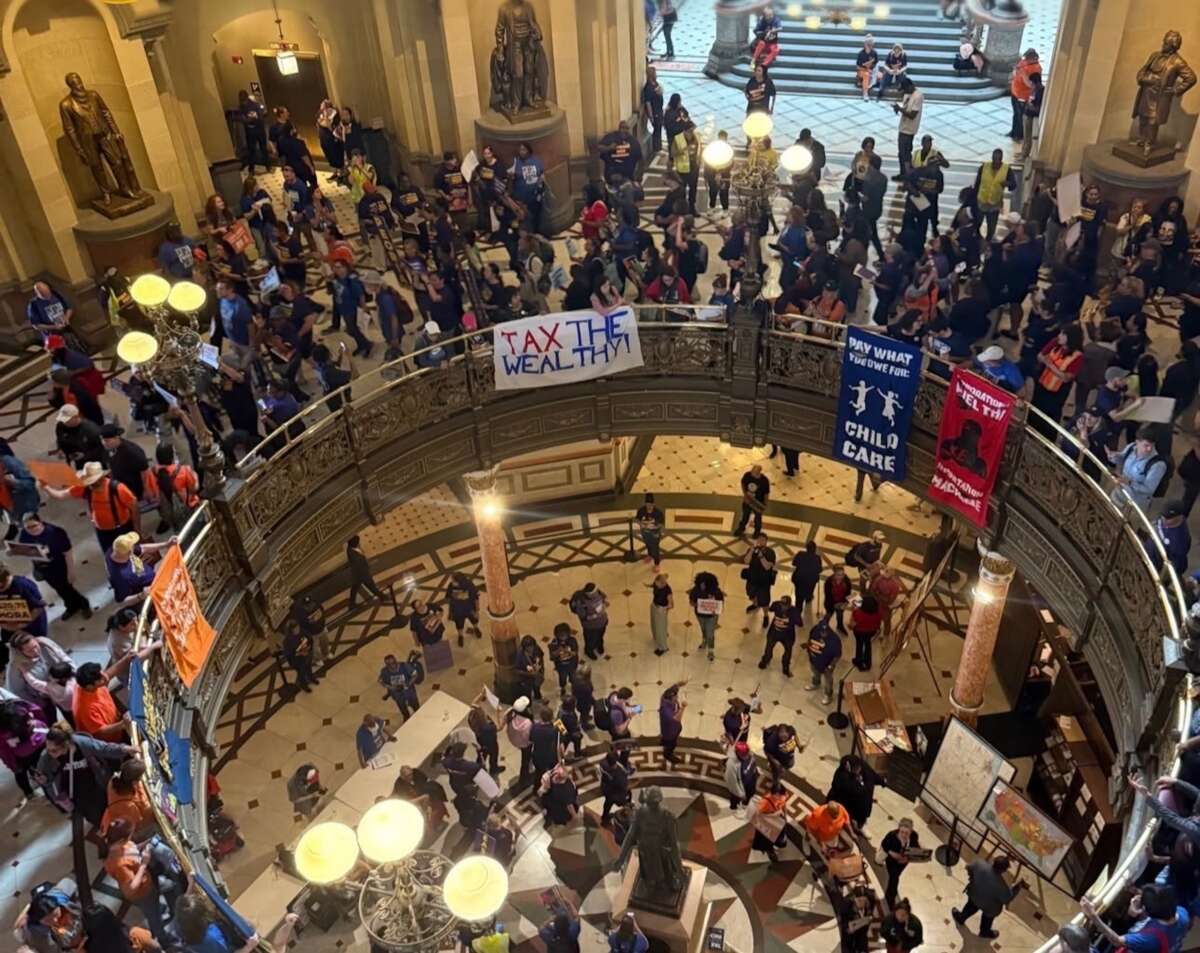
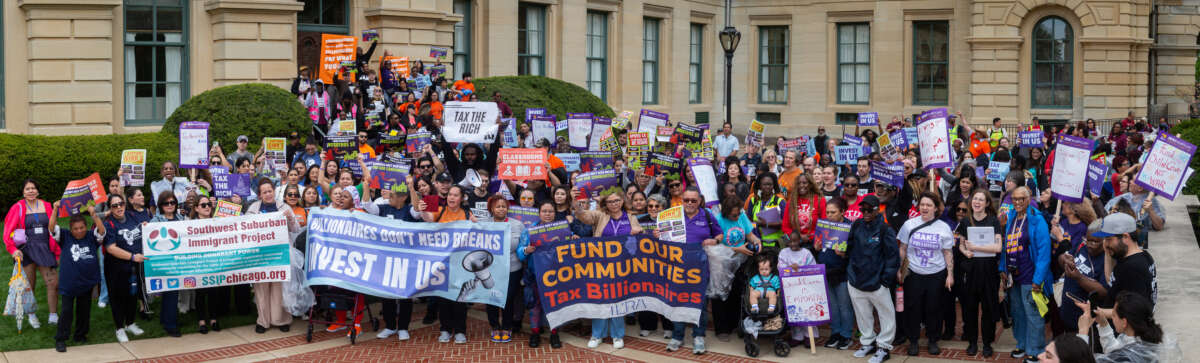
Illinois Revenue Alliance members flood the Illinois State Capitol Rotunda and drop PowerUp banners while legislators are in session on May 27, 2026.SEIU HCII

On June 1, the Illinois legislature passed a tax on the digital advertising revenue of tech companies like Meta, Amazon, and Alphabet (parent company of Google). Big Tech resisted the measure and will likely challenge it in court. Nevertheless, several analyses show the tax may generate $800 million annually, a number that could increase with time as revenues from digital advertising are expected to grow. The number would represent a major increase in Illinois state’s budget, but still only a sliver of the mega-corporations’ runaway profits.

This breakout victory for movement organizations demonstrates how grassroots organizing can fight back against widening wealth gaps, cuts to essential services, ballooning corporate power, and growing authoritarianism. It shows us that long-haul alliances, bold agendas, and collaboration with progressive legislators can seize on a growing consensus that the most powerful corporations — especially Big Tech — have too much power and wealth and must pay their fair share.

How We Started


Our fight to make big corporations and the ultra-rich pay their fair share in Illinois began nearly two decades ago. In the wake of the 2008 financial crash, our three organizations — ONE Northside, Grassroots Collaborative, and The People’s Lobby, with support from national groups like People’s Action — all began to organize (alongside many others) to confront a growing crisis: Corporations and the wealthy were getting richer every year and regularly receiving new corporate tax breaks and bailouts, while budget cuts were devastating our communities.

From 2015 to 2017, our state went through three years of budget disasters triggered in the short term by right-wing billionaire Gov. Bruce Rauner but also made possible by a long history of bipartisan pro-corporate leadership in our state. Our organizations saw the need to respond to these disasters by taking up new campaigns to tax big corporations. We held a series of civil disobedience actions led by faith leaders targeting Governor Rauner’s top donors, occupied the state capitol as the Revenue Truth Squad, and led a 15-day, 200-mile march from Chicago to Springfield, until the state finally passed a budget that included $125 million in new revenue from closing corporate tax loopholes. By 2018, every Democratic candidate for governor made a graduated income tax a key part of their platform to address Illinois’s budget crisis. Gov. JB Pritzker won with a mandate to improve state funding for essential services by taxing the rich. The legislature then put a constitutional amendment on the 2020 ballot to make that possible. Our coalitions joined with other key allies, like the Illinois Coalition for Immigrant and Refugee Rights (ICIRR) and a broad array of labor unions, to support the Fair Tax ballot referendum. The votes fell short in a tough loss to a billionaire-funded counter-campaign, but legislators who worked closely with our movement like State Sen. Robert Peters then closed $655 million in corporate tax loopholes in 2021. Every year since, we have continued demanding and winning budgets that make big corporations pay more to fund essential services across the state.


Wealth Taxes Will Barely Slow Inequality. So Why Do the Super-Rich Resist Them?
A 2 percent wealth tax is like shaving off a fraction of a spire from a large cathedral, says economist Nancy Folbre. By C.J. Polychroniou , Truthout November 5, 2025


What We Did Differently This Time

Our efforts from 2016 to 2025 together clawed back over $1 billion annually from major corporations. Still, this was short of meeting our communities’ needs or improving our standing as the state with the eighth-most regressive tax code. That revenue helped make possible stronger investments in public schools, health care, and human services after the Rauner budget impasse, but it still left major gaps in education, transit, housing, and care for seniors and people with disabilities. In 2024, our organizations helped launch the Illinois Revenue Alliance (ILRA) along with a core of collaborators from earlier fights and newly engaged groups who recognized the growing need to tax the rich.


Our efforts from 2016 to 2025 together clawed back over $1 billion annually from major corporations.

In 2026, we knew we had to ramp up. The Trump regime attacked our state with Immigration and Customs Enforcement (ICE) violence in the streets and budgetary violence through massive cuts to Medicaid, environmental programs, the Supplemental Nutrition Assistance Program (or SNAP, formerly known as “food stamps”), and so much more, while giving huge tax cuts to mega-corporations and billionaires supporting the authoritarian agenda.

We were helped by a growing set of co-conspirators in elected office. Over the past 15 years, many groups launched 501(c)(4) organizations like The People’s Lobby, Grassroots Illinois Action, and ONE People’s Campaign to engage more in lobbying and elections. These organizations made progressive taxation a key factor in endorsements, challenging centrist Democrats and replacing them with candidates who wanted to tax the rich. As a result, our campaigns over the past few years have included an increasingly powerful team of legislative allies. Legislators like State Rep. Will Guzzardi, who used to sponsor our bills, such the Retailers’ Discount, are now key budget negotiators. This year, organizers-turned-state lawmakers convened an Affordability and Tax Justice Coalition — led by a number of legislators including State Senators Graciela Guzman and Karina Villa and State Representatives Lindsey LaPointe and Norma Hernandez — and organized with their colleagues to demand every budget makes strides towards transforming our state’s tax system. They helped ensure the digital ads tax was included in the final budget.

We knew we needed to move the broader public narrative, so we came back to the adage that actions are the lifeblood of organizing. Grassroots Collaborative and our national network, PowerSwitch Action, designed PowerUp, a campaign with our members, four other organizations, and two major local unions to train leaders and organizers, and engage in dramatic actions that would captivate public attention around a clear, moral question: Should mega-corporations and the ultra-wealthy pay more in taxes to fund critical public services? We aimed to take actions that could secure concrete victories and undercut the power of the wealthy at the state level, while highlighting their ties to the authoritarian apparatus at the federal level.

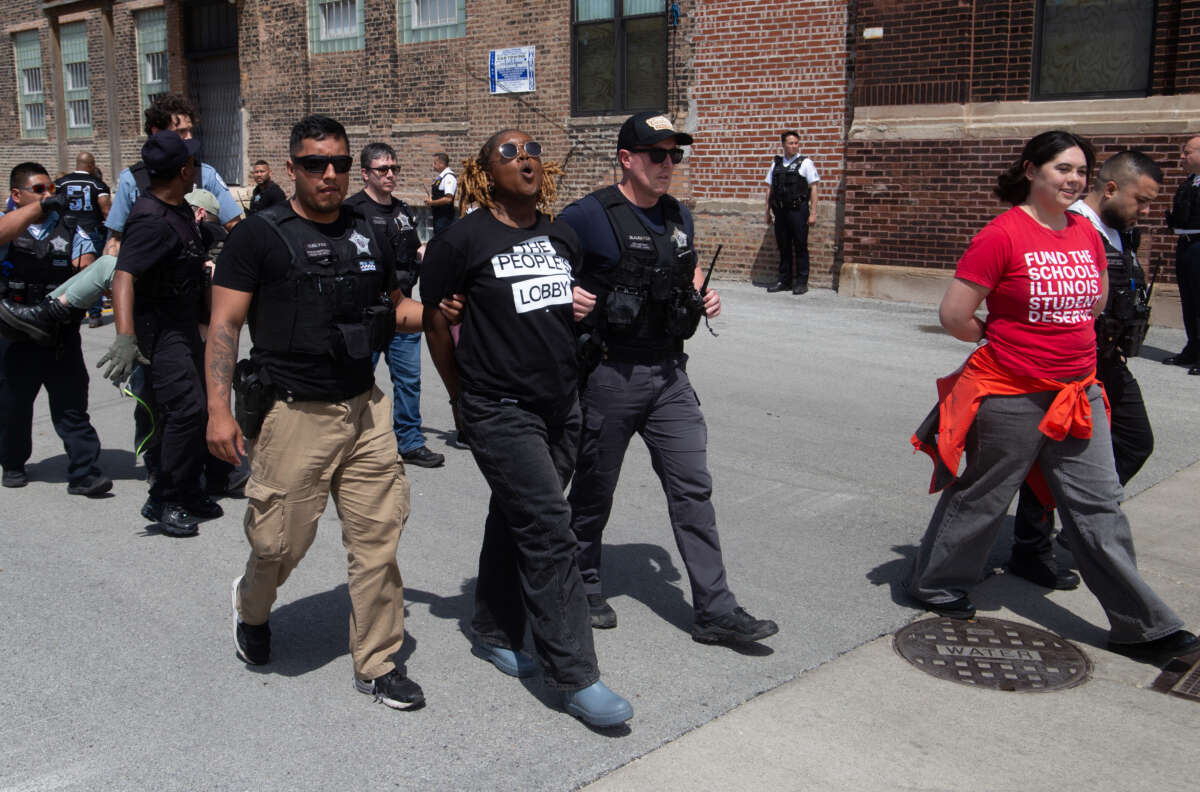
Chicago police officers remove protesters affiliated with The People’s Lobby and Chicago Teachers Union from the Amazon distribution center in Chicago’s Bridgeport neighborhood on May 16, 2026. Organizers with PowerUp blocked both entrances of the facility and halted all deliveries for four hours in an effort to disrupt the corporation’s profits and grow support for the digital ads tax in the weeks before the end of the legislative session.  The People’s Lobby

PowerUp held actions on Amazon, Meta, and Google to call attention to how these tech giants are powering and profiting off Donald Trump’s attacks on our communities: All three donated $1 million to Trump’s inauguration, while Amazon’s cloud division provides services used by the Department of Homeland Security and ICE. The People’s Lobby led a nonviolent civil disobedience action with PowerUp allies that shut down an Amazon warehouse for four hours. Twelve people were arrested disrupting blocking delivery trucks while demanding that Illinois tax corporations that benefit from Trump’s agenda and use the revenue to protect Medicaid, SNAP, schools, and other public services threatened by federal cuts. The action made this connection explicit by bringing Medicaid recipients, health care workers, and community members threatened by Trump’s tax cuts to Amazon’s warehouse, where they disrupted deliveries and demanded that Illinois protect essential services by taxing corporations like Amazon and rejecting Trump’s corporate tax agenda. More actions were held at corporate offices and, in the final weeks of the legislative session, tactics shifted to legislators, with visits and marches to their offices and banner drops around their home districts

.
Illinois Revenue Alliance members gather at the state capitol after a rally and march on Tax Day, April 15, 2026. More than 10 organizations traveled to Springfield to call for legislators to adequately fund their programs by taxing corporations and the very rich.
The People’s Lobby

In parallel, ILRA organized massive days of action at the state capitol and grassroots lobbying of legislators. SEIU Healthcare, Chicago Teachers Union, ICIRR, Citizen Action Illinois, and other organizations like ours held lobby days, ran digital ads, and organized weekly phone banks patching constituents through to their lawmakers. Our organizations’ lobbying and government relations staff collaborated daily inside the capitol, working with legislative allies to make sure chamber leaders heard the demand for progressive revenue.

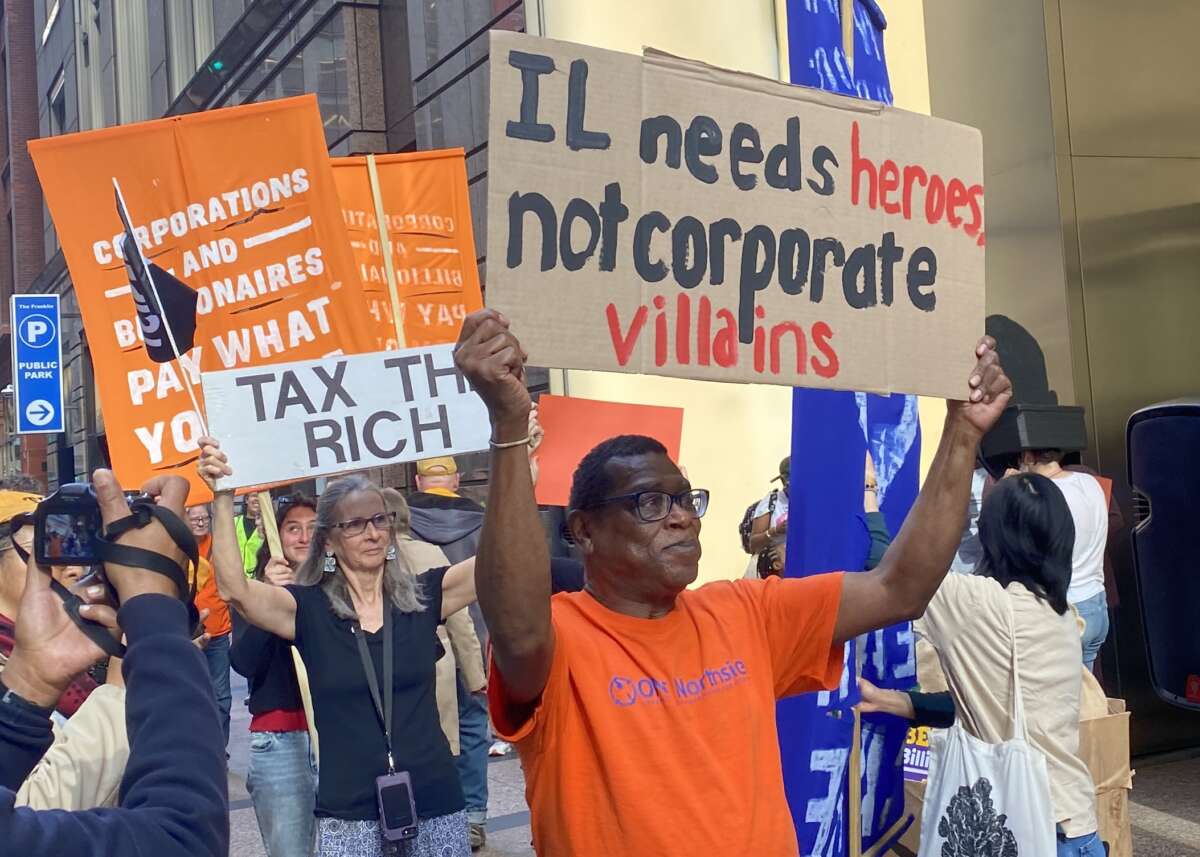
ONE Northside Housing Justice leader Gregory Wilson joins a demonstration outside Amazon’s downtown headquarters on April 13, using Tax Day to call on the corporate giant to pay more in taxes.ONE Northside

Through a coordinated and escalated campaign of nonviolent direct action and lobbying efforts, along with a strong “inside game” by bill sponsors and corporate tax champions State Sen. Robert Peters and State Rep. Norma Hernandez, we secured our biggest victory yet: the passage of the digital ads tax. This measure — proposed initially in 2021 by Action Center on Race and the Economy, which continued to play an important role throughout this effort — became a top ILRA priority starting in 2025. Estimates of how much revenue will be generated by the measure vary, with the Center for Tax and Budget Accountability estimating $800 million, and estimates based on projected revenue for U.S. digital advertising from major tech companies projecting $1.2 billion. These revenues would be gleaned from corporations like Google, Amazon, and Meta (as Facebook is now known) that make hundreds of billions of dollars in digital advertising revenue.

Taking on Authoritarian Forces and Realizing Concrete Wins for Our People


This breakthrough was possible now as it has become increasingly obvious to people that the same forces starving our state of resources are also core pillars of Trump’s authoritarian regime. People see the ultra-wealthy’s assets ballooning, news of trillion-dollar compensation packages for corporate executives, and new rounds of trillion-dollar tax breaks, all while corporate CEOs stand with Trump and masses of people struggle to afford housing and health care. Organizers must continue to connect the dots to show that we can tax extreme wealth and our governments can and must use that revenue to address the needs of the vast majority of Americans. Going on offense with a bigger vision for the kind of world we want to win, and who has the wealth to pay for it, is a key element in fighting authoritarianism.

This breakout victory for movement organizations demonstrates how grassroots organizing can fight back against widening wealth gaps. Long-haul alliances can seize on a growing consensus that the most powerful corporations must pay their fair share.

At the core of our success has been coalitional work that is fueled by trust built over many campaign cycles. It can be tough and messy but is necessary to have any chance of winning. Not many foundations jump to fund campaigns to tax the rich. Our tables have often been unstaffed or understaffed, but our teams put in the hours and scraped together resources that partners could spare, trusting that the collective effort would add up. The breadth of our coalitions created greater collective power, but it left unresolved the question of what new revenue should be spent on. Coalitions should begin that discussion early enough to shape who is at the table and how the campaign speaks to the public, while keeping the initial agreement broad enough to hold diverse partners together. The key choice is whether to dedicate revenue to specific widely felt needs — such as education, public transit, health care, or housing, or leave it available for the general budget. In other states, ballot initiatives were successful when new funding was tied to specific needs like education and public transit. In states where ballot initiatives are available, we would encourage organizers to consider pairing taxes on concentrated wealth or corporate profits with specific, popular public investments.

To be clear, the budget passed by the Illinois General Assembly still did not meet the moment. It fell short on many issues: significant underfunding of public education, no badly needed raises for frontline workers who care for the elderly, and an inadequate safety net for thousands who will lose SNAP and Medicaid benefits due to federal cuts. It will take bolder actions, new alliances, and organizing to build public pressure on decision-makers.

Illinois legislators have become more proactive as a result of our campaigns. In addition to the digital ads tax, legislators passed other measures to bring in needed revenue, such as a social media platform fee, protecting Illinois from one of Trump’s federal tax giveaways, and a tax on cryptocurrency. More of them can see the widening gap in power and wealth and, now that we have called the question, are declaring with their votes that Big Tech corporations — instead of donating to ballrooms and inaugurations and accumulating profits and asset valuations — ought to contribute more to the well-being of Illinois families and to pay their fair share toward schools, health care, food, affordable housing, and all the public services our families deserve.

Our successful fight for the digital ads tax, along other legislative campaigns that fell short this year, taught us that combining forces and strategies; exposing and polarizing around oligarchic villains like Big Tech; drawing the connections between austerity’s legacy in Illinois, the affordability crisis, and Trump’s handouts to the ultra-wealthy; and putting this fight in public view, can disrupt “business as usual” and force lawmakers to take a side. We are doubling down on our efforts, and in order for them to win, more people need to join the fight.


This article is licensed under Creative Commons (CC BY-NC-ND 4.0), and you are free to share and republish under the terms of the license.


Shaddi Zeid

Shaddi is political director with The People’s Lobby. A veteran of the 2016 Bernie and Hillary campaigns, Shaddi has spent 12 years working at the intersection of electoral politics, grassroots organizing, policy, and governing power. His work has spanned presidential campaigns, local elections, city government, criminal justice reform, state budget fights, and progressive revenue. Before joining The People’s Lobby, Shaddi worked in the New York City Mayor’s Office, in policy, and on campaigns across many states.


Hannah Gelder

Hannah has been organizing with ONE Northside since 2008, and currently serves as its director of organizing. She has trained hundreds of community leaders and organizers, led statewide coalitions, and contributed to statewide, citywide and local victories for healthcare access, affordable housing, and progressive tax fights. She is passionate about making sure our communities have the resources we deserve. When she’s not organizing, she’s chasing after her two young children, playing with her dog, or enjoying the outdoors with her partner and family.


Marla Bramble

Marla Bramble joined the Grassroots Collaborative staff as deputy director in 2024 with over 20 years of organizing experience. As a disabled woman, Marla is driven by the vision of a world where we all value one another’s humanity and have the resources to thrive. Marla has built powerful organizing programs and culture with community organizations from the ground up, contributing to the larger political movement in Chicago. Her community organizing experience in Black, Brown, Jewish, and working-class communities has won victories in citywide affordable housing, police accountability, immigration, and economic justice issues in Chicago and Illinois.


CANADIAN, EH 


New Poll Shows Majority of Americans Believe There Are Grounds to Impeach Trump

Democratic Party leadership has largely downplayed the idea of impeaching the president should they win in the midterms.
June 29, 2026

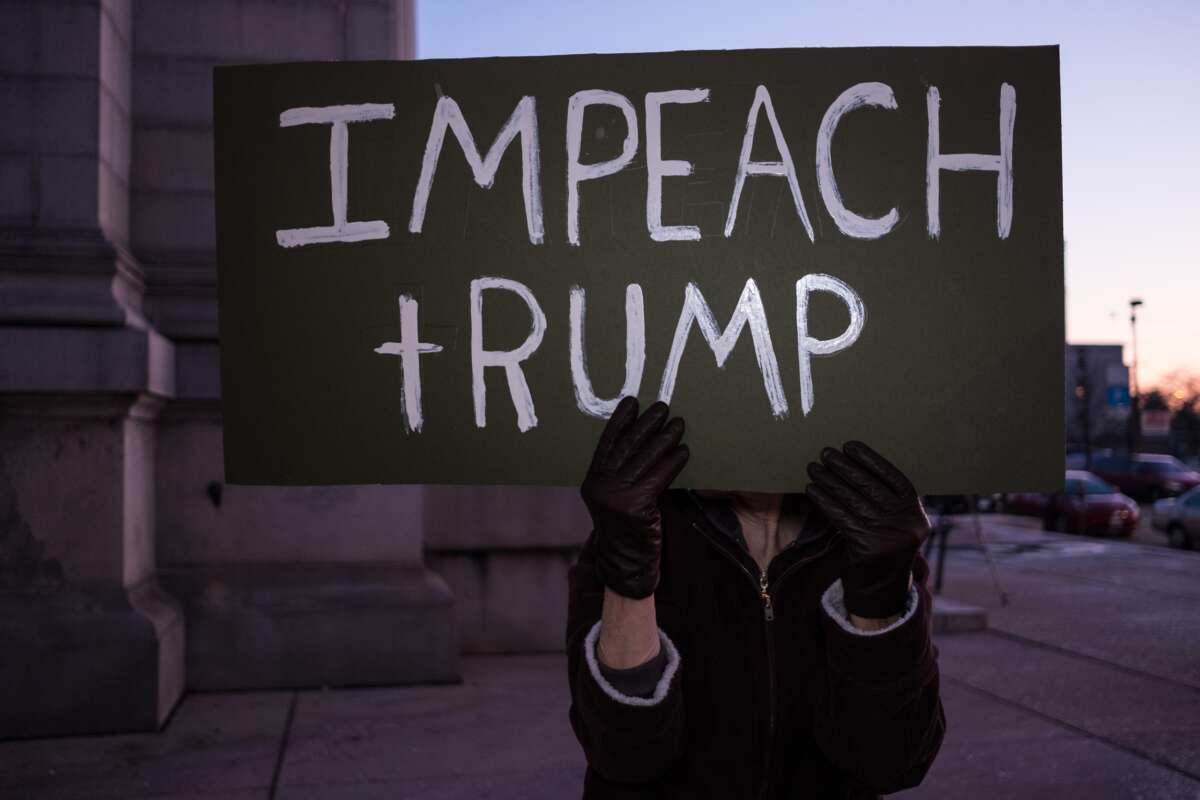
A protester holds an Impeach Trump placard during a Trump pro-impeachment rally in Dayton, Ohio.Megan Jelinger/SOPA Images/LightRocket via Getty Images

New polling data reveals that a majority of Americans believe there are grounds to impeach President Donald Trump right now.

But despite those sentiments, leaders in the Democratic Party are still refusing to include the idea of impeaching Trump in the party’s messaging in the run-up to the 2026 congressional midterm elections.

The Strength in Numbers/Verasight poll, conducted from June 17-22, asked respondents whether there were grounds to impeach Trump at the present moment. Fifty-three percent of Americans say there are grounds to impeach the president, the poll found, while only 39 percent said there were not. Eight percent said they weren’t sure


When asked what grounds there were to impeach Trump, respondents gave a variety of answers. Thirty percent of respondents cited “corruption/self-enrichment” that Trump has engaged in while in office, while another 30 percent cited “abuse of power/defying the courts.” Another 20 percent said Trump should be impeached due to his decision to start an illegal war in Iran and/or his engaging in war crimes, while 16 percent said he should be impeached for his handling of the Epstein files.

Notably, the poll didn’t ask whether respondents supported impeaching Trump in general, but rather whether there were grounds for doing so. A previous Strength in Numbers/Verasight poll in April found 55 percent backed impeaching Trump, when the polling outfit didn’t connect the question to giving specific reasons to do so, with only 37 percent against impeaching him.

Among independent voters, impeachment was backed by a nearly 2 to 1 margin, with 50 percent of voters from that bloc backing the idea and only 28 percent opposed.

The findings suggest that a carefully crafted message from Democrats, ranging from general openness on impeaching Trump to outright calling for it, could be politically beneficial for the party in the run-up to the 2026 midterm elections. Yet leadership from the party in both houses of Congress has largely sought to downplay the idea of impeachment as a possibility should they win control of the House, the Senate, or both.

Earlier this month, House Minority Leader Hakeem Jeffries (D-New York) said that Democrats “haven’t ruled anything in” and “haven’t ruled anything out” when it comes to impeaching Trump. He elaborated that the party isn’t considering impeachment “at this moment.”

In April, Jeffries characterized the idea of impeaching Trump as a fruitless effort, one that could have political backlash:


A failed effort, a party leader suggested privately, risks being framed as tacit approval of the Preimpeachment sident’s conduct, while also diverting attention from the party’s core economic message on affordability and health care — issues party leaders believe resonate more directly with voters.

Yet just the opposite could be true — not calling for impeachment could be viewed as “tacit support” for Trump’s actions.

“[Trump] is the most corrupt president in history, and that fact, with all its dark details, needs to be aired for the public to see while he is in office,” Salon’s Heather Digby Parton said in a recent column.
Minnesota Immigrants Are Still Facing the Fallout of Trump’s ICE Invasion

Operation Metro Surge cost residents and businesses in Minneapolis nearly $700 million in economic losses.
PublishedJune 27, 2026
People watch a "Baile Folklorico" dance during the Cinco de Mayo parade in Saint Paul, Minnesota, on May 2, 2026. The Mexican community in the Minneapolis-Saint Paul area is celebrating its first Cinco de Mayo since Immigration and Customs Enforcement (ICE) conducted large operations in early 2026.Kerem YUCEL / AFP via Getty Images

Months after the Trump administration announced the end of Operation Metro Surge, Minnesota immigrants are still grappling with the impacts of the largest federal immigration crackdown in recent U.S. history. Lost jobs, shattered businesses, missed rent payments, mounting legal fees, family separations, emotional distress, and uncertainty about the future have become part of daily life for many in the state.

The operation, which lasted from December 2025 through February 2026, brought some 4,000 Immigration and Customs Enforcement (ICE) and Border Patrol agents to Minnesota. Agents aggressively targeted immigrants — including naturalized citizens and permanent residents — in apartment buildings, on sidewalks, at workplaces, and in school parking lots. Fearing detention or deportation, many limited their movements or stayed home altogether. In a state with nearly half a million foreign-born residents, the impact of the operation quickly became evident across communities. But Minnesotans remained focused, as Barbara Peterson explained, on resisting “the federal invasion of our community” and meeting more immediate needs: organizing protests, delivering groceries to affected families, offering rides to and from appointments, providing rental assistance.

Now, government officials, community leaders, and researchers are examining the extent of the operation’s impact both in economic losses and human costs — and are developing strategies for recovery.

Minneapolis city officials recently unveiled a report examining the toll the operation took on city residents and businesses between December and April. The report estimated the cost at nearly $700 million, a figure that includes wage and job losses, reduced hours, missed work, business disruptions, and financial assistance the city provided to impacted businesses and families. Factoring in losses in surrounding regions, the total could easily exceed $1 billion.

“The impact is felt far beyond those who were directly targeted,” Minneapolis Mayor Jacob Frey said at the report’s release event. “We’re talking about businesses that lost customers, workers that lost wages, families that struggled to put food on the table, mental health distress, children that missed meals and were unable to attend school, and of course, people that had delayed medical support.”


As ICE Terror Forces People Inside, Calls Grow for Eviction Moratorium in MN
Minnesota Gov. Tim Walz upheld an eviction moratorium during the pandemic. Why won’t he issue one now? By Theia Chatelle , Truthout February 4, 2026


One of the many immigrant businesses enduring the ripple effects of Metro Surge is Colonial Market and Restaurant. Its owner, Daniel Hernandez, an immigrant from Mexico, said at the event that his business had come to a near standstill, with sales dropping to 15 percent of what they had been before the operation. As a result, Hernandez said, Colonial Market has reduced its staff from more than 20 employees to just two. More than that, Colonial Market is expected to close its south Minneapolis location. “The families who depended on this store no longer have jobs,” he said.

Lost jobs, shattered businesses, missed rent payments, mounting legal fees, family separations, emotional distress, and uncertainty about the future have become part of daily life for many in the state.

For many Minneapolis residents, job losses have made it harder to pay rent. According to the report, 35,000 low-income residents were already unable to pay their rent before the operation. Additional income losses tied to the operation have worsened those challenges, creating an additional $15.7 million monthly rent assistance need. “Despite some resumed economic activity in March,” the report states, “income loss persisted for the cost-burdened population, indicating a monthly need consistent with previous months.”

The ongoing fallout has placed sustained demands on nonprofit organizations serving immigrant and refugee communities. Many organizations continue to provide support at levels similar to those during the operation. Malika Dahir, who leads Reviving the Islamic Sisterhood for Empowerment (RISE), a leadership development and advocacy nonprofit serving Minnesota Muslim women, told Truthout that Metro Surge forced the organization to pivot to direct service, including providing legal and rent assistance to impacted families and individuals, and funding small businesses.

“We found that all of our regular programming was disrupted,” Dahir said. “Through community partnerships and direct outreach, we started mutual aid efforts. We connected families to legal support. We did some ‘know your rights’ training. We also ensured that those who were most impacted had access to culturally responsive mental health services. We partnered with our local clinics here to make sure those impacted could access medical care either via Zoom or in their homes.”

Even in this seemingly “post-Metro Surge” period, Dahir said, some members of the impacted communities are still calling the organization for rent assistance for their apartments or businesses because many once-bustling establishments centered in immigrant communities continue to struggle to find customers, and workers who lost their jobs during the operation have not been invited back to their workplaces.

Like RISE, the African Career Education and Resource, Inc. (ACER) has continued to support impacted immigrant businesses and families since the beginning of the immigration crackdown. Its executive director, Nelima Sitati Munene, told Truthout that the nonprofit provides various services to its mostly African clients. These include grants and technical assistance for small businesses. As an economic development organization that owns and operates a strip mall, Munene said, ACER has waived rent for several tenants. “It was not their fault that they lost income,” she said.

Julia Decker, the policy and public affairs director for the Immigrant Law Center of Minnesota (ILCM), told Truthout that her organization has also seen clients still grappling with the impact of the operation. Many of the immigrants taken by ICE during the operation are, in the words of Decker, still detained across the country “in horrible conditions.” As the federal government continues detaining and deporting people, Decker said, many immigrants and refugees are experiencing heightened anxieties and uncertainties about their future in the U.S.

Many of the immigrants taken by ICE during the operation are, in the words of Decker, still detained across the country “in horrible conditions.”

“There are continued legal and policy developments at the administration level, which make many cases very uncertain,” Decker said. “Even if you have a pending case, that could change tomorrow — all of a sudden, you might become subject to detention. It just feels very, very unstable for people who did all the right things: they applied, they met all the deadlines, and now the administration is sort of pulling the rug out from under them.”

RISE, ACER, and ILCM are among nearly 40,000 registered nonprofits in Minnesota. During and after Metro Surge, many of these organizations, along with government agencies and foundations, have adapted to a changing landscape to better address the social and economic challenges facing immigrant communities. Yet community leaders say that, given the significant harm the operation has caused, the funding allotted thus far barely scratches the surface, a sentiment echoed in a recent MinnPost article. Moreover, many immigrants face barriers to accessing available funds, as application processes often require navigating lengthy and complex paperwork.

“The biggest work we’re doing right now is advocacy,” Munene said. “We continue to engage with lawmakers on how to sustain support for the most impacted members of our community. People cannot move on before they’re made whole.”


This article is licensed under Creative Commons (CC BY-NC-ND 4.0), and you are free to share and republish under the terms of the license.


Ibrahim Hirsi
Ibrahim Hirsi is a Minneapolis-based journalist and historian covering immigration, politics, and racial justice. His work has appeared in The Nation, Dissent, MinnPost, and elsewhere.


Hind Rajab Foundation Asks US to Arrest Ben-Gvir During NY Visit

Ben-Gvir must be prosecuted for war crimes, the foundation said, including crimes against US nationals.


By Shireen Akram-Boshar ,
June 29, 2026

A COUPLE OF WAR CRIMINALS
Israeli Prime Minister Benjamin Netanyahu (L) greets National Security Minister Itamar Ben-Gvir, during a media briefing ahead of a vote on the national budget, on May 23, 2023, at the Israeli parliament.Gil Cohen-Magen / AFP


Truthout is an indispensable resource for activists, movement leaders and workers everywhere. Please make this work possible with a quick donation.

The Hind Rajab Foundation has called on the U.S. to investigate Israel’s far right National Security Minister Itamar Ben-Gvir for war crimes ahead of his visit to New York City in early July.

On Saturday, the Belgium-based foundation filed a complaint with the U.S. Department of Justice, stating that the U.S. has the jurisdiction and the legal obligation to investigate, arrest, and prosecute Ben-Gvir during his visit to New York City. Ben-Gvir is set to attend the United Nations Chiefs of Police Summit on July 7 and 8 in the city.

Ben-Gvir must be prosecuted for his involvement in war crimes, the foundation stated, including crimes against U.S. nationals. The national security minister has been “one of the chief architects and champions of the genocide against the Palestinian people,” the foundation said.

The foundation explained that Ben-Gvir, as minister of national security, has overseen the transformation of Israel’s prison system into “a network of torture camps” where abuse and sexual violence are routine.

“Since his appointment to the position in late 2022, Ben-Gvir has used his authority to enact a policy of systematic torture, murder, abuse, and forced displacement” of Palestinians, in particular those detained in Israel’s prison system. He has “personally participated in instances of torture and cruel or inhuman treatment” in Israeli prisons, the foundation adds.


Far Right Israeli Minister Ben-Gvir to Attend UNCops Conference in NYC in July
Ben-Gvir has a long history of hostility toward the UN, including smearing UN staff as “terrorist supporters.” By Shireen Akram-Boshar , Truthout June 18, 2026


Ben-Gvir also spearheaded Israel’s death penalty law, which came into effect in May. The national security minister pushed for the death penalty to be mandatory for Palestinians who cause the death of an Israeli citizen “with the aim of denying the existence of the State of Israel,” when the death penalty was previously only permissible in extremely rare cases.

The Hind Rajab Foundation also noted Ben-Gvir’s pattern of inciting violence against Palestinians in Gaza and the occupied West Bank, as well as in Lebanon. Earlier in June, Ben-Gvir stated that “All of Lebanon must burn!

New York City Mayor Zohran Mamdani has previously said that he would direct the New York City Police Department to arrest Israeli Prime Minister Benjamin Netanyahu if he visits the city, in accordance with the International Criminal Court (ICC) arrest warrant against Netanyahu for war crimes. UN Special Rapporteur Francesca Albanese has called for the ICC to issue arrest warrants for Ben-Gvir as well.

Protests against Ben-Gvir’s visit are planned for July 7 at the UN.

The Hind Rajab Foundation, founded in 2024, has filed dozens of criminal complaints against Israeli soldiers for their involvement in war crimes. The foundation is named for Hind Rajab, a 5-year-old girl who was killed by Israeli forces in Gaza. Soldiers shot at the car Hind and her family members were in at least 335 times.

Jake Romm, Hind Rajab Foundation’s representative in the U.S., noted that Ben-Gvir has tortured and abused U.S. citizens.

“This moment is a test,” he said. “Is this government more dedicated to Israeli impunity than it is to the rule of law? Is this government more dedicated to protecting war criminal and genocidaire Itamar Ben-Gvir than it is to protecting its own citizens?”
Interview


Protests Over Kushner-Backed Development Threaten to Topple Albanian Government


What began as an effort to protect a coastal ecosystem has become a broad movement against corruption and neoliberalism.
June 27, 2026
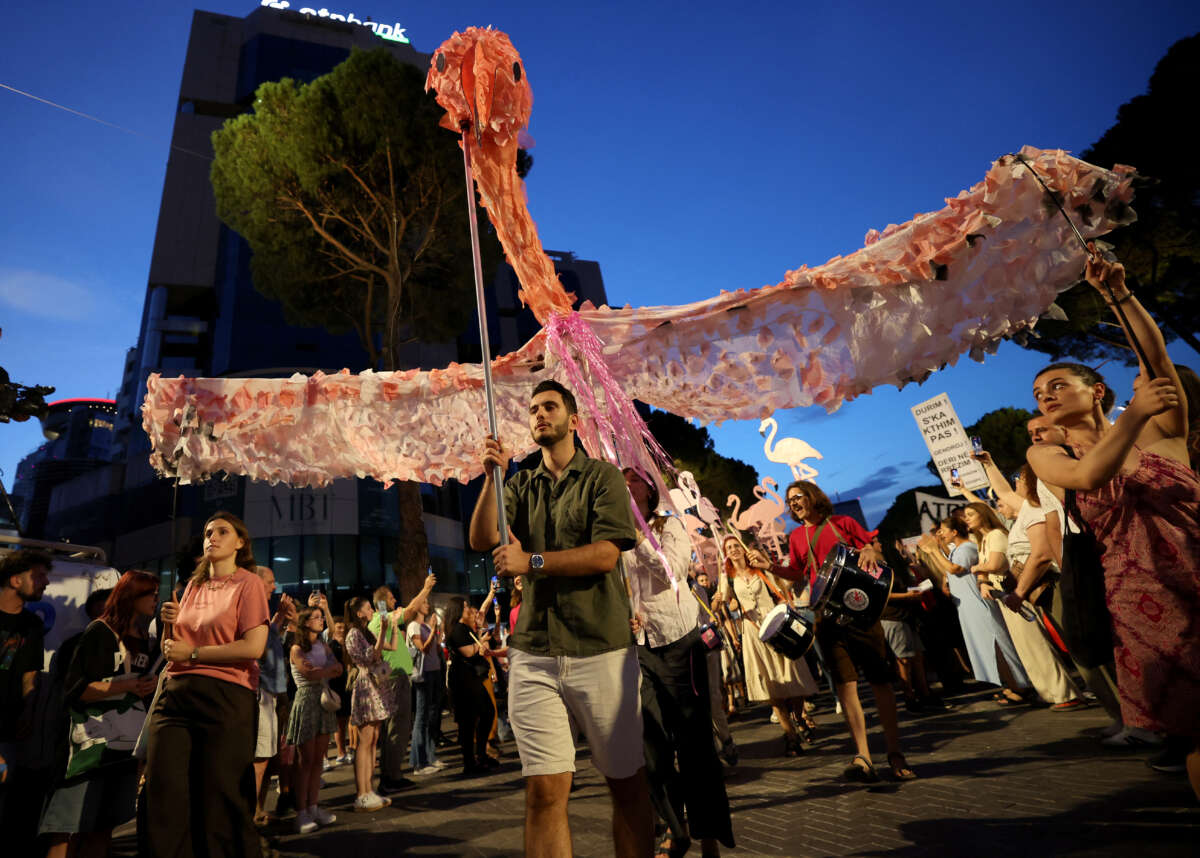
Protestors carry a giant sculpture of a flamingo as they demonstrate in front of the Albanian Prime Minister's Office against the construction on the southern coast of Albania a luxury resort near a protected natural area, in Tirana, Albania, on June 22, 2026.Adnan Beci / AFP via Getty Images

Albania, a country in the southwestern region of the Balkan peninsula, is witnessing one of the biggest waves of anti-government protests since the final end of socialism in 1992. The protests began in late May in opposition to the construction of a multibillion-dollar luxury resort backed by Jared Kushner, Donald Trump’s son-in-law, in the protected delta area of Vjosa-Narta, but they have now become a common sight in the capital city of Tirana. The protesters, who have faced riot police and water cannons, are demanding the resignation of socialist Prime Minister Edi Rama as activists aim to put an end to politics as usual in a country where corruption and organized crime are prominent features. In the meanwhile, Rama continues to support the luxury resort project linked to Jared Kushner and alleges that the enemies of Albania and Israel are behind the unrest.

In the interview that follows, Albanian activist Ariela Zeneli discusses the aims and goals of the ongoing protests in Albania and highlights possible outcomes. She is a social activist and project coordinator actively involved in student and social movements advocating for youth rights, education, social justice, and democratic participation.

C. J. Polychroniou: Ariela, can you put into political context Albania’s protests over the Kushner-backed resort in the protected delta area of Vjosa-Narta? Why would a luxury resort plan spark massive protests?

Ariela Zeneli: As you mention, the protests began in response to a project planned for the Vjosa–Narta area. The main concern is that what the government presents as a major investment and a development opportunity for Albania would be built in a protected ecosystem with rich biodiversity and significant environmental value.

The protest was initially organized by local residents and environmental activists, including the Movement TOGETHER. The area is known for its untouched natural beauty and its lagoon, which serves as a habitat for migratory birds such as flamingos. Because of its ecological importance, it has protected status. Despite this, the government has continued to push forward with its development plans.


Protests in Albania Grow in Opposition to Kushner’s $4 Billion Luxury Resort
“Don’t defend the oligarchs, these are the citizens’ properties!” protestors shouted.
By Shireen Akram-Boshar , Truthout June 3, 2026


Another issue that fueled the protests was the situation of local residents and their property rights. These are families who have lived in the area for generations and have long-standing claims to their land. However, many residents argue that they have been stripped of those rights through irregular and often fake processes. Tensions escalated on the very first day of the protest, when one demonstrator was dragged away by private security guards while the police stood idly by. The incident sparked outrage and drew even more people to the cause.

Under the slogan “Albania Is Not for Sale,” protesters have called for the cancellation of the Zvërnec project, the resignation of Prime Minister Edi Rama, and an end to policies that prioritize oligarchs and politically connected investors over the public interest.

What has also angered many people is the lack of transparency surrounding the project. On the one hand, the prime minister has promoted it as a €4 billion investment that will transform the region. On the other hand, he has admitted that there is still no final project and that the company is only in the environmental assessment phase. These statements do not add up. Almost every day, a different explanation is offered, which gives the impression that the government is reacting to public pressure rather than presenting a clear plan. Rama has even called for dialogue and negotiations, but the dominant message from the protests remains: “Resign.”

To me, these protests are much more than a single tourism project. They reflect growing frustration with an economic model that generates profit through the dispossession of local communities while presenting itself as development. The question is not only what is being built, but who benefits from it. Supporters of the project speak about investment and growth, but many local residents see a future in which they lose control over their land and are left with little more than low-paid, seasonal jobs in hotels and resorts. That is why this struggle has resonated so strongly: it is not only about protecting a landscape, but also about defending the right of communities to shape their own future.

Movement TOGETHER, of which you are a member, opposed the luxury resort project from the beginning. Is this a movement of activists or an actual political party, and what does it stand for?

Lëvizja BASHKË (Movement TOGETHER) was founded on December 18, 2022, at the initiative of activists and members of Organizata Politike, a leftist grassroots organization that has been operating in Albania since 2011.

Organizata Politike used the Red Robin (Erithacus Rubecula) as a symbol of freedom and resistance. The robin represents the movement’s organizational and political worldview in what they see as a “frosty Albania,” quickly depopulating due to emigration, especially among the young. To be red robins, the party says, “is to stay here in Albania, to resist, to live vigorously and sing, by working day after day, every day for a fairer and more democratic society.”

Initially, we functioned as a grassroots movement and helped several causes. For example, we helped miners, oil, and construction workers with protests and forming unions. We supported the student cause, which began as an initiative of students and professors in public universities to oppose neoliberal and clientelist reforms in higher education. We helped in various other social causes, ranging from the draft law for the recognition of a guaranteed minimum wage to opposition against the concreting of Tirana and the destruction of the Vjosa River, and from support for public transport to gender equality, among others.

After this first phase, we became a proper political party with a clear left-wing, progressive identity. Lëvizja Bashkë was first elected to the Albanian Parliament in the 2025 Albanian parliamentary elections, with Redi Muçi becoming a member of parliament on September 12, 2025. Previously, the party had participated in the 2023 Albanian local elections in Tirana, where party leader Arlind Qori ran for mayor of Tirana, receiving nearly 5 percent of the vote, and where Mirela Ruko was elected a member of the municipal council. But we do not want to be just another political party. Our slogan has always been “More than a party” because we believe that political change alone is not enough. Our goal is a broader social transformation that goes beyond elections and institutions, addressing the way the economy is organized, how communities function, and how people participate in public life.

For us, politics is not limited to competing in elections and winning seats. It is an ongoing process of collective organizing, nurturing solidarity, and creating the conditions for a more just, democratic, and equal society. That is why we see ourselves as more than a political party: We aim to be part of a wider movement for social change.

The protests, dubbed the “Flamingo Revolution,” have now spread into the capital and people are calling for the prime minister’s resignation. First, do you expect Edi Rama to resign or anticipate moves on the part of his government to repress the protests; and second, is the “Flamingo Revolution” actually about flamingos or an actual revolution in the making?

The expression “Flamingo Revolution” grew out of the central role that flamingos came to play in the protests. As one of the most recognizable inhabitants of the Narta Lagoon, the flamingo symbolizes the ecological richness of an area that hosts hundreds of bird species and represents one of Albania’s most valuable protected ecosystems. As opposition to the Zvërnec project expanded, the flamingo became more than a bird; it became a symbol of a broader struggle over the future of the country. For protesters, it embodies the defense of nature, public resources, and local communities against a model of development driven by large private corporations in pursuit of massive profits and corrupt political interests.

Regarding the issue of Rama’s possible resignation, it is hard to tell whether that is going to happen, as the dynamics of the protest depend on many factors and are therefore unpredictable. Given the reaction of various governments throughout the Balkans towards large protests and demonstrations, to which Albania is similar in terms of governance and the rule of law, one possibility is that repression might ensue in case the protests continue and become more radical. For the time being, this is probably not likely to happen since the protests have been totally peaceful and the European Union is closely monitoring the situation and has expressed concerns over the government’s intention to support the Kushner-linked luxury resort. In fact, the European Parliament is putting pressure on the Rama government by calling for the suspension of all new developments within protected areas.

Another possibility is that if there is enough pressure, the government may indeed end up making concessions in order to appease the protesters.

The best-case scenario is the one which involves the resignation of Rama and his government, i.e., the main demand of Albanian protesters, and the announcement of snap elections. But given the authoritarian nature of the current government and its firm grip on power, the odds of this happening at the present juncture are not that great.

The protests have also expressed a deeper dissatisfaction with the economic and political model that has shaped Albania since the 1990s. For decades, Albanians have been told that prosperity would arrive through privatization, foreign investment, and market-led development. Yet for many, these promises have remained unfulfilled, turning the so-called transition into a prolonged period of uncertainty, inequality, and disappointment.From this perspective, the demands emerging from the protests go far beyond opposition to a single project or even a single government. Many participants see the problem as systemicin nature and scope. They no longer believe that alternating power between the Democratic Party and the Socialist Party can result in meaningful change, as both parties have embraced pretty much the same economic priorities and patterns of governance. As a result, the protests reflect a growing desire not simply for a change of leaders, but for a different political and economic future altogether. This sentiment is captured in one of the movement’s most popular chants: “Rama in jail, Berisha in jail!” — a slogan that rejects both political figures and symbolizes frustration with the entire political establishment. (Edi Rama is the head of the Socialist Party, Sali Berisha is the head of the Democratic Party.)

How popular is the left in Albania? Is there anything resembling a united front that may succeed in creating a “new” Albania?

Although the ruling party presents itself as left-wing and socialist, many of us do not consider it a genuine representative of the left. In practice, it has moved away from the core principles traditionally associated with left-wing politics: social justice, reducing the gap between rich and poor, strengthening public services, protecting workers’ rights, and ensuring that economic development benefits society as a whole rather than a privileged wealthy minority.Instead, over the years, we have witnessed the implementation of policies that have concentrated wealth and power in the hands of a small economic elite, while many Albanians continue to struggle with low wages, precarious employment, rising living costs, and limited opportunities. Rather than addressing social and economic inequalities, the current model has often deepened them. At the same time, the government has faced repeated allegations regarding its proximity to oligarchic interests and its tolerance of networks linked to organized crime.

On the other hand, there has been an absence of alternative left-wing parties in the last decades, due to the negative association, in the public sphere, of the left in general with the communist past, but also because of the neoliberal march carried out by both main parties, which has suffocated every attempt at creating genuine left organizations, parties, and movements.

In this sense, what is emerging is not exactly a united front, but rather a broader social coalition of people who are deeply disappointed with the traditional parties and the political model they represent. After many years, we have managed to rebuild a culture of civic protest, solidarity, and collective action. This is visible during our marches through the capital, where we are greeted with applause from elderly people on their balconies, restaurant and café workers, and drivers who honk their horns in support despite being stuck in traffic. The same spirit is reflected in the solidarity shown to the protests by Albanian diaspora communities in various countries.

The faces of this movement are young workers, students, the elderly, parents, women and men tired of unfulfilled promises, low wages, insecurity, lack of quality health care and education, and the constant pressure to emigrate. It remains to be seen whether this will be a force that can create a “new” Albania. What is clear is that the young generation is no longer satisfied with a choice between the same political elites and is looking for a different societal vision for the future. The hope for a “new” Albania stems from the belief that change can come about not merely through elections but from the growing capacity of ordinary people to organize themselves, to imagine alternatives, and to work together to bring them to life.


This article is licensed under Creative Commons (CC BY-NC-ND 4.0), and you are free to share and republish under the terms of the license.


C.J. Polychroniou

C.J. Polychroniou is a political scientist/political economist, author and journalist who has taught and worked in numerous universities and research centers in Europe and the United States. Currently, his main research interests are in U.S. politics and the political economy of the United States, European economic integration, globalization, climate change and environmental economics, and the deconstruction of neoliberalism’s politico-economic project. He is a columnist for Global Policy Journal and a regular contributor to Truthout. He has published scores of books, including Marxist Perspectives on Imperialism: A Theoretical Analysis; Perspectives and Issues in International Political Economy (ed.); and Socialism: Crisis and Renewal (ed.), and over 1,000 articles which have appeared in a variety of journals, magazines, newspapers and popular news websites. Many of his publications have been translated into a multitude of languages, including Arabic, Chinese, Croatian, Dutch, French, German, Greek, Italian, Japanese, Portuguese, Russian, Spanish and Turkish. His latest books are Climate Crisis and the Global Green New Deal: The Political Economy of Saving the Planet (with Noam Chomsky and Robert Pollin as primary authors, 2020); The Precipice: Neoliberalism, the Pandemic, and the Urgent Need for Radical Change (an anthology of interviews with Noam Chomsky, 2021); Economics and the Left: Interviews with Progressive Economists (2021); Illegitimate Authority: Facing the Challenges of Our Time (an anthology of interviews with Noam Chomsky, 2023); and A Livable Future Is Possible: Confronting the Threats to Our Survival (an anthology of interviews with Noam Chomsky, 2024).
UN Chief Says Civilians ‘Must Be Protected’ as Pakistani Strikes Kill Dozens of Afghans

Women and children were reportedly among the at least 28 civilians killed and 49 others wounded on Sunday by airstrikes targeting Pakistani Taliban fighters in Afghanistan’s Paktia, Paktika, and Kunar provinces.


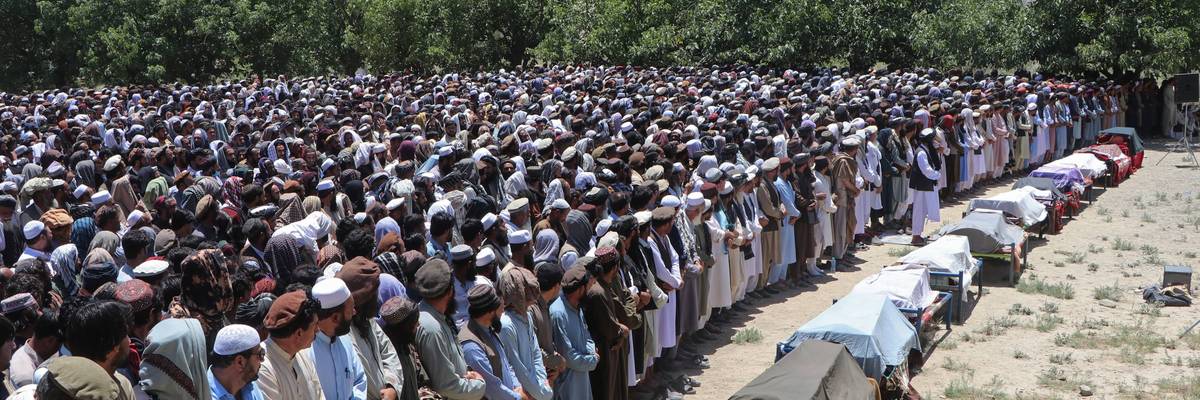
Afghan mourners offer funeral prayers for Pakistani airstrike victims at a village in Tsamkani district of Afghanistan’s Paktia province on June 29, 2026.

(Photo by AFP via Getty Images)

Brett Wilkins
Jun 29, 2026
COMMON DREAMS

United Nations Secretary-General António Guterres on Monday called for “an immediate cessation of hostilities and the protection of civilians” after Pakistani airstrikes killed and wounded scores of Afghans, including women and children.

Pakistani forces bombed targets in Afghanistan’s Paktia, Paktika, and Kunar provinces and launched a ground invasion of the neighboring nation.

The attacks—which Afghanistan’s Taliban government called “cowardly” and an “atrocity”—reportedly killed at least 28 civilians and wounded 49 others.

“We call on all parties to uphold their obligations under international humanitarian law and continue to stress that civilians and civilian infrastructure must be protected at all times,” Guterres said in a statement read in New York by his spokesperson, Stéphane Dujarric.


Dujarric also said that the UN Assistance Mission in Afghanistan (UNAMA) “just confirmed that many civilians were killed and injured in these airstrikes carried out by Pakistan,” and that “humanitarian colleagues tell us that the latest attacks have also reportedly triggered displacement, and humanitarian partners on the ground are assessing needs and preparing to provide emergency assistance.”

Paktia elder Adam Khan told Agence France-Presse that those killed in one of the strikes “were innocent civilians, including children, elderly people, and women” sleeping in a house.


Pakistani officials say the military operations are aimed at militant groups that it says operate from Afghan territory and launch attacks into Pakistan, not at Afghanistan’s government. Islamabad accuses Tehreek-e-Taliban Pakistan—also known as the Pakistani Taliban—and Jamaat-ul-Ahrar of having recently attacked Pakistani security forces and civilians.

Last October, Pakistan and Afghanistan agreed to a now-imploded ceasefire after weeks of border clashes that killed dozens of civilians and wounded hundreds more.