Spain's sees worst wildfire season since 1994 with 382,000 hectares burned so far in 2025
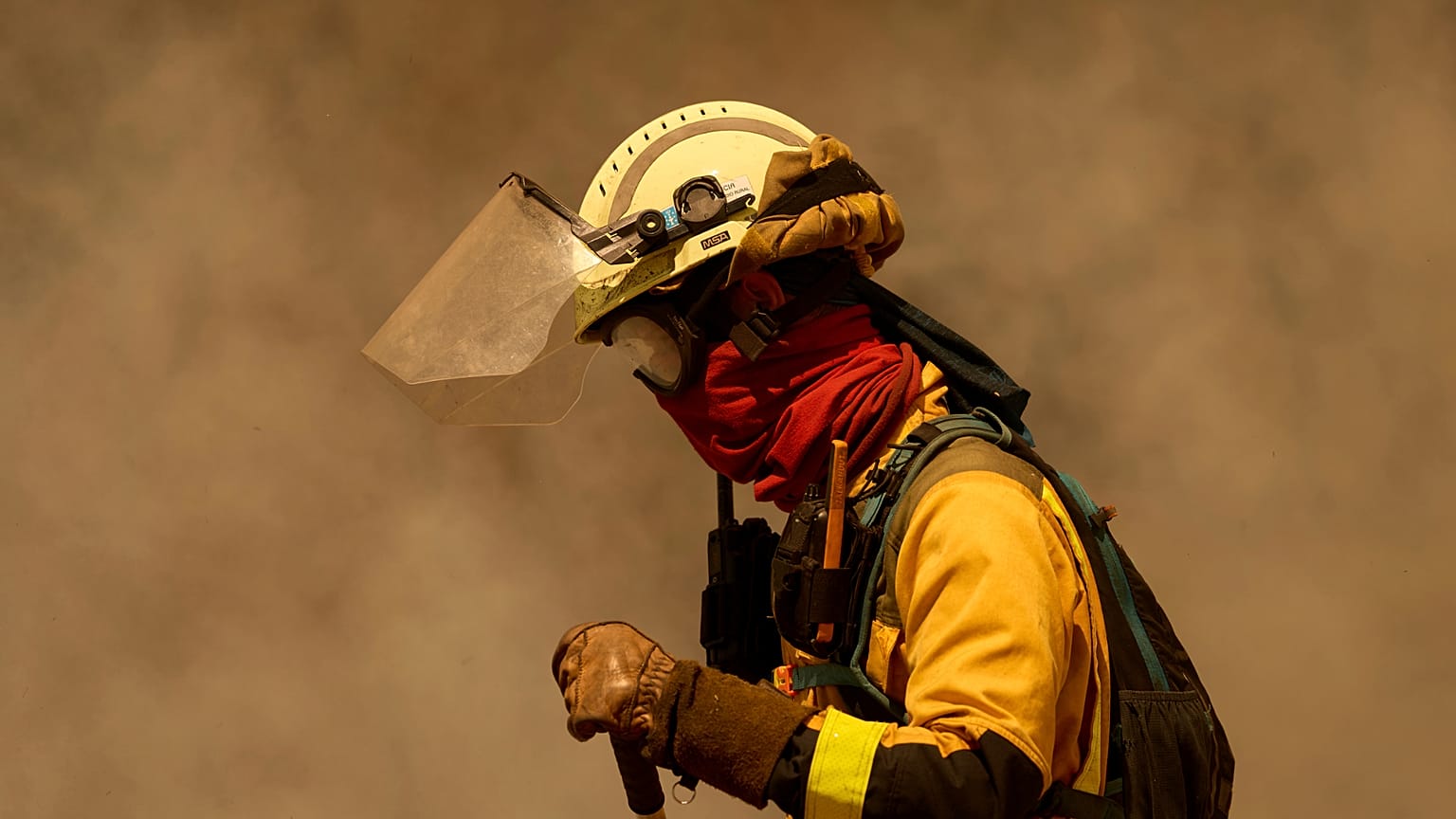
Copyright Pablo García / AP
By Javier Iniguez De Onzono & Euronews en español
Across the European Union as a whole, 899,400 hectares of forest have already been burnt, with Slovakia reaching 10 times its historical average for this time of year and Cyprus seven times.
Sánchez to declare first emergency zones
Speaking from the advanced command post in La Granja, Cáceres, Prime Minister Pedro Sánchez announced that the first areas affected by the fires will be officially declared emergency zones next week.
"There are still difficult hours ahead, let's not get complacent," he said alongside the president of Extremadura, Maria Guardiola.
Sánchez emphasised that the climate emergency is worsening every year and reiterated the need for a national pact to address the growing frequency of extreme weather events caused by rising temperatures. He plans to present a legislative proposal in September to the scientific community, trade unions, and relevant institutions.
Latest updates on Spain’s wildfire crisis
Three of the five people injured in the Castilla y León fires remain in critical condition. The death toll stands at four - three volunteers and one officer from Soria, who was assigned to help in León and died when his machinery overturned during firefighting operations.
Copyright Pablo García / AP
By Javier Iniguez De Onzono & Euronews en español
Published on 21/08/2025 -
The European Forest Fire Information System (EFFIS) calculate that 380,000 hectares have burned in Spain so far this year, while the fight against the flames continues.
All the ingredients came together to create the perfect storm: a particularly dry spring in western Spain, followed by a heatwave that wiped out any remaining moisture in dense, dry ground-level vegetation. Add to that a lack of forest management and limited resources, something fire brigades across the affected autonomous communities have repeatedly warned about.
This combination has resulted in the most severe wave of summer wildfires Spain has seen since 1994, when 437,602 hectares burned, according to data from the Ministry of the Environment.
The European Forest Fire Information System (EFFIS), part of the EU’s Copernicus programme, estimates that 382,607 hectares have burned in Spain this year across 228 fires, a figure that continues to rise as fires rage across Galicia, Asturias, Castilla y León, and Extremadura. These regions, with the exception of Extremadura, are among the oldest and most depopulated in the country.
Depopulation also impacts forest upkeep. Traditional practices like extensive livestock grazing, which once naturally cleaned up the forest during the winter and spring, have largely disappeared.
Of the 10 most destructive wildfires this century in Spain, five have occurred in just the last 15 days of August this year: A Rúa in Orense (44,424 hectares), Uña de Quintana in Zamora (40,781), Benuza in León (32,596), Manzaneda (28,485) and Oímbra (28,485), also in the region of Orense.
What makes this wave of fires especially concerning is that, while the total number of large wildfires (those over 500 hectares) isn't unusually high, they are spreading much more easily due to weather conditions. In 2025, Spain has so far had 52 large fires and we only have to go back to 2022 to exceed that figure.
The European Forest Fire Information System (EFFIS) calculate that 380,000 hectares have burned in Spain so far this year, while the fight against the flames continues.
All the ingredients came together to create the perfect storm: a particularly dry spring in western Spain, followed by a heatwave that wiped out any remaining moisture in dense, dry ground-level vegetation. Add to that a lack of forest management and limited resources, something fire brigades across the affected autonomous communities have repeatedly warned about.
This combination has resulted in the most severe wave of summer wildfires Spain has seen since 1994, when 437,602 hectares burned, according to data from the Ministry of the Environment.
The European Forest Fire Information System (EFFIS), part of the EU’s Copernicus programme, estimates that 382,607 hectares have burned in Spain this year across 228 fires, a figure that continues to rise as fires rage across Galicia, Asturias, Castilla y León, and Extremadura. These regions, with the exception of Extremadura, are among the oldest and most depopulated in the country.
Depopulation also impacts forest upkeep. Traditional practices like extensive livestock grazing, which once naturally cleaned up the forest during the winter and spring, have largely disappeared.
Of the 10 most destructive wildfires this century in Spain, five have occurred in just the last 15 days of August this year: A Rúa in Orense (44,424 hectares), Uña de Quintana in Zamora (40,781), Benuza in León (32,596), Manzaneda (28,485) and Oímbra (28,485), also in the region of Orense.
What makes this wave of fires especially concerning is that, while the total number of large wildfires (those over 500 hectares) isn't unusually high, they are spreading much more easily due to weather conditions. In 2025, Spain has so far had 52 large fires and we only have to go back to 2022 to exceed that figure.
Across the European Union as a whole, 899,400 hectares of forest have already been burnt, with Slovakia reaching 10 times its historical average for this time of year and Cyprus seven times.
Sánchez to declare first emergency zones
Speaking from the advanced command post in La Granja, Cáceres, Prime Minister Pedro Sánchez announced that the first areas affected by the fires will be officially declared emergency zones next week.
"There are still difficult hours ahead, let's not get complacent," he said alongside the president of Extremadura, Maria Guardiola.
Sánchez emphasised that the climate emergency is worsening every year and reiterated the need for a national pact to address the growing frequency of extreme weather events caused by rising temperatures. He plans to present a legislative proposal in September to the scientific community, trade unions, and relevant institutions.
Latest updates on Spain’s wildfire crisis
Three of the five people injured in the Castilla y León fires remain in critical condition. The death toll stands at four - three volunteers and one officer from Soria, who was assigned to help in León and died when his machinery overturned during firefighting operations.
The fire in A Rúa or Larouco (Ourense) has now burned 44,424 hectares, surpassing Chandrexa de Queixa to become the largest wildfire in Galicia's recorded history, and the largest in Spain so far this century.
A major fire is threatening the León side of the Picos de Europa, putting communities in Tierra de la Reina and Valle de Valdeón on edge. In the latter, 775 residents from 11 towns have been evacuated. This area is part of a historic national park crucial to the biodiversity of the Cantabrian Mountains.
According to the Ministry of the Interior, the Guardia Civil and National Police have evacuated 31,130 people across the country. Authorities have also arrested 31 individuals and placed 92 under investigation for their suspected roles in starting the fires.
A major fire is threatening the León side of the Picos de Europa, putting communities in Tierra de la Reina and Valle de Valdeón on edge. In the latter, 775 residents from 11 towns have been evacuated. This area is part of a historic national park crucial to the biodiversity of the Cantabrian Mountains.
According to the Ministry of the Interior, the Guardia Civil and National Police have evacuated 31,130 people across the country. Authorities have also arrested 31 individuals and placed 92 under investigation for their suspected roles in starting the fires.
Spain is battling a wave of wildfires that have claimed four lives this summer. In the north-west, in regions renowned for their lush landscapes and picturesque villages, farmers and residents are trying to save homes and land that firefighters cannot reach.
Issued on: 20/08/2025 - RFI

Locals deal with the effects of a forest fire in Santa Baia De Montes, northwest Spain, 14 August 2025. AP - Lalo R. Villar
A record 3,400 square kilometres – about the size of Moldova – has been destroyed by wildfires in Spain this year, the European Forest Fire Information System said.
Thousands of firefighters, backed by soldiers and water-bombing aircraft, have been battling more than 20 major blazes across the west of the country this week.
The fires, now in their second week, are concentrated in Castile and Leon, Galicia and Extremadura. Thousands of people have been forced to flee.
In some isolated villages, residents are defending their homes themselves. Surrounded by thick vegetation and perched on hillsides, these hamlets have been hit especially hard.
Raquel Fernández, who lives in Montederramo, Galicia, told RFI: "Every day, new fires appear. The fires are so big that they end up merging together. It's all mountains, and there aren't enough resources [for firefighters] to be everywhere. The people who are saving us here are the local farmers with their tractors and water tanks."
Across the region, farmers are trying to save the most isolated houses – including their own.
In Guimarei, south of Ourense, as the flames approach, Martín Pérez fills his water tank.
"My farm burned down two days ago, over there. A calf farm. And now I'm trying to save my house. Yesterday we saved my sister's farm, and we've been there for days. It's hell. It's absolute hell. I'm devastated, absolutely devastated. But we have to keep fighting, that's the way it is."
A record 3,400 square kilometres – about the size of Moldova – has been destroyed by wildfires in Spain this year, the European Forest Fire Information System said.
Thousands of firefighters, backed by soldiers and water-bombing aircraft, have been battling more than 20 major blazes across the west of the country this week.
The fires, now in their second week, are concentrated in Castile and Leon, Galicia and Extremadura. Thousands of people have been forced to flee.
In some isolated villages, residents are defending their homes themselves. Surrounded by thick vegetation and perched on hillsides, these hamlets have been hit especially hard.
Raquel Fernández, who lives in Montederramo, Galicia, told RFI: "Every day, new fires appear. The fires are so big that they end up merging together. It's all mountains, and there aren't enough resources [for firefighters] to be everywhere. The people who are saving us here are the local farmers with their tractors and water tanks."
Across the region, farmers are trying to save the most isolated houses – including their own.
In Guimarei, south of Ourense, as the flames approach, Martín Pérez fills his water tank.
"My farm burned down two days ago, over there. A calf farm. And now I'm trying to save my house. Yesterday we saved my sister's farm, and we've been there for days. It's hell. It's absolute hell. I'm devastated, absolutely devastated. But we have to keep fighting, that's the way it is."
Anger with authorities
In Mogainza, Eloi Fernandez, a livestock farmer, has been battling the flames for a week.
He says he is angry with the authorities for not allowing farmers to clear the forests, which he believes could have slowed the spread of the fires.
"They ban everything. They ban making new paths, controlled burning, cutting wood for heating in winter... Everything, everything is banned. They call it a 'nature network'. Nature network... what nature do we have left? How are they protecting it? It makes no sense, they don't know what they're doing."
Other residents have voiced their anger at what they regard as poor preparation and limited resources.
"No one’s shown up here, nobody," Patricia Vila told AFPTV in the village of Vilamartin de Valdeorras in Ourense. "Not a single damn helicopter, not one plane, has come to drop water and cool things down a bit."
France, Italy, Slovakia and the Netherlands have sent firefighting aircraft to help, but the size and severity of the fires and the intensity of the smoke are making "airborne action difficult," Spanish Defence Minister Margarita Robles told television channel TVE.
Fernandez is worried for the future of these hamlets, which are already suffering from depopulation.
"It's all going to die out. We in the hamlets are doomed, they're going to be abandoned," he said. "There are only three or four young people left, and we're taking a real beating."
Despite the risks, locals continue to fight tirelessly against the fires, as the Spanish authorities announce that they will release aid for farmers who have lost everything.
(with newswires, and partially adapted from the this report n French.)

No comments:
Post a Comment