Watch: Keir Starmer resigns… what now for Labour? (LabourList Podcast Special)

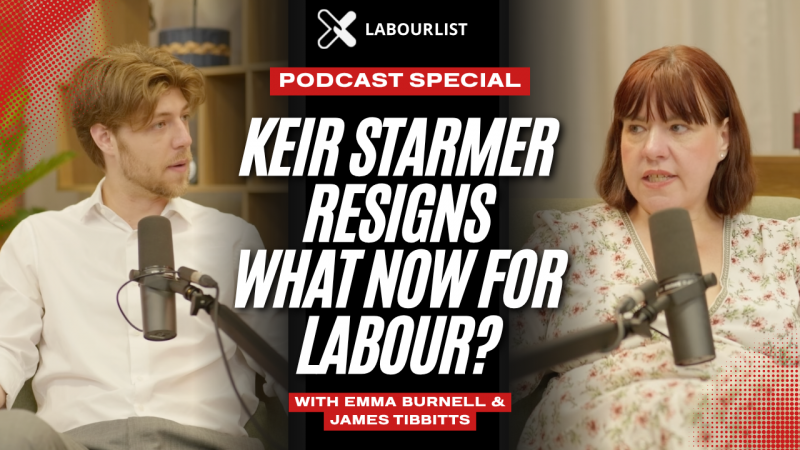
LabourList editor Emma Burnell joins reporter James Tibbitts for a special discussion following Keir Starmer’s announcement that he will step down as Prime Minister and Labour leader.
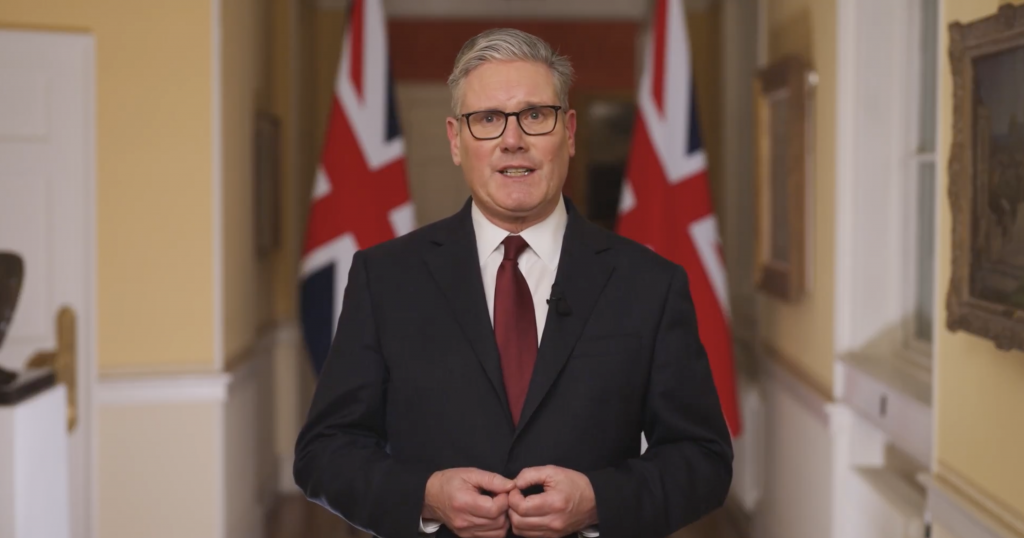
Read Keir Starmer’s resignation speech in full
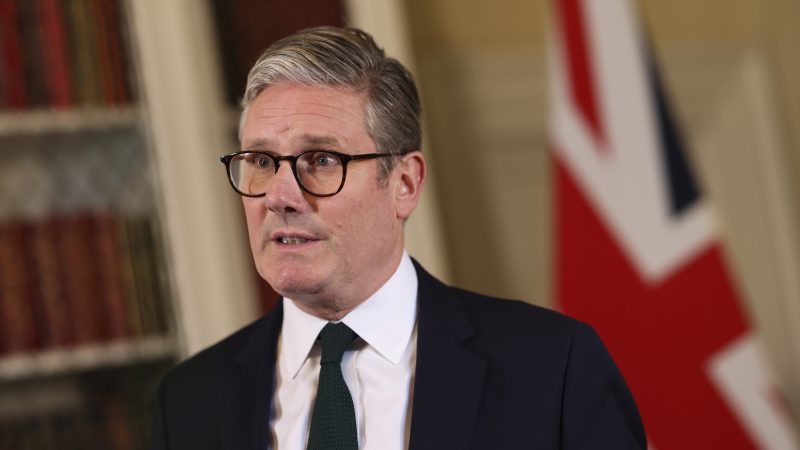
Walking up this street two years ago was the proudest moment of my life. A new Labour government, the first in 14 years.
A page in our country’s history turned after years of disappointment and despair. The chance to change the lives of millions of people for the better.
That’s what I came into politics for. The journey to that point was not easy. Six years ago, I inherited a Labour Party that was politically, financially, and morally bankrupt.
I was told time and time again that my party was finished, that we were consigned to history, that a majority at the general election, let alone a landslide majority, was impossible. But we proved those people wrong because we changed our party, ripping out the poison of antisemitism, restoring trust on the economy, defence, and national security, and becoming a party that once again stood proudly with, not against, our national flag.
The hard work of change was with a singular purpose—Not power for power’s sake, but to change Britain for the better. To build a fairer country with dignity and respect, where everyone is seen, everyone is valued, wealth and opportunity for all, not just the privileged few.
And look at what we’ve achieved in just two years: an economy that is stronger, growing faster than our peers, wages rising faster than inflation in every single month since we came to power. Investment secured, infrastructure being built, an end to austerity with the fastest fall in NHS waiting lists for 17 years, the biggest improvement in rights for workers and renters in a generation, the biggest uplift in defence spending since the Cold War, small boat crossings falling, asylum hotels closing, protecting young people from social media, and half a million children being lifted out of poverty because of the choices that I made.
Our reputation in the world restored, with Britain once again standing up for decency, respect, and the rule of law, securing trade deals, standing with Ukraine, standing up for our values and rebuilding our relationship with our allies in Europe.
Change promised by a Labour government, change fought for by a Labour government, change delivered by a Labour government. But I know the question being asked now is not who was best placed to change the Labour Party, to take us into power, and to begin the vital work of improving lives for millions of people. Those questions have been answered.
The question my party is asking now is whether I am best placed to lead us into the next General Election. I have heard the answer of my parliamentary party to that question, and I accept that answer with good grace. Every decision I’ve taken has been about putting the country I love first.
That is why I will resign as leader of the Labour Party. I have spoken to His Majesty the King this morning to inform him of my decision. I will ask the National Executive Committee of the Labour Party to set out a timetable with nominations opening on the 9th of July. And completed by the summer recess.
In the case of a contest, this will ensure a new leader is in place before Parliament returns in September. I will remain in post as Prime Minister until the contest is complete, and I will do everything I can to ensure an orderly handover of power.
I will also give my successor my full and unequivocal support, knowing that they will inherit a Britain that is far stronger and fairer than the one I inherited two years ago, better prepared for the challenges ahead, and better able to ensure the Labour Party secures a second term in office.
I want to thank all of those friends and colleagues who have been at my side for these past six years or so for their incredible commitment, service, and support.
I want to thank the brilliant Number 10 staff and our country’s extraordinary civil service who dedicate their lives to public service.
And when I leave the biggest job in the country, I shall spend more time on the most important job: being the best husband I can to my fantastic wife Vic, who has been a rock by my side through good times and bad, and being the best dad I can to my beautiful children, who are my pride and my joy. Thank you very much.
‘Starmer: A historical perspective’
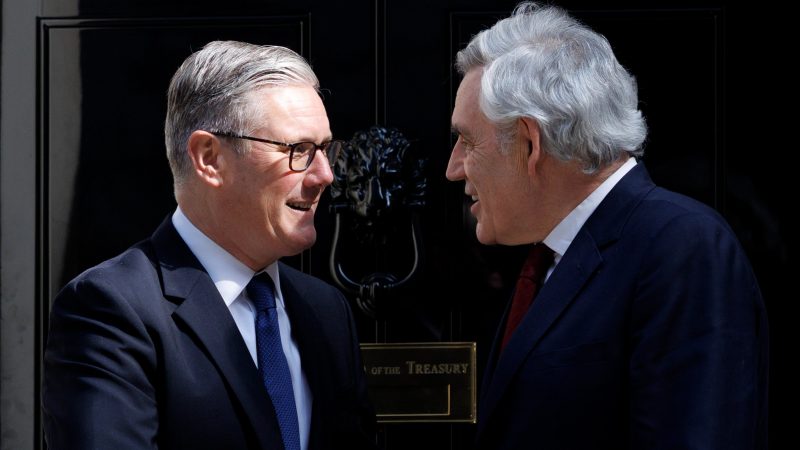
Now Keir Starmer has announced his resignation, and begins to enter history, we can start to place his leadership of the Labour party and the country into some kind of perspective.
Measured in a certain way, Starmer is one of the most successful of Labour’s leaders. Just winning a Commons majority in 2024 puts him streets ahead of all but three predecessors; moreover at 174 seats the size of that majority is only bested by Tony Blair.
What makes Starmer’s achievement even more remarkable is that it came after Jeremy Corbyn’s drubbing at the hands of Boris Johnson. It was widely believed Brexit had created an electoral realignment to the advantage of the Conservatives who many predicted would remain in office for a generation. Few thought Starmer, when elected to replace Corbyn in 2020, would ever become Prime Minister; that he would instead play a role like that of Neil Kinnock who spent nine years transforming the party after 1983 only for Blair to reap the reward. Despite initially promising more continuity than change, Starmer turned Labour away from Corbyn’s radical commitments and chased the former leader and many of his supporters out of the party.
Even so, Starmer’s huge 2024 majority was deceptive, being based on only 33.7 per cent of votes cast: if Labour won 211 more seats than in 2019 it did so with just a 1.4 per cent bigger share. In terms of mobilising popular support therefore Starmer looks a much less striking figure, especially when one considers how desperate many were to be rid of the Conservatives who by then had squandered their Brexit advantage. Indeed, Labour’s vote share was below that of any other majority governing party in the modern era. That this shallow triumph was followed, once Starmer became Prime Minister, by an unprecedented collapse in support to just 17 per cent in the May 2026 local elections,only compounds such an impression.
The 2024 election victory, undeniably Starmer’s greatest achievement, was then paradoxical, one whose causes and consequences (and his own contribution to both) will likely be the subject of much debate in the future.
Some might argue Starmer’s modest 2024 support and its disintegration was largely out of his hands and that he faced problems unlike those of his predecessors. He inherited an ailing economy, one suffering the combined results of austerity, Brexit, Covid and the Ukraine war. Government debt was huge so the scope to borrow and invest in collapsing public services was severely limited especially given, thanks to a prolonged stagnation of living standards, there was little public appetite for tax increases.
Starmer also operated in a uniquely fluid electoral landscape in which voters were alienated from old party loyalties, where age and education rather than class created new affiliations, especially support for populist parties. The impact of these changes was, moreover, turbo-charged by the traditional media and social media platforms embracing what amounted to a far-right politics of nihilism.
How far Starmer was the prisoner of structural factors over which he had little control is however something others would challenge. For, under the tutelage of Morgan MacSweeney – the main architect of Labour strategy during this period – the party deliberately sought less to engage with these difficult new realities and more to restore a lost politics. It was this approach – and its demonstrable failure – which mostly explains the truncated nature of Starmer’s premiership.
Most Britons were never sure what Starmer stood for, partly because he was a poor communicator, but he had a clear objective as leader and Prime Minister. He wanted to return the country to the time before populism and so to the world prior to the 2008 international financial crisis, austerity and Brexit to what he considered ‘normal’ politics. To that end he sought to recreate Labour as the party of the pre-Brexit working class, which many older, white and less educated proletarians supported, especially by emphasising his commitment to reducing immigration.
Become a friend of LabourList and join our community. Our friends support our vital non-factional work and get access to exclusive content and events.
But such voters had no desire to return to Labour. He could not satisfy their visceral dislike of immigration, something revealed by the 2024 result and confirmed even as his government oversaw a significant decline in numbers while it introduced harsh measures to deter refugees entering Britain. Unfortunately for him, instead of gaining votes, Labour lost many of their 2024 voters dismayed by this approach. And yet he persisted with this approach until the end.
Starmer’s other – and most critical objective – was to promote higher economic growth, notably through investment in green industries. This involved granting a greater role to the state to direct resources to neglected parts of the country and make good the depredations inflicted first by Margaret Thatcher and then those governments which followed in her neo-liberal footsteps. Many of these radical plans were however reined in during the run-up to the 2024 election confirming Starmer’s deep-set caution, Put together with the impact of Donald Trump’s erratic policies Britain looks set to remain a low growth economy for years to come. Significantly, the one measure many economists believed would bolster growth – reversing Brexit – was something Starmer refused to countenance.
Starmer campaigned in 2024 promising ‘Change’ but so far as most voters were concerned, he has delivered too little of it. Some would argue that was because he was not given enough time, others that he was simply too conservative, that he was simply inadequate to the moment in which he came to lead his party and country, that he neither had the actions and certainly not the words to challenge an increasingly visceral popular mistrust of the kind of ‘normal’ politics to which he wanted the country to return – if that was even possible.
Most significant political figures go through reputational transformations: many of those seen as successful at the moment they depart the stage are eventually held up to opprobrium. For others, those viewed by contemporaries as failures, who later may see be seen in a more positive light. Ramsay MacDonald, once the great betrayer, is now viewed as having achieved some modest but important reforms; Clement Attlee, now regarded as a kind of secular saint was, for many years after his retirement, thought to have lost the plot in office; and Harold Wilson, who resigned amidst accusations of corruption and lack of principle, is now praised for avoiding British entanglement in the Vietnam war and as the architect of the Open University.
So, assessing Starmer as a historical figure when he has only just announced his resignation is perhaps something a ‘fool’s errand’. In the end, how historians of the future see him depends on what happens next. Will Starmer’s successor chart a successful new course for the government, dish the populists and secure re-election or will they be overwhelmed by the same problems that faced Starmer? Over to you … Andy Burnham.

Tariq Ali: “tweedledee”
There was nothing to commend Starmer. A political dud, he was put in place following Corbyn’s 2019 defeat after a legal career – in Northern Ireland and at the Crown Prosecution Service – of kowtowing to those in power. The sordid story was told in an effective broadside by Oliver Eagleton in The Starmer Project (2022) and later in forensic detail by Gabriel Pogrund and Patrick Maguire in Get In (2025) and Paul Holden in The Fraud (2025). In the July 2024 election, a divided right – Tories: 24 per cent; Reform: 14 per cent – handed Starmer a majority with 34 per cent. His advisers, led by Mandelson protégé Morgan McSweeney, counselled the new leader to suck up to Farage in public and compete with his policies. This was done via a photo-op in the House of Commons when the Prime Minister walked up to Farage and shook hands with him, thus becoming a stranger to many in his own party.
There followed expulsions of the Labour left, attacks on child benefits and pensioners’ fuel allowance and Farage-style rhetoric about immigrants (‘Island of Strangers’), wrapped up in austerity budgets. In line with the preceding Tory government, a woman of colour, Shabana Mahmood, was appointed Home Secretary to push through deeply reactionary policies on race and civil liberties.
The liberal press, thrilled by the purge of the left, eagerly supported Starmer. And Starmer eagerly supported the Israeli genocide unleashed in Gaza. The Labour Prime Minister gave his backing to Israeli measures like cutting off water, electricity, food and medicines to the Palestinian people. If Starmer opposed the targeting of women and children, he kept it to himself. The state apparatuses and RAF surveillance were employed to actively assist in the genocide. Starmer’s abject servility to the ultra-conservative Board of Jewish Deputies was loyally mimicked by cabinet members Cooper, Lammy, Streeting and the 100-plus Labour MPs imposed on local parties by Mandelson’s gang.
To take the measure of the Mandelson implants: even Labour loyalists Robin Cook and Clare Short resigned from the Blair cabinet when he took the country to war in Iraq against the will of a majority of his citizens, backed by the endless lies of his media manager, Alastair Campbell (and the barking of dogs of war like Burnham). Not a single Labour MP resigned from Starmer’s government on Palestine or the use of US military bases in the UK to attack Iran. On the contrary: the expelled Corbynites – John McDonnell and Co. – disgraced themselves by crawling back into the Parliamentary Labour Party.
Starmer made sure that there was nothing to choose from at any level between the extreme centre parties in parliament – Labour, Tories and Lib Dems. As the British economy stagnated and Labour’s ratings plunged to their current 18 per cent, the Greens took off from July 2025 to reach 16 per cent this spring. Coupled with the short-lived hopes in a new Corbynite vehicle, they revealed a substantial constituency to Labour’s left. After reading the focus-group runes, McSweeney’s men steered Starmer into a series of semi u-turns from the second half of 2025: fuel allowance, child benefits, anti-migrant digital IDs. None of it helped. In combination with his wooden appearance and inability to defend himself in Parliament, his flip-flops only increased the contempt for Starmer in the country at large. He will go. There are rumours that Burnham might offer him a cabinet job. Can I recommend the Ministry of Untruth.

Keir Starmer is a decent man, but he lacked key skills for leadership
'There is no doubt he is a respected statesman who has worked hard all his life for the right reasons.
Jamie Stone is the Liberal Democrat MP for Caithness, Sutherland and Easter Ross and the chair of the House of Commons Petitions Committee.
“Nay lad, we don’t vote Liberal in these parts.”
That was Batley and Spen during a by-election some five years ago. Amid the red-brick, Coronation Street backdrop of this part of Yorkshire, I soon tried a different tact.
“Morning, lovely day isn’t it. I’m out doing the by-election rounds and I’m wondering, are you a betting person? If so, who do you think will win the seat?”
“Oh, well that’s kind of you to ask – it’s got to be Kim…”
So I returned to Westminster with the rather unsurprising intelligence that Labour would comfortably hold the seat. Later that day, who should I bump into on the House of Commons terrace overlooking the Thames but the new Leader of the Labour party Keir Starmer.
“Keir, it’s in the bag. I’ve been up there – without a shadow of a doubt, you’ve won.”
Now the reason I’m telling you this is because Keir’s reaction was interesting. He looked quite startled, almost jumped out of his skin in fact (i’m not that frightening, am I?) – almost as if he’d been caught off guard by his own success. “Do you really think so? Are you sure?”
It struck me then that a different sort of political leader might have replied, “Of course we are, Jamie – you don’t need to tell me that.” Or even: “Isn’t it about time you faced reality and joined the Labour party”. Instead, there was only cautious optimism. The pragmatism of a good, decent person doesn’t always translate to the qualities necessary for leadership.
That small, fleeting exchange told me something important about Keir Starmer and his leadership style. When the chips were down, certainty did not seem to be his natural habitat.
Another giveaway is the fact that I don’t even once remember seeing him in the House of Commons tea room engaging in gossip and swapping information in between votes.
Nor did I ever see him in the tea room around the corner, where the real temperature of Parliament is often taken. If you want your finger on the pulse of the House, being amongst your colleagues engaging in this kind of chatter matters more than it might seem. In fact, when previous Prime Ministers were in trouble they were to be seen making the rounds alongside loyal supporters in an often vain attempt to secure support amongst the rank and file of their party’s membership.
The trouble with power, particularly at the level of Prime Minister, is how easily it can isolate you. It is very easy to retreat into Number 10 and gradually lose the instinctive read of your own parliamentary party who you once socialised with.
My conclusion – rightly or wrongly – was that Keir is a decent, diligent, hard-working man, but perhaps without that extra gear of bonhomie, that “one of the lads” instinct that can make all the difference in leadership politics. None of this is a criticism; it is simply an observation of a style that he did not adopt. And, unfairly or otherwise, the most superficial airs of charisma can matter enormously when pressure builds.
In retrospect, one can see how a series of political U-turns and certain misjudgements accumulated into a perfect storm that ultimately led to his resignation during the recent political upheaval. And, of course, sometimes fatal misjudgements such as the appointment of Peter Mandelson…
At the end of all this, I am not a member of his party – but I can say that when I raised issues on behalf of my constituents, Keir Starmer always took the time to respond properly. That alone is not nothing in modern politics.
And when I look back at some of his predecessors, it takes only a moment to recall just how damaging the Johnson and Truss years were. They were periods that did real harm to the reputation of the office of Prime Minister and, in many eyes, to the credibility of British politics itself. That charge cannot fairly be laid at Starmer’s door.
In conversations across Parliament in his final days in office, it was clear that even many who opposed him recognised his diligence and seriousness. I wish him well. There is no doubt he is a respected statesman who has worked hard all his life for the right reasons.
He kept us out of a war and did his best to safeguard the special relationship with the United States and on the international stage. There can be no doubt that he made our country proud on many occasions. A refreshing change from the leaders that came before him.
Perhaps now, in a slightly different world, the next Prime Minister might consider finding him a role that will allow him to put these talents to good use. Foreign Secretary might suit him rather well..

No comments:
Post a Comment