Faced with transphobia and repression, people imprisoned in Washington State are still finding ways to celebrate Pride.
By Jaime Sauceda , Ye Qing J. , Erica R. Meiners ,
Truthout/TheAppeal
PublishedJune 30, 2026
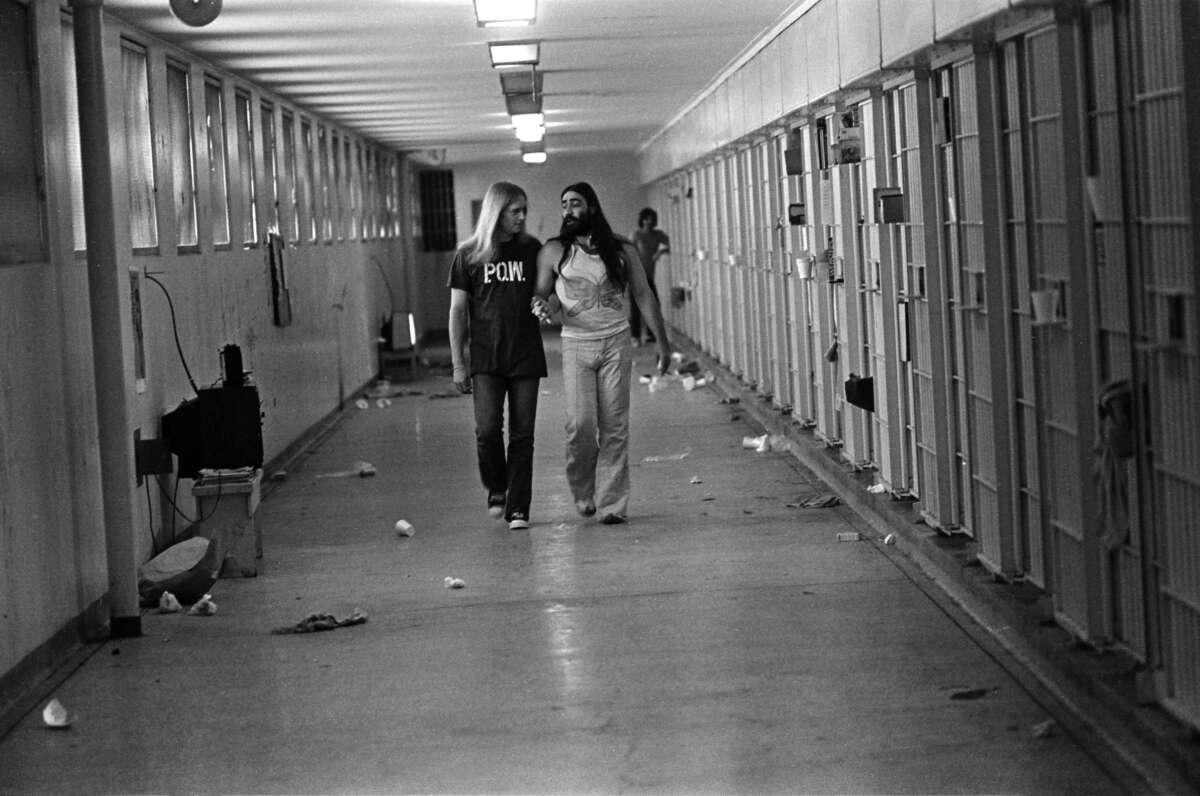
Men Against Sexism member Ed Mead walks with his lover, Danny Atteberry, through the Intensive Security Unit at Walla Walla State Penitentiary in the late 1970s during the one hour a day when they were allowed out of their cells. (Photo by Ethan Hoffman. Courtesy of the Washington Prison History Project and UW Bothell Digital Collections. CC BY-NC. )
This June, a Pride celebration organized by Alliances, a multi-generational and multiracial group of incarcerated queer and trans people, was held inside Washington State’s largest prison.
Yet behind the skits and the celebration of queer joy expressed at the June 3 Pride event inside the Twin Rivers Unit at the Monroe Correctional Complex, the continued punishment of trans women and queer people “for their own protection” was not far from the minds of the event’s participants. A core group of about 10 people within Alliances made this celebration possible, with the support of other (often overlapping) inside networks, like the Black Prisoners’ Caucus.
Amid all the parades, poppers, and parties that arrive in June, remembering the origins of queer liberation movements — open rebellion against police and resistance to other forms of carceral repression — gets harder and harder.
Yet as everyday life for queer people in the U.S. — particularly those who are Black, Indigenous, and people of color (BIPOC), or young — is criminalized, Alliances’ event within the Monroe Correctional Complex offered a potent beacon: We need to be organizing for anti-carceral worlds, and have queer dance parties.
Across the U.S. a patchwork of laws attempts to erase transgender lives and regulate all bodies through the familiar weapon of criminalization. From bathroom access to passports and other identifying documentation, gender is increasingly narrowed. Proposed legislation will restrict other core rights including parenting. Even in “blue” cities and states, hospitals and universities have preemptively curtailed support for gender-affirming care, and supportive medical professionals, parents/caregivers, and educators now face fines and prison terms and loss of licensure and prosecution. Beyond the potentially lethal impacts on transgender lives, these new forms of the old practice of “eugenics policymaking,” according to an interview with historian Jules Gill-Peterson, aim to police all lives.
Related Story
This June, a Pride celebration organized by Alliances, a multi-generational and multiracial group of incarcerated queer and trans people, was held inside Washington State’s largest prison.
Yet behind the skits and the celebration of queer joy expressed at the June 3 Pride event inside the Twin Rivers Unit at the Monroe Correctional Complex, the continued punishment of trans women and queer people “for their own protection” was not far from the minds of the event’s participants. A core group of about 10 people within Alliances made this celebration possible, with the support of other (often overlapping) inside networks, like the Black Prisoners’ Caucus.
Amid all the parades, poppers, and parties that arrive in June, remembering the origins of queer liberation movements — open rebellion against police and resistance to other forms of carceral repression — gets harder and harder.
Yet as everyday life for queer people in the U.S. — particularly those who are Black, Indigenous, and people of color (BIPOC), or young — is criminalized, Alliances’ event within the Monroe Correctional Complex offered a potent beacon: We need to be organizing for anti-carceral worlds, and have queer dance parties.
Across the U.S. a patchwork of laws attempts to erase transgender lives and regulate all bodies through the familiar weapon of criminalization. From bathroom access to passports and other identifying documentation, gender is increasingly narrowed. Proposed legislation will restrict other core rights including parenting. Even in “blue” cities and states, hospitals and universities have preemptively curtailed support for gender-affirming care, and supportive medical professionals, parents/caregivers, and educators now face fines and prison terms and loss of licensure and prosecution. Beyond the potentially lethal impacts on transgender lives, these new forms of the old practice of “eugenics policymaking,” according to an interview with historian Jules Gill-Peterson, aim to police all lives.
Related Story

As a Trans Person in Federal Prison, I’m Being Punished for Existing
If the Trump administration forces me to transfer to a men’s prison, I question whether I will make it out alive. By E.M. , Truthout September 29, 2025
Incarcerated queer folks, particularly those who are BIPOC and transgender, are at the front lines of these attacks. “This is a pattern that a queer incarcerated person is well familiar with,” an Alliances member told Truthout. “The simple expression of our identity is incomprehensible to a system that necessitates the categorization and regulating of our bodies.”
“The simple expression of our identity is incomprehensible to a system that necessitates the categorization and regulating of our bodies.”
And yet the struggle for decarceration and our survival needs queer joy, as Alliances and other networks of systems-impacted queers identify. The indomitable Miss Major, who died in October 2025 after a lifetime of riotous abolitionist organizing, stated in a 2023 interview with the The Guardian: “I know the world I would like to live in. It’s in my head, but I try my best to live it now.”
Behind the Pride
On day one, President Donald Trump signed Executive Order 14168, “Defending Women From Gender Ideology Extremism and Restoring Biological Truth to the Federal Government,” mandating transphobia across federal agencies. Yet change is often slow in bureaucracies. On June 17, 2026, a federal judge temporarily halted one of the impacts of this executive order and required the Bureau of Prisons to continue to offer hormones, following an earlier ruling freezing any transfer of trans women in the federal system to prisons for men. Incarcerated trans women in the federal system are panicked. “The battle I’m in right now is for my very existence,” as E.M. outlines in her 2025 Keeley Schenwar Memorial Prize-winning essay.
In Washington, a state policy passed in 2020 that permits some trans women who apply to serve their sentence at a women’s prison is under pressure from the federal government and anti-trans advocacy networks. In 2024, Amber Kim, a former member of Alliances, was transferred from a women’s prison, Washington Corrections Center for Women, to the Monroe Correctional Complex, because of a “504” infraction, or “consensual sexual contact.” The Monroe Correctional Complex is officially a men’s prison, but most people in Alliances drop the gender marker as they believe this prison houses the highest number of incarcerated queer and trans people in Washington State. While a 504 infraction is not uncommon at Washington Corrections Center for Women, Kim — despite her stellar prison record — was punished more severely than others. She is reportedly the first woman to be moved in Washington from a women’s prison into a men’s prison.
Myths of sexual harm by trans women are a potent tool in the right’s attempts to regulate gender and to ban trans women from bathrooms, sports, and women’s prisons. Multiple studies, including ones conducted by the federal government, document that guards are key perpetrators of sexual and other forms of harm, particularly in prisons for women, and simultaneously, one federal study found that incarcerated transgender people are the prime targets. But any state claims to protect incarcerated people from sexual violence is always less than hollow: The never fully implemented and usually ineffective Prison Rape Elimination Act (PREA) of 2003 is in the process of being gutted from 2025 federal funding cuts to the National PREA Resource Center.
In 2026, the right-wing advocacy organization Foundation Against Intolerance and Racism (FAIR), which propels attacks against trans folks in sports, initiated a campaign to collect testimony from incarcerated cisgender women in support of a lawsuit against Washington State for allegedly failing to protect cisgender women. The Department of Justice has also launched an investigation, effectively indefinitely pausing the movement of any trans women into women’s prisons in Washington.
The Washington Department of Corrections claims that Amber Kim’s placement in solitary confinement is her choice and for her protection from the general imprisoned population. But if the slim possibility of safety is only through solitary confinement — a familiar and often lethal experience for many gender-nonconforming and queer folks inside prisons — this is neither a choice nor protection. Beyond Kim, whose case waits before the Washington Supreme Court, Alliances members report that at least two other trans women affiliated with their group are currently held in solitary confinement “for their own protection” at the Monroe Correctional Complex.
Alliances members report that the Twin Rivers Unit is often referred to by incarcerated people as one of the safest places in the Washington prison system. While not a prison for women, the Twin Rivers Unit is designated for people made more vulnerable by the state’s prison system: people with sexual offense charges; people who’ve dropped their gang affiliations; and queer and transgender people. Yet with a capacity for 795 people, not everyone who is eligible, or able to apply, gets to be at Twin Rivers Unit.
DIY Fighting Futures
Alliances is neither the first nor the only network of queer people inside a prison organizing for joy and resistance.
Out of necessity, queer organizing has always been anti-carceral.
Out of necessity, queer organizing has always been anti-carceral. To fight sexual violence at the prison, Ed Mead — imprisoned at Walla Walla Prison in Washington from 1976-1983 for organizing with the George Jackson Brigade — started Men Against Sexism, which taught self-defense, smuggled in weapons, and established “safe cells” for incoming queer/trans prisoners: “We were some tough faggots,” Mead reports.
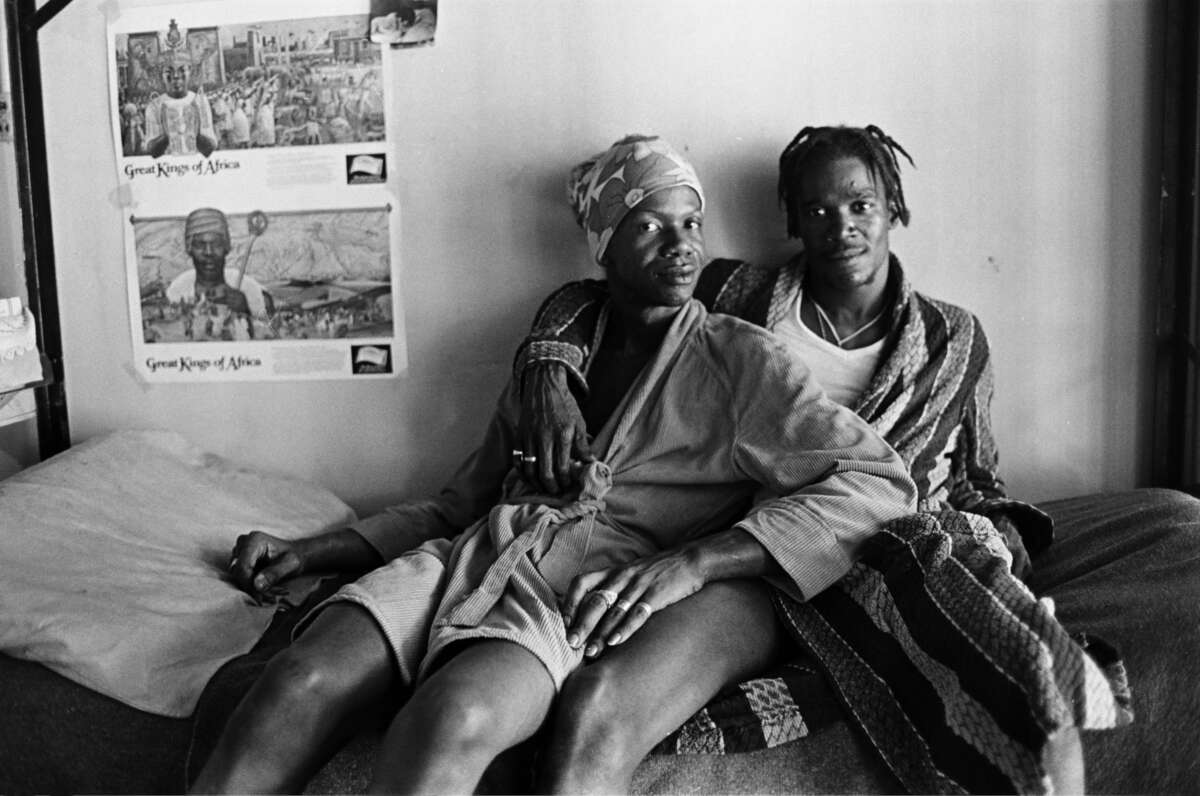
Kim (right) spends time with Leomy, his “inside lady” and a member of Men Against Sexism, a club popular with gay and transgender prisoners, at Walla Walla State Penitentiary in the late 1970s. (Photo by Ethan Hoffman. Courtesy of the Washington Prison History Project and UW Bothell Digital Collections. CC BY-NC. )
In the 1960s and ’70s, local gay newsletters in Chicago routinely reported on police’s “stop and ask” anti-queer entrapment tactics, printed descriptions and names of officers involved in raids of queer bars, and published legal and organizing resources, including “Your Rights if Arrested.” In 2012, the youth-led New York City group FIERCE initiated a successful campaign against the police’s routine practice of charging BIPOC youth in possession of condoms with “intent to commit sex work.” And the list of queer networks that envision and build the abolitionist world we need goes on.
Alliances members’ acts of resistance rarely make the history books. One riotous example shared by members: When a trans woman heard that guards denied the girls bras, she found a sunny spot in the middle of the yard and took her top off. “The entire yard froze,” an Alliances member told Truthout. “When guards rushed over and told her to cover up, she pointed out that plenty of men went shirtless, and if DOC [Department of Corrections] didn’t recognize her as a woman, then she didn’t see why she should cover up either. Immediately the lieutenant is called, emails amongst administration are sent, and the clothing room ordered bras for trans women.”
Building on these DIY legacies, across the planet, from Chicago’s abolitionist Pushing Envelopes to the decarceration project in Melbourne Beyond Bricks and Bars, vibrant queer-led grassroots organizing persists. Often armed with nothing, these networks write and visit other queers inside, support people after release, organize to ensure people are not pushed into jails and prisons, coordinate campaigns for people’s release, follow the leadership of incarcerated queer/trans folks on challenging prison conditions, find affirming and free legal supports, and demand and build queer lives that don’t rely on prisons and policing. And always along the way: laugh, sparkle, and fucking dance.
Queer people, inside and outside, continue to find ingenious ways to resist, even when the stakes are life and death.
At this June’s Pride celebration, Alliances members racked up a few joyous wins. Dancing is strictly forbidden, but a member of the prison’s Black Prisoners’ Caucus — which attends and supports this Pride — initiated the electric slide line dance with guests and incarcerated folks, creating a mini dance party. Denied wigs, Alliances members used feathers as adornments. Dresses are also banned, but an Indigenous member of Alliances successfully proposed a showcase of Black, Indigenous, Asian, Pacific Islander, and Latine dances so folks could wear their cultural regalia in part expressly to circumvent this rule.
As an Alliances member reports to Truthout: “[Department of Corrections] responds with new regulations each year, but a reactionary system that attempts to understand a qu33r person’s body will always be a step behind.” Take that prison censors.
Queer people, inside and outside, continue to find ingenious ways to resist, even when the stakes are life and death. Together, we are fighting for our full queer lives. We will have “bread for all, and roses too,” and we will dance.
This article is licensed under Creative Commons (CC BY-NC-ND 4.0), and you are free to share and republish under the terms of the license.
In the 1960s and ’70s, local gay newsletters in Chicago routinely reported on police’s “stop and ask” anti-queer entrapment tactics, printed descriptions and names of officers involved in raids of queer bars, and published legal and organizing resources, including “Your Rights if Arrested.” In 2012, the youth-led New York City group FIERCE initiated a successful campaign against the police’s routine practice of charging BIPOC youth in possession of condoms with “intent to commit sex work.” And the list of queer networks that envision and build the abolitionist world we need goes on.
Alliances members’ acts of resistance rarely make the history books. One riotous example shared by members: When a trans woman heard that guards denied the girls bras, she found a sunny spot in the middle of the yard and took her top off. “The entire yard froze,” an Alliances member told Truthout. “When guards rushed over and told her to cover up, she pointed out that plenty of men went shirtless, and if DOC [Department of Corrections] didn’t recognize her as a woman, then she didn’t see why she should cover up either. Immediately the lieutenant is called, emails amongst administration are sent, and the clothing room ordered bras for trans women.”
Building on these DIY legacies, across the planet, from Chicago’s abolitionist Pushing Envelopes to the decarceration project in Melbourne Beyond Bricks and Bars, vibrant queer-led grassroots organizing persists. Often armed with nothing, these networks write and visit other queers inside, support people after release, organize to ensure people are not pushed into jails and prisons, coordinate campaigns for people’s release, follow the leadership of incarcerated queer/trans folks on challenging prison conditions, find affirming and free legal supports, and demand and build queer lives that don’t rely on prisons and policing. And always along the way: laugh, sparkle, and fucking dance.
Queer people, inside and outside, continue to find ingenious ways to resist, even when the stakes are life and death.
At this June’s Pride celebration, Alliances members racked up a few joyous wins. Dancing is strictly forbidden, but a member of the prison’s Black Prisoners’ Caucus — which attends and supports this Pride — initiated the electric slide line dance with guests and incarcerated folks, creating a mini dance party. Denied wigs, Alliances members used feathers as adornments. Dresses are also banned, but an Indigenous member of Alliances successfully proposed a showcase of Black, Indigenous, Asian, Pacific Islander, and Latine dances so folks could wear their cultural regalia in part expressly to circumvent this rule.
As an Alliances member reports to Truthout: “[Department of Corrections] responds with new regulations each year, but a reactionary system that attempts to understand a qu33r person’s body will always be a step behind.” Take that prison censors.
Queer people, inside and outside, continue to find ingenious ways to resist, even when the stakes are life and death. Together, we are fighting for our full queer lives. We will have “bread for all, and roses too,” and we will dance.
This article is licensed under Creative Commons (CC BY-NC-ND 4.0), and you are free to share and republish under the terms of the license.
Jaime Sauceda
Jaime Sauceda (they/them), currently incarcerated at Monroe Correctional Complex in Washington State, was arrested young and has spent the last 12 years organizing in queer and Latine spaces. From downtown Seattle to a maximum security prison, they have gained experience advocating in very different cultures. Jaime is soon to transfer to a reentry-transitional prison and looks forward to being released to their siblings and husband.
Ye Qing J.
Ye Qing J. is an organizer, writer, and artist whose work is informed by walking alongside people who’ve been left behind — because they/we are the ones who know best how to upend systemic violence. They’ve written for QED: A Journal in GLBTQ Worldmaking, performed at ARTS at King Street Station, and made zines with ACLU WA and Look2Justice. Ye Qing brings tenacity, curiosity, and care to everything they touch. Their dad taught them how to sharpen a cleaver on the bottom of fine China, and Ye Qing has basically been doing the same ever since. Drop a line at controlledchaosconsulting@gmail.com.
Erica R. Meiners
Erica R. Meiners is a Chicago-based educator and writer who co-authored Abolition. Feminism. Now. (Haymarket Press 2021) with Angela Davis, Gina Dent, and Beth Richie. Erica is also a co-editor of the new collection How to End Family Policing: From Outrage to Action.
.jpg)


No comments:
Post a Comment