Thursday, February 01, 2024


Identify, engage, assassinate: How seahorse-like toxins kill insects


Max Planck researchers from Dortmund reveal the first-ever detailed structure of the bacterial toxin Mcf1


Peer-Reviewed Publication

MAX PLANCK INSTITUTE OF MOLECULAR PHYSIOLOGY

3D structure of ‘Makes caterpillars floppy 1’ (Mcf1). 

IMAGE: 

THE STRUCTURE OF MCF1 RESEMBLES A SEAHORSE WITH A HEAD CONTAINING SEVERAL TOXIC PAYLOADS, WHILE THE TAIL REGION CAN ATTACH TO TARGET CELLS

view more 

CREDIT: MPI OF MOLECULAR PHYSIOLOGY


“Ours is the first-ever structural study of this toxin,” explains Alexander Belyy, first author of the study. The challenge of the project, which took a decade of work, lay in the fact that the protein is relatively large and composed of multiple modules, each devoted to a specific function. “The use of our cutting-edge cryo-EM equipment and computational power was instrumental to resolve this structure,” says Stefan Raunser.

Cryo-EM allows researchers to obtain 3D images of a protein at near-atomic resolution, in this case at 3.6 Ångstrom – meaning that details 200,000 times smaller than the width of a human hair could be observed. The scientists were able to show that the structure of Mcf1 resembles a seahorse with a head containing several toxic payloads, while the tail region can attach to target cells. After the toxin is released by bacteria in the host insect, three domains in its tail region identify and bind to the target cell’s membrane. Another domain of the tail then transfers the head across the membrane into the cell’s cytoplasm. Once inside, the head interacts with local proteins to stimulate the release of two toxic payloads. These deadly modules disrupt the activity of essential proteins in the cell, leading to its death – and ultimately to the death of the entire insect within 24 hours of intoxication.


New organic pest control agents

Intriguingly, the researchers found that the modular structure of the tail and the initial steps of Mcf1 intoxication are highly similar to toxins from Clostridioides difficile, a human pathogen responsible for more than 120,000 hospitalizations in Europe annually. "Our study, which was originally aimed at improving biopesticides, will also have an impact on the understanding of human diseases," adds Philipp Heilen, co-first author of the study.

Looking forward, the MPI scientists want to elucidate in molecular detail how the toxic payloads of Mcf1 lead to cell death. “This new knowledge also enables engineering of highly specific insecticidal toxins,” says Stefan Raunser hinting at another future direction of research: creating new toxin variants useful for ecological pest control.


Alleviate the drought in the east Hungarian plains


Researchers from the Institute of Geography and Earth Sciences at Eötvös Loránd University propose ways to avoid droughts and protect habitats and agricultural land


ORBAN THE STALIN OF HUNGARY


Peer-Reviewed Publication

EÖTVÖS LORÁND UNIVERSITY

A typical situation of summer 2022 

IMAGE: 

A TYPICAL SITUATION OF SUMMER 2022: THERE WERE CLOUDS AND MEDIUM-TO-HIGH LEVELS OF MOISTURE IN THE ATMOSPHERE BUT NO PRECIPITATION. THE TOPSOIL WAS COMPLETELY DRY, AND THE CROPS TO BE HARVESTED IN AUTUMN HAD 100% YIELD LOSS IN MANY PLACES (26 JULY 2022; PHOTO BY GUSZTÁV JAKAB).

view more 

CREDIT: PHOTO BY GUSZTÁV JAKAB


Intensive agricultural cultivation and the resulting changes in soil structure cause low humidity in the near-surface air during heat waves in really dry years. As a result, summer cold fronts roar across the Plain without the usual thunderstorms and precipitation, researchers at the Institute of Geography and Earth Sciences at Eötvös Loránd University explain in a review of articles on topics ranging from geodynamics to soil science to meteorology what made the summer of 2022 so severe in the eastern part of the country.

In 2022, the 7-week period starting in mid-June was disastrous for eastern Hungary. Almost no rain fell for weeks, and in the eastern part of the country, the economic loss of autumn crops was almost total. The cold fronts, which had brought showers and rain to the western part of the country, 'dried up' as they reached the Great Plain, passing through without precipitation and with only strong winds, making the drought situation even worse. Rumors had already started that some mysterious experiment influencing the weather had caused the almost complete drying out and destruction of the maize and sunflower crops in the lowlands that year.

Gábor Timár and Balázs Székely of the Department of Geophysics and Space Science and Gusztáv Jakab of the Department of Environment and Landscape Geography show in their review article published in journal Land  that this is not the case. Rather,

the atmosphere was missing one of the most natural things: water.

Because of the unusually severe drought, one of the conditions for the formation of thunderstorms: a layer of humid air near the surface was missing. As a result, the thunderstorms that provided the bulk of the summer rainfall were absent, exacerbating the situation and precluding the possibility of further storms over a period of several weeks.

The researchers conclude that the main reason for this is that the landscape water storage capacity has been significantly reduced due to intensive agricultural cultivation, following the water regulation measures.

In many places, large-scale cultivation and heavy machinery have created a secondary, almost impermeable layer in the soil, which prevents autumn-winter, early spring and early summer precipitation from being stored in the deeper layers of the soil.

The upper 20-30 cm of the soil, however, dries out very quickly in the summer heat, and the chances of the remaining evaporation of moisture in the lower layers of the air and the formation of thunderstorms are then greatly reduced. The moisture in the higher air layers therefore does not reach the ground.

Their proposal is therefore to restore wetlands, meadows and pastures in a part of the lowland landscape

- estimated to be at least one county in total - and even to divert excess water from elsewhere during the winter and snowmelt floods. Here, in addition to natural or accelerated restoration of soil structure, the re-establishment of vegetation that is highly evaporative during the summer period should be allowed or encouraged. This can guarantee that rainfall can return in drought years, which will also bring rainwater to agricultural areas. These 'evapotranspiration areas' could be created in the lowest areas of the lowlands, on the lowest-value agricultural land with a lower 'golden crown' value, where the soil is not optimal for arable farming anyway.


Severity of the drought occurred in Europe in the extremely hot 2022 summer heat wave. While the western and eastern parts of the continent were damaged by elongated anticyclonic periods, in the Great Hungarian Plain, the fronts occurred at almost normal rates, but they passed without precipitation. Map is made by European Commission GDO Analytical Report 2022.

CREDIT

European Commission, Joint Research Centre, Toreti, A., Bavera, D., Acosta Navarro, J. et al., Drought in Europe – August 2022 – GDO analytical report, Publications Office of the European Union, 2022, https://data.europa.eu/doi/10.2760/264241

An old, dried-up watercourse in autumn 2022 with some renewed vegetation after the September rains, showing the severity of the 2022 drought (photo by Gusztáv Jakab).

CREDIT

photo by Gusztáv Jakab

MONOPOLY CAPITALI$M

Manulife, Loblaw need to 'get the message' on competition following deal: minister

The federal minister in charge of promoting competition says he's concerned about a deal between Manulife Financial Corp. and Loblaw Cos. Ltd. that restricts patients from filling prescriptions for specialty drugs at other pharmacies under their insurance plans.

Industry Minister François-Philippe Champagne said Wednesday the government is reviewing the arrangement, which affects around 260 medications meant to treat complex, chronic or life-threatening conditions.

Details were shared with plan holders earlier this month. Manulife said starting Jan. 22, the insurance company's Specialty Drug Care program would transition to being carried out "primarily" through Shoppers Drug Mart and other Loblaw-owned pharmacies.

It had previously also covered specialty drugs through national home and community health-care provider Bayshore HealthCare.

"They don't get the message. We want more competition in this country," Champagne told reporters.

"We want more options. We want more choices, so that's not going in the direction we want to see."

The affected specialty drugs treat conditions such as rheumatoid arthritis, Crohn’s, multiple sclerosis, pulmonary arterial hypertension, cancer, osteoporosis and hepatitis C.

Champagne said he hopes the companies will "get the message that we should always strive for Canadians to have choices."

A day earlier, NDP MPs Don Davies and Brian Masse penned a letter to Competition Commissioner Matthew Boswell requesting the Competition Bureau launch an investigation into the deal based on reporting by The Canadian Press.

They said the arrangement could have "serious impacts … on both access to medication and competition within the pharmacy sector."

"Access to affordable prescription medications is already a major concern for Canadians," the letter stated.

"It is particularly troubling that people with these chronic or life-threatening conditions will now have fewer options to access the medications they rely on, especially in rural and remote communities."

Competition Bureau spokeswoman Georgia Simone Fakiolas said the law enforcement agency could not comment on whether the deal may raise concerns under the Competition Act because it is legally required to conduct its work confidentially.

But she confirmed the bureau is aware of Manulife's announcement and the letter signed by Davies and Masse.

"We are aware of concerns about restrictive trade practices in the retail pharmacy market, including conduct that forces Canadians to use specific pharmacies," she said in an email.

Fakiolas said the bureau is determined to promote competition in the health-care sector along with "greater choice and affordable access to medicine through increased industry scrutiny and by investigating allegations of wrongdoing."

"Should we find evidence of conduct contrary to the law, we will take appropriate action," she said.

Manulife has said the shift to an exclusive agreement would give patients "more options" to receive their specialty medications, with patients able to pick up drugs from a Loblaw-owned store or have them delivered to their home.

With files from Mia Rabson in Ottawa

This report by The Canadian Press was first published Jan. 31, 2024.


It costs more than $1,300 per month to own a car in Canada: report

It costs more than $1,300 per month in Canada to service all of a car’s needs, a new report has found.

Using data from Autotrader, Ratehub.ca found it costs as estimated $1,387 per month to own a car in 2024, when combining insurance, maintenance, depreciation, parking, gas and other costs.

Overall, the report found Canadians spend an average of $200 per month on gas, $79 on car maintenance, $200 on parking and $111 on car insurance. 

The cost of actually buying a new car was up 19.4 per cent year-over-year in September to $67,817, while the average price of a used car climbed 4.3 per cent to $39,155.

The report notes that for many Canadians, owning a car is a necessity, but going car-less can have benefits for people living in large cities.

“For the $1,387 we estimate it costs to own a car, a family of four can get unlimited travel on the (Toronto Transit Commission) for as little as $286 per month,” the report notes. “That leaves over $1,000 for Ubers and occasional car rentals.”

Ratehub suggested people choose an affordable car, use public transit when possible and compare insurance quotes online to save a few bucks.

Flair CEO addresses unpaid taxes story, property seizure threat

The CEO of Flair Airlines is criticizing media coverage of the airline’s tax debts as “sensationalist” and claiming that his company’s bills have had no impact on operations.

This month, it was revealed that Flair owes $67.2 million in unpaid taxes and that the Canada Revenue Agency obtained an order for the seizure and sale of the carrier's property.

In a Wednesday interview, Flair CEO Stephen Jones dismissed the prospect of the CRA confiscating Flair aircraft, and repeatedly criticized the news media’s framing of the story.

“I don't think it does our customers and consumers in Canada any favours for you guys to be putting the more sensationalist angle on this,” Jones told BNN Bloomberg’s Jon Erlichman.

“The real story is that Flair is here delivering affordable airfares to Canadians and commentators will say what commentators will say, but we're the ones in the front line bringing affordable travel to Canadians.”

Jones would not disclose how much Flair pays monthly to service its debt or how much it has paid off thus far. But he reiterated that the airline is not going anywhere.

“We've got a plan in place,” he said. “We're fully current with it and nobody's going to be seizing and selling the assets of Flair.”

Jones also pledged that flights will not be impacted by the airline’s tax debts.

“I can say that our sales haven't even blinked over the last few days,” he said. 

“Not only would you not have cheap fares on Flair, you wouldn't have cheap fares on the other big airlines either because they'd have the market back to themselves.”


Boeing delays

Flair had ordered six new Boeing 737 Max jetliners for 2024, but delays with Boeing have meant that none of the six new aircraft will join Flair’s fleet this year.

“There are delays out of Boeing that are well documented,” he said.

“Those aircraft were no longer able to be delivered at the time they were going to deliver into the late fall, which is not a great time for airlines to be growing. So this year will be one of low or no growth, but we expect to be back to full growth in 2025.”

Boeing has faced scrutiny over its safety record recently after the door of an Alaska Airlines flight blowout midflight. 

With files from The Canadian Press and Bloomberg News


New York City pension funds pushing RBC to disclose clean energy funding

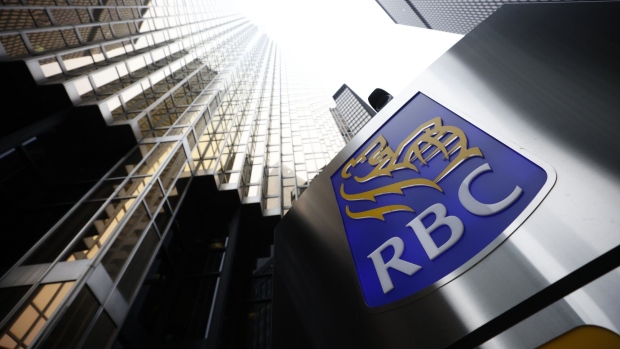
Royal Bank of Canada (RBC) headquarters in the financial district of Toronto, Ontario, Canada, on Thursday, Aug. 24, 2023.Cole Burston/Bloomberg

New York City pension funds are pushing Royal Bank of Canada to disclose more details on its clean energy funding.

The shareholder resolution filed by the New York City Employees’ Retirement System and Teachers’ Retirement System asks that the bank fully report a ratio of how its clean energy funding compares to its fossil fuel funding.

The pension systems have filed similar resolutions against some of the biggest U.S. banks including Citigroup, JPMorgan Chase and Morgan Stanley as part of efforts to push for more action on climate change.

City comptroller Brad Lander said in a statement Wednesday that banks aren't living up to their net-zero commitments.

“Despite all their talk, the big banks have made little progress in the energy finance transition over the past couple of years."

Lander said reporting on lending ratios would bring transparency to how well banks are stepping up. 

BloombergNEF estimates that in 2022, RBC provided 37 cents in clean energy funding for every dollar to fossil fuels, while globally, the ratio for banks stood at 0.73:1. 

The research group estimates that banks need to bring clean energy funding up to a 4:1 ratio by 2030 to limit warming to 1.5 degrees C.

RBC spokesman Andrew Block said in a statement that the bank is committed to its net-zero target, and is working with its clients to bring emissions down, not just get them off the books. 

"RBC Capital Markets intends to prioritize capital and support to clients who are actively engaged in the energy transition and executing or working toward robust transition plans."

He said the bank appreciates the opportunity to engage with shareholders on a shared desire to help ensure a successful transition to net-zero.

Stand.earth climate finance director Richard Brooks said in a statement that it is reckless for big banks like RBC to over-finance dirty energy and underfund clean alternatives after the hottest year on record.

"We commend New York City’s leadership, as the home of Wall Street, to push big banks to be part of the solution and stop exacerbating the problem."

This report by The Canadian Press was first published Jan. 31, 2024.


Hollywood's bank to the stars fined US$65 million for risk-control failures

City National Bank, the Los Angeles-based lender that’s owned by Canada’s largest financial institution, has been hit with a US$65 million civil penalty for failing to have proper risk controls. 

The Office of the Comptroller of the Currency said it will require the bank to take “broad and comprehensive corrective actions” to strengthen its internal practices, including its measures to stop money laundering. 

City National, which is known for its roster of Hollywood clients, is owned by Royal Bank of Canada, which acquired it in 2015. In the settlement with the OCC, RBC doesn’t admit to or deny the regulator’s findings.

RBC and City National didn’t immediately respond to requests for comment.


Desjardins to cut 30% of service centres, ATMs in next three years

The Desjardins Group says it will cut its service centres and ATMs by 30 per cent before 2027.

Spokesman Jean-Benoît Turcotti says the boards overseeing the 200-plus credit unions that comprise the organization made the decision after analyzing how frequently the outlets were used.

Desjardins says it will be up to those boards to decide which centres and ATMs in Quebec and Ontario will shut down, as they are in the best position to assess their communities' needs.

Turcotti says the figures, first reported by Le Soleil, could change depending on how many people use in-person services compared to digital platforms.

Desjardins says that by the end of last year its 669 service counters accounted for just one per cent of transaction volume, while its 1,559 ATMs accounted for three per cent.

In October, the Montreal-based financial services conglomerate said it would lay off nearly 400 people, or about 0.6 per cent of its workforce, due to what it described as the "current economic context."

This report by The Canadian Press was first published Jan. 31, 2024


Farmers anxious as carbon price carve-out bill faces uncertain future

Canadian farmers may have to wait months to find out if they'll owe thousands of dollars for carbon pricing this year, as a bill that would give them a new exemption remains mired in political conflict.

The legislation has been a four-year odyssey to date. 

Farmers seeking relief have argued there are few, if any, alternatives for them other than using natural gas to heat their barns and propane to dry their grain.

Kyle Larkin, executive director of the Grain Growers of Canada, said there is a lot of anxiety among farmers about what is going to happen.

"They thought we were going to get it passed in 2023, and here we are in 2024 with still a lot of politicking happening around the piece of legislation," he said.

Conservative MP Ben Lobb introduced Bill C-234 in 2022. It would implement an eight-year exemption from the carbon price for natural gas and propane used for heating farm buildings and drying grain. 

An earlier version of the bill that exempted only propane died before passing when the 2021 federal election was called.

Last spring, Lobb's bill passed in the House of Commons with support of all parties except the Liberals, without garnering much attention.

But in the fall, as the Senate began to deal with it, the Liberals announced a different carve-out. 

They exempted heating oil from the carbon price for three years after being heavily lobbied by Atlantic premiers and voters, who rely on heating oil the most.

That move — which the Liberals insist was meant to give people time to invest in electric heat pumps — was viewed by many as a political decision in response to Liberal poll numbers plummeting on the East Coast. 

Prime Minister Justin Trudeau and Environment Minister Steven Guilbeault both said there would be no more carve-outs.

But the Conservatives ramped up their efforts to get the exemption for farmers passed as well.

The battle got so heated in the Senate there were allegations on both sides of the debate of bullying and harassment, including right on the Senate floor.

Conservative Sen. Don Plett apologized after acknowledging he lost his temper when he berated some senators for their moves on the bill.

Independent Sen. Bernadette Clement said police advised her to leave her home temporarily when she received threatening phone calls.

The Senate ultimately passed the bill in December, but with amendments that limited the exemption to propane for grain drying, and for just three years.

Procedures require the House to now decide whether to agree to the Senate's amendments or not. But that process is more complex than it sounds.

On Monday, the moment the House of Commons resumed following the Christmas break, Lobb moved a motion to reject the amendments and have the bill sent back to the Senate in its original form.

The NDP are voting in favour of that motion, as they did for the bill. The Liberals, with a few exceptions, are voting against it, Guilbeault said Wednesday. 

"The prime minister and I have been very clear we don't want any new exemptions, and this would create a new exemption," Guilbeault said in an interview.

The Bloc Québécois are more coy. 

Both Leader Yves-François Blanchet and MP Yves Perron suggested Monday they might vote against the motion, saying they did not support the Conservatives' tactics in the Senate. 

On Wednesday, Blanchet said the party hasn't yet decided what it will do.

"We are completing our thinking on that and we will all know together when we vote," he said.

That vote could be weeks away, depending on how long the Liberals choose to keep putting up MPs to speak to it. Because it is a private member's bill, there is limited time allocated for that debate.

When or if a vote finally happens, if the motion fails, the House still has to have another vote to decide what to do with the Senate amendments, and that could start the whole process over again.

If the motion passes, the bill has to go back to the Senate for it to decide whether to let the will of the House prevail — which is the custom — or refuse.

Lobb said Wednesday he wants the motion to be voted on swiftly, but he acknowledged that if it fails the next steps are murky.

"It's quite a complicated process, to be honest with you," he said.

Larkin said farmers, meanwhile, are facing bills that can add thousands of dollars in costs per year. The Grain Farmers of Ontario said their farmers could pay $2.7 billion in carbon pricing by 2030 if there is no exemption.

Farmers are already exempted from paying the carbon price on gas and diesel used in farm vehicles and machinery because there are no alternatives for them to choose.

Larkin said the same arguments can be made for barn heating and grain drying. 

Some experts said during debate that farmers can invest in insulation and materials to lower their heating bills, and there are some higher-efficiency grain dryers available. But they all still require the use of fossil fuels.

Larkin said in eight years he expects technology may exist with alternatives, but it's not there now.

This report by The Canadian Press was first published Jan. 31, 2024.

With a file from Stephanie Taylor.


Meta, X, TikTok CEOs face U.S. Senate about protecting kids online

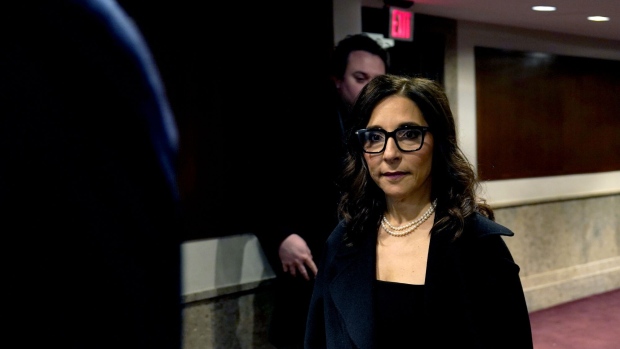
Linda Yaccarino, chief executive officer of X Corp., arrives to a Senate Judiciary Committee hearing in Washington, DC, US, on Wednesday, Jan. 31, 2024. Congress has increasingly scrutinized social media platforms as growing evidence suggests that excessive use and the proliferation of harmful content may be damaging young people's mental health. Photographer: Kent Nishimura/Bloomberg

Leaders from five social media platforms were admonished by lawmakers at a U.S. Senate hearing to discuss child online safety, with lawmakers assailing the companies’ past efforts to protect kids and pressing them to support new legislation.

The 21-member Senate Judiciary Committee called the chief executives of Meta Platforms Inc., X, Snap Inc., Discord Inc. and TikTok to Washington in an effort to hold them accountable for their platforms’ impact on teenagers and children.

“These companies must be reined in, or the worst is yet to come,” Senator Lindsey Graham, the top Republican on the committee, said. Singling out Meta chief executive officer Mark Zuckerberg, Graham said he had “blood on his hands,” detailing a story of a child who was a victim of sexual exploitation. “You have a product that’s killing people,” he added. His comments were met with an uproar of applause and cheers from advocates in attendance.

Congress has been under pressure to respond to mounting criticism of the spread of child sexual abuse material online and the tech companies’ failure to protect children from predators. They have also raised concerns about the effect social media use has on young people’s mental health.    

Senate Judiciary Chair Dick Durbin, an Illinois Democrat, convened the hearing to generate momentum for the committee’s legislation targeting online child sexual exploitation. The highly anticipated event kicked off with reporters, industry officials, and youth online safety advocates sitting in a packed Capitol Hill hearing room.

Durbin opened the session by playing a video of victims of online child sexual exploitation sharing their stories, blaming social media companies for failing to protect them and urging Congress to take action.

“I was sexually exploited on Facebook,” said one victim. “I was sexually exploited on Instagram,” another said in the video.

Durbin didn’t mince words, saying “Discord has been used to groom, abduct, and abuse children. Meta’s Instagram helped connect and promote a network of pedophiles, Snapchat’s disappearing messages have been coopted by criminals who financially sextort young victims.

“Their design choices, their failures to adequately invest in trust and safety, and their constant pursuit of engagement and profit over basic safety have all put our kids and grandkids at risk,” Durbin said in his opening remarks.

Lawmakers have examined children’s online safety in previous hearings, but Wednesday marks the first time Congress convened the executives to discuss the matter as part of a broader effort to move legislation forward. 

Durbin acknowledged Congress’s responsibility, which has repeatedly failed to set regulations on social media companies over the years.

Accusations have been growing that the companies knowingly allowed underage users on their sites and ignored concerns their products could be harmful to teens’ mental health. TikTok and Meta, which owns Facebook and Instagram, are facing lawsuits in California that claim the companies were negligent and ignored the potential harms their platforms created for teens. 

Zuckerberg, who was directly questioned more than most of his peers in more than two hours of testimony, pledged that Meta will work with lawmakers, parents and other tech companies to make those platforms safer for teenagers. Meta has faced significant pushback over the years for its child safety practices and Zuckerberg explained on Wednesday the many tools that Meta has rolled out to protect young people, including parental controls that set time limits on app usage, notifications to review privacy settings, and restrictions on interactions with adults.  

But the senators weren’t buying it. Zuckerberg, no stranger to the congressional hot seat, was aggressively grilled by several senators. Josh Hawley of Missouri asked the co-founder of Facebook if he would personally compensate victims of sexual exploitation on his sites.

“You’re a billionaire,” Hawley said. ”Will you set up a victim’s compensation fund with your money?”

Hawley asked Zuckerberg whether he’s apologized to victims and their families who have been exploited on his platforms — including the ones in the audience today. At Hawley’s urging, the CEO stood up, turned around and addressed the audience.

“I am sorry for everything that you have all gone through,” Zuckerberg said. “It’s terrible. No one should have to go through the things that your families have suffered, and this is why we invest so much, and are going to continue doing industry-leading efforts to make sure that no one has to go through the types of things that your families have had to suffer.”

The room grew tense as Senator Ted Cruz of Texas spoke over Zuckerberg when pressing him on Meta’s practices to combat child sexual abuse material.

“Do you want me to answer your questions?,” a visibly flustered Zuckerberg responded. “Then give me some time to speak then.”

Zuckerberg also faced questions about the fact that he rejected requests from his top leadership in 2021 to expand teams overseeing child safety and well-being, according to documents and emails released by Congress ahead of the hearing. In the hearing, Zuckerberg said Meta spent US$5 billion last year on trust and safety.

Zuckerberg touted Meta’s recent pitch for federal legislation that would require app stores to get parental approval for teens under the age of 16 to download an app. But Senator Amy Klobuchar of Minnesota, a fierce critic of the tech industry, threw cold water the idea of placing the onus of responsibility on app stores, not social media platforms.

Linda Yaccarino, the CEO of X, Snap’s Evan Spiegel and Jason Citron of Discord have never testified in Congress before Wednesday. Each of their companies has been under fire over reports of child sexual abuse material on their platforms, and the executives explained their methods to detect and remove such content. 

“Coincidentally, several of these companies implemented common sense child safety improvements within the last week,” Durbin said, generating a laugh in the room. TikTok CEO Shou Chew later took a subtle jab at his peers pointing to his company’s long-standing safety policies. “We didn’t do them last week.”

Yaccarino, who took on the CEO role at X last June, endorsed one of the committee’s bipartisan bills that has yet to reach the Senate floor for a vote. Known as the STOP CSAM Act, the bill intends to empower victims of child sex abuse by allowing them to sue social media companies. The bill would also make it easier for victims to request the removal of child sex abuse material from online platforms.

“As a mother, this is personal, and I share the sense of urgency,” Yaccarino said. “It is time for a federal standard to criminalize the sharing of non consensual intimate material.” 

Unlike other social media companies that focus on courting young users, Yaccarino highlighted X’s older customer base. “X is not the platform of choice for children and teens,” she said, adding that teens are automatically set to a default private setting. 

Yaccarino and Spiegel both voiced support for the Kids Online Safety Act, though the X chief stopped short of an endorsement, which Snap has done. The bill, championed by Senator Marsha Blackburn, a Tennessee Republican on the committee, and Senator Richard Blumenthal of Connecticut, would create legal requirements for tech companies to keep children safe from content that promotes violence, sexual exploitation, substance abuse, and eating disorders. 

“No legislation is perfect, but some rules of the road are better than none,” Spiegel said.

Yaccarino said the Kids Online Safety Act “should continue to progress and we will support the continuation to engage with it and ensure the protections of the freedom of speech.” 

TikTok, which is owned by ByteDance Ltd. of China, has also faced backlash over children’s safety and Chew defended his company’s practices to protect young users. 

TikTok “largely” supports the STOP CSAM act, Chew said, but the company has questions about how it would be implemented.

Hawley also voiced concerns about TikTok’s ties to its Chinese-owned parent company, reiterating calls for a nationwide ban on the popular app.

Chew last appeared before a House committee nearly a year ago. As part of Chew’s testimony, TikTok pledged to spend $2 billion this year on trust and safety globally, as the popular video service crosses 170 million monthly active users in the U.S.

President Joe Biden, tech industry whistleblowers, parents, and teenagers themselves have repeatedly called on Congress to improve safety online as evidence suggests social media use could be worsening youngsters’ mental health. Yet legislative proposals have languished as tech and digital rights groups lobby against them, characterizing many of the measures as ineffective and dangerous for user privacy and safety.  

“Why has it taken so long? Because Big Tech companies have an army of lobbyists and lawyers who have fought us every step of the way,” Blackburn said ahead of the hearing.