Monday, June 09, 2025


The Next World War Might Start in Brčko


Antiwar.com wasn’t established in response to Iraq or Afghanistan. It was founded in the 1990s by critics of NATO’s bombing campaign in the former Yugoslavia, a “humanitarian intervention” celebrated at the time, then airbrushed from polite memory. Hindsight is a cruel validator, especially in the Balkans. What critics feared – lost sovereignty, rekindled ethnic resentments, and the instability of foreign-engineered peace – has come to pass. Nowhere is that more obvious than in Republika Srpska (RS), the Serb-majority entity inside Bosnia and Herzegovina.

The Dayton Accords are unraveling; not with a bang, but with a smirk. In February 2025, Republika Srpska’s elected president, Milorad Dodik, was convicted by the State Court of Bosnia and Herzegovina on charges of “non-implementation of decisions” issued by the Office of the High Representative (OHR), and sentenced in absentia to a year in prison and a six-year ban from public office. 

The West insists that Bosnia’s laws be respected. But those laws are subject to veto by a foreigner – the unelected High Representative, Christian Schmidt, a German appointee, who is still issuing decrees like a Habsburg governor. The OHR was supposed to be a short-term babysitter, not Bosnia’s eternal stepfather. Yet here we are, three decades later, with a German bureaucrat still overruling local authorities as if he runs the place, which, technically, he does. 

The OHR’s unilateral authority illustrates Dayton’s fatal flaw: it replaced Yugoslav tyranny with foreign rule. Dodik’s “crime” was signing and enforcing laws passed by the RS assembly, in defiance of Schmidt’s veto; a rejection of the OHR’s legitimacy. 

Despite failed attempts by federal authorities to arrest him, Dodik laughed off the verdict with the flair of a Balkan George Costanza – convicted, banned, yet still holding court in government buildings, grinning as if the verdict never happened. The punchline? Interpol labeled his conviction “political” and refused to issue a red warrant, allowing him to travel freely to MoscowJerusalemBudapest, and Belgrade, where PutinNetanyahuOrbán and Vučić treated him like a fellow head of state. So much for the Dayton Accords.
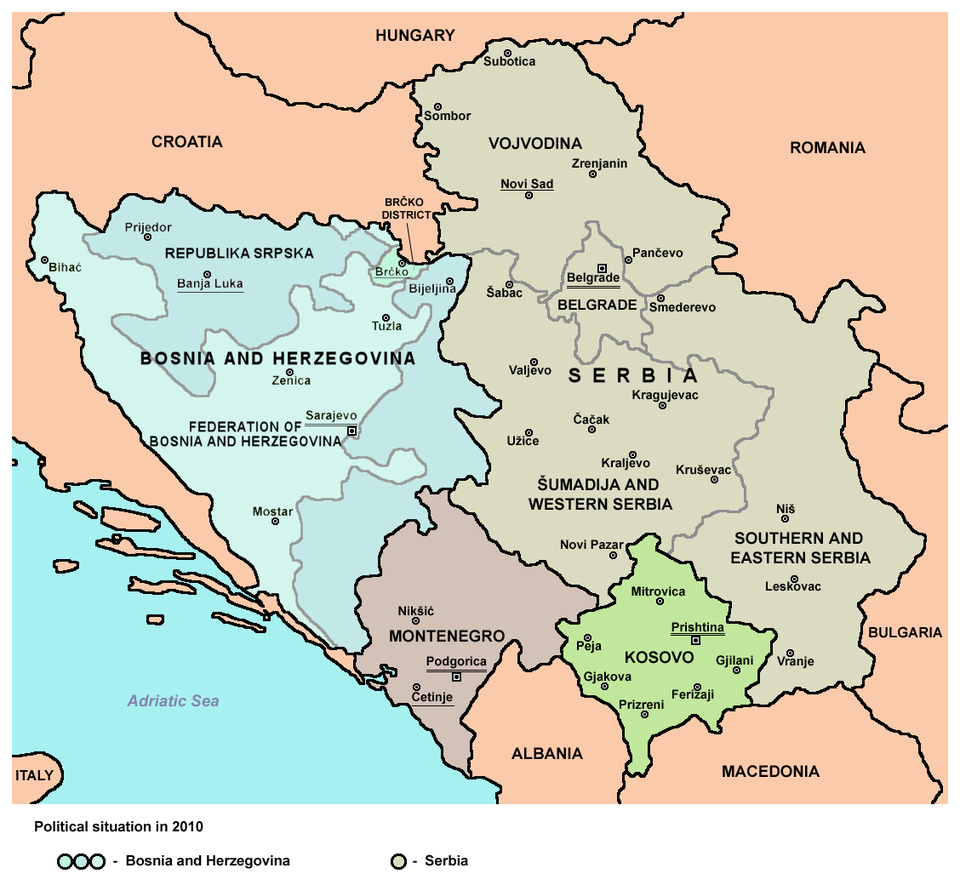
To understand what’s coming, it helps to understand what RS already is: a discontiguous, Serbian-run entity with its own government, aspirations, and alliances, steadily drifting towards Serbia. The northern half, anchored in Banja Luka, borders Croatia, while only the southern half borders Serbia. It shares a language, religion, and strategic culture with Belgrade, and increasingly sees itself not as a minority shareholder in a collapsing multinational federation, but as a temporarily quarantined province of Serbia. 

Dodik declared, “Our capital is Belgrade, not Sarajevo,” adding that “no one will prevent us [Serbs] from uniting because it is our right and our history. The last century was the century of Serbian suffering, and this century is one of Serbian unification.” Serbs living in the Republika Srpska are already eligible for Serbian citizenship. For all practical purposes, Republika Srpska is Serbia’s Donbass, its path a fragile fuse in a volatile land.

Brčko: Bosnia’s Ticking Time-Bomb, Brought to You by NATO

Brčko is Bosnia’s Zaporizhia, a vulnerable land bridge separating the northern and southern wings of Republika Srpska. It sits strategically along the Sava River, blocking a contiguous corridor connecting Banja Luka to Bijeljina and Serbia, while also serving as the only direct land route linking Sarajevo with the Federation’s Croat-populated Orašje and Odžak exclaves in Posavina Canton.
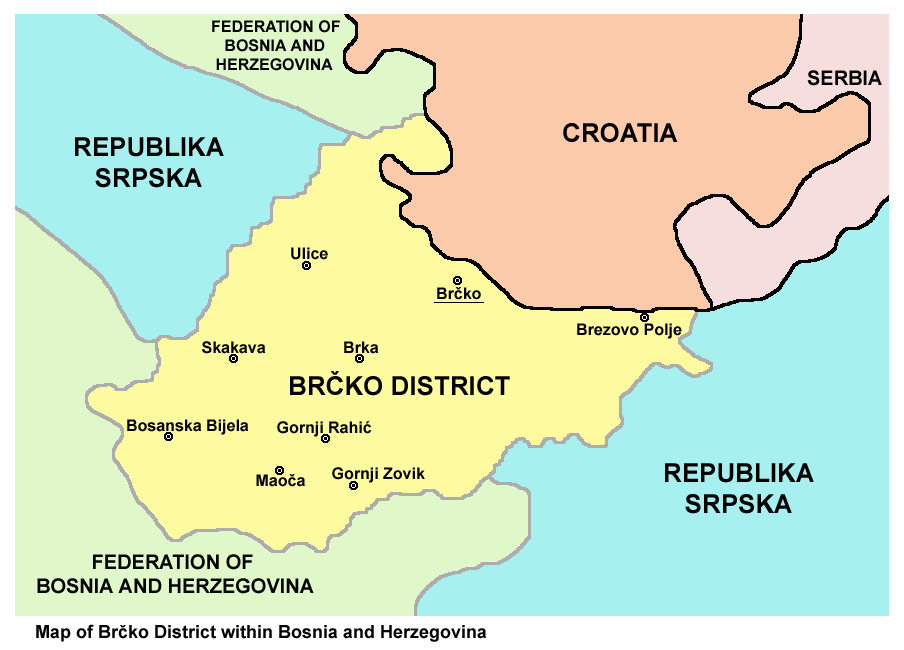
If Republika Srpska secedes, an outcome Dodik describes as inevitable, Brčko becomes existential. RS needs it to function as a unified state, Serbia needs it to offer logistical support, and Sarajevo needs it to maintain ties to Posavina and Croatia. Which is why the US and EU have fought to keep Brčko under international supervision. 

Technically, Brčko isn’t part of either the Federation or Republika Srpska. It is a self-governing district under the sovereignty of Bosnia’s federal authorities, created by the 1999 Final Arbitration Award to prevent either entity from seizing control. The architects installed a US-appointed Supervisor, answerable only to Schmidt, and likewise empowered to override laws, dismiss elected officials, and govern by decree – an arrangement that would make Thomas Jefferson reach for his musket. 

Brčko is held up as a model of multiethnic reintegration: shared schools, low crime, thriving businesses thanks to tax incentives. But the calm is purchased, not organic. The Supervisor’s influence, international aid, and customs exemptions have effectively bribed the local elites into submission. Brčko functions less as a reconciled community and more as a quarantined buffer; peaceful because it is sealed in amber. 

I was in Brčko just last week, and the mood was tranquil. The shops were open, families strolled the pedestrian promenade, and the town could’ve passed for any sleepy Balkan backwater. But then there were the EUFOR troops patrolling discreetly between the Croatian border post and the city center, a quiet reminder that peace here is curated, not organic; because nothing says “local governance” like Romanian “peacekeepers” tiptoeing through your town. Brčko resembled a performance maintained by surveillance, subsidies, and strategic ambiguity. Even the stillness felt stage-managed, like a ceasefire in a play that might resume after intermission. 

That curated calm is fragile precisely because the population is mixed. According to the 2013 census, the District had 83,516 residents: 42.4% Bosniaks, 34.6% Serbs, 20.7% Croats. The city center is Bosniak-majority; nearby rural areas lean Serb or Croat. This demographic tension, kept in check by foreign supervision, could quickly erupt if the balance breaks.

If the Berlin corridor was an artery through enemy territory, Brčko is a surgical suture holding incompatible organs together: fragile, inflamed, and temporary.  

Soviet and Yugoslav Mixology: Stirring Ethnic Chaos with a Straight Face

This is not just a Bosnian story. The Soviet Union and Yugoslavia gerrymandered internal boundaries to force ethnic groups into cohabitation to undermine nationalism. When these artificial superstates collapsed, those lines became international boundaries – and fault lines, creating ethnically driven border and corridor crises everywhere.

Kaliningrad, Russia’s Baltic exclave, is surrounded by NATO territory and separated from the rest of Russia by the Suwałki Gap. Nakhchivan, Azerbaijan’s western exclave, is separated from Baku by the Zangezur Corridor through Armenia. Central Asia has it even worse, with numerous Tajik and Uzbek exclaves reachable only by contested roadways through Kyrgyz territory. These aren’t just cartographic curiosities; they’re pressure cookers where geopolitics squeezes into geography and war rides shotgun.

Georgia’s breakaway regions, Moldova’s Pridnestrovia, Azerbaijan’s Karabakh wars, and Ukraine’s disintegration follow the same script. Ethnic cohabitation enforced by fiat often leads to war when the central authority collapses. Yet Western diplomats still cling to the fantasy that if you just insist on multiethnicity, it will magically happen. Bosnia is the last great petri dish. But the experiment has failed spectacularly.

The tragedy isn’t that the diplomats lost, but that the ethnic cleansers won. Even within Bosnia one town might be 90% Muslim, and the next 85% Croat, and the next, 95% Serb. The ubiquitous inter-ethnic violence of the 1990s created a new reality in which groups no longer inhabit the same space. “Serb Krajina” now has few Serbs. Republika Srpska has few Muslims. Things are quiet, not because people peacefully coexist, but because they no longer try. Congratulations: the horrific tragedy of ethnic cleansing worked so well that diplomats now dare call it peace. 

No one seriously believes Bosnia is a functioning state. Croats resent being outvoted by Muslims. Serbs want out entirely. Even parts of the Federation, like the isolated Croat-majority Posavina exclaves, could secede and join Croatia if given the chance, giving Croatia little reason to oppose RS secession. That said, tension remains high as Bosnia is surrounded by two NATO states and Serbia, now aligned with a bolder, vengeful Putin.

Kosovo and Crimea: The West’s Hypocrisy Swap Meet

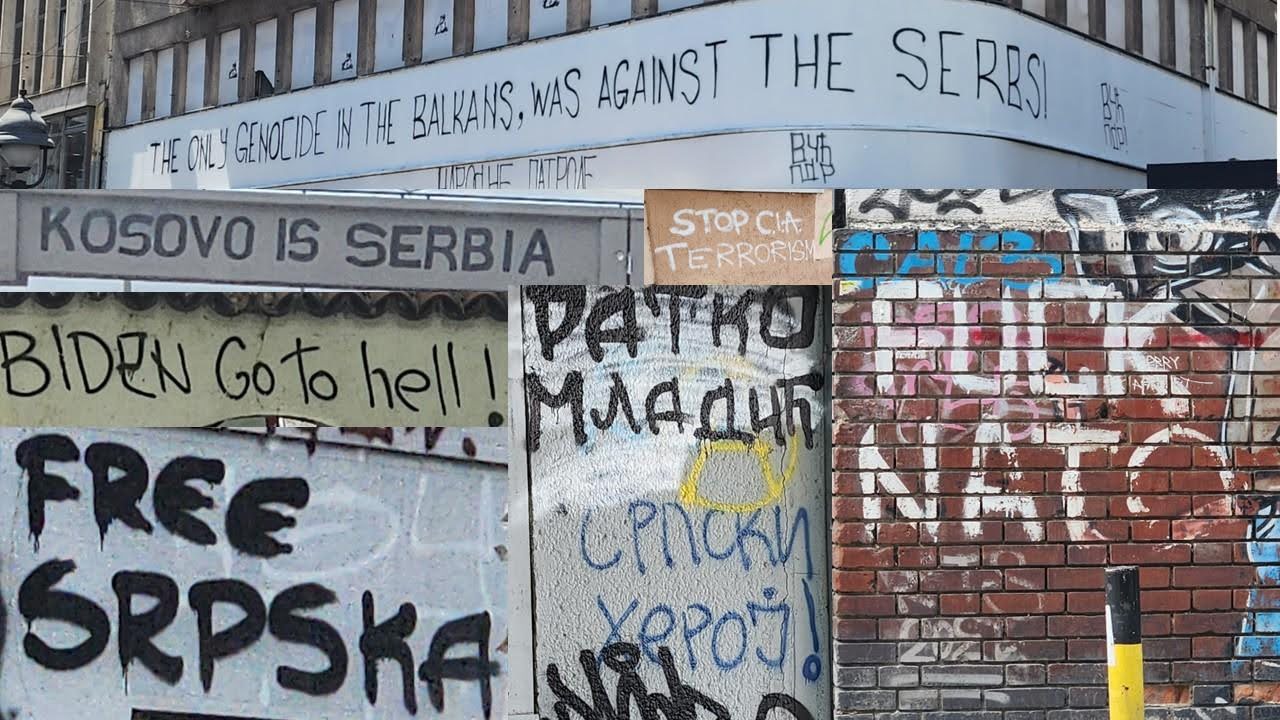
Putin often cites Kosovo as precedent, asking: if the US can steal Kosovo, why can’t we take Crimea? He views NATO’s 1999 bombing of Yugoslavia as a casus belli, and Kosovo’s independence as the original sin of the post-Soviet world order. Serbia’s dismemberment became Russia’s excuse for everything that followed. Kosovo is not just a precedent to Putin; it’s a primal wound. 

In Putin’s worldview, Serbia was to Yugoslavia what Russia was to the USSR: the dominant republic, home to the capital, and uniquely unassisted by the West after collapse. Everyone else got independence with a ribbon. Serbia, like Russia, got sanctions, scapegoats, and secessionists. 

And in May 2025, Sergei Shoigu, Secretary of the Russian Security Council, vowed that “Russia will support Republika Srpska,” raising the stakes should Sarajevo arrest Dodik or send troops to Banja Luka.

The West preaches about a “rules-based order,” but only applies it to its enemies. That is why Kosovo can secede, but RS cannot. It’s why Crimea is a scandal, but NATO’s 1999 bombing wasn’t. But Dodik is pushing back, “In a global sense, a new balance of power is being created and the collective West can no longer impose its rules.”

What happens next depends on whether this fiction is abandoned gracefully or ripped apart violently.

In the worst case, RS declares independence overnight. Bosnia’s government arrests Dodik or either side attempts to claim Brčko by force. NATO intervenes to “preserve peace,” and Russia steps in, citing its commitments to Serbia or simply seizing the chance to embarrass the West. A single checkpoint, one hothead, one NATO helicopter straying too far, and Brčko 2025 re-enacts Sarajevo 1914.
A better case, a negotiated partition, remains possible, but only if the US swallows its pride and embraces realism. There is still a narrow window. A deal brokered by Trump, Putin, Orbán and Vučić, four men the West loves to hate, might actually work. Only they, unburdened by European moral theater, could broker the kind of deal Balkan history respects: messy, cynical, and durable. Such a deal could acknowledge Republika Srpska’s independence, secure guaranteed transit for everyone through Brčko, and allow Croatia to annex Orašje and Odžak, paving the way for future Serbian unification. Europe would shriek, but everyone might go home alive. It would be ugly, transactional and effective, which is to say, the only kind of peace that ever holds. That would be a diplomatic revolution. But it requires the West to admit it failed.

The current path, a frozen conflict, is the likeliest. Dodik continues acting like RS is already independent. Bosnia continues pretending it’s not. Schmidt files more reports, the EU frets, and NATO quietly boosts its presence in Tuzla. No one wants to shoot first. But no one dares blink, ever…

Bosnia is full of monuments to tragedies we swore we’d never repeat. Yet here we are, preserving unity in name only, policing speech, and threatening jail for anyone who defies the OHR, whose very existence makes a mockery of “autonomy.” Dodik may be a blowhard, but he’s the only one not playing make-believe. The US embassy condemned his push for a “Greater Serbia” as a dangerous attack on Dayton, but offered no viable alternative. 

Pretending Bosnia and Herzegovina is a functioning country won’t prevent a war, but letting it break up just might. The West clings to a fantasy held together by foreign troops, ghost institutions, and maps no one believes. But fantasies break. And when they do, it won’t be Gaza or Donbass or Taiwan that pulls the pin. It will be Brčko: a sleepy river town where the roads all cross, the flags all clash, and one checkpoint too many could do what a bridge down the road in Sarajevo once did – ignite a chain reaction. But this time, the trenches are digital and the battlefield global. 

Joseph D. Terwilliger is Professor of Neurobiology at Columbia University Irving Medical Center, where his research focuses on natural experiments in human genetic epidemiology.  He is also active in science and sports diplomacy, having taught genetics at the Pyongyang University of Science and Technology, and accompanied Dennis Rodman on six “basketball diplomacy” trips to Asia since 2013.


LA REVUE GAUCHE - Left Comment: Search results for KOSOVO NATO

Listening to a Mother’s Horror with US Marshals: Perpetual Vicarious Trauma

Slave patrols, Texas Rangers, Border Patrol, ATF, Sheriff Departments, good cop/bad cops, unlimited immunity, Thin Blue Line, SWAT, Military Hardware, Israeli Occupation Forces trainings


LONG READ


The U.S. Marshals always get their kill shot — and a young man, young woman, and two five-year-old children swarmed by SOG, special operations group/gang, in Michigan, and the man bleeds out, the kids are in the house traumatized, and the mother is swarmed in the town getting groceries.

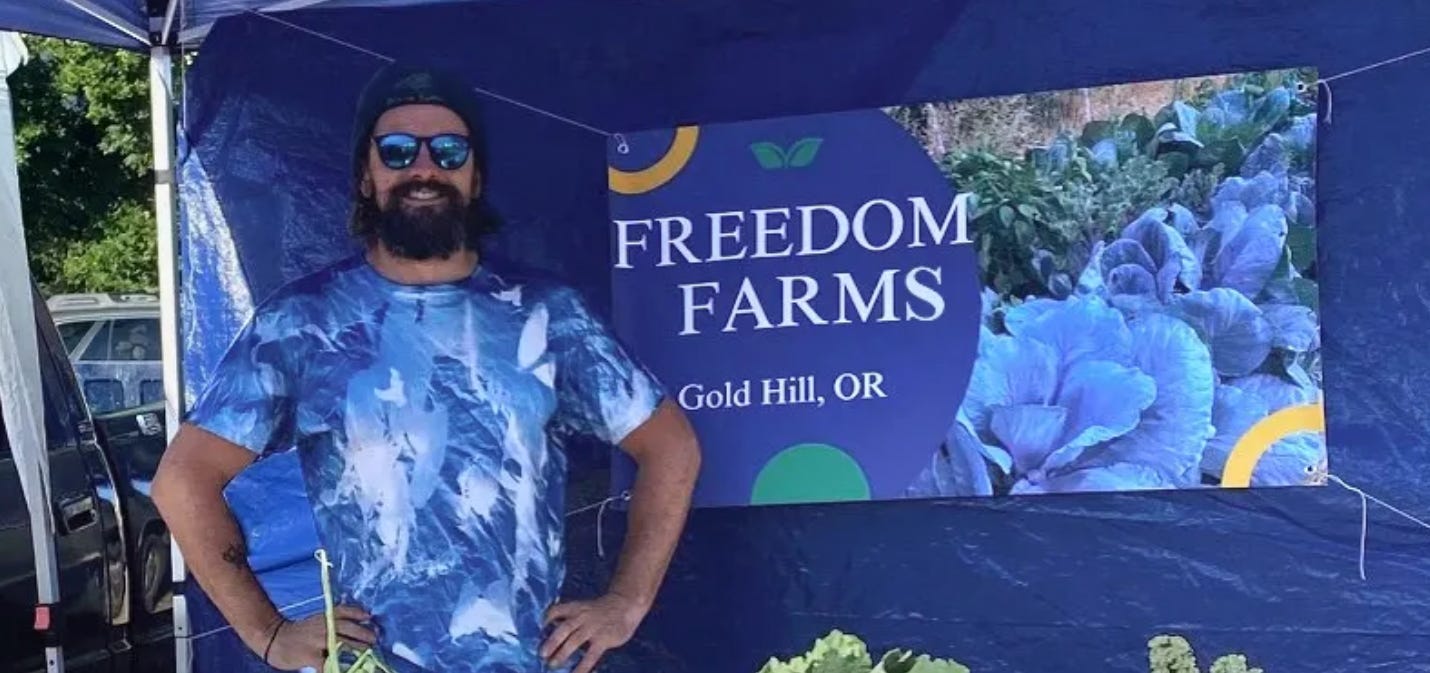
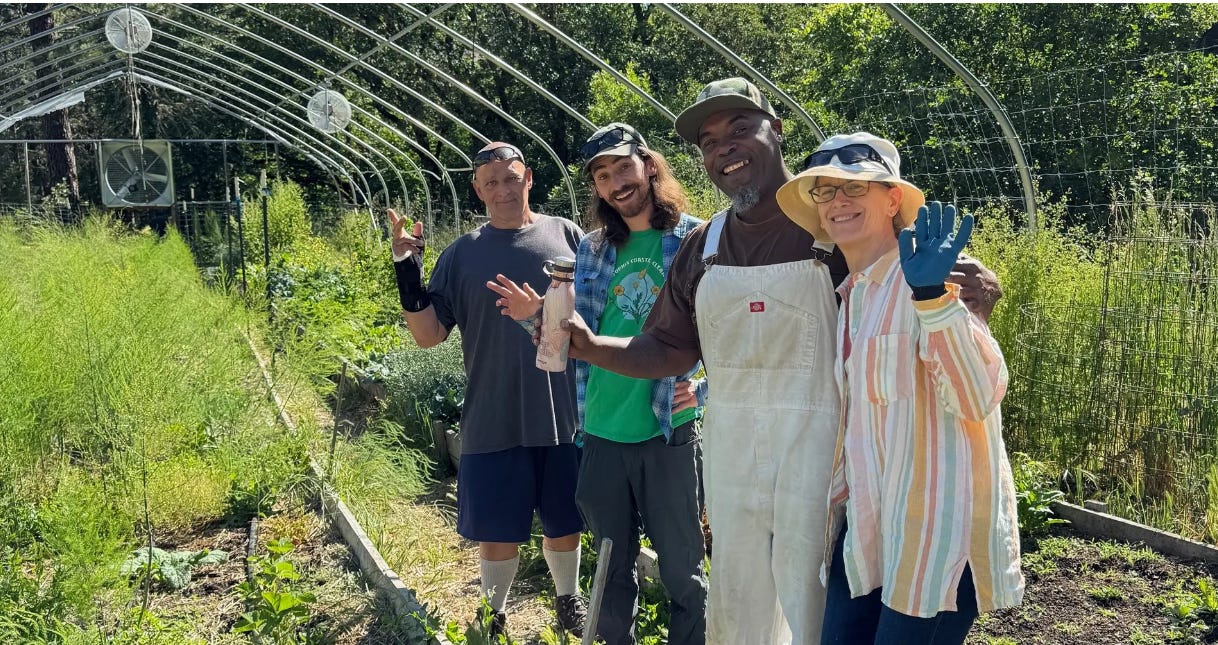
I expected to get deep into this Oregon organization’s amazing work, Freedom Farms, working with released inmates to heal, to get back into just plain normal breathing health, working the land, crops, harvests.


Lindsey McNab I met in Ashland, at a farmer’s market, May 2025, and it was just by chance I was there and headed over to the market. Sean was there as well as Lindsey.

This shit works, plying skin to earth, feeding seeds and seedlings, watching lettuce, asparagus, bok choy, potatoes, et al, grow. Yoga and listening circles, sun, rain, moles, dogs, chickens … Care Goddamn People.

Go see the images here at their website: Through the Lens of Giving: Freedom Farms in Pictures

Now, I prepped today’s hour interview by reading a story or two on Freedom Farms and Lindsey: KTVZ21

Participants like Lindsey McNab are proof of the program’s impact. Just six months ago, McNab was behind bars. Now, she spends her days tending to bok choy, turnips, and asparagus, work that she says is helping her find a new sense of purpose.

“I do struggle on a daily basis with[thinking] ‘oh my gosh, I lost 16 months, Like, what do I need to do to make up for that?’ And there isn’t really anything I can do.” McNab said. “Working in a setting like this and this type of work in general forces you and teaches you to be more present.”

McNab said her time in prison offered few moments of peace or even daylight.

“The jail where I was at, we didn’t really even get to see outside. There were no windows and things,” she said. “So that in and of itself creates a lot of emotional, mental anxiety and stress.”

She did get reintroduced to farming through a prison garden program, a rare but meaningful opportunity that helped her cope.

Upon release, she found Freedom Farms, a sanctuary for former inmates ready to rebuild their lives.

*****

But the reality of the Gestapo Criminal injustice system hit us early into the interview for my weekly radio show, Finding Fringe, to air July 2, KYAQ.org, 6 pm PST:

A story about Giovanni and his daughter.

Google the story, with Giovanni McNab and Lindsey and Michigan, and you get the warped story of the cops, the deputies, the overreach that ended up in the death of the young father Giovanni while his two children were inside the cabin as he bled out from a chest wound from a SWAT snipe weapon.

Lindsey was off the property getting groceries, and she was swarmed by U.S. Marshals and their cadre of police. She had no idea there were warrants out for their arrest, and alas, she had no idea what was happening to her two children and her husband.

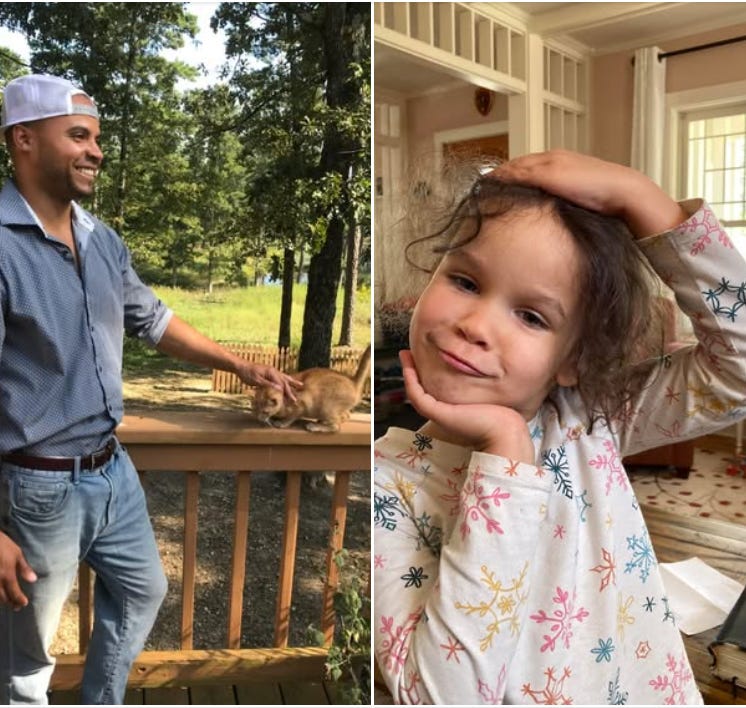
Here, from Jacob, Giovanni’s brother: August 10, 2023. Jacob McNab:

Giovanni McNab was a hero. He died last night protecting his daughter Hanna Joy McNab. He stood up against insurmountable odds, probably knowing full well that he would not come out of it alive. I am glad no law enforcement lost their lives in the standoff, they were just doing their duty. But my brother was doing his duty, the most sacred duty — a father protecting his child.

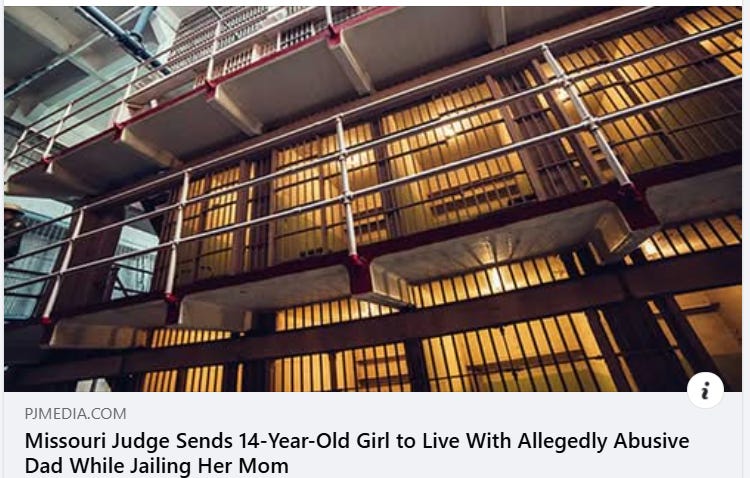
This is what Hanna told my brother, Gio, and his new wife Lindsey McNab. Hanna’s mother, Natalie Jones, and her boyfriend, Cory Lutzen (a convicted felon for abuse of an 18-month baby) physically, emotionally, mentally, and sexually abused Hanna. This was recurring abuse. Hanna’s forensic interview is currently on file at Kid’s Harbor but its release has been blocked by law enforcement because it may “endanger the child”… My brother did everything right by going through our country’s legal system, but the system in Missouri must work differently than other places. The most damning evidence to protect my niece, and my family were blocked by the judge. He was treated with hostility by all those who were supposed to protect children.

When he refused to give her up to her abusers, a federal parental kidnapping charge was placed on him and his wife, Lindsey.

Lindsey was arrested when she was out, probably getting groceries. Gio was killed in a standoff with police where a marshal was also injured but is in stable condition.

Hanna is currently being given back to the very people she herself named as her abusers.

I beg someone if you can do anything, please help me get custody of her. If you ask anyone about me, they will vouch for my character and that I will give her the love and care she needs. My wife and I will be able to provide her security and a future. Please don’t let my brother die in vain.

Please follow and share our page Save Hanna McNab.

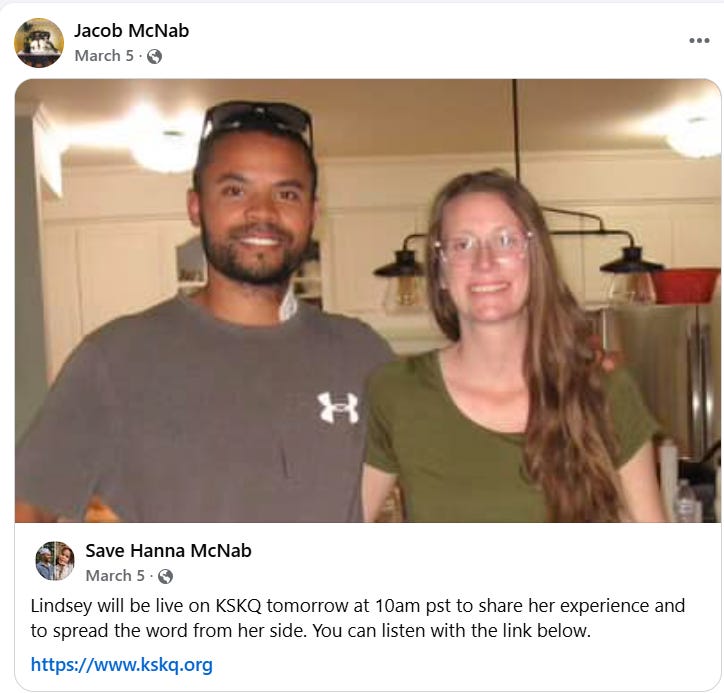
Here’s my interview June 4, 2025 of Lindsey. Hold onto your emotional seats. KYAQ.org will air it July 2, Finding Fringe: Voices from the Edge.

Yeah, what would you do, uh, if your baby was raped by your ex-wife’s boyfriend?

Look, listen to the show above. And, yes, this involves a minor, a child (three others), and the widow Lindsey has gone through several circles of hell — the husband’s ex-wife’s choice of boyfriends, the child’s rape by that boyfriend, the entire issue of parenting plans and children held as pawns sometimes. The criminal injustice system, social services, case workers, CASA, and the Kafka-esque levels of paperwork and bureaucratic rape this capitalism unleashes upon us.

No photo description available.

Here, a post on the Facebook pages around this case:

Stop leaving your kids with them.

Stop leaving your children with your boyfriends you barely know.

Stop letting your family members you don’t entirely trust watch them because it’s free.

If you have a gut feeling about someone who doesn’t sit right with you when it comes to your child, cut all ties with this person.

If your little one comes to you and says I don’t want to stay with a particular person …. do me a favor and listen to them.

~ Cody Bret

And ALWAYS believe them!! I myself would rather believe them and be wrong, than call them a liar and be wrong.

*****

Here’s one of the family members, a dog, the pigs shot: “This is Rigor. He also died protecting Hanna. Please show him love. My brother did not go to heaven alone.”

Ahh, the Show Me State:

Langston Hughes, Tennessee Williams, T.S. Eliot, Kate Chopin and Maya Angelou also hailed from the “show me” state. Edward Michael Harrington Jr. was an American democratic socialist. As a writer, he was best known as the author of The Other America. He was from the show me state too.


Missouri is filled with great stories – and has been home to many amazing storytellers, past and present. Since most of them have written more than one book, you can spend hours escaping into the worlds they created.

Mark Twain (1835-1910) was born in Florida, Missouri, and grew up in Hannibal. William Faulkner called him “the father of American literature” and he’s been lauded as “the greatest humorist this country has ever produced.” His some 25 books include classics like The Adventures of Tom Sawyer and its sequel, Adventures of Huckleberry Finn, which is often called the Great American Novel.

Laura Ingalls Wilder (1867-1957) was born in Wisconsin but spent her adult life in Mansfield. During the Great Depression, she began penning stories about her pioneering childhood, which became the classic Little House on the Prairie nine-book children’s series and 1970s television show.

T.S. Eliot (1888-1965) was born in St. Louis but moved to England at the age of 25. One of the 20th century’s major poets, he wrote at least 13 books and received the Nobel Prize for Literature in 1948. His Old Possum’s Book of Practical Cats, published in 1939, was adapted by Andrew Lloyd Webber as the basis for the musical, Cats.

Langston Hughes (1901-1967) was raised by his grandmother in Joplin until he was 13. After extensive travel during his adult years, he moved to Washington, D.C. where he published his first book of poetry, The Weary Blues, in 1924. Once he graduated from Lincoln University in Pennsylvania, he began writing in earnest, starting with his first novel, Not Without Laughter, which won the Harmon gold medal for literature. He is recognized as a major contributor of the Harlem Renaissance.

Robert Heinlein (1902-1988) was born in Butler. Known as the “dean of science fiction writers”, Heinlein wrote more than 30 books, some of which have been made into TV series and movies, including Stranger in a Strange Land and Starship Troopers. A never-before-published Heinlein novel was released in 2020 – 32 years after his death. The Pursuit of the Pankera was reconstructed from pages of an original manuscript and author’s notes with no additional filler, so the work is entirely his own.

Maya Angelou (1928-2014) was born Marguerite Johnson in St. Louis. A leading literary voice of the Black community, she wrote more than a dozen books of prose and poetry. Her best-selling account of her upbringing in segregated rural Arkansas, I Know Why the Caged Bird Sings, won critical acclaim in 1970.

George Hodgman (1959-2019) returned to his Missouri roots in Madison and Paris for his highly-praised, best-selling memoir Bettyville. The brutally honest, witty and poignant tale explores the experience of a gay cosmopolitan New Yorker returning to a small town filled with both affectionate and painful memories to care for a mother with dementia.

Alexandra Ivy calls Hannibal home and is perhaps the most prolific writer on our list. The New York Times and USA Today best-selling author, who also writes under the name Deborah Raleigh, has published more than 70 books in a wide variety of genres from paranormal and erotic romance to historical and romantic suspense.

Allen Eskens grew up in central Missouri before moving to Minnesota to earn degrees in journalism and law. He uses his education and 25 years of experience in criminal law to write thrilling crime mysteries. His eight books revolve around the events that occur in a small community as told by four main characters: Joe Talbert, Boady Sanden, Lila Nash and Max Rupert. Esken’s first novel, The Life We Bury, has been published in 26 languages.

Daniel Woodrell lives in the Missouri Ozarks where he has drawn inspiration for six of his nine novels and The Outlaw Album, a collection of 12 short stories. His novel, Winter’s Bone, tells the story of Ree Dolly and her quest to find her absent father in order to protect her two young brothers. Along the way she learns dark family secrets and her own determination. The book was adapted to film in 2010 and won American Film Institute Movie of the Year in 2011.

Jim Butcher is an Independence native who wrote his first book in The Dresden Files series – about a professional wizard named Harry Dresden who works as a private investigator and battles supernatural bad guys in modern-day Chicago – when he was 25. The New York Times best-selling author has written 17 books in the series, as well as a six-book fantasy series, Codex Alera.

Gillian Flynn is a Kansas City native with three novels to her credit – Sharp Objects, Dark Places, Gone Girl, and The Grownup – all of which have been adapted for film or television, plus The Grownup, an Edgar Award-winning homage to the classic ghost story. She was nominated for the Golden Globe, Writers Guild of America Award and BAFTA Award for Best Adapted Screenplay for Gone Girl.

Shayne Silvers writes supernatural thrillers – prolifically – from his home in Ozark. He has three separate intertwined series of books featuring Nate Temple, a wizard trying to protect St. Louis from monsters, myths and legends … Callie Penrose, a female spell-slinger in Kansas City … and Quinn MacKenna, a black arms dealer in Boston. The book count in his “Templeverse” stands at 40, and he has also authored a separate three-book vampire series.

Nearly one in five people in U.S. prisons—over 260,000 people—had already served at least 10 years as of 2019. This is an increase from 133,000 people in 2000—which represented 10% of the prison population in that year.

Go here and see just how corrupt and rudimentary the vindictiveness is in our criminal injustice system is:


Okay, you get the picture.

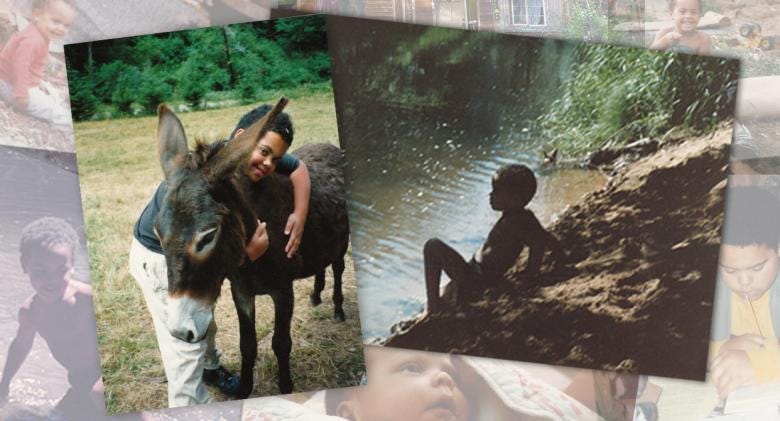
In the 1980s, Jordan Merrell often played in the wilderness near his home, located in the Siuslaw Forest in Lincoln County. Jordan was adopted by Carol Van Strum and husband Paul Merrell when he was days old in 1979. (Photos courtesy of Carol van Strum)

A letter a day for 15 years and 9 months

FINDING FRINGE | A mother’s love reaches into the bowels of the Oregon penal system to keep her son afloat

by Paul K. Haeder | 26 Aug 2020

I catch her in the early evening. Two black bears cross the road just before turning onto her driveway.

It’s light out, but I swear I saw two barn owls swooping into a stand of apple trees.

After I am finished with the interview, she will hold court under the stars with her two Sicilian donkeys, an old mare, a cockatiel, and Amazonian and Patagonia parrots as company. A black Lab mix, Mike, is the outdoor shadow, her sentinel.

A single-barrel 12-gauge shotgun is “just in case.”

I’m on her 20 acres about 30 miles by road from Waldport. The stories Carol Van Strum unfolds are a dervish through many labyrinths. She has been in the Siuslaw Forest for 46 years, but her origins start in 1940, at the dawn of World War II. Her roots were first set down in Port Chester in Westchester County, N.Y., with a father who went to Cornell and a mother who supported the whims and avocations of their five daughters.

At age 79, she’s spry enough to live in an old garage converted into a great room with a bedroom loft. Her cherub cheeks belie an Irish heritage.

I got to know Carol Van Strum a year ago when I was researching her life and her own research on deadly chemicals for another piece — about her fight against the chemical purveyors who sell their brew of toxins to cities, counties, and industries like the timber barons.


Carol’s raison d’etre is the nonfiction gem “A Bitter Fog: Herbicides and Human Rights,” written in 1983, which follows the case of Carol; her husband, Steve; four children (all of whom perished in a suspicious fire in their cabin); neighbors; residents of Lincoln County; and their battle with the state of Oregon, chemical companies, the EPA and the U.S. Forest Service.

The mother

The intrigue behind today’s meeting — her 40-year-old adopted son’s 15 years and nine months of incarceration for a crime he didn’t commit — ties into the many strands to her web of life that easily could be fodder for movie makers.

In the verdant wonder of the old homestead, we are about to crack open a pitiful story that turns into triumph.

The miscarriage of justice has to do with race, those without money getting the proverbial short shrift, and a punishment and retributive system of criminal injustice that wants a piece of flesh of every targeted human being.

Portraits of Jordan and Carol

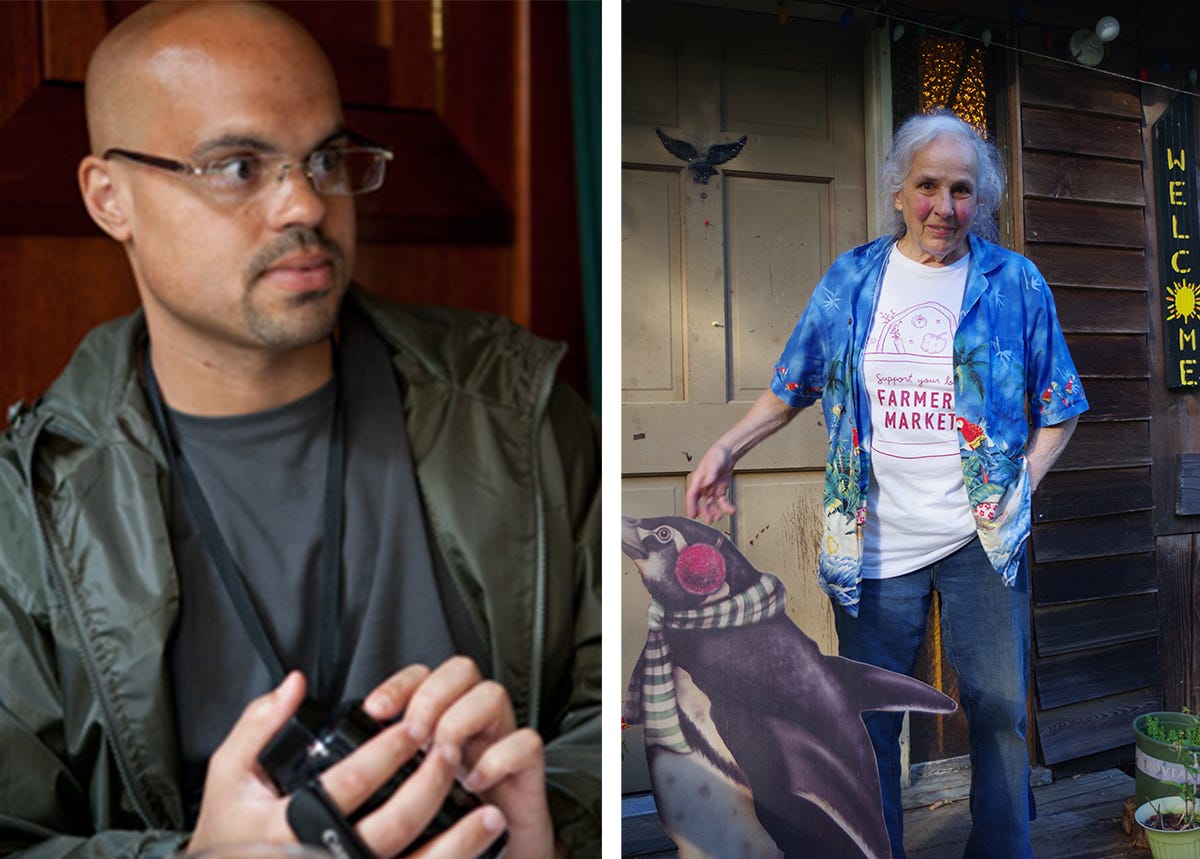
Left: Jordan Merrell after his release from prison. Right: Carol Van Strum at her home in Oregon.

Photo of Jordan courtesy of Carol van Strum. Photo of Carol by Paul K. Haeder.

I am here to drill down into Jordan Merrell’s figurative hell after being wrongly prosecuted and convicted of first-degree murder with a 25-to-life sentence under Oregon’s infamous Measure 11 mandatory minimum sentencing guidelines. That was 1995.

Carol and a second husband, Paul Merrell, adopted Jordan when he was days old in 1979.

“It was a doctor’s friend who had a friend who was a midwife who said she had an African American baby boy who would find it hard to be adopted. His biological mother did not want the baby.”

The young Jordan lived an amazing life with animals, under the big sky of the Central Oregon Coast Range, while communing with fruit trees and adventures splashing in streams while studying newts and chasing crazy barn owls. He played baseball and basketball at Waldport High School, one of two Black students at the school.

The son

The story of a 15-year-old boy accused of murdering an elderly man is rare indeed. Two 14-year-old girls accused him of the crime, even though, as Carol points out, Jordan wasn’t even near the man’s house — where the murder took place. Jordan possessed no bicycle, nor a vehicle, making it impossible for him to have been at the scene of the crime.

It turns out one of the girls had already attempted murdering her grandfather for money, but her juvenile record was sealed and denied as evidence in Jordan’s trial. His court-appointed defense attorney never called three witnesses who would have placed Jordan 3.8 miles away from the murder.

Jordan’s juvenile years were striated in Oregon’s MacLaren Youth Correctional Facility, and when he turned 18, his life transitioned into a veritable crisscrossing of cycling in and out of all of Oregon’s prisons.

Through the hellish trial, then the early days of anger tied to wrongful incarceration, transitioning into years surviving by grit and wits, and finally graduating to learn how to mete out an existence in a dangerous world, Jordan still lands back on the power of his mother keeping him centered.

He explains that Carol is his guardian angel. “Literally, she wrote me a letter every single day. If that’s not dedication, I don’t know what is,” he said.

Jordan’s stick-to-it-ness comes from his school of hard knocks and Carol’s perseverance, as well as this undying dedication to construct a lifeline of letters, books and visits.

“You know, when he went to his first adult prison, there were three Black men who took Jordan under their protection. These men showed him the ropes and protected him. Jordan was a pretty naïve and unworldly kid when he was arrested,” Carol tells me.

The rotten aspect of Jordan’s ordeal is tied to a broken legal system of bad cops, duplicitous district attorneys, incompetent defense lawyers and mean-as-cuss judges. Add to those many strikes against the teenage Draconian constraints of legislation like Measure 11.

“I didn’t have a defense really. He was a low-level lawyer,” Jordan said. “The way the legal system works is that it gets you into a corner and forces you to make a plea bargain.” At the first trial in Lane County, Jordan did not enter a plea agreement. “I didn’t know much then. The attorney tried to step down during my defense.”

The crisscrossing of incarceration blues started with Oregon Corrections’ intake center, then McLaren Youth Correctional Facility, then Oregon State Penitentiary.

In 2008, he won an appeal based on evidence of reasonable doubt — and because the attorney in the initial trial did not call witnesses.

“In this case we found that the defendant did not have effective counsel,” said Stephanie Soden, a spokesperson for the Department of Justice, at the time. “It’s a fairly common reason to petition for post-conviction relief, but it’s one that’s rarely granted.”

He got a new plea deal outside of Measure 11 minimums, and the sentence was reduced, with credit for time served. He tells me he did not think he could convince a new jury of his innocence.

“I assure you I didn’t do what I confessed,” he wrote in a letter to his mother. “But it’s time to move on.”

After his resentencing, he ended up in Lane County jail. More moves to Umatilla County Correctional Facility, Deer Ridge Correctional Institution in Madras, and then Pendleton to Eastern Oregon Correctional Institution, and his last stop was Columbia River Correctional Institution.

He wrote essays during his time inside the wire, and this is from one he wrote when he was “fresh out:”

I walked quickly down the access road that led to the prison — as though the guards might change their minds and chase me down. The immediate area was semi-rural, the access road leading to a small highway that meandered ten blocks or so onto a main boulevard running north and south through much of the city. … I walked for miles through the outskirts of the city, stopping at numerous small stores, none of which accepted my debit card.

Finally, I came to a gas station where the clerk informed me that not only could I not get change from the card, there were no pay phones for miles! This was my first experience of the kindness I had forgotten humans naturally have an instinct for. The clerk let me use his cell phone to call a friend, and when I couldn’t operate it (it appeared to have no buttons — I thought about trying to give it a voice command) he dialed it for me.

“Early on I was angry, but when I got out, I was euphoric,” Jordan tells me. He ended up at a community house in Multnomah County — run by Phoenix Rising Transitions.

He emphasizes being around other guys just like him who understood his way of thinking was powerful. Learning new responsibilities at the house helped Jordan during the four months of halfway house living.

“It was a good way of transitioning, as opposed to ending up in a studio apartment by myself. Outside, people were rude and disrespectful, so having guys from prison on the same page made it easier since we understood where we had come from and understood our way of thinking,” he said.

Jordan was halfway through the ninth grade when he was incarcerated. He knows how tough it is in prison finding role models.

“While inside, I focused on change. I had to create an imaginary role model. It all comes down to being logical about things — is doing A going to get me to B and so on.”

When he was released, on a few occasions Jordan ran into fellow inmates who still stayed “involved in all the illegal stuff. They hung onto what they did that got them to prison in the first place.”

His best friend (one of only a few friends) is back in prison because of this arrested development.

Stepping stones inside and outside the wire

I ask Jordan what he aspired to be in his formative years.

“I guess I wanted to be a cop,” he said chuckling. He ended up out of prison working on a degree in accounting, married and with a 10-year-old stepdaughter.

His life moved quickly in some regards once outside the wire — he met Julie three weeks after leaving prison. Then three weeks later they were married. They have been a couple since 2013.

Both Carol and Jordan tell me Julie is a smart woman who’s organized and into logistics. Jordan said they both had aspirations of doing a catering service — a mobile pub or bar. The pandemic has put all those ideas on hold. He’s at Mt. Hood Community College taking classes for an associate degree. He’s also out on parole for life. While he doesn’t report in person anymore, he’s still charged a $35 per month supervision fee.

He continually reminds me of evolution, transformation and transmogrification now that he has family and purpose.

“I have left that part of my life behind. I am now doing something specifically focused on getting my life together and being devoted to my family. I lost almost 16 years of my life. I had no job experience, no life experience (outside of prison), no education.”

He mentions this after I prod him about why he’s not writing more, maybe even penning a memoir.

Jordan admits it’s possible a book might come later. “Before, when I was writing, I was in a cell for 23 or more hours a day. I had nothing else to do, so I could focus on the writing. Maybe later when I am more established.”

Overt racism Jordan endured in high school, Carol relays, was both ugly and absurd. “The only Black kid at Waldport High School. He was pulled out of class by the principal and was accused of being a gang member. How absurd — a gang of one.”

Much of Carol’s novel, “Oreo File,” is patterned after a young boy like Jordan.

While looking at her heritage corn stalks, I am gifted several books by Carol, including “Cross Country ABC: 1957,” which is an account of the trip she and two sisters took across the U.S. in a 1956 Chevy station wagon.

Then another book, penned in 2009, “The Story of a Barn – Alder Hill.” The barn was on her property, built in 1930 by Elihu Buck, an engineer who had worked on the Gold State Bridge. This gem of a short book is a history of the property, the surrounding homesteads, the trees, the creamery in Waldport as well as the Red Octopus Theatre performances premiering in the barn.

This is part and parcel of Jordan’s history, too, as he knows the land and knows the place. It’s tied up in his spiritual and cultural DNA. The book written by Carol as a tribute to Jordan is another gem – “Northern Spy: A Good Apple Tree.” The book is like a narrative poem about Jordan’s life here, from adopted baby to child to teenager.

On the hillside by the house is a grand old apple tree called Northern Spy. It was planted at the birth of a beautiful child.

Then, later:

Far away behind steel and concrete, the boy grew into a man. His faithful dog Sherlock died without seeing him again.

Then, at the end of the book, Jordan is a 33-year-old man, with his wife, Julie:

There would be difficult times ahead, looking for work, finding a place to live, enrolling in college. But good times awaited, too. By summer there would be someone to share both happy times and tough ones. Someone to take home at last and show where he came from.

“That’s my redwood,” he would say. “I planted it. And see beyond it, that’s my apple tree.”

He would show her the river, the donkey, the gardens, the flowers, an iguana’s grave.

And come fall there would be buckets of apples from his beloved Northern Spy.

Paul Haeder's been a teacher, social worker, newspaperman, environmental activist, and marginalized muckraker, union organizer. Paul's book, Reimagining Sanity: Voices Beyond the Echo Chamber (2016), looks at 10 years (now going on 17 years) of his writing at Dissident Voice. Read his musings at LA Progressive. Read (purchase) his short story collection, Wide Open Eyes: Surfacing from Vietnam now out, published by Cirque Journal. Here's his Amazon page with more published work AmazonRead other articles by Paul, or visit Paul's website.