Friday, June 20, 2025


Island rivers carve passageways through coral reefs


Research shows these channels allow seawater and nutrients to flow in and out, helping to maintain reef health over millions of years.


Massachusetts Institute of Technology

River Reefs 

image: 

Pictured is a shallow reef flat channel on the atoll of Tetiaroa, located north of Tahiti in the Society Islands. MIT researchers have found evidence that island rivers may carve out paths in surrounding reefs over time, helping to maintain their health over millions of years. 


view more 

Credit: Remi Conte, Tetiaroa Society


Volcanic islands, such as the islands of Hawaii and the Caribbean, are surrounded by coral reefs that encircle an island in a labyrinthine, living ring. A coral reef is punctured at points by reef passes — wide channels that cut through the coral and serve as conduits for ocean water and nutrients to filter in and out. These watery passageways provide circulation throughout a reef, helping to maintain the health of corals by flushing out freshwater and transporting key nutrients.

Now, MIT scientists have found that reef passes are shaped by island rivers. In a study appearing today in the journal Geophysical Research Letters, the team shows that the locations of reef passes along coral reefs line up with where rivers funnel out from an island’s coast. 

Their findings provide the first quantitative evidence of rivers forming reef passes.  Scientists and explorers had speculated that this may be the case: Where a river on a volcanic island meets the coast, the freshwater and sediment it carries flows toward the reef, where a strong enough flow can tunnel into the surrounding coral. This idea has been proposed from time to time but never quantitatively tested, until now. 

“The results of this study help us to understand how the health of coral reefs depends on the islands they surround,” says study author Taylor Perron, the Cecil and Ida Green Professor of Earth, Atmospheric and Planetary Sciences at MIT. 

“A lot of discussion around rivers and their impact on reefs today has been negative because of human impact and the effects of agricultural practices,” adds lead author Megan Gillen, a graduate student in the MIT-WHOI Joint Program in Oceanography. “This study shows the potential long-term benefits rivers can have on reefs, which I hope reshapes the paradigm and highlights the natural state of rivers interacting with reefs.”

The study’s other co-author is Andrew Ashton of the Woods Hole Oceanographic Institution. 

Drawing the lines

The new study is based on the team’s analysis of the Society Islands, a chain of islands in the South Pacific Ocean that includes Tahiti and Bora Bora. Gillen, who joined the MIT-WHOI program in 2020, was interested in exploring connections between coral reefs and the islands they surround. With limited options for on-site work during the Covid-19 pandemic, she and Perron looked to see what they could learn through satellite images and maps of island topography. They did a quick search using Google Earth and zeroed in on the Society Islands for their uniquely visible reef and island features.

“The islands in this chain have these iconic, beautiful reefs, and we kept noticing these reef passes that seemed to align with deeply embayed portions of the coastline,” Gillen says. “We started asking ourselves, is there a correlation here?”

Viewed from above, the coral reefs that circle some islands bear what look to be notches, like cracks that run straight through a ring. These breaks in the coral are reef passes — large channels that run tens of meters deep and can be wide enough for some boats to pass through. On first look, Gillen noticed that the most obvious reef passes seemed to line up with flooded river valleys — depressions in the coastline that have been eroded over time by island rivers that flow toward the ocean. She wondered whether and to what extent island rivers might shape reef passes. 

“People have examined the flow through reef passes to understand how ocean waves and seawater circulate in and out of lagoons, but there have been no claims of how these passes are formed,” Gillen says. “Reef pass formation has been mentioned infrequently in the literature, and people haven’t explored it in depth.”

Reefs unraveled

To get a detailed view of the topography in and around the Society Islands, the team used data from the NASA Shuttle Radar Topography Mission — two radar antennae that flew aboard the space shuttle in 1999 and measured the topography across 80 percent of the Earth’s surface. 

The researchers used the mission’s topographic data in the Society Islands to create a map of every drainage basin along the coast of each island, to get an idea of where major rivers flow or once flowed. They also marked the locations of every reef pass in the surrounding coral reefs. They then essentially “unraveled” each island’s coastline and reef into a straight line, and compared the locations of basins versus reef passes. 

“Looking at the unwrapped shorelines, we find a significant correlation in the spatial relationship between these big river basins and where the passes line up,” Gillen says. “So we can say that statistically, the alignment of reef passes and large rivers does not seem random. The big rivers have a role in forming passes.”

As for how rivers shape the coral conduits, the team has two ideas, which they call, respectively, reef incision and reef encroachment. In reef incision, they propose that reef passes can form in times when the sea level is relatively low, such that the reef is exposed above the sea surface and a river can flow directly over the reef. The water and sediment carried by the river can then erode the coral, progressively carving a path through the reef. 

When sea level is relatively higher, the team suspects a reef pass can still form, through reef encroachment. Coral reefs naturally live close to the water surface, where there is light and opportunity for photosynthesis. When sea levels rise, corals naturally grow upward and inward toward an island, to try to “catch up” to the water line. 

“Reefs migrate toward the islands as sea levels rise, trying to keep pace with changing average sea level,” Gillen says. 

However, part of the encroaching reef can end up in old river channels that were previously carved out by large rivers and that are lower than the rest of the island coastline. The corals in these river beds end up deeper than light can extend into the water column, and inevitably drown, leaving a gap in the form of a reef pass. 

“We don’t think it’s an either/or situation,” Gillen says. “Reef incision occurs when sea levels fall, and reef encroachment happens when sea levels rise. Both mechanisms, occurring over dozens of cycles of sea-level rise and island evolution, are likely responsible for the formation and maintenance of reef passes over time.”

The team also looked to see whether there were differences in reef passes in older versus younger islands. They observed that younger islands were surrounded by more reef passes that were spaced closer together, versus older islands that had fewer reef passes that were farther apart. 

As islands age, they subside, or sink, into the ocean, which reduces the amount of land that funnels rainwater into rivers. Eventually, rivers are too weak to keep the reef passes open, at which point, the ocean likely takes over, and incoming waves could act to close up some passes.

Gillen is exploring ideas for how rivers, or river-like flow, can be engineered to create paths through coral reefs in ways that would promote circulation and benefit reef health. 

“Part of me wonders: If you had a more persistent flow, in places where you don’t naturally have rivers interacting with the reef, could that potentially be a way to increase health, by incorporating that river component back into the reef system?” Gillen says. “That’s something we’re thinking about.”

This research was supported, in part, by the WHOI Watson and Von Damm fellowships. 

###

Written by Jennifer Chu, MIT News

Paper: “Rivers influence reef pass formation in the Society Islands”

https://agupubs.onlinelibrary.wiley.com/doi/10.1029/2025GL114881 


Stable cooling fostered life, rapid warming brought death: scientists use high-resolution fusuline data reveal evolutionary responses to cooling and warming


Nanjing University School of Earth Sciences and Engineering
Fig. 2 The Late Paleozoic Ice Age, major volcanic events and fusuline diversity changes from early Visean to end-Permian showing correspondence (Zhang et al., 2025) 

image: 

Fig. 2 The Late Paleozoic Ice Age, major volcanic events and fusuline diversity changes from early Visean to end-Permian showing correspondence (Zhang et al., 2025)

view more 

Credit: The Late Paleozoic Ice Age, major volcanic events and fusuline diversity changes from early Visean to end-Permian showing correspondence (Zhang et al., 2025)


The Earth is rapidly warming — but did you know? Similar climate upheavals over 300 million years ago once triggered massive fluctuations in marine life.

Recently, a research team led by Prof. Shuzhong Shen of Nanjing University published a major finding in Science Advances, revealing for the first time — through high-precision big data — that during the Late Paleozoic (approximately 340 to 250 million years ago), global cooling promoted rapid evolution and diversification of marine life, while abrupt warming, especially that induced by volcanic eruptions, led to mass extinctions.

The focus of the study is an ancient group of single-celled marine organisms called fusuline foraminifera. Though small in size, they were extraordinarily abundant (Fig. 1), once dominating seafloor ecosystems and earning the nickname “carbonate rock factories.” The team found that fusuline underwent two major diversification bursts and four extinction crises over a span of more than 91.8 million years (Fig. 2). Notably, after the large-scale volcanic eruptions by the large Emeishan Igneous Province around 260 million years ago, large fusuline nearly disappeared. Later, during the end-Permian supervolcanic event about 252 million years ago, this vast lineage came to a complete evolutionary halt.

Alarmingly, the current rate of global warming caused by human activities far exceeds the warming rates associated with both the Emeishan basalts and the end-Permian volcanic events. Today’s marine ecosystems may be facing a similar test of survival as once experienced by the fusuline.

One of the highlights of this study is the construction of the world’s first high-resolution (<45,000 years) diversity curve for fusuline foraminifera, made possible by the integration of supercomputing and AI algorithms. The analysis combined data from 299 stratigraphic sections and over 2,000 species, applying the quantitative stratigraphic CONOP supercomputing algorithm to achieve an unprecedentedly detailed reconstruction of this key fossil group. Cyclicity stratigraphic method has also been carried out to disclose the changing trend of the diversity curve.

This research not only unveils the critical role of climate change in driving biological evolution but also offers vital scientific insights for understanding biodiversity changes under today’s global warming. Prof. Shen emphasizes: “Mitigating climate change and protecting ecosystems is an urgent task of our time.”

The paper titled “Global cooling drove diversification and warming caused extinction among Carboniferous-Permian fusuline foraminifera” was published in Science Advances on June 20. The study’s co-first authors are Zhang Shuhan and Zhao Yingying, both PhD students at Nanjing University. Professors Shi Yukun and Shuzhong Shen are corresponding authors. The research was supported by a Major Program of the National Natural Science Foundation of China, the Deep-time Digital Earth (DDE) Big Science Program, and a major science and technology open collaboration platform project from Jiangsu Province.

Fig. 1 Fusuline limestone from the Pennsylvanian (Late Carboniferous) in Kansas, USA

(By James St. John, https://commons.wikimedia.org/w/index.php?curid=35683145)

Credit


New research casts doubt on ancient drying of northern Africa’s climate


Brown University


PROVIDENCE, R.I. [Brown University] — A study led by researchers from Brown University finds that rainfall patterns across northern Africa remained largely stable between 3.5 and 2.5 million years ago — a pivotal period in Earth’s climate history when the Northern Hemisphere cooled, and places like Greenland became permanently glaciated.

The new findings, published in Science Advances, challenge long-held interpretations of the climate history of northern Africa, which had suggested that the region dried out considerably during this period. The timing coincides with the appearance of the first known member of the genus Homo in the fossil record, leading to speculation that this drying may have played a significant evolutionary role near the dawn of the human lineage.

But compared to previous studies, this new study analyzed a more direct proxy for rainfall — leaf waxes produced by terrestrial vegetation — and came to a new conclusion.

“Plants produce these waxes during the summer growing season, so they provide a direct signal of summer rainfall over time,” said Bryce Mitsunaga, who led the research while completing his Ph.D. in Brown’s Department of Earth, Environmental and Planetary Sciences and is now a postdoctoral researcher at Harvard. “We found that precipitation cycles didn’t change much even as all these larger changes in temperature and glaciation were happening.”

Prior evidence for drying across northern Africa came from dust deposits found in ocean sediment cores taken off the West African coast. Ocean sediments preserve fossil microorganisms, plant matter and other markers that help scientists to track climate through deep time. Researchers had found that the amount of continental dust found in the samples increased dramatically in samples dated to between 3.5 and 2.5 million years ago, a period known as Pliocene-Pleistocene transition. That increase in dust was interpreted as an expansion of the Saraha Desert brought on by decreasing summer monsoons.

For this new study, the researchers meticulously analyzed leaf waxes in the same cores in which the dust evidence was found. Leaf waxes preserve the isotopic signature of the water plants absorb as they grow, and that signature varies with the amount of rain that falls. Rainwater generally contains two forms of hydrogen: light hydrogen with no neutrons and a heavier form with one neutron. Rainwater with heavier hydrogen falls first. So leaf waxes with a higher ratio of light hydrogen are indicative of more sustained rains.

The leaf wax analysis revealed no significant drying trend at the Pliocene-Pleistocene boundary. Patterns of summer rainfall remained largely stable on either side of the boundary, indicating that African rainfall patterns were largely unaffected by changes in global climate — decreasing temperature in increasing Northern Hemisphere glaciation — that were occurring at the time.

The research suggests that the dust found in prior studies is attributable to something other than changes in rainfall — perhaps changes in wind patterns or intensity.

The findings have a range of implications for understanding both past and future climate, the researchers say.

Carbon dioxide levels at the Pliocene-Pleistocene boundary are thought to be similar to where they are today, although heading in opposite directions (increasing today and decreasing then).

“If we can see how global climate influenced what the water cycle is doing at that point in history, it could inform predictions of the future rainfall in this already water-stressed region,” Mitsunaga said.

Jim Russell, a professor in Brown’s Department of Earth, Environmental and Planetary Sciences and senior author of the study, said the results raise new questions about the climate history of northern Africa and its implications for human evolution. The timing of the supposed African drying event coincides with the appearance in the fossil record of early hominid ancestors including homo habilis and Paranthropus, leading to speculation that dryer conditions may have driven adaptations for upright walking in a new foraging environment. But the lack of a drying trend at the Pliocene-Pleistocene boundary complicates that story.

“This calls for new research to determine when and why African climate and environments transitioned to a drier state and new theories to understand our ancestry,” Russell said.

Additional co-authors of the research were Amy Jewell, Anya J. Crocker and Paul Wilson from the University of Southampton, Solana Buchanan from Rice University, and Timothy Herbert from Brown. The research was funded by the National Science Foundation (1322017, 1338553, 1826938, DGE-1144087), the Natural Environment Research Council (NE/X000869/1 and SPITFIRE DTP studentship), a Royal Society Challenge grant (CHG\R1\170054) and a Wolfson Merit Award (WM140011).


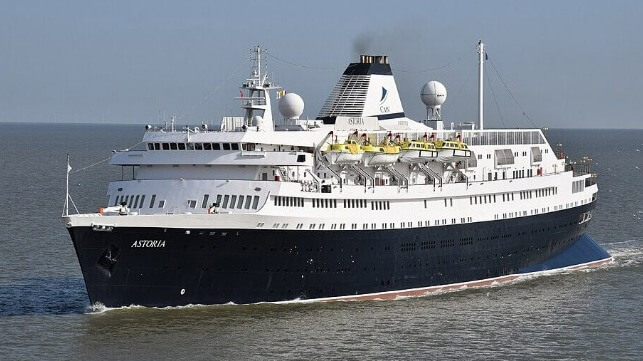
Recycling Firm Buys Astoria, Famous 77-Year-Old Liner Turned Cruise Ship

Astroia cruise ship
Liner Stockholm turned cruise ship Astoria seen in 2017 for her last operator, the UK's CMV (Niels Johannes photo - CC BY-SA 4.0)

Published Jun 19, 2025 6:24 PM by The Maritime Executive


A Belgium recycling firm confirmed that it was the sole bidder at the June 17 auction for the famed liner Stockholm which spent its final years operating as the cruise ship Astoria (15,000 gross tons). The ship which earned a place in history for its 1956 collision with the Italian passenger liner Andrea Doria, is expected to leave its final port, Rotterdam, as early as next month.

An auction was held in the Netherlands on June 17 and Galloo was the sole bidder. Reports are the company offered the minimum opening bid of €200,000 ($230,000) and it was accepted. The company however must also settle outstanding port fees before it will be able to remove the ship.

The Astoria was towed into Rotterdam in December 2020 months after the ship was laid up during the COVID-19 pandemic. It had been operating under charter to a UK firm, Cruise & Maritime Voyages (CMV), which filed for bankruptcy during the pandemic. The ship reverted to its Portuguese owners which by that time had also gone bankrupt with the ship controlled by the banks. It was sold to investors who called for restoring the famed ship.

Built in 1948 as one of the first post-World War II passenger liners, her size was limited by the available shipyards. Introduced as Stockholm of the Swedish American Line she was a workhorse passenger-cargo ship that filled an important gap till larger liners could be built in the 1950s and 1960s. However, it was the faithful night of July 25, 1956, that sealed her fame as she was outbound from New York to Sweden. Off Nantucket in patchy fog, she collided with the Italian luxury liner killing more than 50 people and causing the Andrea Doria to sink hours later. 

Stockholm although badly damaged survived and in the 1960s became an East German holiday ship for the working classes. Retired in 1985, she was in nearly original condition and cheated the scrappers instead being sold for an extensive reconstruction in Italy. She was stripped to the steel and returned to service as a cruise ship in 1994 operating during the following years as Italia IItalia PrimaValtur PrimaCaribeAthenaAzores, and finally in 2016 Astoria. It was rumored on several occasions that she was scheduled for retirement including in 2020.

Acquired in 2021 by an investment group, the ship languished as they sought to develop a plan and then offered it for sale. Sale to scrappers had been rumored more than once. In 2024, two YouTubers snuck aboard the ship and videoed her condition which showed decay from a lack of maintenance as well as the historic bones of a now 76-year-old ship.

Galloo reports it plans to move the ship as early as July to a recognized recycling yard in Ghent. It notes the ship which is 160 meters (525 feet) in length with accommodations for over 500 passengers will account for more than 12,000 tonnes of material, including ferrous and non-ferrous metals, wood, glass, and plastics. It expects 97 percent will be recycled into renewable raw materials.
 

Top photo by Niels Johannes - CC BY-SA 4.0


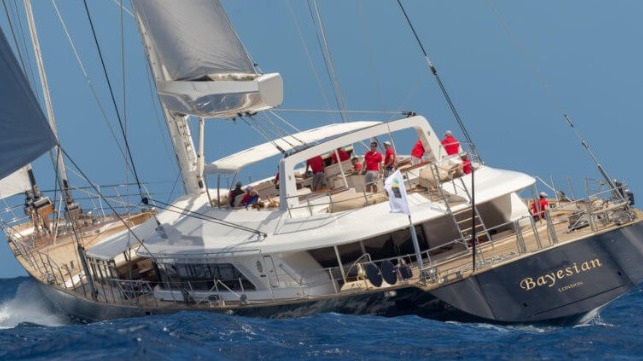
Lost Superyacht Bayesian Will be Raised This Weekend

Bayesian
Bayesian (file image courtesy Perini Navi)

Published Jun 19, 2025 5:27 PM by The Maritime Executive


The lost sailing yacht Bayesian is on track to be raised back to the surface this weekend, ending a complex salvage process that claimed the life of a diver last month. 

Bayesian suffered a knockdown and sank off Sicily in a severe squall in August 2024, claiming the lives of billionaire owner Mike Lynch, his daughter and five other people. A criminal investigation into the cause of the casualty is under way, and as part of that process, the vessel is being raised from the bottom at a cost of about $27 million. 

To bring Bayesian back up, salvors are using a crane barge, dive teams and ROVs. The team has passed slings underneath the vessel and plan to use this rigging to hoist the yacht to the surface as early as Saturday. 

The operation was expected to take longer, but when salvors removed the yacht's gigantic mast with a diamond wire cutting tool, the wreck  - which was resting on its side - rotated partly upright on its own. This made it easier to pass messenger lines under the hull and run through steel lifting slings to prepare for hoisting. 

Once the vessel has been hoisted out of the water, it will be delivered to nearby Termini Imerese and placed in a storage cradle. After it is drained, prosecutors and plaintiffs' attorneys will be able to inspect it. Among other details, the authorities will be looking at whether the vessel's hatches were closed before the sinking - which may have bearing on pending criminal cases against three crewmembers. 

The operation has been challenging - and tragic. Diver Rob Huijben lost his life during an operation to remove the yacht's boom, and officials suspect that a hydrogen explosion from an underwater cutting torch may be to blame. The fatality forced a one-week stand down, delaying operations and prompting salvors to use ROVs instead of divers where possible. 

HAUGHTY HEGEMONY


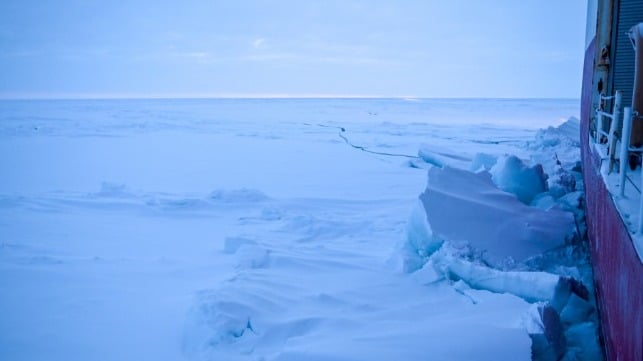
Op-Ed: U.S. Seabed Mining Order Could Undermine Protections for Antarctica

Antarctic icebreaking
File image courtesy USCG

Published Jun 18, 2025 11:18 AM by The Strategist


[By Doaa Abdel-Motaal

An executive order by the United States in April authorizing expanded engagement in seabed mining reflects shifting approaches to the governance of critical mineral resources in areas beyond national jurisdiction. As legal frameworks evolve beneath the sea, questions are likely to follow about their implications on land.

The order was framed as a response to supply chain and energy security concerns, but it may also influence how other internationally governed spaces—particularly Antarctica—are viewed in the context of long-standing prohibitions on mineral extraction.

At the heart of this issue lies the United Nations Convention on the Law of the Sea (UNCLOS), the legal bedrock for maritime governance. Among its provisions is the creation of the International Seabed Authority (ISA), charged with regulating mineral-related activities in the international seabed area beyond national jurisdiction. To date, the ISA has issued more than 30 exploration contracts, authorizing states and companies to scout for minerals including cobalt, manganese and rare earths.

Crucially, no commercial mining has begun. That next step hinges on the adoption of a long-debated mining code: a comprehensive legal and environmental framework still under negotiation.

The US has not ratified UNCLOS, though it did sign a 1994 revision designed to address concerns about seabed mining. But it has not been ratified, despite bipartisan support from defense, business and environmental stakeholders.

Nevertheless, on 24 April, President Donald Trump signed an executive order directing federal agencies to facilitate seabed mining activities by US entities. The order invokes domestic legislation, such as the Deep Seabed Hard Mineral Resources Act, to streamline exploration and permitting processes. The rationale is rooted in securing critical minerals for energy and economic resilience, especially in light of supply chain competition.

China has raised objections. The Chinese Foreign Ministry expressed concern that the move could be inconsistent with international legal norms and might affect the broader negotiations underway at the ISA. China, itself an ISA exploration contractor, emphasized the importance of maintaining a collaborative approach to shared global resources.

This brings us to Antarctica. The continent is governed by the Antarctic Treaty System, whose 1991 Protocol on Environmental Protection explicitly bans mineral resource activity ‘other than scientific research’.  Article 7 sets the prohibition, while Article 25 carves out a conditional ‘review clause’.  Article 25 provides that the mining ban may be reviewed after 50 years from the protocol’s entry into force—that being in 2048, but only if certain stringent conditions are met. These include a request by any consultative party and agreement by three-quarters of the consultative parties to convene a review conference.

This clause, often referred to as the US’s walk-out clause, was included to accommodate US concerns about long-term access to resources. It offers a mechanism for future reconsideration, should geopolitical or economic priorities evolve. Recent developments in seabed mining may offer a precedent—intended or not—that determine the future of the mining ban in Antarctica.

The point is this: if unilateral actions become the norm in managing global commons such as the deep seabed, how resilient is the consensus that protects Antarctica? Both are areas beyond national jurisdiction, governed by international or plurilateral agreements that rely heavily on political cohesion. When strategic imperatives dominate, cooperative stewardship may come under strain.

In both domains, the environmental risks are significant. Deep seabed ecosystems remain largely uncharted; mining could cause irreversible impacts. Antarctica, already vulnerable to climate change, could face similar uncertainties if its protections are re-evaluated. Moves that prioritize resource access over multilateral process could reshape global expectations.

In essence, a shift in undersea mining approaches may do more than just loosen seabed regulations—it could recalibrate the norms that have long shielded Antarctica as well.

Doaa Abdel Motaal is visiting professor of polar studies at Sciences Po, Paris.

This article appears courtesy of The Strategist and may be found in its original form here

The opinions expressed herein are the author's and not necessarily those of The Maritime Executive.


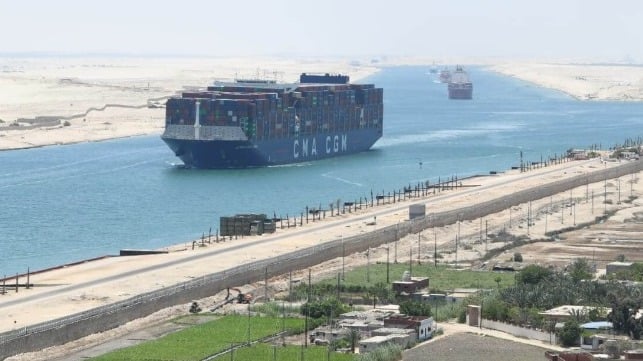
First Large Boxship Transits Suez Canal in 15 Months

Suez Canal
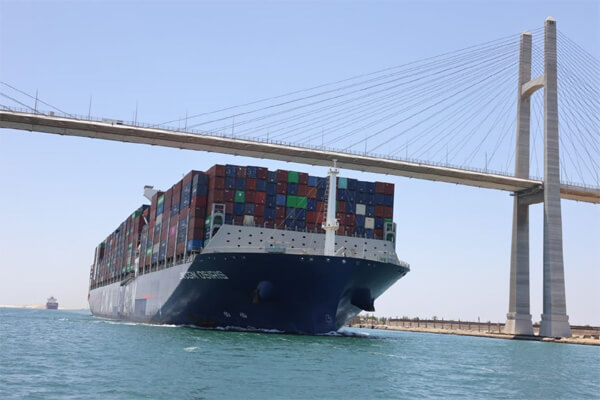
CMA CGM Osiris was the first larger containership to transit the Suez since March 2024 (SCA)

Published Jun 19, 2025 4:40 PM by The Maritime Executive


The Suez Canal Authority is highlighting the transit of the CMA CGM Osiris (15,536 TEU) through the Suez Canal on June 18 as the first large containerships through the canal in more than a year. The authority is calling it a new phase in its efforts to restore mega containership traffic through the canal.

The vessel which is 156,000 dwt and 366 meters (1,200 feet) in length was reported to be the largest to transit the Suez Canal since March 2024. It is traveling from Singapore bound for Europe and followed two smaller CMA CGM containership which made the transit the day before. The CMA CGM Aquila and CMA CGM Callisto (each 11,400 TEU) made the transit on Tuesday bound for Jeddah.

CMA CGM has quietly maintained a limited number of transits in the Suez Canal for some of its Middle Eastern routes. It has been spotted transiting the Red Sea with escorts from the EU’s Aspidies operation, although the company said it was challenging and required coordination with the navies. 

Admiral Ossama Rabiee, Chairman of the Suez Canal Authority said that CMA CGM currently “tops the list” for the number of vessels and tonnage transiting the Canal during the first half of 2025. 


CMA CGM plans to increase its transits of the Suez Canal (SCA)


The authority is working to bring back more traffic to the Suez Canal. In May, it launched a 15 percent discount on fees for containerships over 130,000 net tons transiting either laden or in ballast. The promotion is scheduled to last 90 days and follows a marketing meeting with the major shipping companies and their representatives held in May.

The move comes as most major shipping carriers remain skeptical of a quick return to the Suez Canal. The sentiment this week during the presentations at Marine Money Week in New York is that the risk is high. Several shipowners said insurance premiums remain higher for the Red Sea versus transits of the Straits of Hormuz even with this week’s escalation between Israel and Iran.

Security consultants Ambrey also reiterated this week the increased danger for shipping in the Red Sea. It notes that the Houthis have continued to threaten attacks on any ship associated with Israel and also stepped up in May calling for a blockade of the Port of Haifa. While there have not been any recent attacks targeting merchant ships, the Houthis previously targeted ships with questionable associations with Israel. 

The Suez Canal, however, is a critical source of income for Egypt. In March, Egyptian President Abdel Fattah Al-Sisi estimated the monthly loss in revenue at around $800 million due to the 60 percent decline in traffic through the canal. For all of 2024, Egypt reported the disruption in Suez Canal transits represented a decline of $7 billion in revenue.


With Flights Disrupted, Cruise Ship Creates Lifeline for Israeli Travelers

Crown Iris
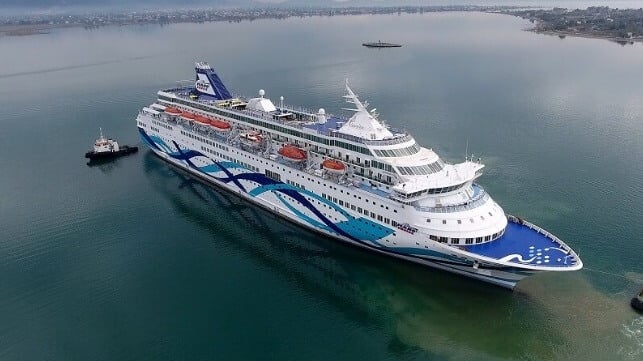
Crown Iris (file image courtesy Chalkis Sotiris Boutsaxis / CC BY SA 4.0)

Published Jun 19, 2025 8:06 PM by The Maritime Executive


With most international flights to Tel Aviv disrupted due to the conflict between Israel and Iran, a cruise ship has become a lifeline for those who want to get in and out of the country. The Israeli-operated Crown Iris recently delivered more than a thousand foreign visitors from Israeli shores to Cyprus, then took aboard an estimated 1,800 Israeli citizens for the return voyage back.

On Tuesday, Crown Iris got under way from Israel, carrying about 1,500 foreign nationals who had been visiting under the Birthright program. Under Israeli Navy escort, the vessel made the short crossing to Limassol, completing the 14-hour transit uneventfully. 

Crown Iris also has thousands of passengers waiting to make the crossing in the other direction. When flights to and from Tel Aviv were suspended last week, Cyprus' Larnaka International was the nearest safe location for midflight diversions. An estimated 6,500 returning Israeli nationals found themselves unexpectedly in Cyprus, or chose to go there in search of another way into Israel, prominent Cypriot rabbi Arie Zeev Raskin told AP. 

On Thursday, hundreds of these returnees boarded Crown Iris to make the 140-nautical mile voyage from Limassol to Ashdod. YNet estimated the passenger manifest at 1,800 people, and reported that the cruise ship planned to make two more voyages by Monday in order to accommodate the demand from returning Israelis - some of whom are military reservists. 

“We acted as quickly as possible to implement the plan to bring Israelis home from abroad, which we view as a vital national mission during wartime,” Mano Maritime Chairman and owner Moshe Mano told Ynet. 

The Crown Iris' AIS signal has been received only intermittently over the past three days, indicating that either the crew temporarily disabled it for security purposes or it was jammed by electronic warfare systems.

Demand for a maritime transportation lifeline may wane in the coming days as air travel resumes. Outbound flights from Israel for select groups - young foreign visitors, sports groups, tourists, diplomats and others - are expected to restart next week. In the inbound direction, national airline El Al has already begun operating repatriation flights out of Cyprus, Greece, Italy and elsewhere in Europe, and is on track to resume intercontinental repatriation flights for returning Israelis by the end of this week. 

Top image: Crown Iris (file image courtesy Chalkis Sotiris Boutsaxis / CC BY SA 4.0)