Saturday, July 26, 2025

Why is Trump going to Scotland? 
The National's front page announcing his visit goes viral

Kinsey Crowley, USA TODAY
Fri, July 25, 2025 


President Donald Trump is headed to Scotland on July 25, where he is expected to meet with the British Prime Minister and visit his golf resorts.

This trip precludes a more elaborate formal state visit in the fall. His first major trip abroad during this presidency was a tour of the Middle East in May, and he has since attended the G7 Summit in Canada and the NATO Summit in the Netherlands.

White House press secretary Karoline Leavitt said, according to Reuters, that the trip would be a "working visit that will include a bilateral meeting with Prime Minister Starmer to refine the historic U.S.-U.K. trade deal."

But the trip comes amid weeks-long controversy over Jeffrey Epstein. The Trump administration has been pushed by Republicans and Democrats alike to be more transparent about the late financier indicted on sex trafficking charges. That controversy appears to be following him abroad already. Here is what to know:

Is Trump in the Epstein files? Before Bondi's reported alert, here is where he appeared
Why is Donald Trump going to Scotland?

Trump and British Prime Minister Keir Starmer are expected to continue to talk trade after the U.K. was the first to reach an agreement following the Liberation Day tariffs. The U.K., the U.S.' ninth-largest trading partner, originally faced a 10% universal baseline tariff on exports to the U.S., but the deal lowered the rate on automobiles and steel.

But the president is also expected to visit his golf courses in Scotland: Trump Turnberry and Trump International Scotland. The Trump International Scotland resort is poised to open a second golf course next month. The resort includes buildings bearing the name of Trump's mother, Mary Anne MacLeod, who emigrated from Scotland to New York in the 1930s.


The National Scottish paper goes viral for front page

As Trump heads overseas, people in Scotland are planning to protest. U.K.-based group Stop Trump Coalition has a few demonstrations planned, as they did when Trump visited in his first term.


One local paper, The National, ran a front page story on July 25 that was a pointed announcement of Trump's arrival.

"Convicted US Felon to Arrive in Scotland," the headline reads, with Trump's scouring eyes from his new presidential portrait peering over the words.

Trump was found guilty of 34 counts of falsifying business records in May 2024, a historic development for a former president who would win the election months later. In the hush money case where Trump was found guilty, he received an "unconditional discharge" sentence, meaning he received no prison time or probation.

Though calling someone a "felon" is considered outdated language, Trump's felony conviction has not yet been erased through appeal or expungement.
Trump's Epstein woes follow him abroad, WSJ banned from trip

Trump's trip to Scotland comes as controversy over the Epstein files continues to roil the administration. People in the U.K. aren't letting him forget it either. A social media video posted by Everyone Hates Elon, a group "pissing off billionaires one small action at a time," showed a sign placed under the Trump International Golf Links sign.

"Twinned with Epstein island," the sign read, according to the video.

On July 17, the Wall Street Journal reported on a birthday letter from Trump to Epstein, prompting Trump to sue the newspaper and the reporters, as he called the story "false, malicious, and defamatory." NBC News and POLITICO reported that the White House later removed the Journal from the group of outlets that is traveling with Trump to Scotland.

But that didn't stop the Journal from later reporting, along with CNN, that Attorney General Pam Bondi told Trump in May that he was mentioned in the criminal case files. Bondi's Justice Department on July 7 released a memo saying no further disclosure of the documents was needed after teasing a "truckload" of Epstein files in March. (Being named in the files does not indicate wrongdoing.)

As Trump heads over the pond, a senior Justice Department official and Epstein's co-conspirator, Ghislaine Maxwell, are meeting for a second day.

Contributing: Zac Anderson, USA TODAY

Kinsey Crowley is the Trump Connect reporter for the USA TODAY Network. Reach her at kcrowley@gannett.com. Follow her on X and TikTok @kinseycrowley or Bluesky at @kinseycrowley.bsky.social.

This article originally appeared on USA TODAY: Why is Trump going to Scotland? National newspaper calls him 'felon'



ANALYSIS

There’s a royal reason Trump won’t escape Jeffrey Epstein fallout on trip to his Scotland golf courses — Prince Andrew

The president and the Duke of York share a love of golf ... and the notorious sex-trafficking financier as a former friend, writes Andrew Feinberg


Friday 25 July 2025
The Independent

‘I never went to that island,” Trump says of Epstein’s underage getaway

The Republican-led House of Representatives shut down early for its summer break to avoid Jeffrey Epstein motions.

The Senate GOP has been in see-no-evil mode the past week over the controversy swirling around the seemingly vanished “client list” of the high-flying financier and convicted pedophile who once palled around with Donald Trump and Bill Clinton among many other power players.

So it makes perfect sense that President Trump is hoping for five days away from the Epstein fallout firestorm that has landed him in hot water not just with Democrats but his own MAGA base over the Justice Department’s stonewalling on the release of all the Epstein files, as Trump and AG Pam Bondi had promised.

Well, Scotland may not be far enough for that.

Sure, Trump will meet with Prime Minister Sir Keir Starmer early next week, but the vast majority of his known itinerary on the trip — which is estimated to cost taxpayers $10 million — consists of visits to his Scottish golf resorts. One, Trump Turnberry and the other Trump International in Aberdeen, where he is set to open a brand new course that will be named for his late mother, Mary Anne McLeod Trump, who was born in Scotland.

And that’s the problem for Trump, thanks to a particular member of the Royal family who happens to be a golf-loving frequenter of his courses, is Scotland’s Earl of Inverness — and who also happens to be tainted by his past close friendship with Jeffrey Epstein ... Prince Andrew.


open image in galleryDonald Trump and Melania are pictured with the Duke of York at Mar-a-Lago in 2000, about six years before the royal’s entanglements with Jeffrey Epstein came to the public’s attention. (Getty Images)


Trump and Clinton named. Here’s who else is allegedly in the Jeffrey Epstein birthday letters book

Trump Turnberry, in fact, still boasts of its visits from Prince Andrew, the Duke of York, who was forced to stand down from royal duties in 2020 over his links to Epstein.


The former Royal Navy officer — currently eighth in line to the British throne — had a long and controversial relationship with with the late sex offender that predated Epstein’s 2008 conviction for soliciting a teenage prostitute but also which continued long after the financier became a pariah in most respectable circles.

Andrew’s habit of staying at Epstein’s residences during travel to the U.S. became fodder for controversy even as the royal claimed there was nothing untoward about the relationship and has vehemently denied any wrongdoing.

But the whispers and rumors took on a more urgent character after Andrew became the defendant in a civil lawsuit brought by the late Epstein victim Virginia Giuffre, who alleged that the Duke once had sexual relations with her after she was trafficked to him as a minor by Epstein and his associate Ghislaine Maxwell.

Although Buckingham Palace asserted in a 2015 statement that Giuffre’s allegations — which included claims that she’d had sexual relations with the Duke on three separate occasions — were “categorically untrue,” the Duke and Giuffre ended up settling the lawsuit, with no admission of liability, in February 2022, one month after Andrew’s royal patronages and honorary military titles were revoked by his mother, the late Queen Elizabeth II.

Prince Andrew has always strongly denied the allegations leveled against him by Giuffre.

Giuffre, perhaps the most outspoken survivor of Epstein’s sexual abuse, died by suicide at the age of 41 in April.


open image in galleryThis undated handout photo taken at an undisclosed location and released on August 9, 2021 by federal prosecutors in New York shows (L-R) Prince Andrew, Virginia Giuffre, and Ghislaine Maxwell. ((Photo by HANDOUT/US District Court - Southern Dis/AFP via Getty Images))

“It is with utterly broken hearts that we announce that Virginia passed away last night at her farm in Western Australia,” Giuffre’s family said in a statement to The Independent after she died. “She lost her life to suicide, after being a lifelong victim of sexual abuse and sex trafficking.”

Since then, Andrew has largely remained out of the spotlight with his reputation tarred by his association with the late sex offender.

But that disgrace doesn’t appear to bother Trump or his eponymous real estate and resort company, which as of this week still lists Andrew as one of the “famous visitors” who have enjoyed the “refined hospitality” at Trump Turnberry.

His Aberdeenshire golf resort has even deeper connections to the prince, who played a major role in convincing Trump to build it in 2006, less than a decade before his entry onto the American political scene.

According to Agence France-Presse, Andrew met with Trump at the his eponymous New York skyscraper in September of that year to cajole the developer into moving forward with the Aberdeen golf project. He later said the Prince was a “great guy” who’d made a “terrific impression” on him.


open image in galleryTrump officially re-opened the Turnberry resort in 2016 after an eight month refurbishment (Getty Images)

“He gave a presentation here to make sure I spend one billion pounds in your country, and that's what I'm going to be doing,” Trump added, according to the report.

The relationship between the prince and the future president continued for the intervening decade, and when Trump visited Scotland during his second year in the White House, Andrew joined him for a round of golf at Turnberry — a round Trump later claimed to have won.

The pair remained cordial enough that when President Trump visited the U.K. for a state visit in his first term in 2019, Andrew was his designated royal escort.


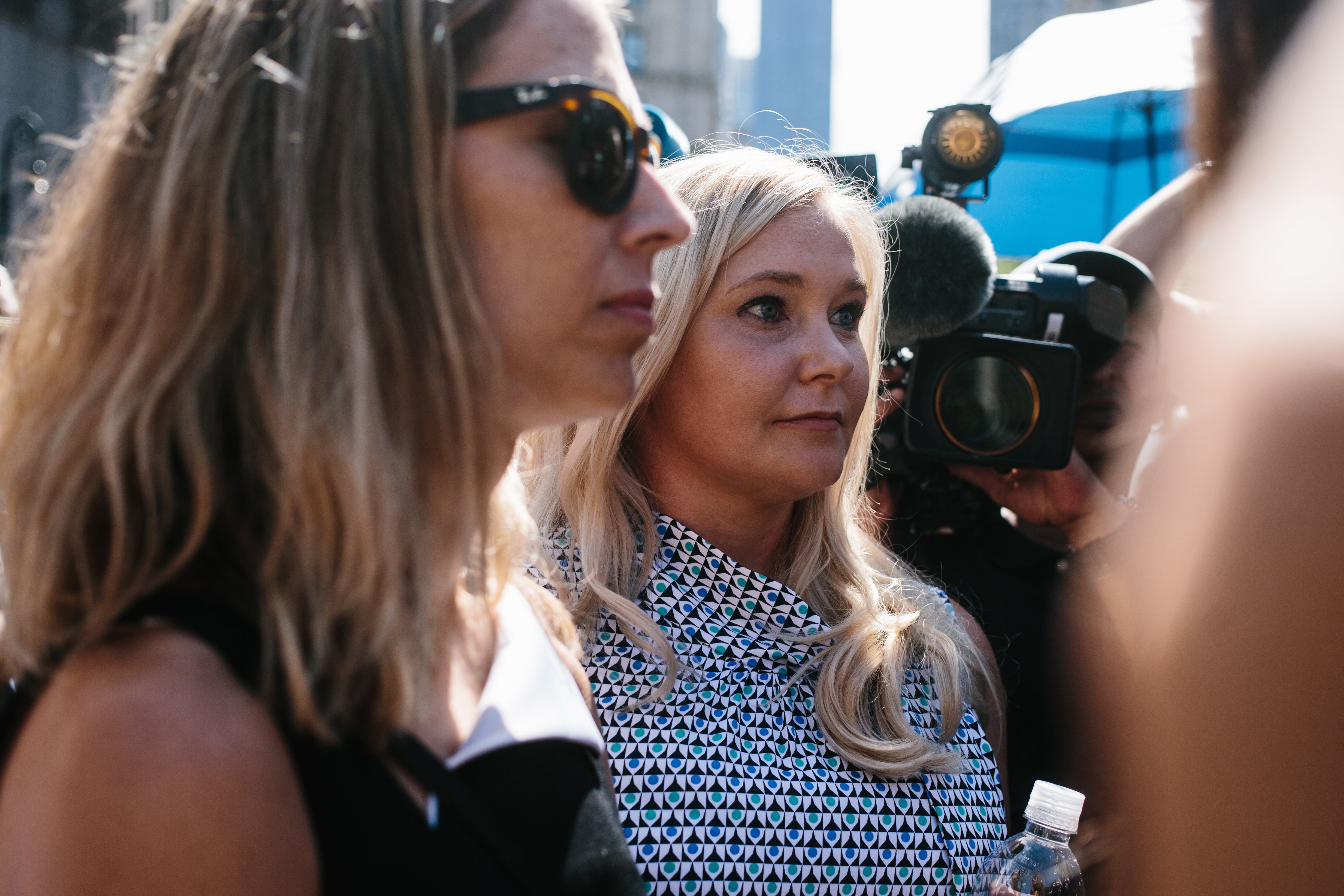
open image in gallerySome of deceased financier Jeffrey Epstein's alleged victims, including Virginia Roberts Giuffre (C) exit the United States Federal Courthouse in New York on Aug. 27 , 2019 (EPA)

The president’s escape to his ancestral homeland comes as there continues to be bipartisan furor around Department of Justice records about Epstein, a one-time power-player financier and convicted pedophile who was arrested for alleged sex trafficking by federal authorities in 2019 and was found to have died by suicide in his jail cell while awaiting trial.

The years-old prosecution has been a longtime fixation for many of Trump’s MAGA supporters who believe they contain damaging information on prominent Democrats and other liberal celebrities.

For years, the president’s supporters have pushed for release of what they believe was a list of powerful people to whom Epstein is alleged to have trafficked young girls, as well as other information they believe would reflect negatively on members of the Democratic Party, various Hollywood celebrities, and other purported elites who they believe to be part of a sinister cabal controlling world events.
RECOMMENDED
Trump’s ‘coverup’ in the face of Epstein scoops is making his MAGA problems so much worse

Trump has winked and nodded at such beliefs and had indicated during his 2024 campaign that his administration would release the documents in question if he were victorious in last year’s presidential election. But many of his most prominent supporters have been crying foul in recent weeks after the Department of Justice announced it would not be releasing the so-called Epstein Files.

And Democrats are now joining the chorus of calls for transparency, citing Trump’s likely presence in the documents on account of his long-term friendship with Epstein.

Trump socialized with Epstein in the 1990s and early 2000s, but reportedly cut ties before Epstein pleaded guilty to state charges of soliciting prostitution from someone under the age of 18.

While Trump has not been accused of any formal wrongdoing or charged with any crime, his proximity to Epstein, someone he once called a friend, has heightened conspiracy theories that the government is withholding documents that could reveal embarrassing information about high-profile individuals.

Still, being named in the so-called Epstein list of contacts or case files is not an indication of any wrongdoing and Trump has denied having any knowledge of Epstein’s crimes before he ended their friendship as has Bill Clinton.

Trump has also sued the Wall Street Journal for defamation over its reporting that he sent a bawdy 50th birthday message to Epstein. Clinton, likewise, was reportedly one of many who sent messages to the financier on that occasion.

On Thursday, Trump made yet another effort to dissuade his base from caring about the Epstein matter by lashing out on Truth Social, calling the entire affair a “scam” and a “hoax” and stating that he hopes the release of grand jury testimony about the late sex offender will quell the entire thing.

But if the president is hoping to gain some distance from the scandal with some time on the links, he’s gone to the wrong golf courses.
ENVIRONMENTAL POISONING AGENCY


Trump administration expected to say greenhouse gases aren't harmful

Washington (AFP) – President Donald Trump's administration is preparing to upend a foundational scientific determination about the harms of greenhouse gases that underpins the US government's ability to curb climate change.


Issued on: 25/07/2025 - 

A proposal from the Environmental Protection Agency (EPA) to change the so-called "Endangerment Finding" was sent to the White House on June 30, a spokesperson told AFP.

An announcement is expected imminently. Here's what to know -- and what's at stake if the finding is overturned.

What is the Endangerment Finding?


The Clean Air Act of 1970 empowered the EPA to regulate "air pollution which may reasonably be anticipated to endanger public health or welfare."

For decades, the law applied to pollutants like lead, ozone and soot.

But as climate science around the dangers of heat-trapping greenhouse gases advanced in the 2000s, a coalition of states and nonprofit groups petitioned the EPA to include them under the law, focusing on motor vehicles.

The issue reached the Supreme Court, which in 2007 ruled that greenhouse gases qualify as air pollutants and directed the EPA to revisit its stance.

That led to the 2009 Endangerment Finding, which declared greenhouse gases a threat to public health and welfare, based on overwhelming scientific consensus and peer-reviewed research.

"That 2009 finding formed the basis for all of EPA's subsequent regulations," Meredith Hankins, a senior attorney on climate and energy for the nonprofit Natural Resources Defense Council, told AFP.

"They've issued greenhouse gas standards for tailpipe emissions from motor vehicles, smokestack emissions from power plants -- all of these individual rulemakings trace themselves back to the 2009 Endangerment Finding."


Environmental Protection Agency (EPA) Administrator Lee Zeldin has said that the US government 'will not sacrifice national prosperity, energy security, and the freedom of our people for an agenda that throttles our industries' © Jim WATSON / AFP/File


What is the Trump administration doing?

The Endangerment Finding has withstood multiple legal challenges, and although Trump's first administration considered reversing it, they ultimately held back.

But the finding is now a direct target of Project 2025, a far-right governance blueprint closely followed by the administration.

In March, the EPA under Administrator Lee Zeldin announced a formal reconsideration of the finding.

"The Trump Administration will not sacrifice national prosperity, energy security, and the freedom of our people for an agenda that throttles our industries, our mobility, and our consumer choice while benefiting adversaries overseas," he said.

The government is expected to undo the earlier finding that greenhouse gases endanger public welfare.

It will argue that the economic costs of regulation have been undervalued -- and downplay the role of US motor vehicle emissions in climate change.

In fact, transportation is the largest source of US greenhouse gas emissions.

"If vehicle emissions don't pass muster as a contribution to climate change, it's hard to imagine what would," Dena Adler of the Institute for Policy Integrity at New York University told AFP.

"It's fatalistic to avoid taking the many actions that could cumulatively fix climate change, because none of them can individually solve the entire problem."

Since 1970, the United States has emitted more vehicle-based greenhouse gases than the next nine countries combined, according to an analysis by the Institute for Policy Integrity that will soon be published in full.

Could they succeed?

In March, the EPA said it would lean on recent court rulings, including a landmark 2024 decision that narrowed federal regulatory power.

Still, legal experts say the administration faces an uphill battle.

"It will take a few years for the rule to be finalized and wind its way up to the Supreme Court for review," said Adler.

"If EPA loses before the Supreme Court, it gets sent back, and EPA then gets it back to the drawing board" -- by which time Trump's term may be nearing its end.

To succeed, the high court may need to overturn its own 2007 decision that led to the Endangerment Finding.

None of the justices who wrote the majority opinion remain on the bench, while three dissenters -- John Roberts, Clarence Thomas, and Samuel Alito -- still serve, and could spearhead a drive to upend the original ruling.

Even then, market forces may blunt the impact of any rollback.

"Utilities making long-term investments and companies purchasing capital goods expected to be used for decades won't base those decisions on short-term policy changes," said John Tobin-de la Puente, a professor at Cornell University's business school.

That's especially true when those swings run counter to business trends and could be undone by a future administration, he added.

© 2025 AFP


World's smallest snake makes big comeback

Washington (AFP) – A snake so small it could be mistaken for a worm has been spotted in Barbados, nearly two decades after it was thought to have been "lost" to science.


Issued on: 25/07/2025 

The Barbados threadsnake (Tetracheilostoma carlae) was found hiding under a rock in central Barbados © Connor Blades / Re:wild/AFP


The Barbados threadsnake (Tetracheilostoma carlae) was found hiding under a rock in central Barbados during an ecological survey in March by the Barbados Ministry of the Environment and National Beautification and conservation group Re:wild.

"Barbados threadsnakes are blind snakes, so they're very cryptic," said Connor Blades, a project officer with the Ministry of Environment in Barbados who helped make the finding, in a statement.

"They're quite rare also, it seems. There have only been a handful of confirmed sightings since 1889, so there are not many people who have ever seen it, unfortunately."

Measuring just three to four inches long (eight to 10 centimeters) when fully grown -- tiny enough to almost fit on a US quarter coin -- the Barbados threadsnake is the world's smallest species of snake.


It is distinguished by orange stripes along its back, eyes on the sides of its head and a small scale on its snout.

"When you are so accustomed to looking for things and you don't see them, you are shocked when you actually find it," said Justin Springer of Re:wild, who made the discovery alongside Blades.
The rare species is tiny enough to almost fit on a US quarter coin 
© Blair Hedges / Re:wild/AFP


"You can't believe it. That's how I felt. You don't want to get your hopes up too high."

The breakthrough came after more than a year of searching, as the pair upturned rocks trapped beneath a tree root.

The tiny snake, which was found alongside an earthworm, was taken to the University of West Indies for careful examination under a microscope -- it closely resembles the Brahminy blind snake, an invasive species, so the finding had to be validated -- before it was returned to the forest.

Only two percent of the Caribbean island's primary forest remains intact, with the rest cleared for agriculture since the start of the colonial era 400 years ago.

The Barbados threadsnake remains particularly vulnerable since it reproduces sexually and females lay a clutch of only one egg. Female Brahminy blind snakes, by contrast, can produce fertile eggs without mating.

"The threadsnake's rediscovery is also a call to all of us as Barbadians that forests in Barbados are very special and need protection," said Springer. "Not just for the threadsnake, but for other species as well. For plants, animals and our heritage."

© 2025 AFP
Thai woman herds cats under fire in Cambodia clashes

Surin (Thailand) (AFP) – When the first salvo of Cambodian artillery screamed across her village, Thai seamstress Pornpan Sooksai's thoughts turned to her five beloved cats: Peng, Kung Fu, Cherry, Taro and Batman.


Issued on: 25/07/2025 - 

Thai seamstress Pornpan Sooksai did not hesitate to corral her quintet of cats to safety, even as the cross-border blasts from Cambodia rang out © Lillian SUWANRUMPHA / AFP

"I suddenly heard a loud bang," the 46-year-old told AFP. "Then our neighbour shouted, 'They've started shooting!' So everyone scrambled to grab their things."

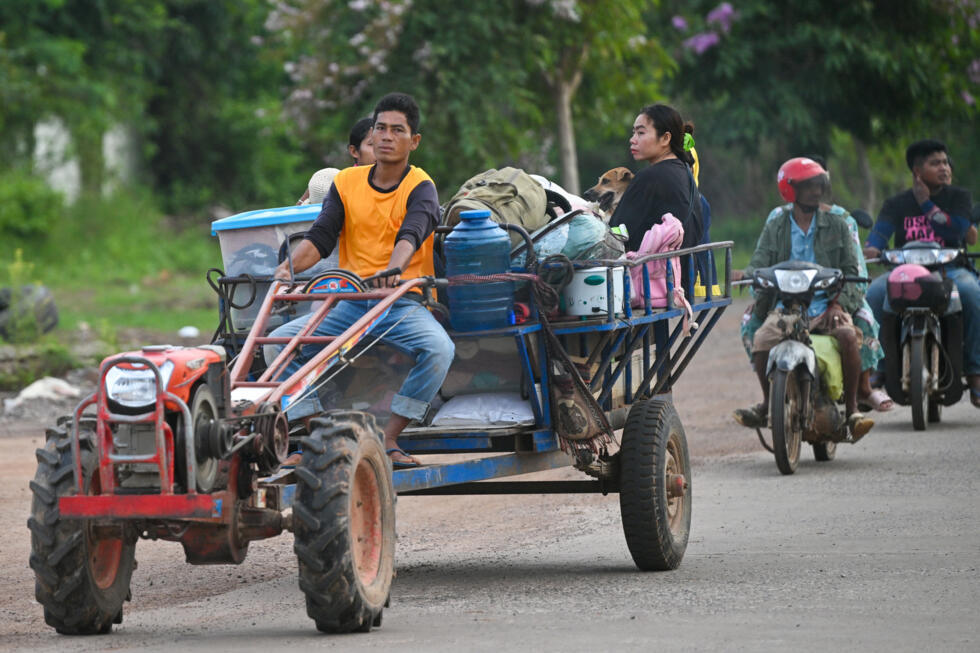
Nearly 140,000 people have been evacuated from the Thai frontier, fleeing with the belongings dearest to them as the country trades deadly strikes with neighbouring Cambodia for a second day.

Pornpan was hanging out laundry in her village in the border district of Phanom Dong Rak, but did not hesitate to corral her quintet of cats -- even as the cross-border blasts rang out.

"Luckily they were still in the house. I put them in crates, loaded everything into the truck, and we got out," she said at a shelter in nearby Surin city, camping out alongside her fellow evacuees.

Tensions have been building between Thailand and Cambodia since late May, when a Cambodian soldier was shot dead in a firefight over a long-contested border region.

Tit-for-tat trade curbs and border closures escalated into conflict on Thursday, and each side has accused the other of firing the opening shot in the battle now being waged with jets, artillery, tanks and troops.

At least 16 people have been killed, according to tolls from both sides, the majority of them civilians.

But Pornpan was well-prepared to save her felines.

"Since I heard about the possible conflict two months ago, I stocked up on food and bought cat carriers," she said.

"If I leave the cats behind, they'd die."

Alongside her cats, Ponrpan also evacuated nine other family members, including her elderly mother with Alzheimer's.

The process took its toll once the adrenaline wore off midway through their escape.

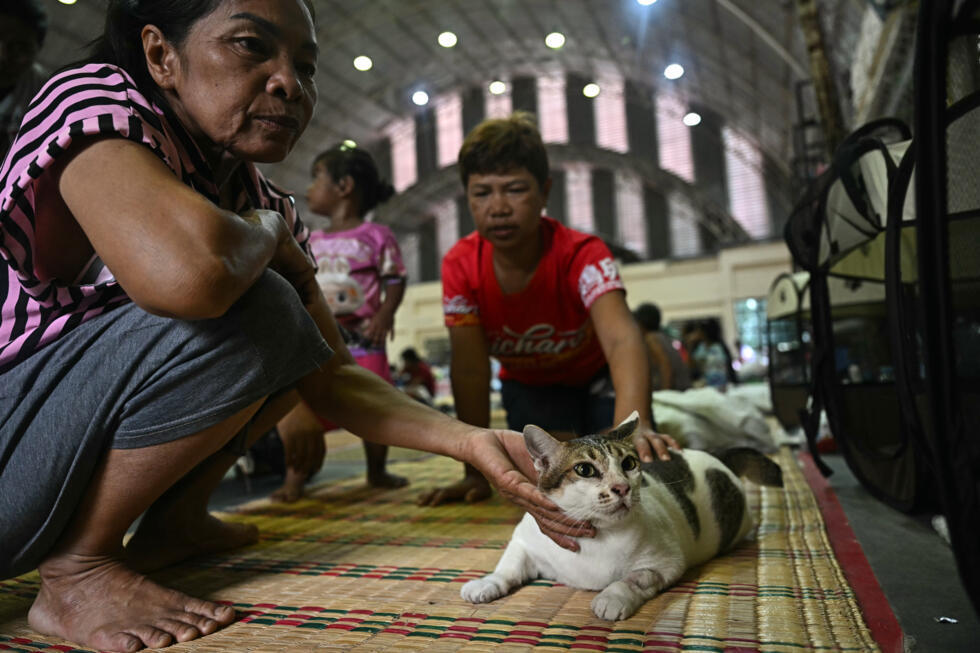
Her cats have been installed in their portable kennels at the Surin city shelter, drawing pets from curious onlookers waiting out the conflict © Lillian SUWANRUMPHA / AFP

"I was terrified the whole time. I was scared the bombs would hit us or the house," she said.

"I had a panic attack in the car. My body went numb. I had to go to hospital during the evacuation."

At the Surin city shelter her cats have been installed in their portable kennels -- drawing curious children waiting out the conflict alongside their parents on the gymnasium floor.

Skittish from the sudden onset of gunfire, they are slowly recovering from their ordeal.

"One kept trying to escape its crate, wouldn't eat and kept crying," Pornpan said.

"Another one was panting -– maybe heatstroke. I had to splash water on it."

© 2025 AFP
UPDATED

Death toll rises in Thai-Cambodian clashes despite ceasefire call

Samraong (Cambodia) (AFP) – Thailand and Cambodia clashed for a third day on Saturday, as the death toll from their bloodiest fighting in years rose to 33 and Phnom Penh called for an "immediate ceasefire".

Issued on: 26/07/2025 - AFP

The death toll across Thailand and Cambodia is now higher than the 28 killed in the last major round of fighting between 2008 and 2011 © TANG CHHIN Sothy / AFP

A long-running border dispute erupted into intense conflict involving jets, artillery, tanks and ground troops on Thursday, prompting the UN Security Council to hold an emergency meeting on the crisis Friday.

Cambodia's defence ministry said 13 people were now confirmed killed in the fighting, including eight civilians and five soldiers, with 71 people wounded.

In Thailand, the army said five soldiers were killed on Friday, taking the toll there to 20 -- 14 civilians and six military.

The death toll across the two countries is now higher than the 28 killed in the last major round of fighting between 2008 and 2011.

Both sides reported a clash around 5:00 am (2200 GMT Friday), with Cambodia accusing Thai forces of firing "five heavy artillery shells" into locations in Pursat province, which borders Thailand's Trat province -- on the coast some 250 kilometres (160 miles) southwest of the main frontlines.

AFP journalists in the Cambodian town of Samraong, near the ridge of forest-clad hills that marks the border and has seen the bulk of the fighting, heard the thump of artillery early Saturday afternoon.

The fighting has forced more than 138,000 people to be evacuated from Thailand's border regions © Lillian SUWANRUMPHA / AFP

A Thai villager reached by phone as he sheltered in a bunker in Sisaket province, just 10 kilometres from the frontier, also reported hearing artillery.

"I just want this to end as soon as possible," Sutian Phiewchan told AFP.

The fighting has forced more than 138,000 people to be evacuated from Thailand's border regions, with more than 35,000 driven from their homes in Cambodia.

After the closed meeting of the Security Council in New York, Cambodia's UN ambassador Chhea Keo said his country wanted a ceasefire.

"Cambodia asked for an immediate ceasefire -- unconditionally -- and we also call for the peaceful solution of the dispute," he told reporters.
Border row

Thai Foreign Minister Maris Sangiampongsa said Saturday that for any ceasefire or talks to proceed, Cambodia needed to show "genuine sincerity in ending the conflict".


Cambodia has asked for an immediate ceasefire, its ambassador to the United Nations said © - / AFP

"I urge Cambodia to stop violating Thai sovereignty and to return to resolving the issue through bilateral dialogue," Maris told reporters.

Thai Foreign Ministry spokesman Nikorndej Balankura said Friday, before the UN meeting was held, that Bangkok was open to talks, possibly aided by Malaysia.

Malaysia currently holds the chair of the Association of Southeast Asian Nations regional bloc, of which Thailand and Cambodia are both members.

Both sides have blamed the other for firing first, while Thailand accused Cambodia of targeting civilian infrastructure, including a hospital hit by shells and a petrol station hit by at least one rocket.

Cambodia has accused Thai forces of using cluster munitions.

Former Thai prime minister Thaksin Shinawatra -- still an influential figure in the kingdom -- visited shelters on Saturday to meet evacuees.

"The military needs to complete its operations before any dialogue can take place," Thaksin told reporters.

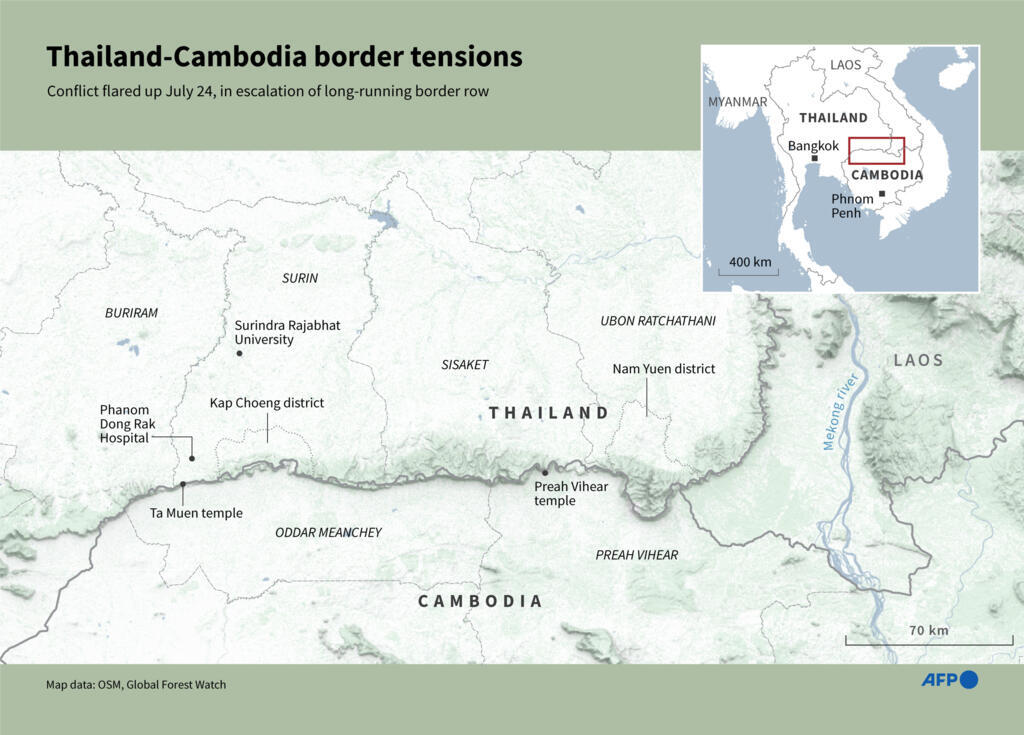
Thailand-Cambodia border tensions © John SAEKI, Nicholas SHEARMAN / AFP


The 76-year-old said he had no plans to contact Hun Sen, Cambodia's powerful ex-prime minister who was long a close ally.

"His actions reflect a disturbed mindset. He should reflect on his conduct," Thaksin said of Hun Sen.

The fighting marks a dramatic escalation in a long-running dispute between the neighbours -- both popular destinations for millions of foreign tourists -- over their shared 800-kilometre (500-mile) border.

Dozens of kilometres in several areas are contested and fighting broke out between 2008 and 2011, leaving at least 28 people dead and tens of thousands displaced.

A UN court ruling in 2013 settled the matter for more than a decade, but the current crisis erupted in May when a Cambodian soldier was killed in a new clash.

The leak triggered a political crisis in Thailand as Paetongtarn -- Thaksin's daughter -- was accused of not standing up for Thailand enough, and of criticising her own army.

She was suspended from office by a court order.

burs-pdw/mtp

© 2025 AFP


Thailand and Cambodia clash: A border dispute fuelled by nationalism

Issued on: 25/07/2025 - 

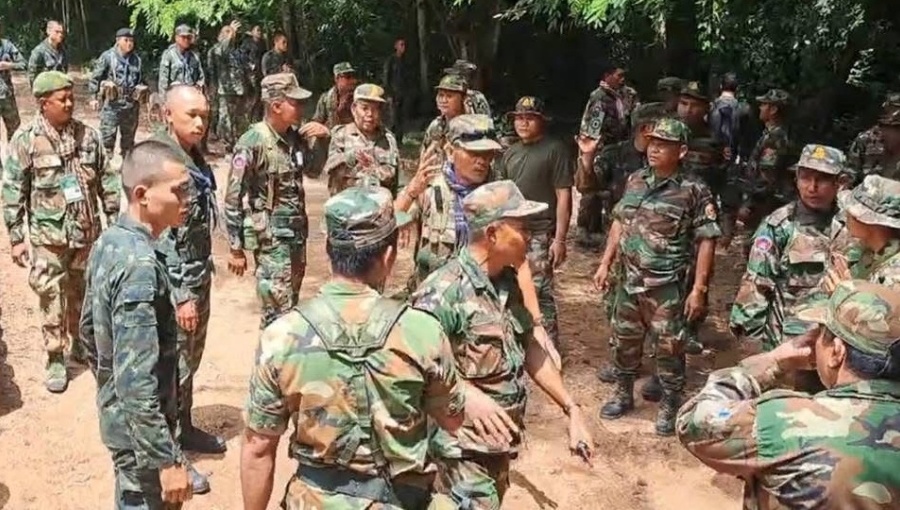
Fighting between Thai and Cambodian troops over a disputed border intensified on Friday, with Bangkok warning that the clashes could escalate into a full-blown war. Rooted in a border dispute dating back to colonial times, the deadly flare-up reflects the domestic political turmoil currently gripping both countries.
 France24 International Affairs Editor Angela Diffley.


Cambodian evacuees sheltering in temple pray for end to Thai clashes


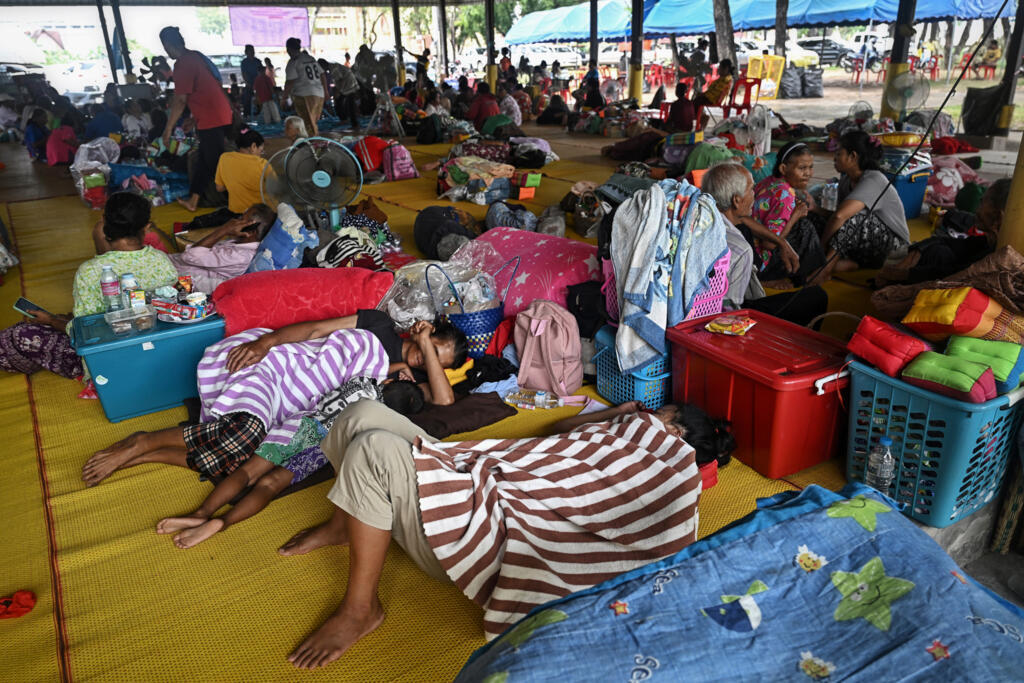
Oddar Meanchey (Cambodia) (AFP) – In the leafy grounds of a Buddhist pagoda, hundreds of Cambodians fleeing deadly clashes with Thailand take refuge in the open air, most sitting on the ground while a lucky few doze in hammocks.


Issued on: 25/07/2025 - 

People who fled their homes near the Cambodia-Thailand border rest on the grounds of a pagoda in Oddar Meanchey province 
© TANG CHHIN Sothy / AFP

The deadliest fighting in over a decade between the two neighbours has sent thousands of villagers fleeing the border zone in Cambodia.

As artillery clashes erupted Thursday, Salou Chan, 36, grabbed some belongings, clothes, his two kids, and sped away from his home, about 20 kilometres (12 miles) from disputed temples on the frontline.

"I fear for the safety of my children, they are still small. For me, I could have stayed at home, but I worried for my children -- they were scared of the sound of gunfire," he told AFP.

"I don't know when I will be able to return home but I want them to stop fighting soon. Nobody's looking after my rice paddy and livestock."

He and his family have joined hundreds of others in the grounds of the temple in Oddar Meanchey province.

With no proper shelter, most sit on the bare ground and rig up makeshift tents with plastic sheeting.

The evacuees have only the food and water they brought with them to sustain them while they wait for the chance to go home.
'Praying this will end'

A long-running border dispute erupted into intense fighting on Thursday with jets, artillery, tanks and ground troops doing battle, and more exchanges on Friday.

Thailand says more than 138,000 people have been evacuated from its border regions, and 15 people killed.

The deadliest fighting in over a decade between the two neighbours has sent thousands of villagers fleeing the border zone in Cambodia © TANG CHHIN Sothy / AFP

Cambodia has been more tight-lipped about casualties, though Oddar Meanchey provincial authorities reported one civilian -- a 70-year-old man -- had been killed and five more wounded.

Chhorn Khik, 55, who fled to the pagoda with her two grandchildren, said she was relieved to have escaped the conflict zone.

"I am no longer scared. Yesterday I was so scared, I was crying along the way," she told AFP.

"I feel pity for the soldiers at the frontline. We are scared, but we could escape, but those soldiers, they are fighting for us and the nation."

Thailand has said it is willing to start talks but also warned that the conflict could develop into a full-blown war if Cambodia is not willing to de-escalate.

Yoeun Rai, 55, who fled with 10 of her family, said she was so anxious she could not eat.

"I am praying this will end soon so that we can go back home," she told AFP.

© 2025 AFP


Thai-Cambodian tensions escalate amid internal rift between Thai military & military-linked parties


Issued on: 25/07/2025 - 


Recent clashes between Thailand and Cambodia have led to the displacement of over 130,000 civilians as both countries evacuate residents near the border. The fighting continues to escalate with jets, artillery, and tanks, resulting in numerous casualties and prompting international calls for a ceasefire. For in-depth analysis and a deeper perspective on the escalating border conflict 
FRANCE 24's William Hilderbrandt welcomes Dr. David Camroux, Honorary Research Fellow at the Center for International Studies at Sciences-Po and Senior Lecturer in Asian Studies.


ASEAN chair urges Cambodia and Thailand to cease hostilities and pursue dialogue

ASEAN chair urges Cambodia and Thailand to cease hostilities and pursue dialogue
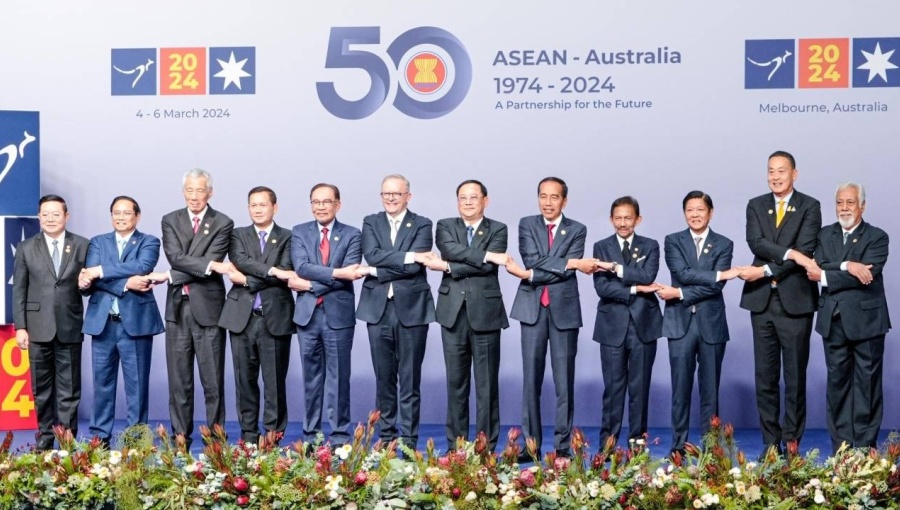
Anwar Ibrahim at the ASEAN–Australia Special Summit in Melbourne / Philippines Presidential Communications Office-PD
By bno - Malai Yatt - Phnom Penh Office July 25, 2025

ASEAN Chairperson Anwar Ibrahim has called on Cambodia and Thailand to de-escalate the current military conflict and enter into negotiations, following clashes that erupted on Thursday morning, July 24, after weeks of rising tensions along the border.

According to Malaysia’s national news agency Bernama, Anwar, who also serves as Malaysia’s Prime Minister, urged Cambodian Prime Minister Hun Manet and Thai interim Prime Minister Phumtham Wechayachai to “stand down” and seek a diplomatic resolution.

Speaking at the ASEAN Semiconductor Summit 2025 in Kuala Lumpur, Anwar described the situation as “deeply concerning” and said he plans to speak directly with both leaders later in the day. “At the very least, we hope both parties can de-escalate the situation and make room for negotiations,” he said. “Attempts have been made, but I believe peace remains the only viable path.”

He noted the significance of both nations to the region, particularly given their proximity to Malaysia, and expressed optimism that constructive talks could still be pursued.

Anwar also mentioned plans to arrange further discussions with both leaders, adding that he had previously raised the matter with Cambodian officials and then-Thai Prime Minister Paetongtarn Shinawatra during bilateral meetings in June.

When asked whether the ongoing conflict might impact regional trade, Anwar declined to speculate, calling such concerns “premature.” “This is likely a temporary development. Both leaders are acting in the interest of their respective nations and are committed to a peaceful outcome. Both want ASEAN to remain actively engaged, and we will do exactly that,” he said.

Meanwhile, Cambodian Prime Minister Hun Manet has appealed to the United Nations Security Council to urgently intervene to halt what he described as Thai military aggression, which began on Thursday morning. He reaffirmed Cambodia’s commitment to peaceful and lawful mechanisms for resolving the dispute, including engagement with the International Court of Justice (ICJ).

In a letter sent to Ambassador Asim Iftikhar Ahmad, Pakistan’s Permanent Representative to the UN and President of the Security Council for July 2025, Mr Hun Manet condemned Thailand’s actions, stating that they were in direct contradiction to regional and international appeals for restraint.

He cited Cambodia’s recent efforts to pursue dialogue, including the hosting of a Joint Boundary Commission meeting in Phnom Penh on June 14-15, as evidence of the country’s good faith in seeking peaceful solutions.

The Cambodian government has formally submitted four disputed border areas—Mom Bei, Ta Moan Thom Temple, Ta Moan Touch Temple, and Ta Krabey Temple—to the ICJ for adjudication. The current violence follows an earlier skirmish on May 28, which resulted in the death of a Cambodian soldier.

Bernama reports that tensions between the two countries have steadily intensified in the weeks leading up to Thursday’s conflict.


ASIA BLOG: If the Thailand-Cambodia conflict escalates, Vietnam won’t stand idle – nor will the US and China

ASIA BLOG: If the Thailand-Cambodia conflict escalates, Vietnam won’t stand idle – nor will the US and China
ASIA BLOG: If the Thailand-Cambodia conflict escalates, Vietnam won’t stand idle – nor will the US and China. / bno IntelliNews
 bno - Ho Chi Minh Office July 25, 2025

The current flare-up between Thailand and Cambodia feels different from previous disputes. What initially appeared to be a limited skirmish over disputed borderland and nationalist rhetoric now carries the faint, unmistakable whiff of escalation.

Should this bilateral tension spiral into a broader conflict, the ramifications for neighbouring Vietnam and indeed for the wider region could be far-reaching, dragging in not just ASEAN members but also the United States and China.

To begin with, Vietnam shares cultural, political and economic ties with both Thailand and Cambodia, though it has a complex and often fraught historical relationship with Phnom Penh. The legacy of Vietnam’s occupation of Cambodia in the 1980s still casts a long shadow, particularly among older Cambodians, while Hanoi remains wary of any instability spilling across its long and porous southwestern border.

If the current border standoff between Thailand and Cambodia worsens into outright conflict, Vietnam will be forced to make difficult choices.

It has no formal defence obligations to either side, but it would not sit back and allow chaos to unfold next door. The Vietnamese military, one of the most capable in mainland Southeast Asia, would likely ramp up its border presence and increase surveillance, especially in the Mekong Delta region. Intelligence sharing within the region would spike, with Vietnam quietly cooperating with Laos and perhaps even with Thailand, depending on how the conflict evolves.

The real risk, however, lies in how this crisis might fracture ASEAN unity. The ten – soon to be eleven – member bloc has long prided itself on consensus-building, non-interference and the ability to manage disputes internally. Yet recent years have seen growing doubts over its effectiveness, particularly in dealing with issues like Myanmar’s civil war or Chinese aggression in the South China Sea. If fighting were to erupt in earnest between two ASEAN members, it could well paralyse the organisation further, or worse, expose the limits of regional diplomacy altogether.

Vietnam, which currently maintains a delicate balancing act between resisting Chinese maritime pressure and fostering trade ties with the US, would find itself under new geopolitical pressure. An escalating Thailand-Cambodia conflict would create a vacuum that the world’s great powers would be tempted to fill – but likely for their own strategic purposes.

China, for its part, has deep ties with Cambodia, including significant investments under the Belt and Road Initiative. Phnom Penh is seen in many circles as Beijing’s closest ally within ASEAN.

An embattled Cambodian government would almost certainly look to China for diplomatic cover, military assistance, or at the very least, intelligence support. Beijing might seize the opportunity to expand its influence in mainland Southeast Asia under the guise of stabilisation or "conflict prevention".

Vietnam would see such a move as a direct threat. Already locked in an uneasy relationship with China over the South China Sea, Hanoi would be deeply alarmed by any large-scale Chinese involvement in Cambodia. It would prompt calls within the Vietnamese leadership to accelerate its diversification strategy – strengthening security ties with India, Japan, and most significantly, the United States.

Washington, meanwhile, would not remain a passive observer. The US has been gradually increasing its military and diplomatic presence in Southeast Asia as part of its broader Indo-Pacific strategy. Any major disruption to ASEAN stability would give Washington both cause and justification to become more assertively engaged. If Cambodia were to lean more heavily on China, the US might pivot towards Thailand and there are already indications this has happened. At the same time, it might use the opportunity to deepen strategic ties with Vietnam, offering security cooperation, port visits or even expanded arms deals, something Hanoi has previously approached with cautious pragmatism.

However, the risk here is not merely of great power competition playing out across ASEAN capitals, but of the entire region becoming polarised. A divided Southeast Asia, with states pulled towards either China or the US, would threaten the very cohesion that has underpinned the region’s economic success and relative peace over the past three decades.

For Vietnam, therefore, the ideal response would need to be agile and multifaceted. It cannot afford to appear beholden to either Beijing or Washington. More than any other country in the region, Vietnam has demonstrated a unique capacity for hedging – building partnerships with the West while maintaining stable, if wary, ties with China. Should conflict erupt on its doorstep, that balancing act would become even more critical, and considerably more perilous.

In the best-case scenario, ASEAN would intervene early, appointing a special envoy or facilitating shuttle diplomacy before matters spiral out of control. Vietnam could and should play a leading role in that process, using its clout and experience to defuse tensions and push for dialogue. Failing that, the region faces not only a humanitarian crisis, but a fundamental reshaping of Southeast Asia’s geopolitical map.

Cambodia denounces Thai assault on Preah Vihear Temple, calls for immediate end to hostilities

Cambodia denounces Thai assault on Preah Vihear Temple, calls for immediate end to hostilities
Cambodian and Thai soldiers met at the Ta Moan Thom temple on July 15, 2025. / Cambodian Ministry of National Defense FB
By bno - Phnom Penh Office July 24, 2025

Cambodia’s Ministry of Culture and Fine Arts has strongly condemned recent Thai military actions that have caused serious damage to the Preah Vihear Temple, a sacred site and UNESCO World Heritage monument. The ministry has called for an immediate cessation of all military activity in and around the temple area, according to Cambodianess

In an official statement released on July 24, the ministry described the attacks, which reportedly included artillery shelling and airstrikes, as a blatant violation of international law and a direct threat to cultural heritage.

Preah Vihear Temple, which was inscribed as a UNESCO World Heritage Site in 2008, holds immense historical and cultural significance for Cambodia and is regarded as part of the shared heritage of humanity. The ministry stated that its destruction constitutes a breach of multiple international treaties aimed at safeguarding cultural property.

The attacks were described as violations of the 1954 Hague Convention for the Protection of Cultural Property in the Event of Armed Conflict, its Second Protocol adopted in 1999, and the 1972 UNESCO Convention Concerning the Protection of the World Cultural and Natural Heritage.

As a signatory to these agreements, Thailand is legally bound to respect and protect cultural heritage sites, including by avoiding their use for military purposes and refraining from any actions that could compromise their Outstanding Universal Value.

“The deliberate targeting of cultural property, as well as violations of international law, may amount to war crimes,” the ministry warned.

Initial assessments indicate that several parts of the ancient temple complex have sustained damage, including the first, second, third, and fifth gopuras (gate towers), the northern staircase, Ta Di ravine, and adjacent areas.

Situated atop the Dangrek mountain range, Preah Vihear Temple is a symbol of Khmer civilisation and national identity. The Ministry of Culture underscored that any attack on the site not only endangers Cambodia’s cultural legacy but also threatens the global community’s shared heritage.

The ministry further criticised the Thai military’s actions as a “serious breach” of international obligations, demonstrating what it described as a wilful disregard for the preservation of humanity’s irreplaceable cultural treasures.


Taiwan not a vital US interest

A war with China over the island should be off the table


(VIDEO)

Analysis
Stavroula Pabst
Jul 25, 2025

Those who say that Taiwan is a vital U.S. interest often cite the island’s strategic location, the U.S.’ moral obligation to defend it as a long-time ally, and the need for the U.S. to maintain credibility as a partner that will come to the defense of its allies.

But as Michael Swaine says in a new Quincy Institute video below, the U.S. has no formal security treaty agreements with Taiwan, whereas it does with Japan and South Korea — countries that do not want the U.S. to go to war with China. And, Swaine adds, these arguments are inadequate when weighed against what a conflict with China over Taiwan would actually look like.

War with China would be a “really major destructive war, a magnitude of destruction in life and property and a disruption of the international system that goes beyond anything that we've really seen since World War Two,” Swaine says. “Up to $10 trillion — 10% of global GDP — could be wiped away. You could have deaths in the many thousands on both sides.”

“If you're going to go to war with the Chinese over this issue, it had better be a vital interest of the United States. It's an important interest. It’s not a vital interest.”

Video produced by Khody Akhavi, senior video producer at the Quincy Institute for Responsible Statecraft

Stavroula Pabst
Stavroula Pabst is a reporter for Responsible Statecraft.
The views expressed by authors on Responsible Statecraft do not necessarily reflect those of the Quincy Institute or its associates.
Top footballers afraid to speak out against playing too many games: FIFPro chief

AND THE BOSSES WHINE ABOUT IT


Amsterdam (AFP) – Top footballers are afraid to speak out against playing too many matches for fear of the impact it could have on their careers, the general secretary of global players' union FIFPro said on Friday.


Issued on: 26/07/2025 - FRANCE24

Chelsea players celebrate winning the FIFA Club World Cup trophy but FIFPro union leaders say the event has added greater demands to an already overcrowded schedule © David Ramos / GETTY IMAGES NORTH AMERICA/AFP/File

Alex Phillips was speaking after FIFPro held a meeting in Amsterdam with 58 national player unions from around the world to discuss concerns over the way the sport's world governing body FIFA is managing global football.

The meeting came less than two weeks after the end of the first 32-team Club World Cup in the United States, a tournament hailed as a huge success by FIFA president Gianni Infantino but criticised by FIFPro for the demands it has placed on players already faced with a crowded schedule.

"Before the Club World Cup, I was speaking to some of the top stars and they were saying they hadn't had a rest for 'X' amount of time," Phillips said.

"One of them even said, 'I'll only get a rest when I get injured'. Others were resigned actually, and cynical about speaking up.

"Then you see some of the same players two weeks later having to record social media videos saying 'We think the Club World Cup is great,' because their employers are telling them to do it.

"You have this contradictory situation where players can't speak up. They are in an invidious position. They can speak up but it might have consequences."

FIFPro said that FIFA's recent focus on the Club World Cup in the United States was an example of the body ignoring many fundamentally more important issues facing players around the world.

"It is unacceptable for an organisation that claims global leadership to turn a blind eye to the basic needs of the players," FIFPro said in a statement, notably citing the "overloaded" match calendar, heat concerns at the Club World Cup and an "ongoing disregard for players' social rights".

FIFPro Europe filed a complaint to the European Commission last year accusing FIFA of abusing its position with regards to its handling of the international match calendar.

The summit hosted by the union on Friday came after it was left out of a meeting held by FIFA on the eve of the recent Club World Cup final.

Sergio Marchi, the Argentinian president of FIFPro, this week slammed Infantino's leadership of FIFA and accused him of running an "autocracy" in an interview with The Athletic.

FIFA hit back at FIFPro in a statement on Friday as it called for dialogue "with legitimate bodies that put player welfare first" and said it had tried unsuccessfully to get the union to attend its meeting in New York on July 12.

"FIFA is extremely disappointed by the increasingly divisive and contradictory tone adopted by FIFPRO leadership," the Zurich-based organisation said.

"This approach clearly shows that rather than engaging in constructive dialogue, FIFPRO has chosen to pursue a path of public confrontation," which aims to preserve "their own personal positions and interests."


© 2025 AFP
Belgian region grapples with forever chemical scandal

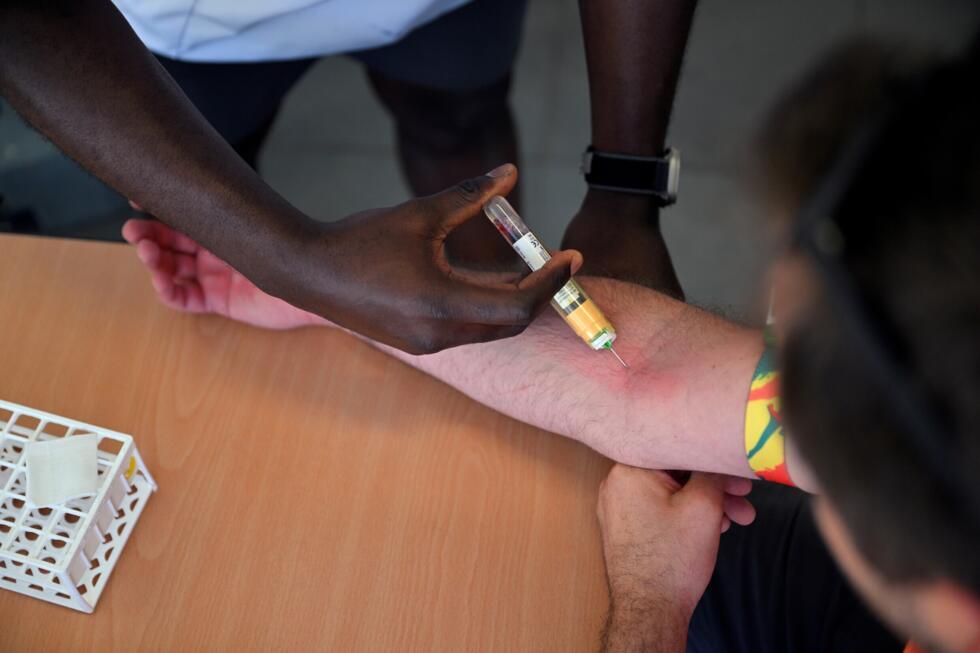
Brussels (Belgium) (AFP) – A water contamination scandal has gripped a leafy corner of southern Belgium, causing anxious residents to queue up for blood tests to confirm potential exposure to so-called forever chemicals.


Issued on: 26/07/2025 - FRANCE24

Almost 1,300 people had their blood samples taken to confirm exposure to the forever chemicals in a Belgian region © Nicolas TUCAT / AFP

On an early summer afternoon about a dozen people waited to get their samples taken at a municipal building in Braine-le-Chateau, a picturesque town in the French-speaking Wallonia region.

"Initially local authorities told us that measurements were reassuring, but in reality, they didn't have any and were simply trying to keep people calm as best they could," Douglas, a 35-year-old consultant who preferred only to give his first name, told AFP.

"This kind of game has to stop," he said, adding he hoped the blood-sampling campaign launched in June would help shed light on the situation.

Anger in the region first erupted in 2023 when an investigation by local broadcaster RTBF revealed the authorities had ignored longstanding warnings about high levels of per- and polyfluoroalkyl substances (PFAS), often called forever chemicals.

It emerged that the US military, which has an airbase in the small city of Chievres, had warned the local water company in 2017 about high PFAS levels in drinking water, following an incident involving firefighting foam.

The US base advised its personnel to drink bottled water -- but locals were left in the dark for years, even after the regional government was told of the issue in 2018.

PFAS are a family of synthetic chemicals that take an extremely long time to break down.

Chronic exposure to even low levels of the chemicals has been linked to liver damage, high cholesterol, reduced immune responses, low birth weights and several kinds of cancer.

A group of more than 10,000 human-made chemicals that repel heat, water and oil, PFAS are used in nonstick pans, stain-proof carpets, and other products.

But their use is increasingly being restricted across the world due to adverse health effects.

In June an Italian court sentenced executives at a chemical plant to jail terms of up to 17 years for polluting water used by hundreds of thousands of people with the chemicals.

- 'Putting out fires' -

Water samples in Braine-le-Chateau last year revealed levels five to six times higher than a safety standard of 4 nanograms/litre (ng/L) for four PFAS recently agreed by Belgian authorities.

The exact source of the pollution has not yet been confirmed and a judicial investigation is underway.
PFAS use is increasingly being restricted due to adverse health effects © Nicolas TUCAT / AFP

Authorities have since ordered water distribution firms to install activated carbon filters -- a move they say has contained the issue.

Large-scale blood testing was carried out in Chievres in early 2024 -- and later extended to nearby areas.

Authorities said almost 1,300 people across about 10 municipalities had their blood samples taken to confirm exposure to the chemicals in recent weeks, as part of a fresh campaign launched in June.

The results, which could lead to new health recommendations, are expected later this year.

Wallonia's government, which took office last summer, has also decided to bring forward to 2025 new European Union rules requiring that drinking water must not exceed a total of 100 ng/L for 20 substances in the PFAS family.

"We have taken radical measures and all our distributors are now complying with this standard," Yves Coppieters, the regional minister for health and the environment, told AFP.

Nevertheless he acknowledged that "the population is very concerned", adding that without clarity on the source of the pollution, it might take decades to resolve the issue.

"Telling people not to eat their home-grown eggs and vegetables, setting standards for sewage sludge... for now I'm just putting out fires," said Coppieters, who favours a ban on all products containing PFAS.

Denmark, Germany, the Netherlands, Norway and Sweden have submitted a joint proposal for the EU to ban the production, sale, and use of almost all forever chemicals.

And the European Commission has said it is looking to ban PFAS in everyday consumer products.

© 2025 AFP

Our Synthetic Environment. Murray Bookchin. 1962. Table of contents. Chapter 1: THE PROBLEM. Chapter 2: AGRICULTURE AND HEALTH. Chapter 3: URBAN LIFE AND HEALTH.

ETHNIC CLEANSING 

Malian army and Wagner Group abduct and execute Fulani civilians, NGO claims


Mali’s armed forces and the allied Russia-backed Wagner Group have committed dozens of summary executions and enforced disappearances of ethnic Fulani men since January 2025, according to a report by the NGO Human Rights Watch.


Issued on: 23/07/2025 - RFI

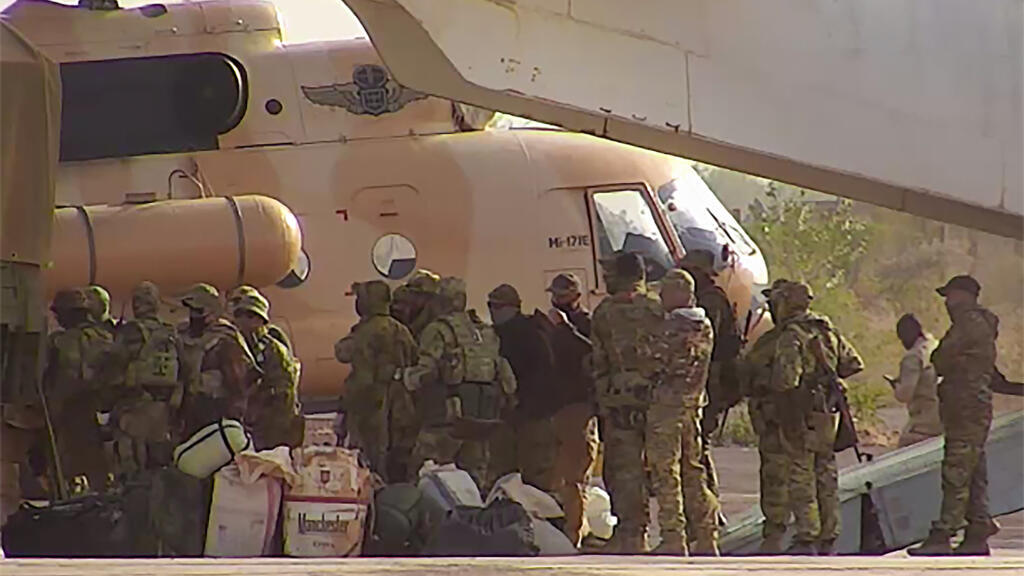
This undated photograph handed out by French military shows Russian mercenaries boarding a helicopter in northern Mali. © Armée française via AP


Human Rights Watch (HRW) released a report on Tuesday accusing the Malian army and its Russian allies from the Wagner Group, now known as Africa Corps, of executing and forcibly disappearing dozens of Fulani civilians since January.

The report details a series of summary executions and enforced disappearances, highlighting the ongoing abuses committed during joint military operations.

It shows that Mali’s armed forces and the allied Russia-backed Wagner paramilitary group have committed dozens of summary executions and enforced disappearances of ethnic Fulani men since January 2025.


Executions


The Malian army and the Wagner Group have carried out joint operations against Islamist armed groups over the past three years, HRW reports.

They appear to have executed at least 12 Fulani men and forcibly disappeared at least 81 others since January, in the context of counter-insurgency operations across several regions of the country against the Al-Qaeda-linked Group for the Support of Islam and Muslims (Jama'at Nusrat al-Islam wa al-Muslimeen, JNIM).

Witnesses said Malian soldiers and Wagner Group fighters carried out abuses against people belonging to the Fulani ethnic group, whom they accuse of collaborating with the JNIM.

“Mali’s military junta is ultimately responsible for the summary killings and enforced disappearances by the army and allied Wagner Group fighters,” said Ilaria Allegrozzi, senior Sahel researcher at Human Rights Watch.

“The junta needs to end the abuses, make the whereabouts of those detained known, investigate and hold those responsible to account.”


Fulani focus

Islamist armed groups, implicated in numerous grave abuses, have long concentrated their recruitment efforts on the Fulani community, the report shows, and successive Malian governments have conflated the Fulani community with Islamist fighters, putting them at grave risk.

Human Rights Watch also said that the African Union (AU) should press Mali’s military junta to investigate these serious allegations, fairly prosecute those responsible, and provide redress for victims’ families.

The AU should ramp up its engagement in Mali to help protect civilians from abuses by all the warring parties, including by assisting in investigations of abuses and pressing for fair prosecutions, the report reads.

This is particularly urgent following Mali’s withdrawal from the Economic Community of West African States (Ecowas) regional bloc in January, which deprives victims of abuses of an avenue for redress in the West African regional court.

Human Rights Watch interviewed 29 people with knowledge of the incidents by phone between February and May 2025, including 16 witnesses and 7 community leaders, activists, journalists, and international organisation representatives.

It has documented widespread abuses by the Malian army and the Wagner Group during counterinsurgency operations across Mali since 2021.

The NGO also wrote to Mali’s justice and defence ministers in June, with its findings and questions, but has received no replies.

Russian imprint


On 6 June, the Wagner Group announced that it was withdrawing from Mali after having “accomplished” its mission.

Wagner fighters were then replaced by the so-called Africa Corps, a paramilitary group under the direct control of the Russian government, created after the Wagner Group founder, Yevgeny Prigozhin, died in 2023.

THE NAZI'S HAD AN AFRIKA CORPS 

The announcement shows that the reframing of the Russian presence in Mali coincided with a string of major attacks by Islamist armed groups and Tuareg separatist groups in June that killed scores of Malian soldiers and some Africa Corps fighters.

“Senior Malian and Russian officials should recognise that they can be held responsible for the crimes committed by their soldiers and fighters,” Allegrozzi said.

“Whether the African Union finally presses the Malian authorities to investigate and prosecute abuses, or the International Criminal Court steps in, those linked to current atrocities may face future trials."

(with newswires)