Friday, September 05, 2025


Nornickel chief’s ex-wife can pursue massive divorce claim, UK court rules

Vladimir Potanin. (Image: The Kremlin.)

Russian oligarch Vladimir Potanin’s ex-wife can pursue a multi-billion dollar share of his stake in Nornickel, London’s Court of Appeal ruled on Thursday, allowing potentially one of the highest-value divorce cases ever brought to continue.

Potanin, the chief executive of Norilsk Nickel, the world’s largest palladium producer and a major producer of refined nickel – is facing a mammoth divorce claim from his ex-wife Natalia Potanina.

Potanina wants to bring a claim for financial relief following their formal divorce in 2014, which includes a claim for 50% of the value of her ex-husband’s ultimate beneficial interest in shares in Nornickel.

Potanin currently holds a 37% stake in the company, which is valued at nearly $9 billion, according to MOEX data.

His ex-wife is also seeking 50% of any dividends paid to Potanin since 2014 and a high-end Russian property, on which the parties spent around $150 million.

Her lawyers say she received only $41.5 million, less than 1% of the couple’s total assets, after their divorce in the Russian courts, though Potanin said his ex-wife received about $84 million and argued the couple had no connection to Britain.

London’s High Court originally rejected Potanina’s bid to bring a claim in 2019, with a judge saying that if her claim was allowed to proceed “then there is effectively no limit to divorce tourism”.

But on Thursday the Court of Appeal overturned that decision, saying she had very largely severed her ties with Russia and was entitled to bring her claim.

“The discrepancy between her award of the marital assets and the husband’s retained share was significant; the discrepancy between what she had recovered in Russia compared with what she would have recovered had the case been heard in this jurisdiction was equally significant,” the court ruling said.

Potanina’s lawyer Frances Hughes said her client was delighted that the court had recognized the merits of her case.

“She very much hopes that her case can now be resolved and can be concluded without further delay,” she said in a statement.

(By Michael Holden and Sam Tobin; Editing by William James and Ros Russell)


ESG and Haney Technical College Launch Marine Apprenticeship Program

Eastern Shipbuilding Group

Published Sep 3, 2025 11:40 PM by The Maritime Executive


[By: Eastern Shipbuilding Group]

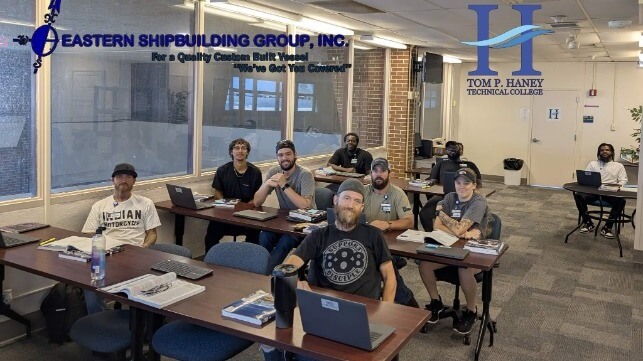
Eastern Shipbuilding Group, Inc. (ESG), in partnership with Haney Technical College, proudly announces the launch of a new Marine Electrician Apprenticeship Program as part of ESG’s BUILD workforce development initiative. The inaugural class of ten students began training last month, marking a significant step in strengthening the region’s skilled maritime workforce.

This three-year certified apprenticeship program offers participants a unique opportunity to learn while they earn, combining structured on-the-job mentorship from experienced Eastern shipbuilders with classroom instruction at Haney Technical College. Graduates will earn an industry-recognized marine electrician certification and be positioned for long-term career growth within Eastern Shipbuilding Group and the broader maritime industry.

Marine Electrical Apprenticeship Program Highlights:

  • Three-Year Structured Training: Apprentices receive a blend of classroom learning and practical experience alongside Eastern mentors.
  • Periodic Pay Increases: Participants can earn pay raises based on performance and commitment throughout the program.
  • Industry Certification: Graduates leave with a certification recognized across the shipbuilding and marine industry.
  • Career Advancement: Successful apprentices who complete the program will have the opportunity to advance into First Class Marine Electrical roles at Eastern.

“This apprenticeship program is an investment in our people and in the future of American shipbuilding,” said Joey D’Isernia, CEO & Chairman of Eastern Shipbuilding Group. “By working with Haney Technical College, we’re providing hands-on training and a clear career path for those who want to build their future with us.”

“Haney Technical College is proud to partner with Eastern Shipbuilding Group on this program that connects education directly with high-demand careers,” said Angela Reese, Director of Tom P. Haney Technical College. “These students are gaining the skills, training, mentorship, and real-world experience that enables them to join a thriving industry right here in our community.”

The apprenticeship program is part of ESG’s BUILD (Building Up Individuals through Learning and Development) initiative, which is focused on creating pathways for long-term careers in the shipbuilding industry.

The products and services herein described in this press release are not endorsed by The Maritime Executive.

D.E.I.

Trump Nominates Two to Fill FMC Commissioner Vacancies

US Capitol building
Trump administration nominated two Florida executives to join the Federal Maritime Commission

Published Sep 4, 2025 5:26 PM by The Maritime Executive


The White House released the names of two Florida executives that it is nominating as commissioners to fill the vacancies on the Federal Maritime Commission. Currently, two seats are open after the terms of Chairman Louis Sola and Commissioner Carl Bentzel expired on June 30.

Laura DiBella, the former Secretary of Commerce for Florida, is nominated for a term expiring June 30, 2028. Robert Harvey, a lawyer currently leading economic development programs in Florida, is nominated for a term expiring June 30, 2029. The administration has not announced its choice for chairman of the FMC to replace Sola. DiBella and Harvey would join current commissioners Rebecca Dye, Daniel Maffei, and Max Vekich.

“I am humbled, honored, and grateful for the faith that President Trump has instilled in me with this nomination. The gravity and responsibility of the role is not lost on me, and I look forward to playing an integral part in carrying out his mission in ‘Restoring America's Maritime Dominance’, ’” DiBella told The Maritime Executive.

She is currently a Government Relations Advisor at the law firm of Adams & Reese. In addition to having served as Florida’s first female Secretary of Commerce (2023), DiBella has extensive experience in economic development, having served as President of Business Development at FlordiaCommerce, President/CEO at Enterprise Florida, and President of the Florida Opportunity Fund (Florida’s Venture Capital arm).

DiBella also holds the distinction of having been appointed as the first-ever, full-time executive director of Florida Harbor Pilots Association. She was at the organization that represents nearly 100 harbor pilots for the state’s 16 deepwater ports from 2019 to 2022. She also served from 2017 to 2019 as the Port Director for the Port of Fernandina, Ocean Highway and Port Authority of Nassau County, Florida.

Robert Harvey and DiBella worked together at Enterprise Florida, where he was General Counsel when DiBella led the state’s economic development arm. Harvey, a lawyer who concentrated his practice in securities litigation, arbitration, and regulation, is now President & Executive Director of the Florida Opportunity Fund, a private, not-for-profit corporation with a mission of mobilizing investments in a broad variety of Florida-based new technology companies. He is also Executive Director of the Florida Development Finance Corporation.

Harvey began his career with the United States Navy, where he served on active duty from 1987 to 1990 as a Navy Judge Advocate and Special Assistant U.S. Attorney.

After confirmation by the U.S. Senate, DiBella and Harvey would join the FMC at a critical time as the Trump administration’s tariffs are reshaping the shipping industry and the administration plans to roll out fees on Chinese-operated or built ships calling at U.S. ports. The administration and the U.S. Congress are focusing on rebuilding the American merchant marine, while the FMC has been moving to ensure fair shipping policies and recently launched an investigation into international flag of convenience states and the administration and enforcement of regulations.


Q&A: Kathy Metcalf, President Emerita, Chamber of Shipping of America

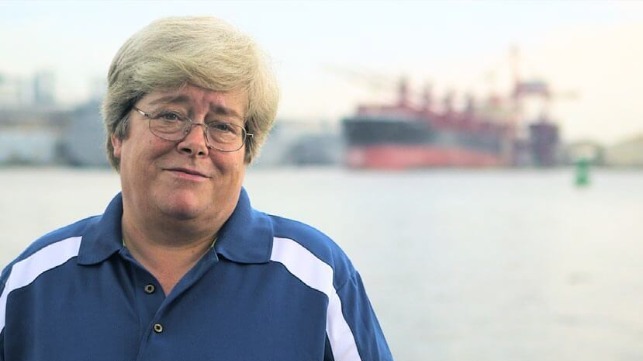
Kathy Metcalf

Published Sep 3, 2025 8:24 PM by Jack O'Connell


(Article originally published in July/Aug 2025 edition.)


Kathy Metcalf has been a trailblazer from the moment she walked through Vickery Gate at Kings Point as a member of the first coed class of the U.S. Merchant Marine Academy. That was 51 years ago.

Since then, she has sailed aboard oil tankers for Gulf and Sunoco, come shoreside with Sunoco as a regulatory and government affairs official, earned a law degree at night from Widener University and in 1997 accepted an invitation from Joe Cox, the long-time President & CEO of the Chamber of Shipping of America (CSA), to join the Chamber as Director of Maritime Affairs.

Eighteen years later, in 2015, she succeeded Cox as President & CEO of CSA. At each step of the way, she's demonstrated that the maritime industry is not just a "man's world" and that there's plenty of room for women too. Not that she wanted any special treatment, just a fair shot. And she has excelled at every stage of the journey with her common-sense intelligence, interpersonal skills, quick wit and sense of fairness.

In July, Kathy stepped down as President & CEO and handed the reins to her more-than-capable #2, Sean Kline. She will stay on as President Emeritus, working with CSA members on technical and regulatory issues. "It's not 'goodbye,'" she says, "but 'see ya around.'"

Welcome, Kathy! We're so honored to have you. Tell our readers more about yourself. What attracted you to the maritime industry?

It was a bit of a circuitous route. I originally wanted to attend the U.S. Military Academy at West Point and received nominations to West Point, Annapolis and the Air Force Academy. I was, alas, born too soon and received letters from all three explaining that they were not accepting women for the incoming classes in 1972.

Changing direction, I attended the University of Delaware for two years and in the fall of my second year received a call on my dorm phone (yes, it really was a pay phone) from a young Senator from Delaware by the name of Joe Biden. He explained to me that the U.S. Merchant Marine Academy was accepting women in the summer of 1974 and asked if I was interested. My parents and I visited Kings Point the following weekend, and I made the decision to enter in that first class with women in the summer of 1974 and graduated in 1978. I will always be grateful to Senator Biden for giving me this incredible opportunity. My intention was to go active-duty Navy upon graduation, but during my time at Kings Point I realized what a great industry this is and have stayed in it for 51 years.

Remarkable! You then sailed for a while. Were there lessons at sea that transferred to your shore jobs?

Lessons learned during my sailing days helped provide me with the confidence and judgment to tackle whatever new challenges lay ahead. They also endowed me with a mariner's perspective of ship operations, which is critical for a successful move to shoreside management positions. Throughout my shoreside career which included obtaining a law degree, I've always been a mariner first and have taken that perspective into account, recognizing that the linchpin to any successful shipping endeavor are the mariners that make it happen.

Excellent! Tell our readers about the Chamber of Shipping of America. What does it do and what is its history?

The Chamber of Shipping of America (CSA) is the U.S. national shipowners association. For over 100 years, it's represented the interests of shipowners, operators and charterers in the U.S. and internationally at IMO and ILO. Our members own/operate/charter all types of vessels, both U.S. and non-U.S. flagged, engaged in the U.S. domestic and international trades, and we represent them before legislative and regulatory bodies.

Our primary focus is to advise them on current compliance challenges as well as future compliance issues coming down the road.

What are some of those issues?

There are many, but the most important are the global move toward decarbonization of the shipping industry, the risks to shipping from geopolitical challenges (Ukraine/Russia, Middle East), global trade issues including the U.S. Trade Representative's proposal to impose port fees on certain vessels, cybersecurity and simply keeping up to date on new requirements imposed on shipping at the global, national and, in some cases, sub-national levels.

What's the relationship between CSA and the International Chamber of Shipping in London?

CSA is a founding member of the International Chamber of Shipping (ICS) and serves as the U.S. representative on all ICS bodies including the Board of Directors, the Marine Committee, the Maritime Law Committee and the Shipping Policy Committee. CSA also serves on the ICS delegation to IMO meetings. We collaborate on a number of issues at IMO and in the U.S. impacting the industry.

You must be excited about the SHIPS for America Act and the Trump Administration's commitment to "Making Maritime Great Again."

Absolutely! I remember in 1978, when I graduated from Kings Point, there were hundreds of U.S.-flag vessels trading internationally. Over the last five decades, we've allowed our commercial shipbuilding and U.S.-flag international fleet to shrink to unacceptable levels as regards national and economic security – due principally to neglect. With thanks to the President, Senators Mark Kelly and Todd Young and Representatives Trent Kelly and John Garamendi, the industry is in the first stages of revitalization.

It took us a long time to get to where we are now, and it will take some time to bring the industry back. What is desperately needed is a leader (champion!) who can bring all these stakeholders and programs together across the legislative and executive branches and that position, in my opinion, needs to be in the White House.

What will it take to make the dream of a 250-vessel fleet a reality?

That's a tough one to answer. We obviously need more U.S. shipyards, shipyard workers and ultimately more mariners to man these vessels. Less obvious, but just as important, is the need to create a business environment where U.S. shipyards and U.S.-flag vessels can compete in the international marketplace. This will likely be accomplished through a combination of public funding (subsidies in one form or another) and private sector investment. Ultimately, we need cargo. All these new ships and mariners won't make a difference if the cargo isn't there!

Where will the mariners come from? How can we make maritime a more attractive career choice for the next generation?

We've been trying to address this challenge for years. First, we need a comprehensive outreach program that makes the general public aware of just how important the commercial maritime industry is to our national economy and security.

Second, we need an equally comprehensive outreach program for kids in middle school through high school to introduce them to the opportunities in the maritime industry.

And third, we're losing maritime academy graduates to the tech sector in significant numbers and have to figure out a way to make maritime jobs more attractive. Salaries between the maritime and tech industries are comparable, but tech doesn't require you to be away from home and family for six months of the year.

What is the future of the Jones Act? Will it have to be modified in some way to accommodate the new push?

CSA supports the Jones Act in its current form. Keep in mind that the SHIPS for America Act is focused on building the U.S.-flag internationally trading fleet, so I don't see what modifications would be necessary since the U.S. build requirement would not apply to U.S.-flag vessels engaged in international trade. This allows for the reflagging of foreign-built vessels into the U.S. flag international fleet.

You've been a trailblazer – a woman in a man's world – your entire life. What's it been like? How do you see the future of women in maritime?

I've never seen myself as a trailblazer. I was just a lucky person who happened to be in the right place at the right time. All I wanted was a fair chance to succeed in a career that at the time had very few women. I got that fair chance, and it was up to me to take advantage of the opportunities before me.

I could not have succeeded without my brothers (and sisters) at Kings Point and later in the industry that provided support and encouragement. From my perspective, success is not the result of one person's efforts. It's about your efforts and how you interact with the good people around you, including family, friends and professional colleagues.

Are you a member of WISTA, the Women's International Shipping & Trading Association?

I am a proud member of WISTA U.S.! WISTA is a unique organization that is obviously focused on women in the maritime industry but has grown to be much more than that. WISTA Sistas have welcomed WISTA Mistas, and the support, collaboration and friendships are unmatched by any other organization in which I have participated.

Wonderful! Any final message for our readers?

As someone in the latter stages of her career, I would like to send a message to the new generation of maritime professionals, including those in their early years at the academies: Make a plan with a pencil and eraser. The key to progress in life and in your career is how you adapt to change and react to new and unplanned opportunities.

The opinions expressed herein are the author's and not necessarily those of The Maritime Executive.




Stena Bulk & Crowley Addition of CS Anthem to the Tanker Security Program

Stena Bulk
CS Anthem

Published Sep 3, 2025 11:29 PM by The Maritime Executive


[By: Stena Bulk]

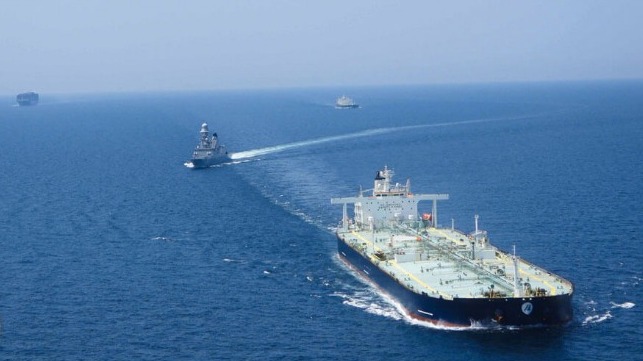
The joint venture between Stena Bulk and Crowley, Crowley Stena Marine Solutions, has received approval from the U.S. Maritime Administration (MARAD) to bring the CS Anthem, a medium-range tanker, into the United States Tanker Security Program (TSP).

The U.S.-flagged 49,990mt CS Anthem will be managed and crewed by Crowley under a bareboat charter through Crowley Stena Marine Solutions. The vessel enters the program alongside Stena Imperative and Stena Impeccable, replacing the Stena Immaculate.

Erik HÃ¥nell, President and CEO of Stena Bulk, said: “The addition of CS Anthem highlights our commitment to the Tanker Security Program. Following the challenging incident with the Stena Immaculate earlier this year, we felt that it was important to do everything in our power to ensure we can maintain reliable tanker capacity for our US partners.

“Our joint venture with Crowley continues to demonstrate the value of combining our global tanker leadership and expertise with Crowley’s US-flag leadership to deliver agile and dependable solutions.”

Through the tanker security programme, CS Anthem will provide vital energy transport readiness in support of the U.S. Department of Defense and help bolster the nation’s strategic sealift capacity.

Stena Bulk, through Crowley Stena Marine Solutions, remains committed to providing high-quality and reliable tanker services globally, that meet the needs of both government and commercial customers across global energy and transport supply chains.

The products and services herein described in this press release are not endorsed by The Maritime Executive


Houthis Attempt to Increase Attacks on Shipping After Israeli Actions 

ZIONIST WAR ON YEMEN

vessels in the Red Sea
EUNAVFOR Aspides continues its protection efforts as the Houthis claim new attacks (EUNAVFOR Aspides)

Published Sep 4, 2025 1:28 PM by The Maritime Executive


The Houthi militants have not made new threats against shipping, but there appears to be another increase in activity both against Israel and shipping that it links to Israel. It comes after the Israelis renewed their statements vowing to stop the Houthi aggression after the militants started to use missiles with cluster bombs.

UK Maritime Trade Operations issued a new warning of suspicious activity today, September 4, after receiving reports from an unnamed vessel in the Red Sea. The vessel’s master informed the tracking operations that “an unknown projectile” hit the sea at “some distance” from the vessel. The ship and its crew were reported uninjured and proceeding. The incident took place while the ship was approximately 178 nautical miles northwest of Hudaydah, Yemen, in the Red Sea north of the Bab al-Mandeb strait.

The warning also states that the master said the vessel had experienced “severe electronic interference” while it was transiting in the region. UKMTO is advising caution during transits.

The attack came as Lloyd’s List published new data showing that the number of vessels making the Red Sea transit increased last month. They calculate that transits were at their highest level since January 2024, and they cite increases from LPG tankers and bulkers, as well as the transits by tankers. The container carriers have continued to mostly divert their vessels around Africa.

UKMTO numbers today’s incident as the thirtieth of 2025 after well over 100 in 2024. However, there had been a lull after the Houthis took credit for sinking two bulk carriers, Magic Seas and Eternity C, in July.

Last week, Israel responded to what it said was the first attack using cluster weapons. After threatening the leadership of the Houthis, Israel attacked, killing one of the group’s senior leaders, the self-declared prime minister of the Houthis, Ahmed al-Rahawi. Associated Press determined, based on photos, that there were a total of 11 coffins in the funeral processional on Monday.

The day before, the Liberian-registered chemical tanker Scarlet Ray also reported a missile had splashed near the vessel and exploded. The Houthis claimed they struck the vessel, which is operated by Eastern Pacific, the Idan Ofer company. Eastern Pacific later also reported the vessel had not sustained damage.

The Houthis also made a claim on Tuesday, September 2, to have struck the MSC Aby (110,387 dwt / 9648 TEU). The unconfirmed report, which was dismissed by security consultants as likely false, said they had launched two drones and a missile that struck the containership in the Northern Red Sea. The ship, according to MSC’s published schedule, was due in Jeddah, Saudi Arabia.

Analysts have raised concern, however, that the Houthis have extended the reach of their attacks further north into the Red Sea, threatening the region near Saudi Arabia. Last year’s attacks were mostly in the southern Red Sea near the strait or in the Gulf of Aden.

While there have been reports of attacks on shipping in recent days, the group is focused mostly on Israel. Today, September 4, they claimed another missile launch, which reports say the Israelis intercepted. Analysts note, however, that the launches directed at Israel are coming at an increased frequency, either daily or multiple times in a day. The Israelis have again made public statements that they will increase their response to stop the launches.

Two Ferry Crewmembers Stand Trial for Fatal Collision off Jersey

Greenleaf123
Greenleaf123 / iStock

Published Sep 4, 2025 3:51 PM by The Maritime Executive


Two crewmembers of the ferry Commodore Goodwill are standing trial for the deaths of three fishermen in connection with the sinking of a fishing vessel off Jersey, UK in late 2022. 

On the morning of December 8, 2022, the Condor-operated ferry Commodore Goodwill was under way about four nautical miles off the coast of Jersey, making about 19 knots. The vessel was behind schedule and had put on extra turns to catch up; the weather was clear and surface conditions were calm. UK officer Lewis Peter Carr was standing watch, and Ukrainian seafarer Artur Sevash-Zade was on lookout duty. 

At about 0535, the Commodore Goodwill hit the small fishing vessel L'Ecume II, sinking it instantly. Skipper Michael Michieli and his two deckhands, Philipinne nationals Jervis Baligat and Larry Simyunn, were killed. 

Prosecutors allege that there were ample advance warnings of an impending collision, and that Carr and Sevash-Zade were negligent in their duties. Both men face three counts of manslaughter for the fatal accident. 

On the morning of the collision, Sevash-Zade departed the bridge for breakfast without a relief, prosecutors allege - a violation of company rules - and the L'Ecume II was visible on radar while he was in the ship's mess. After he returned, 13 minutes before the casualty, Goodwill altered course to starboard seven degrees, putting the two vessels on a collision course; the master's standing orders were to maintain a minimum one-nautical-mile closest point of approach, but the ordered course would bring them into much closer proximity, the prosecutors alleged. 

Goodwill took action to avoid collision when in extremis, but it was too late. The helm was left in autopilot until after collision, and the watchstanders did not pull back on the throttle, prosecutors said. 

"[This was] not a freak accident, it was purely the consequence of human error and negligence," Crown Advocate Matthew Maletroit told the court. 

China Unveils Large Shipboard Laser System for "Maritime Attack"

LY-1
People's Armed Police Propaganda Bureau / state media

Published Sep 4, 2025 9:12 PM by The Maritime Executive


China's military has unveiled a previously-unseen laser weapons system at its massive parade in Beijing. The new LY-1 laser is designed for shipboard applications, but for the reveal, it was fielded in a truck-mounted mobile version.

The LY-1 is the latest in a series of laser weapons that China's PLA Navy has been developing since the late 2010s. Laser weapons have advantages, particularly against high-volume threats like drone aircraft and drone boats, but they also pose significant technical challenges: they must be able to track on target long enough to heat up and burn a hole in an incoming drone or missile, and the length of time required goes up if the power delivered goes down. Atmospheric conditions like fog and smoke can interfere with a laser beam, reducing impact on the target. 

The LY-1's power and range were not disclosed, but the announcer for the parade described the device as "strongly capable of precision disruption and persistent strike." In the West, shipboard laser weapons are discussed in the context of point defense against drones and missiles; by contrast, the official description advertised the LY-1 as a device capable of "maritime attack" applications, indicating an offensive capability is contemplated.

Global Times, a state media outlet, said that the LY-1 can also be used for damaging optical sensors - a low-end application for a shipboard laser. "On ships, the LY-1 has sufficient space for power units, meaning that it could have higher power, enabling it to be capable of intercepting not only attacks from unmanned equipment, but also anti-ship missiles, with very low cost for each interception," Global Times wrote. 

Zhao Dashuai, a social media commentator for the People's Armed Police Propaganda Bureau, connected LY-1's development to U.S. Navy weapons systems. "Capable of shooting down missiles, this makes subsonic antiship missiles obsolete," Zhao wrote. "Looking at you LRASM, Harpoon and NSM [Lockheed's Long Range Anti-Ship Missile, Boeing's Harpoon and Kongsberg's Naval Strike Missile]."  

At the parade, the PLA also displayed the Hurricane 3000, a massive microwave array for disabling drones' electronics mid-flight. Not just a jammer, the array is powerful enough to cause internal damage to electronic circuits, like putting a smartphone in a microwave oven. China North Industries Group Corporation claims that it has a range of three kilometers, and it is truck-mounted for road-mobile deployment (or mounting on an open weather deck). 

The U.S. Army has a comparable system with a more compact form factor and somewhat less range, the Leonidas Generation II. The U.S. Navy tested an earlier version of this system against small craft targets, and found it effective in disabling electronically-controlled motors - a useful technology for defeating swarms of unmanned drone boats. 


Leidos Develops Autonomous Commando Landing Craft for UK

Leidos
Courtesy Leidos

Published Sep 4, 2025 6:32 PM by The Maritime Executive

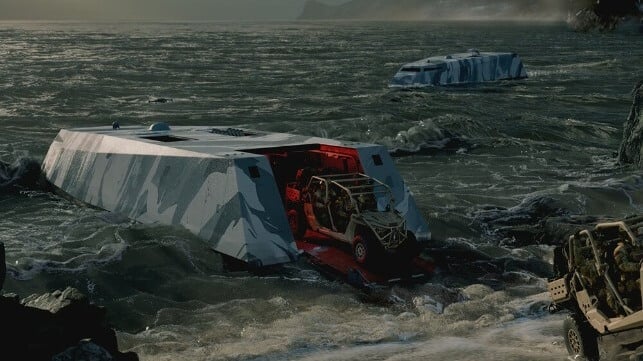
Leidos, the IT and defense tech company behind the Sea Hunter drone boat, has come up with an autonomous commando team delivery craft for the Royal Navy - a new and unusual application of naval autonomous technology. The program's goal is to deliver a series of 24 "medium surface insertion craft" that can deploy special forces, lightweight vehicles and "medium combat loads."

Leidos was historically known as a government IT contractor, but its work with the Navy has allowed it to build up expertise in maritime autonomy, and that's a big part of the firm's focus going forward. "We're not world renowned as an autonomous naval vessel builder. That's because we don't build ships. But everything around it, and everything that enables those commercial shipyards to become government shipyards, we have," CEO Thomas Bell told DefenseOne last month. 

Originally developed for long-distance oceanic navigation for patrol, submarine-tracking and surface warfare missions, Leidos' autonomy technology can be found aboard the ACTUV / Sea Hunter and the crewboat-based Ghost Fleet Overlord prototype series. The private company currently holds an operation and management contract for the Navy's Ghost Fleet vessels, plus a $250 million five-year contract for unmanned ISR system R&D. 

Leidos announced Thursday that it has now developed an autonomous landing craft for delivering British commando teams to shore, capable of long range and high speeds (above 40 knots). An illustration released with the announcement shows that it will have a stern ramp for disembarking troops; enough space and deadweight for carrying light tactical vehicles; and a sloped tumblehome hull, typically selected for reduced radar signature. 

The vessel was designed by Leidos Naval Architects (Gibbs & Cox), the Royal Navy, and the UK Commando Force. It will be fitted out for AI and vessel autonomy, making it one of the larger operationally-deployed autonomous vessels in military service (though it is still not a pure unmanned design, like the Saildrone or NOMARS).  


Glamox Provides Advanced Helicopter Landing Systems for Royal Navy Warships

Glamox AS
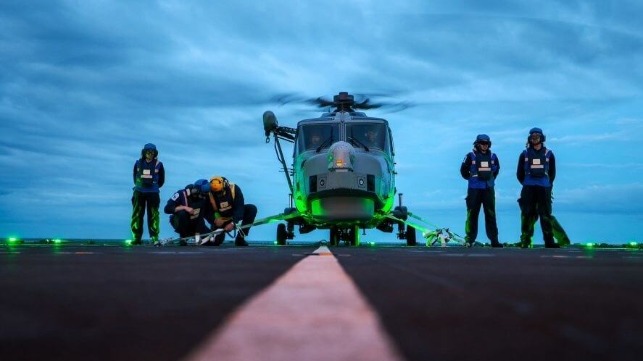
HMS Trent completes successful sea trials of an advanced lighting system that guides helicopter pilots in rough seas and night operations

Published Sep 3, 2025 10:11 PM by The Maritime Executive


[By: Glamox]

Glamox, a world leader in lighting, has enhanced the capabilities of the Royal Navy’s Offshore Patrol Vessels, HMS Trent and HMS Spey, to land helicopters on a moving deck in challenging weather and during night conditions. HMS Trent was the first vessel to be equipped with the advanced Helicopter Visual Landing Aid System (HVLAS), which underwent rigorous testing off the English south coast in July, involving three days of day and night landings from a Wildcat helicopter. HMS Spey is the next in line to be fitted with the system. Additionally, Glamox supplied both vessels with military-grade Night Vision Imaging System navigation lights.

The HVLAS is a comprehensive flight deck-based lighting system that provides pilots with visual cues and information during approach and landing. It includes a stabilised horizon bar that shows pilots the position of the horizon, regardless of the roll and pitch of the vessel. A glide path indicator assists pilots in judging approach angles using a three-colour light beam to show the correct path or whether the helicopter is too high or too low. Additional deck-edge lighting and focused LED beam lines provide accurate positional cues for pilots operating in low-visibility conditions or using night vision goggles. See the video.

The lighting system includes controls to dim or adjust the lighting intensity for improved visibility. This means that the ship can support covert missions, operating in near-dark conditions, and the lighting can be tuned to meet the operational requirements of helicopters from other forces.

“The fact that we now have the ability to control our lights in such a different manner will mean that the ability for partner nations to land helicopters will be significantly easier,” said Lieutenant Harry Jukes, HMS Trent’s Weapon Engineer Officer, interviewed by the British Forces Broadcast Service.

Following HMS Trent’s refit in Malta and the successful validation of the system at sea, the vessel is expected to be deployed to the Caribbean, where it can support various missions from counter-narcotics to humanitarian aid. The HVLAS for HMS Spey will be fitted in Singapore during its scheduled maintenance period. The Royal Navy has a further three Batch 2 River Class Offshore Patrol Vessels that could benefit from the system.

“This is the first time that Royal Navy Ships have had an HVLAS retrofit, and we are delighted with the results. The new technology greatly extends the capabilities of the Offshore Patrol Vessels to conduct helicopter operations at night and in bad weather conditions,” said Ronny Orvik, head of Glamox’s Defence & Security business. “Furthermore, this major update underscores the value of the Defence Equipment & Support arm of the UK’s Ministry of Defence in keeping its ships at the forefront of advanced technology.”

The products and services herein described in this press release are not endorsed by The Maritime Executive.


Northern Sea Route

Russia: First NSR International Boxship Route to Start as Box Volume Grows

Northern Sea Route containership and icebreaker
Containership on an earlier voyage being aided by an icebreaker (Rosatom)

Published Sep 4, 2025 7:27 PM by The Maritime Executive


Russian officials are again highlighting the growth of shipping and specifically containership along the Northern Sea Route. In just 10 days, they expect the first containership following an international route to European ports will start an NSR transit, while data shows a slight increase in traffic so far this year along the Arctic shipping route.

The Liberian-flagged containership Istanbul Bridge (66,781 dwt / 4,950 TEU) is completing an eastbound transit, and then Rosatom reports says IAA Port News that the vessel will depart September 15 westbound. For the first time, it will follow a route coming from China with intermediary stops at Felixstowe, Rotterdam, and Hamburg, before proceeding to St. Petersburg.

Speaking at the Eastern Economic Forum, IAA reports Rosatom executives highlighted that container vessel traffic is growing on the NSR coming from international ships. They report that last year 14 containerships made the transit, twice as many as in 2023, and they projected more than 20 transits this year. All vessels making the NSR transit have to obtain permits from Rosatom.

The forecast is consistent with a mid-season analysis of vessel transits on the NSR released by the Center for High North Logistics. They analyzed AIS data and reported that transits during the first half of the season showed a slight increase, reaching 52 as of the end of August versus 45 last year, with 17 completed, 10 nearing completion, and 12 within the NSR area. An additional 13 ships have commenced sailings scheduled to transit the NSR.

The data analysis shows a nearly equal split between east and west transits, but tankers are laden traveling east and returning westward most likely in ballast. Tankers continue to make up the largest number of vessels using the NSR (13), plus two LNG tanker voyages, 

Bulk carriers and containerships are so far tied with 10 voyages for each segment.  However, they said only three of the eastbound bulkers were traveling with cargo. They, however, assume that the vast majority of the containerships are carrying cargo. The main cargo flow continues to be from Russia to China.  

The analysis notes that September and October, and into November, will be an active period for the NSR. They also highlighted that ice has remained present on portions of the route, with residual ice still being observed in the eastern part of the East Siberian Sea.

The final data for the NSR is not scheduled to be released till the end of the year. Russia has been highlighting strong growth and progress toward the objective of year-round transits and reaching the goals set by Vladimir Putin, but it is unclear how accurate the data is and how close they are toward achieving ambitious goals for Arctic route shipping.