It’s possible that I shall make an ass of myself. But in that case one can always get out of it with a little dialectic. I have, of course, so worded my proposition as to be right either way (K.Marx, Letter to F.Engels on the Indian Mutiny)
Sunday, February 01, 2026
AME: First Nations Chief calls for shared decision-making in British Columbia mining
Amanda Campbell of the Tk̓emlúps te Secwépemc Nation sings a prayer song at the Reconciliation breakfast at Roundup. Credit: AME.
Delivering a keynote address at the AME Roundup conference in Vancouver this week, Chief Rosanne Casimir of the Tk̓emlúps te Secwépemc Nation said meaningful reconciliation in British Columbia’s mining sector must be grounded in shared decision-making, respect for Indigenous law, and early engagement with First Nations.
Tk̓emlúps te Secwépemc is part of the Stk̓emlúpsemc te Secwépemc Nation (SSN), a governance body formed in 2007 through a partnership between Tk̓emlúps te Secwépemc (formerly the Kamloops Indian Band) and the Skeetchestn Indian Band. SSN territory is among the most heavily mineralized — and historically mined — regions in the province.
Speaking against the backdrop of heightened industry attention on reconciliation following recent court rulings and the passage of British Columbia’s Declaration on the Rights of Indigenous Peoples Act (DRIPA), Casimir emphasized that industry, government and First Nations must move beyond transactional relationships.
The British Columbia Court of Appeal determined in a new ruling in December 2025 that DRIPA incorporates the United Nations Declaration on the Rights of Indigenous Peoples (UNDRIP) and creates legally enforceable obligations.
Tk̓emlúps te Secwépemc Chief Rosanne Casimir delivers keynote address at Reconciliation breakfast. Credit: AME.
The case was a partial appeal by the Gitxaala and Ehattesaht First Nations, following a 2023 BC Supreme Court decision that ruled the province’s automatic online mineral claim system breached its constitutional duty to consult, but had limited interpretation of DRIPA.
“It’s about resilience and how we get through it, and relying on our people, our community and our allies to achieve what is possible,” Casimir said.
Mineral tenure pressure and consent
SSN territory is heavily impacted by mineral tenures, and Casimir said this creates urgency, particularly as governments frame mining development within conversations about critical minerals and national security.
Pointing to maps of proposed and existing projects, Casimir noted that many mineral claims are issued by the province without First Nations’ consent or recognition of Indigenous authority.
“What the map makes clear is that a large portion of the SSN territory has already been staked, often without our consent and without recognition of our laws or authority to make decisions on our lands,” Casimir said.
She also highlighted crown reserves — areas where mineral staking has been restricted or withdrawn — noting that these often overlap with lands SSN identifies as culturally or environmentally sensitive.
Not anti-mining, but location matters
Casimir stressed that SSN is not opposed to mining itself, but to development in locations with environmentally and culturally sensitive ecosystems.
Within SSN territory, the Afton mine copper-gold mine, 100% owned and operated by New Gold, is currently the only major operating mine. In 2017, SSN issued a decision not to consent to the project following provincial, federal and SSN-led environmental assessment processes.
The nation also has dormant sites, such as the Bonaparte mine, and major proposals like the Ajax copper-gold project, which has not been approved but remains part of the region’s land-use history.
“While we worked against certain mines, we’re not against mining — it was always about the location,” Casimir said.
Indigenous law, stewardship and UNDRIP
Casimir said strong, rights-based decision-making — grounded in Secwépemc law and supported by UNDRIP — is essential to ensuring future development brings communities together rather than dividing them.
SSN has applied its own environmental assessment processes across multiple major projects, centering decisions on stewardship and caretaking responsibilities.
“Our responsibilities are to the land, the plants, the animals — everything that’s living and not living on those lands,” she said.
Casimir emphasized that stewardship extends beyond SSN territory, including regional impacts from projects and mines elsewhere in British Columbia.
Call for early engagement
Casimir urged mining companies with mineral claims staked to engage early and build genuine relationships with First Nations.
“Engaging early helps proponents understand cultural significance, environmental sensitivities and community interests — but just as importantly, it establishes a relationship.”
She extended an open invitation to companies holding claims in SSN territory to meet directly with the nation.
“Build trust rather than transactions. Projects move forward with stronger foundations,” Casimir said.
Casimir closed by reflecting on Secwépemc teachings about balance, drawing on ancestral practices tied to salmon stewardship.
“Our ancestors understood that taking too much risked losing an entire resource. Those teachings remind us that economic development and environmental stewardship are not opposing forces — they are shared responsibilities.”
Australian lithium miners plot expansions after price surge
On Friday, Australian major PLS Group (ASX: PLS) reported a 57% increase in its average realized price to $1,161 per tonne on a 5.2% spodumene basis, or $1,336/t for 6% spodumene. Prices have continued to rise in January, reaching as high as $2,500/t this week, up from around $600/t in July 2025.
“A combination of factors are supporting this recovery, including constructive policy settings in China, particularly around energy storage deployment and EV adoption, as well as ongoing uncertainty on the supply side, including the timing and extent of potential restarts of high-cost sources,” PLS managing director Dale Henderson said during a conference call.
“Importantly, while we have long held the view that pricing needed to recover from the mid-25 lows, we’re not calling an end to volatility. The market remains sentiment driven, but pricing is continuing to respond sharply to policy signals and supply expectations.”
In mid-January, Australian investment bank Barrenjoey lifted its 2026 spodumene price forecast to $3,250/t, while noting it remained well ahead of consensus estimates.
Restarts under consideration
PLS’ Pilgangoora operation in Western Australia has capacity to produce up to 1 million tonnes of spodumene, with 2026 financial year guidance of 820,000–870,000 tonnes. The operation’s 200,000t-a-year Ngungaju plant was placed on care and maintenance in December 2024 due to weak market conditions.
PLS confirmed it is considering a restart of Ngungaju amid strong inbound offtake interest and has completed early operational readiness work to enable a potential restart within four months. Henderson said at current prices Ngungaju would generate “very, very strong margins”, though the company would weigh the broader outlook before deciding.
“In terms of all of the indicators I’ve got access to, everything is looking very, very strong on a six- to nine-month basis,” he said. “The further you look out, it gets harder to take a view, but conversations across our customer base, including major chemicals groups, point to a very positive near-term outlook.”
This week, Mineral Resources (ASX: PLS) increased its 2026 financial year lithium guidance for the Wodgina and Mt Marion mines in WA to 450,000–490,000t from 380,000–420,000t and confirmed it is considering a restart of the Bald Hill mine, which was suspended in December 2024.
MinRes chief financial officer Mark Wilson told analysts the company needed to be comfortable with market conditions before proceeding, noting significant work would be required to mobilise the plant and that a restart could take up to four months from a final decision.
Copper producer Develop (ASX: DVP), which owns the Pioneer Dome lithium project in WA, said the re-emergence of the direct ship ore market had created an opportunity. Managing director Bill Beament said the fully permitted project could move into production within six months, with financing under way for the A$35–40 million ($25–28 million) development and offtake discussions progressing.
Longer dated supply
At the longer-dated end of the supply curve, the Greenbushes mine in WA, the world’s largest hard rock lithium operation, processed its first tonnes from the CGP3 expansion just before Christmas, adding 500,000tpa of capacity. IGO (ASX: IGO) managing director Ivan Vella said an optimisation review was under way, including consideration of a potential CGP4 expansion.
Meanwhile, Liontown (ASX: LTR) said it reached an “inflection point” in the ramp-up of its Kathleen Valley underground lithium mine during the December quarter and has begun a study to refresh the economics of a potential expansion to 4 million tonnes per annum, as outlined in its 2021 feasibility study.
Managing director Tony Ottaviano said the company would apply insights from 16 months of operating Kathleen Valley, describing the proposal as a brownfields expansion that would materially reduce execution risk and time to market. While he declined to comment on the sustainability of recent price gains, Ottaviano said customer interest was strong, with enquiries covering all potential expansion tonnes.
PLS is also studying a A$1.2 billion expansion of Pilgangoora to 2Mtpa and its Colina greenfields project in Brazil, with updates expected later this quarter.
Henderson declined to comment on timing but said both developments were inevitable given projected demand growth.
“As you consider the expected growth rates of demand for the industry and project that forward, you need P2000, you need Colina, and you need more assets to come online to serve that growth demand,” he said.
RARE EARTHS
Australia says US price floor backdown won’t derail its critical minerals strategy
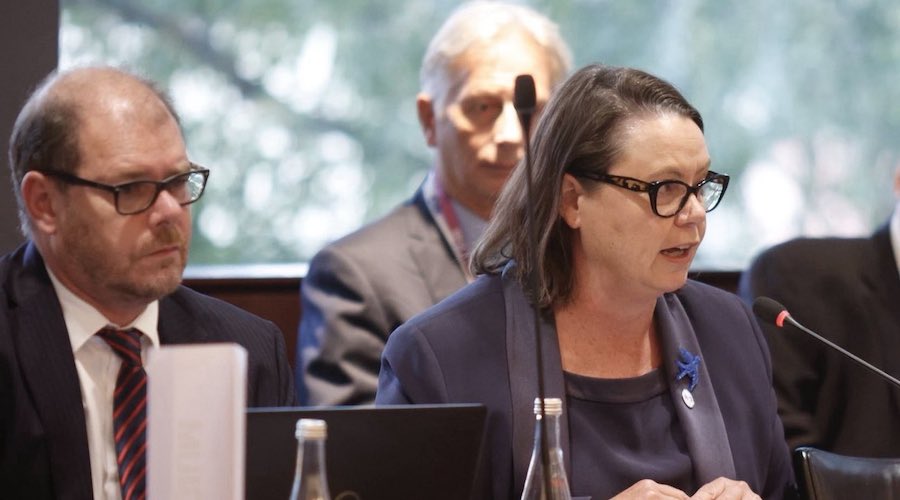
Australian Minister for Resources Madeleine King. (Image by King’s press team, Twitter/X.)
Australia on Friday said it would support its critical mineral supply chains after the US stepped back from plans to guarantee a minimum price for such projects.
The sector was still in the red on Friday. Lynas, the world’s biggest producer of rare earths outside China, was down by more than 4%.
The backdown was communicated to US mining executives by Trump administration officials and indicated a lack of congressional funding for price floors and the complexity of setting market pricing, Reuters reported.
That “won’t stop Australia (from) pursuing our critical minerals strategic reserve program to make sure Australia has access to the resources it needs to build a future made in Australia,” Resources Minister Madeleine King told Sky News on Friday.
“We know from what we’ve seen in reports and we will let that play out … the US has introduced a price floor for one particular project and that’s the only one it has done it for, and that was a game-changer.”
Australia has been positioning itself as a critical minerals alternative to China, the world’s biggest producer, for use in the automotive and defence sectors.
It has said it would establish a A$1.2 billion ($840 million) strategic reserve of minerals that it believes is vulnerable to supply disruption.
The stockpile, which will prioritize antimony, gallium and rare earth elements, is expected to be ready by the second half of 2026.
“We’ll have a number of mechanisms, a floor price will be one through offtake agreements,” King said. “We are determined to make sure there is value for taxpayer money in the reserve and in any floor price.”
($1 = 1.4278 Australian dollars)
(By Christine Chen; Editing by Thomas Derpinghaus)
Mozambique’s president opens Chinese-owned graphite processing plant
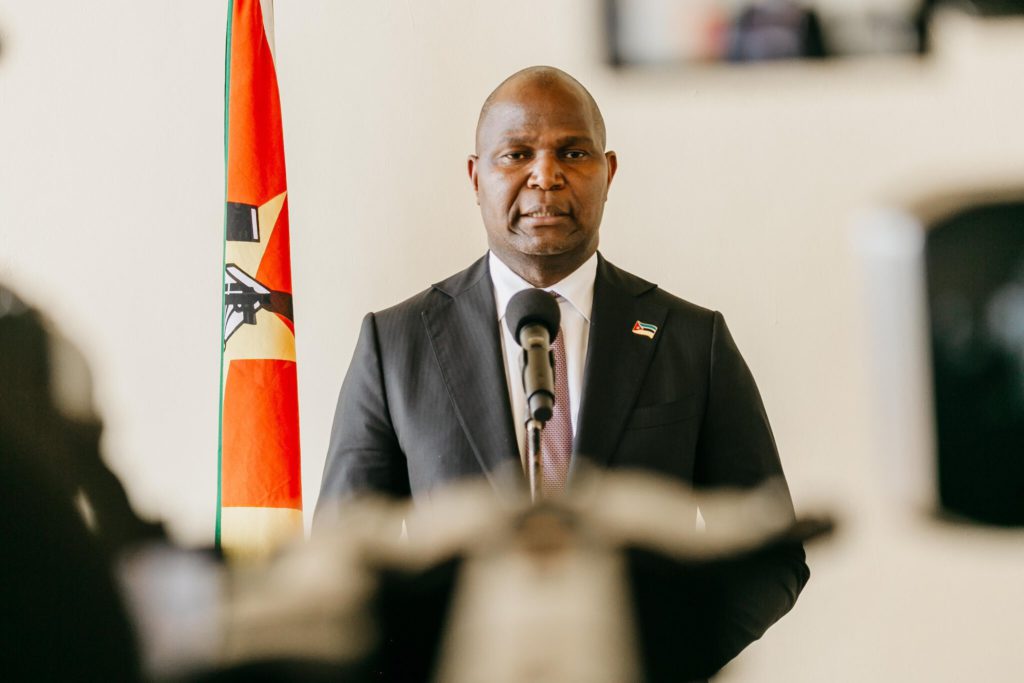
Mozambique’s President Daniel Chapo opened a 200,000 metric ton per year graphite processing plant at a Chinese-owned mine on Friday, as the south-east African country boosts output of the battery mineral.
Annual global mined graphite production is 1.6 million metric tons, the United State Geological Survey estimates and Mozambique is one of the world’s top producers of the mineral, which is an excellent conductor of heat and electricity and is used in batteries for electric vehicles and mobile phones.
China has the world’s largest graphite reserves and dominates its mining and processing as well.
Chapo said Mozambique, where French oil major TotalEnergies is resuming construction of a $20 billion liquefied natural gas project, was working to make the most of its natural resources.
“Today we are entering the world’s industrial map,” he said, adding: “We are no longer a supplier of raw materials, but a producer, processor and exporter of materials”.
Chinese company DH Mining, which started work on the graphite mine in Nipepe in 2014, said it had invested $200 million on mining and processing facilities.
DH Mining director Sang Shong said the venture, in Mozambique’s northern province of Niassa, currently employs 890 workers and this is set to rise to 2,000 in its second phase.
Australia’s Syrah Resources and Dutch metals firm AMG have graphite mining operations in neighbouring Cabo Delgado province. Another Australian group, Triton Minerals, is also advancing its Ancuabe project in Cabo Delgado.
(By Custodio Cossa and Nelson Banya; Editing by Alexander Smith)
From copper to selenium: Chile maps critical minerals
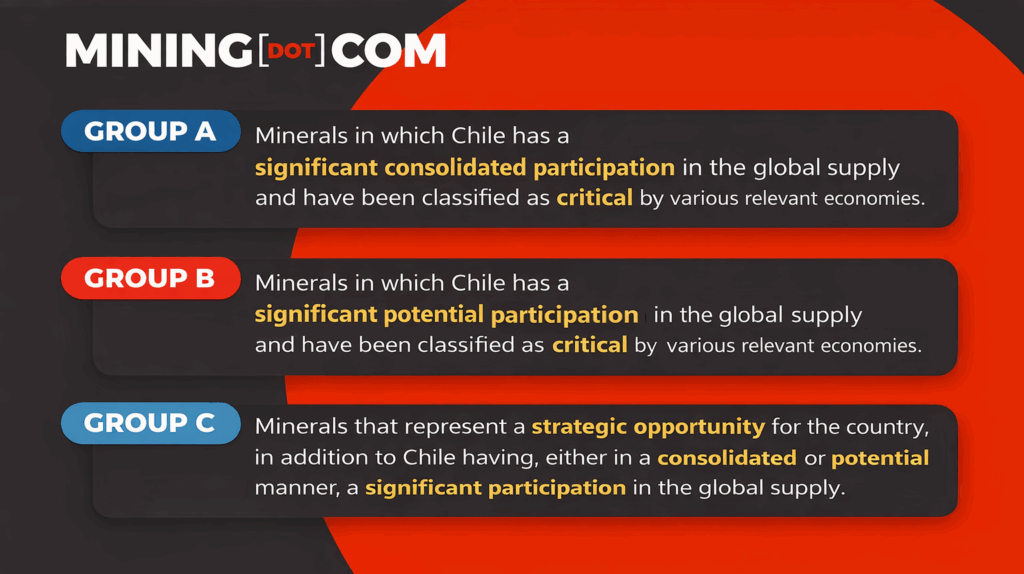
Chile has grouped its critical minerals based on its current position in global markets. (AI generated image using PX Media’s illustration. as background)
Chile has published its National Critical Minerals Strategy, a plan to position the country as a reliable supplier amid surging global demand driven by artificial intelligence, new technologies and the energy transition.
Unveiled in the final weeks of President Gabriel Boric’s term, the strategy signals a shift beyond the country’s traditional reliance on copper toward a broader mix of resources aligned with a decarbonizing global economy.
The framework identifies 14 critical minerals: copper, lithium, molybdenum, rhenium, cobalt, rare earth elements, antimony, selenium, tellurium, gold, silver, iron ore, boron and iodine.
Chile has grouped these minerals based on its current position in global markets. Copper, lithium, molybdenum and rhenium form the first group, where Chile already holds strong shares of global supply at 23%, 20.4%, 14.6% and 46.8%, respectively, and where other major economies also classify the minerals as critical.
A second group covers minerals with no current production or only potential participation, including cobalt, rare earth elements, antimony, selenium and tellurium.
A third group includes minerals already extracted domestically that offer opportunities to deepen Chile’s role in global value chains, such as gold, silver, iron ore, boron and iodine.
Industry verdict
Juan Ignacio Guzmán, head of Santiago-based mineral consulting firm GEM, said the way the strategy defines critical minerals reflects a balance between economic priorities and broader social expectations.
“Overall, the strategy reflects a good balance between Chile’s economic interests and legitimate environmental and social concerns, precisely in how it defines which minerals should be considered critical,” he said, adding that the challenges will vary sharply by category.
According to Guzmán, category A minerals, where Chile is already a major producer, are largely associated with brownfield developments.
“These are mines that are already established, and where there is a well-structured social and environmental framework that has developed over time,” he said. “That part is more straightforward.” The more complex test, he said, will come from category B minerals, where Chile has little or no production today. “In those cases, it basically requires breaking new ground socially and environmentally, and that is where the role of the State is most critical.”
Other analysts were more sceptical about the strategy’s practical impact. José Cabello, director of Mineralium Consulting Group, said the document does little to signal a near-term increase in production.
“There is nothing new in the wording of the strategy that would imply a definitive boost to Chile’s production of critical minerals,” he told MINING.COM.
Cabello said that while the strategy outlines ambitions, it stops short of committing to concrete action. “Although it is not explicitly stated in the text, the strategy lacks a decision to bring new critical mineral projects into production at an early stage in Chile, such as cobalt, tungsten or rare earths,” he said. “Practical short-term production proposals are notably absent.”
He attributed that gap to institutional weaknesses rather than geology. “This major shortcoming in a mining country is due to the fact that the current authorities of the state mining agencies lack direct experience in the mining industry,” Cabello said, adding that this “reflects an inability to resolve basic, concrete problems.”
He said the issue is visible in the document itself, “where commonplaces prevail and there are even several unnecessary repetitions.”
Daniel Weinstein, partner and head of the mining practice at Morales & Besa and president of the advisory council at the Ministry of Mining, told MINING.COM the strategy could still influence Chile’s mining outlook if it is followed by concrete action.
“It can, mainly because it gives Chile a clearer way to prioritize what ‘critical’ means for the country and it sets up an implementation framework that can be tracked,” he said.
“This is still a strategy, not a law, so it won’t change investment conditions by itself.” The impact, he added, will depend on whether the forthcoming action plan delivers clearer ownership, timelines and funding, and leads to faster, more predictable project execution.
Weinstein also noted that copper and lithium are likely to remain the main focus for investment over the next five years, given Chile’s scale and pipeline.
“Where the strategy adds an interesting angle is the attach-rate opportunity,” he said, pointing to minerals that can be developed through existing operations and processing streams, including molybdenum and rhenium, as well as selective by-product recovery such as selenium, tellurium and, in some cases, antimony.
“Cobalt and rare earths could also gain momentum, but that will be more project-specific and partner-dependent.”
US agrees to buy 10% of USA Rare Earth in $1.6B deal
Round Top deposit in Texas. Image: USA Rare Earth.
USA Rare Earth (Nasdaq: USAR) confirmed on Monday its entry into a non-binding letter of intent with the Department of Commerce for a $1.6 billion funding package. Shares surged to a three-month high.
The proposed investment comprises $277 million in federal funding and $1.3 billion in senior secured loan, to be issued under the Commerce Department’s CHIPS program aimed to revitalize the US semiconductors industry.
The LOI reflects the strategic importance of USAR’s mine-to-magnet platform and its role in closing the rare earth element and critical mineral supply gap for essential industries that underpin US national security, the Oklahoma-based company stated in a news release.
The Financial Timesfirst reported on the deal, which would see the US government become a 10% shareholder in USAR with the acquisition of 16.1 million shares and approximately 17.6 million warrants, both priced at a discount price of $17.17 a share.
Separately, the rare earth miner said it has signed a securities purchase agreement for a $1.5 billion PIPE transaction (9.8 million shares at $21.50 per share) with Inflection Point and other fundamental and strategic investors. This brings the potential capital raising to the company to $3.1 billion.
USAR surged as much as 16% to $32.07 following the announcement, its highest since October. Year to date, the stock price and market capitalization have nearly doubled, with the latter closing in on $4 billion.
‘Transformative’ step
“This landmark collaboration with the US government represents a transformative step in USAR’s mission to secure and grow a resilient, independent domestic rare earth value chain,” USAR CEO Barbara Humpton said in Monday’s news release.
The company is currently developing a rare earth mine in Sierra Blanca, Texas, that is slated to begin production in late 2028. The deposit, known as Round Top, is specifically rich in “heavy” rare earths elements (HREEs) such as dysprosium, which are essential ingredients to make permanent magnets found in high-tech applications such as electric vehicles, wind turbines and defence systems.
The Round Top project is expected to backstop a US-based mine-to-magnet value chain that also includes a magnet manufacturing plant in Stillwater, Oklahoma, which has an annual production capacity of 5,000 tonnes and is set to enter commercial operations this year, as well as a processing and separation laboratory in Wheat Ridge, Colorado.
Accelerated plans
According to the company, the billion-dollar capital injection is expected to accelerate and de-risk its growth objectives across these businesses. By 2030, it expects to extract 40,000 metric tons per day of rare earth and critical mineral feedstock from Round Top and process a combined 8,000 metric tons per annum (tpa) of materials (mixed rare earth carbonates and HREEs) from both the deposit and third parties.
USAR also aims to reshore10,000 tpa of HREE metal- and alloy-making and strip-casting capacity, capabilities that do not currently exist in the US, through its recently acquired subsidiary Less Common Metals. It also plans to more than double its neodymium-iron-boron (NdFeB) magnet-making capacity to 10,000 tpa.
“USA Rare Earth’s heavy critical minerals project is essential to restoring US critical mineral independence,” Secretary of Commerce Howard Lutnick said in a statement. “This investment ensures our supply chains are resilient and no longer reliant on foreign nations.”
DOE partnership
Further to the LOI with the Commerce Department, USAR will also collaborate with the US Department of Energy’s National Energy Technology Laboratory to advance HREE separation technologies at the company’s Wheat Ridge lab in Colorado and its Round Top deposit.
Through this partnership, the DOE will contribute to the development of digital twins to advance rare earth element separation technologies, with the ultimate goal of establishing the country’s first fully domestic mine-to-magnet supply chain, USAR said.
“Thanks to President Trump’s leadership, the Department of Energy is ending America’s reliance on foreign nations for the critical materials essential to our economy and national security,” US Energy Secretary Chris Wright said.
“The DOE is partnering with USAR to rebuild the critical minerals supply chain. By expanding domestic mining, processing, and manufacturing capabilities, we are creating good-paying American jobs and safeguarding our national security.”
Top minerals and Canada’s critical minerals push: What to watch in 2026
A Crown land lease will help a new gold mine be developed near Goldboro in Guysborough County. (Source: Province of Nova Scotia / File)
Silver, gold, uranium and copper.
Those are the top minerals to watch in the new year, according to Brooke Thackray, research analyst at Global X, who said those metals stand out because demand is growing faster than supply.
“I think it’s the major minerals at this point that are still going to lead the way for 2026,” said Thackray.
Silver stands out because there’s a structural supply deficit, he said, and there is a growing need for the metal in solar panels and other clean-energy technologies.
He expects gold to remain well supported as central banks continue buying.
He said North American investors have historically shown low interest in gold. Despite gold reaching all-time price highs in recent years, investors were actually selling their physical holdings, which could be seen by a decrease in ounces held by the major U.S. gold ETF, GLD, since its 2020 peak
“Over the last couple of months, we started to see that start to climb, because investors are becoming more interested in gold,” said Thackray.
Copper, meanwhile, continues to benefit from electrification and long-term supply constraints, but it is more sensitive to the global economy. A major slowdown in China could temporarily pull prices back.Move over gold, Canada’s copper is having a moment Why smaller critical minerals lag
While markets are focusing on those four metals, Canada is aggressively prioritizing a broader group of minerals as part of its critical minerals strategy.
Natural Resources Canada's list of critical minerals.
Of those, the federal government is prioritizing six minerals for investment and policy support: lithium, graphite, nickel, cobalt, copper and rare earth elements.
Ottawa has framed the strategy as a generational opportunity to expand mining, processing and manufacturing across the country, while reducing reliance on foreign suppliers.
But many niche critical minerals are too early-stage, said Thackray.
“There isn’t a big enough market there yet, but I think it’s going to develop over time,” he said.
He said the big catalyst for these minerals will be when governments get more involved, similar to what happened in the uranium space, where the federal government provided loan support for nuclear development, including a $304 million loan to AtkinsRéalis to developing next-generation CANDU reactor technology.
What Canada should prioritize and why the “critical mineral” approach is flawed
Nickel, zinc, uranium, potash, rare earths, iron, gold and copper are all strong opportunities for Canada, according to Jack M. Mintz, public policy analyst at the C.D. Howe Institute.
He said Canada needs to focus on minerals it has large reserves of and is able to produce.
He gives the example of lithium, which is on Canada’s critical mineral list but is largely produced by Bolivia, Chile and Argentina, often called the “lithium triangle.” The three countries have the largest estimated lithium resources globally.
“That’s where people are looking for lithium. They’re not going to be looking at Canada for lithium,” said Mintz.
He said there are areas where Canada can have real success in production, but some of those minerals are not what the government defines as critical, or were only added recently, such as uranium and copper. Anam Khan Journalist, BNNBloomberg.ca
Cyclic Materials to build $82M rare earth recycling plant in South Carolina
Cyclic Materials’ new site in McBee, South Carolina. Photo credit: North Eastern Strategic Alliance.
Cyclic Materials is investing more than $82 million to establish a rare earth recycling campus in McBee, South Carolina.
The new site, host to its second facility in the US, would have a processing capacity of 2,000 tonnes of magnet material per annum, with a planned expansion to 6,000 tonnes.
The combined spoke-and-hub facility will utilize the company’s proprietary MagCycle and REEPure processes to separate and recover mixed rare earth oxides (MREO) from end-of-life products that are typically not recycled today, the Canadian-based Cyclic stated in a press release.
The aim, it added, is to enable a resilient, North American anchored source of REEs, which are critical to the production of vehicles, advanced electronics, AI infrastructure and high-performance permanent magnets used in defense, wind turbines, and advanced manufacturing systems.
The new recycling campus will initially have the capacity to produce 600 tonnes of MREO a year, rising to 1,800 tonnes following expansion.
Deploying such a facility will enable Cyclic Materials to onshore the production of these critical materials in short order, particularly the much-needed heavy rare earths, the company stated, adding that the 1,800 tonnes of MREO produced annually would supply enough materials needed to build 6 million hybrid transmissions per year.
The announcement follows Cyclic’s agreement last year with VACUUMSCHMELZE (VAC) to recycle 100% of magnet production byproducts (swarf) generated at VAC’s new manufacturing facility in nearby city of Sumter, which began operations at the end of 2025.
Together, the two companies’ facilities position South Carolina as a strategic hub for rare earth magnet recycling and production in the US, Cyclic said.
“Announcing the opening of our second US recycling site in South Carolina is a major milestone and a clear signal of our long-term commitment to building resilient, domestic critical minerals infrastructure in the US,” Cyclic Materials CEO Ahmad Ghahreman said in a news release.
“This facility will enable Cyclic to reliably serve partners such as VAC, while scaling our advanced recycling technologies that support manufacturing,” Ghahreman added.
By scaling regional sourcing and processing of rare earth elements, Cyclic said it is accelerating domestic deployment of rare earth elements supply infrastructure years faster than traditional mining projects, in addition to being much less resource intensive.
The South Carolina project will also be supported by a range of federal and state incentives. Operations for the campus are expected to begin in 2028, creating over 90 new skilled jobs for the state, it added.
“Cyclic Materials’ new facility in Chesterfield County reflects the confidence companies have in South Carolina’s workforce and our ability to support advanced manufacturing,” South Carolina Governor Henry McMaster said in the statement.
On regulation, Weinstein said the strategy provides direction but not certainty. “Investors will still focus on permitting performance in practice,” he said. “The remaining uncertainty is execution: institutional capacity, consistency across agencies and regions, and whether timelines actually improve on real projects.”
Mirco Hilgers, partner in energy, mining and infrastructure and head of the environmental practice at Baker & McKenzie, in Santiago, said the strategy marks a new phase in Chile’s mining history by expanding its ambition beyond copper. He said it elevates resources such as lithium, cobalt and rare earth elements into the country’s official policy framework, positioning Chile as a key player in the global energy transition.
The document defines critical minerals as those essential to priorities including the energy transition, food security, defence and resilient supply chains. For mining countries like Chile, it also ties the designation to economic growth, local value creation, diversification and research and development.
Reliable partner
The strategy seeks to reinforce Chile’s image as a diversified and responsible supplier by promoting value-added industries and strengthening international partnerships. Hilgers said the approach rests on both political and legal foundations, pointing to laws on citizen participation and public administration that embed transparency and inclusion. He added that the 30-day public consultation is central to the strategy’s credibility and designed to build public trust into resource policy.
Mining Minister Aurora Williams, Economy and Energy Minister Álvaro García, Corfo Vice President José Miguel Benavente and industry representatives attended the presentation of the plan. Boric said it sets out coordinated and gradual public action to boost competitiveness, develop value chains and build resilience across the mining sector.
Guzmán said the most difficult challenge will not be technical but political and social. “The main difficulty will be generating the conditions for companies to regain trust in the system and for real changes to occur,” he said. “This will require managing the political capital that exists to effectively convince society of the need to implement this strategy.” He added that, even with broad stakeholder agreement, the next step is public persuasion. “It is extremely important to convince society of the role Chile must play in the world’s critical minerals, as well as of the challenges and requirements we will face.”
Hilgers described the strategy as a geopolitical signal at a time when the United States, Europe and Asia have elevated critical mineral supply security to matters of national strategy. By articulating its own vision, he said, Chile places itself at the centre of the debate and could unlock access to financing, technology transfer and new industrial ecosystems. He cautioned that success will depend on execution, with water stress, community expectations and permitting delays remaining structural challenges.
Years in the making
The strategy emerged from a multi-year participatory process combining technical analysis and stakeholder engagement, including studies by the state copper commission, Cochilco, and mining regulator, Sernageomin. It also includes work funded by the Inter-American Development Bank between 2024 and 2025. A high-level advisory committee of 16 representatives, a technical committee of 120 specialists from 56 institutions, regional workshops and public consultation all fed into the final document.
Despite the hurdles, Hilgers said the potential upside is significant. Copper will remain the backbone of the sector, he said, but developing a wider set of critical minerals could redraw Chile’s industrial map and mark the start of a broader industrial reinvention.
Latin America is heading into 2026 with resources at the centre of a growing global power struggle, as governments and investors focus on who controls critical minerals and the supply chains behind them. If the region matters to you, don’t miss MINING.COM’s new series tracking the geopolitical forces reshaping it and why markets are increasingly
Niger attack endangered uranium stockpile near main airport
Unidentified attackers who staged an assault on Niger’s capital came dangerously close to a stockpile of uranium removed from French company Orano SA’s mine.
Heavy gunfire and explosions erupted near Niamey’s Diori Hamani International Airport early Thursday. The facility is adjacent to an air force base where Agence France-Presse reported the concentrated uranium powder, known as yellowcake, was stored earlier this month.
At least 20 attackers died in the assault, with 11 others wounded and captured, Defense Minister Salifou Modi said in a statement read on state television. Four members of Niger’s security forces were injured, he said.
Islamic State claimed responsibility for the attack via Amaq News Agency, a media outlet linked to the group.
Niger’s military leadership took over Orano’s Somair mine in 2024, after accusing the French nuclear company of planning to halt operations and sell its shares without following proper procedures.
The West African nation later removed uranium from the site, despite an International Centre for Settlement of Investment Disputes arbitration tribunal’s ruling preventing it from taking any such steps. Its actions raised concerns about radioactive material being transported by road through jihadist-controlled regions.
Niger’s government “unilaterally decided to nationalize” the Somair mine in June 2025, leaving Orano without operational control, and the company is unable to comment on its activities, it said in an emailed response to questions.
This week’s attack targeted the airport area and an adjacent military base that involved gunmen on motorbikes and drone strikes. An Air Côte d’Ivoire aircraft parked on the tarmac was hit, the carrier said in a statement. Two Asky Airlines planes waiting on the tarmac were also damaged, according to a government statement.
AFP cited eyewitness as saying shooting began shortly after midnight on Thursday and streaks of light and flames were seen several meters high. Multiple cars were set alight, the news agency said.
A spokesperson for the state-owned Société du Patrimoine Minier du Niger, which manages the country’s interests in mining companies, didn’t respond to phone calls and a text message seeking comment. Phone calls to two government representatives and an army spokesman went unanswered.
Military ruler Abdourahamane Tiani has pivoted Niger toward Russia and cut security ties with former allies, including the US and France, since ousting President Mohamed Bazoum in a 2023 coup.
Niger also quit the regional bloc Ecowas and joined Mali and Burkina Faso in forming the Alliance of Sahel States, a military-led coalition that’s building economic and security cooperation as the three nations battle insurgents linked to Al-Qaeda and Islamic State, that have killed thousands and displaced hundreds of thousands across West Africa’s Sahel region.
Tiani thanked Niger’s Russian partners for “their prompt reaction, which allowed us to completely rout the enemy within 20 minutes.”
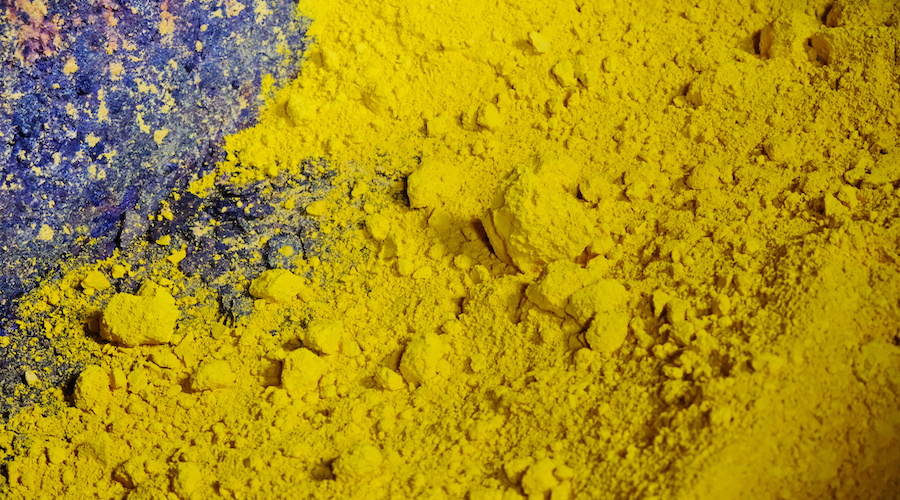
Uranium concentrate at Kazatomprom’s uranium mining mine. (Stock image By Valdimir | AdobeStock.) AdobeStock image #641582779
The global uranium market is entering a “tipping point” where sustained demand for the energy fuel and supply constraints could lead to a significant rally in prices in the coming years, according to analysts at Teniz Capital.
In a research report published this week, the Abu Dhabi-based investment bank said the entire sector is undergoing what they call a “second nuclear renaissance” — where accelerating demand from tech giants for data centers and global energy policy are helping to form a multi-year demand cycle.
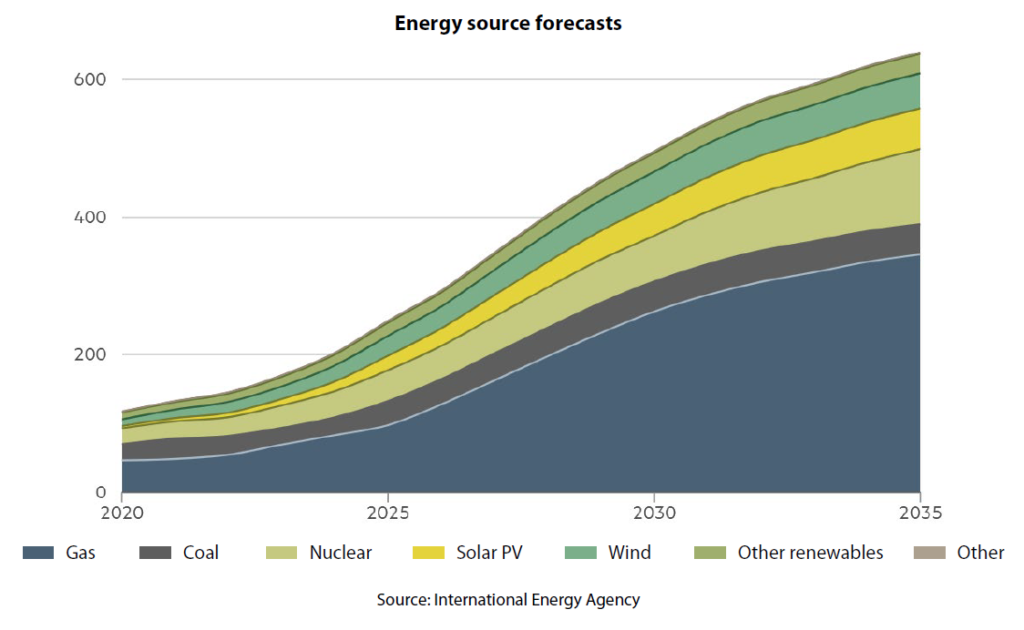
Credit: Teniz Capital
Meanwhile, the supply side has reached what analysts believe to be an “acute” structural deficit that’s incapable of meeting this demand due to the slow pace of mine development. This situation, as the report warns, would only worsen, with demand projected to rise 28% by the end of this decade and double by 2040.
Drawing historical parallels with the mid-2000s, analysts at Teniz Capital sees uranium as one of the “most promising plays” in the energy sector, forecasting prices to rise by three or even four-fold.
According to the bank, the world’s supply of primary uranium is falling “structurally short” of nuclear reactor demand due to years of underinvestment. It is estimated that mines can only cover about 74-90% of current needs, and that deficit would likely grow as countries continue to vie for energy security.
In the past, that gap could be filled by secondary sources — commercial inventories and reprocessing — but now these have largely been depleted as well, Teniz Capital said.
This situation is that the current project pipeline is effectively exhausted and development of new mines could take at least 10 to 15 years, it added.
As such, analysts said that uranium has now entered a “long-duration structural bull market” that they believe is time-embedded rather than cyclical. This, as they point out in the report, is reflected in the rally in prices, which bottomed at around $18 per lb. in 2016–2017 then surged to a 17-year high of $106 in early 2024, before stabilizing in the $73–80 range by year-end.
“The supply deficit in the 2030s is already programmed. It cannot be eliminated by any political decisions or investments. The physical constraints of time are insurmountable,” the report said, warning that even higher uranium prices would not offer a quick fix.
“This uranium cycle differs materially from past commodity upswings because supply elasticity is structurally low while demand is policy-driven and non-discretionary,” Ben Elvidge, product lead at Uranium.io, said in an email to MINING.COM.
Kazatomprom uniquely positioned
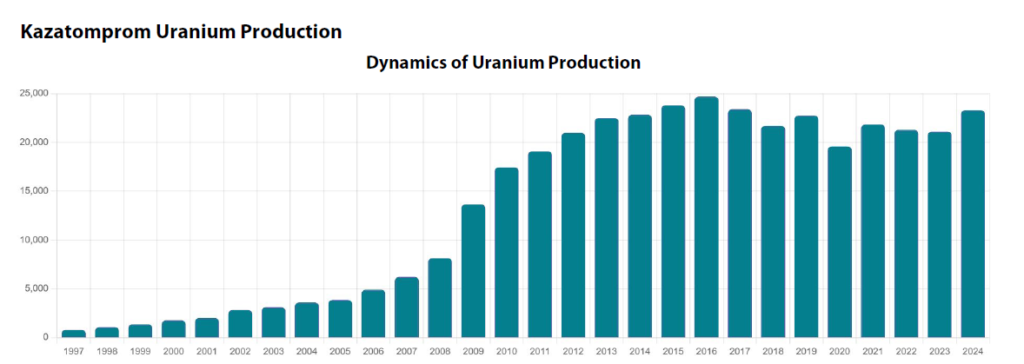
Against this backdrop, Teniz Capital has identified Kazatomprom (LSE: KAP), the world’s largest producer and seller of natural uranium, as a key player that holds a “unique and effectively irreplaceable position” in the global supply chain.
In its report, the bank highlighted the Kazakh company as the industry’s single-largest resource holder, accounting for about 39-43% of the world’s production. In addition, the Central Asian nation has more than 65% of global reserves suitable for in-situ recovery (ISR), the world’s lowest-cost extraction method.
Credit: Teniz Capital
In addition, a review of the global development pipeline shows that no project in Canada, Africa or elsewhere approaches Kazatomprom’s scale or economic efficiency. The most advanced alternatives are either too small, too costly, or too early-stage to materially alter the supply outlook, according to the report.
The analysis also highlighted that the London-listed Kazatomprom offers diversification opportunities through its involvement in uranium projects with other major players, such as Cameco (TSX: CCO; NYSE: CCJ) and France’s Orano.
“Within this framework, Kazatomprom represents a rare example of a systemically critical producer for which no comparable global alternative exists over the next two decades,” analysts said.
Vizsla Silver says 10 employees abducted in Sinaloa, Mexico
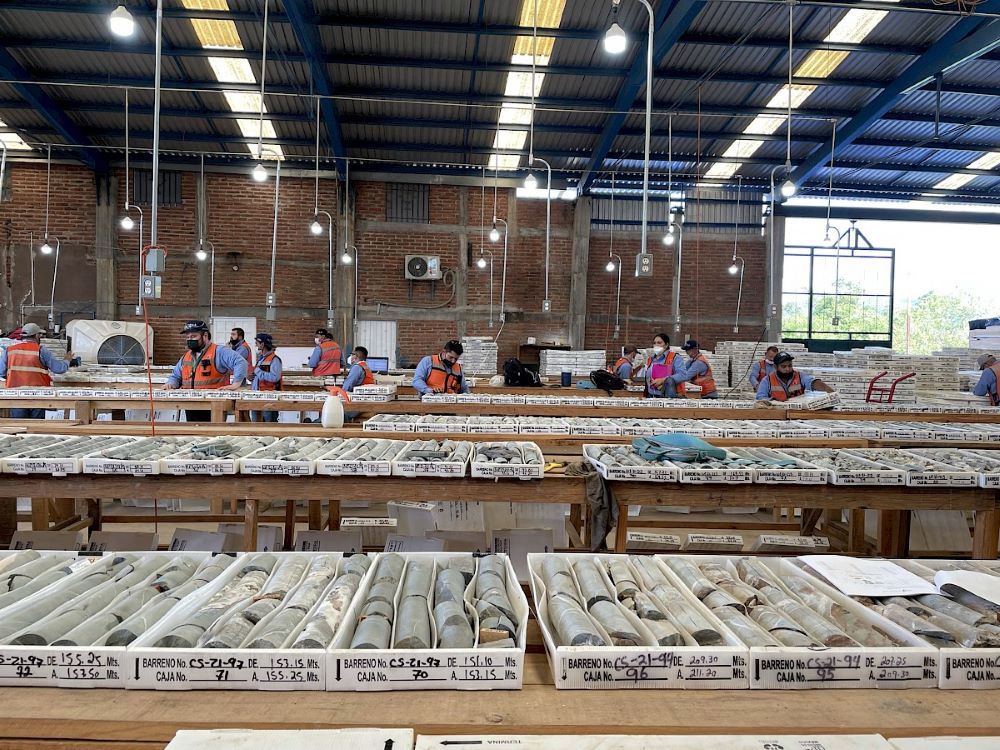
Examining cores from the Panuco silver-gold project in Mexico. Credit: Vizsla Silver
Ten workers were abducted last week from a mining project in the Mexican state of Sinaloa, underscoring the ongoing security risks facing companies operating in regions affected by organized crime.
The incident occurred on January 23 at the Panuco silver-gold project near the town of Concordia, operated by Vancouver-based Vizsla Silver Corp. The company has suspended operations at the site.
Local news outlet Latinus reported armed men entered staff accommodations at the site and forcibly removed the workers, who included engineers, geologists, security personnel and administrative staff, the company said.
Vizsla Silver reported the abduction to local authorities the following day and has mobilized additional security and crisis-management resources. Mexican state and federal authorities have launched an investigation into the incident.
Sinaloa’s attorney general’s office confirmed that search operations are under way, though officials have released few details.
The abduction comes amid heightened violence in Sinaloa, where internal conflicts between rival factions of the Sinaloa cartel have escalated in recent months.
The region has seen an increase in armed confrontations, road blockades and targeted attacks.
 Amanda Campbell of the Tk̓emlúps te Secwépemc Nation sings a prayer song at the Reconciliation breakfast at Roundup. Credit: AME.