Monday, March 02, 2026

Trump’s Unprovoked War on Iran Triggers 10% Spike in Global Oil Prices

“When global energy security can be upended by a single flashpoint, it shows how unstable and risky our dependence on oil and gas is,” said one critic
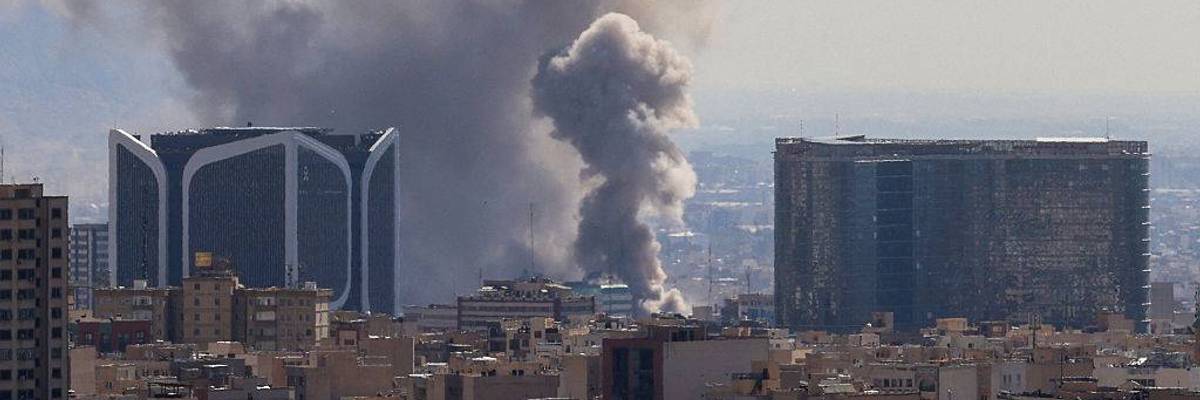

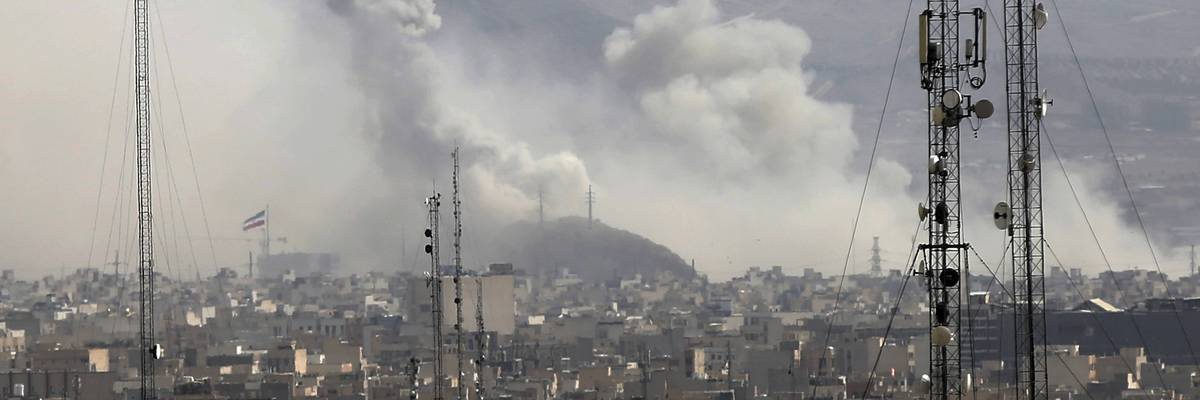
Plumes of smoke rise following reported explosions in Tehran on March 1, 2026.
(Photo by Atta Kenare/AFP via Getty Images)

Brad Reed
Mar 02, 2026
COMMON DREAMS


President Donald Trump’s unprovoked, unconstitutional, and politically unpopular war against Iran is about to cause pains for Americans at the gas pump.

CNBC reported on Monday that Brent crude oil prices surged by 9.3% to a 52-week high of $79.40 per barrel, while US West Texas Intermediate crude oil prices spike by 9% to $73.10 per barrel.

This spike in oil prices is projected to directly lead to an increase in gas prices in the coming days.

Petroleum industry analyst Patrick De Haan noted in a Monday update on his Substack page that gas prices in the US had already risen by roughly six cents in the last week, and that war with Iran would drive these prices higher.

“Developments surrounding Iran—particularly any threat to regional production or shipping flows—are likely to remain the dominant driver of oil prices,” wrote De Haan, “and could keep crude elevated or push it higher if tensions intensify further.”

A Sunday research note from Wells Fargo cited by CNBC drew attention to the importance of the Strait of Hormuz, which the Iranian government closed off over the week and which is used to transport roughly 20% of the global supplies of petroleum and liquified natural gas.

According to Wells Fargo, a “prolonged” closure of the strait would result in “an oil shock to $100+ per barrel,” which it described as the “worst-case scenario” for global stock markets.

In addition to closing off the Strait of Hormuz, Iran has also been launching attacks on other nations’ energy infrastructure.

According to a report from Bloomberg, Saudi Arabia’s largest oil refinery at Ras Tanura had to cease operations on Monday after being struck in a drone attack.

“An attack on major energy infrastructure is a nightmare scenario for global markets,” noted Bloomberg, “with maritime traffic through the crucial Strait of Hormuz all but halting.”

Olivia Langhoff, managing director at climate justice organization 350.org said that the global economic disruptions being caused by the Iran war shows the folly of continuing to rely on fossil fuels for energy needs.

“When global energy security can be upended by a single flashpoint, it shows how unstable and risky our dependence on oil and gas is,” Langhoff said. “Renewable energy provides homegrown power that remains secure and affordable regardless of geopolitical shocks.”

Langhoff’s comments were echoed by Mads Christensen, executive director of Greenpeace International.

“As long as our world runs on oil and gas, our peace, security and our pockets will always be at the mercy of geopolitics,” Christensen explained. “Increasing output may temporarily ease price pressures, but it does not address the structural vulnerability at the heart of this recurring crisis: the world’s continued dependence on fossil fuels.”

The increase in gas prices comes at a time when US voters have been expressing widespread dissatisfaction with the economy under Trump, as polls show voters have been particularly anxious about the prices of groceries and utilities, among other essentials.

Trump's attacks on Iran are hitting his own economic vulnerability: 'Political liability'

Nicole Charky-Chami
March 2, 2026 
RAW STORY
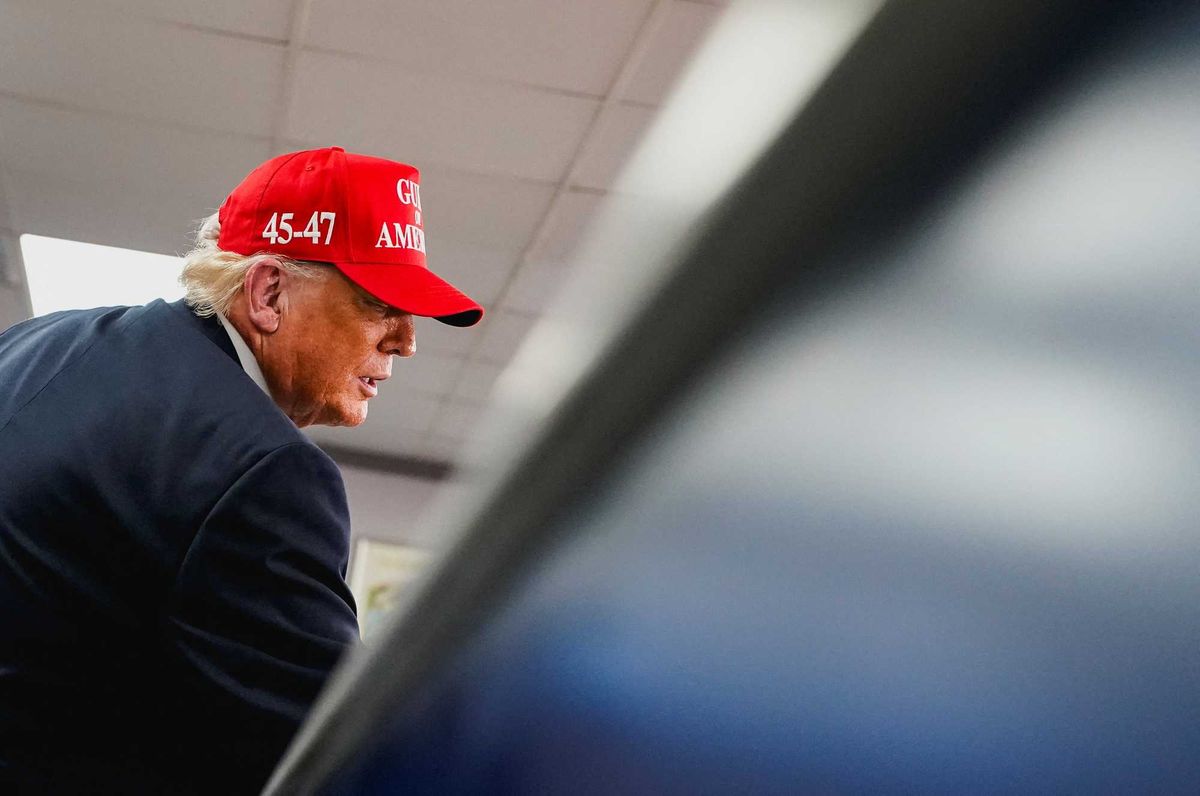

President Donald Trump visits a Whataburger in Corpus Christi, Texas on Feb. 27, 2026. REUTERS/Elizabeth Frantz

A new economic fallout broke out Monday after President Donald Trump ordered attacks on Iran — prompting gasoline and oil prices to surge, according to reports.

Trump's military move could have a significant impact on his energy agenda and gas prices as midterms approach, something he has boasted about since his return to the White House in his second term, Bloomberg reported. As prices rise, it could be a challenge for the president and his Republican Party this fall.

"Gasoline futures jumped as much as 9% Monday as the flow of tankers carrying crude and fuel through the Strait of Hormuz all but ceased," according to Bloomberg.

The American Automobile Association reported that by Sunday, the average retail price in the United States had hit $3 a gallon, which is the highest amount in three months. Just last week, Trump claimed that gasoline reached $2.30 a gallon in most states and that the national average hit $2.98.

Gasoline and oil prices were expected to keep climbing, according to the American Automobile Association.

“Americans have very staunch beliefs on how much they should pay for gasoline,” Patrick De Haan, GasBuddy’s head of petroleum analysis, told Bloomberg. “So it does become a political liability.”


One early risk of Trump's Iran strategy is already emerging

Politico · Michael Gonzalez/AP

Ben Lefebvre and James Bikales
Sun, March 1, 2026 
POLITICO

Oil prices jumped more than 10 percent Sunday night, underscoring the political risks of President Donald Trump's military strikes against Iran.

The main U.S. crude oil market opened at $75 per barrel in the first trading activity since the United States and Israel attacked Iran on Saturday, killing Iran’s supreme leader Ayatollah Ali Khamenei and triggering retaliatory attacks on several oil tankers traversing the Strait of Hormuz, through which more than 20 percent of the world’s waterborne crude oil passes.

Market analysts and geopolitical consultants are warning prices could remain high so long as hostilities around the Persian Gulf continue and quickly trickle down to gasoline prices at the pump — just as cost concerns take center stage in mid-term primary races.

“Everyone in the region that’s participating in the war knows that the Achilles heel of Trump is high oil prices,” said Michelle Brouhard, head of policy and geopolitical risk for Kpler, a commodity analyst firm.

Russian officials are also watching whether U.S. actions will drive up prices — to their benefit . “$100+ oil per barrel soon,” Kremlin envoy Kirill Dmitriev wrote on X Saturday. The uptick in oil prices comes as Republicans face a political reality that slightly more Americans think that Democrats are the party most committed to cutting energy prices.


The Trump administration shared a photo on social media Saturday of the White House situation room during the military strike that included Energy Secretary Chris Wright, a former oil executive, but beyond that has dismissed the risk of oil price shocks.

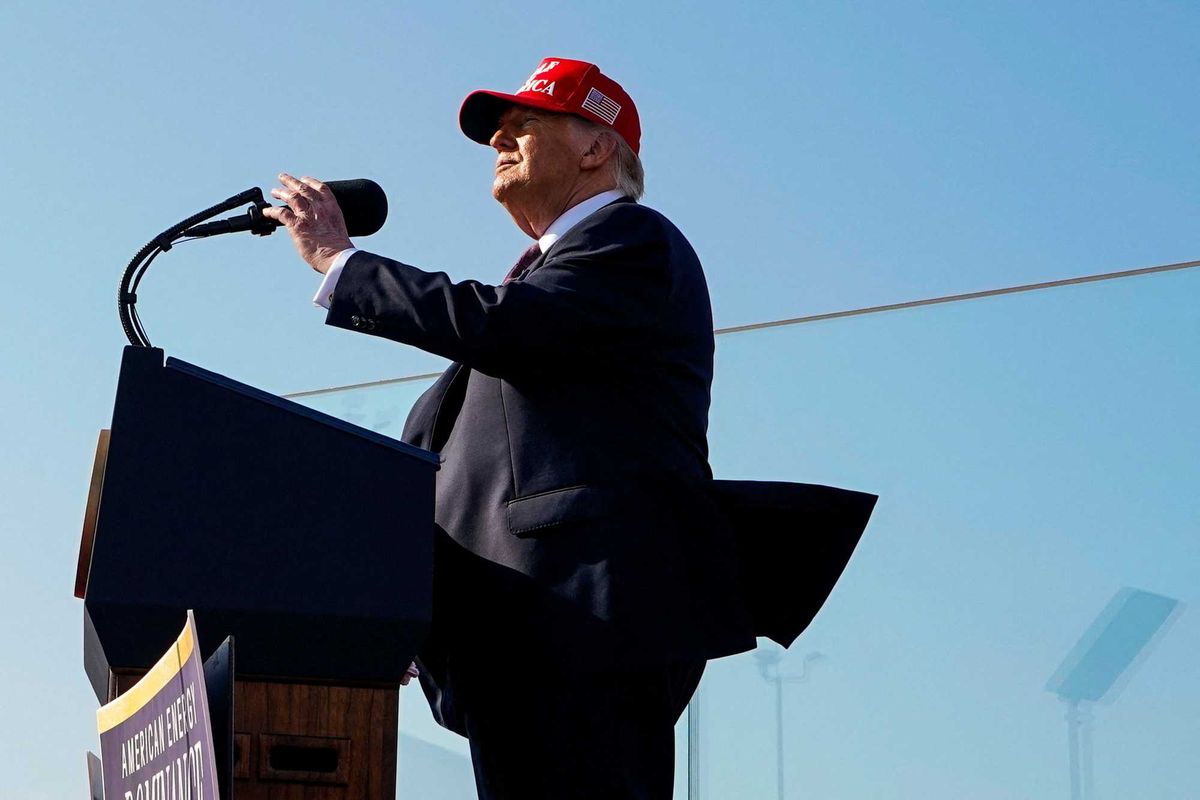
“I’m not concerned. I’m concerned about people’s lives. I’m concerned about long term health for this country, that’s what I’m concerned about,” Trump told reporters Friday at an event in Texas touting “American Energy Dominance,” held just hours ahead of the strikes, when asked if he was concerned about oil prices.

A quick end to hostilities would justify that confidence. Gregory Brew, a senior analyst at Eurasia Group, noted in an email that gas prices have already risen in recent weeks as the likelihood of an Iran conflict rose. He said he expected only a “short-lived” increase if the conflict ends within a few weeks.


“De-escalation will bring a rapid fall in oil prices, as was the case in [Israel’s war with Iran last] June,” Brew said. “The cost to American consumers should decline well ahead of November mid-terms — unless, of course, this turns into a more protracted affair.”

But Iran has already begun retaliating by striking oil tankers traversing the Strait of Hormuz. Trading firms that hire oil tankers are pausing shipments through the waterway given the danger, and vessels are opting to take longer — and more expensive — routes to avoid the area.


The risk of further inflaming oil markets is very real. Arab allies have warned the Trump administration in recent weeks that strikes aimed at Iranian leadership could lead Iran to retaliate in the oil markets, including by attacking oil fields and tankers in the Strait, according to three people familiar with the conversations.


White House and Energy Department spokespeople did not respond to questions about the administration’s plans to limit the effects the fighting in the Middle East will have on pump prices. But former administration officials have so far expressed trust that the White House has the matter in hand.

U.S. warplanes have so far not targeted Iran’s oil rigs or pipelines, and strikes against Iran’s navy should prevent it from placing mines in Hormuz — both things that should calm any jittery nerves in the market, said Richard Goldberg, the former senior counselor for the White House National Energy Dominance Council and director for countering Iranian weapons of mass destruction for the White House National Security Council.

“The oil market is always a planning consideration” for the White House, Goldberg said. “Wright coordinates incredibly closely with his Saudi counterpart, as does the president with [Saudi leader Mohammed bin Salman Al Saud] and others. We have many tools to communicate to the market and project the availability of supply despite risk and crisis.”


The administration could also use sanctions licenses to “essentially grab Iranian floating storage for free,” he said.

Landon Derentz, a former national security and energy official during the Obama, Trump and Biden administrations, said Trump has always weighed concerns around energy prices heavily, but in this case likely calculated that taking out a nuclear-armed Iran was more important.

“The affordability narrative must feature in discussions and decisions to do this,” said Derentz, who is now vice president for energy and infrastructure at the Atlantic Council. “But the weight of dealing with a nuclear Iran is surmounting those concerns.”

In the short term, global crude reserves — including potentially the U.S. Strategic Petroleum Reserve — will be able to make up for any major disruption, Derentz said. And U.S. oil companies can likely ramp up production within six to nine months, especially if incentivized by high prices.


“The next one to eight months could be the most volatile period given the uncertainty around escalation on the ground,” Derentz said. “Beyond that, underlying supply-demand fundamentals remain relatively stable.”

Trump does have some cushion for an oil price increase thanks to the boom in domestic oil production that started in the mid-2000s. Adjusting for inflation, the price of oil is far lower than it has been for decades, including through much of the U.S. war in Iraq in 2003. And unlike 20 years ago, the U.S. is now a major oil exporter, a fact Trump has consistently noted in his speeches recently.

“I think the administration may have considered how oversupplied the market is right now and assumed some level of substitution would ameliorate prices,” said David Goldwyn, a former State Department official focused on energy during the Obama administration. “Public diplomacy is essential at a time like this, and signaling to the market that there will be coordinated efforts to replace disrupted supply is at the top of the list. If they haven't thought of that already, they should be considering it right now.”

Reporters Eli Stokols and Carlos Anchondo contributed to this report.


This is Trump's war — and he will own all that comes next

Robert Reich
February 28, 2026 
RAW STORY

A banner depicting Donald Trump hangs outside the Department of Justice. REUTERS/Kylie Cooper

The United States is now at war with Iran.

A single person — Donald J. Trump — has released the dogs of war on one of the most dangerous countries in the world, and done it without the consent of Congress or our allies, or even a clear explanation to the American people.

Just four days after delivering a State of the Union address in which he spoke of ending eight wars — spending just three minutes discussing Iran and a preference for “diplomacy.”

Anyone who has doubted Trump’s intention to replace American democracy with a dictatorship should now be fully disabused.

I share your despair, sadness, and fear. Even if our president was a wise and judicious man, surrounded by thoughtful advisers with impeccable integrity and wisdom, this would be a highly dangerous move.

Trump is facing the consequences of his decision in his first term to abandon the Joint Comprehensive Plan of Action negotiated with Iran by Barack Obama and backed by France, Germany, the United Kingdom, Russia, and China.

Trump walked away from that treaty because it was Obama’s — and he hates Obama because Obama negotiated safeguards against Iran enriching uranium to weapons grade. Obama also got Obamacare through Congress, addressed climate change and nuclear proliferation, and was rewarded the Nobel Peace Prize.

Obama was a winner. Trump is a loser. Trump cannot stomach this.

But why should America and thousands if not millions of innocent people pay the price of Trump’s egomaniacal stupidity?

Trump claimed in June to have disarmed Iran. He claimed again in his State of the Union last Tuesday to have “obliterated” the Iranian nuclear weapons program (an assertion rejected by the International Atomic Energy Agency).

Since then, Iran has taken steps to dig out the nuclear facilities hit during those strikes and it has resumed work at some sites long known to American spy agencies.

But those same spy agencies say there’s no evidence that Iran has made active efforts to resume enriching uranium or trying to build a mechanism to detonate a bomb.

Iran’s stockpiles of enriched uranium remain buried after June’s strikes, making it nearly impossible for Iran to build a bomb “within days,” as Trump and his lapdogs claim.

Trump says he wants “regime change.” But unlike Venezuela, the Islamic Republic has nearly a million men under arms. Any attempt to overthrow that regime will require American troops on the ground, and almost surely inflict mass casualties on Americans and on Iranians.

Besides, Trump won a second term promising “no regime change” and in 2024 he campaigned as “the first president in decades who started no new wars.”

He hasn’t prepared the American people for this. In his State of the Union he bragged again about having ended eight wars. He spent just three minutes discussing Iran and his preference for “diplomacy.”

He said Iran has refused to foreswear any nuclear weapons ambitions. Yet just hours before his address, Iran’s foreign minister reaffirmed on X that his country would "under no circumstances ever develop a nuclear weapon."

Trump noted the Iran regime’s killing of thousands of protesters, but this hardly justifies a war that may cause the deaths of thousands more innocent civilians. (On Saturday morning, Iran’s Red Crescent said more than 60 children were killed in the strike on Shajarah Tayyebeh school in the southern town of Minab (a toll that has since been raised to 85.)

Make no mistake. The costs of this war — mayhem and deaths in the Middle East, higher oil prices (as Iran closes the Straight of Hormuz), increased risk of terrorism in Europe and the United States — could be catastrophic.

Yet Americans don’t support this war. They haven’t been told why we’re waging it. Trump’s MAGA base doesn’t want him to engage in regime change. Congress hasn’t approved this war.

Trump is going to war for himself and his boundless, malicious ego.


Robert Reich is an emeritus professor of public policy at Berkeley and former secretary of labor. His writings can be found at https://robertreich.substack.com/. His new memoir, Coming Up Short, can be found wherever you buy books. You can also support local bookstores nationally by ordering the book at bookshop.org
As Security Council Stalls, There Are Other Ways to Stop US-Israeli War on Iran


Universal jurisdiction also lets other nations prosecute US and Israeli leaders for targeting civilians — a war crime.


By Marjorie Cohn , 
March 2, 2026

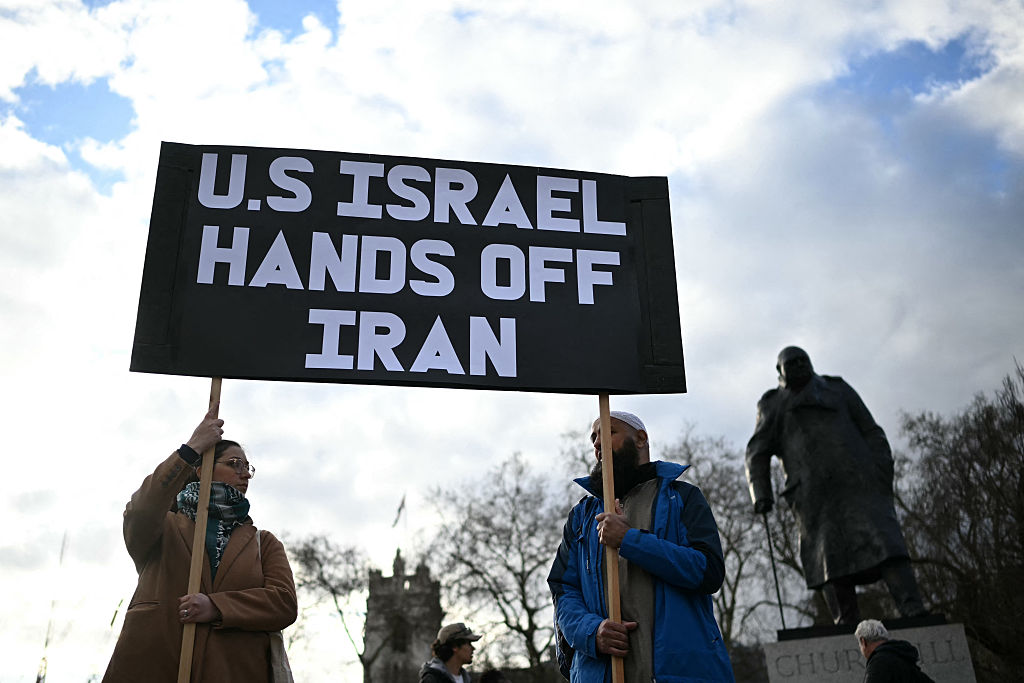
People hold placards during a protest against the U.S.-Israeli attacks on Iran, in Parliament Square in central London, on February 28, 2026.Justin Tallis / AFP via Getty Images

Already 555 Iranians — including 180 students at a girls’ elementary school in Minab — have been reported dead in the war of aggression launched February 28 by President Donald Trump and his accomplice, accused war criminal Israeli Prime Minister Benjamin Netanyahu, against Iran.

“Operation Epic Fury involves the largest regional concentration of American military firepower in a generation,” U.S. Central Command said in a statement.

This aggression has destabilized the region and triggered Iran’s legitimate exercise of self-defense.

The U.S.-Israeli aggression against Iran violates the United Nations Charter, which requires that all states settle their disputes peacefully and refrain from the use of armed force except in self-defense under Article 51 after an armed attack against a UN state by another state, or when the Security Council authorizes it.

Before February 28, Iran had not mounted an armed attack against any country, nor did it pose an imminent threat to the U.S., Israel, or another UN member state. And the Security Council had not authorized the use of military force against Iran.


Under UN Charter, Iran’s Attack Was a Legal Response to Israel’s Illegal Attack
Iran’s attack on Israel was lawful self-defense carried out in compliance with international humanitarian law. By Marjorie Cohn , Truthout April 18, 2024


The timing of the U.S.-Israeli attacks undermines the pretext that the U.S. and Israel had been engaging in good-faith negotiations with Iran over its nuclear program.
Netanyahu Convinced Trump to Withdraw From the Iran Nuclear Deal in 2017

Trump claimed he attacked Iran to prevent it from developing nuclear weapons.

The negotiations preceding the February 28 attack must be examined in the context of the 2015 Iran Nuclear Deal, or the Joint Comprehensive Plan of Action (JCPOA), that was negotiated by France, Britain, Russia, China, Germany, the U.S., and Iran during the Obama administration.

In the JCPOA, Iran agreed to restrict its uranium enrichment and other nuclear activities. In return, the U.S. unfroze billions of dollars in Iranian assets to provide relief from punishing sanctions. Until Trump pulled the U.S. out of the deal during his first administration, the JCPOA had been working to prevent Iran from developing nuclear weapons.

“Iran has gotten rid of all of its highly enriched uranium,” Jessica T. Mathews wrote in an 2017 article in The New York Review. “It has also eliminated 99 percent of its stockpile of low-enriched uranium…. All enrichment has been shut down at the once-secret, fortified, underground facility at Fordow.… Iran has disabled and poured concrete into the core of its plutonium reactor — thus shutting down the plutonium as well as the uranium route to nuclear weapons. It has provided adequate answers to the [International Atomic Energy Agency’s] long-standing list of questions regarding past weapons-related activities.”

Nevertheless, in 2017, Netanyahu convinced Trump to withdraw the U.S. from the Iran nuclear deal. “I asked [Trump] to leave the JCPOA,” Netanyahu bragged. “It was me who made him to depart from the deal.”

Had the JCPOA remained in force, the current U.S.-Israeli aggression would almost certainly not have happened.

Negotiations Were Bearing Fruit But U.S. and Israel Attacked Anyway

Before the February 28 U.S.-Israeli attack on Iran, the country of Oman had been brokering negotiations over Iran’s nuclear program. The U.S. and Israel insisted that Iran stop enriching uranium, limit its ballistic missile program, and end support for its “proxies” Hezbollah and the Houthis.

On February 27, Oman’s foreign minister said on CBS News that the negotiations had made significant progress and Iran had agreed to more concessions than those contained in the JCPOA. A nuclear agreement was “within our reach,” he stated.

Nevertheless, Trump maintained that diplomacy had been exhausted. The U.S. and Israel began bombing Iran the next day.

In his videotaped announcement, Trump misleadingly stated that the Iranian government has “rejected every opportunity to renounce their nuclear ambitions.”

Citing no evidence, Trump declared that the Iranian regime “has built nuclear weapons.” This contradicted his declaration in June 2025 after his bombing of Iran’s nuclear sites that the U.S. had “obliterated” its nuclear program.

Israel erroneously stated that Iran is armed with nuclear weapons. For the past two decades, Israel has claimed that Iran was on the verge of acquiring a nuclear weapon.

Trump said that in order to avoid a war, Iran would have had to say “those secret words: ‘We will never have a nuclear weapon.’” But Iran has stated this several times. In fact, Ayatollah Ali Khamenei issued a fatwa banning nuclear weapons in 2004.

The Trump administration has admitted it has no evidence Iran is weaponizing its uranium enrichment program, or even that it has restarted enriching uranium since last June. Iran has always maintained that it enriches uranium for peaceful purposes, as permitted by the Nuclear Non-Proliferation Treaty.

There is also no evidence that Iran is developing intercontinental ballistic missiles that could hit the United States.

The purpose of the joint U.S.-Israeli operation, Netanyahu said, was “to remove the existential threat posed by the terrorist regime in Iran.”

“Netanyahu’s agenda has always been to prevent a diplomatic solution, and he feared Trump was actually serious about getting a deal, so the start of this war in the middle of negotiations is a success for him, just like it was last June,” Jamal Abdi, president of the National Iranian American Council, told Al Jazeera.


U.S.-Israeli Aggression and Iran’s Self-Defense

The U.S.-Israeli use of force against Iran violates its sovereignty and territorial integrity and thus constitutes illegal aggression, which was considered the “supreme international crime” at Nuremberg.

Article 2 (4) of the UN Charter says that “All Members shall refrain in their international relations from the threat or use of force against the territorial integrity or political independence of any state, or in any other manner inconsistent with the Purposes of the United Nations.”

Aggression is inconsistent with the purposes of the UN. An “act of aggression” is “the use of armed force by a State against the sovereignty, territorial integrity or political independence of another State, or in any other manner inconsistent with the Charter of the United Nations,” under the Rome Statute for the International Criminal Court. Aggression includes “the invasion or attack by the armed forces of a State of the territory of another State.”

A “preemptive” strike (purportedly to prevent Iran from acquiring nuclear weapons) violates the UN Charter and constitutes aggression.

The General Assembly can recommend that its member states impose arms and trade embargoes on the U.S. and Israel. The General Assembly could also suspend the U.S. and Israel from its ranks.

Professor Ben Saul, UN Special Rapporteur on the promotion and protection of human rights and fundamental freedoms while countering terrorism, posted on X: “I strongly condemn the Israeli & US aggression against Iran, in violation of the most fundamental rule of international law — the ban on the use of force. All responsible governments should condemn this lawlessness from two countries who excel in shredding the international order.”

Article 51 of the Charter says, “Nothing in the present Charter shall impair the inherent right of individual or collective self-defense if an armed attack occurs against a Member of the United Nations, until the Security Council has taken the measures necessary to maintain international peace and security.”

After the U.S. and Israel mounted these armed attacks, Iran was permitted to act in self-defense.

When the UN Security Council Drops the Ball, the General Assembly Can Act

The UN Security Council met on February 28 but it did not pass a resolution addressing the U.S.-Israeli bombing of Iran.

If the U.S. prevents the Security Council from acting to restore international peace and security, the General Assembly can convene under “Uniting for Peace,” a resolution passed by the General Assembly to bypass the Soviet Union’s veto during the Korean War.

The General Assembly can recommend that its member states impose arms and trade embargoes on the U.S. and Israel. The General Assembly could also suspend the U.S. and Israel from its ranks. These decisions would require a vote of two-thirds of the 193 General Assembly member states.

An Illegal Effort to Engineer Forcible Regime Change in Iran


Both Trump and Netanyahu have made it clear that they seek regime change in Iran, and their killing of Khamenei is consistent with that goal. Forcible regime change is illegal.

The UN Charter, the International Covenant on Civil and Political Rights, and the International Covenant on Economic, Social and Cultural Rights all guarantee the right of peoples to self-determination. The two covenants have the same first sentence of Article 1: “All peoples have the right of self-determination. By virtue of that right, they freely determine their political status and freely pursue their economic, social and cultural development.”

This isn’t the first time the U.S. has engaged in forcible regime change in Iran.

In 1953, the CIA covertly orchestrated the overthrow of the democratically elected Iranian Prime Minister Mohammad Mosaddegh, who had nationalized Iran’s oil industry, against British oil interests. The U.S. then installed the vicious Mohammad Reza Shah Pahlavi, who ruled Iran with an iron fist for 25 years.

But the chickens came home to roost. The Shah was overthrown in the 1979 Iranian Revolution and replaced with the Ayatollah Ruhollah Khomeini’s theocracy.

When Khomeini died in 1989, he was succeeded by Ayatollah Ali Khamenei, who was assassinated on February 28 by U.S. and Israeli strikes. This time, U.S. regime change in Iran is overt.

“For decades, the United States has sought to destabilize Iran, a critical Asian power situated at the intersection of three major continents and multiple waterways,” the Committee of Anti-Imperialists in Solidarity with Iran (CASI) said in a statement.

Since 1953, “Iran has weathered both the direct and indirect effects of U.S. imperialism, culminating in a brutal devastating eight-year military aggression (1980-88) and a devastating sanctions regime that has denied Iranians’ access to basic medical supplies, infrastructure, foodstuffs, and led to astronomical inflation,” the CASI statement said. “Over the last few decades, Iran has suffered assassinations of its scientists and generals, bombings of critical infrastructure, and repeated violations of its sovereignty and attacks on its national development.”

Now the U.S. and Israel are touting U.S. resident Reza Pahlavi, son of the notorious Shah of Iran, as a puppet to run Iran’s government. Media outside Iran “has been used a lot to try to project an image of an immense popularity, much more than it actually is,” Negar Mortazavi, senior fellow at the Center for International Policy, said on Democracy Now! “He does enjoy a base in the diaspora. He does have a growing base inside Iran. We see his name being chanted by people, as far as the protests. But there’s also sort of an authoritarian and undemocratic movement of people around him.”


Other nations can prosecute U.S. and Israeli leaders for the war crime of targeting civilians.

In fact, “[t]he Trump administration appears to have no long-term plan, no sense of what the U.S. ultimately aims to achieve, and no answer to what happens after the American-Israeli assault,” Nicholas Grossman wrote at LiberalCurrents. “The president is talking about regime change, and missiles are flying at government targets, but there’s no ground force ready to take control if it fails.”

Countries Can Prosecute Under Universal Jurisdiction

How can the leaders of the U.S. and Israel be held accountable for their crimes in Iran?

The U.S., Israel, and Iran are not parties to the Rome Statute for the International Criminal Court (ICC). So the ICC would have no jurisdiction to prosecute U.S. and Israeli leaders for war crimes.

But under well-established principles of international law, the crimes prosecuted by the ICC — including war crimes — are crimes of universal jurisdiction.

The doctrine of universal jurisdiction allows any country to try foreign nationals for the most atrocious crimes, even without any direct relationship to the prosecuting country. That means other nations can prosecute U.S. and Israeli leaders for the war crime of targeting civilians.

Indeed, the United States has taken jurisdiction over foreign nationals in anti-terrorism, anti-narcotics trafficking, war crimes, and torture cases. The U.S. government tried, convicted, and sentenced Charles “Chuckie” Taylor Jr. to federal prison for torture committed in Liberia. Israel tried, convicted, and executed Adolph Eichmann for his crimes during the Holocaust.

The War Powers Resolution


In addition, U.S. participation in the war on Iran violates U.S. statutory law.

The U.S. War Powers Resolution permits the president to introduce U.S. armed forces into hostilities or imminent hostilities only (1) after Congress has declared war; (2) in “a national emergency created by attack upon the United States, its territories or possessions, or its armed forces”; or (3) when there is “specific statutory authorization.” None of those three conditions was met before the U.S. attacked Iran.

Trump launched a major war against Iran without seeking congressional approval.

The Senate will vote this week on the War Powers Resolution that Senators Tim Kaine (D-Virginia) and Rand Paul (R-Kentucky) co-sponsored. It says, “Congress hereby directs the President to remove the United States Armed Forces from hostilities within or against Iran, unless explicitly authorized by a declaration of war or a specific authorization for use of military force.”

There is little or no chance that this resolution will pass, however, as the majority of U.S. legislators, including some Democrats, support Trump’s war of aggression on Iran.

Meanwhile, the United States has the largest arsenal of nuclear weapons in the world, and it is the only country ever to have used them. Israel also possesses nuclear weapons, in spite of Security Council Resolution 687, which was a step toward the goal of creating a weapons-of-mass-destruction-free zone throughout the Middle East.

Former UN human rights official Craig Mokhiber referred to “[t]he US-Israel Axis” as “the greatest threat facing humanity today.” He posted on X:


A murderous bombing campaign in Iran, continuing genocide in Palestine, serial aggression abroad, belligerent occupation of several countries, acts of transnational terrorism, repression at home, schemes to profit from murder and colonization, systematic coverup of the Mossad-Epstein operations, massive corruption of the public and private sectors across the West, sanctions against human rights defenders and international courts, attacks on international institutions, the dismantling of international law, mass surveillance of the rest of us, and a growing trail of blood and destruction around the globe.

The International Association of Democratic Lawyers issued a statement on February 28, in which it urged “all states to immediately implement an arms embargo on Israel and the U.S., withdraw their ambassadors, and pursue legal actions to hold their military and political officials accountable.”

An overwhelming majority of people in the United States oppose U.S. perpetration of the war in Iran. They must make their views known to their congressmembers and take collective action in opposition to Trump-Netanyahu’s dangerous aggression against Iran.


This article is licensed under Creative Commons (CC BY-NC-ND 4.0), and you are free to share and republish under the terms of the license.


Marjorie Cohn

Marjorie Cohn is professor emerita at Thomas Jefferson School of Law, dean of the People’s Academy of International Law and past president of the National Lawyers Guild. She sits on the national advisory boards of Veterans For Peace and Assange Defense, and is a member of the bureau of the International Association of Democratic Lawyers and the U.S. representative to the continental advisory council of the Association of American Jurists. Her books include Drones and Targeted Killing: Legal, Moral, and Geopolitical Issues.

This Illegal US-Israeli Attack on Iran Is Also an Assault on the United Nations

Let us be clear about what the United States and Israel are pursuing. The US objective is not the security of the American people. The objective is global hegemony. The attempt is to destroy the UN and the international rule of law—an attempt that will fail.


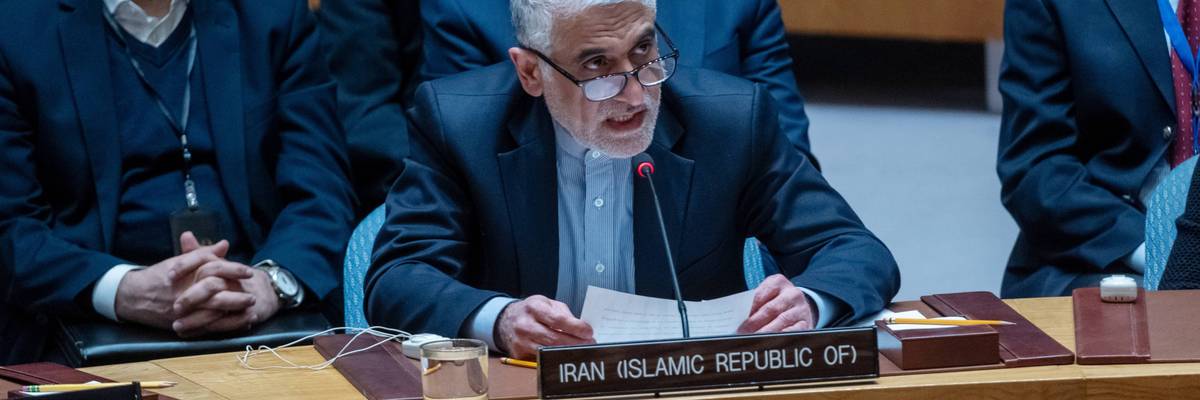
Iran’s ambassador to the United Nations (UN), Amir Saeid Iravani, speaks during an emergency Security Council meeting on the situation in Iran at the UN on February 28, 2026 in New York City. U.S. President Donald Trump announced that the United States and Israel had launched an attack on Iran Saturday morning.
(Photo by Spencer Platt/Getty Images)
Sybil Fares
Mar 02, 2026
Common Dreams

On February 16, 2026, one of us (Jeffrey Sachs) sent a letter to the UN Security Council warning that the United States was on the verge of tearing up the United Nations Charter. That warning has now come to pass. The United States and Israel have launched an unprovoked war against Iran in flagrant violation of Article 2(4) of the Charter, without authorization from the Security Council, and without any legitimate claim of self-defense under Article 51. They are trying to kill the UN Charter and the international rule of law, but they will fail.

At the Security Council on February 28, 2026, the US and its allies directed their condemnation not at the American and Israeli aggression, but at Iran. One US ally after the next condemned Iran for its retaliatory attacks yet absurdly failed to condemn the illegal and unprovoked US-Israeli attack on Iran. This performance by these countries was disgraceful and turned reality completely upside down.

The joint US-Israeli attacks were described by Trump as necessary because Iran “rejected every opportunity to renounce their nuclear ambitions, and we can’t take it anymore.” This is of course a flat lie. As the letter of February 16 recounted, Iran agreed a decade ago to a nuclear deal, the Joint Comprehensive Plan of Action (JCPOA) that was adopted by the UN Security Council in Resolution 2231. It was Trump who ripped up the agreement in 2018. In June 2025, Israel bombed Iran in the midst of US-Iran negotiations. This time too, the Israel-US war plans were set weeks ago when Netanyahu met with Trump, and the negotiations underway between the US and Iran were a charade. This seems to be the new modus operandi of the US: start negotiations and then aim to murder the counterparts.

It is easy to understand why the US allies behave in the embarrassing and self-abasing way they did at the UN Security Council. In addition to the United States, eight of the other fourteen Council members host US military bases or grant the US military access to local bases: Bahrain, Colombia, DenmarkFranceGreece, Latvia, Panama, and the United Kingdom. These countries are not fully sovereign. They are partially governed by the US. The US military bases house CIA operations, and the host countries constantly look over their shoulder to try to avoid US subversion in their own countries.

As Henry Kissinger famously said, “It may be dangerous to be America’s enemy, but to be its friend is fatal.” We can add that to host US military bases and CIA operations is to turn your country into a vassal state.

As an absurd but telling example, the Danish ambassador parroted every US talking point, pointing her finger at Iran for its aggression as if Iran had not been attacked by the US and Israel. She completely forgot that such humiliating vassalage to the US will not play well for Denmark if the US occupies Greenland.

The truthful voices at the Security Council came from the countries not occupied by the United States. Russia explained correctly that the so-called West (that is, the countries occupied by the US) is engaged in victim-blaming when it points its finger at Iran. China reminded the Council that the crisis began with the US and Israeli attacks on Iran, not with Iran’s retaliation. Somalia’s ambassador, speaking on behalf of several African member states, truthfully portrayed the source of this recent escalation. The UN Representative of the League of Arab States spoke brilliantly about the root cause of Israel’s mad aggression: the denial of rights to Palestinian people, and Israel’s use of mass murder and regional war to prevent the emergence of a State of Palestine.

When Iran retaliates against US military bases in the Gulf, it is exercising its inherent right of self-defense under Article 51 of the Charter. We must remember that the US and Israel are openly and repeatedly assassinating Iran’s leaders, with the aim of overthrowing its government. When states murder a foreign head of state and attempt to destroy the government, the target of those threats is entitled under international law to defend itself.

The US-Israeli bombing murdered not only Iran’s Supreme Leader and several top government officials, but also more than 140 young girls in their school in Minab. These young children are the victims of a horrific war crime. The countries today that gave a pass to the United States and Israel for these killings—notably Denmark, France, Latvia, the United Kingdom, and of course the US —are also complicit in this war crime.


This UN Security Council emergency meeting will likely be remembered as the day the United Nations ceased to function from its headquarters on American soil. An international organization dedicated to the peaceful settlement of disputes cannot credibly operate from a country that wages illegal wars, threatens member states with annihilation, and treats UN Security Council resolutions as disposable instruments of convenience. For the UN to survive, and we need it to survive, it will need several homes around the world—in Brazil, China, India, South Africa, and others—honoring the true multipolarity of our world.

Let us be clear about what the United States and Israel are pursuing. The US objective is not the security of the American people. The objective is global hegemony. The attempt is to destroy the UN and the international rule of law—an attempt that will fail. Israel’s objective is to establish a Greater Israel, destroy the Palestinian people, and assert its hegemony over hundreds of millions of Arabs across the Middle East (from the Nile to the Euphrates, as US Ambassador Mike Huckabee recently asserted).

The United States’ delusional efforts at global hegemony are proceeding region by region. The US has recently claimed, in a wholly twisted supposed revival of the Monroe Doctrine, that it controls the Western Hemisphere and can dictate how Latin American countries conduct their economic and political affairs. The US kidnapped the sitting Venezuelan president to prove the point, and it now threatens to overthrow the Cuban government as well.

Today’s war against Iran aims to prove that the US similarly owns the Middle East. The war is part of a 30-year campaign, initiated by the Clean Break doctrine, to overthrow all governments that oppose US and Israeli hegemony in the region. Those joint Israel-US wars have included the genocide in Gaza, the occupation of the West Bank and the decades of wars and regime-change operations in Iran, Iraq, LebanonLibyaSomaliaSudanSyria, and Yemen.

One part of the US global plan is to commandeer the world’s oil exports and to weaken China and Russia in the process. The US seizure of Venezuela was designed to ensure American control of that country’s oil exports, especially to control the flow of oil to China. US sanctions on Russia aim to prevent Russian oil from reaching India and China. Now the US aims to stop the flow of Iran’s oil to China. More broadly, the US aims to control the entire Gulf region plus Iran to maintain its imperial dominance.

The international order that Franklin and Eleanor Roosevelt helped to build after the catastrophe of WWII was founded on a simple and profound idea – that law and respect, not force, should govern relations among states. That idea is now being destroyed by the very nation that did most to promote it in founding the UN. The irony is bitter beyond measure.

The truth is that the devastation of the war will not directly affect the so-called West: their children will not suffer traumas or death, and their countries will not be set ablaze. The victims of this attack are the people of the Middle East. They are the expendable ones who suffer from Western arrogance, abuse of power, and addiction to war.

We close with two observations. First, the United States will not achieve global hegemony or kill the UN. The world is too large, too diverse, and too determined to resist domination by any single power, much less one with 4 percent of the world’s population. The world outside of the US and the countries it occupies want the UN to live and thrive. The US attempt will surely fail, but it may cause immense suffering before it does.

Second, if Israel continues its addiction to war and occupation, it too will not survive. That addiction represents a mix of theocracy and post-traumatic stress. Part of Israel believes that it is the biblical kingdom of the 5th century BC. The other part lives in the traumatic memory of the Holocaust, and so is determined to kill any perceived adversary rather than learn to live together with it in peace. The Israeli Ambassador’s twisted defense of Israel’s brazen attack on Iran, as usual, cited the Bible and Auschwitz as the two justifications. These are Israel’s two perennial references, but not the real world of today.

A state that depends on permanent war, permanent occupation and slaughter of the Palestinians, and the indefinite subjugation of millions of people has no viable future, and the policies that the United States is now pursuing on Israel’s behalf will accelerate rather than prevent that outcome.

The two-state solution, which the Council has endorsed repeatedly, offers Israel a path to peace. Tragically Israel rejects that. The result, eventually, will be the end of Israel itself in its current form, especially as the US population is rapidly turning against Israel’s violent theocracy and towards the cause of Palestine. Perhaps there will be one democratic state for both Arabs and Jews living in peace, together, with an end of apartheid rule.

These are harsh truths, but emergencies demand honesty. The UN is being murdered by Israel and the United States. The Security Council must rouse itself from their military occupation by the US, and remember that they are the stewards of the UN Charter’s promise to maintain international peace and security.


IRONY


Melania Trump to chair UN Security Council meeting on 'world peace' amid Iran strikes

OR COGNITIVE DISSONANCE

David Edwards
March 2, 2026 
RAW STORY


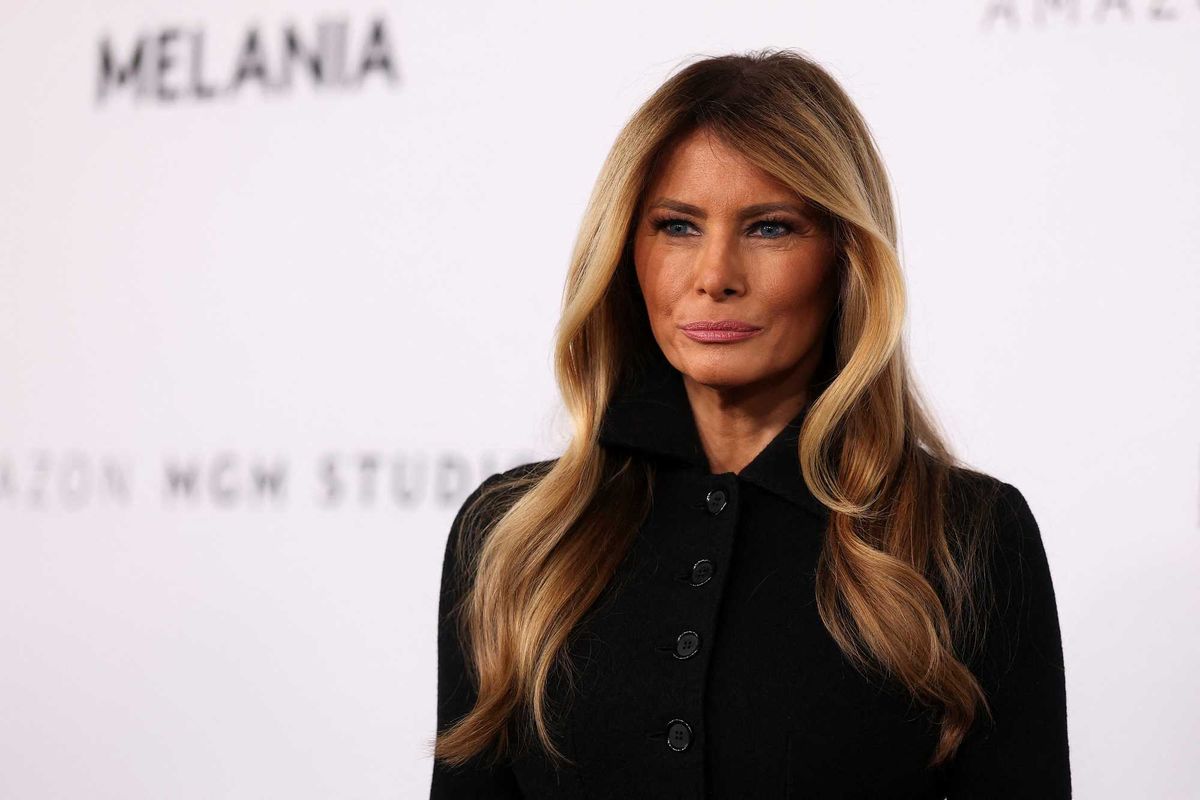
First lady Melania Trump arrives for the premiere of the documentary film "Melania" at the John F. Kennedy Center for the Performing Arts, recently renamed to include U.S. President Donald Trump's name, in Washington, D.C., U.S., January 29, 2026. REUTERS/Kylie Cooper

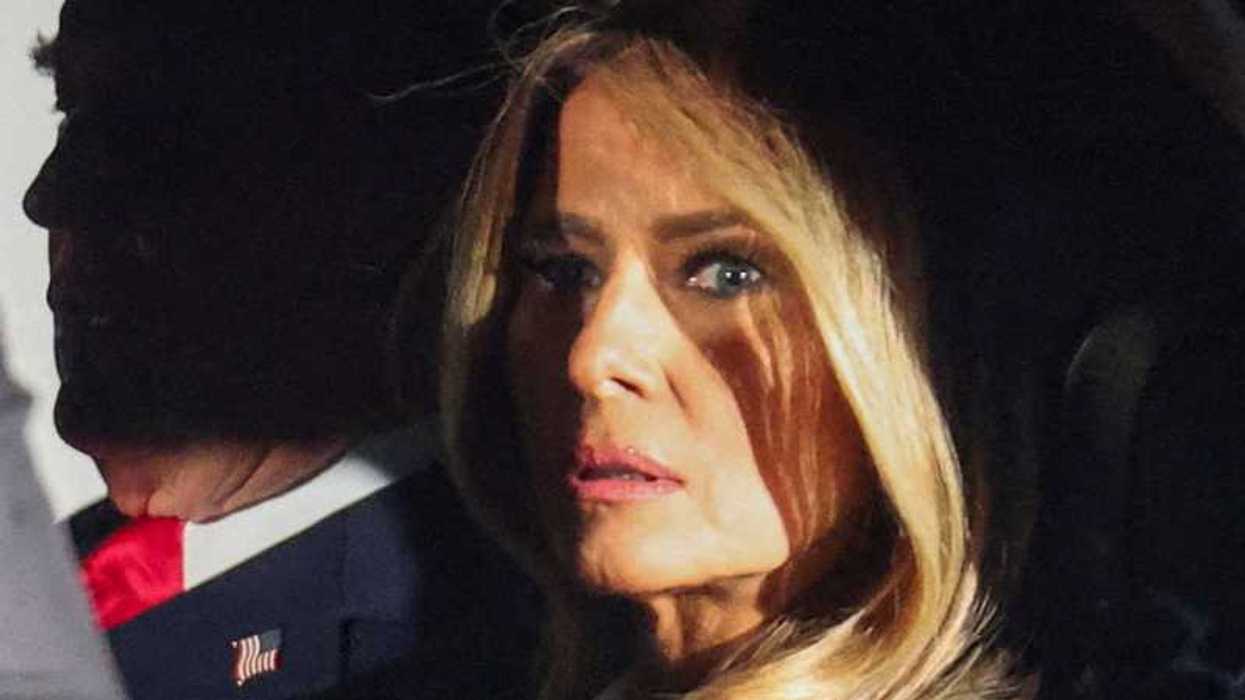
First Lady Melania Trump will become the first spouse of a world leader to chair a United Nations Security Council meeting despite her husband's ongoing attacks against Iran.

The U.S. first lady was expected to "emphasize education's role in advancing tolerance and world peace," according to a statement from her office.

The event, first unveiled on Thursday, was not canceled after her husband, President Donald Trump, launched Operation Epic Fury in Iran.


At least four U.S. service members had been killed in action, along with Iran's supreme leader and dozens of other officials.

UN ambassador Mike Waltz has denied that the attack on Iran flouts international law, calling it a "ridiculous and frankly farcical assertion."


'Money or malice': What's really behind Melania Trump's UN appearance


U.S. President Donald Trump and first lady Melania Trump depart for the State of the Union Address at the U.S. Capitol from the White House in Washington, D.C., U.S., February 24, 2026. REUTERS/Tom Brenner

February 28, 2026
ALTERNET


First Lady Melania Trump is leading the United Nations Security Council next week, and it's prompting some to wonder what the angle is for the Trumps to benefit.

Writing for The Guardian on Saturday, columnist Arwa Mahdawi explained, "It is my working hypothesis that there are only two reasons a Trump ever does anything: money or malice."

So, she speculated, what is behind the new decision to take Mrs. Trump away from her meme coin, coffee table books, and filmmaking?

"I’m not sure holding the gavel at Monday’s security council session is particularly lucrative, so file this one under 'malice,'" wrote Mahdawi. "Foisting Melania on the Security Council as the U.S. assumes the body’s rotating monthly presidency sends a clear message to the world about just how seriously the Trump administration takes the UN. It feels like an attempt to undermine the credibility of the UN and multilateralism more broadly."

She recalled Trump's overall hatred that manifested during the COVID-19 crisis toward the World Health Organization in 2020, along with his ongoing abandonment of 66 other international organizations.

Daniel Forti, head of UN affairs at the International Crisis Group, told NPR that the "symbolism is unequivocal."

"It’s that the US really wants to dictate its own terms to the rest of the multilateral system and wants to work with the UN in a way where it really sets the agenda," he said.

Several months ago, Trump announced he was forming his own group of the united nations called the "Board of Peace," where he, and only he, will be the leader, and joining will cost $1 billion. The president announced last week that he was handing over $10 billion in taxpayer dollars to run the organization, though those funds have not yet been approved by Congress. The current goal is to rebuild Gaza, he said, but during a speech before the meeting last week, Trump claimed they are "going to go far beyond Gaza."

Mahdawi sees it as nothing more than "a vehicle for rampant profiteering."

Behind the scenes, Mahdawi said that a number of diplomats are fearful that it will become a shadow version of the United Nations, that favors the Americans.

"All of which must be very exciting for our first lady, who is clearly keen to try her hand at international diplomacy," Mahdawi closed. "Perhaps, after her valuable work experience stint at the United Nations on Monday, Melania will also find herself a nice little role on the Board of Peace. And maybe Ivanka Trump, who the president once thought about installing as the head of the World Bank, will also return to public life. Whatever happens, I think we can all agree that we’re terribly lucky to have such a talented ruling family. FIFA, I hope you’re paying attention; time to give Melania her own peace prize, don’t you think?"

Iran Demands Emergency United Nations Action Amid ‘Criminal Aggression’ by US, Israel

“Just as we were ready for negotiations, we are more ready than ever for defense,” said the Iranian Foreign Ministry.


Smoke rises over the city center after the Israeli army launched a second wave of airstrikes on Tehran, Iran on February 28, 2026.
(Photo by Fatemeh Bahrami/Anadolu via Getty Images)

Jake Johnson
Feb 28, 20
COMMON DREAMS

The United Nations Security Council is set to hold an emergency meeting at 4:00 pm ET on Saturday to discuss the US-Israeli attacks against Iran.


As US and Israeli bombs fell on Tehran, the Iranian Foreign Ministry on Saturday vowed that the country would defend itself against “criminal aggression” and implored the United Nations Security Council to take emergency action.

The ministry said in a lengthy statement that Saturday’s attacks, which US President Donald Trump characterized as the start of a massive military operation aimed at overthrowing the Iranian government, represent “a violation of Article 2, Paragraph 4, of the United Nations Charter and a clear armed aggression against the Islamic Republic of Iran.”

“The Islamic Republic of Iran notes the grave duty of the United Nations and its Security Council to take immediate action to confront the violation of international peace and security,” reads the ministry’s statement, which noted that the US and Israeli assault began “in the midst of a diplomatic process.”

“The Iranian people are now proud that they did everything they could to prevent war,” the statement continues. “Now is the time to defend the homeland and confront the enemy’s military aggression. Just as we were ready for negotiations, we are more ready than ever for defense. The armed forces of the Islamic Republic of Iran will respond to the aggressors with authority.”

Ben Saul, the UN special rapporteur on human rights and counterterrorism, condemned US-Israeli “aggression against Iran” in a social media post, calling the assault a “violation of the most fundamental rule of international law—the ban on the use of force.”

“All responsible governments should condemn this lawlessness from two countries who excel in shredding the international order,” Saul added.

‘​Shameless’: Critics Hammer Pete Hegseth for Claiming ‘We Didn’t Start’ War on Iran

The defense secretary suggested that “the US went to war because Iran has ballistic missiles and drones it has used as a deterrent or to respond to US/Israeli attacks,” said journalist Jeremy Scahill.


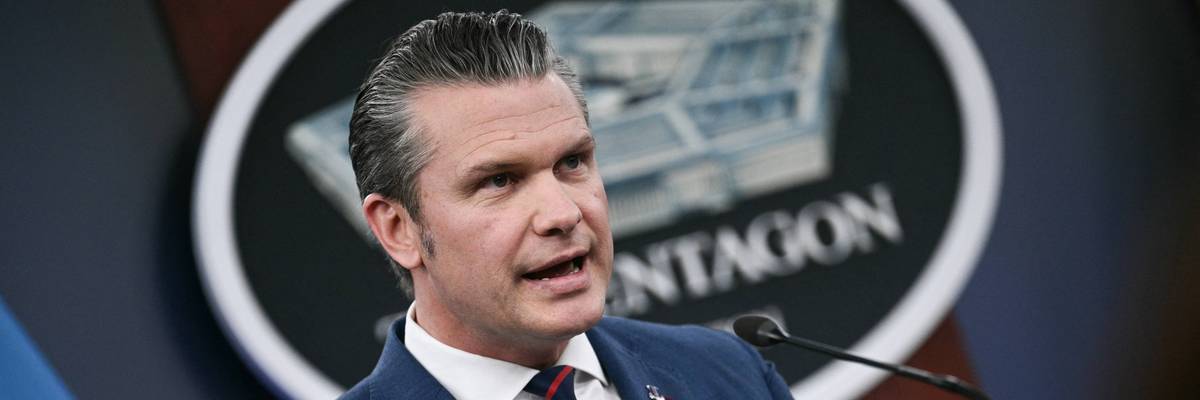
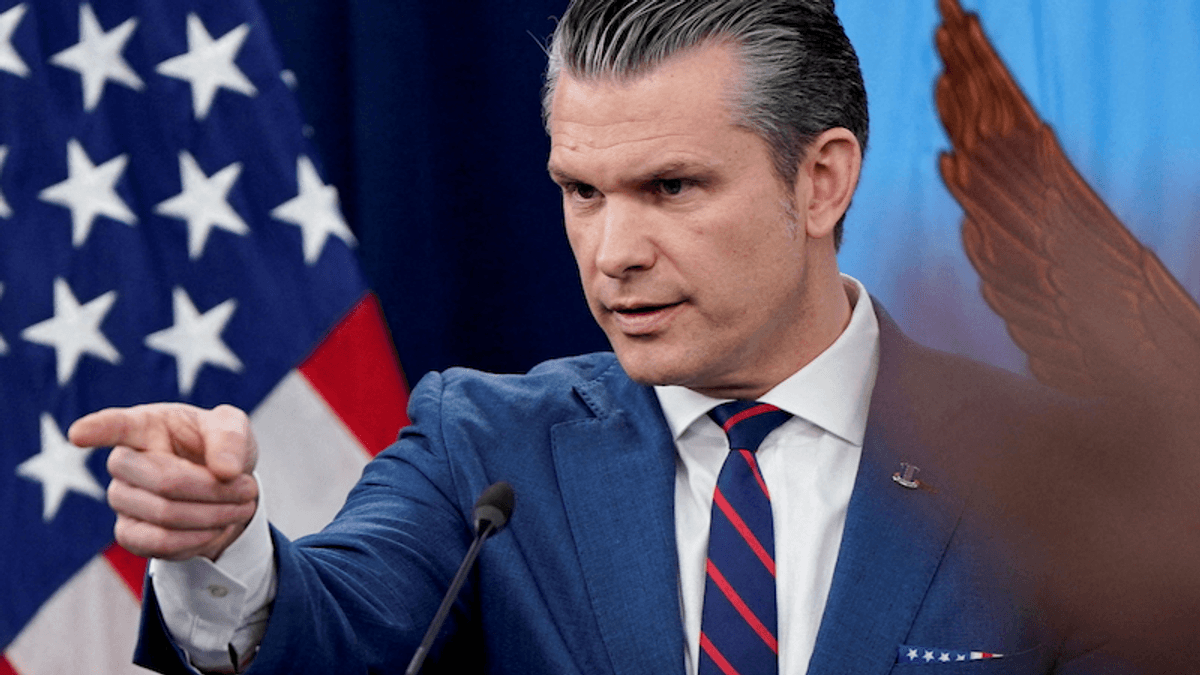
US Defense Secretary Pete Hegseth speaks during a press conference on US military action in Iran at the Pentagon in Washington, DC, on March 2, 2026.
(Photo by Brendan Smialowski/AFP via Getty Images)

Julia Conley
Mar 02, 2026
COMMON DREAMS

In the Trump administration’s first public remarks to reporters on the strikes the US and Israel launched in Iran over the weekend, Defense Secretary Pete Hegseth blamed the Middle Eastern country for the attacks that have killed at least 555 people there as well as at least four US soldiers—and suggested Iran posed an imminent threat because of its defensive military capabilities.

Hegseth said the strikes that began early Saturday morning and included deadly attacks on children attending school were “retribution” for Iran’s “savage, one-sided war against America” that has played out for “47 long years” as the country has waged proxy attacks on the US.

“We didn’t start this war, but under President Trump we’re finishing it,” said Hegseth.

Despite the fact that hours before President Donald Trump announced the US and Israeli attacks, the Omani Foreign Minister Badr Albusaidi reported that diplomatic talks he was mediating were making significant progress toward a peace deal, Hegseth asserted that Iran had a “conventional gun to our head” and suggested the US had no choice but to wage war.

Pentagon officials said in a congressional briefing Sunday that Iran had not been planning to strike any US military targets in the region unless it was attacked first, according to CNN.

The defense secretary also claimed Monday that Iran was “not negotiating” and said it was “stalling” in the talks with the aim of rebuilding missile stockpiles.“

“To be clear,” said journalist Jeremy Scahill of Drop Site News, “he is claiming the US went to war because Iran has ballistic missiles and drones it has used as a deterrent or to respond to US/Israeli attacks.”


Drop Site noted that Hegseth made no mention of “the 1953 US-backed coup in Iran,” US support for autocratic rule there from 1953-79, “or that the US and Israel launched the February 28 strikes.”

On the UK talk radio show “Leading Britain’s Conversation,” British journalist Jon Sopel said Hegseth was making “the exact argument that [former President] George W. Bush made in 2003 with the weapons of mass destruction and ‘They could be launched in 45 minutes.’”

Promises to end the US government’s penchant for embarking on endless regime change wars, added Sopel, were part of “what propelled Donald Trump to the presidency, and yet Donald Trump and [Israeli Prime Minister Benjamin] Netanyahu have launched these strikes against Iran.”


The defense secretary attempted to contrast the operation in Iran—dubbed Operation Epic Fury by the US military—to protracted wars like those the US has waged in Iraq and Afghanistan.

The conflict will not be an “endless war,” Hegseth said.

He claimed at one point in the briefing that the clear-cut objective of the attacks is to “destroy the missile threats, destroy the navy, no nukes” and scoffed at a reporter’s question about Trump’s Sunday statement in which he said he expected the conflict to be resolved in “four weeks or less.”

“President Trump has all the latitude in the world to talk about how long it may or not take. Four weeks, two weeks, six weeks. It could move up, it could move back,” said Hegseth.

Hegseth spoke alongside Joint Chiefs of Staff Chairman Gen. Dan Caine, who appeared to temper expectations of a quick resolution to the war started by the US and Israel.

“To be clear... this is not a single overnight operation,” Caine said. “The military objectives [US Central Command] and the Joint Force have been tasked with will take some time to achieve, and in some cases will be difficult and gritty work.”

Caine added that the military objective is “to protect and defend ourselves, and together with our regional partners, prevent Iran from the ability to project power outside of its borders.”


Law professor Jennifer Taub denounced Hegseth’s remarks as “utter nonsense” and condemned his claim that the US and Israel are hitting military targets “surgically.”

“Shameless,” she said. “We or Israel bombed a girl’s school on Saturday when school was in session, killing 175.”


Along with Hegseth’s claim that Iran was to blame for the strikes launched by the US and Israel, his comment that the US will expedite the operation by not getting bogged down in “stupid rules of engagement” alarmed observers.

“'No stupid rules of engagement’ means no Geneva Conventions or other international humanitarian laws, which the US signed and supported for more than a century,” said journalist Mark Jacob. “Hegseth and Trump are pro-war crimes.”

Former Bush official blasts Pete Hegseth's 'condescending' Iran war tantrum

Tom Boggioni
March 2, 2026 
RAW STORY


U.S. Secretary of Defense Pete Hegseth holds a briefing amid the U.S.-Israeli conflict with Iran, at the Pentagon in Washington, D.C., U.S., March 2, 2026. REUTERS/Elizabeth Frantz

A former member of President George W. Bush’s administration had nothing good to say about Defense Secretary Pete Hegseth’s press conference on Monday, claiming he failed to answer any important questions and just showed up to posture.

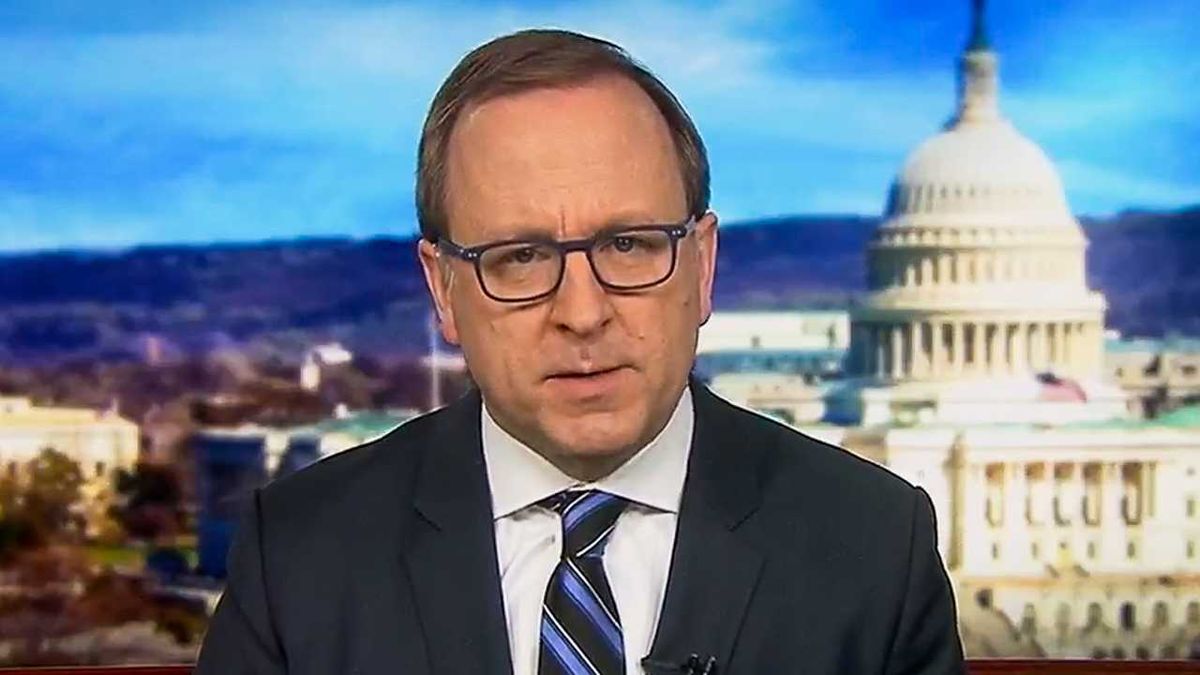
Appearing on MS NOW’s “Morning Joe,” Elise Jordan expressed disgust with the former Fox News personality’s smug answers, which also failed to make the case that threatens to go on longer than the Donald Trump administration is willing to admit.

Speaking with co-host Jonathan Lemire she exclaimed, “Well, beside his behind his condescending demeanor, that aside, notice how he says constantly ‘mission clear objectives. ‘He repeatedly says, ’We have a mission.’ ‘We have a ––,’ What are they?! He can't put them out there. That is the whole problem here."

“We don't know what this war is about!” she pointed out. “Donald Trump said from the get-go, it was about encouraging the Iranian people to stand up, regime change. Then you hear through so many different interviews that he does so many different options. ‘This could go a month, it could be a couple of days. I don't know, maybe I'll negotiate.’”

“No one has any idea what this war is about,” she insisted. “And it is a problem because they don't have a strategy and they don't have a plan. And you look at the politics of this, it's only going to get worse with time.”


Journalist says Pete Hegseth stacked the deck at press conference with MAGA reporters

Travis Gettys
March 2, 2026 
RAW STORY


U.S. Secretary of Defense Pete Hegseth holds a briefing amid the U.S.-Israeli conflict with Iran, at the Pentagon in Washington, D.C., U.S., March 2, 2026. REUTERS/Elizabeth Frantz TPX IMAGES OF THE DAY

Secretary of Defense Pete Hegseth stacked the deck with friendly correspondents at his press conference on the start of military operations against Iran.

The defense secretary and Gen. Dan Caine, chairman of the Joint Chiefs of Staff, took questions for about 13 minutes Monday morning in the administration's first public comments to reporters since the U.S.-Israeli military operations began over the weekend, but CNN's Brian Stelter reported that MAGA-friendly outlets dominated the proceedings.

"If you're wondering about who was at today's Pentagon press conference, here's some context," Stelter posted on X. "The Pentagon has severely restricted access to info in the past year. Pete Hegseth credentialed a MAGA media 'press corps' last fall after traditional news outlets rejected new press pass rules that media lawyers said criminalized routine reporting. The MAGA crew does relatively little reporting, so most coverage of the US military is now happening from outside the Pentagon's five walls."

"Journalists from some traditional outlets were allowed to attend this morning's press conference with Hegseth and Gen. Dan Caine," he added. "But Hegseth only answered Q's from his chosen outlets. I'm told he had a pre-selected list of questioners, and all the reporters were in assigned seats, so he knew who to call on."

However, one reporter who wasn't on Hegseth's list managed to slip a question through, and the Pentagon chief erupted.

"When NBC's Courtney Kube tried to get a question in anyway and said, 'President Trump put a four-week timeline on it — are you saying that is wrong?,' Hegseth dismissed it as a 'typical NBC sort of 'gotcha' type question.'"

Hegseth insisted to Kube that President Donald Trump had no constraints on his authority to order military operations for as long as he liked.

"President Trump has all the latitude in the world to talk about how long it may or may not take," Hegseth said. "Four weeks, two weeks, six weeks – it could move up, it could move back. We're gonna execute at his command ... Joe Biden didn't even know what he was doing."

Among the MAGA-friendly correspondents at the press conference was conservative activist Brandon Stratka, who was present at the U.S. Capitol on Jan. 6, 2021, and later pleaded guilty to a misdemeanor charge of disorderly conduct.

"I’m at the Pentagon this morning for a briefing with @SecWar @PeteHegseth on the Iran strikes," Stratka posted. "Session starts in 10 minutes."
Reporter who talked to Trump says president is high on war powers: 'He feels invincible'

David Edwards
March 2, 2026 
RAW STORY


ABC News/screen grab

ABC News correspondent Jonathan Karl came away from an interview with President Donald Trump suggesting the U.S. leader was high on military power following the strikes in Iran.

"He promised to keep the nation out of foreign wars, but at this point, no modern president has ordered more military strikes against more countries than Donald Trump," ABC News host George Stephanopoulos told Karl on Monday.

"And I have to tell you, George, I spoke to the president; he sounded to me like a president who feels invincible," Karl confirmed. "He talked about the military strike he ordered last summer against the nuclear program in Iran. He talked about the operation to take out Nicholas Maduro in Venezuela and what he sees as a wildly successful attack now underway against Iran."

"He told me, quote, nobody could have done this, but me, and you know that," he continued. "In fact, George, he suggested that the success in Venezuela made him less likely to accept concessions in Iran that were offered in the final round of talks."

"He told me that a year ago he would have accepted what the Iranians offered, but, quote, we have become spoiled."

"But the president didn't offer a lot of clarity on what comes next?" Stephanopoulos wondered.


"No, he told me that he had been in touch with one member of the regime," Karl said. "He wouldn't say who it was, one surviving member."

"He said he was planning for four or five weeks," the correspondent added. "Could be longer, could be shorter. And it's pretty clear this is personal for the president."


WSJ editors warn Trump about his potential 'biggest mistake' in Iran: 'Keep going'

Robert Davis
March 1, 2026 
RAW STORY

U.S. President Donald Trump looks at statues in the Rose Garden while returning to the White House, after Israel and the U.S. launched strikes on Iran, in Washington, D.C., U.S., March 1, 2026. REUTERS/Annabelle Gordon

The conservative Wall Street Journal editorial board issued a surprising warning to President Donald Trump about the "biggest mistake" he could make after striking Iran.

Early on Saturday morning, U.S. and Israeli forces conducted coordinated strikes against multiple sites in Iran, which killed Ayatollah Ali Khamenei, the dictator who had ruled the country since 1989, multiple government officials, and damaged the country's ballistic and nuclear missile facilities. Trump has said the strikes will continue until the U.S. achieves its objectives, of which few details have been released.

The WSJ editors celebrated the move in a new editorial on Sunday, but also warned Trump not to end the campaign too soon.

"The first two days of the U.S.-Israeli attack on Iran have been a striking success, but the response of the Iranian regime has also revealed the reason it was necessary," the editorial reads. "The biggest mistake President Trump could make now would be to end the war too soon, before Iran’s military and its domestic terror forces have been more thoroughly destroyed."

The editors added that Iran's continued strikes against its neighbors in the region speak to the necessity of the strikes.

'I don't have the yips': Trump says he's considering boots on the ground in Iran

Travis Gettys
March 2, 2026 
RAW STORY


U.S. President Donald Trump delivers remarks during an event at the Port of Corpus Christi in Corpus Christi, Texas, U.S., February 27, 2026. REUTERS/Elizabeth Frantz

President Donald Trump hasn't ruled out sending U.S. ground forces into Iran as part of Operation Epic Fury.

The 79-year-old president ordered joint U.S.-Israeli airstrikes that resulted in the killing of Iran's supreme leader, 86-year-old Ayatollah Ali Khamenei, and dozens of other top officials, but Trump told the New York Post he would consider putting troops on the ground.

"I don’t have the yips with respect to boots on the ground — like every president says, ‘There will be no boots on the ground’ – I don’t say it,” Trump said. “I say ‘probably don’t need them,’ [or] ‘if they were necessary.'”

Trump had said over the weekend that he estimated the war would last “four weeks or so," but he told the Post that he believes hostilities could be even shorter.

“It’s going to go pretty quickly,” Trump said. “We’re right on schedule, way ahead of schedule in terms of leadership — 49 killed — and that was, you know, going to take, we figured, at least four weeks, and we did it in one day.”

The president also insisted he wasn't concerned that Iran could respond to the strikes with terrorist attacks.

“We’ll take it out, whatever – it’s like everything else, we’ll take it out,” Trump said.

Trump told the newspaper that he decided to order the strikes following "final talks" Thursday in Geneva due to intelligence reports that Iran was resuming work on nuclear projects.

“We had very serious negotiations, and they were there, and then they pulled back,” he said. “They wanted to make a nuclear weapon, so we destroyed them completely, but we found they were in a totally different site — totally different — because the sites that we took out were permanent. They tried to use them, but they were totally, as I said correctly before, obliterated, right? So then we found them working on a totally different area, a totally different site, in order to make a nuclear weapon through enrichment — so it was just time.”

“I said, ‘Let’s go,'" he added.

Polling conducted by Reuters/Ipsos Saturday and Sunday found just 27 percent of Americans approved of the strikes, but Trump said he believes the public broadly supports his decision.


“I think that the polling is very good, but I don’t care about polling," Trump said. "I have to do the right thing. I have to do the right thing. This should have been done a long time ago."

“I don’t think the polling is low,” he added. “Look, whether polling is low or not, I think the polling is probably fine. But it’s not a question of polling. You cannot let Iran, who’s a nation that has been run by crazy people, have a nuclear weapon. I think people are very impressed with what is happening, actually. I think it’s a silent — if you did a real poll, the silent poll — and it’s like a silent majority.”

"The attacks underscore that Iran is the main threat to the entire region," it added. "What it has been doing all along by proxy, it now does directly. This is an opportunity to rally even the region’s equivocating states into a coalition for changing the Tehran regime."

"All of this reveals the risks of ending the bombing campaign before Mr. Trump’s stated war aims are achieved," it continued.

Read the entire editorial by clicking here.


Trump reveals his 'biggest surprise' so far in Iran war

Travis Gettys
March 2, 2026 
RAW STORY


Donald Trump delivers the State of the Union address. REUTERS/KEVIN LAMARQUE

President Donald Trump has been surprised by Iran's response to joint U.S.-Israel airstrikes that took out their supreme leader.

The 79-year-old president spoke to CNN's Jake Tapper for a nine-minute phone interview Monday morning to discuss his order over the weekend to decapitate Iranian leadership, and Trump said he was surprised that Iran had retaliated by striking other Arab countries in the region, including Bahrain, Jordan, Kuwait, Qatar and the United Arab Emirates.

“We were surprised,” Trump said. “We told them, ‘We’ve got this,’ and now they want to fight, and they’re aggressively fighting. They were going to be very little involved and now they insist on being involved.”

"[They] shot into a hotel, they shot into an apartment house," he added. "It just made them angry. They love us, but they were watching. There was no reason for them to be involved ... that was probably the biggest surprise.”

Trump said the initial strikes were successful and threatened more to come.

“We’re knocking the crap out of them,” Trump said. “I think it’s going very well. It’s very powerful. We’ve got the greatest military in the world and we’re using it.”

"We haven’t even started hitting them hard," he added. "The big wave hasn’t even happened. The big one is coming soon.”

The president was asked how long the military operation might last, and he expressed hope that it would end within weeks.

“I don’t want to see it go on too long," Trump said. "I always thought it would be four weeks, and we’re a little ahead of schedule.”

Trump said his team attempted to negotiate with the Iranians on ending their nuclear ambitions but complained that “we couldn’t make a deal with these people.”

“They had all that enriched stuff," he said. "They looked at redoing it there, but it was in such bad shape, the mountain had basically collapsed."

He argued that military strikes would succeed where diplomacy had not.

“We don’t have to worry about agreements," Trump said. “You go back 37 years, really 47 years, close to 50, look at what’s happened and all the death. People in the military walking around with no legs, walking around with no arms, their faces shattered."

“Over the last 47 years, I said, ‘give me all of the attacks,'" he added. "If I told you all of them I’d still be talking."