Friday, March 06, 2026


Algoma Central Buys Mainstay Maritime’s Canadian Great Lakes Shipping
Canadian-flagged Great Lakes bulker
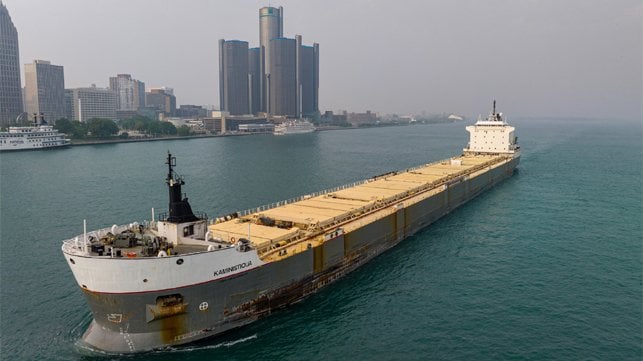
Agoma acquires six Canadian-flagged Lakers including the Kaministiqua (Mainstay Maritime)

Published Feb 27, 2026 7:53 PM by The Maritime Executive


Canada’s Algoma Central, already one of the largest dry and liquid bulk carriers for the Great Lakes-St. Lawrence region, has agreed to buy three Canadian operating companies and six Canadian-flagged Lakers from Mainstay Maritime (formerly Rand Logistics). The transaction will permit each company to expand its Great Lakes operations under its respective flags.

Mainstay Maritime is the newly launched brand name for the former Rand Logistics, and after the acquisition by Oaktree Capital completed in 2023, and the spinout with Duration Capital Partners in 2024, it looks to expand its operations on the Great Lakes. The company traces its origins to 1907 and the incorporation of American Steamship Company, which is today a subsidiary, as well as its acquisitions of Grand River Navigation, Conneaut Creek Ship Repair, and recently Andrie, a liquid bulk transportation company on the Great Lakes.

Under the terms of the agreement, Algoma acquires the three Canadian operating companies, including Lower Lakes Towing, which was launched in 1994. It also acquires six Canadian-flagged Lakers (KaministiquaManitoulinRobert S. PiersonSaginawMichipicoten, and Valo), ranging in capacity between approximately 19,600 and 33,824 tons.

“For Mainstay, this transaction represents a natural step in Mainstay’s evolution for the long-term benefit of all our constituencies – allowing us to sharpen our focus on the U.S. Jones Act market, increase our reinvestment in our U.S.-flagged fleet, and position the company to meet the growing needs of our customers,” said Greg Binion, CEO of Mainstay Maritime. 

Mainstay reports it operates a fleet of 26 vessels. It includes one conventional bulk carrier, 19 self-unloading bulk carriers, and seven bulk specialty and liquid vessels. Going forward, it will be focused exclusively on U.S.-owned, built, and crewed vessels operating under the Jones Act.

“Algoma is pleased to grow our Canadian dry-bulk fleet with the addition of Lower Lakes’ vessels and experienced team,” said Gregg Ruhl, President & CEO at Algoma.

In September 2025, Algoma highlighted that it had taken delivery of the 100th vessel across its fleet that operates throughout the Great Lakes-St. Lawrence region and internationally. At the time, it noted that a decade ago, the company operated just under 40 vessels, serving primarily the Great Lakes–St. Lawrence Seaway, while today Algoma’s dry and liquid bulk fleets have grown by more than 60 vessels, in Canada and globally. It noted that it had seven vessels under construction with deliveries expected between 2025 and 2027.

No financial terms were announced for the transaction. The companies said they expect it to close in the first quarter of 2026.

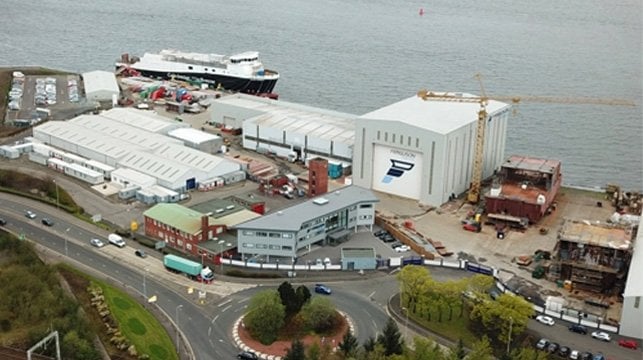
Scottish Government Plans Four Ship Contract Lifeline for Ferguson Marine

Ferguson Marine Glasgow Scotland
Ferguson Marine has been building ships is Glasgow for over 100 years (file photo)

Published Mar 4, 2026 7:31 PM by The Maritime Executive


The Scottish government is moving forward with a plan to award the financially troubled Scottish shipbuilder Ferguson Marine four new contracts as a lifeline to keep the yard afloat. The yard fell into administration and was taken over by the government in 2019 in an effort to keep shipbuilding in Glasgow. Awarding the yard new contracts is seen as a step toward transitioning the yard back to private ownership.

“This is a watershed moment,” said Deputy First Minister Kate Forbes during a presentation on the plan to parliament on March 3. “Fulfillment of the proposed program, subject to due diligence processes to assess viability, would secure a pipeline of work and allow the shipyard to move ahead with its modernization plans while pitching for additional orders on the open market.”

The plan calls for direct awards to the yard without competitive bidding for four construction contracts. It would build ships to replace the research vessel Scotia and the fisheries protection vessel Minna, which were built in Glasgow in 1998 and 2003. In addition, as part of the Small Vessel Replacement Program launched by the government, Fugerson would get contracts for two additional ferries.

In announcing the plan, the government said the contracts would be subject to due diligence to assess viability. The four awards would take up most of the yard’s capacity for the next five years and enable the new management team time to pursue additional commercial work.

The government has already made commitments to the yard, and this program would unlock the remainder of a £14.2 million (nearly $19 million) commitment by the Scottish Government to upgrade the yard’s infrastructure over the next two years. Currently, the government is making interim investments focused on essential repairs, health and safety improvements, and equipment upgrades, which it said were necessary to stabilize the operations and to finally complete the long-delayed ferry, Glen Rosa.

Ferguson won a contract from the government in 2015 to build two LNG-fueled ferries, which were considered to be state-of-the-art. Delivery was expected by 2018 at a total cost of £97 million. The project, however, went from one problem to the next as costs mounted and problems persisted with the vessels. The first ferry, Glen Sannox, has been in service for about one year, with reports of additional problems. Delivery of the second, Glen Rosa,  is now anticipated for the fourth quarter of 2026. Reports are that the project will come in at five times its original budget.

Speaking to Parliament in February, the leaders said they recognized the skepticism based on the long delays and cost pressures at the yard. They, however, also strongly believe in keeping the shipbuilding industry going in Glasgow. The yard dates back to 1903 and has built ferries, naval auxiliaries, and specialist ships.

A new management team is leading the yard, which the government asserts has stronger commercial disciplines. They report that it has improved accountability and assurance reporting. They also said oversight has been strengthened.

The management has to present a new business plan to the government, which would be reviewed. If the plan is accepted, the government would seek to move the contract awards forward under the Subsidy Control Act.

Royal Caribbean Group Proposes Ship Repair Yard for Panama's Pacific Coast

dry dock
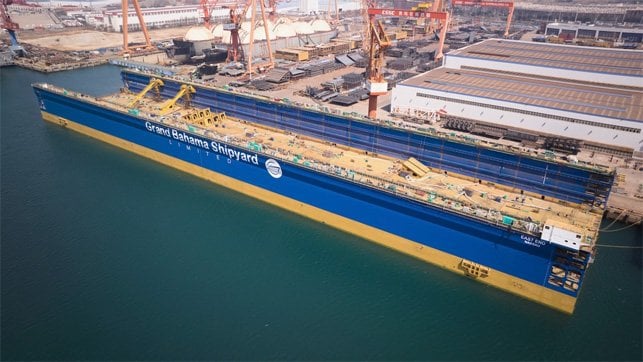
Royal Caribbean is proposing a repair yard with a dry dock on Panama's Pacific coast similar to the capabilities it invested in for the Bahamas (Grand Bahama Shipyard)

Published Mar 5, 2026 8:31 PM by The Maritime Executive


Officials from Panama are responding positively to the concept of creating a shipyard on the Pacific coast of the country. Royal Caribbean Group met with the president of Panama, Jose Raul Mulino, and other government executives to outline its proposal, which would see a yard with capabilities to handle large ships in operation by 2031.

Royal Caribbean is proposing that the shipyard be established in the Punta Pierdra sector, near the city of Puerto Armuelles, which is located in the northwest near the border with Costa Rica. They proposed a 130,000-ton floating dry dock with a length of 400 meters (over 1,300 feet), which would be able to accommodate the company’s largest cruise ships.

During the presentation, the company explained that the rationale would be to create a repair facility to service ships on the Pacific coast. It noted that currently, large ships have to go to Asia for their maintenance and dry dockings. By placing the yard in Panama, the company could service its ships sailing on the Pacific coast and would also have the option of bringing ships through the Panama Canal to the yard. They noted that the yard would also be available to other large ships, such as container vessels, which also do not have suitable repair facilities in the area.

Panama has a smaller shipyard in Balboa near the Pacific terminus of the Panama Canal. The country has been working to revitalize that yard, but it only has dry dock capabilities for smaller ships.

According to the Panama Maritime Authority, President Mulino affirmed that he will support the effort to make the Pacific shipyard a reality while noting that investments could start this year. He highlighted that the project would contribute to elevating Panama’s strategic importance as a maritime hub. Mulino also said it would create jobs, helping to rescue an area that has been abandoned for years. 

Royal Caribbean estimated the operation could create 500 to 800 jobs in the coming years.

In the 1990s, Royal Caribbean and Carnival Corporation joined together to invest with Freeport in the Bahamas to create a shipyard that could handle cruise ships close to their homeport in South Florida. The companies remain the primary investors in Grand Bahamas Shipyard, which is currently completing a large expansion. In February, the yard undertook the first dry dock project with the first of two new large dry docks built in China. The first dry dock, East End, is 357 meters long and is capable of lifting 93,500 tons. The second dry dock, expected to arrive in 2026, called Lucayan, is due to arrive at Freeport in 2026.

Having a capable shipyard on the Pacific coast could help the company pursue expansion and the use of larger ships in the region. Currently, they are more limited with the capabilities on the Pacific coast, where, for example, Carnival Cruise Line had to partially dismantle the funnel of one of its cruise ships to reach a dry dock for urgent repairs.

Report: MSC and BlackRock Push to Complete Hutchison Deal for Port Ops

Port of Rotterdam
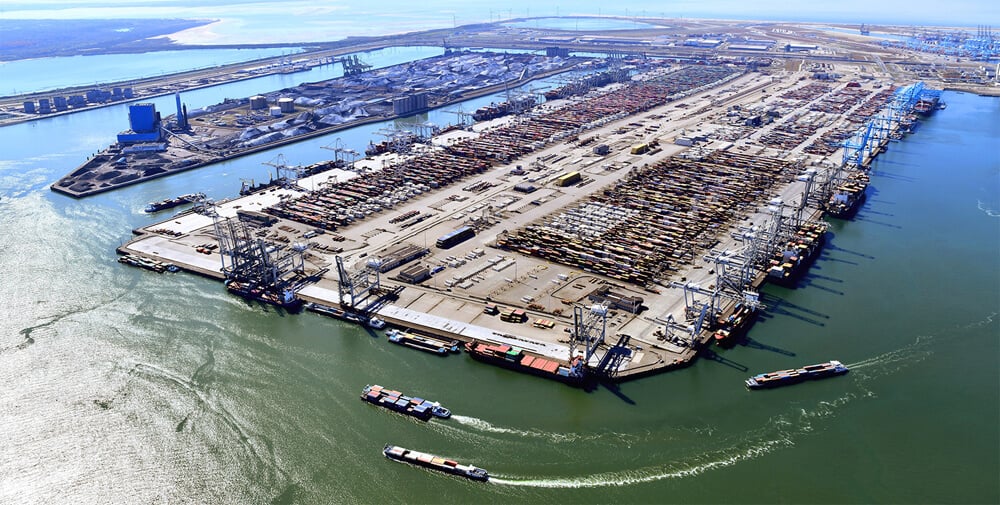
CK Hutchison had agreed to sell its global terminal operations but the deal became caught in global politics (Hutchison file photo)

Published Mar 3, 2026 7:35 PM by The Maritime Executive


Nearly a year after the deal was first announced for a consortium of MSC Mediterranean Shipping Company and U.S. investment group BlackRock to acquire the global port operations of Hong Kong-based CK Hutchison, the Financial Times reports negotiations are back underway. The newspaper writes that the companies believe that now that Panama has been removed, terms can be reached for the larger global portfolio.

The companies had agreed in 2025 on two deals, with BlackRock leading the purchase of the Panama Ports Company, which operated the terminals at each terminus of the Panama Canal, and MSC’s Terminal Investment Limited (TiL) as a minority investor. It later emerged that MSC would be the lead investor for the other 41 global port operations in 23 countries, ranging from Europe to Southeast Asia and the Middle East. The deal was expected to place a valuation of $23 billion on the portfolio, while CK Hutchison would have retained the port operations in China.

The transaction became caught in a political battle between the United States and China as Donald Trump asserted that China was running the Panama Canal. The Chinese and Hong Kong governments objected to the deal largely due to the political issues, and China reportedly insisted that COSCO had to become a partner. Later reports said that China wanted COSCO to control the new company.

The Financial Times cites two unnamed sources that it says reported the negotiations are back underway after Panama annulled the concession for the operations in Balboa and Cristobal. CK Hutchison is starting what is likely to be an extended legal battle with Panama, including an arbitration for financial damages.

MSC is reportedly anxious to acquire the remaining 43 terminals worldwide to add to TiL’s operations. The Financial Times suggested that the upcoming state visit by Donald Trump to China and meeting with Chinese leader Xi Jinping was “likely to offer tailwinds for the agreement.”

It had previously been reported that MSC and BlackRock were proposing to break up the CK Hutchison portfolio into smaller segments. COSCO’s participation would vary based on China’s relationship with the various countries and the government’s views of strategic importance. It would also permit COSCO to have a smaller share in jurisdictions hostile to China, reports the FT.

TiL is reported as of 2025 to already have operations in more than 30 countries and over 70 terminals. It has an annual handling capacity of approximately 70 million TEU. The acquisition of the CK Hutchison portfolio would position TiL as the largest terminal operator, surpassing PSA, which reported it handled 105 million TEU in 2025.


Spanish Authorities Chase Tug That Attempted to Sneak Away from Detention

tugboat
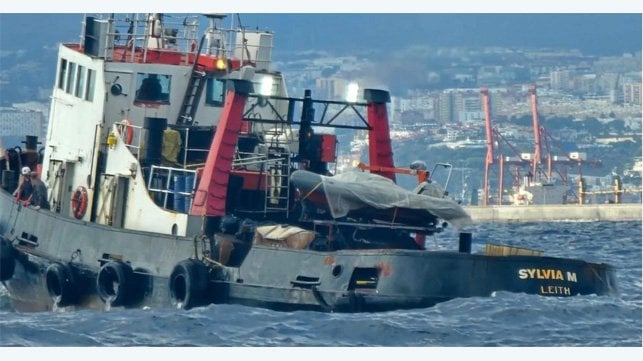
Tug that attempted to depart while under detention is now facing hefty fines (Ministry of Transport)

Published Mar 5, 2026 4:34 PM by The Maritime Executive


The captain of the port of Las Palmas and the Maritime Authority in the Canary Islands reported that they had to chase down a tugboat, which was towing an offshore supply boat, when the tug decided to depart despite being under a detention order since December. The tug named Sylvia M ended up breaking down once again and having to be towed back to port, and is now facing the potential of a hefty fine.

The Maritime Authority reports the tug and its tow were detected on Monday, March 2, at 1915 local time outbound leaving through the mouth of the harbor. They did not have a pilot aboard, and the vessel had not yet completed an inspection to lift the prior detention order. Further, it was attempting to go to sea in what the officials termed a severe storm.

The port’s control center contacted the tug and ordered it to return to port, but the order was ignored. They said the tug refused to cooperate. At that point, the patrol boat Rio Ara and a tug were sent to chase after the departing tug and tow.

The Sylvia M had caused a previous incident on December 3 when it requested assistance while it was about three miles offshore. The 149 gross ton tug registeredi n Tanzania was towing the offshore service vessel K-Marine IV. The tug reported that one of its engines was not working and that its other engine was at half capacity. Further, it said it did not have enough fuel.

A rescue boat was able to secure a new towline to the K-Marine IV and ordered the tug to cut its towline. The Sylvia M was escorted to a berth in Las Palmas. A port state inspection identified issues, including that its towing winch was inoperative. A detention order was imposed. Recently, the Spanish authorities said the flag representative had informed them that repairs were completed and the vessel was properly certified. However, it had not yet been inspected, and the detention remained in place.

After sneaking away on March 2, the tug soon began experiencing propulsion and steering problems. The authorities reported the rescue tug they dispatched was able to bring the ship back to port at around 0330 on March 3.

A sanction case has now been opened against the wayward tugboat. The Maritime Authority reports they are facing potential fines of up to €180,000 (US$209,000). The tug, of course, is also under a detention order, again.


Glamox to Light US Navy’s Latest Towing, Salvage, and Rescue Ship

Glamox
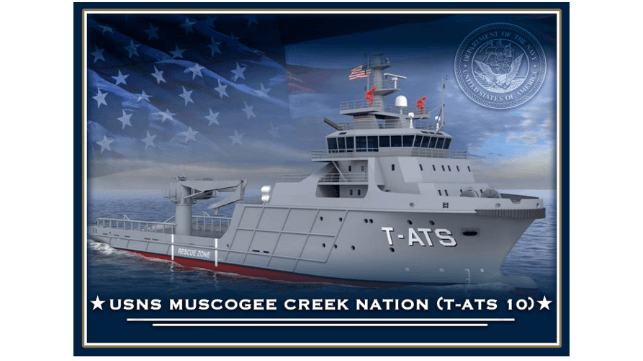
Astist’s impression of a Navajo-class T-ATS vessel. Photo Credit: Austal USA

Published Mar 5, 2026 9:58 PM by The Maritime Executive


[By: Glamox]

Glamox has secured a contract from Austal USA to supply exterior and interior LED marine lighting for the future USNS James D Fairbanks (T-ATS 13), the latest Navajo-Class (T-ATS) Towing, Salvage, and Rescue ship being constructed for the US Navy (USN). This new contract brings the total to three T-ATS ships that Glamox is lighting for Austal USA. Previously, Glamox was awarded contracts to light five T-ATS vessels from Bollinger Houma Shipyards.

For the future USNS James D Fairbanks, Glamox will supply 914 lights. They include navigation lightsfloodlightsexplosion-proof lightingdeck lighting, and lights for the interior of the vessel – from roomscorridors and stairwells to crew quarters. The lighting will be delivered in Spring 2026 and fitted by Austal USA at its shipyard in Mobile, Alabama.

“We are proud to be supplying lighting for this workhorse of the seas, which will enter service in 2028. This latest order, along with orders from navies worldwide, highlights Glamox’s marine defence lighting capabilities, which range from lights for inshore rescue boats to large aircraft carriers,” said John O’Driscoll, General Manager of Glamox in North America.

T-ATS vessels will provide ocean-going towing, salvage and rescue capabilities to support fleet operations. They have a multi-mission common-hull platform capable of towing USN ships and will combine the capabilities of the retiring Rescue and Salvage Ship (T-ARS 50) and the Fleet Ocean Tug (T-ATF 166) vessels. The T-ATS series will be able to support current missions, including towing, salvage, rescue, oil spill response, humanitarian assistance, and wide-area search and surveillance.

The T-ATS vessels may also enable future rapid capability initiatives, such as supporting modular payloads with hotel services and appropriate interfaces. Their large, unobstructed 6,000 square feet (557 square metres) of deck space allows for the embarkation of a variety of stand-alone and interchangeable systems.

In addition to the T-ATS series, Glamox worked with Austal USA to supply lights for the auxiliary floating dry dock medium (AFDM) and navigation lights for the USN’s Landing Craft Utility (LCU) 1700-class vessels.

The products and services herein described in this press release are not endorsed by The Maritime Executive.

Bulker Struck by Russian Drone Departing Ukraine

bulker in Ukrainian port
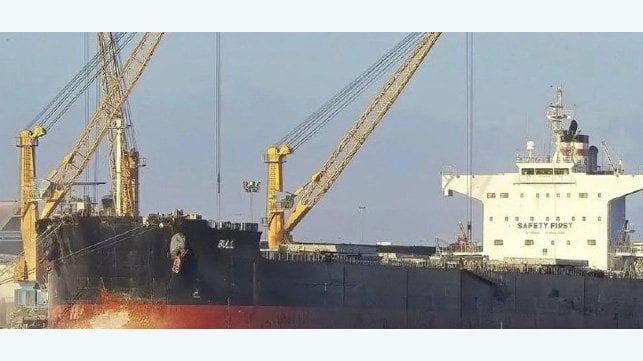
Bulker was struck after loading and as it was departing Ukraine but continued its voyage (Oleg Kiper/Odesa Regional State Administration)

Published Mar 5, 2026 3:22 PM by The Maritime Executive


Ukrainian officials are reporting that another commercial vessel was struck in Russia’s ongoing campaign against the export operations and key ports. Russia escalated its attacks on Ukraine’s maritime infrastructure since late 2025, when Ukraine took credit for damaging tankers in the Black Sea inbound to export Russian oil. Vladimir Putin had threatened to cut Ukraine off from the sea.

The latest incident was reported late on March 4 and involved a Liberian-flagged bulker. The Seaports Administration of Ukraine reported the incident, which was also confirmed by Oleg Kiper of the Odesa Regional Administration.

A bulker named Bull (82,000 dwt) was loaded with a cargo of corn. It was departing the port of Chornomorsk when the Ukrainian said it was struck by a Russian drone.

The vessel sustained damage, but the details were not reported. Both the authority and Kiper said there were injuries among the crew and that Ukraine was offering assistance.

The captain of the bulker, which is owned and managed from Singapore, is reported to have declined assistance as well as an evacuation for what was reported in the news as one injured crewmember. The Port Authority later said it was informed that the vessel was continuing on its route through the Ukrainian Corridor heading to the Bosphorus Strait. The vessel had come from Spain and is believed to be returning to Spain with the cargo.

Over the past months, there have been reports of several vessels being struck while they were docked in the ports of the Odesa region. At least one was shown on fire, and port infrastructure and containers have also been damaged by the attacks.

Ukraine’s Economic Ministry has released data showing a nearly 25 percent decrease in grain exports since the current season began in July 2025. As of the beginning of March, it reported exports of 22.3 million tonnes of grains. The state-owned railway, however, reported in February that shipments of grains into the ports increased 5.5 percent. It said exports were being slowed by winter weather and damage to the port infrastructure.

Ukrainian Strike on Novorossiysk Also Damaged Russian Warships

Novorossiysk strike
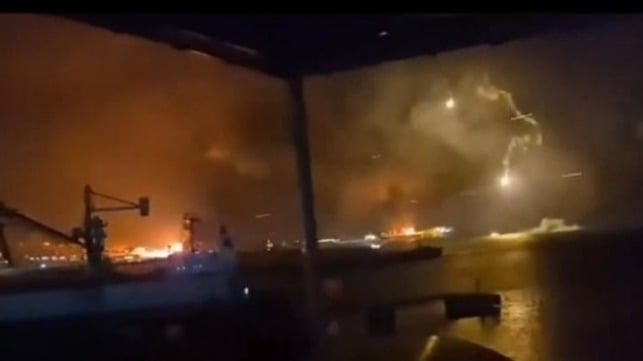
Antiaircraft fire and flares light the night during a previous Ukrainian strike on Novorossiysk, 2025 (Russian social media)

Published Mar 4, 2026 6:43 PM by The Maritime Executive


The recent Ukrainian strike on Novorossiysk caused damage to a Transneft oil loading terminal, and may also have extended to Russian Navy warships, according to Ukrainian sources. 

Ukrainska Pravda reports that the Russian minesweeper Valentin Pikul was seriously damaged in the Sunday night attack, and the antisubmarine patrol vessels Yeysk and Kasimov were struck as well. Three Russian sailors were reported dead, and 14 more injured. 

The strikes on the Black Sea Fleet add to previously-reported damage at the Sheskharis oil terminal in Novorossiysk's inner harbor, where six out of seven loading booms were reportedly damaged. 

The attack was part of a long-running Ukrainian campaign to shut down Russia's oil exports from Black Sea loading terminals, thereby reducing Russian energy revenue, which funds the ongoing invasion. Ukraine has also hit terminals at Tuapse and Temryuk, along with the CPC single-point mooring terminal outside Novorossiysk's harbor entrance. 

Ukraine has also struck the Black Sea Fleet repeatedly, first at Sevastopol and other Crimean ports, then in the Sea of Azov and the northeastern Black Sea. Novorossiysk is the fleet's final bastion, and most of the surviving hulls have retreated to the protected harbor. However, even this remote location is not immune: in December, Ukraine claimed to have hit the Kilo-class sub Varshavyanka at the naval pier in Novorossiysk using a submersible suicide drone. Varshavyanka and other vessels in the fleet have been used as launch platforms to attack Ukrainian cities with cruise missiles throughout the war.

The strikes at Novorossiysk parallel Ukraine's efforts to damage Russia-linked energy shipping at sea, notably the ultra-long-distance strike on the sanctioned LNG carrier Arctic Metagaz - perhaps the first attack ever to sink a vessel of this type. 


As Energy Prices Rise, U.S. Green-Lights India's Purchases of Russian Oil

The receiving terminal at the Russian-controlled, EU-sanctioned Vadinar refinery in India, a leading buyer of Russian oil (Nayara / CC BY SA 4.0)

Published Mar 5, 2026 10:11 PM by The Maritime Executive


Under pressure to control oil prices amidst a closure of the Strait of Hormuz, the White House is backtracking on its efforts to pressure India into refusing Russian oil. In hopes of easing supply concerns, it is giving New Delhi temporary permission to increase the use of already-afloat Russian crude. "The waiver effectively acts as a green signal" for India to buy Russian oil at scale, Kpler analyst Sumit Ritolia told the Times. 

The newly-promulgated rule from the Office of Foreign Asset Control is narrowly tailored: it waives all sanctions restrictions on the offloading of Russian crude in India, so long as the oil was loaded on a tanker before March 5. No other nations are allowed, and permission expires on April 4. 

The move reconnects the close business relationship between Russian oil producers and Indian refiners, an arrangement which has played a major role in funding Russia's ongoing operations in Ukraine. In recent months the Trump administration has worked hard to push India out of buying Russian oil, going so far as to impose 50 percent tariffs on all Indian imports until New Delhi made a commitment to reduce Russian volumes; the policy objective was to apply more fiscal pressure to Moscow while talks on a Ukraine ceasefire were under way. 

The administration cast the new Russian-oil waiver for India as a temporary change, with little fiscal effect on the invasion of Ukraine. "This deliberately short-term measure will not provide significant financial benefit to the Russian government as it only authorizes transactions involving oil already stranded at sea," said U.S. Treasury Secretary Scott Bessent. "This stop-gap measure will alleviate pressure caused by Iran’s attempt to take global energy hostage."

Some analysts suggested that the temporary concession was a rollback and a win for Moscow. "Trump [folds] on Russian oil sanctions," commented Bloomberg energy analyst Javier Blas. "Massive win for Putin."

In the immediate term, the move allows Indian refiners to tap the large volume of Russian oil that is sitting aboard shadow fleet tankers, idling and awaiting buyers. This floating storage reserve amounts to at least 30 million barrels of crude, and it will cushion the sudden shutdown of Gulf exports, which India relies upon heavily. 

China is also a major buyer of Russian gray-market grades, but it is well-supplied. Thanks to heavy purchasing of Iranian and Russian oil at discount rates over the last few months, it has about 900 million barrels in storage, enough to cover nearly 80 days worth of import volume. Another 30 million barrels of Iranian oil is afloat in Asian waters and awaiting Chinese buyers, energy analyst Sun Jianan told Reuters earlier this week. 

 Sri Lanka denounces war deaths, houses Iran sailors


Colombo (AFP) – Sri Lanka on Friday denounced the toll of the Mideast fighting, as the nation opened its arms to over 200 Iranian sailors who sought help after a deadly torpedo strike on another of Iran's ships.


Issued on: 06/03/2026 - FRANCE24

Sri Lanka offered help to a Iran ship crew after another the US torpedoed another Iran ship © Ishara S. KODIKARA / AFP


The crew were brought ashore Thursday and were being accommodated at a military camp near the capital Colombo and their ship, IRIS Bushehr, was under Sri Lankan control.

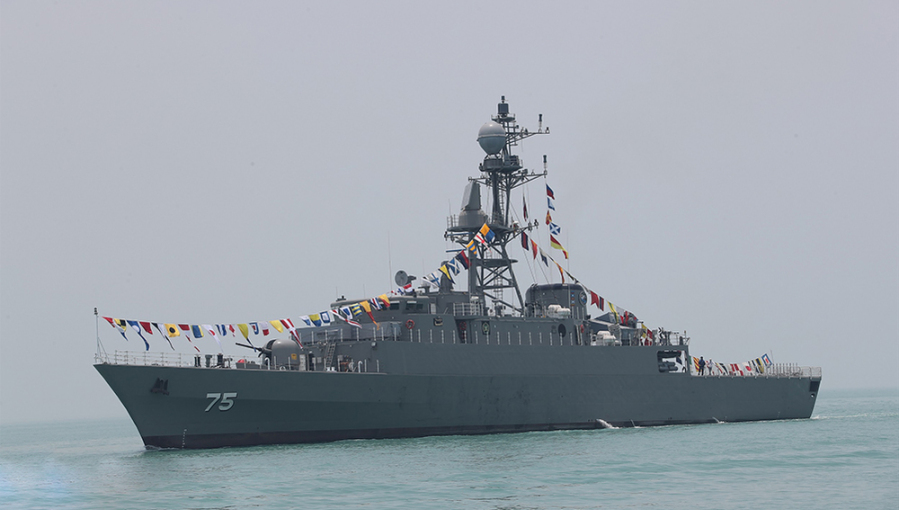
The vessel reported engine trouble and sought port entry after another Iranian vessel, IRIS Dena, was hit by a US torpedo off Sri Lanka's southern coast on Wednesday.

Washington later announced it carried out the attack, which killed at least 84 Iranian sailors aboard and left 64 more missing.

"Our approach is that every life is as precious as our own," Sri Lanka's President Anura Kumara Dissanayake wrote on X, and urged peace after the Israeli-US campaign led to Iranian retaliatory strikes.


Thirty-two sailors were rescued by the Sri Lanka Navy and were being treated at a hospital in the southern port city of Galle.

Wednesday's attack was the first military strike far outside the Middle East since the United States and Israel launched their war on Iran.

The US defence secretary said on Wednesday the strike was the first by a torpedo fired by an American submarine since World War II.

Sri Lanka not only granted permission for the second Iranian vessel, IRIS Bushehr, to enter its territorial waters on Thursday, but also evacuated its crew to a naval facility just outside Colombo.

"All our actions are aimed at saving lives and ensuring that humanity prevails," Dissanayake said.

In an address to the nation hours earlier, he said sheltering the sailors was the "most courageous and humanitarian course of action that a state can take".

"We jealously guard our non-aligned policy while ensuring that humanitarian values and the saving of lives remain our top priority."

Sri Lanka has remained neutral in the latest conflict. The United States is Sri Lanka's largest export market, while Iran is a key buyer of tea, the island's main export commodity.

A senior administration official said all but four sailors of 208-strong crew from IRIS Bushehr were taken in three Sri Lanka Navy craft and were being accommodated at a military camp near the capital.

"Our military is now in full control of the ship, which will be taken to Trincomalee," the official told AFP, referring to the port on the eastern side of the island, which is away from the main Colombo harbour.

The four Iranians remained aboard to assist Sri Lankan sailors, the official said.

© 2026 AFP


Sri Lanka outshines regional powers as rescuer in war

Sri Lanka outshines regional powers as rescuer in war
/ MojNews - Iran
By bno Chennai Office March 6, 2026

Sri Lanka is a struggling economy dependent on International Monetary Fund(IMF) bailouts since 2023 after a financial crisis between 2019 and 2022 that peaked with the government defaulting on its sovereign debt.

With its small naval and coast guard fleet supported by an even tinier budget and workforce it is seen as a minor player in the Indian Ocean.

According to a televised address by Sri Lankan President Anura Kumara Dissanayake as cited by Times of India, the country’s navy has rescued the crew of a second Iranian warship IRIS Bushehr. The Sri Lanka Navy has taken control of the vessel and given it asylum in its northeastern port of Trincomalee.

IRIS Bushehr reportedly had a problem with one of its engines and requested assistance to which the Sri Lankan government agreed after a brief consultation with the vessel’s captain who was safely taken ashore with his crew.

The IRIS Bushehr was under threat of becoming a casualty in international waters of the Indian Ocean after her sister ship IRIS Dena was sunk by a US submarine using a Mk48 torpedo near Sri Lanka on March 4 2026.

Sri Lanka rescued 79 members of the Dena crew and gave them medical assistance. However over 100 crew members were unaccounted for and are believed lost with the ship.

Explaining his country’s position President Dissanayake said "We are not taking sides in this conflict, but while maintaining our neutrality we are taking action to save lives. No person should die in a war like this. Every life is equally precious".

Accounting for its small resource base and liabilities it is astonishing that Sri Lanka has taken this approach upstaging much larger littoral states like India which champions Humanitarian Assistance and Disaster Relief (HADR) as its major peacetime role.

In a statement issued late on March 5 the Indian Navy revealed that it had dispatched a long range maritime patrol aircraft likely a Boeing P8i, and two warships including “INS Tarangini which was operating in vicinity" and "was deployed for aiding the rescue efforts and arrived in search area by 1600 hr on 04 March 2026. By this time Search Aand Rescue(SAR) had been undertaken by Sri Lanka Navy and other agencies”.

The other Indian Navy ship “INS Ikshak has also sailed from Kochi to augment the search efforts and continues to remain in the area to search for missing personnel as a humanitarian measure for ship wrecked personnel”.

Ever since the 2004 Indian Ocean Tsunami, India has prided itself in being the first to rush aid with its naval vessels to any disaster hit country in the region including Sri Lanka.

In Delhi’s naval diplomacy and foreign policy circles it is often said with pride that Indian Naval vessels carry a special container with general purpose disaster relief aid supplies on their decks that can quickly be unloaded onto partner nation’s shores if the need arises.

In the past Indian warships have also rescued sailors and vessels in distress in its area of responsibility in the Indian Ocean littoral both alone and in conjunction with other countries’s forces and vessels.

China is curiously absent from the equation although its own littoral waters of the South and East China seas don’t directly put it in the path of the distressed Iranian vessels, however, Beijing has ambitions of challenging US hegemony and could have used the opportunity to showcase its blue water reach.

Who rules the seas? Torpedoed Iran ship brings focus underwater

Paris (France) (AFP) – A US submarine this week torpedoing an Iranian warship during the Middle East conflict raised the crucial question of who controls the seas during wartime.


Issued on: 06/03/2026
FRANCE24

The Pentagon released what it said was periscope footage of a US Navy submarine sinking an Iranian warship © - / US Department of Defense/AFP

The sinking of IRIS Dena on Wednesday in international waters off the coast of Sri Lanka killed at least 86 crew members, in what Iranian Foreign Minister Abbas Araghchi labelled an "atrocity".

It came after US-Israeli strikes on Iran on Saturday triggered war in the Middle East, with the Islamic republic launching retaliatory attacks across the region and beyond.

The US Navy had not torpedoed a ship since 1945.

Washington afterwards released what it said was periscope footage of the submarine firing on the ship, and an image of its hull almost vertical as it slipped below the surface.


The IRIS Dena "sank in less than 20 minutes", said Alessio Patalano, a professor at King's College London.

"It didn't stand a chance. The incident confirms the sophistication of the means of American undersea warfare."

Patalano said "submarine warfare has never gone away."

"It was just in the background because there hasn't been a confrontation between fleets since the 1980s," he added.
'Ultimate wartime weapon'

The most recent confirmed wartime torpedo attack dates back to 1982, when the British submarine HMS Conqueror sank the Argentine cruiser Belgrano during the Falklands War.

In 2010, South Korea's Cheonan corvette was torpedoed -- an attack Seoul attributed to North Korea, but which Pyongyang denied.

A European military source specialising in submarines and speaking on condition of anonymity explained that a torpedo explodes underneath a ship rather than upon contact with it.


The US attack on IRIS DENA killed at least 86 people on board 

© Ishara S. KODIKARA / AFP

"It detonates a few metres below, creating a huge air bubble that lifts the vessel and breaks its main beam in two when it comes back down," the source said.

IRIS Dena's sonar range was probably too limited to have been able to detect the threat, they added.

The stealthy, invisible manoeuvres of a submarine, paired with its ability to fire torpedoes from dozens of kilometres away, make it "the ultimate wartime weapon", according to the source.

These capabilities can make a difference when surface combat between navies of similar standing is "symmetrical, with radars and missiles of roughly equivalent range".

Patalano said countries with a sophisticated underwater force enjoy an "objective advantage" in the event of a naval confrontation.
'We are everywhere'

Another European military source, also speaking anonymously, said conducting the attack far from the conflict's epicentre was a "show of force aimed at major rivals" such as China and Russia.

"Attacking this ship in international waters... means: 'We, the Americans, dominate the air, the sea and the undersea. We are everywhere, able to find you and destroy you.'"

Experts suggest that while Russia has neglected the modernisation of its surface fleet -- signalled by its setbacks in the Black Sea throughout its war with Ukraine -- it has made a point of investing in its submarine fleet.

China has been developing its navy and submarines for years.

US submarine forces commander Vice Admiral Richard Seif told an American congressional committee this week that China's "formidable" next-generation submarines "challenge the US Navy's longstanding undersea dominance".

© 2026 AFP


Iranian Navy Supply Ship Is Seeking Refuge in Sri Lanka

Iranian supply ship Bushehr
INIS Bushehr is seeking to dock in Sri Lanka where it had previously visited on several goodwill missions (Sri Lanka Navy photo from 2019)

Published Mar 5, 2026 2:35 PM by The Maritime Executive


Members of the Sri Lankan government confirmed during a session of parliament on Thursday, March 5, that an Iranian Navy supply ship, IRIS Bushehr (422), has made an urgent request for assistance and is seeking permission to dock in Sri Lanka. The request came after the sinking by the U.S. of the frigate Dena, and as Sri Lanka was conducting a search and rescue mission assisted by the Indian Navy.

The 3,300 dwt supply ship is believed to have been dispatched to resupply the Dena as the vessel was coming back from the Indian naval event. Commissioned in 1974, the vessel is 108 meters (354 feet) in length, with Sri Lankan government officials saying there are as many as 270 sailors and cadets aboard the vessel. 

The request for urgent assistance and permission to dock in Sri Lanka came while the vessel was reported to be in international waters but within Sri Lanka’s EEZ. A minister told parliament the vessel remains outside Sri Lanka’s territorial waters, while the media reports said Sri Lankan President Anura Kumara Dissanayake was meeting with top government officials to decide what to do.

Some reports are saying the vessel, so far, has been denied permission to enter Sri Lanka’s waters, while another said after about 11 hours it was permitted to proceed to a point about 10 nautical miles off Colombo. Some reports said the ship was being denied docking privileges, while others said it was proposed that the ship would proceed to offload some of the people onboard, which is believed to include cadets, and that the ship would be placed at a secure dock in Colombo. One report suggested the ship would be interned for the remainder of the war.

Sri Lanka has condemned the American and Israeli hostilities and called for a diplomatic solution. It is reported to have consulted the Foreign Minister of Iran, but seeks to stay out of the war.

On Wednesday, Sri Lanka and India received the distress call from the frigate Dena after it was torpedoed. Reports placed the vessel between 20 and 50 nautical miles from the southern port of Galle. The Sri Lankan Navy responded and said the ship had sunk by the time it reached the scene. It reports that 32 Iranian sailors were rescued and taken under tight security to hospitals in Sri Lanka. They are reported to be suffering from burns, broken bones, and other less serious injuries.

Sri Lanka reports it recovered the bodies of Iranian sailors, with the media counts varying between 84 and 87, and is making diplomatic arrangements for their return to Iran. The Iranians said there were 130 aboard the Dena, but Sri Lanka said it believes there were 180 people aboard. It is continuing a search for as many as 60 people. 

The Indian Navy said it dispatched a long-range maritime patrol aircraft to augment the efforts by the Sri Lankans. In addition, its vessel INS Taranigni was operating in the region and instructed to proceed to the location, where it arrived around 1600 local time on Wednesday. The INS Ikshak was also ordered to sail from Kochi, and a second long-range aircraft outfitted with a capability to drop rafts was placed on standby.

The Indian Government, on Thursday, is reported to have made a statement saying it will not be pulled into the war. It strongly denied rumors online and in the media that American forces were using Indian ports.


Seafarers can refuse to sail through Mideast Gulf region, main union says


Issued on: 05/03/2026 -
12:29 min


Seafarers have the right to refuse to sail ​on ships passing through the Middle East Gulf, including the Strait of Hormuz, after the threat level for the region was ​raised to ‌its highest level, the leading labour ⁠union and shipping industry groups said on Thursday. FRANCE 24's Sharon Gaffney speaks with Michael Tamvakis, Professor of Commodity Economics and Finance at the Bayes Business School, City University London.