Friday, March 20, 2026

The Relentless Nightmare of Fukushima, 15 Years On

 March 20, 2026

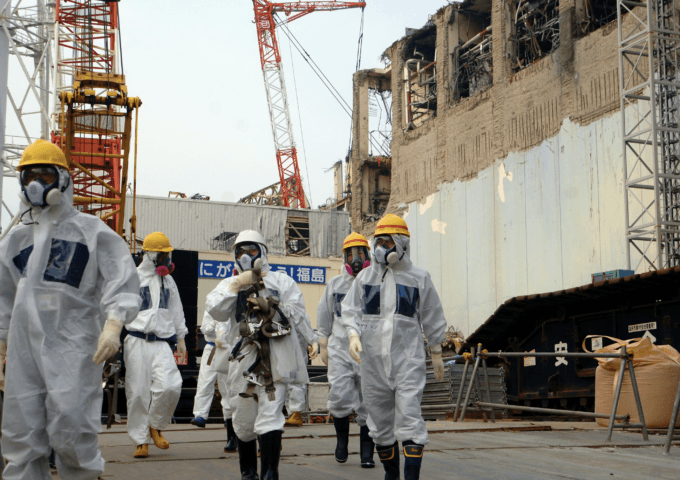
IAEA experts depart Unit 4 of TEPCO’s Fukushima Daiichi Nuclear Power Station on 17 April 2013 as part of a mission to review Japan’s plans to decommission the facility. Photo Credit: Greg Webb / IAEA

Nine countries now possess nuclear weapons and we have just seen the start of a new war in the Middle East over one more nation supposedly trying to acquire them. While we consider the dangers of such weapons and their capacity to cause massive destruction, we often overlook the risks associated with what still passes for “peaceful” nuclear power. With that in mind, let me revisit a moment when that reality should have become far clearer.

I had crawled into bed on March 10, 2011, opened my phone, and scrolled through my Instagram feed. The app was still fairly new then, and I was only following a dozen or so accounts, several from Japan. One amateur photographer there had posted photos minutes earlier of a fractured sidewalk and a toppled bookshelf. A massive earthquake had just rattled Tokyo.

A news article confirmed that a magnitude 7.9 quake had indeed struck 80 miles off the coast of Japan. Later, it was upgraded to 9.0, 1,000 times more powerful in terms of energy released. Holy shit, I thought. That’s huge! Worried, I emailed my old college friend Ichiro, who lived in Tokyo, to make sure his family was safe. A short while later, he replied that they were fine, but that a massive tsunami had indeed flooded the Tohoku region north of Tokyo. Many were dead.

“It’s horrible. It’s chaos,” he wrote me.

By the time Ichiro’s message arrived, distressing images of the tsunami were already circulating online and the death toll was rising fast, though the floodwaters were by then receding. As I watched heartbreaking videos of screaming onlookers, capsized boats, floating debris, and cars submerged like toys in a bathtub, another tragedy was unfolding that few, even inside the Japanese government, were aware of. A nuclear plant in Fukushima, operated by TEPCO (the Tokyo Electric Power Company), had been swamped by the tremendous flooding and lost all power.

The Fukushima Daiichi nuclear plant, built by General Electric (GE) in the mid-1960s, was designed to withstand natural disasters, but its creators never foresaw an earthquake like that. When the plant’s sensors detected the quake, its reactors automatically shut down. That emergency shutdown (or scram) halted its fission process, triggering backup power to keep cold seawater flowing through the reactors and spent-fuel containers to prevent overheating. Things at Fukushima were going according to plan until that massive tsunami battered the plant, washing away transmission towers and damaging electrical systems. There were backup generators in the basement, but those, too, had been inundated by waves of seawater, and an already bad situation was about to get far worse.

A power outage at a nuclear power plant is known as a “station blackout.” As you might imagine, it’s one of the worst scenarios any nuclear facility could possibly experience. If all electricity is lost, that means water is no longer being pumped into the reactor’s scalding-hot core to cool it down. And if that core isn’t constantly being cooled, one thing is certain: disaster will ensue. The fission process itself may be complicated, but that’s basic physics. To make matters worse, there were three operating reactors at Fukushima Daiichi. Luckily, three others had already been shut down for maintenance. If power wasn’t restored in short order, that would mean that all three of Fukushima’s reactors were in very big trouble.

We would later learn that no one — not at TEPCO, GE, or among Japanese regulators — had ever considered the possibility that all the reactors might lose electricity at once. They had only drawn up plans for one reactor to go down, in which case the others could keep the plant running. But all of them offline, and every generator out of commission? There was no precedent or playbook for that.
The nuclear industry has a reasonably polite name for a disaster like the one that was rocking Fukushima. They refer to it as a “beyond design-basis accident” because no single nuclear plant design can account for every possible problem it might encounter in its lifetime. The fact that there’s a term for this should make you anxious.

Meltdowns and Fallout

Over the next several days, the emergency at Fukushima Daiichi only worsened. Every effort to restore power to its reactors hit a dead end. On-site radiation-detection equipment, which would have triggered warnings and guided evacuation efforts for those in danger, was no longer functioning. Plans to pump water into the reactors to cool them had faltered. Their cores kept overheating, and the boiling pools of spent fuel were at risk of drying out, potentially triggering a massive fire that would release extreme amounts of radiation.

Within three days, following a series of fires, hydrogen explosions, and panic among those aware of what was happening, Fukushima’s Units 1, 2, and 3 experienced full-scale core meltdowns. Over 150,000 people within an 18-mile radius had already been forced to evacuate, and radiation plumes would take two weeks to spread across the northern hemisphere, although the Japanese government wouldn’t admit publicly that any meltdown had occurred until June 2011, three months later.

The only good news for the 13 million people living 150 miles south in Tokyo was that, during and immediately after the meltdowns, prevailing winds carried much of Fukushima’s radioactive material away from the smoldering reactors and out to sea. It’s estimated that 80% of the fallout from Fukushima ended up in the ocean, meaning most of it headed east rather than toward population centers to the south and west. The other fortunate news was that the spent fuel containers had somehow survived it all. If their water levels in the pools had been drained, far more radiation would have been released.

But Tokyo wasn’t completely spared. After years of research, scientists discovered that cesium-rich microparticles had blanketed the greater Tokyo area, an unpopular discovery that drew backlash and threats of academic censorship. Areas around the Fukushima exclusion zones recorded the highest radiation levels. Japanese government officials continually downplayed the dangers of the accident and were reluctant to even classify the event as a Level 7 nuclear disaster, the highest rating on the International Nuclear Event Scale, which would have placed it on a par with the 1986 Chernobyl nuclear disaster. Japanese officials have also failed to conduct long-term epidemiological studies that would include baseline measurements of cancer rates, which has cast doubt on thyroid screenings that found troubling incidents of cancer far higher than researchers expected.

Radioactive Fish

Prior to the earthquake, the ocean’s cesium-137 levels near Fukushima were 2 Becquerels (a unit of radioactivity) per cubic meter, well below the recommended drinking water threshold of 10,000 Becquerels. Just after March 11, 2011, cesium-137 levels there spiked to fifty million before decreasing as sea currents dispersed the radioactive particles away from the coast. The ocean, however, had been poisoned.

In the years that followed the Fukushima nuclear disaster, researchers documented a frightening, yet predictable trend. Radioactive isotopes in seawater were taken up by marine plants (phytoplankton), which then moved up the food chain into tiny marine animals (zooplankton) and, eventually, to fish. Cesium-137 consumed by fish can reside in their bodies for months, while Strontium-90 remains in their bones for years. If humans then eat such fish, they will also be exposed to those radioactive particles. The more contaminated fish they eat, the greater the radioactive buildup will be.

In 2023, over a decade after the incident, radiation levels remained sky-high in black rockfish caught off the Fukushima coast. Other bottom-dwelling species have been found to be laden with radioactivity, too, including eel and rock trout. Further concerns have been raised about the treated radioactive water that TEPCO continued to release into the ocean, prompting China to suspend seafood imports from Japan. Aside from those findings, there have been very few studies examining the effects of Fukushima’s radiation on ecosystems or on the people of Japan.

“Japan has clamped down on scientific efforts to study the nuclear catastrophe,” claims pediatrician Alex Rosen of International Physicians for the Prevention of Nuclear War. “There is hardly any literature, any publicized research, on the health effects on humans, and those that are published come from a small group of researchers at Fukushima Medical University.”

Recognizing such levels of radiation, even if confined to the waters near Fukushima, would cast the country’s nuclear industry as a significant threat — not only to Japan but globally. Any admission that Fukushima’s radiation is linked to increased cancer rates would raise broader concerns about nuclear power’s future viability. Radiation exposure is cumulative and, although Fukushima didn’t immediately cause mass casualties, it wasn’t a benign accident either. It took decades before it was accepted that Chernobyl had caused tens of thousands of excess cancer deaths. It may take even longer to completely understand Fukushima’s full effects. In the meantime, the still ongoing cleanup of the burned-out facilities may cost as much as 80 trillion yen ($500 billion).

It’s been 15 years since Fukushima’s reactors experienced those meltdowns and we still don’t fully understand their long-term repercussions. Nuclear power advocates will argue that Fukushima wasn’t a serious incident and that nuclear technology is still safe. They’ll minimize radiation threatsremain optimistic that new reactor designs will never falter, dismiss the fact that there’s simply no permanent solution for radioactive waste, and overlook the inseparable connection between nuclear power and atomic weapons. After all, among other things, we’ll undoubtedly need nuclear energy to help power the artificial intelligence craze, right?

The operators and regulators at Fukushima were wholly unprepared for what unfolded on that fateful day in 2011. They never imagined that an earthquake of such magnitude could trigger a tsunami so immense that it would destroy the power grid, knock out water pumps, and disable backup generators. Likewise, no one can guarantee that nuclear plants or radioactive storage tanks are safe in war zones, or that the rivers and lakes needed to cool reactors globally won’t one day run dry or become too hot to do so — something that has already happened in Europe. Ultimately, we can’t anticipate every mishap, human error, or — especially in the age of climate chaos — every natural disaster that may come down the pike. The world is unpredictableand even the safest nuclear power plant can’t guarantee that it will hold up against whatever tragedy is coming next.

Fifty miles south of where I live in Southern California, an old nuclear facility sits idle on the Pacific coast in an earthquake-and-tsunami-hazard zone, not unlike the site where Fukushima was built. It’s not the only such plant in California, but it’s the one I often visit. When I’m there, I think about Fukushima and imagine what would happen if a similar, unexpected disaster reached California’s shores and how such an event would forever alter this land.
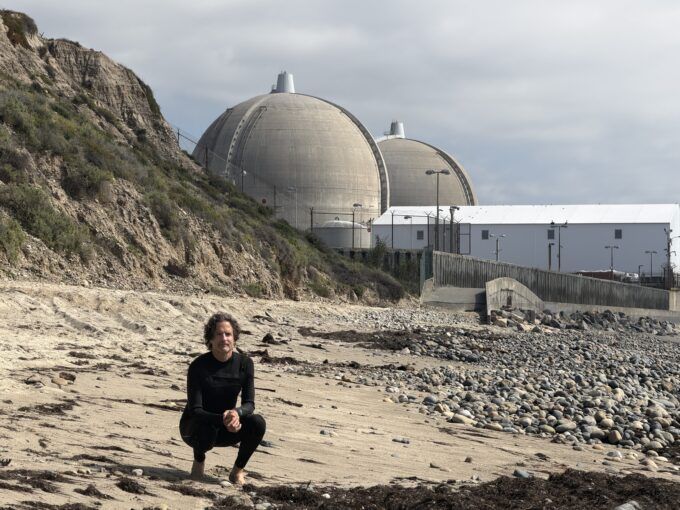
Joshua Frank at San Onofre, photo by Bill Livingston.

Searching for Solace at San Onofre

The morning light was peaking over the sandstone bluff, and the offshore breeze was soft and brisk. I’m barefoot in a wetsuit, trudging my surfboard down a dirt road at San Onofre, a state park in northern San Diego County, for a “dawn patrol” surf session. A series of high tides — likely made more extreme by rising sea levels — has eroded a large portion of the parking lot below, so the beach can only be reached on foot or by bike. I’m not complaining. It’s worth the short trek. The absence of vehicles down here also means fewer surfers in the water.

San O, as it’s lovingly referred to, has a rich surf history spanning 100 years. Duke Kahanamoku, the “father of modern surfing,” who popularized the ancient Hawaiian sport in Southern California and often visited San O in the 1940s, helped to solidify it as one of the region’s premier breaks and an early hub of SoCal surf culture. The waves are long and rolling thanks to an extensive cobblestone reef. It’s a magical place.

Things around here have changed quite a bit, however, since “The Duke” first paddled his heavy wooden board into the surf. Just down the beach, the San Onofre Nuclear Generating Station sits precariously perched 100 feet from the water. Its two large domes are an ominous sight. Constructed in the 1960s, the plant is no longer producing electricity, but the station’s 123 large concrete-and-steel storage vessels remain, housing 3.6 million pounds of highly radioactive waste. Since nobody wants the toxic stuff, it just sits there, looming, awaiting the next big earthquake like the one that shook Fukushima. San Onofre is designed to withstand a 7.0 shaker, but scientists believe the area is capable of producing one ten times larger and 32 times stronger. With 8.4 million people living within a 50-mile radius, any geological upheaval at San O could make a hell of a mess. It’s a worrisome thought I’d rather not dwell on.

Although it is a state park, the ground that San Onofre sits upon is leased from the federal government because it lies within the 195-square-mile boundary of the Camp Pendleton Marine Corps base. More than a base, Camp Pendleton is a testing ground, where heavy artillery often booms in the distance. An occasional mock raid can occupy the beaches; helicopters sometimes swarm, and Amphibious Combat Vehicles crawl ashore. There’s even a faux Afghan village that was built at Camp Pendleton, costing taxpayers $170 million, where Marines can imagine terrorizing towns from Iran to Gaza. So strange that amid all this madness, San Onofre is where I search for solace.

In 2013, a radioactive gas leak from one of the nuclear plant’s steam generators, which are also within the military reserve, led to its closure. Southern California Edison (SCE), which operates the facility, reassured the public that there was nothing to be concerned about. Few, however, would consider SCE a trustworthy source. Over the years, the company has been caught in a series of lies about the safety of San Onofre, including falsifying firewatch records and grossly mishandling waste. Not dissimilar to TEPCO’s Fukushima deceit.

Like all nuclear power plants, San Onofre needed a lot of water to cool its three reactors, sucking in an astonishing 2.4 billion gallons of seawater a day. As you can imagine, that thirst had a serious impact on ocean ecology, killing fish and wrecking kelp beds. It’s taken over a decade, but some of what was destroyed is finally coming back to life after years of restoration. Despite the progress, discharge pipes still release radioactive effluent laced with cesium-137, cobalt-60, and tritium — a mile offshore 170 times a year. But SCE says there’s nothing to worry about. They also insist they don’t have much of a choice. All that leftover waste needs to be kept from overheating, and using seawater is the only option available.

It’s better not to think too much about a future armageddon or what might be swimming beneath me while I’m out there bobbing between sets of waves. Surfing is supposed to help relieve my anxiety, not exacerbate it. It’s a little like backpacking in the wilds of Montana, which I also love to do, without constantly worrying about being chomped by a grizzly bear while in my sleeping bag. There are hazards to living in this crazy world — the worst of which, I’ve come to believe, are of the man-made variety.

As I slide my surfboard into the back of my van and peel off my wetsuit, I glance at San Onofre’s domes, which will start to be dismantled this year, and ponder the horrors still affecting Japan, fearing that someday a destructive tsunami may batter this beach, too. Sadly, it’s almost inevitable.

With nine nuclear-armed nations and roughly 12,000 nuclear warheads on this planet, worries about nuclear war are unavoidable. However, the danger of a nuclear disaster at a seemingly “peaceful” nuclear facility is often ignored. The future of atomic energy remains uncertain, but it is our duty to eliminate this hazardous energy source before another Fukushima triggers a war-like catastrophe all its own.

This piece first appeared on TomDispatch.

JOSHUA FRANK is co-editor of CounterPunch and co-host of CounterPunch Radio. He is the author of Atomic Days: The Untold Story of the Most Toxic Place in America, and the forthcoming, Bad Energy: The AI Hucksters, Rogue Lithium Extractors, and Wind Industrialists Who are Selling Off Our Future, both with Haymarket Books. He can be reached at joshua@counterpunch.org. You can troll him on Bluesky @joshuafrank.bsky.social

Senegal: Debt fuels authoritarian drift

Wednesday 18 March 2026, by Paul Martial


Senegal has entered a zone of strong turbulence. Audits of the west African country’s economic situation show that the figures published by the former government led by Macky Sall were false.

Accounting manipulations

In 2023, the official amount of debt was estimated at $17 billion. In reality, at least $7 billion has been hidden, placing Senegal among the most indebted countries on the continent.

Most of this hidden debt comes from loans to parastatals, which are registered as commercial loans. These structures, benefiting from the state guarantee, have financed major infrastructure works whose relevance is questionable, in particular the development of a motorway network, the construction of a new international airport and the purchase of real estate for various ministries.

At the time, Macky Sall’s policy was welcomed by the heads of financial institutions, including the IMF. Today, the latter is making a loan of 1.8 billion dollars conditional on the restructuring of the debt, which would place the country under tutelage by imposing on it the classic recipes of structural adjustment policies: the reduction of public services, privatizations and the elimination of subsidies.

Measures contrary to popular interests

This situation has caused a crisis within the government. President Diomaye Faye is said to be more conciliatory towards the IMF than his Prime Minister Ousmane Sonko, who rules out any debt restructuring and defends solutions that preserve national sovereignty.

However, some measures taken are anti-popular in nature: the introduction of a tax on mobile moneytransfers, which are widely used in Africa, and the reduction of energy subsidies. The authorities elected on the promise to meet social expectations are pursuing a policy in the opposite direction.

The mobilization of students, demanding the payment of their scholarships, testifies to this. The delay sometimes stretches over a year. The government’s response has been very brutal: closure of university restaurants, the violent intervention of the police on campus, the beating of students, the death of Abdoulaye Ba, and the ransacking of the university community.

This repression also extends to journalists and opponents, accused of crimes of opinion. While the “Assises de la Justice” were held in June 2024, none of the proposals to strengthen democratic rights have been implemented.
Worse still, a wave of homophobia is sweeping the country, fuelled by a bill sponsored by Sonko, providing for prison sentences ranging from five to ten years for “unnatural acts”.

Russian society in war mode


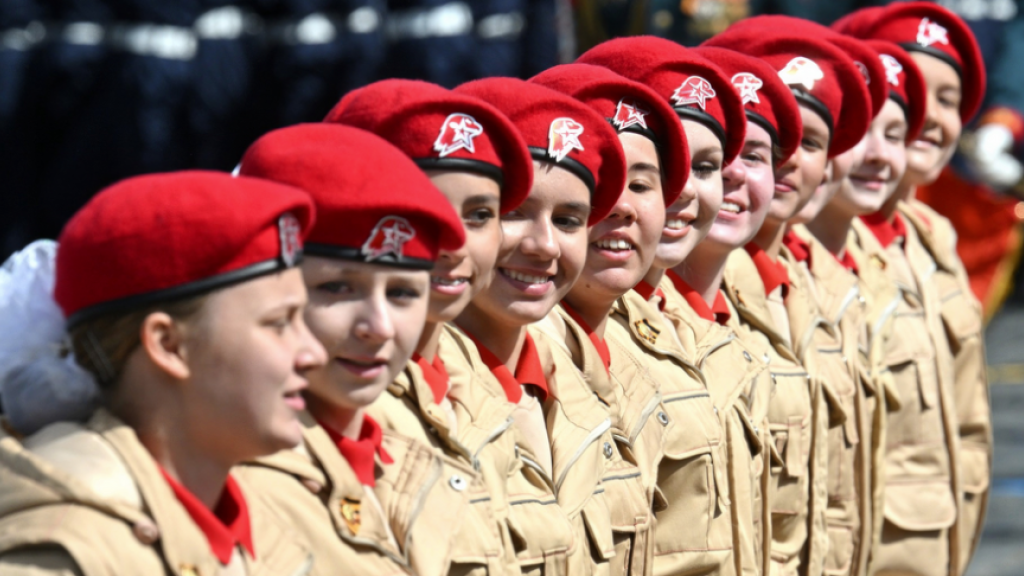
Russian women cadets march past the review stand during the annual Victory Day military parade through Red Square

First published at Rosa-Luxemburg-Stiftung.

On 24 February the war that Russia is waging against Ukraine entered its fifth year. This means that it has already lasted longer than the Soviet participation in the Second World War.

Despite grandiose proclamations, the Russian side has not yet achieved the goals it set itself. Nevertheless, the Russian delegation at ongoing talks under the mediation of the USA continues to be unyielding with Ukrainian representatives. Even if the talks succeed in ending the armed conflict, the question remains as to what impact this would have on the Kremlin’s domestic policy. After all, the state of war that has lasted for years has a firm grip on Russian society and dictates the rules of the game — whether in the economy, education, or the actions of the security forces.

The war economy exacerbates social inequality

Since the start of Russia’s full-scale invasion of Ukraine in February 2022, the public military expenditure and the cost of the armed forces has risen to astronomical levels. Around 40 percent of the state budget is now spent on the military.

In the first two years of the war, the massive boost to arms production led to an increase in demand for skilled workers and significant wage increases for particularly sought-after professions. Following a slump in 2022, Russia ’s economy recorded growth of around four percent; this fell significantly again last year.

However, the strong short-term growth was based on a number of other aspects, such as the positive export balance in the oil industry, a liberalization of regulations in the financial sector, including specifically bankruptcy, the ability to circumvent import sanctions, and tax breaks. The state fueled the military-industrial complex and largely left the private sector to its own devices. There were positive effects on purchasing power, particularly in low-income regions, due to the comparatively high pay of soldiers deployed on the front.

In the meantime, the Russian economy had reached its limits and the relative expansion of the first years of the war was over. Even the production of armaments has been in decline since autumn 2025 because orders have to be paid for from the state which is increasingly running out of funds. President Vladimir Putin wants to support the arms industry over the next three years by significantly increasing arms exports abroad, particularly to African countries.

Russia’s budget has a planned deficit of at least one percent of gross domestic product. This is not a critical figure, but in order to fill the state coffers, the government has decided to take drastic measures that are affecting the population directly and drastically. Gone is the grace period for small and medium-sized enterprises which now have to forget various tax benefits. The state already increased the profit tax in 2025, and since 1 January the VAT has also been raised from 20 percent to 22 percent, which hits people on low incomes particularly hard.

The problem of growing wage debts is adding fuel to the fire as employers (especially of state-owned enterprises) are unable to pay their employees on time. The state statistics authority Rosstat recorded a 2.3-fold increase for 2025 alone and puts the total of current back wages at around 22 million euros. In short: Russia’s war against Ukraine is not only costing the state dearly - the economic burden is also being borne by those who never benefited from the promotion of the war economy.

The recruitment machine

With the exception of border regions such as Belgorod, where air raids and drone strikes have long been part of everyday life, the fighting seems to be taking place far away from the Russian population. Visually, however, the front is omnipresent. Even those who avoid the propagandistic news flow of state television come across hard-to-miss posters on billboards or at bus stops in St. Petersburg or Moscow every day, celebrating Russia's frontline fighters as heroes — supplemented by calls to volunteer for the army. Recently, the armed forces have been emphasizing the recruitment of future drone pilots.

This year, 261,000 male conscripts between the ages of 18 and 30 are to be drafted. Previously conscription summonses were only issued in spring and autumn, the military offices have been able to issue conscription summonses all year round since 1 January 2026. Although conscripts are not officially allowed to take part in frontline missions, the reality shows dozens of documented deaths of conscripts in combat zones. Time and again, reports of young men or their relatives have come to the public’s attention, revealing that army superiors have used pressure or false pretenses to trick them into signing a contract as a regular soldier. The law stipulates that in this case adults are allowed to fight even without basic military training.

Resisting this pressure requires knowledge of one’s own rights and the courage to demand them. Legal advice is still available in Russia for men who wish to refuse military service; civilian service is also possible in principle, although the hurdles are high and the chances of success are uncertain.

During their studies, conscripts are exempt from conscription. At many universities, it’s possible to acquire an officer’s rank as an alternative to military service, although this carries the risk of being conscripted as a reservist in times of war. The war is also drawing ever closer for students at Moscow’s universities who are at risk of being ex-matriculated due to poor performance. Since the beginning of the year, students have been receiving letters informing them that they can avoid ex-matriculation by signing a one-year contract with the Ministry of Defense. They are promised that they will be trained and deployed as drone pilots. At the end of the contract period, they are guaranteed to be able to resume their studies, provided they do not wish to extend their contract as a regular soldier. This clause is a novelty. However, lawyers familiar with the matter, led by the opposition medium Verstka, doubt that such promises will be implemented, as they explicitly contradict the current regulations on partial mobilization.

Danger for deserters

On 21 September 2022, Putin signed an ukase on partial mobilization. In the five weeks up to 28 October, over 300,000 people were drafted, as the battle line had expanded so much in the previous months that it could not be maintained with the units available at the time. In many regions, the recruitment offices resorted to harsh measures in order to meet the specified quotas. Some of those affected were picked up at home, picked up on the street or lured with the ruse that it was merely a matter of updating the personal data recorded in the military register.

One person affected by the latter was Georgi Avaliani from Moscow. He was conscripted against his will and deported to the front but managed to escape to Germany. There, the authorities rejected the deserter’s application for asylum on the grounds that he would only face a fine if he returned and referenced that, according to the then Russian defense minister, Sergei Shoigu, the partial mobilization had been suspended at the end of 2022.

The reality is, in Russia Georgi Avaliani is considered a deserter and that means fifteen years in prison. Or, worse still, he could be transferred to a penal battalion at the front, which would almost certainly mean his death. The argumentation of the Federal Office for Migration and Refugees (BAMF) is therefore a fatal error. Although partial mobilization has been suspended since October 2022, it has not yet been completely lifted. Until the end of the so-called special military operation, the same rules apply to soldiers drafted at that time as to those who voluntarily joined the armed forces in return for a relatively high salary and bonus payments. They only have three legal options for leaving the service: reaching the maximum age permitted for deployment, poor health, or if they are sentenced to imprisonment. Even those who are de facto unfit can be used on the front line, especially for kamikaze missions where high personnel losses are calculated. This refers to infantry advances known as “meat storms”, which — with little or no support from the air or artillery — become living targets for the Ukrainian army. In most cases, these are former prisoners or soldiers accused of violating troop discipline. Their chances of survival are extremely low.

In mid-February, the US Institute for the Study of War suggested that declining recruitment figures could lead to a new wave of partial mobilization. Hundreds of thousands left Russia in 2022 as a result of the first wave, but those who remained were also very displeased. Russia’s power apparatus is having to weigh out the risks: continuing the war at any cost due will exacerbate war fatigue in society and the tight budget situation, even among those citizens that are loyal to the Kremlin.

The power of the security apparatus

The Russian security apparatus is extremely powerful. Even before the war it had risen to become the central building block within the Russian power structure; the continuation of the war is strengthening it even further. In terms of its powers, the FSB domestic intelligence service now surpasses even its Soviet predecessor, the KGB, the agency being under the sole control of the president. In practice, this is also accompanied by a growing number of criminal proceedings for terrorism and treason, and it is not uncommon for such offenses to be punished with the maximum penalty. In the first eleven months of 2025 alone, Russian courts handed down one hundred sentences of life imprisonment — a record level.

If you also consider the extent to which the Russian authorities are now using digital control tools, it becomes clear that open resistance to the Kremlin’s militaristic social model is essentially impossible.

Yunarmiya: The “Young Army”

It is not just about stopping resistance in its tracks, but also about actively affirming the Kremlin’s line. A lot is therefore being done to prepare the younger generation to serve the state and its interests — including with weapons. In Yunarmiya, an organization founded in 2016 for children and young people between the ages of 8 and 18, the members’ sand-colored uniforms and red berets convey a military appearance. Boys and girls learn how to line up for roll call, stand at attention, take machine guns apart and put them back together again — blindfolded. They are invited by official organizations and courted as the future elite who are supposed to guarantee national security. According to their own figures, over 1.7 million minors have gone through the military-inspired education program over the past ten years.

The “Movement of the First”, which was only founded in 2022 and enables participation from the first grade, has an even broader impact than Yunarmiya. A corresponding legislative initiative was symbolically submitted to the Duma on the day of the centenary of the founding of the former communist pioneer organization “Vladimir Ilyich Lenin”. Within just a few years, the number of members in the “Movement of the First” has risen to nearly 14 million (although they should actually be referred to as participants, as there is no official membership). Parents must formally give their consent before their children reach the age of 14, but this often seems to be overlooked in everyday school life. The daughter of one of the people I spoke to, for example, automatically found herself in the ranks of the “First” without being asked, simply because she had taken part in several school Olympics.

Children and teenagers are enticed with leisure activities: sportings, commemorative events to preserve the memory of glorious Russian history, the publication of their own newspapers or magazines, etc. The aim is to learn the basics of military patriotism in a playful way, with theoretical instruction and practical exercises complementing each other. There is no formal obligation to participate, but as the example above shows, boundaries are fluid.

The Oscar-nominated British documentary Mr Nobody against Putin vividly demonstrates how military patriotic education found its way into everyday school life after 2022. Lining up for roll call, marching with the Russian flag or admiring experienced front-line fighters who are supposed to make the business of death appealing to potential soldiers — there are plenty of lessons like this.

The take-away for children and teenagers, however, is another story. One interviewee reports that her daughter now simply switches off when it comes to the Great Patriotic War. Teachers are not necessarily convincing when they simply implement their superiors’ instructions to tick certain boxes. As one teacher reports, participation in state-sponsored activities earns ‘bonus points’ and that is likely why many parents support their children’s participation.

Militarism does not even stop at pre-school education. In the run-up to 23 February, the “Defender of the Fatherland Day”, participants in the war appeared before them. At the beginning of February, a number of kindergartens proudly claimed on social media that they had organized puppet theatre performances, such as the one about the rabbit who volunteers for the army. The characters at the center of the show are proud of the fact that the troupe has brought them together.

Schools undoubtedly have an important educational mission, but they only represent part of reality. The programs offered by the “firsts” are often unable to grab their target groups emotionally, whereas propagandistic films do not have the goal of education do. They explore how the emotional connection of the younger generation to a heroic war narrative can be effectively linked. The animated film “The Little T-34”, developed by students and lecturers at the Moscow Film Academy, which portrays the life and development of a baby tank, is just one of many examples.

In any case, there are plenty of scenes on social networks that demonstrate the extent to which a section of the younger generation has now internalized the omnipresent military tone. This goes so far that uniformed teenagers recently marched in front of the altar with firearms in a church not far from Moscow. This also illustrates how deeply militarization has become ingrained in Russian society.

Tanzania: Commissions Call for Mass Eviction of Indigenous Maasai from World-famous Tourist Destinations


President Hassan receives a report.President Hassan receives a report from the presidential commissions at an official handover ceremony, March 2026.

Two presidential commissions have recommended the mass eviction of Maasai people from some of East Africa’s most iconic conservation areas and tourist destinations.

The commissions were established by Tanzania’s President Samia Suluhu Hassan following previous evictions of Maasai pastoralists from parts of the world-famous Serengeti ecosystem, and large-scale protests in the Ngorongoro Conservation Area in 2024.

Now, despite a global outcry at the earlier evictions, the two Commissions have:

  • Backed the previous evictions and called for them to continue, including in the UNESCO World Heritage Sites of Ngorongoro and neighboring Lake Natron.
  • Described the long-standing Maasai presence in the area as an “environmental pressure” that needs to be reduced.
  • Threatened local NGOs that support the Maasai, accusing them of “spreading misinformation or propaganda” because they “conflict with government interests.”
  • Called for the “relocation” of all “non-conservation activities” [in other words, Maasai occupancy of the land] outside the conservation areas.
  • Called for existing recognition of the Maasai people’s right to live in the Ngorongoro area to be removed.

An anonymous Maasai spokesperson said today: “We are blamed for environmental degradation while the unchecked expansion of tourism is ignored. Forced relocation, disguised as policy, has deprived our people of basic rights and dignity. We reject any continuation of these measures and condemn the Commission’s failure to reflect the voices, realities, and rights of our people.”

Maasai protest

Still from a video showing the Maasai protesting the violent evictions from their ancestral lands, 2022.

Addendum

The commissions’ reports have not been published, but their findings have been widely reported in Tanzania, and presented at an official event.

The first commission looked at previous evictions such as the one from Loliondo in 2022; the second was tasked to make recommendations on how to improve “relocations.”

Survival International’s report “Decolonize UNESCO” spotlights UNESCO’s complicity in human rights violations in conservation zones in Tanzania.

Survival International, founded in 1969 after an article by Norman Lewis in the UK's Sunday Times highlighted the massacres, land thefts and genocide taking place in Brazilian Amazonia, is the only international organization supporting tribal peoples worldwide. Contact Survival International at: info@survival-international.orgRead other articles by Survival International, or visit Survival International's website.