Sunday, April 19, 2026

 INDIA

Noida Fury: Labour Unrest in Increasingly Unequal Economy


Shirin Akhter 
  • \


What erupted in Noida was a warning -- of the consequence of a system that has steadily stripped workers of both voice and security.


Image Courtesy: CITU Facebook

In Uttar Pradesh’s Noida, a protest over wages turned into a spectacle of fire and fury. Vehicles were torched, property vandalised, police deployed in force, the now-familiar script of law and order breakdown was repeated. In the aftermath, wages were reportedly revised upward by around 21%, a concession that came only after the situation had escalated. To reduce this fury to indiscipline or mob excess is to wilfully look away. What erupted in Noida was the consequence of a system that has steadily stripped workers of both voice and security. This should not be looked upon as an isolated outburst. It was a signal, and a deeply unsettling one.

Protests do not become violent in a vacuum. They turn volatile only when every institutional route to justice is blocked. India’s labour market stands hollowed out from within; collective bargaining has withered, grievance redressal mechanisms fail to inspire confidence, and the State appears increasingly distant as a mediator. In such a setting, negotiation is not only difficult, it is rendered meaningless. Workers find themselves complaining into a void, repeating demands that go unheard. It is then that the streets become the site of protest. Turning into a space where the presence of the working class can not be ignored.

Protest is not the beginning of the crisis; it is what remains when every other avenue has been exhausted. What happened in Noida was not a sudden breakdown of order; it was the slow unravelling of trust reaching its inevitable conclusion.

To understand how, one has to step back and look at the longer trajectory of India’s economic transformation. Growth did come, but with privileges of flexibility for capital and a steady erosion of security for labour. Informalisation has not remained confined to the margins; it has seeped into the very core of what we still call the formal sector.

Jobs that once promised stability now carry the anxieties of informality: short-term contracts, uncertain wages, little or no social protection, and the constant fear of replacement. Workers are indispensable to production, yet treated as if they are easily dispensable. They create value, but remain excluded from the basic assurances that give work its dignity. This is not an accidental outcome; it is built into the way the system now functions.

The recent protests reveal the quiet collapse of a social contract that once, however imperfectly, structured relations between labour, capital, and the State. That contract rested on a simple understanding that workers would offer discipline and productivity and employers would provide fair wages and a degree of stability, and the State would stand in between, ensuring that neither side could simply override the other. This understanding has now fractured.

What remains is not negotiation but confrontation, not trust but accumulated resentment. What we are witnessing is not merely economic distress; it is a loss of faith in the very possibility of being heard. The eventual 21% wage revision raises an uncomfortable question; if the demand could be conceded after the violence, why was it denied before it?

There is always a temptation to treat such incidents as aberrations, moments of excess that can be contained, explained somehow, and forgotten. This is a comforting illusion. The fury of the working class in Noida illuminates something far more structural, the fact that when wage demands find no institutional space, they do not disappear; they return, sharper and more urgent. When grievances are ignored far too long, they intensify. When survival begins to feel uncertain, restraint becomes a fragile expectation. People do not choose disruption lightly or in a hurry. They arrive at it when every other language has failed them.

This is also a story about the changing texture of everyday life for the working class. Across the country, wages have struggled to keep pace with the rising cost of living, food, fuel, rent, transport, everything essential has become more expensive. At the same time, inequality has widened in ways that are both visible and deeply felt. The distance between those who accumulate and those who struggle to get by is no longer abstract; it is lived, daily, in the contrast between aspiration and reality. For many workers, even a small setback, a delayed payment, a denied increment, can unsettle an already fragile balance.

The global context has only sharpened these pressures. Conflicts across regions have disrupted supply chains, pushed up energy prices, and added to inflationary burdens. These are often discussed in macroeconomic terms, but their effects are felt at the micro level. They show up in household budgets that no longer stretch as they once did, in anxieties about the next month’s expenses, in the quiet fear that things may get worse. That fear matters. It changes how people respond to uncertainty, how long they are willing to wait, how much they are willing to endure.

What burned in Noida was the belief that the system still listens. Workers today are not just underpaid; they are unheard. Not just insecure; they are made to feel invisible within an economy they sustain with their labour. The anger we see is not only about wages; it is about dignity, about recognition, about the need to be acknowledged as participants rather than expendable inputs. The fact that concessions often follow conflict, rather than negotiation, reveals a system that responds not to voice, but to rupture.

The case of protests in Noida, is not an anomaly. It is a warning. A labour regime that erodes voice cannot expect silence indefinitely. An economy that deepens inequality cannot remain socially stable. A State that steps back from welfare mediation will eventually confront the consequences of that withdrawal.

The images of burning vehicles are dramatic, but they are not the story. They are symptoms. The real story lies in the slow erosion of the conditions that make dialogue possible. To prevent Noida from becoming a recurring pattern, there is an urgent need to rebuild and strengthen institutional mechanisms of labour negotiation, ensure credible grievance redressal, and restore the State’s role as an active and trusted mediator in labour–capital relations.

Shirin Akhter is Associate Professor at Zakir Husain Delhi College, University of Delhi. The views are personal.


Over 3,700 Killed in US-Israel Attacks on Iran


Abdul Rahman 


It is widely speculated that the US and Iran may resume their talks, which were abruptly discontinued last week in Islamabad, with Trump hinting the end of the war is “very close”.


Destruction of the Pasteur Institute in Iran by US-Israeli strikes. Photo: Wikimedia Commons

According to an interim assessment presented by Iran, the roughly 40 day-long US-Israeli war on the country caused USD 270 billion worth in damages, which is more than half of Iran’s total GDP of over USD 475 billion.

The figure was quoted by one of the official spokespersons of Iran, Fatemeh Mohajerani, in an interview with Russian Ria Novosti on Tuesday, April 14.

Mohajerani also insisted that Iran has firmly raised the issue of war reparations during the Islamabad talks with the US and will continue to press for it as part of a peace deal.

According to the Iranian Red Crescent Society (IRCS), the US and Israel bombed more than 125,000 civilian structures during the war that began on February 28, damaging hundreds of schools, hospitals, universities, medical research centers, residential homes, historical monuments, and other public infrastructure, such as railways and bridges, Press TV reported.

The IRCS claimed it had to carry out over 6,000 rescue operations and dig out over 7,000 citizens from rubble created due to US-Israeli bombings.

According to Iran’s Ministry of Health, more than 3,750 Iranians, including women and children, were killed in the indiscriminate bombings carried out by the US and Israel during the war and thousands of others were injured.

Meanwhile, Iranian ambassador to the UN Amir Saeid Iravani condemned the US statement that Iran hides its military hardware in civilian sites, calling it a cynical attempt to justify its war crimes of targeting civilian infrastructure during its aggression.

US blockade of Iran is illegal

In a separate instance, Iravani also called the US naval blockade of Iran a gross violation of his country’s sovereignty and territorial integrity and demanded immediate condemnations from the UN and efforts to prevent the US from making any more provocative steps.

The US imposed the blockade on Iran on Monday after peace talks in Islamabad failed. Iranians have claimed that the talks failed due to Washington’s insistence on Iran completely giving up its civil nuclear program, among other maximalist demands.

Iravani wrote a letter in protest to UN Secretary-General António Guterres and the president of the Security Council, claiming that the blockade violates article 2, paragraph 4 of the UN charter, which prohibits threats or the use of force against a member country.

Iran also claimed that in the absence of any international action against US provocations and violations it reserves the right to “take all necessary and proportionate measures to protect its sovereignty, territorial integrity and national interests.”

Further round of talks possible

The Islamic Republic News Agency (IRNA) confirmed on Tuesday that Iran is in constant talks with Pakistan even after the failure of the first round of talks with the US in Islamabad on Sunday.

“Future rounds of talks could occur anywhere and at any time,” the IRNA quoted unknown official sources saying on Tuesday.

Later Esmail Baghaei, official spokesperson of Iran’s Ministry of Foreign Affairs, confirmed the news, hinting there could be another round of talks between the US and Iran in the coming days.

The speculations about the second round of talks intensified after US President Donald Trump claimed that the war with Iran is “very close to over”.

In an interview with Sky News on Wednesday, Trump said that the end of the war is “very possible” after claiming Iranians want to make a deal “very badly”.

In a social media post on Tuesday, Trump had claimed that the next round of talks with Iran would be taking place within two days in Pakistan.

The first round of talks between the US and Iran were held last weekend in Islamabad, days after both the countries agreed to a two-week long temporary ceasefire on April 7. The talks, which lasted over 21 hours, however, ended abruptly.

Iran claimed that the talks ended abruptly, despite a deal being “inches away”, accusing the US of suddenly shifting its demands and taking a maximalist approach.

Courtesy: Peoples dispatch

Attacked & Kidnapped at Sea, Ecuador Fishermen Allege US Role


Peoples Dispatch 


Several fishermen told the newspaper Primicias that they had been attacked, kidnapped, and taken to El Salvador by US ships. The families of several missing fishermen fear that this may have been the fate of their loved ones.


Some of the Ecuadorian fishermen that were aboard the 'Don Maca' boat that was attacked at sea last month.

An Ecuadorian fisherman made a shocking allegation in a recent report published by the newspaper Primicias. Erick Fabricio Coello Saltos claimed that he and 19 other fishermen were attacked on the high seas by drones and then kidnapped by a US vessel.

According to his testimony, they were hooded, held in a sort of container, and transported for over a week to El Salvador. There, the Ecuadorian fishermen were handed over to local authorities who, after medical evaluations, kept them in a reception center until their deportation to Manta (costing their families nearly USD 400).

Upon his return to Ecuador, 27-year-old Coello reported that he lost nearly 90% of his vision, and that his eardrums suffered significant damage from the powerful explosion that rocked the “Don Maca”. His left eardrum is perforated, and his right one is permanently ruined. In addition, the fisherman says he suffers from nightmares and has filed a series of petitions to obtain funds to treat his physical and psychological ailments.

“What we went through was very hard; I’m left with that trauma. Sometimes I get scared at night; it comes back to my mind. I’m giving up this life as a fisherman for good. I would never go fishing again … I was the person most affected on the boat, because it all happened while I was hanging my clothes up in the cabin and couldn’t get down,” Coello told the newspaper Primicias.

According to him, he needs 7,000 USD for eye surgery and another 4,500 USD for a procedure on his eardrums, in addition to the nearly 60 USD a day he spends on doctor’s visits. Several raffles and bingo games have been organized in Manta to raise funds; however, Coello has requested assistance from the authorities and has yet to receive a response.

Chronicle of an attack

Coello states that the attack took place on the high seas. The fishermen set out from the Port of Manta, located in the province of Manabí, on March 17, aboard the “Don Maca” along with six trawlers, which are used by fishermen on the high seas to catch fish and then load the catch onto the mother ship.

One night, after several days at sea, they spotted a vessel unfamiliar to the fishermen’s daily operations approaching the “Don Maca” that, according to Coello, resembled a tuna boat. Shortly after, they observed a drone approaching their vessel and then flying away. Coello says that he recorded a video of the drone and sent it to his father.

Two days later, the attack occurred: “Suddenly there was an explosion, and then another; I was covered in blood.” After that, the Ecuadorian fisherman, the father of a 4-year-old autistic boy, recounts that some fishermen took a small boat and approached the strange vessel. There, they were asked how many of them there were, how many were injured, and to bring all the fishermen to their boat. The fishermen obeyed.

There, the fishermen claim they were hooded, handcuffed, and locked up until they arrived in El Salvador. According to Coello, the alleged captors told Salvadoran authorities that their encounter was accidental, but he says that’s a lie: “The gringos told them they’d found us in the water, lying there, adrift, shipwrecked. But that’s not how it happened.”

Other vessels attacked and missing

The “Don Maca” incident does not appear to be the only case of attacks on Ecuadorian vessels on the high seas. Several days ago, the missing crew members of the vessel “Negra Francisca Duarte II” were located in El Salvador and reported something very similar to what the fishermen of the “Don Maca” had described happened to them: drones flying overhead, explosions on deck, the crew being detained, and their transfer to El Salvador.

“We were returning from fishing; we weren’t armed. Suddenly, we saw a drone approach and explode in the wheelhouse. Then I looked toward the back; the fire was already spreading … In two boats, we approached a US vessel, and they handcuffed us and treated us like prisoners. We were afraid they were going to kill us,” Hernán Flores, captain of the “Negra Francisca Duarte II”, told Primicias.

These recent accounts have led the families of the missing fishermen who set out to work aboard the “Fiorella” to fear that they have met the same fate. The eight fishermen from Jaramijó and Manta have been missing since January 20, 2026.

“Two crew members returned (in a small boat) because they were fishing on their own, but before the (mother) ship disappeared, they saw a drone circling them, yet they continued fishing; after that, they spotted smoke to the north,” stated Juan Alvia Cevallos, the lawyer for the families of the missing.  

The mother of one of the missing fishermen, María Cueva, said: “The two survivors say they saw the drone and a patrol boat. We are certain that they (the United States) took them, just as they have done with the other boats. I want my son to come home.”

The Ecuadorian government’s “strange” response

For its part, the Ecuadorian government, led by right-wing Daniel Noboa, a staunch ally of the Trump administration, has decided to maintain a prudent silence. When Ecuador’s foreign minister, Gabriela Sommerfeld, was asked about possible US attacks on Ecuadorian fishermen, the head of Ecuadorian diplomacy dodged the question: “I couldn’t tell you for certain what activities the fishermen were engaged in, or the situations they find themselves in … The relevant authorities, particularly those responsible for security, will be able to say what kind of activities they were carrying out.”

The fishermen and their families have categorically rejected the accusation that the Ecuadorians that were attacked and captured on the high seas were drug traffickers: “They are just fishermen, not drug traffickers, thieves, or murderers – that’s no reason for them to have been taken,” states María Mero, a relative of the fishermen from the “Fiorella.”

Attorney Jorge Chiriboga agrees: “They have had to endure violence on the high seas despite having nothing to do with illegal activities; they are unarmed, were returning from a fishing trip, and were attacked by a foreign nation.”

In addition, Chiriboga told Primicias that he will file a legal complaint and bring the matter before the National Assembly to investigate the facts, and he demanded that Ecuadorian authorities ensure respect for Ecuadorians attacked by other countries: “This is an act of terror against Ecuadorian fishermen in the exclusive economic zone of the Ecuadorian state; therefore, it is Ecuador, the State, and the Government that must safeguard the interests of Ecuadorian citizens.”

For now, the fear of an attack has led many fishermen to decide to not go out to sea and thus to forgo one of the few sources of income available to residents of Ecuador’s coastal areas. Added to this are the constant threats from extortionists and pirate ships that prey on fishermen, which have created an atmosphere of terror, uncertainty, and the risk of losing income vital to their survival.

“This will also hurt the city’s economy and make it harder to hire people to go out to sea, because their families are afraid they won’t come back,” Chiriboga said.  

Quito and Washington: an unquestionable military alliance

The Noboa administration is part of the Shield of the Americas, a hemispheric military alliance between several right-wing governments in Latin America and Washington, under which US forces would lead counterterrorism activities throughout the Americas.

Thus, Quito and Washington announced the start of coordinated military operations on Ecuadorian territory. In one such operation, both US and Ecuadorian forces released videos showing the bombing of a building allegedly used by drug traffickers, although several human rights groups, local residents, and The New York Times have claimed it was a dairy farm. Following the bombing, residents of the area reported being beaten and electrocuted by Ecuadorian forces.

Courtesy: Peoples Dispatch


US Mining Plan Will Sacrifice Mexico’s Environment for Weapons and Tech

A new mining agreement provides no benefits for Mexico and fails to address health and environmental impacts.
PublishedApril 18, 2026

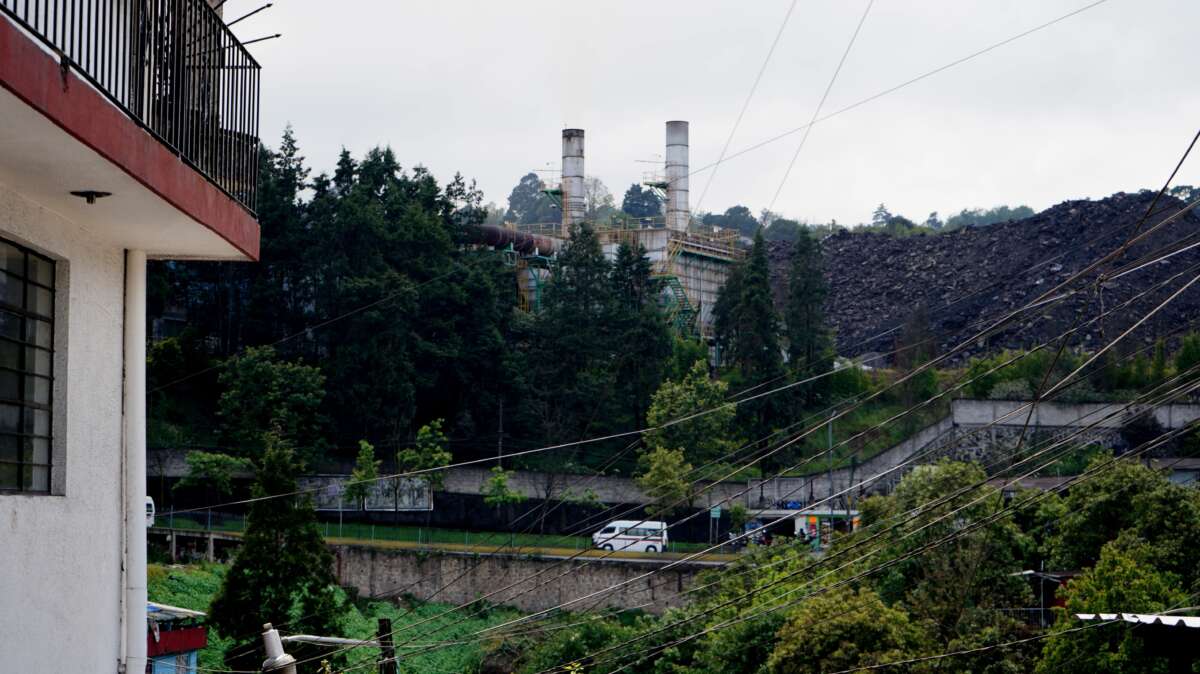
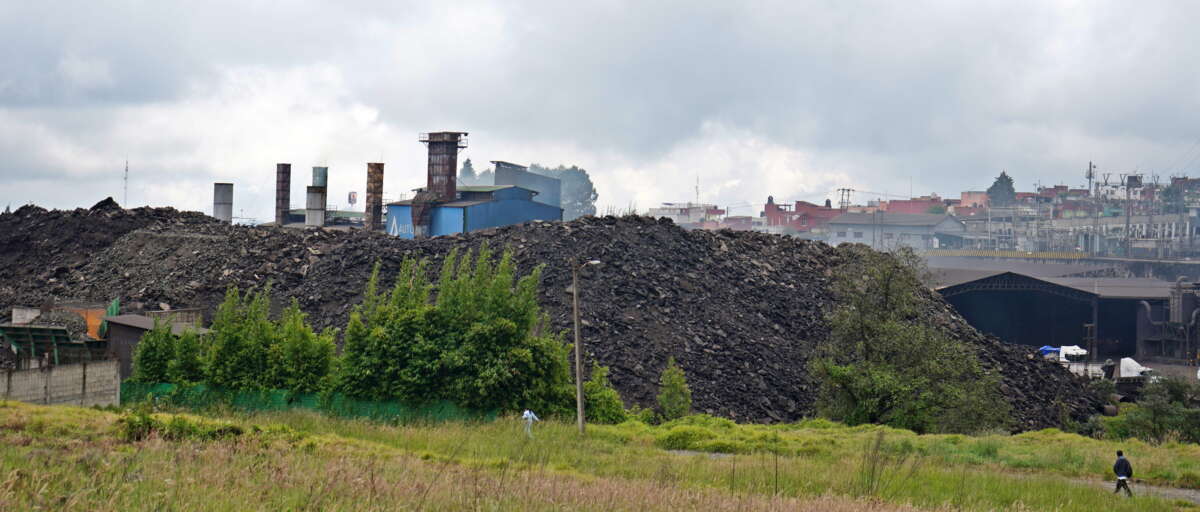
The Autlán plant in Teziutlan, in the Sierra Norte, Puebla.Tamara Pearson


The U.S. and Mexico have established a mining agreement which has Indigenous and other residents of the Sierra Norte mountains, as well as activists around Mexico, worried.

Announced on February 4, the U.S.-Mexico Action Plan on Critical Minerals aims to guarantee the U.S.’s supply of minerals for its arms industry, technology like data centers and smartphones, and the so-called energy transition. It sets out price floors, identification of mining projects, geological mapping coordination, and mineral location identification for the U.S., but provides no benefits for Mexico and fails to address health and environmental impacts.

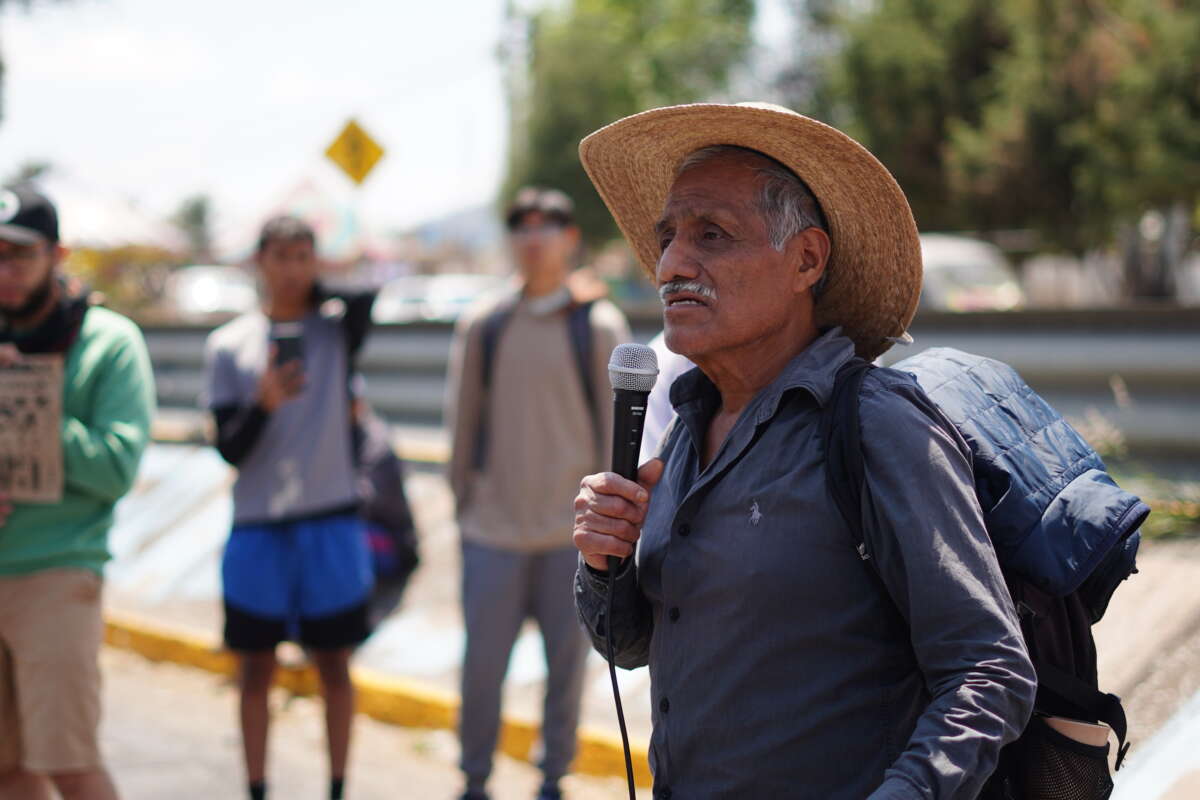
“They want us to show these gringo companies where the minerals are and then go and hand over everything, all without a fuss,” said Miguel Sánchez Olvera, a Totonac man from the Sierra Norte region who has been at the forefront of struggles that have expelled mines from the area. “That’s concerning, because where does it leave us, as Mexicans? Basically, they are going to keep stealing from us.”

Miguel Sánchez Olvera, a Totonac man and environment activist from the Sierra Norte, Puebla, speaking at a protest on March 22, 2026.Tamara Pearson

The beautiful Sierra Norte — teeming with rivers and sprawling forests, and where a majority of people speak Indigenous languages — has massive amounts of minerals that the U.S. has identified as “critical,” such as manganese, gold, silver, and copper.

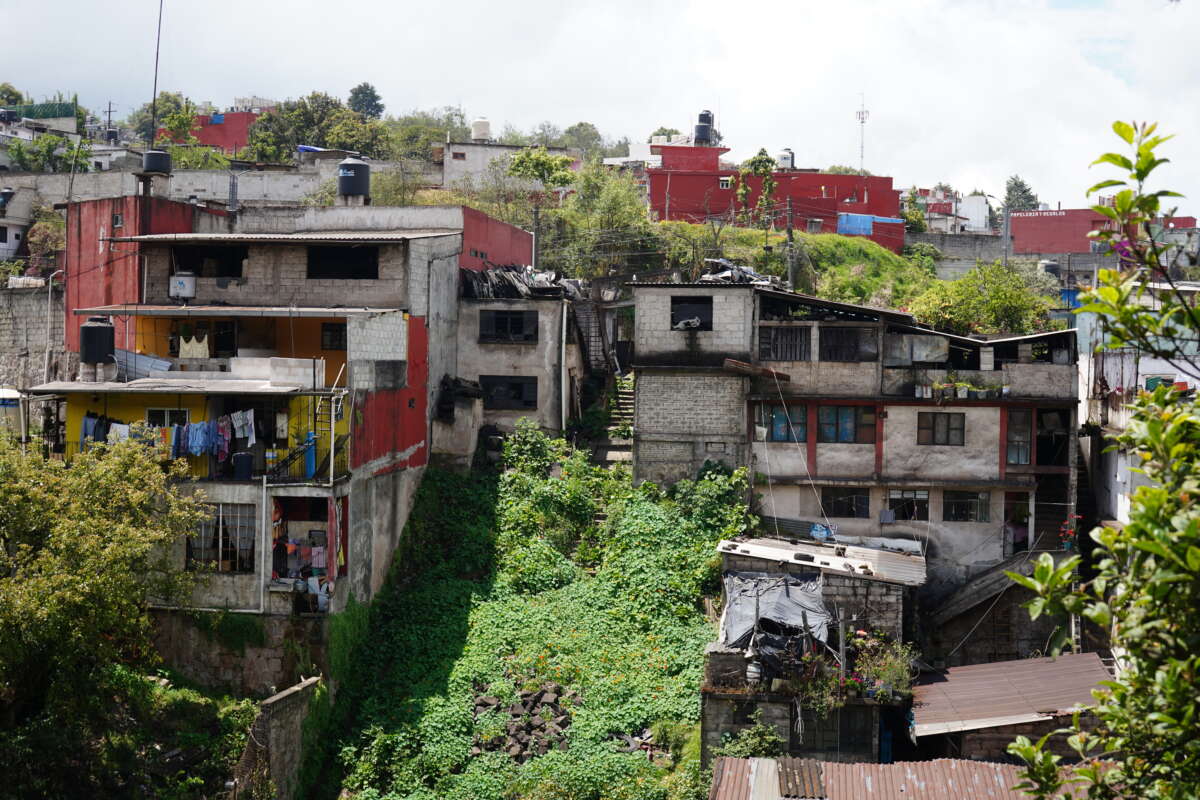
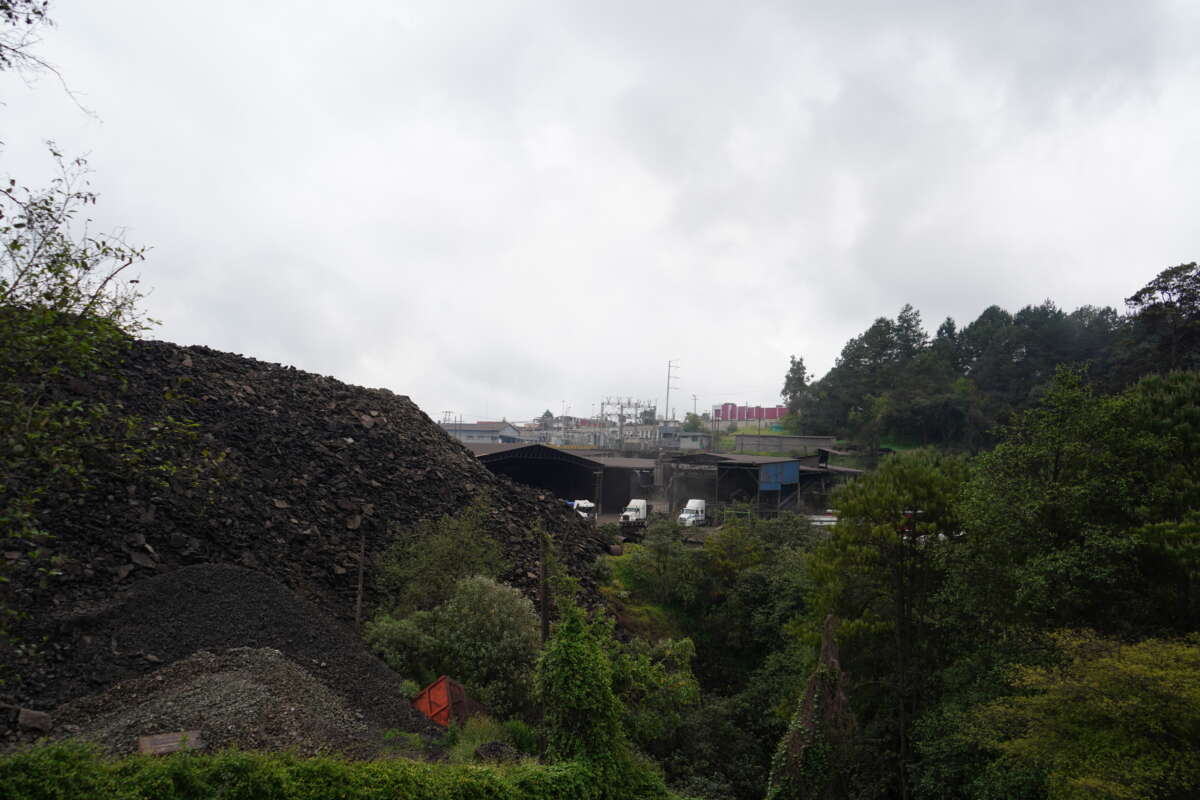
According to NATO, manganese is one of 12 minerals critical for the weapons industry; it is used in submarines, fighter aircraft, tanks, and torpedoes. For Mexico, however, manganese is a source of distress before it is even processed. In the lush Sierra Norte cordillera, stark black mountains of manganese ore and slag piles are set off by smoking chimneys from a plant run by Autlán, a major Mexican mining company. Homes nearby are drenched in black stains. Residents describe mornings of black clouds along the ground and black dust covering their windows.


Sand Mining Is a Booming Industry — This Mexican Community Is Paying the Price
Fifty-six residents of an Indigenous Oaxaca community face 200 trumped-up charges for resisting mining in their rivers. By Tamara Pearson , Truthout July 9, 2025


Autlán operates four electric furnaces in its Teziutlán plant to smelt manganese ore, producing ferroalloys. Manganese is also on the U.S.’s critical minerals list and aside from weapons, it is vital to batteries and other steel applications.
Homes in Teziutlan, right near the Autlán plant, are drenched in black soot from the plant.Tamara Pearson

Mexico as a whole is the top silver-producing country, and among the top producers of copper, lead, and zinc — all on the U.S.’s list. Silver is vital for new weapon systems, hypersonic missiles, bombs, fighter jets, satellites, torpedoes, radar systems, AI data centers, electric vehicles, 5G infrastructure, and smartphones. Demand for copper for munitions is skyrocketing as the U.S. restocks its arsenal, and it is essential for armor and electronics. Copper supply problems can cause significant weapon production delays, and supply chain vulnerabilities for weapons manufacturers.

The U.S. is home to 6 of the top 10 global arms companies and 13 of the top 15 global tech companies. The White House’s 2027 budget includes over 18 billion U.S dollars for the Department of Defense to stockpile minerals that are critical to the military industry. That figure is up from the current 2 billion U.S. dollars.

A few days before the U.S.-Mexico plan was signed, the White House had also announced Project Vault, which will establish a public-private partnership to stockpile critical minerals for U.S. businesses. These moves “imply hyper-extractivism — or basically, renewed extractivism,” César Enrique Pineda, a researcher and professor of geopolitical and capitalist intersections with the environment at the José María Luis Mora Research Institute, told Truthout.

An Open-Pit Mine for the U.S.


Autlán is the largest manganese producer in Central and North America. Like other mining companies in Mexico, it exports much of what it produces, including to the U.S. In late March, the environmental protection agency Profepa temporarily shut down one of its furnaces in the Teziutlan plant after finding that it was operating without an emissions filter. Locals told Truthout they had complained about the resulting harsh black clouds for more than six months, but Autlán did nothing.

The Autlán plant in the Sierra Norte is located right in the center of the town of Teziutlan.Tamara Pearson

Autlán continues to accumulate massive mountains of slag rock, a byproduct of metal smelting, in open air. Exposed slag can release small particulates that can lead to respiratory or skin problems. Too much manganese in the body can affect the nervous system, and another potential component, hexavalent chromium, can cause cancer. Leachates — toxic liquid runoffs — spill onto nearby land and eventually into the water system.

Before the fourth furnace was shut down, Gisela Macias Dionisio, a local water activist with Servicios Ambientales Amelatzin Hualactoc, told Truthout, “the dust was like snow. You couldn’t even sweep it up. They tell us babies are being born with gestational cancer.”

“Nobody speaks up, nobody says anything out of fear. A doctor told me that 50 percent of his patients have cancer,” said another woman who lives just behind the mine but who requested anonymity out of fear. “My house is covered in black dust, even the dishes have black dust on them, the trees are covered in it too. Our fruit used to be nice and big and now it’s small and rots quickly. The sound (from the plant) never stops.”

Pollution Doesn’t Squash Mining Companies’ Excitement

Nevertheless, the Mexican government is already promoting the critical minerals action plan as an investment opportunity, and companies here are using the plan to demand relaxation of regulations. The mining industry chamber, Camimex, said it sees the U.S.’s focus on securing strategic minerals as a moment to push for mining interests after the reforming of the 2023 mining law, which was a result of years of movement struggle.

The law was “a historic achievement,” said Beatriz Olivera Villa, an industrial engineer and a founder of Cambiémosla Ya — a coalition of communities and organizations campaigning around the mining law. The reformed law made environmental assessments and informed consent from affected communities obligatory, “and now they aren’t handing out concessions, at least not like they used to,” she said.

Now, with the critical minerals action plan, “we’re worried, because the economy secretary [of Mexico] has been speaking with the mining companies … and they are talking about modernizing the mining law to recover the privileges they lost,” Olivera said. “With the demand for critical minerals … it seems like they would increase extraction at any cost.”

“Trump’s administration doesn’t just represent extractive capital, but also an authoritarian approach that disregards any kind of regulation. Therefore, we should expect significant pressure to ensure, at any cost and regardless of our laws, that the mining industry’s needs are met with this plan,” Pineda said.


Nobody Benefits From Weapons Except Weapons Companies


But while the mining industry is being heard, the mines bring no economic benefits to the country or to nearby communities.

“I very much doubt that Mexico would benefit economically from this plan because it has never been that way with mining projects. Extraction only contributes 0.9 percent to the GDP, for example,” said Olivera. “Mining represents just 0.66 percent of formal employment, and in terms of taxes, they contribute very little.” There are 22,247 active mining concessions in Mexico, with a total surface area of 10.2 million hectares, or 5.2 percent of Mexico’s territory

.
The Autlán plant is located right in the center of the town of Teziutlan and within the lush Sierra Norte mountains.Tamara Pearson

“Towns like Guadalupe y Calvo in Chihuahua (state) are among the top producers of gold and silver, but it is one of the poorest towns in Mexico,” Olivera said. In Fresnillo, another top global silver producer, 40 percent of the population lives in poverty, and in Eduardo Neri, a key gold producer, 65 percent do. Across Mexico, mining regions have very high poverty rates, “and a lack of access to services like water or electricity,” she added.


“There is a militarization of these resources. The U.S. is considering securing minerals for war as part of its national security strategy.”

Meanwhile, arms producers are breaking revenue records, with 679 billion U.S. dollars in 2024. Increased production requires more minerals. “There is a militarization of these resources. The U.S. is considering securing minerals for war as part of its national security strategy,” said Olivera.

And as minerals flow from Global South countries like Mexico to the Global North for manufacturing and sales, so do the profits. Mining took off “in an intense way” after the signing of the North American Free Trade Agreement in 1994, which served U.S. and Canadian markets, Olivera says, calling it a “legalized plundering.” In 2024, Mexico exported 42.3 billion U.S. dollars in minerals, making it the 24th-largest exporter. Its main destinations were the U.S. ($17.7 billion), China ($6.31 billion), and Spain ($4.58 billion). Mexico exports 70 to 80 percent of its copper production.


Mining’s Legacy of Environmental Disaster


The U.S.-Mexico action plan “benefits investors, but it doesn’t benefit us at all,” said Urbano Córdova Guerraas, a local resident and also a member of Servicios Ambientales Amelatzin Hualactoc as we chatted in a small eatery near the Autlán plant. To extract copious amounts of manganese, Autlán has destroyed whole mountain tops in nearby Hidalgo state, buying off local politicians in order to do so. In Zoquitlán, Autlán chopped down 77 hectares of forest for a hydroelectric plant.

Communities in the Sierra Norte have successfully resisted various hydroelectric, fracking, and mining projects in their region. In 2022, they managed to cancel mining concessions in Ixtacamaxtitlán, Cuetzalan, Tlatlauquitepec, and Yaonáhuac, including for the Canadian gold-mining company, Almaden Minerals. Sánchez, a member of the land movement Makxtum Kalaw Chuchutsipi (Everyone United as a People), along with various movements in the region, including Masuel Indigenous communities, shut down three of Autlán’s gold, silver, and copper concessions last year.

“Our territory isn’t a resource. It’s our body, our memory, our spirituality,” the Maseual Altepetajpianij Council wrote to the court at the end of their 11-year battle. The council, made up of 35 Indigenous and small-farmer communities in the Sierra Norte, defends the region against mines.

“(Autlán) had just finished the exploration stage and was about to start exploiting, but with the strength of women and men here, they left the Sierra very pissed off because they had bought 1,000 hectares of land,” said Sánchez.

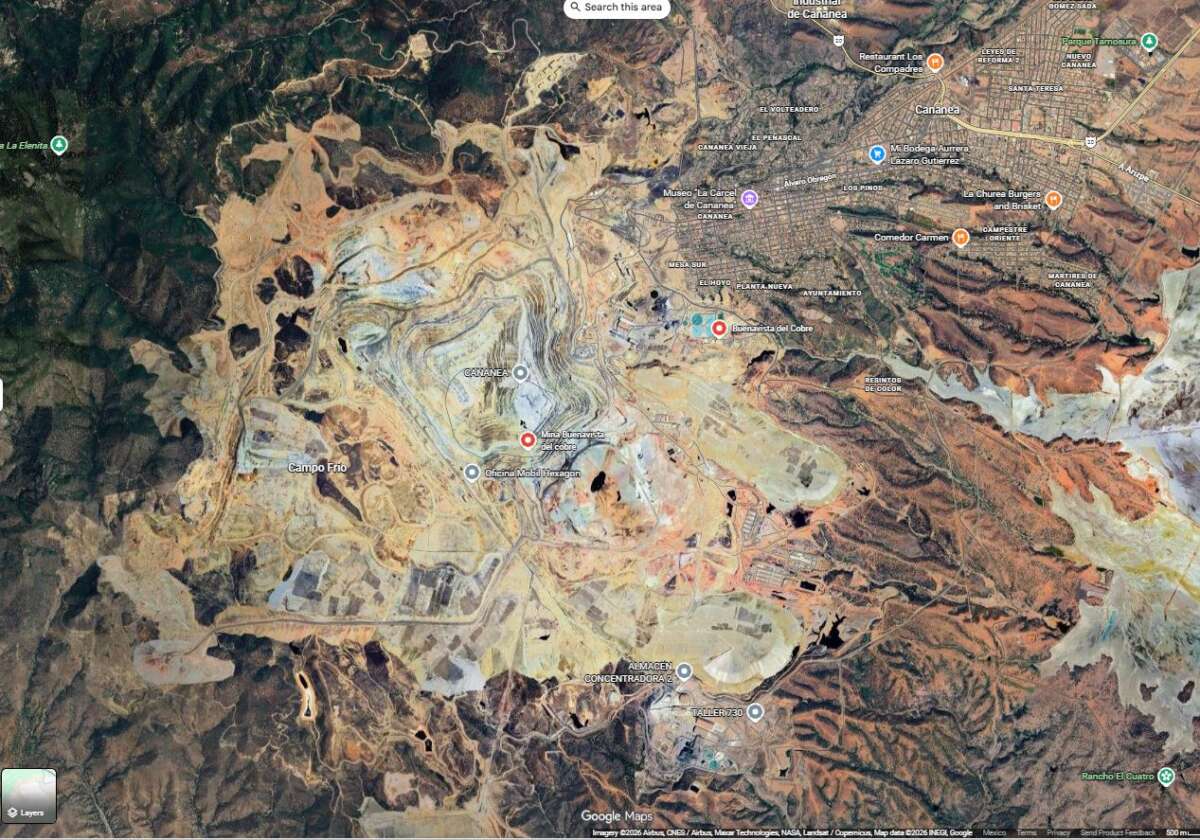
Meanwhile, in the north of the country, the U.S. consul general in Mexico, Michelle Ward, visited the country’s Buenavista copper mine on March 25, stressing that it is one of the top copper mines globally. She said that with the joint action plan, the U.S. government wants to strengthen its presence in the region. Ward omitted that the mine was the site of Mexico’s worst environmental disaster, when in 2014, a leaching pool collapsed, spilling 40,000 cubic meters of copper sulfate into the Sonora River, eventually reaching wells that supplied the city of Hermosillo

.
A Google Maps screenshot shows an aerial view of the Buenavista copper mine in Sonora, taken on March 27, 2026. At 93,706 hectares in size, it is almost as big as New York City, and has carved out a large chunk of the Sierra Madre Occidental mountain range.Google Maps / Tamara Pearson


Over a decade later, according to Olivera, members of the Sonora River Basin Committee say “their demands haven’t been met and the damage hasn’t been repaired, the skin problems are ongoing due to high levels of arsenic. They’re still finding arsenic in their urine and blood.” Even before the spill, authorities had found copper, arsenic, aluminum, cadmium, iron, manganese, and lead in the water supply.

Pineda lists off more negative impacts from mines in Mexico, including displacement of communities, water scarcity, contamination of tributaries and aquifers, heavy metal contamination, health harm, and toxic dust. “These are not things you can negotiate with the mining companies. You can’t negotiate if water is contaminated or not … so communities typically demand the closure of mines,” he said.

To mine just one ounce of gold, 40 kilograms of explosives and 200,000 liters of water are used, and 650 kilograms of carbon dioxide are emitted.


Imposing Destruction


In order to operate without disruption, mining companies in Mexico are often involved in the disappearance of activists and with organized crime. The top minerals that attract organized crime groups are the same critical minerals that Mexico plans to supply to the U.S.

In 2022, Indigenous activists Ricardo Lagunes and Antonio Díaz, who had opposed a Ternium mine, were forcibly disappeared; they are still missing. The year before, anti-mining activist Higinio Trinidad De la Cruz and another activist were kidnapped by organized crime members and told to stop their activism, then released. Trinidad De la Cruz was killed the following year.

Autlán too has reportedly used violence, intimidation, death threats, buying people off, sowing community division, and attacking activists — including burning a bus that activists were in after a protest against one of Autlán’s hydroelectric plants — in order to get its way. In 2018, Sergio Rivera Hernández disappeared after opposing Autlán’s Coyolapa-Atzalan hydroelectric project.

There is a similar logic of control in the U.S. plans to funnel Mexico’s critical minerals its way. “With this plan, the U.S. government is taking advantage of Mexico’s deep economic dependency on it in order to impose a new instrument of subordination,” wrote the Mexican Network of those Affected by Mining in a statement.

“Mexico isn’t in a position to negotiate on equal terms,” said Pineda. “This plan doesn’t just mean communities losing control over their ecosystems, but that the whole country loses control over its ecosystems.”

Of course, Mexico isn’t alone. The U.S. has made an alarming deal with the Democratic Republic of the Congo, exchanging “security” support for access to its minerals, while threatening to cut off Zambia’s aid if it doesn’t increase the U.S.’s mineral access. A trade deal with Indonesia in March also paves the way for the U.S.’s access to minerals, with few environmental safeguards.

“The environmental impact stays in the (Global) South, and the raw materials head to the North … at a scale that is unsustainable,” said Pineda.

Over the years, thousands of organized communities have declared themselves “mining-free territory” to legally prohibit mining in their territory.

Stopping mines after the fact is much harder, but many communities are willing to wage the legal and organizational battle. Even after victory, the struggle continues.

“We want to clean our rivers, so that the Sierra Norte de Puebla can be a paradise again,” said Sánchez.


This article is licensed under Creative Commons (CC BY-NC-ND 4.0), and you are free to share and republish under the terms of the license.


Tamara Pearson is an Australian-Mexican journalist, editor, activist and literary fiction author. Her latest novel is, The Eyes of the Earth, and she writes the Global South newsletter, Excluded Headlines.

Europe is doing something Trump’s angry rhetoric didn’t account for: report


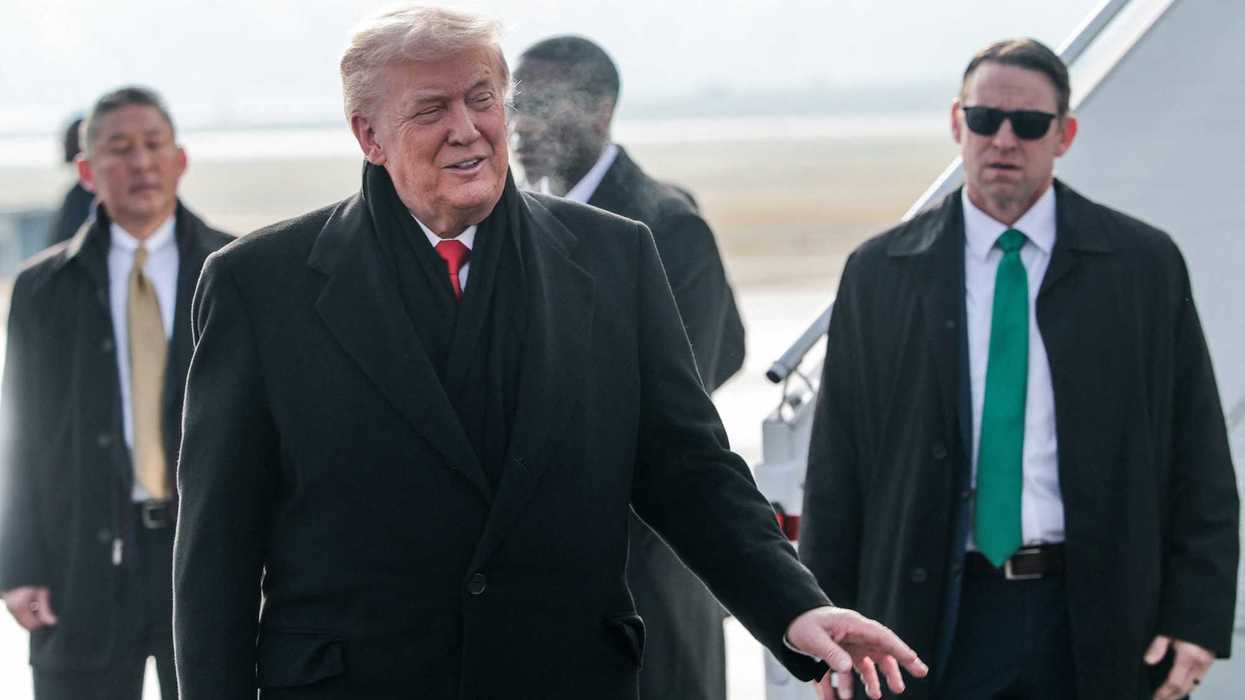
U.S. President Donald Trump at Zurich International Airport in Switzerland, January 21, 2026. REUTERS/Jonathan Ernst
April 19, 2026  
ALTERNET

President Donald Trump’s belligerent rhetoric toward America’s allies may please his domestic political base, but it is harming America’s international standing — perhaps permanently.

“Trump, for so many people, epitomizes the ugly American — somebody who is bumptious and vulgar and ignorant about foreign cultures,” former Time Magazine editor Rick Stengel said in a recent podcast appearance on The Bulwark with former Daily Beast editor-in-chief John Avlon. “So I think people sort of have come to the end of their patience with America.”


Avlon replied to Stengel by noting that polls found presidents like Bill Clinton and Barack Obama, who engaged in positive diplomatic relationships with other countries, were far more popular than the bellicose Trump. Indeed, Stengel noted that America’s foreign standing has “plummeted” during Trump’s two terms.

“It always seemed absurd to me when Trumpists would say that we need to be respected on the world stage, when you could see in the data that America was not respected — was held in worse regard when Trump was president, even than Chinese president-for-life Xi,” Avlon told Stengel. “So I wonder now with Iran, though — we seem to have crossed a Rubicon, because it was a war of choice, because our allies are not with us. And tell me about the downstream effect of that as you see it.”

Stengel added that, even though Joe Biden tried to reverse the damage to America’s reputation caused by Trump’s first term, America’s allies were not convinced that Biden would remain in power long enough to keep those policies in place. Trump’s reelection in 2024 confirmed their fears.


“This seesaw in presidential politics is something that people don't really understand,” Stengel told Avlon. “And then this Iran thing — by the way, what was probably most popular about Trump on the world stage was his sort of isolationism: that this isn't about America invading foreign countries and this world of endless wars, that America would retrench globally in terms of militaries but increase their presence globally in terms of trade and globalization. In some ways, it's the exact opposite. The alliances are also part of this idea of soft power, because — and I hate that phrase we used to use — we're not the world's policemen. We weren't the world's policemen, but we were the kind of foundation of the global world order, that people could trust America to abide by the rule of law, to be a pretty fairly honest broker. Not to say we wouldn't do bad things, but that is completely out the window.”

He concluded, “And the kind of ‘America First’ which has now actually caused it to get into a war is something that makes us much more isolated and much less popular, to an extraordinary extent.”

In February the New York Times reported that Trump’s imperialist rhetoric toward Denmark about acquiring Greenland and his conquest of Venezuela had convinced America’s European allies to decouple their most valuable financial and digital assets from American corporations. His tariffs have similarly prompted talk among Europeans of a permanent “divorce” from the US, with a senior European official telling Politico that “there is a shift in U.S. policy and in many ways it is permanent. Waiting it out is not a solution. What needs to be done is an orderly and coordinated movement to a new reality.”
Trump's latest scam stuns even his critics


April 19, 2026  
ALTERNET

President Donald Trump claimed he would “drain the swamp” upon being elected, but a new report on a lavish party to be held at his Mar-a-Lago estate contradicts the promises of reform embedded in that claim: The top 297 investors in his meme coin $Trump will attend an April 25th “conference” at the swanky mansion.

“According to the invitation, the top 29 holders of $TRUMP will have a ‘VIP Reception with YOUR FAVORITE PRESIDENT, and other Superstar guests!’” reported The Daily Beast's Mary Papenfuss on Sunday. “Join the ‘most exclusive crypto and business finance conference in the world,’ the announcement gushes.”

Papenfuss added, “The last time the president mixed his crypto business with politics was at another highly controversial crypto fête a year ago at his Virginia golf club, where the top 220 $TRUMP investors gathered. Massachusetts Democratic Senator Elizabeth Warren bashed the event as an ‘orgy of corruption.’ Guests spent an average of $1.37 million (in real dollars) purchasing $TRUMP, the Daily Beast reported at the time.”

Notably the earlier dinner, which netted an average investment of $1.37 million per guest, had among its guests the crypto billionaire Justin Sun who has been accused of SEC market manipulation — allegations that were quietly dropped by the Trump administration shortly before he attended. Furthering accusations that Trump is providing favors to those who pay him or his administration, he launched one billion $TRUMP coins three days before his inauguration, collecting a transaction fee on every trade as well as on the coins he directly sells.

“It is essential that Congress fully understand the extent to which President Trump and his family are profiting off of his cryptocurrency ventures," Democratic Sen. Elizabeth Warren of Massachusetts, Richard Blumenthal of Connecticut and Adam Schiff of California.

Indeed, Trump’s generosity to the crypto community has even been at the expense of other crime victims. Earlier this month, The Trace released a report which revealed that the Crime Victims Fund, which was created by the 1984 Crime Victims Act to fund "state and local programs including domestic violence shelters, rape crisis centers and child abuse treatment programs,” has been effectively defunded by Trump. This is because the program is funded primarily by “criminal fines and penalties from convictions in federal cases, typically white-collar prosecutions." Yet his pardons have removed $113 million that would have gone to the fund, with most of the lost money occurring due to a single crypto pardon.

"Most of that figure is from a single case," The Trace report explained. "Last year, Trump pardoned HDR Global Trading Limited, the owner and operator of the crypto exchange BitMEX, which had been ordered to pay $100m in fines for flouting anti-money laundering laws. Trump issued the pardon, the first for a corporation, just hours before the payment was due. Because the pardon calls for the 'remission of any and all fines, penalties, forfeitures, and restitution ordered by the Court,' that $100m will never make it to the Crime Victims Fund."

Steve Derene, a co-founder of the National Association of VOCA Assistance Administrators who helped craft the original 1984 bill, told The Trace that “what really drives the fund are these very large, very few cases, which are all corporate cases. Just a couple settlements can really mean the difference in keeping this fund afloat.”
This Tax Season Proved ‘No Tax on Tips’ Was Never for Workers

Cutting taxes on some tips for some workers is not a solution. Raising wages—and ending the subminimum wage—is.


A jar reading, “We appreciate Tips, Thank you,” is displayed at Mighty Quinns BBQ restaurant, Queens, New York.
(Photo by: Lindsey Nicholson/UCG/Universal Images Group via Getty Images)
Common Dreams

During the election, Donald Trump boasted about lowering taxes for working Americans with his “no tax on tips” plan. This tax season, millions of Americans found out it was a scam.

You have to earn money for tax cuts to affect you. A tax deduction only helps if you owe taxes—and most tipped workers earn so little that they barely do. Two-thirds of tipped workers will not even earn enough to benefit. Zero minus zero is still zero. The vast majority of these tax cuts go to the wealthiest taxpayers.


For the workers this policy was supposed to help, the results are already clear.

Take Sherie Cummings, who has poured drinks on the Las Vegas Strip for 20 years. Sherie and her husband, also a bartender, earned $60,000 in tips last year. They expected the full deduction the president promised. They got $25,000 of it. The cap.

Thirteen million tipped workers do not need a tax deduction. They need a raise.

For private jet buyers, the same law delivered something different. Full write-offs on aircraft worth $5 to $10 million. And that write-off is permanent. The tips deduction expires in 2028. The Tax Policy Center projects that 60% of the savings from this law will flow to the top fifth of households—those earning more than $217,000 a year. The wealthiest will save millions. Sherie Cummings is putting her refund into savings because she is afraid of what comes next.

For working people, the real problem was never the tax code. It is wages. The federal subminimum wage for tipped workers has been $2.13 an hour since 1991. It was locked there permanently in 1996 by the National Restaurant Association—what we call “the other NRA.” They spent $2.9 million on federal lobbying in 2020 alone to make sure it stayed there. Which is why tipped workers earn a median income of $15,198 a year. Thirty-seven percent of the national median. Which is why they rely on food stamps at nearly double the rate of other workers. And because workers depend on tips from customers to survive, they put up with what no one should have to. Seventy-one percent of women in the industry report sexual harassment. In subminimum wage states, the rate is double what it is in states that require a full minimum wage with tips on top.

Seven states already require a full minimum wage with tips on top: California, Oregon, Washington, Nevada, Minnesota, Montana, Alaska. It is called One Fair Wage. The restaurant lobby warns that tips would disappear, that restaurants would close, that jobs would vanish. These are scare tactics. The seven states prove them wrong. Tips are the same or higher. Restaurant employment grows faster. Small business growth rates match or beat subminimum wage states.

And restaurant workers have organized and fought for years and won One Fair Wage in Washington, DC, Chicago, and Michigan. The restaurant lobby has fought to block and roll back these wins—in Michigan, they are still trying. But workers keep going. And even where implementation is partial, the numbers are in. DC set an all-time restaurant employment record. Tips grew. Chicago saw more than 850 new restaurant licenses and the fastest pay growth in the country.

Cutting taxes on some tips for some workers is not a solution. Raising wages—and ending the subminimum wage—is. That is why more than 100 labor, community, and civil rights organizations have come together as the Living Wage For All coalition. The fight: Raise the minimum wage to meet the cost of living and end all subminimum wages. In every state. For every worker. Campaigns are active in eight states. Workers have already won. And they will keep winning.

Thirteen million tipped workers do not need a tax deduction. They need a raise. Every shift. Every paycheck. Every year.


Our work is licensed under Creative Commons (CC BY-NC-ND 3.0). Feel free to republish and share widely.


Rayan Semery-Palumbo
Rayan Semery-Palumbo is the director of narrative strategy at One Fair Wage, where he supports the Living Wage For All coalition and campaigns. He is a fellow at the Economic Security Project and earned a PhD in Public Policy from the University of Oxford, where he was a Rhodes Scholar.
Full Bio >