Sunday, May 17, 2026


MOSCOW BLOG: Russia's social contract has broken down

MOSCOW BLOG: Russia's social contract has broken down
The implicit deal Putin offered Russians at the start of the war — ignore the conflict and we'll leave you alone — has been violated. Now, for the first time, even loyalists are angry. / bne IntelliNewsFacebook
By Ben Aris in Berlin May 12, 2026

Something has quietly shifted in Russia. Not the social and economic meltdown Western pundits have been confidently predicting almost continuously for the last two decades. Or the imminent economic collapse following each bad data set. But something more subtle: the gradual collapse of the social bargain that held Russian society together through the first four years of the Ukraine war.

Alexander Baunov, a senior fellow at the Carnegie Endowment for International Peace, said in a recent paper when Putin launched the full-scale invasion of Ukraine in February 2022, he didn't ask Russians to support the war — he offered them something more modest: the right to live outside it. "You can live outside of the war, but you cannot be against it," went the unspoken deal.

For those who accepted the offer, the Kremlin would allow a way of life close to their pre-war existence. Many accepted it — some out of genuine indifference to others' suffering, some out of desperation, some simply because the alternative was unthinkable.

That bargain held, more or less, through 2024. The ruble didn't collapse. Borders stayed open. Wages rose. The sanctioned shelves were quickly restocked with parallel-imported goods. A curious wartime prosperity emerged from the rubble of the old life. Indeed, after the initial shock of the invasion of 2022, the following two years were amongst the most prosperous since the fall of the Soviet Union. The austerity of almost two decades of Putinomics was turned on its head and the spigot of massive state spending finally opened. A War middle class emerged and the war in the south had very little impact on everyday life. With it came what Baunov calls "everyday patriotism" — a fragile optimism built not on ideology but on the simple satisfaction of survival.

By spring 2026, the regime had shredded that arrangement. "The Russian regime had unceremoniously violated the terms of this compromise agreement one after another," Baunov writes, "and now society is angry. People did not agree to ignore the war only to become the target of prohibitions and repressions themselves and now feel cheated and deceived."

The war comes home

The war has finally arrived in the courtyards of regular Russians. As the military Keynesianism boom of 2023 and 2024 began to fade away as industrial capacity utilisation maxed out the economy was no longer able to absorb the torrent of military spending of around $140bn a year and prices rose. The personal income gains of the previous years were eaten away. The Central Bank of Russia (CBR) hiked interest rates to a crushing 21% to kill inflation, but it wouldn’t die. Then the regular began to clamp down on credits in an unorthodox experiment to deliberately slow growth to pull inflation down. It worked: inflation has fallen from a sticky 10% last year to 5.9% in April and is continuing to fall. The CBR has managed to put through 550bp of rate cuts but interest rates remain in double digits.

With consumption falling, borrowing impossibly expensive, and growth slowing, the slowdown is hitting small- and medium-sized enterprises (SMEs) particularly hard where sales are falling and driving many to the wall. It’s not a crisis yet, but dark clouds have rolled over the skies that were sunny before.

However, the biggest catalyst for the growing public anger is not the war itself or its effects on the economy — it is the internet blackouts.

As the war goes into its fifth year, Russian President Vladimir Putin has rolled out a more overt repression than ever before as the Kremlin finally tries to take full control of the Internet as part of a policy of digital sovereignty, modelled on China’s control of the online world.

During the Victory Day period in Moscow and St Petersburg, mobile internet went completely dark for over four hours on May 5, disabling banking apps, taxis, delivery services and SMS. Even services on Putin's own "whitelist" — which he had personally guaranteed would remain accessible — failed.

The response from a Russian model and popular blogger called Victoria Bonya illustrated the shift in public mood with unusual clarity. In a viral Instagram post she addressed Putin directly — not the state regulator Roskomnadzor, not some lower-level official, but Putin himself — and told him: "There is a lot that you don't know." She listed a range of problems, primarily internet blackouts, that officials are too scared to raise with him.

The post was remarkable on two levels. First, it identified Putin personally as the source of the problem, stripping away the usual deflection onto bureaucratic intermediaries. Personally criticising Putin by name is dangerous, as opposition leader Alexei Navalny found out at the cost of his life two years ago.

Second, it inverted the fundamental logic of the war's legitimacy. The entire "special military operation" rested on the premise that Putin has access to intelligence that ordinary Russians do not — plans for a Nato attack, hidden threats, secret knowledge justifying extraordinary measures, Baunov said. Bonya's message turned that premise inside out: we, the people, know about the country's problems, and perhaps the president doesn't. If he doesn't know about the internet blackouts, maybe he didn't know what he was doing in February 2022 either.

The regime's response was swift and harsh. The authorities have banned WhatsApp and Telegram – the two most popular messaging services – on the grounds they are "non-transparent". In their place the state is pushing a homegrown replacement — the Max app — whose transparency is of a rather different, less reassuring kind – unlike the privately-owned apps, the FSB has full access to all the users data and content as part of an expanding surveillance operation.

Simultaneously, the Finance Ministry has raised VAT from 20 to 22 per cent and introduced requirements to register a taxpayer identification number for bank transfers that previously required only a phone number. Russians now complain they have to completely declare, with documentation, the details of any transaction they make through the banking system.

The cumulative effect is an increasingly visible surveillance and extraction apparatus. Russians who accepted the wartime bargain accepted it on the understanding that the state would leave their private lives alone. The combination of communications monitoring, tax tightening and internet control and increasingly obvious repressions has demolished the social pact. Personal space — Baunov notes — is all that unfree people have left once the state has taken over public space. The regime is now encroaching on that too.

The fear beneath the surface

This would be the second time that Putin has reneged on his social contract with the people. When he took over in 2000 there was another simpler social contract with the people: you stay out of politics, and I will stay out of your everyday lives.

That deal held for much of the boom years in the noughties and life improved out of all recognition. The size of the economy doubled, companies boomed, wages were hiked by almost 10% every year for nearly a decade. But that boom too faded away after the 2008 global financial crisis. The petrostate economic model was exhausted by 2013. And the annexation of Crimea and the start of the sanctions regime in 2014. Throughout this period, the Kremlin slowly tightened the screws and introduced measures like the “foreign agents” bill that allowed the state to brand anyone it liked a de facto spy and close opposition parties and press.

Things came to a head with Navalny’s return to Russia from Germany where he had been recovering from an attempted state-sponsored assassination attempt. He was immediately arrested and sent to a high security prison in Russia’s far north. He was dead three years later.

Putin realised there was no recovering from these blows to civil liberties for the Kremlin's reputation. The gloves came off and Putin abandoned what commentator Mark Galeotti dubbed “repression-lite” for the real thing.

Fast forward to this year’s Victory Day parade, one of the most important events on the public calendar – an event that Putin has used to unify the Russian people in their shared pride of the defeat of the Nazis in what they call The Great Patriotic war.

This year it was held without rehearsals, without military hardware, with minimal personnel and with internet jammed across Moscow to prevent Ukrainian drones from navigating to the site. It was, as Baunov observed, not a demonstration of strength, but of fear.

"A military parade is intended as a demonstration of strength and bravery, but if it is held furtively, without rehearsals, and with the internet jammed, it demonstrates nothing but fear and weakness,” Baunov said.

Putin's approval rating has declined noticeably this year, but still remains above its pre-war highs. Usually the parade lasts hours with colourful troops marching with impeccable timing across the famous square. This year the whole event lasted barely 45 minutes and Putin’s speech was confused and rambling. His pre-war image — bare-chested, horse riding vigorous strong man has faded away to a bloated-faced bureaucrat that hides in bunkers from where he runs his wars. "Instead of a guarantor," Baunov writes, "he is becoming a liability."

The social tradeoff that sustained Russian acquiescence for four years was always fragile. It required the regime to keep its side of the bargain: let people live. The regime has stopped doing so. What comes next is the question that no model has yet answered — because what is happening now in Russia has no modern precedent.
Russia's September election: United Russia will win but the sands are shifting under its feet

Russia's September election: United Russia will win but the sands are shifting under its feet
A Kremlin-created liberal party has overtaken the Communists in the polls, internet blackouts have become a political lightning rod, and Putin's approval rating has hit a post-war low. None of this will change the outcome — but it reveals what the Kremlin fears / bne IntelliNews
By Ben Aris in Belrin May 13, 2026

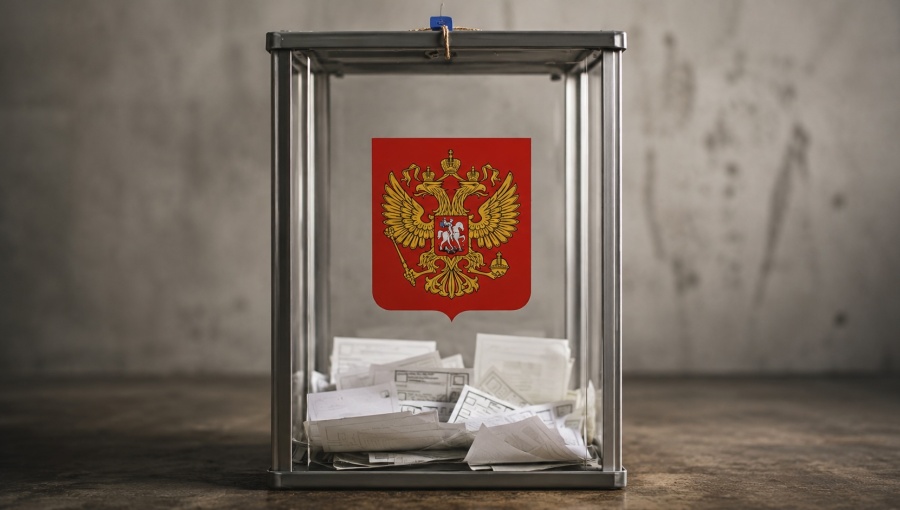
Russia goes to the polls on September 18-20 for its first State Duma elections since the full-scale invasion of Ukraine. All 450 seats in the lower house of the Federal Assembly are at stake, and the outcome — United Russia retaining its overwhelming majority — is not seriously in doubt. The real interest lies elsewhere: in what the shifting tectonic plates of Russian domestic politics reveal about the health of a regime that is simultaneously fighting a grinding war, managing a faltering economy and suppressing its own citizens' access to the internet.

The most striking development of the pre-election period is the emergence of the New People party as Russia's second most popular political force, overtaking the Communist Party — a shift that illuminates both the sources of public discontent and the Kremlin's increasingly anxious attempts to channel it and parse the electorate into the focused subsections.

Internet blackouts, rising prices and economic stagnation have created a pool of anger that someone in Russia's managed democracy had to absorb. The Kremlin's choice of vessel tells you something important about what Moscow's political managers fear.

The mood: souring, not revolutionary

Putin ended 2025 with approval ratings that remained high by international standards — around 74% in VTsIOM surveys. By spring 2026, that number had slid to 65.6%, its lowest level since the start of the war. The trigger was not the front lines or the economy alone, but something more visceral: the internet. Mobile communications blackouts during the Victory Day period, the blocking of WhatsApp and Telegram, and the clumsy rollout of a domestic replacement app called Max – basically a surveillance proxy for the FSB and everyone knows it – have infuriated ordinary Russians in a way that abstract macroeconomic data does not.

Russia's budget deficit ballooned to RUB4.6 trillion in the first quarter of 2026 — already 21% above the full-year target — as oil revenues collapsed before the Iran war's price boost. The economy is skirting stagnation. The Bank of Russia has kept interest rates sky high – currently 14.5% - to fight inflation, strangling the civilian economy. GDP growth has slowed to 1% and contracted by 0.3% in the first quarter. The war-driven boom definitively over.

Half of Russians now tell the independent Levada polling agency that the political situation is "tense," and 10% call it "critical." State pollster VTsIOM records Putin's approval at a seven-week consecutive low. None of this threatens the regime. But it shapes its choices as September approaches.

United Russia: The ruling party enters the campaign from a position of structural dominance but polling weakness. VTsIOM currently places it at around 27-34%, down sharply from its official 49.8% in the 2021 elections. As IntelliNews reported at the time, the vote was clearly fixed, but that was not enough to bring the people to the street as they did in very large numbers in 2011. Independent analysts estimating 13-16mn fraudulent votes were injected into the count. The party's real support in 2021, stripped of manipulation, was estimated at 31-35%. The trajectory since then has been downward.

The Kremlin's political managers face a dilemma. United Russia cannot campaign on the war — the September 2025 regional elections demonstrated that pro-war messaging actually depresses turnout and pushes voters toward other parties. Yet Putin's personal obsession with the conflict means the party cannot ignore it entirely. The compromise appears to be a campaign built on "development and stability" rhetoric, with plans to integrate veterans of the so-called special military operation as candidates — though the 2025 regional elections showed that war participants secured only 2.3-3.7% of mandates, far below the Kremlin's stated 10% target, according to Carnegie Endowment for International Peace.

Structurally, United Russia is a coalition of interest groups rather than an ideological party. The DumaBingo lobbying analysis project identifies clear factions representing Gazprom, Rostec, Russian Railways and regional bureaucracies, all operating within the party's formal structures. Russian Railways contractors alone donated RUB22bn rubles to the party in 2024. This heterogeneity is both the party's strength — it absorbs and manages elite interests — and its vulnerability, as internal conflicts routinely spill into regional politics. United Russia will win in September. The question is whether it will win with enough seats to maintain constitutional amendment capability.

New People: The most significant story of the 2026 election cycle is the rise of a party founded in March 2020 specifically as a Kremlin project — and which has now achieved a level of genuine popularity that its creators did not entirely intend. According to VTsIOM, New People has held second place in polls for four consecutive weeks with 13.4% support, up from 6.6% a year ago. The FOM polling agency, using face-to-face methodology, puts the figure at a more modest 6% — but even that represents dramatic growth for a party that entered the Duma in 2021 with barely 5.3% of the vote.

The mechanism of New People's rise is interesting. The party has opposed internet shutdowns and app blockings since 2022, when Russia blocked Instagram. Back then it was a niche position; now, with WhatsApp and Telegram blocked and Moscow's streets intermittently dark to mobile data like during the Victory Day parade last week, it is the central domestic political issue.

New People's ex-presidential candidate Vladislav Davankov pledged at the party's March 2026 conference that volunteers would use special backpacks to provide free Wi-Fi on the streets — a gesture that encapsulates perfectly the party's approach: channelling real discontent through theatrical opposition that never attacks the security services, never names the officials responsible, and never demands accountability.

The party is a project of Russia’s éminence grise and Yeltsin-era Prime Minister, Sergei Kiriyenko, now the deputy chief of staff of the presidential administration. He is in charge of domestic political policy and has long wanted to displace the Communist Party as Russia's second political force and replace it with something more manageable.

He appears to have succeeded. New People vote with the Kremlin 96.3% of the time in the Duma. Its opposition is performative, not structural. It belongs to the so-called “systemic opposition” which is effectively an extension of the Kremlin’s control over the Duma. But it is a performative opposition that resonates with urban, educated, internet-using Russians is exactly what the Kremlin needs to absorb discontent without allowing it to crystallise into a genuine opposition.

The party's weakness is its shallowness. Founded by Aleksei Nechayev as an extension of his Captains entrepreneurship programme, it has no real regional network, no ideology beyond vague modernising liberalism, and only a handful of recognisable names — Nechayev himself, former Yakutsk mayor Sardana Avksentyeva and Davankov. In many regional elections, its candidate lists are filled with random figures or apparatchiks who could just as easily run for United Russia. Its surge in support is real but fragile — built on a single issue. If internet restrictions ease, the surge may evaporate.

Communist Party of the Russian Federation (KPRF): The Communists enter September as a giant in decline and the weakest position they have occupied since the early 1990s. In the wild days of Yeltsin’s regime, the KPRF were a real force to be reckoned with and regularly defied the president with a large fraction in the Duma. After Russian President Vladimir Putin took over in 2000 he purged the Duma and starved of any real influence the Communist party has atrophied into a shadow of its former self. The leaders should have retired and given over control to the younger generation of more progressive members who have genuine popular appeal, doing well in regional elections when they are allowed to stand, but the old guard has clung to their cushy jobs instead and let the party stagnate.

In 2021 the KPRF officially won 18.9% and 57 seats on the party list — a result that even with significant fraud correction probably reflected genuine support of 25-27%, inflated by Alexei Navalny's Smart Voting project which directed protest voters toward the communist candidates by default as they were the only real challengers to the incumbents.

That coalition has collapsed. Navalny is dead. The urban liberal protest vote that briefly aligned with the Communists has nowhere to go. And the party's leadership — veteran leader Gennady Zyuganov, now in his 80s — gave unconditional support to the war in February 2022, alienating precisely the younger voters who had lent the party credibility.

The KPRF has opposed internet restrictions, but the position sits awkwardly alongside its pro-war, Stalinist image. In the 2025 regional elections, the party lost approximately 11 percentage points compared to 2021 results in the same areas. Its faction in Krasnodar shrunk from six city council deputies to one. The Communists failed to enter the parliaments of Vladimir and Lipetsk, and lost all seats in Magadan and Syktyvkar. Current VTsIOM polling puts the party at 8-10%. Zyuganov, Bondarenko and Grudinin still make the Levada list of most-mentioned politicians after Putin — testimony to the party's residual name recognition even as its electoral base erodes.

The Liberal Democratic Party of Russia (LDPR): the death of the party’s charismatic founder and leader Vladimir Zhirinovsky in April 2022 deprived Russia's oldest parliamentary party of the one resource it had in abundance: personality. His successor, Leonid Slutsky, is a competent operator without charisma who has responded to his inheritance by purging the party — removing notable figures Yaroslav Nilov, Vasily Vlasov and Alexei Didenko from party leadership in a series of moves that weakened the organisation's regional presence without strengthening central control. The party failed to protect prominent figures from law enforcement: former popular Khabarovsk governor Sergei Furgal was arrested in 2020, and Slutsky's response — sending a figure locals immediately dubbed "Zhirinovsky's bathhouse attendant" as replacement — surrendered whatever political capital the arrest had created.

The LDPR has experimented with anti-immigrant rhetoric ahead of September, permitted by the Kremlin as a way of pulling votes from the Communists. The tactic delivered second place in seven of eleven regional assembly votes in 2025. In national polls the party currently sits at around 10-13% — potentially ahead of the Communists in some surveys. Whether it can consolidate that position through September depends on whether Slutsky can campaign effectively or will be overshadowed by Nechayev's media machine.

A Just Russia: Twenty years of existence and four image reinventions have left Russia's social-democratic party in a state of institutional exhaustion. Setting out as a genuine liberal pseudo-institutional non-systemic opposition party, its most recent transformation — from moderately left-wing to ultra-patriotic — alienated a chunk of its regional base, including an entire faction that departed the St Petersburg Legislative Assembly rather than be associated with Yevgeny Prigozhin's imagery the late head of the Wagner PCM, which the party latched onto. Senior figures have departed or been arrested; the case of Vadim Belousov, whose company Makfa, Russia’s biggest pasta-maker and a global giant, was effectively nationalised into the orbit of the former head of the FSB, Dmitry Patrushev's associates, illustrates how exposure to power in Putin's Russia can end for those who lose their protection.

The party's ratings across all polling agencies hover near the 5% threshold needed to get into the Duma at all. Its survival in September depends substantially on the Kremlin's goodwill — whether the presidential administration chooses to allow it to cross the threshold, or permits it to fall below and lose its parliamentary presence entirely. Sergei Mironov has led the party through every iteration of its existence. The question is whether he leads it through one more.

Managed democracy, but anxious

Russia's September elections will produce a Duma dominated by United Russia and populated by compliant opposition parties. Voting will be held across three days — September 18-20 — including in occupied Ukrainian territories, where 11 new single-member constituencies have been created. Electronic voting will expand, reducing transparency. Golos, Russia's independent electoral monitoring organisation, will be systematically blocked. The result will be predetermined in its broad outlines.

What the pre-election period has revealed is a Kremlin that is managing discontent with increasing anxiety, deploying new instruments — New People, anti-immigrant rhetoric, leaked internal warnings to Putin via state media — precisely because the old ones are less reliable than they were. A United Russia that once absorbed everything now needs help. The party that once defined the system is becoming one of its components. Whether that is a sign of maturity or fragility in Russia's managed democracy is the question September will not fully answer — but will sharpen considerably.

Saturday, May 16, 2026

 Thousands march in London for far-right, pro-Palestine protests


Police are patrolling the streets of London as thousands of protesters march in the UK capital on Saturday for two major demonstrations, the annual march to commemorate the Palestinian Nakba and a rally staged by British far-right activist Tommy Robinson.


Issued on: 16/05/2026 -
By: FRANCE 24 

Police forces stand in front of the far right Unite the Kingdom march in London on May 16, 2026. © Kirsty Wigglesworth, AP

Thousands of people began rallying in London Saturday at a march organised by far-right activist Tommy Robinson and a counter-demonstration fused with a pro-Palestinian protest, amid a huge police presence.

London's Metropolitan Police said ahead of the duelling events that it would mount one of its largest operations in recent years, as the British capital also hosts the FA Cup Final.

The force was set to deploy 4,000 officers – alongside horses, dogs, drones and helicopters – to manage Robinson's so-called "Unite the Kingdom" march and the rival rally marking Nakba Day.

That commemorates the 1948 displacement of Palestinians during the creation of Israel. It will combine with an anti-fascism march organised by the Stand Up to Racism group.


UK: Far-right rally meets pro-palestine counter-protest in London
© France 24
04:10


The Met police estimated 30,000 people would attend that event, setting off from west London, while 50,000 would be at the "Unite the Kingdom" march starting from Holborn in the heart of the capital.

Natasha, 44, was among those who had travelled in for Robinson's rally, wearing a bucket hat in the colours of Britain's Union Jack and draped in the flag.

"It's nice to be around my own culture," she told AFP near its start-point, calling the event "patriotic" and insisting "there's nothing racist about it".

Union Jack-wielding Justin, 56, from Essex, who declined to give his last name, echoed the sentiment. He said attendees were protesting "a whole load of stuff".

"Obviously immigration is a big part of it," he noted.


'Christian values'


Across London, Simon Ralls, 62, from Nottingham in central England, had turned out for the combined pro-Palestine and Stand Up to Racism event.

"The right (wing) are emboldened – we're here to try and counter that, make sure people aren't ignorant," he told AFP ahead of marching into the city centre.

Robinson – whose real name Stephen Yaxley-Lennon – is a former football hooligan turned anti-Islam activist whose profile has soared in recent years, in particular online.

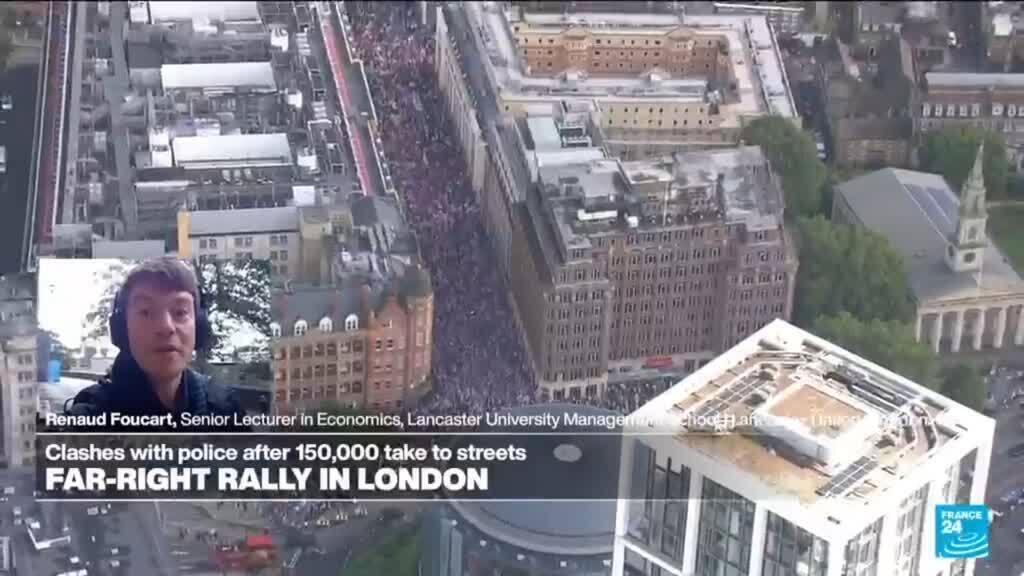
Last September, he drew up to 150,000 people into central London for a similarly themed rally proclaiming "national unity, free speech and Christian values" – an unprecedented turnout for an event organised by a far-right figure.

He has tapped into growing public anger over tens of thousands of migrants crossing the English Channel each year in small boats, wider immigration policies, alleged free speech curbs and other issues.

X owner Elon Musk addressed that gathering via video-link. The rally shocked mainstream Britain for its scale and raw messaging, as well as clashes between some participants and police which injured dozens of officers.

The Met has imposed various conditions on Saturday's two rallies, over their routes and timings, in a bid to keep rival attendees apart.

The force, which estimates the operation will cost £4.5 million ($6 million), warned it would adopt "a zero-tolerance approach".

That includes for the first time making organisers legally responsible for ensuring invited speakers do not break hate speech laws.

Officers arrested two men Saturday morning arriving for the Robinson rally who were wanted on suspicion of grievous bodily harm following an incident in Birmingham, central England, when "a man was run over". No further details were provided.

'Hatred and division'

Prime Minister Keir Starmer warned Friday that "anyone who sets out to wreak havoc on our streets, to intimidate or threaten anyone ... can expect to face the full force of the law".

He accused the organisers of Robinson's rally of "peddling hatred and division".
'Violence, hoolig
anism, fraud: Far-right populist Nigel Farage regards Tommy Robinson as too fringe'

© France 24
08:06


Robinson has urged his attendees not to wear masks or drink excessive alcohol, and to be "peaceful and courteous".

Police have voiced fears about football hooligan groups which have previously supported Robinson showing up.

Meanwhile the FA Cup Final between Chelsea and Manchester City kicking off at 4 pm (1500 GMT) could strain the policing operation.

The Met has said live facial recognition would be used for the first time to police a protest.

Meanwhile, the government blocked 11 "foreign far-right agitators" from entering Britain for Robinson's rally.

They include US-based "extremist" Valentina Gomez, who the government said is "known for using inflammatory and dehumanising rhetoric about Muslim communities".

Saturday's rival demonstrations follow a spate of violent attacks targeting London's Jewish community, with some blaming instances of hate speech at pro-Palestinian marches for helping to fuel antisemitism.

The UK's terrorism threat level was raised two weeks ago to the second-highest level of "severe", with security officials citing the "broader Islamist and extreme right-wing terrorist threat".

(FRANCE 24 with AFP)


MEP and far-right influencers barred from UK rally: Who are they and what was the reason?

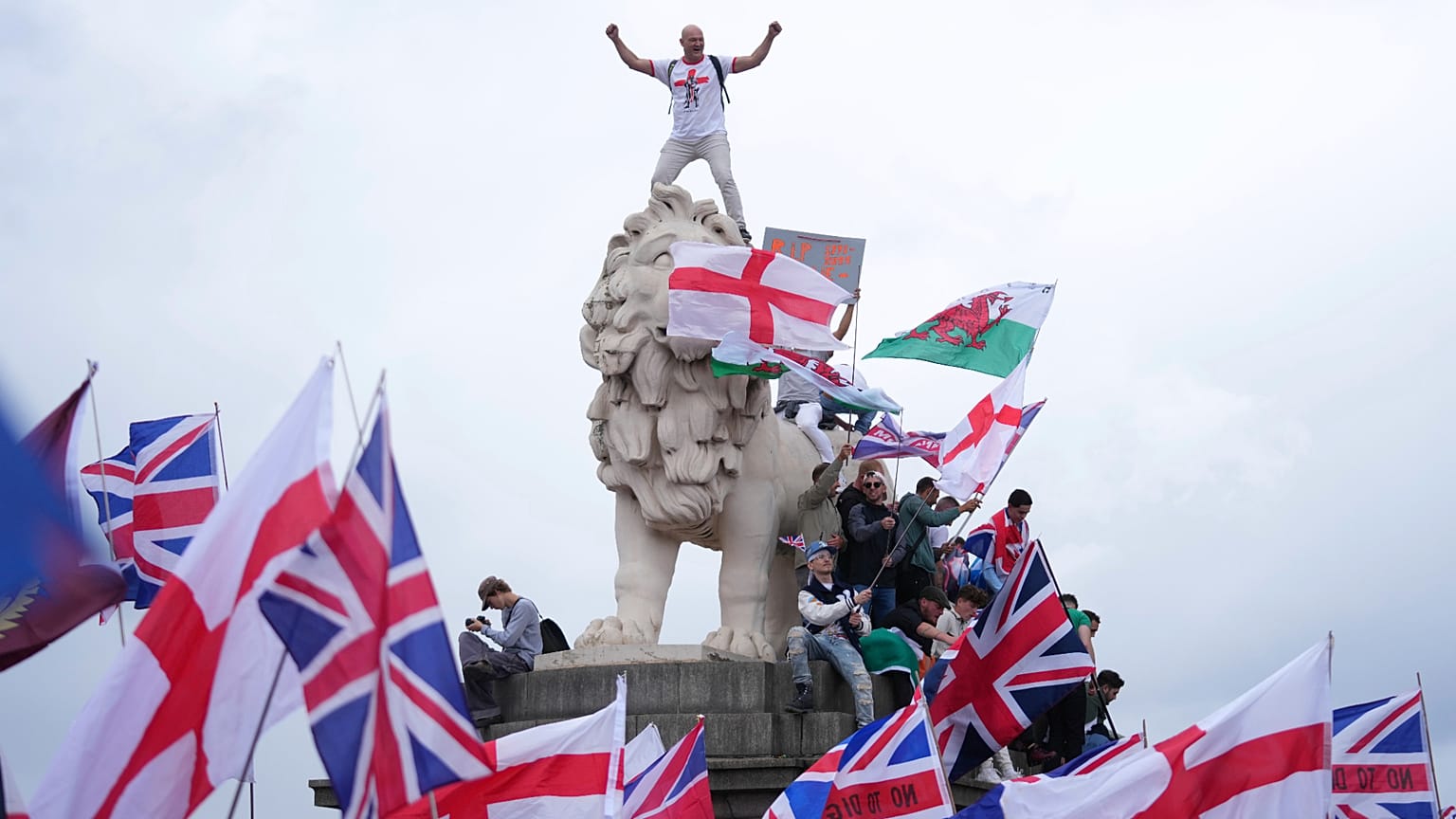
Demonstrator stands on head of lion on the side of the Westminster Bridge, during a Tommy Robinson-led Unite the Kingdom march and rally in London, 13 September 2025.
Copyright AP Photo


By Estelle Nilsson-Julien
Published on 

The UK government barred seven indivdiuals from entering the UK, stating that their presence is "not conducive to the public good". But on what grounds and what does this decision mean in practice?

At least seven individuals — including multiple figures with ties to Europe's far-right — have been barred from attending a rally organised by far-right activist Tommy Robinson in central London on 16 May.

A number of those barred by British authorities were set to address crowds at the "Unite the Kingdom" march, but the Home Office declined their electronic travel authorisation (ETA), a system brought in earlier in 2026 that, once granted, allows visa-exempt foreign nationals to visit the UK multiple times over a period of two years.

Shabana Mahmood, the home secretary, said that they were banned because their presence in the UK is "not conducive to the public good".

Eva Vlaardingerbroek and Ada Lluch, influencers and commentators from the Netherlands and Spain, respectively, as well as Flemish MP Filip Dewinter and Polish MEP Dominik Tarczyński, shared news of their reported bans on social media, along with screenshots notifying them of the decisions.

The Metropolitan police has warned organisers of the rally that they will be held responsible if speakers spread hate speech during the event, which attracted more than 100,000 attendees last year and led to 25 arrests and two dozen injured officers.

According to the force, the 2026 event is set to mark "one of the busiest days for policing in London in recent years", coinciding with a demonstration in solidarity with the Palestinian Nakba Day and the FA Cup Final at Wembley Stadium.

A heated response

Several US figures say they have also been denied entry to the UK, including commentator Joey Mannarino and MAGA influencer Valentina Gomez, who spoke at last year's rally.

While British Prime Minister Keir Starmer did not reveal the identity of the individuals who had been banned, he described them as "far-right agitators."

In a statement shared on 15 May, he stated that his government would not stand in the way of peaceful protest, but that it would "ban those coming into the UK" to stir up violence.

In another speech made on 11 May, he said, "We will not allow people to come to the UK, threaten our communities, and spread hate on our streets."

The decision to ban speakers from attending this year's edition has paved the way to online speculation and debate, with many arguing that the move is an affront to freedom of speech and an individual's right to criticise migration policies.

Taking to X, Tommy Robinson, whose real name is Stephen Yaxley-Lennon and who has multiple criminal convictions, stated that the UK government was "banning Americans en masse" from entry to the country.

Robinson contrasted the ban with the fact that "thousands" of so-called "invaders" are "chaperoned in every week and put up in hotels!", making an inflammatory reference to immigrants and asylum seekers.

He has long been a critic of Starmer's immigration policy and has repeatedly spread false claims and conspiracy theories about migrants and Muslims in the UK.

Who are the banned individuals and what have they said?

Tarczyński, an MEP from the European Conservatives and Reformists Group, has vowed to "sue" Keir Starmer in response to his ban should the prime minister ever leave office.

"Not the government, not the Home Office, but Starmer personally", he said on X on 12 May.

Tarczyński is known for his staunch anti-immigration stance as well as controversial statements, including that Poland should not take in a single Muslim immigrant.

In 2019, he stated, "We don't want Poland being taken over by Muslims, Buddhists, or someone else…"

"For me, multicultural society, it’s not a value," he added. "Christian culture, Roman law, Greek philosophers, these are the virtues for us."

Ada Lluch is a 26-year-old Catalan activist and influencer, who has attracted controversy for nationalist and anti-immigration views, having previously made controversial statements about Spain being "better off" under Spanish dictator Francisco Franco in posts shared on X in 2024, as reported by El País.

Following the ban, Lluch wrote on X: "One of the reasons Keir Starmer said he banned us from entering the UK is because we don't bring solutions to the problems. I think the solution is obvious: WE WANT REMIGRATION. AND WE WANT IT NOW!"

"Remigration" is a slogan frequently employed by parts of Europe's far-right. Proponents say that it's a form of immigration control in response to rising migration levels, but critics, including human rights groups and legal experts, have described it as discriminatory and racist.

The US-based non-profit Global Project Against Hate and Extremism describes it as a "white supremacist policy concept" that calls for the mass forced removal of immigrants, refugees, and their descendants based on race, ethnicity, culture, being perceived as "non-white," or a failure to "assimilate".

The concept has been linked by researchers to the far-right "Great Replacement" theory, which suggests that Western civilisation is threatened with an irreversible decline, due to falling birth rates and an influx of migrants from the Middle East and North Africa.

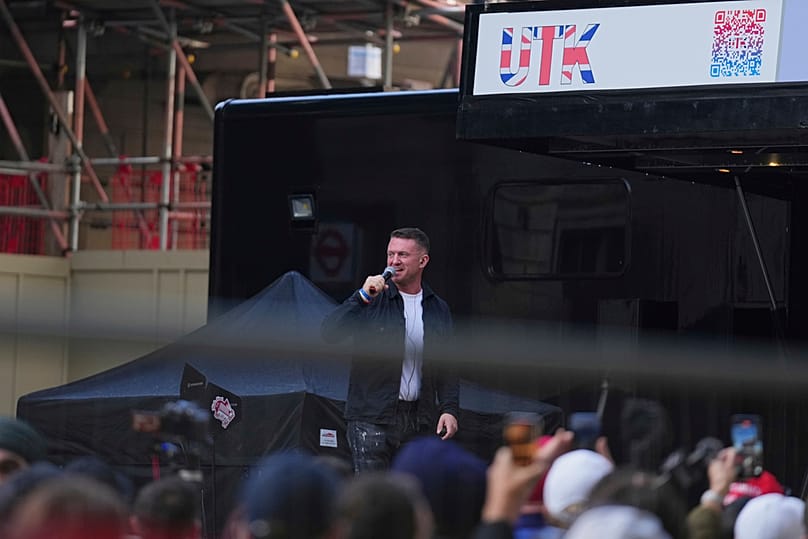
Tommy Robinson speaks during the Unite the Kingdom march and rally, London, 13 September 2025 Joanna Chan/Copyright 2025 The AP. All rights reserved


Dutch political commentator Eva Vlaardingerbroek has previously declared: "They are demanding the sacrifice of our children on the altar of mass migration. Let's not beat about the bush — this is the rape, replacement and murder of our people … Remigration is possible, and it’s up to us to make it happen."

Vlaardingerbroek was first notified that her ETA had been withdrawn in January, days after she accused Starmer of allowing "the ongoing rape and killing of British girls by migrant rape gangs".

Flemish MP Filip Dewinter, who qualified Starmer's government as "communist", was embroiled in controversy in 2015, after he shared an X post which stated that the word "racist" was no longer an insult but had become a "title of honour."

Dewinter included the hashtag #ikbenracistendaarbenikfierop in the post, which translates as "I am a racist and proud of it" — before deleting it.

In her speech made at last year's event, 26-year-old Colombian-American influencer Valentina Gomez told the crowd that "rapist Muslims" were "taking over" the UK.

"England, they took your guns, they took your swords, and they raped your women," she said. "You have nothing else to lose, but there's still hope. You are still the majority. So you either fight for this nation or you let all of these rapist Muslims and corrupt politicians take over."

Gomez has repeatedly made anti-Muslim statements, sharing an X video depicting her burning a Quran in August 2025, stating, "your daughters will be raped, and your sons beheaded — unless we put an end to Islam once and for all."

Why have the far-right commentators been banned?

While the Home Office did not confirm why any of the individuals have been banned from the UK, we can look at the country's existing rules to see what kind of behaviour constitutes a refusal.

The UK government can refuse entry for a wide range of reasons, from past criminal convictions, visa violations or, as in this instance, due to their presence not being "conducive to the public good." This was the reason cited by Home Secretary Mahmood.

Contrary to online claims, refusing entry on these grounds is not exclusive to Starmer's current Labour government.

According to a research briefing published by the House of Commons library, past successive Conservative governments have predominantly used visa bans to bar extremists and "hate preachers" from entry, with a focus on Islamist figures accused of supporting terrorism or sectarian violence.

However, other kinds of individuals were also banned under the Conservatives. For instance, in 2013, the UK's then-home secretary, Theresa May, banned two US bloggers, Pamela Geller and Robert Spencer, from entering the country, citing their stance against Islam.

Between May 2010 and December 2022, successive home secretaries under the Conservatives ordered the exclusion of 369 people from the UK, averaging approximately 30 cases per year, according to annual reports on the use of anti-terrorism powers.

Therefore, claims portraying the policy as unique to Starmer's Labour government — which came into power in July 2024 — are misleading, as such measures were already in place under previous Conservative prime ministers.

According to the "Counter-terrorism disruptive powers report", 15 individuals were excluded from the UK in 2024, because their presence in the UK was considered not conducive to the public good.

Across social media, those opposing the visa ban have claimed that freedom of speech is no longer protected in the UK.

However, UK law stipulates that freedom of speech is protected under Article 10 of the Human Rights Act 1998, which incorporates the European Convention on Human Rights. Nevertheless, it also explicitly allows governments to limit free speech to prevent crime or for national security matters.

The 1986 Public Order Act, amended by the Racial and Religious Hatred Act 2006, criminalises rhetoric which incites racial or religious hatred. This includes using "threatening" words or behaviour, or distributing material which intends to stir up religious hatred.

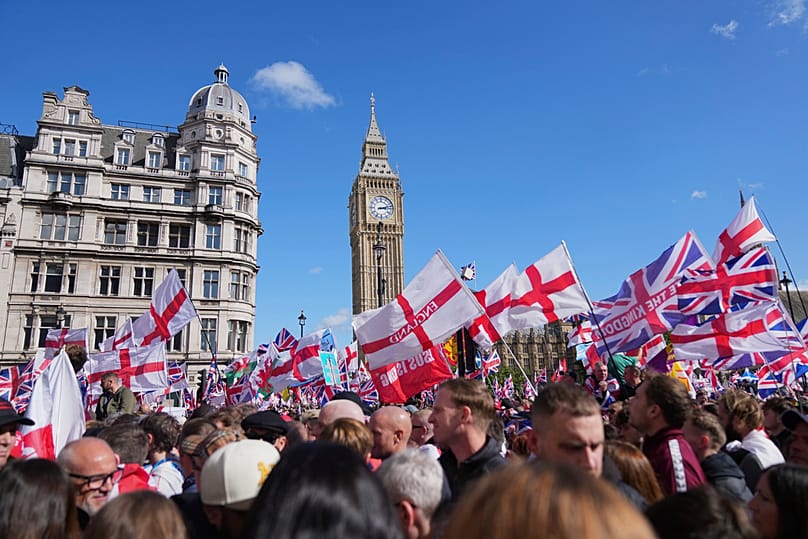
People demonstrate during the Tommy Robinson-led Unite the Kingdom march and rally, London, 13 September 2025 Joanna Chan/Copyright 2025 The AP. All rights reserved

Tommy Robinson, a divisive figure

While Robinson has taken to X to urge participants at the 2026 rally to engage in peaceful protest, he has previously faced repeated criticism for his rhetoric, notably using the term "invaders" to refer to asylum seekers

Separately, he has spread misinformation about migrant communities, for instance, sharing false claims about the perpetrator of the July 2024 Southport attacks.

He alleged that the attacker who killed three girls in a Taylor Swift-themed dance class was a Muslim asylum seeker who had just arrived in the UK on a small boat.

In reality, the 17-year-old perpetrator was born in Cardiff, Wales, to Rwandan parents and had no known connection to Islam. False claims about the suspect helped fuel mass rioting and marked the largest flare-up in violence in England since the 2011 riots.

At last year's edition of the rally, a video address by tech billionaire Elon Musk, who has also routinely amplified hardline criticism of Starmer's stance on immigration, was condemned by Downing Street, after he told the crowd "violence is coming" and "you either fight back or you die".

Successive British governments have repeatedly struggled to reduce net migration, but the tide appears to be turning: during Labour's first year in office, migration to the UK fell by more than two-thirds in the year ending June 2025 — the lowest annual figure since 2021, according to the Office for National Statistics (ONS).

The UK's 204,000 net migration figure sharply contrasts with the recorded peak of 944,000 in the year ending March 2023, under the previous Conservative government. This roughly 80% fall was mainly driven by fewer arrivals for work and study reasons, according to the ONS.

A 2025 study by the Migration Observatory at the University of Oxford states that it's difficult to compare conviction and incarceration rates among British and non-British citizens because there are no reliable statistics on the size of the population.

However, the available statistics do reveal some trends. For example, young adults are more likely to commit crimes regardless of nationality; when controlled for age or sex, non-UK citizens are underrepresented in the prison population; and non-Brits are overrepresented among offenders for drug offences, but underrepresented for robbery or physical violence, according to the study.


BEANCOUNTERS/comptable

Louvre security concerns ‘pushed aside’ in favour of prestige projects

Security concerns at the Louvre were repeatedly sidelined in favour of prestige projects and rising visitor numbers, according to a parliamentary report to be presented on Thursday which calls for sweeping reforms in France’s museum sector.


Issued on: 14/05/2026 - 08:13
2 minReading time
Workers install iron window guards at the Galerie d'Apollon of the Louvre Museum on 23 December, 2025, a few weeks after thieves used a furniture lift to break into the museum. AFP - DIMITAR DILKOFF

By:RFI
ADVERTISING


The report, compiled by Green MP Alexis Corbière, follows a parliamentary inquiry launched after the spectacular burglary at the Louvre on 19 October last year, when royal jewels worth an estimated €88 million were stolen in broad daylight.

The theft exposed major security shortcomings at the museum, which attracts 9 million visitors a year.

The inquiry committee, chaired by conservative MP Alexandre Portier, conducted around 20 hearings and round-table discussions, interviewing more than 100 people and carrying out visits in France and abroad before finalising its conclusions.

Corbière argues in the report that “safety and security issues” were “pushed into the background, behind objectives of prestige and influence, which were treated as priorities”.


His findings echo earlier criticism from the French Court of Auditors and an administrative inquiry published in late 2025.

The report says warnings about outdated security systems had been raised in previous audits, including a 2017 review and another conducted by jeweller Van Cleef & Arpels in 2019.

Despite this, implementation of the Louvre’s security equipment master plan reportedly fell more than two years behind schedule.

French auditors slam Louvre bosses over lavish spending, weak security
More transparent leadership

A central theme of the report is the governance of major French cultural institutions. Corbière accuses the Ministry of Culture of failing to exercise proper oversight of management decisions at the Louvre and other museums.

According to the report, part of the problem lies in the current appointment system, under which museum directors are chosen by presidential decree from the Elysée Palace.

Corbière proposes replacing that system with a more transparent process in which directors would be elected by boards that include parliamentarians and other representatives.

He says such reforms would help move France away from what he describes as a culture of presidential “high-handedness”.

The criticism also extends to the tenure of former Louvre president Laurence Des Cars, who led the institution from 2021 until February this year, when she was replaced by Christophe Leribault.

Corbière insists that security issues were “not a priority” for the previous management, despite their denials.

Fourth suspected Louvre thief remanded as €88m jewels remain missing
Doubts over expansion

Among the report’s 40 recommendations is a call for increased funding for the museum security fund, established after the burglary by former culture minister Rachida Dati.

The fund currently has a budget of €30 million, but the report argues that more investment is needed to modernise security systems across France’s museums.

It also calls for a major expansion of the Ministry of Culture’s Security, Safety and Audit Unit, noting that only three full-time staff currently oversee security monitoring for more than 1,200 museums across the country.

Other proposals include recruiting more permanent security officers, reducing reliance on contract workers and improving pay in an effort to make the profession more attractive.

The report additionally questions the “Louvre Nouvelle Renaissance” project announced in 2025 by President Emmanuel Macron. This initiative includes major renovations and plans for a new dedicated space for the Mona Lisa, alongside ambitions to increase annual attendance to up to 15 million visitors.

Corbière argues that such targets risk worsening overcrowding and placing further strain on both the historic building and the museum staff.

Nonetheless, supporters of the inquiry say the scandal has created an opportunity to modernise the management and protection of France’s museums – with the Louvre now under intense pressure to restore public confidence.

(with newswires)

Ghana to repatriate 300 citizens after xenophobic incidents in South Africa

Ghana has announced it will evacuate 300 of its citizens from South Africa, following a spate of xenophobic incidents and protests against immigration across the country in recent weeks.


Issued on: 14/05/2026 - RFI


A march calling for stronger government action against illegal immigration in Pretoria, 28 April, 2026. © Ihsaan Haffejee / REUTERS

Ghana's Foreign Minister Samuel Okudzeto Ablakwa said on Tuesday that President John Dramani Mahama had approved the operation.

"These distressed Ghanaians had earlier complied with the Foreign Ministry's advisory and registered with our High Commission in Pretoria to be rescued, following the latest wave of xenophobic attacks," he wrote in a message posted on social media platform X (formerly Twitter).

"The Government of Ghana shall continue to safeguard the welfare of all Ghanaians home and abroad."

The decision comes after a series of anti-immigration protests in South Africa, as well as claims of assaults and intimidation against other African nationals across the country in recent weeks.

Nigeria and Ghana have both voiced concern over the situation.

The South African government, however, has rejected all claims of xenophobia.

"South Africans are not xenophobic," presidential spokesman Vincent Magwenya told reporters last week. "What you have is pockets of protest, which is permissible within our constitutional framework."


Magwenya said Africa needs to address conflict, instability and cases of "misgovernment" that were behind waves of migration across the continent.

At the end of last month, the government in Accra summoned South Africa's high commissioner in protest at several xenophobic incidents targeting Ghanaians.

South Africa is Africa's leading economy and home to more than 3 million foreigners – who male up 5 percent of the population.

But unemployment is running at 30 percent, fuelling tensions over migrant workers.

In the worst violence against immigrants in the last two decades, 62 people were killed in 2008. Violent clashes also erupted in 2015, 2016 and 2019.

(with AFP)