Tuesday, May 26, 2026

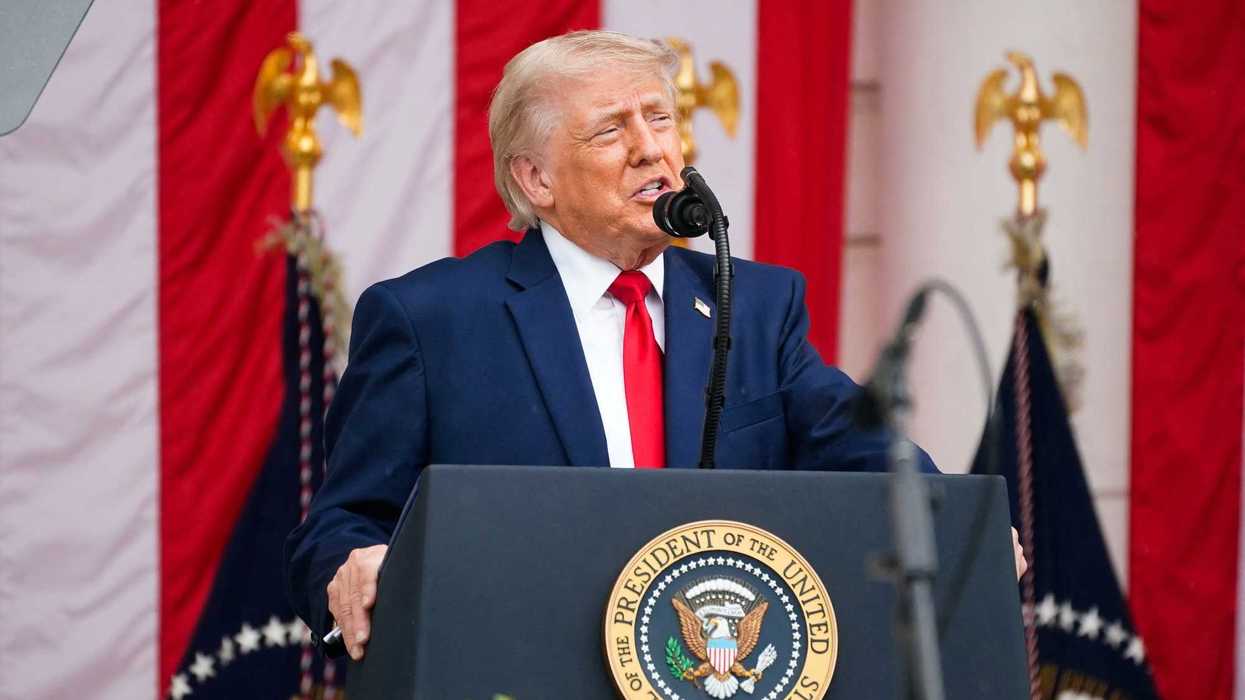
CEO has 'had enough' of Trump's big scheme to save the US economy

CEO of Florsheim, broke down how his company has suffered due to Trump’s tariffs.
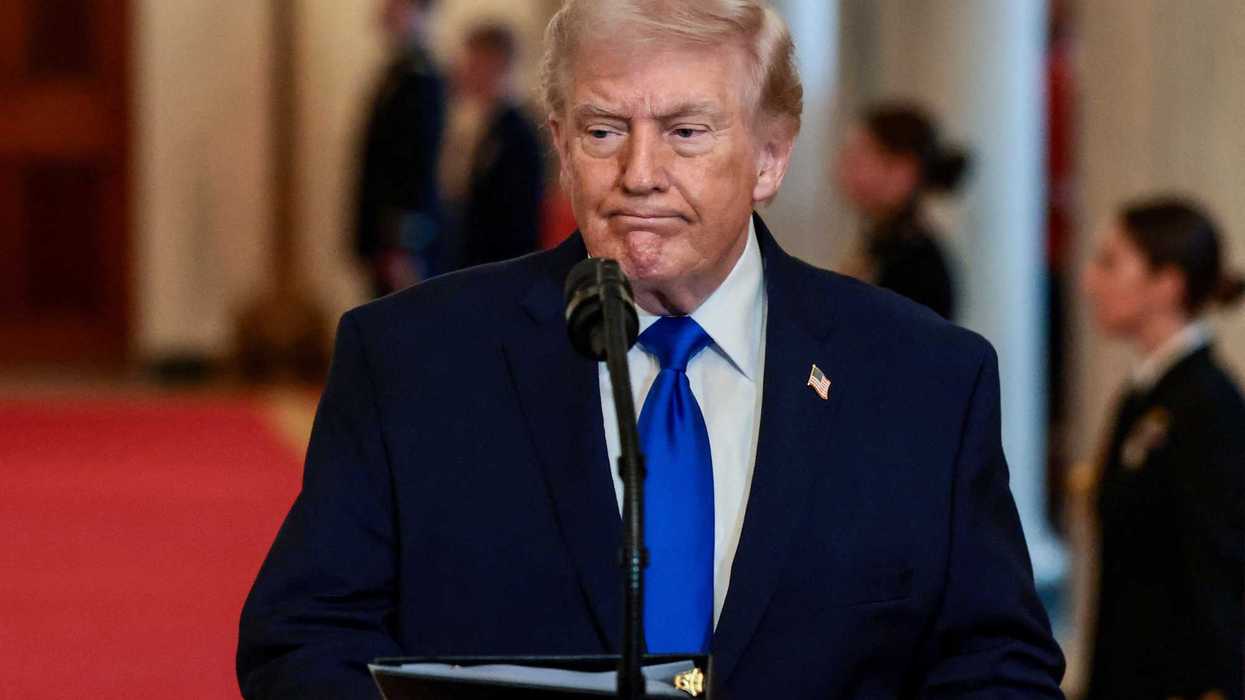


U.S. President Donald Trump attends an event to honor "Angel Families" who have lost family members to crimes committed by people in the country illegally, at the White House in Washington, D.C., U.S., February 23, 2026. REUTERS/Evelyn Hockstein

May 24, 2026
ALTERNET


President Donald Trump’s tariffs are wrecking America’s economy, a conservative wrote on Sunday — and it is doing so in the way he said they would help.

“Trump’s trade wars have jeopardized the jobs of the hundreds of Americans whom Weyco actually does employ, in those twenty-first-century jobs that the United States excels at creating,” The Bulwark’s Catherine Rampell wrote, referring to the footwear company that distributes Trump’s favorite Florsheim shoes. Last week Rampell interviewed the CEO of Florsheim, who broke down how his company has suffered due to Trump’s tariffs. After breaking down how tariffs on Weyco shoes “reached as high as 161 percent. Which adds up,” Rampell explained how Thomas Florsheim decided he had “had enough” when his company was hit by a surprise tariff bill of over $1 million last December, prompting his company to sue the Trump administration.

Now that Trump has been ordered by the courts to reimburse companies that were forced to pay illegal tariffs, Rampell analyzed the fallout — which has been quite messy.


“Most companies I’ve spoken with in recent weeks have indeed decided to claim what’s theirs,” Rampell wrote. “In part, they’re hoping for safety in numbers: More than 300,000 importers of record are eligible for refunds. Surely, they reason, Trump’s Customs and Border Protection agency can’t audit all of them.”

She added, “Plus, for some firms, filing for a refund felt like something of a civic victory—the triumph of the rule of law over an imperialistic president who had been arbitrarily swiping money from companies and consumers.” As one midsized fashion brand CEO confidentially told Rampell, “I would like [the] rule of law to win the day. Capitalism exists by the permission and structure of democracy. But there’s a reason I’m not speaking out publicly. Like, my board of directors would have a heart attack if I was speaking out publicly about it.”


By contrast, the Balkan plum brandy importer Stephen Chamberlin is applying for the refunds because he risks going out of business if he does not.

“The tariff threw us way into the red last year,” Chamberlin told Rampell. “Never even occurred to me not to apply. That $19,000 is just too important to us.”

Yet even though some of the companies illegally tariffed by Trump will get compensated, this does not mean the negative ramifications of Trump’s tariffs will dissipate too.


“The ongoing trade uncertainty—plus Iran war–related cost spikes, and various erratic market interventions from this president—suggest that the tariff refunds trickling out may be less of an economic tailwind than once seemed possible,” Rampell wrote. “Multiple companies told me they’re not planning to use their tariff rebates to expand or hire because they needed it to patch holes in their balance sheet. Or they planned to sock the funds away just in case their tariff rates surged again.”

She continued, “Ironically, this lack of clarity about the tariff landscape may also be discouraging firms from reshoring manufacturing—Trump’s stated goal—because they too don’t know what their costs will be.”

Other conservatives have also blasted Trump’s tariffs for their economic impact. Writing for The Wall Street Journal last month, former Sen. Phil Gramm (R-Texas) and Donald J. Boudreaux, a professor of economics at George Mason University argued that “if the economy was 'dead' in 2024, there's no evidence Mr. Trump's tariffs have brought it back to life,” adding that when he announced his tariffs “most economists predicted that the economy's performance would be negatively affected. Thus far data overwhelmingly indicate that is what has happened."


Additionally, they shared Rampell’s analysis that the tariffs have in no way helped revitalize manufacturing in the United States.

"The world isn't deglobalizing,” Gramm and Boudreaux explained. “It's reglobalizing around partners who commit to rules rather than those who wield tariffs like a club." To prove this, they cite how "in 2025 the pace of losing manufacturing jobs accelerated to 1.2%, faster than the decline in 2024 of 0.7%. In 2017 manufacturing jobs actually increased by 0.7%."

Mona Charen, another pundit for The Bulwark, warned in February that Trump’s tariffs may even contribute to Republican losses in the 2026 midterm elections.

“Voters are rarely able to connect policy to outcomes, but they have done so in the case of tariffs,” Charen wrote. “Back in 2024, Americans were about equally divided on the question of trade, with some favoring higher tariffs and roughly similar numbers opting for lower tariffs. Experience has changed their views.”
MAGA’s take on Mark Fuhrman’s death is quite different from everyone else’s


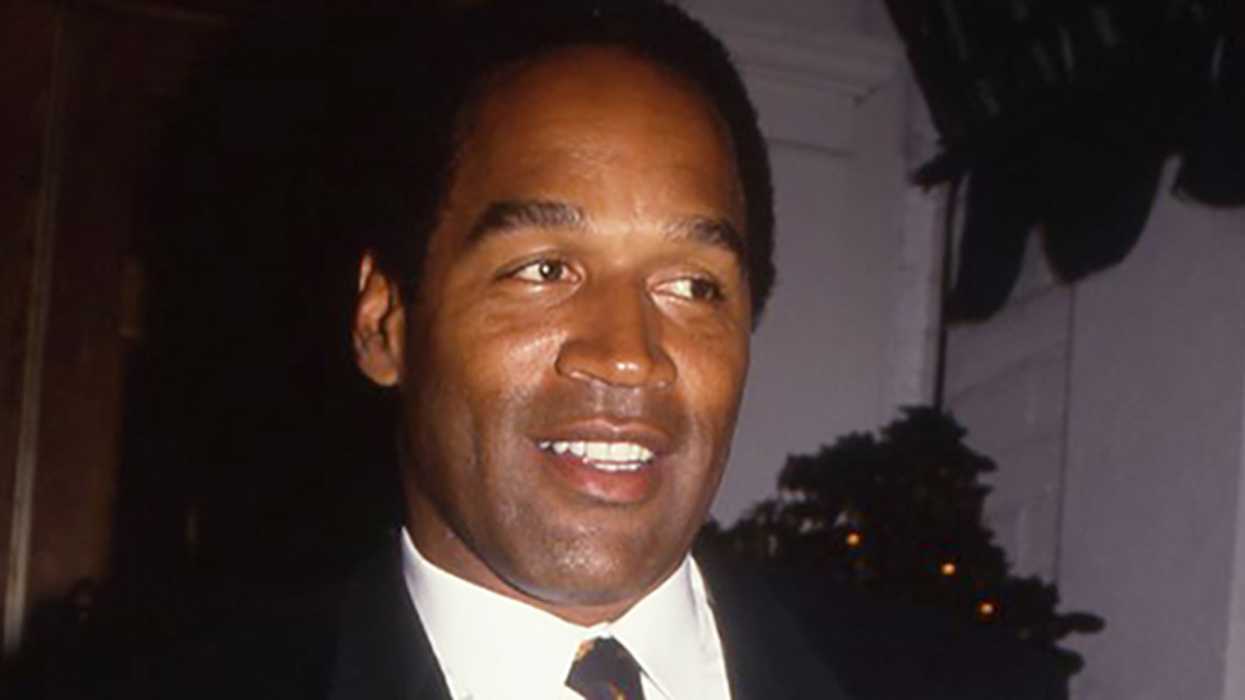
CIRCA 1990 - O.J. Simpson arriving at a celebrity event.
May 18, 2026
ALTERNET


Mark Fuhrman — the former Los Angeles Police Department detective who investigated alleged murderer OJ Simpson and was later accused of racist biases in that case — was reported on Monday to have died last week.

The reactions, at least on social media, appear to be split along political lines.

“Mark Fuhrman, the controversial LAPD detective whose testimony became a flashpoint in the O.J. Simpson trial, has passed away from an aggressive form of throat cancer at age 74,” tweeted retired Colorado detective Lisa J. Miller on Monday. “Years earlier, his fellow lead detective Philip Vannatter also died of complications from cancer. I had the genuine honor of meeting Phil and sharing lunch with him.”


Miller shared that Vannatter “was a kind, principled gentleman who spoke candidly about his deep disappointment in Fuhrman’s actions and the political circus that he felt undermined the case and contributed to Simpson’s not-guilty verdict.”

The former law enforcement officer concluded, “Two detectives, forever linked by history. May both rest in peace. #OJSimpson #MarkFuhrman”


Stand-up comedian Dave Landau echoed Miller’s criticism but with a much harsher framing.

“Mark Fuhrman passed away,” Landau posted. “His ashes will be spread unnecessarily all over a crime scene.”

Former Fox Sports and News Corp journalist Robert Lutesich criticized both Luhrman and Simpson in his commentary about Fuhrman’s passing.


“OJ got away with murder because of police & prosecutorial bungling - & crafty defense lawyering - but his luckiest break came when a predominantly Black jury heard Mark Fuhrman, who testified he'd never used the N-word, on tape using it,” Lutesich wrote. “He wasn't a good man; OJ wasn't, either.”

In contrast to more mainstream commentators, conservative and pro-Trump commentators have attempted to celebrate Fuhrman’s life in the wake of his death.

“R.I.P.,” wrote conservative commentator Michelle Malkin on Monday. “He was REDEEMED. Mark Fuhrman wrote the most powerful indictment of Oklahoma's death penalty machine, crime lab catastrophes, and wrongful convictions.”


Anthony Sabatini, a Florida Republican politician and past congressional candidate, expressed a similar view but more succinctly.

“RIP Mark Fuhrman—a great American & fighter for justice,” Sabatini posted.

A conservative commentator from the show Real America, Grant Stinchfield, went on in more detail about his thoughts on Fuhrman, who he personally knew.

“Mark Fuhrman dead at 74,” Stinchfield wrote. “I got to know and respect him. He solved a the cold case murder of Martha Moxley, that put Kennedy cousin Michael Skakel in prison. I spent every day with Mark during that trial in 2002. He will be missed.”


During the Simpson trial, Fuhrman was transformed from being a standard prosecution witness into a lightning rod for controversy after it was revealed he had used racial slurs and made racist comments in private. He also was accused of planting evidence in the Simpson trial, although that was never proved. Legal experts widely agreed that the controversies surrounding Fuhrman, which Simpson’s legal team discussed extensively, played a key role in the jury’s decision to acquit him.
LDS just launched the most 'quintessentially Mormon' rebuke of Trump


REUTERS/Nathan Howard

May 23, 2026
ALTERNET

On May 17 thousands of President Donald Trump’s faithful supporters (and many right-wing Christians), assembled in Washington, D.C. for “Rededicate 250”— a celebration that some critics called a “taxpayer funded white Christian nationalist rally.”

But while some were celebrating the festivities, at least one conservative Christian voice was noticeably absent from the White House-backed “jubilee” to rededicate America to God and conservative Christian values.

“No Latter-day Saint or ‘Mormon’ leaders were on the stage addressing the thousands in attendance,” said Religion News Service writer Jana Riess. “To me, that absence speaks volumes — especially since the majority of Latter-day Saints in the United States are Republicans.”


It’s not that the LDS Church hasn’t preached many of the same ideals that were being lauded “from the MAGA pulpit,” said Riess.

“The idea that America is a special nation, uniquely chosen by God for a role in salvation history? We Mormons have embraced that for a long time now. It’s in the Book of Mormon, one of our primary works of Scripture. … So, when Trump-endorsed evangelical leaders on Sunday doubled down on America’s holy destiny, that message would have resonated with many U.S. Latter-day Saints.”

But not only were Latter-day Saint leaders not part of Sunday’s Rededicate 250 exhibition, Riess said the church’s actions in the past year “have signaled a widening divide between its priorities and those of the second Trump administration.”

Just this week, for example, the church made a $25 million donation to UNICEF to feed mothers and children around the world. UNICEF’s executive director, Catherine Russell, said the donation arrived “at a critical time,” particularly because after taking office in early 2025, the Trump administration gutted the USAID program, reversing funds Congress had already allocated for food and healthcare.

“The result has been devastating,” said Riess. “According to UCLA’s Fielding School of Public Health, the sudden withdrawal of lifesaving help is expected to result in more than 14 million additional deaths in the next four years, more than 4 million of them of children under age 5.”

Additionally, Riess said the church gave $1.58 billion to relief efforts around the world in 2025 and sent truckloads of donations to 250 different food banks from coast to coast

“This pointed emphasis on charitable giving feels like the politest and most quintessentially Mormon ‘eff you’ ever to the administration,” said Riess, adding that “in an age of chaotic cruelty, where public figures who call themselves Christian have actually claimed that empathy is a sin, the church keeps calling for, and practicing, compassion.”
Swing state GOP in trouble as Trump’s trade war sinks vital industry

“The Canadians aren’t coming the way they were. Wonder why that is, huh?”


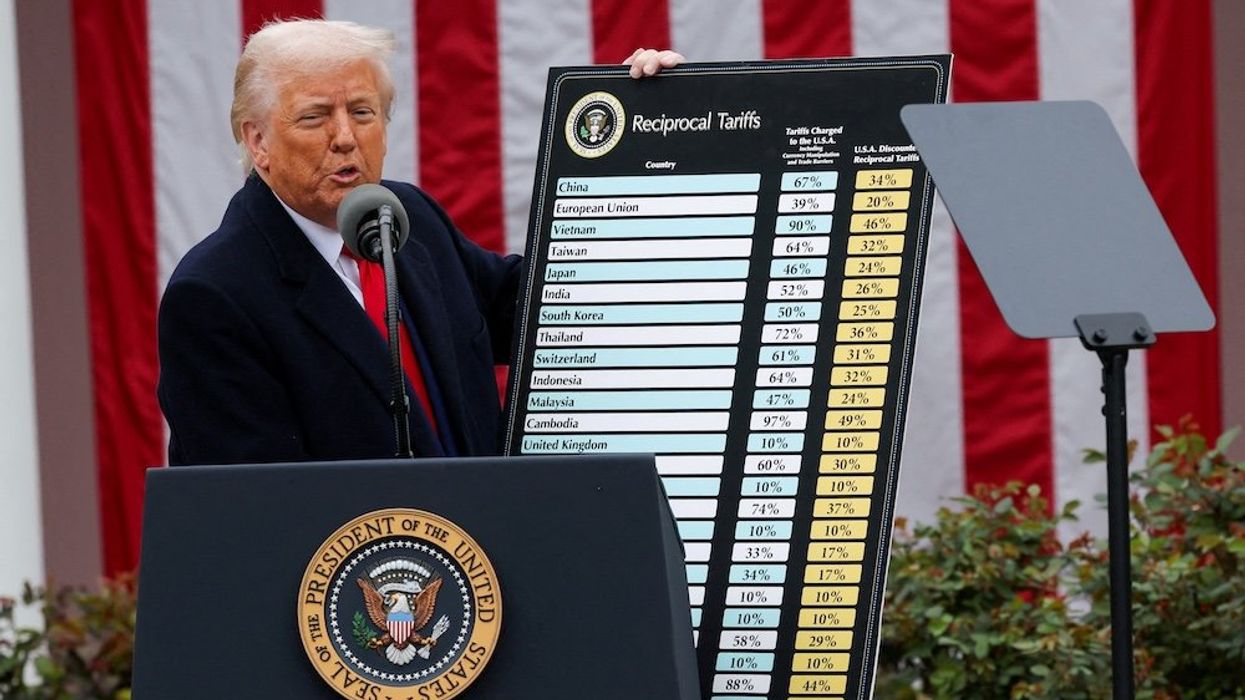
U.S. President Donald Trump delivers remarks on tariffs in the Rose Garden at the White House in Washington, D.C., U.S., April 2, 2025. REUTERS/Carlos Barria

May 25, 2026
 ALTERNET

Republicans in a major swing state are seeing their midterm hopes dry up, according to Politico, as President Donald Trump's contentious trade policies have threatened their most vital industry with near-extinction.

On Monday, Politico reported that Democrats in Nevada, a swing state that Trump won in 2024, see an opening to secure definitive wins over the GOP in the upcoming midterms, due to the disastrous fallout of the president's second-term policies. Both his aggressive tariff agenda and his threats about annexing their nation as a 51st American state have caused Canadians to sour on tourism to the U.S., doing major damage to the bottom lines in Las Vegas, Nevada's economic engine.

Heading into the midterms, the GOP had made Rep. Susie Lee, a Democrat whose district includes parts of Southern Las Vegas, a top target in the bid to potentially flip seats, but now, those plans are slipping away, just as the rest of the party is now preparing for a blue wave.


"Last year, as Trump levied tariffs on Canada, visits from Canadians — who account for up to half of Las Vegas’ foreign tourism — dropped off by 17 percent," Politico explained. "That played a large role in a 7.5 percent year-over-year decline in total tourist visits, making 2025 the worst non-pandemic year for Las Vegas since the city started tracking data in 1970. Now, as peak tourism season arrives in a battleground state where Republicans’ control of the House could be won or lost, Democrats are pushing voters to see the tourism slump as a direct impact of Trump’s levies."

“Trump instituted his reckless tariffs. In response, Canadians have literally boycotted traveling to America,” Lee said in a statement. “That has had a significant impact on our tourism.”


Trump won Lee's district in 2024 by a narrow margin, part of the only electoral victory he got from the state across his three presidential campaigns. That statistic had given the GOP hope about their odds for flipping her seat in 2026, and they remain somewhat hopeful, Politico explained, despite Trump's overwhelmingly negative impact on the Nevada economy. The state is considered particularly vulnerable to tourism declines, given that it has little else to fall back on.

"Unlike the upper Midwest or the Great Plains, Nevada doesn’t have a large manufacturing or agricultural sector jolted by the tariffs. Instead, the product most affected is the state’s Canadian visitors — who, on any given year, make up between 25 and 50 percent of Las Vegas’ foreign tourism market," the report added.

While others in the party and the White House have tried to downplay these issues, claiming that most of Vegas's tourists are American and attacking Democrats on certain affordability issues, Rep. Mark Amodei, a Nevada Republican, admitted that the president's poor communication efforts surrounding his tariffs bear significant responsibility for his state's perilous position.

“The Canadians aren’t coming the way they were. Wonder why that is, huh?” Amodei told Politico. “The communications for the tariff stuff was suboptimal.”

Meanwhile, Marty O’Donnell, the top GOP candidate likely to face Lee in November, has been supportive of Trump's tariff after some initial skepticism.

“I’m now a convert, because what I see Donald Trump doing with tariffs is not something I ever anticipated,” O’Donnell said. “He uses it as a negotiating tool in a way that I never anticipated, and I actually love what he’s doing.”
Vietnam vets tear apart Trump in court over 'disrespectful' DC arch


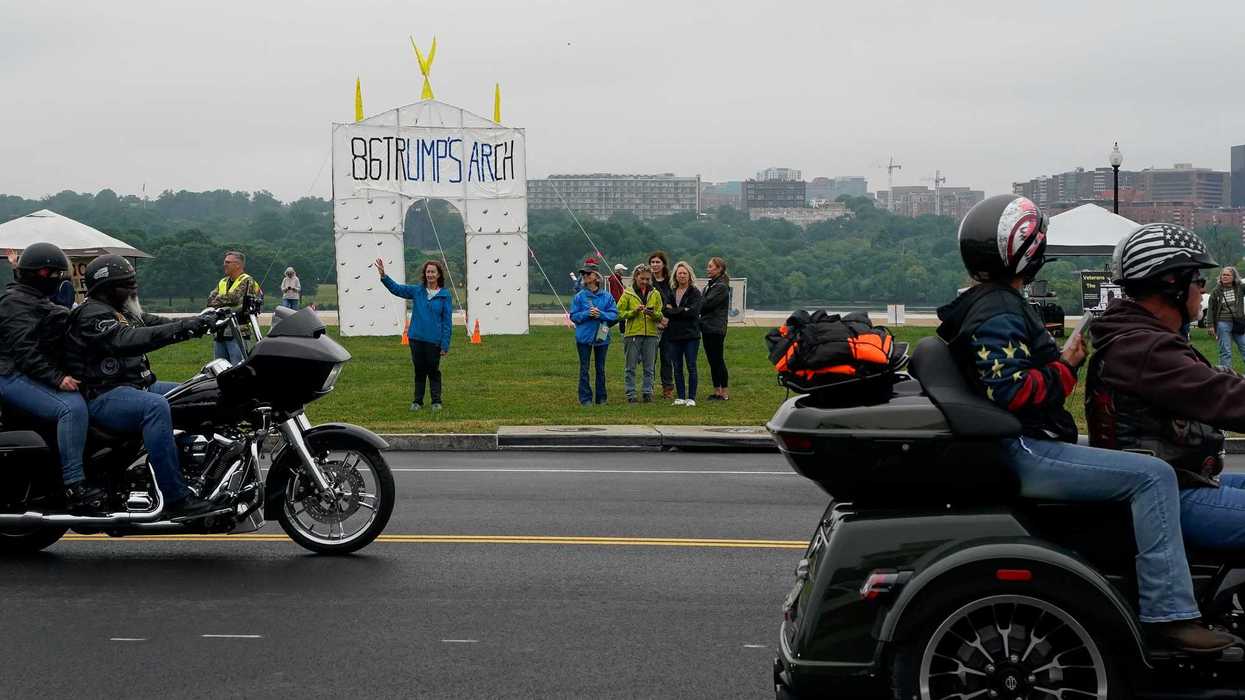
Demonstrators protesting against U.S. President Donald Trump's proposed 250-foot 'Triumphal Arch' near the Arlington Memorial Bridge in Washington, D.C., U.S., May 24, 2026. REUTERS/Elizabeth Frantz

May 25, 2026
ALTERNET


On Thursday, May 21, the U.S. Commission on Fine Arts approved the "triumphal arch" that President Donald Trump is proposing for Arlington, Virginia across the Potomac River from Washington, DC. The arch would appear at one end of the Arlington Memorial Bridge next to Arlington National Cemetery. But a group of Vietnam War veterans, according to CBS News, are voicing their opposition to the project.

Vietnam vets Shaun Byrnes and Jon Gundersen, along with other opponents of the arch, filed a lawsuit in February in the hope of preventing it from being constructed. And they are still expressing the reasons for their opposition.

CBS News reporters Arden Farhi and Jacob Rosen explain, "They argue the project has been rushed and the administration hasn't gotten proper congressional approval. The arch, they say, would disrupt the symbolic connection between the Lincoln Memorial and the Robert E. Lee Memorial — a carefully considered sightline meant to convey unity after the Civil War. According to recent renderings, the arch would be more than double the height of the Lincoln Memorial."


Gundersen, a retired U.S. Army Special Forces officer who is now 81, views the arch as disrespectful to the many veterans buried in Arlington National Cemetery — which was opened in 1864 during the American Civil War.

Gundersen told CBS News, "I think what we're doing is being loyal to the country, and loyalty can be measured in different ways."


The 83-year-old Byrnes, a U.S. Navy veteran who served two tours of duty in Vietnam, told CBS News, "It's more about the duty I feel towards my colleagues and friends who did not come home to stand up against this project, regardless of who's in charge."

Byrnes, a Navy veteran who served two tours in Vietnam, said, "I think it's just disrespectful to those that I served with who didn't come back, and then, of course, to all those who are lying in Arlington National Cemetery."

Farhi and Rosen note that Gundersen and Byrnes "view the arch not as a commemoration of America's 250th birthday, but as a monument to one man: Mr. Trump."
Gundersen told CBS News, "We know how authoritarian dictatorships work. There's no rule of law, there's no consent of the governed, and there's monuments for the leaders there…. Even if you took private donations, is that how we want to build monuments? To the oligarchs who give money for favors? We have fought for our country. We believe in this country, and we're going to continue to the end — and I think we can change things."

Veterans furious over Trump Memorial Day post that proves he 'hates the troops'


U.S. President Donald Trump during a Memorial Day event at Arlington National Cemetery, Arlington, Virginia, U.S., May 25, 2026. REUTERS/Nathan Howard

May 25, 2026  
ALTERNET

Early Monday morning, on Memorial Day 2026, President Donald Trump sent out a series of social media posts via his Truth Social platform — including one that used the holiday to attack Democrats. And some military veterans are calling out the attack as wildly inappropriate for Memorial Day.

Trump posted, "Happy Memorial Day to all, including the Dumocrats, who disrespect our Military and all of the tremendous success that it has had over the last year. God Bless those that have made the ultimate sacrifice. I love you all! President DONALD J. TRUMP."

One of the vets is Naveed Shah, who served in the U.S. Army during Operation Iraqi Freedom and is director of group Common Defense.

Shah didn't mince words, telling the Daily Beast that Trump has no business attacking his political opponents as unpatriotic in light of offensive things he said about veterans in the past.

Shah told the Daily Beast, "Trump has demonstrated over and over again that he hates the troops…. From calling the troops who died in WWI 'suckers and losers,' to mocking (Sen.) John McCain's five years as a POW, to attacking the Gold Star Khan family, all the way back to 2016 when he lied about donating to veterans' groups. He has never missed a chance to dishonor the people he was never brave enough to stand beside."

The Daily Beast's Leigh Kimmins notes that Trump, now 79, went to great lengths to avoid military service during the Vietnam War — only to insult McCain's military record during that conflict. The late Vietnam veteran McCain was tortured and abused by the Viet Cong during his time as a prisoner of war.

Kimmins explains, "Trump, who received five military deferments during the 1960s, four for academic reasons and one for bone spurs, started the national holiday by airing personal grievances, rather than issuing a heartfelt tribute to the nation's fallen…. During the 2016 presidential campaign, Trump drew immediate condemnation when he dismissed Sen. John McCain’s five-and-a-half years as a prisoner of war in Vietnam. 'He’s not a war hero,' Trump said. 'He's a war hero because he was captured. I like people who weren't captured.' Veterans' groups responded with fury."

The Daily Beast reporter continues, "That same campaign season, Trump attacked Khizr and Ghazala Khan — the Gold Star parents of U.S. Army Captain Humayun Khan, who was killed in Iraq in 2004 — after they criticized him at the Democratic National Convention. Trump publicly questioned why Ghazala Khan had remained silent during her husband’s speech, suggesting she had not been 'allowed' to speak. The backlash crossed party lines, with Republican senators and veterans' organizations among those condemning the remarks."

A Minute of Silence Isn’t Enough to Reflect on the US’s Death and Destruction

Let’s stop lying to ourselves on Memorial Day and instead try exploring the full truth about war in all its evil.
May 25, 2026

Members of the "Young Marines" youth program carry a large American flag during the National Memorial Day Parade on Constitution Avenue in Washington, D.C., on May 25, 2026.Brendan SMIALOWSKI / AFP via Getty Images

Thirty years ago, school kids touring Lafayette Park in Washington, D.C. were asked what Memorial Day meant to them. “That’s the day the pools open!” they responded, as if in a chorus. Their response rippled across the U.S. and created a bit of a moral panic among the patriotic and civil-minded. The following Memorial Day, Congress sought to put the “memorial” back into the holiday. “Taps,” a 24-note bugle call adopted by the U.S. military in the late 1800s for funerals, was played on radios and televisions throughout the United States at 3:00 pm. Those celebrating the day off paused, perhaps mid-hot dog bite, to reflect on fallen U.S. soldiers. After a minute of silence, Americans resumed their fun.

What does it mean to reflect on the soldiers who died while fighting in U.S. wars? Is such a thing possible? If it is, maybe we should start with the raw numbers.

Around 25,000 U.S. soldiers died in the War for Independence; roughly 5,600 soldiers died or were wounded as they ethnically cleansed Indigenous tribes between 1785 and 1898; approximately 20,000 died in the War of 1812, mostly of disease; 625,000 died on both sides of the Civil War; 2,446 died in the Spanish-American War; 4,200 U.S. soldiers died “annexing” the Philippines; 95 died in the Boxer Rebellion; 22 died and 70 were wounded in the Mexican Revolution; at least 86 died in the occupation of Haiti from 1915-1934; nearly 117,000 were killed in World War I; 424 U.S. troops died fighting the Bolsheviks in Russia from 1918-1920; 15,000 U.S. servicemembers lost their lives in the Mexican-American War; 405,000 were killed in World War II; more than 52,000 were killed in the Korean War; more than 58,000 were killed while committing what some call a genocide in Vietnam.

We’re a little less than halfway done with this list. It feels strange packing all this death into a single paragraph, so I imagine it feels strange reading through it quickly, too. Consider standing up and walking around for a few minutes before continuing. Or at least pausing for a minute to make an effort to “memorialize” the people behind these numbers, as the government would like us to on Memorial Day, if you believe such a thing is possible.

Fifteen U.S. soldiers were killed in Lebanon in 1958; four were killed in the Bay of Pigs invasion; eight were killed in Iran in 1980; 15 U.S. soldiers died in El Salvador’s Civil War from 1980 to 1992; 265 died in Beirut between 1982 and 1984; 39 died escorting oil tankers through the Persian Gulf and Strait of Hormuz from 1987-1988; 19 were killed in Grenada; two died in a bombing at the LaBelle Club in West Berlin in 1986; 1,231 were killed or wounded in first Gulf War from 1990 to 1991; 19 were killed aiding Kurdish refugees fleeing Iraq in 1991 in what was known as Operation Provide Comfort; 30 soldiers were killed in Somalia from 1992-1993; four died in Haiti between 1994 and 1995.

We’re almost done. Just 30 more years of American war history left.

One U.S. soldier was killed in combat operations in Bosnia-Herzegovina in 1996; 2 U.S. soldiers died in Kosovo in 1999; 3,923 U.S. troops were killed and 20,700 were wounded in Afghanistan since 2001; 36,395 were killed or wounded in the Iraq War; and 13 are said to have been killed (plus another 400+ wounded) in Donald Trump’s war on Iran (although many dispute these numbers).

Moreover, an untold number of Special Operation soldiers and CIA operatives died in clandestine occupations overthrowing governments or sabotaging this or that. The government won’t acknowledge these deaths. But we know they happen all the time.

By some estimates, U.S. is approaching 1.4 million soldiers killed and at least 1.5 million wounded in its 250-year history. That’s a total of 2.5 million U.S. soldiers killed or wounded, or 10,000 casualties a year on average over 250 years. Or, to put it another way, 500,000 fewer than the 3 million Vietnamese people who died — many of whom were burned alive by napalm — during the U.S. war on Vietnam. It’s also worth adding for context, that only 20 of this country’s 250-year history have been peaceful. Although, that number seems off too given the regularity of covert U.S. military operations and the frequency of drone strikes that occur without any media attention or official government acknowledgement. That’s a lot of death and destruction to reflect on during a minute of silence.

Can we “memorialize” death and destruction on such a scale? Numbers will never capture the horrors of war. Saying the words “ultimate sacrifice” over and over will not even remotely convey what it is like to die or be injured in war. What if we begin asking more specific questions about the wars and the nature of these deaths each Memorial Day?

For instance, how many soldiers died heroes saving their fellow soldiers’ lives, maybe jumping on a grenade? (There have been 3,552 Medal of Honor recipients, if that’s helpful.) How many soldiers died running out of or cowering in a trench in WWI? How many of the soldiers we are memorializing were burned alive by flame throwers? Shall we take a few minutes to think about the process of being burned alive? Aaron Bushnell, the U.S. servicemember who strongly opposed the genocide in Gaza, provided a window into the agony of such a death.

How many died begging for water, or for their mothers, with their guts hanging out after being struck by a bayonet in Korea? Up to 3 million Koreans were slaughtered by the U.S. between 1950 and 1953, if anyone is interested. How many U.S. soldiers were shot out of the sky in helicopters while in the process of killing civilians in Vietnam? Two million of the 3 million killed in Vietnam were civilians. Are we supposed to memorialize soldiers that died killing children in the same way?

How many officers were shot in the back by their own men during the invasion and occupation of the Philippines? How many died helping liberate Nazi death camps in WWII? How many soldiers were torn to shreds by cannonballs while defending slavery or fighting to abolish it in the Civil War? How many Black soldiers lost their lives fighting for the U.S. only to be buried in a segregated cemetery back home? How many died in acts of “friendly fire” — or worse, had their deaths covered up at the highest levels of government, as the Bush administration did with former NFL player Pat Tillman? How many soldiers lay dying while feelings of betrayal flooded their minds, knowing that they were taking their last breath to control Iraq’s oil in the service of making billionaires even richer? Surely at least a few soldiers had to consider that, given the blatant illegality of the war in Iraq. How many soldiers died looking up in the sky in Grenada, Haiti, the Dominican Republic, or El Salvador knowing they were meddling in the affairs of countries they had no business being in?

Consider Tomas Young’s death, which came a decade after he was shot and paralyzed in Iraq in April 2004. Does the military update official records when someone succumbs to their injuries years later? And does the U.S. count deaths by suicide years after the given war ends in its official military death toll records? Why aren’t soldiers who died of suicide after returning from Vietnam etched in the Vietnam Memorial wall? Should we memorialize U.S. servicemembers who participate in a genocide?

What about the drone operators in Las Vegas who end up killing themselves because their jobs involve eliminating civilians and soldiers alike on a mass scale in places like Yemen and Pakistan? Are drone operators soldiers, too? Either way, when they die of suicide, they are casualties of war. How many people across the country make space in their Memorial Day moment of silence to think about these questions?

There is clearly much to reflect on and memorialize — certainly way more than a minute of silence can bear. If these reflections hold any value, they depend on us being honest about the full implications of the U.S.’s imperialist wars. Otherwise, these reflections, regardless of the intention, can be perceived as an insult to the memory of those who died.

Memorial Day 2026 will help mark the 250th birthday of the United States. The government-sponsored “reflections” on the death of all those who lost their lives will carry a heightened sense of solemnity. Gary Sinise will be hosting a Memorial Day Parade in Washington, D.C. Baseball teams will be wearing camouflage hats adorned with a red poppy to commemorate the fallen. VFW halls across the country will be raising flags by the hundreds of thousands. Many stories will be told honoring those that lost their lives for the U.S. empire. Furthermore, the corporate media and the government will be exploiting all this “patriotism” to move Americans to support the troops who have helped damage or destroy 763 schools and 316 health care facilities, according to Iranian Red Crescent Society figures, in the current war in Iran.

Will space be made for veterans who are willing to share their bloody experiences of loss and destruction this Memorial Day? What about historians who study the impact of war — will they be given time at parades this Memorial Day to communicate the true cost of war? What about the innocent victims of U.S. military adventurism — will they be able to share their experiences with war?

“You can tell a true war story by its absolute and uncompromising allegiance to obscenity and evil,” Tim O’Brien, award-winning author of The Things They Carried, reminds us.

Memorializing certainly hasn’t prevented war, given that the U.S. does plenty of memorializing while U.S. leaders dream up new wars to enter before they end the ones that are ongoing. Let’s stop lying to ourselves on Memorial Day and instead try exploring the full truth about war in all its obscenity and evil. If we can’t figure out how to end the performative and hollow acknowledgement of the 1.4 million U.S. servicemembers who died, many for less-than-noble reasons, let’s just follow the lead of the kids in Lafayette Park and start calling it “Jump in the Pool Day.” At least that feels much more honest.


This article is licensed under Creative Commons (CC BY-NC-ND 4.0), and you are free to share and republish under the terms of the license.


Rory Fanning
Rory Fanning walked across the United States for the Pat Tillman Foundation in 2008–2009, following two deployments to Afghanistan with the 2nd Army Ranger Battalion. He is the author of Worth Fighting For: An Army Ranger’s Journey Out of the Military and Across America, and co-author with Craig Hodges of Long Shot: The Triumphs and Struggles of an NBA Freedom Fighter. He regularly speaks at high schools and universities about his walk across the U.S. and his experience as a war resister. Follow him on Twitter: @RTFanning.


Trump Says He “Gets a Kick” Out of Criticisms He Receives for US Military Deaths

There have been nearly 400 US military casualties in Operation Epic Fury so far.
May 22, 2026
President Donald Trump speaks to reporters after stepping off Air Force One at Joint Base Andrews, Maryland on May 20, 2026.Kent Nishimura / AFP via Getty Images

Less than a week before Memorial Day weekend — a federal holiday that aims to recognize members of the U.S. military who have died in combat zones — President Donald Trump sought to downplay the U.S. casualties of his ill-defined and unauthorized war on Iran.

Speaking to reporters at Joint Base Andrews on Wednesday, Trump was asked about servicemembers’ deaths.

“We lost 13 people. … In other wars, you lost hundreds of thousands of people,” Trump said, seemingly complaining about any criticism of the war that involves discussing military deaths or casualties.

Trump further claimed that any president other than himself would have lost “a hundred thousand people” if tasked with the same military goals he’s had in Venezuela and Iran.

“I get a kick when I look at somebody on television, and they say, ‘he’s lost 13 people,'” Trump elaborated.

Trump’s comments come as the war on Iran is soon to enter its fourth month. Almost one month ago, Trump announced an indefinite ceasefire with the country, a condition of the war he claims is continuing despite ongoing skirmishes. Blockades by both sides also continue within the Strait of Hormuz. Under international law, blockades are considered acts of war.

Trump’s diminishing of those who have died in the war so far ignores the larger official U.S. casualty count. While 13 servicemembers have died, another 381 have been injured, according to the most recent numbers from CENTCOM.

Casualty reports have been infrequent, however, and it’s possible the numbers may be much higher. Indeed, a Congressional Research Service report suggests the U.S. has had as many as 42 aerial vehicles damaged during the war, indicating that damage to American military bases and war resources is more serious than the White House is letting on, and that the Trump administration isn’t being forthright about the war in general.

Earlier this year, The Intercept also reported on a “cover-up” of U.S. military casualties across the Middle East, including the omission from its official count of soldiers known to have died in Operation Epic Fury.

The news organization noted that it’s “impossible to know how many other casualties have been kept under wraps,” citing past statements by Trump, including one instance where he pushed “a complete fiction to the public.”

That incident featured an Iranian missile attack on Al-Asad Air Base in Iraq in January 2020 — itself a response to the Trump-ordered assassination of Iranian Gen. Qasem Soleimani. Trump had claimed that “No Americans were harmed” in that attack, and that the U.S. “suffered no casualties.” In fact, at least 110 U.S. troops suffered traumatic brain injuries, a condition Trump later downplayed as being just “headaches.”

Trump’s downplaying of U.S. casualties and deaths from the Iran War comes just ahead of Monday’s Memorial Day holiday. According to the Department of Veterans Affairs website, the holiday is “the nation’s foremost annual day to mourn and honor its deceased service men and women.”

In addition to the hundreds of casualties the U.S. has suffered, nearly 3,500 Iranians, mostly civilians, have been killed in the war, with at least another 26,500 injured.

Michael T. McPhearson, executive director for Veterans for Peace, excoriated Trump for his comments earlier in the week on troop deaths.

Trump’s “flippant attitude as he talks about the deaths is disgusting and disrespectful to the families and the service members’ sacrifices,” McPhearson said in comments to Truthout.

Describing the decision to attack Iran as a clear “war of choice,” McPhearson also said the public “is tired of the U.S.’s endless wars” in general.

“President Trump’s response and demeanor confirm what I’ve known for a long time: he is a self-centered president who cares nothing about military service members, their families, and the American people,” McPhearson added.

Public support for the war on Iran is incredibly low. An Economist/YouGov poll published on Tuesday found that only 30 percent of Americans support the war on Iran, with 60 percent saying they are opposed. On his handling of the war, 31 percent say they approve of how Trump has managed things, while 59 percent say they disapprove.
Former Trump pal tears apart 'mob boss' president


U.S. President Donald Trump in Dearborn, Michigan, January 13, 2026. 
REUTERS/Evelyn Hockstein

May 25, 2026
 ALTERNET

President Donald Trump has seen no shortage of high-profile defections in recent months, and another came on Monday, this time from a former friend who referred to the Commander in Chief as a "mob boss."

Media personality Geraldo Rivera spent decades as a close personal friend of Trump’s, having met him in the 1970s. While the two have had their ups and downs over the years, last week’s announcement that a “slush fund” would be created for the likely benefit of convicted J6 rioters seems to have been a bridge too far for Rivera, who has taken to social media to share his thoughts on the matter.

“President Trump notoriously believes that what goes around comes around, or in his words, ‘When people treat me unfairly, I don't let them forget,’” posted Rivera. “Spoken like a true mob boss.”

He went on to explain that while he does think that Trump has himself been the target of politically motivated prosecution in the past, for alleged crimes like colluding with Russia and mishandling classified documents, “these examples are a far cry from rewarding a gang of thugs who after trashing the Capitol dare call themselves patriots.”

The $1.776 billion “anti-weaponization” fund was announced as part of a settlement in the president’s $10 billion lawsuit against the IRS, and also included language that would bar the IRS from auditing Trump or his family “forever.” Supposedly created to reimburse those who were “harmed” by the Biden administration, it has been broadly interpreted as a means of rewarding those arrested for crimes during the January 6th insurrection. Many J6ers have already declared their intentions to file for as much as $30 million.

This was too much for Rivera, who wrote, “To compensate those convicted and punished by the government for their actions on that dark day, he is in effect proposing a slush fund… President Trump apparently intends to reward everyone who stormed the Capitol, including those who crawled their way up the exterior, busted out windows and doors, assaulted cops and defaced our nearly 250-year legacy of constitutional democracy. Trump believes those vandals are the real victims of what he believes the weaponization of the legal system.”

While Rivera supported much of Trump’s actions during his first term, the latter’s attempts to overturn the 2020 election caused the former to ditch the president, prompting him to endorse Kamala Harris in 2024. Over the course of Trump’s second term, however, Rivera has been hesitantly supportive of much of what he’s done. But the slush fund appears to have caused him to reject Trump once again.

“Hopefully it's not going to happen,” Rivera said of the fund. “For the first time since Trump was elected to his second term, to begin what even his friends believe to be an imperial presidency, Republicans in Congress are standing up to him. They adjourned Congress and fled the capital before Memorial Day to escape having to ratify this noxious ploy.”


Trump in bed with Eastern European fat cats in glaring conflict of interest


NEW YORK CITY - SEPTEMBER 3 2015: Republican presidential candidate Donald Trump announced he had signed a pledge not to run as an independent candidate should he fail to win the party's 2016 nomination (Shutterstock).

May 25, 2026  
ALTERNET

President Donald Trump is accused of having a conflict of interest in a Trump Tower he plans on building the capital city of a former Soviet republic.


Planned for the Georgian capital, Tbilisi, the potential Trump Tower is slated to be constructed on land currently part-owned by the son of a leader who was sanctioned by the United States, according to a Monday report by The Guardian. Specifically it is owned by the International Charity Fund Cartu, which is solely owned by Cartu Group JSC. That group is in turn mainly owned (with a 35 percent stake) by Uta Ivanishvili, the eldest son of the oligarch Bidzina Ivanishvili, who is honorary chair of Georgia’s ruling party and regarded as the de facto leader of the Georgian government.

While the younger Ivanishvili is not under sanctions, Trump’s willingness to do business with them constitutes a potential conflict of interest given that he is still serving as president. By contrast the White House has insisted that “neither the president nor his family” have “ever engaged, or will ever engage, in conflicts of interest”.


In addition to the Ivanishvili family, Trump’s business is also going into partnership with other organizations that could create conflicts of interest including the Archi Group, Biograpi Living, Blox Group and Finvest Georgia, alongside the US-based Sapir Organization. Despite the potential for conflicts of interest, there are no US sanctions against any of those other businesses.

If constructed, the new Trump Tower will be built on a plot in the capital of Tbilisi on top of an old Soviet horse-racing track known as the hippodrome.


“The ownership of only a small peripheral portion of that land has been transferred so far to Central Park Avenue LLC,” The Daily Beast reported. “Completion of the sale of the majority of the plot is due to be made on receipt of payment to Cartu of the purchase price.”

This is not Trump’s only controversy in terms of his various construction projects. He is also accused of having an ethical conflict in the construction of his planned Trump presidential library in Miami. According to Dunn’s Overtown Farm, a nonprofit farm and market in Miami co-founded by historian and psychology professor Dr. Marvin Dunn, Florida gave away valuable land to Trump for the library in a way that is allegedly “corrupt.”

“The court filing immediately cited Trump's own expressed disdain for libraries and museums as proof that ‘corruption’ is afoot, the likes of which Benjamin Franklin tried to prevent by insisting on a domestic emoluments clause in the first place,” Law and Crime’s Matt Naham reported at the time. Dunn’s Overtown Farm alleged in the lawsuit that “with its waterfront views and central location in bustling Downtown Miami, the MDC Parcel would likely sell for over $300 million on the open market, according to local real estate experts. But President Trump paid nothing for it.”


The litigation added that the president does not even "believe in building libraries or museums."
Trump feels unstoppable and accountable to no one

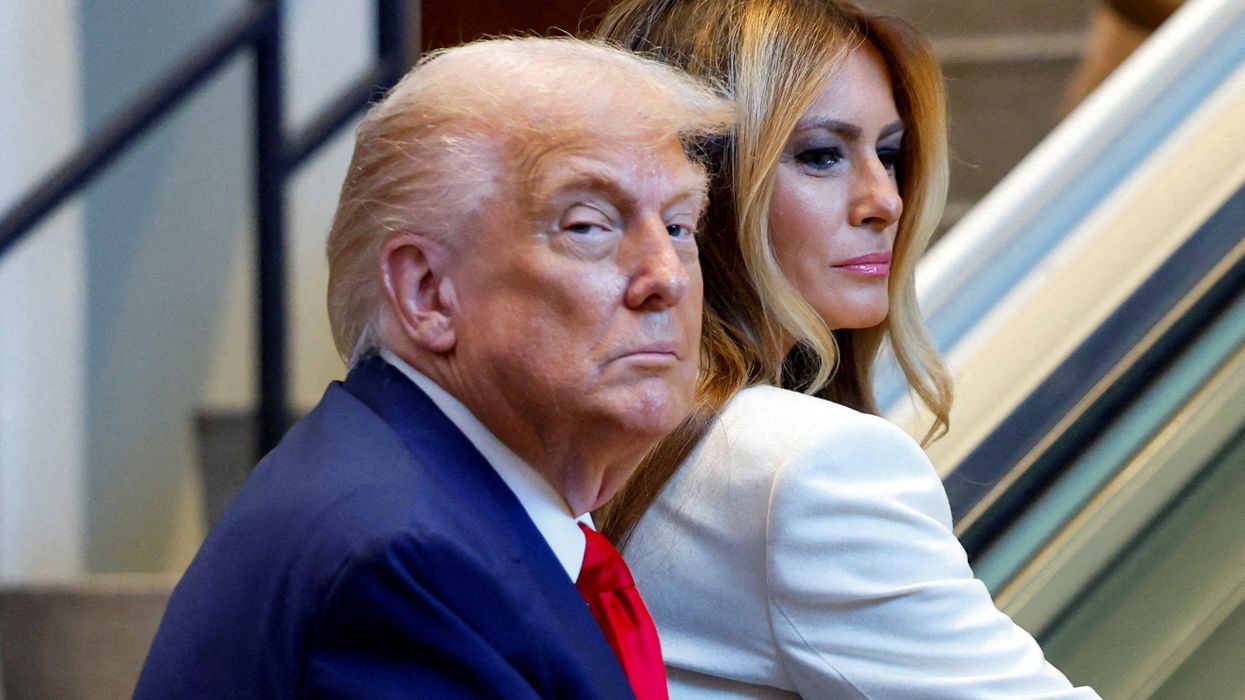
U.S. President Donald Trump and first lady Melania Trump ride an escalator as they arrive to attend the 80th United Nations General Assembly, in New York City, New York, U.S., September 23, 2025. REUTERS/Kylie Cooper TPX IMAGES OF THE DAY

May 26, 2026
ALTERNET

He’s no longer even trying to hide it. He makes a deal with himself for a $1.8 billion slush fund to reward loyalists willing to defy the law and commit violence on his behalf, and for a pardon of himself and his family for any illegal self-dealing and financial wrongs “FOREVER” (it’s in all caps in the document).

Then, when the deal is widely criticized, he posts:
“I gave up a lot of money in allowing the just announced Anti-Weaponization Fund to go forward. I could have settled my case, including the illegal release of my Tax Returns and the equally illegal BREAK IN of Mar-a-Lago, for an absolute fortune. Instead, I am helping others who were so badly abused by an evil, corrupt, and weaponized Biden Administration, receive, at long last, JUSTICE! President DJT.”


Does he really believe he could have settled his case for an absolute fortune — the case that he brought against himself — the case a federal judge doubted was even a “case” because he was on both sides of it?

Last week, a disclosure form showed that Trump’s investment portfolio executed more than 3,600 trades in the first three months of this year alone, many involving companies that he has favored with access or policies.


America is slouching toward the 250th anniversary of our revolution against arbitrary power with a president who shamelessly exercises it. Never before have we witnessed this degree of self-dealing, bribe taking, usurpation of congressional authority, and open defiance of federal courts.

It’s an unconstitutional slippery slope. If Trump can get away with creating for himself a $1.8 billion slush fund that Congress never approved and courts cannot oversee, and wantonly trade the shares of companies his policies are favoring, what’s to stop him from creating a $10 billion or $10 trillion self-dealing slush fund?

If he can get away with preemptive pardoning himself and his family for any and all future financial wrongdoing, what’s to stop him from pardoning himself and family for any future criminal acts?


These are only a part of the slippery slope we’re on. If he can abduct a foreign president without Congress’s permission, what’s to stop him from abducting anyone? If he can order the U.S. military to kill a foreign head of state without even Congress declaring a war, what’s to stop him from ordering the military to kill anyone?

If he can target political enemies for criminal prosecution, what’s to stop him from jailing or murdering his opponents?

If he can unilaterally decide that someone on a boat in the high seas is an “enemy combatant” and summarily kill them, what’s to stop him from calling anyone he dislikes an enemy combatant and having them killed?


If he can put his name on buildings all over Washington and take a wrecking ball to the East Wing of the White House, what’s to stop him from taking a wrecking ball to the entire edifice and putting up a Trump tower?

He feels unstoppable because there’s no one around him to tell him no. Instead, he’s surrounded by sycophants who tell him yes. He gets blind loyalty from his lapdogs — his vice president, his Cabinet, and most Republicans in Congress — who work for him rather than for the American people.

He feels indomitable because his billionaire backers — Jeff Bezos, Elon Musk, Larry and David Ellison, Mark Zuckerberg, and Rupert Murdoch, among others — have stuffed his PAC with their money and silenced criticism of him on their media platforms, in order to garner his favors. Meanwhile, his followers feast on his white Christian nationalism, and regard him as godlike.

He feels invincible because he was reelected president even though he was impeached twice and has been found guilty of 34 felony counts, and the Supreme Court has shielded him from further criminal prosecution for “official” acts (which he takes to mean any actions while he’s president). Congress is barely an obstacle because, as he demonstrated as recently as last week, he has a chokehold over the Republican Party. He even says he “doesn’t need Congress.”


He feels invulnerable because he’ll never directly face voters again, and therefore will never lose — nor, he assumes, ever be held accountable for anything.

My friends, this is full-frontal neofascism. I suggest we respond in these ways:

On July 4, the 250th anniversary of the nation’s independence, we wear black armbands to acknowledge the near death of our democracy and the rule of law under Trump.

In the weeks and months leading up to the midterm election on November 3, 2026, we commit to getting the largest voter turnout in American history, to take back Congress and stop the neofascist in the White House. Not just a blue wave but a blue tsunami.

On Election Day 2028, we elect a president whose character and temperament are consistent with the founding ideals of the United States — someone both humble and honorable, who’s committed to strengthening democracy and the rule of law, who will revive the self-governing institutions that Trump has s--- on and refocus the nation on our vast unfinished agenda of inclusion, rather than exclusion.

Beyond these, we will do whatever we can to learn from this catastrophe and help America learn. We will teach our children and grandchildren the truth of what has happened, and how close we’ve come to losing our democracy. And we will educate future generations on what we owe one another as citizens of this great land.

To accomplish all this we mutually pledge to each other our lives, our fortunes and our sacred honor.

Robert Reich is a professor of public policy at Berkeley and former secretary of labor. His writings can be found at https://robertreich.substack.com/
There is no peace deal — just Trump's fantasy of victory


(REUTERS)

May 26, 2026


United States President Donald Trump has announced via social media that a peace deal with Iran has been “largely negotiated.” While Trump and his allies have been trumpeting the agreement for days, details are vague, and Iranian authorities insist the two parties have yet to reach a formal deal.


In fact, it appears much more negotiation is still required between Iran and the U.S.

The confusion likely stems from one of Trump’s fixations: that the U.S. is winning the conflict, an assertion that’s at odds with the actual evidence.
Insisting the U.S. is winning

Trump, in his various statements on the Iran conflict, has become increasingly adamant that the U.S. has defeated Iran. He’s even accused reporters critical of the American war effort of treason.

Regardless of Trump’s threats, it’s clear that the U.S. is in a worse strategic position than it was before the war.

The conflict has further alienated key American allies, both within the region and globally. It’s also having a devastating impact on the American economy.

Trump’s attacks on his opponents and the media are of course nothing new. That makes it easy to dismiss those attacks as just more of the same.

The president, however, does not always develop his ideas in isolation. His claim that the U.S. is winning the war with Iran overlooks how the conflict has left the country in a weaker strategic position — and is a recurring flaw in current American strategic thinking.
Myriad justifications for war

The United States, without consulting allies, launched major military operations against Iran in late February 2026.

Trump has provided multiple justifications and explanations for the war. While these pivots make a proper assessment difficult, one constant is that Trump expected the Iranian government to collapse.

That didn’t happen. Instead, the Iranian government it appears to have consolidated around its most radical elements: the Islamic Revolutionary Guard Corps, which has marginalized or imprisoned the moderates with whom Trump wished to negotiate.

This development was hardly shocking; it was predictable.

Instead of acquiescing, the hardliners in Iran — like Trump — believe they cannot win over their domestic audience without a victory.

The Iranian government’s need for a victory caused it to examine areas where it could escalate the conflict while increasing pressure on the U.S. The answer to where Iran could inflict the most damage on the U.S. was obvious: the Strait of Hormuz.
The Strait of Hormuz

It wasn’t surprising that Iran seized control of the strait. For decades, war games into a major conflict between the U.S. and Iran predicted that Iran would do so early on.

Iran’s control of the Strait of Hormuz has created considerable pressure on both the American and global economy. While international attention has focused on the disruption of oil, other goods like urea and aluminium — both critical to the global economy — have also been disrupted.

Trump frequently emphasizes that the U.S. has the world’s strongest military. This contention isn’t up for debate.

But there are nonetheless limitations to what the U.S. military can accomplish. This is particularly true during unpopular wars, like Vietnam, because casualties must be avoided to a greater degree than in conflicts with popular support.

This reality considerably limits America’s strategic options, because the U.S. cannot enter the Strait of Hormuz without a significant risk of casualties, despite its military superiority.

This conundrum is the dilemma that confronts Trump as he attempts to end the war. His faith in the precision-strike capabilities of the American military has caused him to ignore the limitations.
No easy solutions

To be fair to Trump, he isn’t the only American leader to fall prey to the allure of military might. Since the end of the Second World War, American leaders have found themselves in strategically unpalatable situations due to their faith in military might.

The Vietnam and Iraq war are two prominent examples of how faith in overwhelming military power can lead to prolonged conflict. In both cases, the U.S. entered wars it was poorly prepared for and paid a steep price — not only financially, but also in terms of its broader strategic position.

While this has long been a problem in American strategic thinking and policy, Trump magnifies these problems. His belief in his personal superiority means he is unwilling to see that he and his advisers are caught by the same flaw in strategic thinking.

Furthermore, Trump’s lack of focus means that unlike other presidents who at least attempted to solve the crises they created, he’s already pivoting to focus on Cuba.

The result is that while Trump may claim the Iran conflict has been resolved on terms favourable to the U.S., the war has ultimately left both him and the country in a weaker strategic position than before.

James Horncastle, Assistant Professor and Edward and Emily McWhinney Professor in International Relations, Simon Fraser University

This article is republished from The Conversation under a Creative Commons license. Read the original article.
Trump's mysterious actions suggest he may tear down White House columns


President Donald J. Trump greets guests on the South Lawn of the White House Monday, April 22, 2019, during the 141st White House Easter Egg Roll. (Official White House Photo by Shealah Craighead)

May 25, 2026  
ALTERNET

After tearing down the White House East Wing without the legal authority to do so, President Donald Trump is now acting in a way which suggests he may have designs on the building’s iconic Ionic columns.

“President Donald Trump appeared absorbed by the White House’s columns on Monday, lingering for several minutes and running his hands along the stonework,” The Daily Beast's Erkki Forster reported on Monday night. “The row of columns framing the White House’s entrance seemed to arrest the 79-year-old president’s attention as he returned from Arlington National Cemetery after delivering a boastful Memorial Day speech.”

Noting that the video of Trump assessing the column was first posted by NewsNation’s Kellie Meyer, Forster added that the video seemed to show Trump “tracing the bottom of the column with his hands as he appeared to study its details. According to White House press pool reports, Trump spent six minutes outside the entrance before walking inside.” He also seemed to order photographers to take pictures of the column.

While some online have speculated that this is further evidence of Trump’s supposed cognitive decline, others have pointed out that Trump has previously advocated for the column to be torn down and replaced with a more luxurious alternative.

“Rodney Mims Cook Jr., the Trump appointee who chairs the Commission of Fine Arts, a federal arts commission, proposed replacing the Ionic columns with Corinthian columns, a more luxurious style preferred by Trump, The Washington Post first reported in March,” Forster wrote. In that Washington Post article, it was observed that “the Trump-appointed head of a federal arts commission is proposing to replace them with a more ornate style favored by President Donald Trump. Those more decorative columns, a style known as Corinthian, are considered the most luxurious in classical architecture and appear on buildings such as the U.S. Capitol and the Supreme Court. They have long been deployed on Trump’s properties, and the president has handpicked them for his planned White House ballroom, too.”

Defending their position to the Post, Cook claimed that the “Corinthian is the highest order [of column], and that’s what our other two branches of government have. Why the White House didn’t originally use them, at least on the north front, which is considered the front door, is beyond me.”

In fact, the White House was designed with Ionic columns precisely because they are considered to be less ostentatious. Their purpose was to reinforce the notion that the White House is the “People’s House.”

If Trump destroys the White House’s columns, that will not be his first unilateral change on the building he is legally supposed to only inhabit temporarily. Trump had previously destroyed the White House’s historic East Wing to build his ballroom, and continues to push for the $1 billion ballroom despite being told by the courts that he has no legal authority to do so and despite initially claiming it would not cost taxpayer money. He has also announced plans to rip out a fixture installed by President Thomas Jefferson, saying he would install in its place a "beautiful, black granite" installation to replace the Tennessee Flagstone pavers on the West Wing Colonnade. Trump said he would pay for the installation himself and send the Jeffersonian originals to a nursery for safekeeping.