Thursday, May 28, 2026

The world wants Canada’s helium, but it’s being held back


Published:
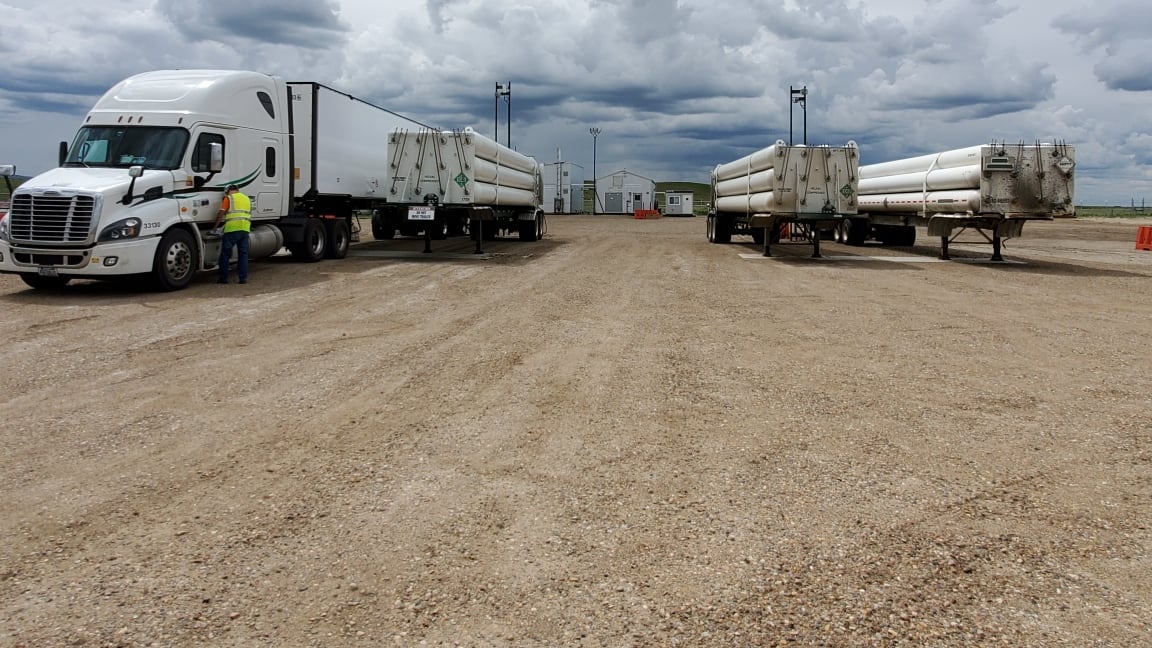
Helium Trailers Loading at Thor Heliums Plant in Knappen Alberta. (Credit: Helium Developers Association Of Canada)

Saskatchewan’s helium industry has a chance to significantly benefit from the war in Iran, but federal policies are holding it back, industry leaders say.

The war disrupted global helium supply chains tied to Qatar, which accounts for roughly a third of global production.

Although Canada boasts the world’s fifth-largest helium reserves, industry leaders argue the country isn’t treating the resource like the critical mineral it claims it is.

“There’s a contradiction there. Absolutely there is,” says Richard Dunn, the executive director of the Helium Developers Association of Canada, which advocates for secure supply chains in the country.
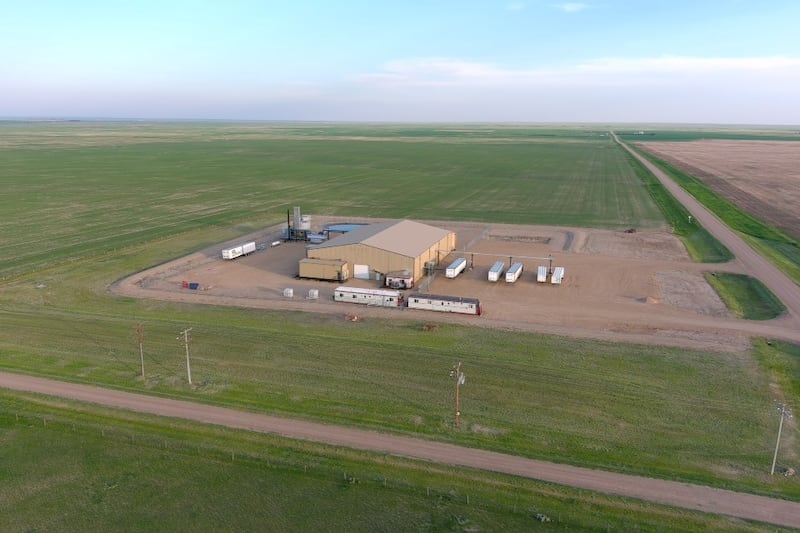
The Battle Creek facility, located near Consul in southwest Saskatchewan, is North American Helium Inc.'s flagship operation and Canada's largest helium purification plant. (Photo Credit: North American Helium)

A critical mineral without full policy support

Helium use goes beyond party balloons. It is essential for semiconductor manufacturing, MRI machines, aerospace technology and defence systems because of its unique cooling and non-reactive properties.

Dunn says helium remains excluded from several federal incentives available to other critical mineral sectors. Without access to those programs, companies struggle.

“It’s very difficult for helium to compete for the investment, for the capital required to advance in the exploration and development opportunities.,” says Dunn.

For Saskatchewan, this is particularly important because the province has built its helium industry around dedicated helium wells. Companies drill specifically for helium found in nitrogen-rich gas reservoirs, distinguishing it from other major global producers that extract helium primarily as a byproduct of natural gas production.

Saskatchewan pushes Ottawa for tax changes

Last month, Saskatchewan’s energy minister Chris Beaudry led efforts in Ottawa to push for federal policy changes to support the province’s growing helium industry.

“There are 34 critical minerals, 33 of them have standard tax treatment, and we’re just asking for helium to have the same standard tax treatment that all other critical minerals have,” Beaudry said.

Global supply shocks drive interest in Canada

The push for policy changes comes as global helium markets face growing uncertainty.

The recent attack on Qatar’s Ras Laffan Industrial City, the world’s largest LNG export facility, which produces roughly a third of the world’s helium, is expected to drop helium output by 14 per cent.

With Russia imposing export controls on helium until next year, Dunn says it’s increasing global interest in Canadian production.

“We’re seeing more and more interest,” Dunn says, pointing to inquiries from countries including Japan and South Korea looking for secure helium supply.

Canada still relies on U.S. processing

But even as demand grows, Canada still does not have a commercial-scale helium liquefaction facility.

“All the helium that Canada produces is sent to the states for liquefaction,” Dunn said. “There’s a security supply issue that’s created.”

“Then there’s an uplift in price, in value,” he says.

Spot prices for helium have soared since the beginning of the war.

Saskatchewan’s Ministry of Energy and Resources says that comes with risks.

“Being reliant on the U.S.-based liquefaction infrastructure increases costs, exposes the sector to trade-related risks, and reduces supply chain control,” the ministry said in a statement to BNN Bloomberg.

Saskatchewan’s growth ambition

Saskatchewan is Canada’s leading helium producer with reserves mostly located in the Western Canada Sedimentary Basin.

The province released a Helium Action Plan in 2021 aimed at scaling production and eventually building a domestic liquefaction facility.

It says it accounts for nearly three per cent of global supply and has set a target of reaching 10 per cent by 2030 which would generate $500 million annually from helium exports.

Beaudry said changes to federal tax treatment could accelerate that growth.

“That small change is going to be massive to industry,” he said. “That’s going to unlock a lot of opportunity for us.”

To encourage similar growth, Alberta established a 4.25 per cent royalty rate in 2020 to attract potential developers in its growing industry.

Ottawa says policy falls under finance

In a statement to BNN Bloomberg, Natural Resources Canada said helium is recognized as a critical mineral because of its importance to sectors including healthcare, semiconductors, aerospace and defence.

The department described helium as “a strategic resource over the long term” with growing global demand tied to advanced technologies and critical supply chains.

But Natural Resources Canada says “eligibility for specific tax measures is determined through Canada’s overall tax policy framework.”

Dunn says he’s hopeful for changes even though no new measures were included in the federal government’s latest fiscal update. He believes momentum is building as Canada looks to strengthen domestic critical mineral supply chains.

“When a third of the world’s helium is locked up in the Strait of Hormuz right now and can’t be moved, Canada has a great opportunity,” says Dunn. “Saskatchewan has a greater opportunity.”

Anam Khan

Opens in new window

Journalist, BNNBloomberg.ca

U.S. slaps duties on fresh Canadian mushrooms over subsidy claims


Published:

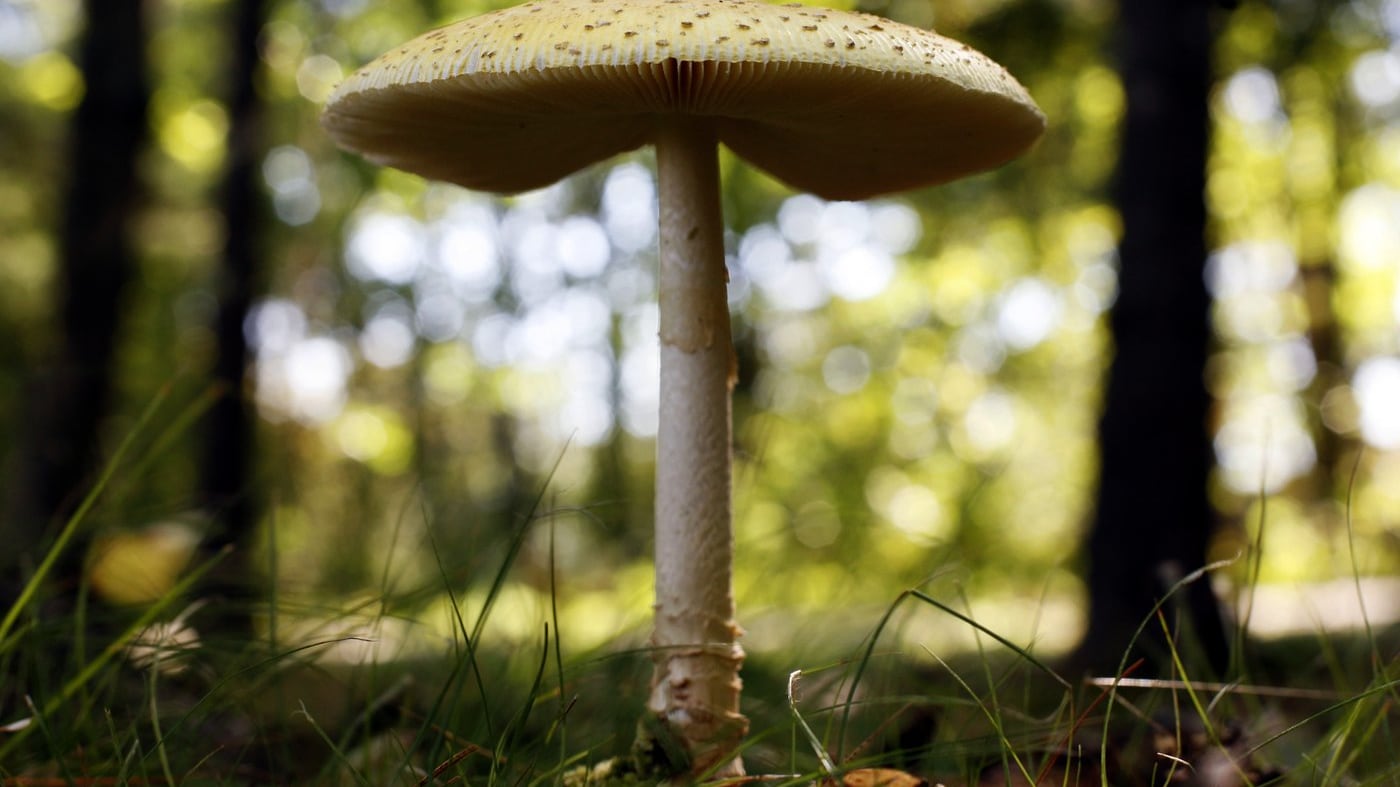
In this Sept. 16, 2011, file photo, a mushroom grows at Winslow Park in Freeport, Maine. Maine. (AP Photo/Robert F. Bukaty, File)

WASHINGTON — The United States has put countervailing duties on fresh mushrooms grown in Canada following a U.S. Department of Commerce investigation which the Canadian industry has called “deeply flawed.”

The change, posted in the federal register on Monday, will slap most fresh mushrooms with tariffs of 2.84 per cent.

Two companies received separate duties: Champ’s Fresh Farms Inc. was hit with a tariff rate of 1.62 per cent and Farmers’ Fresh Mushrooms Inc. was hit with a tariff rate of 4.97 per cent.

Separate anti-dumping duties are expected to be added later this month.

The preliminary Commerce investigation said Canadian mushroom producers received unfair government subsidies.

Mushrooms Canada CEO Ryan Koeslag said last week that Canadian growers haven’t engaged in unfair trade practices and producers are not receiving special treatment.

In a news release, Koeslag said the Commerce department’s justification is linked to mainstream agricultural tax treatment, including provincial sales tax exemptions available to farmers generally.

“Treating broad-based agricultural tax measures as unfair subsidies is contrary to common sense and unfairly penalizes Canadian mushroom growers for participating in programs available across the agricultural sector in any number of countries,” Koeslag said.

Mushrooms Canada said under U.S. trade law, a subsidy must meet specific legal requirements before it can be countervailed and the group does not believe those requirements have been met.

“It is difficult to reconcile Commerce’s preliminary approach with the fact that comparable agricultural tax treatment exists in the United States,” Koeslag said.

The Commerce department launched the investigation in January after receiving a complaint from the U.S.-based Fresh Mushrooms Fair Trade Coalition. The group said tax exemptions meant Canadian mushrooms were unfairly subsidized and claimed Canadian mushroom imports had grown in recent years while domestic mushroom consumption remained relatively flat.

Giorgio Mushroom Co., which is part of the U.S. coalition, said in a news release Monday that the duties are an important step.

“For years, American mushroom growers have faced enormous pressure from unfairly subsidized mushroom imports that distorted competition and threatened domestic production,” said Giorgio Mushroom CEO Mark Currie.

William Pellerin, a partner in international trade at McMillan LLP, said the Commerce investigation would not look at the specific agriculture subsidies that U.S. producers might be receiving — even if it is similar to what Canadian companies get.

Pellerin, who is not involved in the mushroom case, noted the preliminary subsidy amount is extremely low but the Commerce investigation into Canadian mushrooms is still ongoing.

When Canadians think of countervailing and anti-dumping duties they often look to lumber tariffs. Those tariffs, which predated the Trump administration, have also increased in the last year.

Pellerin said Commerce investigations like the one around fresh mushrooms generally are not U.S. administration-led tariffs.

The Canadian mushroom industry would be able to push back on the countervailing duties under the appeal mechanism through the Canada-U.S.-Mexico Agreement on trade, better known as CUSMA.

Countervailing and anti-dumping duties are separate from U.S. President Donald Trump’s massive tariff agenda. Trump has used different tools to hit countries around the world with tariffs and Canada is also being hammered by his sector-specific duties on things like steel, aluminum, automobiles and cabinetry.

But Trump’s push to realign global trade through tariffs may see more agricultural industries in the United States follow the mushroom coalitions’ lead and push for Commerce investigations, Pellerin said.

“I think that’s going to be not just the United States,” Pellerin said. “We are seeing them in Canada vastly increase also where Canadian associations are bringing cases against agricultural products from around the world.”

This report by The Canadian Press was first published May 18, 2026.

Kelly Geraldine Malone, The Canadian Press


Canadian mushroom growers warn new U.S. tariffs could ‘flood’ domestic market


Updated:

With a July 1 deadline to review the Canada-U.S.-Mexico Agreement (CUSMA) around the corner, new U.S. tariffs are set to take effect next week, this time on Canadian mushrooms.

“This is about 4,300 square feet of growing space,” said Mike Medeiros, owner of Carleton Mushroom Farms in Osgoode, Ont., as he toured his facility Saturday.

It is a massive and modern, but family-run, mushroom farm that grows, harvests and packages mushrooms in house.

An impressive “300,000 pounds per week” is how much Medeiros’s farm produces, making it one of the bigger players in the Canadian mushroom market.

But new U.S. tariffs set to be imposed on Canadian mushrooms Monday will take a toll on his business, even though his mushrooms stay in Canada.

“Forty per cent of the mushrooms in Canada are shipped to the U.S., and so what’s going to happen is as tariffs increase going to the U.S., there might be more mushrooms in Canada and then it would flood our market,” said Medeiros.

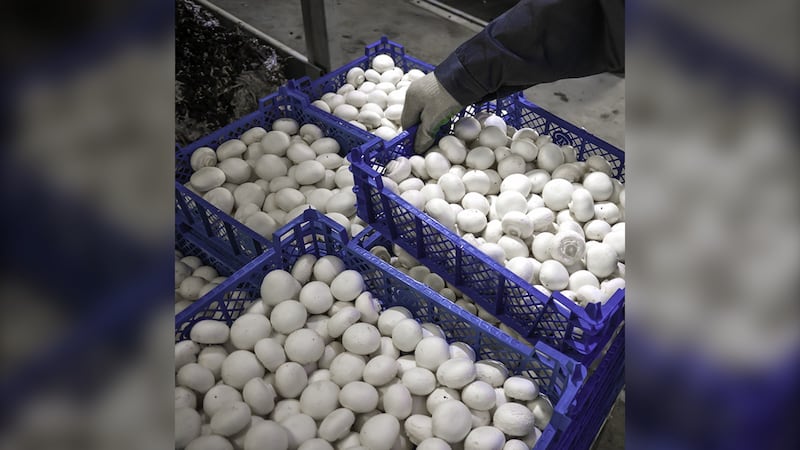
Canadian mushroom farmers say new tariffs could lead to layoffs and reduced output. (Credit: Carleton Mushroom Farms)

A fact sheet released this week by the U.S. Department of Commerce showed Canadian mushrooms will face new tariffs of up to five per cent, citing unfair government supports.

“They’re the same in the U.S. as they are in Canada,” said Ryan Koeslag, the executive vice-president of the Canadian Mushroom Growers’ Association, in an interview with CTV News.

“We’ve always been operating under the rules and regulations of fair trade between Canada and the U.S., and so the reason they identified this, I think, is they haven’t been able to find anything else.”

Known as countervailing duties, the same measures used to tariff Canadian softwood lumber, the tariffs are imposed on imports the U.S. deems are being unfairly subsidized.

But Canadian mushroom farms are just the latest example of a clear signal being sent by the Trump administration, targeting Canada’s agricultural sector.

“Ultimately the U.S. farmer is very powerful politically,” said William Pellerin, an international trade lawyer with McMillan LLP in Ottawa.

“There’s a broad trend to look at agricultural products coming into the United States and apply tariffs where the U.S. deems it’s important to do so,” he said.

Medeiros says the move could force him to start producing less.

“Once we start cutting back production, we would definitely have to look at cutting back staff to keep payroll in check,” added Medeiros.

Canadian mushroom farmers export almost exclusively to the U.S., and while industry says it will fight the new tariffs – that will still take time.

Jeremie Charron

Opens in new window

Journalist, CTV National News