It’s possible that I shall make an ass of myself. But in that case one can always get out of it with a little dialectic. I have, of course, so worded my proposition as to be right either way (K.Marx, Letter to F.Engels on the Indian Mutiny)
Thursday, May 28, 2026
Flávio Bolsonaro turns to Trump as Brazil probe deepens
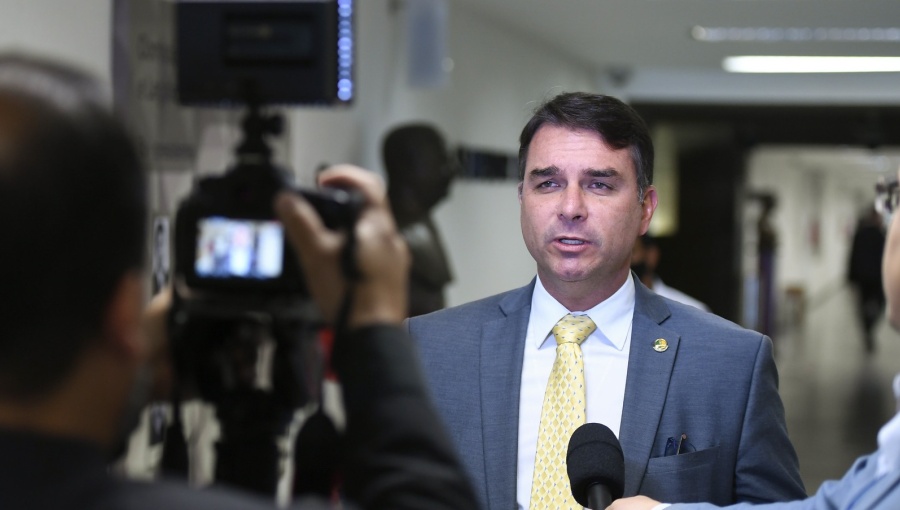
Senator Flávio Bolsonaro solicited financial backing from a scandal-plagued banker for a film about his father, former president Jair Bolsonaro, according to messages published by Intercept Brasil. / agencia senadoFacebook
Flávio Bolsonaro travelled to Washington on May 26 for a private meeting with US President Donald Trump, seeking to shore up his political standing ahead of Brazil's October presidential election as a financial scandal involving a jailed banker threatened to erode his chances of reaching the Palácio do Planalto.
A White House official confirmed the encounter, which did not appear on Trump's public schedule.
The visit came as Flávio's campaign absorbed a significant polling blow. An AtlasIntel/Bloomberg survey of 5,032 people conducted between May 13 and 18 put President Luiz Inácio Lula da Silva ahead by 48.9% to 41.8% in a second-round runoff scenario — a swing of roughly seven percentage points from an April poll that had Flávio narrowly ahead at 47.8% to Lula's 47.5%. In a first-round scenario, the seasoned leftist leader led with 47% against Flávio's 34.3%. The poll carries a margin of error of one percentage point.
The shift followed reports by investigative outlet The Intercept Brasil, based on leaked messages from a federal police probe, alleging that Flávio had negotiated a commitment of up to BRL134mn ($26.85mn) from Daniel Vorcaro, former owner of Banco Master, to finance a biographical film about his father, former president Jair Bolsonaro. Earlier reporting cited the figure at BRL60mn ($12mn). Federal investigators estimate that the alleged fraud linked to Banco Master reached BRL12bn ($2.3bn).
Vorcaro has been in custody since March, accused of attempting to bribe a former central bank director, a charge he denies. His attorney declined to comment.
Flávio, a son of former far-right president Jair Bolsonaro — barred from running for office after being convicted of plotting a coup following his 2022 election defeat — has denied any wrongdoing, acknowledging that Vorcaro had agreed to finance the film but describing the arrangement as a private sponsorship with no favours exchanged. His campaign communications chief has since resigned, amid what the financial newspaper Valor described as a crisis for the senator's pre-campaign.
Despite the turbulence, conservative allies sought to project calm. "Moments like this deserve our attention. He needs to make it all clear," said Senator Marcos Rogério, speaking at the Esfera forum in São Paulo state. "This thing will not bar his candidacy at all." According to AP, political analyst Lula Guimarães argued the timing of the revelations mattered, suggesting the damage would have been greater had the allegations emerged closer to election day.
After the White House meeting, Flávio posted on Instagram that Trump had presented him with a "challenge coin,” a medallion traditionally associated with the US armed forces, describing it as a "rare gesture, reserved for allies." He was dismissive when asked about the polling figures. "A crisis of what? This is an election campaign. It has its ups and downs," he said.
NUKE NEWZ
Niger backs Global Atomic’s Dasa uranium project amid talks with Algeria to establish export corridor
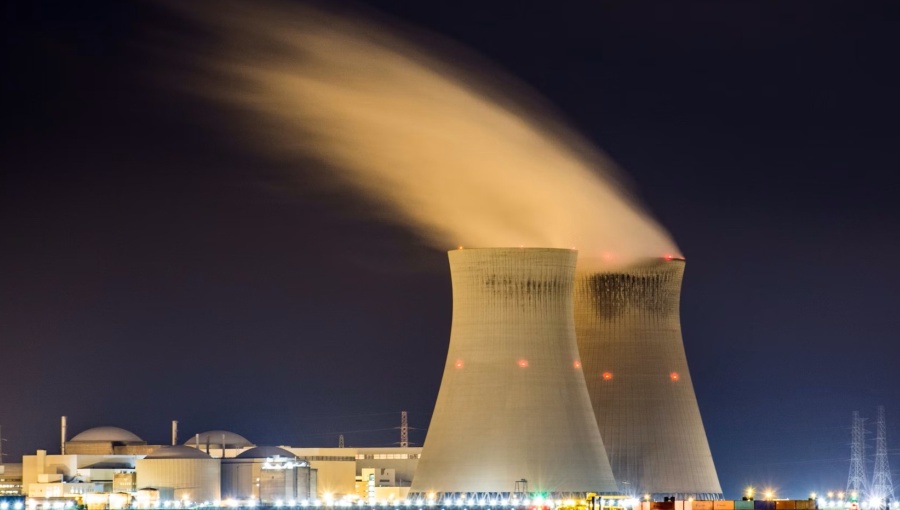
Canada-based uranium developer Global Atomic Corporation (TSX: GLO, OTCQX: GLATF, FRANKFURT: G12) said it had secured renewed political backing from Niger’s military-led government for the Dasa uranium project, as the West African state seeks to strengthen mining investment and expand trade links following its post-coup diplomatic realignment.
The company said on May 26 that members of its executive team, led by chief executive Stephen Roman, met Niger President General Abdourahamane Tiani, Prime Minister Ali Lamine Zeine and Mines Minister Ousmane Abarchi during a visit to Niamey and the Dasa project site earlier this month.
The meetings come as uranium markets remain supported by growing global interest in nuclear power, driven by energy-security concerns and rising electricity demand linked to artificial intelligence infrastructure and decarbonisation policies.
Global Atomic said the Dasa project, operated by Société Minière de Dasa (SOMIDA), remains the country’s largest active mining development project. SOMIDA is owned 80% by Global Atomic and 20% by the Nigerien government.
According to the company, government representatives serving on the SOMIDA board visited the Dasa site for the first time during the trip, where they reviewed underground development works, construction progress and local employment levels.
“The site visit solidified Government support for the Project and Dasa’s importance to Niger,” Roman said in a statement issued by the company.
Following the meetings, President Tiani issued a letter of support to Global Atomic in which he described Dasa as “a major strategic investment” for Niger due to its expected contribution to employment, infrastructure and mineral-resource development.
The Nigerien president also instructed ministries and government agencies to support the project “in a spirit of a balanced and mutually beneficial partnership,” according to the company.
The renewed backing comes as Niger continues to reposition its mining and foreign-investment relationships after the July 2023 military coup, which triggered tensions with Western governments and regional bloc ECOWAS.
Niger is one of the world’s key uranium-producing states and its mining sector has historically been dominated by French nuclear-fuel company Orano S.A. (EPA: ORA), formerly Areva.
Global Atomic said executives also held talks with Foreign Minister Yaou Sangaré and Paul Houston, chargé d’affaires at the US embassy in Niger.
The company added that a recent cooperation agreement between Niger and Algeria could potentially create a new export corridor linking the Dasa mine to Mediterranean ports, although no formal uranium export framework or infrastructure agreement has yet been announced.
“This is an exciting new development,” Roman said. “The road from Dasa to the Algerian border is short and the roads and security in Algeria are top notch.”
The Dasa deposit, located in Niger’s Agadez region within the Tim Mersoï Basin, was discovered in 2010 and received mining permits in 2020. Underground development and mining activities at the project began in 2022, although commercial uranium production has not yet started.
According to the company’s feasibility studies, Dasa is expected to become one of Africa’s highest-grade uranium mines, with planned annual production of several million pounds of uranium concentrate over its projected mine life.
Global Atomic has described Dasa as one of the world’s most advanced greenfield uranium projects currently under development.
Beyond uranium, the company also owns a 49% stake in the Befesa Silvermet Turkey joint venture in Iskenderun, Turkey, which recycles electric arc furnace dust into zinc oxide concentrate. The venture is operated by Befesa Zinc S.A.U.
South Korea builds nuclear-solar supergrid to prevent blackouts
Korea Hydro & Nuclear Power (KHNP) is building a multi-tiered power network to secure national electricity supplies, the Gyeongbuk-based utility announced on May 15. The state-owned energy operator is installing new high-voltage transmission pylons across mountain ridges in North Gyeongsang Province. These structural networks link atomic generation plants, floating solar arrays and responsive water storage assets to protect the regional power grid.
The physical infrastructure expansion includes 345kV transmission networks crossing from Buk-myeon in Uljin-gun to industrial corridors near Imha Lake in Andong-si. This deployment addresses localised grid bottlenecks while creating a reliable framework for regional distribution networks.
The aggressive expansion of South Korea’s energy infrastructure comes at a critical time for national energy security. By linking volatile renewables capacity directly to a stable nuclear baseload and fast-charging hydro storage, the utility is building a practical buffer against the grid instability that frequently triggers large-scale blackouts. As such, the initiative serves as a crucial corporate shift for a country attempting to reconcile intensive economic production with structural carbon reduction targets.
The Hanul complex
The central driver of this energy strategy is the Hanul Nuclear Headquarters, Chosun Daily reported on May 15. The facility operates eight active units, Hanul Units 1 to 6 alongside Shin-Hanul Units 1 and 2, yielding a combined capacity of 8.7GW. The older reactors range from 950MW to 1,000MW, whilst the two Shin-Hanul additions supply 1,400MW each. The massive dome of Shin-Hanul Unit 1 stands 76.66 metres tall, resembling a 27-story residential skyscraper, and generated 8,821GWh of electricity over the course of 2024. This single dome met roughly 18% of the annual electricity demand of Seoul, which consumes 50,352GWh annually.
Atomic generation is the bedrock of the local economy. The significance of these installations is highlighted by the International Energy Agency statistics on South Korea Nuclear Power reliance, which show that atomic energy accounts for 30% to 32% of national electricity production. As Chosun Daily notes, the Hanul complex hosts over a third of the 26 operational reactors in the country, yielding 33% of total domestic nuclear output. This means the Hanul complex alone supplies 10% to 11% of South Korea's total electricity.
This footprint is expanding through the construction of Shin-Hanul Units 3 and 4, two 1,400MW reactors located on an adjacent plot. The projects have faced a volatile political timeline. Initial approvals were sought in 2015, but construction ceased in 2017 under the previous administration's nuclear phase-out strategy. Work finally resumed in June 2023 under a new administration, and by April 30, the overall progress rate reached 29.8%. Mechanics are currently affixing 6mm steel sheets to form the containment dome for the third unit, whilst crews prepare the foundation of the fourth unit for a primary concrete pour scheduled for May 27. Shin-Hanul Unit 3 is slated for grid connection in October 2032, with Unit 4 following in October 2033. Upon completion, the complex will operate 10 reactors with a total capacity of 11.5GW, supplying 14% to 15% of national electricity demand.
Solar and pumped storage balance grid
To supplement this baseload, the utility is deploying floating solar technology on Imha Lake. According to Chosun Daily, the engineering arrangement covers 521,000 square metres, a size equal to 74 football pitches. This flower-shaped cluster has a capacity of 472MW and yields 61.67GWh annually, sufficient to power 20,000 homes. KHNP maintains a 49% financial stake in this venture alongside the Korea Water Resources Corporation, which directly manages the multi-purpose dam structure.
A key innovation of this layout is its grid conservation method. Because the electricity networks in North Gyeongsang are already heavily congested, regulators approved an arrangement that allows the solar facility to share existing pylons with the nearby Imha Dam hydroelectric plant. This cross-generation framework channels solar output during daylight hours and water-driven energy overnight through a single line. KHNP is replicating this asset-sharing model with a 5.2-MW joint solar installation in Cheongsong, whilst a separate 3-MW floating facility in Gyeongsangnam-do has been operational since 2023.
To handle fluctuations from these green sources, the utility relies on its pumped storage infrastructure. Operating seven installations across locations including Yangyang, Samnangjin, Cheongpyeong, Muju, Sancheong, Cheongsong and Yecheon, these facilities provide a combined 4,700MW, representing roughly 4% of total national capability. These dual-reservoir complexes balance the grid by utilising excess electricity to pump water uphill when power is cheap, and then releasing it to generate power when demand spikes.
As intermittent renewables grow, these backup assets have become vital. Their utilisation rates have climbed from roughly 9% a few years ago to 14.7% recently, Chosun Daily reports. Acting as high-capacity physical storage, they can transition from a complete standstill to active generation within five minutes. “The purpose of pumped storage power plants is to stabilise the power grid. When there is surplus power, they absorb it, and during peak demand, they generate electricity,” said Lim Seok-chae, head of the power generation department at Yecheon Pumped Storage Power Plant on May 15. To bolster this buffer, the firm is building three additional sites in Yeongdong, Hongcheon and Pocheon, adding 1.8GW of capacity. These new facilities are scheduled to come online in December 2030, December 2032 and December 2033 respectively, providing a stable alternative to traditional battery storage systems.
By maximising current grid configurations and avoiding heavy land use through floating platforms, the utility addresses both local real estate limits and distribution shortages. For industrial economies navigating green targets, this blended approach highlights that structural storage and grid modernisation must match generation scale to maintain systemic stability.
Study: Greek Islands Could Benefit From Floating Nuclear Power by 2035
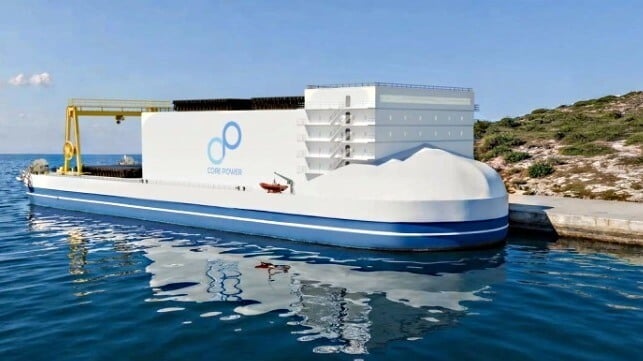
Greece's utility sector has invested heavily in renewables in recent years, and now generates so much solar power that it faces a high rate of curtailment on sunny days. Its mainland grid has been a net exporter of electricity since 2024, benefiting its neighbors. But non-interconnected Greek islands - like many in the Cyclades and Dodecanese - retain a dependence upon diesel-fired generating stations, which require imported fuels. One option for "greening" their power grids could be miniature nuclear power plants, built on barges and towed into position, according to a new study by the Deon Policy Institute, ABS, Core Power and Athlos Energy.
Floating nuclear power could work well for a coastal state like Greece, Deon found. The power generating capacity can be installed near to areas of high demand, whether to replace oil-fired power plants, add grid-independent capacity for seaport electrification, or supply data centers with a dedicated power source. Since they are small and modular, they would slot in neatly to meet small-scale demand changes, and they could be moved around when needed by towing. Greece's maritime industrial base and know-how also favor construction and operation of floating solutions.
Floating nuclear power is a mature technology with no technical hurdles remaining for implementation, Deon concluded. Regulatory work remains to be done, and public acceptance must be secured, but otherwise a floating nuclear plant could be in operation in Greece by 2035-40.
To get there, near-term needs include integrating nuclear power into Greece's national energy plans, strengthening the regulatory framework, and building public acceptance. Success will depend on "whether political momentum can be translated into long-term institutional commitment, regulatory preparedness, and broader public acceptance," the authors concluded.
"These initial findings shed important light on how FNPPs can be assessed and integrated within existing frameworks, a critical question as the industry moves toward practical deployment. The real challenge before us is integration into policy and regulatory frameworks, and ABS is committed to helping the industry navigate that path," said Patrick Ryan, ABS Senior Vice President and Chief Technology Officer, in a statement ahead of next week's Posidonia conference in Athens.
US to provide plutonium from atomic bombs to fuel nuclear plants
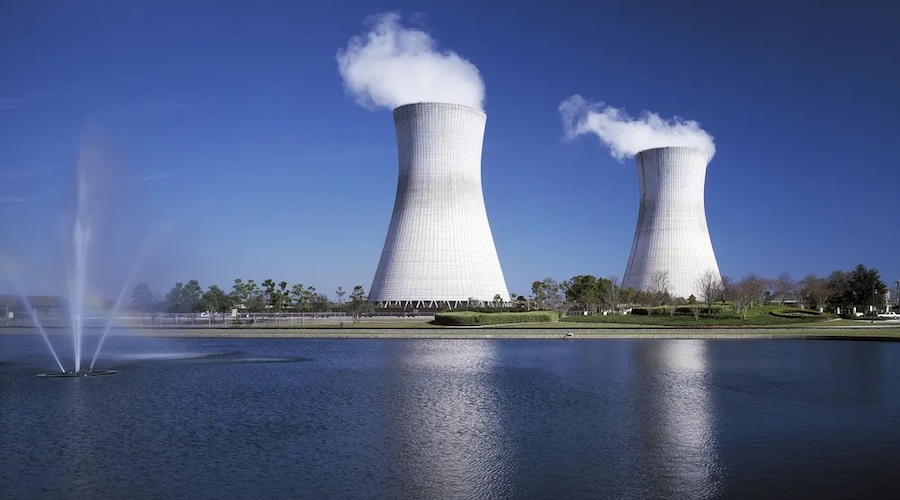
Nuclear Power plant. (Reference image by from Carol M. Highsmith’s America, Library of Congress collection, taken from Rawpixel.)
The US is planning to distribute plutonium left over from Cold War-era weapons to commercial nuclear developers as part of the Trump administration’s efforts to accelerate the rollout of new reactors.
The Department of Energy has selected Oklo Inc. and four other firms for advanced negotiations to participate in the Surplus Plutonium Utilization Program, the Santa Clara, California-based company said in a statement Tuesday.
Closely held Exodys Energy, Shine Technologies, Standard Nuclear and Flibe Energy Inc. were also competitively selected for negotiations, the Energy Department said.
Under the program, the US will supply almost 20 metric tons of weapons-grade plutonium that can be converted into reactor fuel. Oklo is one of dozens of companies designing new nuclear power plants and has warned of potential shortfalls in the uranium supply chain that may hinder deployment. However, critics warn that distributing weapons-grade plutonium could lead to security concerns, and point to previous government efforts that have been costly failures.
“This program creates a pathway to use existing surplus material as bridge fuel for advanced reactors to bring more reactors online sooner,” Oklo chief executive officer Jacob DeWitte said in the statement. “Material that has been set aside for disposal can instead be converted into fuel to produce electricity through fission.”
Oklo will partner with the European nuclear provider Newcleo to use the material. Oklo shares gained 4.3% to $68.70 as of 4 p.m. in New York on Tuesday.
The Energy Department announced last year it would be accepting applications for the materials after previous efforts to turn some weapons-grade plutonium into fuel for commercial reactors failed, costing taxpayers billions.
“The Surplus Plutonium Utilization Program is anticipated to help companies unlock the next level of private funding to broaden domestic nuclear fuel supplies, spur innovation on American recycling technologies, and unlock private sector funding to fuel the nation’s nuclear renaissance,” the Energy Department said in a statement Tuesday.
Nuclear has regained some public support in the artificial-intelligence era because it can supply carbon-free power around the clock as demand for electricity climbs. Fission power is tantalizing to hyperscalers and governments seeking to win the AI race, but the technology is still unproven commercially and it will likely be several years before any new reactors are in service.
The plutonium program has doubters, especially after previous US efforts to convert weapons-grade material into reactor fuel faltered. The first Trump administration in 2018 pulled the plug on a federal effort in South Carolina after cost estimates for the Mixed Oxide Fuel Fabrication Facility swelled to nearly $48 billion with a completion date in the 2040s.
Revisiting the idea raises concerns about safety and proliferation, according to Edwin Lyman, director of nuclear power safety for the Union of Concerned Scientists.
“Knowing how complex and expensive it is to convert the material into reactor fuel, it just makes no sense that any private entity would be able to take this on and execute such a dangerous project,” Lyman said in an email. “The safest and most secure way to dispose of this surplus plutonium — an incredibly dangerous waste product — is to bury it deep underground.”
Nuclear technology company Oklo has been selected by the US Department of Energy for advanced negotiations under the Surplus Plutonium Utilization Program, which aims to turn designated surplus plutonium material into fuel for advanced reactors.
Oklo's rendering of an Aurora powerhouse (Image: Oklo)
The Department of Energy (DOE) announced plans in October last year for private companies to dispose of about 20 tonnes of surplus plutonium by making the materials available for advanced nuclear technologies. A Surplus Plutonium Utilization Program request for applications issued on 21 October describes the plutonium on offer, and the "thresholds" prospective applicants must meet. The DOE wants applications "with detailed recycling and processing plans, including funding commitments and schedule to utilise the surplus plutonium materials within DOE's inventories for nuclear fuel for reactors in the United States". Applications were due by 21 November.
Oklo said its selection - alongside four other advanced nuclear companies (Exodys Energy, SHINE Technologies, Standard Nuclear, and Flibe Energy) - supports the company's broader fuel strategy, which includes multiple pathways to source fuel to support advanced reactor deployment while domestic enrichment and fuel infrastructure continue to scale.
SHINE Technologies CEO, Greg Piefer, said: "We've spent more than a decade building the capabilities needed to handle complex nuclear materials - recycling used fuel, recovering isotopes, doing the kind of separations work this programme calls for. Turning surplus material that's been sitting in storage into fuel for the next generation of reactors is exactly the kind of problem we built SHINE to solve."
In partnership with France-headquartered innovative reactor developer Newcleo, Oklo would lead the utilisation of surplus plutonium, while Newcleo would bring relevant fuel experience and potential project capital, subject to definitive agreements, customary approvals, and applicable US security and safeguards requirements.
"Oklo and Newcleo view the programme as a pathway for disposition through use: converting material that already exists into fuel for advanced reactors, using it to generate reliable electricity, and consuming it through fission under stringent security, safeguards, and material control requirements," the companies said in a joint statement. "In doing so, the programme can turn a long-term material management challenge into a domestic energy source."
"Fuel supply constraints are a key throttle to advanced reactor development," said Oklo co-founder and CEO Jacob DeWitte. "This programme creates a pathway to use existing surplus material as bridge fuel for advanced reactors to bring more reactors online sooner. Material that has been set aside for disposal can instead be converted into fuel to produce electricity through fission."
Newcleo CEO and founder Stefano Buono added: "We are proud of this transatlantic partnership with Oklo to deliver on our promise of reducing nuclear liabilities through our fuel and reactor technologies. The US is taking a visionary approach to the fuel cycle, and we look forward to contributing to it."
In October 2025, Newcleo and Oklo signed an agreement to develop advanced fuel fabrication and manufacturing infrastructure in the USA. At the time, Newcleo said it was planning to invest up to USD2 billion "via an affiliated investment vehicle", with the investment spanning "multiple projects under US oversight" and aiming to "foster transatlantic cooperation that enhances energy security, and focus on creating a robust and resilient fuel ecosystem. Specific projects and investment amounts will be detailed in forthcoming definitive agreements".
In March this year, Newcleo announced it had initiated pre‑application engagement with the US Nuclear Regulatory Commission to support the future licensing of its first Lead-cooled Fast Reactor and an associated mixed‑oxide (MOX) fuel fabrication facility in the USA.
Newcleo is developing its Small Modular Lead-cooled Fast Reactor (SM-LFR) technology. According to the company's delivery roadmap, the first non-nuclear precursor prototype of its reactor is expected to be ready by later this year in Italy, the first reactor operational in France by the end of 2031, while the final investment decision for the first commercial power plant is expected around 2029. Newcleo plans to directly invest in a MOX plant to fuel its small modular lead-cooled fast reactors.
Oklo's Aurora powerhouse is a fast neutron reactor that uses heat pipes to transport heat from the reactor core to a supercritical carbon dioxide power conversion system to generate electricity. Building on the design and operating heritage of the Experimental Breeder Reactor II (EBR-II), which ran in Idaho from 1964 to 1994, it uses metallic fuel to produce electricity and usable heat, and can operate on fuel made from fresh HALEU or used nuclear fuel.
Approval milestone for US microreactor project
Weeks after being selected for US Department of Energy support under the Nuclear Energy Launch Pad programme, microreactor developer Deployable Energy has received the department's approval of the Preliminary Documented Safety Analysis for its Unity microreactor.
The Unity criticality test rig was transported from Houston to Idaho National Laboratory in a Ford F-150 truck (Image: Deployable Energy)
The Preliminary Documented Safety Analysis establishes the preliminary safety basis for a criticality test of the reactor, documenting how the design meets the US Department of Energy's (DOE) requirements for hazard analysis, accident mitigation, and operational controls. Approval of the Preliminary Documented Safety Analysis means Deployable Energy is now positioned to complete final preparations for its upcoming demonstration, including commissioning and startup activities under DOE oversight, the company said.
The purpose of a Preliminary Documented Safety Analysis - or PDSA - is to provide a comprehensive and preliminary assessment of the safety aspects of a nuclear facility or activity. It forms part of the pathway for the authorisation by the US Department of Energy's Office of Nuclear Energy of nuclear facilities. Executive Order 14300, Reforming Nuclear Reactor Testing at the Department of Energy, signed by President Donald Trump in May last year, directed the DOE and the National Laboratories to expedite the review, approval, and deployment of advanced reactors under the jurisdiction of the DOE.
"The PDSA approval is an important step in bringing a new reactor to life," Deployable Energy CEO Bobby Gallagher said. "Completing this review in 106 days since programme kickoff demonstrates both the strength of our safety approach and the urgency with which our team is executing toward demonstration."
Deployable Energy said it is now positioned to complete final preparations for the upcoming criticality demonstration. It has already delivered its criticality test rig to Idaho National Laboratory following a cross-country road trip by truck, which the company says underscores "the compact and deployable nature of the Unity system". The fuel that will be used during the initial criticality test has already been manufactured.
The Unity microreactor is described by the company as a 1 MWe compact, factory-built nuclear system designed to use 4.95% enriched uranium oxide fuel and helium coolant to deliver reliable, transportable power in "remote and infrastructure-constrained environments". Using standard fuels, materials, and industrial processes already available at commercial scale results in a system that can be produced in volume and deployed quickly, the company says. It envisages its "nuclear batteries" being operated across a wide range of applications across the defence, commercial, maritime, and industrial sectors.
In April, Deployable Energy was selected to enter the DOE Nuclear Energy Launch Pad, an initiative led by the Idaho National Laboratory-based National Reactor Innovation Center to provide streamlined pathways for developers to demonstrate advanced nuclear technology and accelerate commercial deployment. At that time, Deployable Energy said it was aiming to achieve criticality "on or before July 4th, 2026".
Agreement on UAE nuclear workforce development
The Emirates Nuclear Energy Company has signed a strategic cooperation agreement with the Department of Government Enablement – Abu Dhabi, represented by the Mawaheb Talent Hub, to establish a comprehensive framework for the training and employment of UAE nationals in the growing civil nuclear energy sector.
(Image: ENEC)
Mohamed Al Hammadi, Managing Director and Group CEO of Emirates Nuclear Energy Company (ENEC), and Mariam Al Musharrakh, Director General of GovTalent at Department of Government Enablement – Abu Dhabi (DGE), witnessed the signing of the agreement by Abdulla AlShimmari, Executive Director of National Workforce Enablement Sector at DGE, and Ahmed Alshamsi, Chief Human Capital Officer at ENEC.
Under the five-year agreement, the two parties will cooperate to qualify at least 100 UAE nationals holding high school diplomas, vocational diplomas, or postgraduate degrees. DGE's Mawaheb Talent Hub will provide ENEC with a curated list of candidates and grant access to its state-of-the-art facilities to conduct awareness workshops, technical assessments, and interviews.
ENEC will lead the development and funding of the training programmes and financial support for trainees. Upon successful completion of the programme and meeting hiring criteria, the selected trainees will be integrated into the workforce at ENEC and its subsidiaries.
"Since its inception, ENEC has been dedicated to cultivating a world-class team of Emirati professionals who are the backbone of our success at the Barakah Plant today and for the many decades of operations ahead," Al Hammadi said. "This agreement with the Department of Government Enablement – Abu Dhabi, allows us to expand our talent pipeline, ensuring that the next generation of UAE nationals is equipped with the expertise to lead and secure our nation's carbon-free future and drive long-term sustainable growth. This Initiative also supports the UAE's transition to a knowledge-based economy by equipping job seekers with specialised skills for high-tech industries."
DGE Undersecretary Ibrahim Nassir added: "We believe that the most important investment any nation can make is in its people. This agreement with ENEC reflects exactly that - a shared commitment to placing Emirati talent at the heart of one of the UAE's most strategically vital sectors. Through Mawaheb, we are not simply connecting job seekers to vacancies; we are building a pipeline of nationally qualified experts who can lead the UAE's clean energy future for generations to come. Partnerships of this depth and ambition are what transform national vision into lasting reality."
ENEC said the partnership builds upon its proven track record of human capability development. "To date, more than 2,000 Emirati talents have been involved in the development and operation of the Barakah Nuclear Energy Plant," it said. "Through six dedicated talent pipeline programmes, ENEC continues to empower future experts to manage the civil nuclear energy sector for decades to come."
Under a USD20 billion deal announced in December 2009, four Korean-designed APR1400 reactors have been built at the Barakah site by a consortium led by Korea Electric Power Corporation (KEPCO). First concrete for Barakah 1 was poured in July 2012, while that for units 2-4 was poured in April 2013, September 2014 and July 2015, respectively. The units entered commercial operation between April 2021 and September 2024. The Barakah plant - in the Al Dhafra Region of Abu Dhabi - is owned by ENEC and operated by Nawah, a joint nuclear operations and maintenance subsidiary of the ENEC and KEPCO. The plant provides about 25% of the UAE's electricity needs.
Assystem, AtkinsRéalis contracted to support EDF in the UK
French engineering group Assystem and Canadian engineering firm AtkinsRéalis have both been appointed by EDF and Sizewell C Limited to a new five-year Professional Services Framework.
The Hinkley Point C construction site, pictured in June last year (Image: EDF Energy)
EDF Energy manages the UK's eight nuclear power plant sites, five that are operating (Sizewell B, Torness, Heysham 2, Heysham 1 and Hartlepool) and two that have entered decommissioning (Hinkley Point B and Dungeness B). It took over the sites when it acquired British Energy in 2009. The company is also constructing the new Hinkley Point C plant in Somerset, and there are advanced plans for a replica of Hinkley Point C at Sizewell C in Suffolk.
Assystem has been selected as a strategic engineering partner and will have a leading role across the various contracts, covering engineering, digital expertise, project management, and construction management on Sizewell C and Hinkley Point C, two gigawatt-scale nuclear power plants in the UK, as well as work on EDF's existing nuclear generation and nuclear services.
"The four new framework agreements will strengthen the support Assystem provides to the UK's nuclear programme," Assystem said. "Under these contracts, the company will also support the design authority of the main licensees and contribute to delivering 6.6 gigawatts of new EPR-generated clean electricity to the UK grid."
Assystem, which has been contracted by EDF worldwide for more than 60 years, said this new partnership "highlights both Sizewell C's and EDF's long-term collaboration with Assystem, as the French multinational energy company continues to seed its investment into the UK's low-carbon energy infrastructure".
Last year, Assystem announced plans to double its UK workforce by creating 1,000 new engineering, digital, and project management jobs by 2030 to support the delivery of these crucial nuclear projects, boosting skills and regional economic investment across the UK – strengthening domestic nuclear capabilities and international industry collaboration between France and the UK.
"Assystem is proud to stand alongside EDF and Sizewell C as a strategic partner at this pivotal moment for the UK's new nuclear programme," said Andrew Bedford, Senior Business Unit Director, Nuclear New Build, at Assystem. "Our position on the Professional Services Framework not only strengthens our long-standing collaboration with EDF but also accelerates the delivery of world-class nuclear capabilities in the UK. With our commitment to double Assystem's UK workforce by 2030, we're bringing vital skills, innovation, and engineering momentum to help meet domestic energy transition needs."
AtkinsRéalis's role expands
The appointment of AtkinsRéalis to the Professional Services Framework extends the multidisciplinary work AtkinsRéalis delivers across EDF's existing fleet of nuclear power plants and its new-build Hinkley Point C programme for an initial five-year term, with the option to extend by a further five years. It also encompasses engineering services delivered at the Sizewell C nuclear new-build programme.
Under the new Professional Services Framework, AtkinsRéalis will support EDF Nuclear Services, EDF Nuclear Operations, Hinkley Point C and Sizewell C across more than 60 different technical and project delivery disciplines, from design and engineering to programme management and consultancy.
"The framework ensures AtkinsRéalis will continue to support EDF as a trusted delivery partner during a vital transition period as some of its existing plants enter vital life extension programmes, others shift towards the end of operational life, and as Hinkley Point C prepares for operations as the UK's first large-scale reactor for a generation," the company said. "The inclusion of Sizewell C will also help to realise the full benefits of replication as the AtkinsRéalis team applies the knowledge and experience from Hinkley Point C to the new build programme as it enters construction phase."
AtkinsRéalis President and CEO Ian Edwards said: "EDF has been a major client to our Nuclear business for over two decades, and this framework is a continuation of the vital work we have been delivering across operational and new build programmes for EDF Energy and Sizewell C in the UK. Our proven ability to provide a breadth of capabilities strengthens our role as a strategic partner with EDF and reinforces our leading position as a truly end-to-end engineering services provider in the global nuclear industry."
"There are over 3000 experienced AtkinsRéalis employees working across civil nuclear programmes in the EMEA region, from structural and mechanical engineers to specialists in digital design, project delivery and decommissioning," added Joe St Julian, President, Nuclear, AtkinsRéalis. "This new framework enables EDF and Sizewell C to seamlessly access our specialists for any of their UK programmes, reinforcing our ability to act as a trusted delivery partner during this crucial period of their nuclear operations."
Third application lodged for Swedish SMR plant
Swedish nuclear technical services provider Studsvik has submitted an application to the Swedish government to construct a small modular reactor power plant at its existing site in Nyköping in Södermanland County.
(Image: Jonatan Klefbom/Government Office)
The application was handed to Johan Britz, Minister for Employment and acting Minister for Climate and the Environment, by Studsvik's President and CEO Karl Thedéen and Christian Sjölander, Head of New-Build Projects. The application concerns the construction of two to four light water-cooled and light water-moderated nuclear reactors with a combined capacity of between 600 MWe and 1,400 MWe. Subject to permits, the company is aiming for commercial operation of the first reactors in the 2030s.
"Sweden has decided to build new nuclear power, and the country needs new firm, fossil-free capacity on a scale not seen in a generation," Thedéen said. "Few sites in the country are as ready to contribute as Nyköping. Studsvik combines an active nuclear site and decades of technical expertise with one of Sweden's most experienced new-build development teams. Our intention is to turn that into real capacity for the Swedish grid."
Studsvik has previously said its Nyköping site is in a strategic location and houses the company's broad expertise in nuclear technology, including fuel and materials technology, reactor analysis software and fuel optimisation, decommissioning and radiation protection services as well as technical solutions for handling, conditioning and volume reduction of radioactive waste.
Sjölander added: "The application is the start of a permitting process. Our task now is to do the technical, environmental and community work needed to build confidence among the municipality, the authorities and our neighbours that this is a project worth backing - and to keep that dialogue going at every stage."
The government review is the first stage of an extensive permitting process that will also involve the municipality, the Land and Environment Court and the Swedish Radiation Safety Authority. Any future establishment would require further reviews, permits and approvals under Swedish nuclear, environmental and planning legislation, alongside continued local engagement.
Nyköping Municipality noted that it has not currently taken a position on the possible construction of the plant. "The issue will be examined within the framework of the formal permit process that applies to nuclear facilities in Sweden," it said. "According to the legislation, the municipality has a so-called veto right and can say 'yes' or 'no' to the establishment. In order for the establishment to be carried out, the municipality must say 'yes'. The issue is decided by the municipal council and handled at an early stage of the process."
The Nyköping project would be part of Studsvik's ReFirm SMR programme - which came into the group with the acquisition of Kärnfull Next earlier this year - aiming to expand carbon-free and dispatchable energy production across southern Sweden. ReFirm is also pursuing projects at Valdemarsvik, Motala and Karlshamn.
In February, the Swedish government announced several proposed measures to make it easier to establish new nuclear power in the country. The new legislation introduced an early-stage government approval process designed to improve predictability and accelerate the deployment of new nuclear capacity. The following month, Kärnfull Next submitted an application to build a 1,200–1,600 MWe power plant based on SMRs in the municipality of Valdemarsvik in Östergötland county in southeastern Sweden, becoming the first application under the country's new Act on Government Approval of Nuclear Facilities. It marked the first application for the establishment of new nuclear power in Sweden in 50 years.
"Further applications may follow as the group's project portfolio matures," Studsvik said.
Earlier this month, Swedish lead-cooled small modular reactor technology developer Blykalla submitted an application to the government to construct a power plant in Norrsundet, Gävle, in east central Sweden, comprising six SEALER reactors.
"Developments for a new start of Swedish nuclear power and an effective climate transition are now proceeding rapidly," said Acting Minister of Climate and Environment Johan Britz. "The fact that the government has now received another application for new nuclear power clearly shows that the legislative changes that the government has implemented create the right conditions for companies to want to invest in new nuclear power."
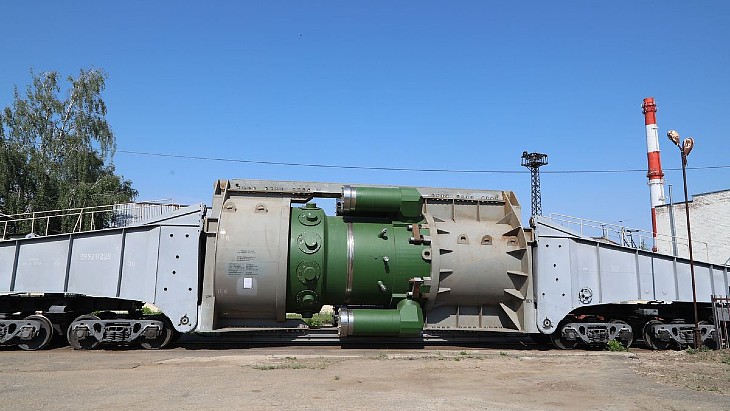
First RITM-200 reactor unit manufactured for floating nuclear plant
The RITM-200C reactor will be one of two which will together be installed on the first of Russia's planned fleet of floating nuclear power units.
(Image: Rosatom)
The 58 MWe capacity reactor unit has been manufactured by Rosatom's Machine-Building division at the ZiO-Podolsk plant near Moscow.
Serial production of the floating power units (FPU-106) is under way to power a copper mining industrial cluster in the Chukotka Autonomous Okrug. This will be the first such project to provide carbon-free energy for industrial production, with four floating power units earmarked for it.
Alexey Likhachev, Director General of Rosatom, said: "Rosatom continues to expand its range of floating power units, and the completion of the first reactor for the lead floating nuclear power unit is a significant milestone. Today, Russia is the only country with an operating floating nuclear power plant, and we intend to maintain our leadership in the development of small-scale technologies, offering innovative and low-carbon energy solutions to our partners in Russia and abroad."
The RITM-200C is a modification of the RITM-200 reactors in operation on the latest series of nuclear-powered icebreakers. In total, Rosatom's Machine-Building division is in various stages of producing 14 RITM-200-based reactor units for icebreakers and floating power units.
Russia's first floating nuclear power plant, the Akademik Lomonosov, has been operating in Chukotka since 2020. During this time, it has generated more than 1.2 billion kWh of electricity and avoided more than 400,000 tonnes of greenhouse gases, Rosatom said.
The state nuclear corporation says that the RITM-200 reactors have proved their effectiveness in Arctic conditions. It says that, in floating power units, they will be able to effectively address current or potential energy shortages in remote, offshore areas. As well as producing floating power units for domestic use, Russia also sees considerable export potential.
According to past presentations, the FPU-106 units would provide 106 MWe, the refuelling interval would be every 5 to 7 years, and there would be a service life of about 40 years. A version of a floating power unit targeting international markets would be 100 MWe with a refuelling interval of 10 years and a service life of 60 years.
Vessel for Newcleo technology demonstrator installed
France-headquartered innovative reactor developer Newcleo announced that the main vessel for its PRECURSOR non-nuclear demonstrator has been installed at the ENEA Brasimone Research Centre, near Bologna, Italy.
(Image: Fucina Italia)
To support Newcleo's advanced reactor R&D programme, SRS Servizi di Ricerche e Sviluppo Srl has recently completed the installation of OTHELLO, a 2 MW loop-type lead test facility for qualifying components and materials in lead-cooled environments. SRS is currently working on the installation of PRECURSOR, a 10 MW pool-type non-nuclear test system scheduled for completion in 2026 at the ENEA Brasimone Research Centre. PRECURSOR - which will use electrical heaters to simulate the nuclear fuel - will reproduce the company's demonstration LFR-AS-30 reactor at a reduced scale.
The vessel for PRECURSOR was manufactured in Piombino, in Tuscany, by Fucina Italia srl and engineered by Newcleo together with SRS - all companies within the Newcleo group.
The dimensions are slightly smaller than those of Newcleo's commercial 200 MWe version of its lead-cooled fast neutron reactor, the LFR-AS-200. The vessel weighs just over 20 tonnes empty, but once filled with lead and internal components the full mass will exceed 155 tonnes.
"What makes [PRECURSOR] truly unique is that it will generate electricity using a turbine,the only component we didn't manufacture but just completed by our partner FINCANTIERI, making it potentially the only facility in the world to do such a complete demonstration of reactor functionalities," Stefano Buono, CEO and founder of Newcleo, said.
Newcleo said PRECURSOR is also the demonstration of the company's vertical integration capabilities: engineering, fabrication, transport, and installation.
Newcleo is progressing with the construction of its demonstration LFR-AS-30 reactor, with a power output of 30 MWe, which it plans to locate in Indre-et-Loire in the Chinon Vienne et Loire community of municipalities in western France. This first reactor would offer, in addition to electricity generation, advanced research services and the production of medical isotopes. The company continues administrative procedures in close cooperation with local elected officials, aiming for commissioning by 2031.



_74959_98460.jpg)
_53346.jpg)
_85372.jpg)
_11412_80006.jpg)
_94492.jpg)
_27706.jpg)