Saturday, May 30, 2026


Petra shutters Finsch mine, cuts jobs as diamond slump bites
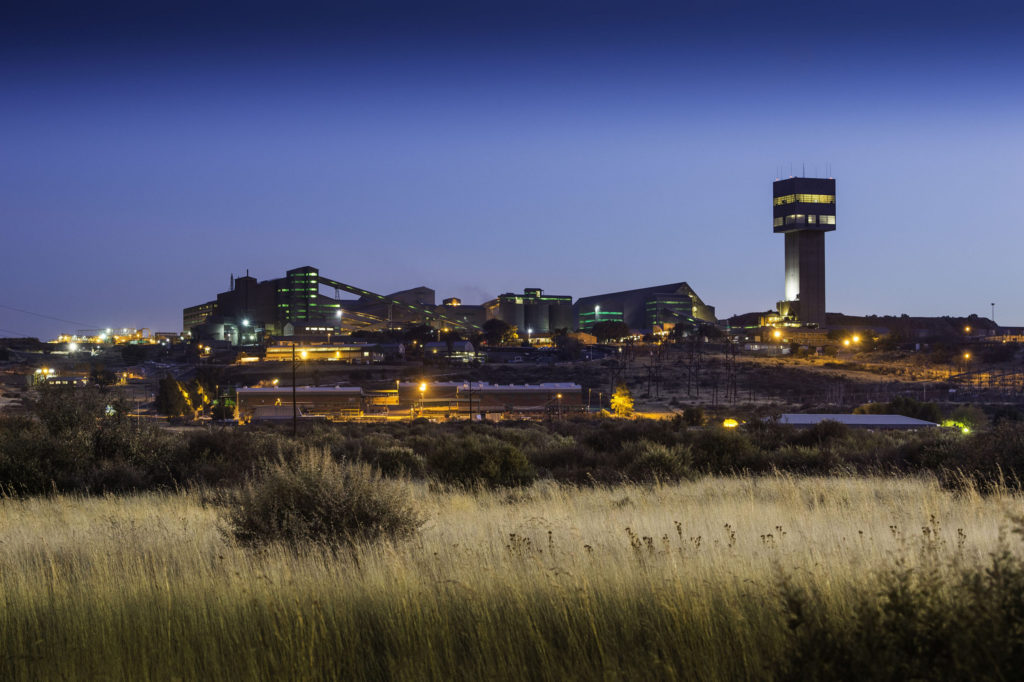

Petra Diamond’s Finsch mine in South Africa (Image: Petra Diamonds.)

Petra Diamonds (LON: PDL) is placing its Finsch mine into business rescue and cutting jobs across its South African operations as collapsing diamond prices and a strong rand threaten the miner’s liquidity and future.

The company said on Friday that worsening conditions in the natural diamond market, compounded by Middle East tensions and weaker prices for smaller stones, have forced it to take emergency measures. 

Finsch’s average realized price fell to about $47 per carat in April and May from $56 per carat in the third quarter, while prices at Petra’s flagship Cullinan mine dropped to roughly $81 per carat from $109 per carat. 

Petra said Finsch, which generated 34% of group revenue in fiscal 2025 and primarily produces diamonds of two carats and below, has been hit by what management described as a structural decline in prices for smaller stones.

The company has suspended capital development at Finsch, redirected equipment to support production and launched consultations that could lead to workforce reductions across the group. Petra, which employs more than 4,000 people, did not disclose how many jobs could be affected but said it had begun a consultation process with employees and unions.

“We are faced with an unprecedentedly weak diamond market, due to global macro factors as well as the recent Middle East tensions,” CEO Vivek Gadodia said. “We believe that there is now a structural shift on pricing of smaller sized diamonds and therefore do not foresee a significant price appreciation for the smaller sized diamonds.”

The company also halted production guidance for fiscal 2026 through 2030 pending a revised business plan expected by the end of September.

Industry shift

The restructuring highlights mounting pressure across the diamond sector as slowing Chinese luxury demand and the growing popularity of lab-grown stones weigh on prices. Producers have responded by curtailing operations, reducing inventories and reassessing expansion plans. 

Petra’s decision to place Finsch into business rescue underscores concerns that lower-value diamonds may face a prolonged decline in demand and pricing.

The Cullinan mine remains central to Petra’s future strategy because of its ability to produce rare, high-value Type II diamonds that command premium prices. The company is increasing mining in areas known to host those stones and is testing productivity improvements aimed at boosting recoveries and throughput. 

Liquidity focus

To support the restructuring, Petra secured lender consent to ensure the Finsch business rescue process does not trigger defaults under its senior bank facilities or second-lien notes. 

The company also warned it could breach minimum liquidity requirements later this year, prompting discussions with creditors and a formal bondholder consent process.

Investors reacted sharply to the announcement. Petra shares fell 17% in early afternoon trading to 11p, extending their decline to more than 30% this year. The company’s market capitalization has shrunk to about £42 million ($56 million).

The overhaul will bring leadership changes as well. Joint CEO Operations Juan Kemp will leave the company at the end of May following a mutual separation agreement with the board. Vivek Gadodia will become sole chief executive and join the board as Petra focuses on preserving liquidity and reshaping the business around Cullinan’s higher-value production.

Report: Israel’s Economy and Agricultural Ministers Oppose Zim Acquisition

Zim containership
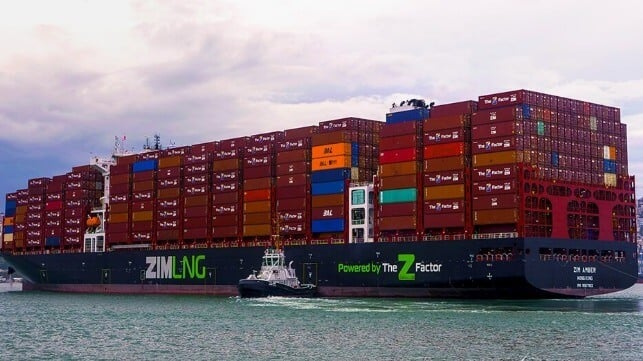
Opposition is being expressed as the government review's the planned acquisition of Zim (Zim file photo)

Published May 28, 2026 5:47 PM by The Maritime Executive


Media reports from Israel report mounting opposition to the approval of the sale of Zim to Hapag-Lloyd. Calcalist, which was the first to report that Hapag had been selected to buy Zim, now reports that key Israeli ministries are warning of the dangers of approving the sale.

Under the terms of the agreement, Hapag would take over the majority of Zim’s current operations and fleet. An Israeli investment firm, Ishay Davidi’s FIMI, would launch a new Zim Israel that would operate a small, regional carrier to meet the requirements of the Golden Share held by the government. Davidi asserts it would be a strong regional carrier able to meet the obligations to Israel and would have relationships with Hapag to maintain global access.

Calcalist reports it has seen an opinion submitted by the Ministry of Economy’s Foreign Trade Administration that, however, questions the new company and its abilities. It writes that the report calls the proposed structure, “a direct risk to maritime traffic, Israel’s economic and strategic interests.”

It highlights that the plan calls for Zim Israel to retain just 12 owned ships, a requirement of the Golden Share, with four additional chartered ships to maintain the regional routes. Zim currently has a fleet, it says, of 99 ships. Under the Golden Share, Zim must also be headed by an Israeli, and it gives the government the right to refuse a change in control of the company.

Calcalist says that the ministry’s written opinion concludes that the transaction “empties the state’s golden share of its content and endangers the national interests it was designed to protect.” It questions the structure of the new company, saying it “lacks a profitable asset base that would allow it to survive economically beyond a few years.” Calcalist writes that the Ministry concluded it could create a crippled company unable to stand independently.

The  Ministry also reportedly cites the investments in Hapag by the sovereign wealth funds of Qatar and Saudi Arabia, countries it notes that do not have diplomatic relations with Israel. It warns that the sovereign funds are not merely passive investors and that the countries use infrastructure and economic holdings to create geopolitical leverage.

Zim is a key part of the Israeli economy and participant in both imports and exports. It controls approximately a quarter (22 percent) of the container shipping market in Israel. 

Calcalist reports the Ministry of Agriculture has also voiced opposition, saying the transaction could threaten Israel’s food security. It notes the critical role of imports of goods, including wheat and fertilizers. It says 85 percent of Israel’s calorie consumption is imported. Zim reportedly controls roughly one-third of maritime food shipping activity.

Two weeks ago, there were reports that the Shipping and Ports Authority also voiced its formal opposition to the transaction. They reportedly called the proposed Zim Israel a “dependent and weakened entity,” saying it would endanger Israel’s national interest in shipping and supply chains.

Calcalist reports the Ministry of Transport is also expected to adopt a similar opinion. The concern is that Israel would lose maritime independence.

The shareholders of Zim have approved the takeover, and management of Zim has begun to resign anticipating the completion of the transaction. However, completion of the deal remains dependent on government and regulatory approval.


Marcura Husbandry Targets the Vessel OPEX Blind Spot

Marcura
Marcura Husbandry Reporting

Published May 29, 2026 12:18 PM by The Maritime Executive


[By: Marcura]

For most ship managers, husbandry port calls sit in an uncomfortable gap. They are operationally critical: the crew changes, repairs, bunkering stops and maintenance calls that keep vessels running - yet they are routinely managed through email chains, informal coordination and judgment calls made without reliable data. The costs are real; the visibility is not.

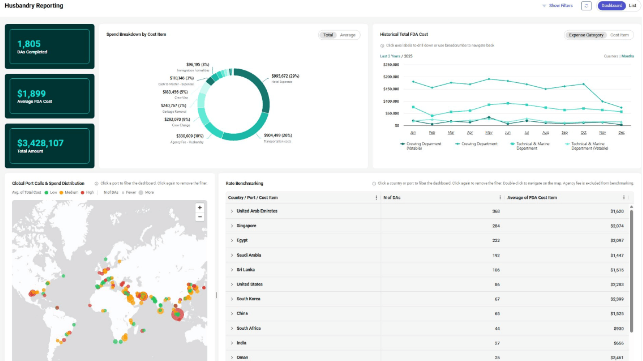
Launching today, Marcura Husbandry is built to close that gap, bringing planning, procurement, execution and benchmarking into a single connected workflow.

Of the roughly 1.3 million port calls recorded globally each year, close to a fifth are classed as husbandry, according to Marcura’s analysis. Despite the significant number of calls that exist specifically to maintain vessels, the process governing them has barely changed in decades.

Masters scope services informally. Agents are appointed based on familiarity rather than contract compliance. Preliminary invoices are approved without benchmark context, and when the final disbursement account arrives higher than expected, which it routinely does, the cause is rarely identified and almost never recovered.

Janani Yagnamurthy, SVP, Product, Marcura, said: "Marcura has spent 25 years at the centre of port spend management, processing disbursement accounts and building the data that underpins how the industry understands port costs. That depth of proprietary data, combined with the expertise we have built internally, gives us unmatched insight that helps drive value. Marcura Husbandry brings this capability into the full vessel management lifecycle, and we believe it marks a fundamental shift in how ship managers approach non-commercial port call costs."

Marcura Husbandry brings cost intelligence into the workflow before any agent is appointed. The Estimator module draws on historical data, port profiles and vessel characteristics to set an expected husbandry cost, so teams can compare ports and budgets before procurement starts. Where contracted rates exist, they surface automatically at approval. Where they do not, a structured digital RFQ brings every agent quote into a standardised format and shows an accurate market benchmark alongside each one.

Once an agent is appointed, the PDA is screened against benchmark rates, contracted rates and historical spend before approval. The FDA gets the same check when it arrives. Every call feeds vessel and voyage spend analytics, PDA-to-FDA variance reporting and updated market benchmarks, giving teams the evidence to negotiate, renew contracts and report with confidence.

Marcura Husbandry is available now. Find more information and book a demo here.

The products and services herein described in this press release are not endorsed by The Maritime Executive.


GT Wings New Performance Assessment Tool for Jet Sail Wind Propulsion

GT Wings
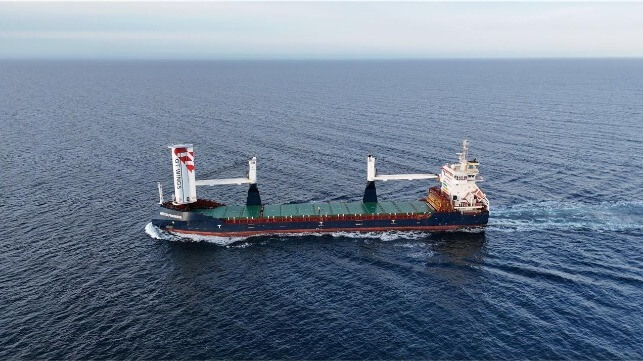
MV Vectis Progress with AirWing - credit: GT Wings

Published May 29, 2026 2:44 PM by The Maritime Executive


[By: GT WIngs]

GT Wings has introduced a holistic ship performance assessment tool to support early-stage evaluation of its AirWing™ wind-assisted propulsion system. The tool, developed by independent wind assist experts Blue Wasp Marine and based on its proprietary Pelican Suite™ web-based platform, will enable GT Wings to develop and submit reliable and structured indications of potential fuel, emissions, and regulatory savings.

RINA’s review and verification confirm that the modelling methodology and performance assessment framework of the Pelican Suite™ tool are aligned with recognised industry standards and guidelines. This Approval in Principle provides confidence that the approach is suitable for early-stage evaluation of wind-assisted propulsion solutions, offering shipowners a reliable basis for preliminary technical and commercial assessments.

Strengthening early-stage performance assessment

GT Wings has developed AirWing™, a Jet Sail wind propulsion system using controlled suction and blowing to achieve high aerodynamic performance with a minimal deck footprint. As wind-assisted propulsion adoption accelerates, shipowners are increasingly seeking reliable early-stage insights to inform both technical and commercial decisions.

GT Wings’ Jet Sail system has already been installed onboard Carisbrooke Shipping’s MV Vectis Progress, with additional orders from Grieg Maritime Group, and the company has completed more than 80 early-stage performance assessments to date. This new tool builds on that experience, enabling more consistent and transparent initial evaluations.

Faster, more robust early-stage insight

The assessment tool enables rapid, route-based simulations to estimate potential fuel, emissions and regulatory savings across different vessel types, operating profiles, and AirWing™ configurations.

Using a four-degrees-of-freedom (4DOF) modelling approach, the tool provides a consistent, physics-based indication of performance. This allows shipowners to compare options and build an early business case with greater confidence.

Independent modelling approved by RINA

Blue Wasp Marine provides physics-based maritime performance modelling and simulation tools that are applied across a range of wind-assisted propulsion technologies. Its Pelican Suite™ software enables consistent, technology-neutral assessment of aerodynamic and hydrodynamic performance.

To further strengthen confidence in the methodology, the modelling approach and outputs were verified in line with industry practices by RINA, supporting alignment with recognised standards such as MEPC circ.896 and the ITTC Guidelines for Wind Powered Ships (2024), providing an additional layer of assurance for shipowners.

By combining GT Wings’ project experience with independent modelling and a clear verification pathway, the tool provides a neutral and credible view of performance potential.

Jonny Gambell, Sales and Strategy Director at GT Wings, said: “Our Jet Sail technology represents a fundamentally new approach to wind propulsion. To best serve our customers’ interests, it’s vital that early performance assessments are credible and transparent. This tool gives shipowners a trustworthy first view of potential savings, helping them to understand the return on investment and the reduced emissions that our technology brings. We are fortunate to be working with Blue Wasp, who’s unrivalled simulation expertise has helped us to develop this state-of-the-art performance tool.”

Giovanni Bordogna, CEO and R&D Lead of Blue Wasp, added: “We are proud to contribute to the development and credibility of the Wind Assist industry through state-of-the-art performance prediction tools. This approval from RINA for our Pelican Suite™ software is an important recognition of our work and confirms that we are progressing in the right direction.”

Patrizio Di Francesco, Special Projects North Europe Business Development Manager at RINA, commented: “As a member of the International Windship Association (IWSA), RINA is pleased to collaborate with GT Wings in addressing the challenges related to wind propulsion performance prediction, leveraging its newly developed Rules for Wind Assisted Propulsion Systems (WAPS) and granting an Approval in Principle to support a robust and reliable assessment framework.”

The products and services herein described in this press release are not endorsed by The Maritime Executive.


Jones Act Supporters Launch Campaign to End White House's Waiver

American flag
USN file image

Published May 28, 2026 10:33 PM by The Maritime Executive


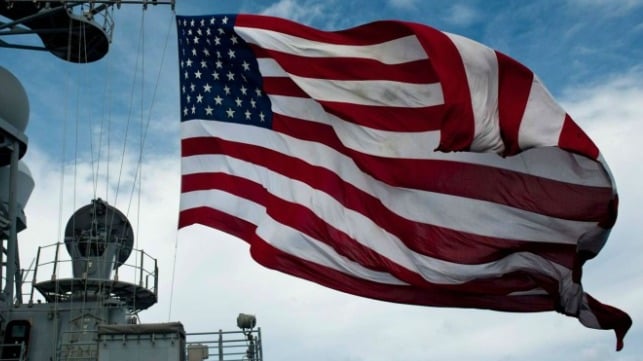
The Trump administration has waived the Jones Act for petroleum and fertilizer cargoes from March through mid-August, covering all U.S. regions and all ports. The waiver is unprecedented in length and scope, and U.S. domestic shipping operators are pushing back hard. This week, the American Maritime Partnership - the voice of the domestic maritime industry - launched a national advertising campaign aimed at convincing the White House to bring the waiver to an end.

“Clearly, President Trump has been led to believe that waiving the Jones Act is an effective way to lower gas prices, when we all see that prices have not gone down with the waiver. What the waiver does is put America last by allowing foreign operators and mariners to take American business and jobs,” said Jennifer Carpenter, President of the American Maritime Partnership. 

Through May 21, about 60 waivers have been issued for foreign-flag vessels, according to RBN Energy. The largest share are for fuel deliveries from the Texas coast to California, a perennially expensive market for gasoline. California has lost substantial refinery capacity due to closures in recent years, and is heavily import-dependent; with the new access to foreign tanker tonnage, it has taken in more than three million barrels of petroleum products from Texas refiners since the start of the waiver period. Crude oil from the Gulf - including Strategic Petroleum Reserve barrels out of Louisiana - has also been shipped to refineries in California, making up for lost deliveries from overseas. California isn't the only beneficiary: Smaller numbers of foreign-flag voyages have occurred from the Texas coast to customers in Florida, Pennsylvania and Puerto Rico, RBN found, and a handful of cargoes have made it all the way north to Alaska.

But if the waiver has the power to bring down the pump price of gasoline, it has yet to demonstrate it in a visible way in California, where the largest share of waiver voyages have ended up. Average gas prices reached $6 per gallon in the state in early May, and have remained at that level ever since. Domestic crude oil prices have fallen by about 20 percent over the same period, from about $105 to about $87 per barrel. 

Commodity research firm Argus says that the savings from shipping on foreign-flag tonnage amount to about six cents per gallon, not enough to materially affect the price at the pump. The pro-Jones Act Center for Maritime Strategy puts the number even lower. Meanwhile, according to AMP, the waiver is having significant negative effects on the future of the Jones Act fleet: the group says that it has prompted one investment platform to put a halt to a planned $1 billion capital raise for American domestic shipping, putting at risk another $2.6 billion in shipyard contracts. 

"The waiver] directly undermines the very policies that President Trump campaigned on and has championed – buy American, hire American, and strengthen our national might. The President should trust his instincts, follow his outlined policies and put America and our national security first," said AMP's Jennifer Carpenter in a statement. 

The true test may be still to come. In the initial phase of the waiver period, international product tanker availability was tight, limiting domestic-voyage arbitrage opportunities due to chartering costs. Day rates on the U.S. Gulf MR index have since come down significantly, reducing the financial barrier to trading domestically with foreign-flag tonnage. 

Court Dismisses Lawsuit Against Porsche Over Felicity Ace Fire

Judge ruled that the shipowner hadn't proven that an electric sports car started the fire

Porsche
A 2022 Porsche Taycan electric car (Press handout photo courtesy Porsche)

Published May 28, 2026 11:40 PM by The Maritime Executive


A lawsuit against carmaker Porsche over the fire aboard the car carrier Felicity Ace has been resolved in favor of the famous German auto brand. 

Felicity Ace departed the ro/ro port of Emden, Germany on February 10, 2022 with a load of 4,000 cars on board, all built by the Volkswagen Group. The consignment included high-value autos from VW's luxury Audi, Porsche, Bentley and Lamborghini brands. Some of these vehicles were all-electric or hybrid-electric, fitted with lithium-ion batteries. 

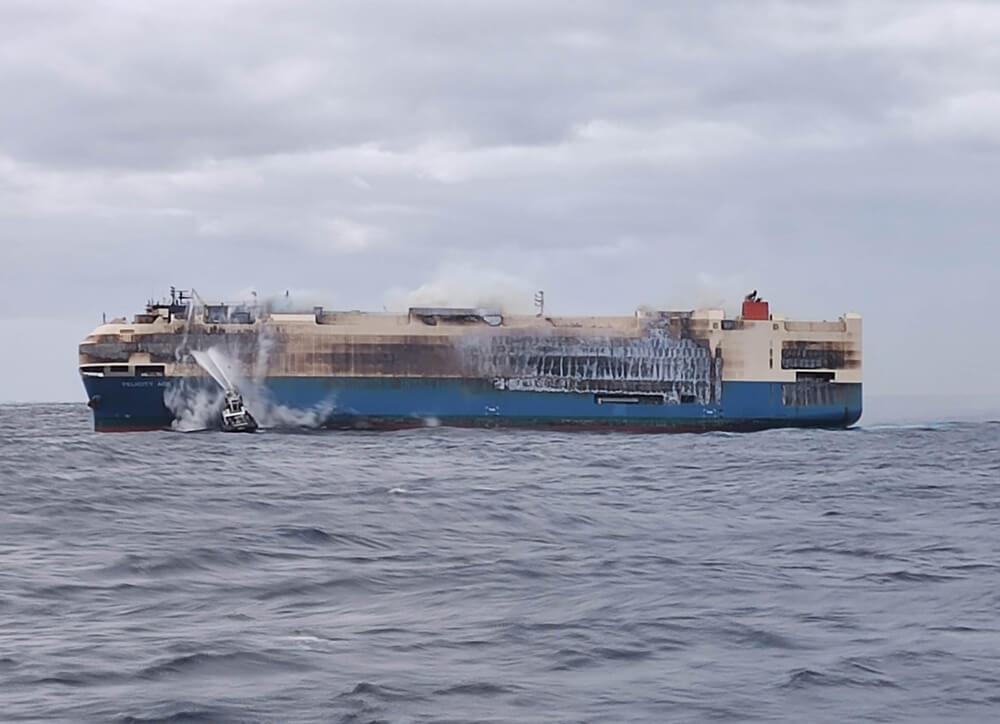
On February 16, a fire broke out on a vehicle deck while the ship was about 200 nautical miles off the coast of the Azores. The crew were not able to control the blaze, and they abandoned ship successfully. All 22 were rescued by the Portuguese Navy, and no injuries were reported. The ship, however, was badly damaged: burn patterns on the exterior suggested complete combustion in most cargo holds and spaces above the waterline. The vessel burned for about one week, and when it was finally out, salvors boarded to rig up a tow. The salvage team began to tow the hulk to a port of refuge, but while under way, the Felicity Ace took on a severe list; the wreck suddenly sank on the morning of March 1 - taking with it hundreds of millions of dollars in burnt cars. 

The Felicity Ace after the fire, February 2022 (Portuguese Navy)

After the sinking, shipowner MOL and its insurers filed two lawsuits against Porsche in two different German regional courts, one in Braunschweig and another in Stuttgart. The plaintiffs alleged that the batteries inside of a new Porsche Taycan all-electric sports car was responsible for starting the fire on the vehicle deck. More than 100 high end Taycans were on board; depending on options, these vehicles were each worth about $80-180,000 each (MSRP) at the time of shipment. 

The plaintiffs contended that the risks of the battery technology were new and little-known at the time, and that the automaker should have given more warning. VW countered that the fire could have started a different way, and that the vessel's firefighting procedures and systems were at fault for the spread of the blaze. Initial attempts at mediation were not successful, and both suits proceeded to trial. 

On Wednesday, the Stuttgart court concluded that it had not been given conclusive evidence that a Taycan had started the fire, and ruled in Porsche's favor. The ruling is still subject to possible appeal. 

The Braunschweig trial is still under way. 


Product Tanker Catches Fire Anchored Off Bangladesh

tanker fire off Bangladesh
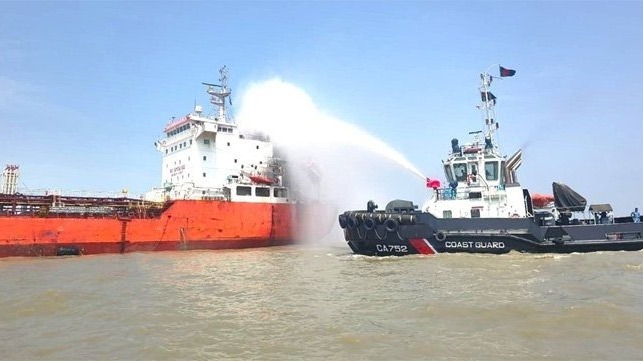
Teams were fighting the fire aboard the product tanker anchored at Chittagong (Bangladesh Coast Guard)

Published May 28, 2026 6:25 PM by The Maritime Executive


The Bangladesh Coast Guard reports it was working to control a fire that was burning on a product tanker anchored off Chittagong. The fire was reported at 0725, coming on the holiday of Eid al-Adha, one of the holy days of the Islamic calendar, coinciding with the culmination of the annual Hajj pilgrimage to Mecca.

The tanker Meghna Trader (13,000 dwt) was built in 2007 and is owned by Meghna Group of Industries (MGI), one of the largest conglomerates in Bangladesh. The ship is part of a fleet operated by Meghna Edible Oils Refinery, a major industrial facility and producer of edible vegetable oils, including soybean, sunflower, and mustard oils.

The ship had been at anchor for the past 10 days after arriving from Indonesia. The fire teams reported they were able to rescue 22 crewmembers without injury.


Coast Guard and rescue teams were reported to be working tirelessly on fire control and extinguishing the fire. Images showed fireboats spraying down the vessel. The Coast Guard vessel Shyamol Bagla and a Coast Guard tug, Promatta, responded. In addition, two high-speed boats from the fire departments and shore teams were also assisting.

In just under three hours, the Coast Guard reported the external portion of the fire had been extinguished. However, the fire was continuing to burn on the interior of the ship, and they were continuing efforts to extinguish the fire.


Fire Breaks Out Aboard Ro/Pax Ferry at Port of Naples

fire
Courtesy Vigili del Fuoco

Published May 28, 2026 6:18 PM by The Maritime Executive


Firefighters at the port of Naples, Italy have successfully controlled a blaze that broke out yesterday aboard a moored ferry near the city's famous Piazza Mercato. 

The incident occurred aboard the ferry GNV Phoenix, a ro/pax ferry that was moored at La Nuova Meccanica Navale for maintenance work. The blaze broke out on the seventh deck at about 1845 hours on Wednesday evening. All 85 people who were aboard the ship at the time of the fire evacuated safely, and there were no injuries reported. 

Firefighting work continued through the night, aided from the waterside by one fireboat and three tugs and from shore by the Vigili del Fuoco, Italy's national fire department. As a precautionary measure, the city of Naples' health authority issued a shelter-in-place order, recommending against going outside or using ventilation systems. So far, air quality readings suggest no issues, according to regional environmental agency ARPAC. 

Firefighters worked through into Thursday morning and finally got the blaze under control, preventing it from spreading through the ship. Decontamination work was under way as of Thursday morning, according to Vigili del Fuoco.  

The port of Naples has remained continuously open to marine traffic, with the exception of Piers 29 and 30, where firefighting operations were under way. 

GNV Phoenix (ex name Athara) is a 23-year-old ro/pax ferry, and was previously owned by Tirrenia. She trades domestically and has no history of overseas port state control inspections.


USCG Catches Four Chinese Stowaways on Barge Arriving From Florida

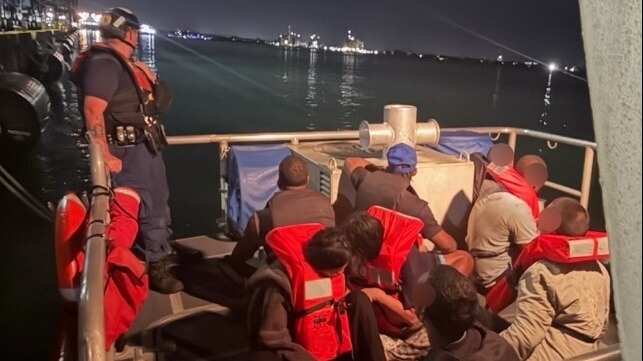
Chinese and Dominican stowaways under guard on a patrol boat in San Juan Harbor (USCG)

Published May 28, 2026 7:47 PM by The Maritime Executive


Last weekend, the U.S. Coast Guard busted a group of eight stowaways on a barge in San Juan's harbor, the latest in a string of interdictions on tug-and-tow traffic to Puerto Rico. This time was different in the unusual composition of the would-be immigrant group and the last port of call: the group was on board a vessel that had departed from the continental United States, not a foreign country.  

On May 22, Sector San Juan received a report from CBP's Air and Marine Operations Center, which reported that possible stowaways had been spotted aboard the barge tow connected to the U.S.-flagged tug Southern Dawn. 

AIS data provided by Pole Star Global shows that Southern Dawn's port of departure was Jacksonville, Florida. She left on May 16 and got under way for Puerto Rico, maintaining a steady speed of 7-8 knots throughout the voyage and making no foreign port calls, stops or diversions. 

Though the tug had been on a domestic route, foreign nationals had managed to get on board the tow at some point before arrival in San Juan, according to the Coast Guard. Four Chinese nationals and four Dominican Republic nationals were apprehended by a Coast Guard boat crew, and were transferred to CBP for processing at the Puerto Nuevo Terminals in San Juan's harbor. 

“The coordination and swift response of the Coast Guard and our partner agencies to apprehend and process these stowaways demonstrates our collective commitment to securing and protecting the U.S. maritime border and navigable waterways in Puerto Rico and the U.S. Virgin Islands,” said Cmdr. Matthew Romano, Coast Guard Sector San Juan's chief of response.

Chinese nationals account for about 2-3 percent of all illegal immigrants in the United States, but apprehensions of unauthorized Chinese migrants have been on the rise on the southern border in recent years. About 25,000 arrests of Chinese nationals occurred at the border in 2024, according to the Border Patrol. 

It is unclear whether the stowaways boarded in Jacksonville or at sea, and why they attempted to reach Puerto Rico rather than Florida, Southern Dawn's port of origin and next port of call. 

Southern Dawn is a twin screw, EMD-powered line-haul tug originally built at Bollinger as the Hoku Ke'a, delivered to Young Brothers and used in the Hawaiian trades. She was resold in 2021 to a company based in Louisiana and given her current name, according to Tugboat Information. AIS data shows that she has since returned to Jacksonville. 

CRIMINAL CAPITALI$M

Maritime Leader SS Teo Takes Leave of Absence to Fight Price-Fixing Charges

SS Teo, 2018 (press handout courtesy Singapore Business Federation)

Published May 28, 2026 9:49 PM by The Maritime Executive


Well-known Singaporean executive Teo Siong Seng (SS Teo) is taking a leave of absence from his role as chairman of Pacific International Lines in order to focus on his defense against U.S. charges of price-fixing. The charges are connected with his role as CEO of container manufacturer Singamas, a related company. 

Teo, 71, is one of seven executives in the container-manufacturing industry who face U.S. charges of conspiring to restrict production and drive up equipment prices during the pandemic-era cargo surge. The U.S. Department of Justice alleges that in 2019-2020, a group of Chinese container manufacturers - Dong Fang, CXIC, Singamas, market leader CIMC, and two unnamed co-conspirators - began working together to suppress production and raise their prices for standard dry shipping containers. They allegedly agreed to restricted shifts and hours for their respective production lines and to install video cameras so that all cartel members could verify each others' compliance. By late 2022, the conspirators expanded the restrictions to include comprehensive caps on "total allowable capacity" for each company's annual production, DOJ alleges.

The arrangement allegedly boosted profit margins by massive amounts for the participants. Singamas, under SS Teo's leadership, swung from a $110 million loss in 2019 to a profit of $190 million in 2021.

Facing these charges, Teo has announced that he will be putting his high-profile posts in Singapore's business world on pause. He plans not to seek reelection to his post as chairman of the Singapore Business Federation when his term expires at the end of June, and he will be taking a leave of absence from his roles at the Singapore Economic Resilience Taskforce, Enterprise Singapore, National University of Singapore and Pacific International Lines, where he is executive chairman. 

Another Singamas executive, Chinese national Vick Ma, is under arrest in France and facing extradition to the United States. 

SS Teo is the son of Chang Yun Chung, a well-known shipowner who founded Pacific International Lines in 1967. Teo took over as managing director of the firm as 1992, and became chairman in 2018. Today, PIL has about 100 ships and 300,000 TEU of capacity, making it the 12th-largest container line globally. With vessels ranging from feeders to ULCVs, it operates transoceanic as well as regional services.  


Cable Layer Holed in Collision with Boxship off Pakistan

bow damage to cable ship
Damage to the bow of a cable ship after a collision off Pakistan (Pakistani TV)

Published May 29, 2026 1:05 PM by The Maritime Executive


Officials in Pakistan are investigating to understand what happened overnight on May 28 when a cable ship and a containership maneuvering outside the port of Karachi collided. No one was injured, but there are reports that containers have fallen overboard, and the hull of the cable ship is holed, and it is showing significant damage.

The cable ship Niwa (7,900 dwt) is owned and managed from the UAE. The ship, which is 146 meters (479 feet) in length, was underway, maneuvering toward the port of Karachi. The ship was built in 1991 and was arriving from Salalah, Oman.

A Turkish-owned containership, Papu (38,000 dwt), was outbound from Karachi to Jeddah, Saudi Arabia. The ship is registered in Liberia and has a capacity of 2,700 TEU. It was built in 2008 and is 215 meters (705 feet) in length.

Government officials and the port authority report that the collision took place outside the port near an anchorage. Port tugs quickly responded and escorted the holed cable ship to a dock in Karachi while the containership was instructed to hold in the anchorage. There are no reports of damage to the containership, but media reports indicate an undetermined number of containers went overboard.

Pakistan’s Federal Minister for Maritime Affairs Junaid Anwar Chaudhry said the authorities were assessing the structural damage to both ships and evaluating the environmental impact, but that operations in the port were continuing as normal. He said the initial information suggested negligence on the part of the masters of both vessels.

The containership was cited by Chinese officials in November 2025 for 17 deficiencies during a Port State inspection. Among the issues listed were the auxiliary engine and the condition of the steering gear.