Monday, June 01, 2026

Trump Suggests Pope Unaware Of Iran Nuclear Stance Despite Leo’s Repeated Calls For Disarmament


June 1, 2026 

By EWTN News

President Donald Trump warned against a nuclear‑armed Iran, reacting to Chicago Mayor Brandon Johnsonʼs May 28 meeting with Pope Leo XIV at the Vatican, where the mayor said they discussed U.S. immigration and the Iran conflict.

Trump posted, “Someone should explain to the Pope that the Mayor of Chicago is useless, and that Iran cannot have a Nuclear Weapon.” He also shared screenshots of the mayor’s posts with pictures of him and the Chicago-born pope sharing gifts and praying. Trump made the comments in a May 30 post on Truth Social.

The president has repeatedly claimed, without evidence, that Leo wants the Middle Eastern country to develop nuclear armaments.

Leo has rejected those allegations. On May 5 at Castel Gandolfo he stated that the Church “has spoken for years against all nuclear weapons.” Later, Vatican Secretary of State Cardinal Pietro Parolin stated that the Holy See “has always worked, and will continue to work, on nuclear disarmament.”

The White House and Chicago mayor’s office did not immediately reply to requests for comment.

Trump sharply criticized Pope Leo XIV in April, calling him “weak on crime” and “terrible for foreign policy” and saying he is “not a fan” of the pope.

Trump expressed his disapproval of Leoʼs public statements denouncing the U.S.-led war on Iran. The Holy Father has repeatedly called for peace amid the ongoing conflict.

The pope has said he is “not afraid of the Trump administration or of speaking out loudly about the message of the Gospel.”
Indonesia’s Climate Finance Experiment – OpEd


June 1, 2026 
By Jonathan Manullang


Having grown up in North Sumatra, I have seen how ecological exploitation by companies such as Toba Pulp Lestari and Agincourt Resources reshapes both landscapes and lives. When flash floods and landslides struck the island in November 2025—destroying homes, displacing hundreds of thousands, and delaying aid for weeks—the scale of that vulnerability became unmistakable.

What these disasters revealed was the limits of a disaster governance model that still relies on reacting after the fact. In response, a new generation of Indonesian climate finance proposals signals a broader shift toward financialised climate governance, in which resilience is increasingly packaged, priced, and transferred through global capital markets.

An Indonesian student team from Columbia University was selected as a finalist in the 2026 Kellogg-Morgan Stanley Sustainable Investing Challenge with its proposal, Nusantara Resilient Capital (NRC). The project seeks to deploy a fully collateralised parametric catastrophe bond to transfer Sumatra’s sovereign flood risk to capital markets. It would also ring-fence surplus returns for upstream reforestation. Though still conceptual, the proposal responds to a clear gap exposed by the November 2025 floods, which caused an estimated US$3.2 billion in losses and displaced nearly 400,000 people. Its premise is straightforward: disaster response must move from delayed aid to pre-arranged, market-based liquidity.

The competition’s winning entry was even more ambitious. It proposed the AAA Fund—a blended finance credit facility designed to address the degradation of Indonesia’s coastal mangrove ecosystems while generating returns through blue carbon credits. Like NRC, the fund remains a proposal, but it reflects a broader trend: the growing effort to link ecological restoration with financial returns.


Since the 2004 tsunami in Aceh, disaster governance has been characterised by a largely reactive orientation, with strong emphasis on emergency budget reallocations, international humanitarian aid, and extensive post-crisis reconstruction efforts. At the same time, Indonesia’s development model—historically dependent on extractive industries—has intensified environmental vulnerability while generating uneven state capacity across regions. As climate shocks increase in both frequency and scale, this system is becoming fiscally and politically untenable, creating the conditions for the turn toward market-based, financialised solutions.

Disaster management is increasingly treated as a question of macroeconomic stability and long-term governance. The turn toward climate finance reflects an attempt to mobilise capital beyond the state and to reduce dependence on post-disaster borrowing and aid. Indonesia is positioning itself as a laboratory for financialised climate governance in Southeast Asia.

The NRC proposal illustrates this shift at the sovereign level. By combining parametric catastrophe bonds with nature-based restoration, NRC turns climate risk into a tradable financial instrument: payouts are automatically triggered when environmental thresholds are exceeded, enabling rapid disbursement. In doing so, it addresses a central weakness of conventional disaster response—delays in funding—while reframing ecosystems as infrastructure within systems of risk pricing and capital allocation.

At a different scale, the AAA Fund focuses on coastal resilience through a blended finance structure that works with local cooperatives. Its core strategy is silvofishery—integrating mangrove restoration with shrimp aquaculture. Restored mangroves generate blue carbon credits for international markets, while cooperatives produce shrimp for export supply chains that increasingly demand traceability and low-carbon production. The model aims to create a feedback loop in which ecological restoration and rural livelihoods reinforce one another.

These initiatives operate at different levels: NRC targets sovereign risk, while the AAA Fund focuses on local economic restructuring.

The AAA Fund’s reliance on global carbon markets makes it structurally fragile. Carbon prices remain volatile and unevenly regulated, and the credibility of offset markets continues to be contested. This introduces a fundamental mismatch: ecological restoration unfolds over decades, while investors expect measurable returns within much shorter timeframes. The risk is growing with the possibility that restoration projects are shaped more by market signals than by ecological or community needs.

Technical and institutional constraints reinforce this problem. Measuring blue carbon requires satellite monitoring, soil sampling, and internationally accredited verification systems—processes that are expensive and often dominated by external actors. This raises a familiar concern in Indonesia’s resource sectors: that value is captured by intermediaries while local communities assume the burden of implementation.

Governance challenges further complicate the picture. Cooperative models are vulnerable to elite capture, weak accountability, and contested revenue distribution. In coastal regions, overlapping claims between customary authorities, state agencies, and private concessions make even basic questions of ownership difficult to resolve. Who controls restored mangroves? Who owns the carbon credits? These are not abstract concerns, they are likely flashpoints in a context where land and resource governance has long been politically sensitive.


The NRC model faces a different set of risks. Parametric insurance systems depend on predefined triggers that may not align with lived realities. Communities may experience severe flooding without meeting the thresholds required to release funds—a problem known as basis risk. In a social context where mutual assistance (gotong royong) remains central, such discrepancies could erode trust in formal financial mechanisms.

These initiatives transform environmental governance by embedding it within financial systems. As ecosystems are incorporated into carbon pricing systems, their value is increasingly determined by global markets. It risks reproducing, in new form, the dynamics that have long characterised Indonesia’s extractive economy: the external valuation of natural resources, the marginalisation of local priorities, and the uneven distribution of benefits.

Yet dismissing these experiments outright would be a mistake. Indonesia faces a genuine fiscal and ecological constraint. Traditional approaches—reliance on aid, reconstruction spending, and sovereign borrowing—are no longer sufficient to manage escalating climate risks. The turn toward climate finance is, in part, a pragmatic response to these pressures.

The more important question is what kind of system is being built. If resilience is to be made investable, under what conditions can it avoid reproducing extractive logics? And who ultimately shapes the terms of that investment?

Indonesia’s climate finance experiment suggests that the answer will not lie in technical design alone. It will depend on political choices about regulation, ownership, and accountability—on whether the state can mediate between global capital, ecological realities, and local interests.

The stakes are regional. If current trends continue, Southeast Asia may see the emergence of a model in which resilience is increasingly priced, traded, and governed through financial markets. Whether this model enhances genuine adaptive capacity or entrenches new forms of dependency will depend on how these tensions are resolved.
‘Chokepoint Windfall’ Offers Algeria A Rare Opening – OpEd

June 1, 2026 
Arab News
By Hafed Al-Ghwell

History has handed Algeria an improbable second chance. Four years after the Russia-Ukraine war elevated Algerian hydrocarbons into a strategic European necessity, the closure of the Strait of Hormuz has again pushed Algiers into the center of global energy politics. Nearly 20 percent of global oil flows and a comparable share of LNG shipments normally pass through the waterway’s narrow corridor. Once maritime traffic through the Gulf became constrained, Europe immediately rediscovered the value of geography.

Few producers sit in a more advantageous position during such a disruption. Algeria exports hydrocarbons from the western Mediterranean, insulated from Gulf chokepoints and protected from the insurance shocks, naval risks, and shipping delays now punishing LNG exporters depending on Hormuz. Pipelines linking Algeria directly to Europe have suddenly become strategic infrastructure rather than ordinary commercial assets. For instance, the TransMed feeds Italy. Medgaz supplies Spain. Neither depends on vulnerable Gulf shipping lanes.

Geography, however, only creates opportunities. Institutions determine whether those opportunities prosper.

Brent crude surging past $100 per barrel alongside rising European gas prices, will likely push Algeria’s annual hydrocarbon revenues toward the $61-71 billion range, approaching or exceeding the post-Ukraine boom of 2022.

With the closure of the strait and disruptions in the Red Sea, European diplomacy reacted with unusual speed. Energy security now outranks nearly every other Mediterranean concern. Rome has since deepened cooperation between Eni and Sonatrach, while Madrid accelerated talks over expanded Medgaz deliveries. Algeria has once again become indispensable to southern Europe’s industrial stability. Italy already sources roughly 30 percent of its gas from Algeria, while generating more than 40 percent of its electricity from gas-fired power.

Reliability matters more than volume during crises. European policymakers understand that distinction clearly.

Yet Algeria’s significance is frequently misunderstood abroad. Algiers cannot replace Gulf exports at scale. Production ceilings, aging fields, and rising domestic demand prevent what Europe is really searching for: a replacement of the Gulf on the Mediterranean. Instead, Europe can only settle for a politically safer supplier capable of reducing exposure to volatile chokepoints.

Such dynamics create a rare opening for structural reform. A rash of new capital inflows could revitalize mature basins such as Hassi R’Mel and Berkine while financing Sonatrach’s enormous multi-year investment program. After all, foreign investors calculate that proximity to Europe largely compensates for Algerian administrative friction. What is more, international majors now perceive regulatory inconvenience as manageable compared with geopolitical supply insecurity elsewhere.

Longer-term potential may prove even more consequential.

Existing gas infrastructure positions Algeria to become part of Europe’s future hydrogen economy. Projects tied to the SoutH2 Corridor could eventually repurpose sections of Mediterranean gas infrastructure for green hydrogen exports into European markets. Few African countries possess Algeria’s combination of solar potential, pipeline connectivity, industrial scale, and geographic proximity to Europe.

Nevertheless, every optimistic scenario collides with Algeria’s deepest structural weakness: the rentier reflex.

Energy windfalls historically strengthen the state, while weakening reform urgency. Previous booms financed social peace rather than economic transformation. Following the 2022 energy surge, authorities expanded subsidies, public wages, and social transfers to calm lingering tensions from the Hirak era. Roughly 9-15 percent of Algeria’s gross domestic product now goes toward subsidies spanning electricity, fuel, housing, food, and water. Domestic gas prices remain among the world’s lowest, encouraging rapid consumption growth that increasingly cannibalizes export capacity.

Internal demand represents the silent threat beneath Algeria’s apparent energy strength. Domestic gas consumption exceeded 53 billion cubic meters in 2025 and continues growing rapidly due to population growth, industrial expansion, and heavily subsidized electricity generation. Gas dominates more than 97 percent of Algeria’s power mix. Every subsidized cubic meter consumed domestically reduces future export earnings.

Such trends create an unusual head-scratcher for Algiers’ policymakers. Export revenues rise because Europe needs Algerian gas. However, export capacity lessens because Algerians consume more gas at home each year.

Moreover, infrastructure deterioration hobbles Algeria’s quest for enduring transformation. Aging LNG facilities at Arzew have already suffered recurring technical disruptions. Hassi R’Mel, the backbone of Algeria’s gas system, faces declining reservoir performance after decades of extraction. Some industry forecasts suggest production could plateau by 2027 without major efficiency gains and accelerated field development.

Shifting climate policies introduce another pain point. European decarbonization targets are no longer theoretical ambitions. The EU’s Carbon Border Adjustment Mechanism will gradually punish carbon-intensive exporters lacking credible transition plans. Algeria also ranks among the world’s largest gas flarers, exposing its exports to future methane-related penalties in European markets.

Algeria, therefore, faces a narrow strategic window rather than a permanent geopolitical elevation. Disruptions in the Strait of Hormuz created breathing room, not immunity from structural decline.

Several encouraging signs distinguish 2026 from 2022. President Abdelmadjid Tebboune now governs with greater policy continuity. Investment frameworks have become more operational. Digital trade reforms improved port logistics. Non-hydrocarbon exports, although still small, have tripled since 2017 to roughly $5 billion, led by fertilizers, steel, cement, and agricultural products. Accreditation reforms and export digitization are slowly improving competitiveness.

Even so, Algeria’s diversification challenge remains enormous. Hydrocarbons still account for roughly 90 percent of export revenues. Informal economic activity approaches nearly half of GDP by some estimates. Youth unemployment exceeds 30 percent. Renewable energy contributes less than 3 percent of installed electricity capacity despite immense solar potential.

Political incentives also remain misaligned. Windfalls reduce pressure for painful reforms precisely when reforms become most necessary. Cutting subsidies risks social unrest. Expanding private-sector competition threatens entrenched interests. Bureaucratic opacity still discourages many investors despite recent reforms. Sonatrach itself has cycled through multiple CEOs within a decade, weakening institutional continuity.

Global energy transitions will not wait for Algeria to resolve those contradictions at its own pace. Europe’s gas demand is expected to decline structurally over the coming decades as electrification, hydrogen adoption, and renewable deployment accelerate. Algeria’s geopolitical relevance currently rests on Europe’s insecurity. Permanent strategy cannot rely on recurring international crises.

Future historians may ultimately judge the Hormuz crisis less by oil prices than by whether Algeria finally escaped the logic of emergency economics. Another decade of using hydrocarbon revenues to preserve consumption without expanding productive capacity would carry severe consequences. Domestic demand could eventually absorb exportable surpluses by the mid-2030s, gradually eroding the fiscal engine that sustains the Algerian state itself.

A rare alignment of geography, geopolitics, and market timing has delivered Algeria an opening few nations receive twice. Successful states treat windfalls as temporary capital for future resilience. Fragile systems treat windfalls as permanent income.

Algeria must now decide which category it belongs to.


• Hafed Al-Ghwell is senior fellow and program director at the Stimson Center in Washington and senior fellow at the Center for Conflict and Humanitarian Studies.

Strait of Hormuz Is As Ancient As The Hills – OpEd


 Strait of Hormuz. Credit: VOA


By


Control of vital sea lanes and narrow chokepoints has been an underpinning of the United States’ foreign policy strategy since the Second World War. It is basically anchored on the so-called Rimland Theory expounded in 1942 by the Dutch-American political geographer Nicholas Spykman, which itself was a riposte to the Heartland Theory formulated in 1904 by the British political geographer Halford Mackinder that had advanced the view that the Eurasian core (read Russia) which he named as ‘pivot area’ or ‘Heartland’ and inaccessible to sea power but possessed the vast capacity of becoming the seat of a great world power, would be able to dominate the whole world. 

Mackinder divided the world and called Europe, Asia and Africa as ‘World Island’ comprising two-third of the world land and seven-eighths of the world population. But that was before the US ‘crossed’ the Atlantic during the First World War and steadily acquired the gravitas to become a transatlantic power, and eventually the global power and even fancied for a brief spell as the world’s sole superpower or ‘hyperpower’. 

Since WW 2, Mackinder’s Heartland Theory continued to haunt American strategists. Zbigniew Brzezinski’s classic work The Grand Chessboard (1997) directly adapted Mackinder’s Heartland Theory, re-contextualising its classical Eurasian focus to fit a unipolar, post-Cold War world where the US emerged as the sole global superpower. Of course, that was before China upended both Mackinder and Brzezinski.

According to Brzezinski, to maintain global preeminence, the US must dominate the Eurasian landmass to prevent any single rival challenger from rising. Mackinder sought to prevent the rise of a land-sea power alliance that could penetrate the Heartland, which Brzezinski found attractive —  preventing coalitions between rival powers like Russia, China, and Iran. 

Brzezinski expanded Mackinder’s mostly geographical model into a specific playbook. It is amazing how US strategists still navigate their way mostly using Brzezinski’s compass. Suffice to say, the US officials such as state secretary Marco Rubio are indulging in sheer sophistry when they propagate  that what is unfolding in the Strait of Hormuz today is ‘precedent-setting’.  

Actually, the struggle to secure waterways is as ancient as the hills. A fascinating article by FT which appeared in the weekend titled The power struggle in the world’s narrow seas begins like this: “In 405BC, the Spartans under Lysander targeted the narrow passage now known as the Dardanelles (present-day Turkey), cutting off Athens from its major source of grain. The resulting starvation forced the surrender of an empire. 

“Such narrow chokepoints are a key vulnerability for global seaborne trade: as mariners navigate the tight waterways, they face risks from pirates to militants and major powers vying for control.

“Now those vulnerabilities are being laid bare in the Strait of Hormuz… After the US and Israel attacked Iran in February, Tehran announced that it had taken control of the strait. Washington has responded with its own blockade of Iranian ports.”

The FT flags that “Even before the Hormuz stand-off, disruptions at maritime chokepoints affected about $190bn of trade each year.” It quotes the CEO of Maersk, the world’s second-largest container shipping line, that “Some of these trade routes have been weaponised to an extent that we have not seen before.” 

By the way, President Trump who threatened to take control of the Panama Canal, has since acted on his threat by blocking China from using the waterway for its trade with the Western Hemisphere. And Beijing is reportedly toying with the idea to “rekindle building a Nicaragua Canal” to neutralise US’ control of the Panama Canal. 

Chatham House estimates the Indian Ocean as a pressure point between the US, China and Russia, as evident in the joint Russian-Chinese naval exercise (chokepoint power play) off South Africa’s Indian Ocean coast in January. The Northern Route, which Russia is developing through the icy Arctic, is not just about reducing journey times to Europe, but also would “circumvent five or six major chokepoints”, including, paradoxically, the narrow Bering Strait between Russia and the US! 

The recent defence pact between the US and Indonesia with an eye on Malacca Strait, directly impacts ‘freedom of navigation’ in the South China Sea. The reported American plan to establish a military base in Bangladesh also is a related development. 

Suffice to say, the the geopolitical reality is that the contestations over waterways will only intensify going forward. And, in turn, the search for alternatives to chokepoints may only create new dependencies. As the US’s stature and clout as a global hegemon keeps diminishing, other power centres are flexing muscles.

It is in war conditions that the control of sea lanes and waterways becomes crucial. Iran felt compelled to ‘weaponise’ the Strait of Hormuz only after a war was imposed on it by the US and Israel. 

On the other hand, there is no question that the decade-long Syrian war was a geopolitical struggle to gain strategic ascendance in the East Mediterranean. The Russian bases in Syria, a close ally of the former Soviet Union, were an eyesore for the West in its post-cold war bid to transform the Mediterranean as an exclusive NATO preserve, weaken Russia’s pre-eminence in the Black Sea and make it harder for Moscow to be an influencer in Libya and the Sahel region (and further eastward in the adjacent region to the Horn of Africa.) 

Interestingly, Syrian President Ahmad al-Sharaa chose the venue of a panel discussion at Chatham House in London to  announce that Russian bases in Syria will be converted into training centers for the Syrian army.

The raging war in Sudan testifies to the fierce rivalry to control the Red Sea. China built its first (and only) overseas military base in Djibouti in 2017 at a cost of $ 600 million. The Russian proposal to establish a submarine base in Port Sudan was languishing on the back burner for almost a decade due to persisting American pressure. 

According to reports, the Sudanese government recently proposed a 25-year deal with Moscow to host up to 300 troops and four warships, including nuclear-powered vessels, in exchange for air defence systems and other weapons to be used in the civil war that has plagued the country since 2023. The base marking Moscow’s first naval foothold on the African continent, provides Russia with persistent access to a vital global maritime corridor—handling 12% of worldwide trade—linking the Suez Canal to the Indian Ocean. 

Without doubt, one of the considerations in Trump’s planned annexation of Greenland is also that it will put the US in a commanding position to control the sea lane from the Arctic, which is sure to be a strategic sea lane once the permafrost melts and the Northern Route, which Russia is developing, becomes fully operational. Denmark Strait, the 480 km long waterway which connects Arctic Ocean’s Greenland Sea to the Atlantic Ocean’s Irminger Sea, is only 290 km wide at its narrowest point between Greenland and Iceland. 

The international community should learn to live with the struggle for control of waterways as a fact of life. If Iran and Oman choose to charge a fee for rendering services to vessels using their territorial waters, so be it. The US is indulging in an irrationally self-destructive act.

Suez, Panama canals charge for transit — why can't Hormuz?

DW
05/28/2026

Iran has been widely condemned for demanding up to $2 million for vessels to ship through the Strait of Hormuz. DW explores the reasons why Egypt can charge for the Suez Canal and Panama for its waterway, but Iran can't.


Egypt's man-made Suez Canal is allowed to charge for transit due to the cost of construction
Image: Ahmed Gomaa/Xinhua/picture alliance


The Iranian regime has been accused of extortion and threats to global energy security after reports emerged that Tehran has begun charging up to $2 million (€1.7 million) per vessel for "safe passage" through the Strait of Hormuz.

The strait is the world's most indispensable energy corridor, squeezed between Iran and Oman. Before the Iran war, it carried one-fifth of all the oil and gas consumed worldwide.

Iran's government has justified the fees as war reparations for damage suffered caused during US-Israeli attacks on the country, as well as payment for "navigational services," environmental protection and enhanced security.

The government announced that it was drafting a joint protocol with Oman to require ships to obtain permits before transiting the strait.

While some Asian shipping firms and smaller operators have quietly coughed up, major global players are refusing to pay, while the Institute for the Study of War (ISW) think tank labeled the tolls a maritime "protection racket."

The United States and China agreed on their joint opposition to the levy, Reuters news agency reported earlier this month, citing a US State Department official. Gulf countries have also rejected the move.

Maritime experts insist there are good reasons why Iran cannot charge fees in Hormuz when other vital chokepoints — like the Suez Canal and Panama Canal — levy similar tolls for passage through their waterways.


What are the rules for straits?

Under international maritime law, natural straits used by shipping are governed by a special set of rules designed to protect global trade and freedom of navigation.

The United Nations Convention on the Law of the Sea (UNCLOS) gives vessels — and aircraft — from all nations the right of so-called transit passage through international straits that connect two parts of the high seas.

To qualify for transit passage, a vessel must move through the strait without delay and without anchoring except in emergencies.

Those transits must be allowed to happen without interference from the coastal state, the UNCLOS rules state.

Coastal states can charge only limited service charges, including pilotage and towing.

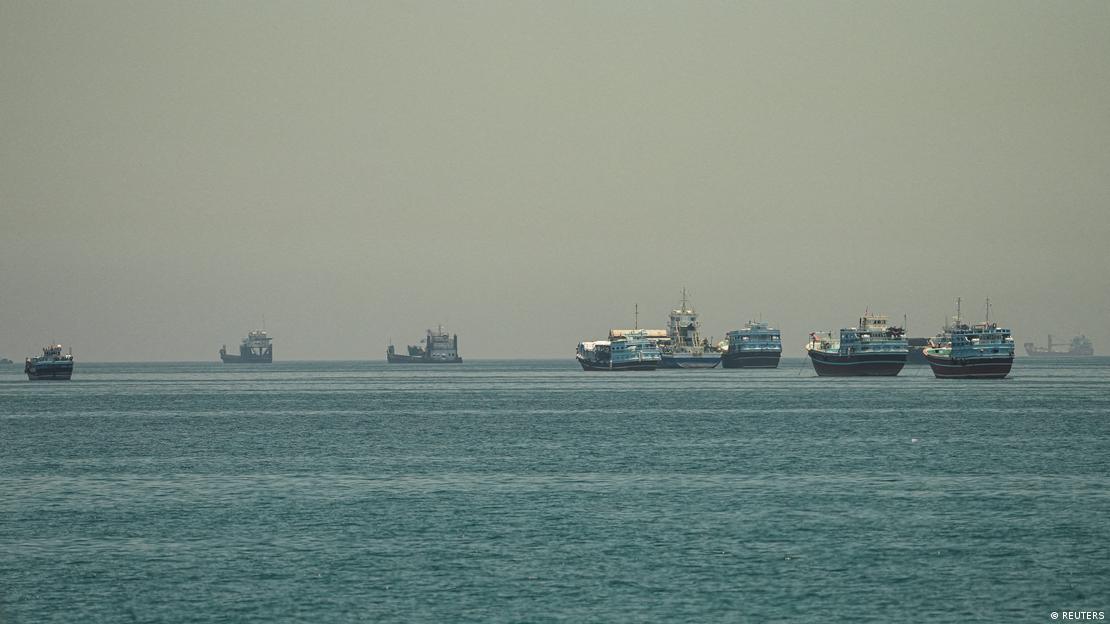
Shipping in the Strait of Hormuz has been restricted for more than 90 days
Image: REUTERS


Why can canal operators charge fees?

Canals like Suez and Panama are man-made waterways built, owned and maintained by sovereign states at enormous cost.

Egypt generates annual revenues of around $4 billion in fees for ships transiting the 193-kilometer (120-mile) Suez shortcut.

The 1888 Constantinople Convention, signed by major powers at the time, explicitly allows the Egyptian government to levy tolls to cover maintenance, operations and upgrades.

Meanwhile, the Panama Canal Authority, which runs the US-built canal on behalf of Panama, is also permitted to charge fees under separate treaties.

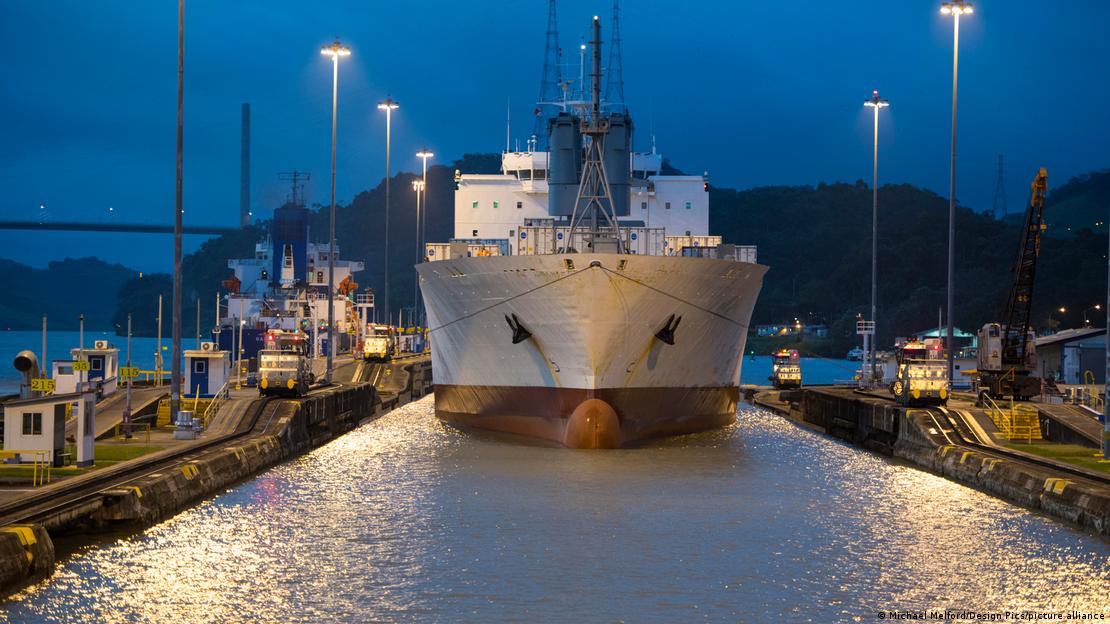
Completed in 1914 to link the Pacific and Atlantic Oceans, the Panama Canal requires huge ongoing maintenance, including constant dredging to combat sedimentation and landslides.

Both canal operators typically charge less than half the fees that Iran is reportedly charging.

Are there any exceptions?

Grey areas do exist where fees can be charged for passage along straits and even oceans.

Russia, for example, charges icebreaker escort fees, pilotage and service tariffs on the Northern Sea Route (NRS) along the country's northern coast.

The NSR offers a much shorter route between Europe and Asia than the Suez Canal. It runs through the Arctic Ocean, linking the Atlantic to the Pacific via the Barents Sea and Bering Strait.

The route is mainly used in summer when the ice melts and is frequently transited by ships from Russia, China and South Korea.

Moscow treats large sections as internal waters or ice-covered areas under UNCLOS Article 234.

Canada has similar sovereignty claims over the Northwest Passage, a sea route through the Canadian Arctic Archipelago linking the Atlantic and Pacific Oceans. From time to time, the Ottawa government mulls charging fees, only to face US opposition.

Another long-standing example is the Turkish Straits. The Bosporus and Dardanelles, which connect the Black Sea to the Mediterranean through Turkey, are governed by the 1936 Montreux Convention.

Under this treaty, Turkey must allow freedom of passage for merchant ships and can only charge limited service fees for navigation aids and lighthouses, not full transit tolls.

The US built the Panama Canal after a French construction effort went bankruptImage: Michael Melford/Design Pics/picture alliance


How is this dispute likely to play out?

The Hormuz charging row remains a major obstacle in the ongoing peace talks between the US and Iran aimed at reopening Hormuz.

Washington insists the strait must fully reopen as international waters, allowing ships from all nations to pass without Iranian control, fees, or special permission.

"The Strait is going to be open to everybody; it's international waters," US President Donald Trump told reporters during a White House cabinet meeting on Wednesday. "We'll watch over it, but nobody's going to control it."

He also took aim at Oman's apparent involvement in Tehran's plans, saying: "Oman will behave just like everybody else, or we'll have to blow them up."

Washington continues to urge shipping companies not to pay the tolls and has warned that firms that do could face secondary US sanctions for doing business with Iran.

While the broader US naval blockade of Iranian shipping remains in effect during negotiations, the US and the United Nations are working on a plan to protect shipping once the war is over.

This includes the use of multinational naval patrols, increased monitoring and demining operations in the strait.

Edited by: Rob Mudge

Nik Martin is one of DW's team of business reporters.
In Calling For Book On Putin’s Ancestors, University Head Says He ‘Understands What The Kremlin Expects’ – OpEd


Vladimir Putin as a child with his Baba and mother; Maria Shelomova. 
Photo Credit: Vladimir Putin’s personal archive, Kremlin.ru


June 1, 2026 
By Paul Goble


Some of the most obsequious moves by Russian officials appear to be independent efforts to curry favor with the Kremlin, but others are clearly taking place because the Kremlin has ordered them or has ensured that it has put in place people who know in advance what Putin and the Presidential Administration want.

A case of the latter concerns the actions of Andrey Loginov, rector of the Russian State University of the Humanities, who has pushed what to many seem actions more “Catholic than the pope” or in this case more Putinist than Putin but who is in fact ready to say that he knows what the Kremlin leader wants and is acting accordingly.

Several weeks ago, Loginov’s university posted an announcement offering to pay someone to compile a book on the ancestors of Vladimir Putin between 1861 and 1917 (agents.media/rggu-nachal-iskat-biografa-roda-putinyh-kogda-rektor-ponyal-chego-ot-vuza-ozhidaet-kreml/).

This announcement draw snickers from Putin critics but it was fully consistent with what Loginov, a longtime official in the Presidential Administration, has been doing since becoming rector two years ago in promoting Kremlin ideas and an extreme Russian nationalist agenda including courses on people like Ivan Ilin and books on the war in Ukraine.

When others have taken similar actions, they have been careful to specify that they were acting on their own so that if too much criticism arose, those above them could change things quickly and in any case could avoid taking any responsibility for such steps. But Loginov has taken a different tact.

The rector says that “in the course of two years of work in the university, I have formed a clear vision of our tasks and possibilities. We understand what is expected of the Russian State University of the Humanities in institutions above us, from the Presidential Administration to the Russian Academy of Sciences.”

Loginov is thus saying that he is doing what he has been told is “expected,” a declaration that shows just how far Putin has gone in promoting his personalist and nationalist agenda and how even the most outrageous steps in this direction must be laid at his feet rather than blamed on anyone else.


Spain’s PM Sánchez Holds Firm Amid Corruption Scandals


Spain's Prime Minister Pedro Sánchez. Photo Credit: Video screenshot @sanchezcastejon, X


June 1, 2026 
 EurActiv
By Inés Fernández-Pontes

(EurActiv) — Pedro Sánchez, Spain’s prime minister, vowed on Sunday to remain in office until the 2027 general election despite mounting corruption scandals engulfing his ruling Socialist party, key allies and figures close to his political circle.

Speaking at the youth congress of the Spanish Socialist Workers’ Party (PSOE), Sánchez defended his government’s record at his first major party rally since the Socialists suffered a historic defeatin Andalusia, once a party stronghold.

“Socialism may stumble, but we never give up on a fight,” he told the crowd. “We will continue to govern until 2027. And beyond!”


The Spanish leader insisted more time was needed for voters to feel the impact of the coalition’s social and economic policies, rejecting growing calls for snap elections as a series of judicial investigations pile pressure on his government.

Former socialist prime minister José Luis Rodríguez Zapatero, a longtime Sánchez ally, is alsounder investigation by Spain’s National Court, the country’s top criminal court, over alleged influence peddling and money laundering linked to the bailout Venezuela-linked Spanish airline Plus Ultra.

Spanish police recently raided PSOE headquarters in Madrid as part of a separate judicial investigation into alleged attempts to interfere with legal proceedings involving current and former party figures.

The scandals have exposed growing tensions within the Socialist camp.

Emiliano García-Page, the powerful Socialist president of Castilla–La Mancha and one of Sánchez’s most prominent internal critics, warned this week that the party was facing its most dangerous moment since Spain’s return to democracy and urged Sánchez to hold a vote of confidence or call snap elections.

Patience is also wearing thin among some of the regionalist and separatist parties that keep Sánchez in power.

“Given the situation, we believe that the term has come to an end,” said Aitor Esteban, leader of the conservative Basque Nationalist Party (PNV), a key ally of Sánchez’s coalition. Catalan separatist party Junts also called for early elections.

Both parties, however, ruled out backing a no-confidence vote against Sánchez, as proposed by the far-right Vox party.

Pressure on Sánchez is set to mount in June, with Zapatero due to testify on 17–18 June and a landmark Supreme Court ruling expected before the summer in the graft case involving former minister José Luis Ábalos.
Bulgaria Stops US Military Aircraft Refuelling After Crossing Swords With Trump

June 1, 2026 
 Balkan Insight
By Svetoslav Todorov

Bulgaria’s new Prime Minister, Rumen Radev, stated on Friday that US military aircraft won’t be able to use Sofia’s “Vassil Levski” airport for stay and refuelling after the end of June, after the US failed to approve a visa-free system for Bulgarian citizens.

Earlier in May, the Progressive Bulgaria party leader claimed he had spoken to President Donald Trump over the aircraft stay and called for the suspension of the ‌visa ⁠rule for Bulgarian nationals, hinting at a trade-off.

“I called for the suspension of [the need for US] visas for Bulgarian citizens during my conversation with the US President but I have not received a positive answer. While I fully understand the complexity of all the ​regulatory procedures, we also have our priorities ​and we cannot respond positively to the request ​for long stays of aircraft and tankers at Sofia airport,” Radev said on Friday.

“We’re extending the permission [only] until the end of June so we can give time to our allies to reschedule and find another location,” he added.

In March, Bulgaria’s then-caretaker Defence Minister, Atanas Zapryanov, said the aircraft concerned were not intended for combat operations, instead providing logistical support for allied missions.

The stay was greenlit in February by the previous government. The main types of aircraft deployed in Bulgaria include Boeing KC-135 Stratotanker, Lockheed C-130 Hercules and Boeing C-17 Globemaster III.

Former President Radev and his newly founded Progressive Bulgaria party won the April 19 electionswith a landslide victory, with the new cabinet assuming power on May 8 ending a five-year stalemate, which yielded several short-lived governments and eight general elections, during which Radev also de facto occasionally governed through interim cabinets.

Radev is the first Bulgarian politician to have served both as President and Prime Minister. His atypical political career has also raised doubts over Bulgaria’s geopolitical perspectives, given his soft approach to the Kremlin.
The Aggressor’s Trap: Why Future Wars Have No Winners – Analysis


June 1, 2026 
By Suminda Jayasundera


Something has quietly broken in the ancient logic of war. For centuries, military power translated reliably into political outcomes. The stronger army won. The weaker nation submitted. Empires were built on this arithmetic. Today, that equation no longer holds — and the world’s great powers have not yet fully absorbed what this means for them.

We are entering an era where launching a war, regardless of military superiority, is less a path to victory than a walk into a trap. The aggressor does not win. It simply chooses how slowly it wishes to bleed.

This is not an accident of circumstance. It is the operating logic of a doctrine that is reshaping modern conflict — one that now requires a formal name and a precise definition.

The Doctrine: Defined


Attritional Trap Doctrine: The structural condition in which an aggressor’s act of initiating open war in the post-globalization, information-saturated world automatically activates a self-reinforcing cycle of military stalemate, economic isolation, international delegitimization and domestic political erosion — from which no exit exists that does not constitute strategic defeat. The trap is not set by the defender. It is constructed by the aggressor the moment it invades.

Sovereign Exhaustion Strategy: The deliberate defensive posture by which a militarily inferior state redirects the aggressor’s own weight — its overextension, isolation and accumulated costs — back against itself across military, economic, informational and political domains simultaneously, without requiring direct military victory. The defender does not need to be strong. It needs to be unyielding long enough for the aggressor’s own mass to crush it.

These two frameworks operate as a pair. The Attritional Trap Doctrine describes the structural fate that awaits the aggressor. Sovereign Exhaustion Strategy describes the active instrument the defender deploys to ensure that fate is realized. One is the trap. The other is what springs it.

Why This Is Not What You Have Read Before


Strategic thinkers have long grappled with the limits of military power. Clausewitz identified friction and fog degrading superior forces. Liddell Hart counseled the indirect approach. Post-Iraq analysts documented counterinsurgency’s futility. Hybrid warfare theorists mapped the tools — disinformation, proxy forces, economic coercion — deployed short of open conflict.

The Attritional Trap Doctrine is not a refinement of any of these. It is a departure, and the distinction is precise.

Hybrid warfare theory describes the tools a sophisticated actor deploys to achieve strategic ambiguity below the threshold of open war. The Attritional Trap Doctrine describes the structural fate awaiting any aggressor — regardless of tools — the moment it crosses into open war in the modern environment. Hybrid warfare is a strategic choice. The Attritional Trap is a gravitational field entered the moment that choice is made.

Classical attrition theory is symmetrical: two forces grind down until one exhausts first. Sovereign Exhaustion Strategy is asymmetric by structural design — it redirects the aggressor’s own mass back against itself. This is closer in spirit to judo than attrition, but differs critically: it operates simultaneously across economics, information and politics as a unified ecosystem, not between two actors in a single domain.

The concept that comes closest is Paul Kennedy’s strategic overextension — the long-run imperial collapse under unsustainable commitments. But overextension is a retrospective diagnosis across generations. The Attritional Trap is a real-time, deliberately activatable mechanism that a defender can trigger and accelerate within the timeline of a single conflict. The causal speed and the agency of the defender are what make it new.

The core original claim: in the modern environment, the act of aggression itself generates the mechanism of the aggressor’s defeat. Prior theory asks what can go wrong for the aggressor. This framework answers that everything goes wrong, automatically, by structural necessity — because three simultaneous post-Cold War transformations ensure it.

The Enabling Conditions: Why Now

Three structural transformations created the doctrine’s enabling architecture simultaneously — and their convergence is what makes this moment categorically different from prior eras.

Deep economic interdependence– Modern great powers are embedded in global supply chains and financial systems that make sustained aggression immediately catastrophic in ways earlier powers never faced. When coordinated sanctions froze $300 billion in Russian central bank reserves, severed major banks from SWIFT and restricted semiconductor access following the 2022 invasion, the effect fractured Russian industrial capacity and forced emergency 20 percent interest rates within weeks. Sanctions of this architectural precision were structurally unavailable to prior generations of defenders.

Real-time global information– Every act of aggression is witnessed, documented and broadcast instantaneously to a worldwide audience capable of forming and organizing political opinion at scale. Within 48 hours of Russia’s invasion, smartphone footage of missile strikes on apartment buildings circulated on every major platform in every language simultaneously. Public resentment against aggressors is no longer a slow historical verdict. It is an immediate, politically actionable force that shapes government decisions and corporate responses in real time.

Democratized precision lethality– Weapons requiring superpower industrial bases to produce can now be manufactured affordably, transferred rapidly and deployed effectively by forces a fraction of the aggressor’s size. Ukraine’s deployment of Turkish Bayraktar drones, American HIMARS systems and British Storm Shadow missiles — on platforms it had never operated before the war — imposed costs on Russian formations structurally impossible for any similarly outgunned defender in any prior conflict.

Remove any one condition and the doctrine weakens substantially. A precise clarification: these three conditions did not emerge simultaneously in a single moment — economic interdependence deepened across decades, the information ecosystem transformed rapidly after smartphone proliferation post-2008, and precision lethality democratized after commercial drone technology matured post-2015. What converged simultaneously was their operational threshold — the point at which each became potent enough to interact with the others as a system. It is that threshold convergence, not simultaneous origin, that created the doctrine’s enabling architecture and that marks the post-2014 period as categorically different from what preceded it.

The Attritional Trap Doctrine is a product of this specific historical convergence. Its durability is precisely as strong as the conditions that created it.

Ukraine: The Novice Who Discovered the Doctrine


When Russia invaded in February 2022, the consensus was brief and brutal: Kyiv would fall within days. Russia possessed overwhelming superiority in armor, air power, artillery and manpower. By every traditional measure, the outcome was not in question.

What followed has become one of the defining strategic lessons of the century.


Ukraine stumbled into — and then deliberately embraced — a framework that neutralized Russia’s advantages across every domain simultaneously. It contested every kilometer. It cultivated international sympathy with extraordinary skill, transforming its president into a global symbol and its soldiers into a cause that mobilized democratic publics from Washington to Warsaw. It did not need to defeat Russia militarily. It needed only to activate Sovereign Exhaustion Strategy — making Russia’s continued presence unbearable across military, economic, informational and political dimensions at once.


The sequence unfolded in a self-reinforcing spiral: military stalemate eroded Russian domestic confidence; sanctions fractured industrial capacity; information operations generated worldwide public resentment; cumulative pressure hollowed out Russian resilience from within. Each domain fed the others. Military stalemate made economic cost harder to justify. Economic fracture made military sustainment harder to fund. Public resentment made domestic political cover harder to maintain.

Russia now finds itself in the aggressor’s trap with no viable exit. It cannot achieve decisive victory. It cannot disengage without admitting catastrophic failure. It bleeds — in treasure, soldiers and international standing — with no clear path out. The war that was supposed to last days has consumed years.


Iran: The Master Class


If Ukraine represents improvised discovery under fire, Iran represents deliberate, architecturally premeditated cultivation across four decades.

Tehran constructed its resistance axis — Hezbollah in Lebanon, the Houthis in Yemen, militias across Iraq and Syria — not primarily as an ideological project but as a distributed strategic architecture. Iran wages continuous pressure on adversaries while never presenting a clean, attributable target for retaliation. Every attempt to strike back forces adversaries onto multiple fronts simultaneously, dissipating finite resources across a chessboard with no defined perimeter and no endpoint.

Iran does not require defeating the United States or Israel in a single confrontation. It requires only making confrontation perpetually, structurally and unbearably costly — in military resources, strategic attention and domestic political capital. The trap is embedded across an entire regional ecosystem and has been tightening for forty years.

The critical distinction from Ukraine illuminates the doctrine’s two modes. Ukraine activated Sovereign Exhaustion Strategy reactively — under assault, with improvised tools. Iran built the infrastructure of exhaustion proactively — engineering trap conditions before any direct confrontation materialized. Both modes work. The proactive mode is more durable and more strategically instructive for any nation with time to prepare.


The master class has nonetheless shown cracks that demand honest reckoning. Iran’s post-October 2023 exposure — Hezbollah’s near-destruction, Hamas’s decimation, direct military strikes drawing direct retaliation — raises a harder question than mere calibration: does this evidence partially falsify the master class designation, or merely complicate it? The honest answer is the latter, but narrowly. The doctrine’s infrastructure — decades of proxy construction, regional embedding, deniability architecture — survived. What failed was escalation control: proxy action drew the patron into direct exposure the strategy was specifically designed to avoid. Iran’s error was not in building Sovereign Exhaustion Strategy. It was in allowing a proxy to trigger a war Iran had not chosen to fight directly. The lesson is not that the doctrine failed. It is that no doctrine is self-sustaining without continuous calibration — and that the boundary between proxy pressure and patron exposure is the framework’s most dangerous operational line.

The Counter-Case: When the Trap Fails


Afghanistan appears to vindicate the doctrine in its strongest form: a vastly outgunned insurgency exhausted the world’s most powerful military over twenty years. But the mechanism diverges in ways that reveal the framework’s true boundary conditions.

The Taliban did not win primarily through the three enabling conditions. International opinion never mobilized behind the Afghan government — it lacked democratic legitimacy in its own population’s eyes and was perceived as deeply corrupt. External patron commitment was sustained for twenty years but structurally decoupled from genuine state-building. The Afghan government possessed almost none of the leadership credibility that Zelensky would later demonstrate as decisive.

Afghanistan illustrates the doctrine’s precise negative space: the Attritional Trap Doctrine guarantees aggressor cost. It does not guarantee defender victory. Whether those costs translate into strategic defeat depends entirely on whether the defender survives long enough, maintains external support and sustains domestic legitimacy to make the aggressor’s position untenable rather than merely expensive.

The trap requires active maintenance. It does not close and hold on its own. And the Afghanistan case contains one further complication the framework must address honestly: the Taliban itself activated something resembling Sovereign Exhaustion Strategy against the United States — and succeeded. A non-state actor, without democratic legitimacy, without a sympathetic international patron and without the three enabling conditions in their modern form, nonetheless exhausted a superpower over twenty years through territorial denial, time and will. This does not falsify the doctrine. It reveals that an earlier, cruder version of the mechanism — available without the post-Cold War enabling conditions — has always existed. What the modern framework adds is speed, international amplification and the active agency of the defender in triggering and accelerating the spiral. The Taliban waited twenty years. Ukraine compressed the same mechanism into months. That compression is what the three enabling conditions actually provide — and it is the doctrine’s most consequential contribution to the history of asymmetric conflict.

Taiwan: The Most Dangerous Test


Beijing’s military planners have studied Ukraine with the focused intensity of students who know they face the same examination under far higher stakes. They have drawn two conclusions pointing in sharply opposite directions.

The first: a prolonged conflict over Taiwan would activate the Attritional Trap Doctrine in its most catastrophic form for the aggressor. China is integrated into the global economy at a depth dwarfing Russia’s pre-war exposure — accounting for roughly 14 percent of global merchandise trade, with a technology sector structurally dependent on semiconductor supply chains centered in Taiwan itself. The sanctions exposure would be categorically more severe. China would simultaneously face a global information environment structurally hostile to its narrative — democratic sympathy for a self-governing island democracy resisting authoritarian absorption is not a story Beijing can contest on the world stage. And it would face a Taiwanese population that has watched Ukraine and drawn its own conclusions about the viability of sustained resistance.

The second conclusion: the counterstrategy to the Attritional Trap is speed. A swift, overwhelming seizure — completed before the international community organizes a coherent response, before sanctions architecture assembles, before weapons transfer — denies the defender the time required to activate Sovereign Exhaustion Strategy. Speed is the aggressor’s structural answer to the doctrine. It attempts the fait accompli before the trap closes.

This is why Taiwan is categorically more dangerous than Ukraine. Russia never possessed a plausible swift-victory option against a continental nation of forty million with strategic depth. China, with geographic proximity and purpose-built amphibious capacity, believes it may possess one against an island of twenty-three million, 180 kilometers from its coast.

If Taiwan absorbs the initial assault and survives long enough for international support to crystallize, China walks into the deepest activation of the Attritional Trap in modern history: sanctions severing it from the semiconductor supply chains its entire industrial economy depends upon, a mobilized democratic world, and American strategic commitment activated by the most unambiguous act of aggression since 1939.

If Beijing’s calculation is correct and speed forecloses the doctrine’s activation, the framework faces its most serious challenge — and the post-conflict international order faces a rupture from which it may not recover.

The variable that determines which outcome prevails is not military hardware. It is the first seventy-two hours — and the credibility of the signal, delivered before conflict begins, that those seventy-two hours will cost more than any strategic prize can justify.

Deterrence, understood through this doctrine, is not the threat of what America will do after Taiwan falls. It is the certainty — communicated without ambiguity, demonstrated through pre-positioned capability and unambiguous political commitment — that the trap closes before the fall can be completed. This position requires engaging a serious counterargument: Schelling’s work on the manipulation of risk holds that deliberate ambiguity can itself deter, by preserving the aggressor’s ability to miscalculate into restraint rather than forcing a binary calculation. That argument carried weight in a prior strategic era. Under the Attritional Trap Doctrine it inverts: when the aggressor’s counterstrategy is speed — when the entire bet is that the fait accompli can be achieved before the trap closes — ambiguity about whether the trap will close is not a deterrent. It is the calculation the aggressor needs to proceed. Certainty of closure is the only signal that forecloses the speed bet. Ambiguity, in this specific context, does not deter. It prices the risk as acceptable.

The Threshold Conditions


The doctrine does not activate automatically. Four conditions must be robustly present:

Geographic and demographic resilience sufficient to absorb the initial assault– Taiwan’s island geography creates acute vulnerability but also natural chokepoints — every viable landing beach is known, prepared and defensible. Urban warfare in a densely built modern city imposes costs no swift-victory timetable was designed to absorb.

Leadership credibility capable of sustaining domestic will and generating international sympathy at scale– Zelensky demonstrated this is perhaps the single most decisive variable. Taiwan’s democratic institutions provide structural legitimacy that no authoritarian defender can replicate.

An external patron with sustained, unambiguous political will- The doctrine’s most fragile dependency. For Taiwan, that patron is the United States — and the credibility of that commitment is now openly debated globally. Ambiguity does not deter. It invites calculation.

Information infrastructure established before conflict begins- The defender must win the global story in the first hours. Ukraine managed this partly through the fortunate accident of a gifted communicator at its helm. Taiwan cannot rely on fortune. The infrastructure must be operational before the first missile is fired.

Where all four conditions are robustly present, the trap closes and holds. Where any one is absent, the doctrine’s effectiveness degrades proportionally. These are not battlefield variables. They are strategic assets requiring years of deliberate cultivation before the moment of crisis arrives.

Implications for the Coming Decade


The nations that internalize this doctrine earliest will shape the security architecture of the century. Those that do not will repeatedly pay unlimited prices for objectives that recede as they advance.

For potential aggressors, the calculus has been permanently restructured. The question before initiating war is no longer “Can we win militarily?” It is “Can we achieve the fait accompli before the trap closes?” — and in an era of instantaneous global information, pre-positioned weapons stocks and standing sanctions architecture, that window is measured in hours and days, not weeks and months. It is narrowing as the doctrine becomes better understood and threshold conditions more deliberately pre-built by potential defenders.

For defenders, the doctrine offers something unprecedented in the history of statecraft: a reproducible, learnable framework by which a militarily inferior state can deny strategic victory to a superior aggressor. It is not guaranteed. It is not cheap. But it is structurally available to any defender with the strategic foresight to build toward it — and the discipline to sustain the four threshold conditions before, not during, the crisis.


For the international community, the burden cannot be evaded without systemic consequence. The trap closes only when the world actively keeps it closed. Every withdrawal of external support, every signal of wavering commitment, every prioritization of short-term economic comfort over a defender under assault — each is a signal to every potential aggressor alive that the trap has a release mechanism and they have located it. The doctrine operates inside a political order whose coherence is itself the most critical strategic variable in the entire framework. Treat that coherence as optional and the doctrine dissolves. Treat it as the asset it actually is and the trap holds — not just for today’s defender, but for every nation that may need it tomorrow.

The Open Question


The Attritional Trap Doctrine and Sovereign Exhaustion Strategy represent a genuine shift in the structural logic of modern conflict — not merely in tactics or technology, but in the fundamental relationship between military power and political outcome. That shift is real, empirically documented and accelerating as more actors study and deliberately build toward the framework.

But the doctrine rests on a foundation that is political rather than military, and therefore contingent rather than permanent. The center of gravity in every conflict governed by this logic is not on the battlefield. It is in the sustained will of democratic societies to bear the costs of supporting distant defenders against distant aggressors — against the perpetual pull of fatigue, competing priorities and the temptation of accommodation.

That will must be argued for, organized, institutionalized and renewed in every political cycle. It cannot be assumed.

The trap is set. It works — when the conditions are met and the commitment holds. Whether those conditions will be built in Taiwan before the moment of crisis arrives, and whether that commitment will hold when tested at that scale, is not a military question. It is a question about the character of the international order and the seriousness with which this generation of democratic societies treats the difference between the world it has and the world that would replace it.

History is watching. And unlike previous eras, it is watching in real time.

The Attritional Trap Doctrine and Sovereign Exhaustion Strategy are original analytical frameworks first formally defined in this essay, explicitly distinguished from Clausewitz’s friction theory, Liddell Hart’s indirect approach, Frank Hoffman’s hybrid warfare framework, Paul Kennedy’s strategic overextension thesis, Schelling’s ambiguity-as-deterrent theory and post-Iraq asymmetric conflict literature. Original contributions: 
(1) aggressor self-defeat as structurally automatic rather than contingent; 
(2) three post-Cold War enabling conditions unified as a threshold-convergent causal architecture; 
(3) formal pairing of trap doctrine and defender strategy as complementary frameworks; (4) the 72-hour threshold as Taiwan’s decisive strategic variable.