Monday, June 01, 2026


Donald Trump claims he’s bigger than Elvis after even more artists pull out of Freedom 250 concerts

Donald Trump claims he’s bigger than Elvis after even more artists pull out of Freedom 250 concerts
Copyright AP Photo

By David Mouriquand
Published on

"You're the Devil in disguise"... Donald Trump is considering holding an "America is back rally" instead of a series of concerts after the majority of artists planned for the Freedom 250 gigs have withdrawn from the "Freedom 250" shows. Trump even claims that he's bigger than Elvis.

Donald Trump has offered to perform at his "Freedom 250" celebration at the Great American State Fair, after even more acts have pulled out.

The event, touted as a “once-in-a-generation celebration”, is scheduled to take place at the National Mall in Washington DC between 25 June and 10 July as part of the United States’ 250 birthday celebrations.

Initially, the line-up included Vanilla Ice, Martina McBride, The Commodores, C+C Music Factory, Young MC, Morris Day, Poison’s Bret Michaels, Flo Rida and Fab Morvan - the surviving member of the lip-syncing duo Milli Vanilli.

As one online commentator put it, it is “the worst lineup of musical acts I have ever seen.”

Shortly after the announcement was made, we reported that several artists had started dropping out.

Morris Day, best known as the lead singer of The Time (a group associated with Prince), took to Instagram to dispel the rumour he’d be playing, while Young MC also dropped out, saying that the artists “were never told about any political involvement with the event”.

Indeed, there was some confusion over the fair’s MAGA-affiliation – as well as the fact that “Freedom 250” is funded through a public-private partnership with funding from Trump-aligned tech firms Palantir and Oracle and federal contractors Deloitte and Lockheed Martin, among others. It is currently facing growing scrutiny from watchdog groups and members of Congress over the use of federal dollars for Trump-aligned events.

More acts continued to distance themselves from the event. Soul band The Commodores (once fronted by Lionel Richie) cancelled their appearance, followed by country musician Martina McBride and Brett Michaels also pulling the plug. They too stated that they had been led to believe the event would be non-political, before it was publicly announced as being associated with Trump.

Despite Milli Vanilli’s Fab Morvan stating he would be performing, a group called Real Milli Vanilli also announced they would not be performing, issuing a statement which read: “Others using the name ‘Milli Vanilli’ that appear on the advertisement should be considered a tribute band with no association vocally or musically to our sound or songs.”

Faced with a now pretty empty line-up of artists, Donald Trump responded with a lengthy rant posted to his Truth Social platform. In it, he said that he’ll be the replacement act...

“I understand Artists are getting ‘the yips’ having to do with their performance on Wednesday, he wrote. “So I am thinking about bringing the Number One Attraction anywhere in the World, the man who gets much larger audiences than Elvis in his prime, and he does so without a guitar, the man who loves our Country more than anyone else, and the man who some say is the Greatest President in History (THE GOAT!), DONALD J. TRUMP, to take the place of these highly paid, Third Rate ‘Artists,’ and give a major speech, rallying the Country forward like I have done ever since being President!”

Yes, that’s right. Apparently, Trump believes he’s bigger than Elvis, the King of Rock’n’Roll.

This did not sit well with music lovers online, with one user stating: “The only thing Trump and Elvis have in common is their proclivity for underage girls” - a reference both to the Epstein Files and to the fact that Elvis met his future wife Priscilla Beaulieu when she was just 14 years old. He was 24 at the time.

Check out some of the reactions below:

Elsewhere, online commentators were "enjoying" the crash out of the Freedom 250 concerts:

The White House is backing a number of events to mark the 250th anniversary of the US Declaration of Independence in July. They also include a UFC fight on its South Lawn and a Grand Prix race in the US capital in August. The US will also release commemorative passports that feature a portrait of Trump.

The Great American State Fair starts on 25 June and takes place until 10 July. Freedom 250 organisers still continue to maintain that the event is nonpartisan.

 

FlixBus revives Poland’s infamous 666 ‘highway to Hel’

Route 666 is back: FlixBus launches a summer service to Hel
Copyright FlixBus

By Jan Bolanowski
Published on


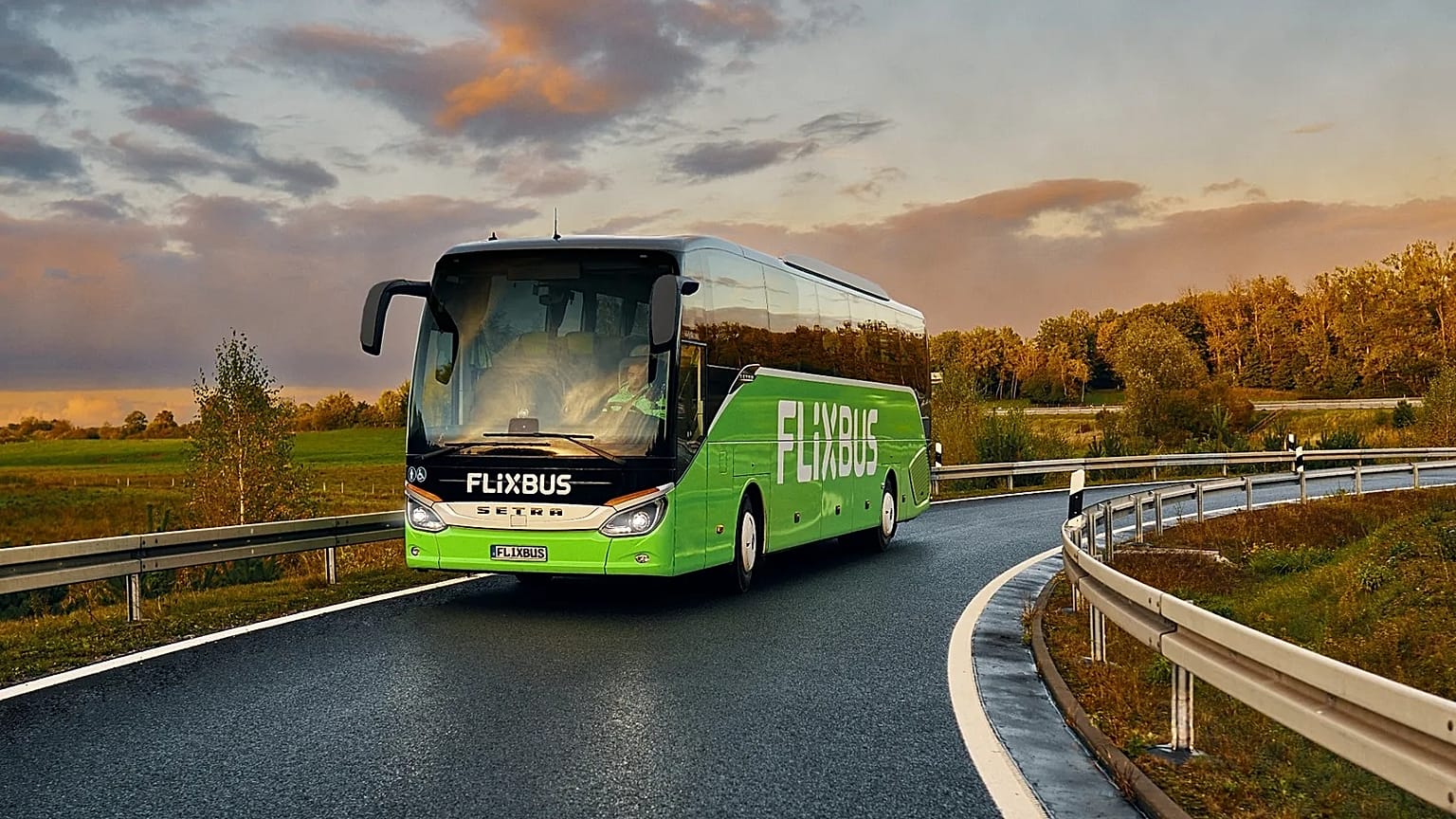
Three years after the disappearance of the famous 666 bus to the Hel Peninsula, the route will return to Polish roads, this time operated by FlixBus.

FlixBus’s new 666 service is to link Kraków with Hel, running via Warsaw and the most popular resorts on the Hel Peninsula.

News of the reinstatement of the 666 number immediately sparked strong interest from the media and passengers alike. It is not just about a new holiday connection, but also the comeback of one of the most recognisable bus numbers in Poland.

Route 666 to Hel

The history of Route 666 goes back many years. For a long time, a service operated by PKS Gdynia linked DÄ™bki with Hel. The route number became popular thanks to a play on words: the town’s name sounds like the English word ‘hell’, and the number 666 is widely associated with the biblical ‘number of the beast’.

The coincidences meant the line attracted attention far beyond Pomerania. Tourists took photos of the buses, posted the pictures on social media and dubbed the service ‘the bus to hell’.

The bus ran to Hel for years, but in 2023, the number was changed to 669 following protests from some religious groups. Petitions were launched over the issue, and the story was also picked up by foreign media.

FlixBus resurrects route number 666

In the 2026 summer season, the 666 number will return. FlixBus is launching a new long-distance line from Kraków to Hel, which will run via Warsaw, Władysławowo, Chałupy, Kuźnica, Jastarnia, and Jurata, among other places.

Company representatives made no secret that the choice of number was deliberate.

‘It’s better when a route explains by itself where it’s going. In this case, there’s really nothing more to say. Everyone will understand,’ said MichaÅ‚ Leman, managing director of FlixBus in Eastern Europe, at a press conference, as quoted by the Trójmiasto.pl website.

FlixBus to Hel: a journey of more than a dozen hours

The operator insists, however, that it is not just about marketing. According to the company, for several seasons, passengers have been actively seeking direct connections to the Hel Peninsula from Poland’s major cities.

The new route is to run daily during the summer season. Departure from Kraków is scheduled for 6:00 in the morning, arrival in Warsaw at around 10:30 and in Hel before 20:00. The entire journey will take around thirteen hours.

The operator argues that the carefully chosen timetable is intended to avoid the worst traffic jams on the approaches to the Hel Peninsula. This is particularly important during the holiday period, when trains and roads leading to the Baltic coast operate at full capacity.

Hel: where does the name of the Baltic town come from?

Despite its tongue-in-cheek nickname ‘the hellish bus’, Route 666 will not take passengers to hell, but to the town of Hel (spelt with one ‘l’), located at the tip of the Hel Peninsula, which itself is also colloquially referred to as Hel. This 35-kilometre-long sandy spit is one of the most frequently visited attractions on Poland’s Baltic coast.

The name has little to do with the Anglo-Saxon hell and instead derives from Old Germanic languages, in which the word hel meant a ‘dune’ or coastal hill. On medieval Danish maps, meanwhile, the peninsula was called Heel (heel), supposedly in reference to its shape.


Malta's Labour party wins historic fourth term in snap general election


By Manuela Scarpellini
Published on

Voters in Malta have granted the Labour Party a record-breaking fourth consecutive mandate, according to preliminary results published on Sunday. The result marks a fresh victory for Prime Minister Robert Abela, with early indications showing Labour comfortably ahead

Malta’s Labour Party secured an unprecedented fourth consecutive term on Sunday in a victory for outgoing Prime Minister Robert Abela, who had called an early election amid growing geopolitical uncertainty.

Jubilant Labour supporters dressed in the party’s red colours chanted “four times!” after officials at the Counting House in Naxxar announced that preliminary results pointed to a win for the governing party.


Abela, 48, had brought forward the vote by a year, arguing that the government needed a renewed mandate to help shield the import-dependent island from instability linked to the Middle East crisis.

While Malta’s economy grew by 4.0 percent last year, concerns remain that the conflict could affect tourism, driven by rising aviation fuel costs, and put upward pressure on inflation.

Abela campaigned on Labour’s economic performance since 2013, promising stability during a period of uncertainty.

“All indications suggest that the Malta Labour Party has made history by winning four elections in a row,” he said.

His main challenger was Nationalist Party (PN) candidate Alex Borg, a 30-year-old lawyer and former “Mr World Malta” contestant, who had called on voters to back change.

Borg conceded on Sunday, saying in a social media statement that he had “personally called Robert Abela to congratulate him” on the result.

Abela has led Malta since 2020, when his predecessor resigned amid a political crisis triggered by the 2017 assassination of investigative journalist Daphne Caruana Galizia, who had exposed high-level corruption in the country.

According to a 2025 Council of Europe report, Malta still lags behind in its fight against corruption, although the issue did not feature prominently in the election campaign.


Is Europe's heatwave bad news for renewables? Surge in solar turns power prices negative

Soaring temperatures can actually hinder some kinds of renewable energy output, even sun-absorbing solar.
Copyright Copyright 2026 The Associated Press. All rights reserved.


By Rebecca Ann Hughes
Published on

Soaring temperatures can actually hinder some kinds of renewable energy output, even sun-absorbing solar.

Europe has been baking amid its first major heatwave of the season, with the UK and France experiencing record May temperatures.

Sunny skies have caused a surge in solar power output, resulting in negative electricity prices in some parts of Europe - where the wholesale market of electricity dips below zero due to supply outstripping demand.

While this may sound like a welcome relief for consumers amid spiralling energy costs, this increasing phenomenon won’t actually lower your bills.

Plus, soaring temperatures can actually hinder some kinds of renewable energy output.

Heatwave turns power prices negative

A recent Bloomberg analysis found that the UK saw solar meet almost half of its electricity demand at around midday last Sunday (24 May) – the highest ever, according to NESO data – as temperatures climbed to a sweltering 32.2°C in London.

The surge in renewable power pushed hourly prices in France below zero at around 1pm on Tuesday, 26 May on Epex Spot – while the country suffered under a “highly anomalous and powerful” heat dome.

This is not the first time this has occurred this year. According to analytics firm Montel, negative electricity prices on the Iberian Peninsula hit a new all-time high in the first quarter of 2026.

Spain was hit the worst, recording 397 hours of negative prices between January and March, a significant spike compared to the 48 hours registered in the same period of 2025, while Portugal reached 222 hours of sub-zero prices during the same period.

Why do negative electricity prices occur?

Electricity prices go negative when supply exceeds demand. In Europe’s day-ahead market, energy producers submit offers saying how much electricity they will sell at what price. Normally, that price is positive.

However, ideal weather conditions can drastically boost solar and wind output – meaning more energy is being produced than is needed. This can often occur on public holidays, when people are more likely to be using less energy than they normally would.

Generators can underbid each other, based on operating and restart costs, to avoid being switched off (curtailed). This is because they either still make money through subsidies/contracts or because they will lose more money through curtailment.

Last year, for example, Britain wasted a staggering £1.47 billion (around €1.67 billion) by turning down wind turbines and paying gas plants to switch on.

How can Europe stop negative electricity pricing?

Solving negative electricity pricing is no easy feat. Europe’s outdated energy grid was never designed for the renewables boom, and is instead set up for centrally-located plants. This means that wind and solar energy – which tend to be located in remote areas – often can’t get to where it is needed, like homes and offices.

While grid investment in Europe has increased by 47 per cent over the past five years to around €70 billion annually, experts warn it still falls short of what’s required.

A recent report by energy think tank Ember warns that more than 120 GW of anticipated renewables are at risk due to Europe’s “insufficient grid capacity”. This includes 16GW of rooftop solar installations, impacting more than 1.5 million households across Europe.

Giving away free or discounted energy is another way of tackling negative electricity prices, an incentive already being considered in the UK.

Greg Jackson, CEO of Octopus Energy, which has long been pushing for reforms to provide cheaper energy rather than curtailing wind power, says such initiatives should be made permanent to persuade consumers to invest in electrification.

Can battery storage fix Europe’s outdated energy grid?

The main issue around negative electricity prices is that excess electricity is hard to store. This has resulted in calls to bolster Europe’s battery energy storage systems (BESS).

Last year, the EU installed 27.1 GWh of new BESS – marking 12 consecutive years of record growth.

According to a 2026 Solar Power Europe report, despite a tenfold expansion of the EU battery fleet since 2021, reaching more than 77 GWh today, Europe remains “far from where it needs to be”.

To meet its 2030 targets, the EU must repeat its tenfold growth once again – scaling battery storage towards 750GWh within the next five years.

Five EU markets delivered more than 60 per cent of all new BESS capacity in 2025, with Germany and Italy leading the race. Bulgaria became the fastest-growing market, bumping up to third place, followed by the Netherlands and Spain.

Heatwave hinders other renewables

While solar output is surging, rising temperatures can be a hindrance to other kinds of renewable power.

There are concerns over hydro and nuclear availability this summer due to increased water temperature in rivers used for cooling French reactors.

The heat dome effect also slows wind speeds. The Bloomberg analysis reports that below-normal wind generation was forecast last week in Germany, Spain, Italy and France.

In France, output dropped to about 0.5 gigawatts around 1pm on 29 May, according to RTE data. It has averaged 7.4 gigawatts so far this year.

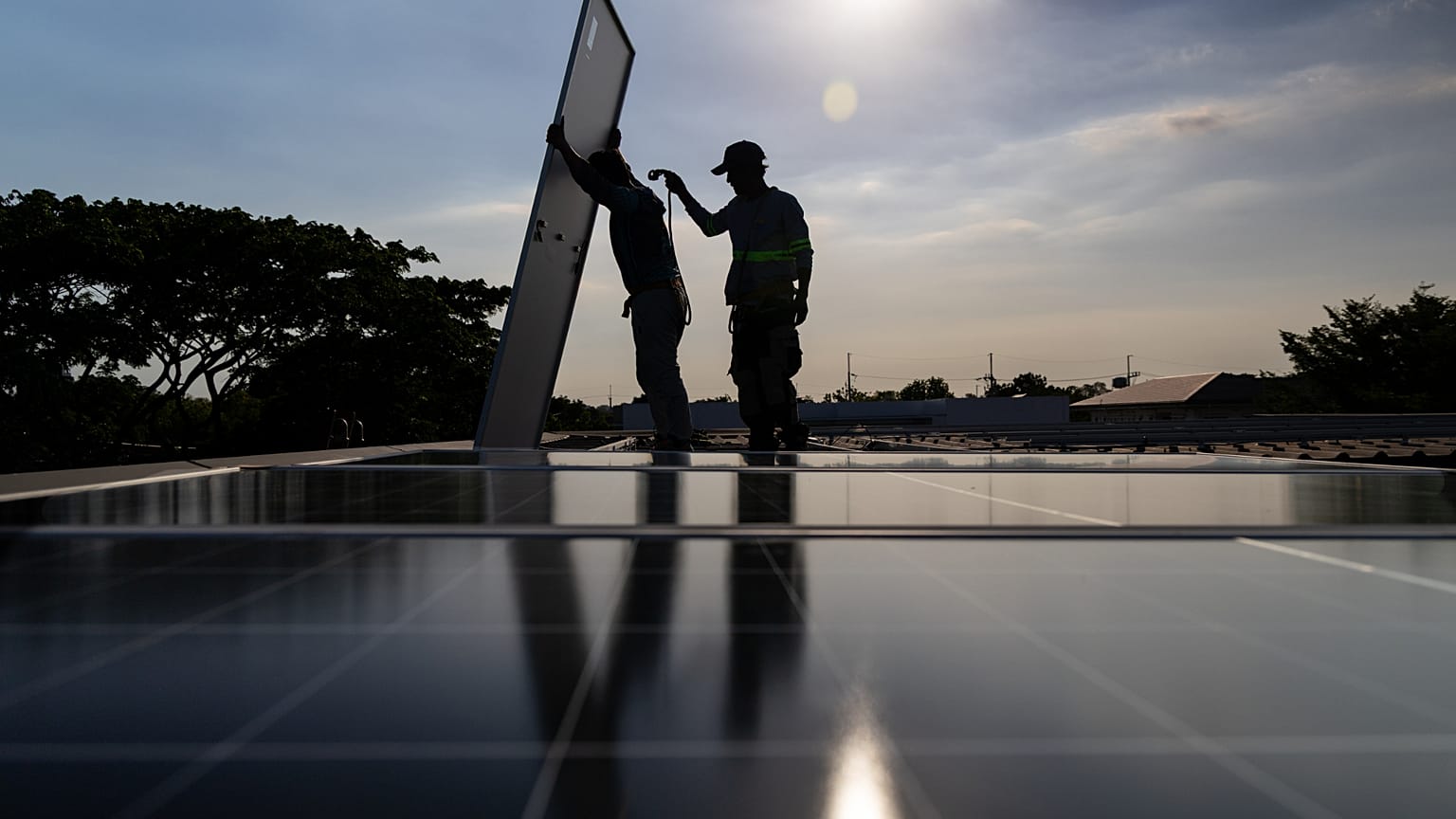
Even solar power is not immune. Intense heat can actually reduce efficiency while increasing strain on the electricity grid.

“It’s a common misconception that more sun always equals more power,” Ioanna Vergini, founder of wfy24.com, a platform that analyses weather data and climate volatility trends, tells Euronews Earth.

“Photovoltaic (PV) cells are semiconductors, and like all electronics, they lose efficiency as temperature rises.”

For every degree above 25°C, solar panel efficiency drops by about 0.4 to 0.5 per cent.


Trump ally and leftist candidate head for runoff in Colombia's presidential election

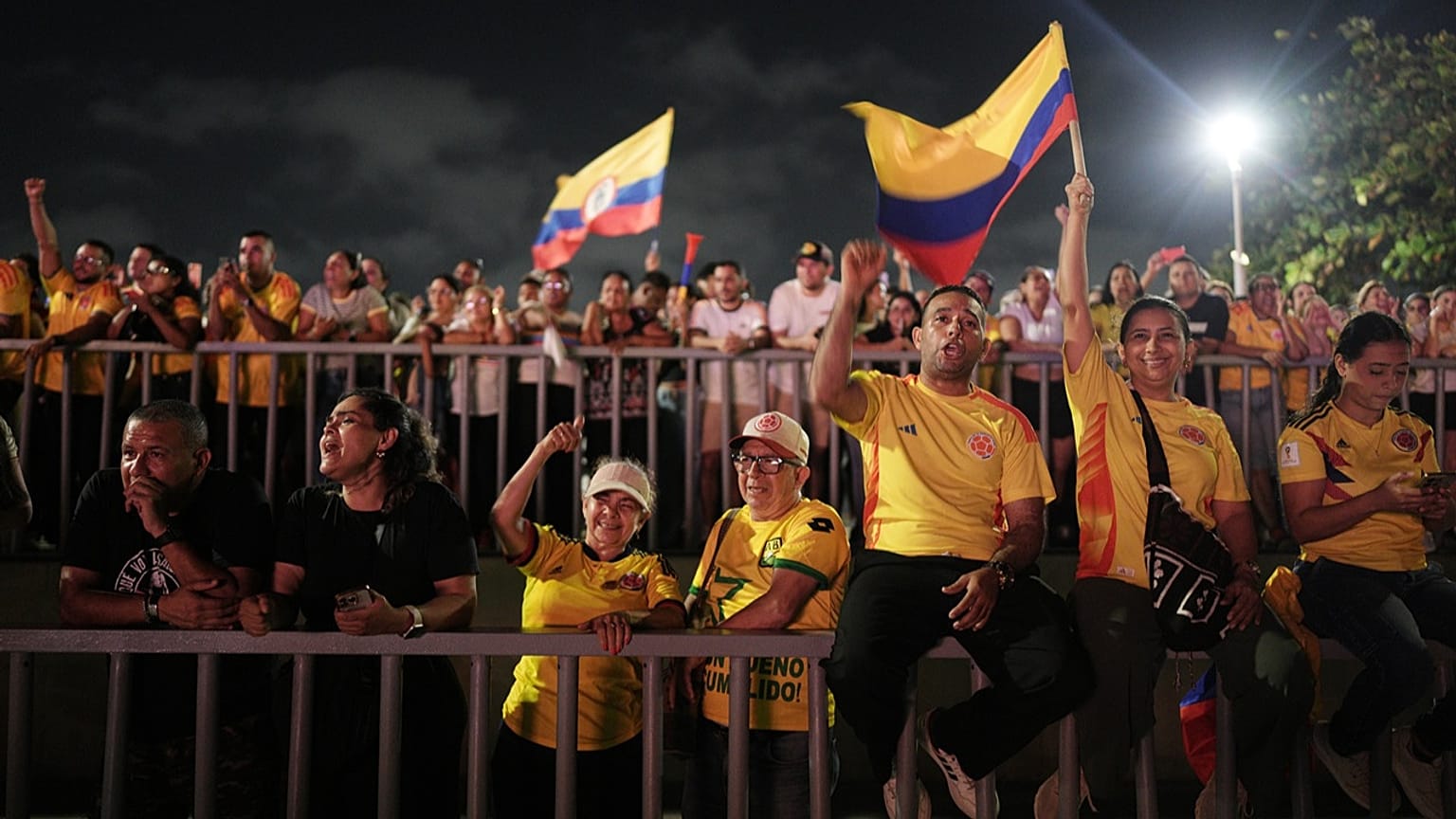
Supporters listen to presidential candidate Abelardo de la Espriella after advancing to a runoff in Barranquilla, Colombia, Sunday, May 31, 2026.
Copyright AP Photo/Ivan Valencia

By Emma De Ruiter
Published on

The right-wing Abelardo de la Espriella, an admirer of Donald Trump, came first in the vote, followed closely by left-wing senator Iván Cepeda, backed by current president Gustavo Petro.

Right-wing candidate and Trump ally Aberaldo de la Espriella took the lead in a closely contested first-round presidential vote in Colombia, setting up a runoff with Iván Cepeda, an ally of Colombia’s outgoing President Gustavo Petro.

Cepeda won 41% of the vote, while de la Espriella won 44% of the votes, with 99.98% of the results counted by electoral authorities.

It was a stronger-than-expected showing for 47-year-old De la Espriella, a pro‑Trump lawyer, singer and clothier who calls himself "The Tiger" and has billed himself as a political norm-smashing outsider.

Supporters of presidential candidate Abelardo de la Espriella celebrate after the candidate advanced to a runoff election in Barranquilla, Colombia, Sunday, May 31, 2026.
Supporters of presidential candidate Abelardo de la Espriella celebrate after the candidate advanced to a runoff election in Barranquilla, Colombia, Sunday, May 31, 2026. AP Photo/Ivan Valencia

Cepeda is a progressive senator who has promised to carry on a fraught plan to achieve “total peace" by negotiating peace pacts with guerrillas and criminal gangs.

He was consistently leading polls in the run up to the Sunday vote, but in the weeks leading up to the election de la Espriella rapidly gained support with a promise that he would crack down on armed groups.

But Cepeda and Petro sowed doubt in the results of the first round, claiming without evidence that hundreds of thousands of votes were manipulated and that foreign actors manipulated the results of the election.

Presidential candidate Ivan Cepeda addresses supporters after advancing to a runoff election in second place in Bogota, Colombia, Sunday, May 31, 2026.
Presidential candidate Ivan Cepeda addresses supporters after advancing to a runoff election in second place in Bogota, Colombia, Sunday, May 31, 2026. AP Photo/Matias Delacroix

Cepeda said he was waiting for electoral authorities to scrutinize the results before accepting the election.

“Only when the vote-counting commissions have fully clarified what happened will we comment on tonight’s results,” Cepeda said, though he acknowledged the vote was likely going to a second round.

He vowed to defeat the "fascist extreme right" in the June 21 second round, linking his rival to mafiosos and plutocrats.

Result could redefine US relations

The polarized vote comes as the Trump administration is playing a more aggressive role in Latin America than any U.S. government in decades, placing mounting pressure on countries like Colombia, Mexico, and Ecuador to crack down on crime.

The election has also underscored two sharply diverging visions for the future of peace in a country marked by years of conflict.

On one side, Cepeda has promised to continue Petro’s progressive agenda and a largely failed effort to negotiate peace pacts with armed groups, following a plan that’s likely to sharply contrast with Trump’s vision for Latin America.

On the other side, de la Espriella has promised to fiercely crack down on criminal groups and build 10 mega-prisons, echoing the war on gangs policy of El Salvador’s President Nayib Bukele, which has driven down homicide rates but fueled accusations of human rights abuses.

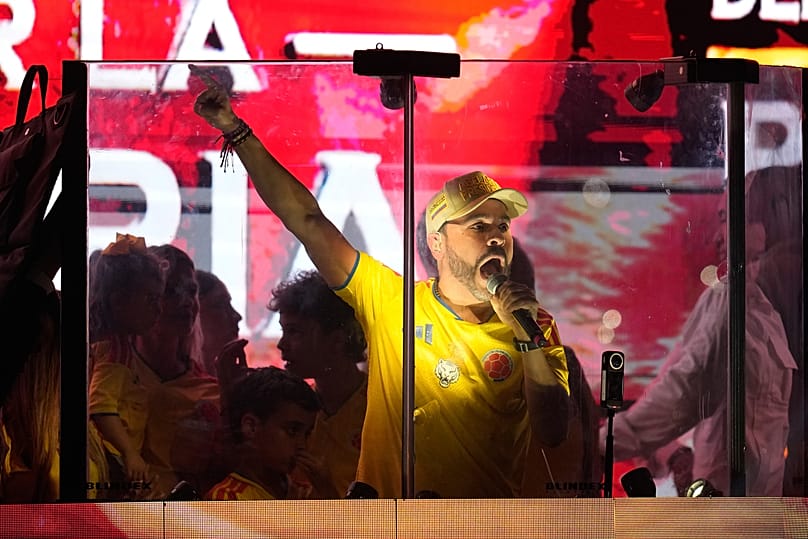
Presidential candidate Abelardo de la Espriella addresses supporters after the first round of the presidential election in Barranquilla, Colombia, Sunday, May 31, 2026.
Presidential candidate Abelardo de la Espriella addresses supporters after the first round of the presidential election in Barranquilla, Colombia, Sunday, May 31, 2026. AP Photo/Fernando Vergara

The election — 10 years after Colombia signed an historic peace pact with guerrillas of the Revolutionary Armed Forces of Colombia, or FARC — as seen as a referendum on Petro’s policies.

The deal a decade ago had offered hope to break the nation’s vicious cycle of fighting between rebel groups and the government. But violence has since roared back, in part because armed groups have taken advantage of peace negotiations with Petro's government to make territorial gains.

That came to a head in the lead-up to the election. Criminal groups have increasingly launched drone strikes, armed attacks have plagued the race and last June, 39-year-old politician and presidential hopeful Miguel Uribe Turbay was fatally shot at a political rally.

Still, Cepeda and Petro have maintained strong support among many because of progressive policies pushed forward under Petro, such as boosting the minimum wage.

The neck-and-neck results likely spell trouble for Cepeda in the run-off election, as de la Espriella is expected to scoop up support from voters who threw their support behind another conservative candidate in the first round.


Rescuers search for alternative route to reach two missing in flooded Laos cave

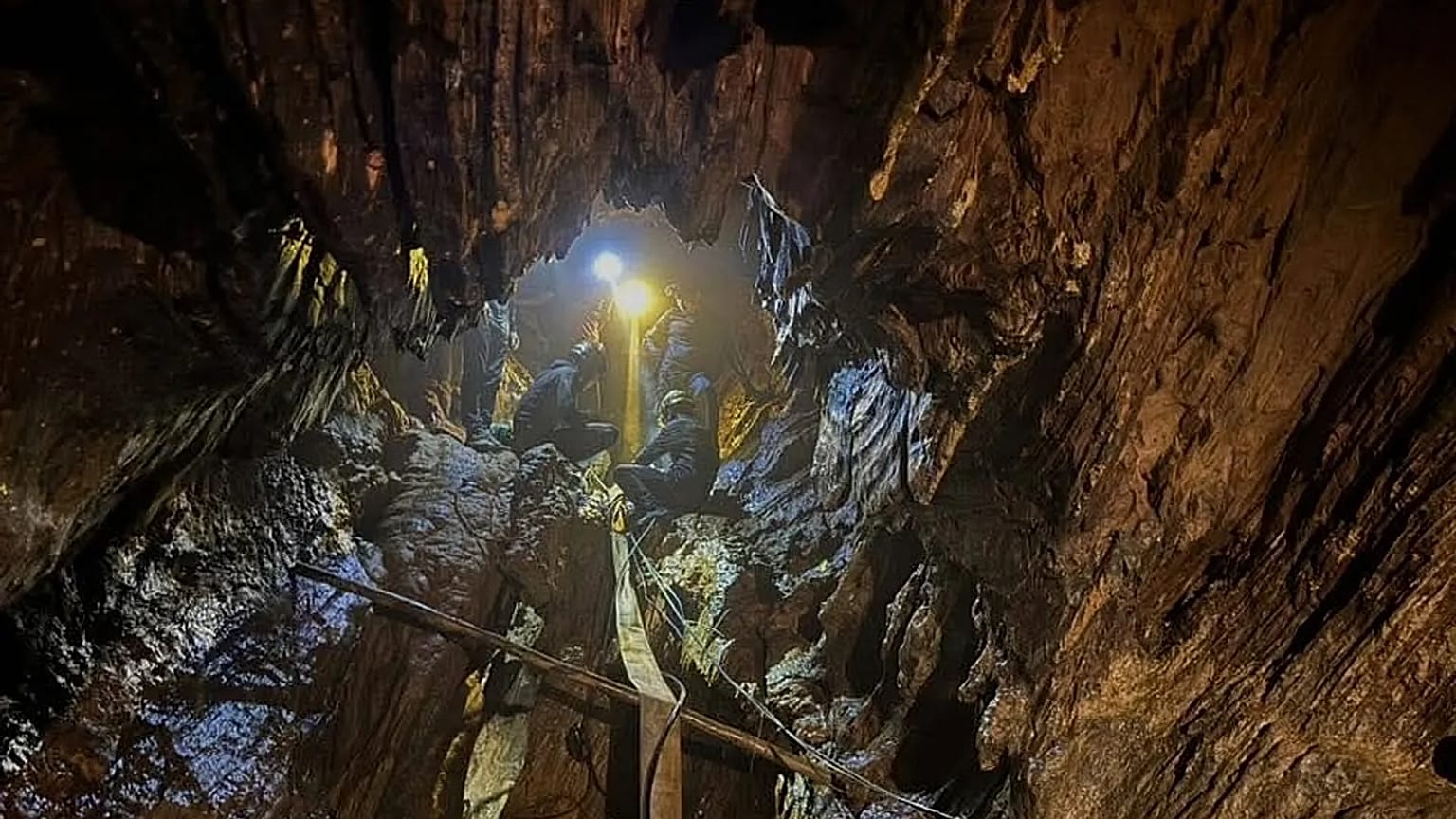
This image released by Metta Tham Rescue Kalasin shows rescuers working in a flooded cave in Xaisomboun province, 29 May, 2026
Copyright AP Photo


By Gavin Blackburn
Published on

The villagers reportedly entered the cave nearly two weeks ago to look for valuable minerals such as gold before being trapped by a flash flood that blocked their way out.

Rescue workers in Laos were searching for an alternative passage into a flooded cave on Monday where two people are believed to have been trapped for nearly two weeks after heavy rainfall flooded the main entrance, making it impassable.

The two people remain unaccounted for since a search and rescue operation began last month in a rugged area of Xaisomboun province, about 120 kilometres north of the capital, Vientiane.

Five of the seven people initially trapped inside the cave have been rescued.

Malaysian diver Lee Kian Lie, who is involved in the operation, said workers were pumping water out of the cave.

“We will go into the suspected area to continue the search if the water level is lowered,” he told the Associated Press news agency.

Another team of rescuers is also looking around the other side of the cave in hopes of finding a dry passage that could provide access to the area where the missing people are believed to be trapped, he said.

Two rescuers work before evacuating the first of five villagers who had been trapped in a cave in Xaisomboun province, 29 May, 2026
Two rescuers work before evacuating the first of five villagers who had been trapped in a cave in Xaisomboun province, 29 May, 2026 Benz Norrased Palasing Seascout Diving via AP/Benz Norrased Palasing Seascout Diving via AP

Rescue teams from Laos and neighbouring Thailand have been working together for more than a week. They were joined by divers from countries including Finland, France, Malaysia, Japan, Indonesia and Australia.

Several of the rescuers previously took part in the complicated 2018 cave rescue in northern Thailand that saved 12 schoolboys and their football coach from a flooded cave.

Laos' Rescue Volunteer for People group posted on its Facebook page that heavy rain caused “massive amounts of water” to flow down into the area, forcing them to suspend operations on Sunday night.

Kengkaj Bongkawong, head of the Thai group Metta Tham Rescue Kalasin, said that the workers are also looking for air shafts from above that may provide access into the cave.

Rescuers believe the two missing people are trapped deeper inside the cave than the location where the five survivors were originally found on Wednesday. But the passage into that area is said to be very narrow and heavily flooded.

Rescuers after they safely evacuated the villagers who had been trapped in a cave in Xaisomboun province, 30 May, 2026
Rescuers after they safely evacuated the villagers who had been trapped in a cave in Xaisomboun province, 30 May, 2026 Association Of Volunteers For Lao People via AP/Association Of Volunteers For Lao People via AP

The villagers reportedly entered the cave nearly two weeks ago to look for valuable minerals such as gold before being trapped by a flash flood that blocked their way out. One other villager escaped and alerted the authorities.

The first man was safely extracted on Friday, guided through a narrow flooded passage by an expert diver. The remaining four left the cave on Saturday after the water receded enough for them to walk out on their own, rescuers said.


France and allies intercept suspected Russian shadow fleet tanker, Macron says

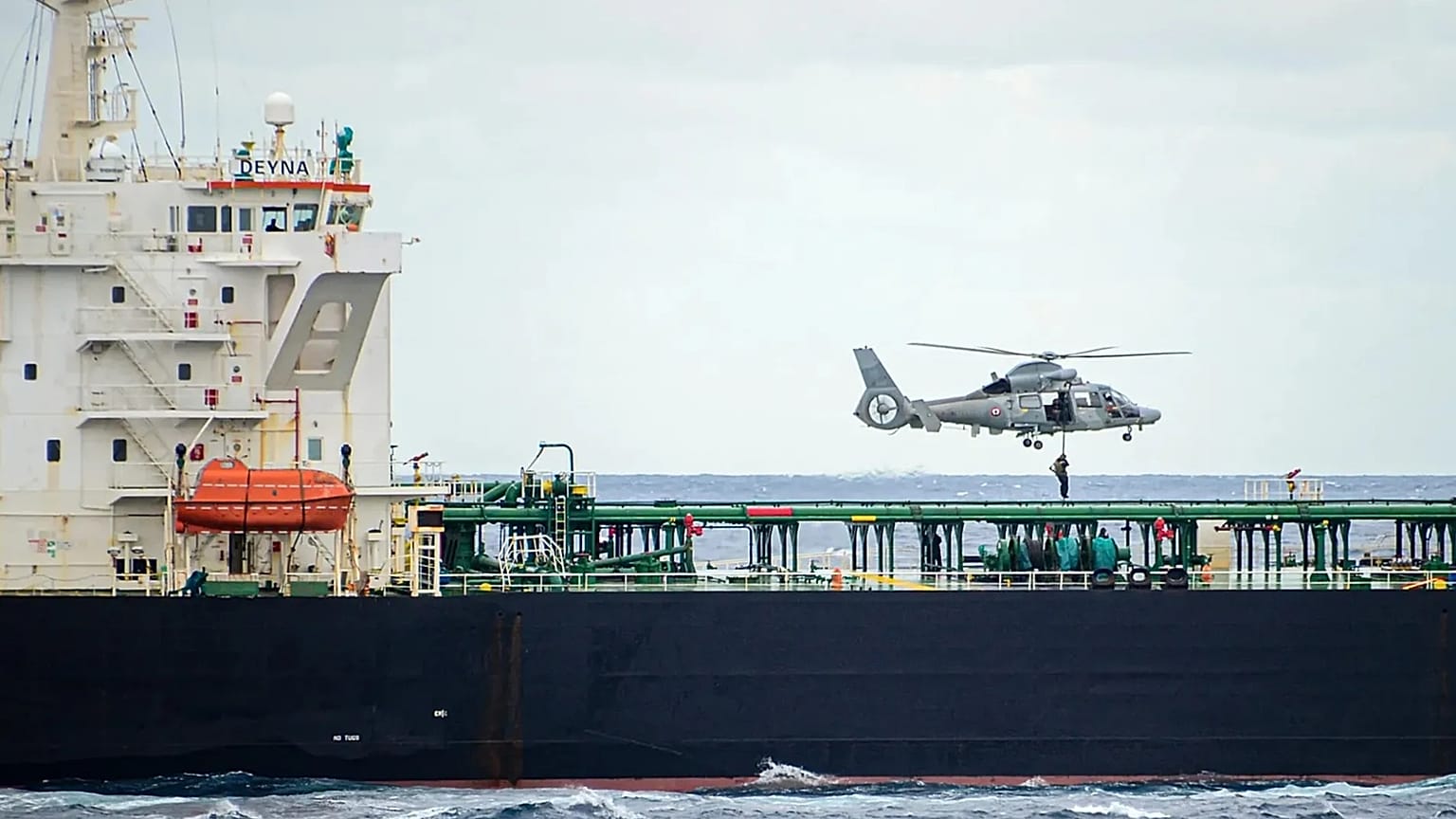
A French soldier rappels down from a helicopter to the Deyna tanker in the Mediterranean, 20 March, 2026
Copyright AP Photo

By Gavin Blackburn & Serge Duchêne
Published on

Russia has reportedly built up a flotilla of old oil tankers of opaque ownership to get around sanctions imposed by the European Union over Moscow's 2022 full-scale invasion of Ukraine.

France and its allies detained a sanctioned Russian oil tanker in the Atlantic over the weekend, President Emmanuel Macron said on Monday.

The Tagor was detained on Sunday morning in international waters with the help of the United Kingdom and other partners, he said in a social media post.

"It is unacceptable for ships to circumvent international sanctions, violate the law of the sea, and fund the war that Russia has been waging against Ukraine for more than four years," he said.

Since September, France has boarded three other ships believed to belong to Russia's so-called shadow fleet.

In October last year, French forces seized the Benin-flagged tanker Boracay off the Atlantic coast and Macron later said a probe had been opened to determine whether the vessel had been used as a launchpad for a drone incursion into Denmark's airspace which forced the closure of its airports.

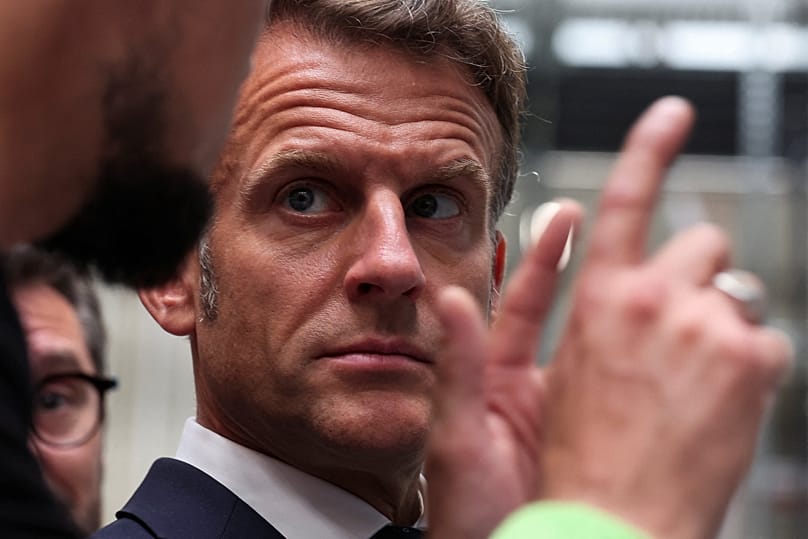
France's President Emmanuel Macron visits the Vorwerk factory producing Thermomix kitchen appliances in Donnemain-Saint-Mames, 29 May, 2026
France's President Emmanuel Macron visits the Vorwerk factory producing Thermomix kitchen appliances in Donnemain-Saint-Mames, 29 May, 2026 AP Photo

On 1 March this year, French Navy helicopters supporting Belgium’s armed forces boarded the Ethera tanker in the North Sea. That vessel was flying the flag of Guinea.

While on 20 March, the French Navy intercepted and boarded another suspected shadow fleet tanker, the Deyna, in the Mediterranean Sea. According to French maritime authorities, the vessel was suspected of operating under a false flag designation. It was flying the flag of Mozambique.

Russia has reportedly built up a flotilla of old oil tankers of opaque ownership to get around sanctions imposed by the European Union, as well as the United States and the G7 group of nations, over Moscow's 2022 full-scale invasion of Ukraine.

The shadow fleet vessels frequently change the flags they fly, a practice known as flag-hopping, or use invalid registrations in an attempt to escape tracking.

They are often poorly-kept and lack verifiable insurance. Some of the vessels also carry grain stolen from Ukraine.

Russia's use of the vessels has also raised environmental concerns about accidents given their age and uncertain insurance coverage.

Nearly 600 vessels suspected of being part of Russia's shadow fleet are subject to EU sanctions.


France boards fourth Russian oil tanker as crackdown on ‘shadow fleet’ continues

The French Navy has boarded another oil tanker from Russia as Paris steps up its campaign against Moscow’s so-called "shadow fleet" of vessels suspected of evading international sanctions.


Issued on: 01/06/2026 - RFI

France has detained the Russian tanker "Tagor' off the coast of Brittany, subject to sanctions in the Atlantic Ocean © Video screenshot

President Emmanuel Macron announced on Monday that the operation had taken place on Sunday on the high seas in the Atlantic “with the support of several partners, including the United Kingdom”.

According to France’s Atlantic Maritime Prefecture, the interception was carried out more than 400 nautical miles – around 740 kilometres – west of the tip of Brittany.

The vessel, identified as the Tagor, was travelling from Murmansk in northern Russia.

After an inspection team boarded the tanker, an examination of its papers “confirmed suspicions regarding the irregularity of the flag flown”, the authorities said. A report has now been sent to the public prosecutor in Brest, which has jurisdiction under France’s maritime court system.

The vessel is currently being escorted by French Navy assets to an anchorage point for further checks, the Maritime Prefecture added in a statement.

How Russia’s shadow fleet keeps slipping through Europe’s net
Macron condemns sanctions evasion

Macron said the operation reflected France’s firm determination to counter ships accused of helping Russia sidestep sanctions imposed over its war in Ukraine.

“It is unacceptable that ships should circumvent international sanctions, violate the law of the sea and finance the war that Russia has been waging against Ukraine for more than four years,” the French president wrote on X, in a post accompanied by footage of the boarding.

He also warned that such vessels pose risks beyond sanctions evasion.

“These vessels, which do not comply with the most basic rules of maritime navigation, also pose a threat to the environment and to everyone’s safety,” Macron said, adding that France’s determination to combat the Russian shadow fleet was “constant and total”.

The term “shadow fleet” is commonly used to describe ageing or obscurely registered tankers suspected of helping Russia continue exporting oil despite Western restrictions. Such vessels often operate under changing flags, opaque ownership structures or questionable documentation, making enforcement at sea more difficult.

Fourth French interception

Sunday’s boarding marks the fourth such operation carried out by France against tankers linked to Russia.

The previous cases involved the Deyna and the Grinch, which were detained in the Mediterranean in March and January 2026 respectively, as well as the Boracay, which was boarded off the coast of Brittany in September 2025 while sailing without a flag.

All three vessels were later allowed to continue their journeys after paying fines.

France has been looking to toughen its response. On 8 April, Paris announced plans to double penalties for offences including sailing without a flag and failing to comply with maritime authorities, according to corroborating sources.

The move is part of a broader effort to close loopholes used by vessels suspected of helping finance Russia’s war effort while also strengthening safety and environmental protections at sea.

(With newswires)