Monday, June 01, 2026

ZIONIST IMPERIALISM

Frustration, anger as residents rush to flee Beirut's southern suburbs

01.06.2026, 

Photo: Marwan Naamani/dpa

By Weedah Hamzah, dpa

Lebanese Army troops were deployed on Monday at the entrances to Beirut's southern suburbs to organize traffic as residents rushed to leave the area amid fears of possible Israeli strikes.

Earlier Israeli Prime Minister Benjamin Netanyahu announced a decision to strike Beirut's southern suburbs, widely known as Dahiyeh, prompting anxiety among residents and disruptions to daily life.

"We are rushing and bringing kids from schools at the outskirts to leave immediately," Imad, a resident of the Bir al-Abed neighbourhood, told dpa. He expressed frustration at the situation, saying residents could no longer endure repeated escalations. He also lashed out at Hezbollah Secretary General Naeem Qassem. 

"The leaders of Hezbollah are hiding, but the people are paying the price."

Several schools in Beirut reportedly asked parents to collect their children following reports that Israel could target the capital. 

"The school sent me a message to come and take my children after the Israeli decision," said Hiba, a mother of two children who attend a private school in Beirut.

The municipality of Haret Hreik, one of the main districts in Beirut's southern suburbs, called on public and private schools to close until further notice as a precautionary measure.

Residents also reported drones flying at low altitude over Beirut's southern suburbs, further heightening tensions as many families left the area.

The developments came as military analysts discussed the implications of Israel's reported capture of the Beaufort Castle in southern Lebanon. 

Israeli media quoted military officials as saying control of the strategic hilltop provides observation and fire-control advantages but is unlikely on its own to alter the course of the conflict.

Israel orders strikes on Beirut ahead of UN meeting


Beirut (Lebanon) (AFP) – Israel said Monday it would once again target Beirut's southern suburbs, a Hezbollah stronghold mostly spared heavy attacks since April, as it stages its deepest incursion into Lebanon in two decades.

Issued on: 01/06/2026 - RFI

Israeli airstrikes hit targets on the outskirts of Tyre, southern Lebanon, on June 1 and Prime Minister Benjamin Netanyahu said they would soon resume on Beirut © KAWNAT HAJU / AFP

The UN Security Council is expected to hold an emergency meeting later Monday on Israel's expansion of its operations in Lebanon, and the European Union called on Israel to "stop its military escalation".

Iran, in stalled negotiations on an end to its wider war with the United States, said a Lebanon ceasefire remains a key condition for any deal.

Israel's Prime Minister Benjamin Netanyahu and Defence Minister Israel Katz said they had ordered strikes on Beirut's southern suburbs, a densely-populated area where Hezbollah holds sway.

"In light of the repeated violations of the ceasefire in Lebanon by the terrorist organisation Hezbollah and the attacks on our cities and citizens, Prime Minister Benjamin Netanyahu and Defence Minister Israel Katz have instructed the IDF to strike terror targets in the Dahiyeh district of Beirut," a joint statement said.

In a separate statement, Katz said there would be "no calm in Beirut" if Hezbollah attacks continued, and vowed to establish a military-controlled zone in the area of south Lebanon's Litani River.

Lebanon was dragged into the Middle East war on March 2 when Hezbollah fired rockets towards Israel in retaliation for the US-Israeli killing of Iran's supreme leader.

A truce to halt the fighting in Lebanon began on April 17, but has never been observed. Both Israel and Hezbollah accuse each other daily of violating the ceasefire, justifying their attacks by the other's alleged breaches.

'Vicious aggression'


Iranian foreign ministry spokesman Esmaeil Baqaei told a weekly press briefing Monday that "a ceasefire in Lebanon is an essential condition for any deal aimed at ending the war" with the US.

Lebanese President Joseph Aoun meanwhile said his country was facing "a vicious and reprehensible Israeli aggression", with the two nations set to hold a fourth round of US-hosted talks on Tuesday.

An AFP correspondent saw families with small children packed onto scooters with just a bag or two leaving the southern suburbs Monday, as others fled in cars full of belongings.

Hadi, a 24-year-old, said he had hoped for some stability during the truce.

"That feeling did not last long... Our fears intensified this morning after I received a series of messages about orders to bomb the southern suburbs, which caused widespread panic, and we immediately left the area," he told AFP by phone.

Beirut's southern suburbs and their surroundings have been struck twice since April 8, when a series of Israeli attacks across Lebanon killed hundreds in minutes.

"The Dahiyeh in Beirut is no different from the communities in northern Israel -- if there is no calm in the north, there will be no calm in Beirut," Katz's statement said.

Monday's Israeli order comes a day after its troops seized Beaufort castle, which commands sweeping views of south Lebanon, as the military expands its ground operations.

Israeli forces used the castle, also known as Qalaat al-Chakif, as a base during their previous two-decade occupation of southern Lebanon that ended in 2000.

Evacuation orders


"The capture of Beaufort is a dramatic stage and a dramatic shift in the policy we are leading," Netanyahu said in a video statement.

Katz said Israel planned to "to turn the Litani area into a zone under IDF security control, free of weapons and terrorists".

French President Emmanuel Macron, whose country requested the UN Security Council meeting, said Sunday that "nothing justifies the major escalation under way in south Lebanon".

On Monday, Israel's military issued evacuation orders for nine towns and villages in southern Lebanon's Sidon and Jezzine districts, far from the border with Israel, Lebanon's state-run National News Agency reported.

Hezbollah meanwhile claimed responsibility for a missile fired on Tiberias, around 30 kilometres (19 miles) inside Israel. The Iran-backed group also said it attacked Israeli forces inside Lebanon.

A senior US official told AFP on Sunday that US Secretary of State Marco Rubio had spoken with Aoun and Netanyahu about the ongoing diplomatic negotiations and had said that Hezbollah must be the first to cease attacks.

Military delegations from Lebanon and Israel held security talks in Washington on Friday and more US-brokered negotiations are planned for Tuesday and Wednesday.

"To advance those talks, the United States proposed a clear sequence: Hezbollah must stop all attacks on Israel. In return, Israel would refrain from escalation in Beirut," said the official, who spoke on condition of anonymity.

Lebanon's health ministry says Israeli attacks have killed more than 3,412 people in the country since March 2.

Twenty-six Israelis have been killed, 25 soldiers and one civilian contractor, over the same period.

© 2026 AFP


Lebanon PM condemns Israel's 'scorched-earth policy' as fresh strikes hit south


Lebanon's Prime Minister Nawaf Salam accused Israel in a televised address on Saturday of pursuing a “scorched-earth policy” following new Israeli strikes in the south of the country. A ceasefire between Israel and Tehran-backed Hezbollah officially took effect on April 17 but has not been observed.


Issued on: 31/05/2026 - 
By: FRANCE 24

Smoke rises after an Israeli air strike on the village of Kfar Tibnit in southern Lebanon on May 30, 2026. © AFP

Lebanon's prime minister accused Israel on Saturday of pursuing a "scorched-earth policy" in his country's south, urging a halt to the fighting as Israel carried out fresh air strikes and issued evacuation warnings for more than a dozen locations.

A day after Israeli Prime Minister Benjamin Netanyahu said his forces had advanced deeper into Lebanon, his counterpart Nawaf Salam warned the country was facing a "dangerous" escalation, and called for "a swift and real ceasefire".

In a televised address, Salam accused Israel of "pursuing a scorched-earth policy and collective punishment" by "destroying towns and villages, and forcing their inhabitants into exile".

This will bring "neither security nor stability" to Israel, he said.


Still, he defended his government's engagement with its southern neighbour, after military delegations from both countries held security talks in Washington on Friday, with more US-brokered negotiations planned next week.

Salam said the outcome of the negotiations was "not guaranteed", but called them "the least costly path for our country and our people".


Israel crosses the Litani River in Lebanon: What it means and why it matters

© France 24
01:54


A truce to halt the fighting between Israel and Tehran-backed Hezbollah officially took effect on April 17, but has never been observed. Both Israel and Hezbollah accuse each other of violating the ceasefire and justify their attacks by the other's alleged breaches.

A US statement issued after Friday's Israel-Lebanon talks made no mention of the truce, but said the "productive military-to-military discussions" would inform next week's political meeting.

Hezbollah vehemently opposes the direct talks.


Fresh attacks

Lebanon's state-run National News Agency (NNA) reported several Israeli attacks in the south Saturday, and the Lebanese military said two of its soldiers "were seriously wounded ... by a hostile Israeli drone" near the southern city of Nabatieh.

The Israeli military issued fresh evacuation warnings covering villages near Nabatieh and others in the east of the country.

WATCH MORE War in Lebanon: Cultural heritage at risk

Hezbollah said it launched multiple attacks targeting northern Israel Saturday, and had also clashed with Israeli soldiers in southern Lebanon.

In a statement, the group said it was confronting Israeli forces around the outskirts of the towns of Zawtar al-Sharqiyah, Yohmor al-Shaqif and Dibbine, adding the troops "had not yet succeeded in taking control of the towns".

The Israeli military told AFP that more than 20 rockets and drones were launched from Lebanon on Saturday.

Netanyahu announced on Friday that Israeli forces had advanced beyond the Litani River, which runs around 30 kilometres (20 miles) north of the Lebanon-Israel frontier, and were "hitting Hezbollah head on".

The Lebanese health ministry says that Israeli attacks have killed more than 3,371 people since March 2, when Hezbollah drew Lebanon into the Middle East war in support of its backer Iran.

Hezbollah said it attacked Israel in retaliation for the death of Iran's supreme leader in US-Israeli strikes when the war erupted on February 28.

Iran has insisted that any agreement to end the wider Middle East war also cover Lebanon.

(FRANCE 24 with AFP)


France requests emergency UN meeting amid Israeli advance in Lebanon

France has requested an emergency meeting of the United Nations Security Council after Israeli forces seized the medieval Beaufort castle in Lebanon, the French foreign minister said Sunday.


Issued on: 31/05/2026 - RFI

An Israeli flag and a Golani Brigade flag fly over the Beaufort Citadel in Lebanon, 31 May, 2026. © REUTERS - Stringer

"I have requested an emergency meeting of the United Nations Security Council because, while we recognise Israel's right, like that of all countries, to self-defence... nothing can justify the continuation of Israeli military operations in Lebanon and its ever-deeper occupation of Lebanese territory," French Foreign Minister Jean-Noël Barrot told BFMTV channel on Sunday.

French President Emmanuel Macron also called for an end to fighting and said "nothing justifies the major escalation under way in south Lebanon."

In a message on social media platform X after speaking with regional leaders, he said it was "essential" for an agreement to be reached quickly between the United States and Iran.

Israeli Prime Minister Benjamin Netanyahu vowed to push deeper into Lebanon after his military took over the medieval castle of Beaufort on Sunday, calling it a "dramatic shift" in the campaign against Hezbollah.

The Iran-backed militant group said on Sunday it targeted Israeli army positions and infrastructure in Shlomi and Nahariya in northern Israel, while air raid sirens blared in the Acre area.

Lebanon was dragged into the Middle East war on 2 March when Hezbollah fired rockets towards Israel in retaliation for the US-Israeli killing of Iran's supreme leader.

A truce to halt the fighting between Israel and Hezbollah began on 17 April, but has never been observed. Both sides accuse each other daily of violating the ceasefire and justify their attacks by the other's alleged breaches.

As fighting escalated in Lebanon, France said on Sunday it requested an emergency meeting of the United Nations Security Council.

Macron urges Israel to withdraw from Lebanon as Salam calls for €500m in aid

Israeli forces used the Beaufort castle, also known as Qalaat al-Chakif, as a base during their previous two-decade occupation of southern Lebanon that ended in 2000.

In a video statement released hours after the military took Beaufort, Netanyahu said "we have returned united, determined and stronger than ever".

"Now my directive is to deepen and expand our hold in places that were under Hezbollah's control. The capture of Beaufort is a dramatic stage and a dramatic shift in the policy we are leading."

Historic strongpoint

Israeli Defence Minister Israel Katz said troops had captured the historic strongpoint, which commands sweeping views of south Lebanon, as they expanded their ground operations.

"Forty-four years after the heroic Battle of Beaufort, and on this day commemorating the soldiers who fell in the First Lebanon War (1982), our troops have returned to the summit of Beaufort and once again raised the Israeli flag there," Katz said in a social media post.

In a shelter for the displaced in Sidon, southern Lebanon's largest city, Zeinab Fakih, from Nabatieh, told French news agency AFP they were very afraid.

"It is impossible for us to return to our home, because the city is in great destruction," she said, adding that the arrival of Israeli forces at the castle was "tragic".

The push to Beaufort came as the Israeli military issued a sweeping evacuation order to areas south of the Zahrani River, north of the Litani and around 40 kilometres from the border.

It said it was targeting "Hezbollah infrastructure in Tyre and several additional areas in southern Lebanon" as Lebanon's state-run National News Agency reported a series of strikes on the area.

Lebanese Prime Minister Nawaf Salam had accused Israel on Saturday of pursuing a "scorched-earth policy and collective punishment" in the south, urging a halt to the fighting.

Military delegations from Lebanon and Israel held security talks in Washington on Friday, with more US-brokered negotiations planned next week.

The Israeli army said Sunday that one of its soldiers had been killed a day earlier by a Hezbollah explosive drone, bringing to 25 the number of Israeli military deaths in Lebanon since early March.

The Lebanese health ministry says Israeli attacks have killed more than 3,371 people in the same period.

(with AFP)

Israel seizes Beaufort Castle in deepest Lebanon advance in 26 years
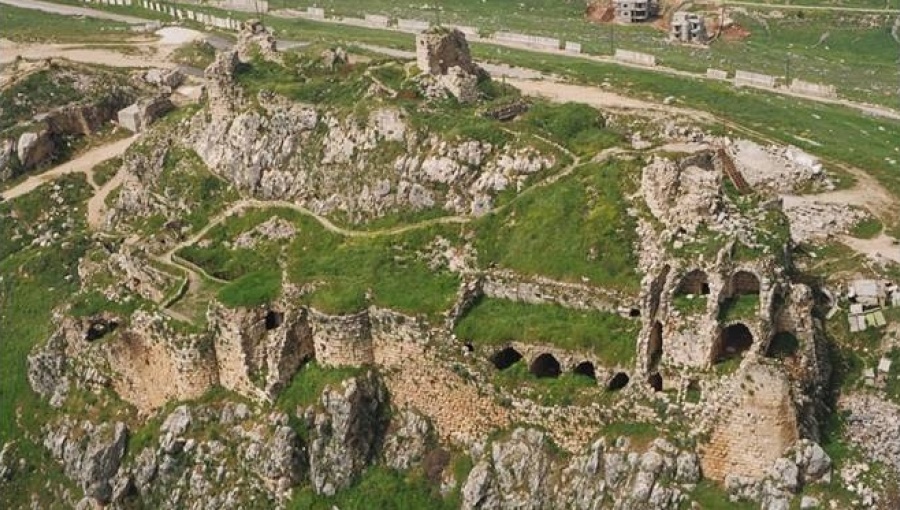
Israel seizes Beaufort Castle in deepest Lebanon advance in 26 years
The 900-year-old Crusader fortress overlooking the Galilee Panhandle falls to the Golani Brigade; Netanyahu calls it "a dramatic shift in the policy we are leading" and orders troops to "deepen and expand" their hold / bne IntelliNewsFacebook
By Ben Arsi in Berlin May 31, 2026

Israeli forces have captured Beaufort Castle, the ancient Crusader fortress that dominates the ridge above the Litani River in southern Lebanon, as Israeli Prime Minister Benjamin Netanyahu orders IDF troops to expand operations into northern Lebanon.

Taking Beaufort Castle is Israel's deepest ground incursion into Lebanese territory in 26 years. Netanyahu immediately ordered troops to push further north and declared it "a dramatic change in the policy we are leading."

Israel has widened its Lebanon combat zone, ignoring a ceasefire deal and ordered residents to evacuate if it tries to set up a buffer zone on its northern border.

The IDF said it launched a ground operation in the Beaufort Ridge and Wadi al-Saluki stream area to destroy Hezbollah infrastructure and eliminate fighters, "as part of strengthening operational control in southern Lebanon and removing the direct threat to the Galilee Panhandle and Metula," as well as to "expand the forward defence line." One Israeli soldier was killed during the operation.

Defence Minister Israel Katz announced the capture of Beaufort on social media, posting a photograph of Israeli and Golani Brigade flags flying over the ruined medieval battlements.

"Under the guidance of Prime Minister Netanyahu and my direction, the IDF expanded its manoeuvre in Lebanon, crossed the Litani River and captured the Beaufort Ridge, one of the most important strategic points for the protection of our settlements in Galilee and the safety of our troops," he wrote.

He noted that the operation came 44 years after Israel first seized Beaufort during Operation Peace for Galilee in 1982.

"This is a clear message to our enemies: those who threaten Israeli citizens will lose their strategic assets one by one," he added. "The campaign is not yet over. The IDF is strong, and we are all determined to crush Hezbollah's power and complete the mission."

Netanyahu, releasing a video statement in front of an IDF photograph of the castle, said: "The capture of Beaufort is a dramatic stage and a dramatic shift in the policy we are leading. Now my directive is to deepen and expand our hold on areas that had been under Hezbollah's control." He added: "We returned to Beaufort stronger than ever."

Historically strategic castle

Beaufort Castle, described by UNESCO as one of the best-preserved examples of medieval castles in the Near East, sits on a steep cliff overlooking southern Lebanon and northern Israel, giving it long-standing strategic value for observation and control of surrounding valleys and movement routes.

Built by Crusaders around 1139, the fortress passed through many hands over nine centuries before the Palestine Liberation Organisation established a presence there in the 1970s and used it to shell northern Israel. Israel seized it in 1982, held it as a forward operating base for 18 years, and withdrew in 2000 under sustained Hezbollah pressure — a retreat that became one of the most contested episodes in Israeli military history.

Hezbollah established the ridge as a significant military asset after Israel's 2000 withdrawal, with the IDF saying "hundreds of projectiles were launched toward Israeli civilians and IDF soldiers" from the Beaufort area. The operation was focused on dismantling that infrastructure, established under Iranian direction.

"Our soldiers are writing a new chapter... by planting their flag at Beaufort Castle," the Israeli military's Arabic-language spokesman said.

Israeli military analysts were careful to separate the symbolic from the operational significance of the capture. Commentators assessing the move praised the achievement but added the caveat that it was a tactical rather than strategic advance. That reservation reflects Hezbollah's doctrine — articulated by its current leader Naim Qassem even before the October 7 terror attacks on Israel — that the organisation relies on diverse fire capabilities at every range and from deep inside Lebanon, meaning that even if the IDF reached Beirut, Hezbollah could continue firing at the Israeli home front. Under that doctrine, the loss of a strategic ridge does not end the group's capacity to fight or its willingness to retaliate.

The wider operation

The Beaufort capture is part of a broader Israeli advance north of the Litani River that began earlier this week. Soldiers crossed the Litani River's 90-degree bend, just across from the border community of Metula, and advanced toward the castle. Israeli troops were also operating near Nabatieh, a major Hezbollah stronghold in southern Lebanon. The operations come despite the ceasefire formally announced on April 17 — which has been repeatedly violated by both sides — and despite a 45-day ceasefire extension agreed on May 17.

Hezbollah responded to the May 30 advance with one of its heaviest barrages on Israel since the April ceasefire, prompting school closures across northern Israel and driving the Galilee Medical Center in Nahariya to move operations underground. Lebanese Prime Minister Nawaf Salam condemned the escalation as "dangerous and unprecedented," calling for an immediate ceasefire and accusing Israel of a scorched-earth policy.

The next round of US-mediated Pentagon talks between Israeli and Lebanese military delegations is scheduled for June 2-3 — a diplomatic track that is now operating in the shadow of Israeli forces planting flags on a medieval hilltop fortress for the second time in four decades.

'We are here to help': WHO chief visits epicentre of Ebola outbreak in DR Congo


UN health chief Tedros Adhanom Ghebreyesus on Saturday visited Bunia in the eastern Democratic Republic of Congo - where a severe Ebola outbreak has been declared.


Issued on: 30/05/2026 - RFI

World Health Organization (WHO) Director-General Tedros Adhanom Ghebreyesus arrives in Bunia, in the eastern Democratic Republic of the Congo, where an Ebola outbreak has been declared, 30 May 2026. AFP - GLODY MURHABAZI


The World Health Organization's director general told reporters in Bunia, capital of Ituri province, that the international community was helping the DRC government cope with the outbreak, but "at the same time community ownership is important".

Tedros Adhanom Ghebreyesus said that was the reason for his trip: "We are here to discuss with the community, to see how the response is running and if there are challenges to help."

He is expected to inaugurate a large Ebola treatment center in Bunia in the form of a permanent building rather than simple tents.

Ghebreyesus was in the capital Kinshasa on Thursday to meet with local health officials who, according to him, "really need support.

He held several meetings, including with Prime Minister Judith Suminwa on Friday and is due to meet President Félix Tshisekedi on Monday.

WHO chief says Ebola 'can be stopped' as he lands in DR Congo

The highly contagious haemorrhagic fever is already present in three eastern DRC provinces and in neighbouring Uganda, where nine confirmed infections, including one death, have been recorded.

There have been at least 1,077 suspected cases of Ebola in the DRC since the outbreak was declared on 15 May, including 246 deaths, the Africa Centres for Disease Control and Prevention said on Thursday.

The true reach of the outbreak in the DRC, which is thought to have been circulating before it was detected, is likely to be much wider, the WHO has warned.

Red Cross workers disinfect a hospital in Rwampara, Ituri province, on 21 May 2026, as part of efforts to contain the Ebola outbreak in DRC. © REUTERS - Gradel Muyisa Mumbere


The vast, unstable central African country – whose impoverished east has been plagued by three decades of conflict – has limited capacity to conduct laboratory tests to confirm cases.

Uganda closed its border with the DRC this week and ordered a 21-day quarantine for anyone arriving from that country.

On Friday, the WHO announced that a patient had recovered on Wednesday, left hospital and was discharged into the community after two negative tests.

United States to fund Ebola clinics as aid cuts blamed for spread of virus

WHO's Anaïs Legand told reporters in Geneva it marked the "first" among patients who had been confirmed Ebola carriers in the current outbreak, linked to the Bundibugyo strain.

Ebola, which is passed on through close contact and bodily fluids, has killed more than 15,000 people in Africa over the past 50 years.

The deadliest outbreak in the DRC claimed nearly 2,300 lives out of 3,500 cases between 2018 and 2020.

The medical charity Doctors Without Borders (MSF) said in a statement of the latest outbreak that "never has an Ebola epidemic recorded so many cases in the first days after it being declared".
Lack of medical personnel

It said the numbers of medical experts being deployed to the region was still insufficient.

State services are largely lacking in Ituri province, where access is hindered by insecurity due to the presence of Islamic State-affiliated ADF militants and other militias that regularly kill civilians.

The nearby North and South Kivu provinces, that have also seen Ebola cases in the outbreak, have been plagued by near continuous violence for three decades.

Swathes of the regions are controlled by the Rwanda-backed armed group M23 which has been battling government forces.

UN welcomes progress on talks between DR Congo, M23 armed group

Millions of people have fled the fighting and are living in displacement camps with poor hygiene conditions.

Nearly a million of those displaced are in Ituri province, where the prospect of the epidemic spreading throughout the camps has sparked alarm.

"If Ebola comes, we'll be wiped out as we're packed like sardines," Dorcas Mapenzi said at the Kingonze camp on the outskirts of Bunia.

No vaccine or specific treatment exists for the Bundibugyo strain of Ebola, which is behind the current outbreak.

But the head of the CDC Africa said on Thursday that a vaccine should be ready by the end of the year.

(with AFP)

‘A Disease You Get When You Care For Someone’: WHO On The Ebola Frontline

Supplies to bolster the response against the Ebola outbreak in Ituri province arrive in the town of Bunia. Photo Credit: WHO

May 30, 2026 
By UN News


Two weeks into the latest deadly Ebola outbreak, the World Health Organization (WHO) estimates there are now 906 suspected cases of Ebola in the Democratic Republic of Congo (DRC), including 223 suspected deaths.

Early detection and community mobilisation remain critical to saving lives, as potential treatments and vaccines are being still being assessed, the UN health agency said on Friday.

Since 15 May, UN agencies have been supporting both the DRC and neighbouring Uganda to contain the outbreak caused by the rare Bundibugyo strain of the Ebola virus, which spreads through close contact.

“It’s a disease that you get when you care for someone, for your husband or your partner or your child or your mother,” Anaïs Legand, a WHO Technical Officer told reporters in Geneva.

“You get it when you want to help someone with symptoms, and this is terrible,” she said, explaining that families and friends must be instructed not to touch loved ones who are falling sick.

30 to 50 per cent chance of death


Ms. Legand highlighted the critical importance of prevention and early access to care, in the face of this particularly deadly disease. Based on previous outbreaks the lethality “ranges between 30 and 50 per cent,” she said – “it’s huge.”

While “five out of 10 people are likely to die,” more can be done to promote recovery, according to the WHO expert.

“We can scale up optimized intensive care,” she said. “We can support the communities to recognize the symptoms early to get early diagnostics, so that they can receive the level of care they need.”

Experience shows that Ebola flare-ups can only be controlled when communities are “fully involved” in the response, Ms. Legrand insisted — highlighting a recent case in the DRC where a patient fully recovered and was discharged from the hospital.

Detective work

WHO has gathered experts to review potential treatments and vaccines against the virus, with several products now identified for further assessment.

For confirmed cases, three candidate therapeutics for treatment have been prioritised for clinical trials, Ms. Legand revealed: the monoclonal antibodies MBP 134 and maftivimab, and the antiviral remdesivir.

For prevention, the oral antiviral obeldesivir is being prioritised within a clinical study as a post-exposure measure for those who have been in contact with confirmed cases.

The WHO expert added that two candidate vaccines have been identified for evaluation once doses become available.

The agency is working closely with the governments of DRC and Uganda while at the same time “urgently scaling up care capacities.”

Access issue

“This outbreak is happening in a very complex context,” she stressed, recalling that in the affected Ituri province alone, 1.2 million people require humanitarian assistance, while ongoing conflict and food insecurity are hampering the response.

“The issue that we have in the field is not necessarily an issue of resources,” Ms. Legand insisted. “It’s an issue of access.”

The airport in Ituri province’s capital Bunia has been closed, and while the DRC Government has allowed humanitarian flights to proceed, operational constraints remain. “One day I got a call from my team telling me there is no fuel,” the WHO expert said.

Tedros on the ground

The WHO chief Tedros Adhanom Ghebreyesus arrived in DRC on Friday, telling reporters in the capital Kinshasa that he was there to show the community is “not alone”.

He appealed to the multiple armed groups who act with impunity in the war-ravaged eastern region to declare a ceasefire so that health workers can reach people in need and halt spread of the disease.

The DRC notified WHO of an outbreak of Bundibugyo virus disease on 15 May and as of Thursday, 125 confirmed cases have been reported, including 17 deaths across Ituri, North Kivu and South Kivu provinces.

In addition, 906 suspected cases including over 223 deaths are under investigation and are being reviewed as testing capacity improves.

In Uganda, as of Thursday there were seven confirmed cases, including one death. WHO said that there is no evidence of community transmission in the country at this stage.
No travel restrictions, for now

While indicating that people from the affected areas who may have been exposed to Ebola should not travel, the UN health agency does not recommend any restriction on travel or trade with the DRC or Uganda based on the current information.


Ethiopia election overshadowed by war, instability and muted opposition

Ethiopia goes to the polls on Monday in an election which is expected to return Prime Minister Abiy Ahmed’s Prosperity Party to power, but has been marked by instability, restricted voting and questions over whether the vote can challenge the status quo.

Issued on: 31/05/2026 - RFI

A supporter of Ethiopia's ruling Prosperity Party displays a party campaign flyer at his grocery shop in Beshasha, the hometown of Ethiopian Prime Minister Abiy Ahmed, 28 May 2026. AFP - MARCO SIMONCELLI


The National Election Board of Ethiopia (NEBE) said voting will not take place in 46 constituencies in the conflict-affected regions of Amhara and Tigray, citing instability and political tensions.

It said eight districts in north-western Amhara had “unfavourable conditions” because of clashes between militia groups and the army, while voting was also suspended in 38 districts in Tigray, where tensions remain high between the federal government and the Tigray People’s Liberation Front.

Earlier the NEBE said that in places “where conditions do not permit polling on June 1, supplementary voting dates will be arranged".

The charred remains of a tank from clashes between the Ethiopian National Defense Force and the Tigray People's Liberation Front on a road near Gereb Agew, Southern Tigray, Ethiopia, 3 March. AFP - ABEL GEREZGIHER

The election comes as many Ethiopians are focused on everyday issues such as inflation, jobs and security, rather than the campaign.

Surprise results are unlikely and opposition figures and analysts say the vote will not offer a genuine challenge to the government.

“The elections in Ethiopia will be a purely formal affair that lends the government electoral legitimacy. There is no way to change or challenge the government through the elections,” according to Kjetil Tronvoll, a peace and conflict researcher at Oslo New University College.

Tigray party restores pre-war parliament, jeopardising northern Ethiopia peace


Voter apathy

Almost every election since the overthrow of the brutal Derg dictatorship of Haile Mariam Mengistu in 1991 has ended with one party winning 90 to 100 percent of seats in parliament, often amid allegations of fraud.

"I don't think my vote can have a significant impact on politics," said Tesfalem, a designer in the capital. He said he will not be voting.

"The voice of the people has never changed anything. And I don't think it will this time either," echoed Amanuel, a teacher in the Oromia region.

They gave only their first names for fear of reprisals, in a political climate that has hardened of late.

French companies expand presence in Ethiopia, despite security concerns

The election board says a total of 47 political parties are registered, with nearly 11,000 candidates and millions of voters registered.

But the ruling Prosperity Party won 96 percent of seats in 2021, and is running uncontested in 64 of Ethiopia's 547 constituencies this time.

There are some 40 opposition parties, but none are serious contenders. Even the largest, Ezema, will field candidates in less than 60 percent of seats, hoping to add to its current total of four MPs.

"Conducting elections under these conditions is essentially a ritual intended to show the international community that the government is elected every five years by the people," Merera Gudina, president of the 11-strong Committee of Opposition Parties, told French news agency AFP.

Results are due on 11 June.

(with newswires)
Abdoulaye Wade at 100: from challenger to 'old lion' of Senegalese politics

As Senegal’s former president Abdoulaye Wade turns 100 on Friday, RFI looks back on the life of a man whose century has spanned opposition, imprisonment, triumph and everything in between.


Issued on: 29/05/2026 - RFI

Former Senegalese President Abdoulaye Wade in Dakar, 10 July 2017
. © Seyllou/AFP

Officially Abdoulaye Wade was born in Saint-Louis on 29 May 1926, the son of a wealthy merchant from Kébémer in the north of Senegal. His father had also been a tirailleur, a colonial rifleman who fought for the French army.


But historians remain divided on whether or not that was his true date of birth. The politician could be evasive when questioned about his exact age, leading some to suspect him of misrepresenting his years in order to prolong his career.

Pressed by French weekly magazine Jeune Afrique in 2014, he replied: “I’m 87. But let’s say I’m 90 – so what? I’m in good health. My father died at 101. He fought in the Great War. My grandmother lived to 121. Longevity runs in my family. But I’m a Muslim, and I know I could go at any moment.”


Political awakening

After studying at French colonial schools in Senegal, Wade won a scholarship to the prestigious Lycée Condorcet in Paris, where he got his baccalauréat in 1950. He went on to study mathematics, physics, law, economics and literature, earning degrees from the Sorbonne in Paris and other French universities.

In Besançon, where he trained as a lawyer, he began a relationship with fellow student Viviane Vert. They would go on to marry and have two children, Karim and Sindiély.

As a young lawyer, Wade became politically active. In Paris he joined the national bureau of the Federation of Black African Students in France, a training ground for future leaders including Alpha Condé, Ibrahim Boubacar Keïta, Bob Akitani and Laurent Gbagbo.

The Paris movement that planted the seeds of Algerian independence, a century on

An anti-colonialist, Wade joined a collective defending members of Algeria's FLN independence movement in Paris. In Dakar, appointed as a defence lawyer for the courts of French West Africa in May 1958, two years before Senegal's independence, he quickly gained a reputation as a formidable courtroom orator.

In December 1962, the new republic faced a political crisis: President Léopold Senghor arrested Prime Minister Mamadou Dia and accused him of attempting a coup d’état. When Dia was tried for treason, Wade was one of his defence lawyers.

But despite Wade’s efforts, Dia received a life sentence in May 1963. Over half a century later, Wade told Jeune Afrique he had been “deeply unhappy” at his failure to prevent what he considered an “unjust and excessively harsh” conviction.
Manoeuvre in Mogadishu

By 1973, Senghor had ruled Senegal unchallenged for 11 years under the one-party system of the Senegalese Progressive Union (UPS).

Wade and four others drafted the “Manifesto of the 200”, a series of proposals for better governance that avoided criticising the government directly. When Senghor pardoned former prime minister Dia in March 1974, Wade saw his chance.

That June, as Senghor attended an Organisation of African Unity summit in Somalia, Wade secured an invitation to Mogadishu as an expert on monetary policy. Taking advantage of easier access to Senghor away from the presidential palace in Dakar, Wade – with the help of Moustapha Niasse, Senghor’s chief of staff, and future prime minister under Wade – managed to meet the president at his hotel.

Wade asked Senghor for permission to form a new party – not in opposition, but “of contribution”. Senghor agreed, and Wade founded the Senegalese Democratic Party (PDS), which soon became a rallying point for young people frustrated by the lack of change.

In the February 1978 legislative elections, the PDS won 17 out of 100 seats, and Wade became a member of parliament. In the December 1978 presidential election, he ran against Senghor and secured nearly 18 percent of the vote. He lost, but a long journey had begun.
Maurice Bassène, Abdoulaye Wade and Alassane Cissoko at a press conference in 1979 marking the five-year anniversary of the PDS. © Monique Bassène, private collection

Senegal celebrates pioneer of African history Cheikh Anta Diop


At a standstill

Senghor's protégé Abdou Diouf succeeded him as president in January 1981, and the UPS became the Socialist Party (PS). Wade ran against Diouf three times – in 1983, 1988 and 1993 – and lost each time.

Unrest simmered in Dakar after the 1993 election, and in February 1994, six police officers were burned alive when protesters set their vehicle alight. Wade was immediately arrested. Many assumed his political career was over.

After five months in prison and a hunger strike, he was released, but his party was losing momentum. “The opposition and the people demand change, but the government refuses to step aside, and we can’t remove them. We’re at a standstill,” he told Jeune Afrique in July 1994.

The charges were dismissed the following month and in March 1995, Wade stunned his supporters by joining Diouf’s new government as minister of state. He held the position for two years.

Triumphant return

After the May 1998 legislative elections, which brought another Socialist victory, Wade seemed defeated.

With his wife, he left his Dakar villa and retreated to Versailles, near Paris. After 25 years of setbacks and financial strain, he hinted that he might retire and make way for younger leaders.

Yet in Senegal, some loyalists still believed in Wade. Idrissa Seck, his deputy in the PDS, shuttled between Dakar and Versailles, presenting reasons for hope: firstly, Senegal had recently established a national election monitoring body that promised to guarantee transparency. Secondly, after 38 years of unbroken rule, the Socialist Party was crumbling.

Wade decided to return, and in October 1999 he was greeted in Dakar by a sea of supporters. The momentum shifted.

Abdoulaye Wade is greeted by tens of thousands of supporters at Dakar airport upon his return to Senegal, 27 October 1999. © Seyllou/AFP


Three far-left figures – Abdoulaye Bathily, Amath Dansokho and Landing Savané, who together commanded nearly 10 percent of the electorate – rallied behind Wade’s candidacy, forming the Alternance 2000 coalition.

They overlooked that Wade was a conservative. For Wade's new allies, what mattered was toppling the “PS State” and bringing a breath of fresh air to Senegal.

An unthinkable victory

The 2000 election campaign was electric. As Wade addressed large crowds at “blue rallies”, named for the PDS’s emblematic colour, the rhetoric grew sharp. Speaking to RFI, he warned: “The only arbiter today is the army.”

In private, Wade even accepted the idea of a military takeover, on the grounds that “a transition in uniform is still a transition”.

On 27 February 2000, for the first time since independence in 1960, the ruling party’s candidate was forced into a run-off. Diouf led with 41 percent of the vote, but Wade was close behind with 31 percent.

The third-place candidate, Socialist dissident Moustapha Niasse – who had facilitated Wade’s meeting with Senghor in Mogadishu in 1974 – urged his supporters to back Wade in the second round. Wade eventually won with 58.5 percent to Diouf's 41.5 percent.

On the evening of 19 March, a massive rally spontaneously gathered outside Wade’s villa, where he announced his victory. The next day, after a long night of deliberation, Diouf called Wade to concede defeat and congratulate his successor.

The tide had turned. Wade had defied the odds, and become the first politician to achieve a democratic transfer of power in French-speaking Africa.


Uneasy transition

Tenacious in seizing power, Wade was even more determined to hold onto it. After 12 years in office, he ran again in the 2012 presidential election.

His main opponent was Macky Sall, one of his most loyal lieutenants, who had served as his prime minister from 2004 to 2007. The two men fell out when Sall opposed Wade’s apparent plan to hand power to his son, Karim Wade.

In 2011, Sall told the French daily Le Monde: “It was after his re-election in 2007 that Abdoulaye Wade ... began to lose touch with the people’s concerns – energy, flooding, agriculture. He pursued prestige and glory. Power elevates and isolates. The awakening could be brutal. Wade has always relied on a personality cult.”

Wade's re-election in the first round of the 2007 vote had already raised concerns. The day after the poll, one of his closest advisors told RFI: “Without fraud, there would have been a run-off.”

In 2012, officially 85 years old, Wade returned to the campaign trail, seeking a third term.

After the first round, with 34.8 percent of the vote, he faced a run-off against Sall, who was close behind with 26.5 percent, and had the support of three other major candidates.

In the end, Wade followed Diouf's example. On 25 March, as the second-round results came in, Wade called Sall to congratulate him on his decisive victory – 65.8 percent to his 34.2 percent.

A dynasty denied

It remains unclear why a man as shrewd as Wade gambled on engineering a succession for his son.

In June 2004, Wade entrusted Karim with organising a summit of the Organisation of Islamic Cooperation in Dakar. In May 2009, two months after Karim lost municipal elections in Dakar, Wade appointed him to a super-ministry overseeing five portfolios.

Karim Wade, newly appointed Minister of State and International Cooperation, covering construction, infrastructure projects and air travel, 6 May 2009. © Seyllou/AFP

In June 2011, Wade proposed changes to the constitution that that would have lowered the threshold to win in the first round and created the post of vice-president – for which he could then have nominated his son, placing him in line for succession. Massive street protests ultimately forced Wade to abandon the reforms.

In April 2013, Karim Wade was arrested for corruption. He was sentenced in 2015 to six years in prison.

Abdulaye Wade pulled out all the stops to free his son, enlisting the support of several heads of state, including Congo’s Denis Sassou Nguesso, Côte d'Ivoire’s Alassane Ouattara and Qatar’s Tamim Bin Hamad Al Thani.

In an interview with RFI in June 2016, Sall announced: “Karim Wade’s release will certainly happen before the end of the year.” Three weeks later, Karim was pardoned and immediately flew to Qatar, where he still lives today.

Wade had won his final battle: his son’s freedom.

Today, at 100 years old, Wade remains intellectually sharp, according to Jeune Afrique, which visited him recently in Versailles. And no doubt the man sometimes known as the Old Lion is waiting to see which of his former adversaries, allies and successors will wish him a happy birthday.

This article was adapted from the original in French by RFI's Christophe Boisbouvier.
Yemen edges closer to collapse after a decade of war and neglect, UN warns

Yemen is the poorest country in the Arab world and among the poorest anywhere on the planet 

After more than a decade of war, millions in Yemen are struggling to survive as aid funding dries up, public services fail and rival powers compete for influence, in a country the United Nations says is "hanging by a thread".


Issued on: 29/05/2026 - RFI

A displaced Yemeni woman boils leaves to feed her grandchildren at the Al-Manij displacement camp near Taez, south-west Yemen, 21 May. AFP - AHMED AL-BASHA

Photos taken at a displacement camp near Taez in south-west Yemen show a woman boiling leaves to feed her grandchildren. The images, released by French news agency AFP last week, capture the reality faced by millions of Yemenis, but received little international attention.

The United Nations has warned the country is edging closer to collapse.

"After a decade of conflict, Yemen's people are hanging by a thread, and that thread is fraying," Edem Wosornu, director of crisis response at the UN Office for the Coordination of Humanitarian Affairs, warned in mid-April.

The UN warning reflects a reality that humanitarian organisations have watched unfold for years, said Louis-Nicolas Jandeaux, humanitarian advocacy and development finance manager at Oxfam, which has worked in Yemen since 1983.

Yemen is the poorest country in the Arab world and among the poorest anywhere on the planet – as it was prior to the civil war, which began in 2014.


The war between Iran-backed Houthi rebels and the internationally recognised government, supported by a Saudi-led coalition, has caused more than 377,000 direct and indirect deaths and displaced more than 4.5 million people.

More than half of Yemen's population of 40 million now needs humanitarian assistance. Some 2.2 million children under five suffer from acute malnutrition and nearly 19 million people cannot access healthcare. Even people who have not been displaced increasingly need help.

The UN says Yemen's 2025 humanitarian response plan has received only 25 percent of the funding it needs – making Yemen's crisis one of the three most underfunded in the world.

"The biggest recent shock has come from cuts to humanitarian aid over recent years, including cuts to USAID," Jandeaux told RFI. "We are also seeing cuts to development aid from the world's [other] wealthiest countries."

While humanitarian aid alone cannot solve Yemen's problems, experts say it could help limit the damage and prevent the crisis from worsening.

"We are already trapped in a vicious cycle, but the goal is to stop it spreading further. There is growing disinterest in this 'forgotten crisis' because it is a country facing a prolonged emergency, with one crisis piled on top of another: security problems, water shortages, floods, drought and more," Jandeaux added.

Aid agencies have been forced to reduce food assistance, healthcare services and protection programmes. Meanwhile, 73 UN staff members remain arbitrarily detained by the Houthis, who control northern Yemen.

"The crisis in Yemen receives very little media attention and is rarely at the centre of diplomatic discussions, even though it is hit by every possible shock imaginable," Jandeaux said.

Neither war nor peace

Large-scale fighting has decreased since a UN-brokered truce in 2022, but clashes have never fully stopped and blockades remain in place. The country has entered a state of neither war nor peace.

Daily life remains difficult for many Yemenis. Oxfam says public-sector salaries are often delayed for months, partially paid or suspended altogether, while inflation and currency depreciation have sharply reduced their value.

Yemen's economy remains under severe strain, with rising inflation and growing hardship across the country, according to the World Bank.

Conflict across the Middle East has also pushed up fuel and food prices. Yemen relies on imports for 90 percent of its food, and rising wheat and food prices linked to the war in Ukraine hit the country hard in 2022.

United States strikes in March 2025 and Israeli attacks last summer have also had a significant impact on civilians.

"More and more communities are now going without basic necessities, and we are seeing diseases return in places where they had previously been eradicated," Jandeaux said.

The country's government is increasingly unable to perform basic functions, said Quentin Müller, a journalist who specialises in Yemen. "People need public services. They need a state. But the state has failed and is absent."

Recent Houthi attacks on government-held ports have also damaged one of the government's last sources of income and it now has almost no revenue left.


Saudi Arabia dominates


No comprehensive peace agreement has been reached since 2022, and Yemen remains an arena for competing over influence between Saudi Arabia and the United Arab Emirates.

Rather than uniting against the Houthis, rival forces in the east and south have spent years divided and fighting each other, depending on whether they are aligned with Riyadh or Abu Dhabi.

"People no longer know who governs them," one Yemeni woman told the news website Muwatin in June 2025. "What matters to us is electricity, water and jobs, rather than slogans promising 'liberation' or being subjected to foreign agendas."

Since the start of the year, Saudi Arabia has emerged as the dominant power in parts of Yemen outside Houthi control. A new government based in Aden was sworn in from Saudi Arabia in February.

"Riyadh's approach now reflects a power that has learned, slowly and at great cost, the limits of using force in Yemen," Afrah Nasser, a former member of the office of the UN special envoy to Yemen, wrote for the French Middle East affairs website Orient XXI.

The shift has frustrated the UAE, whose influence was exercised through the Southern Transitional Council, an organisation Saudi Arabia dissolved earlier this year.

A 'leaking pipe'


Although little has changed on the ground, Saudi officials have promoted what the pan-Arab newspaper Asharq al-Awsat described in February as a "new era".

It would be built on "transparency, anti-corruption measures" and "integrity and sustainability" in the service of "growth and prosperity".

Saudi Arabia has reportedly announced more than €400 million in investments. On Wednesday, a Saudi source told Reuters that the kingdom would provide $150 million worth of fuel products to Yemen to keep power stations supplied with diesel and fuel oil until the end of 2026.

Demand for electricity has reached its highest level because of extremely high summer temperatures.

Saudi Arabia has also reshaped the security apparatus, removing figures considered close to Abu Dhabi and replacing them with loyalists, often Salafists.

"They have installed trusted men, loyal to Riyadh," Müller said. "Some $90 million has been added to the budget to pay these newcomers' salaries because [people] have to be attracted to these positions.

"But none of this is sustainable. The fact that one country is paying another country's budget is highly unusual. And the Saudis do not want to spend billions and billions because they know Yemen is a leaking pipe."

Reunification appears increasingly distant, as Saudi Arabia now treats Houthi control of the north as a political reality.

"We are not yet at the point where the Saudis will sign a peace agreement with the Houthis," Müller said. "But in the medium to long term, that could potentially happen."

Any such agreement would likely be difficult and costly, he added, because the Houthis are demanding billions in compensation from Saudi Arabia.

This story was adapted from the original version in French by Anne Bernas.
Huge state subsidies give China unfair edge over foreign rivals: OECD


Paris (France) (AFP) – Chinese companies in 15 key industrial sectors received vastly more state support than their international competitors between 2005 and 2024, according to an OECD report released on Monday.


Issued on: 01/06/2026 - RFI


China's shipbuilding industry is one of 15 sectors receiving mega subsidies, the OECD says © - / CN-STR/AFP

The 15 sectors received $108 billion in 2024 alone, according to data compiled by the Organisation for Economic Cooperation and Development in its Manufacturing Groups and Industrial Corporations (MAGIC) database.

Between 2005 and 2024, it added, "Chinese firms received on average three to eight times more government support than firms based in the OECD, a conservative estimate."

"These subsidies were also considerably higher than the support received by firms based in non-OECD economies such as Brazil, India and Indonesia."

The Paris-based organisation of 38 member countries said its "conservative" estimate was based on disclosures by the biggest companies in the 15 sectors, which underpin entire segments of the global economy.

It considers direct subsidies, tax breaks and favourable loans from banks and public financial institutions -- at times below their base lending rates -- to be public support.

"For Chinese firms, almost 60 percent of their global market share gains can be explained by the subsidies they received," the OECD said.

Chinese firms have carved out huge market shares over 20 years in sectors such as solar panels, shipbuilding and steel, not because they are better than their US or European competitors but because of their unparallelled state support, it added.
Effect of subsidies

With subsidies, they have more financial leeway to invest in new production sites, more time to reach profitability and greater support against economic headwinds, according to the report.

This has led to overcapacity in some sectors, pushing down global prices to the detriment of other international players.

"Just like doping in sports, the risk is that subsidies help less productive players win unfairly at the expense of better, more innovative and more efficient ones," the OECD's Secretary-General Mathias Cormann told a press conference.

"Subsidies increased market share but that did not lead to significant gains in productivity or profitability," Cormann added.

"Firms won market share not by being more efficient or more innovative but by being more heavily subsidised."

The OECD looked at aerospace and defence; aluminium; car manufacturing; cement; chemicals; fertilisers; glass and ceramics; heavy machinery; semiconductors; shipbuilding; photovoltaic panels; steel; telecommunications equipment; rolling stock; and wind turbines.

Worldwide state support in these sectors reached its highest level since the 2008 financial crisis in 2023-24, amounting on average to 1.3 percent of companies' revenues in 2024.

The OECD noted that the peak observed in 2009 coincided with a severe global recession, which was not the case in 2023-24.

That "indicates the recent increase in industrial subsidies to be more structural", it added.

© 2026 AFP
Peru's presidential candidates clash on crime, 'political mafia'

Lima (AFP) – Peru's right-wing presidential candidate Keiko Fujimori promised on Sunday to crack down on crime, while leftist Roberto Sanchez vowed to tackle the "political mafia," in the final debate before the country's June 7 runoff election.


Issued on: 01/06/2026 - RFI

Peru's right-wing presidential candidate Keiko Fujimori and leftist Roberto Sanchez clash in a final debate before the runoff election © ERNESTO BENAVIDES / AFP

The two candidates, who are neck and neck in the polls, are competing for power against a backdrop of profound political instability -- with Peru having cycled through eight presidents since 2016 -- and a deepening security crisis linked to organized crime.

The daughter of late former president Alberto Fujimori promised to deploy the military to support the police, dismantle extortion networks, and deport foreign criminals who are in the country illegally.

"From day one we will act with great force ... we are going to fight crime," said Fujimori, who is seeking the presidency for the fourth consecutive time.

"I will be the one to take the lead in combating criminals," the 51-year-old added.

Sanchez, a 57-year-old congressman and former minister, said that the fight against crime begins with "restoring democracy" and strengthening the justice system.

He proposed setting up an investigative police force to tackle insecurity and corruption.

"Today, politics, co-opted by the political mafia and by corruption, is preventing us from defending the lives of Peruvians," Sanchez said.

According to an Ipsos poll published on Sunday, Fujimori leads with 38 percent of the vote, compared to 35 percent for Sanchez.

Fujimori won the first round of voting on April 12 with 17.1 percent of the vote, followed by Sanchez with 12 percent, according to the National Jury of Elections (JNE).

The next president will take office on July 28, taking over from interim president Jose Maria Balcazar.

© 2026 AFP
SPACE/COSMOS

Have We Been Missing Signs Of Extraterrestrial Life? Researchers Warn Of ‘False Negatives’ In The Search For Biosignatures In Space

Artist’s impression of cryovolcanism on Enceladus, an icy moon of Saturn. Image Credit: ESA/Science Office


June 1, 2026 
By Eurasia Review


How likely is it that signs of extraterrestrial life are already out there, but we have simply not yet been able to detect them? An international research team has taken on this question in a study recently published in the scientific journal Nature Astronomy. The researchers analyzed the phenomenon of “false negatives,” cases in which evidence of biological activity in space is overlooked or incorrectly interpreted. Researchers from Freie Universität Berlin were involved in the study alongside other experts in the fields of planetary sciences and astrobiology.

The authors investigate the strategies currently used to search for extraterrestrial life, warning that they might have been too limited in scope. Space missions and tools have been designed to detect specific biosignatures that are already known. This means that – in contrast to the risk of detecting “false positives” – the risk of overlooking traces of life has rarely been taken into account in a systematic manner. The researchers advocate for a combination of new research strategies, laboratory experiments, models, fieldwork, and AI-based pattern recognition to make up for these shortcomings.
Why Do Traces of Life Sometimes Go Undetected?

“The search for extraterrestrial life is one of the major scientific questions of our time. However, we have to make sure that we do not orient our tools and methods too much toward what we already know,” says planetary scientist Dr. Nozair Khawaja from Freie Universität Berlin. “Otherwise we could end up missing forms of biological activity that are unusual or difficult to detect.”

The study “False Negatives in the Search for Extraterrestrial Life” proposes several reasons for potential misinterpretations of biosignatures. Chemical or geological processes may conceal indications of life, or traces of biological activity may be present but could remain undetected due to unsuitable measurement methods. “A simple way of illustrating this issue would be that if there were life under the surface of a celestial body, and you only looked at it from above, then these subterranean life forms could go unnoticed,” explains Professor Frank Postberg.


The researchers do not consider this issue to be a solely scientific problem. “A failure to identify signs of life could have grave political and economic consequences, for example, if the exploitation of raw materials on planets were to get the go-ahead without first verifying whether life forms exist there,” says Professor Lena Noack.

The study was led by Inge Loes ten Kate, professor of astrobiology at Utrecht University and the University of Amsterdam. Planetary scientists from Freie Universität Berlin also made significant contributions to the paper. Khawaja and Postberg explored whether potential traces of life remain hidden under the thick ice crusts on icy moons, as their subsurface oceans could be home to simple life forms. This research could be instrumental in developing concepts for future European Space Agency (ESA) missions to Enceladus, the sixth-largest moon of Saturn. Noack investigated abiotic baselines and models of scenarios for habitable planetary atmospheres. She also addressed the question of how typical biosignatures may change, be concealed, or otherwise be fundamentally different in other atmospheric environments, which could potentially result in false-negative results in the search for extraterrestrial life.


Study Explains Why The Most Massive Galaxies In The Early Universe Stopped Forming Stars Prematurely


May 30, 2026 
By Eurasia Review


Astronomical observations show that the most massive galaxies in the early Universe formed approximately 3 to 4 billion years after the Big Bang and stopped producing stars very early in cosmic history, around 1 billion years after their formation. This strange behavior has puzzled experts in the field. For comparison, our galaxy, the Milky Way, is as old as the Universe itself and continues to produce stars, albeit at a low rate, even 13.5 billion years after its formation.

A study conducted at the Institute of Astronomy, Geophysics, and Atmospheric Sciences at the University of São Paulo (IAG-USP) in Brazil, in collaboration with international partners and published in the journal Astronomy & Astrophysics, proposes a consistent solution to this problem.

“We focused on two seemingly distinct populations: dusty star-forming galaxies [DSFGs] and massive quiescent galaxies [MQs],” says Laerte Sodré Júnior, a retired full professor, former director of IAG-USP, and doctoral advisor to the lead author of the study, Pablo Araya-Araya.

DSFGs are extremely active, forming stars at rates of up to 500 solar masses per year. For comparison, the Milky Way forms approximately one solar mass per year. Enveloped in dense dust clouds, DSFGs are practically invisible in the optical range (the portion of the electromagnetic spectrum with wavelengths from 380 to 780 nanometers). However, they shine brightly in submillimeter (0.2 to 1 millimeter) and mid-infrared (4.9 to 28.8 microns) wavelengths. For this reason, thousands of DSFGs have been detected by the Atacama Large Millimeter/Submillimeter Array (ALMA) radio telescopes, which operate in the millimeter-submillimeter range. Some of their spatial structures and stellar compositions have been characterized by the James Webb Space Telescope, which operates in the infrared.


MQs pose a significant challenge to galaxy formation models, Sodré explains. “They formed and stopped producing stars rapidly within the first few billion years of the history of the Universe,” he says.

To investigate the connection between the two populations, the researchers used a semi-analytical model of galaxy formation and tracked their evolutionary trajectories at redshifts of 2 to 4 – that is, when the universe was about 3 to 4 billion years old. Redshifts are shifts in electromagnetic radiation toward longer wavelengths resulting from the expansion of the Universe.

The results show that 86% to 96% of MQs previously went through a phase as DSFGs. In other words, virtually all of these inert galaxies had an extremely active past. However, not all DSFGs follow this path.

The study proposes that each progenitor galaxy of an MQ underwent an early and violent merger with a galaxy of similar mass. This catastrophic event triggered two simultaneous processes: an extreme burst of star formation and rapid growth of a supermassive black hole in the central region. “The merger of the two galaxies concentrated large amounts of gas in the core, simultaneously triggering an extreme burst of star formation and intense feeding of the supermassive black hole,” Sodré summarizes.

“In that process, the cold gas is rapidly consumed while the energy released by the active nucleus heats the surrounding halo gas and prevents it from cooling and being reincorporated into the galaxy, blocking the supply of raw material for new stars and halting star formation in less than one billion years,” the scientist explains.

In contrast, most star- and dust-forming galaxies grow more gradually through long-term processes. Significant mergers only occur at later stages, resulting in slower gas consumption and eventual late extinction of star formation, which is observed at lower redshifts.

Recent operations of the James Webb Space Telescope have helped map DSFGs. At the same time, they revealed a greater-than-expected number of massive, quiescent galaxies in the early Universe.

The proposed model has not yet fully resolved the problem, as there are still discrepancies between predictions and observations. “We’re observing far more galaxies with submillimeter emissions than we predicted,” Sodré admits.

Nevertheless, the study provides a coherent framework for explaining the evolution of DSFGs into MQs based on galaxy mergers, bursts of star formation, and the formation of supermassive black holes. Progress in this area will depend on more refined theoretical models, more realistic numerical simulations, and new observations. Instruments such as the Giant Magellan Telescope (GMT), which is under construction at the Las Campanas Observatory in Chile’s Atacama Desert under one of the driest and most stable skies on the planet, are expected to play a crucial role in this process.

“With its 24.5-meter primary mirror, the GMT will be able to produce images three to four times more detailed than the James Webb,” Sodré emphasizes. The GMT is expected to be operational by the middle of the next decade.


'Invisible' nicotine grips young people and raises alarm among public health experts

Each pack contains 20 nicotine pouches
Copyright AP Photo

By Joana Mourão Carvalho
Published on

After the WHO warned that nicotine pouches may be addictive and harm brain development, their use is rising in Portugal amid legal limbo, while officials and experts debate regulation of a booming market.

Small, discreet and smokeless. Nicotine pouches are gaining ground in Portugal, even before a full legal framework exists for their sale and advertising.

Placed between the gum and the lip, they release nicotine without combustion, a feature that sets them apart from conventional cigarettes and is at the centre of a growing debate between industry, authorities and public health experts.

For months, these products were sold in tobacconists and kiosks in a legal vacuum. The situation began to change this year, when they were added to the list of tobacco and nicotine products subject to excise duty (source in Portuguese). It was against this backdrop that Tabaqueira, a subsidiary of Philip Morris International, moved ahead with the official launch of nicotine pouches on the Portuguese market.

"These products were available on the Portuguese market, but unregulated. From the start of this year in Portugal a tax regime was introduced for these products; they are now subject to excise duty. Before the start of this year, any product on the market was in a legal limbo. That is why we did not enter the market until the beginning of this year," Tabaqueira’s managing director, Marcelo Nico, told Euronews.

The executive, who is originally from Argentina, frames the company’s launch within a broader strategy to replace conventional tobacco: "Our vision is to create a smoke-free world, where less harmful, smoke-free alternatives replace the traditional cigarette," he says. According to Marcelo Nico, this is "a product aimed at adult smokers looking for an alternative".

Recognising that nicotine is an addictive substance, Marcelo Nico argues that regulation is essential: "All nicotine products have to be regulated, because nicotine is addictive. The key is to have regulation that allows these products to be sold to adult smokers, but also ensures that minors have no access to them, and that they are not attractive to this group, which is not the target audience for these products."

Marketing, flavours and concern about young people

With flavours such as mint, red berries or mango, nicotine pouches raise concerns among experts, particularly because of their potential to become more appealing to younger people and non-smokers.

Speaking to Euronews, Sofia Belo Ravara, a pulmonologist at the Cova da Beira Local Health Unit and professor of Preventive Medicine at the Faculty of Health Sciences of the University of Beira Interior, warns about the role of marketing and the absence of early regulation.

"These products were introduced with extremely aggressive marketing, with eye-catching packaging and a strong presence on social media. All of this contributed to an increase in consumption, especially among young people," she says.

The specialist stresses that flavours play a central role in dependence and believes that only by banning them will it be possible to put the brakes on consumption of these products.

"Flavours make the experience more pleasant, increase nicotine absorption and intensify dependence. That is one of the reasons why young people are attracted to these products," the pulmonologist explains.

She also points out that this form of consumption does not eliminate risks: "Nicotine is rapidly absorbed through the oral mucosa and also continuously via saliva, which leads to constant levels in the body, increasing its addictive potential."

Health risks and impact on the brain

Currently in Portugal, each pouch may contain up to 12 mg of nicotine (source in Portuguese), while a cigarette contains approximately8 mg of nicotine, but only about 1 mg is absorbed when smoking.

Although they do not contain tobacco, the potential for dependence remains, as do the health risks, particularly with regard to effects on the central nervous system.

A cigarette contains approximately 8 mg of nicotine, but only about 1 mg is absorbed when smoking
A cigarette contains approximately 8 mg of nicotine, but only about 1 mg is absorbed when smoking AP Photo

"The effects on the brain are perhaps the most worrying, especially because the people who are going to use these products are mainly children and adolescents and also young adults. Nicotine harms brain development, interferes with cognitive abilities and triggers changes in behaviour. It interferes with memory, attention and impulse control, and also increases the risk of anxiety and depression," warns Sofia Belo Ravara.

She also stresses that the debate should not focus solely on comparing them with cigarettes. "The question is not whether they are less dangerous than tobacco, but whether they are safe, and they are not. They are toxic and highly addictive products," she reiterates.

The example of Denmark: rapid growth and a delayed response

Experience in other countries also shows that this market can grow quickly and is difficult to rein in. Danish doctor Charlotta Pisinger helps to illustrate this challenge, drawing a parallel with the Danish case.

"In Denmark, nicotine pouches started being marketed around 2018–2019, at a time when there was no specific legislation. They were everywhere, especially on social media and at festivals, and were often handed out for free," she explains to Euronews.

The result was a sharp rise in consumption among young people: "Within just a few years they became very popular. In 2025, around 14% of young people in Denmark aged between 15 and 29 were using nicotine pouches."

According to Charlotta Pisinger, the regulatory response also came late. "By the time we managed to introduce stricter rules, the products were already widespread. It is much harder to control once dependence has taken hold," she stresses.

Denmark has adopted measures such as limiting flavours, plain packaging, advertising restrictions and caps on nicotine content – each pouch may contain a maximum of 9 mg of nicotine and each tin can hold only 20 units. Even so, challenges remain, especially in the control of online sales, where there is no age verification of consumers through the presentation of an identity document.

The specialist in tobacco-related health issues also has a warning for the Portuguese authorities: "It is essential to act quickly. The longer you wait, the harder it will be to control the phenomenon. The industry claims these products are for smokers, but in practice it is recruiting new consumers among young people."

The same warning was repeated by the World Health Organization (WHO) (source in Portuguese) this month, when it stressed that nicotine pouches "should not be considered risk-free", and that nicotine "is extremely addictive and harmful, particularly to children and adolescents", whose "brain development may be affected".

According to WHO, early exposure to nicotine can affect attention and learning, increase the long-term likelihood of dependence and future use of tobacco products and increase cardiovascular risks.

WHO and public health experts accuse the tobacco industry of using aggressive tactics to recruit new consumers
WHO and public health experts accuse the tobacco industry of using aggressive tactics to recruit new consumers AP Photo

In a report analysing the marketing techniques of the industries producing these pouches, published to mark World No Tobacco Day on 31 May, WHO also notes that these products are being "aggressively marketed to adolescents and young people" and that the tactics used by the industry to win over younger audiences "are designed to normalise nicotine use and play down perceptions of risk".

The UN agency cites as examples packaging that mimics sweet packets, bubble-gum flavours, promotion on social media, sponsorship of concerts, festivals and sporting events, including Formula 1.

Is regulation on the way?

In response to requests from countries seeking expert guidance on nicotine pouches, WHO has urged governments to adopt a set of measures to curb their use.

The recommended measures include bans or strict restrictions on flavourings; bans on advertising, promotion and sponsorship, including on social media and through influencers; strict age-verification checks; clear health warnings and standardised packaging; maximum limits on the amount of nicotine allowed; taxation to reduce affordability and discourage use among young people; as well as monitoring patterns of use and industry tactics.

In Portugal, the government approved at the beginning of the month, in the Council of Ministers, a draft law creating a legal framework for nicotine pouches (source in Portuguese) and is now preparing new rules to keep pace with the market’s expansion. Measures under consideration include restrictions on advertising, limits on points of sale and a possible ban on flavours and eye-catching packaging.

For Marcelo Nico, regulation is necessary but must be balanced. "It is important to have a clear framework that allows adult smokers to access alternatives, while protecting minors," he argues.

Sofia Belo Ravara, meanwhile, favours a more restrictive approach: "We have to apply the precautionary principle. We know nicotine is harmful and that these products are reaching younger people. That should be enough to act," she says, stressing that the "path from experimentation to regular use is extremely rapid".