Sunday, June 14, 2026

INDIA

Dress Code & Sexualisation of Women's Bodies in Public Workplaces


Kangana Ranaut’s remark on nurse uniforms (the world has already adopted scrubs) came ahead of the release of her film, however, the central question isn’t whether the uniform is “British” or “Indian.” It’s about who gets to decide.

Image Courtesy: Kangana Ranaut/ Instagram, Unsplash

Actress and Bharatiya Janata Party (BJP) MP Kangana Ranaut recently commented that the nursing profession is "highly sexualised." While calling for respect for nurses and noting their heavy workload, Ranaut described the profession as “highly sexualised” and argued that nurses’ uniforms bear the imprint of British colonial influence, suggesting they should be redesigned to reflect “Indian” cultural aesthetics. The video of her speech went viral online, drawing criticism on social media platforms. While some BJP leaders defended her statements, others noted the timing of the controversy, as Ranaut’s film Bharat Bhagya Vidhata, in which she portrays a nurse, has just released.

Kangana’s remarks on nursing uniforms reignite a long-standing debate over clothing, identity, and power.

Ranaut’s claim addresses a valid post-colonial critique that dress codes often carry a historical burden. Historian Richard Thompson Ford examines the intricate relationship between fashion, dress codes, politics, and social change in his book Dress Code: How the Laws of Fashion Made History. He observes that uniforms have historically defined hierarchy and social roles, from the opulence of aristocratic attire to the simple suits of Enlightenment Europe. For instance, the standardisation of the modern nurse’s white dress and cap occurred during the Victorian era. However, viewing this uniform solely as a colonial relic ignores its evolution over time. Around the world, nursing attire has shifted to practical scrubs, adopted for hygiene, mobility, and gender neutrality rather than as a form of cultural imposition.

Many Indian hospitals have moved away from traditional uniforms. Framing this issue as a “British vs Indian” conflict oversimplifies a functional garment and reduces it to a cultural battleground. Ford illustrates how clothing can assert dignity, citing 1960s Civil Rights activists who wore their “Sunday Best” to protests. If uniform reform is intended to increase respect for nurses, it must prioritise their input.

Nurses’ Associations have consistently highlighted low pay, unsafe staffing ratios, and workplace harassment as fundamental threats to their professional dignity. Aesthetic redesigns that do not involve consultation with nurses, risk becoming symbolic gestures that overlook these important material concerns.

The most controversial part of Ranaut’s statement was her characterisation of nursing as “highly sexualised.” This description contradicts her initial call for respect and shifts the focus from structural issues to perceptions of the body—a dynamic that Ford identifies when discussing how dress codes can be used to police rather than empower individuals. Nurses have long battled popular media tropes that sexualise their profession. Even unintentional reinforcement of this stereotype can undermine efforts to create safe and professional work environments.

The controversy was raised ahead of the June release of  Bharat Bhagya Vidhata, in which Ranaut portrays a nurse. While the timing may be coincidental, it complicates public reception and raises questions about whether the remarks contribute to policy discussion or serve as publicity. Uniforms are more than fabric; they embody complex negotiations of power, identity, and equality. If India aims to reimagine nurses' attire, the conversation should begin in staff rooms and focus on evidence on safety and functionality—not on viral soundbites. The dignity of nurses will be better measured by their salaries, staffing levels, and workplace protections than by hemlines.

Uniform dress codes have often been promoted for their ability to minimise status and sexuality. In professions like nursing, standardised attire, such as scrubs, was intended to signal clinical detachment, hygiene, and equal service, rather than invite a sexualised gaze.

The global shift from white dresses and caps to scrubs was driven by functionality and gender neutrality, rather than any sense of "colonial nostalgia." Labelling the nursing profession as "highly sexualized" while focusing on the uniform reverses this history and assigns meanings to the garment that the profession has actively sought to neutralise.

Ford’s second point concerns self-fashioning as a form of resistance, in which individuals reject imposed dress codes and adopt new aesthetics, as with the Black Panthers. Ranaut advances a parallel argument for cultural reclamation, advocating replacing "British" uniforms with "Indian" ones.

There’s a critical difference between the two approaches. The Panthers' aesthetic emerged from the community, driven by a desire for dignity and empowerment. In contrast, Ranaut’s proposal is imposed top-down, dictating what nurses should wear without any indication of demand from nurses themselves.

When dress reform is enforced rather than chosen, it risks becoming another form of control rather than an act of liberation. Rather than labelling nurses as objects of sexuality, public campaigns should address issues such as staffing ratios, violence against healthcare workers, contractual employment, and pay disparity. Focusing on the uniform as the primary issue shifts the conversation away from these more pressing material concerns.

The language of decolonisation is often invoked, yet the labour conditions essential to professional dignity are overlooked. Dress codes have historically served as tools of political control. Governments impose them to assert authority, suppress dissent, and enforce visible conformity. In authoritarian systems, uniforms not only standardise appearance but also symbolise loyalty, erase individuality, and project power. This mechanism has reinforced divisions among social classes, castes, occupations, and genders. By dictating who can wear what, dress codes perpetuate inequalities under the guise of order, discipline, or tradition. This historical context is important when evaluating recent calls to redesign nurses’ uniforms in the name of “decolonisation.” Without a clear understanding of what decolonisation truly means, such proposals risk repeating the very patterns they aim to challenge. Simply swapping one mandated aesthetic for another—especially when imposed top-down—can recreate the same politics of control, albeit with different symbols.

True decolonisation of professional attire should focus on practitioners themselves, prioritising their safety, functionality, and agency. Otherwise, the debate over uniforms becomes a political project that uses clothing to signal ideology rather than facilitating a genuine shift in power dynamics.

The history of clothing shows that it is never merely a personal choice; it is also a site of power. For instance, egalitarian ideals in Europe did not prevent trousers from being illegal for women until the 1900s. Similarly, in Kerala, the caste hierarchy was enforced by regulating who could cover their chest. In both cases, political systems dictated what attire was appropriate for whom and when. Kangana Ranaut's call to "decolonise" nurses' uniforms by making them "more Indian" follows this pattern. It treats the uniform as a political symbol to be redefined from above, rather than as practical workwear defined by hygiene, function, and the needs of the nurses who wear it. Labelling the profession as "highly sexualized" while proposing a new dress code reflects the double standard described by Ford: women's clothing is often policed in the name of morality, culture, or respectability, while men's uniforms rarely face the same scrutiny.

Therefore, the central question isn’t whether the uniform is “British” or “Indian.” It’s about who gets to decide. When dress reform is imposed without consulting the wearers, it risks reinforcing the very hierarchies of gender and power that egalitarianism seeks to dismantle.

Conflicts over workplace dress codes remain intense today, particularly for women. Historically, women who challenged restrictive policies often faced severe personal consequences, risking their careers, reputations, and livelihoods. Employers often chose to lose skilled, dedicated employees rather than modify dress codes, underscoring how deeply entrenched these norms are. The intensity of these disputes shows that dress codes are not merely about clothing or professionalism; they are intertwined with fundamental issues of gender equality. These codes perpetuate sexist stereotypes and reinforce patriarchal control over women's bodies and appearance.

In "Discipline and Punish," Foucault explains how modern institutions mould individuals into self-regulating subjects. People internalise the authority's gaze, leading to self-policing. The debate over dress codes highlights the hypervisibility of the body and promotes self-regulation. Ranaut’s public comments further extend this scrutiny to issues of "national culture" and "sexual propriety."

Ranaut’s intervention exemplifies Foucault’s concepts of disciplinary power and bio-power by reframing a labour conflict as an issue of sexuality and tradition. This shifts the focus to women's bodies as sites of control and compels workers to defend themselves within that narrative. The true conflict is not a matter of “Indian vs. Western” uniforms. Rather, it lies in who has the authority to produce 'truth' about women’s bodies in public service–politicians or the women performing the work. This is why nurses’ associations consistently redirect the conversation to material conditions such as pay, safety, and staffing. They refuse to allow the debate to remain centred on sexuality and appearance, precisely the arena where disciplinary power seeks to dominate.

Many educational institutions in India enforce the sari as the approved dress code for women. Through rules, routines, and surveillance, they create “docile bodies” that compel individuals to self-regulate, as Foucault discusses in Discipline and Punish. The objective is not simply the sari itself; it serves as a regulatory mechanism that trains women staff and students to internalise societal expectations about how a “proper” female academic or professional should appear. As with the nurses’ situation, the administration never frames this as a personal choice. The rationale is always based on decorum, the need to avoid distractions for male students and staff, or the preservation of cultural norms. Foucault would describe this as bio-power managing sexuality. The woman’s body is portrayed as inherently sexual or disruptive, necessitating that it be covered in a state-sanctioned manner.

The sari mandate creates a “problem”—female sexuality in the workplace—and then presents itself as the solution. If the sari is deemed “de-sexualising,” why is it policed so rigorously? The power dynamic is not about eliminating sexuality; it’s about the institution’s authority to define when, where, and how a woman’s body is sexualised. This same logic applies when Ranaut claims that nurses’ uniforms are “highly sexualised.”

The debate over uniforms, whether for nurses or teachers, extends beyond mere fabric. It reflects an ongoing struggle over who has the authority to define, evaluate, and control women's bodies in public workplaces. The dress code functions as a tool of power, making aspects of gender, culture, and sexuality visible so they can be regulated and controlled. When women challenge these dress codes, they are not merely opposing a specific type of clothing; they are rejecting the institution's authority to define and govern their bodies.

Dr. Kumari Sunitha V is an Assistant Professor & Head, Department of Philosophy, Madras Christian College & Dr. P.K. Abdul Rahiman heads the JBAS Centre for Islamic Studies at the University of Madras. The views are personal.

INDIA


NFHS-6: Why Falling Numbers Don’t Mean Women Are Safer


 | 


Underreporting is one of the defining features of gender-based violence in India.


Newsclick Image by Sumit Kumar

The murder of Debosmita Paul should have been unimaginable. A university academic, she was killed in her home in Delhi by individuals who travelled across states, planned their crime carefully, and exploited trust to carry it out. This was not impulsive violence; it was deliberate and calculated. Sadly, this is a familiar pattern today.

In India today, violence against women does not happen in isolation; it exists within a system that allows it to continue.  This makes the current situation paradoxical. On paper, India seems to be making progress. According to NFHS-6 (National Family Health Survey) data, reported spousal violence among women aged 18 to 49 has decreased from 29.2% to 22.3%. Physical violence during pregnancy has dropped from 3.1% to 2.7%, and early sexual violence among young women has also fallen.

For a country with over 1.4 billion people, even small percentage-point declines mean millions of women are facing less violence.  However, the lived reality does not match the data.  National averages hide deep and persistent inequalities. While states like Karnataka have seen dramatic declines—from 44.4% to 14.1%—others still report alarmingly high levels of violence. Bihar, at 36.1%, remains far above the national average, while Telangana and Tamil Nadu also show consistently high rates. Kerala, often viewed as a development model, has actually recorded a sharp increase. These variations make it clear: India is not progressing uniformly. It is a mix of advancement and stagnation.  

The gap between rural and urban India further emphasises this unevenness. Nearly 24.4% of rural women report spousal violence compared with 17.5% in urban areas. This gap highlights structural inequality—less access to education, limited economic independence, weaker institutional support, and stronger social pressures that discourage reporting.  And even these numbers only scratch the surface. 

Every NFHS statistic represents a lower estimate. Underreporting is one of the defining features of gender-based violence in India. Surveys struggle to ensure privacy, especially in joint-family households. Social stigma, fear of backlash, and lack of trust in law enforcement keep many women silent before they can speak up. The gap between what women experience and what gets reported is not incidental; it is systemic.  

This is where NCRB (National Crime Records Bureau) data provides a sobering contrast. Over 4.4 lakh cases of crimes against women are reported each year in India. The largest share consists of cruelty by husbands or relatives, followed by tens of thousands of rape cases each year, most involving perpetrators known to the victims. Yet, the most telling statistic is not the number of incidents but the outcomes. Conviction rates remain low, usually around 25% to 30% in rape cases and even lower for domestic violence offenses. Cases drag on for years, survivors withdraw, and justice often remains incomplete.  The result is a system where violence can be reported, but accountability is uncertain.  

Cases like Debosmita Paul’s murder also challenge another belief—that education or an urban setting guarantees safety. Here was a financially independent, educated woman in the national capital, targeted due to a dispute over property and trust. Her case reflects a broader truth: women’s autonomy—economic, social, or legal—does not always protect them; in some cases, it can even make them targets. 

This aligns with decades of NFHS data. Gender-based violence in India is structural. It is influenced by economic dependence, unequal education in households, early marriages, caste-based discrimination, and substance abuse, particularly the consumption of alcohol by men.  

At the same time, the data highlights what works. Women’s financial inclusion has improved significantly, with bank account ownership rising from 78.6% to 89%, and workforce participation increasing from 25.4% to 30.8%.

Economic empowerment is not accidental—it is a consistent factor associated with reduced vulnerability to violence. Having the ability to earn, save, and leave changes a woman’s standing within her household and in society.  Yet empowerment is uneven—and where it is limited, it often clashes with rigid social norms.  

India’s policy framework shows both ambition and contradiction. The Protection of Women from Domestic Violence Act (2005), Mission Shakti, One Stop Centres, and fast-track courts create a substantial institutional structure. However, implementation falls far short of what is intended. Police responses are inconsistent, complaints are often discouraged, and basic requirements like appointing Protection Officers are not met uniformly across states. 

Meanwhile, significant legal gaps remain. Marital rape is excluded from the criminal code, despite evidence of violence in marriage, including during pregnancy.  What emerges, then, is not a lack of policy but a lack of execution.  

The decline in reported violence is real, but it exists within an ongoing crisis. When one in five married women still reports experiencing spousal violence, the baseline itself is deeply concerning. When millions of cases never enter the legal system, and those that do often fail to result in convictions, progress begins to resemble incremental relief rather than real change.  The danger lies in confusing statistical improvement for structural transformation.  

The headlines tell a different story. They reveal that women remain vulnerable at home, in public spaces, at work, and even within systems meant to protect them. They show that violence adapts—it does not simply go away.  India is moving forward, but not quickly enough, not evenly enough, and not deeply enough.  

Until this changes, every drop in numbers will coexist with tragedies that remind us how far we still have to go.

Trishna Sarkar is Faculty in the Dept of Economics, Dr BhimRao Ambedkar College, University of Delhi. Harshit Kumar is pursuing Masters in Economics, Ambedkar University, Delhi. The views are personal.


The Hidden Crisis of Child Labour in India


Shabir Ahmad Ganaie |


On World Child Labour Day, millions of Indian children still spend their childhood in labour rather than learning, despite decades of economic growth, constitutional safeguards and legal reforms.

On a busy morning somewhere in India, school bells ring and children hurry toward their classrooms carrying books, uniforms and dreams. At the same moment, millions of others begin a very different day. Some work in the fields under the scorching sun. Others clean dishes in roadside eateries, weave carpets in cramped rooms, carry bricks at construction sites, or repair vehicles in small workshops. Their classrooms have been replaced by workplaces. Their lessons are not mathematics or science, but survival.

On World Child Labour Day on June 12, this silent contrast captures one of India's most persistent and disturbing social realities: child labour.

Despite decades of economic growth, constitutional safeguards, and legal reforms, millions of Indian children continue to spend their childhood in labour rather than learning. Behind the impressive statistics of development lies a painful truth. For far too many children, childhood itself remains a privilege rather than a right.

Child labour is not a new phenomenon in India. References to child employment and apprenticeship can be traced back to ancient texts, including Kautilya's Arthashastra in the third century BCE. During the colonial period, children worked in textile mills, plantations, mines, and handicraft industries across the subcontinent. More than 2,000 years later, the setting has changed, but the injustice remains remarkably similar.

According to Census 2011, India had over 10 million child labourers. Globally, estimates by the International Labour Organisation and UNICEF indicate that nearly 160 million children remain engaged in child labour. While exact figures fluctuate over time, the reality remains undeniable. Millions of children continue to be deprived of education, health, and opportunity.

The largest share of child labour is found in agriculture, where children often assist in farming activities under difficult conditions. Others work in construction, domestic service, manufacturing units, workshops, restaurants, street vending, and informal sectors that remain largely hidden from public scrutiny. Their labour often goes unnoticed because it has become normalised.

Many people encounter child labour every day without questioning it. The child serving tea at a roadside stall, the young helper in a mechanic's workshop, the boy carrying luggage near a tourist destination, or the girl working as domestic help often fade into the background of daily life. Yet each of these children represents a lost opportunity, an interrupted education, and a future placed at risk.

At its core, child labour is not merely a labour issue. It is a manifestation of poverty. A child rarely chooses work over school. More often, that choice is imposed by circumstance. Empty kitchens, unpaid bills, mounting debts, crop failures, illness, and unemployment force countless families into impossible decisions. For many households living on the margins, a child's earnings can mean the difference between eating and going hungry. Child labour, therefore, reflects not only the exploitation of children, but also the harsh realities of poverty and economic insecurity.

As long as poverty persists, child labour will continue to find new forms, new workplaces, and new victims.

The roots of child labour lie deep within poverty, unemployment, inequality, and social vulnerability. Families struggling to survive frequently depend on every available source of income. When household finances collapse, children are often pushed into work. The decision may appear practical in the short term, but its long-term consequences are devastating.

Every child who leaves school to earn a few hundred rupees today risks remaining trapped in low paid employment tomorrow. Education remains the most effective pathway out of poverty. When a child is denied education, the cycle of deprivation is simply passed from one generation to the next.

India's Constitution clearly recognises this reality. Article 21A guarantees the right to education. Article 24 prohibits the employment of children in hazardous occupations. Articles 39(f) and 45 call upon the State to protect childhood and promote educational opportunities. Laws such as the Child and Adolescent Labour (Prohibition and Regulation) Act and the Right to Education Act, 2009, reinforce these commitments. The country has also launched several initiatives, including the National Child Labour Project, to identify, rehabilitate, and educate vulnerable children.

At the international level, India supports the goals of the International Labour Organisation and the United Nations Sustainable Development Goals, particularly SDG 8.7, which calls for immediate and effective measures to eradicate child labour in all its forms.

Yet laws alone cannot solve the problem.

Governments can frame policies. Courts can issue judgments. Police can conduct rescue operations. But lasting change requires a collective moral commitment.

Parents must recognise education as an investment rather than an expense. Schools must ensure that vulnerable children remain enrolled and supported. Religious institutions must use their influence to promote compassion and social responsibility. Employers must refuse to profit from the labour of children. Society must stop viewing child labour as normal.

Most importantly, citizens must learn to see child labour for what it truly is: not a sign of industriousness, but a sign of failure.

A nation is judged not merely by its economic achievements, technological advancements, or rising global stature. It is judged by how it treats its most vulnerable citizens.

Somewhere in India tonight, a child will fall asleep exhausted after a day of work. Tomorrow, that child will wake before sunrise and repeat the same routine. The tragedy is not only that a childhood has been stolen. The greater tragedy is that such scenes no longer shock us.

India cannot aspire to become a global leader while millions of its children remain trapped in labour. Development cannot be measured only through highways built, industries established, or markets expanded. It must also be measured through childhoods protected, classrooms filled, and dreams preserved.

The children of India do not need sympathy.

They need freedom.

They need education.

They need opportunity.

And history will judge us by whether we had the courage to provide all three.

The writer is a researcher in South Asian history, specialising in socio-political dynamics, minority experiences, and marginalised voices. The views are personal. Shabeerhistory18@gmail.com

Saturday, June 13, 2026

Duck Soup, Again


 June 12, 2026

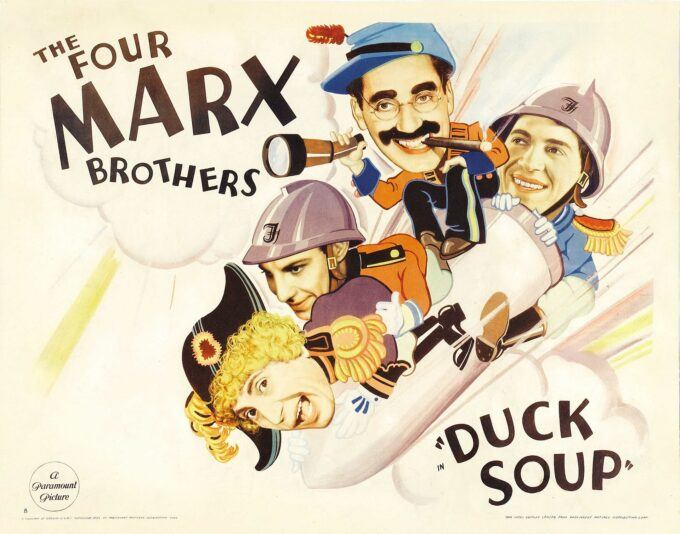
Theatrical release poster L to R: Harpo, Zeppo, Groucho, Chico – Fair Use

Gentlemen, Chicolini here may talk like an idiot, and look like an idiot, but don’t let that fool you: he really is an idiot.

– Marx Brothers, Duck Soup

Among the many WTF questions that the Marx Brothers’ Duck Soup politics flooding the land since Trump ’24 took office is surely this one: What’s Wrong with the American Voter?

Some runner-up questions: Will there be MAGA after Trump is gone? Will Trump, alive or dead, ever be gone? Can the Democratic Party “unwoke”/”un-DEI” and what would they be then? Does factually/objectively based reportage die for good ? Does the American mind wander off into TikTok? Will Silicon Valley tech-broligarchic BS replace electoral democracy? Will Trump lackeys, propagandists and stooges be brought to trial? Will the Trump nightmare follow the destiny of Shelley’s Ozymandias:

Nothing beside remains
Round the decay
Of that colossal wreck, boundless and bare
The lone and level sands stretch far away.

I chose first the question of the American voter’s sanity.

To assume that the American voter is as nuts as Trump is would amount to FOX News-like reportage. What you want to begin with is Jean Renoir’s observation that it’s a terrible thing in this world that everyone has their reasons. What is not terrible is when everyone reasons within empirical/rational methodologies, a way of knowing that has served us well since the Enlightenment.  Because our reasoning has descended to an uninformed, opinionating, online “liking” level that is deaf to opposing arguments and blind to facts and evidence, we now live in a society in which not only does everyone have his or her “reasons” but each is prepared to employ violence to defend their stupidities.

Why would anyone vote twice for a man who is transparently a bargain store hustler/grifter who learned the trade from his father, who was a bargain store hustler/grifter? The father made his money as a slum landlord and the son made his money off the U.S. Presidency. Before that, he was a bankrupt “thousandaire.” Father and son are not alone as pure products of America, William Carlos Williams’ label in a 1923 poem for Americans lost in a rootless, degraded consumerist culture. What’s surprising, given the long fall of America into such a culture, is that someone like Trump didn’t come along earlier and win the presidency. Twice.

One category of American voters idolizes Trump as a non-ironic, straight-shooting, not mocking“ real product of America,” the America he wants for them and they want. A pure American pursues property, profit and portfolio. As does Trump. Money, power and girls: the Trump/Epstein mission.

What’s the percentage of believers here in this category?

Then there are devoted Trump voters who calculate that he will do more to protect their wealth than any Democrat, regardless of how much he trashes the respectability their wealth gives them. He won’t regulate on behalf of the environment or workers, won’t tax on behalf of the poor, and won’t threaten the control of the health care industry by the private sector, and won’t give unions, the IRS and the public space/sector enough power to counter the ravages of capitalist exploitation. Money will remain speech; corporations will still be persons, and the economics of the greatest good to the fewest are what the Dividend recipient class expect from any Republican candidate, Trump included.

This category of voters is for the stability needed to get debtors, foreign and domestic, to pay and creditors to exploit. Note the absence of a form of government most suitable for this. Democracy will do but oligarchy is better. While Democrats may threaten the status quo, Sanders and Warren for example, Trump is a sure bet. He won’t. Unless and until his Chicolini idiocy becomes threatening of a status quo, which seems to be right about now. This means a wealth class, say one in the East Coast financial sector, may lobby Republican legislators to step away from Trump. However, what level of Trump madcap is more threatening to Dividend Recipients than a once again empowered  Democratic Party? There’s a “Get the Wealthy!” storm brewing.

A third category of Trump supporters really do not like Democrats/Liberals/Progressives/Leftists and the un-American, un-Christian things they represent. They do like the way Trump drives these people nuts.  Nurtured since Reagan on the mantra of Government as the problem, this lot of voters is solidly behind a Trump who is chain sawing Government agencies and institutions. How the Head of Government who issues Executive Orders like a Stalin, and sends a private mercenary into American streets like a Stalin, is yet not identified as The Government Reagan mocked, is something that makes sense only in a Marx Brothers film. Duck Soup again.

As it is their wont, the Democratic Party tells us the government can help solve our problems. This is a pickle they won’t get out of post-Trump because the iconoclastic spirit runs deep in the American mass psyche, alongside a love of weapons and automobiles, and the icon they want to break is the Federal Government. See, January 6, 2020.

A fourth category of voters who would vote for Trump over any Democrat are those who don’t like atheist Democrats willing to legalize Leda marrying the Swan, aborting what could have a life, chaperoning adolescent boys into girls and vice versa, insisting on the separation of church and State, which is translated as keeping Jesus out of the classroom and the body politic, and then DEI, which is supporting a troublesome, threatening diversity, seeking a socialist economic equity, and a blind inclusion that upsets meritocracy.

Note that neither very Christian Democrats, Raphael Warnock nor James Talerico, are popular among Christian Republicans. But Donald J. Trump is.

If you define a secular society as one that doesn’t let Jesus get in the way of making a profit, then the U.S.A. is a very secular society. Not the case in 1976 when the born-again Jimmy Carter was elected as an antidote to Mr. Evil, Nixon. But the jump back to greed and not Jesus that Reagan inaugurated is red hot and on obscene display now, triggering an anti-wealth starter fire.

Trump stepped all over the Reagan devout as well as the Jesus devout and has gotten away with it. In the first situation, Trump simply played a dislike of the foreign to bring the xenophobic nativists to him while he grifts and cons domestically and globally.  And clearly his personal life is a profanation in the eyes of the Lord, Ezekiel, but he’s still the guy who reversed Roe. His personal evangelist, Pastor Paula White-Cain, avows that to oppose Trump is like opposing God. That’s total Duck Soup “Hail, Hail Freedonia!”

Here is a group who would vote for Trump a third time. He knows it.

A category of American voters that will not vanish when Trump does is the Loser category, those who are losing in a Monopoly game in which money and property have already been won.  A new player faces conditions on the board that are confusing, frustrating and angering. Hate and violence proceed.

Redistributive and distributive politics are not possibilities but accusations made by Republicans against Democrats, who have always been intimidated by such attacks. A charge of socialism is enough to get Democrats to pledge allegiance to capitalism.

Right now, there is a greater chance that this Loser group will once again vote for a Destroyer of Whatever You Got than an advocate for a calm return to reason and sanity, or, an advocate of overhauling an economic system that brings the greatest good to the smallest number.

Social democrat, Mayor Mamdani won the election by speaking not for the winning class but speaking for those who have been diminished by the stochastic and exclusionary formulation of what winning and losing are. Re-directing the angry Loser vote from lusting to put a chain saw to the Federal Government to what Mamdani is targeting – a plutocratic-friendly economic system – involves first a Democratic party re-directing itself. The question is: Is there passion to topple a wealth class that uses its billions to live like Louis XVI in a country that once aspired to be egalitarian? I’m not alone in observing that there is. And it is that possibility which will drive a defending vote by the Dividend Class for a Republican in 2028, regardless of what new Chicolini the Republicans run.

Will conspiracies be a thing if how power is used against the Losers remains opaque? Will a presidential candidate who asserts power to be employed to destroy the bastions of power, always directed at Big Government and not Wild West Capitalism — Trump’s successful tactic — once again win over this Loser class of voters? We have just witnessed Trump and Musk run through the U.S. Government Manual like a Mafia hit list.

Because the reasons of the Loser class are not reasonable but fester in their passions, and those passions have been kept on the boil on Fox and social media while fact-based media is mocked, how to decathect them as part of a Democratic Party plan is not now a plan out there for review.

To the question: What Is Wrong with the American Voter? I would say that some 80% of them have been more wronged than wrong. I would focus on conditions that bring each of these categories of voters into existence. Though part of our illness is a reduction of forces, factors and influences to a personal level because the autonomy of the individual is such a potent element in the American mass psyche, we need to withdraw from that. After all, the culmination of that illusion is sitting now in the Oval Office, a gold gilded chair perhaps.

Joseph Phillip Natoli’s The New Utrecht Avenue novel trilogy is on sale at Amazon. Time is the Fire ended what began with Get Ready to Run and Between Dog & Wolf. Humour noire with counterpunches. .