Friday, June 19, 2026

Cuba approves sweeping market reforms as economic crisis and US pressure mount

Cuba approves sweeping market reforms as economic crisis and US pressure mount
Beyond the tourism sector, the legislative package introduces crucial updates for state enterprises, agricultural production and the national financial system.Facebook
By bnl editorial staff June 19, 2026

Cuba's National Assembly has approved the country's most far-reaching economic overhaul since the 1959 revolution, ratifying a package of reforms designed to pull the island back from the brink of collapse after the measures cleared the Communist Party's Central Committee.

The package, voted on by lawmakers on June 18 and backed by President Miguel Díaz-Canel and former president Raúl Castro, comprises 176 measures grouped into 23 strategic areas of economic and social policy, according to the Communist Party newspaper Granma. The proposals emerged from a review process in which 390 suggestions were submitted to the National Assembly, of which roughly two-thirds were accepted in some form, with the remainder folded into implementation guidance or judged not to constitute substantive change.

Prime Minister Manuel Marrero unveiled the measures in a landmark address to the National Assembly, framing them as an effort to modernise the economy and improve productivity while preserving Cuba's socialist system.

The vote passed unanimously, and Díaz-Canel closed the session by reciting Fidel Castro's revolutionary slogan, "Socialism or death!"

"When the daily life of the people becomes extremely difficult, the primary duty of the Communist Party and the Revolutionary Government is not simply to explain the crisis, but to actively change whatever is necessary to overcome it," he said.

The reforms will, for the first time, permit private companies employing more than 100 workers and allow Cubans to own multiple businesses. Foreign investors will no longer be required to enter joint ventures with the state, and both domestic and foreign investors will be allowed to acquire equity stakes in state enterprises. The package also opens the door to private banks, paves the way for private real estate development and encourages direct foreign investment, including from Cubans living abroad. The state business sector itself will be restructured, with expanded autonomy, decentralised decision-making and revised rules governing profit allocation and executive pay.

Among the more granular provisions, the package will permit property leasing, free-of-charge usufruct arrangements and the selective sale of real estate, available to both resident Cubans and those living abroad on a case-by-case basis. In tourism specifically, the reforms introduce new categories of operators and updated business models, with a particular focus on drawing foreign direct investment from the Cuban diaspora while widening the scope of activity permitted to private domestic businesses.

The ruling party insisted the changes "do not constitute a deviation from the socialist project." Castro voiced full support for the package and called for broad public participation in its implementation. Díaz-Canel acknowledged that hardliners within the Communist party — which has held power on the island since 1965 — would likely resist parts of the package. "Some of the changes will not have absolute consensus, but cannot be postponed," he said.

The reforms arrive as Cuba endures one of the deepest economic crises in its history, the latest chapter in a confrontation with Washington that has escalated steadily since January. Blackouts now regularly stretch beyond 30 hours, and the island is contending with acute shortages of food, fuel, water and medicine. Volker Türk, the United Nations High Commissioner for Human Rights, has warned that children are dying on the island for want of medical supplies. Only a single tanker, the Russian-owned Anatoly Kolodkin, has delivered crude oil to Cuba since the start of the year, arriving at the port of Matanzas in late March with a cargo that analysts said would cover little more than a week of the island's diesel needs.

Much of that hardship traces directly to Washington's pressure campaign. The Trump administration imposed a de facto fuel blockade on Cuba in January, in the aftermath of the US-led operation that removed Venezuelan president Nicolás Maduro and severed Cuba's access to subsidised Venezuelan oil. An executive order threatening tariffs on any country supplying fuel to the island successfully deterred Mexico and other potential suppliers from maintaining shipments. The blockade has since triggered repeated nationwide blackouts, and pushed Cuba to declare in May that its fuel reserves were entirely exhausted, a crisis that sparked the largest street protests in Havana since the embargo began.

The pressure has not been limited to economic measures. Last month, the US indicted Castro, Fidel's brother, over Cuba's 1996 downing of two civilian aircraft operated by a Miami-based exile group, in charges that carry the death penalty and that Havana has no obligation, and no apparent intention, to honour given the absence of an extradition treaty. The indictment was announced alongside the deployment of the USS Nimitz carrier strike group to the Caribbean, echoing the build-up that preceded the Maduro operation, when the USS Gerald R. Ford was stationed off Venezuela's coast in the months before his capture. Classified intelligence cited by Axios has separately disclosed that Cuba acquired more than 300 military drones from Russia and Iran since 2023 and held internal discussions about potential strikes on the US naval base at Guantánamo Bay, a revelation that added an unpredictable security dimension to what had largely been an economic and diplomatic standoff. Trump has repeatedly said Cuba would be "next" after his administration's campaigns against Venezuela and Iran, while CIA director John Ratcliffe travelled to Havana in May for talks that signalled some openness to dialogue.

In unusually candid remarks, Díaz-Canel broke from Havana's longstanding habit of attributing the country's troubles solely to the six-decade US trade embargo. He pointed instead to domestic failings, citing "slowness, bureaucracy and norms that impede those who want to produce," along with "decisions that we have put off." Even so, he was careful to frame the reforms as a defensive measure rather than a capitulation. "We are not doing this because of pressure from the Yankees," he said, but to "preserve" socialism.

Analysts were sceptical that the reforms were driven purely by internal conviction. "Their backs are up against the wall as never before," said Michael Bustamante, chair of Cuban studies at the University of Miami, according to AFP. "They're in the uncomfortable position of making changes to their economic model, seemingly because of the pressure that's being exerted on them by the United States."

The European Union piled on further pressure the same day, with a resolution urging sanctions against Díaz-Canel and Grupo de Administración Empresarial, the military-controlled business conglomerate that dominates large parts of the Cuban economy. The resolution condemned what it described as "the systematic repression" by the Cuban government, while calling for "profound economic and political change." The bloc has separately stepped up humanitarian assistance to the island in recent months, mobilising several million euros in aid to address shortages of food and drinking water.

Whether the reforms will satisfy the White House remains uncertain. Senior figures in the Trump administration, Rubio among them, have signalled that economic opening on Cuba's part could translate into reduced pressure from Washington, but the US gave no immediate response to the Cuban announcement. Vice-president JD Vance, asked on June 18 whether the administration would now turn its focus to Cuba following a memorandum of understanding ending the war with Iran, said Washington wanted Cubans to be "happy and successful." "We're actually talking to the Cuban government right now about how they could change their ways to change that," he said. "If they make smart decisions, we're going to have a much better relationship with that island." Trump has made clear his ambitions extend beyond economic policy to the makeup of Cuba's government itself, having repeatedly floated both military action and what he has called a "friendly takeover" of the island.

The government has yet to set out a timetable for implementing the reforms. Economists said the package could meaningfully improve investment flows and productivity if carried through, but cautioned that its ultimate impact would depend on execution Havana has not yet detailed — and on a Washington that has shown no sign, so far, of relenting.


Cuba's President Miguel Díaz-Canel admits 'urgent changes' needed to overcome crisis
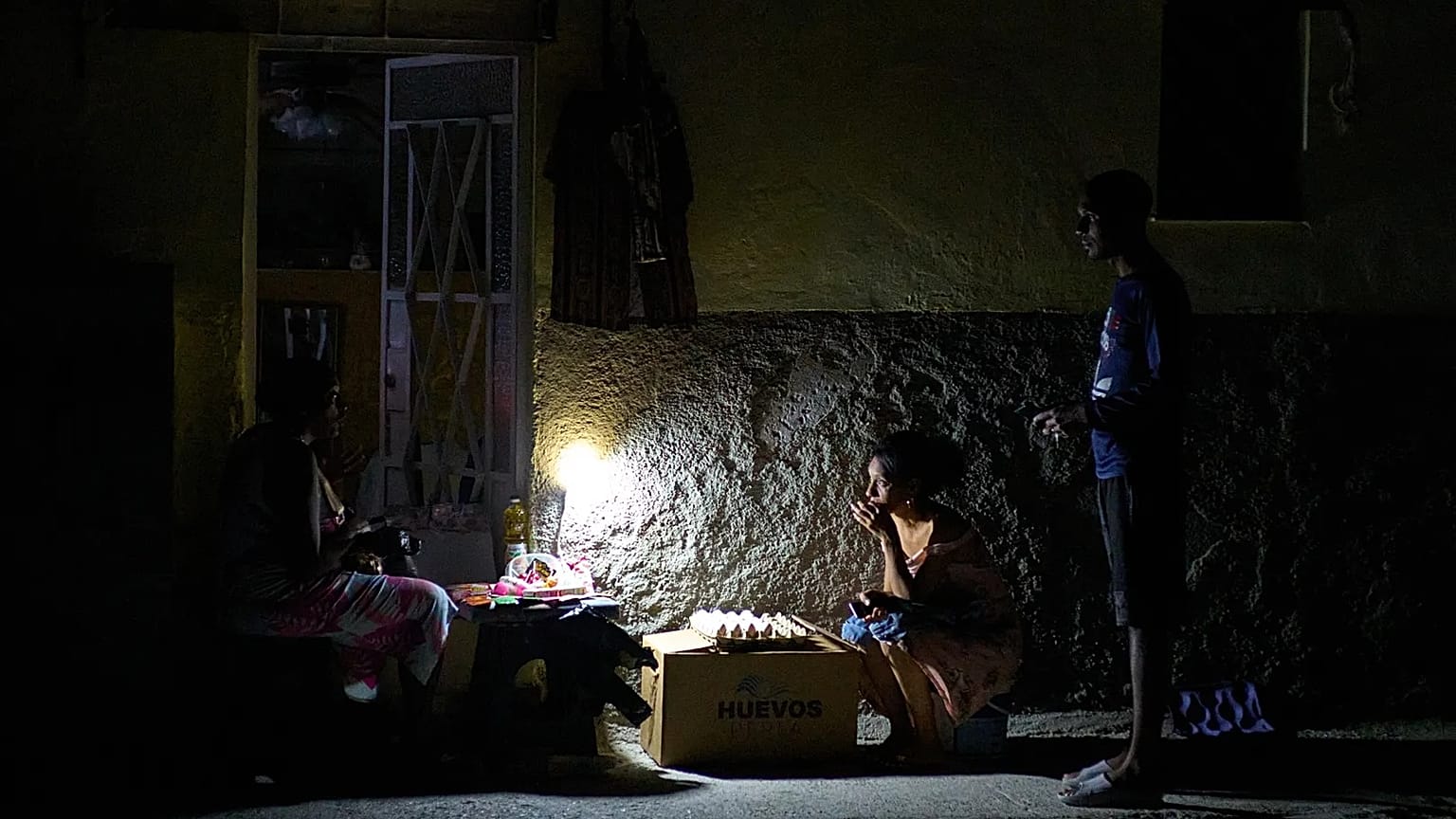
Street vendors chat during a blackout in Havana, 16 March, 2026
Copyright AP Photo

By Gavin Blackburn
Published on

The oil blockade imposed by President Donald Trump in January has brought the island's already moribund economy to the brink of collapse, marked by power cuts sometimes lasting over 30 hours.

Cuba's communist model needs "urgent changes" to overcome a major crisis which cannot be blamed solely on a crippling US oil blockade, President Miguel Díaz-Canel said in his frankest admission yet of the need for radical reforms.

While Havana's impulse has been to blame its problems on a more-than-six-decade US trade embargo and more recent blockade, Díaz-Canel admitted in remarks broadcast on Thursday there were "obstacles that don't come from outside, nor the blockade."

He called out "slowness, bureaucracy and norms that impede those who want to produce" as well as "decisions that we have put off" for contributing to the worst crisis in living memory.

"The situation calls for urgent and necessary changes," he told the Communist Party Central Committee.

Díaz-Canel was speaking at a party meeting convened hastily to fast-track reforms aimed at boosting the private sector and attracting investment from millions of Cubans who have fled abroad.
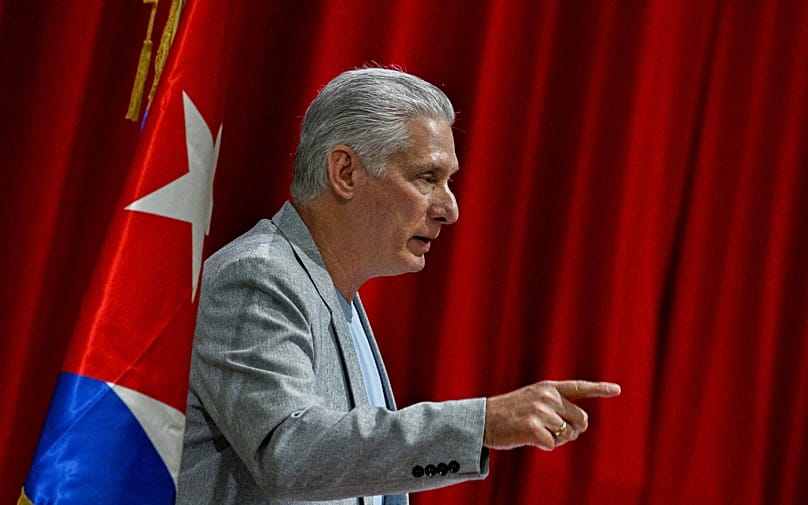
Cuban President Miguel Díaz -Canel delivers a speech at the Convention Palace in Havana, 20 March, 2026 AP Photo

The measures are part of an eleventh-hour bid to stave off economic collapse in the face of unprecedented US pressure.

They are expected to be approved by the National Assembly, which rubber-stamps legislation, later Thursday after being endorsed by the Communist Party.

'Backs against the wall'

Few details of the changes have been forthcoming but Díaz-Canel cited China and Vietnam as possible models for opening Cuba's economy to the world six decades after the overthrow of a US-backed dictator and embrace of communism.

"Their backs are up against the wall as never before," Michael Bustamante, Cuban Studies Chair at the University of Miami, told the AFP news agency.

"They're in the uncomfortable position of making changes to their economic model, seemingly because of the pressure that's being exerted on them by the United States."

The oil blockade imposed by President Donald Trump in January has brought the island's already moribund economy to the brink of collapse, marked by power cuts sometimes lasting over 30 hours and shortages of food, fuel, drinking water and medicine.

Díaz-Canel appeared to anticipate resistance from Communist hardliners.

Some of the reforms "will not have absolute consensus but cannot be postponed," he said.

But "when people's lives become this hard," the government has a responsibility to "change what needs to be changed" rather than try to explain away the crisis, he argued.

It is unclear, however, whether the changes will satisfy Trump, who is pushing for a change in Cuba's leaders as well as its economic model.

The Republican leader has floated a "friendly takeover" of Cuba and joked about making a "stop over" there after ending his war with Iran.
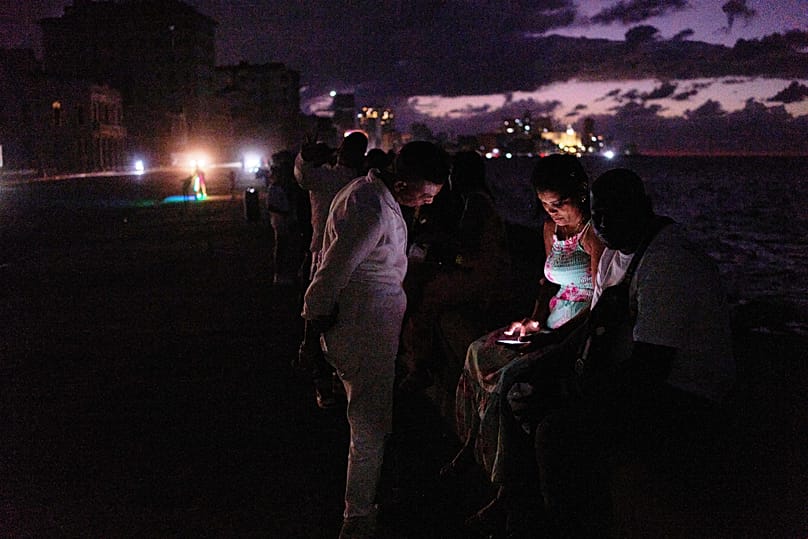
People spend the night in the dark on the Malecon during a blackout in Havana, 21 March, 2026 AP Photo

Asked on Thursday if Cuba was now in Trump's sights after he signed a deal to end the Iran war, Vice-President JD Vance said Washington wanted Cubans to be "happy and successful."

"We're actually talking to the Cuban government right now about how they could change their ways to change that."

"If they make smart decisions, we're going to have a much better relationship with that island," he said.

Widespread scepticism

Some of the reforms announced by Cuba were a rehash of earlier proposals, such as granting greater autonomy to state-owned enterprises, which account for roughly 80% of economic activity.

Many disillusioned locals shrugged off the announcements as too little too late, or more state "lies."

"It's a lie, we've been doing this for 67 years and it gets worse every day," Iris, a 58-year-old cleaner, who had been without power at home for 12 hours, seethed.

The country's small but growing business class welcomed the changes, however, while making clear they did not see them as a quick fix.

The reforms "offer hope, a chance that may or may not materialise," said Mario Gonzales, the 32-year-old manager of a restaurant in Havana's historic old town which was thronged with tourists a decade ago and now fills only a handful of tables for dinner.



Capgemini AI chief: Humans and AI don’t have the right chemistry — yet

Copyright Euronews
By Roselyne Min
Published on 19/06/2026 - 

The innovation chief for the French IT consulting firm told Euronews Next why trust, regulation and a “plan B” for AI models will shape the next phase of AI adoption.

At VivaTech in Paris, companies are pitching their visions for artificial intelligence (AI), from AI agents to workplace automation tools.

But French IT consulting firm Capgemini says the harder question now is whether companies can make AI work "at scale".

“Not everybody will win with AI,” Pascal Brier, the group chief innovation officer of Capgemini, told Euronews Next.

Capgemini has declared 2026 its “year of truth” for AI, saying it needs to show that the technology can be scaled at the enterprise level and deliver real results.

The executive said companies were right to be excited about AI, calling it a technology that is “redefining the wider technology landscape”.

But Brier said many businesses had underestimated how long it takes to understand, implement and get results from AI.
RelatedCompanies are rushing into AI, but adoption is still lagging, a KPMG executive says
‘Human-AI chemistry’

In January, the French IT services group announced plans to cut up to 2,400 jobs in France.

Brier said the planned cuts were not directly linked to AI and that he does not believe AI will simply replace jobs.

“AI definitely is redefining the way you do business. That's for sure. I mean there are a lot of things that we're going to do differently. Now, the fact that you do them differently doesn’t mean that you’re going to get rid of people to do that,” he said.

Capgemini says building enough “human-AI chemistry” or trust between people and AI systems is necessary for the technology to be used properly.

“There is no way a technology can be successful if you don’t build that trust,” he said.

The executive said fear is part of the process when new technologies enter the workplace, but that workers often become more excited once they understand what AI can help them do.
Physical AI has yet to become applicable

For physical AI, which includes robots and machines that use AI software to operate in the real world, Brier said regulation should help create a “harmonious” environment where humans and machines can work together safely.

Rules should focus first on human protection and emergency controls, including ways to stop a robot immediately if something goes wrong, he said.

“You have to have humans, machines and robots coexisting in the same environment. That’s why you need some regulations,” he said.

But Brier argued that physical AI is still at an early stage, and rules should develop gradually so the technology has room to grow.

Unlike generative AI, which arrived quickly, physical AI will take longer to spread because it involves machines operating in real workplaces, he said.

“Nobody currently is running fleets of hundreds of robots,” he said.

“Regulation should also be progressive and try to adjust to the way this technology is evolving,” he added.

For now, Brier believes the biggest value for companies will come from agentic AI, where AI systems can carry out tasks and change how operations are run inside a business.

“This is really where AI is changing the way we do operations in a company, and that’s where we’re going to derive the biggest return on investment,” he said.

‘We don’t believe in total sovereignty'

Another key issue for companies is avoiding dependence on a single AI model or provider.

Earlier this month, the US government ordered Anthropic to suspend foreign-national access to its Fable 5 and Mythos 5 models, forcing the company to disable the two models for all customers to ensure compliance.

But the Capgemini executive said sovereignty should not mean cutting Europe off from global technology.

“We don’t believe in total sovereignty, which would mean isolation,” he said.

He said companies should instead think about sovereignty as a question of business continuity and risk management.

“There are something like 1,000 models available on the market,” he said. “They are small and big models. They are open source or private. They can be European, they can be US, they can be Chinese, so you can choose.”

The goal, he said, is to avoid depending on one technology and to “always have a plan B”.

For more on this story, watch the video in the media player


Robin Hood’s famed Sherwood Forest 1,200-year-old oak tree declared dead

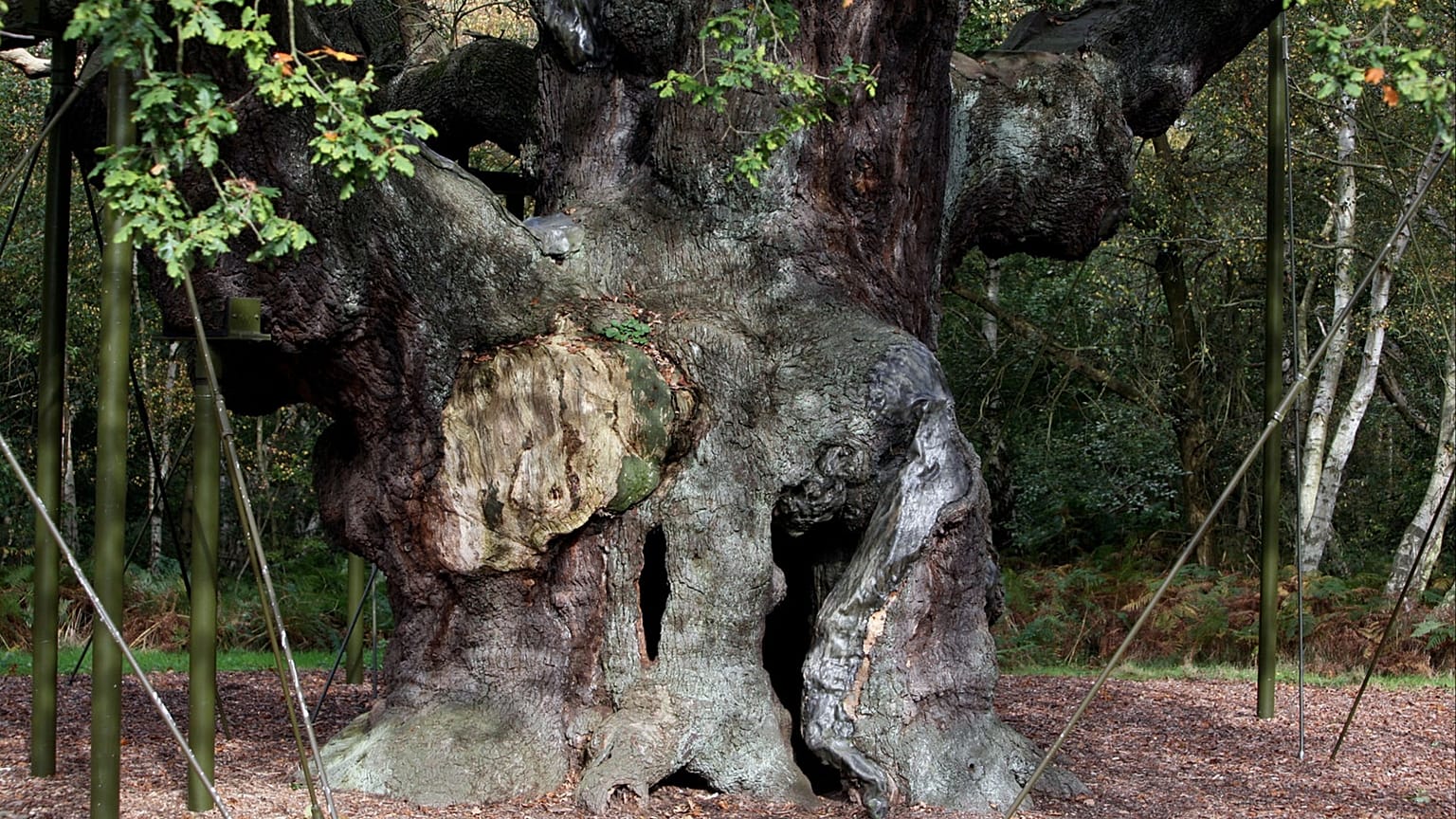
A 1,200-year-old Major Oak tree, where Robin Hood allegedly used as a hide out, stands in Sherwood Forest near Nottinghamshire, England.
Copyright Credit: AP Photo

By Theo Farrant & AP
Published on

It’s not the first time the legendary oak has been declared dead. On previous occasions, fears were raised only for the tree to stubbornly leaf out again each spring. Not this year.

Sherwood Forest's Major Oak, the legendary ancient tree said to have sheltered Robin Hood, has died.

The tree failed to sprout leaves this spring, prompting the Royal Society for the Protection of Birds (RSPB) to confirm what conservationists had long feared.

Legend holds that the 13th-century outlaw used the oak as a hideout while evading his nemesis, the Sheriff of Nottingham, stealing from the rich to give to the poor.

No single cause killed it. But the RSPB says decades of strain - drought, climate change, and the weight of millions of visitors - left its root system starved.

"They (trees) go into drought stress. So even a healthy tree would be feeling the pressures of those long prolonged periods of dry. But the Major Oak also has those other complexities with it. So we have seen the sharp vitality to its root system over the last few decades," explains Chloe Ryder, the operations manager of RSPB Sherwood Forest Estates.


A 1,200-year-old Major Oak tree, where Robin Hood allegedly used as a hide out, stands in Sherwood Forest near Nottinghamshire, England, on 19 October 2007. Credit: AP Pho

Visitors over the past two centuries who viewed the tree's gnarled limbs and sprawling canopy in Nottingham compressed the soil, making it difficult for rain to reach its roots, the RSPB conservation group says.

The forest has been under threat for years and the tree has been rumoured to have died in the past - only to have the group confirm it was still alive. That is no longer the case.

British acting icon Dame Judi, who is a patron and ambassador for the Woodland Trust, said: "The Major Oak has provided inspiration for countless stories, poems, paintings and people for more than 1,000 years - all the while itself teeming with life and providing a home to an enormous range of wildlife."

She added: "I hope everyone who has been inspired by the Major Oak or another ancient tree reaches out to their MP and asks them to improve legal protections for these iconic and vital elements of our national landscape."

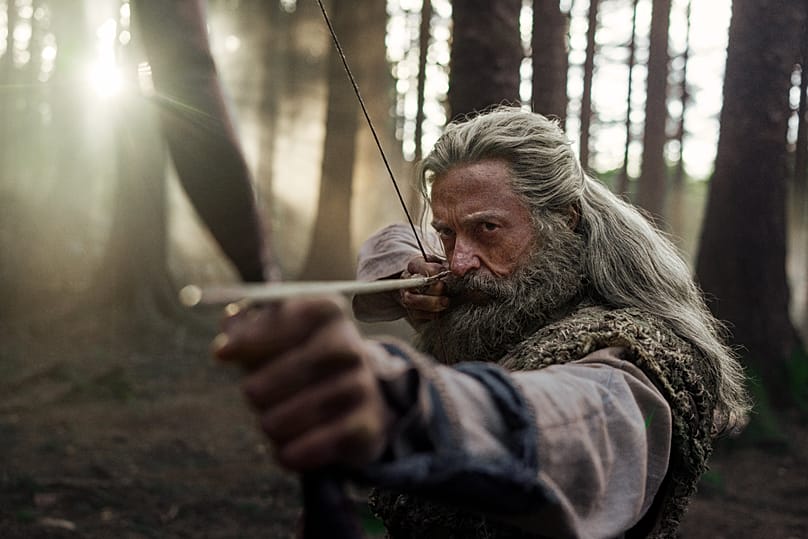
This image released by A24 shows Hugh Jackman in a scene from "The Death of Robin Hood." Credit: A24 via AP

But the fascination for the legend of Robin Hood shows no sign of dying. Movie star Hugh Jackman is playing the folk hero in his old age in a dark adaptation of the 17th-century ballad "Robin Hood's Death".

The film, titled The Death of Robin Hood , is directed by Michael Sarnoski and is being released in the United States on 19 June, by A24.

The Major Oak got its name after being mentioned in a book on oaks by Major Hayman Rooke in 1790 that led to the first wave of fans who flocked to the forest. Beyond folklore, the forest's oaks built ships for Vice Admiral Horatio Nelson's Royal Navy and timbered the roof of St Paul's Cathedral.

"The Major Oak will continue to stand at the heart of Sherwood as a natural monument for visitors to come and see, living on in the legend of Robin Hood and continuing to provide as much support to the forest’s ecosystem in death as in life" said Hollie Drake of the RSPB.

Saplings grown from the tree have also been planted around the world.


 The Adventures of Robin Hood (1955) S1 E1 'The Coming of Robin Hood'


ROBIN OF SHERWOOD AND THE SORCERESS PART 1
  
ROBIN OF SHERWOOD AND THE SORCERESS PART 2


The Death of Robin Hood - Official Trailer


 The Death of Robin Hood - Official Trailer 2


Obama Presidential Centre opens with star-studded ceremony and veiled jabs at Trump

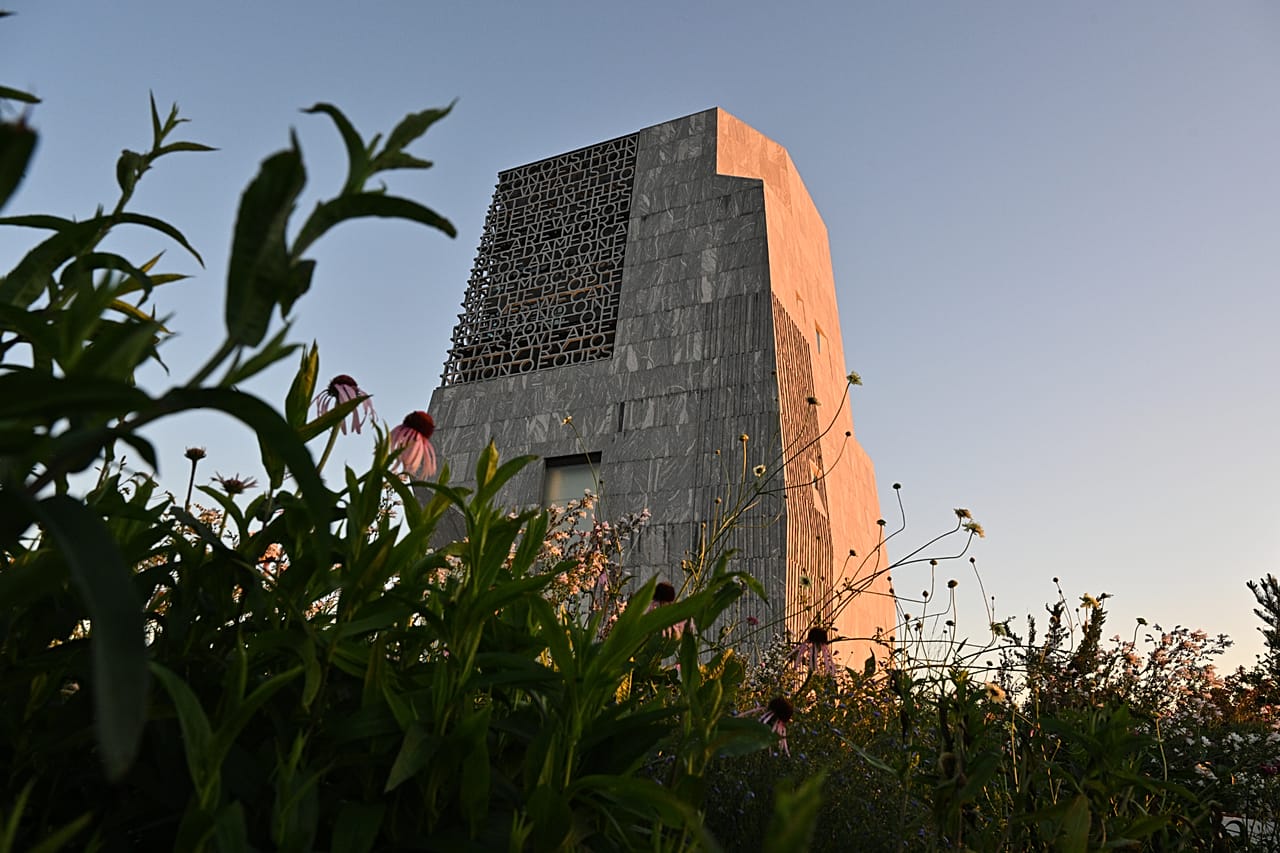
The Obama Presidential Center, seen ahead of the dedication ceremony, 18 June 2026.
BRUTALIST MODERNIST ARCHITECTURE 
The Obama Presidential Center, seen ahead of the dedication ceremony, 18 June 2026. 
Credit: AP Photo

By Theo Farrant & AP
Updated


On stage, Barack Obama voiced his support for character, honesty, integrity, kindness, compassion and sense of duty, praising both Democrats and Republicans.


Former President Barack Obama, joined by three former presidents, celebrated the opening of his presidential centre in Chicago on Thursday, in an extraordinary event that brought together world leaders, A-list celebrities and athletes

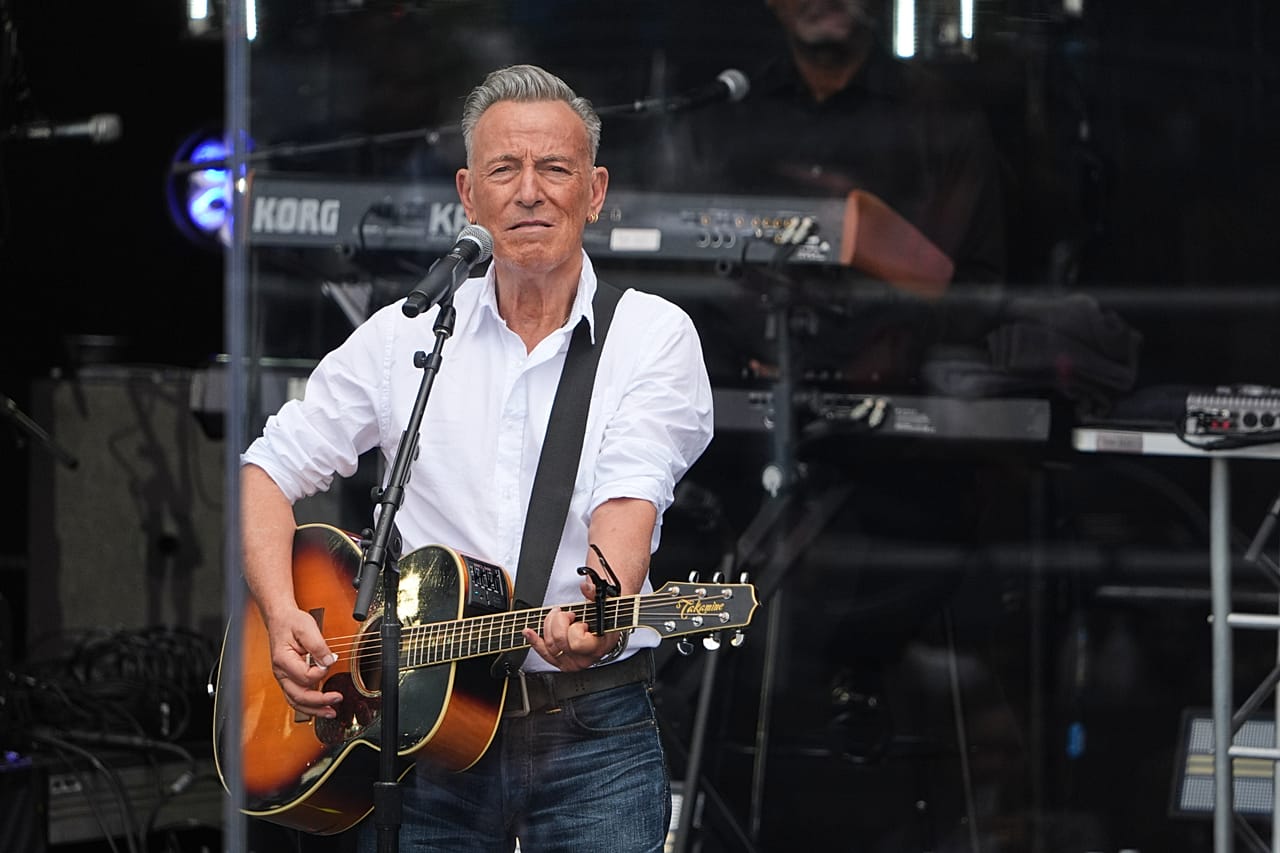
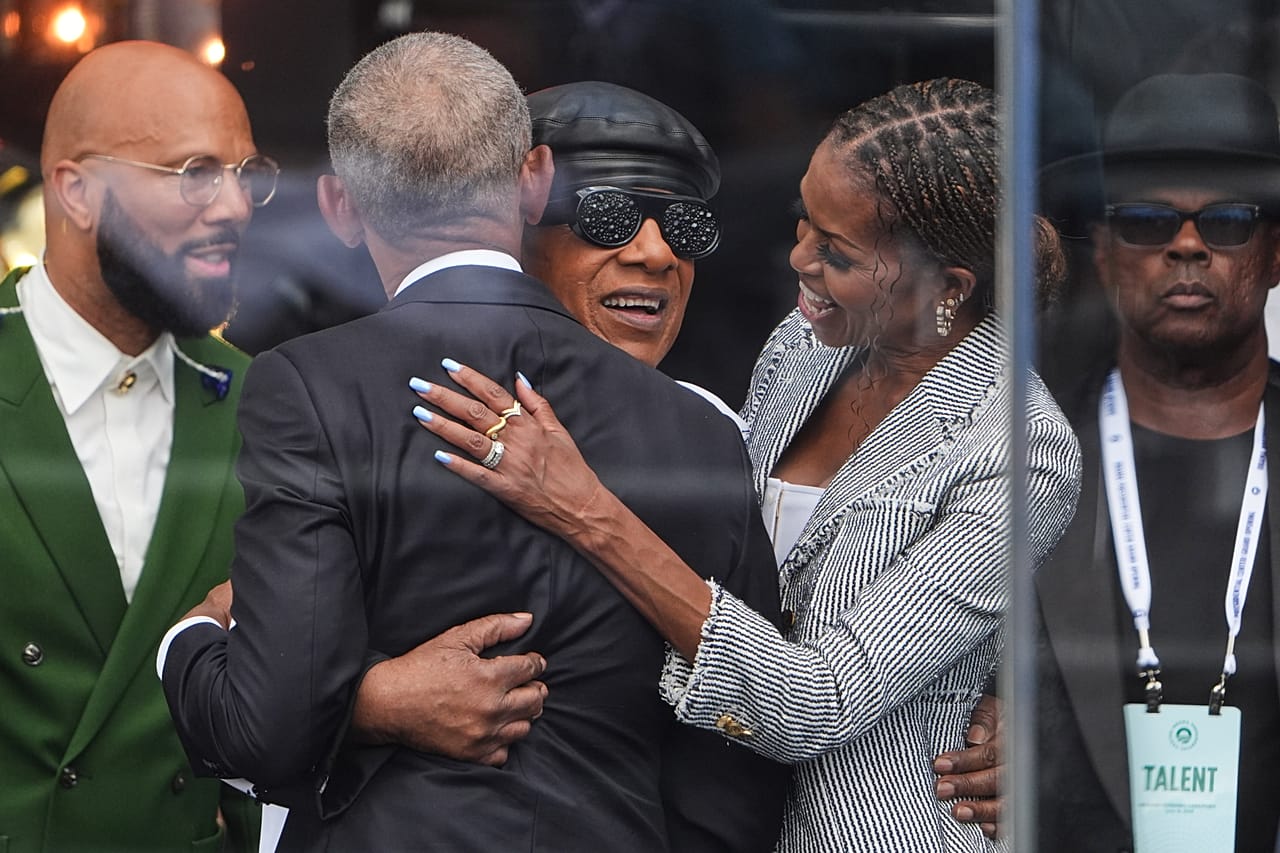
The livestreamed, invite-only ceremony featured performances from Bruce Springsteen, Stevie Wonder, Christina Aguilera, Bono, Common, John Legend and more.

Reflecting on his arrival in Chicago in 1985 as an untested community organiser, Obama said he could not have built the center anywhere else.

He noted that he met his future wife Michelle nearby, their wedding reception was within walking distance of the centre, their children were born in the neighbourhood and he launched his first political campaign not far away

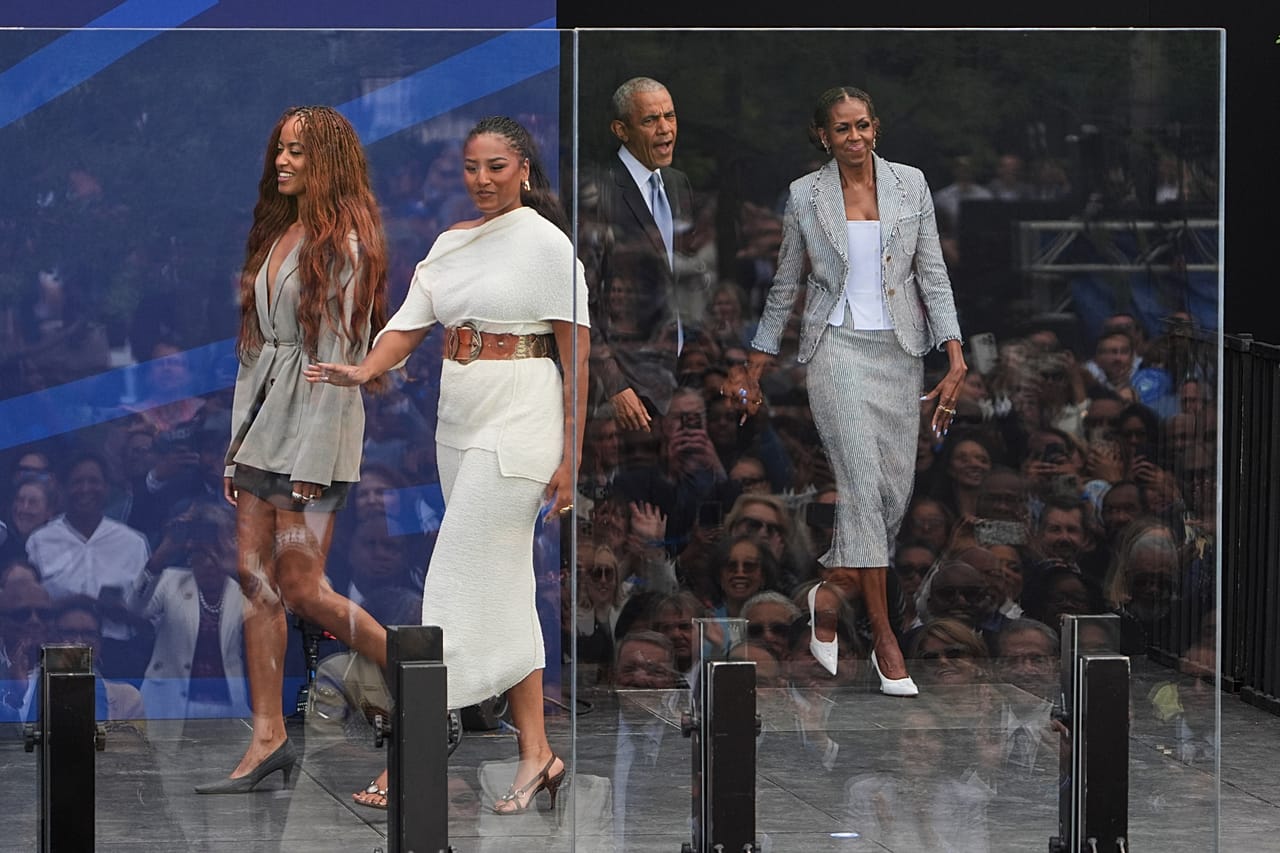
Barrack and Michelle Obama taking to the stage with their two daughters, Malia and Sasha.
Barrack and Michelle Obama taking to the stage with their two daughters, Malia and Sasha. Credit: AP Photo

Obama and former first lady Michelle Obama were joined on stage by their daughters, former presidents Joe Biden, George W. Bush and Bill Clinton, former first ladies Jill Biden, Laura Bush and Hillary Rodham Clinton, and former Vice President Kamala Harris.

Notably absent was President Donald Trump, who in February described the $850 million (€740 million) centre as a "total disaster" in a social media post.

Although Trump was never mentioned by name during the ceremony, both Barack and Michelle Obama made veiled references widely interpreted as aimed at the current president.

Michelle Obama delivered the sharpest criticism, speaking just days after a UFC fighter called her "a man" during an event held at the White House to mark the United States' 250th anniversary.

Bruce Springsteen performs during the dedication ceremony for the Obama Presidential Center, 18 June 2026, in Chicago.
Bruce Springsteen performs during the dedication ceremony for the Obama Presidential Center, 18 June 2026, in Chicago. Credit: AP Photo
From left: Common, former President Barack Obama and former first lady Michelle Obama embrace Stevie Wonder.
From left: Common, former President Barack Obama and former first lady Michelle Obama embrace Stevie Wonder. Credit: AP Photo

In her speech, she praised her husband's presidency while condemning "the lies about your birthright" - a reference to the false "birther" conspiracy promoted by Trump more than a decade ago.

“How absurd it is to even imagine that you might have buckled under the pressure,” Michelle Obama said. “How absurd it is to imagine that you might have done anything but make our family and this entire country proud.”

Michelle Obama spoke directly to her husband when she stepped up to the podium. “Eight years in the crucible and not once did you melt in the heat. Not once did you let it harden you."

She also ticked off highlights from her husband's eight years in office, including ordering the raid that led to the killing of Osama bin Laden, “standing up for marriage equality” and “listening to science.”

The former First Lady also referenced the current "anxious and divisive times” and warned against being cynical or complacent as “everything feels so upside down.” She pitched the center as “a respite from all that.”

Taking to the stage, the 44th president voiced his support for character, honesty, integrity, kindness, compassion and sense of duty, praising both Democrats and Republicans, including those he defeated.

“Every president here today, as different as we are, has tried our best to uphold values that John McCain and Mitt Romney believed in no less than I did,” Obama said. “It is our greatest inheritance.”

He also reflected on America’s founding as a “radical” experiment in self-government, recalling how the revolution rejected inherited power and hierarchy. He noted the founding promise that there would be "no kings or lords, no serfs or subjects, but only citizens."

What's inside the Obama Presidential Centre?

The nearly 20-acre campus sits in Jackson Park on Chicago's South Side, close to where Obama lived and first entered politics. It's expected to draw more than a million visitors a year.

As well as a towering museum covering the political and personal story of the nation's first Black president and first lady, the site includes a Chicago Public Library branch, basketball courts, a playground, an athletic centre and a picnic area.

The Chicago Public Library at the Obama Presidential Center is seen ahead of the dedication ceremony Thursday, June 18, 2026, in Chicago.
The Chicago Public Library at the Obama Presidential Center is seen ahead of the dedication ceremony Thursday, June 18, 2026, in Chicago. AP Photo/Jon Cherry

“This is a safe space for people to come and, yes, reflect on the historic moments of this presidency and the campaigns, but also to come together as a community to think about what change you can bring to your own neighborhood," Josh Harris, the Obama Foundation’s vice president of public engagement, said during a tour of the campus.

Visitors to the museum will get to walk into a life-sized replica of the Oval Office.

Several of the ballgowns Michelle Obama wore as first lady are displayed on mannequins behind glass, including a black and red dress designed by Narciso Rodriguez that the former first lady wore on Election Night in Chicago.

Visitors will also get a chance to touch swatches of the fabrics, including the rose gold chain-mail Atelier Versace evening gown she wore at her final state dinner in 2016.


‘Held hostage’ by fossil fuels: How oil-rich nations influenced the UN climate conference in Bonn

June climate meetings at Bonn.
Copyright UN Climate Change | Lara Murillo via Flickr.

By Angela Symons & Liam Gilliver
Published on

Experts warn that fossil fuel interests and 'attacks on science' have stalled one of the most contentious climate debates once again.

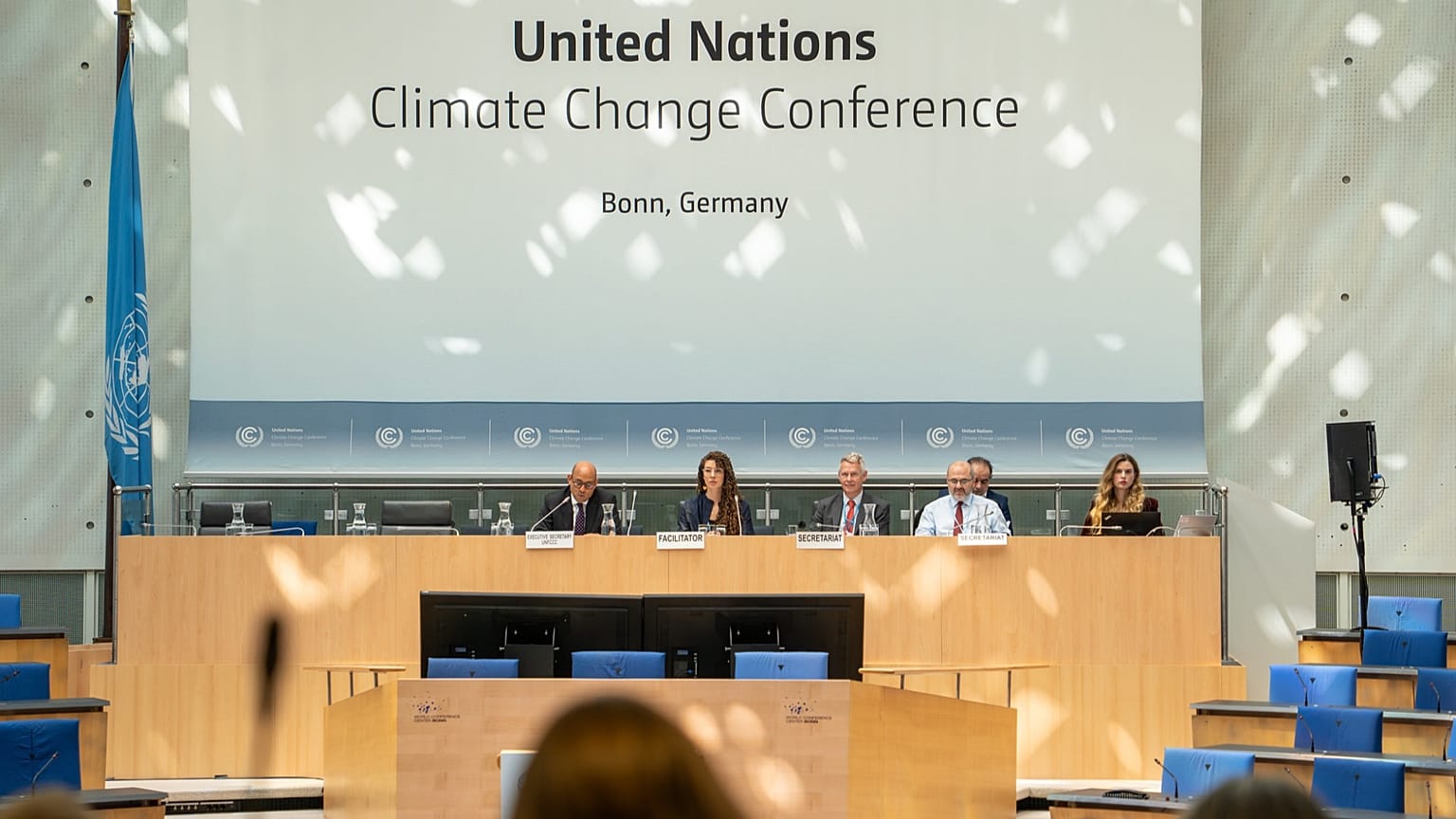
Mid-year UN negotiations in Bonn were pushed into overtime last night, as countries failed to agree on a financing deal to help developing countries adapt to climate change.

Executive Secretary of the United Nations Framework Convention on Climate Change (UNFCC) Simon Stiell called out the “you-first-ism” of nations refusing to deliver commitments before others do so.

“There remain significant divides, and significant work for the intersessional period ahead,” he added.

While some progress was made on the ‘Just Transition’, which aims to ensure that the benefits of moving away from fossil fuels are shared fairly, the talks were overshadowed by questionable interests and growing scrutiny over who actually gets a seat at the table.

Some argue that the Bonn talks were frustrated by a “small group of fossil fuels interests” attacking the science of climate change behind closed doors, French news agency AFP reports.

The allegations have been made by delegates representing the EU, Switzerland and dozens of developing nations.

“There are powerful interests desperate to protect their wealth and influence,” says Fiji’s head of delegation Sivendra Michael. “We are seeing certain countries holding the process hostage as vulnerable people suffer heat stress, king tides [the highest predicted high tide of the year at a coastal location] and storms, drought and famine.”

Did fossil fuel interests block progress at the Bonn climate conference?

As well as sending government officials, nations attending UN climate talks can bring non-governmental representatives in their delegations. This could include Indigenous leaders, youth delegates, academics and business representatives – some of whom may represent fossil fuel interests.

Bonn suffered “coordinated attacks across the negotiation rooms by the small number of fossil fuel interests,” according to Manjeet Dhakal, an adviser to the 44-nation Least Developed Countries bloc, who did not single out any country by name.

The Earth Negotiations Bulletin, which released daily reports on the negotiations, says India and the Arab Group – which includes oil-rich Saudi Arabia, the UAE and Kuwait, among others – opposed attempts to call for scientific bodies like the UN’s IPCC to counter climate change misinformation, as they said it could be used to discredit genuine scientific debate.

Similarly, an attempt by the UK and EU to remove a reference to “varying perspectives” on the concept of climate tipping points was opposed by Saudi Arabia and coal-dependent India, who argued that the issue is neither settled nor clear.

India further suggested deleting a reference to “irreversible changes” and opposed a text on limiting the magnitude and duration of the “overshoot” past the Paris Agreement’s 1.5°C limit – something that most delegates, including the EU, were pushing for.

Scientific findings are clear that faster emissions reductions – which could keep the 1.5°C target within reach – are necessary, feasible and will bring major benefits for health, energy security, jobs and affordability, says Climate Action Network (CAN) Europe.

On Tuesday (16 June), the chair and chief negotiator of the Alliance of Small Island States (AOSIS) said she was “extremely troubled by the attempts to delink and undermine the best available science” at Bonn, AFP reports.

Shiva Gounden, Head of Pacific at Greenpeace Australia Pacific, argues that an “unrelenting war on climate science” took place in Bonn to try to erode warming targets.

“But we refuse to let these rooms become detached from the Pacific’s reality, where a breached 1.5°C will drown our history and displace our heritage, as saltwater bleeds into the Vanua (land) that has sustained us for generations,” he adds.

Prospects of a fossil fuel phaseout at COP31

These frustrations are familiar territory for UN climate talks, which require unanimous consensus on decisions.

Last year’s COP30 in Brazil drew criticism when it ended with a final text that avoided any roadmap for phasing out fossil fuels – despite becoming a flashpoint discussion.

This result prompted the launch of the first international conference dedicated to mapping a fair and orderly transition away from fossil fuels in Santa Marta, Colombia, earlier this year, which was positioned as complementary to COP and explicitly excluded fossil fuel lobbyists. Donald Trump was also snubbed from the event.

“Enthusiasm around a just transition away from fossil fuels keeps building, thanks in no small part to the recent Santa Marta, Colombia conference and the Brazilian COP Presidency’s forthcoming roadmap,” says David Waskow of the World Resources Institute.

“Expectations are mounting for countries to craft their own tailored national roadmaps to shift off fossil fuels.”

‘We came here to negotiate a better future’

AOSIS worries that countries have not laid a strong enough foundation for success at COP31, which will be held in Türkiye in November.

"We came here to negotiate a better future,” says Marshall Islands climate envoy Tina Stege. “We’re in the midst of an energy crisis, risking an overshoot of 1.5°C with continued fossil fuel dependence that hurts us all, but especially the most vulnerable.

“Here in Bonn we’ve seen attacks on science, and we’ve seen a push to counter those attacks - from the islands, but also from so many others. The science tells us we need 1.5°C; it tells us we need to close the finance gap; it tells us the future will be safer, healthier, and more liveable if we take bold decisions. It’s time we listen."

From Pompeii to Évora : invisible solar for heritage sites

By Gregoire Lory & Diego Giuliani
Published on 19/06/2026 
EURONEWS

Solar panels disguised as ancient Roman tiles or designed to blend into historic skylines. Pompeii and Évora are proving that heritage preservation and sustainability can go hand in hand.

Each year, millions of tourists from around the world visit Pompeii. They admire its frescoes and archaeological ruins, but few of them will ever notice the solar panels installed on the roof of the ancient Roman Villa of the Mysteries.

On one side, "it looks just like an ancient Roman tile. But if we look at it from behind, we can see that it is actually a small photovoltaic panel," explained Gabriel Zuchtriegel, Pompeii Archaeological Park Director.

"It generates electricity to illuminate this villa, and a large share of the energy needed here comes directly from the roof installation," he added.

While Pompeii is considering extending this solution to other areas of the archaeological park that are far from the electricity grid, the city of Évora, in Portugal, has also adopted similar technologies, avoiding the visual impact of conventional solar panels like these. On the rooftop of the City Hall, some shingles are slightly clearer.

"They are not normal shingles," said Humberto Queiroz, EDP R&D Centre and Project manager. "They are made of a semi-transparent epoxy material with solar cells embedded in the middle of it, which generates electricity for the self-consumption of this building."

The area has around 20 kWp (kilowatt peak) of PV shingles, designed to blend into the building's landscape architecture and protect the heritage aspect of Évora.

Since 1986, Évora's historic centre has been listed as a UNESCO World Heritage Site. PV shingles are among the solutions through which the European project POCITYF is helping the city reconcile heritage preservation with the modern challenges of sustainability.

"Évora is a World Heritage city and, like most historic cities across Europe, it has the responsibility to preserve its historic centre and safeguard its cultural heritage," analysed Nuno Bilo, EU project coordinator at Évora Municipality.

"However, it cannot remain frozen in time. We also need to move forward and find solutions that enable historic cities—and in this case Évora—to address one of today's greatest challenges: decarbonisation."
'If it can work here, it can work anywhere'

Among the solutions developed to make this possible is one created by a small family-owned company based in north-eastern Italy. Matteo Quagliato, who works for Dyaqua, explained the process.

"The tile is made from a resin compound that forms the first layer. We then take the photovoltaic cells, which have already been soldered beforehand, and place them inside. After that, a second layer is added, made from a specially formulated compound. The final step is lowering the mould and removing the finished product: a resin tile containing the photovoltaic cells."

Solutions like this one and the different technologies adopted in Pompeii send an encouraging message to the rest of the world.

“The lesson Pompeii offers is that if this technology can work here, in a place that is so delicate, so closely monitored, so fragile, and so vast, then it can work anywhere”, said Gabriel Zuchtriegel.

Glass roofs integrating photovoltaic panels and solar canopies installed in the courtyards of schools in the historic centre are among the other solutions being tested in Évora. Together with Alkmaar in the Netherlands, the Portuguese city is assessing these innovations through the POCITYF project to evaluate their potential for replication across Europe.