Tuesday, June 23, 2026


Op-Ed: In the Strait of Hormuz, Free Transit Is No More

While Tehran has pledged to allow free passage for the next 60 days, the long-term future of the strait is under Iranian control
IRNA
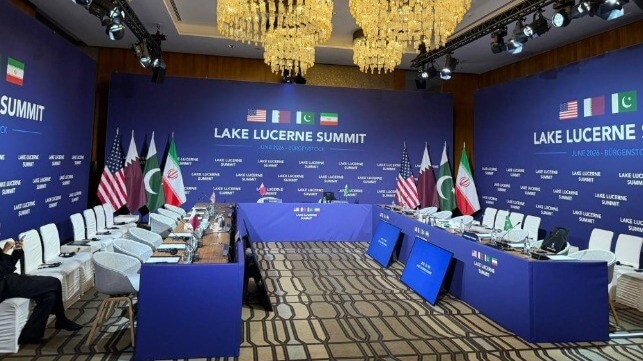
An empty conference room awaits American and Iranian negotiators, June 21 (Courtesy IRNA)

Published Jun 21, 2026 6:32 PM by The Maritime Executive

The Memorandum of Understanding (MoU) signed by the leaders of Iran and the United States last week sets the agenda for further negotiations, which, after some delays, have now commenced between the two parties, with Pakistan and Qatar present as intermediaries. The talks are taking place in the Qatari-owned mountainside resort of Bürgenstock in Switzerland.

Political commentators have gone into overdrive, seeking to paint the MoU as a victory or defeat for one side or another. Much remains to be resolved, with plenty of evidence that there is very little meeting of minds on a number of extremely contentious issues. The Iranian delegation is absolutely in no mood for compromise, and is buoyed up by what it sees as its political success so far.

There is a strong likelihood that the talks will break down, and that the negotiations are in effect only an elongation of the pre-existing ceasefire. President Trump clearly wants to walk away from the issue and leave his Vice President to clear up the mess, an impression strengthened by his description of the MoU negotiations in terms of their effect on domestic gasoline prices and inflation rather than on the future of the Middle East. But if President Trump is not engaged in the follow-through, both Israel and the Gulf States most certainly are. Neither is likely to want to allow Iranian hardline positions to prevail, and both have plenty of capacity to sabotage the negotiations in Switzerland if the talks look like threatening their future national security.

While there is a risk of a resumption of fighting, there are already conclusions to be drawn about the outcome of the war — practical realities that leaders and CEOs within the maritime community need to absorb as they shape their business plans.

Free transit through the Strait of Hormuz is no more. Just possibly, a deal will be done in the negotiations whereby fees described as navigation dues will be charged at acceptable levels. Shipowners may not mind, because these are costs that can be passed on; but ministers of business, economy and finance are likely to be very wary of any charges that have the overall effect of increasing prices and reducing the Gulf's competitive advantages.

Much more concerning, though, is the reality that, if current circumstances prevail, Iran will in the future be able to close the Strait again whenever it wants to, on a political whim, as it has demonstrated it can do. It is already trying to ensure that traffic through the Strait uses its own "Persian Gulf Strait Authority" route rather than the internationally recognized Traffic Separation Scheme, so that it may hereafter be able to exert political control over shipping transits. This will force all the GCC states to radically redesign their logistics and communications infrastructure, although some of the alternative routes out of the Gulf carry risks of their own. Also badly affected will be the confidence of foreign direct investors, particularly in Bahrain, Kuwait and Qatar, which have no alternative routes out of the Gulf.

The Houthis have not succumbed to pressure from the IRGC to disrupt traffic in the Red Sea, having their eye at present on the hope of a life-saving financial deal with the Saudis to help rescue the economy of northern Yemen. But the recent war has demonstrated that it would be easy to close the Bab el-Mandeb, and the Houthis have shown themselves to be a resilient enemy; hence the risk of closure, not so far realized, is very real, and would probably have consequences on a similar scale to the disruption caused in the Strait of Hormuz.

The question of the IRGC curbing its regional expansionist program is not even on the agenda at Bürgenstock. Moreover, in the discussions surrounding the negotiation of the MoU, the IRGC made it clear that it would press on with this program. This is immediately evident in Lebanon, where the IRGC has not given up on Hezbollah. But it is also evident in Iraq, where the IRGC appears to be reorganizing to avoid coming under pressure from the new Iraqi government – which is itself under regional and American pressure to curb the obviously Iranian-controlled PMF militias. The IRGC's subversive model, bringing disruption to political stability across the Middle East, has been battered by Israel in particular over the last 12 months. But although damaged, it is still intact; the IRGC's intent remains, and with an influx of money released by the lifting of sanctions, it will flourish again and take on new targets.

Another permanent threat to peace and stability is the survival of a critical mass of the IRGC Aerospace Force's drone and missile capability. A comparison of known drone and missile storage and launch sites against the facilities known to have been attacked in 2025-26 suggests that very few of these sites were left untouched; it is not as if the Iranians had successfully kept their sites hidden. But they were built in expectation of attack, well dispersed, with multiple exits. The speed with which some sites have been repaired suggests that recovery plans and resources had been pre-positioned for just such an eventuality. Moreover, if any funds are released to the Iranians by way of sanctions relief, further repair and enhancement of the more than 40 sites spread across the country will be accorded high priority.

To a degree, the survival of the IRGC Aerospace Force's operational capability can be countered by increased spending by GCC states on air defenses; but the brutal fact is that the capability remains intact and is a continuing threat that the IRGC has demonstrated it will have no compunction about using, either directly or through its proxies. It is now understood, moreover, that the Iranians have access to timely and accurate information for targeting both US military and GCC infrastructure, supplied courtesy of the joint Russian/Iranian Khayyam/Kanopus-V satellite constellation. This makes the residual drone and missile threat even more potent.

Finally, the mood of the GCC states must be considered. All, to a greater or lesser degree, attempted to conciliate with Iran before the war. All, even Oman, have been attacked by Iran nonetheless. There is now a stark recognition that Iran is determined to achieve regional dominance, which threatens the future of all the Gulf monarchies. The GCC countries may still smile at the Iranians, but they all know they have an implacable enemy, and will be looking for ways to get the better of Tehran.

In summary, if war does not resume and the negotiations in Bürgenstock continue in the same vein as they have so far, then the Middle East can look forward to greater Iranian dominance, driven by the prevailing IRGC-Paydari hardliners. Logistics in the Gulf will remain difficult and threatened, alleviated only when major capital investment projects to broaden contingency options come to fruition.

Even if these problems can be overcome, the Gulf region will for many years be far less stable than it was when it enjoyed the benefits of Pax Americana — a product seemingly now being withdrawn.

The opinions expressed herein are the author's and not necessarily those of The Maritime Executive.


Strait of Hormuz Traffic is Beginning to Return, But it is Hard to Spot
Kharg
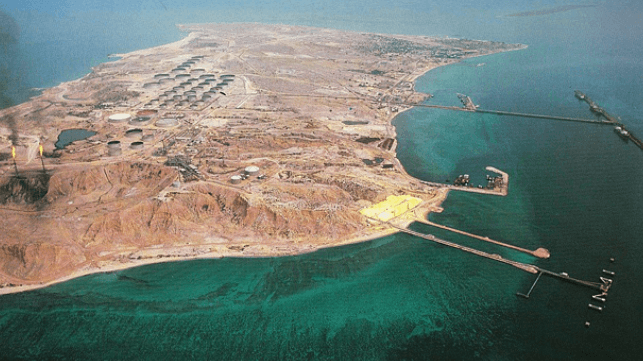
Iran's Kharg Island loading terminals (public domain file image)

Published Jun 22, 2026 10:50 PM by The Maritime Executive

Despite some new conflicting guidance from U.S. and Iranian forces on the safest route through the Strait of Hormuz, commercial shipping is resuming slowly - though it is tough to spot.

"50-60 percent of the traffic is completely dark," said Windward co-founder Ami Daniel, speaking to CNBC. The blackout is more than just transiting with AIS off - these ships are moving without radar, satellite or VHF comms for fear of being targeted. "This is like full-on navy operational mode for ordinary tankers," he added, and it makes it tough to count the number of transits accurately. As might be expected from these extreme precautions,  "[shipowner confidence] is absolutely, without a doubt not there yet," he said. 

Iran's shadow fleet tonnage continues to operate with a diversity of deceptive practices, including fraudulent flagging; hidden ownership; and coastwise shipments of oil from Iran towards Iraq, where covert STS transfers to disguise the origin of oil have historically been common. Outbound, sanctioned, Iran-linked tankers made up a large share of the day's traffic, Windward said. 

Iran has a motive to export quickly: the U.S. Treasury has given Iran a 60-day waiver to sell crude at any price it can, to any willing buyer. China has historically been Iran's top customer for petroleum, but cut its imports by half during the peak of the Hormuz crisis; its return to the market is expected to come soon, and to absorb much of the pent-up surge of Iranian exports. 

Iran's tankers tend to use Iranian-controlled northern half of the strait, but foreign-flag vessels have a choice of routing. The FT reports that shipowners are receiving competing instructions from Iran's Persian Gulf Strait Authority (which manages the northern, Iranian route) and U.S. Central Command (which has its own corridor on the south side, in Omani waters). The so-called PGSA advises using its lane for safety, while CENTCOM and certain Western insurers advise that the Omani lane is better. If followed, that choice could put them in Iran's crosshairs. 

"If they follow the guidance of underwriters and U.S. authorities by navigating closer to Oman, they risk interference, detention or potential hostile action from Iranian authorities," said Dr SV Anchan, chair of Safesea Shipping, speaking to the FT.

Alternatively, if owners choose to follow Iranian guidance, they can submit all transit details to the "PGSA" at least 48 hours ahead of the planned crossing, wait for a transit permit valid for a one-way voyage, and have the crew stand by for further instructions on VHF.  


U.S. Treasury Suspends Restrictions on Iranian Oil and Tankers for 60 Days
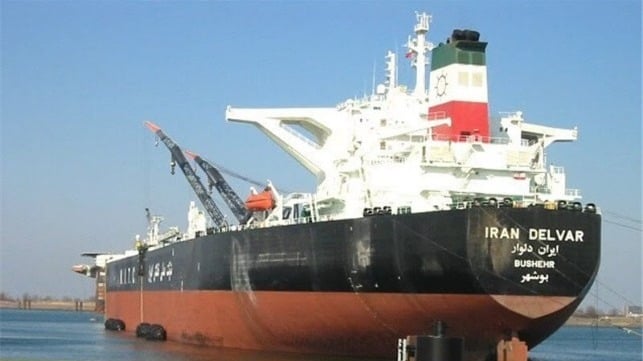
Iranian oil tanker
U.S. has suspended the restrictions on Iranian oil exports and tankers (Tasnim - CC BY 4.0)

Published Jun 22, 2026 2:15 PM by The Maritime Executive

Indicating that there was positive movement in the negotiations between the United States and Iran, Treasury Secretary Scott Bessent announced on Monday a sweeping 60-day suspension of nearly all restrictions on Iran’s oil industry. It followed Iran’s quick resumption of oil exports after the U.S. last week ended its blockade for ships heading to Iranian ports and on tankers carrying Iranian oil.

Bessent said as part of the framework signed between Iran and the United States, “Treasury has issued a temporary 60-day general license authorizing the production, delivery, and sale of Iranian oil.” It is in effect until 12:01 a.m. Eastern Daylight Time on August 21.

The General License is extremely broad and represents a total reversal of the Trump administration’s campaign of maximum pressure that has been in effect. It covers the production, sale, delivery, and offloading of crude oil and petrochemical products. It also covers vessels currently listed as blocked by the United States and permits servicing of the vessels.

Included in the terms is authorization of transactions that import Iranian oil and products into the United States. Further, it states that payments can be made in U.S. dollar-denominated funds to Iran, its government, or individuals previously blocked. 

Bessent said the moves were “in line with” productive talks in Switzerland. He said Iran has committed to free and open transit in the Strait of Hormuz. It is also reportedly agreeing to again permit International Atomic Energy Agency inspectors into Iran. 

The official permission follows a rush by Iran to export oil after the end of the blockade. Analysts at the well-known tracking service TankerTrackers.com reported in the first five days, “Iran has exported nearly 18 million barrels (or $1.44 billion) of crude oil.” Today, it wrote in a social media posting that the exports have risen to 36 million barrels of crude oil. TankerTrackers.com estimates that “roughly an equal amount is still afloat in Iran.”

Critics point out the large amounts of money the United States is quickly releasing for Iran by permitting these transactions. It comes as Donald Trump is writing online that the Iranian economy was “broken” while inflation was at 250 percent. 

Despite Iran’s assertion over the weekend that it had again suspended transits of the Strait of Hormuz, U.S. Central Command asserted the southern lane near the coast of Oman is moving. On Saturday, it wrote, “Safe passage through the international waterway remained intact today as 55 merchant ships transited, moving large amounts of cargo and more than 17 million barrels of oil to global markets.” Volume, however, was reported to have slowed on Sunday. 

As of June 14, CENTCOM said U.S. forces had redirected 142 commercial ships that complied with its orders and disabled nine vessels that did not comply. U.S. forces are reported to be closely monitoring vessel movements since the end of the blockade.


With U.S.-Iran Deal Signed, Jones Act's Defenders Call for an End to Waiver
file image
File image

Published Jun 22, 2026 8:47 PM by The Maritime Executive

Now that the U.S. has signed a ceasefire deal with Iran and tanker flows in the Strait of Hormuz appear to be back on the rise, American domestic shipping interests are renewing their call for the Trump administration to end its broad Jones Act waiver policy for energy cargoes. The 30-plus-90-day waiver is one of the most significant executive orders of its kind since the WWII era.

"With President Trump's signing of the Iran ceasefire agreement, the statutory basis for the Jones Act waiver is concluded. It's time to end the waiver, put Americans back to work, and resume the task of Restoring America's Maritime Dominance. Let's do this, Mr. President!" said the American Waterways Operators' President and CEO, Jennifer Carpenter, in a statement last week. 

Since its entry into force on March 18, the administration's Jones Act waiver has been used for about 110 voyages to move about 25 million barrels, equivalent to 1.4 percent of American consumption, according to the American Maritime Partnership. The biggest beneficiaries so far have been motorists and commercial aircraft operators in the state of California, where refinery closures and a dearth of pipeline interconnections make the energy market unusually dependent upon seaborne supplies. Shipments from the Gulf Coast to the Golden State since March total about eight million barrels of gasoline, jet fuel and other products; in May, Reuters estimated that Texas was supplying about six percent of California's fuel and blendstock needs using waivered tankers. 

In normal times, California fuel markets are usually topped up with imported products from Asia; the long Texas-to-California route through the Panama Canal rarely happens at scale on Jones Act tonnage, according to the American Petroleum Institute. Shipment volumes from the Gulf to the mid-Atlantic states have also been notable, API says. The waiver activity did not appear to have an appreciable impact on U.S. fuel prices, which rose throughout most of the period in all regions. 

While fuel prices may not have come down, there are other foreseeable outcomes. Act's defenders have long warned that without its legal protections, foreign operators would enter U.S. coastwise commerce - with potential implications for U.S. national security. AMP tallied up the waivered voyages and determined that about one quarter were performed by Chinese-owned or Chinese-subsidized ships, including one tanker operated by state-owned giant China COSCO. 

"AMP members continue to report canceled contracts and lost business opportunities as foreign vessels take domestic cargoes from Americans," the group said in a statement. In addition, the Federal Reserve has warned that investments in America's maritime industry are being put on hold because of the waiver and the uncertainty it injects into business decisions. 

If the waiver were made permanent by an act of Congress, U.S.-built ships would lose the protected legal status that underpins their valuation. Domestic shipowners would be exposed to competition from lower-cost ships manned with lower-cost labor, Jones Act advocates warn, with effects on asset value, revenue, employment, newbuild ordering and fleet size. 


QATAR

Giant Blast Kills 13 Workers at Ras Laffan Gas Plant

Blast Ras Laffan
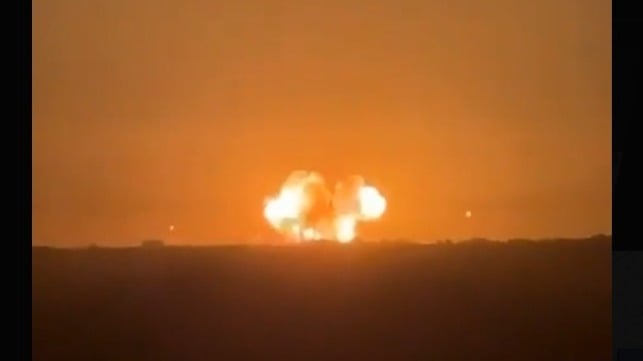
The explosion was visible for miles around (via Qatari social media

Published Jun 22, 2026 4:05 PM by The Maritime Executive

A blast at the Ras Laffan gas complex has killed 13 workers and injured 66 more, Qatari officials say. 12 of the deceased were Indian nationals, plus one Pakistani citizen. 

The giant Ras Laffan Industrial City area is a vast complex for processing natural gas from Qatar's offshore wells, and it incorporates multiple elements, including power stations, desalination plants, gas-to-liquid plants, and the world's largest collection of liquefaction trains for producing LNG. The LNG complex was shut down during the U.S.-Iranian hostilities, and about 17 percent of its capacity was knocked out by an Iranian ballistic missile strike. Operator QatarGas has pledged to bring the liquefaction trains back online on a rapid timetable; Wood Mac estimates that it will take about 12 weeks to restore most production. 

Natural gas underpins the Qatari economy, and the loss of LNG exports has had an impact. Its GDP is on track to sink by about nine percent this year due to the shutdown and the broader effects of the conflict. 

The blast on Sunday occurred during restart operations at the Barzan gas processing facility, which is used to fulfill Qatar's own domestic energy requirements. It had a technical root cause, Qatari authorities reported, and was not an attack; it posed no threat to the broader public, but it startled residents as far as 45 miles away in the capital of Doha. 

Qatari state energy minister Saad al-Kaabi said Monday that it would not be a setback for efforts to relaunch full rate LNG output, nor is it expected to impact local gas supplies.


Video: Mexican Patrol Boat Loses Control and Hits Docked Ferry

Mexican patrol boat
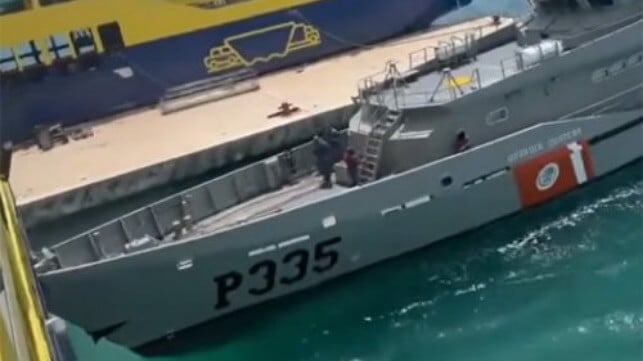
Mexican patrol boat lost control and hit a docked ferry (video screen grab)

Published Jun 19, 2026 2:39 PM by The Maritime Executive

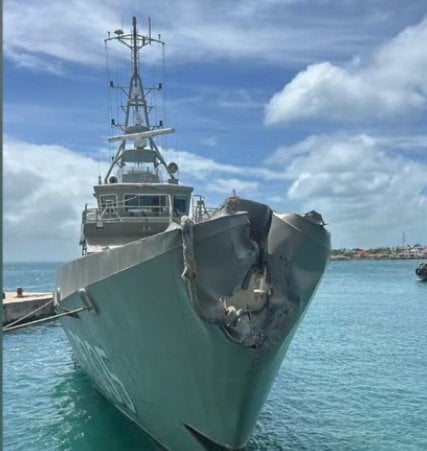
A Mexican patrol boat maneuvering in the port at Isla Mujeres lost control and hit a docked ferry on Thursday afternoon, June 18. There were no injuries, but both vessels sustained significant damage.

According to a statement from SEMAR México, “During a maneuvering approach to the pier of the Fifth Naval Region, the Coastal Patrol Uxmal experienced a possible failure in its clutch system, which resulted in an unintentional contact with a cargo vessel.”


(Video screen grab)


Uxmal (PC-335) is a Tenochtitlan-class coastal patrol vessel operated by the Mexican Navy (SEMAR). Built in Mexico in 2015 with Dutch Damen Shipyards technology, it is primarily used for maritime security, fisheries law enforcement, and search and rescue. It is approximately 438 meters (140 feet) in length with a displacement of 239 tons. It is one of 10 patrols built by the Mexican Navy between 2012 and 2017.

The newspaper Reforma is reporting that the military vessel was traveling at an estimated speed of six knots when a malfunction in the microcontroller of its computerized systems prevented the crew from performing any maneuvers to steer or brake.


Unable to stop, the bow of the patrol boat hit the side of the Ro-Ro ferry Ultra Carga III, which was docked at the time. The 300-meter (984-foot) ferry is operated by Ultramar Carga, running between the Mexican mainland and ports including Cozumel and Isla Mujeres. It has a capacity of 400 passengers and transports cars, motorcycles, and freight.

The Secretariat of the Navy reported that it is conducting a technical evaluation of the vessel. It said it would also be maintaining coordination with the port authorities.


U.S. Coast Guard SAR Helicopter Crashes Near Sitka, Alaska

An MH-60 Jayhawk operating near Sitka, 2026 (U.S. Coast Guard file image)

Published Jun 22, 2026 6:35 PM by The Maritime Executive

The U.S. Coast Guard reports that a rescue helicopter went down just outside of Sitka, Alaska on Monday morning. 

At about 1007 hours on Monday, the command center for Coast Guard Arctic District received report of a crash involving a Jayhawk aircrew operating out of Air Station Sitka. The aircraft had crashed during a training flight near Harbor Mountain, about two miles northeast of Coast Guard Air Station Sitka. 

Sitka Fire and Rescue reached the site within about 50 minutes, and its responders retrieved all four aircrew members. All were transported to Edgecumbe Medical Center for evaluation and treatment. Luckily, no fatalities were reported.

"We’re a close Coast Guard family, so it’s great to hear there have been no deaths," said U.S. Coast Guard Lt. Pam Manns, speaking to ADN.

The Coast Guard said that the cause of the crash is under investigation. 

The MH-60 Jayhawk is a medium-range SAR helicopter derived from the U.S. Army's Sikorsky UH-60 Black Hawk. It has been in service since 1991, and Monday's casualty is the fifth recorded crash. The Coast Guard has been conducting a service life extension for its existing MH-60s, upgrading all to the new MH-60T specification, and moving to build more MH-60Ts to transition to an all-Jayhawk rotary-wing fleet. That change will phase in gradually through 2040. 

The Coast Guard builds and restores its own MH-60 helicopters from used Navy hulls and new hulls from Sikorsky at an assembly hall at Coast Guard Aviation Logistics Center (ALC) in Elizabeth City, North Carolina.


Ukraine Knocks Out Kerch Strait Ferry, Disrupting Russian Fuel Supplies

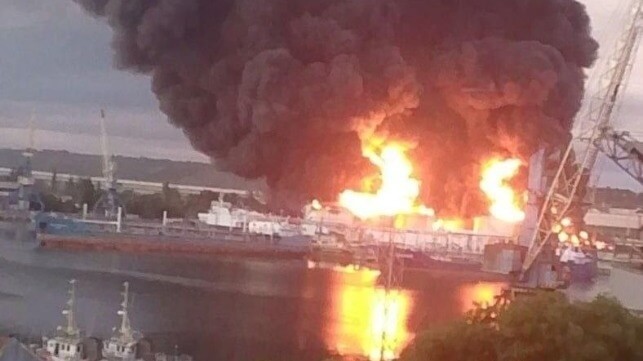
Burning fuel tanks near the ferry landing at Kerch, Crimea (via Russian social media)

Published Jun 21, 2026 10:48 PM by The Maritime Executive

Ukraine has launched another attack on the ferry crossing at Kerch Strait, forcing the operator to shut it down and divert military truck traffic onto the Mariupol-Melitopol highway - where it will be within range of constant Ukrainian drone strikes. 

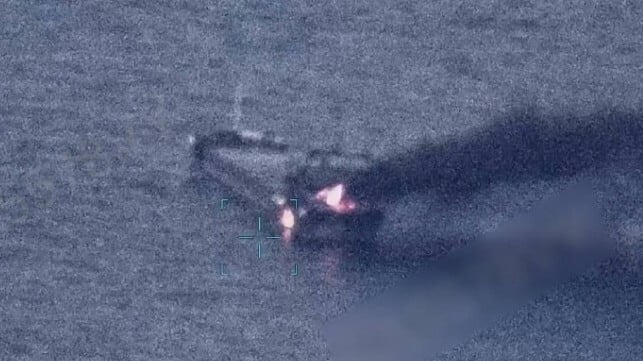
Overnight Saturday, Ukraine's drone forces hit the port at Kerch, Crimea, destroying the majority of the fuel tanks at the marine terminal. Fires were also reported at Kavkaz, on the opposte side of the strait. 

Drones also struck at least one ferry, the Elena II, a commercial rail-ferry that state enterprise Rosmorport purchased from a Greek operator in 2024. It had been in operation on the Kerch Strait route since mid-2025. 

Unverified bystander video footage suggests that at least one other vessel was also hit, and local reports indicate that the ferry service is now out of commission. Fuel trucks are reportedly being diverted from the ferry crossing to the "R-280" road from occupied Mariupol to Crimea, where they will be targeted by Ukraine's medium-strike drone forces. 

Russia has another alternative in the form of the Kerch Strait Bridge, a first-rate road and rail crossing adjacent to the ferry route. But the Russian military has been reluctant to use this symbol of Russian presence for the purpose of moving munitions and fuel, as Ukraine has proven adept at leveraging secondary explosions and fires to cause outsize damage. In an attack in 2022, rail tank cars of fuel burst and burned for hours, likely weakening the rail span. The rail bridge's maximum weight capacity was reduced as a precautionary measure. After this hard-earned lesson, the Russian military has made every effort to keep its cargoes of artillery shells and diesel fuel off of the bridge, using the ferries at Kerch as an alternative for hazardous goods (until now). 

The R-280 road is itself a poor substitute: in addition to strikes on trucks on the roadway, Ukrainian forces have systematically destroyed road bridges near Crimea, slowing down truck movements. As a consequence of the logistics breakdown, fuel supplies on the peninsula are growing scarce. Russian authorities announced new rationing measures on Sunday, restricting fuel distribution to military and government use only. 


Egyptian Seafarer Killed as Russian Drones Hit Three Ships off Ukraine

cargo ship on fire after drone strike
One crewmembers was killed after a Russian drone started a fire on the small cargo ship (Ukrainian Navy)

Published Jun 22, 2026 1:05 PM by The Maritime Executive

Ukraine is once again denouncing Russian attacks on commercial shipping in the Black Sea, reporting that one seafarer was killed on Monday, June 22. The strikes came as both sides have intensified their attacks in recent weeks.

Ukrainian officials said a small general cargo ship named Victress (2,386 dwt) was struck on its way to Ukraine. A large fire broke out on the vessel, and as a result, the ship’s Egyptian cook, a 58-year-old, was killed. Eight other crewmembers were able to enter a life raft and were rescued by the Ukrainian Navy.

Built in 1992, the 75-meter (246-foot) long vessel has been operating for Turkish interests since 2018. Reports indicate the ship was making regular trips into the Black Sea. 

A video appearing on social media appears to show the bridge and accommodation block of the vessel on fire. Reports said the ship sustained significant damage and is now anchored offshore.


Ukraine’s Minister of Foreign Affairs, Andrii Sybiha, wrote online that the attacks were “a clear demonstration that Russia’s words cannot be trusted. Russia remains the main threat to Black Sea security and prosperity.”

The Ukrainian Navy confirmed that it had conducted a rescue operation. It said, “This case once again demonstrates that the Russian Federation continues to violate the norms of international maritime law and create threats to civilian shipping. The Naval Forces of the Armed Forces of Ukraine will continue to do everything possible to make the seas safe.”

Later, Oleksiy Kuleba, Ukraine’s Vice Prime Minister for Reconstruction, announced that two other vessels had also been struck. He said the ships were flying the flags of Belize and Palau. The report said there were no injuries on these two vessels and that they had continued their journey.

The attacks on the three ships were part of a larger wave of attacks on Ukraine. The port city of Odesa was also hit with reports that two people were killed in a missile strike.

Kuleba, last week, said that 257 civilians have been injured or killed as a result of the attacks on Ukraine’s ports since the start of the war. He reported that Russia has damaged or destroyed 966 port infrastructure facilities and hit more than 200 commercial vessels since it started its invasion of Ukraine in 2022.

Kuleba wrote online that the attacks require a decisive response from the international community.


Japanese Ro-Ro Cargo Ferry Goes Hard Aground on Its Way to Tokyo

Japanese Ro-Ro aground
Ferry is reported hard aground with efforts to refloat it so far unsuccessful (Video)

Published Jun 19, 2026 4:00 PM by The Maritime Executive

A Japanese cargo ferry making its way from Osaka to Tokyo went hard aground overnight. While there were no immediate reports of damage or environmental issues, the ship remains hard aground after efforts to bring it free during the day on Friday.

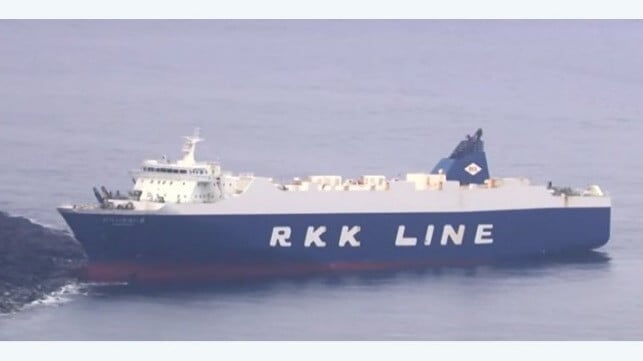
The Niraikanai II (7,762 dwt) is a Ro-Ro ferry used to transport cars and cargo between Osaka and Toko. At approximately 0330 local time on Friday, June 19, the vessel’s crew reported it had gone aground off Toshima Island, a small island with just a few hundred inhabitans offshore from Honshu and on the vessel’s route to Tokyo. There were 17 crewmembers aboard. 


Built in 2017, the vessel is 181 meters (594 feet) in length. It is 11,687 gross tons. It is unclear from the reports how heavily loaded the vessel was at the time of the grounding. Its operator, Ryukyu Kaiun, says it is one of the largest Ro-Ro vessels on the Okinawa route and that it operates with an electronically controlled main engine that prioritizes environmental friendliness and fuel efficiency.

The Japan Coast Guard only said that the cause of the grounding would be investigated. The Yomiuri Shimbun newspaper was reporting that the seas were calm at the time. It said the winds were under 12 knots and the wave heights under two feet.


Solomon Islands Intercept Shadowy Vessel Suspected of International Crimes

cargo ship intercepted in the Solomon Islands
The police in the Solomon Islands intercepted a shadowy vessel believed to be involved in transnational organized crime (RSIPF)

Published Jun 19, 2026 6:38 PM by The Maritime Executive

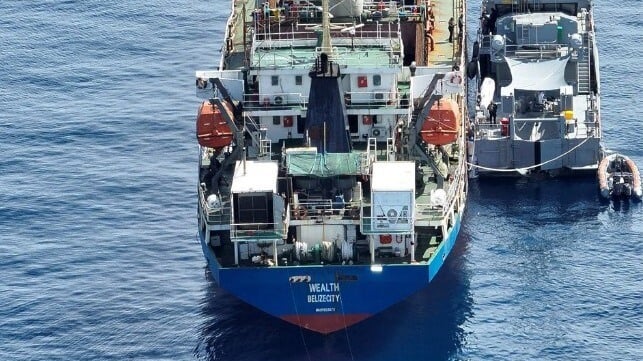
The Royal Solomon Islands Police Force (RSIPF), Solomon Islands Customs, and Immigration conducted a joint operation working with international authorities in the apprehension of a shadowy vessel suspected of involvement in transnational organised criminal activities. The ship has been brought to Honiara, on the island of Guadalcanal, the capital of the Solomon Islands, on the island of Guadalcanal, for further investigation.

The authorities reported they had been tracking the vessel’s movements since April after intelligence reports indicated suspicious movements and activities consistent with organized criminal operations at sea. The Australian Border Force, the Pacific Islands Forum Fisheries Agency (FFA), and other regional law enforcement partners had also become suspicious of the vessel. RSIPF Maritime says the vessel is suspected of drug trafficking, tobacco smuggling, and other forms of maritime transnational crime.

The vessel, identified as MV Wealth (61,00 dwt), is a Belize-flagged general cargo ship measuring approximately 98 metres in length and capable of transporting both containerised and bulk cargo. The vessel was built in 2010 and operated for the Chinese, but according to the databases, it was sold in February 2026, taking on this new identity.

The police report that 19 crewmembers were taken into custody, and they are believed to have come from China, Indonesia, and the Philippines. However, they report they have been unable to verify the identities and nationalities of all crewmembers due to the absence of a complete and legitimate crew manifest, which is part of the ongoing investigation.

Inquiries have revealed that two support tender vessels associated with MV Wealth remain unaccounted for, with the search ongoing. Intelligence assessments indicate a strong possibility that these vessels may have been utilized to transport illicit cargo to other destinations within the Pacific region, including Fiji, Papua New Guinea, Vanuatu, and potentially Australia. 

Investigators are also examining the movement of a suspected support vessel and fast craft that reportedly arrived at Noro Marina Wharf on May 8 and departed on May 12, without the knowledge or clearance of Customs, Immigration, or police authorities. There are reports that a Chinese national may have been left behind during this period. These developments have raised further questions regarding the vessel's activities and potential links to illicit cargo transfers.

Investigations into MV Wealth and its associated activities remain ongoing. Authorities are conducting a comprehensive examination of the vessel, its documentation, cargo, crew, and any potential links to broader criminal networks operating across the region.

RSIPF said the interception and detention of MV Wealth underscore the evolving threat posed by organised criminal networks that exploit the vast maritime environment of the Pacific to facilitate illegal activities. Such networks seek to undermine border security, economic stability, and the safety of Pacific communities through sophisticated cross-border criminal operations. 


Low on Fuel, Russian Frigate Drifts in the English Channel

Grigorovich
Courtesy Royal Navy

Published Jun 18, 2026 6:23 PM by The Maritime Executive

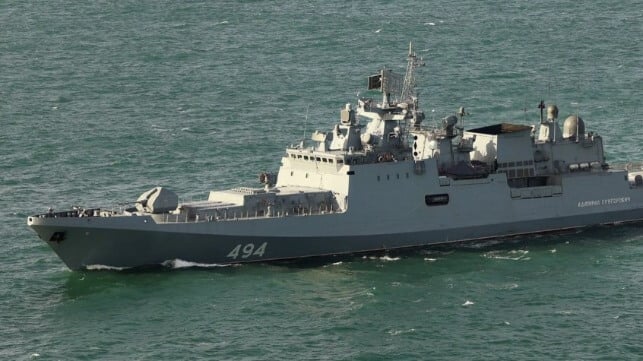
A Russian frigate stationed in the English Channel, which was not on hand to impede the Royal Navy’s seizure on June 14 of the sanctioned Cameroon-flagged Aframax Smyrtos (IMO 9389100), appears to be running very low on fuel.

The frigate RFS Admiral Grigorovich (F494), the lead ship of its namesake class and launched in 2014, has frequently been seen recently in the English Channel and Western Approaches, the more so since Russia has perceived that tankers carrying Russian oil are at risk of seizure. On several occasions she has been refueled, not by one of the numerous oilers equipped for the task and which support far-distant Russian Navy deployments, but by a Project 304 Amur-class floating repair ship, normally used to provide dockside workshop facilities when supporting long-range deployments. Although equipped with five-tonne cranes, the Amur-class vessels are not equipped for conducting replenishments at sea, and have been spotted instead coming alongside the frigate Admiral Grigorovich and conducting makeshift fuel transfer operations at sea. The Admiral Grigorovich does not appear to be equipped with a Ka-27 helicopter, which other ships of the same class often are, and which might help with replenishment tasks.

In an incident in foggy conditions in the English Channel on June 16, the Admiral Grigorovich fired warning shots at a British-flagged yacht, the Bright Future (MMSI 235086766). Although the skipper of the Bright Future claimed he was not on a collision course, the British Ministry of Defence described the firing of warning shots as a normal procedure if closing on a warship. The Admiral Grigorovich was drifting at the time of the incident, presumably to save fuel.

The Admiral Grigorovich was back shadowing Russian tankers through the Channel on June 18, escorting the OFAC and UK sanctioned Russian-flagged Aframax Forwarder (IMO 9419448), which had loaded 730,000 barrels of Urals crude at Ust Luga on June 2 and is bound for Dongying in China. The two Russian ships were shadowed on their way through the Channel by HMS Tyne (P281), without any attempt to repeat the seizure operation carried out earlier in the week against the Aframax Smyrtos (IMO 9389100). The seized Smyrtos is being kept at anchor off Weymouth, in part to ensure that its crew cannot claim asylum in the UK. Three other Aframax tankers which had loaded at Ust-Luga and Primorsk also passed through the Channel on June 18, but were not on any sanctions list, namely the Palau-flagged Visund (IMO 9378864), the Barbados-flagged Aequora Fortune (IMO 9297503) and the Maltese-flagged Hellas Calafia (IMO 9798088).

The Russian Navy is clearly under pressure, and having to prioritize its tasks carefully. Russian tankers are now at risk from the Ukrainian long-range sanctions program not only in the Black Sea, but now also in the Mediterranean. Increasing numbers of European countries are intercepting Russian dark fleet tankers in the Mediterranean, the Baltic and the English Channel. Seizures are not yet taking place when dark fleet tankers are being escorted by Russian warships, which is putting greater pressure on the Russian Navy to find escorts in sufficient numbers, but at a time when Russian warships are themselves also being attacked by Ukrainian drones.


Russian Navy Struggling to Maintain a Mediterranean Presence

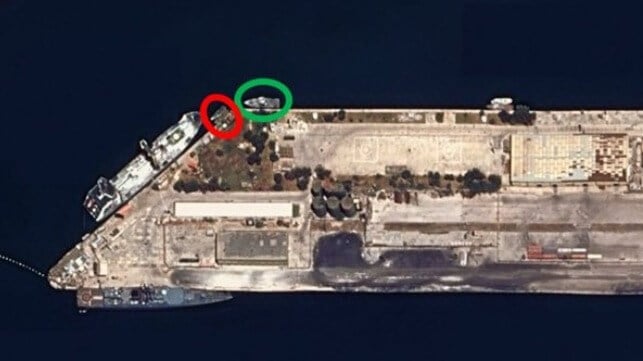
Tartus, Syria June 4
RFS Admiral Kasatonov and the oiler Akademik Pashin docked in Tartus, June 4 (Airbus). Also tentatively identified are 2 x Raptor (red) and a Grachonok Class (green) port security vessels

Published Jun 20, 2026 2:28 PM by The Maritime Executive

The Russian Navy seems once again to be heading for a Mediterranean exit, after a presence in May suggested it might be attempting to re-establish its permanent base in the Syrian port of Tartus, once the headquarters of the Mediterranean Flotilla.

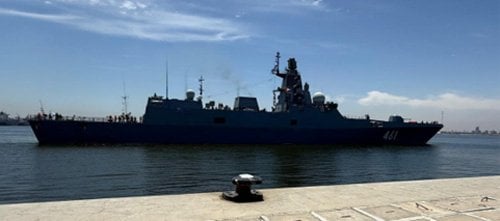
On April 29, a convoy passed into the Mediterranean through the Strait of Gibraltar, escorted by the Gorshkov Class frigate RFS Admiral Kasatonov (F461). The convoy consisted of three sanctioned vessels, often involved in arms shipments and resupply activities, the oil products tanker General Skobelev (IMO 9503304), the Ro-Ro cargo vessel Sparta (IMO 9268710), and the Project 23130 oiler Akademik Pashin (IMO 9778193). The convoy had passed through the English Channel on April 18, then through the Strait of Gibraltar, and despite advertising its destination as Port Said, it headed for Tartus. The Admiral Kasatonov then escorted the Sparta and the General Skobelev back towards Gibraltar, handed them over to the frigate RFS Boiky (F532), and then turned backed to Tartus and was imaged with the Akademik Pashin dockside on the old Mediterranean Flotilla wharf on June 4.

In the imagery of June 4, the Admiral Kasatonov and Akademik Pashin are protected by an anti-sea drone barrier – not a precaution which was necessary even a year ago. The maritime open source analyst community have also identified two Raptor and a Project 21980 Grachonok Class Anti-Saboteur Vessel docked close by the Akademik Pashin. It is unclear whether these anti-saboteur craft have arrived recently (perhaps carried by the Sparta on its recent visit), to enhance port security in the face of the Ukrainian long-range sanctions program, or have been kept hidden somewhere in the Tartus area since they were last seen there during the heyday of the Mediterranean Flotilla. Their appearance certainly indicates that the Ukrainian threat is being taken seriously, but also lends weight to reports that the Russian Navy is re-establishing a permanent presence in Tartus. These small port security craft cannot make their way home on their own, so look set to remain in Tartus, presumably to provide security for the Russian presence.


The Admiral Kasatonov alongside in Alexandria (Russian Navy)


The Admiral Kasatonov and the Akademik Pashin subsequently made a port visit to Alexandria on June 12, to celebrate Russia Day. The pair were then spotted south of Sardinia on June 18.

The Admiral Kasatonov was also supported by the oiler Akademik Pashin on a foray into the Mediterranean in March 2021, during which the ships visited Algiers, Piraeus, Alexandria, Tartus, and the Turkish naval base at Aksaz. The Admiral Kasatonov also visited the Mediterranean in 2022 and 2023, suggesting a permanent allocation to the area despite being assigned to the Northern Fleet. But the frigate is probably a less welcome Mediterranean port-caller now than it has been in previous years.

If as expected the two warships head for the Strait of Gibraltar and then for the Admiral Kasatonov’s home port of Severomorsk, the oiler Akademik Pashin will be welcomed in particular by the RFS Admiral Grigorovich (F494). The Admiral Grigorovich is still loitering in the English Channel, harassing the yachting community, seemingly low on fuel and probably looking for a fill-up replenishment at sea.