Tanker Owners Are Having the Best Week of the Hormuz Crisis
The Strait of Hormuz may be reopening, but don't tell tanker owners the crisis is over.
They're making too much money.
As Middle Eastern producers scramble to move crude that has spent months stranded in the Persian Gulf, tanker rates have exploded higher, turning a slow return to normal into a windfall for shipping companies.
According to Reuters, the cost of hiring a tanker in the Gulf has nearly doubled in just a week, jumping from around $106,000 per day to more than $190,000 per day. For some very large crude carriers (VLCCs) hauling cargoes through Hormuz, daily earnings have surged to nearly $470,000—a level that would have seemed absurd before the war began.
Oil prices have spent much of the past week falling as traders price in the return of Middle Eastern supply, with Brent futures trading at $77 on Tuesday afternoon. Meanwhile, the people actually moving that oil are charging some of the highest rates seen during the entire crisis.
There still aren't enough ships.
Even after Iran lifted its effective blockade last week as part of the 60-day ceasefire agreement with the United States, traffic through Hormuz remains well below normal levels. Before the war began in late February, roughly 125 ships passed through the chokepoint each day. Current traffic remains a fraction of that.
At the same time, roughly 100 tankers are still trapped inside the Gulf carrying cargoes loaded during the conflict.
Now producers want their barrels moving again.
Abu Dhabi's ADNOC has been aggressively marketing crude cargoes, while refiners in major importing nations such as India are seeking additional Middle Eastern supplies after months of disruption. The result is a sudden surge in demand for ships just as vessel availability remains unusually tight.
The futures market has largely moved on from the crisis, but the shipping market clearly hasn't.
Until more vessels begin moving through the world's most important oil chokepoint, tanker owners may remain among the biggest winners of a conflict that cost almost everyone else dearly.
By Julianne Geiger for Oilprice.com
Tankers Emerge from Dark Mode amid Tentative Hormuz Reopening
A growing number of oil tankers have been broadcasting their position and intention to pass through the Strait of Hormuz in recent hours, in a sign that a tentative recovery of traffic through the chokepoint is underway.
Before the U.S. and Iran signed the memorandum of understanding to negotiate a peace deal, most tankers were moving through and around the Strait of Hormuz in the so-called dark mode, with transponders and AIS positioning switched off.
Once the hallmark of Iran’s sanction-evading tactics, dark mode has become mainstream in the Persian Gulf, the Gulf of Oman, and most of all – in the Strait of Hormuz, as tanker owners and shippers sought to protect their cargoes from attacks.
The dark crossings of vessels compounded the already difficult task of market analysts and observers to estimate how much supply was lost in the Middle East and how much could still reach some buyers with stealthy moves out of the region.
Since the U.S.-Iran memorandum of understanding was signed, more vessels have started to openly broadcast their position, according to conventional visible tracking signals monitored by Bloomberg.
As many as seven tankers were broadcasting they were in the Strait of Hormuz on Tuesday morning local time—two outbound non-Iranian supertankers, three outbound tankers carrying fuels, and two Iran-flagged medium-sized Suezmax tankers inbound moving into the Gulf, according to the data.
While the increase in visibility in tanker positioning suggests a tentative recovery of confidence, shipowners remain wary of abrupt changes to navigability conditions, including conflicting signals from the U.S. and Iran on whether the Strait is open or not, and where mines need to be cleared.
A total of 25 AIS-visible transits through Hormuz were recorded on June 22, including French- and Qatari-linked LNG carriers, maritime intelligence firm Windward said.
But in a sign that shippers are still waiting for full go-ahead, Indian Oil Corporation (IOC) has reportedly failed to charter three tankers to pick up crude and gas from the Persian Gulf and ship the volumes through the Strait of Hormuz, as many shipowners and operators remain very cautious about sending vessels to the area.
By Charles Kennedy for Oilprice.com
A growing number of oil tankers have been broadcasting their position and intention to pass through the Strait of Hormuz in recent hours, in a sign that a tentative recovery of traffic through the chokepoint is underway.
Before the U.S. and Iran signed the memorandum of understanding to negotiate a peace deal, most tankers were moving through and around the Strait of Hormuz in the so-called dark mode, with transponders and AIS positioning switched off.
Once the hallmark of Iran’s sanction-evading tactics, dark mode has become mainstream in the Persian Gulf, the Gulf of Oman, and most of all – in the Strait of Hormuz, as tanker owners and shippers sought to protect their cargoes from attacks.
The dark crossings of vessels compounded the already difficult task of market analysts and observers to estimate how much supply was lost in the Middle East and how much could still reach some buyers with stealthy moves out of the region.
Since the U.S.-Iran memorandum of understanding was signed, more vessels have started to openly broadcast their position, according to conventional visible tracking signals monitored by Bloomberg.
As many as seven tankers were broadcasting they were in the Strait of Hormuz on Tuesday morning local time—two outbound non-Iranian supertankers, three outbound tankers carrying fuels, and two Iran-flagged medium-sized Suezmax tankers inbound moving into the Gulf, according to the data.
While the increase in visibility in tanker positioning suggests a tentative recovery of confidence, shipowners remain wary of abrupt changes to navigability conditions, including conflicting signals from the U.S. and Iran on whether the Strait is open or not, and where mines need to be cleared.
A total of 25 AIS-visible transits through Hormuz were recorded on June 22, including French- and Qatari-linked LNG carriers, maritime intelligence firm Windward said.
But in a sign that shippers are still waiting for full go-ahead, Indian Oil Corporation (IOC) has reportedly failed to charter three tankers to pick up crude and gas from the Persian Gulf and ship the volumes through the Strait of Hormuz, as many shipowners and operators remain very cautious about sending vessels to the area.
By Charles Kennedy for Oilprice.com
Op-Ed: In the Strait of Hormuz, Free Transit Is No More
While Tehran has pledged to allow free passage for the next 60 days, the long-term future of the strait is under Iranian control
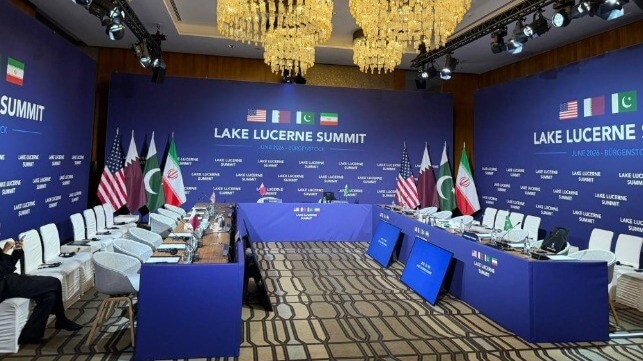
The Memorandum of Understanding (MoU) signed by the leaders of Iran and the United States last week sets the agenda for further negotiations, which, after some delays, have now commenced between the two parties, with Pakistan and Qatar present as intermediaries. The talks are taking place in the Qatari-owned mountainside resort of Bürgenstock in Switzerland.
Political commentators have gone into overdrive, seeking to paint the MoU as a victory or defeat for one side or another. Much remains to be resolved, with plenty of evidence that there is very little meeting of minds on a number of extremely contentious issues. The Iranian delegation is absolutely in no mood for compromise, and is buoyed up by what it sees as its political success so far.
There is a strong likelihood that the talks will break down, and that the negotiations are in effect only an elongation of the pre-existing ceasefire. President Trump clearly wants to walk away from the issue and leave his Vice President to clear up the mess, an impression strengthened by his description of the MoU negotiations in terms of their effect on domestic gasoline prices and inflation rather than on the future of the Middle East. But if President Trump is not engaged in the follow-through, both Israel and the Gulf States most certainly are. Neither is likely to want to allow Iranian hardline positions to prevail, and both have plenty of capacity to sabotage the negotiations in Switzerland if the talks look like threatening their future national security.
While there is a risk of a resumption of fighting, there are already conclusions to be drawn about the outcome of the war — practical realities that leaders and CEOs within the maritime community need to absorb as they shape their business plans.
Free transit through the Strait of Hormuz is no more. Just possibly, a deal will be done in the negotiations whereby fees described as navigation dues will be charged at acceptable levels. Shipowners may not mind, because these are costs that can be passed on; but ministers of business, economy and finance are likely to be very wary of any charges that have the overall effect of increasing prices and reducing the Gulf's competitive advantages.
Much more concerning, though, is the reality that, if current circumstances prevail, Iran will in the future be able to close the Strait again whenever it wants to, on a political whim, as it has demonstrated it can do. It is already trying to ensure that traffic through the Strait uses its own "Persian Gulf Strait Authority" route rather than the internationally recognized Traffic Separation Scheme, so that it may hereafter be able to exert political control over shipping transits. This will force all the GCC states to radically redesign their logistics and communications infrastructure, although some of the alternative routes out of the Gulf carry risks of their own. Also badly affected will be the confidence of foreign direct investors, particularly in Bahrain, Kuwait and Qatar, which have no alternative routes out of the Gulf.
The Houthis have not succumbed to pressure from the IRGC to disrupt traffic in the Red Sea, having their eye at present on the hope of a life-saving financial deal with the Saudis to help rescue the economy of northern Yemen. But the recent war has demonstrated that it would be easy to close the Bab el-Mandeb, and the Houthis have shown themselves to be a resilient enemy; hence the risk of closure, not so far realized, is very real, and would probably have consequences on a similar scale to the disruption caused in the Strait of Hormuz.
The question of the IRGC curbing its regional expansionist program is not even on the agenda at Bürgenstock. Moreover, in the discussions surrounding the negotiation of the MoU, the IRGC made it clear that it would press on with this program. This is immediately evident in Lebanon, where the IRGC has not given up on Hezbollah. But it is also evident in Iraq, where the IRGC appears to be reorganizing to avoid coming under pressure from the new Iraqi government – which is itself under regional and American pressure to curb the obviously Iranian-controlled PMF militias. The IRGC's subversive model, bringing disruption to political stability across the Middle East, has been battered by Israel in particular over the last 12 months. But although damaged, it is still intact; the IRGC's intent remains, and with an influx of money released by the lifting of sanctions, it will flourish again and take on new targets.
Another permanent threat to peace and stability is the survival of a critical mass of the IRGC Aerospace Force's drone and missile capability. A comparison of known drone and missile storage and launch sites against the facilities known to have been attacked in 2025-26 suggests that very few of these sites were left untouched; it is not as if the Iranians had successfully kept their sites hidden. But they were built in expectation of attack, well dispersed, with multiple exits. The speed with which some sites have been repaired suggests that recovery plans and resources had been pre-positioned for just such an eventuality. Moreover, if any funds are released to the Iranians by way of sanctions relief, further repair and enhancement of the more than 40 sites spread across the country will be accorded high priority.
To a degree, the survival of the IRGC Aerospace Force's operational capability can be countered by increased spending by GCC states on air defenses; but the brutal fact is that the capability remains intact and is a continuing threat that the IRGC has demonstrated it will have no compunction about using, either directly or through its proxies. It is now understood, moreover, that the Iranians have access to timely and accurate information for targeting both US military and GCC infrastructure, supplied courtesy of the joint Russian/Iranian Khayyam/Kanopus-V satellite constellation. This makes the residual drone and missile threat even more potent.
Finally, the mood of the GCC states must be considered. All, to a greater or lesser degree, attempted to conciliate with Iran before the war. All, even Oman, have been attacked by Iran nonetheless. There is now a stark recognition that Iran is determined to achieve regional dominance, which threatens the future of all the Gulf monarchies. The GCC countries may still smile at the Iranians, but they all know they have an implacable enemy, and will be looking for ways to get the better of Tehran.
In summary, if war does not resume and the negotiations in Bürgenstock continue in the same vein as they have so far, then the Middle East can look forward to greater Iranian dominance, driven by the prevailing IRGC-Paydari hardliners. Logistics in the Gulf will remain difficult and threatened, alleviated only when major capital investment projects to broaden contingency options come to fruition.
Even if these problems can be overcome, the Gulf region will for many years be far less stable than it was when it enjoyed the benefits of Pax Americana — a product seemingly now being withdrawn.
The opinions expressed herein are the author's and not necessarily those of The Maritime Executive.
Strait of Hormuz Traffic is Beginning to Return, But it is Hard to Spot
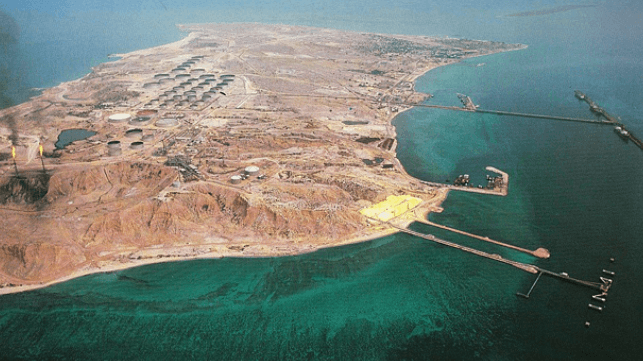
Despite some new conflicting guidance from U.S. and Iranian forces on the safest route through the Strait of Hormuz, commercial shipping is resuming slowly - though it is tough to spot.
"50-60 percent of the traffic is completely dark," said Windward co-founder Ami Daniel, speaking to CNBC. The blackout is more than just transiting with AIS off - these ships are moving without radar, satellite or VHF comms for fear of being targeted. "This is like full-on navy operational mode for ordinary tankers," he added, and it makes it tough to count the number of transits accurately. As might be expected from these extreme precautions, "[shipowner confidence] is absolutely, without a doubt not there yet," he said.
Iran's shadow fleet tonnage continues to operate with a diversity of deceptive practices, including fraudulent flagging; hidden ownership; and coastwise shipments of oil from Iran towards Iraq, where covert STS transfers to disguise the origin of oil have historically been common. Outbound, sanctioned, Iran-linked tankers made up a large share of the day's traffic, Windward said.
Iran has a motive to export quickly: the U.S. Treasury has given Iran a 60-day waiver to sell crude at any price it can, to any willing buyer. China has historically been Iran's top customer for petroleum, but cut its imports by half during the peak of the Hormuz crisis; its return to the market is expected to come soon, and to absorb much of the pent-up surge of Iranian exports.
Iran's tankers tend to use Iranian-controlled northern half of the strait, but foreign-flag vessels have a choice of routing. The FT reports that shipowners are receiving competing instructions from Iran's Persian Gulf Strait Authority (which manages the northern, Iranian route) and U.S. Central Command (which has its own corridor on the south side, in Omani waters). The so-called PGSA advises using its lane for safety, while CENTCOM and certain Western insurers advise that the Omani lane is better. If followed, that choice could put them in Iran's crosshairs.
"If they follow the guidance of underwriters and U.S. authorities by navigating closer to Oman, they risk interference, detention or potential hostile action from Iranian authorities," said Dr SV Anchan, chair of Safesea Shipping, speaking to the FT.
Alternatively, if owners choose to follow Iranian guidance, they can submit all transit details to the "PGSA" at least 48 hours ahead of the planned crossing, wait for a transit permit valid for a one-way voyage, and have the crew stand by for further instructions on VHF.
U.S. Treasury Suspends Restrictions on Iranian Oil and Tankers for 60 Days
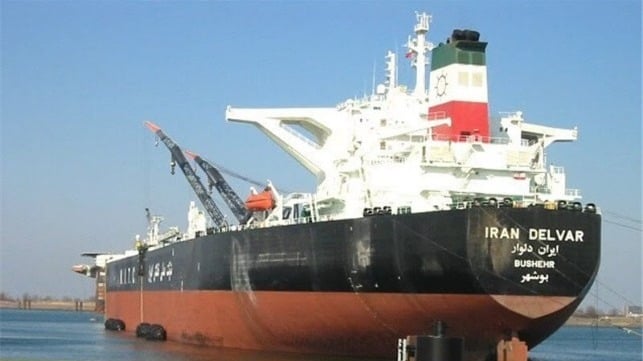
Indicating that there was positive movement in the negotiations between the United States and Iran, Treasury Secretary Scott Bessent announced on Monday a sweeping 60-day suspension of nearly all restrictions on Iran’s oil industry. It followed Iran’s quick resumption of oil exports after the U.S. last week ended its blockade for ships heading to Iranian ports and on tankers carrying Iranian oil.
Bessent said as part of the framework signed between Iran and the United States, “Treasury has issued a temporary 60-day general license authorizing the production, delivery, and sale of Iranian oil.” It is in effect until 12:01 a.m. Eastern Daylight Time on August 21.
The General License is extremely broad and represents a total reversal of the Trump administration’s campaign of maximum pressure that has been in effect. It covers the production, sale, delivery, and offloading of crude oil and petrochemical products. It also covers vessels currently listed as blocked by the United States and permits servicing of the vessels.
Included in the terms is authorization of transactions that import Iranian oil and products into the United States. Further, it states that payments can be made in U.S. dollar-denominated funds to Iran, its government, or individuals previously blocked.
Bessent said the moves were “in line with” productive talks in Switzerland. He said Iran has committed to free and open transit in the Strait of Hormuz. It is also reportedly agreeing to again permit International Atomic Energy Agency inspectors into Iran.
The official permission follows a rush by Iran to export oil after the end of the blockade. Analysts at the well-known tracking service TankerTrackers.com reported in the first five days, “Iran has exported nearly 18 million barrels (or $1.44 billion) of crude oil.” Today, it wrote in a social media posting that the exports have risen to 36 million barrels of crude oil. TankerTrackers.com estimates that “roughly an equal amount is still afloat in Iran.”
Critics point out the large amounts of money the United States is quickly releasing for Iran by permitting these transactions. It comes as Donald Trump is writing online that the Iranian economy was “broken” while inflation was at 250 percent.
Despite Iran’s assertion over the weekend that it had again suspended transits of the Strait of Hormuz, U.S. Central Command asserted the southern lane near the coast of Oman is moving. On Saturday, it wrote, “Safe passage through the international waterway remained intact today as 55 merchant ships transited, moving large amounts of cargo and more than 17 million barrels of oil to global markets.” Volume, however, was reported to have slowed on Sunday.
As of June 14, CENTCOM said U.S. forces had redirected 142 commercial ships that complied with its orders and disabled nine vessels that did not comply. U.S. forces are reported to be closely monitoring vessel movements since the end of the blockade.
With U.S.-Iran Deal Signed, Jones Act's Defenders Call for an End to Waiver
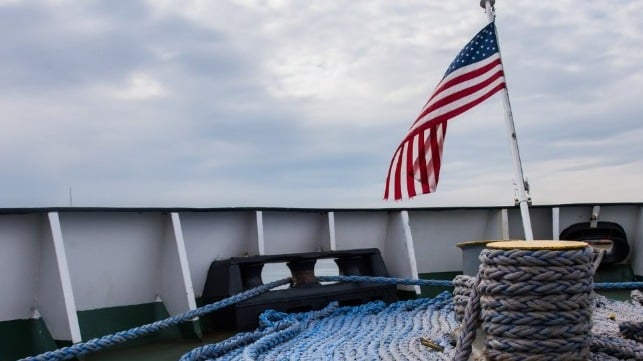
Now that the U.S. has signed a ceasefire deal with Iran and tanker flows in the Strait of Hormuz appear to be back on the rise, American domestic shipping interests are renewing their call for the Trump administration to end its broad Jones Act waiver policy for energy cargoes. The 30-plus-90-day waiver is one of the most significant executive orders of its kind since the WWII era.
"With President Trump's signing of the Iran ceasefire agreement, the statutory basis for the Jones Act waiver is concluded. It's time to end the waiver, put Americans back to work, and resume the task of Restoring America's Maritime Dominance. Let's do this, Mr. President!" said the American Waterways Operators' President and CEO, Jennifer Carpenter, in a statement last week.
Since its entry into force on March 18, the administration's Jones Act waiver has been used for about 110 voyages to move about 25 million barrels, equivalent to 1.4 percent of American consumption, according to the American Maritime Partnership. The biggest beneficiaries so far have been motorists and commercial aircraft operators in the state of California, where refinery closures and a dearth of pipeline interconnections make the energy market unusually dependent upon seaborne supplies. Shipments from the Gulf Coast to the Golden State since March total about eight million barrels of gasoline, jet fuel and other products; in May, Reuters estimated that Texas was supplying about six percent of California's fuel and blendstock needs using waivered tankers.
In normal times, California fuel markets are usually topped up with imported products from Asia; the long Texas-to-California route through the Panama Canal rarely happens at scale on Jones Act tonnage, according to the American Petroleum Institute. Shipment volumes from the Gulf to the mid-Atlantic states have also been notable, API says. The waiver activity did not appear to have an appreciable impact on U.S. fuel prices, which rose throughout most of the period in all regions.
While fuel prices may not have come down, there are other foreseeable outcomes. Act's defenders have long warned that without its legal protections, foreign operators would enter U.S. coastwise commerce - with potential implications for U.S. national security. AMP tallied up the waivered voyages and determined that about one quarter were performed by Chinese-owned or Chinese-subsidized ships, including one tanker operated by state-owned giant China COSCO.
"AMP members continue to report canceled contracts and lost business opportunities as foreign vessels take domestic cargoes from Americans," the group said in a statement. In addition, the Federal Reserve has warned that investments in America's maritime industry are being put on hold because of the waiver and the uncertainty it injects into business decisions.
If the waiver were made permanent by an act of Congress, U.S.-built ships would lose the protected legal status that underpins their valuation. Domestic shipowners would be exposed to competition from lower-cost ships manned with lower-cost labor, Jones Act advocates warn, with effects on asset value, revenue, employment, newbuild ordering and fleet size.

No comments:
Post a Comment