
U.S. Completes 66th Lethal Strike on a Suspected Smuggling FISHING Boat
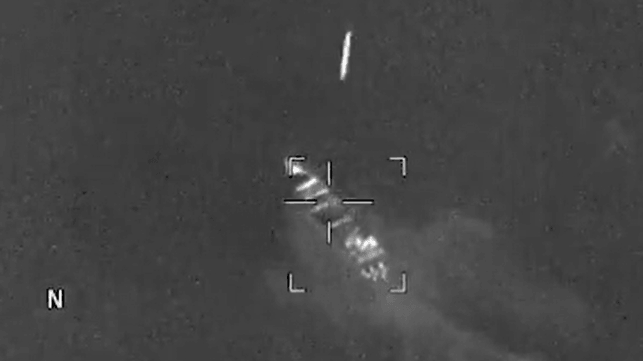
On Saturday, U.S. Southern Command conducted a lethal strike on a suspected drug smuggling boat in the Caribbean, killing two and leaving multiple survivors.
According to the command, a drug-smuggling boat was spotted in the Caribbean on a known narco-trafficking route on Sunday. An airstrike destroyed the boat and killed two occupants. Six men survived the initial attack; the U.S. Coast Guard has been notified.
It was the command's 66th strike overall and its third strike in the span of a week. On Thursday, the military intercepted a go-fast vessel in the Eastern Pacific and determined that it was likely engaged in narco-trafficking. The vessel had four outboard motors, was traveling at high speed, and was heavily laden with packages towards the bow.
Southcom aviation assets struck the vessel with an explosive munition and destroyed it, scattering the cargo into the water and killing three suspects. No survivors were reported.
An additional drug-boat strike occurred Tuesday in the Eastern Pacific, and it killed one suspect and left two survivors. The U.S. Coast Guard was notified.
Mixed results
The stated objective of the $5 billion strike program is to stop the flow of cocaine from South America into the United States. It has meaningfully reduced the use of go-fast smuggling vessels off Venezuela, where the campaign initially concentrated its efforts, according to InSight Crime - but the net outflow of cocaine to Western consumer markets is likely unaffected.
"Concealment within legitimate cargo remains the main method for reaching consumer markets in the United States, Europe, and beyond, with traffickers routing loads through ports in countries like the Dominican Republic," assesses Alex Papadovassilakis for Insight Crime. "Spreading military presence over multiple trafficking regions — the Pacific, the Caribbean, and Central America — promises to create weak links, as intense pressure in one smuggling corridor simply pushes traffickers to redirect drug flows into another."
On the street, the circumstances appear unchanged. "Cocaine remains highly available, highly prevalent and relatively inexpensive [in the U.S.]," substance use researcher Dr. Carl Latkin told the New York Times. Nabarun Dasgupta, an addiction scientist at University of North Carolina, confirmed that per-gram street dose pricing remains at about $60-100 in the U.S., unchanged from price levels before the campaign.

No comments:
Post a Comment