Sibanye expects 15% drop in global platinum output by 2034
South Africa’s Sibanye Stillwater sees mined platinum output falling 15% from current levels by 2034, an executive said on Tuesday, and a slower than projected uptake of electric vehicles supporting demand, tightening the market.

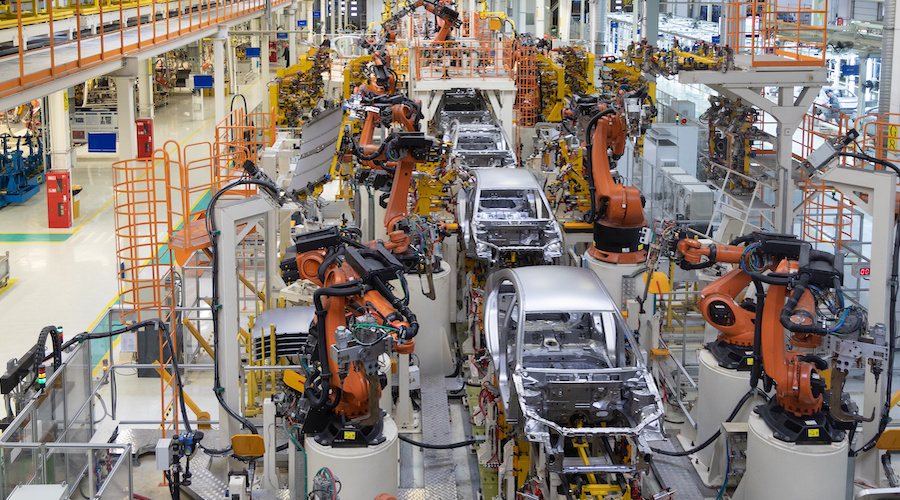
Platinum, mostly used in autocatalysts, faces a threat from the growing use of electric vehicles, which do not need the emission control devices.
South African miners, who account for 70% of global platinum output, are wary about adding new production due to uncertainty over long-term demand, leading to declining output as mineral reserves deplete.
“For platinum, we were looking at about 6.2 million ounces a year in 2019, and we see that moving down to 4.7 million ounces by 2034,” Kleantha Pillay, Sibanye’s executive vice president for sales and marketing, told analysts.
Global platinum output is forecast to decline to 5.46 million ounces in 2026, from 5.56 million ounces last year, according to Johnson Matthey.
Palladium output also expected to fall
Production of palladium, a platinum group metal that can substitute for platinum in some applications, is also projected to decline by 15% from current levels to 5.6 million ounces in 2034, she said.
Sibanye forecasts that electric vehicles will make up 35% of global car sales by 2034, Pillay added. This is lower than projections by the International Energy Agency that EVs will have a 50% share of global car sales by 2035.
“Every year for the last four years, the battery electric vehicle forecast has been tweaked downwards,” Pillay said.
She added that the easing of emissions targets by the European Union last December, as well as the US Environmental Protection Agency’s proposal to delay enforcement of vehicle pollution regulations, “buys a little bit more time for combustion engines”.
Sibanye said it expects recycled PGMs, a secondary source of the metals, to remain at current levels around 5 million ounces, and not materially alter market balances.
(By Nelson Banya and Olivia Kumwenda-Mtambo; Editing by Jan Harvey)
Zimbabwe platinum producers owed $228 million in unpaid export earnings
Zimbabwe’s government owes platinum miners $228 million in unpaid export income under its foreign currency retention system, exerting pressure on a sector recovering from a price collapse, an industry executive said on Friday.
The southern African country requires all exporters to convert 30% of their proceeds into local currency via government channels, but the government is frequently behind in paying out the local currency to exporters.
Zimbabwe, the world’s third largest producer of platinum group metals after neighbour South Africa and Russia, says it needs the foreign currency to fund capital projects, vital imports and repay foreign loans.
Platinum Producers’ Association chairman Alex Mhembere told a mining conference that the payment delays were compounding problems for firms that have also been battling high costs and erratic electricity supply.
The industry was pleading with the government for faster payments, Mhembere said.
“These engagements have not resulted in significant change to the situation, with latest statistics showing that PGM producers are owed more than $228 million as of May 2026,” he said.
The finance ministry has confirmed owing the miners, saying the government was facing revenue constraints.
Second most valuable mineral export
In February, Valterra Platinum said it was owed $100 million in 2025 export proceeds by Zimbabwe’s government from its Unki operations in the country.
Impala Platinum, which owns Zimbabwe’s biggest platinum miner Zimplats, has also said the government owes it $78 million.
Platinum producers in Zimbabwe owned by South African miners including Sibanye Stillwater earned a combined $1.8 billion export revenue in 2025.
Platinum group metals, used to make catalytic converters that curb vehicle emissions, are Zimbabwe’s second most valuable mineral export behind gold.
Gold producers also complain about Zimbabwe’s foreign currency retention rule, which they say eats into their income when part of their export proceeds are converted into an overvalued local currency.
(By Chris Takudzwa Muronzi; Editing by Nelson Banya and Jan Harvey)

No comments:
Post a Comment