Tuesday, June 23, 2026


Regulation is the Only Bar to Offshore Vessels Electrification
Bibby Marine
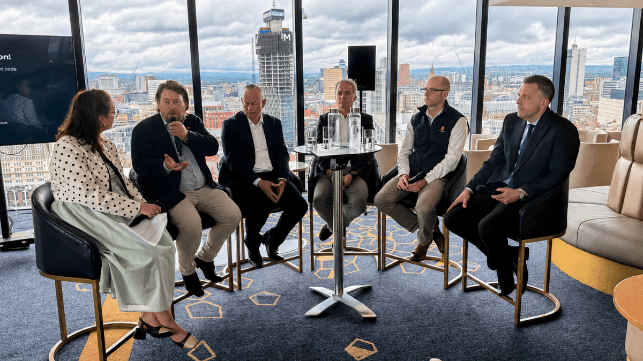
The panel discussion underway at Bibby Marine’s “E-Mission Zero: the commercial value of electrification” event, exploring the commercial, operational and infrastructure case for offshore vessel electrification.

Published Jun 22, 2026 1:19 PM by The Maritime Executive


[By: Bibby Marine]

Vessel electrification is no longer a future concept for offshore wind and policy and regulatory alignment is now the main barrier to uptake, a cross-industry panel hosted by Bibby Marine told an audience during Global Offshore Wind on Wednesday. 

Speakers from RenewableUK, Corvus Energy, Stillstrom, Tidal Transit and Kongsberg Maritime said rapid progress in vessel and charging technology means electrified vessels now represent an increasingly credible commercial proposition. They argued that better policy alignment and regulatory clarity will be key in unlocking the full value of electrification for developers and their contract partners. 

Opening the session, Nigel Quinn, CEO of Bibby Marine, highlighted the growing need for offshore wind’s support infrastructure to keep pace with the sector’s wider ambitions. “Offshore wind is growing quickly, but the supply chain must also look at how it decarbonises its own assets and operations,” he said. “Vessel electrification is no longer just an environmental aspiration. It is becoming a practical way to reduce costs, improve energy security and give operators greater control over long-term operating risk.” 

The panel was chaired by Laoiseach Scullion, Policy Manager at RenewableUK, and featured Kevin Brown, Commercial Director at Bibby Marine; Efraim Kanestrøm, Vice President Global Offshore Segment at Corvus Energy; Nikolaj Stald, Chief Commercial Officer at Stillstrom; Leo Hambro, CEO & Co-founder at Tidal Transit; and Euan Duncan, Regional Sales Director at Kongsberg Maritime.

Throughout the discussion, panellists challenged the idea that electrification remains too complex, too costly or too technically immature for offshore deployment. Instead, speakers pointed to rapid progress in battery systems, vessel design, offshore charging and system integration, as well as the growing pressure on operators to manage fuel-price volatility and future carbon-cost exposure.

Kevin Brown, Commercial Director at Bibby Marine, said: “For a long time, electrification was treated as a decarbonisation story alone. What is changing now is the commercial picture. We are demonstrating that electrified vessel operations can be cost-competitive and, in the right operating model, materially cheaper than conventional alternatives, while also reducing exposure to fuel volatility and carbon costs.”

Panellists also pointed to the role of grant funding and innovation support in accelerating progress. Support through initiatives such as UK SHORE and Innovate UK was highlighted as instrumental in helping move vessel electrification and offshore charging from early-stage concept work towards practical delivery.

At the same time, speakers stressed that the next challenge is not proving the technology, but creating the conditions for deployment. That includes integrating offshore charging into project planning earlier, resolving questions around access to offshore electricity, and establishing a clearer regulatory and commercial pathway for charging infrastructure. 

Nikolaj Stald, Chief Commercial Officer at Stillstrom, said: “From a technical and operational perspective, offshore charging is ready to move forward. What the market now needs is greater certainty and a more proactive framework from regulators and developers, so that implementation can happen with confidence and at pace.”

Leo Hambro, CEO & Co-founder at Tidal Transit, said: “The sector now needs to move beyond theory and into deployment. The equipment exists, the vessel technology is progressing, and the business case is becoming clearer. The priority now is to demonstrate offshore charging at scale and create the confidence needed for wider adoption.”

Efraim Kanestrøm, Vice President Global Offshore Segment at Corvus Energy, said: “Battery technology and charging infrastructure have advanced significantly in recent years, and the step change in capability is now clear. The next requirement is not more proof that the technology can work, but the confidence, regulation and project commitment needed to deploy it at scale.”

The discussion also highlighted the value of cross-sector collaboration in bringing first-of-a-kind projects forward. Speakers pointed to the growing alignment between vessel owners, charging providers, battery specialists, maritime system suppliers and offshore wind stakeholders as an important sign of momentum in the market. 

Euan Duncan, Regional Sales Director at Kongsberg Maritime, said: “What has made progress possible is getting the right partners involved early and designing around a shared objective. That collaboration is helping turn what once seemed ambitious into something practical and deliverable.”

Bibby Marine is playing a leading role in that transition through the development of its first eCSOV, currently under construction and due to enter service in 2027. The vessel forms part of the company’s wider E-Mission Zero vision to support lower-cost, lower-emission offshore wind operations through electrification and industry collaboration.

Looking ahead, panellists agreed that progress over the next 12 months will be measured not only by vessels under construction, but by tangible movement on offshore charging deployment, regulatory certainty and project-level commitment from developers.

Closing the panel, Laoiseach Scullion, Policy Manager at RenewableUK, said: “Today’s discussion showed that electrification is no longer just a future ambition for offshore wind support vessels. The technology is no longer the main question, the challenge now is aligning infrastructure, policy and deployment so the sector can realise the value at scale.” 

The products and services herein described in this press release are not endorsed by The Maritime Executive.


Maritime Technology Supplier Sees Data Center Opportunities
Hydroniq Coolers
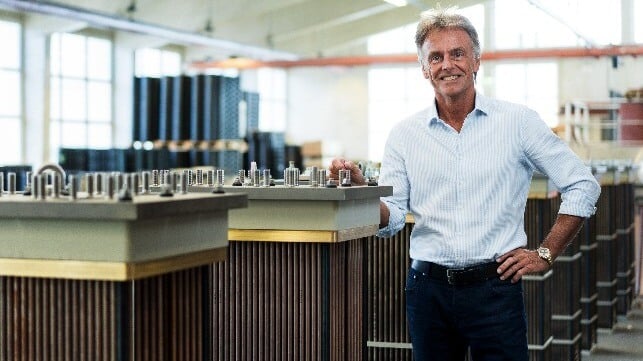
Inge Bøen, CEO of Hydroniq Coolers

Published Jun 22, 2026 1:01 PM by The Maritime Executive

[By: Hydroniq Coolers]

Ålesund-based Hydroniq Coolers, best known for delivering marine cooling systems for ships, sees significant opportunities in applying its normally hull-integrated seawater cooler to cool data centers on land.

“From an environmental perspective, it is obviously best if surplus heat from data centers can be recovered for district heating. However, we see that many data centers are today equipped with large industrial cooling fans to lower the temperature of the server farms. This is significantly more energy-intensive than using nature’s own cooling medium – water – to cool the data center,” says Inge Bøen, CEO of Hydroniq Coolers.

Provided that the data center is located near a water source, such as the ocean, a lake, or a river, it can utilize a water-based cooling solution.

Same principle on land
Marine cooling systems are typically used to reduce the temperature of a ship’s main engine and other auxiliary systems by using seawater to prevent overheating of the engine and other critical equipment. However, the principle of using a heat exchanger to cool or heat water is the same on land as at sea. 

Hydroniq Coolers has previously delivered coolers to, among others, the Hydro Sunndal aluminum plant, the Tonstad hydropower plant in Agder, and Wärtsilä’s research, product development, and manufacturing center in Vaasa, Finland.

In a data center, Hydroniq Coolers’ heat exchanger would be connected to an existing data cabinet and placed outside the data center. Here, the cooler receives water that has been heated by the data center. The heat exchanger then lowers the water temperature and sends the cooled water back into the data center, where it circulates continuously between the data center and the cooler.

“This is a highly energy-efficient and well-proven method of cooling both water and equipment. Further, it generates no noise for the surrounding environment, unlike industrial cooling fans,” adds Inge Bøen. 

Hydroniq Coolers specializes in cooling and heating seawater, which is a demanding medium to handle, but its products are equally well suited for freshwater. 

Norwegian cooperation
Hydroniq Coolers designs, manufactures, and assembles its rack-based seawater coolers at its headquarters on Ellingsøy, just outside Ålesund, Norway.

“The data center industry is becoming an important sector in Norway. They operate on Norwegian power, so I hope the industry is keen to consider Norwegian solutions for their cooling requirements. We believe there are significant opportunities in cross-industry collaboration to build a Norwegian ecosystem around the domestic data center industry,” concludes Inge Bøen.

The products and services herein described in this press release are not endorsed by The Maritime Executive.

 

Fortescue and CMB.TECH Sign Milestone Charter for 12 Ammonia Bulkers

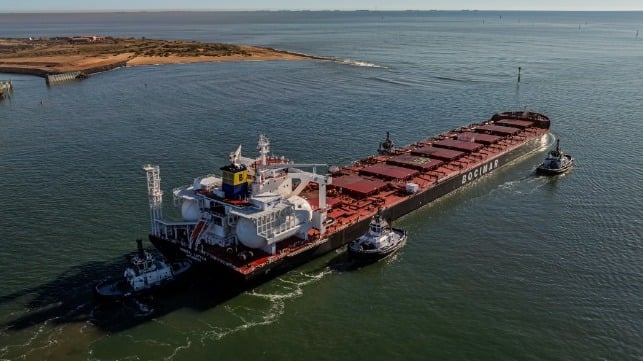
large bulker sailing from port
Bocimar has begun deploying its new fleet of ammonia and ammonia-ready large bulkers (CMB.TECH)

Published Jun 22, 2026 3:20 PM by The Maritime Executive


In what is being called a “milestone agreement” designed to accelerate the adoption of zero-emission shipping, Belgium’s CMB.TECH and Australian mining giant Fortescue signed a large ship charter agreement. Forescue has locked in up to 12 ammonia-capable Newcastlemax (210,000 dwt) vessels.

The vessels will come from the fleet Bocimar has ordered from China’s Qingdao Beihai Shipbuilding. Up to three of the vessels will be delivered with dual-fuel ammonia engines and are expected to enter service by the end of 2026. The remaining nine vessels will be ammonia-ready and can be converted to operate on ammonia in the future. 

The companies highlight that if fueled by green ammonia, the combined fleet could reduce carbon dioxide emissions by approximately 250,000 tonnes a year compared with conventional marine fuels.

“This agreement marks an important step in showcasing ammonia as a viable marine fuel and advancing the transition to zero-emission shipping. It also sends a powerful signal to the market, particularly at a time when there is doubt about the decarbonization of shipping: our sector can decarbonize at scale. It just takes like-minded, determined partners who walk the talk,” said Alexander Saverys, CEO of CMB.TECH.


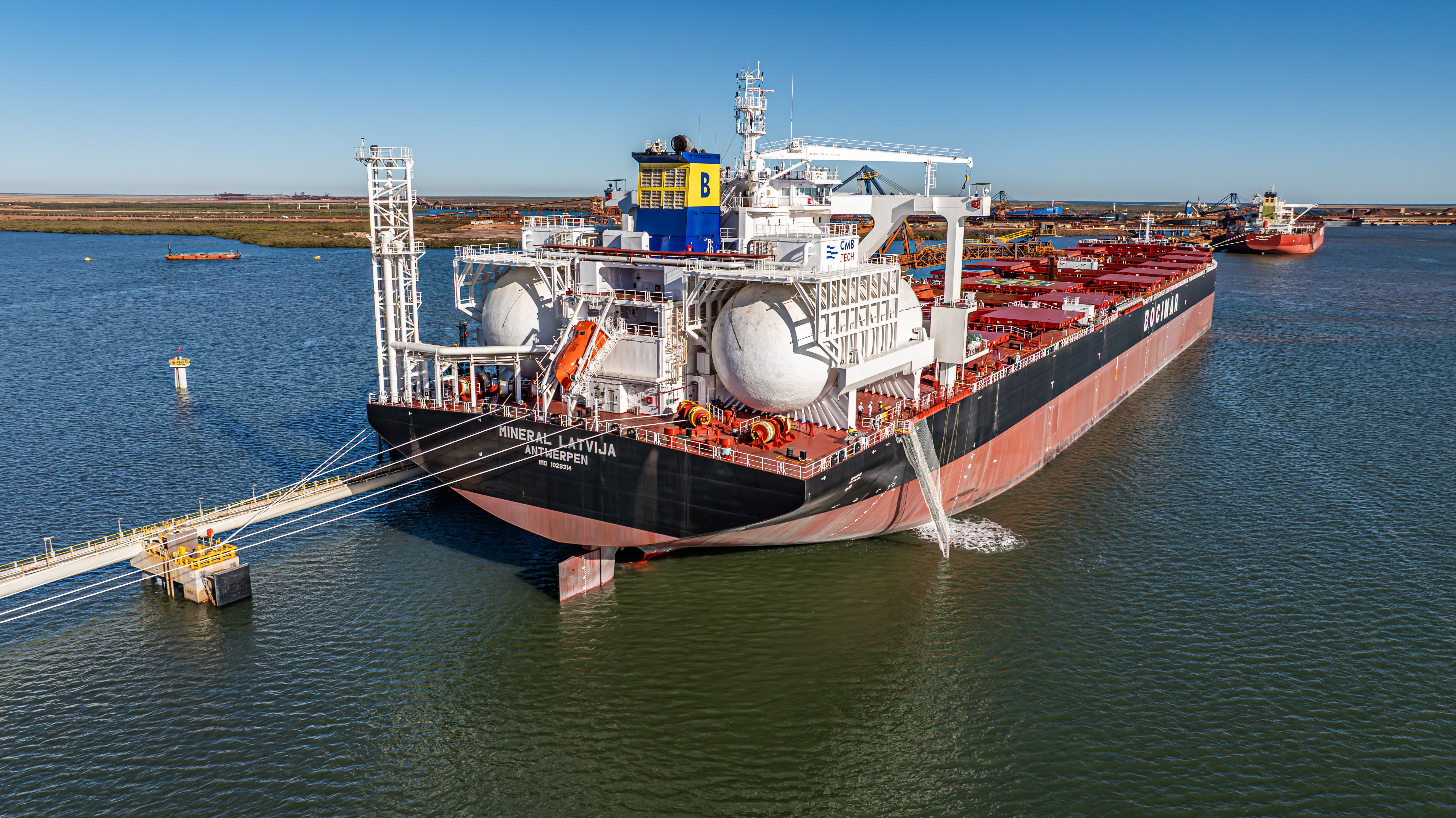
Bochimar has begun delivery of its ammonia and ammonia-ready bulkers (CMB.TECH)


Both companies have been at the forefront of the adoption of ammonia-fueled vessels. Fortescue completed the first-ever conversion of an offshore support vessel with two of its four engines capable of operating on ammonia. It has been used for demonstrations and to advance the protocols for ammonia-fueled shipping.

CMB.TECH has long spoken about the advantages of ammonia-fueled shipping and moved forward with the first orders for large newbuilds. At the beginning of May, it celebrated the joint naming of four of its bulkers being built with ammonia capabilities. One of the vessels, Mineral Latvija (210,00 dwt), 300 meters (984 feet) in length, departed on June 21 on a voyage to Port Hedland, Australia.

Bocimar and Fortescue have worked together for more than two decades in shipping. Together, they look to the new ships to further demonstrate ammonia and accelerate the industry adoption of the technology.

There was an early spurt in orders for ammonia-fueled vessels, which has slowed due to the uncertainties with regulations and supply. Recently, Exmar took delivery of the first newbuild, the tanker Antwerpen, which is ammonia-fueled, following the conversion by Fortescue of the OSV and two tugs converted in Japan and the United States. 

DNV reports there are currently 46 ammonia-fueled vessels on order. That is up from 39 orders as of last October. The majority of the first orders are for bulkers and gas tankers. DNV shows a quick pop in deliveries in this year and next, with a total of 37 vessels expected. The current orderbook stretches to 2030.

The charter with Fortescue follows a similar agreement that CMB.TECH reported in March 2025 with Japan’s Mitsui O.S.K. Lines.  The companies agreed to joint ownership of three ammonia-fitted 210,000 dwt Newcastle bulk carriers and ordered six additional vessels, including two ammonia-fueled and four that will be delivered ammonia-ready.


Sale of South Korea’s K Shipbuilding (Formerly STX) Falls Through

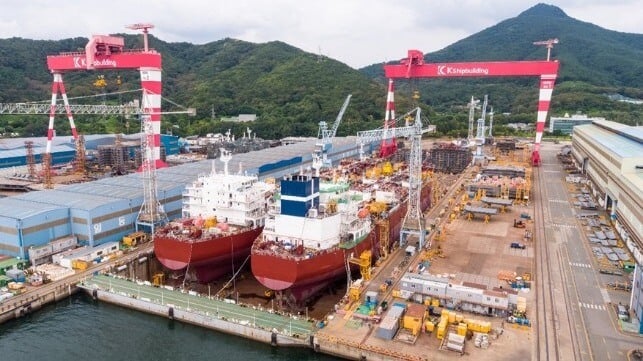
South Korean shipbuilder K Shipbuilding
The former STX yard re-emerged as K Shipbuilding and completed a financial turnaround (K Shipbuilding)

Published Jun 22, 2026 5:43 PM by The Maritime Executive

A plan to sell South Korea’s mid-sized shipyard K Shipbuilding has fallen through, with the potential buyer reporting it had been unable to reach terms with the debt investor and private equity firm that had rescued the yard four years ago. K Shipbuilding is the surviving South Korea operations of the former STX Offshore & Shipbuilding, which had been one of Korea’s largest shipbuilders with a growing international portfolio.

The collapse of the proposed sale is the latest twist in the long-running effort to rescue the former STX. Once ranked among the top four in South Korea, STX traced its origins to 1967 and the Dongyang Shipbuilding Industry Co. Becoming STX in 2002, it had acquired yards in France and Finland before running into financial troubles during the financial crisis of 2008 and the collapse in shipbuilding orders. In 2013, the company reported it was in a debt workout but three years later was placed under a court-managed receivership.

A South Korean private equity firm, KHI, and a distressed debt investor, United Asset Management (UAMCO), stepped in and acquired the company in 2021. They were able to work out the debt and resolve low-price orders the yard had taken on during that period. In 2025, the company reported its first profit in 14 years.

The yard has continued to grow its orderbook. Last year, it said it had more than two years of work, and the yard was running at a utilization rate of 110 percent.  It recently announced it had become the first medium-sized South Korean shipyard to receive U.S. CMMC Certification to participate in the U.S. defense procurement market and U.S. Navy ship maintenance projects.

Taking advantage of the turnaround and renewed opportunities in shipbuilding, the investors announced they would be running a competition in the fall of 2025 to sell their combined 99 percent ownership stake. Limited to Korean companies, only one bidder emerged, Taekwang Industrial. The company is primarily a petrochemical and textile manufacturer.

In a regulatory filing on June 22, Taekwang reports it was unable to progress the negotiations as there remained differences in its offer and the seller’s requests. It had failed to become the preferred bidder.

The current investors report they will review the process and determine if they will restart the bidding based on market conditions. KHI had also purchased another mid-sized shipyard, Dahan Shipbuilding, and last year reported it planned to conduct a public offering for that shipyard. Both yards were part of the revival of South Korea’s mid-sized yards and benefited when the three majors became heavily booked in recent years.


Activist Shareholder Calls for Sale of Seacor Marine’s Offshore Fleet

offshore support ship Seacor Marine
An activist shareholder is reportedly calling for the sale of Seacor Marine (Seacor Marine file photo)

Published Jun 22, 2026 6:37 PM by The Maritime Executive

Houston-based Seacor Marine is the latest company in the offshore sector to face a challenge from its shareholders. The company has been struggling with the downturn in many segments of the offshore sector supporting oil and gas, while trying to conduct a fleet reorganization to improve financial results.

Activist shareholder Pointillist Family Office, which owns more than seven percent of the stock and is the largest holder, is demanding that the board begin a strategic review to sell the company or the fleet. Bloomberg reports it has seen a letter sent by the managing member of the family office, Jorey Chernett, saying the company has failed to create value for the shareholders.

The letter Bloomberg reports says that due to the company’s inability to monetize its fleet and take advantage of an upcycle in the market, Seacor’s board should consider either a full-scale sale or a sale of the fleet. 

Seacor has been downsizing its fleet over the past few years to a reported 44 vessels at the end of 2025. This was down from 54 in 2024, with seven sold last year. The company had 81 vessels in 2021. It has also been downsizing its onshore operations.

The company reported an increased loss for the first quarter, citing declines in average day rates and just a 59 percent utilization of its fleet. During the first quarter of 2026, it sold one platform supply vessel and reported it had an additional five vessels classified for sale. Two were sold at the end of April, and it expected that the other three would be sold in the second quarter.

The company said its lower revenues and increased losses were due to fewer days available following vessel sales, while it was also waiting for long-term contracts that were due to start this quarter. Two premium liftboats, it said, were under repair and not contracted. 

Despite the continued losses, management told investors it thought the company was well-positioned to participate in increased offshore drilling activities in South America and West Africa. 

Bloomberg reports that Chernett, however, says that the fleet could be worth more than $1 billion. It says the activist investor advised the board that it has a broker appraisal that says the net asset value should be more than $20 per share, while the stock is currently trading at around $6.63, according to Bloomberg. Chernett also reportedly cites the company’s outstanding debt and the cost of debt service.

The letter reportedly calls for the board to start a comprehensive strategic evaluation of alternatives. It could include the sale of the company or a “structured monetization” of the fleet. Bloomberg writes that Chernett wants the board to retain independent financial advisers to evaluate the alternatives.

Seacor, in its year-end report, had also told shareholders it was looking forward to the delivery of two new PSVs. One was expected to be completed in the fourth quarter of 2026 and the other in the first quarter of 2027.

Seacor Marine has not commented on the report of the approach by the activist shareholder.


Norway Accelerates Hydrogen-Power Bulker Project for Shortsea Shipping

hydrogen-powered short-sea dry bulk carrier concept
The additional grant will continue efforts to develop hydrogen-powered bulkers for short-sea shipping and other vessel applications (LH2 Shipping)

Published Jun 17, 2026 5:35 PM by The Maritime Executive


Norway’s LH2 Shipping reports it is accelerating the development of hydrogen-powered shortsea shipping bulkers for the Baltic with an additional grant from the Norwegian government program to accelerate the green energy transition. The company will add a fifth and sixth bulker to its plan, saying that increased support reflects the growing momentum for liquid hydrogen as a viable alternative fuel for shortsea shipping. 

The company was awarded an additional grant of approximately $35.82 million from Enova, which it says will be used for the development and construction of two additional hydrogen-powered bulk carriers. It said that Enova’s support will also indirectly enable LH2 Shipping to continue its work developing additional zero-emission solutions for passenger transport and offshore operations.

The company was founded in 2023 and has already been the project lead for the introduction of the first LH2-powered vessel, Norway’s MF Hydra ferry. It is gaining critical experience from the ferry and looks to expand it into other shipping categories. With the latest grant, it has received a total of $83.2 million from Enova.

The company has previously unveiled its designs for 7,700 dwt dry bulk carriers for shortsea shipping. It envisions a service that would spend 50 percent of its time in Norway, loading from Norway and operating to the continent and in the Baltic. 

The design calls for ships that would be 108 meters (354 feet). They are working to optimize the hull, propulsion, and energy system solution to reduce energy consumption by a minimum of 30 percent compared to conventional ships operating this service.

The onboard hydrogen systems will consist of a 17-tonne LH2 storage tank and 3400kW of PEM fuel cells. A 3 MWh battery pack will be installed to support the fuel cells, as well as to be able to operate the ship in port. The ships will be arranged to use shore power where this is available for loading and unloading operations. A standby diesel generator pack will also be installed, where the ships can sail on diesel/biodiesel if the LH? supply fails, or is not in place in time when the ships are delivered from the shipyard. Other features of the design include solar panels installed on the catch covers.

“This award is an important strategic milestone for LH2 Shipping,” said Ivan Østvik, CEO of LH2 Shipping. “It strengthens our position as a developer of liquid hydrogen-based zero-emission vessel solutions and brings us yet another step closer to our ambition of enabling a substantial fleet of hydrogen-powered vessels that can help establish a complete maritime liquid hydrogen value chain.”

While significant work remains before hydrogen becomes widely adopted across the industry, LH2 Shipping believes that continued project execution, infrastructure development, and collaboration across the maritime value chain is key to realizing zero-emission shipping at scale.


JERA Signs Charters with MOL and NYK to Import US Ammonia to Japan

ammonia carrier design
NYK and MOL will each build two ammonia carriers for the export from the US to Japan for JERA (NYK)

Published Jun 18, 2026 6:33 PM by The Maritime Executive

Japan's largest power generation company, JERA, has finalized charter agreements with Mitsui O.S.K. Lines (MOL) and NYK for the charter of four new gas carriers that will be dedicated to importing ammonia produced in Louisiana as a fuel component at Japan’s largest power generation station. Expected to be in service by 2029, this project would likely mark the first shipment of low-carbon ammonia as a fuel for power generation in Japan.

The companies launched projects beginning in late 2022 to study ammonia transportation. NYK reported that in order to procure large volumes of ammonia at a lower cost to serve as a fuel required increasing the size of the ships. The projects sought to establish the systems for transporting large quantities of ammonia as well as the process for receiving the ammonia. They entered into memorandums of understanding in late 2025, laying the groundwork for the project.

NYK and MOL will each build two vessels based on the design developed in the project. Each will measure approximately 230 meters (750 feet) with a tank capacity of 87,000 cbm. MOL reports it will build two vessels at Kawasaki Heavy Industries with delivery scheduled for the first half of 2027. NYK will build its two vessels at Kawasaki Heavy Industries’ Sakaide Works, and they will be able to operate on LPG or Very Low Sulfur Fuel Oil (VLSFO).

The project is the latest example of an emerging segment in shipping dedicated to the transport of ammonia. In addition to its potential as a fuel to decarbonize heavy industry, it is the best carrier for hydrogen.

JERA is planning to convert its power plants to use or co-fire with ammonia. These four ships will supply ammonia to the Hekinan Thermal Power Plant located on Japan’s main island, Honshu, approximately 20 miles north of Nagoya City. It is the largest coal-fired power station in Japan with a maximum output of 4100 MW.

The ammonia will be produced in Louisiana at the Blue Point project. JERA is an investor along with CF Industries and Mitsui & Co. The plan calls for building the world’s largest ammonia production plant, which will go into service by 2029. CF Industries, which is leading the project, reports it will have a nameplate production capacity of 1.4 million metric tons. Projected to cost $4 billion, it will be an autothermal reforming (ATR) ammonia production facility with a carbon dioxide (CO2) dehydration and compression unit at the site to prepare captured CO2 for transportation and sequestration.


Russia Celebrates Naming of Second Arctic LNG Carrier

Russian Arctic LNG carrier
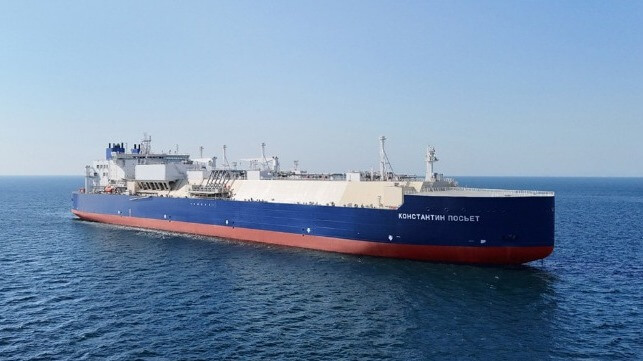
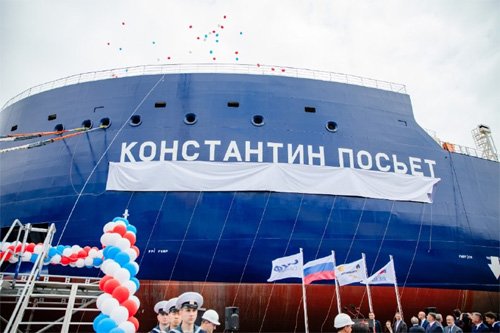
Russia's second new Arctic LNG carrier for the Arctic 2 LNG project was named at the Zvezda Shipyard (Sovcomfloat)

Published Jun 18, 2026 3:27 PM by The Maritime Executive

With fanfare, Russia marked the naming of its second new Arctic LNG carrier while it was celebrated as a key development for the country. The ship is part of a major building program designed to support the Arctic 2 LNG plant and expand shipping on the Northern Sea route, but has faced challenges and delays due to Western sanctions.

"This is an important event for the domestic transport and engineering industries and for the country as a whole,” said Russian Prime Minister Mikhail Mishustin in a message transmitted to the ceremony at the Zvezda Shipyard. “The project's implementation will help us achieve the President's objectives of ensuring sustainable year-round navigation along the Northern Sea Route.”

The project had been launched before the war in Ukraine, calling for the construction of 21 LNG ice-class carriers. Sovcomflot contracted for the vessels, which were to be partially built in South Korea and the hulls finished at the Zvezda Shipyard. Samsung Heavy Industries delivered five hulls before the project was canceled, while Hanwha Ocean is stuck with six vessels that it cannot deliver because of the sanctions.


In celebrating the naming of the new ship today, June 18, it was hailed as a domestic project that draws on Sovcomflot’s experience in operating vessels in harsh Arctic conditions. The gas carriers are reported to be capable of independent ice navigation up to 2.1 meters (6.9 feet), with a rating of ARC 7 ice class.  The vessels were built with financial support from VEB.RF, Russia’s state development corporation, with the construction overseen by the Russian Maritime Register of Shipping.

Russian Transport Minister Andrei Nikitin called the vessels a pivotal development, saying they would “strengthen the country’s sovereignty.” He said they were critical to the plan to maintain year-round operations on the NSR.

Sovcomflot highlights the vessel with a capacity of 172,600 cubic meters of LNG featuring hulls with optimized lines and efficient propulsion systems that make them highly maneuverable in ice conditions. The propulsion system has a capacity of 45 MW with three full-turn rudder propellers, each with 15 MW. The vessel is 81,000 dwt.

The second vessel of the class, it was named Konstantin Posyet, with officials saying it was a fitting name celebrating the mastermind of the Trans-Siberian Railway. The new ship will be homeported in St. Petersburg and have a crew of 29 Russian sailors.

Sovcomflot Chairman Sergey Frant highlighted that the new vessel “marks the transition to serial production on a new generation of Arctic transport fleet.” He said the ships have already demonstrated their effectiveness during ice trials and operations of the first vessel of the class, the Alexey Kosygin, which was delivered in December 2025.

The Konstantin Posyet will operate under a long-term charter with the Arctic LNG 2 project. There was no mention of when future vessels of the class would be delivered.

GLOBALIZATION 

DP World Targets U.S. Container Market Through Deal with Corpus Christi

Corpus Christi, Texas
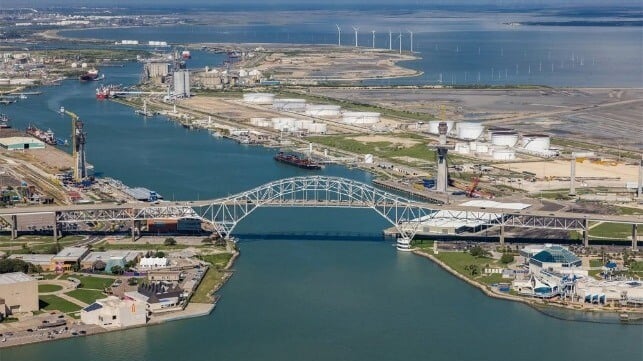
Corpus Christi would diversify into containers as DP World returns to the US for the first time in 20 years (Port of Corpus Christi)

Published Jun 17, 2026 5:15 PM by The Maritime Executive

Global ports operator and logistics giant DP World is pursuing a deal to enter the lucrative U.S. container and ports business after an absence of 20 years. The company reports it is in exclusive negotiations to develop and operate a container terminal at the Port of Corpus Christi in Texas.

The deal would be significant for Corpus Christi, which today functions as a gateway for energy, agriculture, and industrial exports. It completed an expansion project of its ship channel in June 2025 to achieve a 54-foot (Mean Lower Low Water)-deep and would diversify its operations with the addition of containers. Corpus Christi, located about 300 miles south of Houston, has a strategic location that also places it close to the Mexican border.

Under the proposed development, DP World would design, build, and operate a new container terminal. In 2025, Corpus Christi moved 203.4 million tons of cargo that was mainly liquefied natural gas, crude oil, dry bulk, and agricultural goods. 

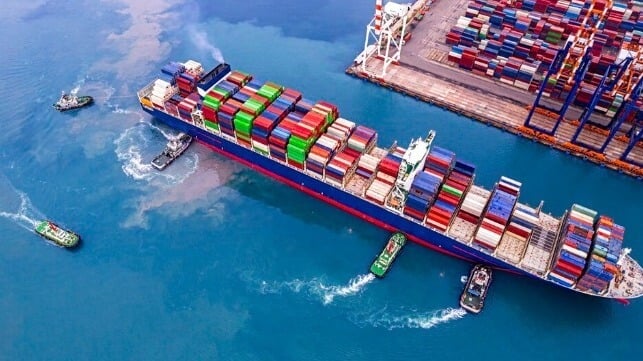
DP World, which has managed to build a network of operating more than 60 ports and terminals worldwide, handling around 10 percent of global container traffic annually, has no container terminal operations in the U.S. Its operations in the world’s biggest economy are mainly concentrated in logistics, warehousing, and freight forwarding services, with its North America port operations in Vancouver, Canada.

The Dubai-based conglomerate was chased from the U.S. market 20 years ago by political opposition and negative sentiment in the wake of the 9-11 attacks in America. DP World acquired P&O’s ports and logistics operations, which had six ports in the United States. Opposition to the deal by the U.S. Congress led to DP World divesting of the American ports.

It now hopes that if all goes according to plan, it will finally enter the containerized business in the U.S., a lucrative market that recorded in excess of 28 million TEU containerized import volumes in 2025. Under the proposed development, DP World would design, build, and operate a new container terminal, expanding capacity and strengthening supply chain connectivity across the Gulf Coast.

The company reports that the exclusive negotiation period will focus on terminal design, capacity planning, and investment structure for the operations in Texas.

The Port of Corpus Christi reported its strongest first?quarter performance in the port’s history, moving 54.5 million tons of commodities through the Corpus Christi Ship Channel in the first quarter of 2026. It represented a six percent increase year-over-year and was 500,000 tons above the port's record achieved in Q4 2024.


Why Cargo, Not Ships, Will Decide the Future of Logistics Digitalization

iStock
iStock

Published Jun 22, 2026 7:27 PM by Mikael Lind et al.

[by Mikael Lind, Wolfgang Lehmacher, Sandra Haraldson, Morten Brühl, Matilda Gustafsson, David Hallgren, Mikaela Kenne, Krister Rosendahl, Mårten Sondell, Daniel Storm, Hans Thijs, Emil Thodal, and Pernilla Åström]

Digital tools are now ubiquitous in logistics, but true end-to-end integration remains elusive. The constraint is not a lack of data or platforms, but how the industry chooses to coordinate and organize itself. After decades of asset- and platform-centric operations, logistics is approaching a turning point: the next phase will hinge on aligning cargo owners’ needs with the operational capabilities of a fragmented global logistics ecosystem, not simply building bigger and more performant control towers.

From assets to cargo flows

Assets, platforms, and cargo now define the digitalization of logistics. Historically, logistics optimized ships, trucks, trains, and terminals as the primary units of analysis. The goal has been to move these assets efficiently through ports, roads, and networks. This logic has delivered gains in utilization and productivity. But it is not fully aligned with what logistics is about, moving goods reliably across complex, fragmented, and disrupted multimodal chains. Organizing digitalization around asset fragments misses what matters most to cargo owners: the end-to-end journey of their shipments.

The shift is simple but significant. When coordination shifts from transport assets to cargo flows, and the organizing logic shifts from proprietary platforms to shipper-activated communities, logistics digitalization becomes systemic rather than siloed. This is not simply a technical adjustment; it redefines how the global logistics ecosystem coordinates. Investment in digital tools continues to accelerate. Ports roll out port-call optimization. Shipping lines test Just-in-Time arrivals. Governments and alliances continue to explore green and digital corridor initiatives, though many remain in their early stages. Yet, despite these efforts, integration remains fragmented. The missing piece is not more data; the solution requires a different alignment logic.

Digital coordination that follows the shipment

A genuinely multimodal system assumes the shipment is the natural unit of focus and coordination. Goods may, for example, move from inland transport to terminals, across maritime routes, and into distribution networks. For cargo owners, these are not separate domains but links in a single chain. When each domain improves its own assets, improvements stay local: ports squeeze port calls, carriers squeeze schedules, rail operators squeeze utilization, and trucking companies squeeze vehicle usage. Yet shippers define reliability by the entire chain, not a single segment. What matters is whether cargo arrives in a predictable window, with timely, trustworthy information, and a means to respond to disruptions.

This disconnect points to a clear solution: digital coordination must follow the shipment rather than the asset. Information and decisions must move with the cargo, not remain locked within isolated systems. This creates a new model of visibility and collaboration.

Virtual Watch Towers in practice

An emerging expression of this logic is the Virtual Watch Tower. Rather than centralizing logistics data in a single platform, the VWT enables distributed data sharing for shipments. Cargo owners provide basic shipment information, grant limited mandates where needed, and include data-sharing terms in transport agreements. These steps let carriers, terminal operators, and providers request and exchange operational information as needed. They also keep control over their own data. In this model, the shipment triggers coordination. Visibility comes not from a single control tower, but from cooperation among those moving the same cargo.

Supply chain visibility depends less on centralization and more on trusted, shipment-specific data exchange.

The practical impact of this approach becomes clear in disruption-prone, multimodal environments. Take an industrial manufacturer running just-in-time production with inbound components moving through several ports and carriers. Instead of tracking each ship or terminal in isolation, the manufacturer and its logistics partners connect via a shared VWT-type network. This network combines private operational data with relevant public information. When weather or port congestion threatens multiple inbound shipments, the community around those cargo flows can see, in one place, which containers are at risk. They can also see which alternative routings are viable and how these choices will affect the factory’s production plan. Ideally, this occurs within the various towers that serve users connected to the network. Together, the shipper, carriers, terminals, and hinterland operators can assess possible responses, such as prioritizing critical containers, evaluating alternative routings where feasible, or adjusting downstream plans to mitigate operational impacts. These actions protect and maintain production continuity. The actors remain independent, but for those shipments, the chain works as a coordinated system, with decisions organized around cargo rather than individual assets.

This reflects a basic reality of logistics: no single company runs the system. It is a community of actors organized around cargo. Global logistics is not the operation of a single company. It is an ecosystem in which cargo owners, shipping lines, terminal operators, freight forwarders, logistics providers, ports, infrastructure managers, and digital service providers facilitate the movement of goods. The system is decentralized; no single actor can impose system-wide coordination. Port call optimization coordinates actions between ships and ports. Proprietary visibility platforms often remain constrained to carrier-centric views. Digital initiatives in one segment rarely create shared capabilities across the ecosystem.

Shippers as community activators

Community-based approaches flip this perspective. Rather than building isolated digital solutions, they create shared mechanisms that enable ecosystem actors to contribute to and benefit from common capabilities without losing autonomy. Within this ecosystem, transport buyers have a distinctive role. They generate demand, work with multiple carriers and providers, and often oversee multimodal chains beyond any single operator's control. As a result, shippers can express system-level expectations that would otherwise remain fragmented.

When shippers demand supply chain visibility, emissions transparency, or coordinated disruption management, they signal to transport producers that they should agree on common rules and data practices. This does not mean that cargo owners own the system. It means they can foster collaboration within the logistics community by inviting partners into shared data environments and joint initiatives. This is the logic underpinning infrastructures such as VWTnet, VWT’s network-based architecture created to support distributed coordination across logistics communities and ecosystems. The network is not a single operator’s platform, but a joint infrastructure that gains value as more actors participate.

For such community-based infrastructures to work, participation must go beyond a small group of early adopters. Their value rises as more cargo owners, logistics partners, and ecosystem actors actively engage. Now is the time for shippers and logistics partners to actively participate in the communities that enable shipment-centered coordination. By participating in shipment-centered communities, they are not simply adopting digital tools; they are shaping how global logistics will coordinate and evolve. Acting today means helping define how coordination works across the logistics ecosystem.

Mikael Lind is the world’s first (adjunct) Professor of Maritime Informatics at Chalmers University of Technology and Research Institutes of Sweden (RISE). He is a widely published expert in international trade press, co-editor of the first two books on Maritime Informatics and Maritime Decarbonization. His work has directly shaped community-based digital collaboration initiatives, including the Virtual Watch Tower (VWT).

Wolfgang Lehmacher is a global supply chain logistics expert. The former director at the World Economic Forum and CEO Emeritus of GeoPost Intercontinental is an advisory board member of The Logistics and Supply Chain Management Society, an ambassador for F&L and an advisor to RISE. He is a co-initiator of VWT, a data-sharing initiative. He contributes to the knowledge base of Maritime Informatics and is co-editor of the book Maritime Decarbonization.

Sandra Haraldson is Senior Researcher at Research Institutes of Sweden (RISE) and has driven several initiatives on digital collaboration, multi-business innovation, and sustainable transport hubs, such as the concept of Collaborative Decision Making (e.g. e2eCDM (being the conceptual foundation for VWT), PortCDM, RailwayCDM, RRTCDM) enabling parties in transport ecosystems to become coordinated and synchronized by digital data sharing.

Morten Brühl is Vice President Global Shipping at Elof Hansson Trade. With extensive experience in international shipping, logistics, and supply chain management, he works to strengthen resilience and sustainability across global trade flows. He advocates collaborative approaches that improve visibility, predictability, and performance in complex logistics networks.

Matilda Gustafsson is Change Manager & Sustainability Advocate at Bertling Sweden, where she works at the intersection of supply chain transformation, organizational change, and sustainable logistics.

David Hallgren is General Manager of Energy & Charging Infrastructure at Einride. He brings extensive experience spanning freight transformation, energy systems, and international business development, representing a company active both as a transport buyer and provider of transport solutions in the transition towards more sustainable freight systems.

Mikaela Kenne is Innovation Lead at H&M Group, where she works to identify and scale innovations that strengthen supply chain performance and sustainability. She is passionate about cross-functional collaboration and exploring new approaches that enhance resilience, transparency, and adaptability across global value chains.

Krister Rosendahl is Head of Purchase & Logistics at Olofsfors AB, leading strategic procurement, production planning, and transport logistics. With extensive experience from major industrial companies such as Volvo Trucks, Komatsu Forest, and BAE Systems Hägglunds, he combines technical insight with project management expertise to optimize manufacturing and supply chain efficiency.

Mårten Sondell is Logistics Innovation manager at H&M Group, driving initiatives that strengthen adaptability and innovation across global logistics networks. With extensive experience in supply chain transformation, he explores collaborative approaches that enhance resilience, sustainability, and responsiveness in rapidly evolving logistics ecosystems.

Daniel Storm is Distribution Center Manager at Alleima. With extensive experience in industrial supply chains and logistics development, he works to strengthen transparency, resilience, and efficiency across global transport networks. He actively explores collaborative approaches that connect operational needs with digital innovation.

Hans Thijs is Director Transport & Distribution Structure at Scania Parts Logistics. With extensive experience in global transport networks and multimodal logistics, he focuses on developing resilient and sustainable distribution structures that balance operational efficiency, customer service, and long-term supply chain performance.

Emil Thodal is Senior Manager Logistics at Billerud, where he is responsible for developing and managing logistics flows across international supply chains. With extensive experience in transport and supply chain management, he is committed to advancing collaborative approaches that improve resilience, predictability, and sustainability in freight transportation.

Pernilla Åström is Logistics Developer and Deputy GM Logistics at Komatsu Forest AB. She works with logistics development in the forest machinery industry, focusing on transport. With long-standing experience in transport requirements, she supports the development of sustainable and efficient logistics solutions.

The opinions expressed herein are the author's and not necessarily those of The Maritime Executive.