China’s Antimony Ban Sent Prices Up 2,600%. Rare Earths Are Next
In 2024, China announced export controls on antimony. It’s a metal most people have never heard of, but antimony goes into more than 200 types of military munitions.
Within weeks, the price went from $1,400 per ton to $38,000 — a 2,600% spike — and shipments to the United States fell 97%.
Today, Beijing is setting up for something bigger. And REalloys (NASDAQ: ALOY) — a U.S.-based mine-to-magnet rare earth company — has spent years getting ready for it.
The company holds an exclusive 80% offtake from the only non-Chinese rare earth processing plant in North America capable of processing heavy rare earths. And it operates its own metallization facility in Euclid, Ohio, and plans to source feedstock from the U.S., Canada, Brazil, Kazakhstan, and Greenland, which means no Chinese inputs at any step.
The heavy rare earth materials at the center of China’s next mineral weaponization, like dysprosium and terbium, are precisely the ones REalloys has spent years positioning to supply.
While they’re less widely discussed than light rare earths, heavy rare earths are the metals inside every drone motor, every missile guidance system, and every fighter jet engine the Pentagon fields. And in recent years, we’ve already seen Beijing tightening the screws on what are quickly becoming the most important elements on earth.
China’s Pattern Is Years in the Making
What happened with antimony wasn’t an isolated incident. It was just the latest chapter in a long history of escalations from China that have only been picking up steam over the past three years.
In July 2023, Beijing imposed export licensing on gallium and germanium — two metals critical to semiconductors and infrared optics.
In August 2024, they did the same with antimony before prices spiked 2,600% and shipments collapsed. In December 2024, China escalated to an outright ban on gallium, germanium, and antimony exports to the United States.
Then in April 2025, Beijing put seven heavy rare earth elements under export licensing — including dysprosium and terbium, the two materials that keep magnets stable at the extreme temperatures inside jet engines and drone motors.
And in October 2025, China went even further, restricting the export of rare earth processing technology itself and asserting jurisdiction over any foreign-made product containing even trace amounts of Chinese-origin rare earth content.
Every one of those moves has made REalloys’ supply chain — built entirely outside China’s reach — more valuable than it was the day before.
Each wave has been bigger than the last. And each one has targeted materials deeper in the supply chain, harder to replace, and more critical to Western defense, which is why the pricing data is already starting to tell the story.
It’s Already Showing Up in the Numbers
You don’t have to guess what the rare earth version of the antimony spike will look like. The early signals are already in the pricing data.
Terbium — one of the two heavy rare earths at the core of military-grade magnets — is up 103% just this year. Dysprosium and terbium from non-Chinese sources are now trading at three to four times Chinese domestic prices — a split that didn’t exist two years ago.
Meanwhile, China’s rare earth magnet exports to the United States fell 22.5% year-over-year in the first two months of 2026, even as overall magnet exports rose.
A two-price world is forming, which threatens militaries all across the Western world. It’s one where you’re charged one rate if you buy from China, and a dramatically higher one if you don’t. That gap? It’s only widening.
REalloys operates entirely on the non-Chinese side of that divide. That means its output could be priced at a premium, and its supply chain is one of the only ones that can actually deliver.
How Far Ahead is REalloys?
Antimony showed what happens when a single mineral gets weaponized and there’s no backup supplier. REalloys has been building the backup for heavy rare earths, and the head start has put them as far as three to seven years ahead of the competitors trying to start today.
The processing side runs through the Saskatchewan Research Council’s Rare Earth Processing Facility, where REalloys has already secured the majority of output under an exclusive operating agreement. From there, the Company plans to send the oxides to Euclid, Ohio, where the company plans to convert them into the defense-grade metals and alloys as magnet-ready inputs that contractors actually purchase.
On the feedstock side, REalloys (NASDAQ: ALOY) has already signed an agreement with the highest-grade rare earth deposit in the United States, adding to its existing sources in Canada, Brazil, Kazakhstan, and Greenland. That means there’s no single point of failure and no Chinese technology, chemicals, or equipment at any critical step.
Plus, earlier this year, the company demonstrated a patent-pending process that eliminates dangerous hydrofluoric acid from a key stage of rare earth metal production — potentially cutting costs further, simplifying its infrastructure, and removing one of the world’s most hazardous chemicals in the process.
Put it all together, and you've got a company with a processing facility already in staged commissioning , a heavy rare earth metallization plant in development, feedstock diversified across Western-allied nations , and a patent-pending breakthrough in its lab. And the deadline that makes it all matter even more is now less than a year away.
The Deadline That Makes All of This Urgent
After years of watching supply chain cracks expand across the defense sector, the Pentagon finally drew a line in the sand.
That's because the new DFARS procurement rules taking effect January 1, 2027, will ban Chinese-origin rare earths from the entire U.S. defense supply chain — every stage from mining through finished product.
Billions in annual Pentagon contracts are expected to require fully compliant sourcing by the cutoff, forcing every defense prime from Lockheed Martin to Northrop Grumman to prove their heavy rare earth supply chains are clean before the clock runs out.
For Lockheed Martin (NYSE: LMT), that means the rare earth materials needed in everything from F-35 fighter jets and missile defense systems to military satellites will need to be sourced from outside China. The company got a preview of these risks in 2022, when F-35 deliveries were temporarily halted after a Chinese-origin alloy was discovered in a magnet used in the aircraft. But the Pentagon's 2027 rare earth restrictions go much further, extending scrutiny across the defense supply chain rather than a single component.
All of this is happening as the Pentagon’s demand for rare earth magnets is expected to triple by 2030 to roughly 10,000 tons annually.
That demand surge is already showing up in production schedules of the defence giants. Northrop Grumman (NYSE: NOC) is currently ramping up manufacturing of the B-21 Raider stealth bomber, one of the Pentagon's most important modernization programs, while simultaneously expanding output across its missile and space systems businesses. Every additional aircraft, missile, and satellite ultimately increases demand for the same rare earth materials that REalloys has zeroed in on.
In March, the company closed an upsized $50 million public offering, directing roughly $40 million toward building the largest heavy rare earth metallization facility outside China.
Just days later, the company appointed Joe Kasper — the former Chief of Staff to the U.S. Secretary of Defense — as Chair of its Advisory Board. He will be advising Board Members like highly decorated retired U.S. Army four-star general and foreign policy expert, General Jack Keane, and Board Chair, Steve duMont, who serves as President of GM Defense.
And all of that happened in a single month — the capital, the facility, and a former Pentagon Chief of Staff leading the advisory board. It seems that while REalloys has been building for this moment for years, it's arriving at exactly the right time, with the DFARS deadline arriving just 9 months from now.
What the Antimony Spike Should Have Taught Us
Antimony wasn't exactly a mineral that kept anyone up at night before 2024. But when China cut exports, prices jumped 2,600%, and suddenly every weapons manufacturer in the country realized they were holding a single thread connected to Beijing.
The problem is, heavy rare earths make antimony look small by comparison. Dysprosium and terbium are woven through every major weapons system in the American arsenal, including drone navigation, missile guidance, and fighter jet engines running at extreme temperatures.
Meanwhile, defence companies are aggressively increasing weapons production and driving demand for these critical resources. General Dynamics (NYSE: GD)’s Virginia-class propulsion motors are named outright in the Pentagon’s new rare earth magnet procurement rules, the same NdFeB and samarium-cobalt magnets at the center of this entire supply chain push, and the Navy has been steadily shifting toward permanent magnet motors on later submarines for quieter, more stealthy operation.
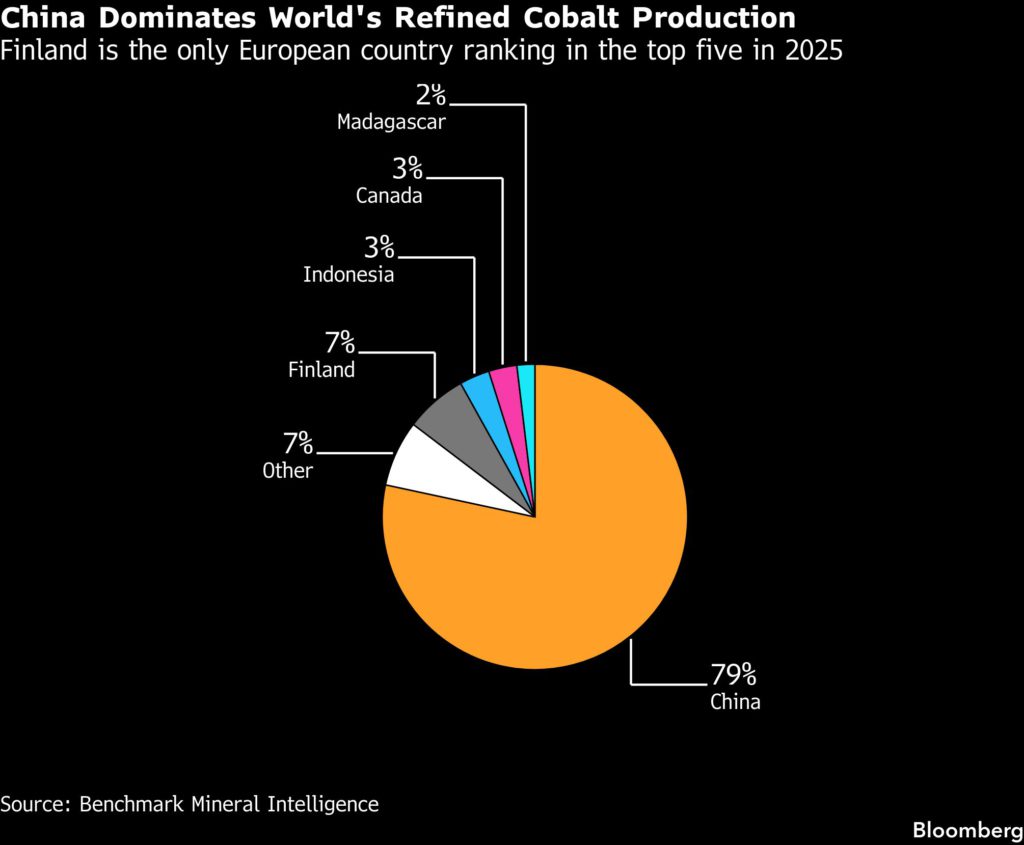
And China doesn't just control most of the ore—they control the refining as well, which means they have the same leverage with rare earths that they just showed they're willing to use with antimony.
With the DFARS deadline now months away, defense contractors could soon be cut off from Chinese rare earths across the entire supply chain. Most of them still don't have a domestic source ready to go.
REalloys has been building the answer while everyone else is just now becoming aware of how severe the problem is. It has the metallurgical expertise and the operational partnerships. As 2027 gets closer and the supply pinch hits, that's the kind of position that could change the entire landscape for domestic rare earth production.
By. Michael Kern
In 2024, China announced export controls on antimony. It’s a metal most people have never heard of, but antimony goes into more than 200 types of military munitions.
Within weeks, the price went from $1,400 per ton to $38,000 — a 2,600% spike — and shipments to the United States fell 97%.
Today, Beijing is setting up for something bigger. And REalloys (NASDAQ: ALOY) — a U.S.-based mine-to-magnet rare earth company — has spent years getting ready for it.
The company holds an exclusive 80% offtake from the only non-Chinese rare earth processing plant in North America capable of processing heavy rare earths. And it operates its own metallization facility in Euclid, Ohio, and plans to source feedstock from the U.S., Canada, Brazil, Kazakhstan, and Greenland, which means no Chinese inputs at any step.
The heavy rare earth materials at the center of China’s next mineral weaponization, like dysprosium and terbium, are precisely the ones REalloys has spent years positioning to supply.
While they’re less widely discussed than light rare earths, heavy rare earths are the metals inside every drone motor, every missile guidance system, and every fighter jet engine the Pentagon fields. And in recent years, we’ve already seen Beijing tightening the screws on what are quickly becoming the most important elements on earth.
China’s Pattern Is Years in the Making
What happened with antimony wasn’t an isolated incident. It was just the latest chapter in a long history of escalations from China that have only been picking up steam over the past three years.
In July 2023, Beijing imposed export licensing on gallium and germanium — two metals critical to semiconductors and infrared optics.
In August 2024, they did the same with antimony before prices spiked 2,600% and shipments collapsed. In December 2024, China escalated to an outright ban on gallium, germanium, and antimony exports to the United States.
Then in April 2025, Beijing put seven heavy rare earth elements under export licensing — including dysprosium and terbium, the two materials that keep magnets stable at the extreme temperatures inside jet engines and drone motors.
And in October 2025, China went even further, restricting the export of rare earth processing technology itself and asserting jurisdiction over any foreign-made product containing even trace amounts of Chinese-origin rare earth content.
Every one of those moves has made REalloys’ supply chain — built entirely outside China’s reach — more valuable than it was the day before.
Each wave has been bigger than the last. And each one has targeted materials deeper in the supply chain, harder to replace, and more critical to Western defense, which is why the pricing data is already starting to tell the story.
It’s Already Showing Up in the Numbers
You don’t have to guess what the rare earth version of the antimony spike will look like. The early signals are already in the pricing data.
Terbium — one of the two heavy rare earths at the core of military-grade magnets — is up 103% just this year. Dysprosium and terbium from non-Chinese sources are now trading at three to four times Chinese domestic prices — a split that didn’t exist two years ago.
Meanwhile, China’s rare earth magnet exports to the United States fell 22.5% year-over-year in the first two months of 2026, even as overall magnet exports rose.
A two-price world is forming, which threatens militaries all across the Western world. It’s one where you’re charged one rate if you buy from China, and a dramatically higher one if you don’t. That gap? It’s only widening.
REalloys operates entirely on the non-Chinese side of that divide. That means its output could be priced at a premium, and its supply chain is one of the only ones that can actually deliver.
How Far Ahead is REalloys?
Antimony showed what happens when a single mineral gets weaponized and there’s no backup supplier. REalloys has been building the backup for heavy rare earths, and the head start has put them as far as three to seven years ahead of the competitors trying to start today.
The processing side runs through the Saskatchewan Research Council’s Rare Earth Processing Facility, where REalloys has already secured the majority of output under an exclusive operating agreement. From there, the Company plans to send the oxides to Euclid, Ohio, where the company plans to convert them into the defense-grade metals and alloys as magnet-ready inputs that contractors actually purchase.
On the feedstock side, REalloys (NASDAQ: ALOY) has already signed an agreement with the highest-grade rare earth deposit in the United States, adding to its existing sources in Canada, Brazil, Kazakhstan, and Greenland. That means there’s no single point of failure and no Chinese technology, chemicals, or equipment at any critical step.
Plus, earlier this year, the company demonstrated a patent-pending process that eliminates dangerous hydrofluoric acid from a key stage of rare earth metal production — potentially cutting costs further, simplifying its infrastructure, and removing one of the world’s most hazardous chemicals in the process.
Put it all together, and you've got a company with a processing facility already in staged commissioning , a heavy rare earth metallization plant in development, feedstock diversified across Western-allied nations , and a patent-pending breakthrough in its lab. And the deadline that makes it all matter even more is now less than a year away.
The Deadline That Makes All of This Urgent
After years of watching supply chain cracks expand across the defense sector, the Pentagon finally drew a line in the sand.
That's because the new DFARS procurement rules taking effect January 1, 2027, will ban Chinese-origin rare earths from the entire U.S. defense supply chain — every stage from mining through finished product.
Billions in annual Pentagon contracts are expected to require fully compliant sourcing by the cutoff, forcing every defense prime from Lockheed Martin to Northrop Grumman to prove their heavy rare earth supply chains are clean before the clock runs out.
For Lockheed Martin (NYSE: LMT), that means the rare earth materials needed in everything from F-35 fighter jets and missile defense systems to military satellites will need to be sourced from outside China. The company got a preview of these risks in 2022, when F-35 deliveries were temporarily halted after a Chinese-origin alloy was discovered in a magnet used in the aircraft. But the Pentagon's 2027 rare earth restrictions go much further, extending scrutiny across the defense supply chain rather than a single component.
All of this is happening as the Pentagon’s demand for rare earth magnets is expected to triple by 2030 to roughly 10,000 tons annually.
That demand surge is already showing up in production schedules of the defence giants. Northrop Grumman (NYSE: NOC) is currently ramping up manufacturing of the B-21 Raider stealth bomber, one of the Pentagon's most important modernization programs, while simultaneously expanding output across its missile and space systems businesses. Every additional aircraft, missile, and satellite ultimately increases demand for the same rare earth materials that REalloys has zeroed in on.
In March, the company closed an upsized $50 million public offering, directing roughly $40 million toward building the largest heavy rare earth metallization facility outside China.
Just days later, the company appointed Joe Kasper — the former Chief of Staff to the U.S. Secretary of Defense — as Chair of its Advisory Board. He will be advising Board Members like highly decorated retired U.S. Army four-star general and foreign policy expert, General Jack Keane, and Board Chair, Steve duMont, who serves as President of GM Defense.
And all of that happened in a single month — the capital, the facility, and a former Pentagon Chief of Staff leading the advisory board. It seems that while REalloys has been building for this moment for years, it's arriving at exactly the right time, with the DFARS deadline arriving just 9 months from now.
What the Antimony Spike Should Have Taught Us
Antimony wasn't exactly a mineral that kept anyone up at night before 2024. But when China cut exports, prices jumped 2,600%, and suddenly every weapons manufacturer in the country realized they were holding a single thread connected to Beijing.
The problem is, heavy rare earths make antimony look small by comparison. Dysprosium and terbium are woven through every major weapons system in the American arsenal, including drone navigation, missile guidance, and fighter jet engines running at extreme temperatures.
Meanwhile, defence companies are aggressively increasing weapons production and driving demand for these critical resources. General Dynamics (NYSE: GD)’s Virginia-class propulsion motors are named outright in the Pentagon’s new rare earth magnet procurement rules, the same NdFeB and samarium-cobalt magnets at the center of this entire supply chain push, and the Navy has been steadily shifting toward permanent magnet motors on later submarines for quieter, more stealthy operation.
And China doesn't just control most of the ore—they control the refining as well, which means they have the same leverage with rare earths that they just showed they're willing to use with antimony.
With the DFARS deadline now months away, defense contractors could soon be cut off from Chinese rare earths across the entire supply chain. Most of them still don't have a domestic source ready to go.
REalloys has been building the answer while everyone else is just now becoming aware of how severe the problem is. It has the metallurgical expertise and the operational partnerships. As 2027 gets closer and the supply pinch hits, that's the kind of position that could change the entire landscape for domestic rare earth production.
By. Michael Kern