Wednesday, June 24, 2026


Saudi Arabia’s Decided Who Its Future Superpower Partner Is, And It’s Not the US

  • Saudi Arabia appears to be recalibrating back toward China and Russia after the Iran conflict, with recent high-level meetings focused on expanding energy cooperation.

  • The shift reflects a decade-long evolution that began after the 2014-2016 oil price war, when China deepened its influence in Saudi Arabia through investment, energy deals, support for Aramco, and alignment with Crown Prince Mohammed bin Salman’s economic ambitions.

  • Riyadh's confidence in U.S. security guarantees has been shaken by Iranian strikes on key Saudi energy infrastructure during Operation Epic Fury.

Since the replacement of Russia by China as the primary would-be superpower rival to the U.S., Saudi Arabia has sought to balance its relationships with Beijing and Washington -- sometimes leaning more one way, and sometimes the other. Until the 2014-2016 Oil Price War, the U.S. was the core relationship; after the war had finished, it was China and Russia; and then, from the start of U.S. President Donald Trump’s second term in office, it was the U.S. again. However, in the aftermath of Operation Epic Fury against Iran, this looks set to shift once more back to China and Russia, with a series of high-level meetings between Chinese and Saudi Arabian officials taking place last week. One of these -- between the deputy head of China’s National Energy Administration, Song Hongkun, and Saudi Aramco’s Downstream President, Mohammed Al Qahtani -- focused on boosting global energy security and bilateral oil and gas cooperation between the two sides. So, how has the global oil market arrived at this point, and what happens next?

The genesis of the current position lies in the financial devastation to OPEC countries of the 2014-2016 Oil Price War, fully analysed in my latest book on the new global oil market order. Before the conflict started, there had been a broad and deep relationship between the U.S. and Saudi Arabia based on a landmark agreement between Washington and Riyadh formulated at a meeting on 14 February 1945 between the then-U.S. President Franklin D. Roosevelt and the Saudi King at the time, Abdulaziz Al Saud. The deal was this: the U.S. would receive all the oil supplies it needed for as long as Saudi Arabia had oil in place, in return for which the U.S. would guarantee the security of the ruling House of Saud and, by extension, of Saudi Arabia. This worked well enough to survive the 1973 Oil Crisis, in which Riyadh led an oil embargo alongside its OPEC brothers against the U.S. and its allies for helping Israel in the 1973 Yom Kippur War. However, it did not truly survive the 2014-2016 Oil Price War, as by then the U.S.’s shale oil sector had become a serious global oil-producing force, making the country much better able to withstand lower-for-longer oil prices than Saudi Arabia and its fellow OPEC members. Moreover, Washington regarded this, effectively, as a second oil price war instigated by Saudi Arabia as one breach too many of the fundamental relationship agreement of 1945.Related: Iran Says U.S. Agreed to Unblock $12 Billion in Frozen Funds

Following the financial devastation of 2014-2016 Oil Price War for Saudi Arabia and its OPEC brothers, they had little choice but to admit Russia to the wider ‘OPEC+’ grouping to restore the organisation’s shattered credibility in the global oil markets. China, in turn, was able to leverage the new-found power of its ally into extending its own influence in the Middle East’s leading energy state through a series of wide-ranging agreements made after 2016, and its immediate focus on laying the groundwork for these was a rising star in Riyadh -- then-Prince Mohammed bin Salman (MbS). From the first year of the 2014-2016 Oil Price War, Saudi Arabia’s government budget went into deficit -- to double digit levels of GDP in the first full year of the war -- and it stayed in deficit until the end of 2021. At the same time, MbS was not the natural successor to King Salman, with the heir-designate to King Salman being Prince Muhammad bin Nayef, but the young Prince had an idea that he believed would help him progress -- an initial public offering (IPO) of Saudi Arabia’s flagship firm, Aramco.  

It was his belief, publicly aired in the second half of 2016, that if Saudi Arabia listed 5% of the firm on international stock markets then it would raise at least US$100 billion for the Kingdom in much-needed funds. This figure would also mean a valuation for Saudi Aramco of US$2 trillion, making it by far the most valuable company ever listed in the world, so restoring some of Saudi Arabia’s damaged reputation in the process. MbS also thought that a listing of Saudi Aramco in multiple major financial centres around the world, including the two most prestigious stock exchanges – the New York Stock Exchange and the London Stock Exchange – would project Saudi Arabia’s presence as an international player in financial markets as a whole and not just in the oil sector. All these reasons looked solid enough on the surface and the senior Saudis agreed to go ahead. However, almost immediately that the process began, questions began to emerge from international investors over the corporate structure of Aramco, the degree to which it would be subject to government control, its valuation, its true oil reserves and spare capacity, and the physical security of its fields, among many others. The upshot was that no serious international investor wanted to become too involved in the IPO and nor did the world’s most prestigious stock markets. That put MbS in a tricky position, as he was the original champion of the idea. However, at precisely that point, China offered to buy the entire 5% of Aramco scheduled to be offered in the IPO. Although the offer was eventually declined, MbS never forgot China’s gesture.

Shortly afterwards, in March 2017, a landmark visit to China by Saudi Arabia’s King Salman took place, during which around US$65 billion of business deals were signed in sectors including oil refining, petrochemicals, light manufacturing and electronics. In August that year, the then-Saudi Vice Minister of Economy and Planning, Mohammed al-Tuwaijri, told a Saudi-China conference in Jeddah that: “We will be very willing to consider funding in renminbi and other Chinese products.” The use of the renminbi was -- and remains -- a central plank of China’s strategy to subvert one of the key pillars upon which the U.S.’s global dominance is built -- the use of the dollar as effectively the global reserve and trade currency, as also detailed in my latest book on the new global oil market order. Al-Tuwaijri’s comments came during the visit of high-ranking politicians and financiers from China to Saudi Arabia in August 2017, during which it was also decided that Saudi Arabia and China would establish a US$20 billion investment fund on a 50:50 basis. According to comments at the time from then-Saudi Energy Minister, Khalid al-Falih, this fund would invest in sectors such as infrastructure, energy, mining and materials, among other areas. In August 2022, at the signing of a multi-pronged deal between Aramco and the China Petroleum & Chemical Corporation (Sinopec), the president of Sinopec, Yu Baocai, said: “The signing of the MoU introduces a new chapter of our partnership in the Kingdom…The two companies will join hands in renewing the vitality and scoring new progress of the Belt and Road Initiative [BRI] and [Saudi Arabia’s] Vision 2030.” Moving into the fourth quarter of 2022, Saudi Arabia reiterated its commitment to China as its “most reliable partner and supplier of crude oil,” along with broader assurances of its ongoing support in several other areas. This was in line with the earlier comments from Aramco chief executive officer, Amin Nasser that: “Ensuring the continuing security of China’s energy needs remains our highest priority - not just for the next five years but for the next 50 and beyond.”

This, and several similar comments around that time, appeared to confirm that Saudi Arabia had come to regard the U.S. as just another one of its partners -- particular in the realm of providing security -- in a new global order that would see Beijing and its allies share the leadership position with Washington, before attempting to surpass it. This view appears to have re-asserted itself after what Saudi Arabia -- and many of its fellow Middle Eastern states -- see as a failure by Washington to safeguard their security and economic interests during the war with Iran. Despite having invested hundreds of billions of dollars over the years in U.S.-supplied defence equipment aimed at providing the Kingdom with a security umbrella against attacks, Iran was able to hit key targets in the country, including the East-West Pipeline, the Manifa and Khurais oil Fields, the Ras Tanura Refinery and several other oil, natural gas, refining, and petrochemical sites stretching from the Eastern Province to Yanbu Industrial City. These successful Iranian attacks on Saudi Arabia’s critical energy infrastructure underline to Riyadh that, even on a security basis, the use of the U.S. appears limited. These concerns are heightened by the Kingdom’s broader fears that whatever the U.S.-Iran deal finally turns out to be, it will leave Saudi Arabia in a far more vulnerable position than it was before the war began.

By Simon Watkins for Oilprice.com

WWIII

China, Philippines in naval head-to-head near Scarborough Shoal

China, Philippines in naval head-to-head near Scarborough Shoal
/ IntelliNewsFacebook
By IntelliNews June 23, 2026

Chinese and Philippine naval vessels were involved in a rare stand-off near the disputed Scarborough Shoal on June 20, according to Philippine media reports cited by the South China Morning Post. It is an incident that coincided with the end of major joint military exercises involving the US and regional allies.

The confrontation reportedly took place on the same day Manila concluded Salaknib 2026, a nearly three-month exercise involving more than 7,000 troops from the Philippines, the US, Japan, New Zealand and Australia.

Beijing has not commented on the incident.

According to Philippine broadcaster GMA Network, the Philippine Navy’s BRP Diego Silang, a Miguel Malvar-class guided-missile frigate, encountered four Chinese warships after first meeting a single Chinese navy vessel earlier in the day.

The report said radio exchanges were made between the two sides, with each ordering the other to leave the area.

The Philippine vessel deployed an AW109 helicopter during a patrol near the shoal while travelling at around 18 knots, according to the report.

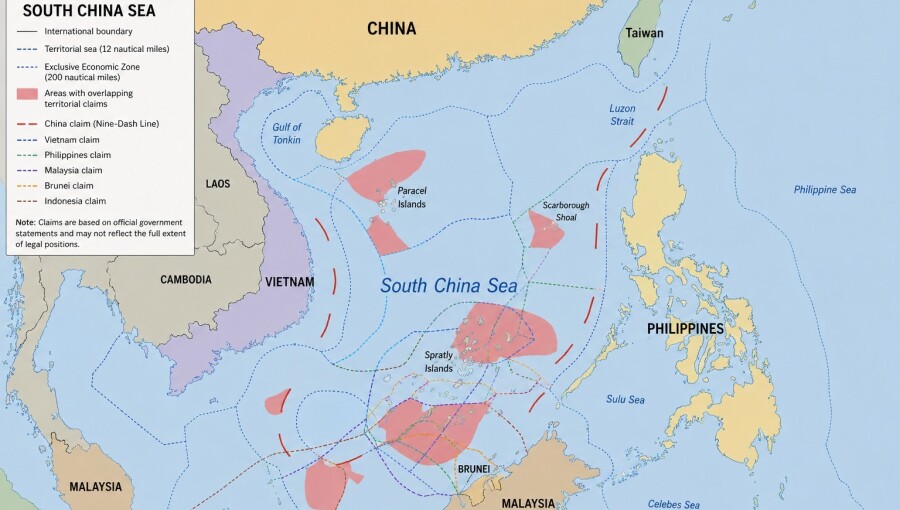
Scarborough Shoal lies around 124 nautical miles (230km, 143 miles) off the Philippine coast and about 874km from China’s Hainan province. It is claimed by both countries and has been a longstanding flashpoint in the South China Sea dispute. China took de facto control of the feature in 2012.

During the encounter, a Chinese warship accused the Philippine helicopter of entering what it described as Chinese airspace over Huangyan Dao, the Chinese name for the shoal, and said it posed a security threat.

The Philippine Navy said it was conducting a lawful operation and called on Chinese vessels to maintain distance in line with international maritime collision regulations.

GMA Network said the Chinese frigate Tongliao, hull number 554, was among the vessels shadowing the Philippine ship. It reported the encounter lasted several hours, with vessels operating at distances as close as 20 nautical miles from the shoal. The Tongliao is a Type 054A Jiangkai II-class guided-missile frigate operated by the PLA Navy’s Southern Theatre Command.

The report added that a Philippine Navy helicopter later flew over Scarborough Shoal at about 300 feet and observed that a previously reported structure had been removed, according to a Philippine Navy pilot.

The Philippine Department of Foreign Affairs had earlier filed a formal protest over what it described as an illegal Chinese floating platform near the shoal, following satellite imagery that first indicated its presence in the area.


Airbus to inspect 16 A380s after cracks found on plane wings


Published:

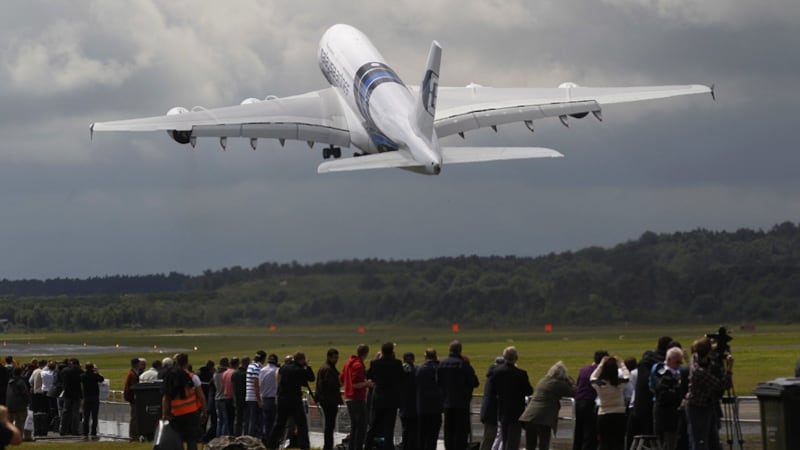
An Airbus A380 takes off for a flying display during the Farnborough International Airshow in England on Tuesday, July 10, 2012. (AP Photo/Sang Tan)

TOULOUSE, France - Airbus on Tuesday said it would inspect 16 A380 planes, five of them immediately, after cracks were found in a key wing component on aircraft used by the Emirates and Qantas airlines.

The European Union Aviation Safety Agency (EASA) has ordered urgent inspections requiring airlines to examine the wing-spar structure on the affected jets after inspectors found cracks during routine maintenance checks.

The cracks appeared in a structural beam that runs along the wing and carries much of the aerodynamic load during flight.

Of the 16 planes to be inspected, 15 are operated by Emirates and one by Qantas. The five aircraft to be inspected immediately are flown by Emirates, and they were to undergo the process as soon as Wednesday.

Airlines using the A380 include Emirates, Singapore Airlines, British Airways, Qantas, Lufthansa, Qatar Airways, Korean Air, Etihad Airways, ANA and Asiana Airlines.

Emirates operates the largest A380 fleet in the world, flying over half of all active superjumbos.

Cracks on an aircraft that “could reduce the structural integrity of the wing” were discovered during inspections ordered by EASA in a directive issued in December 2025, the European planemaker said.

All A380s “with the same production history” have been identified, and Airbus will carry out immediate inspections on five aircraft.

The Toulouse-based plane manufacturer will discuss with EASA whether repairs are necessary, an Airbus spokesperson said.

The 11 other aircraft can be inspected later, but before their thirteenth flight, that is, 25 cycles, with one cycle consisting of a flight, a takeoff, and a landing.

The A380 has faced wing-related problems before and the EASA in 2012 ordered inspections after cracks were found in brackets linking the wing skin to internal ribs.

That affected the entire global A380 fleet and led to a costly repair program which Airbus addressed through design changes on planes produced later.


Digital euro clears key hurdle as EU seeks to break free from U.S. credit cards


Published:

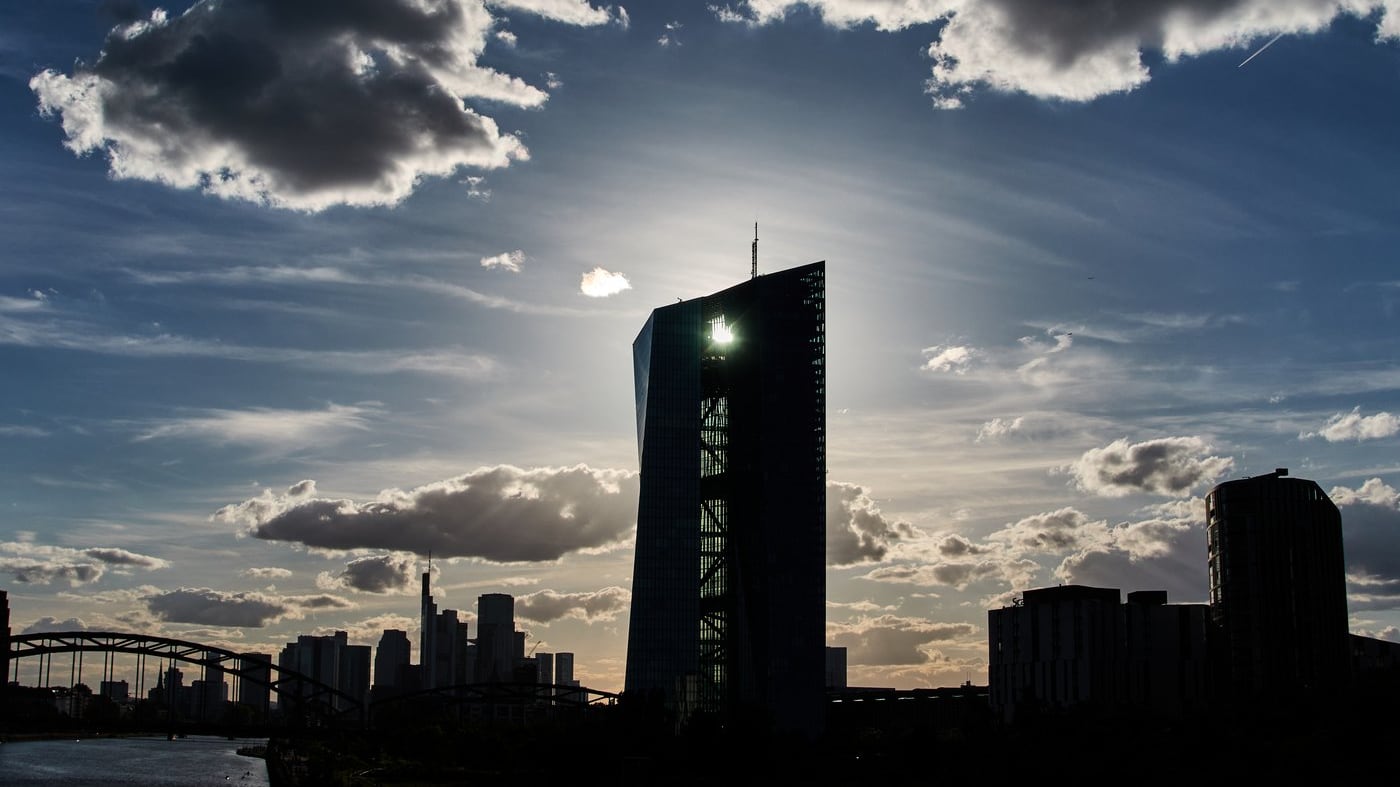
The European Bank is pictured in Frankfurt, Germany, Tuesday, June 9, 2026. (AP Photo/Michael Probst)

FRANKFURT — The European Central Bank secured key parliamentary backing on Tuesday for the launch of a digital euro, an electronic means of payments aimed at making the euro zone less reliant on U.S. credit cards at a time of fraying transatlantic relationships.

The digital euro, essentially an electronic wallet guaranteed by the central bank but marketed by banks or fintech companies, will allow all euro zone residents to make payments online and in person.

Six years in the making, the ECB’s digital cash has become a more pressing issue since Donald Trump returned to the White House, slapping tariffs on even established trade partners such as the European Union and raising fears that the U.S. could one day weaponize its dominance over payment networks like Visa and Mastercard.

The approval of draft rules by the economic committee of the European Parliament comes after three years of wrangling between the ECB and banks, which have been concerned about deposit outflows and lost revenues and sought to limit the scope of the project.

“The introduction of the digital euro would... reduce overreliance on non-European providers by becoming a pan-European means of payment and would bring the single currency into the digital era by giving Union citizens the freedom to opt to pay with central bank money in their daily transactions,” the draft regulation says.

FINAL APPROVAL BY YEAR-END?

Siegbert Frank Droese of the far-right Europe of Sovereign Nations, a political group in the European Parliament, said his group had voted against the proposal, raising the likelihood that a further vote would be needed at the Parliament’s plenary.

Barring an objection at the plenary, lawmakers should start negotiating with the European Council of EU governments and the European Commission next month, aiming for final approval by the end of the year.

The ECB, which plans to run a 12-month pilot of the digital euro starting in the second half of next year before a full launch in 2029, said it looked forward to Parliament adopting its final position.

Outside the euro area, China has been piloting a digital yuan at scale, while countries like India and Brazil have conducted trials. Britain has focused on research, amid concerns over privacy, financial stability and banking-sector impact, while U.S. President Trump has forbidden the Federal Reserve from issuing a digital currency.

HOLDING LIMITS, POLITICAL OVERSIGHT POINT TO COMPROMISE

Like the European Council before it, the EU’s Parliament laid out key safeguards for banks fearing deposit flights.

Lawmakers proposed in the draft regulation that the European Commission decide how many digital euros every user could own, based on an ECB recommendation, and review that ceiling at least every two years.

Businesses would not be allowed to hold digital euros for longer than 24 hours. The digital euro would not earn any interest or cost anything to its users.

“The proposal reflects political compromises,” Laura Casonato, head of policy at Positive Money Europe, an advocacy group for monetary reform, said. “It keeps commercial banks at the center of distribution, with only a limited role for public channels and other providers, and does not go as far as presenting the digital euro as a true alternative to bank deposits.”

Such concessions were likely crucial to win over critics such as Fernando Navarrete Rojas, the parliament’s negotiator on this file, who only recently dropped his opposition to making the digital euro available online.

ECB simulations show depositors could withdraw up to 699 billion euros ($795.88 billion) from euro zone banks if a limit on digital euro holdings was set at 3,000 euros each. This is equal to 8.2 per cent of all retail sight deposits, although the impact would be greater for small market lenders and retail banks.

COSTS, COMPENSATION AND EXEMPTIONS ARE OPEN QUESTIONS

AukeZijlstra of the far-right Patriots for Europe Group said the only main discussions with other European institutions would revolve around how participating companies should be compensated for the set-up costs, which the ECB put at between four billion euros and six billion euros spread over four years.

But he added the digital euro may prove “obsolete” by the time it launches given competing initiatives by the private sector. These include instant payment service Wero, backed by a consortium of major European banks.

Damian Boeselager of the Greens said the digital euro should be cheap for merchants, many of whom will be forced to accept the new means of payments. The Parliament’s proposal contains an exemption for small-business owners and the self-employed.

($1 = 0.8783 euros)

(Additional reporting by Jesus Aguado in Madrid; Editing by Andrew Heavens and Susan Fenton)


Western Balkans coal plants continue to breach pollution limits despite legal deadlines, report says

Western Balkans coal plants continue to breach pollution limits despite legal deadlines, report says
Report's findings highlight the continued environmental and public health cost of the Western Balkan region’s dependence on coal. / Photo by Ottr Dan on UnsplashFacebook
By Clare Nuttall in Glasgow June 23, 2026

Coal-fired power plants across the Western Balkans emitted sulphur dioxide at more than six times legal limits in 2025, with dust pollution reaching its worst level since current emissions rules came into force eight years ago, according to a report published on June 23 by environmental watchdog Bankwatch.

The report, the latest edition of Bankwatch’s annual Comply or Close assessment, said ageing coal plants in Bosnia & Herzegovina, Kosovo, North Macedonia and Serbia continued to violate pollution ceilings agreed under the Energy Community Treaty, despite years of warnings and multiple legal proceedings.

Bankwatch said sulphur dioxide (SO2) emissions from plants covered by National Emissions Reduction Plans (NERPs) were collectively 6.6 times higher than permitted in 2025, marking the highest relative breach since pollution controls took effect in 2018.

Nitrogen oxides (NOx) emissions also remained above legal limits, while dust pollution surged sharply, reaching 2.9 times the permitted ceiling, up from 1.9 times in 2024.

The findings highlight the continued environmental and public health cost of the region’s dependence on coal, even as economic pressure from the European Union’s carbon policies and ageing infrastructure increasingly undermine coal’s commercial viability.

“The pollution levels eight years after the deadline for implementing the Large Combustion Plants Directive remain appalling,” the report said.

Bosnia recorded the highest SO2 emissions in the region for the second consecutive year, with its coal plants releasing 196,940 tonnes, or 12.7 times the national limit. Serbia followed with 177,756 tonnes, equivalent to 5.1 times its legal ceiling.

The single biggest polluter in the region remained the Ugljevik coal plant in Bosnia, which emitted 115,079 tonnes of sulphur dioxide, its highest level since the current rules began. The plant’s continued pollution is especially striking because it already has desulphurisation equipment installed, raising questions over why emissions remain so high, the report said.

Bankwatch said the plant operator had admitted the desulphurisation system was not functioning properly because it represented an economic burden, casting doubt over whether the expensive retrofit would ever be fully used.

“Ugljevik’s SO2 emissions have been increasing since 2022,” the report noted, despite an €85mn pollution-control investment.

Five coal units exceeded their individual sulphur dioxide ceilings by more than tenfold in 2025, according to the report. These included the Bitola B1 and B2 units and Bitola B3 in North Macedonia, along with Ugljevik, Gacko and Kakanj 6 in Bosnia.

Dust pollution, meanwhile, worsened significantly, driven largely by the Bitola plant in North Macedonia. Bankwatch said dust emissions from North Macedonia more than doubled compared with 2024. Bitola’s units emitted a combined 7,675 tonnes of dust, exceeding the total dust ceiling allowed for all four Western Balkan countries combined.

The report said the plant “single-handedly exceeded the sum of NERP ceilings for dust of all four countries.”

Bosnia’s Gacko plant remained the worst performer relative to its legal dust limit, emitting 15.1 times the allowed level despite a slight year-on-year decline.

NOx emissions also continued to exceed legal thresholds. Total emissions from covered coal plants were 1.4 times above permitted levels, unchanged from 2024.

Serbia’s Nikola Tesla B plant produced the highest absolute NOx emissions at 11,247 tonnes, while Kosovo’s Kosova A remained the worst relative emitter.

Beyond pollution from plants covered under emissions reduction plans, the report also highlighted continued illegal operation of several older coal units that were supposed to shut down under “opt-out” derogations. These exemptions allowed older plants to operate for a limited number of hours before mandatory closure. The deadline expired at the end of 2023. Yet plants in Bosnia, Montenegro and Serbia continued operating throughout 2025.

Montenegro’s Pljevlja plant, which has undergone a controversial retrofit, remains under scrutiny. “Montenegro’s Pljevlja plant has been operating illegally since late 2020,” Bankwatch said, adding that no clear evidence exists that the retrofit has brought the plant into compliance.

Coal units Tuzla 4, Kakanj 5, Morava, and Kolubara A are also still operating more than two years after their closure deadline.

The Energy Community Secretariat has opened multiple infringement cases against the countries involved. However, Bankwatch said national authorities have failed to impose penalties. “Eight years after the Large Combustion Plants Directive compliance deadline passed in the Energy Community, national authorities have not fined a single plant operator for these breaches,” the report said.

Environmental campaigners say the lack of enforcement reflects broader governance failures. Davor Pehchevski, Balkan energy coordinator at Bankwatch, said governments were tolerating pollution while failing to prepare communities for the inevitable decline of coal.

“In some Western Balkan countries we now have the worst of both worlds: a decline in coal-fired electricity generation without a clear plan to mitigate the socio-economic fallout, combined with high — and in some cases even worsening — pollution levels,” he said.

“Instead of enforcing pollution control safeguards, governments are turning a blind eye. This goes far beyond human health and the environment, right to the heart of fundamental principles such as equality before the law.”

Coal has long been promoted by governments in the region as a source of energy security, but Bankwatch argues that narrative no longer matches reality. The average age of coal power units in the Western Balkans is now 49 years, with outages becoming increasingly common. 

Coal supply constraints have also worsened. Serbia and North Macedonia have increasingly relied on imports to compensate for domestic shortages, while Bosnia and Herzegovina has also struggled with supply issues. As a result, coal-based electricity generation has been declining in several countries even without formal plant closures.

At the same time, the European Union’s Carbon Border Adjustment Mechanism (CBAM), whose definitive phase began in January 2026, is raising the cost of electricity exports to EU markets. The mechanism imposes carbon-related charges on imports including electricity, making high-emission generation less competitive.

Bankwatch said CBAM is likely to further erode the profitability of coal generation, particularly for utilities that rely on exports to offset domestic inefficiencies.

According to the Energy Community Secretariat, electricity exports across borders with EU member states fell by 25% in the first quarter of 2026, even amid favourable hydropower conditions.

Despite mounting pressure on coal, campaigners warned governments risk replacing one fossil dependency with another. Bankwatch criticised growing interest in gas infrastructure across the region, saying it could divert investment from cleaner alternatives such as wind, solar, geothermal energy and heat pumps.

Ioana Ciută, strategic area leader for Beyond Fossil Fuels at Bankwatch, said the European Union must also apply stronger pressure.

“Although the Western Balkan governments clearly bear the main responsibility, the EU institutions need to step up as well, conditioning EU financing and accession progress on compliance; sending clear, public messages; and securing financing for a just transition of coal regions and a switch to sustainable heating,” she said.

“Stronger enforcement tools are also needed in the Energy Community Treaty, to protect human health and the environment, including dissuasive penalties for breaches.”

Bankwatch warned that without credible transition planning, the region faces the risk of an unmanaged collapse of coal generation rather than an orderly phase-out. “There is now a serious danger of an uncontrolled coal phase-out, with unnecessarily harsh impacts on coal-dependent communities that could have been avoided by proper planning,” the report said.

The group urged governments to use upcoming updates to their long-term climate strategies and energy plans to establish realistic closure timelines and transition measures.

For many plants, Bankwatch argued, the window for costly retrofits has effectively closed. “Now it is too late to initiate costly projects like desulphurisation as they will not be feasible,” the report said. “The only real choice for many plants now is between controlled, gradual closure or collapse.”