It’s possible that I shall make an ass of myself. But in that case one can always get out of it with a little dialectic. I have, of course, so worded my proposition as to be right either way (K.Marx, Letter to F.Engels on the Indian Mutiny)
Wednesday, June 24, 2026
CU
Vedanta’s CopperTech Metals targets US$3.6 billion valuation in U.S. IPO
CopperTech Metals is targeting a valuation of up to $3.57 billion in its U.S. initial public offering, joining a wave of companies tapping the busy summer IPO market.
The U.S.-domiciled copper and cobalt producer is seeking around $423.5 million by offering 23.5 million shares priced between $16 and $18 apiece, it said on Tuesday.
The IPO market has picked up pace after a brief lull in March as buoyant stock markets and strong investor appetite have created a more favorable backdrop for new listings.
E-bike startup Lime, silver miner Sinda, digital infrastructure firm ITG, and Italian technology firm Bending Spoons also launched their U.S. IPOs this week.
Vedanta Resources, owned by Indian billionaire Anil Agarwal, launched CopperTech Metals last year. CopperTech owns and operates Konkola Copper Mines in Zambia.
The offering comes as CopperTech plans to spend $2.7 billion over the next five fiscal years to ramp up copper production at Konkola to an average of roughly 270 kilotonnes per annum from fiscal 2030.
“Mining companies are tapping capital markets at a time when metal prices are at historically high levels,” said Matt Kennedy, senior strategist at Renaissance Capital, a provider of IPO-focused research and ETFs.
“Investors are looking for metals that fit within the AI infrastructure theme, and benefit from data center buildouts. CopperTech highlights this heavily in its prospectus.”
Demand for copper is surging, underpinned by the rapid expansion of AI infrastructure, grid modernization and electrification.
Vedanta has invested over $3 billion in Konkola and held majority ownership since 2004. It regained control of Konkola in July 2024 after Zambia’s previous administration of former president Edgar Lungu seized the asset in 2019.
Citigroup and Cantor are joint book-running managers. CopperTech will list on the NYSE under the symbol “CUX.”
(Reporting by Arasu Kannagi Basil in Bengaluru; Editing by Diti Pujara and Tasim Zahid)
BHP hikes cost of Jansen potash mine project in Saskatchewan by US$2 billion
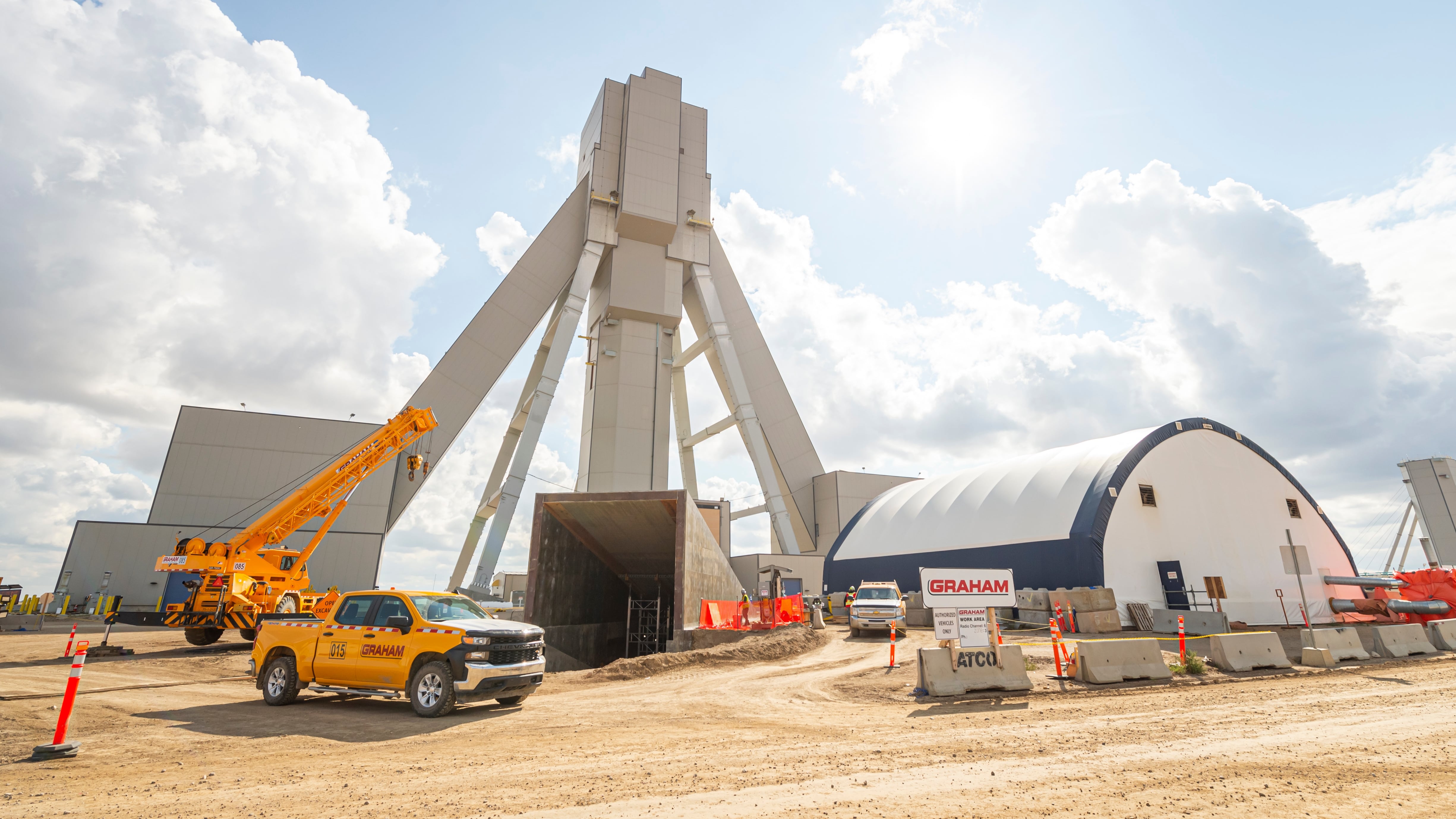
BHP's Jansen potash project in Saskatchewan. (Source: bhp.com)
SASKATOON — Global mining giant BHP says the second phase of its Jansen potash mine is expected to cost 40 per cent more than previously expected.
The Australia-based company says it now estimates a price tag of US$6.9 billion, up from the US$4.9 billion it had anticipated when it was approved in 2023.
BHP is expecting first production in late 2031 from the mine east of Saskatoon, later than its original expected startup date of 2029.
It says the two-year extension, announced in August of last year, has allowed the miner to review its cost and schedule estimates.
BHP says once Jansen Stage 2 ramps up, it expects it to have the lowest unit costs among Canadian miners of potash, a high-demand mineral used as a fertilizer.
At the end of May, Jansen Stage 2 was 16 per cent complete, with engineering 83 per cent complete.
“With the reset of Jansen Stage 2, we are progressing with our intention of building a Tier 1 asset,” said Brandon Craig, BHP’s president for Americas and CEO-elect.
“The combined Jansen Stage 1 and 2 will be a low cost, long life asset with almost 60 year mine life and is expected to generate benefits for shareholders for decades. Once operational, Jansen will establish BHP as a leading player in the global potash industry.”
This report by The Canadian Press was first published June 19, 2026.
Elbows down? Canadian Travel to U.S. increases for first time in 15 months
Canada and U.S. flags fly in the wind at the Douglas-Peace Arch border crossing, in Surrey, B.C., on Monday, March 16, 2020. (THE CANADIAN PRESS/Darryl Dyck)
Nearly a year and a half after Canadians first started shunning U.S. travel, new data shows trips south of the border are increasing.
The increase was largely driven by more trips by car, up 8.1 per cent to 1.5 million, of which 65 per cent were same-day trips. Return trips by air decreased by 7.1 per cent year-over-year to 805,900.
In total, Canadian residents returned from 2.4 million trips to the United States in April.
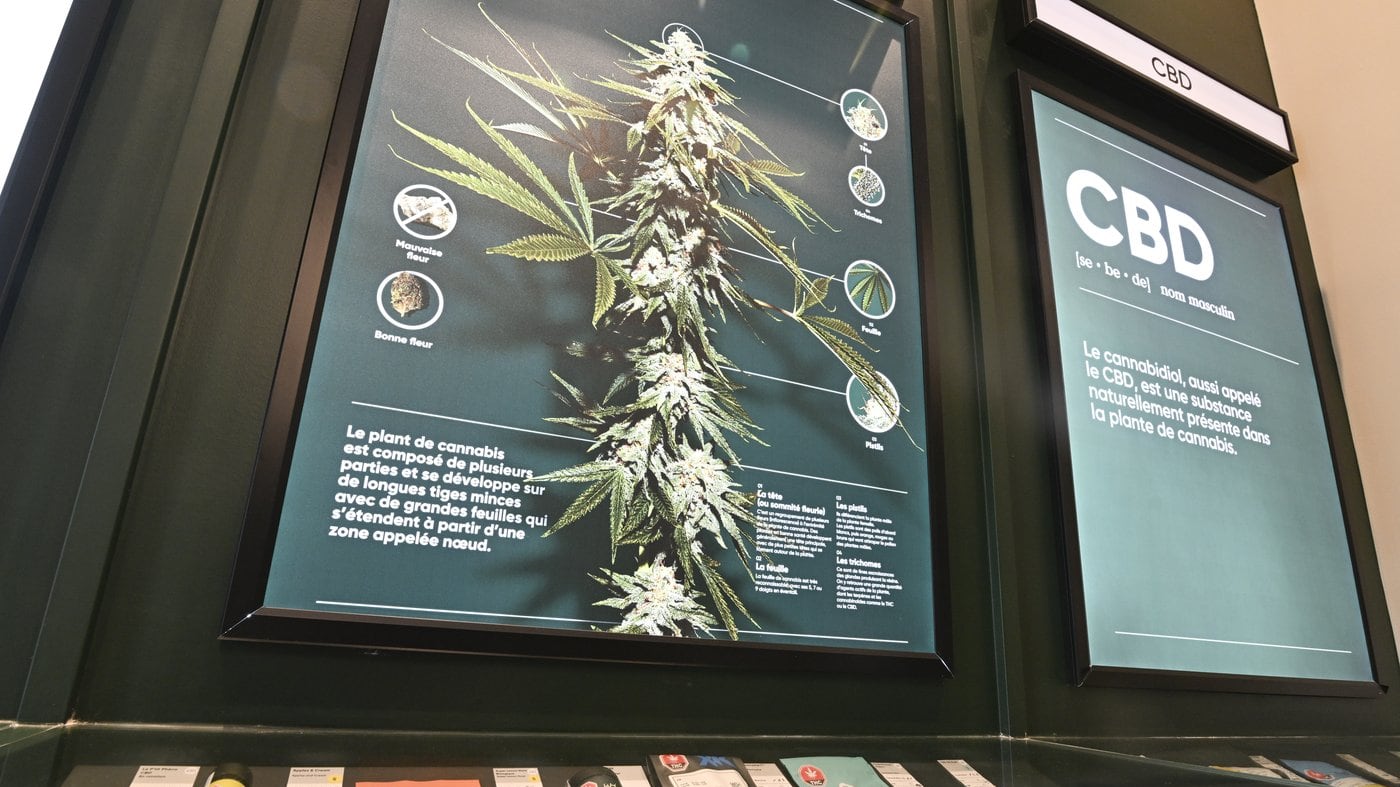
Displays are pictured at an provincially operated cannabis store in Quebec City, Friday, June 19, 2026. THE CANADIAN PRESS/Jacques Boissinot
A national cannabis lobby group says it’s suspending its operations, citing the financial challenges to the industry from the illicit market.
In a news release Monday, the Cannabis Council of Canada suggested its members don’t have enough money to pay for its lobbying services.
Financial pressure, complex regulations and the “highly active” illicit market have “constrained the resources available to sustain a national association at its current level of activity,” the council said.
In Canada, growing cannabis is regulated by the federal government, while the retail sale of cannabis and its products falls under provincial jurisdiction. A committee of the Canadian Senate is currently studying a report about cannabis and its impact on the population. The study covers both the health aspects of the legal drug and jurisdictional issues between provincial governments and First Nations. Contributed/OPP
The council’s president, Paul McCarthy, said in an interview last week the organization has been calling on Ottawa to establish a national strategy for eradicating the unregulated cannabis market.
“While this is a provincial and territorial responsibility, I would say accountability rests with the federal government … they legalized it, it wasn’t the provinces and territories,” he said Thursday, adding that Ottawa would be best equipped to deal with the complexities of cannabis enforcement.
The federal departments of health and justice did not immediately respond to a request for comment.
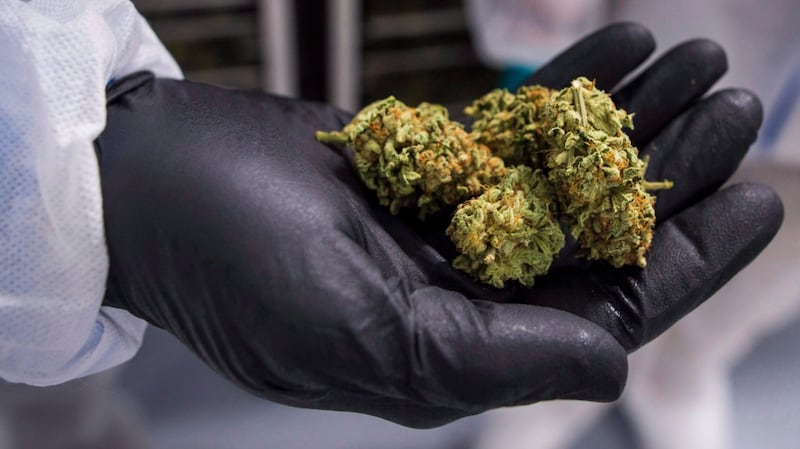
Michael Ravensdale, Vice President, production and quality for the CannTrust Niagara Greenhouse Facility, holds a handful of cannabis bud during the grand opening event in Fenwick, Ont., on Tuesday, June 26, 2018. (THE CANADIAN PRESS / Tijana Martin)
McCarthy said the businesses the council represents, which include cannabis producers and processors, generate billions of dollars in revenue, but the majority of them remain unprofitable.
“One of the biggest reasons is because they’re trying to compete against illicit product. They’re eating up market share and they’re driving down price, and the margins are already razor thin,” he said.
A federal strategy to tackle the unregulated market should involve intelligence gathering to identify illicit operations, disrupt the shipment of product and illegal online sales, and conduct enforcement at brick-and-mortar stores, McCarthy said.
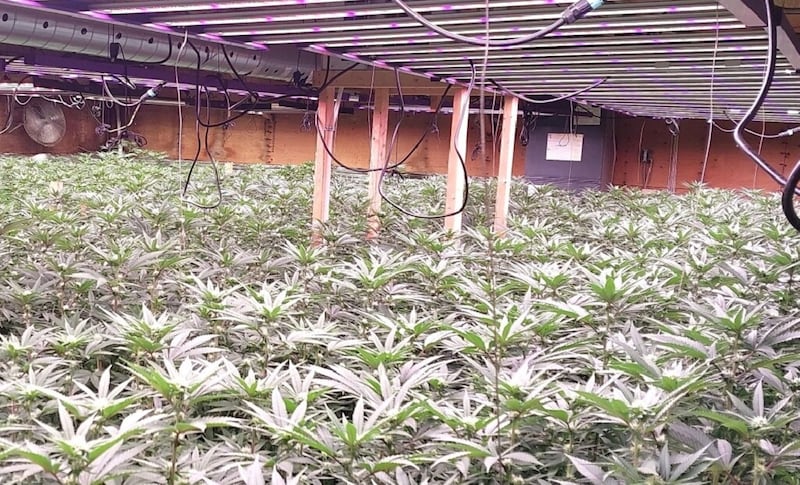
A cannabis plant approaching maturity is photographed at the CannTrust Niagara Greenhouse Facility during the grand opening event in Fenwick, Ont., on Tuesday, June 26, 2018. THE CANADIAN PRESS/ Tijana Martin
“Illegal product is being sold and shipped through Canada Post, Purolator or other delivery services. You need to find a way to cut that off, because if someone buys illegal product and it never shows up to their door, guess what they’re not doing again? They’re not going to keep buying through that channel,” he said.
Instead of each province and territory creating and enacting its own plan to tackle illicit cannabis, the federal government ought to establish a strategy that can be deployed Canada-wide, McCarthy said.
“Let’s pool resources, pool strategies. We don’t need to build this (enforcement plan) 13 times. Let’s build it once and deploy that everywhere,” he said.
A woman smokes cannabis in a Toronto park on Wednesday, October 17, 2018, as they mark the first day legalization of cannabis across Canada. THE CANADIAN PRESS/Chris Young
McCarthy said there are many risks associated with the illicit market, including in the potential health and safety hazard of using an unregulated and potentially inaccurately-labelled product. Another serious concern is the risk of underage Canadians being able to purchase the drug, he said.
The government’s objectives when legalizing cannabis in 2018 were to displace the illicit market, keep the drug out of the hands of youth and ensure the product is safe, McCarthy said.
“The illicit market is the … common denominator that is actually the barrier to achieving all of the public policy objectives of legalization,” he said.
In Monday’s statement, the council said it is proud of the role it played advocating for a responsible, competitive and sustainable legal cannabis industry, and its records will be preserved as the organization becomes dormant.
Lyndsay Armstrong, The Canadian Press
This report by The Canadian Press was first published June 22, 2026.