Wednesday, June 24, 2026


EXCLUSIVE: Canada, U.S. nowhere near deal as CUSMA deadline approaches: Hoekstra


Updated:
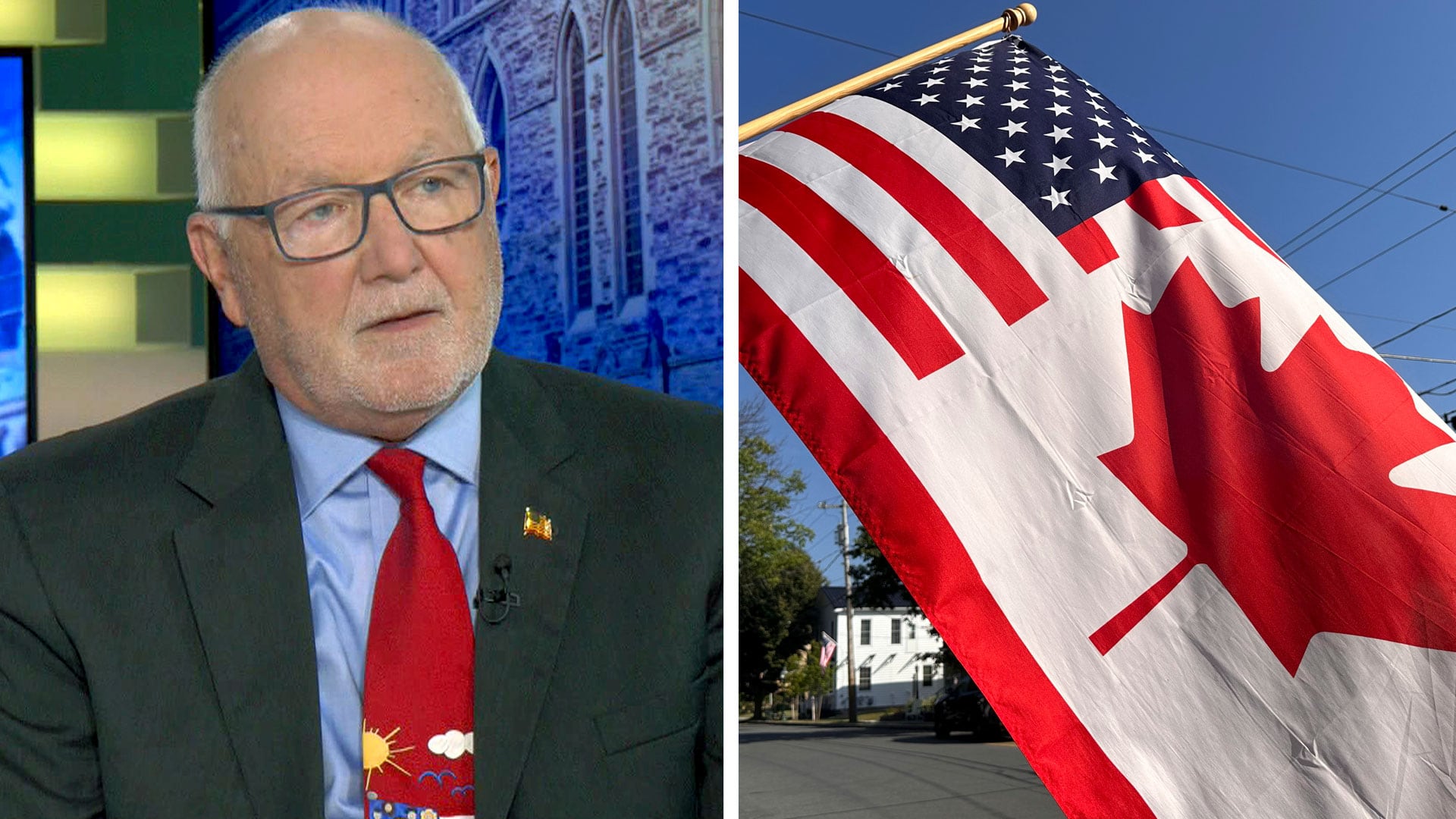


U.S. Ambassador to Canada Pete Hoekstra and a merged U.S.-Canada flag are shown in this combination photo. (AP Photo/Cara Anna)

OTTAWA – With little more than a week before the July 1 deadline to either renew or review the Canada-U.S.-Mexico Agreement, U.S. Ambassador to Canada Pete Hoekstra says officials are nowhere near the finish line.

“We’re not anywhere close to announcing any type of a framework or an interim agreement,” Hoekstra told CTV News chief political correspondent Vassy Kapelos in a wide-ranging broadcast exclusive interview.

“I really think it’s in the hands now, on our side, it’s going to be the president, and I’m assuming on the Canadian side it will be the prime minister, to determine what the next steps are and directionally, where we’re headed,” Hoekstra added.
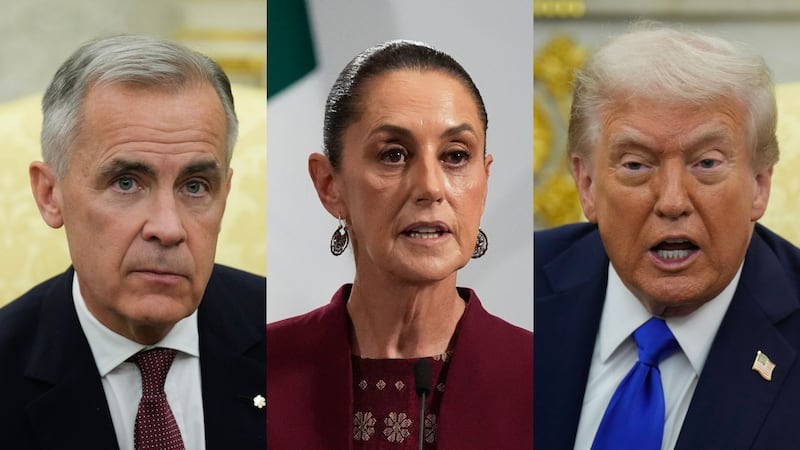
From left to right: Canada's Prime Minister Mark Carney; Mexico's President Claudia Sheinbaum; U.S. President Donald Trump. (The Canadian Press / The Associated Press)

The trilateral trade deal, signed during U.S. President Donald Trump’s first term, is nearing an important deadline. By July 1, officials in all three countries must notify their counterparts whether they want to renew CUSMA for a 16-year period or agree to an annual review process.

Canada and Mexico have both already formally declared they want to seek a 16-year extension of CUSMA, but the U.S. position remains unclear.


While Canadian officials try to allay concerns about the state of negotiations — including Canada’s Ambassador to the U.S. Mark Wiseman suggesting last week everybody should “take a breath” and “relax” — Trump once again slammed the agreement.

Following the G7 Leaders’ Summit in France last week, Trump said he would rather leave CUSMA unsigned and have it immediately terminated, though in the same exchange with reporters he also also signalled he may sign the deal.

Asked whether Trump has conveyed to him his current position on the trilateral trade deal, Hoekstra said he would leave it up to the president to “outline with clarity exactly where he is when he’s ready and prepared to make an announcement.”

Pressed on a timeline for that, Hoekstra said it could be ahead of next week’s CUSMA deadline, or sometime in July, adding: “I don’t think it will go into August.”

“But I’ve been wrong before, and I could be wrong again,” he said.

The ambassador said the next step should be a discussion between Trump and Carney, and for the two leaders to lay out the state of talks, where they’re headed and the direction they’ve given their respective teams.
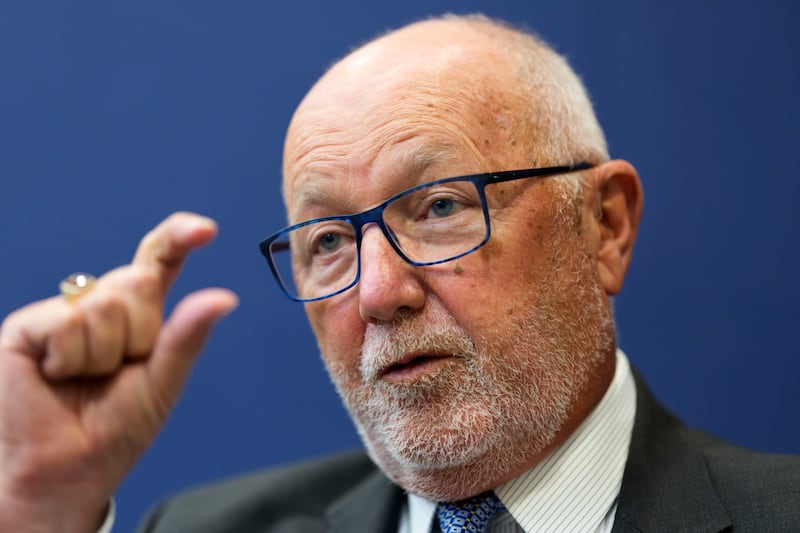
U.S. Ambassador to Canada Pete Hoekstra participates in an interview at the United States Embassy in Ottawa, on Tuesday, Dec. 9, 2025. THE CANADIAN PRESS/Justin Tang

Hoekstra points to failed October deal

During the interview — when asked whether he believes the White House wants to reach a new deal with Canada and to keep CUSMA in place — Hoekstra pointed to Prime Minister Mark Carney’s trip to Washington to meet with Trump last October.

“We were very willing,” Hoekstra said. “We were actually kind of excited about the deal that we had in October, where we covered five critical areas: we covered oil, covered uranium, auto parts, steel, and aluminum.

“That’s a pretty good deal. We were excited about that. The president was excited about it,” Hoekstra also said, categorizing the October agreement as having been reached “fairly quickly at 30,000 feet,” and saying it “would have been awesome.”

Following that meeting in the Oval Office, a readout from the Prime Minister’s Office stated Carney and Trump “identified opportunities for material progress in trade in steel, aluminum, and energy, and directed their teams to conclude this work in the coming weeks.”
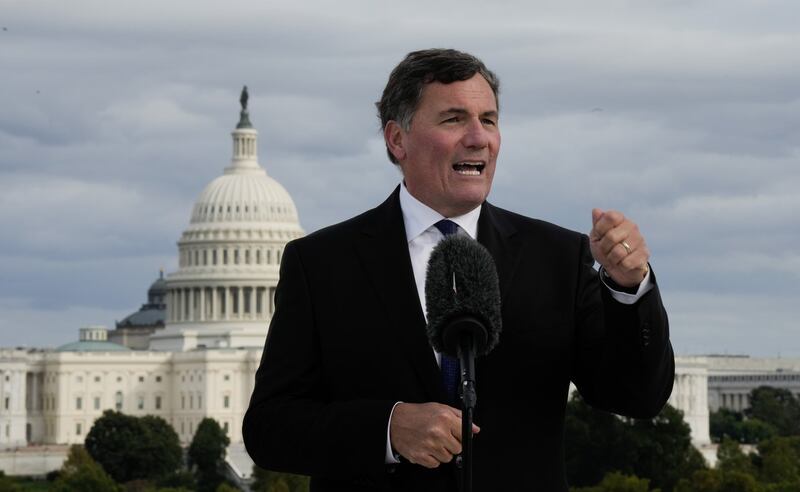
Canada-U.S. Trade Minister Dominic LeBlanc speaks with reporters at the Canadian Embassy in Washington, D.C., on Tuesday, Oct. 7, 2025. THE CANADIAN PRESS/Adrian Wyld

And, Canada-U.S. Trade Minister Dominic LeBlanc described the two-and-a-half-hour meeting as “successful,” “positive,” and “effective,” though he did not offer up any tangible outcomes from the talks.

Asked why that type of deal to address sectoral tariffs is no longer possible, Hoekstra cited “what happened in October and November,” seemingly referencing an anti-tariff ad by the government of Ontario which featured the voice of former Republican U.S. president Ronald Reagan.

The ad prompted the U.S. administration to indefinitely terminate all trade talks with Canada, though informal discussions have since resumed.

“I think the prime minister has even said that they were very, very close to having an agreement, and then you know, poof, it’s all gone,” Hoekstra told Kapelos, adding Canada and the U.S. have yet to get fully “back on track” in the way the Americans have with Mexico.

In an emailed statement to CTV News on Tuesday, a spokesperson for LeBlanc said the minister is looking forward to meeting with his U.S. and Mexican counterparts on July 1.

“This will be an opportunity to build on the positive, constructive bilateral discussions he has had with both countries in recent weeks,” Jean-Sébastien Comeau wrote. “He is looking forward to continuing the work of supporting Canadian workers, farmers and businesses, on July 1 and beyond.”

In his wide-ranging interview with Kapelos, Hoekstra also discussed Trump’s remarks about making Canada the 51st state, the future of Norad and the possibility of Canada purchasing a mixed fighter jet fleet.


You can watch U.S. Ambassador to Canada Pete Hoekstra’s full interview on CTV Question Period Sunday at 11 a.m. ET.

With files from CTV News’ Stephanie Ha
Spencer Van DykWriter & Producer, Ottawa News Bureau, CTV News


CRTC should reject Corus' recapitalization plan, minority shareholders say


Published:

The new Corus logo at Corus Quay in Toronto is photographed on Friday, June 22, 2018. THE CANADIAN PRESS/ Tijana Martin

TORONTO — A group of minority shareholders is urging the CRTC to reject Corus Entertainment Inc.’s proposed recapitalization plan if the floundering broadcaster doesn’t commit to maintaining its editorial diversity and local news coverage, nor share other key details surrounding its future.

The group, which says it holds more than 10 million shares in the company, filed a formal intervention with the CRTC on Monday as the regulator reviews the proposed transaction. The commission launched a consultation into the deal last month, setting a deadline of this Thursday for parties to submit comments.

In March, Corus received an order from the Ontario Superior Court to proceed with its recapitalization plan, but still awaits regulatory approval. It formally applied to the CRTC for that green light in February.

The deal, if approved, would see a change in ownership shifting effective control of all licensed programming services operated by Corus and its subsidiaries.

Under the proposal, some of Corus’ lenders would forgive approximately $500 million in debt in exchange for 99 per cent ownership of a newly created parent corporation, dubbed NewCo, which would wholly own Corus and its services. Existing Corus shareholders would be expected to swap their holdings for shares that together would represent the remaining one per cent of the new company.


Corus sought court approval for the proposal after a shareholder vote in January failed to pass.

At that time, approximately 99.9 per cent of votes cast by senior noteholders were in favour of the proposal, as were 99.7 per cent of votes cast by Class A shareholders. However, holders of just 61.2 per cent of the company’s Class B shares that voted were in favour of the deal, falling short of the two-thirds threshold required.

Monday’s letter was submitted by a group representing around five per cent of Corus’ outstanding Class B shareholders, including 13 individuals and three companies. The group said it opposes a deal that changes effective control of Corus and argued the proposal raises concerns about whether the company’s plan is in the public interest.

The group also called for a public hearing on the matter given the potential impact it could have on the Canadian broadcasting industry.

“This is probably the most important ... transaction in the media industry in Canada this decade,” said Sébastien Ouellet, a spokesperson for the group and signatory to the letter.

“I think it’s one of those cases that in two or three years we’ll look back and say, ‘Oh, we should have looked into it before.’”

Those shareholders raised particular concern about the potential role of Canso Investment Counsel Ltd., which Corus has said is expected to hold more than 44 per cent of the voting shares in NewCo, making it the new entity’s largest shareholder. While the regulator said Canso is effectively controlled by John Carswell, the letter said that company has refused to disclose the identity of eight of its investors.

As an investment fund rather than a media operator, Canso lacks the experience needed to operate radio and television networks, according to the letter. The document said Canso has also not indicated how it plans to help Corus cope with difficult market conditions and develop new content.

Corus did not immediately respond to a request for comment on Tuesday.

In addition, the minority shareholders said the deal risks creating financial incentives for cost-cutting rather than maintaining local service, which could result in Corus shutting down local stations and reducing staff.


Ouellet said he believes Canso’s main goal is to recoup its investment rather than grow the business.

“What will be their first move when they start owning the company? Is it to reinject a few hundred million dollars to grow the company or it will be to sell some assets, liquidate stuff, close some branches and get as much money as possible from the company to repay themselves?” he said in an interview.

“I don’t see Canso having any plan of any sorts ... We should ask a lot of questions to Canso and to Corus to understand what’s their next steps.”

The CRTC said Corus has indicated the deal is necessary to address its high debt load and improve its financial stability so it can continue to operate its services. No new broadcasting licences or changes to existing conditions of service were requested.

Mark Hollinger, lead independent director of the Corus board, has said the deal represents the “best viable option to secure Corus’ future while preserving the most shareholder value.” The company has said it will lead to annual cash interest savings of up to $40 million and preserve Corus “in its vital role as a leading independent Canadian broadcaster.”

The minority shareholders submitted a list of requirements they believe the commission should impose on Corus, arguing to reject the deal if the company does not meet them.

That includes Corus having to fully disclose the identity of the lenders participating in the transaction, along with filing a detailed governance plan for NewCo that includes the composition of the board of directors, oversight mechanisms, and compliance measures to ensure adherence to Canadian broadcasting requirements.

The letter said the commission should also impose measurable and enforceable commitments from Corus regarding its plan to maintain the editorial diversity, local news, and regional services it currently offers.

It urged the CRTC to further require Corus to demonstrate its proposal was the only viable option under the circumstances and that it considered alternative solutions less disruptive to the Canadian broadcasting system.

---

Sammy Hudes, The Canadian Press

This report by The Canadian Press was first published June 23, 2026.

Economic uncertainty weighs on potential Canadian homebuyers, RBC poll says


Published:

A real estate sign is displayed in front of a house in the Riverdale area of Toronto on Wednesday, Sept. 29, 2021. THE CANADIAN PRESS/Evan Buhler

TORONTO — A new report says prospective homebuyers see a potential window to strike a deal, but economic uncertainty is weighing on their decision.

Royal Bank of Canada’s latest home ownership poll says that among those who intend to buy within two years, 45 per cent say now is the right time. However, 75 per cent of them say economic uncertainty is making them more cautious.

It also says 72 per cent of those looking to buy within two years believe the uncertainty is the biggest challenge to buying a home, while 67 per cent are worried it will affect their homebuying plans.

The Canadian economy has struggled in recent months as it continues to adjust to U.S. tariffs and a murky future for the trade agreement with the U.S. and Mexico, while the war in the Middle East sent oil prices soaring.

The RBC poll said rising costs are also cutting into savings with 71 per cent of those who intend to buy within two years saying inflation is causing them to save less for a home.

The survey of 1,753 Canadians aged 18 to 64 was conducted between April 23 and May 3, using Leger’s online panel.

The Canadian Research Insights Council, an industry organization that promotes polling standards, says online surveys cannot be assigned a margin of error because they do not randomly sample the population.

This report by The Canadian Press was first published June 23, 2026.


No evidence of generalized inflation despite May price hikes: BoC’s Macklem


Updated:

Bank of Canada governor Tiff Macklem says he’s not seeing evidence of generalized inflation even as price pressures surged in May.

Statistics Canada said Monday that inflation jumped to 3.2 per cent last month, reaching its highest level since late 2023 and rising past the central bank’s target band of one to three per cent.

The energy price spike from the war in Iran has been the primary driver of inflation over the past three months in Canada.

Macklem has said previously that the central bank will look through the initial bout of inflation tied to higher gas prices, but will act to make sure inflation doesn’t spread to other parts of the consumer basket and become entrenched.

Speaking to reporters from Paris on Tuesday, he said that most areas where prices are rising have a direct line to the global oil shock. While services like air transportation saw costs rising in May, that largely reflects jet fuel surcharges imposed by airlines in response to higher energy prices.

The spread of goods and services with prices rising above three per cent annually is also still close to historical norms, Macklem noted.

“There’s no evidence of generalized inflation. So far, the rise in inflation is very much reflecting the rise in global energy prices related to the war in Iran,” he said.

The recent peace agreement between the United States and Iran is already helping to drive down global oil prices and that’s reining in risks of higher inflation, Macklem added.

Stubborn food inflation, which appeared to be easing at the start of 2026, flared up again in May. The cost of food from the grocery store rose half a percentage point to 4.3 per cent year-over-year.

Fresh fruit and vegetables were driving the increase in May. StatCan pointed to reduced supply and fuel costs to explain the price hikes.

Macklem said that food inflation is still a persistent concern and officials at the bank are digging into whether that’s being driven by weather effects or higher transportation costs.

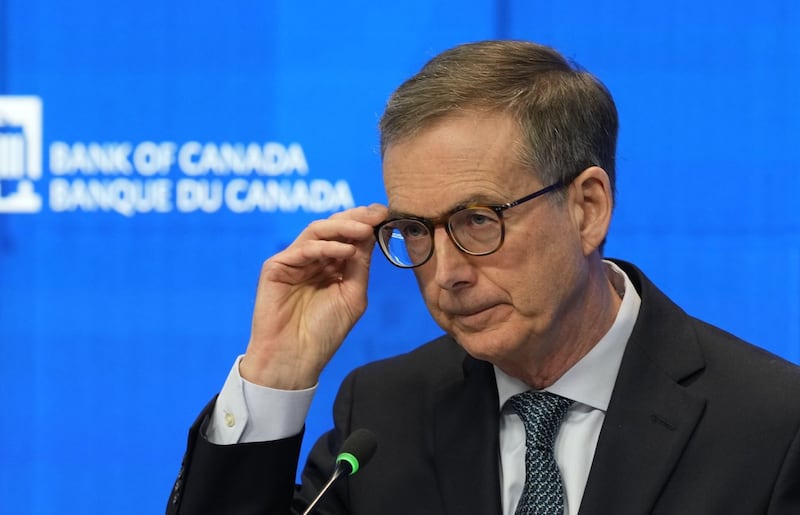
Bank of Canada Governor Tiff Macklem is seen during a news conference in Ottawa, Wednesday, March 18, 2026. THE CANADIAN PRESS/Adrian Wyld

“But yes, there is no question that we are very aware that higher food price inflation is impacting many Canadians,” he said.

The Bank of Canada will release updated forecasts for the economy and inflation alongside its next scheduled interest rate decision on July 15.

Macklem made the comments in Paris where he was giving a speech that warned finance and business leaders about the consequences of global imbalances.

This report by The Canadian Press was first published June 23, 2026.

Craig Lord, The Canadian Press