Wednesday, June 24, 2026

GUINEA PIGS

US releases experimental Ebola drug for DR Congo outbreak trials

Experimental Ebola drugs are being shipped to Democratic Republic of Congo as the United States releases doses of a treatment for clinical trials in a widening outbreak that has caused more than 1,000 cases and over 250 deaths, the World Health Organization and US officials have said.


Issued on: 24/06/2026 - RFI

Health workers care for an Ebola patient at the Rwampara treatment centre in Ituri province, Democratic Republic of Congo, on 18 June 2026. © AP/Moses Sawasawa


The US Department of Health and Human Services confirmed it will provide doses of MBP134, an antibody drug developed by California-based Mapp Biopharmaceutical, for compassionate use in the DRC and to support a clinical trial in the outbreak region.

"The drug is being made available for compassionate use in Congo as well as to advance a clinical trial in the outbreak region," a department spokesperson told Reuters.

Washington had previously said doses of the drug would only be made available to its own citizens considered at high risk after exposure to the virus.

Trial data could help support future regulatory review and possible US approval, the spokesperson added, declining to say how many doses were being provided.

No approved vaccines or treatments exist for the Bundibugyo strain of Ebola, which is responsible for the outbreak.

The DRC has recorded more than 1,000 confirmed cases since the outbreak was confirmed on 15 May. The number of cases has risen faster than in any previous Ebola outbreak on record, the Africa Centre for Strategic Studies warned.

Drugs on route

Shipments of MBP134 and other treatments intended for trials are already on their way, the WHO said. The agency is working with health partners to prepare trial enrolment at treatment facilities in the affected region.

Trials of the Mapp drug and two antivirals developed by US pharmaceutical company Gilead Sciences are due to begin in the coming weeks, according to information provided by the WHO and scientists involved in the testing.

MBP134 will be tested both on its own and alongside Gilead's remdesivir, also known as Veklury, which was widely used during the Covid-19 pandemic. A second Gilead drug, obeldesivir, will be tested as a possible preventive treatment.

Ethics committees and regulators in the DRC and Uganda are reviewing trial protocols. Earlier studies found the treatments to be safe, but they have not been tested against the Bundibugyo strain.

Experimental drugs and vaccines should still be tested in clinical trials before widespread use, despite the urgency of the outbreak, the WHO has said.


Trials in a war zone

The Ebola outbreak is concentrated in the northeastern DRC, with more than 97 percent of cases in Ituri, North Kivu and South Kivu provinces. A small number of cases and deaths have also been reported in neighbouring Uganda.

Running trials and delivering care in the eastern DRC will be difficult, global health officials said. Disease testing and contact tracing are challenging, supply chains have been disrupted, mistrust is widespread and health workers have faced attacks.

The outbreak may have circulated for weeks – possibly months – before it was confirmed. Laboratories in the remote region only had tests for more common strains of Ebola, delaying confirmation until blood samples were sent to Kinshasa.

The WHO has since rolled out a decentralised testing network with new devices that can return results within an hour.

(with newswires)


DRC announces free healthcare for all illnesses in Ituri as Ebola gains ground

The government of the Democratic Republic of Congo has announced the introduction of free healthcare for all diseases in Ituri – a pilot project that authorities hope to extend nationwide. This comes as the country struggles to contain an Ebola outbreak, with confirmed cases now at over 1,000.


Issued on: 22/06/2026 - RFI

A fourth orphan died from Ebola virus disease at an orphanage in Bunia, Ituri Province, and was buried on 19 June, 2026. AFP - JOSPIN MWISHA

The free healthcare measure was announced on Sunday by the Congolese Minister of Health, Samuel Roger Kamba, during his visit to Ituri – the province at the epicenter of the latest Ebola epidemic.

Kamba visited the provincial capital Bunia and is due to travel to the mining town of Mongbwalu, where the epidemic started.

The government's objective is to ensure that Ebola does not relegate other health emergencies to the background.

The pilot programme in Ituri includes free medical consultations and treatment for all illnesses.

It is to be financed with the tax for health promotion which came into effect last March, as well as the mandatory health insurance announced for the coming weeks.

Doctor wearing personal protective equipment tend to a patient in the red zone of the Ebola treatment centre of Rwampara General Reference Hospital in Rwampara, Ituri Province, Democratic Republic of Congo, on 12 June, 2026. AFP - JOSPIN MWISHA


Financial incentives

Meanwhile, the fight against the Bundibugyo strain of Ebola is at its peak, mobilising significant resources in the region.

Authorities said Monday that confirmed cases have risen to 1,003 and 254 deaths have been reported.

Regarding healthcare workers, authorities have promised compensation to the families who have lost someone, as has already been done for about ten of them. For doctors involved in the response, their risk allowance will be doubled.

During his visit to Ituri, Kamba also announced that Ebola patients will soon no longer be sent to general hospitals, but to specialised treatment centres, still being established, with the aim of improving their care and limiting the spread of infection.

The government is keen to restore the public's confidence in healthcare facilities and counter the numerous misinformation campaigns on social media.

Spreading 'fast'


The fatal outbreak is spreading rapidly in the DRC, the World Health Organization (WHO) warned on Friday.

"The outbreak remains serious" and is "evolving so fast", said Marie-Roseline Belizaire, the WHO Africa emergencies chief.

"However, I have seen a response that is growing stronger every day," she told reporters in Geneva, speaking from Bunia.

The outbreak was declared on 15 May, though transmission had been going undetected for some time beforehand.

Belizaire said the response teams were racing to keep pace with the virus, which spreads by close contact and infected bodily fluids.

The number of treatment beds available for Ebola patients had gone from zero to more than 500, she said.

And surveillance teams were now investigating nearly 400 alerts and were capable of administering more than 2,000 tests a day, she added.

Belizaire also highlighted that efforts to trace contacts of known Ebola cases had ramped up, with 75 percent of all contacts now being reached.

The WHO has said 95 percent of contacts must be traced to get on top of the outbreak.

(with newswires)


France confirms first Ebola case in doctor returning from DR Congo mission

France on Wednesday announced its first confirmed case of Ebola identified on its territory, a doctor who had returned from DR Congo. The health ministry said the patient had a "very low" viral load and had been placed in isolation.


Issued on: 24/06/2026 -
By: FRANCE 24

Cover image: This undated electron micrograph image provided by the Centers for Disease Control and Prevention on May 11, 1995 shows the Ebola virus. AP
01:29


France on Wednesday announced the first confirmed case of Ebola identified on its territory, a doctor who had flown back from DR Congo, which is fighting a major outbreak.

The case is the first of the deadly haemorrhagic fever identified outside the African continent during the current outbreak, which has also affected Uganda.


It is the first time France has detected Ebola. In 2014, during an outbreak in west Africa, two patients were transported to France, but they had been diagnosed abroad.

The health ministry said it had identified "a first positive case of Ebola virus disease on national territory".

The patient, who arrived in Paris on Tuesday, "boarded a commercial flight from Kinshasa and was almost asymptomatic – except for headaches", the ministry said.
Air France flight

The doctor's condition "slightly deteriorated during the flight", after which the patient was immediately isolated and taken into care upon landing in Paris, even before the disease was officially identified, the ministry added.

The patient was in a "stable condition" with a "very low" viral load, the ministry added.

The doctor travelled on an Air France flight, the airline said, adding that it had provided the passenger list to the authorities.

"Contact with these passengers is being handled by the health authorities," Air France said.

Health minister Stéphanie Rist later said five other passengers had been identified as possible contacts and put in isolation as a precaution.

Prime Minister Sébastien Lecornu's office said he was monitoring the situation "very closely", but the health ministry stressed that the risk of transmission remained low.

The World Health Organization (WHO) chief, Tedros Adhanom Ghebreyesus, said Wednesday the global risk "remains low".

ALIMA (The Alliance for International Medical Action), an international medical humanitarian organisation, said the patient was one of its doctors.

The group said it was seeking to "understand how the contamination could have occurred".

Humanitarian workers are normally required to undergo a three-week quarantine after contact with infected cases.

According to diplomatic sources, meetings will be held later Wednesday to discuss an appropriate course of action, particularly regarding movement restrictions.
US surgeon recovered

DR Congo's 17th Ebola outbreak was declared on May 15 after several unexplained deaths in the mineral-rich eastern Ituri province plagued by armed groups.

According to the latest official figures, more than 1,000 cases have been recorded, including 267 deaths, representing a fatality rate of around 25 percent.

Many experts consider it likely that the scale of the outbreak has been underestimated, as it is affecting remote regions.

The Bundibugyo strain of the virus that has caused the outbreak has no approved vaccine or treatment.

Existing Ebola vaccines, developed between 2018 and 2019, are only effective against the Zaire strain, which caused previous major outbreaks.

In May, an American surgeon who contracted Ebola in DR Congo was flown to Germany for treatment.

A Berlin hospital discharged the missionary earlier this month, saying he had recovered following 17 days of medical care.

The doctor, identified as Peter Stafford of the Serge charity, had received care that included "experimental therapies currently being trialled for this type of virus", said the hospital.

Public health experts estimate that the risk of the outbreak spreading worldwide remains low, due to the relatively low contagiousness of the Ebola virus.

(FRANCE 24 with AFP)


Kenya halts US Ebola facility, health minister apologises for disobeying orders

Kenya has ordered a halt to preparations for a controversial US-run Ebola quarantine facility, the health minister told a court Tuesday, after being held in contempt for ignoring a previous stop-work order. The project has prompted widespread anger, and several people were killed during protests earlier this month.


Issued on: 23/06/2026 - RFI

Two nurses in their Personal Protection Equipment (PPE) prepare to receive a patient with a highly infectious disease such as Ebola, during a simulation exercise at the special isolation ward of the department of Infectious Diseases Unit (IDU) at the the Kenyatta National hospital in Nairobi on 12 June, 2026. AFP - SIMON MAINA

Kenyans have strongly opposed the plan and deadly protests have taken place since the facility was announced in May for potential US citizens evacuated from the Democratic Republic of Congo, which is grappling with a major Ebola outbreak.

The centre, at Laikipia Air Base, near the town of Nanyuki, is about 200 kilometres from the capital Nairobi.

It is largely completed, with some 50 isolation beds to be manned by US medical staff.

The Katiba Institute rights group petitioned the high court in May, saying the facility was being developed secretly and without consultation and warned that the arrangement posed "grave and imminent risks" to public health.

But Kenya's government ignored a court order to pause work on the site.


On Monday, the court said health minister Aden Duale was held in contempt for failing to respond to the order. Appearing in court on Tuesday, he expressed regret and was pardoned.

"I have directed the immediate and complete cessation of any intended construction, site preparation, or related activities concerning the Laikipia Air Base facility pending the hearing and determination of the substantive petition or until further orders of this court," he told the court.

However, he defended the plan, saying the fear of Ebola spreading outside the military base was "scientifically unfounded", and that it could have also been used for Kenyan soldiers serving in the DRC.

The scale of the unrest had come as a shock to the Kenyan and US governments, with three people killed in two separate days of unrest in Laikipia this month.

Protest in Kenya against a health center designated to receive American Ebola patients, in June 2026. © AFP - LUIS TATO

Kenya has never recorded a case of Ebola and many oppose bringing potential carriers of the highly contagious disease into the country.

The United States has pledged $13.5 million (€11.7 million) to support Kenya's Ebola preparedness efforts, but critics also oppose what they see as colonial overtones in the arrangement.

Washington has avoided comment on the issue. In a short post on X in May, the State Department said it was "optimistic we can resolve objections".


President William Ruto and his government have been defending the idea from the start. He previously said it would be "unfortunate" to refuse the request for the quarantine centre after decades of US health assistance.

The two countries are in the process of finalising a controversial health deal, in which Kenya would hand over reams of health data in exchange for billions of dollars in aid.

The Ebola outbreak broke on 15 May in the DRC, which now has recorded over 1,000 confirmed cases. It later spread to neighbouring Uganda, which has had 20 confirmed cases so far.

(with AFP)
French government begins disciplinary action over child abuse case failings

The French government has announced disciplinary action against a magistrate and two gendarmerie officers over the handling of a suspect in child abuse case, which has lead to public outcry. This comes on the heels of a report which pointed to serious failings of the justice system, particularly with regards to minors.


Issued on: 23/06/2026 - RFI


France's Prime Minister Sebastien Lecornu (L) stands next to France's Justice Minister Gerald Darmanin during a meeting in Paris on 5 June 2026. AFP - SIMON WOHLFAHRT


French Justice Minister Gérald Darmanin on Monday said an administrative inquiry would be launched against the prosecutor of the southern city of Auch (Gers) over the handling of complaints and reports of rape and child abuse targeting Jérôme Barella.

The prosecutor in question was tasked with handling the complaint filed in August 2025 by the mother of 11 year-old Rosa, who alleged she had been raped approximately fifty times by Barella.

Barella, who had never been questioned until now, is also the main suspect in the disappearance of 11-year-old Lyhanna, who was found dead earlier this month.

The conclusion of the government report released on Monday found that the 2025 complaint "was not treated as a priority" and, despite its "sensitive nature," "was not directed to the correct gendarmerie department."

The investigation was carried out by the services of the General Inspectorates of Justice (IGJ) and the National Gendarmerie (IGGN).

Upon reading the report, Prime Minister Sébastien Lecornu wrote on social media that "the protection chain failed", adding that it was "neither a simple administrative malfunction, nor or a lack of resources".

The report, based on around 30 interviews, highlights a series of failures that allowed Barella to avoid prosecution, despite rape cases filed against him months earlier.

Repeated errors in handling of rape case linked to French girl's death: report

Interior Minister Laurent Nunez said the investigation director and the company commander involved in the case, would be transferred and placed in jobs "outside the remit of the judicial police".

As part of the response to the Lyhanna affair, Darmanin had asked the public prosecutors to review by all 70,000 complaints concerning abuse of children by 14 July.

"We have 1,243 people taken into custody in the past week who are directly related to offenses against minors," Darmanin explained to TF1 television, adding that 134 of them were in pre-trial detention for sexual violence.

"There is a before and an after" Lyhanna, he promised.

Darmanin, however, once again sidestepped a question about his potential resignation, a move called for by several opposition leaders.

He reiterated that he had given directives to prosecutors to prioritise cases involving offenses against individuals – particularly child sexual abuse – and that these directives had not been implemented.
Political pressure

Magistrates' unions, for their part, raised concerns about the resources allocated to a judicial system that, in their view, is overwhelmed by the sheer volume of cases.

Darmanin also took aim at the "technological lag" of the justice ministry, due to budget restrictions and promised to scan everything "with the help of artificial intelligence" to help speed up the processing of court documentation.

Lyhanna's death continues to fuel a series of public protests demanding better protection for victims of sexual and gender-based violence.

Hunting paedophiles online: the legal grey area occupied by internet vigilantes

As campaigning begins a year out from the presidential election, political leaders are putting forward their proposals. From mandatory chemical castration, advocated by Bruno Retailleau (LR), to increased funding for the justice system, championed by the left.

There are "perhaps" individual responsibilities, but the justice system is "in an untenable situation," commented Marine Tondelier, leader of the Greens, while the far-right National Rally party's Sébastien Chenu lamented that "Gérald Darmanin is still in office."

The government is under pressure to pass legislation addressing the urgent situation: a so-called "comprehensive" law of 78 articles, supported by the left and the governing coalition.

Lecornu reiterated his intention to prioritise strengthening the child protection bill "at an upcoming cabinet meeting."

(with newswires)

Repeated errors in handling of rape case linked to French girl's death: report

An administrative investigation ordered after the death of 11 year-old Lyhanna in southern France has revealed serious failings in how a previous rape complaint against the main suspect was handled. The case has brought the French judicial and police system under stark scrutiny, especially regarding cases of child abuse.


Issued on: 22/06/2026 - RFI


Flowers and balloons left at the end of a rally in memory 11-year-old Lyhanna, in Saint-Jean d'Angely, south-western France, 9 June 2026. © Romain Perrocheau/AFP

An investigation by the services of the General Inspectorates of Justice (IGJ) and the National Gendarmerie (IGGN) was delivered Monday morning to Prime Minister Sébastien Lecornu.

Upon reading the report, Lecornu wrote on social media that "the protection chain failed", adding that it was "neither a simple administrative malfunction, nor or a lack of resources".

The report, based on around 30 interviews, highlights a series of failures that allowed Jérôme Barella, the main suspect in the disappearance and death of 11-year-old Lyhanna, to avoid prosecution, despite rape cases filed against him months earlier.

Lyhanna disappeared in the town of Fleurance in southwestern France on 29 May, and her body was found six days later in an abandoned grain silo.

Barella, who has been charged with abduction and unlawfully confining a minor, is being held in pre-trial detention. The cause of death has not yet been officially established.

Mother sues French state over daughter's rape case as public anger grows

The report focuses on a complaint filed in August 2025 by the mother of a 10-year-old girl who alleged that Barella had raped her daughter several times between September 2024 and May 2025 at his home.

Barella had still not been questioned by police when Lyhanna went missing nine months later.

The complaint "was not treated as a priority procedure" in the Gers, the head of France’s General Inspectorate of Justice, Stéphane Noël, said Monday, referring to the department where Barella resided.

The complaint was initially filed in Toulouse, where Barella was identified as the alleged perpetrator, and it was transferred to prosecutors in Auch, the capital of the neighbouring Gers department.

In his presentation of the report to the government, Noël pointed to a number of failures that resulted in lengthy delays in the investigation.
'Bureaucratic loop'

"The report identifies an accumulation of wasted time and a lack of procedure follow-up, both by the prosecutor’s office and the gendarmerie once the case arrived at the Auch prosecutor’s office," he said.

According to the report, the case was caught in a bureaucratic loop, travelling back and forth between Toulouse and Auch.

Jean-Michel Gentil, head of the General Inspectorate of the National Gendarmerie, said the complaint was handled in Toulouse in a way that was "appropriate, diligent and of good quality".

Children in danger 'not heard' in France, rights lawyer warns after Lyhanna death

However, once the case reached Auch, "the criminal investigation was treated as an ordinary procedure or, at the very least, was not treated as a priority case", said Noël.

Investigators had requested that Barella be placed in police custody and questioned. However, Noël said "the investigation was not sufficiently directed and not at all controlled".

As a result, Barella was neither interviewed nor detained before Lyhanna's abduction.

The abduction and murder of Lyhanna have prompted national outrage and re-ignited criticisms of the way France's handles child abuse complaints.
Wave of public anger

More investigations are underway, but the report could lead to consequences for individual prosecutors and investigators.

"When professional misconduct is established... no one would understand if it were not sanctioned," Darmanin wrote in a letter sent last week to France's roughly 10,000 magistrates, which also reaffirmed his "deep attachment" to judicial independence.

He had drawn criticism from judges after pointing to individual failings right after Lyhanna's death, before the inspection mission had completed its work.


Protesters hold placards and chant slogans during an unauthorised demonstration at Place Vendome outside the French Justice Ministry in Paris on June 8, 2026, at the call of the Mouv'Enfants collective and other organisations, to demand a law against violence on minors, following the death of Lyhanna, an 11-year-old girl found dead on June 4 after being reported missing on 29 May 2026. AFP - GEOFFROY VAN DER HASSELT

Lyhanna's death continues to fuel a wave of demonstrations calling for stronger protection for victims of sexual and gender-based violence, and the government is under pressure to respond.

Thousands of demonstrators have been gathering every Monday evening outside the Justice Ministry and in cities across France, demanding stronger protections for children and a more comprehensive approach to investigations into allegations.

Lecornu on Monday reiterated his intention to introduce a number of measures, including strengthening a child protection bill that is expected to be presented at an upcoming cabinet meeting, which would make it mandatory for investigators to start to investigate all child rape complaints within the first three months after they are filed.

The proposals would would also allow serial rapists of minors to be sentenced to life imprisonment.

(with newswires)

Olympics to offer all Games competitors $10,000 grants

Lausanne (AFP) – The International Olympic Committee, which has been under growing pressure to introduce prize money to the Olympics, on Wednesday announced it was setting up a grant for every athlete who takes part in the Games.


Issued on: 24/06/2026 - RFI


International Olympic Committee President Kirsty Coventry has resisted calls for prize money to be introduced but athletes will receive an Olympian Grant © Fabrice COFFRINI / 

The programme was adopted on the opening day of the IOC annual session in Lausanne, where the body also approved amendments to its Olympic Charter, as well as changes to its process for evaluating potential hosts.

While the Olympics have long since dropped the requirement that athletes are amateurs, the IOC had, until Wednesday, been reluctant to pay competitors.

"Every athlete at the Olympic Games will be eligible for a new $10,000 (8,800 euros) 'Fit for the Future Olympian Grant'," said the IOC on its website, adding that the total fund would be worth $140mn for each four-year Olympic cycle.

"All Olympians, no matter where they're from doesn't matter where they finish," would be entitled to the grant, said the chair of the Athletes' Commission Pau Gasol, during a press conference at the IOC Session in Lausanne.

Gasol, a former Spanish basketball star, added that the payment would be "acknowledging the importance and relevance of being an Olympian, participating and representing your sport and to your country in the Games."

"It's not prize money," he stressed. He also said Paralympians would not be eligible.

The IOC said athletes who competed at the Milan-Cortina Winter Games this year would be eligible to apply once the application process had been set up.
'Seed money'

President Kirsty Coventry has consistently opposed such a suggestion.

On Wednesday, she said that the money for the grants would not cut into the shares of IOC revenue that go to National Olympic Committees or internationals sports federations.

She said the IOC had decided the $10,000 figure "was an acceptable amount everywhere that would allow for someone to start something or have it as a little bit of seed money."

Gasol, a former National Basketball Association star, said NBA players, National Hockey League players and tennis stars would be eligible for the grants.

Coventry's opposition to prize money has drawn a hostile response from some former athletes.

South African Roland Schoeman, like Coventry a former swimmer, launched a petition calling for the resignation of the president and the entire executive board.

"The IOC generates billions. That value comes from the athletes. It is time to demand accountability," he wrote.

World Athletics broke with tradition and introduced prize money at the 2024 Paris Games -- each gold medal winner in the 48 track and field events receiving $50,000 -- relay runners sharing the prize pot.

"Does this undermine the amateur ethic?" said World Athletics president Sebastian Coe at the time of the announcement.

"We're now operating in a completely different planet from when I was competing, so it is very important that the sport recognises that change in landscape."

The IOC meanwhile made several changes to its charter, including a new paragraph emphasising its political neutrality.

"The IOC's role is: to apply neutrality at all times, free from governmental, cultural, societal or economic pressure," reads the addition.

Asked if this greater emphasis on staying out of politics was paving the way for the return of Russia to the Olympic movement, Coventry replied that the IOC did not know how the change they had just made would play out.

"We haven't had much time to then sit down and discuss a way forward. So give us a little bit of time to see now how we're going to implement," she said. "So, let us do that and then we'll come back to you."

© 2026 AFP

Trump consolidates rightward shift in Latin America

Washington (United States) (AFP) – A victory by hard-right candidate Abelardo de la Espriella in Colombia's presidential election was another diplomatic victory in Latin America for US leader Donald Trump, who is pushing for the region to crack down on organized crime and migration.


Issued on: 24/06/2026 - RFI

US President Donald Trump (left) had enthusiastically endorsed Colombia's hard-right president-elect Abelardo de la Espriella (right) © Jim WATSON, Luis ACOSTA / AFP/File

Since Trump returned to the White House a year and a half ago, Argentina, Bolivia, Chile, Colombia, Costa Rica, Ecuador and Honduras have shifted to the right or consolidated conservative realignments.

The shock US ouster of Venezuela's Nicolas Maduro in January has led to unprecedented collaboration with the administration of interim president Delcy Rodriguez, who remains in power as she bends to Washington's demands.

The Trump administration now has its sights set on Cuba, enforcing a choking oil embargo that has forced the communist government to hastily adopt economic reforms.

This heavy-handed approach has drawn barely any protest from Mexico and Brazil -- the last major leftist strongholds in Latin America -- or from Colombian President Gustavo Petro, whose days in office are numbered.

Millionaire lawyer-turned-politician De la Espriella "speaks the language many in Washington want to hear: tougher enforcement," said Rebecca Bill Chavez, president of the Inter-American Dialogue think tank.

Trump had enthusiastically backed De la Espriella in the Colombian vote and has pledged stronger cooperation "which will bring new levels of Greatness for both of our Countries!"


Militarized approach


In March, following the deadly military operation to seize Maduro in Caracas, Trump established the "Shield of the Americas" grouping alongside allies in Latin America to boost regional security.

Evan Ellis at the Center for Strategic and International Studies said a conservative-led Colombia will likely join the effort.

"I would indeed expect greater Colombian cooperation in supporting US actions against designated terrorist groups across the region, far beyond Colombia," he told AFP.

One point of friction in the ambitious US security agenda had been discord between Ecuadoran President Daniel Noboa and Colombia's Petro over anti-narcotics military operations conducted by Washington and Quito.

"With Daniel Noboa, de la Espriella, and Washington all pushing in the same direction, the politics are as aligned as they have been in years," Chavez said.

Across the region, several conservative governments have adopted Trump's militarized anti-narcotics strategy, as well as the mass incarceration model championed by El Salvador's Nayib Bukele.

Panama is preparing to announce changes to its prison system in July following inmate escapes, while Honduras plans to purchase drones from Ukraine for its anti-drug efforts.

Ideological shift

In Washington, debate at the Organization of American States underscores that this ideological shift is not being driven solely by Trump.

Latin American views on organized crime and migration pressures have shifted right, as evidenced by Chile, where ultra-conservative Jose Antonio Kast won the presidency on pledges of harsh crackdowns.

The solidarity that many Latin American nations showed Cuba over the years has largely evaporated.

"The next step, as in Venezuela, is logically (US) military demonstrations, possibly leading to a military strike," Ellis said.

The political winds blowing in the White House's favor in Latin America stand in contrast to Trump's difficulties at home, where his party could lose control of Congress in November's midterm elections.

This is compounded by constant friction with Europe, including with long-standing allies, and headaches over Iran and Israel.

© 2026 AFP

Left-wing candidate concedes tight Colombia election

Bogotá (AFP) – Colombian leftist candidate Ivan Cepeda on Wednesday conceded defeat in the tightly fought presidential election won by hard-right rival Abelardo de la Espriella.


Issued on: 24/06/2026 - RFI


Ivan Cepeda (left) lost the election to Abelardo de la Espriella (right) by less than a percentage point © Raul ARBOLEDA, Jaime SALDARRIAGA / AFP/Fil

Cepeda lost Sunday's runoff by less than one percentage point and has distanced himself from violence that has emerged in post-election protests.

After earlier saying he would wait for the vote count to finish, he told reporters that he had "decided to accept the result emerging from that process."

"I do it to contribute to coexistence, peace and dialogue among Colombians," he added.

The leftist senator is an ally of President Gustavo Petro, who has alleged electoral fraud and raised the possibility of annulling the vote due to the "direct intervention" of the United States.

De la Espriella received enthusiastic backing from US President Donald Trump before and after Sunday's runoff vote.

The European Union's Election Observation Mission to Colombia (MOE) on Tuesday gave the election a clean bill of health.

Accepting the result "does not mean renouncing the truth or remaining silent in the face of events we consider serious," Cepeda said, referring to what he called "open and improper foreign interference" in the elections.


'Authoritarian subjugation'


The president-elect will enter public office for the first time in August, marking the end of Colombia's first-ever leftist government.

A millionaire lawyer who made a fortune defending drug traffickers and fraudsters, he has pledged to use a heavy hand on crime.

In an interview with AFP during the campaign, he said he would seek US and Israeli support to conduct bombing campaigns against guerrillas.

In an X post on Wednesday, he said Colombia and Israel would share a relationship "like never before" after speaking with Israeli Foreign Minister Gideon Saar.

"Colombia will restore and strengthen its relationship with the State of Israel," he said, in a reversal of Petro's decision to sever ties with the country following its offensive in the Gaza Strip.

De la Espriella is taking the helm of a deeply divided country that is enduring the highest levels of violence in a decade.

He once called for the Colombian political left to be "gutted" but later toned down his words.

Cepeda warned that he would reject "any attempt at authoritarian subjugation" under the incoming administration.

"We will resort, if necessary, to resistance and peaceful civil disobedience," he said.

Post-election unrest mainly occurred in the cities of Bogota and Cali on Sunday night, where protesters started fires and lobbed objects at riot police, who used tear gas on the crowd.

Cepeda urged "composure and calm" following these incidents, during which demonstrators burned US flags in reference to De la Espriella's rapport with the Trump administration.

Trump offered his hearty congratulations to De la Espriella on Monday.

"I look forward to working together to build a powerful relationship between Colombia and the United States of America, which will bring new levels of Greatness for both of our Countries!" he wrote on Truth Social.

© 2026 AFP
Major Nigeria police reform edges forward with senate approval

Abuja (AFP) – The Nigerian Senate on Wednesday approved a bill to allow states to create their own police forces, following lower chamber passage earlier this month of what could be a potentially sweeping security reform.


Issued on: 24/06/2026 - RFI

President Bola Tinubu (R) has supported efforts to create state-led police forces in Nigeria © Light Oriye Tamunotonye / AFP

Critics of the highly centralised federal police force say it has been unable to tackle the country's myriad conflicts -- concerns brought back into the spotlight recently after a mass school abduction in the typically safer southwest.

But experts warn that putting Nigeria's 36 states in control of their own police could embolden the country's powerful governors in a nation where politics is already often violent.

The version of the reform passed by the Senate will likely need to be harmonised with that passed by the House of Representatives two weeks ago. As a constitutional amendment, it will also require approval by two-thirds of Nigeria's state-level houses of assembly.

President Bola Tinubu has backed the reform as insecurity roils Nigeria ahead of January elections in which he is seeking a second term.

Nigeria's police and military have long been overstretched: across its north, Africa's most populous country is fighting a long-running jihadist insurgency, complicated by inroads made by militants from the Sahel, and non-ideological "bandit" gangs.

The centre of the country is the scene of farmer-herder violence, while the southeast is home to a low-level separatist conflict.
Police to 'fill gaps'

Supporters of the reform say it would create nimble police forces that are more easily held accountable and staffed by locals who know the terrain.

For years already, states have backed locally recruited militias to plug gaps left by the military and police.

State police "would help fill the yawning gaps in extant policing framework," Femi Mimiko, a political science professor at Obafemi Awolowo University, told AFP.

But Usman Ibrahim, director of security programmes at SARI Global, a risk consultancy, warned that complex economic and political factors beyond a simple lack of security have sustained armed groups in Nigeria.

"Is it something that state police can solve?" he asked.

There are also fears governors will deploy state police to intimidate opposition parties, interfere with elections and harass critics, said Dengiyefa Angalapu, a research analyst at the non-profit Centre for Democracy and Development.

Already, the federal police are routinely accused of interfering in politics on behalf of the national government, he noted.

As the reform gathers steam, it remains unclear how state and federal police would settle disputes over jurisdiction -- and whether the creation of yet another security organ would actually make a difference.

Despite Tinubu's inauguration of Nigeria's Forest Guards service, for example, kidnappings have continued unabated across the country -- with some 900 incidents recorded this year, according to conflict tracker ACLED.

© 2026 AFP

Middle East war drives up bitumen costs for African road builders

War in the Middle East is pushing up the price of bitumen, the material used to make asphalt and road surfaces – and the effects are being felt across Africa, where few countries produce their own. Higher costs and longer delivery times are forcing firms from Madagascar to Guinea to Cameroon to renegotiate contracts, absorb rising expenses and rethink how they manage supplies.


Issued on: 21/06/2026 - RFI

Road builders across Africa are facing higher costs after the price of bitumen, a key ingredient in asphalt, rose following disruption to supplies from the Gulf. © Getty Images / Photo and Co

In Madagascar, as in many countries on the continent, bitumen is not produced locally.

"We import the raw material that lets us make asphalt. Without bitumen, we cannot make tar," Richard Ferrazi, director of road-building company Colas, told RFI.

Alternatives are limited.

"There is an alternative, reinforced concrete, but we cannot afford it. For us, that is a luxury," said Dany Michael Ranivo, deputy general administrator of Inframad, a company that oversees building sites in the country.

Geography has traditionally shaped Madagascar's supplies. Most of the country's bitumen came from Gulf producers, shipped from the port of Jebel Ali in Dubai through the Strait of Hormuz. European supplies played only a supporting role.

That situation has now reversed. European bitumen has become the main source, but shipments take an extra 45-60 days to arrive.


Supply shock

The change in suppliers had an unavoidable impact on work sites.

"The stoppage was sudden. It took time to adapt. We lost more than two months on some projects and are only now returning to normal," Ferrazi said.

Two months later, bitumen costs 40-50 percent more in Madagascar. The increase is also affecting Inframad's finances.

"It can delay the release of our bank guarantee or delay the allocation of resources that we wanted to deploy on other projects," Ranivo said.

In Guinea, the price of a tonne of bitumen has risen by around $200 in three months – an increase of more than 20 percent.


Margins under strain

Some contracts can be renegotiated to absorb the higher costs, explained Mory Diaka Kaba, the deputy director of Guiter, a Guinean roadworks company.

"There are contracts where we negotiated a price adjustment mechanism, which allows us to adapt these costs. In other contracts, that is not provided for and we are forced to cut into our margins, or even incur financial losses."

In Cameroon, MAG, one of the country's biggest construction and public works firms, is building the entrance to the city of Douala under a contract worth 30 billion CFA francs.

Public procurement rules allow contract prices to be revised. A request for a price review is being considered so the company can "cover our costs", said Stéphane Edouma, MAG's deputy director.

Existing commitments have been maintained and no work stoppages have occurred, he added.

Côte d’Ivoire launches West Africa’s first agricultural commodities exchange

Rising bills

Future tenders will certainly be negotiated differently and are likely to encourage contractors to plan further ahead.

"Given the supply delays, we will anticipate them by creating buffer stocks to guarantee our schedules," Edouma said.

"Lessons will inevitably be learned from this sudden crisis."

While waiting for prices to return to normal, Kaba's company is buying only the minimum quantities required under its contracts.

"Because of the price, storage has become practically impossible," he said.

Road builders must also cope with higher fuel costs. A single piece of site machinery can consume more than 100 litres of fuel a day.

This article has been adapted from the original version in French by Marie-Pierre Olphand.
INTERVIEW

'We need more athletes to speak out': the future of sport in a warming world


Spanning venues in three countries, and welcoming a record number of teams, this year's World Cup will carry a massive carbon footprint – and see players exposed to potentially dangerous heat. Sports and sustainability expert Mael Besson tells RFI why organisers need to pay more attention to climate change, how it is already affecting professional and amateur athletes, and why we should expect bigger shifts to come.


Issued on: 20/06/2026 - RFI

Tennis players Camila Giorgi of Italy (top L), Maria Sharapova of Russia (top R), Kei Nishikori of Japan (bottom L) and Alize Cornet of France (bottom R) use ice-packed towels to cool off at the 2014 Australian Open. © REUTERS/Bobby Yip/David Gray/Petar


Formerly in charge of sports and sustainability at France's Ministry of Sports and the World Wildlife Fund (WWF) France, Besson now advises French sports federations, insurance companies and local authorities through his agency Sport 1.5 – named for the Paris Agreement target to limit global warming to 1.5 degrees C.

Sports ecological transition consultant Mael Besson, in June 2026. © Mael Besson for RFI

RFI: What does sport have to do with the work of a conservation organisation like the WWF?

Mael Besson: Sport has a powerful influence on our lifestyles, habits, consumption and ideals.

The impact of an athlete drinking from a plastic bottle isn't limited to that one bottle. It's however many bottles are then consumed through imitation. And it's precisely because of this imitation effect that so many sponsors invest in sports: to promote and steer consumer behaviour towards their products.

RFI: The 2026 World Cup stands to be the most damaging yet in terms of climate change, but it's still world's biggest sporting celebration. What do you make of it?

MB: Societies throughout history have always needed moments to get people together. We need these moments of shared enthusiasm, be it cultural, religious, political. In this case, it's sport.

The problem lies in the format of this competition. It doesn't fit the trajectory for reducing greenhouse gas emissions to a level compatible with planetary limits.

The main issue is travel. A large proportion of the teams and fans who follow football are in Europe. This inevitably increases the number of people travelling, and travelling long distances, therefore by plane. Add to that a record number of teams, and this World Cup will be one of the most impactful.

France's Kylian Mbappe scores for France in their opening game against Senegal in East Rutherford, New Jersey, 16 June 2026. @ AP Photo/Frank Franklin II

RFI: Then there's the issue of marketing and consumption…

MB: Yes, and that's not usually factored into an event's carbon footprint. This ripple effect isn't taken into account. We'll count the number of bottles consumed at the event venue, but not the additional consumption by television viewers worldwide. We don't have the figures, and major sponsors are careful not to disclose the return on their investments. It would be complicated, anyway, because it's not just consumption at a specific moment; it's long-term brand capitalisation.

France adopted the Evin Law [in 1991] banning alcohol and tobacco advertising because it influences our behaviour and ultimately our health. Given our planet's limits, we need an Evin Law for the climate.

Future of Olympics in doubt as climate change drives up temperatures

RFI: The World Cup may also put athletes at risk, with at least a quarter of matches expected to be played in potentially dangerous temperatures. Norwegian player Morten Thorsby has called on Fifa to do more to protect footballers from extreme heat and take care of the planet. Does football need more voices like his?

MB: We need more athletes to speak out, including for the very survival of the sport. Increasingly, extreme weather events will prevent events from taking place or damage sports infrastructure. Even insurance is a problem. When it comes to making the adjustments we'll need in the future, sport risks being a lower priority than other sectors such as healthcare, hospitals and schools. Football therefore has every reason to be a leading advocate for the climate.

Athletes have the most legitimacy to demand that reducing greenhouse gas emissions be taken into account when organising tournaments. But every time they speak out on these issues, athletes are to some extent criticised and accused of hypocrisy because they are obliged to follow an international circuit and be surrounded by sponsors.

In France, a collective of more than 50 athletes, the Climate Sport Camp, is working on this issue. This involves making public statements in the media and lobbying ministers, federations and event organisers.

RFI: What do you tell the athletes you work with about taking responsibility?

MB: The first thing I tell them, if they don't want to speak publicly, is to stop promoting things they should avoid doing. A story on social media filmed on a plane – we know it will have an impact. But no one will ask you why you've stopped posting stories from planes. And by doing so, you've stopped promoting this mode of transportation. So the first step is to clean up your communications.

The second option for the athlete is to contact the governing bodies of their sport privately or via the athletes' commissions. Then athletes can specify in their sponsorship contract that they will not travel to the other side of the world to shoot an advert for sunglasses, for example. This cuts down travel.

There are plenty of concrete actions like that which don't necessarily leave athletes exposed.

RFI: This year's Tour de France starts on 4 July and lasts three weeks. It draws hundreds of thousands of spectators during the peak summer holiday season. Should organisers change the timing or is that impossible for economic reasons?

MB: That schedule may not be compatible indefinitely with climate change. It seems inevitable to me that it will change. July will become increasingly risky in terms of temperatures and even fires. Crossing mountains covered in woods could become more difficult.

It had to be postponed during the Covid pandemic. I don't know what the financial results were like that year, but I would think the Tour de France has enough going for it to withstand being pushed back.

However, adapting could also involve adjusting the schedule or even the regulations: introducing water breaks or safety measures when it gets too hot. Or perhaps modifying the route, with less demanding stages. It will likely be a combination of all these things.

The Tour de France cycling race during Stage 4 from Amiens to Rouen, 8 July 2025. @ REUTERS - Sarah Meyssonnier

RFI: Over the weekend of 24 May, two people in France died after taking part in amateur fitness events during an unprecedented heatwave. What can we learn from this?

MB: The main lesson is that you shouldn't just look at the temperature, but also its sudden increase. In a few days, it went from around 15C to 32C and people's bodies didn't have time to adapt. Over two weeks, even amateur athletes can adapt to intense heat. We're capable of exerting ourselves in 32 or 33C – but that doesn't mean it's not risky.

You also have to be careful when resuming activities after a break. We have to get used to helping our bodies adapt, whether to changing temperatures or to different intensities of training.

RFI: In a 2021 report for the WWF, you calculated the number of sports days lost due to global warming. What was your total?

MB: Based on IPCC projections, we estimated the number of days exceeding 32C, the threshold beyond which amateurs would be discouraged from doing sport. In a world warming by 2C, this would mean up to 24 extra days above 32C. But IPCC projections are generally underestimated, and it's likely to be more than 24 days.

The 2030-2050 projections of France's national climate change adaptation plan didn't predict any days would top 32C in May, but the recent heatwave has shown the contrary. These phenomena are arriving earlier than anticipated and with greater intensity.

What does 50C feel like? Touring ‘heat chamber’ allows French people to find out

RFI: What's the future of street sport? In 2050, will it still be possible to play football on dried-out public fields, or skateboard on hot asphalt?

MB: There are significant inequalities in adapting to climate change, in sports and elsewhere. The most disadvantaged populations will suffer the most from the consequences of climate disruption. They will have fewer resources to adapt. Unfortunately, sports facilities in disadvantaged neighbourhoods will likely not be the first to be protected.

Sport will continue to exist, but in my opinion, the timing will change. Summer may no longer be the peak season. In the Provence-Alpes-Côte d'Azur region in the south of France, already no mountain biking competitions take place in summer due to a high risk of fire. The same goes for climbing.

Girls play on an outdoor pitch in France. © Charlie Dupiot

RFI: Is France's infrastructure adapted to climate change?

MB: No, clearly not. Our sports facilities are ageing – half were built before 1985. We've worked on energy efficiency, but often focusing on protection against the cold and very little on summer comfort.

Furthermore, specific facilities will be under pressure. Swimming pools and other cool areas are valuable resources for helping people withstand extreme heat. France's facilities are both ageing and inadequate, because they will have to accommodate more people. During the 2022 heatwave, we saw security guards at the entrance to pools because they were full and families couldn't get in. Making these facilities places of refuge will be a major challenge.

We could have more trees surrounding stadiums to act as natural cooling channels. There's also the issue of playing surfaces: synthetic pitches heat up much faster than natural grass. And we could consider staggering training times to allow for cooler periods.

RFI: How much of a threat is climate change to France's sports economy?

MB: I don't have an overall figure, but I have lots of examples of disciplines or clubs that are affected. In the Paris region, a kayak club had to cancel many of its courses and rentals due to flooding caused by storms. The Burgundy-Franche-Comté Sailing League told me that with the high temperatures, there are more cyanobacteria [potentially toxic microalgae], so swimming and other activities are banned.

On the coast, according to the WWF's figures, one in seven sports clubs in France will be threatened by rising sea levels at a temperature increase of 2C. In the mountains, the melting permafrost is making paths to iconic peaks impassable. Mountain guides find themselves having to reconsider their activities in August. Glacier trekking is difficult to postpone to September or winter.

This interview has been adapted from the original in French by RFI's Géraud Bosman-Delzons.
Resistance fighter and historian Marc Bloch enters Paris's Pantheon

French resistance fighter and historian Marc Bloch was inducted into the Pantheon in Paris on Tuesday in a sombre ceremony, giving President Emmanuel Macron another chance to shape France’s national memory through one of the country’s most symbolic events
.


Issued on 24/06/2026 - 

France's President Emmanuel Macron delivers a speech during the Pantheon induction ceremony for the late historian and resistance fighter Marc Bloch and his wife Simonne Bloch in Paris on June 23, 2026. AFP - ALICE SACCO

Bloch – who was tortured by the Gestapo and executed in 1944 – is the first historian inducted into the monument under the Fifth Republic. The Elysée Palace described him as “a man of the Enlightenment” and “the thinker of the century”.

“He was a man who reflected on the past in order to act in the present. He did not have a static view of history; for him, it had to serve action in the here and now,” the Elysée Palace said in a statement.

The ceremony was preceded by a vigil on Monday evening at the École normale supérieure in Paris, the university where Bloch studied from 1904 to 1908.

On Tuesday morning, the coffins of Bloch and his wife Simonne Vidal were carried in procession to the Pantheon. Vidal will accompany him at the family’s request but will not herself be honoured there.

A gravestone plaque bearing the name of French historian and Resistance fighter Marc Bloch at the cemetery of Le Bourg-d'Hem, central France on 1 June 2026. Bloch, born in Lyon on July 6, 1886, was executed by the Gestapo at Saint-Didier-de-Formans on 16 June 1944, and is set to be inducted into the Pantheon in Paris on 23 June 2026. AFP - PHILIPPE LOPEZ


Presidential choice

The coffins will not contain their bodies. Bloch’s descendants wanted his remains to stay in a village in the Creuse department, while Vidal’s body has not been found.

The coffins will instead hold symbolic objects, including medals, ferns representing the family home in the hamlet of Les Fougères, Bloch’s 1941 spiritual testament and photographs and letters from Vidal to their children.

As night falls, a giant portrait of Bloch will be shown between the columns of the Pantheon in a series of scenes telling his life story, before Macron gives a speech expected to last around 20 minutes.

The decision is the president’s alone, but it comes after debate among families, intellectuals, support committees and political leaders.

“There are always many great figures waiting in the wings to be inducted into the Pantheon. It’s a complex process. We reflect on it, we discuss it, we debate it. Then there comes a moment when the president of the Republic – since, following de Gaulle, the president alone makes the decision – says, ‘It’s obvious; we must do it’,” a source close to the head of state said.

The family had not sought the honour. Historians had approached Jacques Chirac in 2006, but were refused. “I received a call from the Elysee. The family was surprised. We began to discuss it. We were torn, fearing it might be exploited,” Bloch’s granddaughter Suzette Bloch said. “I consulted three historians. They all said, ‘Accept it; the man is greater than any attempt to exploit him’.”

Memory and politics

Bloch’s induction is Macron’s sixth Pantheon ceremony over two five-year terms, after Simone Veil, writer Maurice Genevoix, Joséphine Baker, Resistance fighter Missak Manouchian and Robert Badinter. François Hollande inducted four figures, Jacques Chirac two and François Mitterrand six.

The choices since 2017 have leaned towards resistance, diversity and greater representation of women. Five of the six people honoured represent minorities, including Jews, naturalised foreigners or stateless people, historian Avner Ben-Amos said.

The Bloch ceremony has also opened a political debate. The family asked for the far right to be “excluded”, citing Bloch’s “deeply anti-nationalist” commitment. Republican protocol means parliamentary group leaders must be invited, but the National Rally's Marine Le Pen will not attend. Sarah Knafo has confirmed she will attend on behalf of Reconquête.

“Marc Bloch echoes the legacy of the Enlightenment, a way of conceiving of humanity centred not on retreat into identity but on openness to others, on otherness,” the Elysee Palace said.

Bloch co-founded a history journal in 1929 and helped transform the study of history by opening it up to anthropology, economics and sociology.

A national temple

A veteran of the First World War and recipient of the Croix de Guerre, Bloch asked to be called up again in 1939 to fight Nazi Germany. Under the Vichy regime’s anti-Semitic laws, he was stripped of his civil rights and deprived of his flat and library because he was Jewish. He went underground in Lyon in 1943 with the Franc-Tireur movement.

Arrested on 8 March 1944, he was tortured by the Gestapo and executed on 16 June with other prisoners at the edge of a field, shouting “Vive la France”.

The family has opposed any “co-opting by a particular community” of Bloch, an atheist Jew who “had faith in only one idea: the Republic”, as they wrote in a letter to Macron.

The Pantheon itself became a national necropolis during the French Revolution, in 1791. It now honours 87 figures, including Marc Bloch and individual inscriptions such as those for Antoine de Saint-Exupéry and Aimé Césaire: 82 men and five women.

A final induction before the end of Macron’s term in May 2027 has not been ruled out, with Samuel Paty, George Sand, André Citroën and Gaston Monnerville among the names mentioned.

(With newswires)

SAVE OUR SEAFARERS 

UN launches Hormuz evacuation for 11,000 stranded seafarers

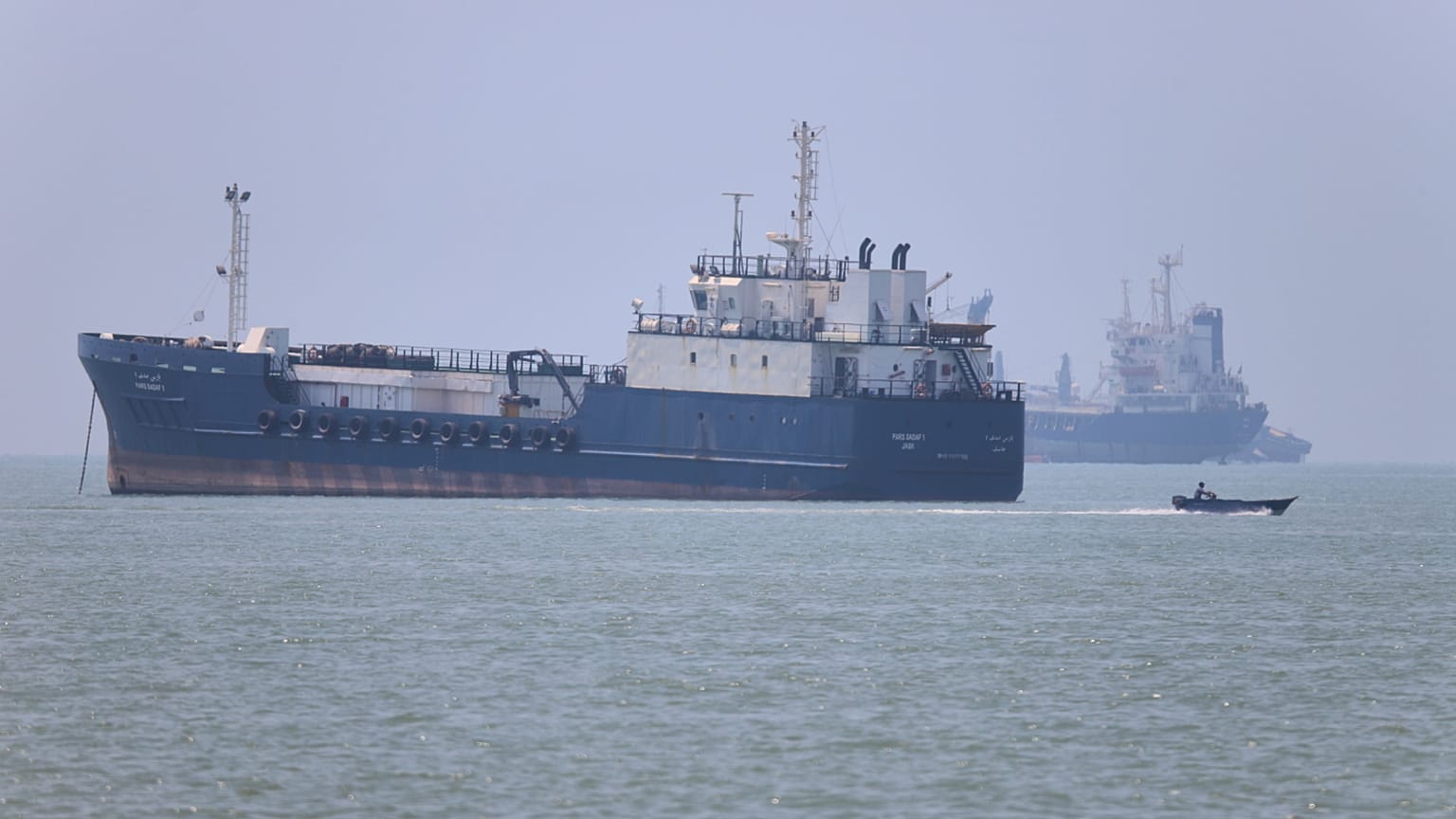
A small motorboat passes anchored vessels in the Strait of Hormuz
Copyright AP


By Leticia Batista Cabanas
Published on


The operation follows a peace agreement between the United States and Iran that ended months of conflict and allowed commercial shipping to resume through one of the world's most important maritime routes.

The UN's International Maritime Organization (IMO) said on Tuesday that it would begin an operation to evacuate more than 11,000 seafarers stranded in the Gulf after the reopening of the Strait of Hormuz.

The operation follows a peace agreement between the United States and Iran that ended months of conflict and allowed commercial shipping to resume through one of the world's most important maritime routes.

IMO Secretary-General Arsenio Dominguez said the evacuation would be carried out in cooperation with regional countries and the shipping industry. "This large-scale operation will be carried out in close cooperation with Iran, Oman, all other coastal States in the region, the United States and the maritime industry," Dominguez said in a statement.

He added: "We have secured the necessary safety guarantees and have thoroughly verified the conditions for safe navigation to support these operations."

Iran had effectively closed the Strait of Hormuz after the outbreak of war on 28 February following US and Israeli strikes. The disruption drove up global oil prices and interrupted shipments of energy and other commodities, including fertiliser. Thousands of sailors were left unable to leave the region as vessels remained stuck in Gulf waters.

Shipping traffic has increased since the US-Iran agreement came into force. According to data from shipping analytics platform Kpler, at least 36 commodity vessels passed through the Strait of Hormuz on Monday, the highest level of traffic since the war began.

The IMO said two temporary routes through the strait could be used during the evacuation and that ships would receive individual instructions.

Dominguez welcomed the agreement between Washington and Tehran, saying: "After months of hardship and distress for thousands of innocent seafarers, and negative impact for the whole world, I welcome with deep satisfaction the peace agreement concluded between the United States and Iran."

He added that the deal marked "a decisive step towards restoring maritime security and bringing to an end the unacceptable attacks against civilian shipping."