Friday, June 26, 2026

  ‘Like working in a kettle’: France’s overcrowded prisons swelter under historic heatwave


ANALYSIS


The deadly heatwave sweeping France has once again exposed the structural problems of the country’s chronically overcrowded prisons, with groups of three or four detainees crammed into airless cells built to hold a lone prisoner. Analysts and prison staff alike have criticised a penal system that continues to see mass incarceration as the main means of cracking down on crime.

Issued on: 25/06/2026 
FRANCE24
By: Paul MILLAR

A detainee is pictured in his prison cell at the Hauts-de-Seine remand centre, in Nanterre, suburbs of Paris, on January 15, 2026. © Stéphane de Sakutin, AFP


Even the highest prison walls can’t keep out the heat. As temperatures rise past 40°C (104°F) across swaths of France, the heat creeps through thick concrete, slips down hollow pipes and seeps under the reinforced doors that divide the prisoners from the free.

France’s prisons were not built to withstand these temperatures. Prisoners complain of scalding water spraying from the showers; prison guards, of centuries-old walls that hold the day’s heat through to the early light of dawn.

André Ferragne, the secretary-general of France’s Inspector General of Places of Deprivation of Liberty, said that just about everything about how France’s prisons were set up made them deeply unsuited to the heatwaves that sweep the country with increasing intensity each summer.

“Firstly, prison buildings are often run-down, poorly maintained and, of course, very, very poorly insulated,” he said. “So they offer absolutely no protection against the heat, or indeed against the cold.”

Power outages and melting roads: Heatwave strains French infrastructure
Cover image: business © France 24
06:25


On the other side of the bars, sweating through their stab vests, the guards tasked with overseeing the detainees aren’t spared either. Wilfried Fonck, the secretary-general of the UFAP-UNSa Justice correctional workers union, said that prison staff were also struggling with the sweltering conditions.

“Prisons are completely overwhelmed by this heatwave,” he said. “One of my colleagues told me, ‘Right now, I feel like I’m working in a kettle’ – and that image says a lot. Yesterday, temperatures reached 37 degrees inside some detention centres, particularly in eastern France.”

France’s prisons are among the most overcrowded in Europe – only Cyprus and Slovenia rank worse. Official figures showed that the country’s carceral system held a record-breaking 88,654 detainees as of May 1, an increase of almost 5,000 people over the past year. Just 750 places were created across France’s detention centres over the same period.

Detainees are pictured in their prison cell at the Hauts-de-Seine remand centre, in Nanterre, suburbs of Paris, on January 15, 2026. © Stéphane de Sakutin, AFP

Overall, France’s prisons have an overcrowding rate of 140 percent. That figure rises sharply to more than 172 percent for the country’s remand centres, built to hold people awaiting trial – and therefore presumed innocent – and people sentenced to fewer than two years behind bars.

Under these conditions, Ferragne said, multiple prisoners are often crammed into stifling cells built to hold a single occupant. As of the start of May, official figures show that some 7,693 people were forced to sleep on mattresses laid out on the cell floors due to the lack of beds for the rising number of detainees.

“The standard is nine square metres per person, plus three square metres for each additional person,” he said. “So when you have overcrowded prisons, you end up with two people, sometimes even three, in nine square metres – and because you have to put mattresses on the floor next to the beds, there’s absolutely no room to move.”

Unlike prisons in many parts of the world, French detention centres don’t have communal canteens. Instead, inmates eat in their cells, often having to re-heat the platters that slide through the doors themselves.

On top of that, Ferragne said, many cells have toilets partially open to the rest of the space. Combined with a chronic lack of ventilation due to the reinforced windows, the atmosphere can quickly become suffocating.

“You can have multiple heat sources, overcrowding, the inability to air out the space – and a very, very long time spent in the cell,” he said.

Detainees in France’s overcrowded remand centres can spend up to 22 hours a day in their cells, with two short turns around the exercise yard a day often their only reprieve from the monotony.

A detainee is pictured in his prison cell at the Hauts-de-Seine remand centre, in Nanterre, suburbs of Paris, on January 15, 2026. © Stéphane de Sakutin, AFP

Fonck said that inmates’ tempers often ran high as the temperature rose, stoking the risk of violence between detainees or towards prison staff.

“When you have cells that are meant for one person and you put two, three or four people in them, things inevitably take on a completely different tone,” he said.

“The tension that’s already there only gets worse. As soon as people start to feel a bit too hot, even the slightest annoyance is bound to take on much greater proportions.”

France’s chronic overcrowding has come under heavy criticism from international bodies tasked with preventing people in detention from being subjected to inhumane or degrading treatment. Following a week-long visit to 18 places of detention across the country, a UN Subcommittee on Prevention of Torture delegation's assessment was damning.

“Prison overcrowding is one of the most pressing challenges observed during this visit. It directly undermines the fundamental rights of prisoners, and its consequences extend far beyond the prison environment,” delegation head Suzanne Jabbour said in a statement. “In some of the facilities visited, the conditions observed may constitute inhuman or degrading treatment under international law.”

A Council of Europe delegation warned that the ram-packed prisons risked turning into “human warehouses”.


Alternatives to prison


Fonck said that understaffing and overcrowding were making it harder and harder for correctional officers to carry out their work safely.

“The projections we’re being given for the end of this year or early 2027 are for 100,000 inmates with the same number of prison places as now,” he said.

“We can’t push the walls back. We need to find effective solutions. Not only do we need more staff to work in decent conditions and, above all, in conditions of optimum safety, but it’s also a matter of considering how we can either prevent certain incarcerations – that is, thinking about all possible alternatives to imprisonment – and also exploring all possible options for adjusting sentences so that prisoners can be released within a framework that is somewhat safer than an unconditional release.”
Correctional staff take part in a day of strike, blocking off access at the entrance of the prison of Beziers, southern France, on April 27, 2026. The CGT and UFAP-UNSa unions called for a day of strikes to protest chronic understaffing and overcrowding. © Gabriel Bouys, AFP


Shifting away from a system of mass incarceration has struggled to find popular support in France, where politicians campaigning on law-and-order platforms continue to push for stricter penalties for criminals.

And while the country has signed into law clear alternatives to imprisonment, including daily fines, community service and work-release programmes, Ferragne said that these measures had done little to stem the number of people being put behind bars.

“The result is that these systems have grown in scale while the incarceration rate has continued to climb,” he said. “So in reality, what we have done is not to create alternatives to incarceration, but simply to widen the scope of the criminal justice system.”

Ferragne said that France’s dilapidated prison infrastructure needs widespread renovations to better prepare them for the worsening weather extremes of coming years.

“I think the first thing to do is ensure the construction quality of prisons, because right now the prisons aren’t adapted to heatwaves – or to any other kind of weather,” he said. “The heat makes the conditions in which detainees are housed worse, but really it’s just exacerbating conditions that are already bad the rest of the year.”

But he added that the structural problems in France’s bloated prison system went well beyond concrete and foam cladding.

“The prison system, overburdened as it is, means that movement within prisons is virtually impossible – impossible to manage, impossible to organise,” he said. “The idea, therefore, is that by both reducing the prison population and reviewing the internal prison regulations, we could make it easier for prisoners to actually leave their cells.”


Parisians living in attic apartments are roasting under the city's pretty zinc roofs

Copyright AP Photo/John Leicester


By Angela Symons
Published on

In France's historic heatwave, Paris’ dreamy rooftops become a heat-trapping nightmare.

Before the heat struck, Amelie Kenney could boast that she almost had it all: a tiny but cheap top-floor apartment in Paris, with an enviable view from its minuscule balcony of the French capital's iconic gray roofs and even, when she leans out far enough, up to the Sacré-Cœur basilica atop Montmartre.

But with a historic heatwave making attic apartments like hers potentially hazardous for health, the 23-year-old recent graduate isn't feeling quite so fortunate.

“It’s been the worst week that we’ve had in this apartment,” she said this week as the capital and other parts of Europe roasted. “It’s just baking in the whole afternoon and it’s impossible to just get a respite.”

Many of Paris' buildings that look so picturesque from the outside are proving to be hostile, even dangerous for health, during the unrelenting record heat that is turning both the long summer days and short sweaty nights into battles.

That's particularly true for those living directly under the roofs of Paris – who often cannot afford larger, lower-floor apartments less impacted by direct sun.
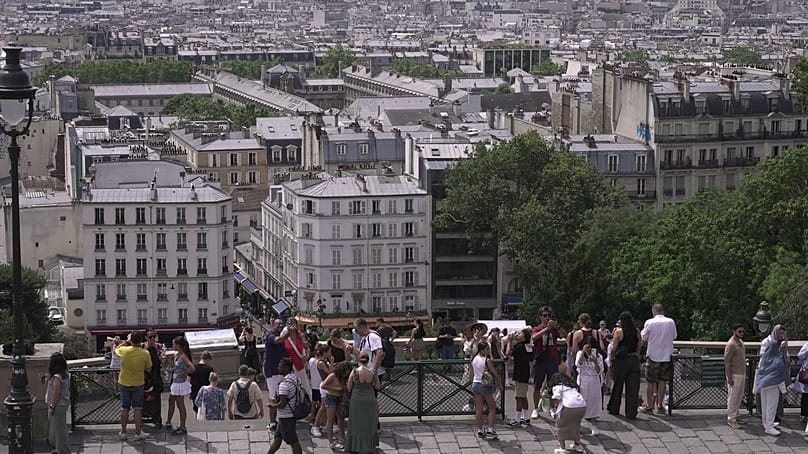
A view of roofs of Paris, Tuesday, June 23, 2026. AP Photo/John Leicester

Risk of death more than quadruples in Paris attics

Extreme heat can make them deadly. A study of a record-breaking 2003 heatwave blamed for 15,000 heat-related deaths found that living in a Paris attic room directly under the roof increased the risk of death by more than fourfold, France's public health agency said in a report last year.

And researchers who studied heat-related deaths in European cities for a study published in The Lancet Planetary Health journal in 2023 found that Paris had the highest risks of heat-related deaths out of 30 European capitals they looked at.

About three-quarters of Paris rooftops use sheets of zinc as covering, producing the city's magnificent grey vistas that have long inspired artists and filmmakers. The tradecraft of its zinc roofers is recognised as a valued cultural heritage for humanity by the UN cultural agency UNESCO. Zinc is weather-resistant, malleable and can be recycled. But as a metal, it also absorbs and conducts heat.

“People find the rooftops of Paris charming. There’s the image of the attic room. But in reality, when you look at who lives in these apartments, it’s often students paying a great deal of money for a small room,” said Maider Olivier, with The Foundation for Housing for the Disadvantaged campaign group.

“Not only are they extremely exposed to heat, but it’s also impossible to create cross-ventilation to get rid of the heat at night.”
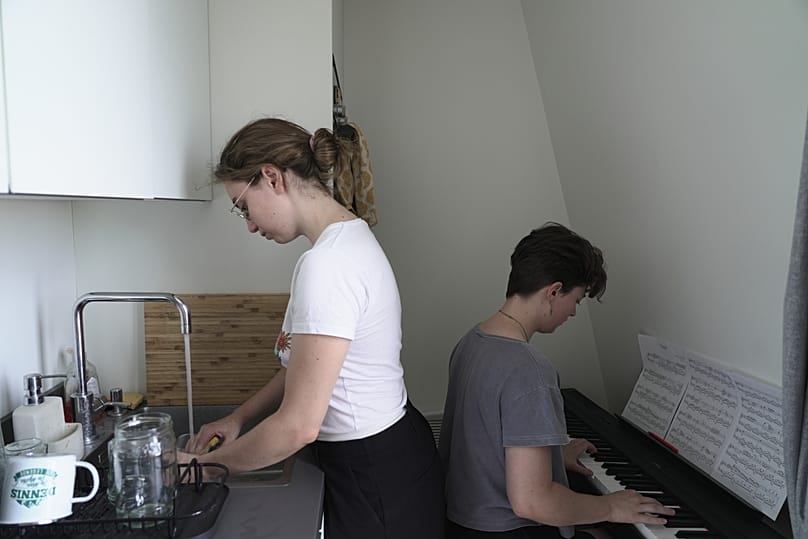
Amelie Kenney, right, plays piano in the attic apartment she shares with her partner Francesca Pilia, in Paris, Wednesday, June 24, 2026. AP Photo/John Leicester

Paris preservarion regulations hinder efforts to adapt to extreme heat

In the sixth-floor walk-up that Kenney shares with her partner, Francesca Pilia, also 23, they've squeezed a desk, a double bed and a small electric piano. The apartment's one window, protruding from the zinc roof, faces west, putting it in direct sun from midday to dusk. They split the rent of €735 a month.

“It was the cheapest place to be,” Kenney said. “I like that it looks out onto the square. I can see marriages almost every Saturday morning.”

“But now I think if I could spend extra money to be somewhere else, I would.”

Although office blocks, shopping centres, cinemas and other modern places where people congregate often have air conditioning, private apartments rarely do, especially in densely populated central Paris with its classic Haussmann-style buildings – named after the 19th century urban planner who transformed the city, giving it wide, tree-lined avenues and much of its architectural look.

Olivier, the housing campaigner, said that zoning regulations intended to preserve Paris' character, including its signature rooftops, hinder efforts to adapt housing to extreme heat.

“There are people who are unable to insulate their roofs or install shutters to block the sun and prevent their homes from overheating because of regulations to protect the rooftops,” she said. “But these regulations which protect the rooftops of Paris do not protect the people who live beneath those rooftops.”

Kenney, from Australia, and Pilia, who's Italian, are no strangers to heat. But the temperatures in Paris – with record highs for June nudging past 40C during the day and 25C at night — have been gruelling.

They've invested in a small electric fan, take cold showers, sponge themselves down with a wet rag, hydrate, and battle with the dilemma of whether to keep their window open.

“I’ll wake up and I’ll decide, it’s too hot, I have to open the window,” Kenney said. “An hour later, I wake up, I say, ‘It is too loud, I have to close the window.’”

“It’s a very, very Kafkaesque cycle.”


France takes nuclear reactors offline amid record heatwave
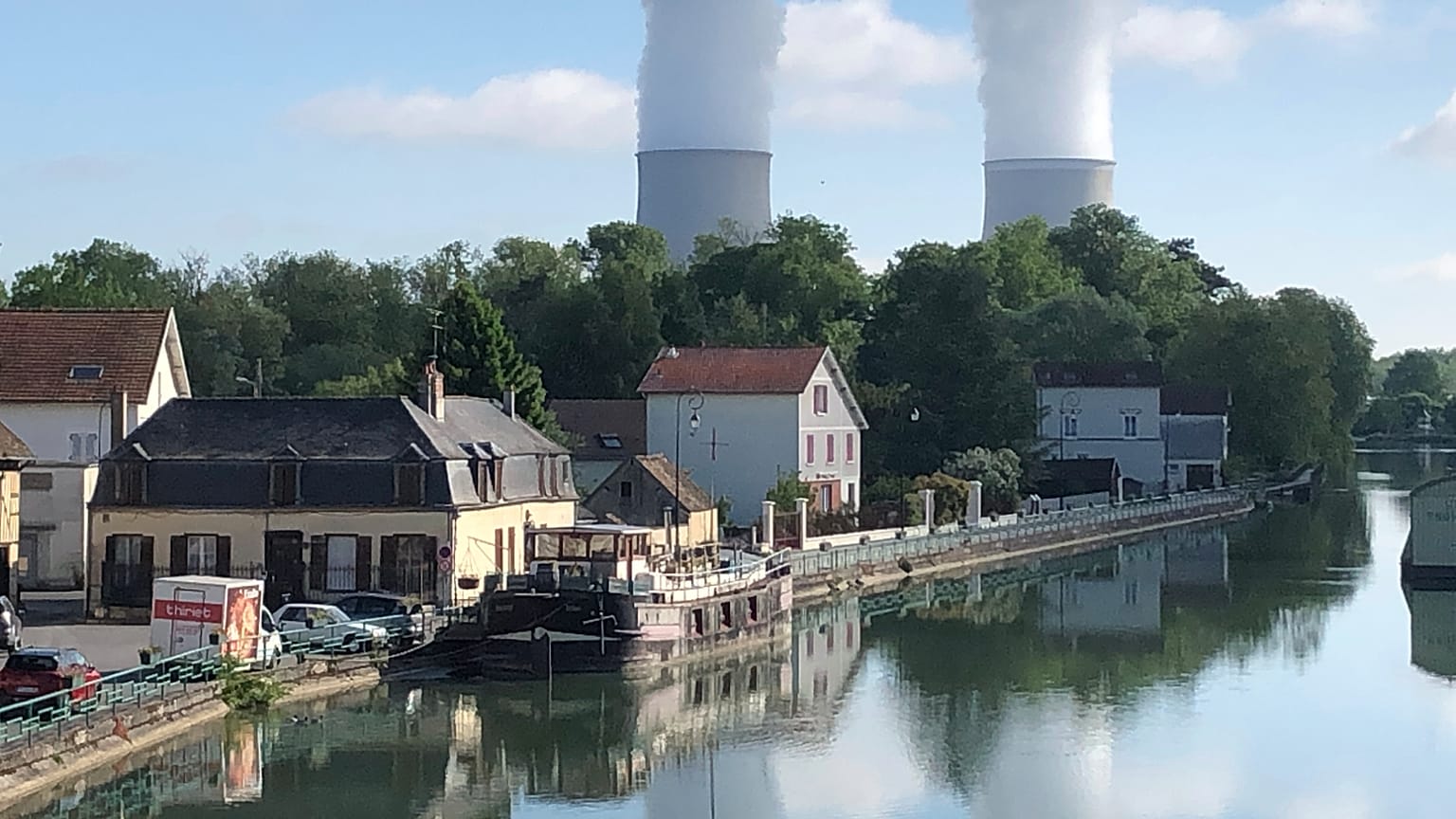
The nuclear power plant of Nogent-sur-Seine, east of Paris.
Copyright AP Photo\

By Rebecca Rommen
Published on

EDF cites environmental rules protecting river ecosystems as rising water temperatures force output cuts at sites on the Seine and Rhone.

France's state-owned energy giant EDF has temporarily shut down two nuclear reactors as a precautionary environmental measure, as the country grapples with a record-breaking heatwave that has already turned deadly. At least 18 heat-related deaths were confirmed in France as of Monday, and at least 40 people have drowned since June 18.

The reactors taken offline on Thursday are located at the Nogent-sur-Seine plant on the Seine River north of Paris, and at the Bugey facility on the Rhone near Lyon in the southeast. Both shutdowns were triggered by rising river temperatures, which EDF is required by law to monitor to avoid discharging water that could harm aquatic ecosystems.

Nuclear power plants use river water to cool their reactors before releasing it back into the waterway, typically at temperatures ranging from a few tenths of a degree to several degrees warmer than when it was drawn, depending on the site. During heatwaves, as rivers warm naturally, operators must cut or reduce output to stay within legally mandated discharge temperature limits.

Nogent-sur-Seine had already scaled back production on one of its reactors earlier this week "to limit the temperature increase between the water withdrawn from the Seine and the water discharged back into it, thereby protecting aquatic plant and animal life," EDF said.

A reactor at the Golfech plant on the Garonne river in southwestern France was also taken offline on Monday, with output reduced at a number of other sites across EDF's 57-reactor fleet, which together accounted for close to 70% of France's electricity generation last year.

Despite the outages, French grid operator RTE said on Wednesday that "France has sufficient generation capacity to meet electricity demand, including in the event of outages at certain production facilities."

France has placed more than half of its 96 departments under a danger-to-life red alert, urging citizens to avoid direct sunlight and exercise "absolute vigilance" as the heatwave tightens its grip. Météo-France reported that Tuesday 23 June was the hottest day recorded since measurements began in 1947.

The crisis is not limited to France. Germany, Spain, Portugal, and Switzerland are also anticipating scorching temperatures, which are starting to bring daily life to a standstill, with hundreds of schools shut or closed early and train services in cities including Paris and Brussels reduced to lower the risk of breakdowns.

This is Europe's third heatwave of the year, with forecasters warning temperatures could hit 43°C in the Mediterranean. The energy strain is already visible: in the peak days of last year's June and July heatwave, daily power demand rose by up to 14%, driving a two to three-fold increase in average daily power prices.

Scientists say the pattern is worsening. Parts of Europe are experiencing up to 40 additional days of extreme heat stress compared with the 1970s, according to a major new study.

​​Paris court rules TotalEnergies must account for indirect emissions and tighten climate policies

FILE - A sign for the French company TotalEnergies is displayed at headquarters March 21, 2025, in La Defense business district outside of Paris.
Copyright AP Photo/Thomas Padilla, Fil


By Jean-Philippe Liabot
Published on

A partial victory, the ruling stopped short of making TotalEnergies directly liable for its customers’ actions.

A court in Paris ruled on Thursday (26 June) that energy company TotalEnergies can no longer ignore its indirect emissions and the environmental risks caused by the consumption of its products.

The French oil and gas giant has been given six months to formally assess and report on the environmental risks generated by the use of its fuels and natural gas by consumers, and not only those from its own plants.

For the oil major, this includes the transport of goods, employee travel, and above all, the use of the products it sells.

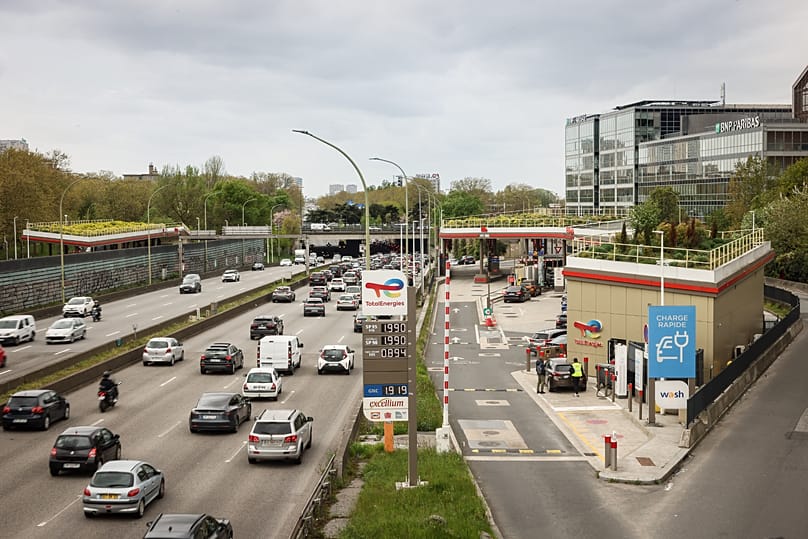
The simplest example: when you go to a TotalEnergies service station and fill your car with petrol, the CO2 that comes out of your exhaust pipe as you drive automatically forms part of TotalEnergies' indirect 'Scope 3' emissions.

The court has not, however, gone so far as to consider TotalEnergies legally responsible for all its customers' behaviour, nor, as the claimants had wanted, to order it to halt its new oil and gas projects around the world and reduce its oil and gas production by 37 per cent and 25 per cent respectively by 2030.

The City of Paris, which was among the claimants alongside France Nature Environnement, the NGO Notre Affaire à Tous and the association Sherpa, on Thursday welcomed the ruling as "a historic decision for French climate law".

"For the first time, a judge has recognised that climate risks do indeed fall within large companies' duty of vigilance, and that no fossil-fuel multinational can evade this responsibility", said Alice Timsit, deputy mayor of Paris, in a statement.

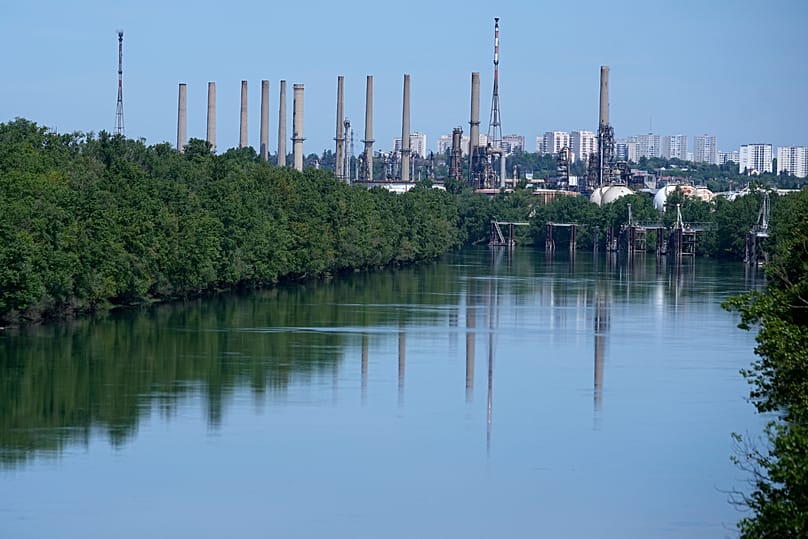
The TotalEnergies refinery in Feyzin near Lyon in June 2026 AP Photo

France's pioneering duty of vigilance law

This ruling is the first concrete application of the pioneering 2017 French law on the duty of vigilance, which requires very large companies to take responsibility for the impact of their activities, not only within their offices but along their entire production chain.

The law targets the giants of the economy. It applies to companies based in France that employ at least 5,000 staff within the company and its direct or indirect subsidiaries in France, or at least 10,000 staff including their subsidiaries anywhere in the world.

A TotalEnergies service station in April 2026 AP Photo


Until now, TotalEnergies has mainly highlighted the efforts made to reduce the emissions linked to its own activities, such as those from its production sites, offices or infrastructure (Scope 1 and 2).

Yet for an oil group, these emissions account for only a small share of its overall carbon footprint. The bulk (90 per cent) comes from Scope 3.

By requiring TotalEnergies to fully take these Scope 3 emissions into account in its climate risk analysis, the French courts have found that the company can no longer restrict itself to its direct emissions alone and must also consider the environmental impact of the use of its products.

By strengthening the transparency obligations of the French energy giant, this ruling could therefore lead to closer scrutiny of its climate strategy and prompt further legal action if its vigilance plan is deemed insufficient.


TotalEnergies ordered to account for client emissions in landmark climate ruling


Cover image: A PROPOS © FRANCE 24

Issued on: 26/06/2026 
10:24 min

In a landmark ruling, a French court has ordered energy giant TotalEnergies to account for its clients' emissions in the company's climate plan. It is the first time France's Corporate Duty of Vigilance law has been applied to climate change. FRANCE 24's Sharon Gaffney speaks to Justine Ripoll from Notre Affaire à Tous, one of the NGOs that brought the litigation to court.


Paris court gives oil giant TotalEnergies


deadline to tighten climate policies


Paris (Associated Press) – A court in Paris ruled on Thursday that energy giant TotalEnergies must account for its consumers’ greenhouse gas emissions, giving the French company six months to adjust a legally mandated risk assessment.


Issued on: 25/06/2026 - RFI

TotalEnergies' headquarters, in the La Défense business district near Paris. AFP - LUDOVIC MARIN

The decision fell short of requests from the climate organisations who brought the lawsuit to force the company to reduce its oil and gas production.

The court scheduled a new hearing for January 2027 to consider TotalEnergies’ new assessment under a 2017 law that requires companies to prevent human rights abuses and environmental risks.

It is the first time that the so-called corporate duty of vigilance law is being applied to climate change.

The law is not intended to make companies “responsible for the risks linked to climate change, which result from all human activity on the planet since the Industrial Revolution” the court said in a statement, but rather requests them to act “according to their own situation”.

Environmental groups Notre Affaire à Tous, Sherpa, ZEA, France Nature Environnement launched the proceedings in 2020.

They claim that TotalEnergies is one of the largest historical emitters of greenhouse gas and have asked the court to require the company to reduce oil production by 37 percent and gas production by 25 percent by 2030.

The lawsuit also asks for a halt to all new fossil fuel projects.

French oil giant TotalEnergies' record profits fuel calls for windfall tax


Punishing heatwave

The decision comes as Europe is in the midst of a brutal heatwave. Punishing temperatures extended to the United Kingdom and Spain, where weather agencies issued red alerts – like France – about the risks of extreme heat for tens of millions of people.

The iconic Eiffel Tower and the Louvre museum have been forced to restrict visiting hours and school and transportation schedules have been interrupted across the continent.

Human-caused climate change is tied to increasingly extreme weather, and UN climate agency projections say the next five years are likely to shatter more heat records.

Europe is the world’s fastest-warming continent, with temperatures increasing twice as fast as the global average since the 1980s, according to the European Union’s Copernicus Climate Change Service.

Over the last four years, more than 200,000 people across Europe died from heat-related causes, and most of those deaths were preventable, the World Health Organization’s Europe office said this month.

Series of rulings


The decision is the latest in a series of rulings in climate change cases.

Last year, the United Nations’ top court, the International Court of Justice, said countries could be in violation of international law if they fail to take measures to protect the planet from climate change.

In 2024, the European Court of Human Rights ruled that countries must better protect their people from the consequences of climate change.

In 2019, the Netherlands’ Supreme court handed down the first major legal win for climate activists when judges ruled that protection from the potentially devastating effects of climate change was a human right and that the government has a duty to protect its citizens.


'Big polluting companies like Total have climate obligations under French law'


Issued on: 25/06/2026 - 20:27

Genie Godula is pleased to welcome Justine Ripoll, Campaign Manager for French NGO "Notre Affaire à Tous", and one of four NGOs who brought the climate case against Total Energy. She argues that climate litigation not as a symbolic confrontation with the fossil fuel industry, but as an evolving mechanism of governance that seeks to clarify and enforce corporate responsibility under climate law. Ripoll shifts the conversation from technological inevitability to political and ethical prioritisation, arguing that the remaining carbon budget should be allocated according to collective social needs rather than commercial interests. She asserts that multinational energy companies can no longer position climate change solely as a matter for governments. Instead, she contends that businesses whose activities substantially contribute to greenhouse gas emissions carry independent legal obligations that courts are increasingly willing to recognise.

Video by:  
Genie GODULA


CLIMATE REVAHCHISM

Eleven EU countries call for methane rules pause amid energy security fears

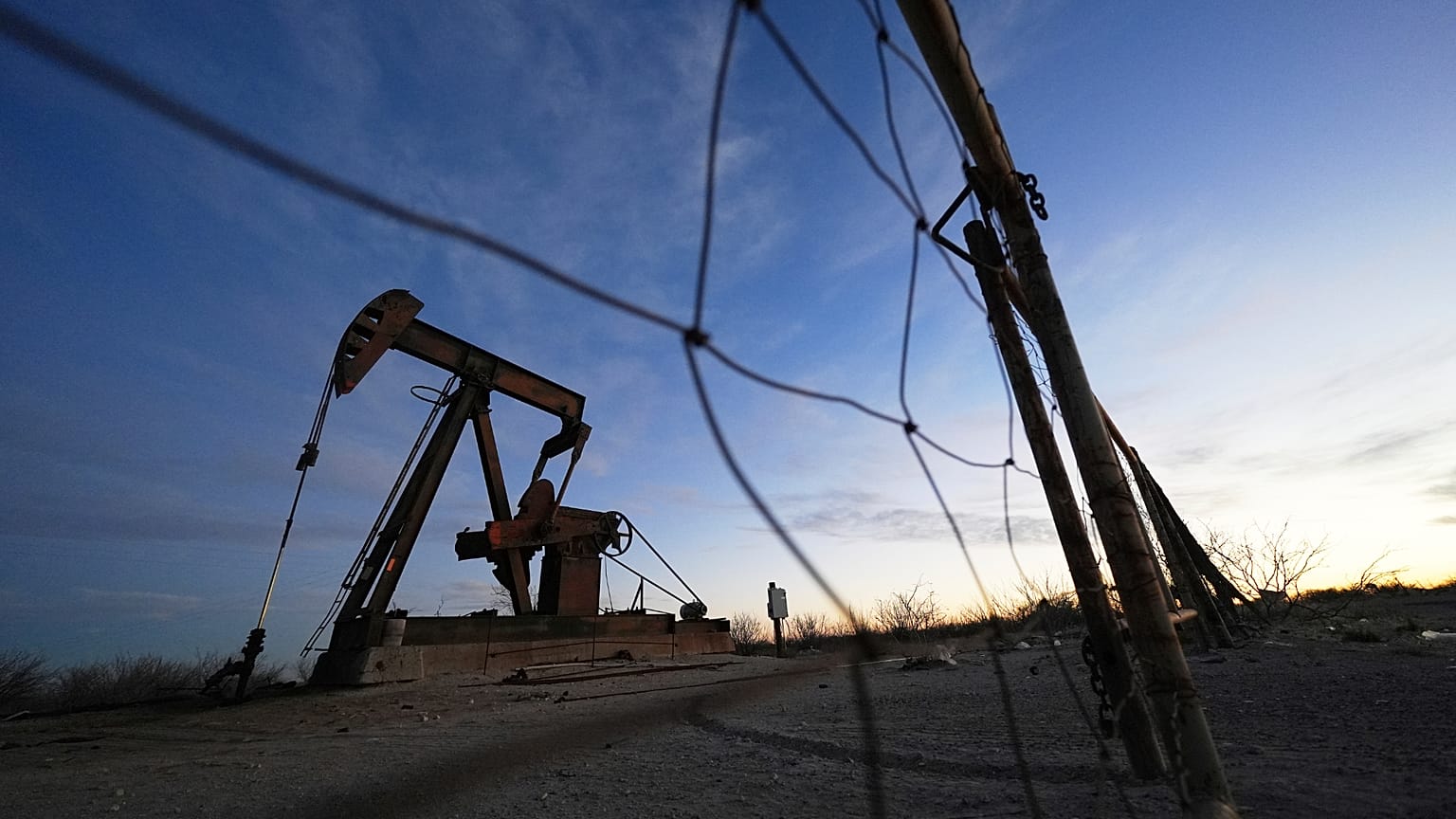
A pumpjack is visible before sunrise Feb. 26, 2025, in Kermit, Texas.
Copyright AP Photo / Julio Cortez

By Marta Pacheco
Published on

The eleven EU countries say that the methane rules could jeopardise natural gas supply, especially from foreign suppliers who would face extra costs. Environmentalists warn the EU not to cave in to pressure while the United Nations urged world nations to do more to mitigate methane emissions.

Eleven EU countries led by the Czech Republic and Slovakia are urging the European Commission to delay key provisions of the EU's methane rules by at least three years, arguing that immediate enforcement could threaten Europe's energy security at a time of geopolitical instability, according to a document seen by Euronews.

The eleven countries launched their plea as energy ministers prepare to gather in Luxembourg on 26 June while the European Commission weighs waiving penalties linked to the bloc's methane rules for three years for oil and gas companies that breach its methane emissions law.

But the 11 member states say the Commission's proposed recommendation not to impose penalties during a three-year "transition period" is insufficient, saying the proposal is "non-binding" and that "significant legal uncertainty" remains for importers negotiating long-term supply contracts.

"While fully supporting the objective of reducing methane emissions, we consider it necessary to introduce carefully targeted adjustments, including a postponement of EU methane rules obligations by at least three years," reads the document.

Generated mainly by fossil fuel production and livestock digestion, methane is a highly potent greenhouse gas, with a global warming potential more than 80 times that of carbon dioxide over a 20-year period. The International Energy Agency says the gas is responsible for about 30 percent of the rise in global temperature since the Industrial Revolution.

EU member states adopted methane rules in May 2024, introducing the bloc’s first framework for measuring, reporting and verifying methane emissions in the energy sector as part of efforts to curb one of the most potent greenhouse gases. Failure to honour such requests for data incurs penalties.

Geopolitics and supply security

Since Russia's invasion of Ukraine, Europe has sought both to accelerate climate action and diversify energy imports.

The methane rules were designed to reduce emissions across the energy value chain, but fears grow that demanding compliance from foreign suppliers too quickly could limit available supplies and increase costs.

The 11 governments say that while they remain committed to reducing methane emissions, current market conditions make strict implementation risky. They cite ongoing disruptions in global oil and gas markets, particularly linked to instability in the Middle East, which have already tightened supply and increased uncertainty ahead of future winter demand peaks.

"In this context, it is essential that EU methane rules don't unintentionally restrict access to diversified gas and crude oil sources," reads the document, which also warns that import requirements under the methane law could discourage some foreign suppliers from selling to the EU if they lack advanced methane-monitoring systems.

These fears have been fuelled by pressure from the US and more recently Qatar, a key LNG supplier to the EU whose production has been severely hit by the war in Iran, according to a public letter to EU leaders sent by a group of other major energy exporters, including Algeria and Nigeria.

"The EU faces a narrow window to make necessary changes to the methane rules as importers have already begun the process of purchasing oil and natural gas that will be stored for delivery in 2027, and as of now there is no viable path to compliance with the regulation," reads the public letter, referring to the year the rules are set to kick in.

The 11 EU capitals warn that under this scenario, the EU's supplier base could redirect LNG and oil cargoes to less regulated markets and increase energy prices for consumers and industry

"A coordinated, time-limited postponement of EU methane rules is essential to ensure effective and harmonised implementation while safeguarding the EU’s energy security during a period of heightened geopolitical uncertainty," reads the capitals' plea.

"This approach preserves the environmental integrity of the Regulation, offers legal and operational clarity, and maintains stable access to diversified natural gas and crude supplies until current supply risks subside."

Environmentalists and UN call for more action

Yet the foreign pressure does not cut in one direction. Democratic Party lawmakers in Washington have recently urged the EU to uphold its methane rules and refrain from exempting US energy operators if US domestic standards lack sufficient accuracy or enforcement.

Esther Bollendorff, fossil free program manager at the NGO Climate Action Network Europe, said the calls from the EU member states to halt the methane rules "worryingly" echo the fossil fuel industry and the Trump administration’s campaign to roll back the law, framing it as a "threat to security of supply".

Instead, Bollendorff encouraged the EU "not to give in to pressure" and to fully implement the methane law while phasing out its dependence on fossil fuels.

"In reality, the regulation does not ban gas imports. Instead, it provides phased compliance pathways for suppliers, and compliant global gas supply already exceeds the EU's import needs by more than three times," Bollendorff told Euronews, dismissing previous studies stating the opposite.

"Cutting methane can deliver immediate benefits that go beyond climate, from improved public health to stronger energy security. The EU has the tools it needs to act," she added, recalling the recent call by the UN secretary general António Guterres for world nations to take action against methane emissions at a key climate summit in London.

“We eliminated ozone-depleting chemicals. Methane pollution must be next,” Guterres said from London. “I call on producer and consumer governments alike to set a new global standard for the oil and gas sector: near-zero methane emissions across the value chain.”


‘Climate change is running rampant’: Europe’s heatwave ‘virtually impossible’ 50 years ago

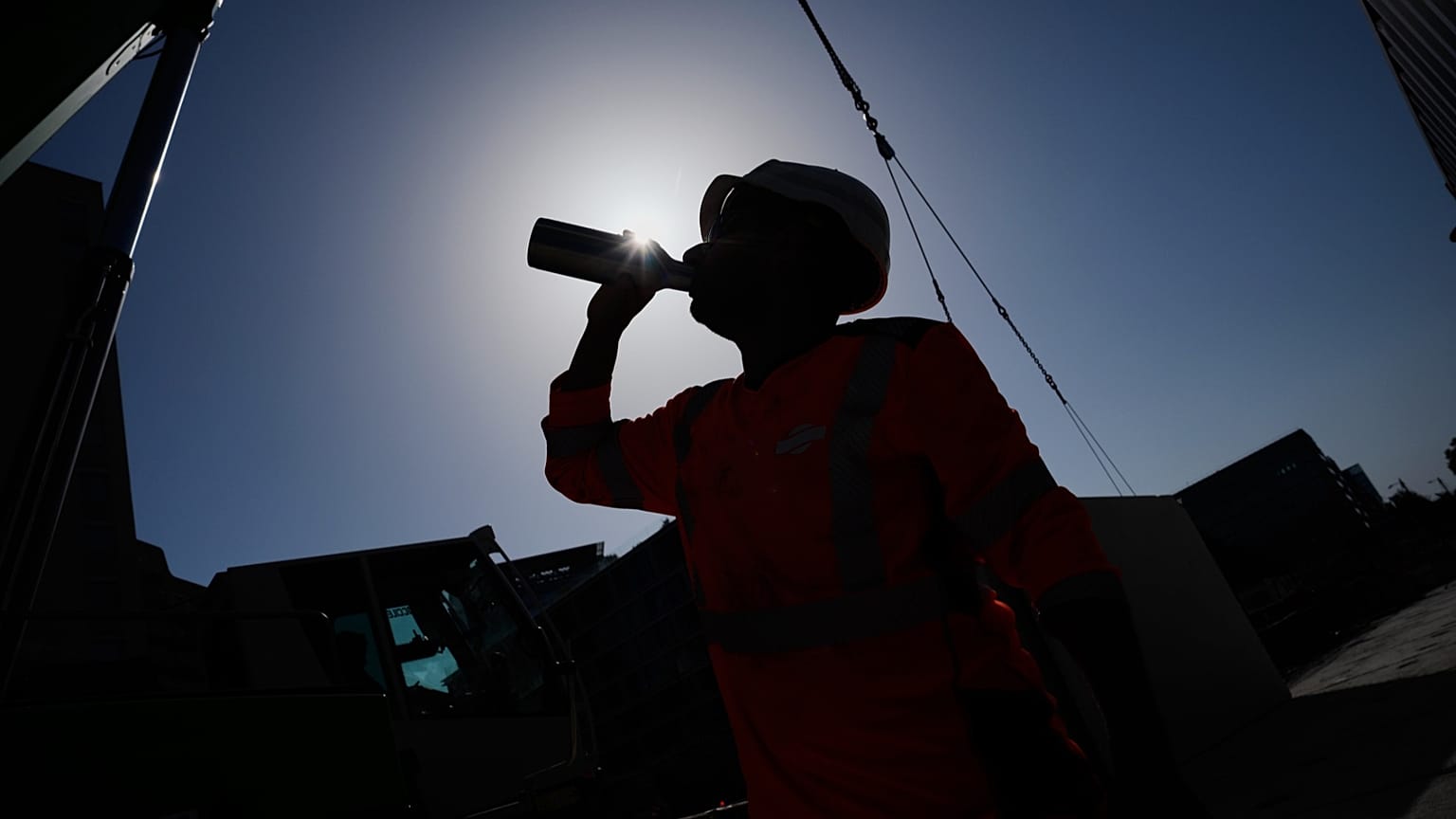
A worker drinks water on a construction site during high temperatures in Boulogne Billancourt, outside Paris, Wednesday, June 24, 2026.
Copyright Copyright 2026 The Associated Press. All rights reserved.


By Liam Gilliver
Published on

“Continued fossil-fuel emissions are directly responsible for the disruption people are experiencing this week,” climate scientists warn.

The extreme heat currently scorching Europe would have been almost impossible just a few decades ago – as scientists warn that climate change is “running rampant”.

Record-breaking temperatures have caused widespread havoc across the continent, with schools, hospitals, transport and outdoor workplaces all struggling to cope. Drowning deaths have surged in France, which recently experienced its hottest day since measurements began, as citizens scrambled to cool down.

Across the channel and the UK is bracing for highs of up to 38°C, already witnessing its hottest June day on record after temperatures climbed to 36.1°C.

While blistering temperatures are predicted to abate in Western Europe, weather forecasters warn that weekend highs of 41°C could hit parts of Hungary, Bulgaria and Czechia. These typically cooler nations are significantly less prepared for intense weather than the Mediterranean, for example.

Making ‘impossible’ heatwaves possible

The heat is being driven by a blocked high-pressure pattern that traps hot air over Europe and draws warm air up from the Sahara.

In a rapid attribution analysis, scientists from World Weather Attribution (WWA) used both observed and forecast temperature data to analyse the hottest three-day period across a large area of Europe that has been smothered by the heat dome.

They found that both the daytime highs and overnight temperatures seen during this heatwave would have been “virtually impossible to occur at this time of year” as recently as 1976 – just 50 years ago.

A similar heatwave occurring in that historic climate would be 3.5°C cooler, researchers say.

“The science of how climate change is worsening heatwaves is settled,” says Dr Theodore Keeping of Imperial College London. “Continued fossil-fuel emissions are directly responsible for the disruption people are experiencing this week in their homes, schools and workplaces.

“The speed of change is startling. Every few years we are seeing heat records shattered in Europe. This year it has been in consecutive months.”

Europe’s surging tropical nights

The analysis also found that sweltering overnight temperatures that have been keeping Europeans awake this week are about a hundred times more likely today than they were just 23 years ago during the infamous 2003 European heatwave.

Tropical nights, which are where the temperature never dips below 20°C during a 24-hour period, have been extremely common this week across Europe.

This can have a significant impact on human health, as the body relies on cooler temperatures during the night to regulate its core temperature and recover from daytime heat.

In fact, studies have shown that high nighttime temperatures are linked to increased mortality, particularly among older adults and those with pre-existing health conditions.

Out of the 854 cities analysed across 30 European countries, 45 per cent have broken – or are expected to break – their all-time Wet Bulb Globe Temperature (WBGT) record in late June, WWA found.

WBGT is a measure of heat stress and the body’s ability to cool itself through sweat evaporation. A separate study, which was recently published in the science journal Nature, found that in southern Spain, Italy, Greece and Türkiye some areas will see up to 40 additional days with strong heat stress compared with the 1970s.

Heat stress comes with a slew of symptoms such as elevated core body temperature, increased heart rate, rapid breathing, excessive sweating, nausea and dizziness.

In severe cases, heat-related illnesses such as heat exhaustion or heat stroke can be deadly.

Extreme heat is shattering records across Europe, and the science is very clear about why: climate change is running rampant.
 Simon Stiell 
UN Climate Change Executive Secretary

According to the UN, fossil fuels – coal, oil and gas – are by far the largest contributor to global climate change, accounting for around 68 per cent of global greenhouse gas emissions and nearly 90 per cent of all carbon dioxide emissions.

“But the solutions are equally clear: a faster shift to clean energy – which is now much cheaper than fossil fuels – as well as protecting forests and building climate resilience," says UN Climate Change Executive Secretary Simon Stiell.

"No nation can afford more business-as-usual. We must step up the pace, together.”

‘Not El Nino’: The real reason behind Europe’s extreme heat

Despite media coverage suggesting Europe’s heatwave is being caused by El Niño, a natural weather phenomenon that is known to drive up global temperatures, WWA says the event has had no role in the extreme June temperatures.

While El Niño’s impact can be severe, disruption is mainly felt in the tropics. Europe may be indirectly impacted, but this is likely to be later in the year, during autumn and early winter.

“Scientists like me are beginning to sound like a broken record,” says Professor Friederike Otto of Imperial College London.

“We put out similar quotes year after year reacting to heat extremes that climb ever higher. Yes this is climate change, yes it’s us, no it’s not El Niño, yes we have the solutions, no we’re not implementing them fast enough

“It’s really now a question of what kind of future we want for ourselves, and whether we’re willing to do what it takes to secure it.”


Current Europe heatwave 'impossible'


without human-induced climate change


A study comparing the heatwave that has swept across Europe this week with heatwaves in 1976 and 2003 has found that human-caused climate change is "unequivocally" responsible for the extreme heat over the last week – with France recording its hottest day since records began in 1947 on Wednesday.


Issued on: 26/06/2026 - RFI

A couple protect themselves from the sun in front of the Louvre, which closed to the public on Wednesday as Paris recorded a record 40C. AFP - DIMITAR DILKOFF

Millions of people across France, Spain, Italy and the United Kingdom have faced temperatures above 40C this week.

The intense heat has been linked to dozens of deaths and disrupted power supplies, with schools and tourist sites closed across parts of Europe.

A rapid study by the World Weather Attribution (WWA) group published on Friday found it would have been "virtually impossible" for such exceptional temperatures to occur in June 50 years ago.

The scientists compared the current heatwave with how the same weather pattern would have unfolded in 1976 and 2003 – years when heatwaves also occured.

They found an equivalent event in June 1976 would have been around 3.5C cooler during the day and significantly cooler at night, while one in 2003 – when tens of thousands of people died across Europe – would have been about 2C cooler.

The study warned that unusually warm nights pose a particular health risk because they prevent the body from recovering from daytime heat. In parts of France, overnight temperatures have remained above 20C for more than a week.

Why is Europe heating twice as fast as the rest of the planet?


'El Niño' not responsible

"The weather pattern itself is not particularly unusual, but the temperatures are – or at least they used to be, withyout human-induced climate change," said Friederike Otto, professor of climate science at Imperial College London and co-founder of the WWA. "Climate change is unequivocally to blame."

The El Niño weather pattern – a natural warming climate phase – has "no role in driving the heat", the authors said.

Scientists have long said carbon emissions from burning coal, oil and gas are making heatwaves more frequent and more intense. Europe is the world's fastest-warming continent and global average temperatures are now about 1.4C above pre-industrial levels.

"Scientists like me are beginning to sound like a broken record," Otto said.

"We put out similar quotes year after year, reacting to heat extremes that climb ever higher. Yes, this is climate change, yes, it's us, no, it's not El Niño. Yes, we have the solutions. No, we're not implementing them fast enough."

The study found that nearly half of the 850 European cities analysed have reached or were forecast to reach record heat-stress levels, combining temperature and humidity, increasing the risk of heat-related illness.

(with newswires)


Achieving net-zero carbon emissions can reduce the intensity, duration, and frequency of heat waves


FRANCE24
Issued on: 23/06/2026 - 20:33


Haxie Meyers-Belkin is pleased to welcome Dr. Chloe Brimacombe. She presents a clear and sobering analysis of the current European heatwave as both a meteorological event and a societal stress test. Her argument is that the exceptional temperatures affecting France are not merely unusual because of their intensity, but because they combine several compounding factors: their early arrival in the season, elevated humidity that amplifies health risks, and a broader trend toward longer and more frequent heatwaves across Europe. While she emphasizes the continued necessity of decarbonization and achieving net-zero emissions, her analysis focuses equally on adaptation. Schools, hospitals, care homes, and public infrastructure must be redesigned for a hotter climate.


Video by:  Haxie MEYERS-BELKIN