Tuesday, July 14, 2026


Trees for hotter cities: new approach can bolster community input in meeting targets


Aberystwyth
Tree-lined avenue 

image: 

Tree-lined avenue

view more 

Credit: Steve Lovegrove


Efforts to plant more trees in cities could be boosted thanks to a new tool for planners and community groups, published by an international group of researchers.

Residents, policymakers and tree-officers in Cardiff, Milton Keynes, Edinburgh, York and Camden worked with academics to develop new advice to grow trees in a way that benefits both people and nature.  

Trees in urban areas are increasingly recognised as important for tackling climate change, improving biodiversity, and supporting health and wellbeing.

They also help cities adapt to rising temperatures: providing shade and reducing exposure to extreme heat.

The UK Government has a target to increase tree planting to 30,000 hectares per year as part of efforts to tackle climate change and biodiversity loss.

The new free-to-use tool, Tree Value Visions, aims to support councils and communities in thinking about the future of trees in towns and cities in a more inclusive way. It also includes a free online training course available from The Open University.

By providing a proven, out-of-the-box solution, cash-strapped local authorities can make the most effective use of available resources for community participation. 

By identifying priority actions that meet multiple needs, the tool encourages local authorities to integrate the wider importance of trees in people’s everyday lives across different policy areas, such as housing, transport and climate resilience.

The research, published in the peer-reviewed journal npj Urban Sustainability, suggests that spending and planning decisions often focus on measurable benefits such as carbon storage or the visual impact, but give less attention to deeper connections people have with the natural world.

The new Tree Value Visions tool seeks to address this by using four future visions of urban treescapes. These explore different ways of thinking about trees in cities: as a defining aspect of place, as a set of resources, as part of ecological systems and as part of shared communities between people and trees.

Project Lead Professor Jasper Kenter, a Research Fellow in Deliberative Ecological Economics at Aberystwyth Business School, said:

“Urban treescapes are not just environmental systems, they are places where people live their lives, form memories and build relationships. They shape how communities experience their neighbourhoods, from everyday travel and leisure to longer-term connections with nature and place. 

“Our new tool helps bring those experiences into decision-making, alongside environmental and economic considerations. It is designed to support more inclusive discussions about the future of urban trees and to encourage communities and policy makers to think about how we live from, in, with, and are part of, nature in cities.” 

Representative groups of residents in several UK cities, including Cardiff, Milton Keynes, Edinburgh, York and Camden, have helped develop and test the tool to identify priorities and potential actions for improving their local treescapes.

The research builds on the IPBES Values Assessment, an international framework that highlights the different ways people value nature. The work was based on a collaboration between Aberystwyth University, Loughborough University, the University of York, The Open University, Forest Research, the Stockholm Environment Institute, and Ecologos Research, supported by the Local Government Association, the London Borough of Camden, City of Edinburgh Council, and international authors from Washington State University and the University of Oregon.

It was funded by UK Research and Innovation (UKRI), the Department for Environment, Food and Rural Affairs (Defra), the Welsh Government, the Scottish Government and the Forestry Commission through the Future of Treescapes Programme.


Experts to deliver verdict on EU social media controls for children

An expert committee is due to deliver its recommendations on Monday on how the European Union should regulate children's access to social media, including a potential blanket ban. More than 20 countries worldwide, including France, have already implemented or proposed age restrictions.


Issued on: 13/07/2026 - RFI

A boy looks at social media on his smartphone. The European Union is weighing how to regulate children's access to online networks. © AFP - DAVID GRAY

Dozens of experts from various countries have contributed to the recommendations, which will be submitted to the European Commission.

The EU's executive body commissioned the report last year to help shape its proposals for new regulations on children's access to social media.

Commission President Ursula von der Leyen has already indicated that she favours a restrictive approach.

"Just as in my day we as a society taught our children that they could not smoke, drink and watch adult content until a certain age, I believe it is time we consider doing the same for social media," she said in her state of the union address in September.

Invoking Australia's ban on social media for under-16s, von der Leyen said she was following the outcome of the policy closely "to see what next steps we can take here in Europe".

Several member states are on board with a ban and von der Leyen could outline proposed legislation as early as September, multiple officials told Politico news site.

Von der Leyen steps up EU child safety crackdown on social media giants
Global debate

France is one of the EU countries leading the call for tighter controls on social media, with the government seeking to fast-track legislation that would ban under-15s from major platforms from the start of the new school year in September.

The bill has been held up by disagreements in parliament over whether to apply the ban to all social networks or just those that regulators judge to be harmful – a distinction that the European Commission has warned could make it incompatible with EU law.

With several member states pushing ahead with their own legislation, the EU is under pressure to come up with a consistent joint approach.


Australia became the first country to enforce age limits for social media in December 2025. © AFP - SAEED KHAN

Italy is also considering a ban for under-15s, while Greece has announced that it will introduce one from 2027.

Austria and Slovenia are preparing legislation to prohibit access for under-14s and under-15s respectively, while Spain and Portugal have proposed setting a minimum age of 16. Germany, Denmark and Sweden are also debating age restrictions.

Outside the EU, the UK, Norway and Canada are among countries preparing to ban social media for under-16s. Turkey has already passed a ban for under-15s that will come into effect later this year.

Australia became the first country to implement age restrictions in December 2025, followed this year by Indonesia and Malaysia.

In China, where the internet is tightly regulated by the state, minors' access to social media has been restricted progressively since 2019. Rather than being barred outright, young users have their screen time limited via time caps and curfews.

(with AFP)


DR Congo health workers on Ebola front line threaten strike


Rwampara (RD Congo) (AFP) – Health workers fighting the Ebola outbreak in DR Congo are threatening to strike over unpaid wages, as the World Health Organization warned Tuesday the extent of the epidemic could be four times larger than reported.


Issued on: 14/07/2026 - RFI

The grave of a young doctor (R) in Nyamurongo cemetery, Ituri, where many Ebola victims are buried © Jospin Mwisha / AFP

The highly infectious virus has killed more than 700 people among the nearly 2,000 confirmed infected in the Democratic Republic of Congo since the outbreak was declared on May 15, according to the latest official toll published on Tuesday.

But the WHO said the scale of the outbreak could be two to four times the official estimates.

Complicating the response effort, health workers at the epicentre of the epidemic told AFP they had not been paid since the virus was detected.

At the Ebola treatment centre in Rwampara -- one of the worst-hit areas at the epicentre of the outbreak in the northeastern province of Ituri -- health workers burned tyres in protest on Monday and temporarily blocked access to the centre.


"We've been treating Ebola patients without pay since May 15. We continue to do so because that is our oath but we are working in very difficult conditions," doctor Pascal Bahoya told AFP.

Doctors at the centre said if the authorities did not heed their "48-hour ultimatum for salaries and bonuses" to be paid, they would launch a "full-scale strike" with no minimum service provided.

During a visit to Ituri on Thursday, Health Minister Samuel Roger Kamba acknowledged "delays in payment" and gave assurances that the "organisational issue" at the root of the problem would be resolved.

Health workers on the front line are struggling to keep up with the spread of the virus in the vast central African country, which is among the poorest on the planet.

At least 112 healthcare workers have been infected and 35 have died, according to the national public health institute (INSP).
'Much bigger than estimated'

Ebola, a viral haemorrhagic fever that spreads through direct contact with bodily fluids, can cause severe bleeding and organ failure.

There is no vaccine or specific treatment available for the Bundibugyo strain of Ebola, which is causing the current outbreak.

It has now spread to five provinces in eastern DRC -- from the epicentre in Ituri to North Kivu, South Kivu, Tshopo and Haut-Uele.

Mineral-rich eastern DRC has been plagued by conflict for three decades. Many people have been displaced by violence and live in camps that the United Nations says lack clean water and sanitation.

Ituri borders South Sudan and Uganda, which has reported 20 cases, including two deaths.

As of July 12, 727 patients were being treated in Ebola treatment centres in the areas affected.

A clinical trial involving two treatments is currently underway.

The true scale of the outbreak -- which is believed to have begun several months before it was detected -- remains difficult to gauge.

Humanitarian workers on the ground have said they believe the official figures are underestimates.

WHO emergencies director Chikwe Ihekweazu told reporters in Geneva that the UN health agency's modelling indicated "the scale of the outbreak is at least two to four times the number of cases that we have found".

The international community has raised $1.5 billion to support the response in the DRC, whose healthcare system is chronically underfunded.

© 2026 AFP

BAN DEEP SEA MINING

Arctic seabed mission documents fragile marine life threatened by Norway's deep-sea mining plans


By Denis Loktev
Published on

A month-long Arctic expedition has revealed deep-sea ecosystems in an area being considered for mining.

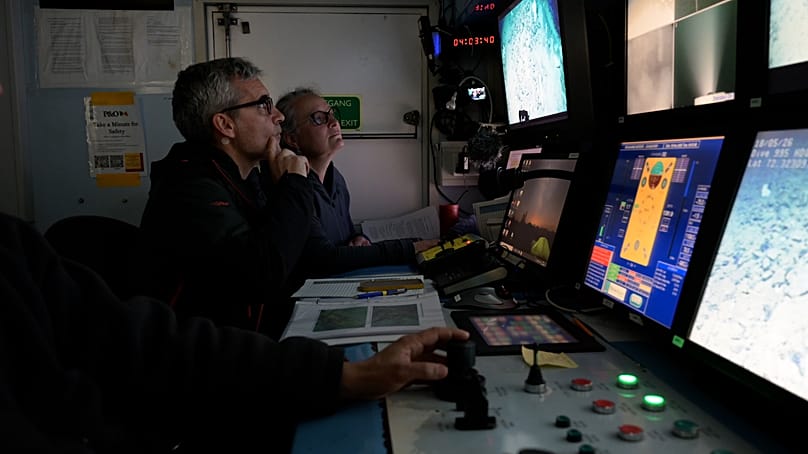
For a month, a team of international scientists explored the Arctic seabed off the coast of Norway. Remotely operated vehicles (ROVs) roamed the ocean's seamounts and hydrothermal vents, plunging as deep as 3,000 metres.

Their mission? To gather evidence on the rare and fragile marine life that could be threatened by plans to mine the seabed for critical minerals.

The expedition, run by Greenpeace, was livestreamed, drawing more than 450,000 viewers on social media platforms.

Scientists at the ROV control room Greenpeace

Among the species filmed was a rare Dumbo octopus – coincidentally, the mascot of the expedition. Researchers also gathered more than 400 sponge samples and identified several species that may be new to science.

Anne Helene Tandberg, a researcher at the University in Bergen who took part in the expedition, says deep-sea ecosystems are particularly slow to recover from disturbances. "Very many of the species are long-lived and don't produce very many offspring, so if something happens, they have very little [capacity for] restitution," she says.

The deep sea, even though it's far away from us, is already suffering a lot of problems.
 Anne Helene Tandberg 
University in Bergen

Tandberg adds that climate change is compounding the problem. Many deep-sea invertebrates rely on cold, stable water and external skeletons built from calcium, both of which are affected as oceans warm and acidify. "The deep sea, even though it's far away from us, is already now suffering a lot of problems," she says.

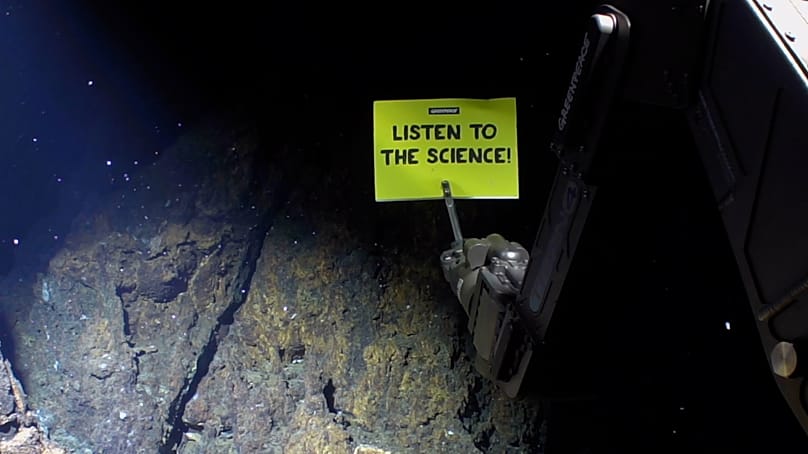
An ROV arm holding a "Listen to the science" poster at the Arctic seabed Greenpeace

Seabed mining plans face fierce debate

The area surveyed during the expedition was opened up for deep-sea mining by the Norwegian government in 2024. Exploration has since been paused until at least 2029, following objections from environmental groups, scientists, fishing communities and opposition parties in Norway.

Supporters of deep-sea mining, including some governments and mining companies, argue that the seabed holds reserves of critical minerals – such as cobalt, nickel and rare earth elements – needed for batteries, electric vehicles and other green technologies, and that these reserves could ease pressure on land-based supply chains. Norway has cited this rationale in pursuing its own domestic seabed resources.

Critics, including marine scientists and conservation groups, counter that the environmental risks are poorly understood and potentially irreversible, and that sufficient mineral reserves still exist on land. There are calls for a moratorium until the impacts are better known. Negotiations over international mining rules, led by the UN's International Seabed Authority, are still ongoing.

For the scientists behind the Arctic expedition, the priority is to gather evidence before any decision is made. Their samples and footage will be analysed in the coming months, with findings expected to feed into proposals for marine protected areas in Norwegian waters.


From AI to greenlash: How is climate disinformation evolving?


By Estelle Nilsson-Julien & Tamsin Paternoster
Published on

Experts say climate disinformation is evolving to increasingly focus on picking apart green policies. In the background, other developments include a surge in AI-generated content of natural disasters.

From debunking claims that cold winters do not act as proof that global warming is fake to allegations that the climate changes naturally and so mankind is not to blame, scientists have spent decades proving the very existence of the climate crisis.

Yet experts say these disinformation narratives are increasingly evolving and that they are now moving towards discrediting environmental policies and climate action, rather than an outright denial of global warming.

"The era of climate denial is pretty much over," Ned Mendez, head of research and insights at digital campaigning agency 411, told Euronews' verification team, The Cube. "The disinformation industry has moved one rung downstream. So it's not really about whether the fight about global warming is real, it's about whether or not the response is feasible, whether it's fair and whether it is worth the price."

"When we think of disinformation, we tend to think of it as denying the existence of climate change or its human origins. What we're seeing, however, is that this isn’t necessarily the most common form the phenomenon takes today", Eva Morel, secretary of the French climate disinformation watchdog Quota Climat told us.

This fits into a wider political context of "greenlash", a portmanteau of "green" and "backlash" which describes the growing political resistance to climate change.

Despite this, climate disinformation remains strongly influenced by the news cycle, said Morel, as it is shaped by political debate, the publication of climate-related policy documents, major international events such as COPs or European summits, as well as major events such as heatwaves, floods, and wildfires.

These narratives are not confined to social media. While there's a consensus among European leaders that climate change is real and that it must be addressed, climate denial remains a part of the political landscape.

For example, in Germany, the far-right party Alternative for Germany (AfD) has questioned the scientific consensus that climate change is human-caused. Others, meanwhile, echo the statements of US President Donald Trump, who has repeatedly framed climate change as a "con job" and attacked European governments for their climate action policies, labelling such measures the "green new scam."

Heatwaves drive surge in misinformation

Nevertheless, false claims about the nature of climate change continue to surface hand in hand with misinformation about climate policies.

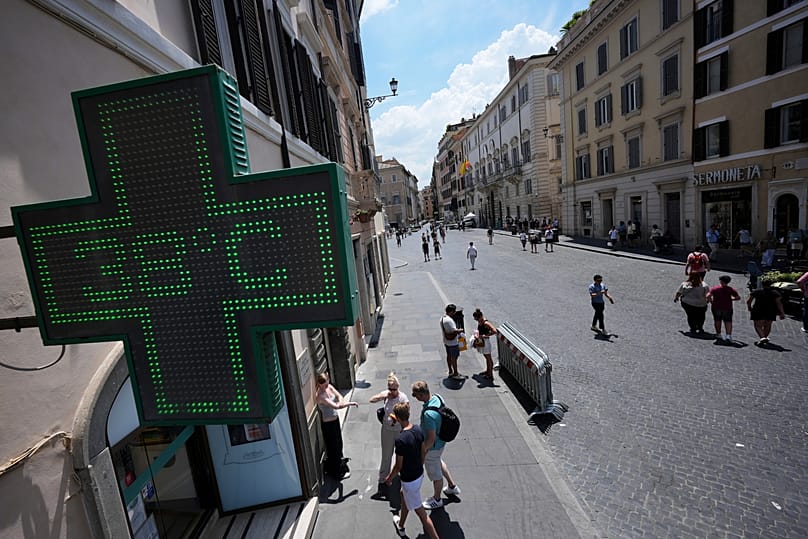
In June, Europe's record-breaking heatwave prompted a surge in misinformation, including viral social media posts alleging that high temperatures were not unusual. They claimed that they instead aligned with previous temperature spikes, citing heatwaves that occurred in London during the 1970s.

Climate scientists say that these claims are not only misleading but have also increased the amount of hostility and harassment they face, with many online blaming them for failed climate action.

The thermometer of a drugstore shows the temperature of 38 degrees Celsius (100 degrees Fahrenheit) as temperatures reach record highs, in Rome, Wednesday, June 24, 2026. AP Photo

"People argue that, ultimately, they [climate scientists] have been too alarmist, not educational enough, that they have pointed towards the wrong solutions and made the wrong decisions, and that it is therefore their fault," Morel said. "So the blame is placed on the experts."

False narratives about Europe's latest heatwave are not isolated. When a year's worth of precipitation hit eastern Spain in October 2024, disinformation about one of the deadliest natural disasters in the country's history, which took more than 230 lives, gained serious traction.

The false claims included allegations that dams were intentionally removed to intensify the floods, as well as allegations that the EU's biodiversity strategy and river restoration policy caused the disaster.

Politicians from Spain's far-right political party Vox, which contests the reality of climate change, were among the actors responsible for propagating these claims.

Deep institutional mistrust propped up these narratives, according to Mendez. "If you're primed to distrust an institution, even if they give you quite useful climate advice, for example, that water levels will be high at 4pm, you may think well, they're making it up to make a point."

Disinformation pillars

There are multiple recurring narratives when it comes to climate disinformation, including the idea that the green transition is a "punitive plan", imposed by a remote Brussels elite.

The green transition refers to a massive global shift away from highly polluting industries and fossil fuels toward sustainable, eco-friendly practices to fight climate change.

The negative discourse about it regularly flares up in response to green legislation, hiding behind the idea of "a legitimate policy debate about competitiveness and red tape", said Mendez.

"This links to accusations of private jet owning hypocrites lecturing you about your car and the turbine as a class that doesn't really share your life," he said. "And this isn't really factual, but it does ride a lot of other culture war stories."

Another online narrative works to spin public opinion against renewable energy solutions — such as wind and solar power — in order to present them as a "foreign intrusion" that prevents "climate sovereignty". This was the case during the Iberian Peninsula blackout in spring 2025, which saw a major power blackout in mainland Portugal and peninsular Spain.

The incident prompted a wave of criticism toward renewable energy: with widespread theories following the blackout arguing that Spain's reliance on solar and wind destabilised the grid and triggered the outage

However, this was quickly questioned by critics. A final report by ENTSO-E, the European network of transmission system operators, concluded that the blackout had multiple causes, among them, voltage control failures and grid oscillations. Renewable energy was not the final cause of the blackout.

"We saw that renewable energy was very quickly blamed, for instance, in local Facebook groups," Mendez told us. "It was going to WhatsApp communities within a day, and fabricated technical explanations were being laundered through kind of pseudo-experts."

However, there are also deeper roots to this scepticism around renewables, according to experts, with anxiety around energy security spiking since Russia's full-scale invasion of Ukraine in 2022.

"We see these narratives a lot in central and eastern Europe, where coal or nuclear energy carries a kind of national identity," Mendez said. "Also, within rural communities that are facing specific projects."

He added that this fits into a broader context of economic uncertainty across Europe being spun to turn people against climate change measures, with detractors claiming that net zero will destroy jobs, drive up bills and harm traditional industries.

"And this doesn't need any ideology at all, it just needs a heating bill," he said.

'Lies are fun and engaging'

Despite the fact that the channels through which climate disinformation spreads have evolved, a large part of the messaging has remained constant over the decades.

"The biggest source of climate disinformation would be the advertising that Big Carbon spends big money on, be it sponsoring sports or cultural events, or TV, radio, newspaper and digital ads," said Philip Newell, communications co-chair at the coalition Climate Action Against Disinformation. "The industry is spending huge amounts of money, and reaching most people one way or another, so that’s the biggest by most metrics."

The monetisation of social media, which fuels the attention economy, also acts as an incentive for climate disinformation.

"What they've realised is that lies are fun and engaging," Newell said. "And so those sorts of conspiracy theories, the ABC of climate disinfo … have become sort of a viral meme every time."

He added that these "disinfluencers" are reliant on the attention economy to make their money, so they have an incentive to post every day and be part of the wider conversation to generate engagement, no matter the subject.

The role of AI in climate misinformation

AI is a constant source of misinformation these days, particularly when it comes to digitally generated images, and researchers say the tool has also led a broader range of people to spread false narratives about the climate.

"The stuff that used to be done was the remit of state actors with a vast budget," said Mendez. "Now you can do something on your own phone."

Inexpensive tools, helped by generative AI, allow social media users to generate convincing climate-related content and spread it quickly through local Facebook groups, TikTok and other social media platforms.

"Media coverage and, more broadly, the information environment surrounding the May and June 2026 heatwave showed that a new narrative was emerging," Morel said.

"It builds on existing narratives, such as denying the effectiveness of certain climate solutions or promoting air conditioning as a miracle solution to global warming, while introducing a new narrative that blames climatologists and environmental advocates themselves."

For example, a resident angry about a proposed wind farm could now use generative AI to create a convincing fake video claiming turbines had caught fire or collapsed, before sharing it in a local Facebook group.

This was seen in 2025, when climate change deniers pushed what they claimed was a scientific paper that disproved human-caused climate change.

It emerged that it was actually generated by X's AI chatbot Grok, and fact-checkers found the paper contained numerous factual errors and misinterpreted climate science.


Smart meters save money and prevent wasting renewables: Which country is leading Europe’s rollout?

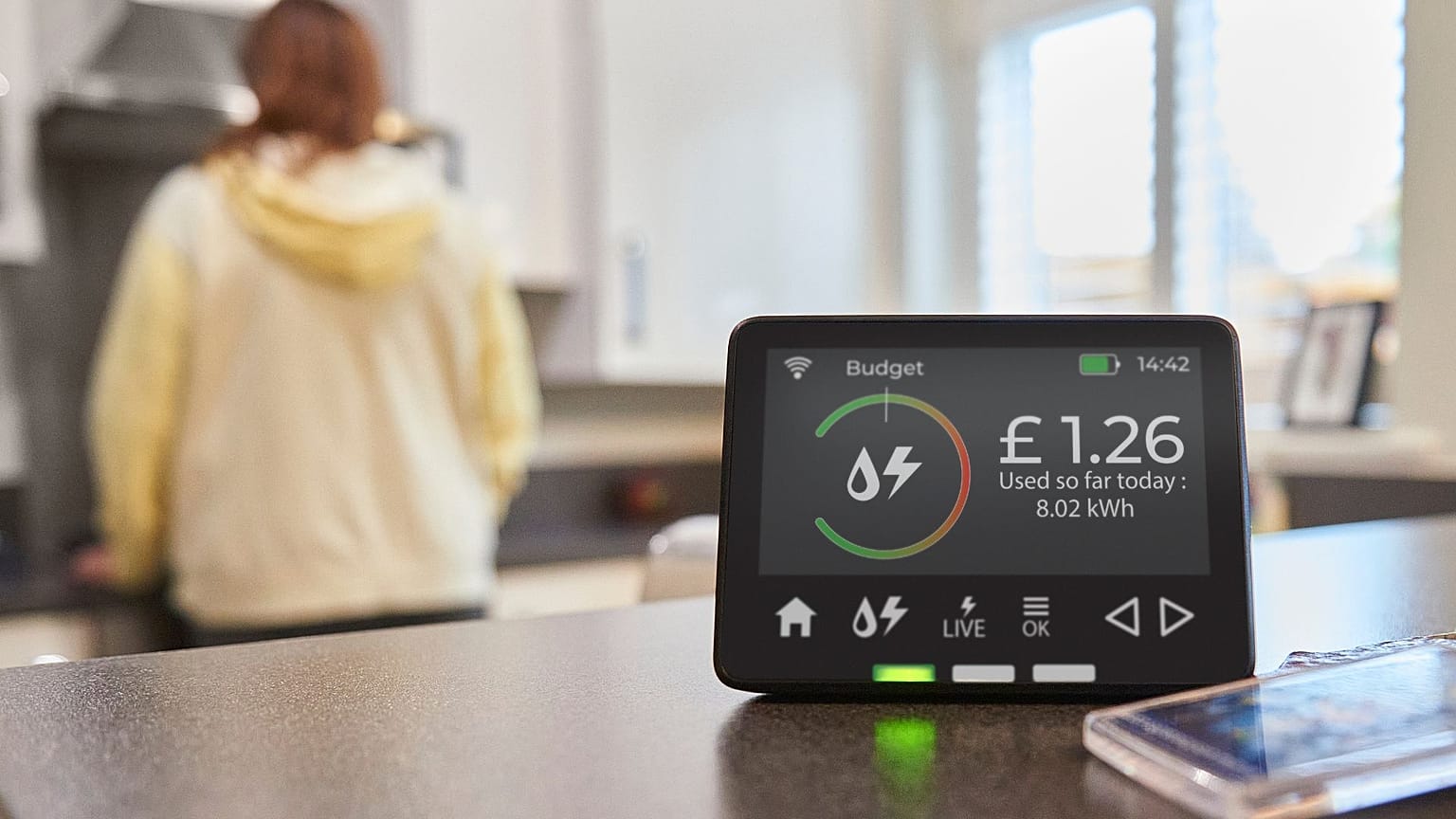
Smart meters give you more control over your energy use and allow you to take advantage of flexible ‘time of use’ tariffs.
Copyright Canva


By Angela Symons
Published on

Germany is falling far behind the rest of Europe when it comes to smart meter installation.

With the rise of renewable energy, Europe’s electricity systems have undergone a fundamental shift

In the past, electricity demand was largely met by controllable generation from coal, gas, nuclear and hydropower, which could be adjusted to match changing consumption.

But wind and solar don’t operate on a fixed schedule – they are dictated by the weather. Solar, for example, is generated during daylight hours – but energy consumption is lower in the day due to people being out of the house at work or school.

Adapting to these fluctuations is one of the biggest challenges facing Europe’s energy system today and smart meters are a key part of the puzzle.

To maintain stability on the electricity grid, supply and demand must be kept in a delicate balance. This is more complex to achieve as a greater share of electricity comes from variable renewable sources.

At present, Europe’s wind and solar capacity has grown faster than many forms of grid flexibility, including battery storage, making smarter management of the grid essential to prevent mismatches in supply and demand.

The International Renewable Energy Agency (IRENA) says that battery storage, when combined with wind and solar power, can provide reliable 24/7 electricity even when weather conditions aren’t optimal. However, the EU needs to scale its battery storage systems by tenfold to meet its 2030 targets.

How do smart meters work?

Smart meters automatically send electricity usage data to your energy supplier or network operator, removing the need for manual meter readings and enabling more accurate billing.

They also give you more control over your energy use and allow you to take advantage of flexible ‘time of use’ tariffs, which offer lower prices when demand is low or renewable energy generation is high.

This makes smart meters an important enabler of integrating intermittent renewables like wind and solar into the grid. By supporting flexible tariffs that encourage households to run energy-intensive appliances like washing machines when renewable generation is abundant, they help to better align electricity demand with supply.

This reduces the need for curtailment – when renewable generators are paid to reduce output or temporarily switch off plants because there is more electricity being produced than the grid can accommodate.

As more households adopt electric vehicles, heat pumps and home battery systems, smart meters will play an increasingly important role by helping to shift these much larger sources of electricity demand to periods when renewable energy is plentiful.

Europe’s delayed smart meter rollout

Despite this, the European Union’s rollout of smart meters has been fraught with delays and setbacks.

Back in 2009, the EU’s Third Energy Package required Member States that found a positive cost-benefit case for smart meters to aim for at least 80 per cent of households to have one installed by 2020. It’s now six years past that deadline, and rollout across the bloc stands at around 60 per cent.

New EU-wide rollout targets proposed in June are less ambitious: at least 50 per cent of end consumers should be equipped with smart meters by 2030 and 65 per cent by 2033, if adopted.

Across the EU and UK, households are generally not charged upfront for smart meter installation, although responsibility for rolling them out varies between countries. In some, including the UK, suppliers face penalties for missing rollout targets, while in France households that refuse installation may face charges for manual meter readings.

The costs are typically recovered through regulated network charges or other components of consumers’ energy bills, although the exact approach varies between countries.

How much money can a smart meter save you?

According to the European Commission, demand-side flexibility could save EU consumers more than €71 billion a year by 2030 in a best-case scenario – though that figure comes from an industry-commissioned 2022 study modelling widespread uptake of flexibility, rather than savings from smart meters alone.

More conservative EU estimates put typical smart-meter-enabled savings at two to 10 per cent of a household’s bill, particularly when combined with time-of-use tariffs.

Smart meters can also help reduce grid management costs by giving network operators better information to plan investments and manage demand. They can also reduce the need for renewable curtailment, the costs of which are ultimately borne by consumers through the electricity system.

In 2025, Germany paid around €435 million to renewable energy producers for curtailment, while the UK paid around £363 million (€424 million).

Smart meters also allow households to participate in energy communities and energy-sharing schemes by recording who generated, shared or consumed electricity.

These citizen-led initiatives allow communities to collectively generate and consume renewable energy, giving participants access to cheaper, greener electricity that is less exposed to the volatility of wholesale fossil fuel prices.

Which European countries are leading in the rollout of smart meters?

Around 60 per cent of European households had a smart meter installed as of 2024, according to the EU Agency for the Cooperation of Energy Regulators (ACER). In 15 EU countries, that figure exceeded 80 per cent.

Sweden and Italy were among the earliest movers. Italy began installing digital meters in 2001, reaching nearly universal coverage by 2011, while Sweden mandated monthly meter readings in 2003 and achieved virtually universal smart metering by 2009.

Denmark had also reached 100 per cent coverage by 2024; Estonia, Finland, Latvia, Luxembourg, Norway, Portugal and Spain had each reached around 99 per cent; Austria and Slovenia 97 per cent; France 94 per cent; Malta 93 per cent; the Netherlands 90 per cent; Ireland 84 per cent; Great Britain 70 per cent; and Lithuania 51 per cent.

Lagging behind were Belgium at 46 per cent; Poland (36 per cent); Croatia (34 per cent); Romania (27 per cent); and Hungary (11 per cent). At the time, Cyprus stood at zero per cent, but the island began a mass rollout in 2025.

Most striking of all, though, is Germany: just two per cent of households had an advanced smart meter installed as of 2024. Despite making smart meters mandatory for certain consumers in 2025, rollout has remained slow.

Stay tuned for an explainer on why later this month.


EU pushes to triple energy storage as renewable power goes to waste

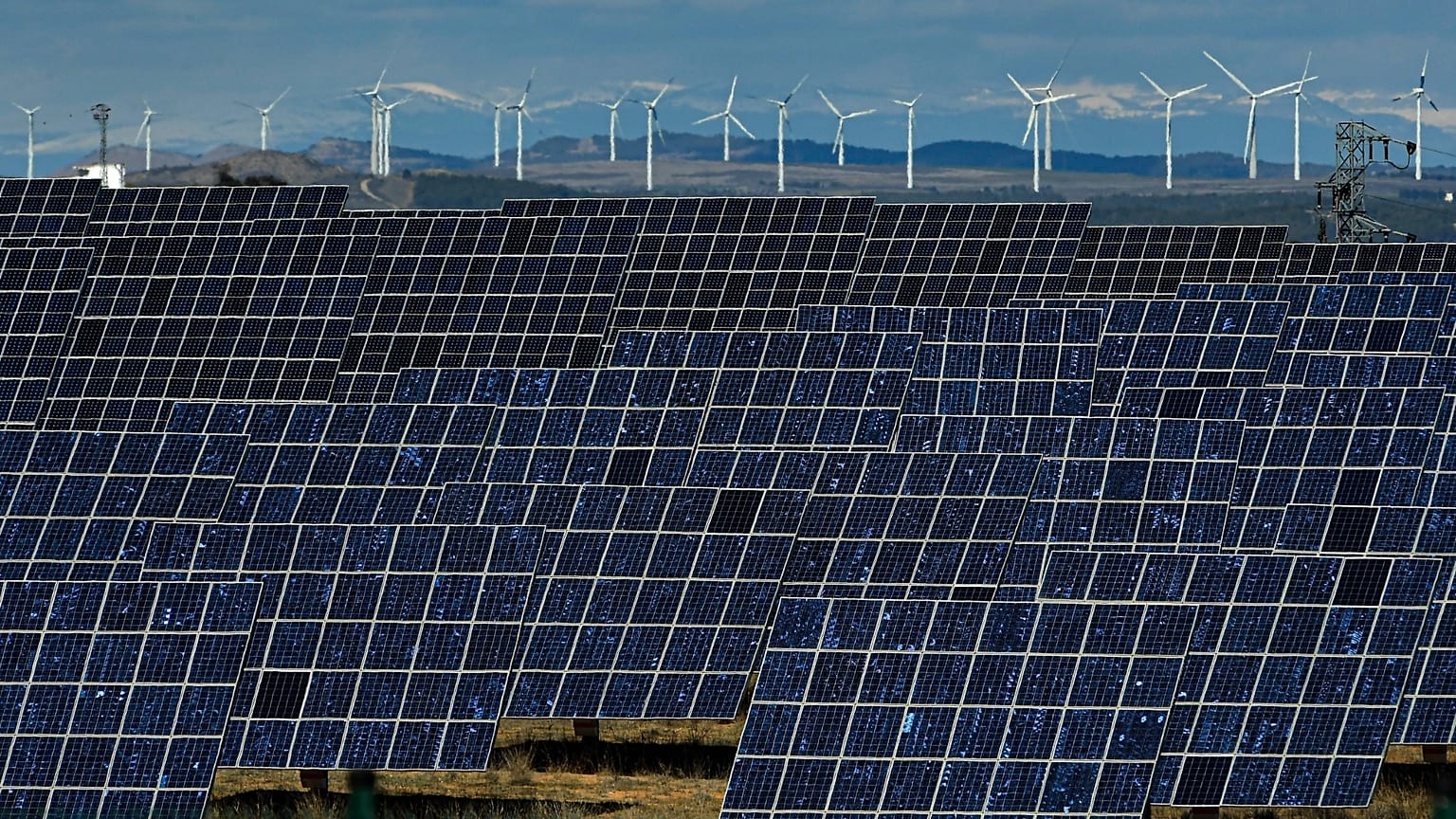
Solar panels work near the small town of Milagro, Navarra Province, northern Spain, Friday, Feb. 24, 2023.
Copyright AP Photo/Alvaro Barrientos


By Elisabeth Heinz & Leticia Batista Cabanas
Published on

EU energy ministers signed the first-ever tripartite agreement to boost the bloc’s energy storage capacity on 26 June. The EU needs 200 gigawatt (GW) of storage capacity by 2030, compared with the current 55. 22 member states promised to add around 30-35 GW of new capacity by 2028.

The agreement tackles a problem that has become urgent with Europe’s green transition: how to store growing energy surpluses from intermittent renewable sources, such as wind and solar.

While the share of renewable energy resources is growing (23 per cent in 2020 to 25.2 per cent in 2024), the bloc’s storage capacity remains too limited to absorb it all. Europe wastes renewable energy surpluses generated during seasonal peaks, forcing it to increase fossil-fuel power generation.

The deal expands the EU’s storage capacity to keep extra energy and maintain a reliable energy supply during sudden increases in demand, reduce dependence on imported fossil fuels, and stabilise energy prices.

Member states, financial institutions, clean energy producers, and energy-consuming industries are the main players, ensuring annual energy storage forecasts, stable energy demand, predictable energy costs, and access to finance.

“For the first time, the EU has established a clear political direction, turning storage from enabling technology to a delivery priority”, Walburga Hemetsberger, CEO of SolarPowerEurope said.

What the EU needs

Solar and wind generate electricity according to weather patterns, not peaks in human demand. Without optimised storage, the EU remains dependent on imported fossil gas to fill gaps when the sun sets or winds fade. Despite renewables supplying 44 per cent of EU electricity, the bloc still imports around 55 per cent of its total energy, including oil and gas.

Electricity demand is rising rapidly. The International Energy Agency projects AI and data centre consumption will double by 2030. These facilities already account for around 3 per cent of electricity supply and are expected to exceed 28 GW.

Data centres require constant 24/7 power. They cannot pause AI operations when renewable generation falls. Without 200 GW of storage by 2030, operators may have to rely on fossil-fuel plants to maintain reliability, undermining EU net-zero goals. Storage allows excess solar power generated during the day to supply digital infrastructure overnight.

Europe is also electrifying transport and heating, shifting two carbon-intensive sectors from fossil fuels to the grid. The EU aims to put more than 30 million electric vehicles on the road and install 50 million heat pumps by 2030. Meeting this demand will require large-scale storage to balance renewable supply.

"I think the biggest issue will be to not treat energy storage as essential infrastructure," said Jacopo Tosoni, Deputy Secretary General at Energy Storage Europe. "If we don't put flexibility at the heart of the energy system, we waste the cheap renewable electricity we already have while industry continues paying high energy prices."

By early 2026, Europe had seen record periods of negative electricity prices as solar and wind generation exceeded grid capacity. In the first quarter alone, EU day-ahead markets recorded 1,223 hours of negative prices, roughly twice previous levels, with Germany and Spain among the hardest hit.

When supply exceeds demand, grids must curtail renewable generation, wasting clean electricity and reducing project revenues. Storage addresses this by absorbing excess power when prices are low and returning it when demand rises.

"We already are in a version of gridlock," Tosoni said. "Negative prices are becoming common because we have a surplus of renewables and not enough storage to use that power later."

The agreement

The agreement scales up Europe’s capacity to store more solar and wind power and use it during a sudden increase in energy demand. It aims towards at least 20 per cent (45 GW) more capacity than the annual installed capacity in 2025 (12 GW) between 2026 and 2028. Storage supplies should cover around 10 per cent of peak demand, up from around 5 per cent in 2025. Greater energy security balances the grid and maintains grid stability while lowering energy prices.

Larger storage capacity means Europe can increasingly rely on in-house green energy and move towards its 2030 target of at least 42.5 per cent of renewable energy production. It also reduces dependence on imported fossil fuels, which the EU is working hard to cut but remains high. In 2024, oil and petroleum accounted for 67 per cent of energy imports, according to a March 2026 Eurostat report.

Number of energy storage projects by status, 2026

“If we want to get to the 200 gigawatt that the European Commission has set out in Accelerate EU, we need to see a bit more of an ambition. But it's a very good first step The real test is now in the implementation”, according to Hemetsberger.

In practice, the EU needs to expand its current storage facilities through increased market flexibility, Hemetsberger said. While it's important to expand all types of energy storage, batteries are the real “game changer”. They can be installed very quickly, are highly scalable and cut 55 billion euros per year on power system operating costs, along with reducing gas import and lower electricity prices, she explained.

The parties signing the agreement

Storage systems and renewable energy developers will provide annual estimates of new storage capacity. Energy-intensive industries will develop on-site storage projects, monitor electricity demand, and provide long-term forecasts. Financial institutions, including national and regional banks, will finance these initiatives and attract investment.

The European Investment Bank plans to expand its €500 million corporate power purchase programme. The goal is to include storage solutions and increase its €1.5 billion support for grid manufacturing to cover new storage technologies.

The Commission will monitor the agreement's progress annually, accelerate project finance, and support the decarbonisation of energy-intensive industries through the Industrial Decarbonisation Bank.

Member states' commitments

EU countries decide how much new storage to build. 22 national governments have signed the agreement, and 17 have submitted concrete commitments. Yet the agreement is not binding, making it all the more important that we really closely monitor and track progress”, Hemetsberger said.

Commitments range from 5,000 megawatts in Austria, 500 in Portugal, 11,000 in Poland, and 376 in Slovakia. Germany, the Netherlands, Greece, Finland, and Denmark will join by year-end. Overall, EU countries will add 30-35 gigawatts of storage capacity by 2028, increasing the bloc’s total capacity to approximately 65 gigawatts.

This amount remains well below the EU’s 2030 200-gigawatt target. Member states may need to double down on storage projects by accelerating permitting, opening up revenue streams, a predictable regulatory environment, and a quick connection to the grid infrastructure, Hemetsberger explained.

National governments also agreed to facilitate storage deployment by removing regulatory barriers and accelerate project approvals. They will also revise pricing rules, allowing national authorities to set non-discriminatory network tariffs. Storage deployment and manufacturing are supported through national and EU funds only if they comply with state aid rules. The Commission will accelerate state aid approval.

For member states, failing to meet the targets means missing out on competitiveness, including lower energy prices, Hemetsberger explained. “If we do not meet those storage targets, if we're not investing in battery storage, it means we will be using gas more frequently than we would want to, and gas sets the electricity price”, she added.

Storage power (GW) by project status

For citizens and for businesses

Electricity bills remain high and volatile, largely driven by gas prices. Households still pay more when gas-fired plants are needed to cover periods of low wind or solar generation.

Millions of homeowners with solar panels receive little value for excess electricity because the grid cannot absorb it all. Consumers have limited ability to respond to market fluctuations and remain passive participants in an outdated energy system.

If the agreement delivers 200 GW of storage capacity by 2030, households could benefit from lower and more stable prices.

"Electricity prices are currently set by the most expensive generator needed to meet demand, and that's gas," Tosoni said. "If you're able to remove gas from the equation by storing renewable electricity, electricity costs go down."

Stored renewable energy can replace expensive gas-fired generation during peak demand. Batteries and smart technologies would also allow consumers to become active participants, charging electric vehicles or home batteries when electricity is cheap and selling power back when prices rise.

Local and community storage would strengthen grid resilience, reducing the risk of outages during extreme demand or weather events.

Tripling storage-linked Power Purchase Agreements would help heavy industries secure 24/7 renewable power, meet sustainability targets, and protect operators’ revenues by reducing renewable curtailment during periods of oversupply. The Clean Industrial State Aid Framework could accelerate funding and permitting for clean technology manufacturers, improving competitiveness.

Tosoni warned that delaying storage deployment could intensify competition for electricity between households and expanding AI infrastructure. Without storage, new data centres may increasingly depend on fossil-fuel backup or add pressure to the grid. "If we do it right," he said, "the AI boom can actually be quite good for the energy system... lowering costs for households and industry."