Tuesday, July 14, 2026


Giant copper mines brace for winter deluge in top producer Chile


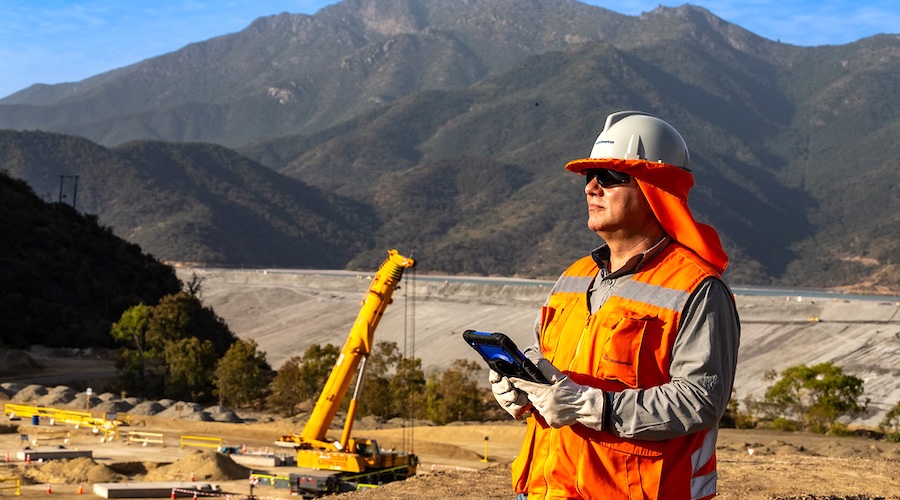
El Soldado copper mine in Chile. (Image courtesy of Anglo American |Flickr.)

Chile convened mining companies and industry groups for emergency talks as a powerful winter storm threatens to dump heavy rain across key copper-producing regions, risking disruptions to mines, ports and transport networks. 

Economy and Mining Minister Daniel Mas called a meeting Tuesday with companies including Codelco, Antofagasta Plc and Teck Resources Ltd. to review contingency plans, while regulator Sernageomin activated its crisis committee to monitor the risk of landslides and mudslides.

The deluge in a country that accounts for almost a quarter of the world’s mined copper will be watched closely by traders at a time of tightening global supplies of a metal used in everything from air conditioners to electric vehicles and data centers. The storm is the latest threat to Chilean production, which has already been constrained by operational setbacks and deteriorating ore quality that is forcing miners to invest heavily just to maintain output.

Authorities said the meeting would focus on ensuring mines have emergency protocols, equipment and personnel in place to protect workers, operations and communities as a so-called atmospheric river moves into central Chile later this week. 

Authorities have warned that the prolonged nature of the event — rather than a single storm — could pose the greatest challenge for mining operations and transport links.

Chile has periodically suffered weather-related disruptions to copper production, with heavy rains capable of flooding open pits, damaging roads and interrupting concentrate shipments. The extent of any impact this week will depend on how far north the storm reaches and whether rainfall extends into the country’s main mining districts.

(By James Attwood)


Canada bets on digital hub to speed mine permitting


The OSDP provided centralized data to support the review of Red Chris mine expansion. (Mine photo by Newmont)

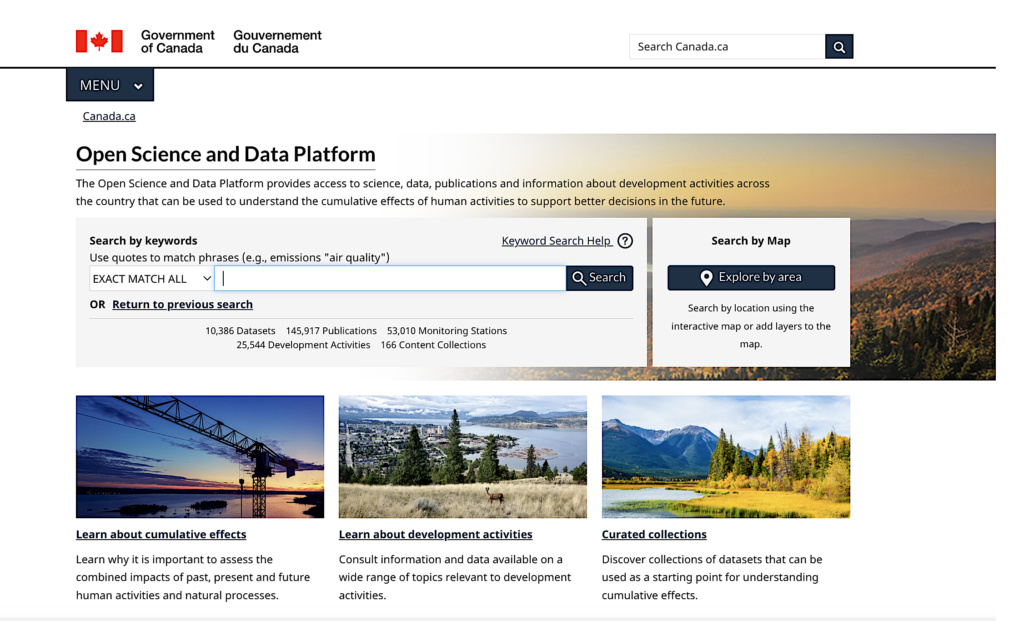
Canada is using a centralized digital platform to help accelerate reviews of major mining and infrastructure projects by giving regulators, companies, Indigenous communities and the public access to the same authoritative science and regulatory information.

The Open Science and Data Platform (OSDP), developed by Natural Resources Canada, brings together geospatial science, environmental monitoring, mapping tools and regulatory records from federal, provincial and territorial governments into a single online portal.

The platform supports the federal Major Projects Office, launched in 2025 to speed nation-building projects while maintaining environmental standards and reconciliation commitments.

“By providing centralized access to authoritative scientific data, environmental monitoring information and regulatory records, this really makes the impact assessment process more efficient for proponents and regulators, while increasing transparency for all Canadians,” Sonja Kosuta, Senior Director of Impact Assessment and Science Capacity at Natural Resources Canada, told MINING.COM.

“It’s a great example of the digital innovation that’s part of Canada’s broader regulatory modernization.”

One example is Newmont’s (NYSE: NEM) (TSX: NGT) proposed Red Chris mine expansion in British Columbia‘s Golden Triangle, where the OSDP provides a curated collection of information ranging from Treaty boundaries and species at risk to existing infrastructure, transmission lines, watersheds and nearby projects.

Users can layer multiple datasets on an interactive map, download information for further analysis or connect directly to the original data sources, which update automatically through application programming interfaces rather than static uploads.

Fewer duplicate studies

For mining companies, particularly junior explorers with limited budgets, the platform can reduce both time and cost during the early planning stages. Instead of commissioning studies to locate existing environmental information or government datasets, proponents can access much of that material through a single portal before preparing project descriptions.

“Having access to all this data that’s produced through the government system avoids duplication because companies don’t have to reproduce studies or data that’s already publicly available,” Kosuta said. “That helps avoid unnecessary costs and helps fast-track the assessment process.”

Colter Kelly, Senior Impact Assessment Officer at Natural Resources Canada, said the platform allows users to build a detailed picture of a project area within minutes by combining information from multiple government sources.

“It creates an ecosystem where the datasets used throughout the assessment process are all in one place,” Kelly said. “Whether you’re looking at roads, land cover, First Nation locations or existing monitoring stations, you can layer everything together or download the raw data for further analysis.”

Unlike conventional databases that rely on static copies, the OSDP remains connected to its original data providers through automated interfaces. As provincial and federal agencies update their information, those changes are reflected on the platform without manual intervention, reducing delays and improving confidence in the data, according to NRCan officials.

Ongoing expansion

The platform continues to expand by roughly 10% annually as new datasets become available. Future plans include incorporating additional authoritative non-government sources, introducing artificial intelligence to improve search capabilities and metadata tagging, and converting historical assessment records into machine-readable formats.

Officials said any future inclusion of Indigenous-owned information would respect Indigenous data sovereignty and the OCAP principles governing ownership, control, access and possession.

Natural Resources Canada estimates the platform now serves about 200,000 unique users, with roughly 70% returning more than once. Officials said growing public use suggests the platform is becoming an increasingly valuable resource for governments, mining companies, researchers and communities seeking trusted information about Canada’s major projects.

Kristi Noem courted by critical minerals firms after DHS ousting

Former Head of Homeland Security Kristi Noem. Credit: Gage Skidmore | Flickr, under Creative Commons licence CC BY-SA 2.0.

Kristi Noem’s tenure leading the Department of Homeland Security is over, but her services as an adviser to critical minerals companies are in demand as miners seek to capitalize on the Trump administration’s efforts to build out domestic supply chains in rare earths and metals.

The former Homeland Security secretary, who was fired in March, received interest from multiple critical minerals companies seeking her services, she said in an interview without specifying any names. In June, Noem joined Vancouver-based NovaRed Mining Inc.’s advisory board as the C$26.9 million ($19.1 million) company races to expand its critical minerals footprint in North America. \\\

“Looking at what my experience has been, where I’ve served and what my background is, I’ve had a variety of different types of businesses reach out to consider some kind of an advisory role,” she said of the inquiries. NovaRed knows “that the relationships that I have could benefit them as to who we could connect with to help their company be better and to grow.”

NovaRed is exploring potential opportunities to acquire a mine in the US, while also working toward eventually supplying copper to the country as President Donald Trump seeks to stockpile the metal, said Noem. Earlier this year, the White House launched Project Vault, a $12 billion critical minerals initiative aimed at insulating manufacturers from supply shocks as the US works to slash its reliance on Chinese rare earths and other metals.

“Knowing that you have a market for your resources is critically important, and they know the United States is interested in that,” said Noem, who is now a special envoy for the Shield of the Americas, a Western Hemisphere security initiative. 

NovaRed has yet to discover a proven copper deposit in Canada and remains in the early exploration phase. The company is preparing for an initial drill program this fall at its Wilmac copper-gold project in British Columbia. 

The company touts its use of artificial intelligence and said in May it filed an application in the US to patent its technology. Shares of the thinly traded NovaRed sank 46% in June and are down more than 30% this month. 

Noem is not the only Trump associate to advise NovaRed, the company also brought Katie Zacharia onto its advisory board in June. Retired US Navy Commander Phil Ehr quit last week to protest Noem’s appointment, according to the Globe and Mail.

The company recruited a string of advisers with ties to the US military and federal government in recent months, including retired US Army Colonel Mark Calabrese and former US Export-Import Bank adviser Ed Kostenski. 

(By Emily Forgash and Sybilla Gross)

 AUSTRALIA

BHP workers to proceed with strike after talks fail


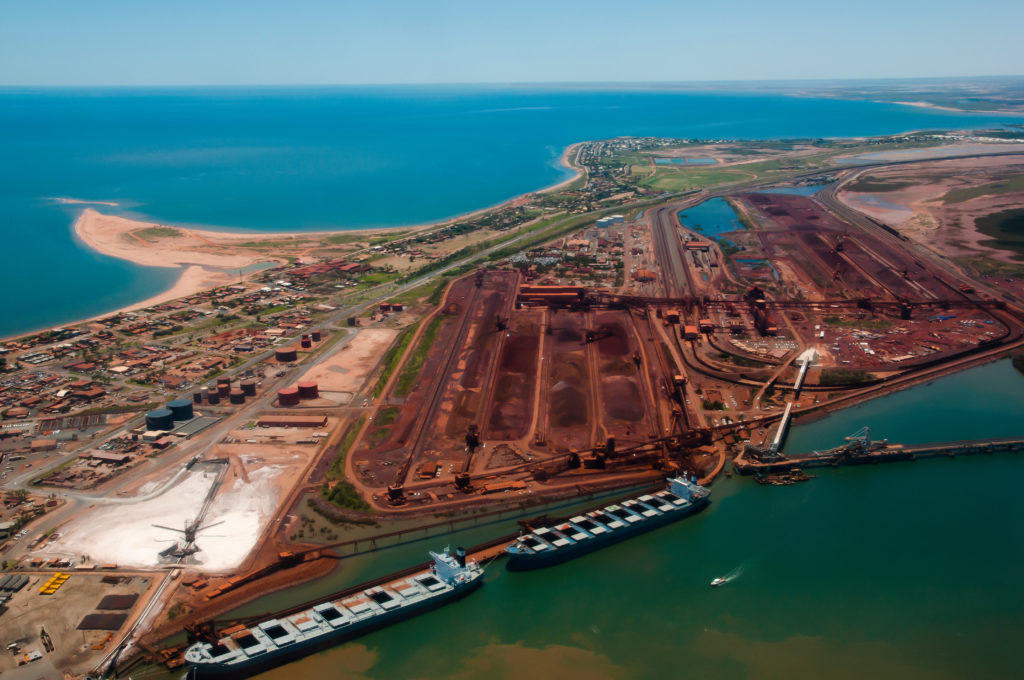
Port Hedland, Australia. Stock image.

Hundreds of workers at BHP’s Port Hedland iron ore operations are set to down tools on Thursday after workers and their elected representatives did not reach agreement with the company, a spokesperson for the Combined BHP Ports Union said.

Port Hedland is a major artery through which BHP routes around $80 million of iron ore a day, and the action represents the largest at BHP’s operations in at least three decades, as unions look to secure a toehold in Australia’s iron ore regions.

“Today workers at BHP and their elected representatives conducted a five-hour bargaining session … No agreement was reached,” the union spokesperson said.

“It is the intention of workers and their representatives to proceed with protected industrial action notified for Thursday 16 July.”

The unions have called for the action, an eight-hour work stoppage set for July 16, after six months of negotiations that have failed to reach an agreement on terms for a four-year labour deal. The action is set to run from 2 p.m. to 10 p.m. (06:00 to 14:00 GMT).

Given positive progress on Tuesday, BHP said in a statement to Reuters that “it is disappointing the unions have decided to proceed with their planned industrial action on Thursday.”

“As with all potential disruptions to our business, we have plans in place to ensure operations can safely continue,” it added.

The parties will resume negotiations on Tuesday, July 21, the statement from the union added.

BHP will report its quarterly results on Thursday.

(By Melanie Burton and Shivangi Lahiri; Editing by Janane Venkatraman, Nivedita Bhattacharjee and Louise Heavens)


CHART: Mining vs AI – Nvidia sneezes, sheds five BHPs

A pit battle. Image: Definitely AI generated

A year ago this week Nvidia became the first company to touch $4 trillion, and MINING.COM ran the numbers against the combined worth of the world’s 50 most valuable mining companies. It was not even close.

The chip designer was worth 2.7 times the MINING.COM TOP 50 (and since valuations quickly shrink outside that, probably twice the entire global mining industry).

This year Nvidia has been having the kind of quarter miners unfortunately know all too well. 

After peaking at roughly $5.5 trillion in the middle of May, the stock shed about $1 trillion over the next eight weeks. At the bottom of the slide, Nvidia was briefly trading at 18 times forward earnings – below the S&P 500 average, which made the poster child of the AI age, at least technically, a value stock.

The chipmaker’s P/E is now back near 20 times forward earnings, but mining’s majors change hands for barely 13 – cheaper on next year’s profits than Nvidia managed to look even at its bargain-bin bottom and despite all the criticality clamour surrounding mining. 

The TOP 50 had a quarter of its own. A record $2.4 trillion at the end of March, before gold’s slip back below $4,000 an ounce took $228 billion off the ranking, or for the Mag 7 slash Lag 7, a bad Friday afternoon. 

The scoreboard now reads $5.11 trillion versus $2.19 trillion. Nvidia is worth 2.3 times the top 50 miners, down from 2.7 times last July, and for a few sessions this month the multiple flirted with two – territory last visited when cheap and cheerful DeepSeek gave the AI trade its first proper scare

Over the past twelve months mining even outgrew the machine – up 47% against Nvidia’s 27% – a first in the short history of this exercise. 

But to return to theme of mainstream investors not valuing the production of copper the same way as the production of hallucinations about the production of copper, here’s a sobering thought:

What Nvidia shed between mid-May and early July – nearly five BHPs, and BHP has never been worth more – was about what the whole Top 50 was worth for most of this decade.

Renaming everything critical minerals was a good start (and kudos to met coal and lead for making the list), but it’s time to launch a worldwide public/investor awareness campaign. What about this old nugget for a tagline: If it can’t be grown, it has to be mined. 

That includes, for the record, the silicon, copper, gold, silver, tungsten, tantalum, titanium, cobalt, aluminium, tin, nickel, hafnium, ruthenium, molybdenum, indium, palladium, gallium, germanium, arsenic, antimony, bismuth, boron, phosphorus, cerium, lanthanum, yttrium, gadolinium, europium and praseodymium that Nvidia’s chips are made from.


Diana Gives Genco Shareholders Two More Weeks on the Tender Offer

bulker at sea
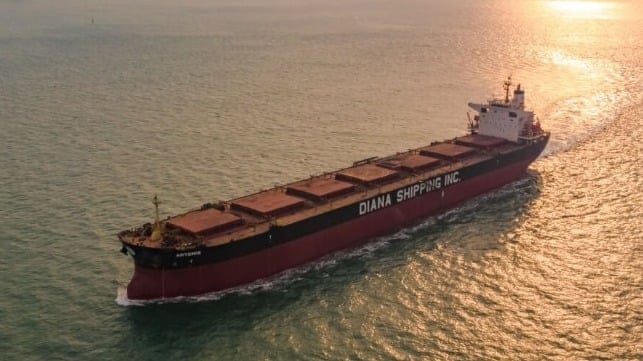
Diana added two more weeks to the tender as it continues to seek control of Genco (Diana file photo)

Published Jul 13, 2026 6:28 PM by The Maritime Executive


Diana Shipping is continuing its battle to acquire Genco despite having been rebuffed by Genco’s board and losing in its attempt to put new directors on the board of directors. The company reports that nearly 30 percent of Genco’s shares have been tendered, and it has now extended the tender deadline from July 10 to July 24.

“We are pleased that additional shareholders have tendered their shares, but this transaction cannot move forward through a tender offer alone,” commented Semiramis Paliou, Diana’s Chief Executive Officer of Diana Shipping. “To unlock the compelling value of this combination, both of our leadership teams and advisors must come together to negotiate in good faith, with a shared commitment to delivering full value for Genco shares at a high point in the shipping cycle.”

The two companies agree that dry bulk shipping is on the upswing, but disagree on how to realize value for the shareholders. The merger would create a leader in the dry bulk space with a fleet that could top 80 vessels. 

Diana asserts it is offering a 53 percent premium to Genco’s share price before it went public with the merger proposals last November. It also asserts it is offering a six percent premium to net asset value (NAV) while noting that values are near or at 15-year highs for the segment.

Diana says it is offering $24.80 in cash per share plus one share of its stock. It reported that 29.7 percent of the shares had been tendered as of the close of business on Friday, July 10. In addition, it continues to own more than 14 percent of Genco’s shares, making it the largest shareholder.

Genco’s board, however, reiterated its assertion that Diana is misleading, as the tender offer has not been revised to add the one share for each shareholder. It says the tender currently is only the $24.80 per share in cash. 

The board calls Diana’s offer ”inadequate” and says it has already unanimously rejected the offer. It has said it is reviewing the higher offer but is waiting for Diana to revise the tender offer.

It repeated its position that the offer “continued to meaningfully undervalue the company and its assets.” The board contends it is below the net asset value and still says it does not include any control premium. Genco’s board points to the strength of the market and, assuming the forward freight rate curve for the balance of the year, notes shareholders would receive a dividend of possibly $2.50 per share this year.

The two companies remain entrenched in their positions, showing no movement or opportunities to discuss a potential agreement. Shareholders are left to decide where they think the best true potential is for their investment.


South Korea Launches Arctic Expedition With Focus on Safety of Navigation

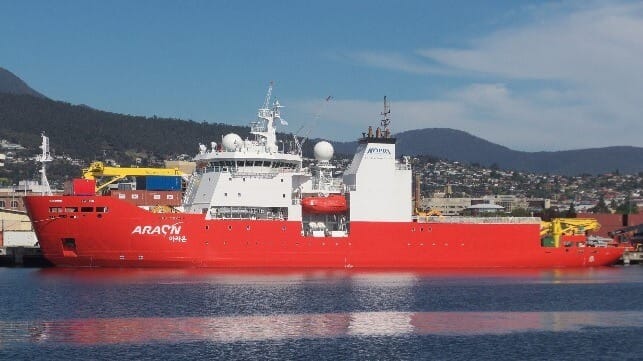
Korean icebreaker Araon (Gary Houston / public domain)

Published Jul 12, 2026 9:33 PM by The Maritime Executive


In the last two years, South Korea has made a big bet on Arctic shipping, rolling out massive investments in its port sector for future Arctic logistics. The recent move in this planning phase is launch of a research campaign, which will see South Korean scientists collect additional data to support safe navigation in the Arctic. This will be the focus of South Korea’s 17th Arctic Ocean expedition, flagged off on Saturday at Gwangyang Port in South Jeolla.

The 83-day Arctic expedition - led by the Korea Polar Research Institute (KOPRI) - will be carried out on board the country’s only research icebreaker, R/V Araon. The vessel is expected to sail through the Bering Sea, the East Siberian Sea, the Chukchi Sea and the central Arctic Ocean.

The expedition represents the first field visit of the SAFE-SEA project, a joint Arctic study by the Ministry of Oceans and Fisheries and KOPRI. Launched early this year, Project SAFE-SEA seeks to develop high-resolution datasets to refine prediction tools that track Arctic ice changes. The datasets will help produce monthly and annual navigation scenarios for the Northern Sea Route (NSR), with the aim of supporting safer and more reliable vessel operations in the region. The project researchers added that the high-resolution data will help develop a more detailed assessment of climate risks in polar regions.

Korea is hoping to establish a regular shipping route connecting the country with Europe via the Arctic by 2030. Later this year, the government has planned a pilot containership voyage through the Russian-administered Northern Sea Route. The trial voyage will start from Busan to Rotterdam in Netherlands, reportedly involving a vessel operated by PanStar Line.

KOPRI hopes that the field data collected during this expedition will facilitate planning of these scheduled Arctic voyages.

“We expect the field data acquired by Araon to become a solid foundation for enhancing South Korea’s Arctic science capabilities and the practical value of their use,” said Shin Hyung-chul, President of KOPRI. “This is a meaningful expedition that prepares for the era of Arctic shipping.”


Going Green: Energy Ports Diversify Their Cargo

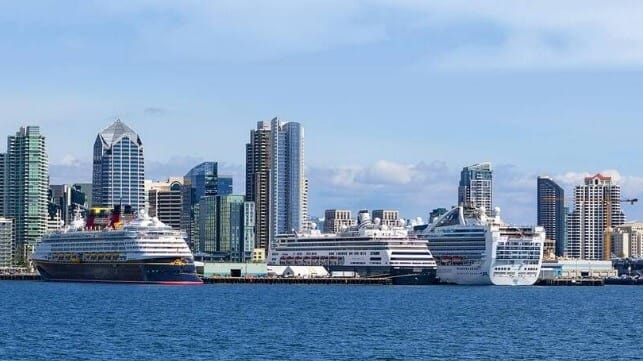
San Diego
Image courtesy Port of San Diego

Published Jul 12, 2026 2:09 PM by Tom Peters

(Article originally published in Mar/Apr 2026 edition.)


It wasn't so long ago that "energy" ports were mainly lined with huge fuel storage tanks and a myriad of pipes intertwined with each other and eventually leading to a dock to load or unload large tankers and barges.

The adjective "green" wasn't much of a factor when it came to energy, but these days there are many "green energy" projects for ports and related marine services, and they're cashing in.

Moreover, there's disruption in the movement of traditional energy products like oil and gas as evidenced by the conflict in the Middle East, so the development and use of other types of power become critical.

WEST COAST LEADER

The Port of San Diego, the nation's specialty cargo gateway to the Pacific, is diving into the green energy effort.

With the space, flexibility and expertise to move cargo that doesn't fit in standardized containers, San Diego's non-fossil fuel energy products have included transformers, solar panels, wind towers/blades/hubs/nacelles, batteries and battery shells and electrolyzers.

"Through our cargo operations we've supported various electrification projects throughout the U.S. Southwest such as solar and wind power," says Michael LaFleur, the port's Chief Operations Officer. "Notably, we're currently working with LG Energy Solution, one of the largest battery manufacturers in the world, on handling lithium batteries for its battery manufacturing complex in Queen Creek, Arizona."

In addition, the port has taken a small section of its Tenth Avenue Marine Terminal and reserved it for the Jankovich Company's petroleum operations.

San Diego's new, all-electric cranes give the port the heaviest lift capability of any port crane system currently in place on the U.S. West Coast. "This enables us to handle cargo previously only handled by Gulf ports that supports solar and wind power projects," notes LaFleur.

The port has secured grant funding for infrastructure design improvements at the Tenth Avenue Marine Terminal that will support the energy sector's logistical needs, including upgrading the existing electrical system to support the use of zero-emissions cargo-handling equipment.

At its National City Marine Terminal, the port and the Pasha Group successfully commissioned a roll-on/roll-off vessel – the MV Jean Anne – for shore power, marking a first-of-its kind achievement in the U.S. and the first-ever shore power connection for a domestic pure car/truck carrier.

San Diego is also working with Skycharger on a proposed zero-emissions truck charging hub. It will serve the port's two marine cargo terminals, the arterial corridor Harbor Drive and the region's freeway network.

LaFleur said the port will continue to work with its partners on streamlining the movement of products and cargo that support future energy projects: "We look forward to further expanding the capacity and infrastructure of our terminals to support this cargo while also advancing the port's own green energy and sustainability goals."

EAST COAST LEADER

In Florida, energy fuels the economy and nearly half the state's gasoline, diesel and jet fuel flows through Port Tampa Bay, whose central location along the I-4 Corridor enables fuel and other products to reach the state's growing population efficiently.

Each year the port handles roughly 15 million tons of petroleum products including gasoline, diesel, jet fuel, asphalt and other specialty items.

As Florida's population grows, now over 23 million, Port Tampa Bay's role as an energy gateway becomes increasingly critical. With more than 5,000 acres of industrially zoned land with deep water access, the port has ample room to expand its energy operations, logistics network and cargo-handling facilities.

The port's most important capital project is a multi-phase channel deepening initiative, which will increase the channel depth to 47 feet, improve access for larger vessels and support future cargo growth.

Hooker's Point, home to the REK Petroleum Terminal Complex, is the hub for liquid bulk operations. Upgrades at the complex have expanded storage, streamlined operations and strengthened the port's ability to meet growing energy demands. Tampa Electric Co. (TECO) has invested approximately $5 million to upgrade a substation serving Hooker's Point, further reinforcing the infrastructure for fuel terminals and distribution.

Population growth, expanding transportation networks and increased economic activity will continue to drive demand for gasoline, diesel and jet fuel. Meeting that demand requires ongoing investment in terminals, storage and distribution systems.

"We're seeing tremendous growth across Florida and it's exciting to be at the center of that momentum," states Paul Anderson, Port Tampa Bay's President & CEO. "As the largest economic driver in West Central Florida, every investment we're making – from channel-deepening to critical infrastructure and resiliency improvements – is about ensuring we continue to deliver for the communities and businesses that depend on us every day."

GULF COAST POWERHOUSE

While the Port of Morgan City is not a high-tonnage port, activities include fabrication, manufacturing, shipyards, and recycling and energy support activities. Long a center of the offshore industry, the port hosts the fabrication of offshore mooring piles, production of ROVs that support offshore energy activities, offshore platform and rig decommissioning, and the construction of components for LNG facilities.

Shipyards in Morgan City have been building LNG barges for some time, and LNG support has grown to a new level. Performance Contractors expanded its production capabilities by adding a modular fabrication facility in Morgan City in late 2022. It's delivered 14 process modules to the Venture Global LNG facility in Plaquemines, Louisiana and is currently working on 14 more process modules and five HRSG (heat recovery steam generator) modules.

"It's through our partnership with the Corps of Engineers that the Atchafalaya River and Bayous Boeuf, Black and Chene federally authorized channel is being consistently maintained," says the port's Executive Director, Raymond "Mac" Wade, "allowing energy projects to be transported to the Gulf of America for delivery to industry clients."

Historically, Morgan City has a significant connection with the early energy industry as the birthplace of offshore oil and gas exploration. The first producing offshore oil well – out of sight of land – was completed on November 14, 1947, 43 miles south of Morgan City.

"The energy market has changed significantly over nearly 80 years," says Wade, "and situations throughout the world can impact businesses at the port. However, it's evident that, given Morgan City's strategic location at the intersection of the Atchafalaya River and the Gulf Intracoastal Waterway and the innovative industrial base in the area, Morgan City is poised to support energy-related activities for years to come."

Construction will begin soon on the West Dock expansion project at the port's marine terminal facility on the Gulf Intracoastal Waterway. The multimodal facility will provide 1,900 feet of waterfront, 500,000 square feet of laydown and a storage area with a 20-foot berth depth to support future energy activities.

GOING GREEN

But it's not just ports that are pushing the green effort. Other maritime sectors are also getting in on the action.

Donjon Marine, for example, based in Hillside New Jersey, is a marine services organization that specializes in marine casualty response, dredging and marine support services.

"As marine salvors," says John Witte. Jr., Donjon's President & CEO, "we consider ourselves an important part of the green energy effort as the salvage community provides front-line defense of our environment by responding to casualties that often involve protection of our waterways from numerous pollutants that, if allowed to escape, would cause significant environmental issues."

He adds that "Donjon has provided dredging and construction support for a number of the offshore wind farm facilities that are being prepared," but the effort has slowed due to recent politically driven and practical concerns.

"When and if it begins to ramp up," he notes, "Donjon has plans to try to engage in this work through the addition of assets that will be specifically designed to fill the needs of the continuing green energy efforts. We say this based upon the fact that we own a shipbuilding facility and have preexisting relationships with the groups that are looking to be prime contractors in the construction of green energy facilities."

He concludes by saying, "We will continue to upgrade our marine and land-based assets to be as pro-environment as possible as we understand and agree that we only have one world, so it's in our best interests to make sure we keep it safe for human existence."

Ports columnist Tom Peters writes from Halifax, Nova Scotia.

The opinions expressed herein are the author's and not necessarily those of The Maritime Executive.
 

Transnet Blacklists Corrupt Suppliers as Port Reforms Move Forward

Transnet
File image courtesy Transnet

Published Jul 12, 2026 10:24 PM by The Maritime Executive


As part of its ongoing reform campaign, South Africa's state-owned Transnet Port Terminals (TPT) has blacklisted seven companies it accuses of corruption and other serious unethical conduct. The move comes after a forensic investigation uncovered a range of allegedly unlawful conduct involving some of TPT's suppliers. The companies were not named.

TPT says that its investigation uncovered unethical practices, including financial misconduct, kickback schemes, bribery, theft of company assets, collusion and submission of false information. Following the blacklisting, TPT has asked the National Treasury to include the affected companies on its list of restricted suppliers.

TPT has also initiated disciplinary action against employees who colluded with the seven blacklisted companies. With TPT operations spread across major South African ports, shippers have been complaining of persistent inefficiencies that render the terminals uncompetitive.

"To reinvent itself for growth and make South Africa globally competitive, it is important for TPT to take action against employees, suppliers and all stakeholders who compromised the integrity of the business," said TPT Chief Executive Jabu Mdaki.

A similar purge is also underway across other Transnet operating divisions. Last week, Transnet Rail Infrastructure Manager (TRIM) suspended four employees on charges of unethical conduct. Restrictions on implicated suppliers are ongoing as well.

Speaking at a transport conference last week, South Africa's Minister of Transport, Barbara Creecy, lamented that the country's logistics breakdown has moved beyond an operational inconvenience and is now an economic threat affecting trade and national competitiveness. Creecy was concerned that regional competitors are already capitalizing on South Africa's logistics underperformance. She called for an end to the business-as-usual approach to the challenges the transport sector faces.

At the heart of the port reforms, Creecy noted the ongoing shift in rail operations as the backbone of freight logistics. The most significant change is that 11 private Train Operating Companies (TOCs) have been approved to access the national rail network as of March this year. Operations are set to begin in April 2027.

The TOCs are expected to bring private capital and expertise needed to modernize rail operations, and will support the government's goal of moving 250 million tons of cargo via the Transnet rail network by 2030.

For years, South Africa's rail infrastructure has faced rampant theft and vandalism, crippling operations. This led the government to institute an emergency recovery plan, starting with a change in Transnet rail management back in 2023. The recovery plan also moved to create better cooperation with major exporters. The shift to private TOCs signals a long-term approach to stabilizing operations.


UAE Plans to Build a New Jebel Ali to Bypass Strait of Hormuz

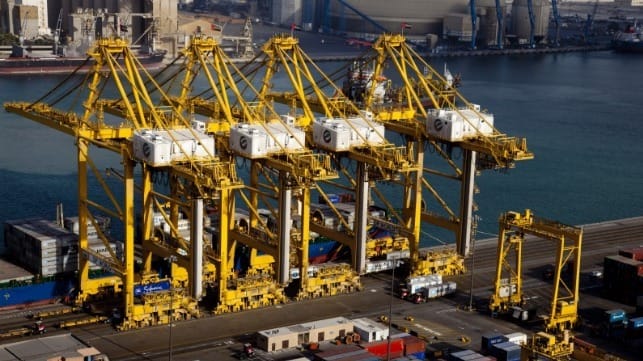
STS cranes at Jebel Ali (file image courtesy DP World)

Published Jul 13, 2026 3:36 PM by The Maritime Executive


The Financial Times has added to a number of reports that the UAE is planning to expand its port and freight-handling capacity on its East Coast, accessing the Gulf of Oman and bypassing the Strait of Hormuz. The Financial Times says that DP World is planning not only to build an entirely new port on the Fujairah coast, but also to expand capacity at the existing Fujairah container terminal.

It is not clear what coordination arrangements DP World has made with the existing Fujairah terminal, which is operated by the AD Ports Group under the brand name Fujairah Terminals, following the signing of a 35-year concession agreement in 2017 with Fujairah Ports, which in turn is controlled by the Fujairah Al Sharqi Royal Family.

DP World is a global logistics network which handled 88 million TEU in 2024, or 10% of global container traffic, operating about 80 terminals in 40 countries. DP World is owned by the government of Dubai, and the rather smaller AD Ports is largely owned by the government of Abu Dhabi. Fujairah Ports — the carefully conserved crown jewels of the Al Sharqi family, ruling an emirate lacking Abu Dhabi's oil wealth and Dubai's commercial success — has historically struggled to match the efficiency and profitability of the DP World and AD Ports operations, but will have sought to capitalize on its increased strategic value since shipping through the Strait of Hormuz has been disrupted.

Plans are already afoot to speed the completion of a second crude pipeline to parallel the Habshan–Abu Dhabi Crude Oil Pipeline (ADCOP), doubling capacity from 1.5 to 3 million barrels per day. Fujairah Ports also operates a bulk products terminal at Dibba, on the border with Oman's Musandam Peninsula, and Dibba has also been slated for development and upgrade.

When the UAE decides to make a capital investment, the pace of project delivery is consistently very fast, and the UAE's rulers will be doubly keen to reduce their dependency on the Strait, where no easy solution to the interruptions and restrictions in sea traffic is yet in sight. Regular passenger services on the new high-speed railway linking Fujairah with Dubai and Abu Dhabi get underway this summer, and integrated container delivery systems are being deployed.

DP World's Jebel Ali Port, alongside Emirates Airline and the Jumeirah hotel group, was one of the original engines of Dubai's spectacular economic growth in the 1970s and 80s, and DP World will be keen to replicate the success of Jebel Ali in an expanded operation in Fujairah. The plan will face some obstacles, namely the greater distances between existing infrastructure and the new terminals. Nor is the new terminal likely to benefit as much as Jebel Ali did from the import/re-export trade with Iran, even if the current conflict can be brought to a satisfactory conclusion. Few corporate planners will be willing in future to take the risk of dealing with Iran while it remains under the economic management of Paydari/IRGC hardliners, so DP World will be looking to tie into economic growth further east in Asia-Pacific.

While the new high-speed Emirates Railway linking Fujairah to the west is also delivering the Hafeet rail link to Sohar in Oman — 70% complete and perhaps ready by the end of this year — there does not appear as yet to have been serious consideration of integrating other Omani ports into the wider GCC logistics network, albeit container throughput through Sohar, Duqm and Salalah has grown rapidly in recent years. Duqm and Salalah have the advantage of being round the corner from the Gulf of Oman, further away from Iran and facing directly onto the Arabian Sea. But even at greater range, these two ports have also been attacked by Iran. Individual GCC states are now wary about relying on anybody else or sharing dependency on critical infrastructure even with close neighbors, such is the mistrust which Iranian behavior has engendered in the region.