Tuesday, July 14, 2026


New York Imposes First Ever Moratorium On U.S. Data Centers

New York Governor Kathy Hochul has signed the country’s first-ever executive order imposing a statewide moratorium on new large-scale data centers for up to one year. The order freezes the permitting process for new data centers requiring 50 megawatts or more of electricity, placing the fastest-growing source of U.S. power demand on hold while state regulators assess its long-term impact on New York’s electric grid, water resources and surrounding communities.  

The New York Department of Environmental Conservation will use the pause to conduct a Generic Environmental Impact Statement (GEIS) study and establish uniform, statewide regulatory frameworks addressing energy grid demands, local water consumption and air quality. Smaller computing facilities used by hospitals, universities and back-office financial services are exempt from the executive order. 

The moratorium comes hot on the heels of the New York State Legislature passing its own one-year pause in June 2026 under the Responsible Data Center Development Act, which targeted facilities over 20 MW. However, utilizing an executive order allows Hochul’s administration to issue an immediate freeze while continuing to review and refine the legislature's broader statutory proposals. 

Governor Hochul also announced she is pursuing legislation to repeal sales tax exemptions for hyperscale data centers. Her administration is moving forward with rules requiring operators to either build their own dedicated on-site power generation or pay heavy premiums to prevent increased utility costs from being passed on to standard residential consumers.

New York is the latest on a burgeoning list of states facing growing backlash against power-hungry data centers. A broad, bipartisan backlash against massive AI infrastructure is sweeping across the U.S., with states introducing moratoriums, new electricity taxes, and rural zoning bans as communities push back against grid strain and high utility bills.

As the world's data center capital, Virginia, in particular, has been experiencing massive internal political division over the industry. The state’s legislature has approved a biennial budget imposing an $0.011 per kWh consumption tax, and passed legislation requiring data centers to pay for transmission infrastructure and limiting the use of noisy backup generators. Blackstone-owned QTS Realty Trust recently withdrew its final appeal to the Virginia Supreme Court to build a giant data center in the state, with the $100 billion, 2,100-acre Prince William Digital Gateway now officially dead.

In Texas, Governor Greg Abbott has urged regulators to ensure data centers do not shift energy costs to local residents and called for development bans in rural areas. Meanwhile, multiple rural counties across the state have enacted local moratoriums.

By Alex Kimani for Oilprice.com


Could Geothermal Energy Rescue Germany's Fading Coal Towns?

  • New exploratory drilling near Weisweiler suggests the site could support geothermal heating systems as the nearby coal plant prepares to close by 2029.

  • Researcher Hauke Hermann says rising EU carbon allowance prices could push Germany's coal exit to 2032, six years ahead of the legal 2038 deadline.

  • Chancellor Friedrich Merz has signaled he won't sacrifice industrial power supply for phase-out timelines, even as Europe faces its third energy crisis in four years.

Europe’s largest economy is walking a precarious tightrope toward carbon neutrality, trying to balance energy security with climate goals as this summer’s heat waves create mounting pressure on the continent’s energy grids while simultaneously highlighting the importance of mitigating emissions. The German government aims to source 100 percent of the national energy mix from renewables by 2035, but has hedged some of its energy-transition rhetoric in recent months against the backdrop of major energy market volatility.

Germany has made a legally binding pledge to phase out the dirtiest fossil fuel entirely by 2038, but there is cause for speculation that the government may be reconsidering its near-term strategy. Back in March, when the shutdown of the Strait of Hormuz began and thereby ushered in Europe’s third energy crisis in four years, Chancellor Friedrich Merz made his priorities clear: “We must supply this country with electricity. I am not prepared to jeopardise the core of our industry simply because we have adopted phase-out plans that have become unrealistic.”

However, even with the market volatility in mind, some experts think that timely the phase-out of coal in Germany is an economic inevitability, and could happen even sooner than the goal date. Hauke Hermann, a senior researcher for energy and climate action at the Institute for Applied Ecology, thinks that coal will die out in Germany by 2032. While some pundits have questioned whether the latest energy crisis will push Germany back to coal (and strengthen its dependence on natural gas), Hermann believes that the opposite is true, thanks in large part to the European Union’s emissions trading system or ETS: “Our electricity market models indicate that coal will be phased out faster than envisaged under the coal exit agreement, meaning the market is outpacing the schedule,” Hermann told Clean Energy Wire. “This is due to comparatively low gas prices until recently, and higher ETS allowance prices.”

However, Germany needs to replace that coal with clean energies instead of natural gas if it wants to achieve its decarbonization goals. The country has already made great strides when it comes to expanding wind and solar capacity as it has attempted to wean itself off of Russian fossil fuel imports in recent years against the backdrop of the War in Ukraine. But Germany will need to double down on clean energy expansion, and especially round-the-clock clean energy alternatives if the country has any hope of achieving a 100 percent renewable grid in less than ten years.

Enter geothermal energy. Capable of producing energy 24 hours a day, seven days a week with zero greenhouse gas emissions, geothermal could be a critical part of Germany's decarbonization strategy. And it looks like coal country could be the perfect place to build up geothermal capacity as coal-fired plants are phased out, creating critical opportunities for communities dependent on coal for their livelihoods and therefore offering a feasible pathway for a just transition.

Exploratory drilling New geological data gathered from exploratory drilling near Weisweiler in Germany’s Rhineland region has revealed that the site could be well-suited to geothermal energy development, and is “expected to strengthen underground models and accelerate the development of geothermal heating systems” according to a recent report from Interesting Engineering. The drilling is taking place near the site of a major coal-fired power plant that is slated to shut down by 2029.

The findings of this initial study could be the beginning of a much bigger data-gathering operation, which could kickstart a geothermal renaissance in the region. In the future, surveys will dig deeper and use seismic imaging to look for geothermal reservoirs that can be tapped for round-the-clock energy production.

“The study forms part of broader efforts to support the energy transition in Germany’s Rhineland, where former coal infrastructure is being reimagined for renewable energy applications,” Interesting Engineering goes on to say. “By reducing geological uncertainty, the new data could help attract investment in geothermal projects and strengthen the region’s shift toward cleaner, more sustainable heat production.”

By Haley Zaremba for Oilprice.com


Canada Ties New West Coast Pipeline to Oil Sands Expansion

  • Canada advances a new 1 million bpd West Coast oil pipeline, with Ottawa, Alberta, and major oil sands producers agreeing on a framework that ties the project to emissions reductions and expanded exports to Asian markets.

  • Oil sands producers commit to the Pathways carbon capture project.

  • The project reflects Canada's push to diversify away from the U.S. market.

Canada’s biggest oil sands producers, the Alberta provincial government, and the federal government have reached a new milestone in advancing the planned new West Coast pipeline that would move another 1 million barrels per day (bpd) of oil sands output from the top oil province to the British Columbia coast.

The parties on Monday unveiled the backgrounder document of the deal for the new pipeline, West Coast Oil Pipeline (WCOP). In this, “Alberta has agreed to implement financial supports to enable the oil production growth needed to underpin new export capacity, including the pipeline to Asian markets and the Trans Mountain Expansion (TMX) optimization.”

The new pipeline hinges on the five top oil sands producers, Canadian Natural, Cenovus, ConocoPhillips Canada, Imperial Oil, and Suncor, committing to the Pathways carbon capture and storage (CCS) project and to reduce their operational emissions. This was a key demand from Mark Carney’s federal government to agree to the new 1-million-bpd pipeline to expand Alberta’s oil production and Canada’s export base with new customers in Asia.

Committed to Pipeline and Emissions Reductions

In the deal, the federal government touted the emission reduction goals, the creation of jobs, and additional energy sovereignty by attracting buyers of Canada’s oil other than the United States.

The province of Alberta stressed the fact that oil sands producers have been given the green light to double oil production, and that the deal unlocks billions of dollars in investments and production needed for the new West Coast projects.

Environmental campaigners, of course, slammed the backgrounder document released on Monday as “a master class in greenwash.”

The new WCOP will need additional years and a lot of permits, including in B.C., to begin working for the oil sands companies and for Canada’s crude oil exports to Asia. But the recent major milestones, from the official approval early this month to this week’s backgrounder laying down the commitments of the parties, are moving the project closer to reality

If it weren’t for the geopolitical upheavals and crises in the past year, the project may have never cleared any hurdles beyond Alberta’s provincial government. But the U.S. trade and tariff policies and threats to Canada’s independence prompted Canadian politicians to work on making energy exports less reliant on the U.S., which imported 90% of all the oil Canada was exporting in the year before U.S. President Donald Trump returned to the White House for his second term in office

Threatened by tariffs and negative rhetoric from Trump’s White House, Canada chose to become an energy superpower by expanding its crude and LNG exports into Asia, the market that’s always hungry for energy commodities.  

Oil Pipeline Milestones

The WCOP is a major move toward bringing increased volumes of Canadian crude to the West Coast for exports to Asia. 

The milestones in the project include the commitments the governments and the industry made, which were announced by Canada and Alberta on Monday.

The government of Canada and the five top producers united in the so-called Oil Sands Alliance (OSA), have agreed to establish a regulatory working group to improve the efficiency and effectiveness of federal statutes and regulations governing oil sands development. Canada has also agreed to advance financing to support operating costs for CCS projects, including measures to enhance the durability of the Clean Fuel Regulations (CFR). In addition, the federal government has agreed to review and address technical clarifications and industry concerns related to the CCUS Investment Tax Credit.

The OSA companies have agreed to advance the emissions reduction projects in line with agreed milestones, work with Canada and Alberta to support oil sands production growth associated with the new WCOP, and to prioritize Canadian technologies, suppliers and supply chains, including Canadian steel and aluminum.

Alberta’s commitments feature the implementation of financial supports, yet to be detailed and defined, extension of its Carbon Capture Incentive Program to 2035, and issuance of a Carbon Sequestration Agreement for the Pathways CCS projects and its planned storage complex.

Alberta has also agreed to apply a 120-day approval timeline for qualified projects and establish a bilateral working group with the OSA to address provincial regulatory barriers to oil sands investment and growth.

Commenting on the backgrounder document, Danielle Smith, Premier of Alberta, said,

“The West Coast oil pipeline and Pathways Project are two critical steps towards making Canada an energy superpower and ensuring Alberta remains a destination of choice for investment, innovation and responsible energy development.”

Tim Hodgson, Canada’s Federal Minister of Energy and Natural Resources, noted that “Over the last eight months, we have been steadily delivering on each commitment in the Canada-Alberta MOU, working with Alberta and the energy industry to build major energy infrastructure, reduce emissions, create jobs and prosperity, and secure energy sovereignty.”

Alberta’s minister of Energy and Minerals, Brian Jean, said that “Growing Alberta’s energy production and reducing emissions can go hand in hand.”

But campaigners are having none of this rhetoric.

Keith Stewart, senior energy strategist at Greenpeace Canada, told The Canadian Press, “This is a master class in greenwash, as the pollution reductions committed to in this agreement are only seven per cent of current carbon pollution from the oilsands and would be dwarfed by the additional pollution enabled by a new, taxpayer-financed pipeline.”

By Tsvetana Paraskova for Oilprice.com


Mapping the market: Metals and mining shares may be perking up


Stock image.

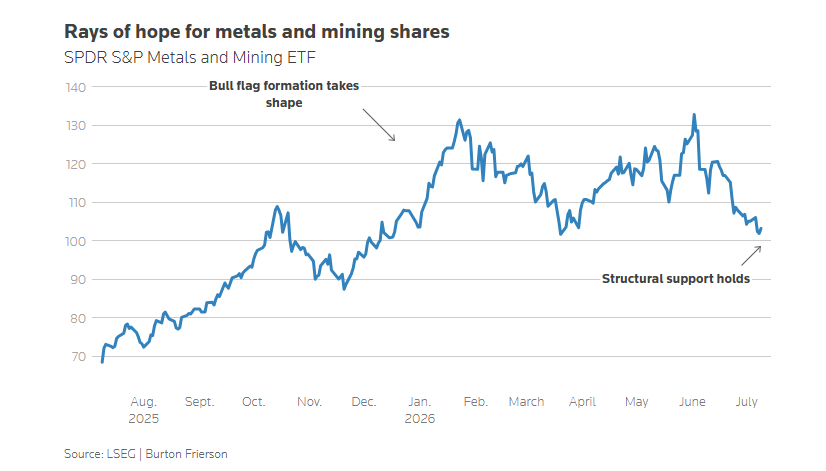
Shares of U.S. metals and mining companies have been on a volatile ride this year, including a nearly 25% fall for the sector in recent weeks, but ​technical analysis indicates that things could be looking up.

The sector, measured by the State Street SPDR S&P Metals & Mining ETF, has been in a long-term uptrend that shifted into high gear in 2025. Over the past year it has been pulled between opposing forces — tariffs, the AI-driven buildout, ​bets on a commodities supercycle, and worries that the war in Iran could hurt global growth ​and stoke inflation.

The ETF tumbled to its 2025 low of 99.95 on Wednesday, ⁠according to data supplied by LSEG, but then began rebounding. The 99.95 low marked what chartists ​call structural support — a price floor where buyers have repeatedly overwhelmed sellers — and the bounce suggests that ​support held firm.

Adding to the bullish case, the Relative Strength Index, or RSI, turned higher from oversold territory just as the rebound got underway. RSI is a widely used gauge of market momentum. When RSI turns higher from low, ​oversold levels, chart watchers often see it as an early clue that sellers are losing steam ​and buyers are stepping back in.

The recent low in the ETF also sits at the bottom of a price ‌channel that ⁠appears to be forming a bull flag, a pattern in which a market pauses within an uptrend before resuming its climb. The top of the flag is marked by a trendline connecting January’s high of 134.46 to June’s peak of 132.87, so a breakout remains distant. Still, the rebound highlights a ​staircase of Fibonacci retracement ​levels and other resistance ⁠spots at 107.71, the 109.50-110 area, 112.51 and 116.40. Fibonacci retracement levels are points where markets often return after a big move.

A sustained break below ​structural support near the 99.95 low and the channel’s floor, near 99.40, ​would undercut this ⁠bullish case and raise the risk of further declines.

What the chart shows:

  • Bounce off 2025 low of 99.95 confirms structural support
  • Pattern resembles a bull flag, with the top near the 134.46 and 132.87 highs
  • Key levels to ⁠watch: 107.71, ​the 109.50-110 area, 112.51 and 116.40; support at 99.95 low ​and 99.40

(Christopher Romano is ​a Reuters market analyst. The views expressed are his own; Editing by Burton Frierson and Nia Williams)


India’s Aditya Birla Renewables to buy Sprng Energy from Shell


Stock image.

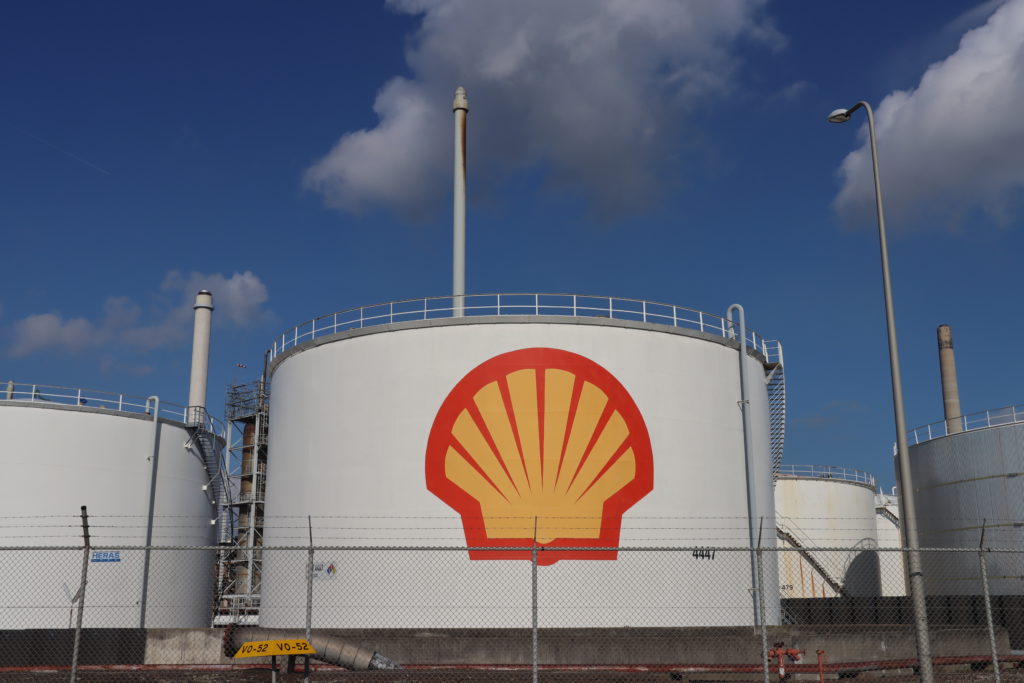
Grasim Industries’ (NYSE: GRAS) renewables unit will buy Sprng Energy from British oil major Shell (LON: SHEL) in a deal worth $1.8 billion, including debt, in one of India’s largest clean energy acquisitions, the companies said on Monday.

The acquisition will add 5 gigawatts in capacity to Aditya Birla Renewables’ portfolio, Grasim, the flagship company of India’s Aditya Birla Group, said

The deal takes the group’s renewables portfolio to 9.3 GW, making it one of the largest players in the country’s growing clean energy sector.

India has stepped up its clean energy push to meet rising power demand, targeting 500 GW of non-fossil fuel capacity by 2030 from about 283 GW now, drawing significant investment from domestic conglomerates and global energy companies.

The country’s clean energy space is currently dominated by Adani Group’s clean energy unit Adani Green (NYSE: ADNA), and ReNew Energy Global.

The final equity consideration will be determined after adjustments for debt and cash, Grasim said.

The deal will be financed through a mix of debt, equity infusion from Grasim, and funds managed by Global Infrastructure Partners, a unit of BlackRock, it said.

The transaction is expected to complete by the end of 2026, Shell said on Monday.

The move reflects a wider industry shift, with global energy companies including BP (LON: BP) and Equinor dialing back renewable energy investments in favour of their traditional oil and gas operations.

Under CEO Wael Sawan, Shell has also shifted its focus back to liquefied natural gas trading and upstream operations, while shrinking the company’s low-carbon projects.

Reuters reported in February that Shell was reviewing strategic options for Sprng Energy. Shell had agreed to buy Sprng in 2022 for $1.55 billion.

(Reporting by Nishit Navin and Sethuraman NR, additional reporting by Stephanie Kelly; Editing by Leroy Leo)


India to invest in foreign uranium mines


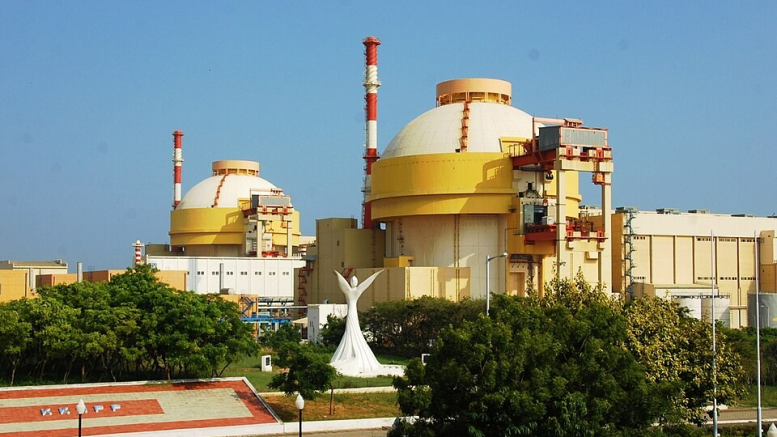
The Kudankulam Nuclear Power Plant in the Tirunelveli district of Tamil Nadu, India. (Credit: Reetesh Chaurasia/Wikimedia Commons)

India’s state-owned power producer NTPC is looking to help finance overseas uranium mines to fuel the country’s plan to massively expand nuclear power generation in the coming decades.

The world’s most populous country is planning one of the world’s largest nuclear power expansions, aiming to lift installed generating capacity from about 8.8 GW today to 100 GW by 2047 under its Nuclear Energy Mission. NTPC plans to develop about 30 GW, accounting for nearly a third of the national target.

The company issued a tender to appoint consultants who would help identify potential sources in uranium-producing countries such as Canada, Kazakhstan, Australia and South Africa, The Economic Times reported. Bids are due by Thursday.

Round of deals

The mines search comes amid India’s expanded efforts over the last several months to source uranium. Last week, Australia signed the final administrative arrangements on a deal to supply India with uranium for civilian nuclear use, but detailed volumes weren’t specified. Negotiations on the deal have been ongoing since 2014.

In March, the South Asian country signed a $1.9-billion) deal with Cameco (TSX: CCO; NYSE: CCJ) to supply uranium ore concentrate; and in February, Kazatomprom (LSE: KAP), the world’s top producer of uranium, agreed to sell a significant amount of output to India.

India currently sources domestic uranium from state firm Uranium Corp. of India, though its mines in the states of Jharkhand and Andhra Pradesh yield “medium tonnage and low-grade” uranium, the corporation said.

Last December, India’s parliament enacted a law enabling private nuclear power companies, ending decades of state monopoly in the sector.


US Vanadium awarded gov’t offtake contract for National Defense Stockpile


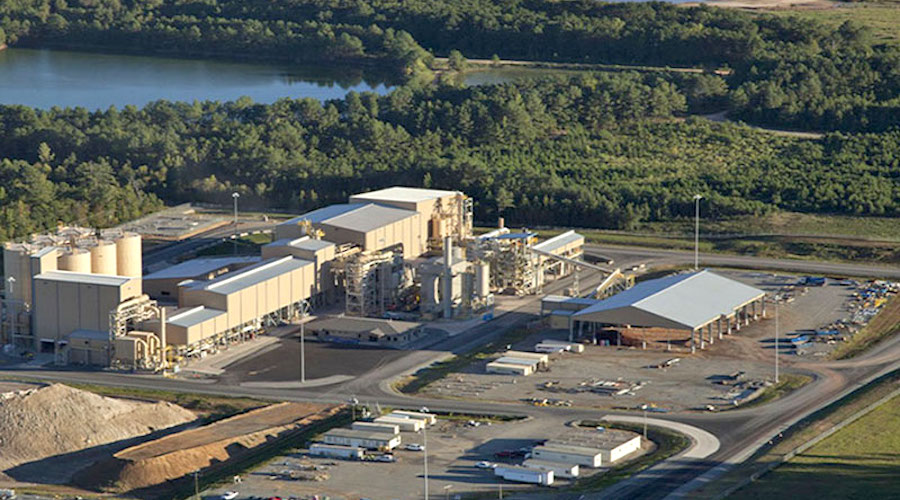
TechMet’s current portfolio includes US Vanadium, based in Arkansas. (Image courtesy of TechMet.)

US Vanadium LLC, a subsidiary of TechMet USA, said Monday it has been awarded the largest contract in the company’s history by the U.S. Defense Logistics Agency (DLA) Strategic Materials team, manager of the National Defense Stockpile (NDS), to supply domestically produced high-purity vanadium pentoxide flake over the next three years.  

US Vanadium is the only current producer in the United States of high-purity vanadium pentoxide flake, a strategic material used to manufacture aerospace-grade titanium alloys for defense, aerospace, space, and advanced manufacturing applications.  

The United States remains heavily dependent on imported vanadium. In 2025, domestic production totaled approximately 7,500 metric tons, compared to U.S. consumption of roughly 13,000 metric tons. The United States imports most of its vanadium pentoxide from Brazil and South Africa, and ferrovanadium from Russia and China. 

The company operates two facilities in Arkansas that recover and process vanadium from petroleum refining and other post-industrial waste streams, producing some of the world’s highest-purity vanadium oxides, which are essential for high-strength steel alloys, missile and aerospace systems, space vehicles, nuclear reactors, aircraft carriers, night-vision equipment, and other applications.  

The award follows US Vanadium’s 2025 launch of domestic production of high-purity vanadium pentoxide flake production, it said, adding that the project was supported by funding from the U.S. Defense Logistics Agency’s Research and Development Office and Traxys North America.  

“This award represents another important milestone in expanding America’s domestic critical minerals processing capacity, as the U.S. is overwhelmingly reliant upon foreign sources for vanadium,” TechMet CEO Brian Menell said in a news release.  


South Africa plans first strategic oil boost since Apartheid


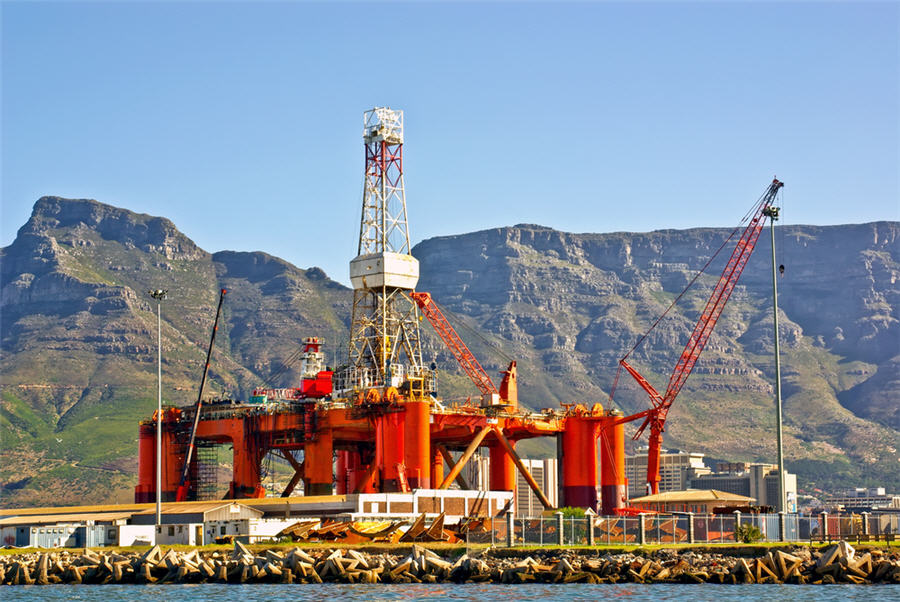
Oil rig in Capetown. Image from archives.

South Africa plans to increase its strategic oil reserves for the first time since the apartheid government stockpiled crude, adding to measures across the continent to mitigate supply shocks.

The Department of Mineral and Petroleum Resources proposed that 60 days of demand be covered by reserves, of which about two-thirds will be crude and the remainder oil products, according to a draft policy document published July 9 for public consultation.

That would amount to about 36 million barrels, worth billions of dollars, based on US Energy Information Administration estimates that put South African demand at 600,000 barrels per day. Licensed wholesalers and importers would be required to keep 21 days of inventory under the plan. The reserves would be managed by the state-owned South African National Petroleum Co.

The National Treasury and the SANPC “will develop financing mechanisms and instruments for the financing and guaranteeing strategic petroleum stocks,” the department said.

South Africa last built up its emergency stocks in the 1970s, when the United Nations imposed sanctions on the state due to its policy of institutionalized racial segregation, leading to the construction of the 45 million-barrel Saldanha Bay storage hub on the Atlantic coast. Supply concerns and price hikes caused by the US-Israeli war on Iran war have revived the original purpose of the facility: to act as a buffer from extreme oil-supply shortages. 

Type of Reserves ProposedObligation Days of CoverResponsibility
Strategic Stocks60 days70% crude and 30% products managed by SANPC
Private Stocks21 daysSame proportion of crude to products; mandatory for all licensed wholesalers

The conflict in the Middle East triggered a surge in global fuel prices and a search for alternative suppliers. Some African governments cut taxes and dipped into their budgets to help cap prices.

More permanent measures aimed at bolstering infrastructure are emerging, aimed at giving governments greater control over oil supplies and reducing their reliance on trading companies. 

Morocco announced plans in June to invest $641 million to develop fuel-storage facilities, Uganda will expand a state-owned terminal to stabilize supply, while Ghana plans to use more domestic crude in its refineries.

Billionaire Aliko Dangote, whose Nigerian refinery ramped up output just as the Persian Gulf conflict started, has launched a number of projects across the continent, including building another plant of the same design in Kenya to storage facilities in The Gambia.

Reserves sold

In the three decades since South Africa’s first democratic elections in 1994, the government has wound down its strategic stocks, including the sale of 10 million barrels in 2015 when prices were at an eight-year low. That deal was eventually found to be unlawful.

South Africa has become increasingly dependent on fuel imports as about half of its refinery capacity shut down in recent years, with the approach of new low-sulfur fuel standards in July 2027 that require greater investment in aging plants.

South African lawmakers last year determined the state’s stockpiles to be insufficient — an official estimate in March put crude reserves at 8 million barrels. The country currently requires 10 million barrels to replenish sold or rotated stock, in addition to storage infrastructure costs, according to the draft policy.

Dependence on shipping supply chains and exposure to maritime chokepoints — such as the Strait of Hormuz, where traffic has slowed because of the Iran war — exposes South Africa’s economy to 1 billion rand ($61 million) in losses for every day that fuel is unavailable, according to the department that was previously known as the Department of Mineral Resources and Energy.

(By Paul Burkhardt)


Dutch court rejects Glencore bid to buy back logistics unit at discount


Stock image.

A Dutch court has rejected Glencore’s attempt to buy back its former logistics unit Access World Group through a private transfer to a subsidiary, after opponents said the proposed price undervalued the business.

In an Amsterdam District Court ruling on July 2, released last week, the court said that London-listed Glencore (LON: GLEN) could not transfer Access World shares to its subsidiary Tironimus. The hearing was held on May 21.

Glencore had not demonstrated that a public auction would be harmful, the court said. It added that Tironimus could participate as a bidder in a public auction that might also identify other interested buyers.

Glencore had sought court authorisation under Dutch law for a private sale of the shares to Tironimus.

But the proposed transfer to Tironimus created a genuine risk of a conflict of interest, the court said.

It refused the request, citing concerns over the earlier sale process and the valuation underpinning the proposed transaction, as well as the risk of a conflict of interest.

Glencore declined to comment.

Valuation questioned

Current owner Global Capital Merchants Limited, based in the British Virgin Islands, bought Access World from Glencore in 2022 for an enterprise value of $176.7 million.

Glencore originally provided GCM with a $100 million vendor loan to help finance the acquisition, which was subsequently increased to $140 million.

That sale process was insufficient to show the market would not pay more because the company had not fully disclosed the process and the pool of bidders appeared restricted, the court said.

GCM failed to make a repayment due in January 2023. By March 31, 2026, the total outstanding amount was about $108.9 million, including about $20.3 million in interest, according to the court document.

The court further questioned the valuation underpinning the proposed sale.

Glencore’s valuer, Vantage Valuation, put the equity value at $51.4 million, according to two sources.

GCM could not be reached for comment.

(Reporting by Pratima Desai; Editing by Susan Fenton)


Alsym Energy, ERITY sign 9 GWh sodium-ion battery deal for mining sector 


Sodium-Ion batteries. Adobe Stock image.

Sodium-ion battery company Alsym Energy and Australian mining services firm ERITY have announced a 9GWh strategic partnership – what the companies say is the largest known sodium-ion battery agreement to date in the global mining industry. 

The partnership establishes a framework for the companies to jointly identify, pursue and deploy battery energy storage systems (BESS) across multiple mining use-cases, including micro grid power, critical mineral extraction, and AI-powered mobile data centers.

Sodium-ion batteries carry lower risk of fire and thermal runaway than lithium-ion batteries, and sodium is emerging as a serious alternative chemistry, with global players like CATL accelerating large-scale commercial deployments.

Deployment of sodium-ion batteries will enable significant cuts to diesel fuel consumption for the Australian mining sector, Alsym said.

With this partnership, Alsym now has 18 GWh of announced commercial deployment agreements
in the past two months, including 8.5GWh with ESS and 500MWh with Juniper Energy,
across mining, grid-scale storage, and industrial applications.

Publicly traded companies Resource Mineral International and Volt Resources are among those adopting the technology under the agreement, the company said.  

The alliance pairs Alsym Energy’s high performance, non-flammable battery technology with ERITY’s deep operational mining expertise to meet the soaring global demand for lower cost, efficient, and high-performance off-grid energy storage solutions that accelerate the transition to clean energy, it said.

“We are thrilled to partner with Alsym Energy to identify and deliver BESS opportunities to market,” ERITY Chief Operating Officer Manny Claassens said in a news release.

“This collaboration allows us to address the pressing energy challenges faced by the mining industry, where energy demands are significant and operations are often located in remote areas with limited access to traditional power infrastructure,” he said.

By integrating Alsym Energy’s thermally stable, high-performance storage solutions into mining operations, we have an opportunity to help reduce operational costs, enhance energy resilience, and support improved safety and sustainability outcomes across the energy transition landscape.”