Tuesday 14 July 2026, by Houshang Sepehr
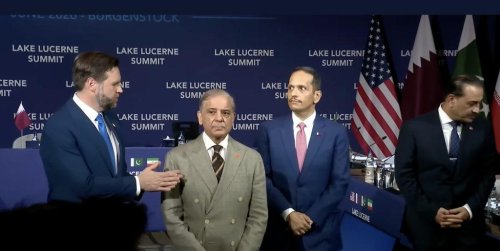
This article, analysing the underlying dynamics of the “Memorandum of Understanding”, was written before the renewed USA attacks on Iran, thus demonstrating it was indeed a temporary calm. [1]
The recent signing of the Memorandum of Understanding between the Islamic Republic of Iran and the United States is a complex and multidimensional event. A careful examination of the text reveals the extent of the internal crises that both sides are experiencing. Far from reflecting a genuine desire for peace or marking a substantive settlement of their historical differences, this agreement appears more as the product of a political impasse, structural blockages and short-term constraints weighing on each of the two camps. Faced with growing internal and external difficulties, the leaders of the two countries opted for a limited de-escalation, in the form of a temporary truce and a temporary suspension of their confrontation, without eliminating the root causes.
Memorandum of Understanding: U.S. perspectives
An analysis of the official and unofficial statements of the leaders of the two countries clearly highlights the fragility and precariousness of this memorandum of understanding. It also highlights the significant differences between the parties as to its interpretation and how it is applied. Under these conditions, the prospects for its sustainable implementation remain shrouded in great uncertainty and its future appears more than ever to depend on the evolution of the political, regional and international balance of power.
On the US side of the equation, Donald Trump tried to present this memorandum of understanding as the consecration of an undeniable strategic success. In an interview with the media outlet Axios, published on 18 June, he stated bluntly that the acceptance of this agreement by the Islamic Republic was tantamount to an “unconditional surrender”. He elaborated on this claim by stating, “Well, it really probably is unconditional surrender… I think so… Look, they have no army left. All their ships are at the bottom of the sea, 159 ships. That’s all they had.” Through this deliberately hyperbolic and martial rhetoric, he strives to impose a reading of the balance of power as definitively decided in favour of the United States.
This triumphalist discourse appears in reality as an attempt to mask the management of strong internal pressures. By presenting the agreement as a total and unilateral victory, he helped to consolidate an image of power and political mastery, intended as much for the international scene as for stabilizing the domestic political field. This narrative of diplomatic success is thus part of a logic of strategic communication aimed at transforming a dynamic of compromise and constraint into a show of force.
After the publication of the text of this memorandum of understanding, in the United States a wave of virulent criticism was raised among many Republican officials as well as among Donald Trump’s traditional supporters. Several conservative voices have considered this document particularly weak, going so far as to compare it to previous agreements such as the JCPoA. [2] This internal contestation reveals the persistent tensions within the Republican camp around the strategy to adopt vis-à-vis Iran, and highlights the American president’s difficulties in stabilizing a lasting political consensus on this issue.
In the face of these attacks, Donald Trump’s defence has been based on a strictly pragmatic logic, centred on an assessment of costs and benefits. In the same interview with Axios, he said: “The only way I could have been tougher was to go there for another two or three weeks and keep bombing them, right? But what does that get us? The Strait of Hormuz will not reopen.”
With this argument, he justifies the signing of the memorandum not as an ideological concession, but as a strategic arbitration aimed at avoiding an escalation with potentially uncontrollable economic and geopolitical consequences. He had previously declared, on Wednesday, 17 June, in an ironic and sarcastic tone: “If it works out, I’m going to take the credit. If it doesn’t work out, I’m blaming JD [Vance].”
These statements have been interpreted by some observers as revealing the fault lines likely to develop within the presidential entourage in the event of unfavourable developments in the situation. In this reading, the emphasis placed on “pragmatic” arbitrations and on the prevention of uncontrolled escalation could, in the long term, serve as a basis for a redistribution of political responsibilities in the event of the failure of the process.
In this context, J.D. Vance’s role is sometimes evoked in the public and media debate as that of a figure potentially exposed to internal criticism from the Republican camp, if the implementation of the memorandum were to produce results deemed insufficient. Some analysts believe that such dynamics could, in a scenario of prolonged political crisis, weaken his position in the internal balances of the Republican Party and indirectly influence his prospects in the 2028 presidential race, although these developments cannot be considered as taken for granted or determined at this stage.
Recomposition of the theocratic regime
In Iran too, the signing of this memorandum seems to reflect a paradigm shift and recompositions within the power bloc. It appears that the hard core of the regime is now facing structural tensions, as a result of the gradual erosion of its ability to ensure its legitimacy and governmental effectiveness, in a context of continuous aggravation of economic, social and political crises.
The acceptance of this agreement would thus have contributed to reviving internal fault lines and accentuating already latent divergences between different sensitivities of the government and its traditional social base. Rather than a homogeneous adherence, it is a more contrasting dynamic that is emerging, made up of reservations, readjustments and various forms of disillusionment, revealing the fragility of the balances on which the current political architecture is based.
In the nights following the announcement of the agreement, some fringes of the Islamic Republic’s supporters, as well as forces within its ideological base, who had held nightly rallies in the streets and public squares, expressed deep anger at what they perceived as an abandonment of basic slogans. These mobilizations have resulted in virulent speeches and slogans.
In particular, the participants accused government officials of compromising and overstepping ideological red lines, thus reflecting a break between part of the activist base and the political choices made at the top of the state. This reaction highlights the internal tensions caused by the agreement and the difficulty for the government in maintaining narrative and political cohesion around it.
At the same time, certain factions within the regime itself, especially among the most hardline currents, have multiplied their harsh criticism of the negotiating team. These positions reflect a desire to distance themselves from the content and implications of the agreement, in a context where the distribution of political responsibilities is also at stake.
By seeking to dissociate themselves from the consequences perceived as a retreat, these segments of power try to avoid assuming the political cost, thus revealing internal logics of disengagement and redefinition of the lines of cleavage within the state apparatus.
In response to this tense and disorderly climate, the dissemination of a singular message widely interpreted as disempowering attributed to Mojtaba Khamenei, the Supreme Leader, testifies to a perception of instability and confusion at the highest level of decision-making. This message, while implicitly validating the need to resolve to this compromise, also seems to aim to redistribute its political and symbolic costs.
In this perspective, the responsibility for the retreat is attributed, in a logic of distancing, to Masoud Pezeshkian, in his capacity as president and head of the Supreme National Security Council. This reading is part of a discursive style often associated with Ali Khamenei, where the preservation of the centre of authority is accompanied by an externalization of operational responsibilities, thus revealing the internal tensions and mechanisms of political management of disagreements within the state apparatus.
This political manoeuvre would thus aim to constitute a symbolic protection mechanism, intended to contain the anger of the ideological base while preserving the internal balances of power. By proceeding to an early redistribution of responsibilities, it would also make it possible to designate, in the event of the failure of the agreement scenario, a figure likely to bear the political and institutional cost of its consequences.
In this logic, the distancing of the operational responsibilities associated with Masoud Pezeshkian would appear as an instrument for managing internal tensions, aimed at protecting the central decision-making core while absorbing the criticism emanating from the various components of the regime. It would thus be less a question of a clarification of responsibilities than of a strategy of political stabilization through the construction of a space of differentiated responsibility. In this case, Mojtaba Khamenei is adopting the same strategy as Trump.
Behind these political and media stagings, some analysts believe that a deeper turning point could be underway within the state apparatus. The military-security bloc in power, embodied in particular by figures such as Mohammad Bagher Ghalibaf, the speaker of the Iranian parliament, seems to be gradually coming to the conviction that the system has entered a form of structural impasse.
In this reading, its leaders would have taken note of the growing limits of the reproduction of the old ideological registers, in which certain historical slogans such as “Death to America” or “Destruction of Israel” would no longer make it possible, on their own, to meet the material and institutional requirements facing the state. Beyond their symbolic dimension, these transformations reflect a broader constraint: that of the economic and administrative sustainability of a particularly extensive bureaucratic and security apparatus.
The survival and continuity of this architecture of power, often described as sprawling and bloated, would now depend on access to substantial financial resources. However, in a context marked by international isolation and the persistence of strong geopolitical tensions, the ability to secure these resources appears increasingly constrained, contributing to redefining the regime’s strategic room for manoeuvre.
This is why, according to this reading, the political struggle and internal recompositions that could unfold in Tehran over the next sixty days would mainly revolve around an increased rivalry between different power networks for access to post-conflict resources and rents. The issues at stake would include the sharing of economic dividends potentially linked to sanctions relief, the control of the main national economic circuits, as well as the modalities of a possible reintegration of the country into the international financial markets.
In this context, the various factions of the regime would be engaged in a dynamic of repositioning aimed at strengthening their capacity for influence and securing the most favourable share of the benefits expected from an easing of tensions and a reduction in external constraints. These developments reflect less a brutal break than a gradual recomposition of internal power relations, where economic, security and political considerations tend to be closely intertwined.
Frustration of monarchists
One of the most important indirect effects — and perceived by some observers as potentially significant — of this memorandum may lie in the recomposition, or even the weakening, of certain factions of the right-wing opposition established abroad. Currents such as the monarchists, as well as the supporters of Reza Pahlavi, have, in recent years, structured a significant part of their political strategy on the assumption of maximum external pressure on the Islamic Republic. This combined the intensification of economic sanctions, the continuation of a policy of diplomatic isolation and, for some segments, the hope of more direct support from foreign powers, notably the United States and Israel.
The petty and criminal bargaining attributed to Reza Pahlavi, combined with the growing frustration of monarchist circles, is part of an increasingly visible dynamic of political radicalization. Once again, their slogan remains unchanged and unambiguously claimed: “Thank you Trump, thank you Bibi”, in celebration of the bombing of Iran. History has rarely seen a pretender to the throne associated with a crime of such gravity
Indeed, the conclusion of this agreement highlights the fragility of this strategic approach to currents that take advantage of the figure of Reza Pahlavi. The external powers on which these currents based part of their hopes have, in the end, privileged their own geopolitical, economic and security interests, rather than an explicit logic of regime change in Iran.
This development has contributed to weakening the political prospects of these segments of the opposition in exile, by revealing the limits of a strategy mainly based on international dynamics. It has also highlighted, according to some analyses, the weakness of their social anchoring within the country, as well as their structural dependence on external conditions that are difficult to control or anticipate.
Distanced for reasons specific to their social roots from any approach involving the construction of political influence based on social dynamics and the mobilizations of workers, women, students and other protesting forces within the country, these currents have largely favoured, in recent years, a strategy based on diplomatic action. lobbying and seeking support from foreign decision-making centres, particularly in Washington and Tel Aviv.
For some of their most radical representatives or supporters, this orientation has sometimes been accompanied by an attitude in favour of intensifying external pressure, or even military escalation, in the hope that the weakening of the regime could pave the way for its overthrow. This stance has sparked fierce controversy, including among the Iranian opposition, with many of its critics accusing it of subordinating the prospects for political change to the interventions and strategic calculations of foreign powers, to the detriment of internal social and popular dynamics.
The Islamabad agreement also highlighted the limits of this strategy of externalizing political change. It has shown that, from the point of view of the great powers, figures such as Reza Pahlavi are not necessarily central actors in a sustainable political project, but can be mobilised in a conjunctural way as part of diplomatic and media pressure strategies. As soon as the evolution of regional and international power relations led Washington to favour the path of negotiation, this form of “opposition under external tutelage” has been largely marginalized and deprived of part of its political function.
A breath of fresh air for social and civic movements in Iran
Therefore, in the light of the available evidence and past experience, there is no evidence that this memorandum will enjoy lasting stability. The deep-rooted mistrust that has structured relations between the two countries for decades, combined with the essentially pragmatic, cyclical and often opportunistic nature of the motivations that led to its conclusion, considerably limits its strategic scope.
More than a step towards a lasting normalization of bilateral relations, this agreement appears to be the product of a provisional balance of power and immediate needs specific to both parties. In this sense, it is not based on the political, institutional and diplomatic foundations generally associated with lasting peace. It is more like a tactical truce, intended to manage a crisis situation and offer a temporary respite to the protagonists, than a substantive settlement of the antagonisms that continue to oppose Washington and Tehran.
However, even this fragile and precarious agreement has had the effect of temporarily removing the heavy, paralyzing and destructive shadow of war from Iranian society. This is probably its most important consequence. For Iranian civil society, the suspension of hostilities is not only a respite from the material and human destruction of a protracted open conflict; it also leads to the weakening of one of the main instruments of legitimation and political control of the regime.
For decades, the authorities have regularly invoked the threat of war, foreign aggression or national insecurity to justify the strengthening of the repressive apparatus, to restrict the space for public freedoms and to postpone any substantive response to the economic, social and democratic demands of the population. In such a context, the temporary mitigation of this threat deprives the government of a central argument that allows it to mobilize public opinion around “national unity” and to relegate internal crises to the background.
From then on, the structural difficulties of Iranian society — inflation, poverty, unemployment, corruption, social inequalities, discrimination against women, political repression and the absence of fundamental freedoms — reappear with greater acuity at the centre of public debate. The relative disappearance of the war factor could thus open up a new space for expression for the social demands accumulated in recent years and help to bring to the fore the conflicts between society and the state rather than those opposing it to external adversaries.
Now, with the temporary mitigation of this external threat, one of the main political protection mechanisms of the system seems to be weakening. The security shield that justified the permanent state of emergency and the priority given to national security imperatives appears less solid than before. The political and social space, long subject to the constraints of an environment marked by the prospect of war, could thus experience a certain relative openness, even if limited and reversible.
The reduction in psychological and security pressures associated with a context of military confrontation creates a new breathing space for society. It favours conditions that are more conducive to the reorganisation of social actors and to the re-emergence of civil demands. In this context, workers, employees, pensioners, teachers, women, students and other sectors of society potentially have an opportunity to make their demands heard outside the atmosphere of urgency and mobilization imposed by the war.
After years marked by the accumulation of economic, social and political frustrations, this period could allow long-repressed, postponed or marginalized demands to reinvest in the public space with greater visibility, coherence and strength. Without prejudging the scale or form that these mobilizations will take, the suspension of hostilities is likely to shift the centre of gravity of the political debate: from external threats to the structural problems of Iranian society itself.
The end of the bombing in no way means the disappearance of the structural crises that are affecting the Iranian economy. Extreme poverty, persistent inflation, massive unemployment, the continued deterioration of household living conditions, as well as systemic discrimination based on gender or ethnicity, remain fully present and continue to produce their effects on a daily basis.
From this perspective, the suspension of external hostilities does not constitute a resolution of internal contradictions, but rather a displacement of the field of conflict. It marks the beginning of a phase in which social and political tensions manifest themselves in a more direct way, less mediated by the logic of war. The relationship between society and the regime is revealed in a more naked, more immediate, and potentially more acute way.
In this context, the authorities’ priorities seem to remain focused on preserving the foundations of their authority and protecting the networks and interests that support the regime’s architecture. This orientation contributes to maintaining a high level of structural tension between the social demands of the population and the imperatives of maintaining power.
In this perspective, while the power clans and the networks of clientelist or mafia-type interests within the state apparatus are reorganizing and repositioning themselves with a view to competing for access to resources and rents in the new environment, the different components of society as well as progressive forces are also confronted with the need to adapt to this new conjuncture.
For the latter, the challenge lies in the ability to take advantage of the transformations underway in order to initiate a social recomposition and a more effective reorganization of their forces. It is less a spontaneous dynamic than a process constrained by the evolution of the balance of forces, which imposes new forms of structuring, coordination and intervention in the social and political space.
Today’s Iranian society is on the verge of potentially decisive transformations. The weight of economic failures has had a direct impact on the working classes, pushing the living conditions of millions of people to increasingly difficult, if not unsustainable, levels.
Faced with this situation, the political system in place, which is authoritarian in nature and highly centralised, tends to favour control and policing mechanisms based on the strengthening of the repressive apparatus. In this context, the management of social tensions is mainly carried out through coercive measures and an intensification of sanctioning practices, which contribute to aggravating the climate of confrontation between the state and a part of society.
When a population perceives that the legal and peaceful channels for expressing its fundamental demands are gradually closing, it is likely that its political commitment will take a more determined and intense form than in previous phases, with a greater charge of anger and demands in the face of the structures in place.
In such a dynamic, the experiences accumulated during previous cycles of mobilization constitute an important political and social achievement. Over the course of a succession of events and confrontations, Iranian society has gradually been transformed, having become more hardened, socially and politically, while developing a more lucid reading of its internal power relations and power mechanisms.
The series of strikes in key sectors of industry, the national mobilizations of pensioners, the large-scale uprising under the slogan “Woman, Life, Freedom”, as well as the notable perseverance of teachers, health workers and families of victims, have been major social and political experiences.
These ongoing struggles have contributed to the accumulation of significant gains in terms of collective consciousness, the structuring of demands and the capacity for organisation. They have also participated in the formation of a generation that is bolder and more aware of the social and political challenges it faces, as well as of its own role in the dynamics of future transformation.
These achievements resulting from field experiences are now inscribed in the collective memory of society and constitute one of the main springs of future forms of social and political organization.
Citizens today have a more detailed knowledge of the mechanisms by which security and administrative institutions tend to frame, neutralize or divert social and professional demands. This accumulated experience contributes to a more lucid understanding of power relations and institutional constraints.
In this context, any significant progress in demands, whether professional, social or political, seems to depend more and more on the ability to build forms of sustainable solidarity, to develop networked organisations and to articulate the different social movements more coherently. This dynamic refers to a gradual maturation of modes of collective action and structures of mobilization.
The linking of workers’ networks with teachers’ organisations, the convergence of women’s rights defenders with student movements, as well as forms of mutual support between different categories of employees, are likely to considerably strengthen the capacity for social pressure.
Societal transformations
These developments are part of a set of profound demographic, social and cultural changes that have taken place in recent decades. Over the past forty-seven years, the Iranian social fabric has undergone significant and often irreversible transformations, affecting modes of socialization, political expectations, and forms of collective expression.
In this context, the regime’s capacity for control and ideological framing appears more limited than before. The development of Internet access, the rise of social networks and the diversification of information channels have contributed to weakening the traditional mechanisms of censorship and state monopoly on the public narrative. Moreover, the new generations seem to be inscribed, in their daily lives and their social representations, in increasingly diversified reference frameworks of values, which partly go beyond the framework of official ideology.
The increasingly assertive presence of women in the social, educational and professional spheres, despite legal obstacles and constraints on the public sphere, is a major factor of transformation. It puts patriarchal structures in tension with the traditional frameworks of the organization of power, by introducing social dynamics that gradually question their foundations.
In this context, women’s greater access to education, work and social life contributes to redefining existing social relations and to changing the cultural balances on which certain forms of authority are based. This evolution is part of a broader process of recomposition of social norms and collective expectations.
In parallel with these transformations, the human geography of the country has also undergone significant changes. The creation of vast areas of precarious housing on the outskirts of major cities, with a population estimated at more than twenty million people, is part of the continuation of profound economic changes, linked in particular to policies of unequal redistribution of resources, to rent dynamics, as well as to processes of environmental fragility and unbalanced urban development.
These peri-urban areas concentrate a high proportion of precarious workers, the unemployed and populations excluded from the formal circuits of the economy. Often characterized by limited access to public services and infrastructure, they reflect marked forms of territorial inequalities. These areas are also perceived as areas of high social tension, where economic frustrations and feelings of exclusion accumulate, thus contributing to the reconfiguration of the relationship between centre and periphery within Iranian society.
Assuming that it manages to articulate itself with independent organisations, to develop class consciousness and to be part of structured forms of organisation, this vast population could constitute a determining factor in the dynamics of social and political transformation.
Such a development would however depend on the ability to build sustainable mobilisation frameworks, capable of transforming situations of social fragmentation into an organised collective force, likely to significantly influence the existing social balances.
The organisation of this part of society could profoundly modify its place in social relations, by making it move from a condition of victims of the dynamics of unequal development to that of a structured collective actor, likely to weigh significantly in political relations.
In such a configuration, and in articulation with the industrial working class, it could constitute a decisive social force capable of bending the existing balances of power and calling into question the mechanisms of domination and control of the state apparatus. However, this perspective depends closely on the concrete conditions of organisation, coordination and convergence of the different components of the social field.
In the absence of a sufficiently developed class consciousness (which refers to multiple factors) and in the absence of independent organisational structures, the social energy accumulated in these peripheral spaces can be directed towards unstable and potentially dangerous trajectories.
This intensity of frustration, if not channelled into structured collective perspectives and progressive goals, can be co-opted by reactionary, populist or opportunist currents. In such configurations, different political or ideological forces seek to exploit situations of social distress and economic precariousness, mobilizing simplistic discourses and demagogic slogans in order to capitalize on discontent.
This type of dynamic can thus divert a broad-rooted social anger from its main structural causes — linked to the mechanisms of exploitation and systemic inequality — to redirect it towards objectives that distort its initial meaning. In some cases, this recomposition can encourage the emergence of new forms of authoritarianism, the exacerbation of social divisions or the consolidation of exclusive and anti-democratic political projects.
From this perspective, the organized presence of civic and worker activists in these social spaces appears, according to this analysis, to be a determining factor for the structuring of mobilizations. It would help to avoid the dispersion of collective energies and to strengthen the capacity of social movements to formulate coherent demands, while limiting the risks of political recuperation by forces hostile to democratic and social dynamics.
The demands of the different social strata can be understood as interdependent components of the same social whole. The demands for housing, health, free and quality education, as well as universal social protection systems, are closely linked to fundamental civil and political rights.
From this perspective, economic and social rights cannot be dissociated from fundamental freedoms such as freedom of expression, freedom of independent organisation and individual freedom of choice, including dress. All of these demands thus form a coherent continuum, where the social, economic and political dimensions reinforce each other within the same logic of emancipation.
The repressive policy adopted by the regime in the face of even the most basic union demands tends to accelerate the politicization of these social movements. In this configuration, the government appears to be reluctant to any form of reform, perceiving the slightest concession or flexibility as a risk likely to weaken, or even destabilize, the entire political edifice.
This institutional lock-in contributes to broadening the scope of demands, which are no longer limited to sectoral demands but tend, progressively, to question the overall structure of the system. Initial demands, made in a professional or social context, can thus be transformed into a broader challenge to the mechanisms of governance and distribution of resources.
In this context, the Iranian workers’ movement occupies a particularly central place in contemporary social dynamics. Workers in the industrial, service and petrochemical sectors, by mobilizing tools such as strikes and production stoppages, have a potential capacity to have a significant impact on the functioning of the economy. This strategic position makes it a major player in social power relations, without, however, prejudging the concrete conditions of their organization and coordination.
The blossoming of this social potential depends largely on its ability to converge with other components of the social and progressive movement. A closer articulation with women’s mobilizations, national teachers’ organizations, pensioners’ associations, student movements, environmental activists as well as the different peoples confronted with forms of national oppression could strengthen the coherence and scope of these dynamics.
For strategic thinking
In this perspective, the central question lies in the construction of forms of coordination and convergence that make it possible to overcome the fragmentation of sectoral struggles, in order to promote the emergence of a common space of demands and collective action. Such a dynamic would constitute a determining factor in the ability of social forces to influence the existing balance of power.
The formation of a united front of the forces of labour and the working classes is often presented, in some analyses, as a major strategic condition for a lasting change in the balance of forces in favour of the popular classes. Such convergence would aim to strengthen the capacity for collective action and to increase the political and social weight of the demands coming from the different segments of the world of work.
Finally, the re-examination of recent developments and the analysis of the nature of the agreements concluded between power blocs highlight a historical reality that is difficult to dispute, from this perspective: the cost of the main strategic decisions taken by the ruling classes — whether it be military adventurism, engagement in proxy wars, sanctions policies and economic blockades, and so on, or the signing of compromises and tactical ceasefires — tends to be disproportionately supported by the working classes.
The working population appears to be the first to be exposed to the social, economic and material consequences of political choices that are made at institutional and state levels that are largely disconnected from their daily experience. This asymmetry feeds, in turn, lasting structural tensions between the spheres of decision-making and the social realities on which they are exercised.
From this perspective, the different components of the system of power — whether military-security structures or other decision-making centres — as well as the actors who face them, tend to externalize the costs of their strategies of survival, compromise and preservation of interests. These costs then disproportionately affect the living conditions of the most vulnerable populations, affecting their access to essential resources, their health and, more broadly, their social security.
A precise understanding of the internal contradictions of power and the adoption of tactics of struggle adapted to the historical and social context constitute, in this perspective, an important prerequisite for overcoming the current crises. The strategic challenge of such organizational cohesion and a more structured class consciousness is often formulated as the possibility of modifying the existing balance of forces to the benefit of the majority social strata.
From this perspective, it would be a question of limiting the hold of networks of power and wealth accumulation considered to be concentrated in the hands of organized minorities, while opening the way to a more profound transformation of the social and political order. The objective thus envisaged refers to the construction of an institutional and social framework perceived as more equitable, more democratic and more respectful of the fundamental rights of individuals.
30 June 2026
Translated by International Viewpoint from A l’encontre.
Footnotes
[1] Photo: J.D. Vance negotiating the Memorandum of Understanding with Iran in Switzerland.
[2] The Joint Comprehensive Plan of Action (JCPoA) is an agreement signed in Vienna, Austria, on 14 July 2015, by the following eight parties: Iran, the P5+1 countries – China, France, United Kingdom. United States, Germany – as well as the European Union.
Houshang Sepehr
Houshang Sepehr is an exiled Iranian revolutionary Marxist militant. He is an organizer of Solidarité avec les Travailleurs en Iran (“Solidarity with the Workers in Iran” - 266 avenue Daumesnil, 75012 Paris) and a member of the Fourth International.
.png)