After Tumultuous Week, IMO Makes Progress on Decarbonization
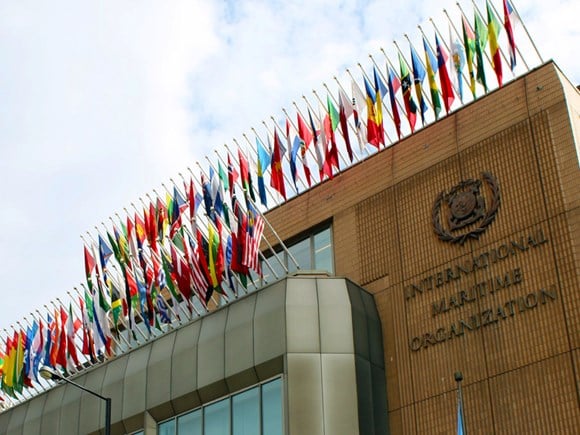
The IMO’s International Maritime Organization’s Intersessional Working Group on Reduction of Greenhouse Gas Emissions from Ships wrapped up a week of closed-door meetings with observers agreeing there had been progress and a promising outlook for the future. Observers said the working group had been able to rise above the rancor of the prior week’s special session of MEPC (Marine Environment Protection Committee) and get back to work on the Net-Zero Framework.
“We observed constructive participation from all parties — including those with prior concerns — which led to real progress on key technical guidelines,” said Dr. Annika Frosch, Research Fellow at UCL Shipping and Oceans Research Group. “Even previously contentious topics, such as the Net Zero Fund, experienced broad and active involvement from many delegations, helping to clarify priorities like establishing the Governing Board and fundamental principles to guide the fund’s future work.”
Many others, especially in the NGO community, expressed a renewed sense of optimism at the close of the working session on Friday, October 24. Delaine McCullough of the Clear Shipping Council highlighted that it had become clear that the adjournment was “just a postponement and not the end” of the framework. Emma Fenton, Senior Diplomacy Director at Opportunity Green, noted that countries had come together to work on the supporting guidelines that will provide the much-needed clarity.
The week before, member states that had supported the Net-Zero Framework in April 2025 moved away, and became cautious, in part due to strong pressure and threats from the United States and others. Saudi Arabia had joined with the United States, pressuring the member states before Singapore tabled the adjournment to give the IMO more time.
Many had left the first session, saying the IMO was giving confusing signals and creating more problems than solutions for the industry. Many wondered if the framework would even be adopted, or if it was the first step in its death knell. Even those who believed there would be progress had to concede that the regulation was now likely not to come into force till January 1, 2029.
“Understanding what happened at the IMO in October and why is now central not just for any chance of future adoption, but for just and equitable climate action generally,” commented Dr. Tristan Smith, Professor of Energy and Transport at UCL Shipping and Oceans Research Group. “This lost momentum can be recovered, but we have taken a step closer to the abyss that is dangerous climate change.”
The working group tackled the key challenges in the framework, and while there were no formal decisions, observers are saying there was steady progress in the discussion of the details for the implementation. Hot topics included how the regulation should incentivize energy transition, how the fund should be set up, and how the lifecycle and sustainability of different fuels should be evaluated and certified. Lifecycle analysis was widely discussed, and support seemed to be emerging to support differentiating rewards for different fuels. The role of biofuels was also a key topic.
Wind propulsion was also back in the spotlight, notes Anaïs Rios, Shipping Policy Officer for Seas at Risk. The International Windship Association highlights strong momentum for wind-assisted propulsion, reporting that there are nearly 100 large vessels with wind propulsion, representing around five million DTW. They expect the fleet will roughly double in the next 12 months and that this momentum will carry into the framework discussions. Similarly, John Maggs, Clean Shipping Coalition’s Representative at IMO, is calling for transforming the CII into an energy efficiency powerhouse to get shipping’s climate action back on course.
Christiaan de Beukelaer, Senior Lecturer in Culture and Climate at the University of Melbourne and an IMO observer, noted that the obstructionist states in the first week opposed adoption due to a lack of detail, and the second week opposed discussing details ahead of adoption. However, “under the conciliatory guidance of Working Group Chair Sveinung Oftedahl, the vast majority of delegations in the room worked on ensuring that the IMO can deliver on its unanimously-adopted 2023 GHG Strategy through the Net-Zero Framework. This made the saboteurs sound like a broken record, which the room quietly ignored."
The feeling was that the workgroup moved forward, “moving past obstruction and into real progress,” said Jamie Yates, Climate & Renewable Energy Manager for Pacific Environment. Natacha Stamatiou, IMO GHG Lead, Global Shipping for the Environmental Defense Fund, agreed, noting, “Luckily, this week, more voices joined the conversation, and the discussions took on a constructive and more respectful tone. It was a meaningful step toward rebuilding the confidence, transparency, and integrity we need to deliver the pollution cuts future generations deserve.”
Despite the sense of progress, much remains to be done, with many noting the Net-Zero Framework hangs in the balance. The IMO is scheduled to meet for a two-part summit in April 2026, including the next session of the Marine Environment Protection Committee. The goal is for MEPC to finalize important decisions with another round of negotiations. The adjournment calls for the member states to reconvene in October 2026.
Shippers at the Helm
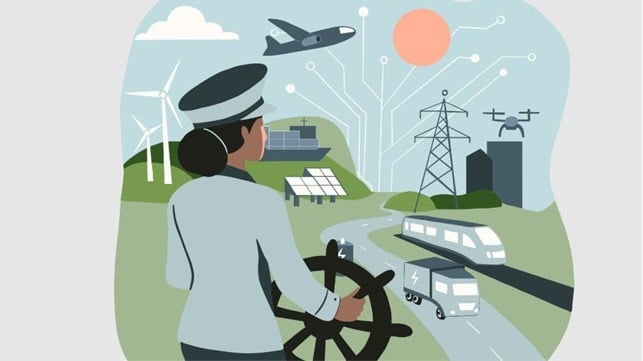
Driving the Integration of Energy and Transport for a Fossil-Free Future
by Mikael Lind, Wolfgang Lehmacher, Sandra Haraldson, Tony Ehrs, Johan Englund, Cecilia Gabrieli, Patrick Mattsson, Krister Rosendahl, and Pernilla Åström
When the hybrid ferry Aurora Botnia departs Umeå for Vaasa, it carries more than passengers and freight. It carries a glimpse of the future. Powered by a combination of electricity supplied by energy companies in Sweden and Finland and Liquefied BioMethane (LBM) from Gasum, it is one of the world’s most energy-efficient vessels, particularly when the large batteries are installed in 2026. However, its success depends not only on propulsion technology, but also on coordination.
Each voyage requires a delicate synchronization between energy supply, transport scheduling, and port operations. Electricity availability must match berthing windows. Fuel logistics must align with the vessel's turnaround schedule. Shore power capacity, local grid balance, and fueling of LBM are all part of the same choreography. Aurora Botnia is, in other words, not just a ship. It is a system in motion - a living example of how the future of transport is inseparable from the future of energy.
Aurora Botnia by the numbers: Dual fuel Wärtsilä 31DF engines operating on LNG/LBM with battery hybridization for port approaches and manoeuvres on the Vaasa–Umeå route, including shore power capability to minimize auxiliary emissions in port; operator dossiers confirm hybrid operations and LBM/LNG provisioning supporting energy efficiency gains versus conventional RoPax tonnage. Wärtsilä and Wasaline have announced a significant upgrade to extend the battery capacity from 2.2 MWh to 12.6 MWh, billed as the world’s largest marine battery-hybrid system in operation. This upgrade further improves fuel and emissions intensity, with commissioning planned for early 2026. |
At the same time, shippers - the organizations that depend on reliable, efficient, and sustainable transportation to move goods end-to-end across various modes of transport - are becoming increasingly vocal in demanding reliable, transparent, and fossil-free logistics. They are not just customers; they are the driving force behind the next generation of integrated transport systems. Initiatives such as the Virtual Watch Tower (VWT) have emerged to respond to these demands, providing shared visibility and actionable insights that help align logistics performance with energy.
The fragmentation paradox
Across the world, the race toward fossil-free logistics is accelerating. Electrification, hydrogen, biofuels, e-fuels, methanol, and ammonia are advancing on multiple fronts. Yet behind the impressive progress lies a persistent paradox: we are decarbonizing in silos.
Each mode of transport - maritime, road, rail, aviation - is pursuing its own technological pathway. Energy producers and grid operators are pursuing their own decarbonization agendas, while the interfaces between these systems, the points where energy meets mobility, remain underdeveloped.
This fragmentation leads to systemic sub-optimization. Renewable electricity is often produced in surplus in regions with limited charging needs or storage capacity, while energy-intensive logistics hubs experience shortages. Similarly, hydrogen corridors are being planned without alignment with freight flows, and charging networks are expanding independently of logistics corridors.
Analyses from the International Transport Forum, the European Transport Forum, and EU TEN T planning bodies confirm this: energy and transport transitions are unfolding under separate governance and data frameworks. The result is a mismatch between where fossil-free energy is available and where it is most needed, leading to delays, inefficiencies, and higher emissions than necessary.
EU law now explicitly tackles energy transport alignment through the Alternative Fuels Infrastructure Regulation (AFIR), which sets binding minimums for recharging and refueling on core networks, directly linking infrastructure deployment to transport demand across corridors. TEN T policy complements AFIR by embedding alternative fuel deployment along core and comprehensive corridors, elevating nodes like ports and airports as energy hubs rather than mere transit points; expert briefs, such as ICCT’s Review of the AFIR Proposal, urge synchronized AFIR–TEN T implementation to ensure that corridor-level energy availability tracks freight flows and modal interfaces, and that coordination may be data-driven. The CDES (Collaboration and Digitalization for balanced Economic and Societal value) approach emphasizes that collaboration and digitalization must walk hand in hand to create value. Digitalization without collaboration risks reinforcing silos; collaboration without digitalization lacks operational leverage. Together they generate:
• Economic value, as demonstrated by pathways for efficiency and predictability when collaboration frameworks and digital tools are combined, according to UNCTAD’s guidance on CDES design and governance in transport logistics.
• Societal value, such as emission reductions and improved energy utilization, being achieved through trusted data sharing, enabling synchronized operations across nodes and modes, as highlighted by UNCTAD’s CDES blueprint for transport.
This dual value creation forms the foundation for integrating transport and energy systems into one shared ecosystem.
Digital twins for the integrated system
Bridging the gap between physical operations and digital decisions requires a unifying layer that links real-world events to computational insight. Digital twins provide that layer by fusing live operational data with dynamic system models to simulate, predict, and optimize performance over time.
A digital twin enables the dynamic simulation of complex systems, providing decision support for optimizing operations using near-real-time data. When applied across sectors, digital twins make interdependencies visible, measurable, and manageable, illustrating, for example, how changes in energy availability, weather, or vessel schedules affect emissions, delivery times, and infrastructure loads. In this way, digital twins become the bridge between energy intelligence and transport intelligence. They transform fragmented data streams into actionable insights, enabling coordination across modes, nodes, and energy sources.
| Digital twins: quantified benefits. Independent analyses of end-to-end supply chain and transport twins report material performance uplifts. Typical results include up to 20% improvement in delivery promise attainment, labor cost reductions of nearly 10%, and measurable reduced carbon impacts when paired with predictive optimization, illustrating why twins are shifting from descriptive to prescriptive control layers. Neutral sector conveners similarly flag digital twinning as a lever for navigating disruption and reducing CO2 in logistics and shipping, reinforcing the case for cross-sector twins that span energy and transport. |
In the Nordic region, several initiatives - such as Digital Twins for Multipurpose Ports - are already exploring how data from shipping, rail, road, and local energy networks can be combined to support system-level decision-making.
These twins simulate the interdependencies between energy consumption, renewable energy availability, and logistics performance, allowing actors to ask:
• What happens to delivery precision if renewable energy supply is constrained, or differently put, what will be prioritized?
• How can energy and transport resources be reallocated to reduce emissions during disruptions?
• Where should new infrastructure be prioritized to create the most excellent system-level benefits?
By integrating these perspectives, digital twins enable co-optimization between actors, balancing delivery precision, climate impact, and cost across entire supply chains.
Digital twins evolving into system demonstrators
At higher maturity, digital twins operate as collaborative decision environments that combine real-time telemetry, what-if simulation, and predictive and prescriptive analytics to anticipate disruptions and help co-optimally manage performance; in this role, they can function as system demonstrators.
Practical experience from Sweden shows that such demonstrators can serve as innovation testbeds for the broader transport ecosystem. These system demonstrators bring together technology developers, port authorities, energy companies, and logistics operators to jointly test new, collaborative, data-driven approaches to working together. Meeting the combined goals of decarbonization, resilience, and efficiency requires a holistic approach that connects energy, transportation, and digital systems, rather than siloed optimization. In practice, leading logistics initiatives deploy testbeds to validate that twin-enabled collaboration accelerates disruption recovery and dynamically reveals decarbonization levers across partners, helping optimize system-wide.
The new role of transport nodes
Ports illustrate this transformation well - not because they are unique, but because they reveal how transport, energy, and digital infrastructures converge. Historically, ports were designed to coordinate transport: the meeting point between sea, land, and logistics. In a sustainable transport system, they must evolve into both energy nodes and digital nodes. Today, a port cluster includes not just stevedores, terminal operators, and shipping lines, but also energy utilities, grid managers, fuel suppliers, and data providers. These actors collectively balance vessel calls, cargo flows, and energy supply. The same logic applies to airports, railway yards, and dry ports-any transport node where multiple modes, stakeholders, and energy carriers converge.
At these nodes, the coordination of energy is becoming as critical as the coordination of cargo. Power distribution, hydrogen supply, and biogas availability must align with transport demand and timing. This requires shared situational awareness and dynamic decision-making across institutional boundaries. Recent work highlights that shared visibility across the supply chain is essential for efficiency and resilience, not merely as a technical issue, but as an organizational and governance requirement with guided and trust-based data sharing.
This expanded role is not optional in Europe: AFIR mandates minimum recharging and refueling capabilities across core networks, effectively recasting ports, airports, and urban nodes as both energy distribution assets and transit assets. TEN T then operationalizes corridor-level planning so that energy infrastructure and freight flow co-evolve, reducing the risk of stranded capacity or localized shortages.
Federated data sharing - the Virtual Watch Tower approach
Such coordination cannot be achieved solely through technology. It requires a governance model that enables trusted data sharing across organizations that may otherwise compete. The VWT initiative provides this model. It is shipper-driven, designed to give those who request and depend on transportation, primarily cargo owners and freight forwarders, with greater end-to-end visibility and reliability in their logistics chains. Built on principles of federation, neutrality, and minimal data exposure, VWT enables actors to share primary data, namely timestamps, energy use, emission metrics, and operational events, without losing ownership or confidentiality.
| The federation focuses on timestamps, status events, and energy attributes mapped to shipment itineraries, with latency thresholds aligned to operational decision windows. Interfaces expose only necessary fields under participant control to preserve ownership and confidentiality. This approach supports live twin services without requiring full dataset replication, thereby reducing the integration burden while enabling shared situational awareness. |
At the core of VWT’s architecture lies VWTnet, a distributed digital infrastructure that enables individual actors to exchange selected data elements related to their operations, contextualized as itineraries of shipments. This infrastructure captures both planned and actual movements and operations, as well as contextual updates. These data feeds enable the creation of a digital twin as a service, providing a live representation of the supply chain that continuously reflects its current state.
Through VWT, shippers gain shared visibility that accounts for both logistics constraints and energy availability, providing early awareness of potential disruptions and opportunities to utilize fossil-free energy more efficiently. The VWT infrastructure includes an expanding app space, where services such as emission calculation, disruption prediction, and performance benchmarking can be delivered directly to transport buyers and operators.
Program notes from research actors indicate that AI-assisted curation and signal extraction from heterogeneous sources are used to understand disruption risk and extract performance insights for logistics decision-makers.
Applied to the integration of energy and transport systems, the VWT’s federated data-sharing and governance principles ensure that energy providers, logistics operators, and authorities can coordinate in near real-time, securely, responsibly, and with direct value for shippers seeking resilient and sustainable logistics chains.
How nodes and corridors become chains
The Kvarken region, situated between Sweden and Finland, demonstrates how this coordination logic can be applied in practice. The ports of Umeå and Vaasa, together with Wasaline, energy companies, and technology partners, are planning to develop a digital twin demonstrator that connects maritime and ship operations, rail and road transport, and regional energy systems.
When a vessel like Aurora Botnia approaches the harbor, the digital twin synchronizes its arrival with berth availability, readiness of shore power and LBM fueling, and inland cargo transfers. If a disruption occurs, such as a delay on the rail network, a temporary grid constraint, or a limited LBM supply, the system simulates alternative scenarios in real-time. Such corridor-scale synchronization aligns with AFIR’s intent to ensure a minimum level of renewable energy infrastructure where traffic is heaviest, making the Kvarken demonstrator a plausible archetype for scaling along core routes.
The same coordination logic can be scaled along entire corridors, linking multiple ports, terminals, airports, and energy nodes into a continuous chain. Ultimately, the goal is to create an end-to-end energy-and-transport digital twin that provides a shared situational picture for all actors involved. This is more than a technological ambition; it is a systemic one. By directly connecting energy generation, distribution, and consumption with transport planning, operations can transition from reactive adjustments to proactive orchestration.
Towards fossil-free logistics
The energy transition is not only about replacing fossil fuels with renewable energy sources. It is about using fossil-free energy intelligently. Fossil-free energy is a limited and variable resource; its value depends on timing, location, and coordination. A fully fossil-free transport chain will require that energy distribution is managed in the same way as multimodal transport coordination. The availability of electricity, biogas, hydrogen, methanol, or e-fuels must be aligned with logistics demand patterns, just as cargo transfers are synchronized between ships, trains, and trucks. In this sense, the next generation of digital infrastructure is not about moving more data but about driving the right data between the right actors at the right time.
Replicable beyond the Nordics
Replicability hinges on two enablers: digital twin operating models that translate multi-actor data into prescriptive decisions, and corridor policies that require energy and transport co-planning across nodes, as seen in emerging EU practices. Industry conveners continue to document cases where twinning improves disruption navigation and sustainability KPIs, suggesting transferability to major gateways with similar multimodal complexity.
What is now being tested in the Nordics can have global relevance. Recent developments in the region’s maritime energy transition demonstrate how policy, industry, and research actors are aligning toward integrated, fossil-free corridors, marking an evolution that underscores both the opportunity and the urgency to coordinate transport and energy systems more systematically.
The ambitions voiced during COP26 and reaffirmed at subsequent climate dialogues highlight that decarbonizing transport requires collaboration across value chains, not only within individual sectors. Maritime corridors are an important starting point, but to truly achieve fossil-free logistics, the same coordination must extend beyond ports and shipping - linking maritime, road, rail, and air transport with the energy systems that power them.
Every major trade corridor - from Singapore to Rotterdam, from Los Angeles to Hamburg - faces the same dual challenge: decarbonizing transport while securing sufficient fossil-free energy.
By adopting a federated, data-driven approach, global supply chains can turn complexity into resilience. Each transport node, whether a port, airport, or rail hub, can consume digital twin services built on top of the wider Virtual Watch Tower network. This architecture enables an Internet of Virtual Watch Towers, allowing different actors - including transport buyers, transport operators, and terminal operators - to use digital twin technologies for decision-making, performance optimization, and sustainability management.
A call to collaboration
The coming decade will determine whether we can transition from fragmented to integrated transformation. The technology exists. The digital-twin logic is proven. The VWT governance model demonstrates how collaboration can be effective.
In the 20th century, ports were developed to facilitate the coordination of cargo between ships, trains, and trucks. In the 21st century, we must build digital corridors that coordinate energy and transport together, driven by those who depend on them most. Only then can we unlock the potential of fossil-free energy, turning electrons and molecules into motion, efficiently, resiliently, and sustainably, across the global supply chain.
Cargo owners must continue to lead for transformation to take hold. Their expectations for fossil-free, predictable, and data-driven logistics are what motivate transport and terminal actors to align and invest. By engaging directly in initiatives like the VWT, shippers help create the demand conditions for collaboration, turning visibility into reliability and sustainability into competitiveness. By combining cargo owner-led federated data sharing with AFIR/TEN-T corridor requirements in procurement and partnership terms, buyers can hardwire energy-transport co-optimization into daily operations at ports, airports, and rail nodes.
About the authors
Mikael Lind is the world’s first (adjunct) Professor of Maritime Informatics engaged at Chalmers and Research Institutes of Sweden (RISE). He is a well-known expert frequently published in international trade press, is co-editor of the first two books on Maritime Informatics and is co-editor of the book Maritime Decarbonization.
Wolfgang Lehmacher is a global supply chain logistics expert. The former director at the World Economic Forum and CEO Emeritus of GeoPost Intercontinental is an advisory board member of The Logistics and Supply Chain Management Society, an ambassador for F&L, and an advisor to Global:SF and RISE. He contributes to the knowledge base of Maritime Informatics and co-editor of the book Maritime Decarbonization.
Sandra Haraldson is Senior Researcher at Research Institutes of Sweden (RISE) and has driven several initiatives on digital collaboration, multi-business innovation, and sustainable transport hubs, such as the concept of Collaborative Decision Making (e.g. PortCDM, RailwayCDM, RRTCDM) enabling parties in transport ecosystems to become coordinated and synchronised by digital data sharing.
Tony Ehrs is Freight Director at Wasaline, leading the company’s cargo operations, sales, and cargo strategy. With extensive experience in the industry, he brings deep expertise in maritime logistics, freight operations, and customer relations, combining strategic insight with hands-on industry knowledge to enhance efficiency and service performance.
Johan Englund is responsible for public Affairs for Sweden at the Finnish energy company Gasum. He has been active within the Nordic energy industry for the last 20 years. Johan's primary focus lies within the realm of regulation and policy concerning gas, gas infrastructure, and biomethane development in the maritime, industrial, and land traffic sectors.
Cecilia Gabrieli is a Senior Researcher at SINTEF Energy Research in Norway. She has led several initiatives on maritime energy transitions, and integrated energy systems in ports (e.g., Interport). During many years she has been active in SINTEFs prioritised research area on mobility.
Patrik Mattsson, CEO of Kvarken Ports Umeå and Umeå Hamn AB, brings over two decades of experience in maritime and logistics operations. He drives the transition toward fossil-free and digitally integrated logistics, using digital twins and data sharing to improve precision, reduce emissions, and turn sustainability into a competitive advantage.
Krister Rosendahl is Head of Purchase & Logistics at Olofsfors AB, leading strategic procurement, production planning, and transport logistics. With extensive experience from major industrial companies such as Volvo Trucks, Komatsu Forest, and BAE Systems Hägglunds, he combines technical insight with project management expertise to optimize manufacturing and supply chain efficiency.
Pernilla Åström is Logistics Developer and Deputy GM Logistics at Komatsu Forest AB. She works with logistics development in the forest machinery industry, focusing on transport. With long-standing experience in transport requirements, she supports the development of sustainable and efficient logistics solutions.
The opinions expressed herein are the author's and not necessarily those of The Maritime Executive.

No comments:
Post a Comment