BOURGEOIS ECONOMISTS
Joel Mokyr, Philippe Aghion and Peter Howitt win 2025 Nobel Prize for Economics
 |
| https://www.britannica.com/money/Joseph-Schumpeter |
By Doloresz Katanich & Una Hajdari
Published on 13/10/2025 - EURONEWS
Joel Mokyr, Philippe Aghion and Peter Howitt win Nobel Prize for Economics 'for the theory of sustained growth through creative destruction'.
Three economists have won the 2025 Nobel Prize in Economics, for “having explained innovation-driven economic growth”, according to the Riksbank committee.
The Royal Swedish Academy of Sciences has decided to award the Sveriges Riksbank Prize in Economic Sciences in Memory of Alfred Nobel 2025 to Joel Mokyr, Philippe Aghion and Peter Howitt.
One half of the prize goes to Joel Mokyr, Northwestern University, Evanston, USA, “for having identified the prerequisites for sustained growth through technological progress,” according to the committee.
The other half jointly goes to Philippe Aghion, Collège de France and INSEAD, Paris, France, The London School of Economics and Political Science, UK and Peter Howitt, Brown University, Providence, USA, “for the theory of sustained growth through creative destruction."
The economics prize is formally known as the Bank of Sweden Prize in Economic Sciences in Memory of Alfred Nobel.
In 1968, Sveriges Riksbank (Sweden’s central bank) established the Sveriges Riksbank Prize in Economic Sciences in memory of the 19th-century Swedish businessman and chemist who invented dynamite and established the five Nobel Prizes.
The prize amount is the same as for the Nobel Prizes and is paid by the Riksbank. The first prize in economic sciences was awarded to Ragnar Frisch and Jan Tinbergen in 1969.
Since then, it has been awarded 56 times to a total of 96 laureates.
Only three of the winners before Monday’s announcement were women.
Nobel purists stress that the economics prize is technically not a Nobel Prize, but it is always presented together with the others at the Nobel Prize Award Ceremonies on 10 December, the anniversary of Nobel’s death in 1896.
They also say it should not be treated on equal footing with physics, chemistry and medicine. Nevertheless, it is always presented together with the others at the Nobel Prize Award Ceremonies on 10 December, the anniversary of Nobel’s death in 1896.
Creative destruction as a ‘necessary evil’ for progress
The term “creative destruction”, coined by Austrian economic theorist Joseph Schumpeter in the 1940s, encapsulates the idea that economic progress and growth carry with them a significant element of disruption.
Namely, every major innovation since the industrial age — from steam engines to the internet and AI — displaces older technologies, societal organisation as well as salaried jobs and the division of labour.
According to this theory, the constant overturning is painful but essential — as our economies grow and change, people will lose jobs, previous prestige or skilled professions will become nearly extinct and politicians need to reallocate resources toward more productive uses and encourage new and better technologies to flourish.
While there are many opponents to the effects of creative destruction on our economic order, such as traditionalists or conservatives, its supporters claim that stopping creative destruction stifles innovation and leads to a stagnation in creativity
Over the past two centuries, the world has entered an era of sustained economic growth and produces a continuous upward movement in incomes, productivity and living standards.
That breakthrough is historically exceptional: for most of human history, growth was sporadic or stagnant, punctuated by periodic crises and then returns to labour and production being determed by basic subsistence farming or work
Joel Mokyr’s contribution
Mokyr, a historian and economist, has focused on how breakthroughs in knowledge, theory and technology feed off one another to create a self-reinforcing and self-perpetuating engine of progress.
He argues that in order for growth to become sustained, societies must develop and protect what he calls propositional knowledge — that is, the scientific or theoretical understanding of how things work, not merely trial-and-error fixes.
Without that deeper understanding, innovations tend to be isolated or noncumulative, and Mokyr emphasises that openness to change — a culture that tolerates disruption and allows new ideas to challenge existing power structures — is crucial.
Aghion, Howitt and the theory of creative destruction
While Mokyr’s approach is historical and conceptual, Philippe Aghion and Peter Howitt developed a formal mathematical framework — beginning with a landmark 1992 model —for creative destruction that connects incentives for firms to invest in research and development, market competition, patent protection and the timing of innovation.
When a firm innovates successfully, it gains a temporary monopoly and profits.
But that profit then encourages others to innovate further, potentially displacing the original innovator. That cycle of displacement, renewal and competition is what churns the dynamic engine of sustained growth and continuous progress.
French economist shares Nobel for 'creative destruction' theory of innovation
French economist Philippe Aghion has won the 2025 Nobel Prize in Economics along with Joel Mokyr and Peter Howitt for their research on how innovation fuels long-term growth through “creative destruction” – when new technologies replace outdated ones.
Issued on: 13/10/2025 - RFI
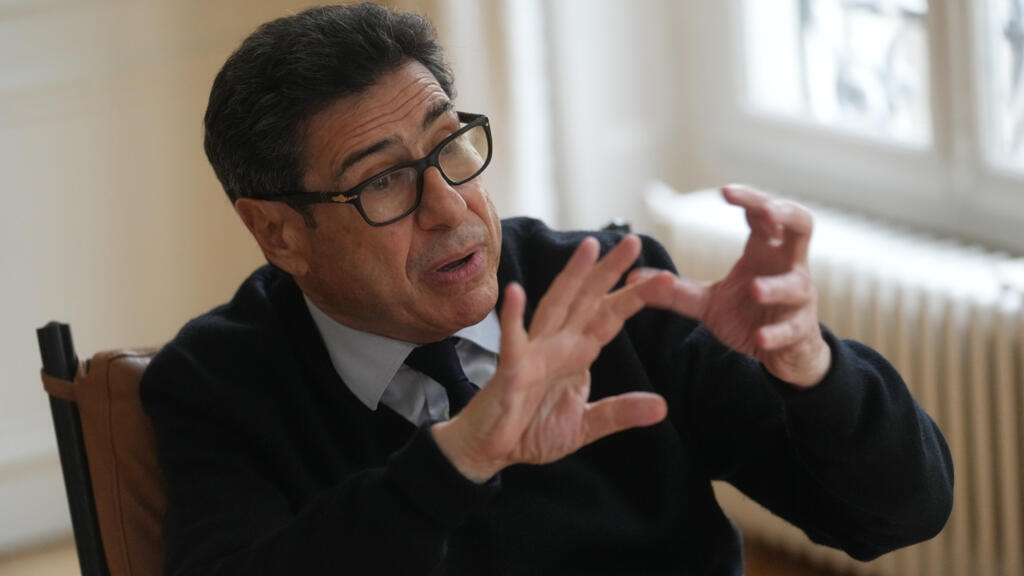
French economist Philippe Aghion has won the 2025 Nobel Prize in Economics along with Joel Mokyr and Peter Howitt for their research on how innovation fuels long-term growth through “creative destruction” – when new technologies replace outdated ones.
Issued on: 13/10/2025 - RFI
French economist Philippe Aghion in Paris, after winning the Nobel prize in economics, 13 October 2025. © Thibault Camus/AP
Half of the prize was awarded to Mokyr, a professor at Northwestern University in the United States and at the Eitan Berglas School of Economics at Tel Aviv University in Israel, for identifying the conditions needed for sustained growth through technological progress.
The other half went jointly to Aghion and Howitt for developing the theory of sustained growth through creative destruction.
Aghion teaches at the Collège de France and INSEAD in Paris, and at the London School of Economics in the United Kingdom. Howitt is a professor at Brown University in Providence, in the United States.
"Over the last two centuries, for the first time in history, the world has seen sustained economic growth. This has lifted vast numbers of people out of poverty and laid the foundation of our prosperity," the Royal Swedish Academy of Sciences said on Monday, awarding the final Nobel prize of 2025.
The winners have also shown that economic progress cannot be taken for granted: "Economic stagnation, not growth, has been the norm for most of human history. Their work shows that we must be aware of, and counteract, threats to continued growth”.
Speaking by phone at the press conference, Aghion, called on Europe to keep the US and China from dominating technological innovation.Macron calls for UK-France AI alliance to catch up with US and China
"I think European countries have to realise that we should no longer let the US and China become technological leaders and lose to them," Aghion told reporters by phone during a press conference in Stockholm announcing the winners.
He said the wealth gap had widened between the US and the eurozone since the 1980s.
"The big reason is that we failed to implement breakthrough, high-tech innovations," he said, pointing to a lack of a financial ecosystem to support innovation.
"In Europe, in the name of competition policy, we became very anti any form of industrial policy,” he said.
“I think we need to evolve on that and find ways to reconcile industrial policy in areas like defense, climate, AI, biotech, where we are very good, we have very good research there.”
(with newswires)
Half of the prize was awarded to Mokyr, a professor at Northwestern University in the United States and at the Eitan Berglas School of Economics at Tel Aviv University in Israel, for identifying the conditions needed for sustained growth through technological progress.
The other half went jointly to Aghion and Howitt for developing the theory of sustained growth through creative destruction.
Aghion teaches at the Collège de France and INSEAD in Paris, and at the London School of Economics in the United Kingdom. Howitt is a professor at Brown University in Providence, in the United States.
"Over the last two centuries, for the first time in history, the world has seen sustained economic growth. This has lifted vast numbers of people out of poverty and laid the foundation of our prosperity," the Royal Swedish Academy of Sciences said on Monday, awarding the final Nobel prize of 2025.
The winners have also shown that economic progress cannot be taken for granted: "Economic stagnation, not growth, has been the norm for most of human history. Their work shows that we must be aware of, and counteract, threats to continued growth”.
Speaking by phone at the press conference, Aghion, called on Europe to keep the US and China from dominating technological innovation.Macron calls for UK-France AI alliance to catch up with US and China
"I think European countries have to realise that we should no longer let the US and China become technological leaders and lose to them," Aghion told reporters by phone during a press conference in Stockholm announcing the winners.
He said the wealth gap had widened between the US and the eurozone since the 1980s.
"The big reason is that we failed to implement breakthrough, high-tech innovations," he said, pointing to a lack of a financial ecosystem to support innovation.
"In Europe, in the name of competition policy, we became very anti any form of industrial policy,” he said.
“I think we need to evolve on that and find ways to reconcile industrial policy in areas like defense, climate, AI, biotech, where we are very good, we have very good research there.”
(with newswires)

No comments:
Post a Comment