Saving South Africa’s forgotten story of sport that defied apartheid
Black, Indian and mixed-race South Africans built their own sporting world during apartheid, defying segregation with parallel clubs and competitions. Archivists in Johannesburg are now working to save that history.
Issued on: 11/10/2025 - RFI
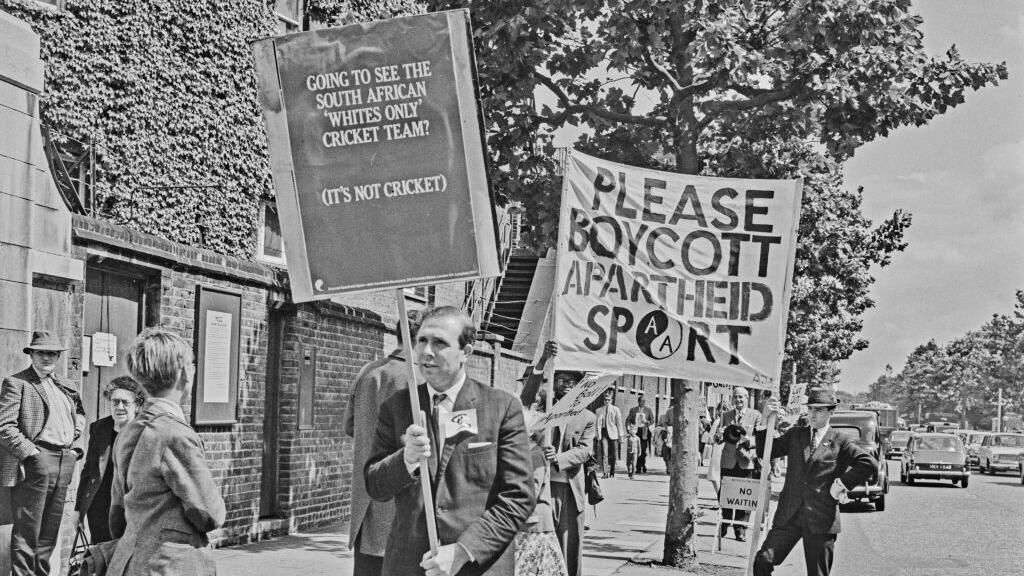
A protest outside Lord’s Cricket Ground in London during the first Test between England and South Africa on 24 July 1965. Demonstrators called on others to boycott the match in protest against South Africa’s apartheid policy. Getty Images - Evening Standard
The archives in the basement of Wits University are a real maze – but Ajit Gandabhai knows exactly where he is going.
“There are a multitude of categories,” he said. “But we’re heading for the sports section.”
It contains valuable resources for historians and sports enthusiasts: a collection of objects and documents that show how, long before the end of apartheid, black, Indian and mixed-race communities were already playing cricket, rugby and tennis.
“These are financial reports from clubs dating back to 1973,” Gandabhai said. “And this is the trophy for the cricket competition – only for the non-racial federations. The winner took it home.”
The archives in the basement of Wits University are a real maze – but Ajit Gandabhai knows exactly where he is going.
“There are a multitude of categories,” he said. “But we’re heading for the sports section.”
It contains valuable resources for historians and sports enthusiasts: a collection of objects and documents that show how, long before the end of apartheid, black, Indian and mixed-race communities were already playing cricket, rugby and tennis.
“These are financial reports from clubs dating back to 1973,” Gandabhai said. “And this is the trophy for the cricket competition – only for the non-racial federations. The winner took it home.”
Boycott and resistance
South Africa was expelled from the Olympic Games in 1964 and, six years later, from the football World Cup. The apartheid government tried cosmetic reforms to make it look more acceptable to the world.
Rejecting any compromise with the regime, activists created the South African Council of Sport (SACOS).
“Sport became a prime way to fight the segregationist state without violence,” said Gandabhai. “And we had the slogan: ‘No normal sport in an abnormal society.' That is still true today.”
Along with campaigning for an international boycott of South African teams, SACOS and allied clubs built a parallel network of non-racial sport inside the country.
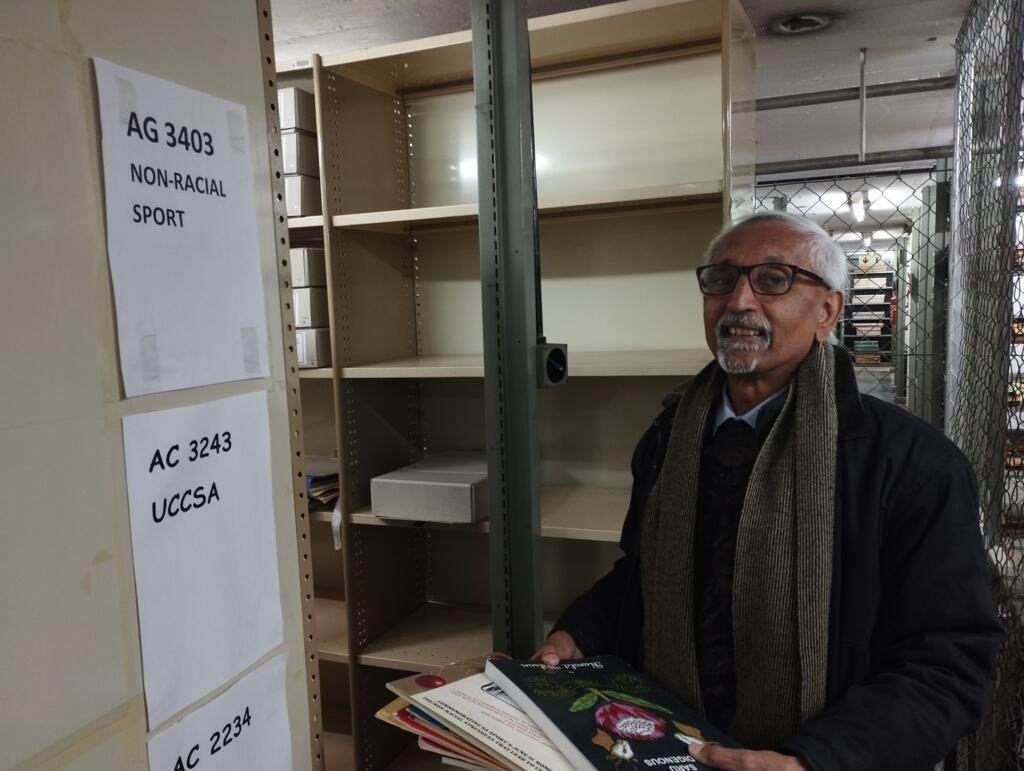
Ajit Gandabhai, one of the leaders of the project to build an archive on non-racial sport under apartheid, in partnership with Wits University, in June 2025. © Claire Bargelès / RFI
Keeping the memory alive
To make sure this history is not forgotten, activists and sports officials, including Gandabhai, set up a dedicated archive fund in 2014.
“We cannot lose the memory of the people who sacrificed their lives, who were detained by the police,” he told RFI. “This story must be told – and not just from 1995.”
The year 1995, when South Africa won the Rugby World Cup under president Nelson Mandela, is widely seen as the symbolic start of the country’s integrated sporting era.
Because official media under apartheid ignored these competitions, archivists have had to rely on alternative sources – records kept by former players and local supporters.
Keeping the memory alive
To make sure this history is not forgotten, activists and sports officials, including Gandabhai, set up a dedicated archive fund in 2014.
“We cannot lose the memory of the people who sacrificed their lives, who were detained by the police,” he told RFI. “This story must be told – and not just from 1995.”
The year 1995, when South Africa won the Rugby World Cup under president Nelson Mandela, is widely seen as the symbolic start of the country’s integrated sporting era.
Because official media under apartheid ignored these competitions, archivists have had to rely on alternative sources – records kept by former players and local supporters.
Women’s sport still missing
Michael Kahn, the fund’s secretary-general, said the work is far from complete.
“Several sections are still not well documented,” he said. “And particularly in relation to women’s sport, there are gaps. Black women also played sport – in really difficult conditions.”
The archivists continue to track down testimonies, photographs and documents to fill those gaps and to honour all those who fought for the right to play on equal terms.
The people behind the archive say their work is not just about remembering the past. It also highlights how, three decades after the end of apartheid, access to sport in South Africa still varies sharply between communities.
This story was adapted from RFI's original version in French

No comments:
Post a Comment